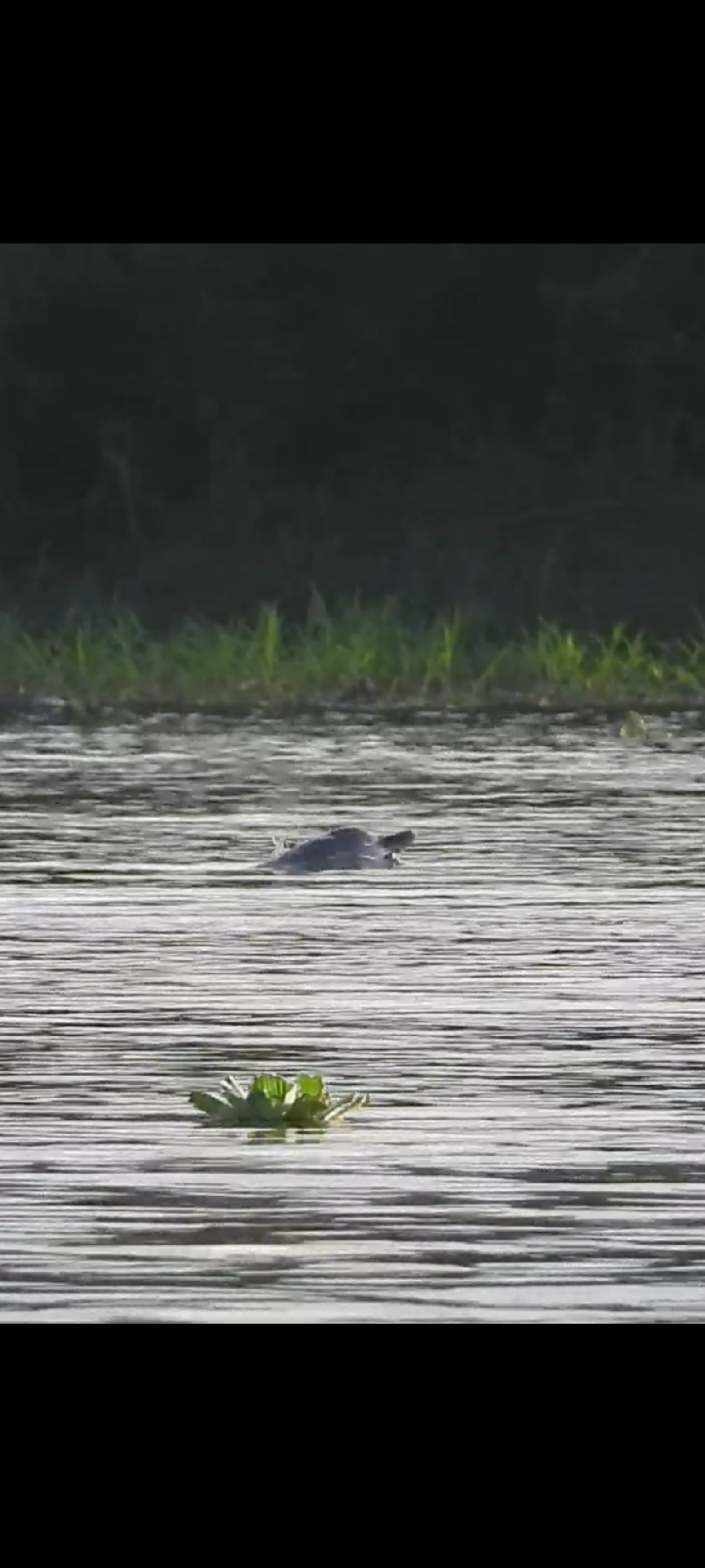
Tucuxi (Sotalia fluviatilis)

Key facts
Scientific name Sotalia fluviatilis (Gervais & Deville in Gervais, 1853)
Other names Sotalie de l’Amazone (French); “dauphin de l’Amazone” (an ambiguous French name, also given to the pink boto); bufeo gris, bufeo negro, delfín gris de río (Spanish); tucuxi (English and Portuguese)
Size Up to 1.52 m; mean adult length close to 1.4 m; 71 to 83 cm at birth
Weight Up to 53-55 kg
Longevity Longevity still poorly known: counts of dental growth layer groups (GLGs) have given at most 43 layers in a female and 26 in a male in central Amazonia (da Silva, 1994; reviewed by Rosas et al., 2010), that is around forty years at most; several review works adopt a usual longevity of the order of 35 years. Generation length estimated at 15.6 years (Taylor et al., 2007, the value adopted by the IUCN in 2020).
Diet Strictly piscivorous: at least 28 fish species spread over 11 to 13 families, mainly small shoaling fish (Curimatidae, Sciaenidae, siluriforms)
IUCN status Endangered (EN), criterion A4b, assessment of 20 August 2020, published in 2020. The species was previously listed as Data Deficient (DD) in 2010 and in 2012. Population trend: decreasing. No subpopulation is assessed separately.

In brief

The tucuxi (Sotalia fluviatilis) is the smallest freshwater dolphin in South America and one of the few delphinids to live exclusively in rivers, in the Amazon basin. Bluish grey and barely a metre and a half long, it shares its waters with the pink boto without being closely related to it. The IUCN has listed it as Endangered since 2020, because of heavy bycatch in nets, dams and pollution.

Identification

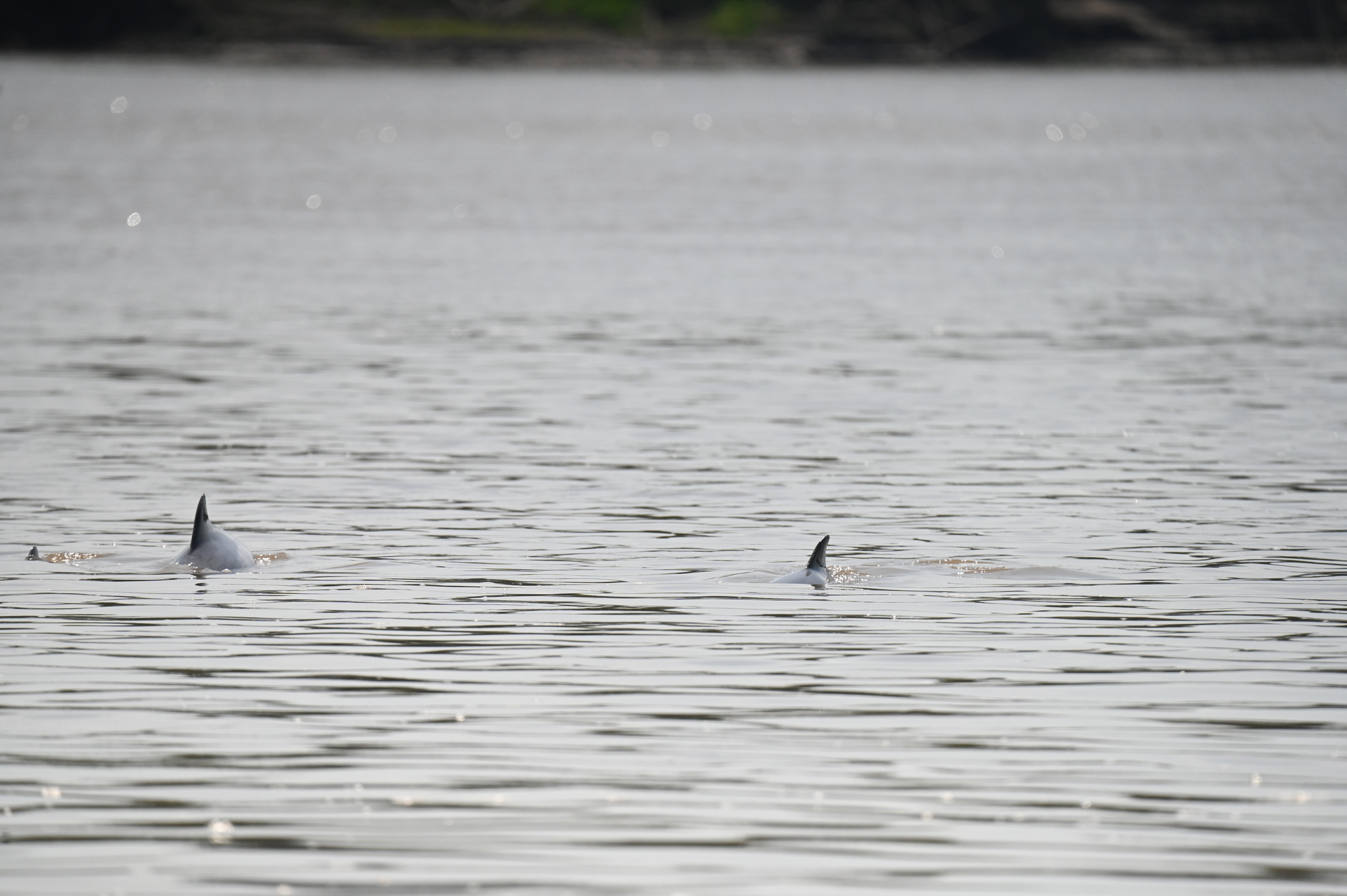
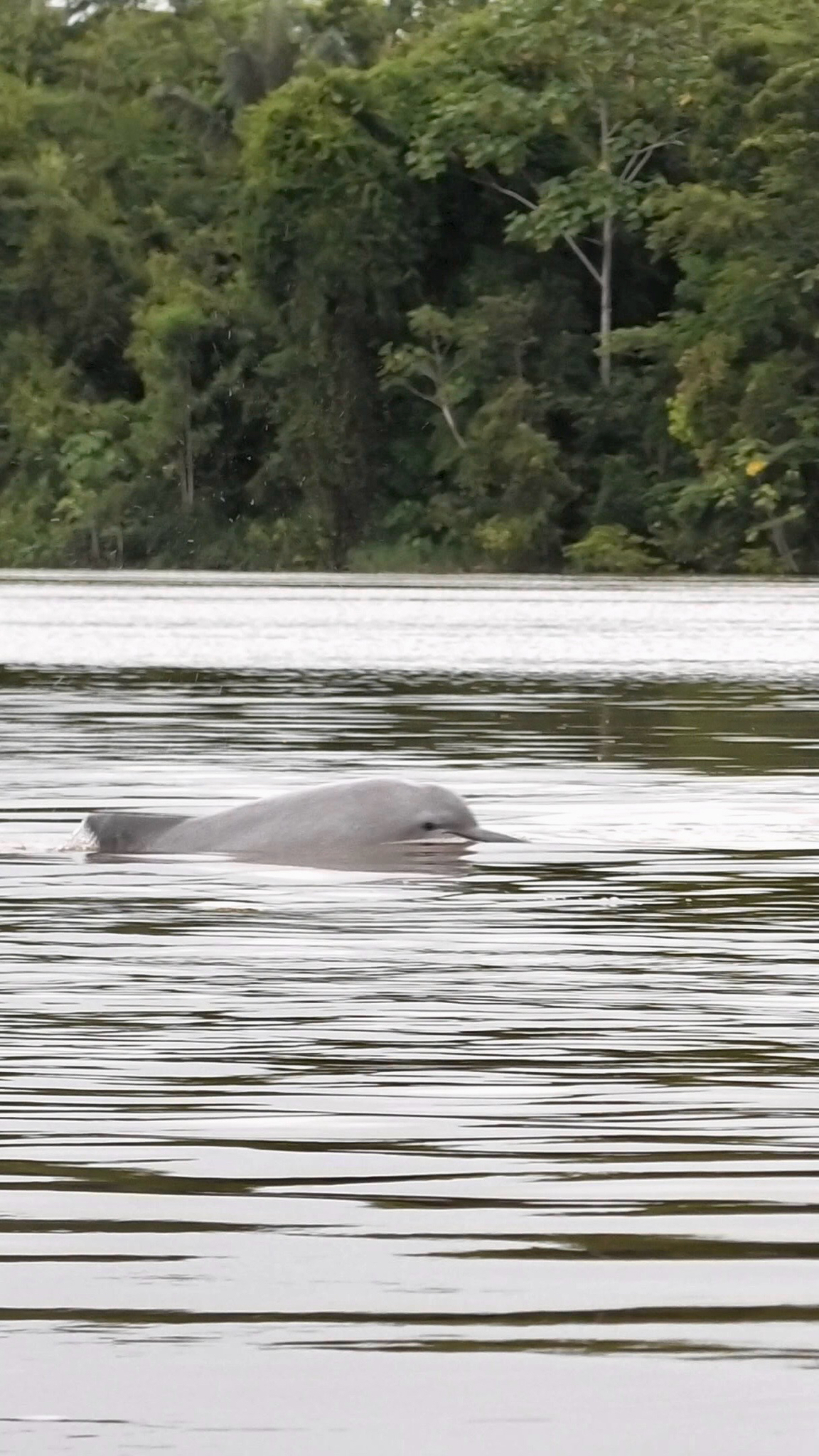
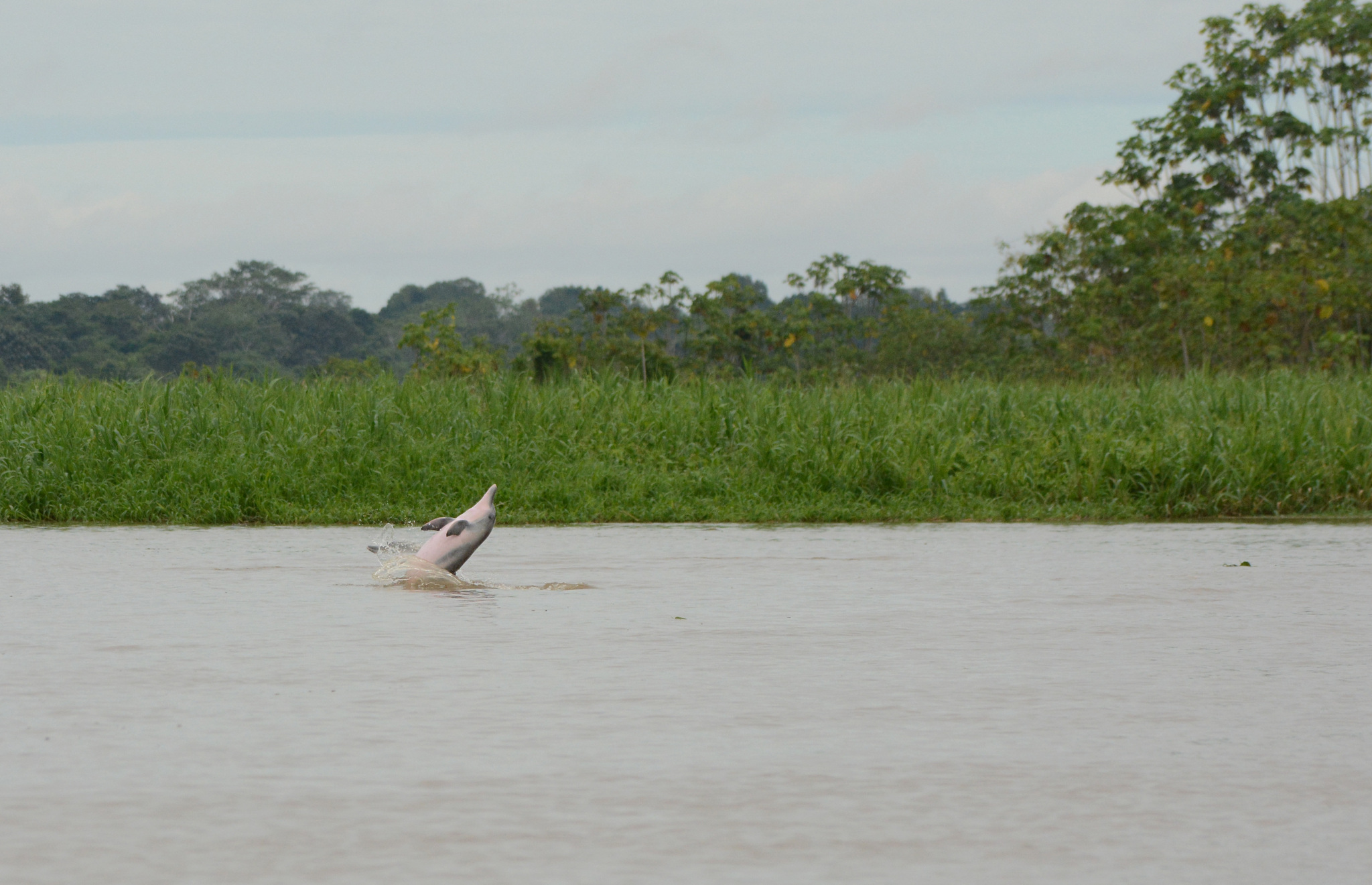
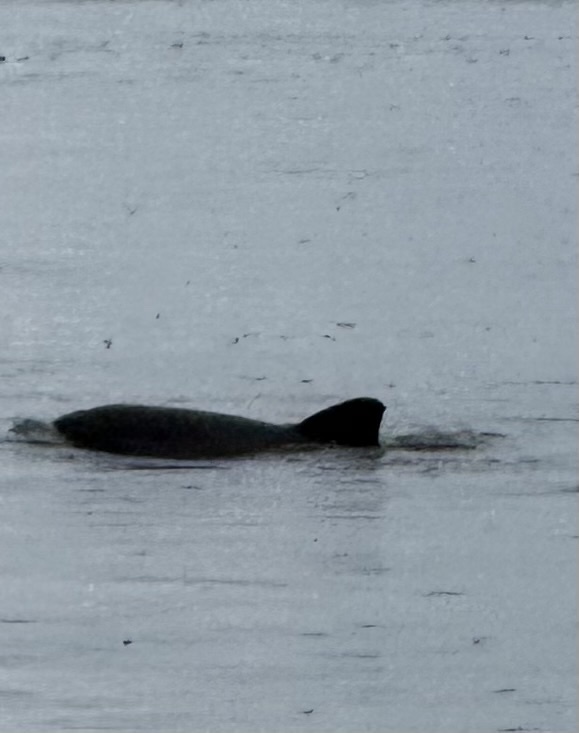
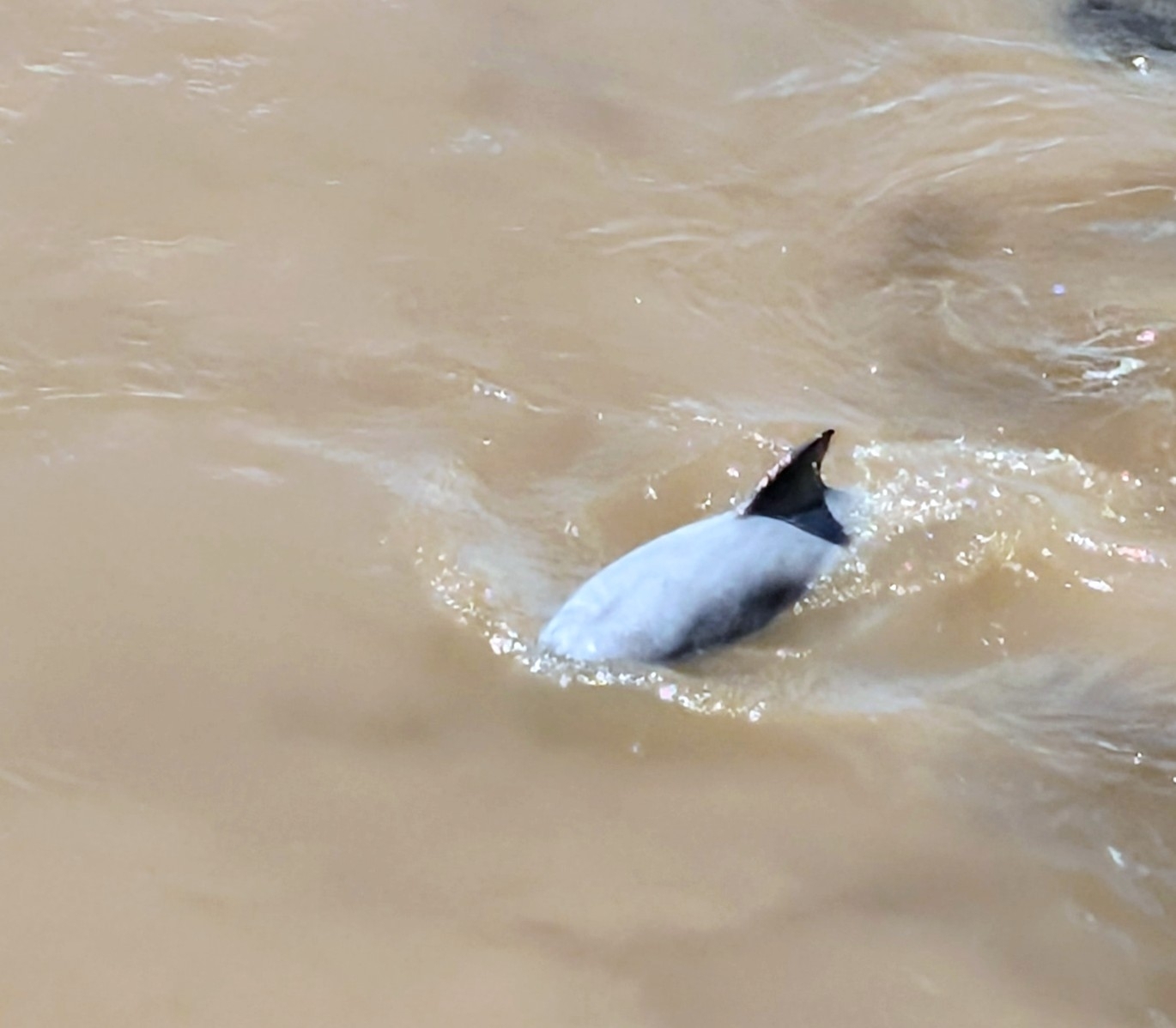
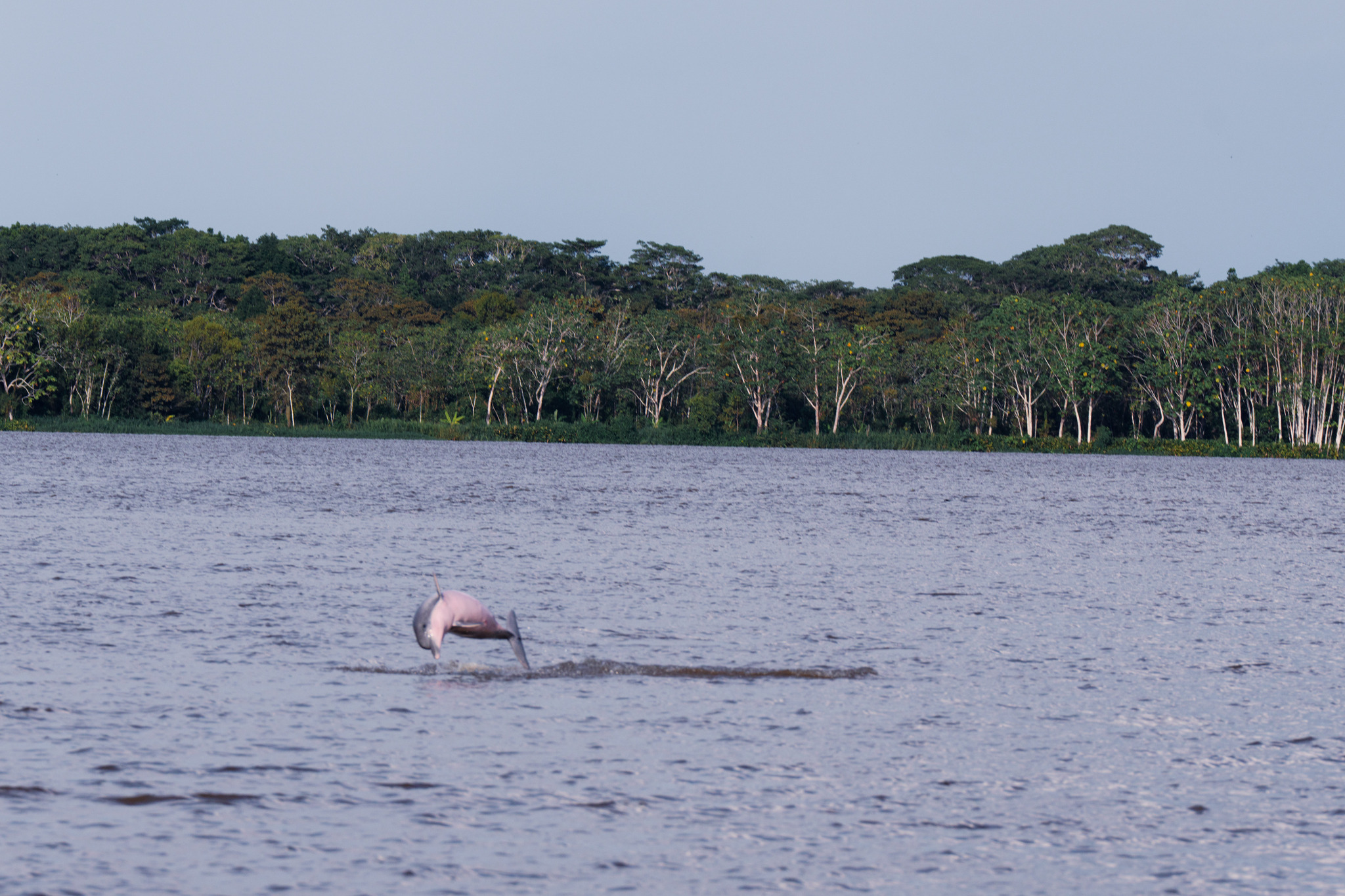
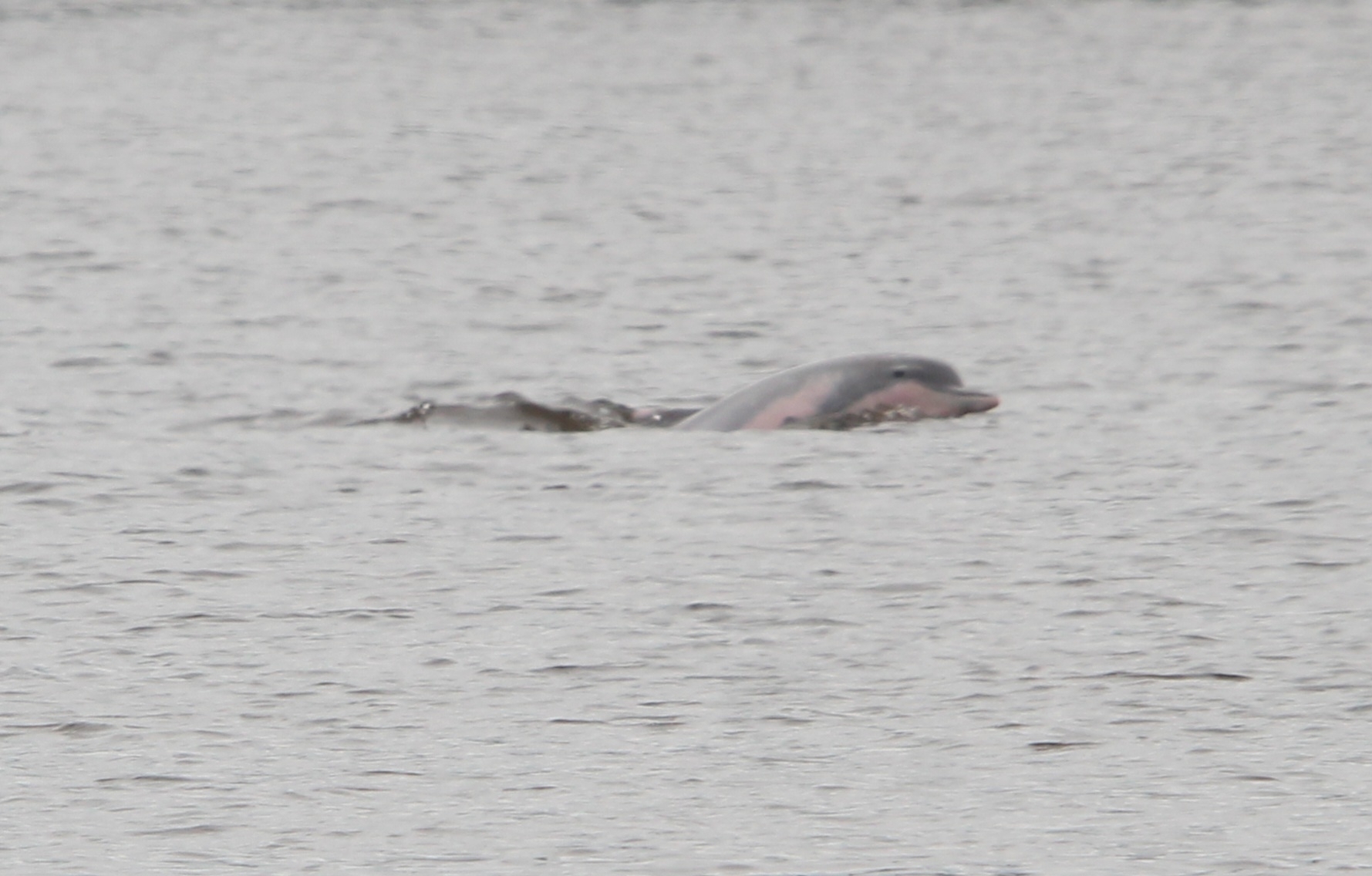
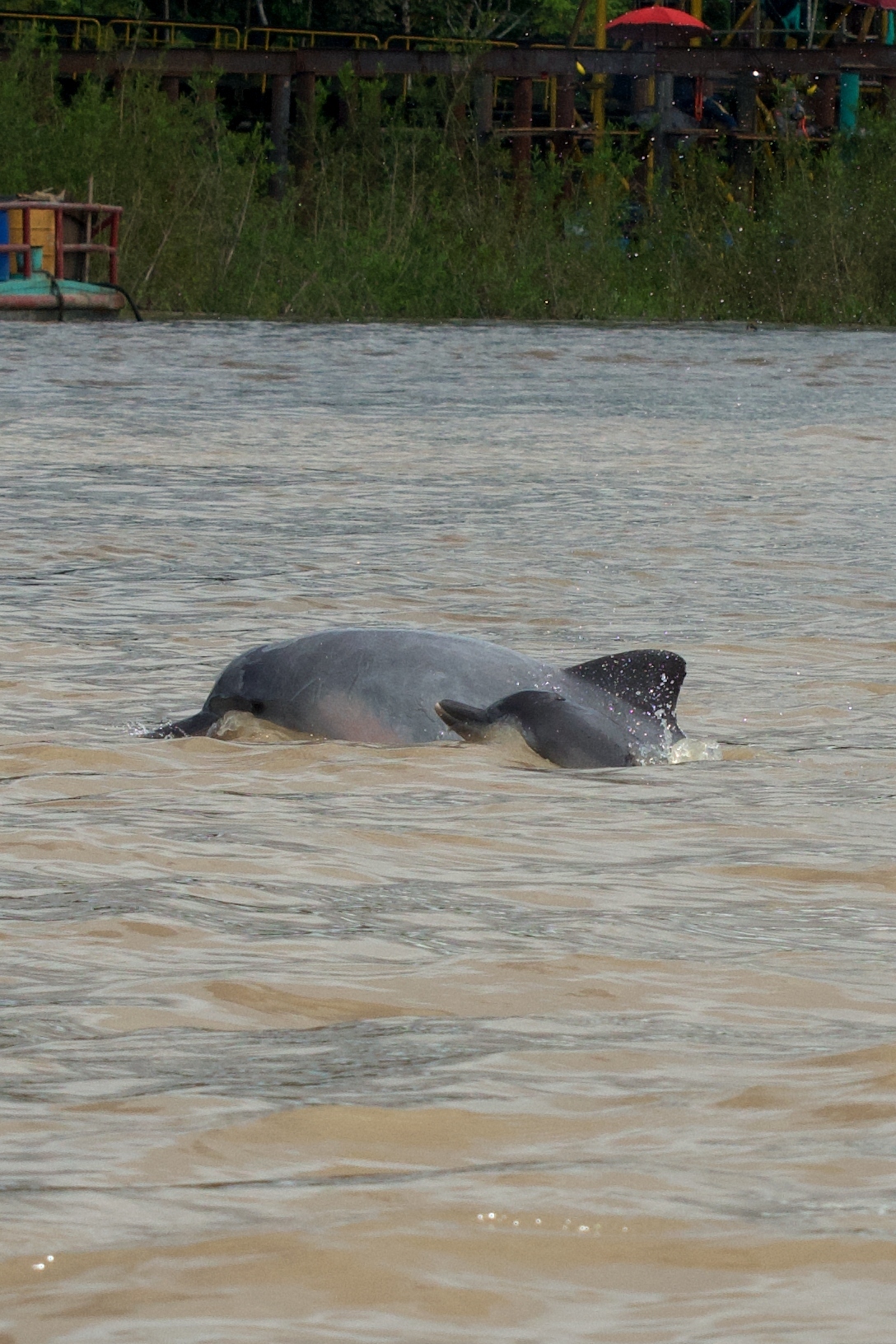
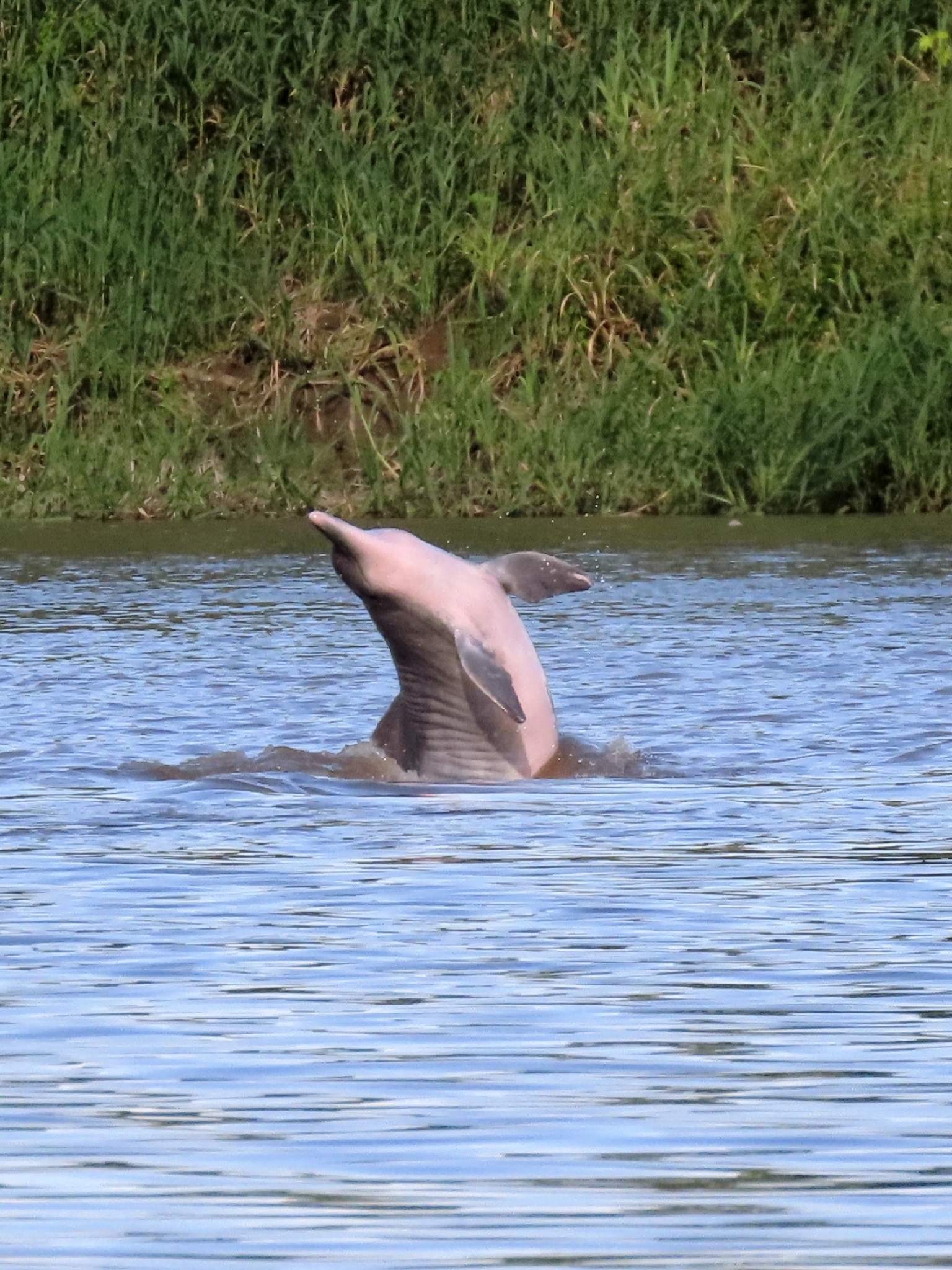
The tucuxi looks like a scaled-down common bottlenose dolphin: a streamlined, robust body, a beak clearly set off from the melon and of moderate length, bearing 26 to 36 pairs of fine, pointed teeth. The dorsal fin is small and triangular, sometimes very slightly curved at the tip. The back and flanks are light grey to bluish grey, with a paler area between the flippers and the dorsal fin; the belly is distinctly paler, often tinged with pink. The maximum documented length reaches 1.52 m for 53 to 55 kg, adults measuring on average 1.4 m. There is no marked sexual dimorphism.

At the surface the animal is lively: it is the only river dolphin that leaps clear of the water, and it also performs vertical leaps and lobtailing. Its dives are brief, from 30 seconds to one minute. Unlike many marine delphinids, it does not accompany boats and tends rather to move away from them.

Two confusions are common. The first is with the boto, or Amazon river dolphin (Inia geoffrensis, family Iniidae), sympatric over almost the whole range: the boto is much larger (up to 2.5 m and more than 200 kg in males), pinkish, with a long narrow rostrum, a bulging forehead, a flexible neck and a simple low dorsal ridge instead of a triangular fin; it enters the flooded forest at high water, which the tucuxi practically never does. The second is with the Guiana dolphin (Sotalia guianensis), very closely related but larger (up to 2.22 m and 121 kg) and strictly coastal and estuarine: the two species do not occur alongside one another.

Taxonomy

The tucuxi belongs to the family Delphinidae (subfamily Delphininae). Despite its riverine way of life, it is therefore not a “true” river dolphin related to the boto or the Ganges river dolphin, but a delphinid in the strict sense, secondarily established in fresh water. It was described under the name Delphinus fluviatilis by Paul Gervais and Émile Deville in 1853; Steno tucuxi Gray, 1856 is a synonym. The vernacular name derives from the Tupi tuchuchi-ana.

The genus Sotalia was long held to be monotypic, with a riverine ecotype and a marine ecotype. Three-dimensional morphometric analyses of the skull (Monteiro-Filho et al., 2002; Fettuccia et al., 2009), then genetic analyses of ten nuclear genes and three mitochondrial genes (Cunha et al., 2005; Caballero et al., 2007), have shown that these are two distinct species: S. fluviatilis in the Amazon basin and S. guianensis at sea and in estuaries. This separation is now the consensus. The Sotalia observed in the Orinoco as far as Ciudad Bolívar, about 300 km upstream of the mouth, have been assigned genetically to S. guianensis and form an isolated, probably independent population (Caballero et al., 2017); those of Lake Maracaibo are likewise assigned to S. guianensis (Secchi et al., 2018).

Distribution and habitat

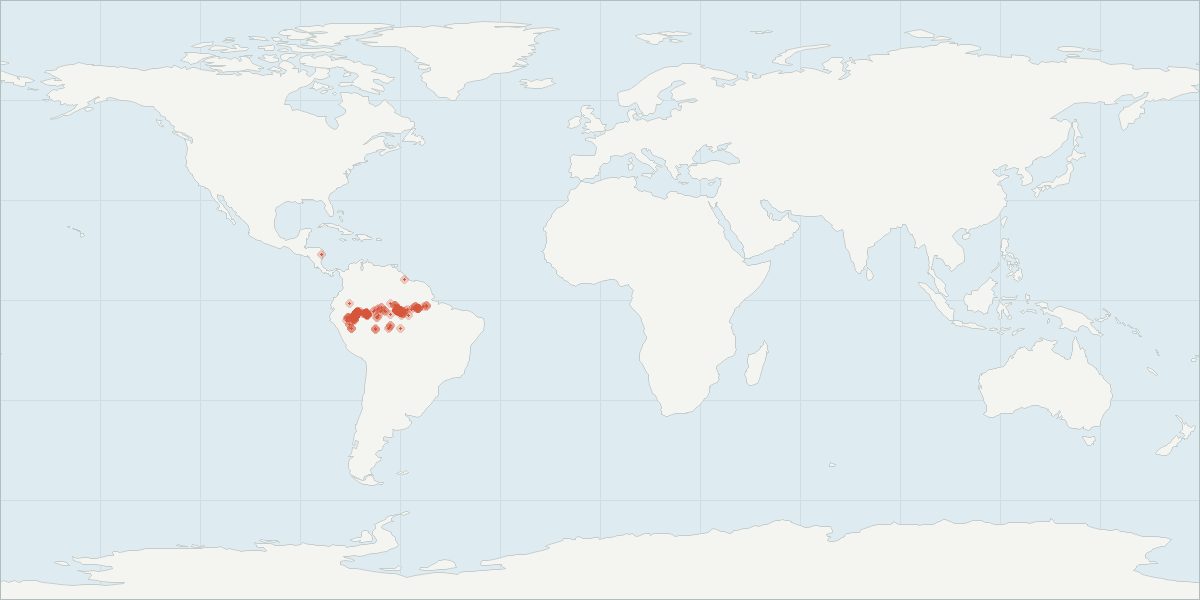
The species is endemic to the Amazon-Solimões basin. The IUCN lists four range states: Brazil, Colombia, Ecuador and Peru. It extends as far as southern Peru, eastern Ecuador and south-eastern Colombia, and regularly crosses borders, in particular around Leticia and Iquitos.

Its distribution is bounded by rapids, falls and shallows. No data exist above the Santo Antônio and Teotônio falls on the Madeira, beyond the falls located about 200 km from the mouth of the Tapajós, above the Belo Monte rapids on the Xingu, or above the Cachoeira Porteira on the Trombetas. The tucuxi is absent from the Beni-Mamoré basin in Bolivia, from the Tocantins-Araguaia basin, from the upper Rio Negro and from the Orinoco basin, where the Sotalia observed as far as Ciudad Bolívar belong to the sister species S. guianensis.

It occurs in all three Amazonian water types, white, clear and black: neither turbidity nor acidity appears to limit its presence. It favours the main channels, the large lakes and above all the confluences, in particular where sediment-laden whitewater meets blackwater. More than half of the individuals stay within 50 m of the banks. It avoids rapids and shallow water (less than 3 m in rivers, 1.8 m in lakes in Peru) and leaves the lakes when the waters recede, the seasonal amplitude reaching 10 to 16 m.

In France the species is absent from all waters, mainland and overseas alike. In French Guiana it is its close relative the Guiana dolphin (Sotalia guianensis, Near Threatened) that is present all year round along the coast and in the estuaries, Cayenne, Mahury, Approuague, Oyapock, Mana, Maroni, as well as around the Îles du Salut and the Île du Grand Connétable.

Biology and ecology

Feeding. The tucuxi is strictly piscivorous. At least 28 fish species from 11 families have been identified in its diet in Amazonia: of 29 stomachs analysed, Curimatidae appeared in 52% of cases, Sciaenidae in 39% and siluriforms in 54%. It hunts in tight groups, pursuing shoals just below the surface. At low water the fish concentrate in the channels and become more accessible; in flood, part of the prey moves out onto the floodplain, beyond reach. Fourteen of the thirty most heavily fished species in Amazonia are on its menu, but it takes mainly sizes below those sought by fishers.

Social life and movements. Groups most often number one to six individuals (55% of sightings); those of more than nine animals are rare, although gatherings of 26 individuals have been recorded at confluences. Mean group size ranges from 2.2 in central Amazonia to 3.9 in the upper Amazon, and the available data do not allow their composition to be specified. Site fidelity is strong: two marked individuals were found less than 5 km away a year later, an adult male was resighted over nine years in the same area at Mamirauá, and the range documented by photo-identification reaches at most 130 km, with movements of up to 56 km per day.

Breeding and age. Sexual maturity is reached at about 140 cm in males and between 132 and 137 cm in females. Gestation lasts about 10 to 11 months and produces a single calf of 71 to 83 cm, suckled for close to seven months. Births are markedly seasonal and concentrated during low water, from September to November in Brazil, testicular activity in males following the same rhythm. The testes can account for up to 5% of body mass in active males, an indication of sperm competition; ovulation appears to involve only the left ovary. Age is estimated by counting dental growth layers: the maximum values recorded in central Amazonia are 43 layers in a female and 26 in a male (da Silva, 1994), which places the maximum documented longevity at around forty years, for a generation length estimated at 15.6 years. The species tolerates captivity very poorly: the last captive tucuxi died in 2009 at Münster Zoo.

Status and conservation

The tucuxi has been listed as Endangered (EN) under criterion A4b since the assessment of 20 August 2020; it was previously listed as Data Deficient. The trend is downward and there is no estimate of the global population.

The decline is documented above all in the Mamirauá reserve, in Brazil, where 363 standardised surveys along a 30 km transect, carried out between November 1994 and January 2017, show a fall of 7.4% per year, a population halving roughly every nine years, that is a drop of close to 80% over the period of the study. Projected over three generations (1994-2041), this trend would lead to a reduction of 97% in the area. The assessors consider a “Critically Endangered” status plausible, but adopted “Endangered” given the uncertainty over the intensity of the threats across the range. Elsewhere, local counts remain substantial: 409 individuals along 120 km of the Amazon at the triple frontier in 1993, 764 along 2,704 km of rivers in 2006-2007, 511 around Tefé in 2013 and 3,372 in the Tapajós in 2014.

Threats. Bycatch in monofilament gillnets is the leading known cause of mortality: of 34 carcasses examined in central Amazonia, 74% came from gillnets and 15% from seines. To this are added deliberate killing for use as bait in the piracatinga fishery, banned in Brazil since 2015, though the practice persists, dynamite fishing, dams (74 in operation, 31 under construction and 91 planned in the Brazilian Amazon alone), mercury from gold panning and organochlorines. Certain body parts are sold as amulets in northern Brazil, and the blubber used in traditional medicine.

Protection. The species is listed on Appendix I of CITES and Appendix II of the CMS. It is assessed as Vulnerable in Colombia, Endangered in Ecuador, Near Threatened in Brazil since 2012, and protected by law in Peru since 1996. An action plan for the river dolphins of South America exists, and Brazil, Colombia, Ecuador and Peru submitted in 2020 a proposal for a conservation management plan to the Scientific Committee of the International Whaling Commission.

Watching this species

The tucuxi is watched from the rivers of the Amazon basin: the Mamirauá and Amanã reserves around Tefé in Brazil, the Puerto Nariño area and Lake Tarapoto near Leticia in Colombia, the Pacaya-Samiria reserve in Peru, the Cuyabeno lake system in Ecuador. Confluences, in particular where whitewater joins blackwater, are the best places to watch from, and the low-water season concentrates the animals there.

Look for a small triangular dorsal fin, inconspicuous blows and clean leaps: it is the only river dolphin that comes entirely out of the water. As the dives last only 30 seconds to one minute, waiting with the engine switched off often pays off.

Since the species avoids boats, it is better to drift, never to chase a group or come between a female and her calf, and to give up feeding and swimming with the dolphins. Community-run operators in the reserves are to be preferred. No tucuxi can be seen in captivity: the species does not survive there.

Frequently asked questions

Is the tucuxi a true river dolphin?

No, not in the taxonomic sense. It belongs to the family Delphinidae, that of the oceanic dolphins, and is not closely related to the boto or the Ganges river dolphin: it is a delphinid that has colonised fresh water, where it now lives exclusively.

How can a tucuxi be told from a pink boto?

The tucuxi is bluish grey, measures at most 1.52 m and has a small triangular dorsal fin. The boto reaches 2.5 m, is pinkish, has a long narrow rostrum, a bulging forehead and a simple low dorsal ridge; it enters the flooded forest, unlike the tucuxi.

What is its conservation status?

Endangered (EN) on the IUCN Red List, under criterion A4b, since the assessment of 20 August 2020. It was previously listed as Data Deficient. The population is decreasing and no global population size is estimated.

Does the tucuxi occur in France?

No. It is strictly confined to the Amazon basin and absent from French waters, including the overseas territories. In French Guiana it is the sister species, the Guiana dolphin (Sotalia guianensis, Near Threatened), that frequents the coast and the estuaries all year round.

Why are its populations declining?

Mainly because of drowning in gillnets, killing for use as bait in the piracatinga fishery, the multiplication of Amazonian dams and pollution (mercury from gold panning, organochlorines). At Mamirauá, monitoring from 1994 to 2017 shows a fall of 7.4% per year.

How long does a tucuxi live?

Dental growth layers indicate a maximum longevity of around forty years: up to 43 layers have been counted in an Amazonian female (26 in a male), even though review works often adopt a usual longevity of about 35 years. The female gives birth to a single calf of 71 to 83 cm after about 10 to 11 months of gestation, almost always during the low-water season.

Sources

Profile compiled from authoritative scientific sources (IUCN, NOAA Fisheries, specialist literature) and reviewed for factual accuracy.

Observed distribution

According to the open data of the GBIF, 393 georeferenced sightings of Sotalia fluviatilis are recorded in our photographic index.

Main countries of observation
CountryNotes
Peru179
Brazil151
Colombia62
unknown or invalid4
Guyana1
Nicaragua1

Distribution map: Tucuxi (Sotalia fluviatilis)

Distribution map: Tucuxi (Sotalia fluviatilis), 393 georeferenced sightings from GBIF
393 georeferenced sightings of Sotalia fluviatilis. Base map Natural Earth, public domain. GBIF data.
🗺️ Open the interactive mapTo zoom and pan. It uses the OpenStreetMap/CARTO base maps and the GBIF occurrence densities: no data is sent to these services before you click.

Presence through the year

Monthly distribution of 394 dated sightings (all years combined): the maximum is reached in novembre.

440janvier : 38janfévrier : 20febmars : 33maravril : 25avrmai : 25maijuin : 24juinjuillet : 37juilaoût : 43Augustseptembre : 40sepoctobre : 35octnovembre : 44novdécembre : 30dec
Sightings by month
MonthNotes
janvier38
February20
mars33
avril25
mai25
juin24
juillet37
August43
septembre40
octobre35
novembre44
December30

These figures reflect survey effort (more boaters and more surveys in summer) as much as the actual presence of the species: to be interpreted with caution.

En images

Sotalia fluviatilis
© Alex Shen, CC BY-NC, 2026
Sotalia fluviatilis
© Marvin Biedermann, CC BY-NC, 2026
Sotalia fluviatilis
© jackmckee50, CC BY-NC, 2026
Sotalia fluviatilis
© Siddarth Machado, CC BY, 2026
Sotalia fluviatilis
© Michael Lepene, CC BY-NC, 2026
Sotalia fluviatilis
© Susan Hopkins, CC BY-NC, 2026
Sotalia fluviatilis
© victor5167, CC BY-NC, 2026
Sotalia fluviatilis
© markholme, CC BY-NC, 2026
Sotalia fluviatilis
© Pedro Ferreira Bisneto, CC BY-NC, 2026
Sotalia fluviatilis
© kathascharf, CC BY-NC, 2026
Sotalia fluviatilis
© jeremdelajungle, CC BY-NC, 2026
Sotalia fluviatilis
© Marco Pecoraro, CC BY-NC, 2026

Photographs from GBIF under a Creative Commons licence. The author and the licence of each photograph are given; please respect them if you reuse them.

Scientific references

  1. Caballero S., Trujillo F., Vianna J., Barrios‐Garrido H. et al. (2007) TAXONOMIC STATUS OF THE GENUSSOTALIA: SPECIES LEVEL RANKING FOR “TUCUXI” (SOTALIA FLUVIATILIS) AND “COSTERO” (SOTALIA GUIANENSIS) DOLPHINS, Marine Mammal Science
  2. da Silva V., Best R. (1996) Sotalia fluviatilis, Mammalian Species
  3. Iriarte V. (2013) River Dolphin (Inia geoffrensis, Sotalia fluviatilis) Mortality Events Attributed to Artisanal Fisheries in the Western Brazilian Amazon, Aquatic Mammals
  4. Sauerland M., Dehnhardt G. (1998) Underwater audiogram of a tucuxi (Sotalia fluviatilis guianensis), The Journal of the Acoustical Society of America
  5. Borobia M., Barros N. (1989) NOTES ON THE DIET OF MARINE SOTALIA FLUVIATILIS, Marine Mammal Science
  6. CUNHA H., WATTS P. (2007) Twelve microsatellite loci for marine and riverine tucuxi dolphins (Sotalia guianensis and Sotalia fluviatilis), Molecular Ecology Notes
  7. Harrison R., Brownell R. (1971) The Gonads of the South American Dolphins, Inia geoffrensis, Pontoporia blainvillei, and Sotalia fluviatilis, Journal of Mammalogy
  8. Cunha H., Solé-Cava A. (2007) Molecular sexing of tucuxi dolphins (Sotalia guianensis and Sotalia fluviatilis) using samples from biopsy darting and decomposed carcasses, Genetics and Molecular Biology

Automatic selection of the most cited works mentioning the species (source: Crossref).