| Scientific name | Tasmacetus shepherdi W. R. B. Oliver, 1937 |
|---|---|
| Other names | In French: tasmacète, baleine à bec de Shepherd, baleine à bec de Tasman; in English: Shepherd’s beaked whale, Tasman beaked whale, Tasman whale |
| Size | Males up to about 7 to 7.1 m; females up to about 6.6 m; newborns about 3 m |
| Weight | Never weighed on a complete animal; published estimates range between about 2.3 and 3.5 t, with some visual assessments of 7 m animals putting forward higher values (up to about 5 t) |
| Longevity | Not documented; by analogy with other ziphiids, a longevity of the order of three to four decades is judged plausible |
| Diet | Demersal and pelagic fish, cephalopods and benthic crustaceans, a markedly more varied diet than that of the other beaked whales |
| IUCN status | Data Deficient (DD), global assessment of 2018 (G. Braulik, IUCN Red List, e.T21500A50377701). No subpopulation is distinguished. At national level, Argentina likewise retains the “Data Deficient” category (SAREM assessment, 2012). |
Shepherd’s beaked whale (Tasmacetus shepherdi) is one of the most poorly known large marine mammals on the planet: it is documented only by some fifty strandings and a very small number of sightings at sea, all in the cold temperate waters of the Southern Hemisphere. The sole representative of its genus, it is the only beaked whale to possess a complete and functional dentition on both jaws, in males as in females. The IUCN classes it as “Data Deficient” (DD): neither its population size nor its demographic trend is known.
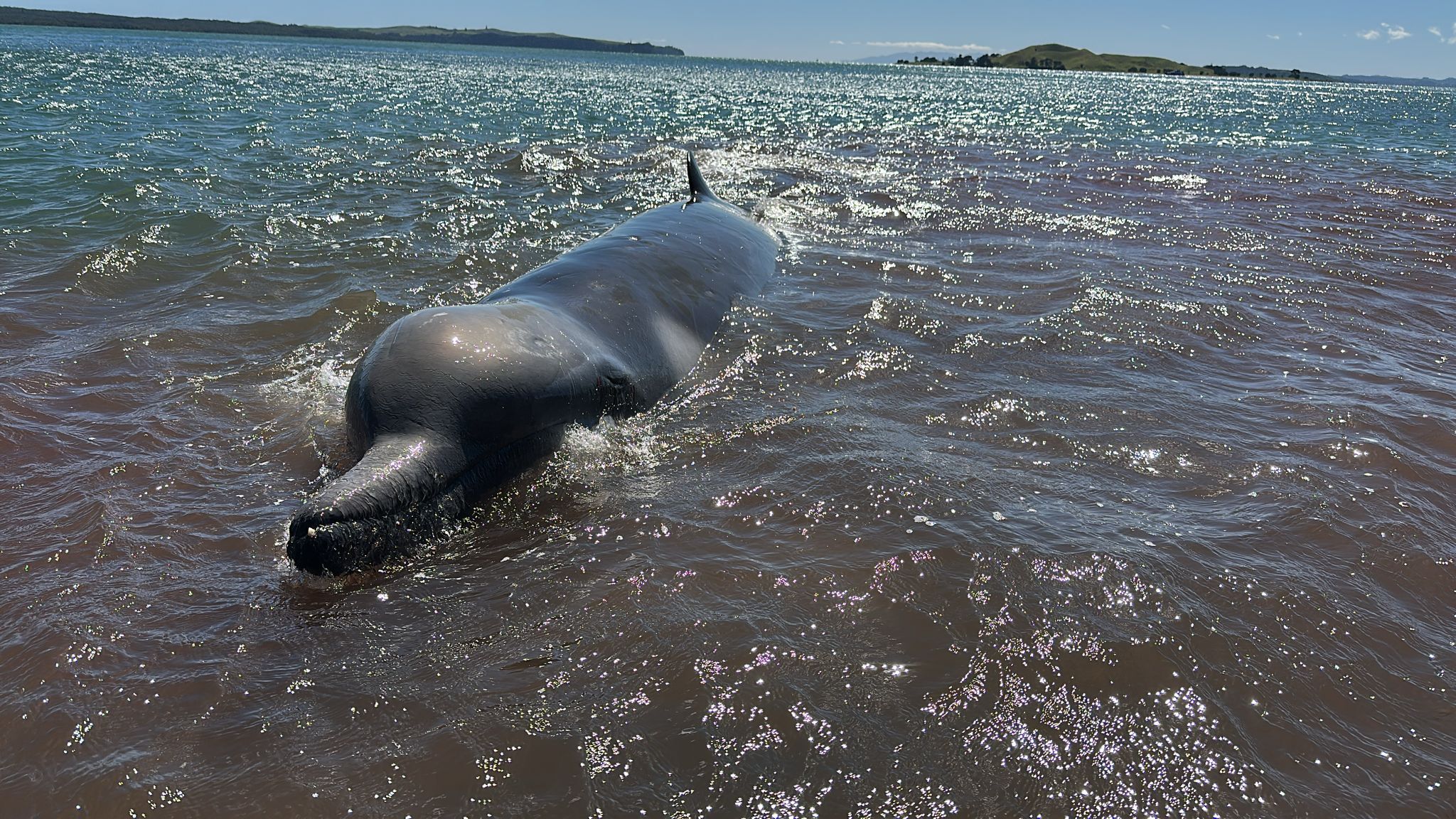
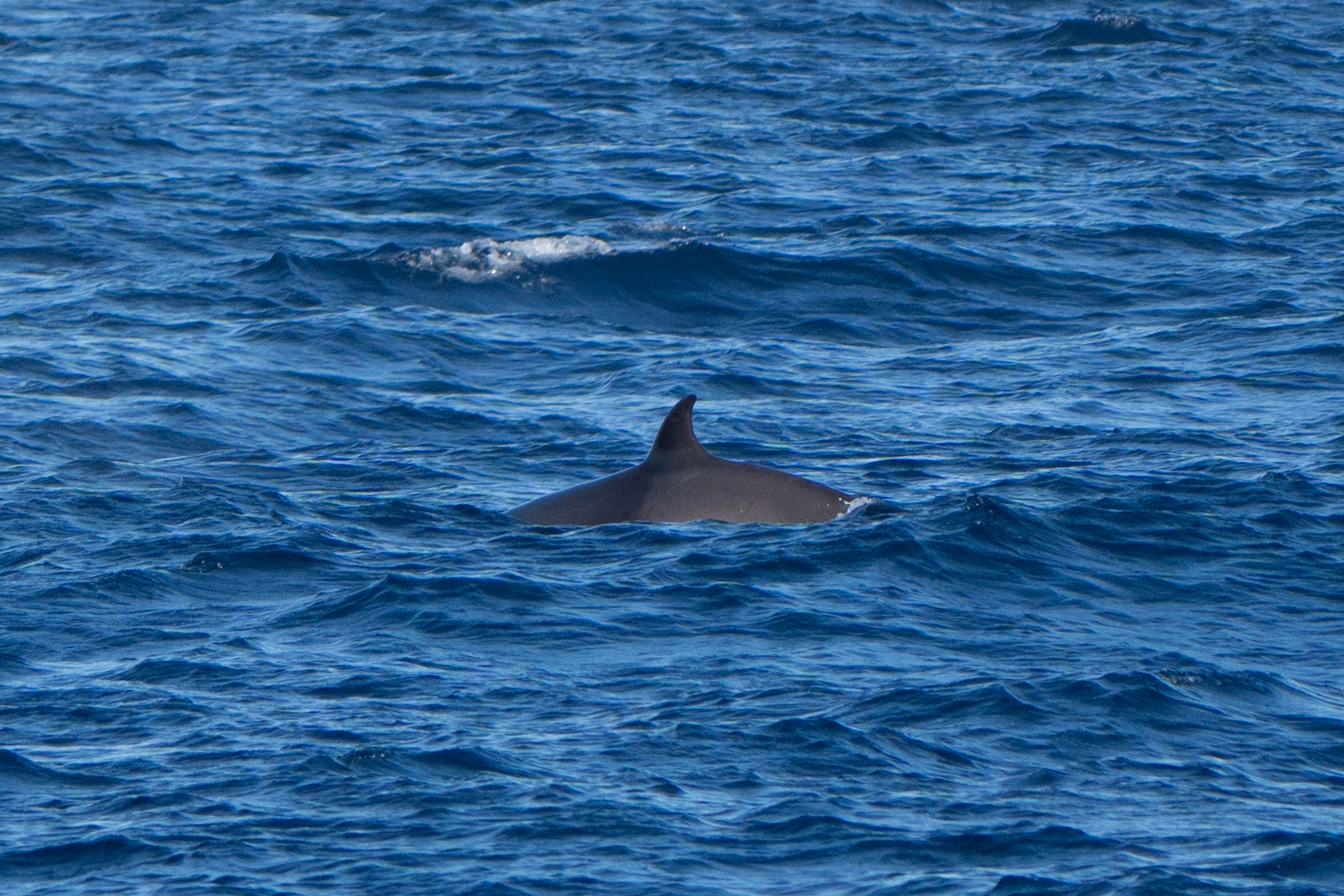
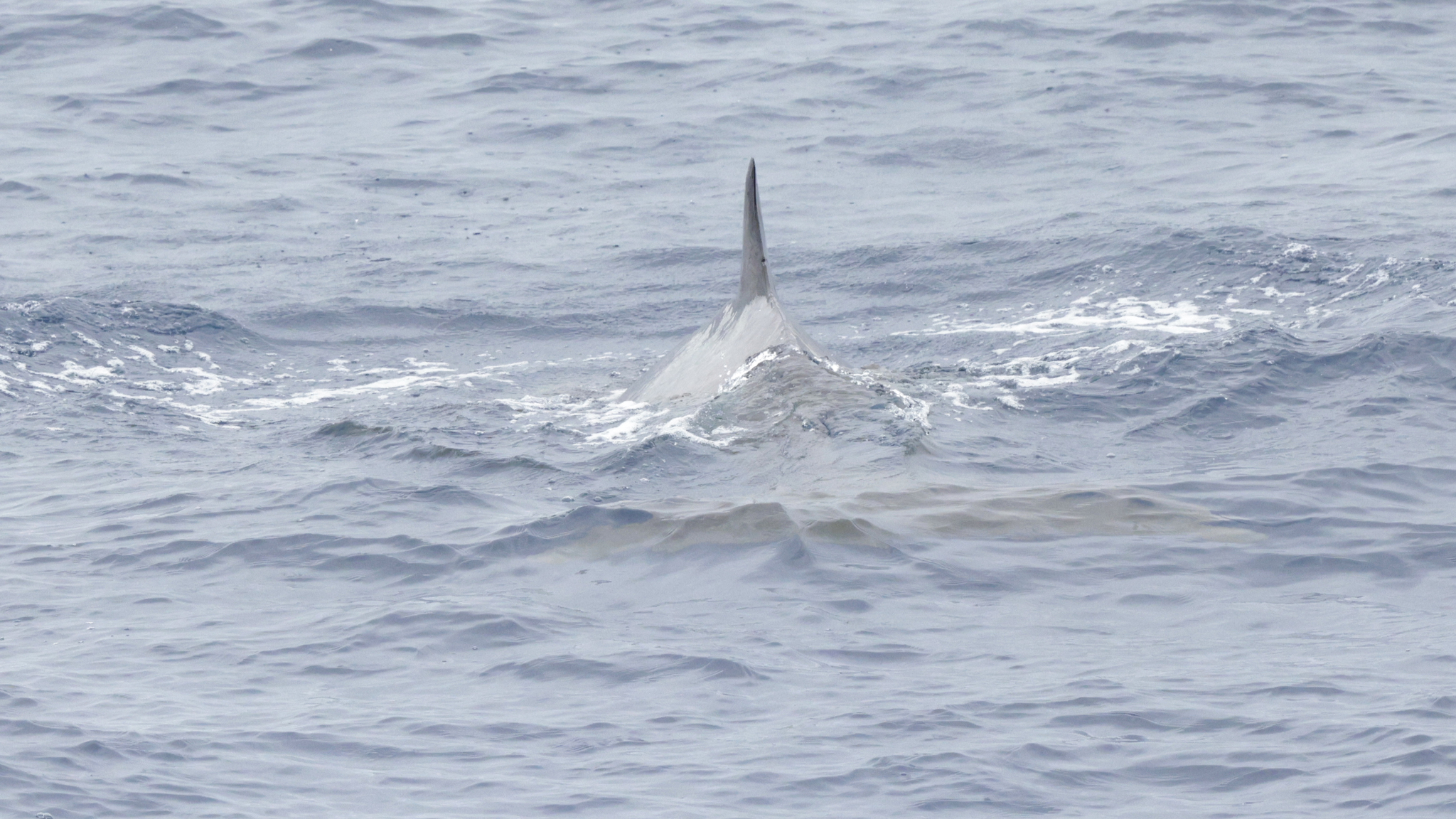
With males reaching 7 to 7.1 m and females about 6.6 m, Shepherd’s beaked whale is among the largest beaked whales. The outline is robust and fusiform without being massive: the melon is high, domed and clearly delimited, extended by a long, narrow and straight rostrum reminiscent of the beak of a common bottlenose dolphin. The flippers are short and tapered; the dorsal fin, falcate and pointed, is set two thirds of the way back along the back. The blow, unusually visible for a ziphiid, forms a bushy plume 1 to 2 m high, detectable up to a kilometre away in a calm sea.
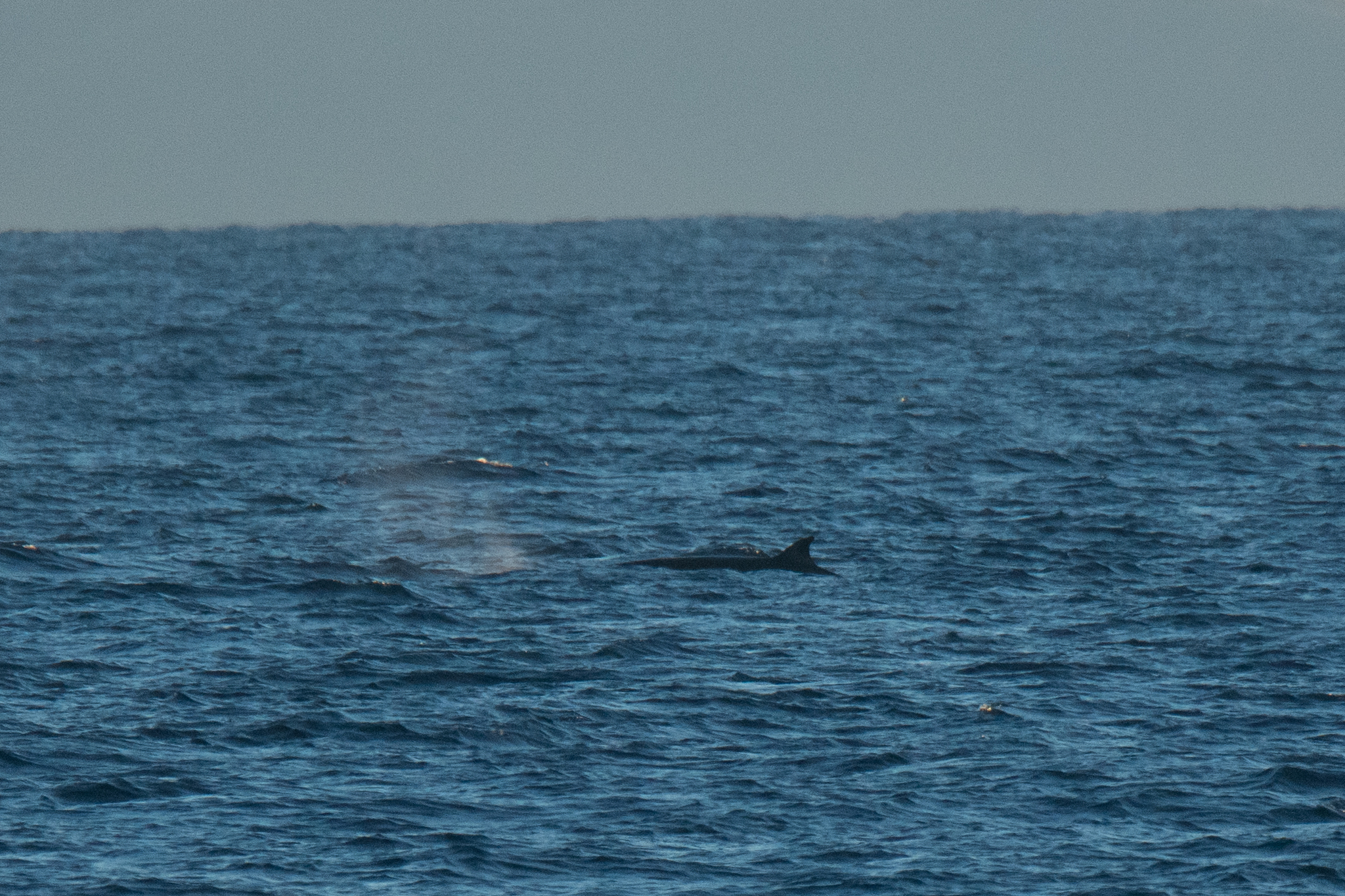
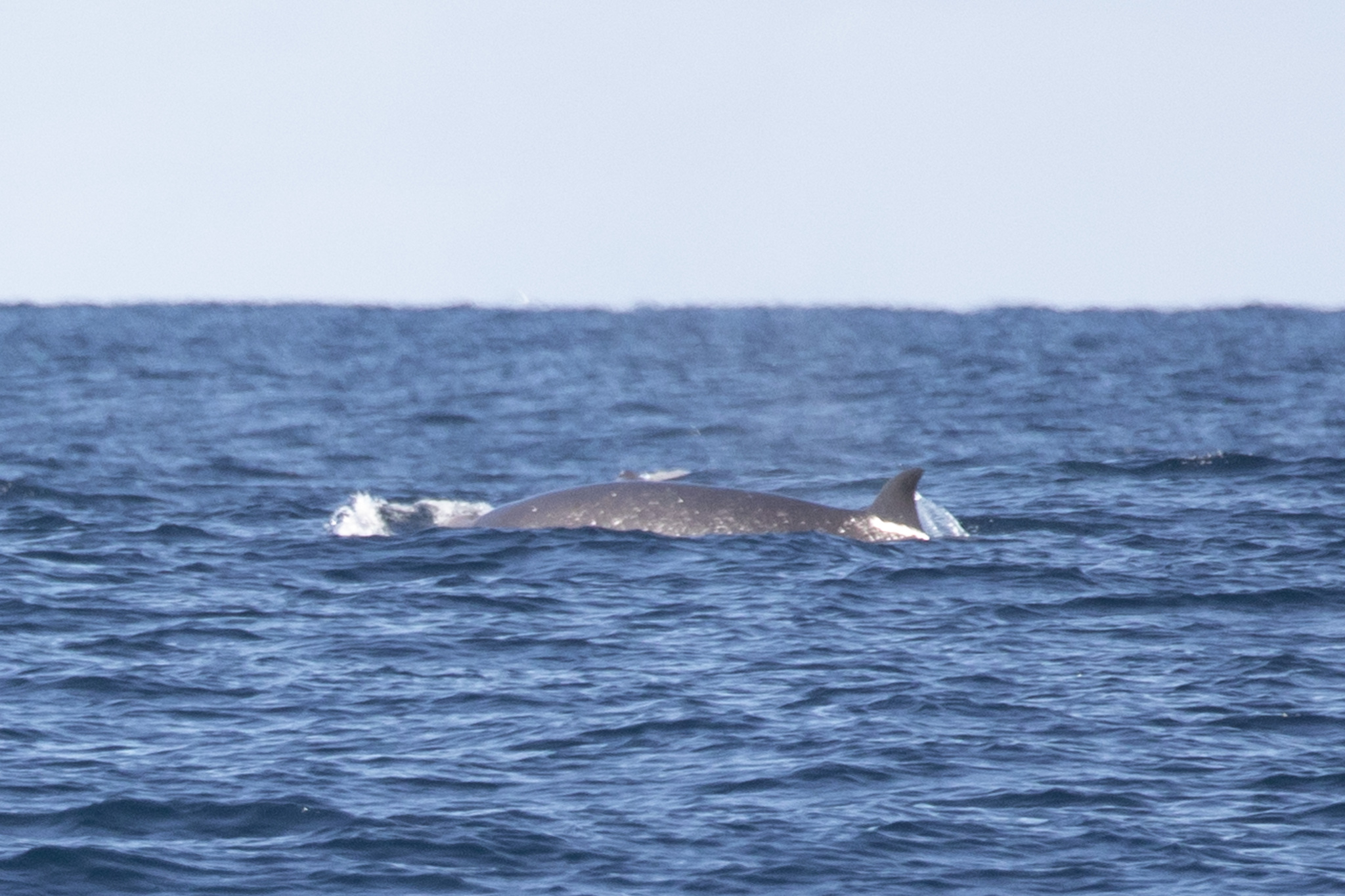
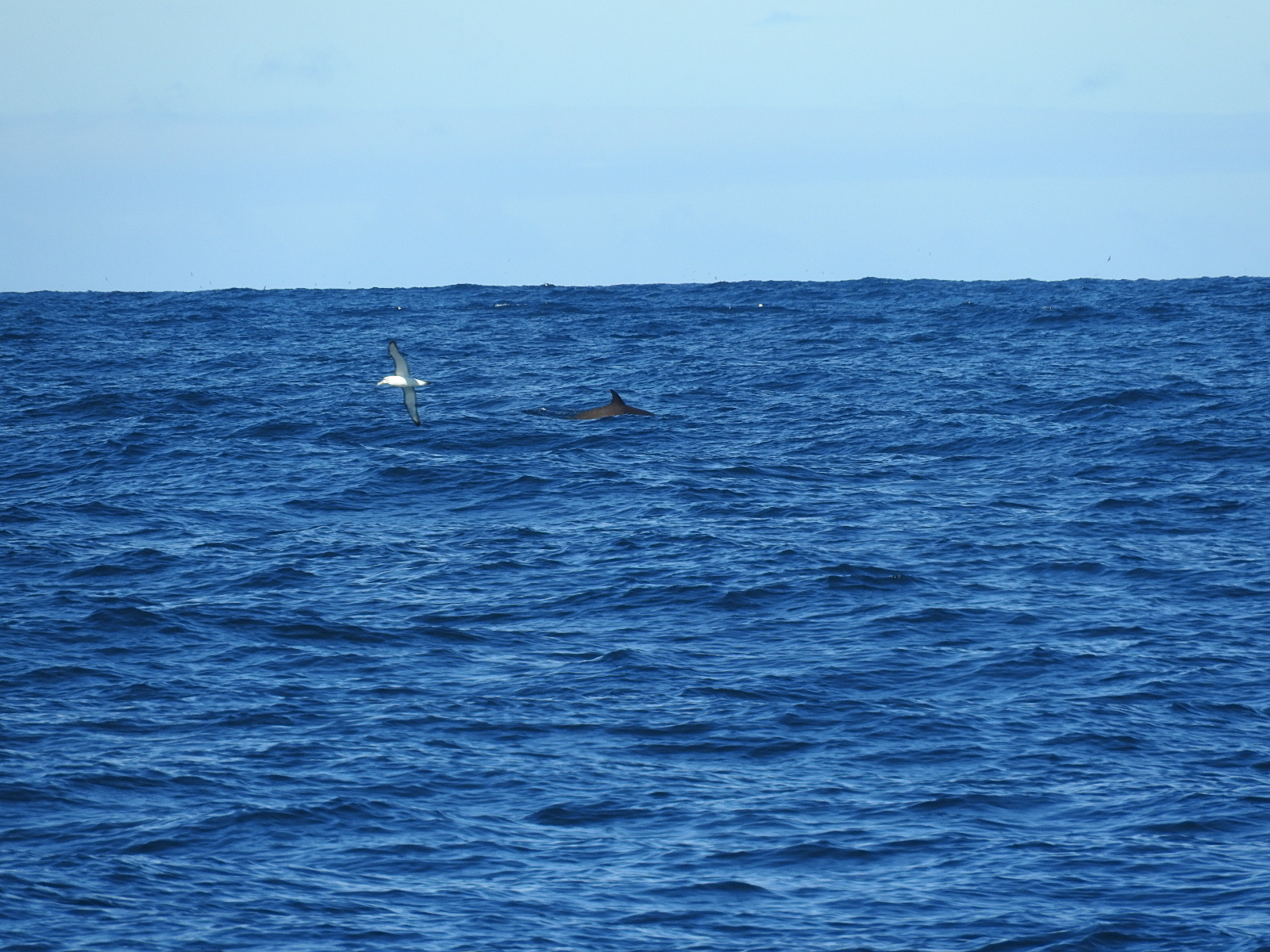
The colour pattern is the best field criterion. The sightings at sea made off southern Australia and New Zealand between 2008 and 2017, brought together in a diagnostic description published in 2018, describe a dark brown-grey ground colour against which several pale areas stand out: a pale melon, a light patch above each flipper, a broad whitish sweep rising from the belly towards the flank and then towards the back behind the dorsal fin, and a pale tail stock. The belly is cream to whitish. Adult males additionally carry the network of fine linear scars typical of intraspecific fights among beaked whales, as well as, frequently, circular scars left by cookiecutter sharks.
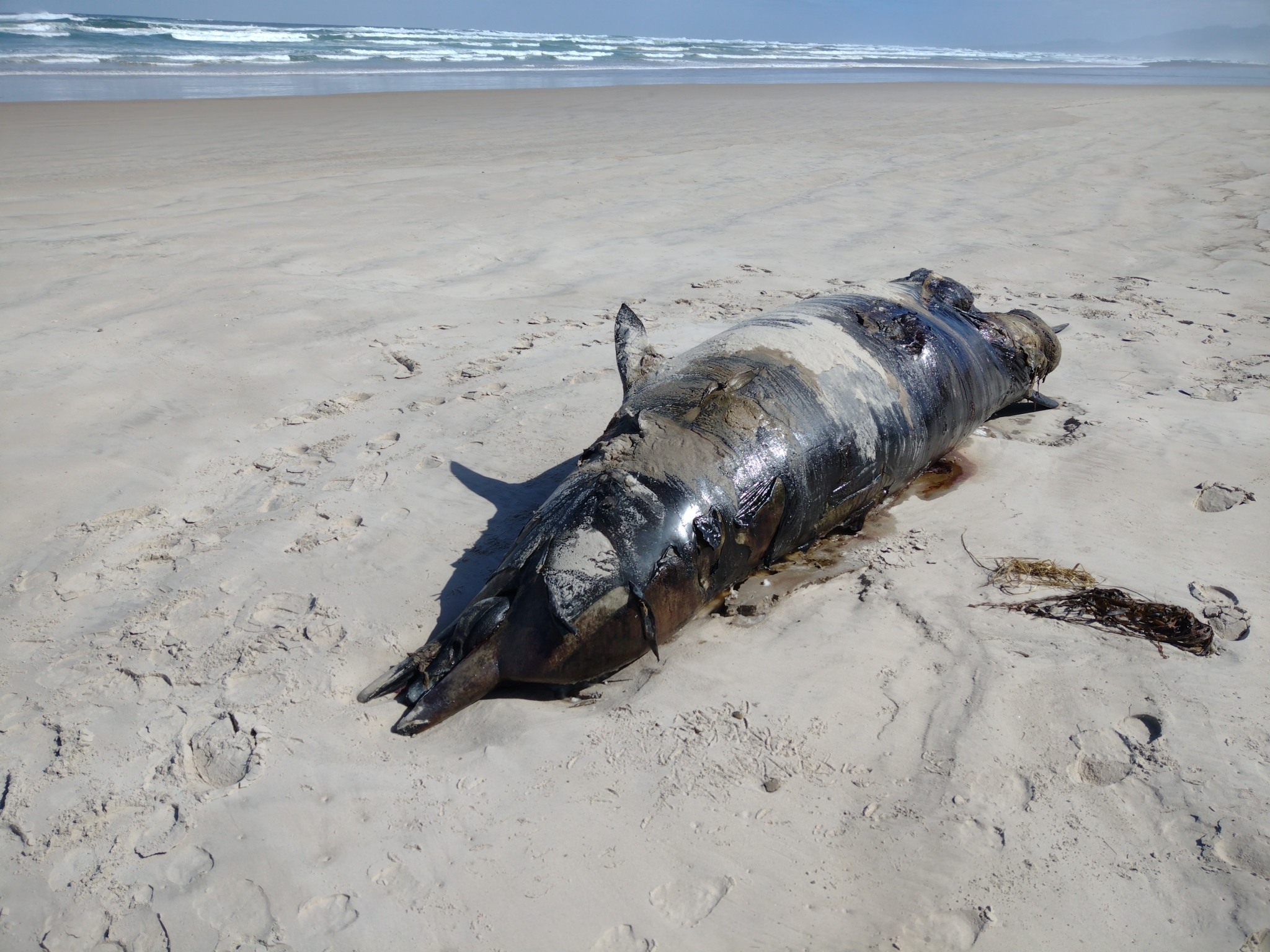
The most diagnostic character remains the dentition, unique within the family: both sexes retain a complete row of functional teeth on the upper and lower jaws, of the order of 17 to 27 pairs per jaw depending on the specimens. In males, two additional tusks project at the tip of the mandible. All the other beaked whales lack functional teeth on the upper jaw. At sea, confusion is nonetheless possible with Arnoux’s beaked whale (Berardius arnuxii), larger, darker and with a less marked melon, with the southern bottlenose whale (Hyperoodon planifrons), whose forehead is distinctly steeper and whose beak is shorter, or again with the southern mesoplodont beaked whales, smaller and lacking a contrasting pale melon.
Described in 1937 by the New Zealand naturalist Walter Reginald Brook Oliver, Shepherd’s beaked whale is the sole representative of the genus Tasmacetus, created to accommodate it: the combination Tasmacetus shepherdi Oliver, 1937 is therefore written without parentheses. The type specimen comes from an animal recovered in 1933 on the coast of south Taranaki, near Ōhawe, in New Zealand. The specific epithet honours George Shepherd, then curator of the Whanganui museum, who collected and reported the skull on which the description was based.
The species belongs to the suborder of odontocetes (toothed whales) and to the beaked whale family, most often designated under the name Ziphiidae but also, depending on the authors, under that of Hyperoodontidae, the two names covering the same taxonomic set. No subspecies is recognised, and no population structure has been able to be demonstrated, for want of genetic samples in sufficient number. The genus remains monotypic: no fossil or living species has been attached to it by consensus.
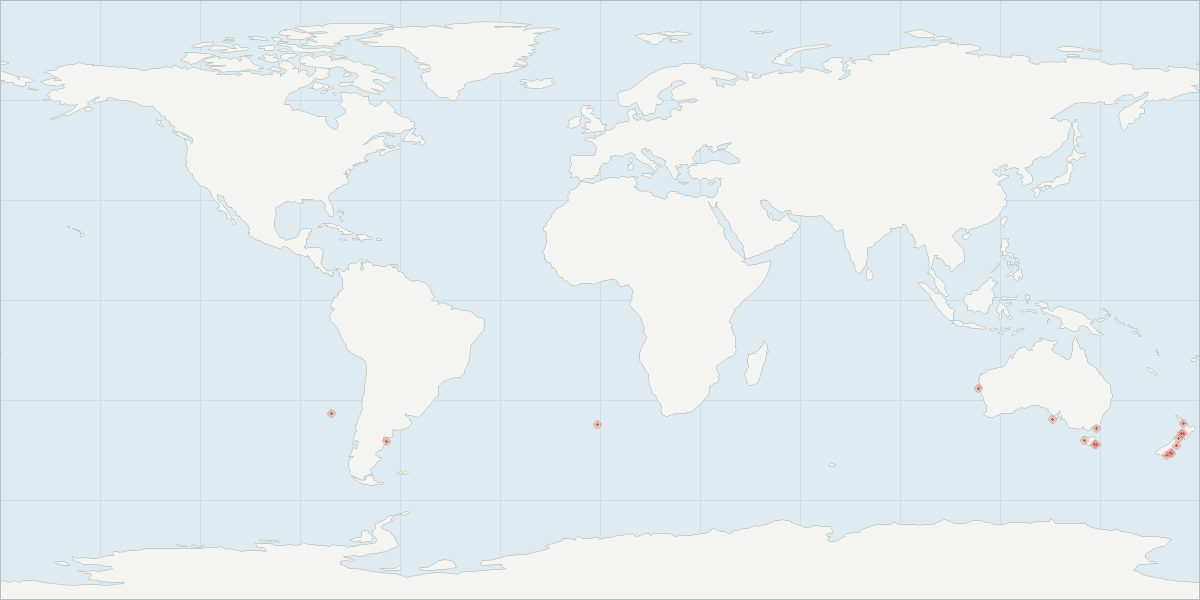
Shepherd’s beaked whale occupies a circumpolar band of the Southern Hemisphere, in cold temperate waters offshore, approximately between 33°S and 50°S. It frequents the great ocean depths, from the continental slope to the abyssal plains, with stranding and sighting data associated with depths of between a few hundred and several thousand metres; submarine canyons appear to constitute a favoured habitat.
The essential part of what is known comes from strandings. A tally closed in 2006 listed 42 cases in all, of which 24 in New Zealand (including the Chatham Islands), 7 in Argentina, 6 at Tristan da Cunha, 3 in Australia and 2 in the Juan Fernández Islands. That total had reached 55 strandings recorded in 2016, New Zealand remaining by far the main global stranding hotspot. Sightings at sea remain exceptional: only four were confirmed in 2006 (two near Tristan da Cunha, one near Gough Island, one south of Tasmania), and nine worldwide before 2016. The situation has changed since, thanks to targeted surveys: a group of ten to twelve animals photographed in 2012 south of Portland (Victoria, Australia), then the very first confirmed sightings in New Zealand waters on 28 and 29 June 2016 in the Taiaroa and Saunders canyons, off Dunedin, where the species has been seen again on several occasions since: two sightings in 2016, four in 2017 and five in 2022, including a group of fifteen to twenty individuals.
In France, the species is absent. No stranding or sighting data is documented in the Mediterranean, in the Bay of Biscay or in the English Channel, which is logical since the known range is strictly southern. The French territories lying within the latitude band concerned, Crozet, Kerguelen, Amsterdam and Saint-Paul, have been the subject of no documented report to date, though the presence of the species in these very little surveyed waters cannot be ruled out.
The diet of Shepherd’s beaked whale stands apart from that of all the other beaked whales, which are generally specialist squid eaters. The stomach contents analysed reveal a mixed and remarkably diversified diet: numerous demersal and midwater fish, Argentine hake, orange roughy, alfonsino, grenadiers, cusk-eels, lanternfish, anglerfish, some twenty species of oceanic squid (in particular Histioteuthis atlantica, Todarodes filippovae, Taningia danae, Ancistrocheirus lesueurii) and benthic crustaceans such as the crab Peltarion spinulosum. This versatility is consistent with the retention of a complete dentition, which allows fast and elusive prey to be seized, while the V-shaped throat grooves of the chin also permit capture by suction. The feeding areas are supposed to lie beyond 500 m depth.
The species appears social and gregarious. The groups reported most often number three to six animals, but gatherings of ten to twenty individuals have been documented. The members of a group surface and dive in a highly synchronised manner. The sequences observed combine dives of 5 to 15 minutes with surface intervals of 4 to 17 minutes, punctuated by regular blows; breaches and spyhops have occasionally been noted. On the acoustic side, recordings made by a hydrophone array in the Otago canyons have brought to light a varied range of ultrasonic signals, in particular broadband echolocation clicks and pulse trains; certain frequency-modulated signals could be specific to the species.
Breeding is practically undocumented: neither calving season, nor gestation length, nor interval between births is established with certainty. The only solid data concern size at birth, about 3 m, and sexual maturity in females reached at around 6 m. Longevity has never been measured directly. The presumed predators are the killer whale and large sharks; the healed cookiecutter shark bites attest, moreover, to regular use of deep oceanic waters.
The global IUCN Red List classes Tasmacetus shepherdi in the “Data Deficient” (DD) category since the assessment carried out by G. Braulik and published in 2018. No population estimate exists, at global or regional scale, and the trend of the population is unknown. This shortfall is directly linked to the rarity of encounters and to the difficulty of studying an offshore, deep-diving species.
No commercial whaling or direct take has ever been reported for this species, and the documented accidental mortalities of human origin remain exceptional. The threats identified therefore remain largely potential. The ingestion of plastic debris has been observed in the digestive tract of stranded animals, as has the presence of longline hooks, two factors liable to cause internal lesions or a fatal obstruction. Like all beaked whales, the species is considered particularly sensitive to intense anthropogenic noise, in particular mid-frequency active military sonars and seismic surveys, which have caused mass strandings in other ziphiids. Bycatch in offshore fishing gear and the long-term effects of climate change on mesopelagic resources constitute additional risks that have not been quantified.
On the regulatory side, the species is listed in Appendix II of CITES, which governs the international trade in specimens, and benefits from the general protections granted to cetaceans in New Zealand and Australian waters. It is also covered by the Memorandum of Understanding for the Conservation of Cetaceans of the Pacific Islands Region.
Watching a Shepherd’s beaked whale is an exceptional event. The species never frequents shallow coastal waters: encounters take place offshore, over depths of several hundred to several thousand metres, most often close to submarine canyons and continental slopes. Three sectors today account for almost all the sightings: the Otago canyons off Dunedin, in New Zealand, where repeated scientific surveys have made it possible to see the species again on several occasions since 2016; the south of the state of Victoria and Tasmania, in Australia; and the Tristan da Cunha archipelago, in the South Atlantic. No commercial trip is dedicated to this species, and encounters occur essentially within the framework of research programmes or offshore crossings.
Conditions determine everything: a flat sea, good visibility and an attentive watch are indispensable. The bushy blow, 1 to 2 m high, is often the first clue, sometimes detectable at a kilometre; one must then look out for the pale melon and the pale sweep on the flank, which distinguish the species from the other southern beaked whales.
Approach ethics are particularly important here. Beaked whales are sensitive to noise and to direct approaches: a sufficient distance should be kept, a group should never be cut across or pursued, a constant and reduced speed should be maintained, the duration of observation should be limited and one should not enter the water. Any sighting or any stranding should be reported to the competent national networks, with photographs, position and time: given the very small number of existing data, each documented report has real scientific value.
It is the only species in the family to retain a complete and functional dentition on both jaws, in males as in females: of the order of 17 to 27 pairs of teeth per jaw. All the other beaked whales have lost their upper teeth and retain, in males, only one or two pairs of mandibular tusks. This distinctive feature also explains its unusually varied diet, rich in fish.
Shepherd’s beaked whale occupies a circumpolar band of the Southern Hemisphere, in cold temperate waters offshore, approximately between 33°S and 50°S. It is therefore not present in the Mediterranean, in the Bay of Biscay or in the English Channel, and no sighting has ever been reported there. The French southern territories (Crozet, Kerguelen, Amsterdam and Saint-Paul) lie within the latitude band concerned, but no documented report has been recorded there to date.
Males measure up to about 7 to 7.1 m and females up to about 6.6 m, which makes it one of the largest beaked whales. Newborns are about 3 m. The mass has never been measured on a complete animal: published estimates range from about 2.3 to 3.5 t, with some visual assessments of 7 m animals putting forward higher values.
They are counted in tens only. Four sightings at sea were confirmed in 2006, and nine worldwide before 2016. The situation has progressed since: a group of ten to twelve animals was photographed in 2012 south of Portland, in Australia, and the first confirmed sightings in New Zealand waters date from 28 and 29 June 2016, in the Taiaroa and Saunders canyons off Dunedin. The species has been seen there again on several occasions since: two sightings in 2016, four in 2017 and five in 2022, including a group of fifteen to twenty individuals.
Because the information needed to assess a risk of extinction is lacking. There is no population estimate, no trend data and very little material on breeding or on the structure of the populations. The most recent global assessment, published in 2018, therefore retains the DD category. This category does not mean that the species is doing well: it signals a gap in knowledge.
No hunt targets it and the documented direct human mortalities are exceptional. The threats identified are above all indirect: ingestion of plastic debris and of longline hooks, observed in stranded animals; noise pollution linked to active military sonars and to seismic prospecting, to which beaked whales are particularly sensitive; bycatch in offshore fishing gear; and the shifting of mesopelagic resources under the effect of climate change.
Profile compiled from authoritative scientific sources (IUCN, NOAA Fisheries, specialist literature) and reviewed for factual accuracy.
According to the open data of the GBIF, 18 georeferenced sightings of Tasmacetus shepherdi are recorded in our photographic index.
| Country | Notes |
|---|---|
| New Zealand | 13 |
| Australia | 8 |
| Chile | 2 |
| Argentina | 1 |
| unknown or invalid | 1 |

Monthly distribution of 23 dated sightings (all years combined): the maximum is reached in February.
| Month | Notes |
|---|---|
| janvier | 3 |
| February | 5 |
| mars | 2 |
| avril | 1 |
| mai | 1 |
| juin | 2 |
| juillet | 3 |
| August | 1 |
| septembre | 1 |
| octobre | 0 |
| novembre | 2 |
| December | 2 |
These figures reflect survey effort (more boaters and more surveys in summer) as much as the actual presence of the species: to be interpreted with caution.


Photographs from GBIF under a Creative Commons licence. The author and the licence of each photograph are given; please respect them if you reuse them.
Automatic selection of the most cited works mentioning the species (source: Crossref).