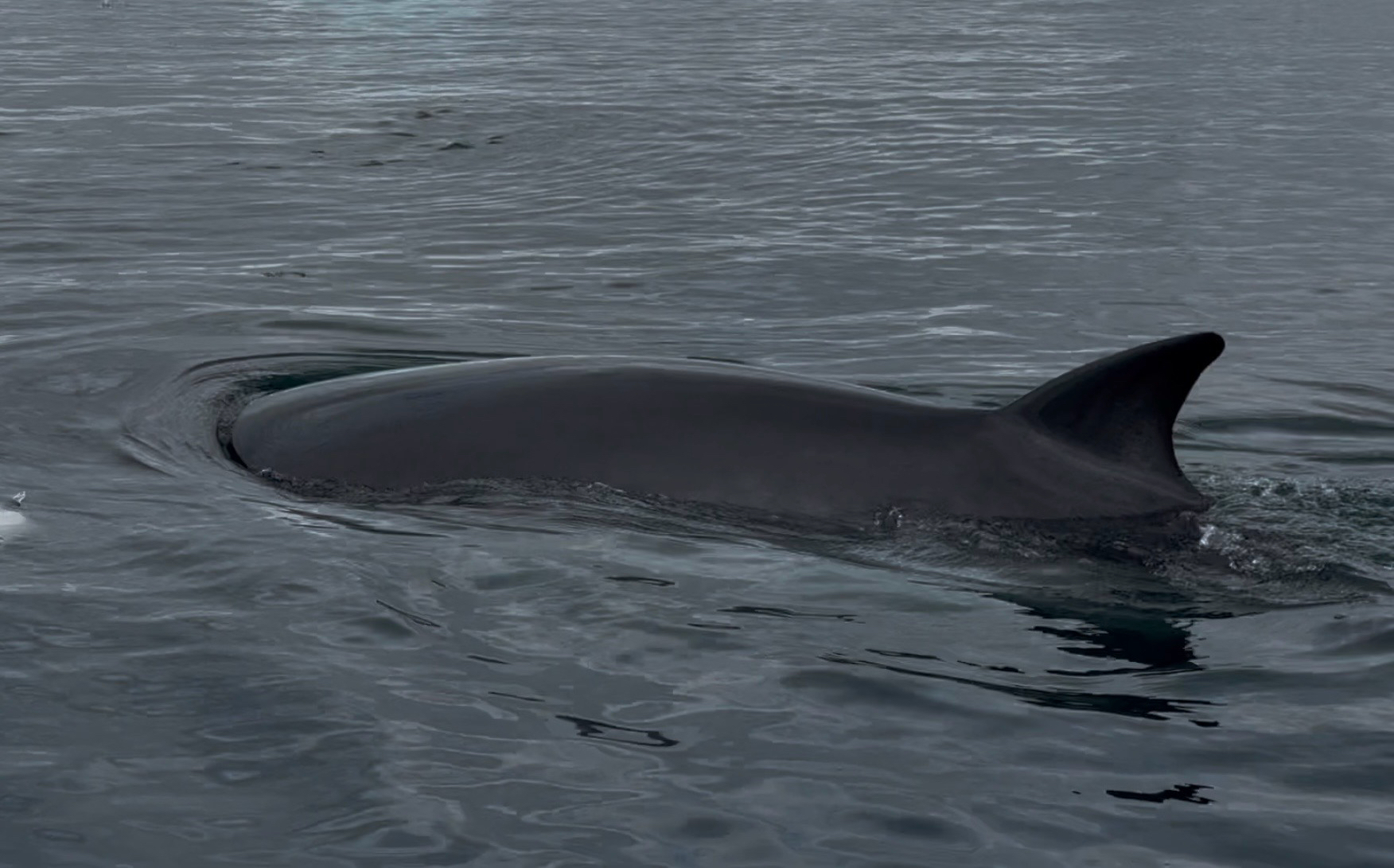
| Scientific name | Balaenoptera bonaerensis Burmeister, 1867 |
|---|---|
| Other names | Antarctic minke whale, southern minke whale; in French: baleine de Minke de l'Antarctique, petit rorqual austral, rorqual de Minke antarctique |
| Size | 7 to 10.7 m; at physical maturity, 8.6 m on average in males and 8.9 m in females; recorded maxima: 11.9 m (female) and 11.27 m (male) |
| Weight | most often 6 to 9 t; among the commercial catches weighed in the Antarctic, 10.4 t for a 9 m female and 8.8 t for an 8.4 m male; the highest values recorded from the Japanese catches (Konishi et al., 2008) reach 12.5 t in a female and 11.05 t in a male |
| Longevity | Commonly estimated at around fifty years; maximum longevities calculated at 59 years (females) and 63 years (males); generation length used by the IUCN: 22 years |
| Diet | Antarctic krill (Euphausia superba) in more than 90% of cases, supplemented by other euphausiids, amphipods and, locally, small fish |
| IUCN status | Near Threatened (NT), assessment published in 2018 (assessors: Cooke, Zerbini & Taylor), classed as “close to criterion A2b”; population trend: unknown. No subpopulation is assessed separately. The species was previously classed as “Data Deficient” (DD). |
The Antarctic minke whale is the most abundant mysticete on the planet: about half a million individuals occur in the Southern Ocean, where they feed almost exclusively on krill at the edge of the sea ice. Long confused with the common minke whale, it was recognised as a species in its own right only at the end of the twentieth century. Despite its abundance, the IUCN classed it as “Near Threatened” in 2018, because of an apparent decline in numbers and its close dependence on sea ice.
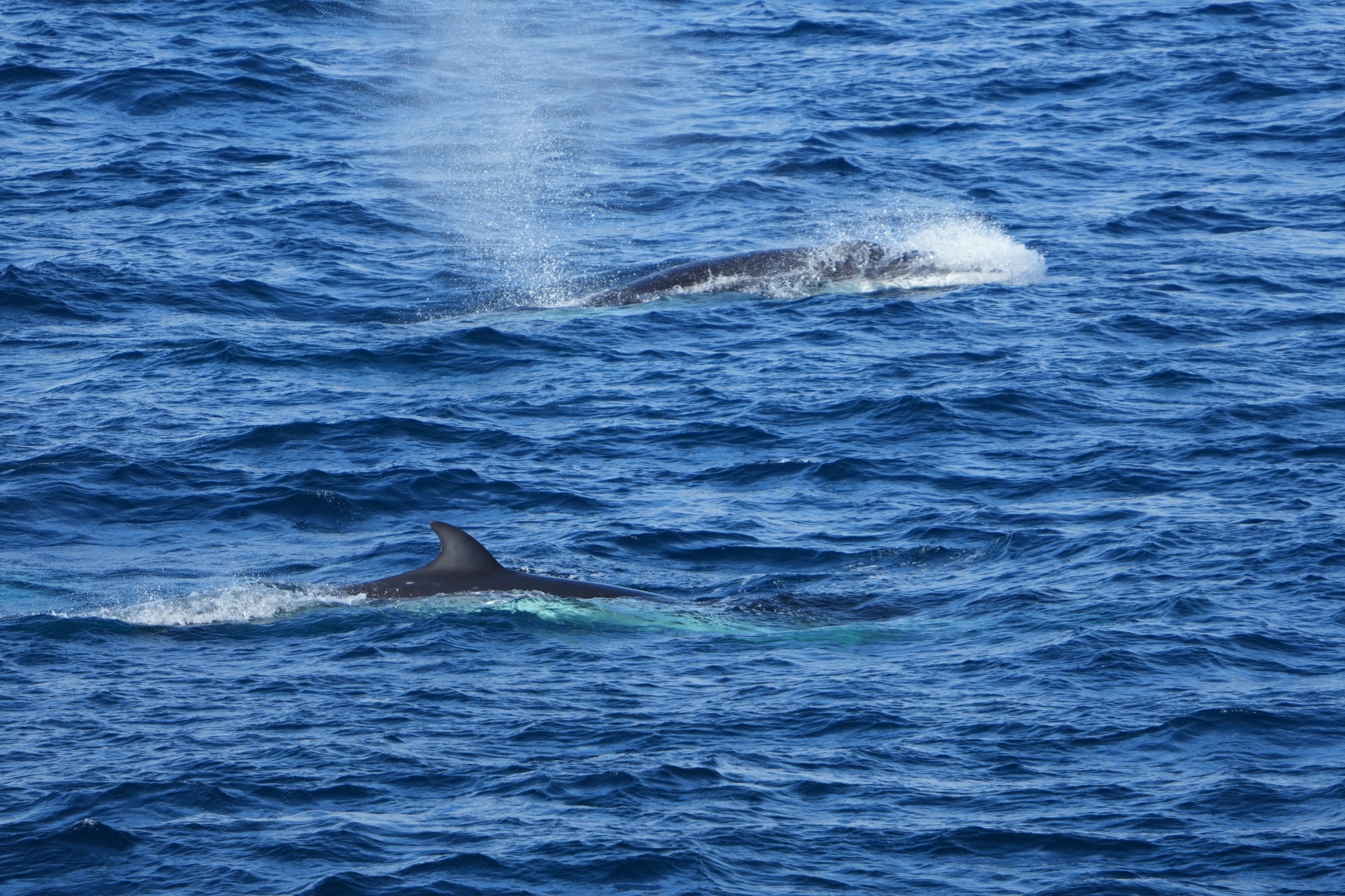
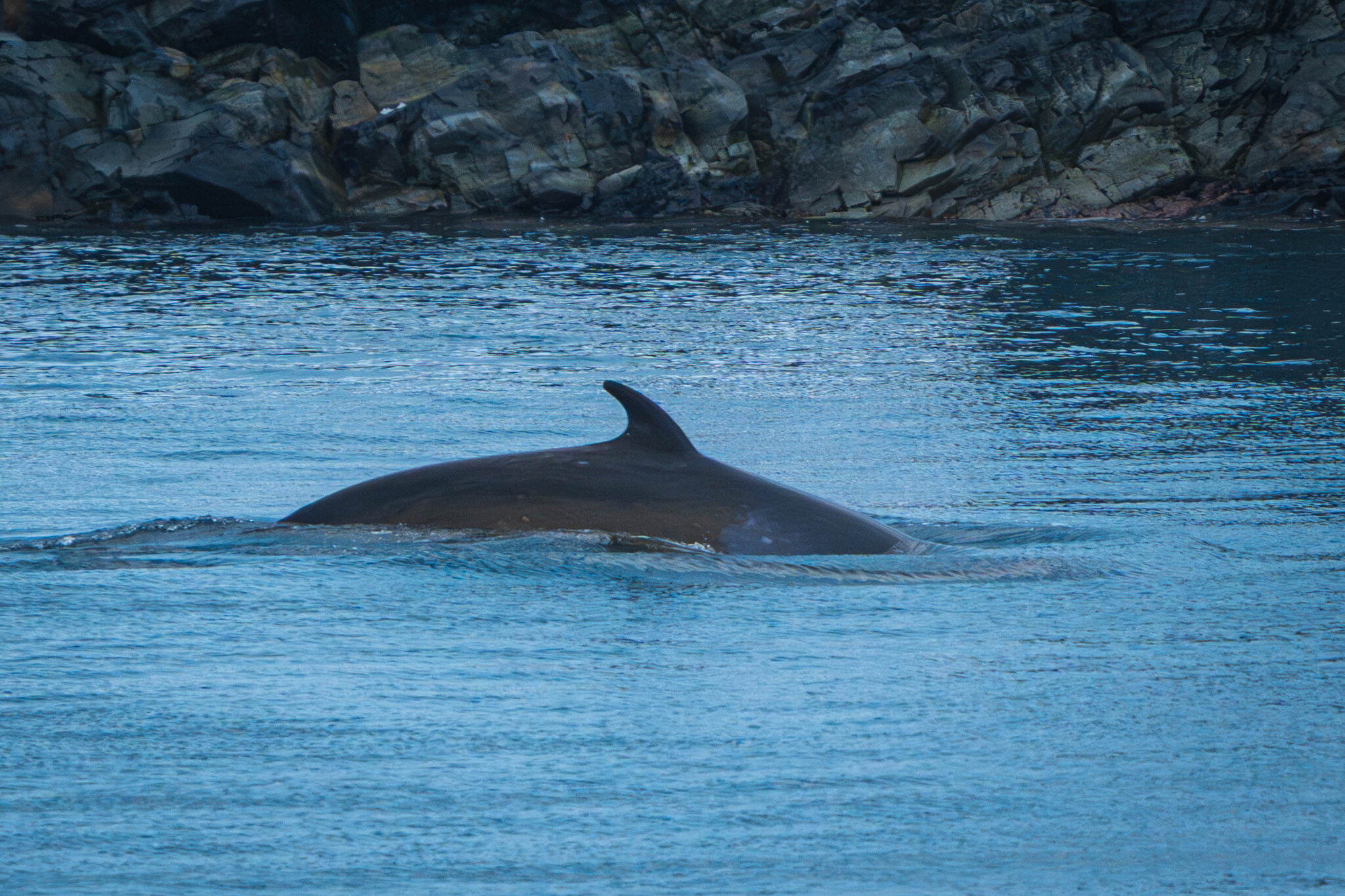
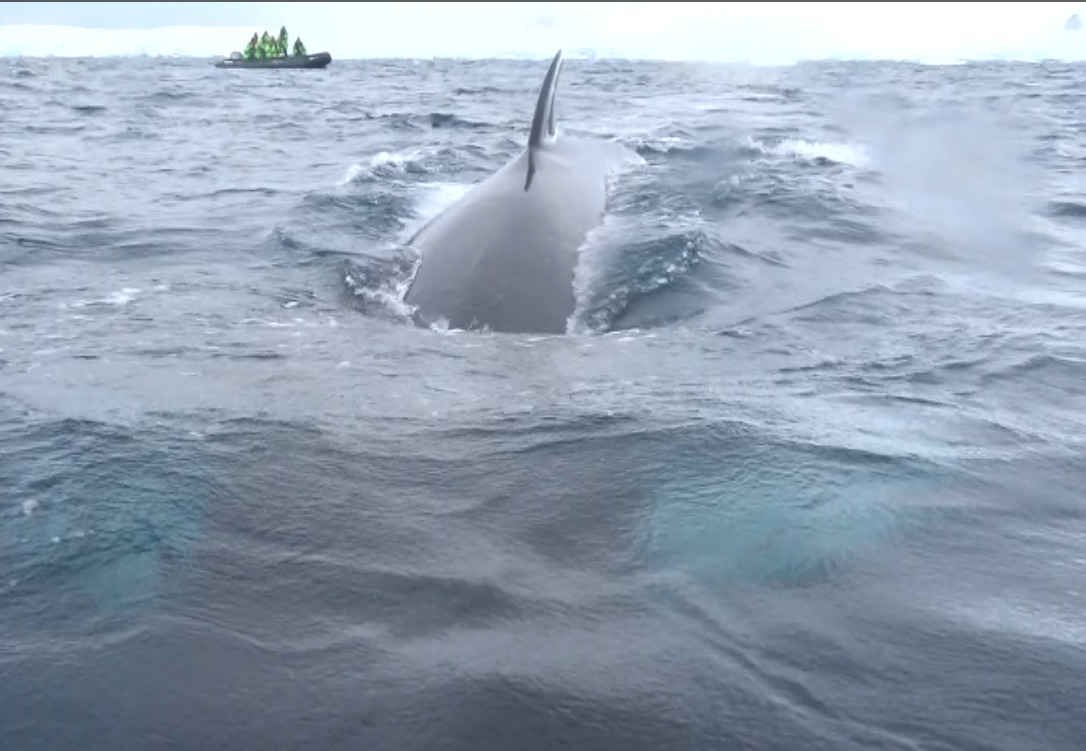
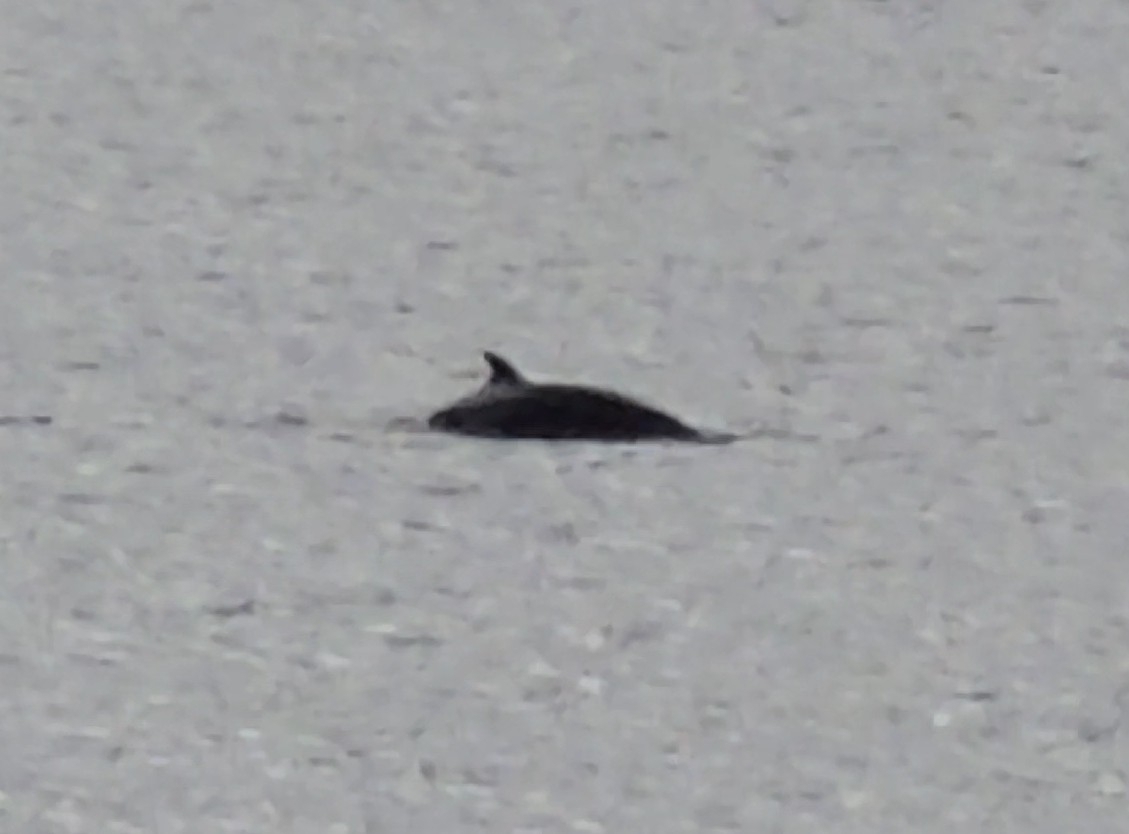
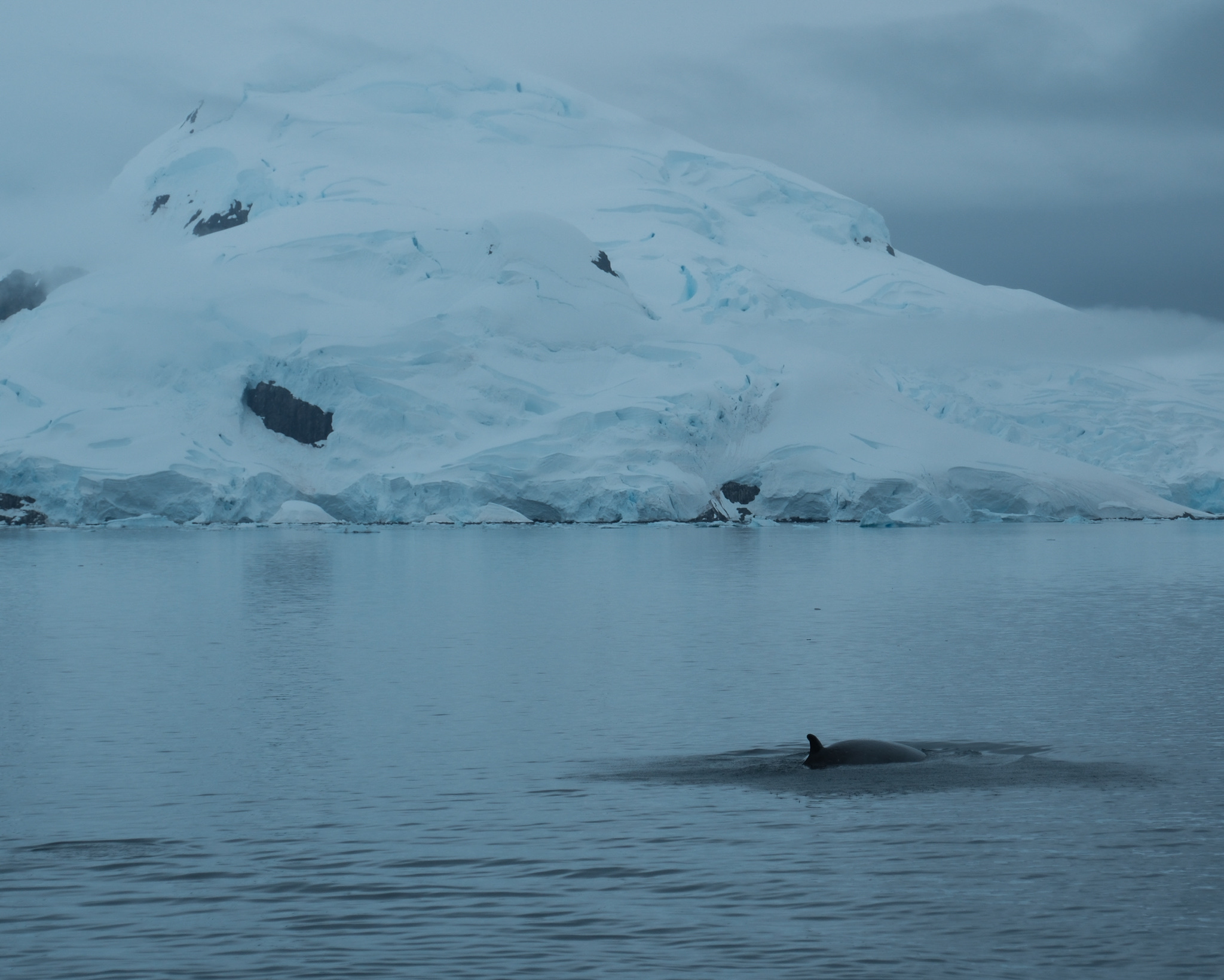
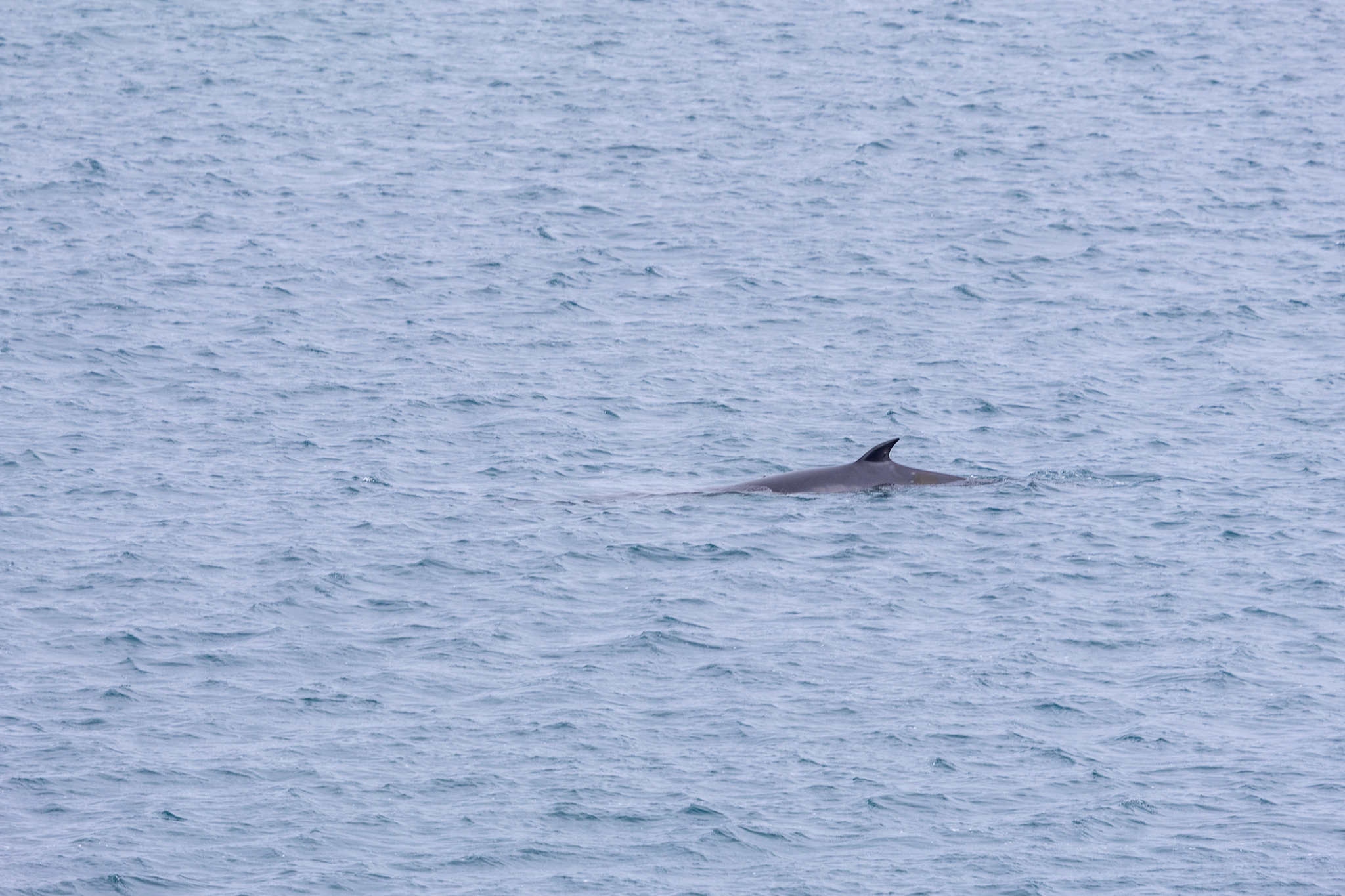
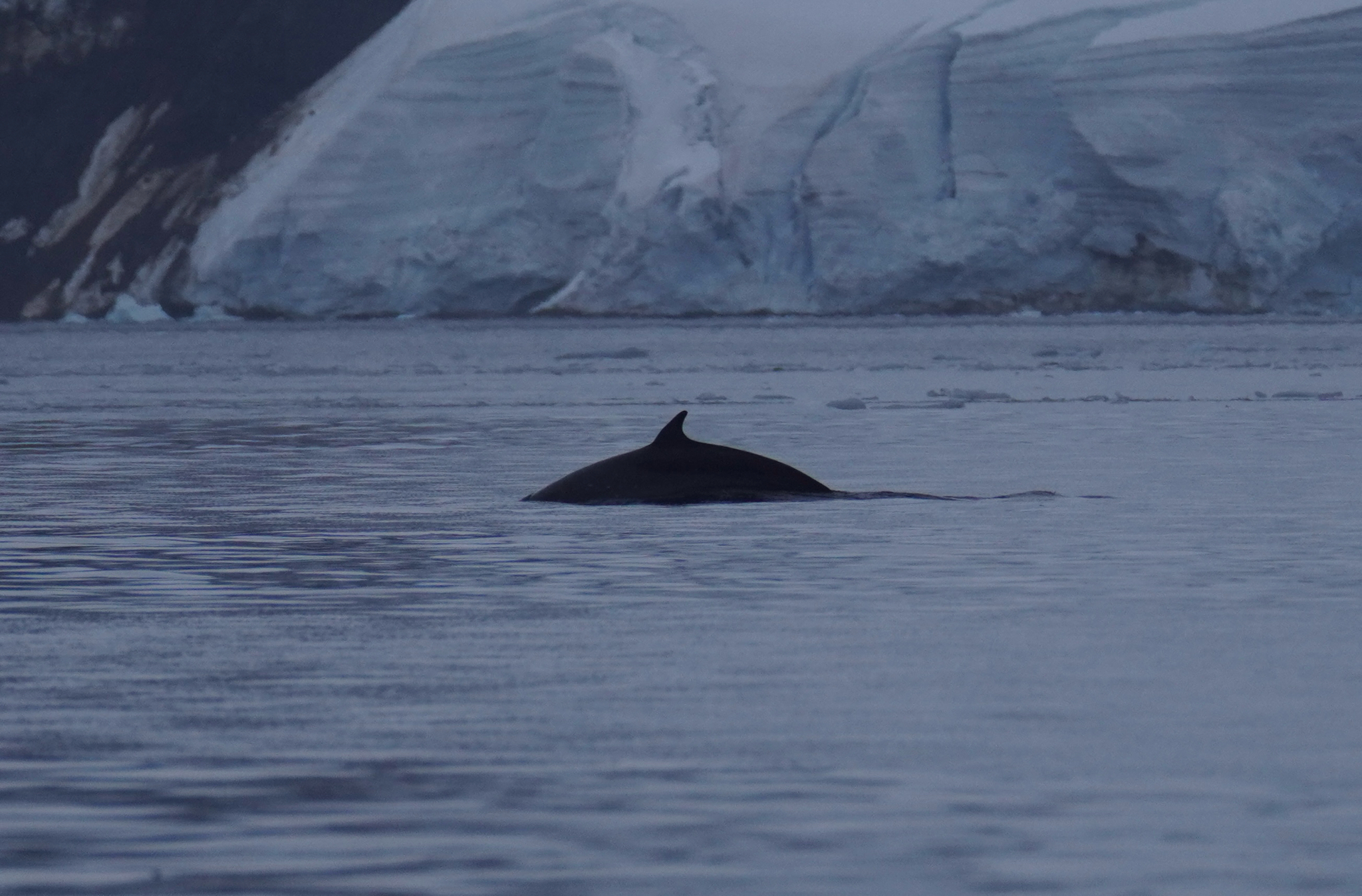
The second smallest rorqual after the common minke whale, and the third smallest of the baleen whales, the Antarctic minke whale measures on average 8.6 m (males) to 8.9 m (females) at physical maturity, for a usual mass of 6 to 9 tonnes. The largest individuals ever measured, taken off Brazil, reached 11.9 m for a female caught in 1969 and 11.27 m for a male caught in 1975. The outline is streamlined and compact, dark grey on the back, pure white on the belly, with a narrow, pointed rostrum that is markedly triangular seen from above. The dorsal fin, tall, upright and falcate, is set two thirds of the way back along the body and appears almost at the same time as the blowhole when the animal surfaces, which gives it a very compressed look at the surface.
The throat carries on average 42 to 44 fine, closely spaced ventral grooves (32 to 70 depending on the individual), which extend over nearly half the length of the body and allow the mouth cavity to distend during lunges. The mouth holds 155 to 415 pairs of baleen plates (273 on average), two-toned: the anterior plates have a white outer edge, the posterior plates a dark grey outer edge.
The most serious risk of confusion concerns the common minke whale (Balaenoptera acutorostrata) and its dwarf form in the southern hemisphere. The most reliable criterion is the flipper: the common minke whale and the dwarf form carry a bright, strongly contrasting transverse white band, whereas the Antarctic minke whale lacks it, its narrow, pointed flippers being either plain light grey with an almost white leading edge and a darker trailing edge, or distinctly two-toned. The dwarf form is further distinguished by a white patch on the shoulder and by a different baleen coloration. At sea, the presence of the species in southern waters alone and its association with ice provide additional contextual clues.
The species was described in 1867 by the naturalist Hermann Burmeister, from a 9.75 m male found in the Río de la Plata, hence the epithet bonaerensis (“of Buenos Aires”). That description then went practically unnoticed for more than a century, all the minke whales in the world being assigned to a single species. In the 1980s, systematic examination of catches in the southern hemisphere revealed the coexistence of two forms: a large form with dark flippers and a “dwarf” form with flippers marked with white. Genetic analyses confirmed the existence of two distinct species; the specific rank of Balaenoptera bonaerensis was restored by the cetologist Dale W. Rice, then endorsed by the International Whaling Commission. The southern dwarf form is today assigned to the common minke whale, as a still unnamed subspecies. Within the Southern Ocean, two demographic units are distinguished, on either side of 165° E: an “Indian” sector to the west and a “Pacific” sector to the east.
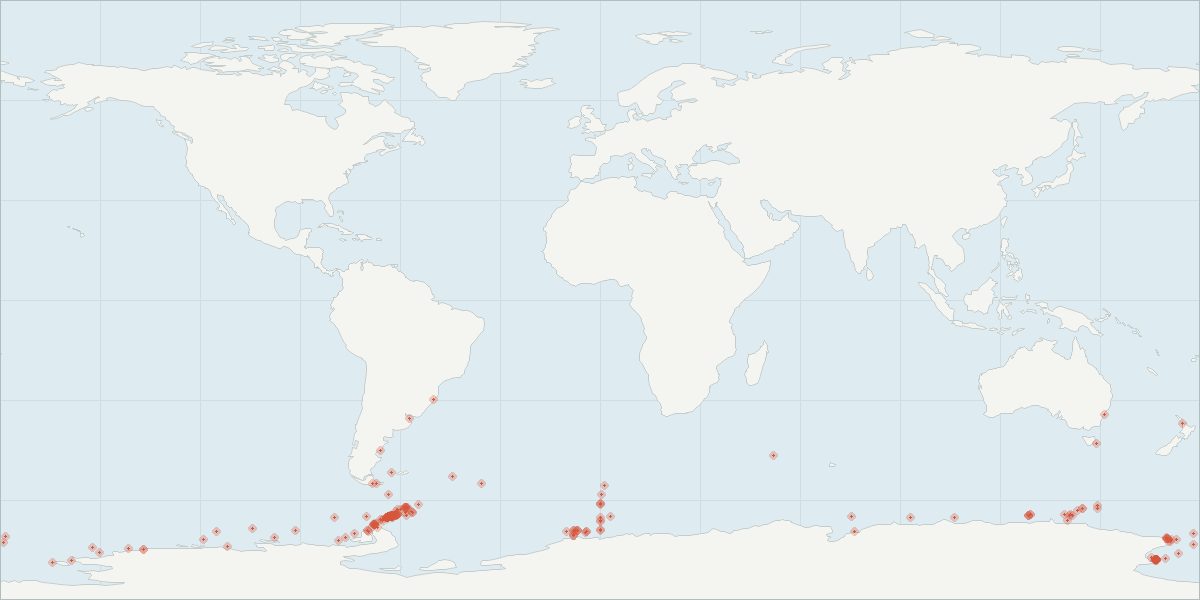
The summer distribution is circumpolar in the Southern Ocean, mainly south of 60° S, with high densities in the Weddell Sea and the Ross Sea. The species is closely associated with the sea ice: it penetrates deep into the ice fields, exploits leads and polynyas, and readily stays at the edge of the pack where krill concentrates. Acoustic data show that some of the animals remain present in Antarctic waters for much of the year.
In the austral winter, a fraction of the population migrates towards the subtropical and tropical waters of the South Atlantic, Indian and Pacific oceans. Individuals tagged in the Antarctic have been found a few months later off north-eastern Brazil, where a whaling station at Costinha, operated by the Compania de Pesca Norte do Brasil (COPESBRA) from 1911 and closed in 1985, took the species between 6° and 8° S. Acoustic recordings also attest to a seasonal presence off Namibia, in the Santos Basin (Brazil) and in the Perth Canyon (Western Australia).
In the northern hemisphere, the species occurs only as vagrant individuals: an 8.2 m male was caught west of Jan Mayen, in the north-east Atlantic, on 30 June 1996, and a hybrid with the common minke whale was identified in the same area in 2007; extralimital records have also been logged in the western Atlantic: a 7.7 m female found dead off Louisiana (Gulf of Mexico) in February 2013, and an 8.2 m female killed in October 1963, 45 km up the Coppename River, in Suriname.
In France, the species is absent from metropolitan waters: the minke whales seen in the English Channel, in the Atlantic, in the Bay of Biscay or in the Mediterranean belong to the common minke whale. The link with France runs through the southern territories: the waters of the French Southern and Antarctic Lands lie within the range of the species, which is recorded there regularly, and the Réunion association Globice lists it among the species recorded in the Indian Ocean, consistent with the winter movement towards subtropical waters. Like all cetaceans, the species is protected on French territory.
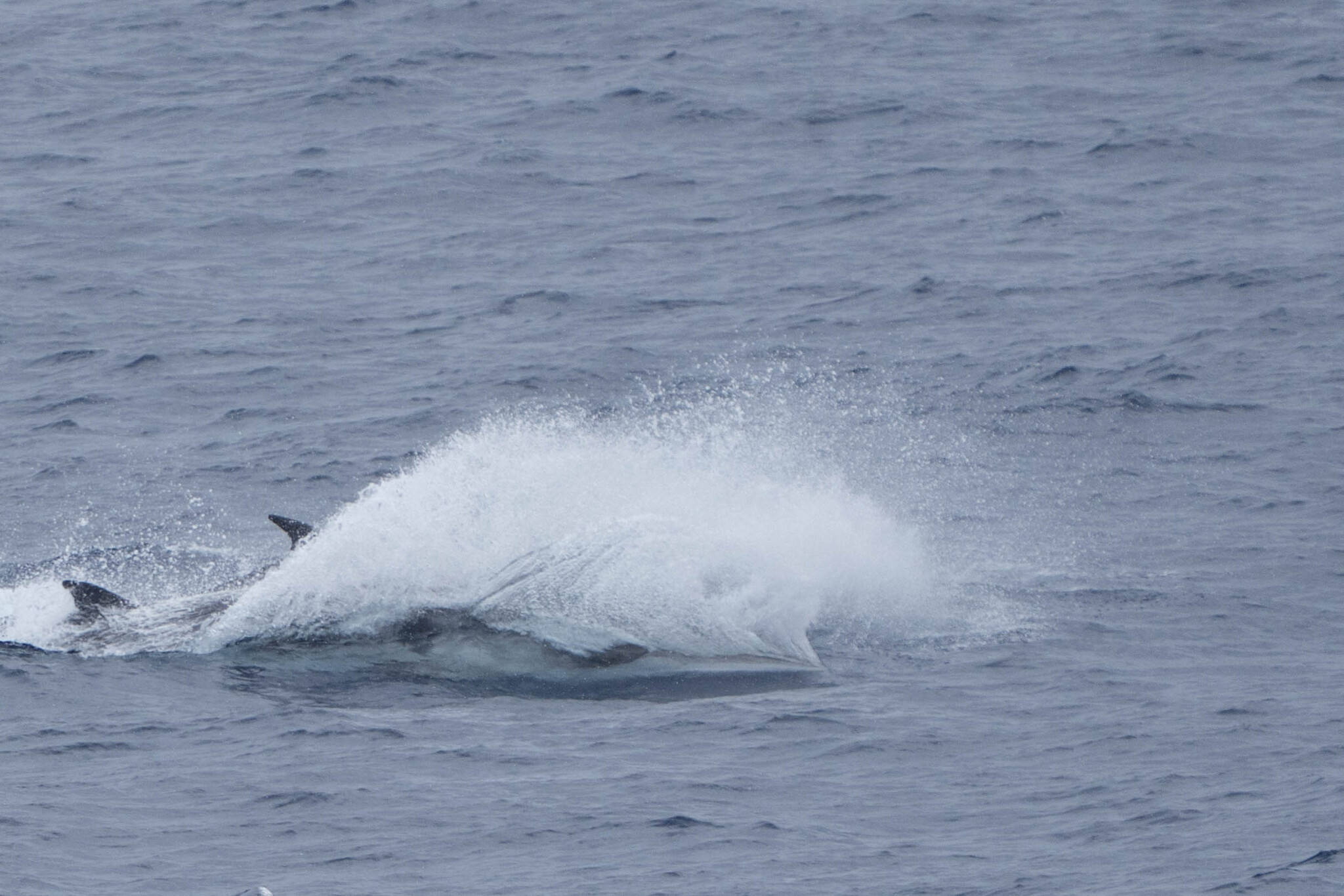
The diet is remarkably specialised: in the surveys carried out in the Southern Ocean, more than 90% of the individuals examined had eaten Antarctic krill (Euphausia superba), other euphausiids taking over locally, as in Prydz Bay. Amphipods and small fish occasionally complete the menu. Prey is taken by lunge feeding: the animal charges into a swarm, opens its mouth wide, distends its throat grooves, then filters the water through its baleen.
The species is more gregarious than its northern relative, without forming large permanent aggregations: the mean group size in the Antarctic is about 2.4 individuals, but aggregations of up to sixty animals are seen on the feeding grounds. A clear segregation by sex and age class is apparent according to season and latitude. Diving follows a daily rhythm: night dives generally stay shallower than 40 m, while day dives often exceed 100 m. A top speed of about 30 km/h has been measured. Under the sea ice, the animals spyhop to clear their blowhole in narrow cracks, and can break thin ice in order to breathe.
Breeding is set by the migratory cycle: after a gestation of about 10 months, a single calf of 2.7 m on average (2.4 to 2.8 m, for some 400 kg) is born in the austral winter, with a peak of births in May and June and a peak of conceptions in August and September. Weaning occurs at around six months, at a length of about 4.6 m. Sexual maturity is reached at about 5 to 8 years in males and 7 to 9 years in females. Estimates of the interval between two births diverge: the data from whaling suggest a rapid rhythm for a mysticete, of the order of 12.5 to 14 months, whereas other sources give one birth every two years.
The acoustic repertoire includes whistles, clicking sounds, grunts, bell-like sounds and frequency downsweeps from about 130-115 Hz towards 60 Hz. The species is best known for the “bio-duck”, a series of pulse trains of 50 to 200 Hz repeated every 1.5 to 3 seconds, heard in the Southern Ocean since the 1960s and whose origin remained a mystery until it was attributed to the Antarctic minke whale in 2014. Killer whales, those of type A in particular, are its main natural predator.
The species appears on the IUCN Red List as Near Threatened (NT), following an assessment published in 2018 which places it “close to criterion A2b”. The Scientific Committee of the International Whaling Commission accepted in 2012 two circumpolar abundance estimates: 720,000 individuals (95% CI: 512,000-1,012,000) for the period 1986-1991, and 515,000 individuals (95% CI: 361,000-733,000) for 1993-2002, an apparent fall of 31%. Since the confidence intervals overlap widely, the statistical reality of this decline remains uncertain and the trend is officially described as unknown. With a generation length estimated at 22 years, assessing the trend over three generations remains difficult. The global stock nonetheless numbers in the hundreds of thousands of individuals, which makes it the most abundant baleen whale in the world.
Whaling was long the major pressure. Neglected by whalers because of its small size and its low oil yield, the Antarctic minke whale became their main target once the large rorquals had been depleted: about 98,000 individuals were taken in the Southern Ocean between 1950-51 and 1986-87, almost all of them from the 1970s onwards, with a peak of 7,900 animals in 1976-77; more than 14,000 were taken off Brazil between 1949 and 1985 and 1,113 off South Africa between 1968 and 1975. After the International Whaling Commission moratorium came into force in 1986, hunting continued under special permits described as “scientific”: the JARPA programme from 1987-88, then JARPA II from 2005-06, with a target of 850 Antarctic minke whales a year. The International Court of Justice ruled on 31 March 2014 that JARPA II did not come under scientific research and ordered it to stop; the NEWREP-A programme succeeded it with a quota of 333 animals a year. Japan announced its withdrawal from the International Whaling Commission on 26 December 2018, effective on 1 July 2019, and then ended its campaigns in the Southern Ocean to confine itself to its national waters.
The species is listed in Appendix I of CITES, which prohibits international trade for commercial purposes, and its summer habitat is covered by the Southern Ocean Sanctuary created by the International Whaling Commission in 1994. The threat regarded today as the most structuring is climate change: the projections used in the IUCN assessment report a reduction of the order of 30% in summer sea ice and 50% in winter sea ice, which would affect both the habitat of the species and the availability of krill. Analyses of the data from the Japanese hunt (Konishi et al., 2008) reported a decrease in blubber thickness and in energy reserves over the decades, interpreted as a possible sign of nutritional stress. To these are added the pressures common to all large cetaceans: entanglement in fishing gear, collisions with vessels and noise pollution.
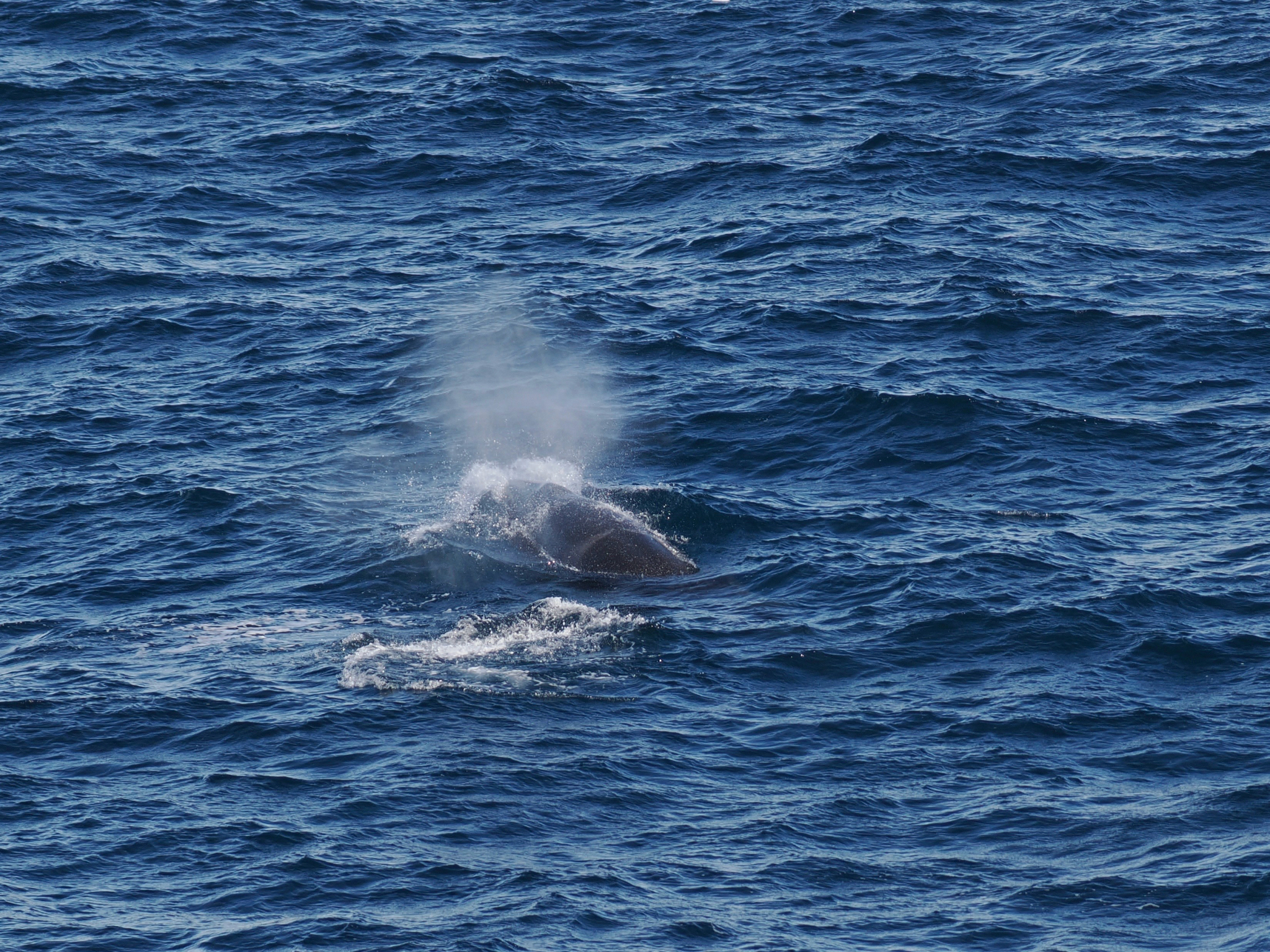
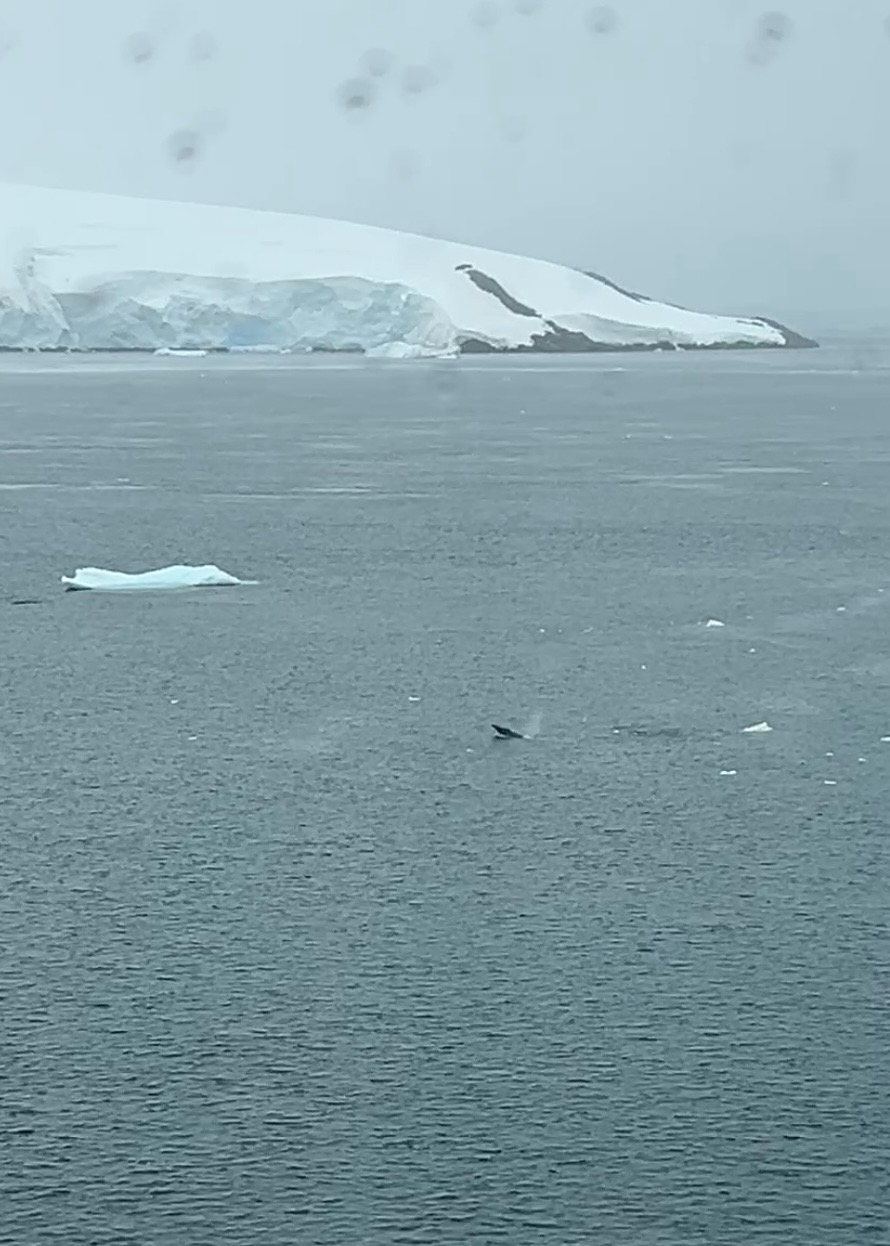
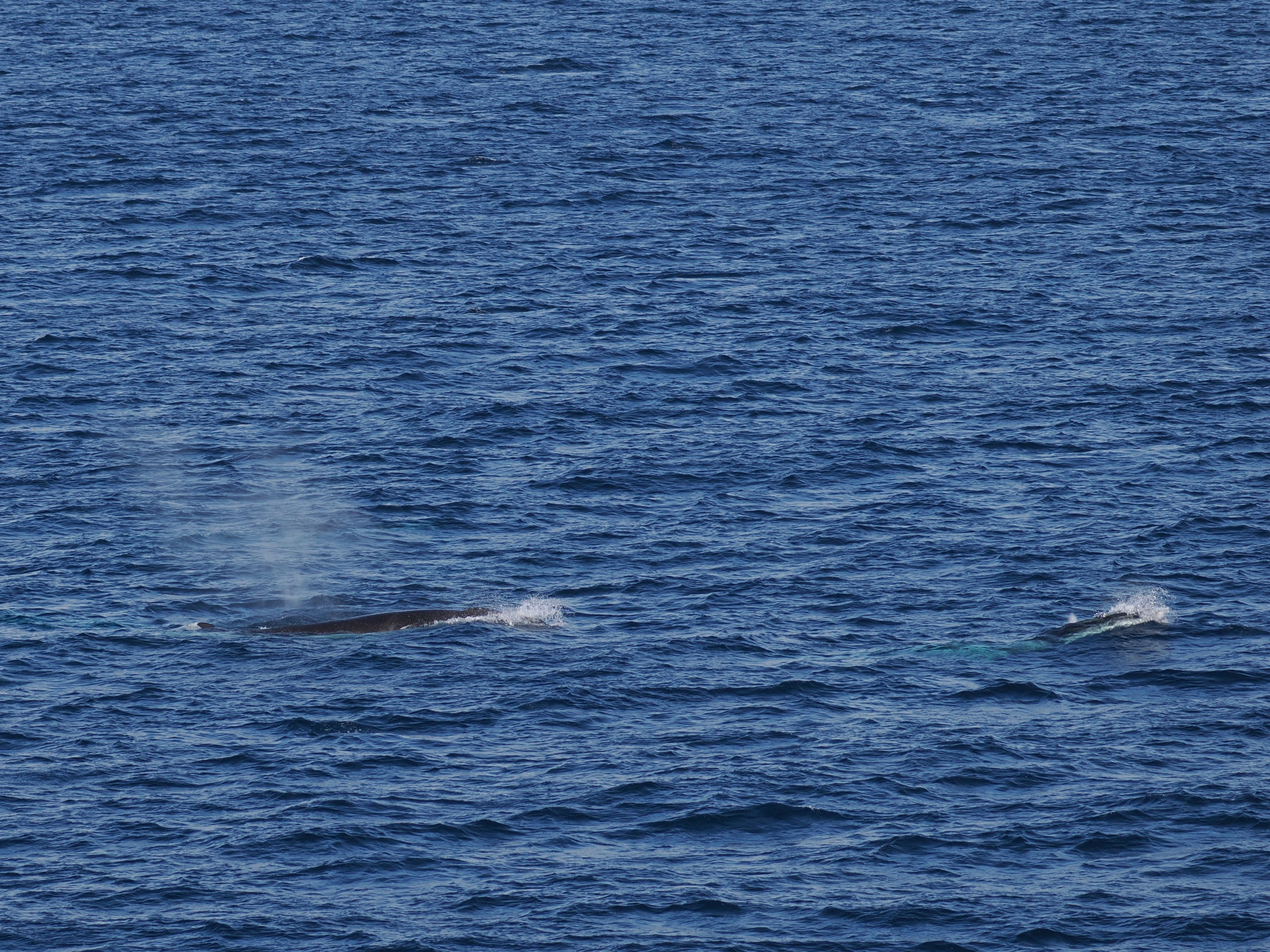
Sightings are made overwhelmingly during Antarctic cruises in the austral summer, from November to March, in particular along the Antarctic Peninsula and in the ice-choked bays. The animal often allows a close approach while it is feeding and is sometimes curious, coming alongside boats. Look for a discreet blow, a rapid surfacing in which the pointed rostrum and the dorsal fin appear almost simultaneously, and watch the leads between the ice floes, where the animals come up to breathe through narrow openings. Identification is confirmed by the absence of a white band on the flipper.
Watching must remain non-intrusive: keep a sufficient distance, never cut across an animal's path or come between a female and her calf, approach slowly and in parallel, reduce engine revolutions, limit the length of the encounter and refrain from entering the water nearby. The International Whaling Commission's recommendations for whale watching in the Antarctic govern these practices. In metropolitan France, this species cannot be seen: the minke whales encountered in the Bay of Biscay, in the English Channel or in the Mediterranean belong to the common minke whale.
The decisive criterion is the flipper. The common minke whale, including its dwarf form in the southern hemisphere, carries a strongly contrasting transverse white band on the flipper. The Antarctic minke whale lacks it entirely: its flippers are plain light grey, with an almost white leading edge, or distinctly two-toned. Baleen coloration, two-toned in B. bonaerensis, and the strictly southern distribution provide further clues.
The Scientific Committee of the International Whaling Commission accepted in 2012 an estimate of 515,000 individuals (95% confidence interval: 361,000 to 733,000) for the period 1993-2002, against 720,000 for 1986-1991. It is the most abundant baleen whale in the world, but the uncertainties around these figures remain considerable.
It most often measures 7 to 10.7 m, with an average at physical maturity of 8.6 m in males and 8.9 m in females; the measured records reach 11.9 m for a female and 11.27 m for a male. The usual weight lies between 6 and 9 tonnes. The commercial catches weighed in the Antarctic gave values of 10.4 t (9 m female) and 8.8 t (8.4 m male), while the weighings carried out on the Japanese catches (Konishi et al., 2008) go up to 12.5 t in a female and 11.05 t in a male.
The IUCN classification does not depend on absolute numbers alone but also on the dynamics of the population. Between the two series of circumpolar surveys, estimated abundance fell by 31%, which led to a classification close to criterion A2b, even though the overlap of the confidence intervals prevents any firm conclusion of a decline. The dependence of the species on sea ice and on krill, both threatened by the warming of the Southern Ocean, also weighs in the assessment.
It is no longer hunted in the Southern Ocean. After the 1986 moratorium, hunting continued under Japanese special permits (JARPA, then JARPA II, judged not to be scientific research by the International Court of Justice on 31 March 2014, then NEWREP-A with 333 animals a year). Japan withdrew from the International Whaling Commission on 1 July 2019 and ended its Antarctic campaigns to confine itself to its national waters.
Not in metropolitan France: the minke whales of the English Channel, the Bay of Biscay and the Mediterranean belong to the neighbouring species, the common minke whale. The waters of the French Southern and Antarctic Lands, on the other hand, fall within the range of the species, and its winter migration towards the subtropical waters of the Indian Ocean makes it theoretically present in the Réunion sector, where it is among the species on record.
Yes, but very exceptionally, as vagrant individuals. An 8.2 m male was caught west of Jan Mayen, in the north-east Atlantic, on 30 June 1996, and a hybrid with the common minke whale was identified there in 2007. In the western Atlantic, a 7.7 m female was found dead off Louisiana, in the Gulf of Mexico, in February 2013, and an 8.2 m female was killed in October 1963, 45 km up the Coppename River, in Suriname.
It is a repetitive sound sequence, made of pulse trains of 50 to 200 Hz repeated every 1.5 to 3 seconds, reminiscent of a duck quacking. Recorded in the Southern Ocean from the 1960s onwards, it remained of unknown origin for more than fifty years before being attributed to the Antarctic minke whale in 2014, thanks to acoustic tags placed on animals.
Profile compiled from authoritative scientific sources (IUCN, NOAA Fisheries, specialist literature) and reviewed for factual accuracy.
According to the open data of the GBIF, 223 georeferenced sightings of Balaenoptera bonaerensis are recorded in our photographic index.
| Country | Notes |
|---|---|
| Antarctica | 210 |
| unknown or invalid | 6 |
| Argentina | 5 |
| Australia | 2 |
| Brazil | 1 |
| Falkland Islands (Malvinas) | 1 |
| French Southern Territories | 1 |
| New Zealand | 1 |
| South Georgia and the South Sandwich Islands | 1 |

Monthly distribution of 225 dated sightings (all years combined): the maximum is reached in February.
| Month | Notes |
|---|---|
| janvier | 53 |
| February | 84 |
| mars | 13 |
| avril | 5 |
| mai | 1 |
| juin | 0 |
| juillet | 0 |
| August | 2 |
| septembre | 0 |
| octobre | 1 |
| novembre | 19 |
| December | 47 |
These figures reflect survey effort (more boaters and more surveys in summer) as much as the actual presence of the species: to be interpreted with caution.


Photographs from GBIF under a Creative Commons licence. The author and the licence of each photograph are given; please respect them if you reuse them.
Automatic selection of the most cited works mentioning the species (source: Crossref).