| Scientific name | Monodon monoceros Linnaeus, 1758 |
|---|---|
| Other names | Sea unicorn; narval (French), Narhval (Danish), tuugaalik and qirniqtaq (Inuktitut) |
| Size | Excluding the tusk, 4.6 to 4.8 m in males and 4.0 to 4.2 m in females; newborn 1.5 to 1.6 m |
| Weight | Up to about 1,600 kg in males, 1,000 to 1,200 kg in females; about 80 kg at birth |
| Longevity | Often quoted at around 50 years; amino acid racemisation dating indicates more than a century, with maxima estimated at 115 ± 10 years in females and 84 ± 9 years in males |
| Diet | Medium to large Arctic fish (polar cod, Arctic cod, Greenland halibut), squid and shrimp, taken by suction near the bottom |
| IUCN status | Least Concern (LC), 2017 IUCN assessment, status still in force. Regional statuses contrast: the West Greenland population is “Near Threatened” and the East Greenland population “Endangered” on the Greenland Red List, and the species is “Vulnerable” on the Norwegian Red List; in Canada it was reassessed as “Not at Risk” by COSEWIC in May 2024 (previously “Special Concern” since November 2004) |
The only member of the genus Monodon, the narwhal is a strictly Arctic toothed whale, immediately recognisable by the long spiral tusk borne by almost all males. It has no dorsal fin and is tied all year round to the ice-covered waters of Canada, Greenland, Svalbard and Russia, and it ranks among the deepest divers of all cetaceans. Listed as Least Concern globally, it remains highly exposed to the retreat of the sea ice and, locally, to unsustainable hunting.
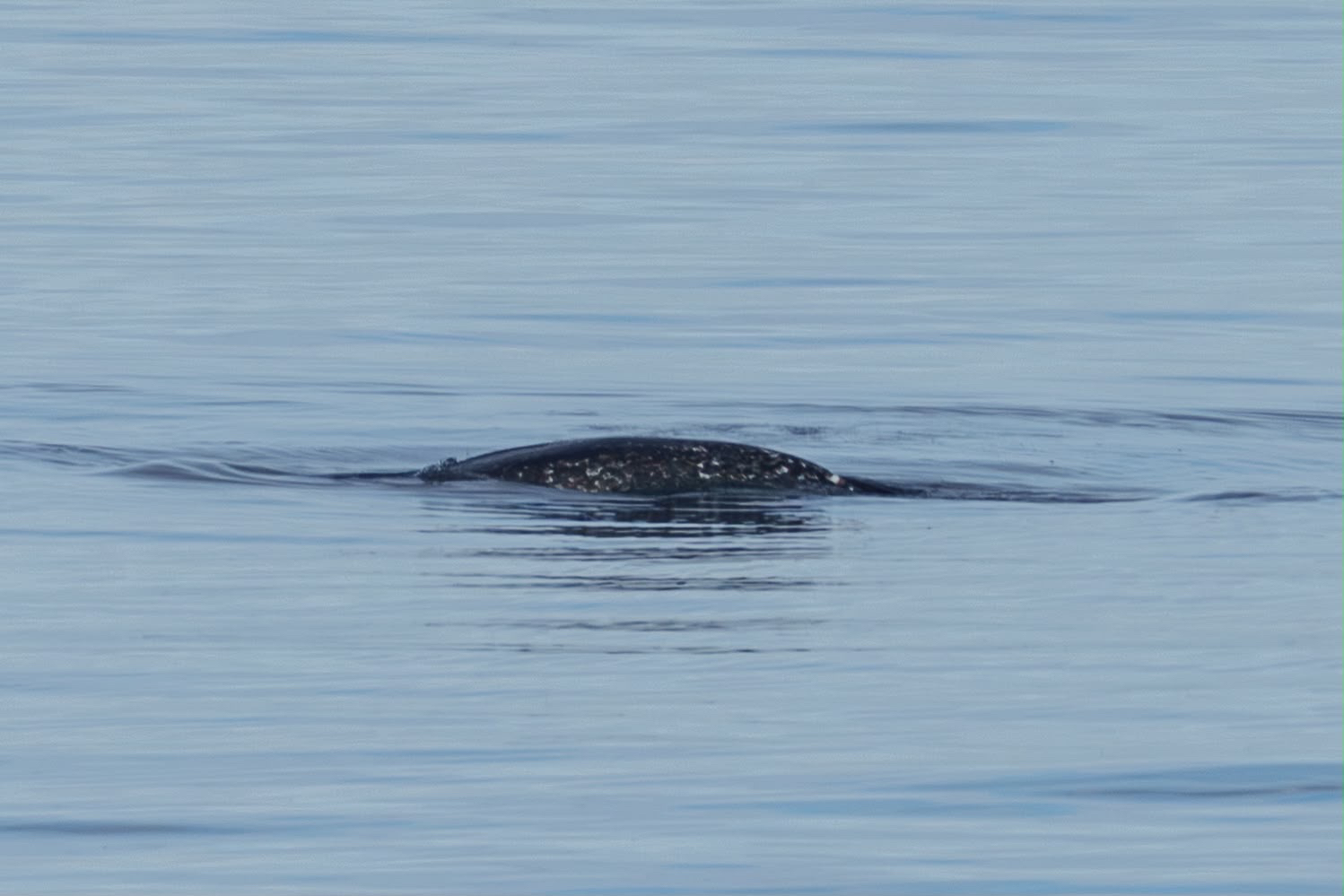
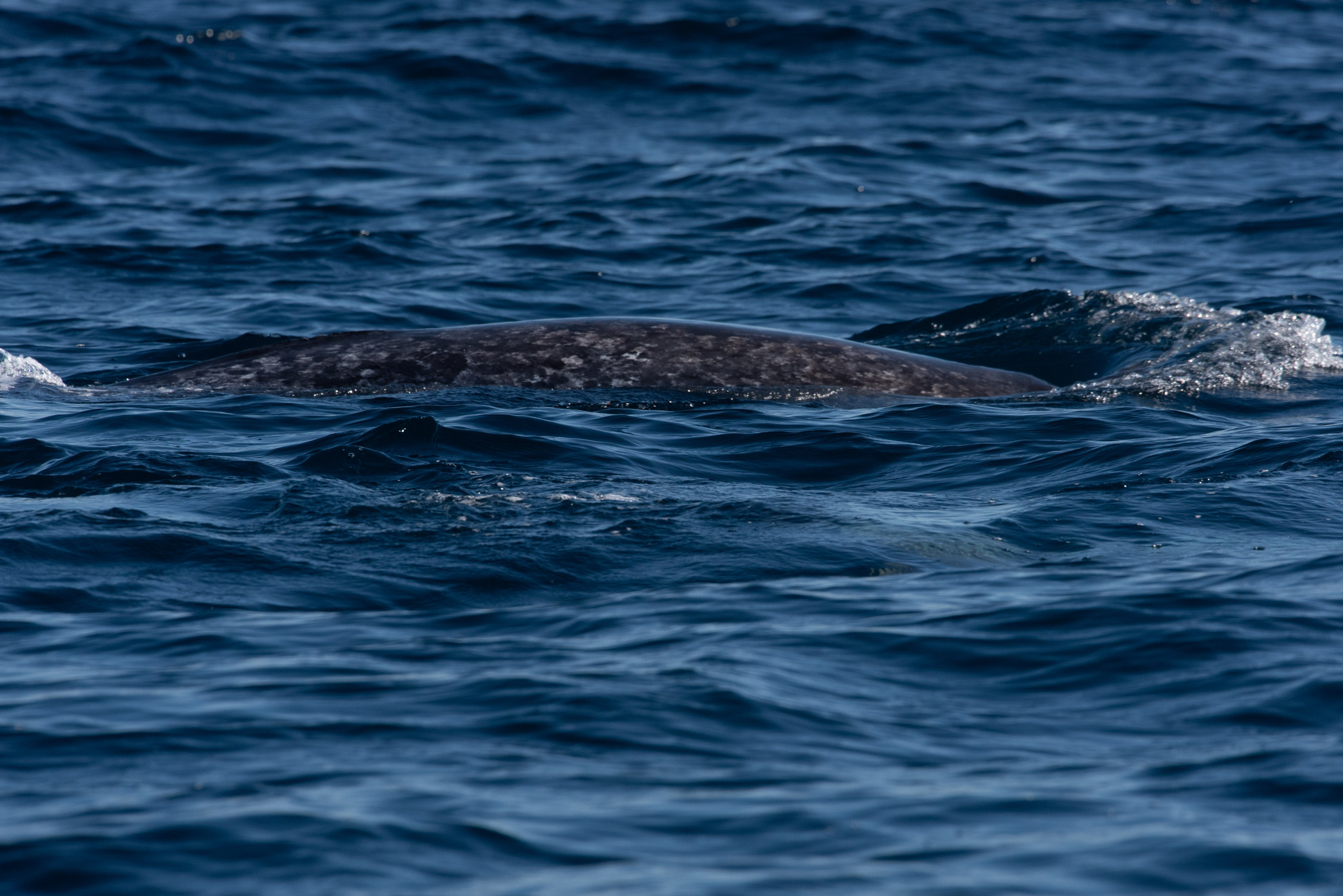
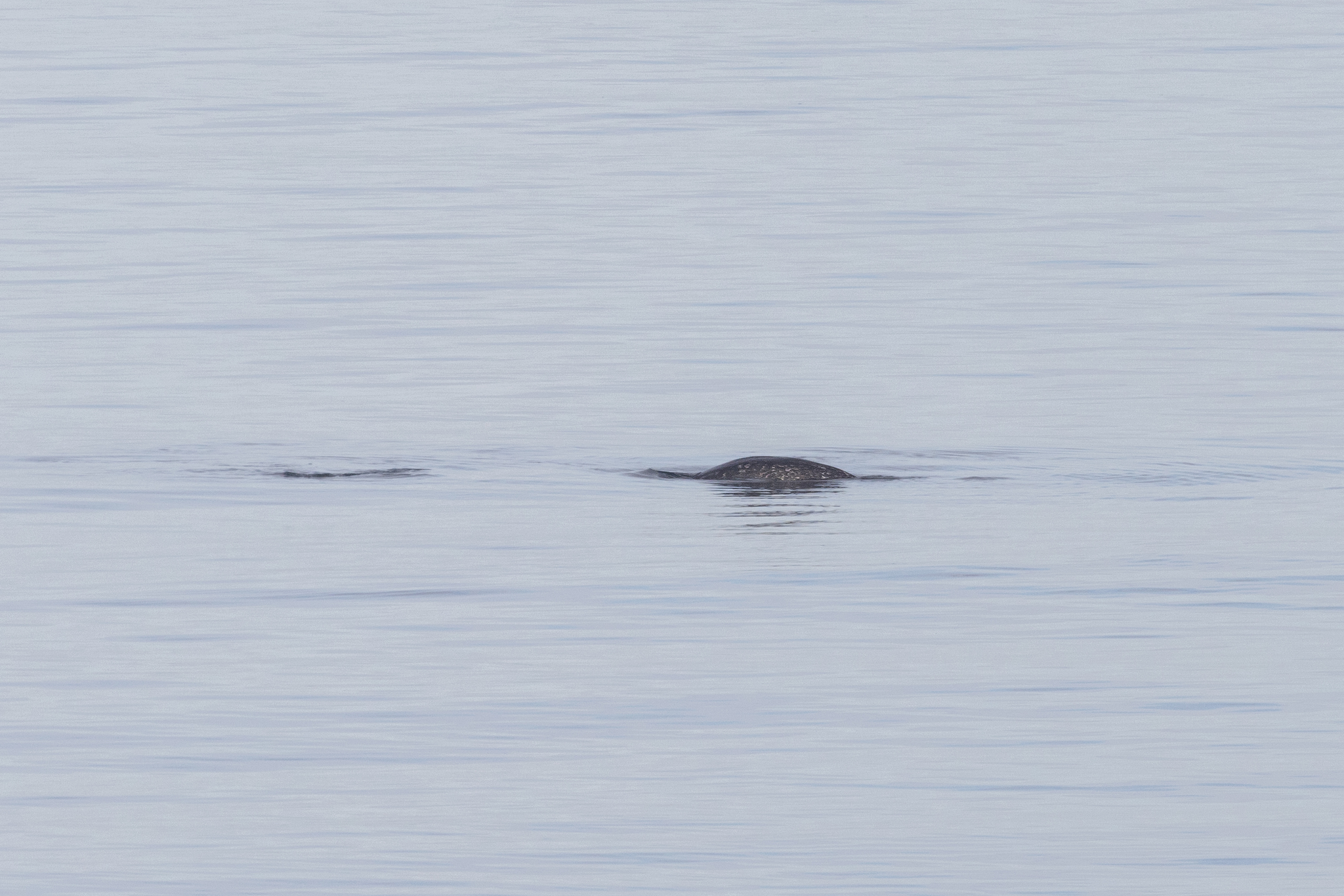
The narwhal is a stocky odontocete, with a fusiform body and a small, rounded head with no real beak. Excluding the tusk, adult males reach 4.6 to 4.8 m for about 1,600 kg, females 4.0 to 4.2 m for 1,000 to 1,200 kg. The species has no dorsal fin, only a low ridge along the back, a convenient adaptation under the ice; the flippers are short and rounded, and the tail fluke has a convex trailing edge. Blubber 5 to 10 cm thick, which can account for up to a third of body mass, insulates it from polar waters. The coloration changes with age: uniform grey-brown at birth, mottled with white in juveniles, then steadily paler, with old individuals appearing almost white, with dark markings on the head, the flippers and the tail fluke.
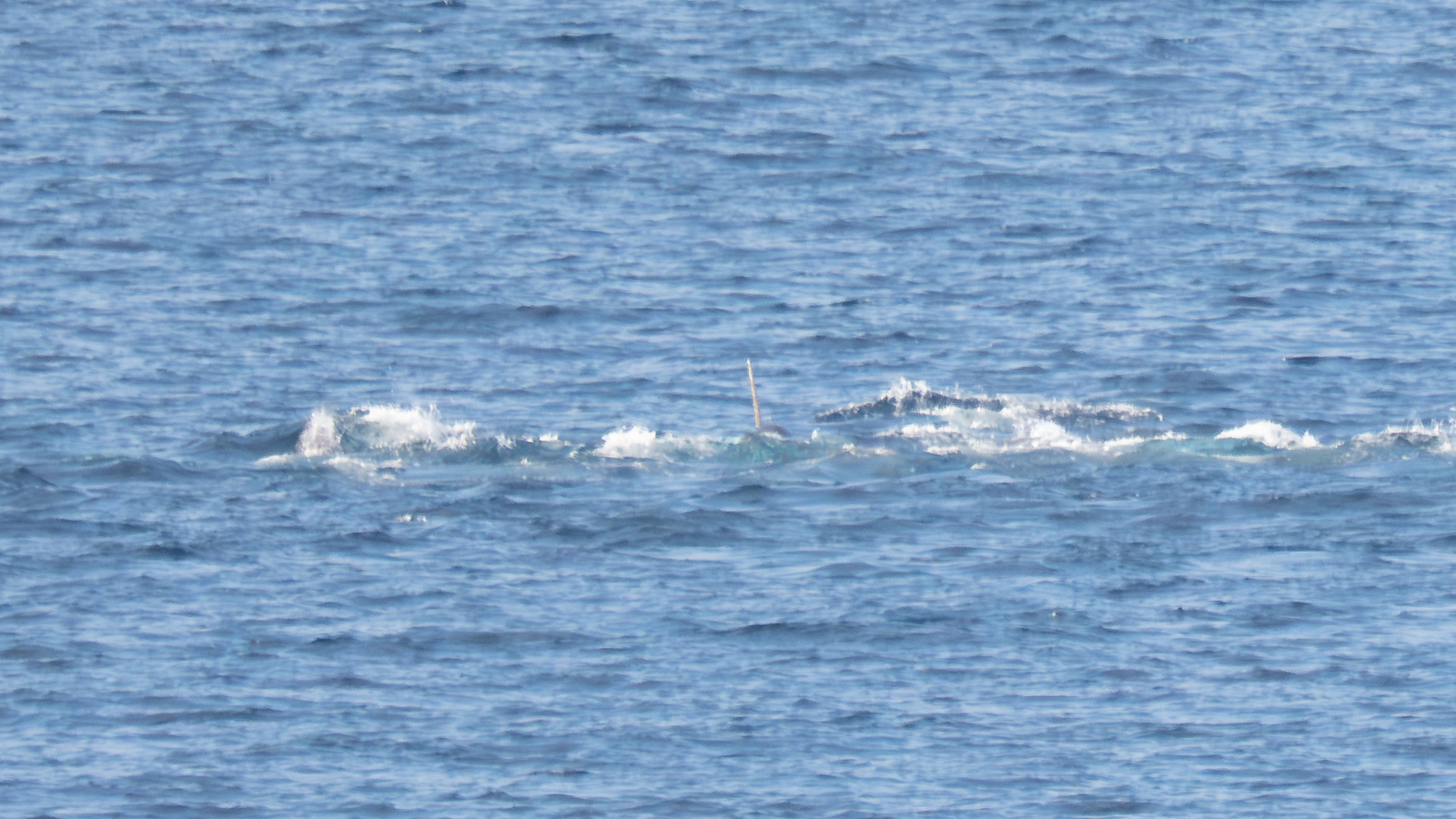
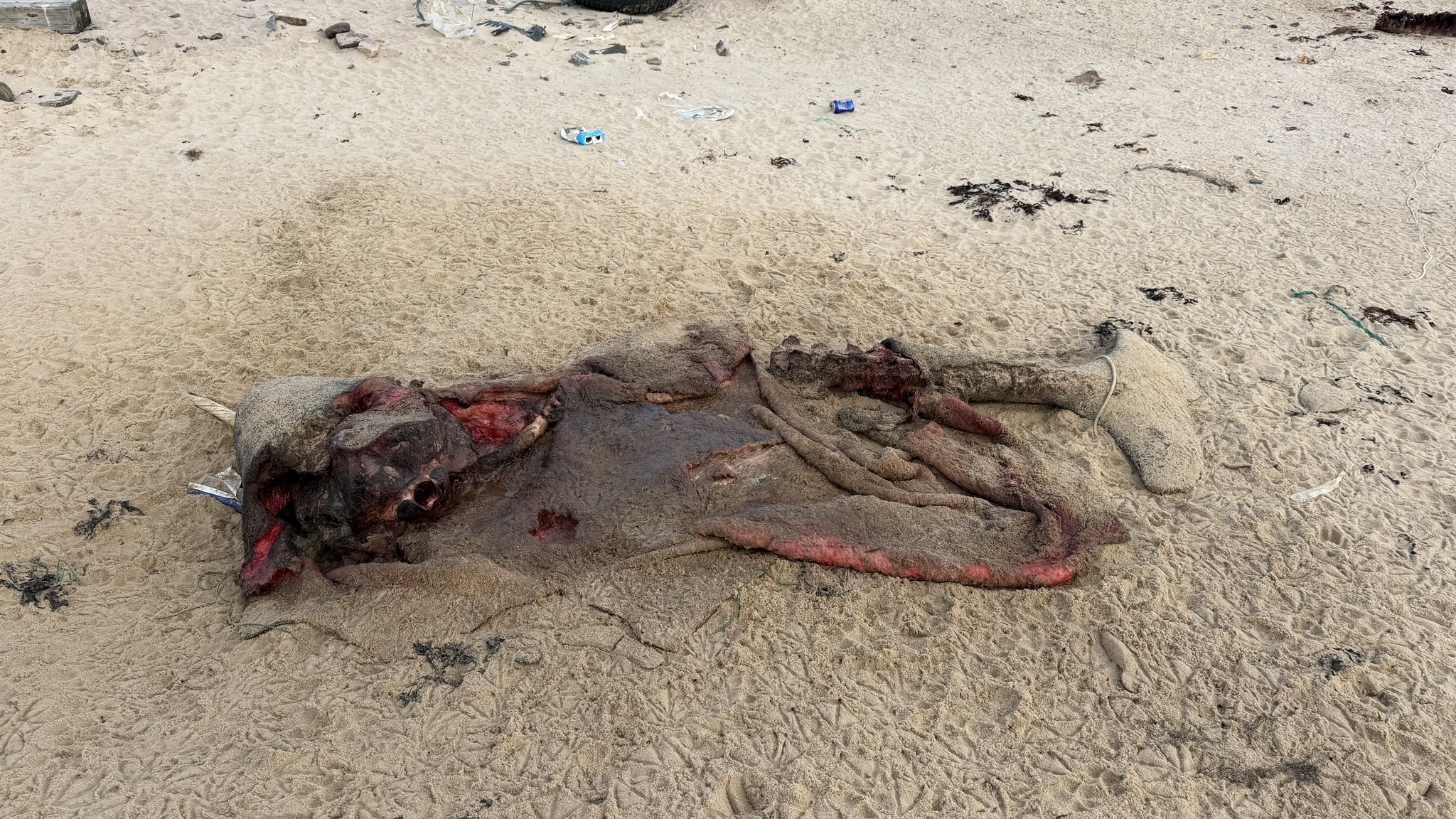
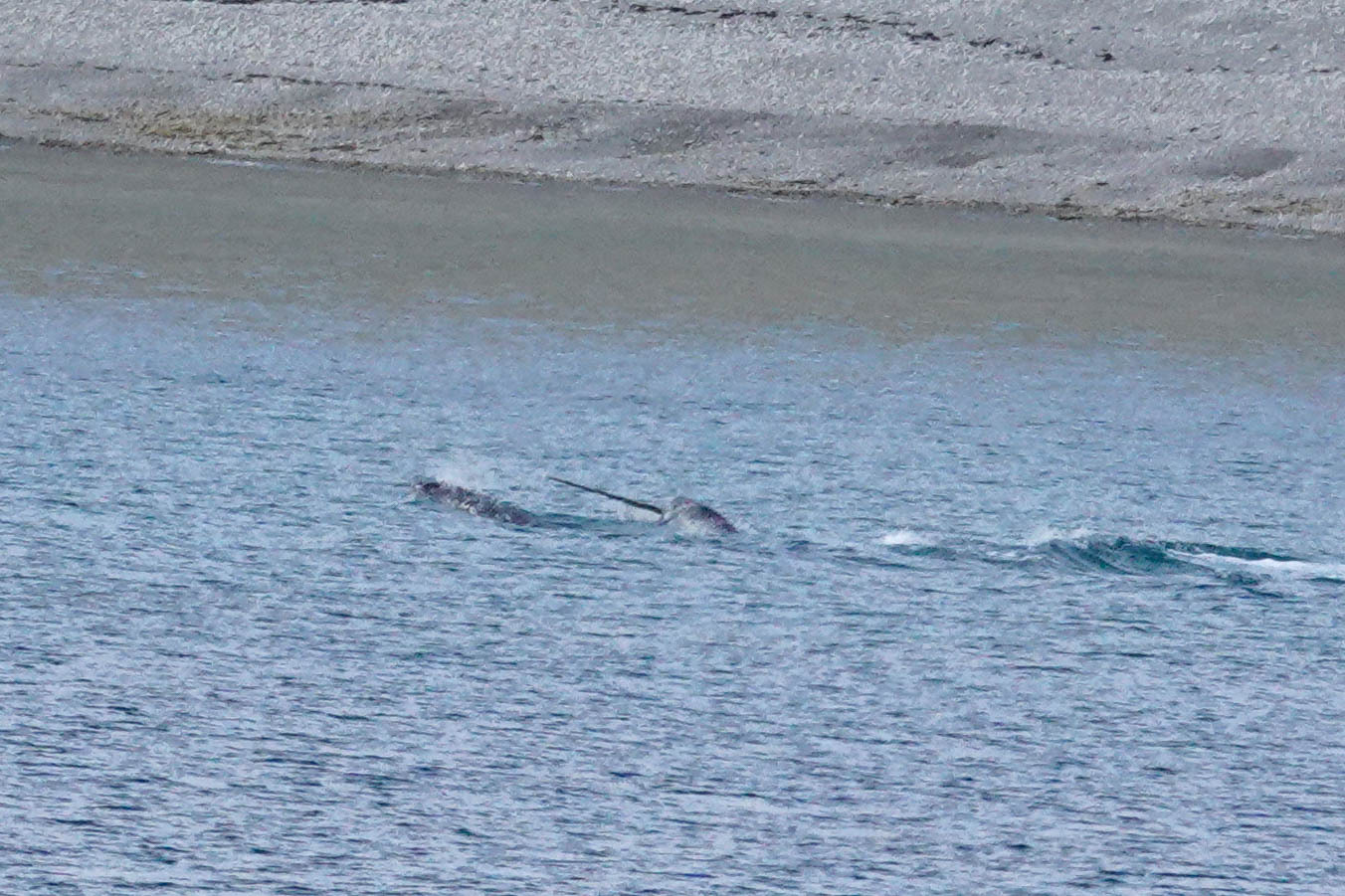
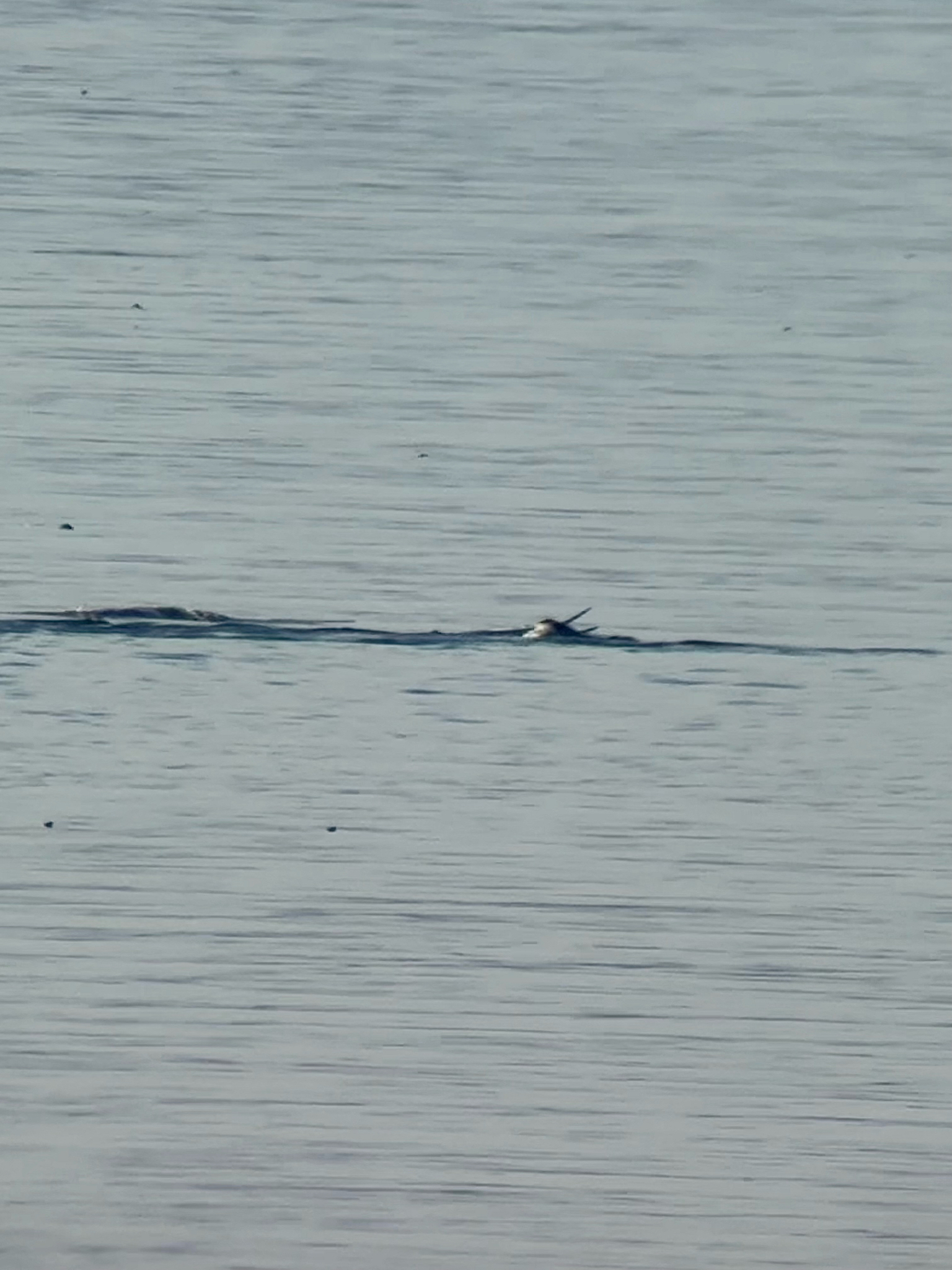
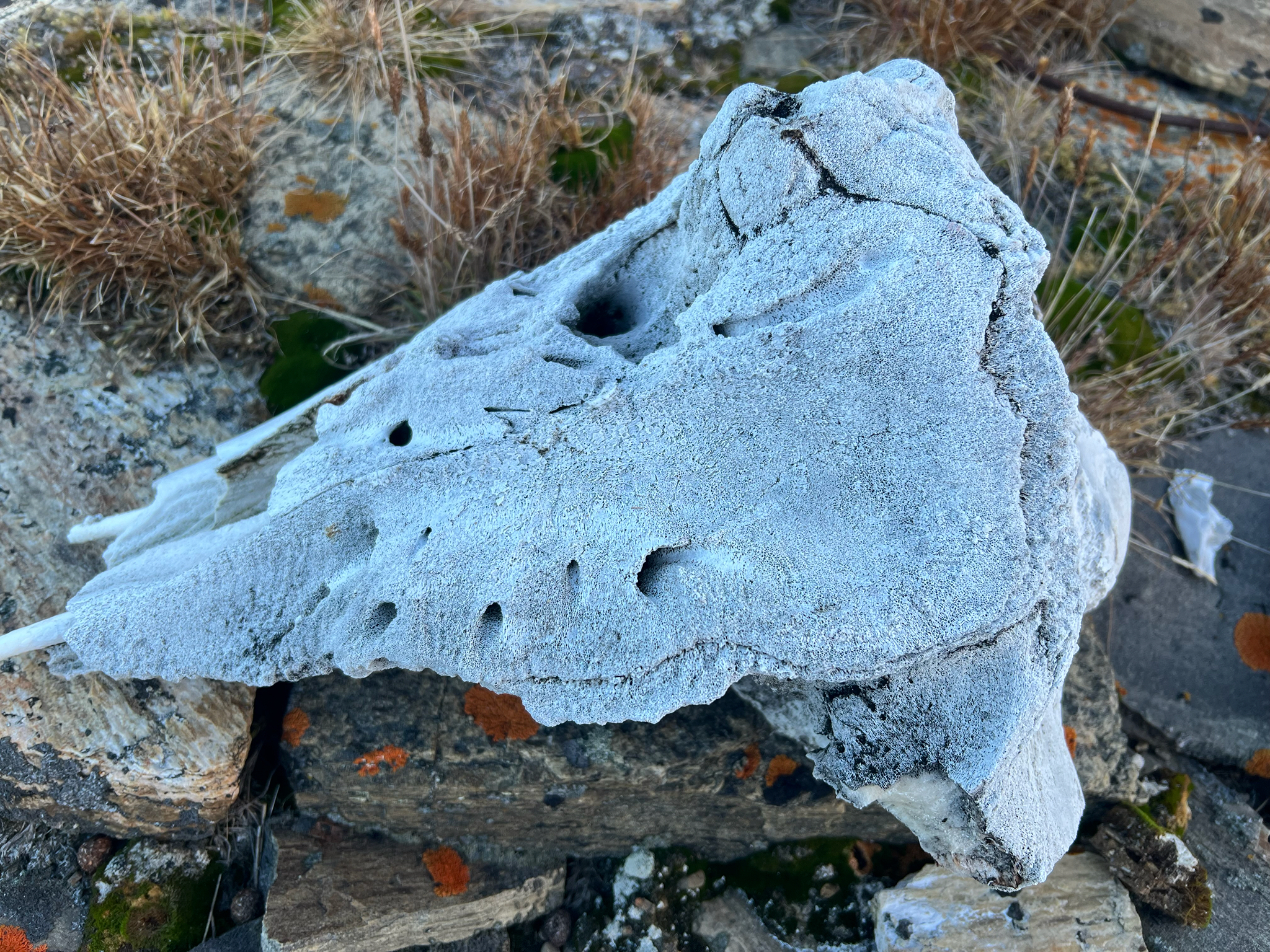
The tusk is an upper left canine that pierces the lip at around two or three years of age in males and grows in an anticlockwise spiral, reaching close to 3 m in length and some ten kilograms. Almost all adult males carry one, as does a minority of females (6 to 15% depending on the study), and a few individuals develop two. Richly innervated, with several million nerve endings, it works as a sensory organ detecting variations in pressure, salinity and temperature, while also serving as a secondary sexual character in competition between males.
The most likely confusion is with the beluga, the only other monodontid: uniformly white as an adult, with neither tusk nor mottling. Young narwhals, grey and plain, and females without a tusk, remain delicate to tell apart from belugas seen at a distance.
Described by Carl Linnaeus in 1758, Monodon monoceros is the only species in the genus Monodon, a genus Linnaeus himself erected for it: the authority is therefore written without parentheses. With the beluga (Delphinapterus leucas) it forms the family Monodontidae, a small group of odontocetes confined to the cold seas of the North. The scientific name says the same thing twice: from the Greek monos, “single”, combined with odous, “tooth”, then with keras, “horn”. The common name comes from the Old Norse nar, “corpse”, and hvalr, “whale”, a reference to the mottled greyish skin and to the habit these animals have of floating motionless at the surface. No subspecies is recognised, but management relies on several distinct stocks.
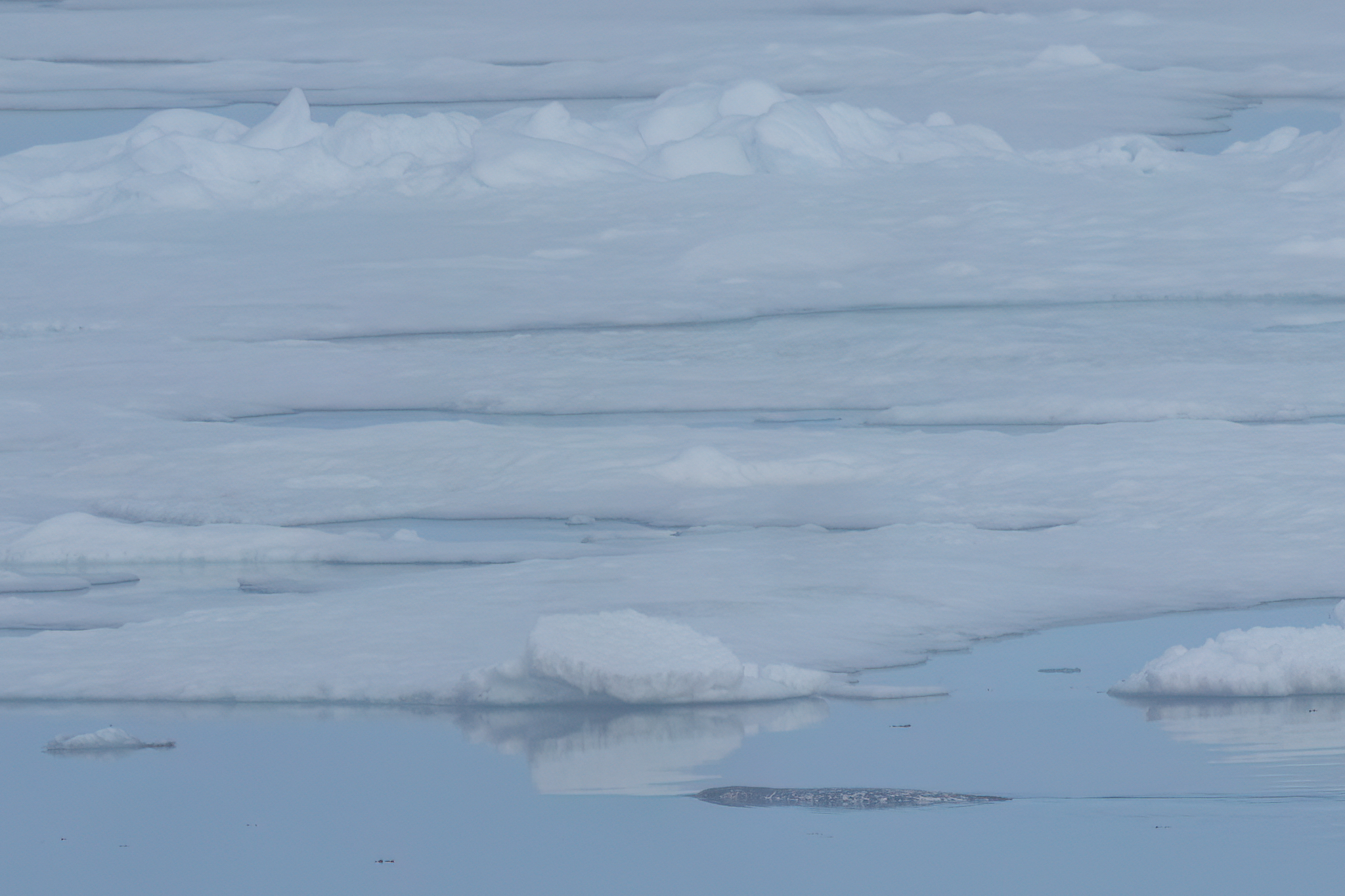
The narwhal is one of the few cetaceans to spend its whole life in the Arctic, chiefly in the Atlantic sector: the Canadian Arctic (Baffin Bay, Lancaster Sound, northern Hudson Bay), West and East Greenland, Svalbard, the Barents Sea and the Russian Arctic as far as about 170° east, with sightings up to about 85° north. The animals follow the ice cycle, summering in fjords and coastal bays and wintering offshore beneath dense, fractured sea ice where they feed intensively. NAMMCO distinguishes seven Canadian summering aggregations, two stocks in West Greenland (Inglefield Bredning and Melville Bay), three management areas in East Greenland (Ittoqqortoormiit/Scoresby Sund, Kangerlussuaq and Tasiilaq) and one Svalbard and Russian Arctic stock. The figures vary with the method: about 123,000 mature individuals for a total close to 170,000 according to the IUCN in 2017, 85,000 to 100,000 according to NAMMCO, and more than 161,000 individuals of which 93,500 mature according to COSEWIC in 2024.
The narwhal is not part of the French fauna: no record is known from the English Channel, the Bay of Biscay, the Mediterranean or the overseas territories. The southernmost extralimital records known in Europe concern the North Sea: two narwhals in 1949 in the Thames estuary, a female stranded in the Medway, in Kent, and a male that came up the lower Thames, and one individual found dead in the Scheldt, in Belgium, on 27 April 2016, the first Belgian record of the species.
The diet combines medium to large Arctic fish, polar cod, Arctic cod and Greenland halibut, with squid and shrimp, taken by suction and most often near the bottom. Feeding is strongly seasonal: reduced in summer, it becomes intensive in winter on the offshore grounds.
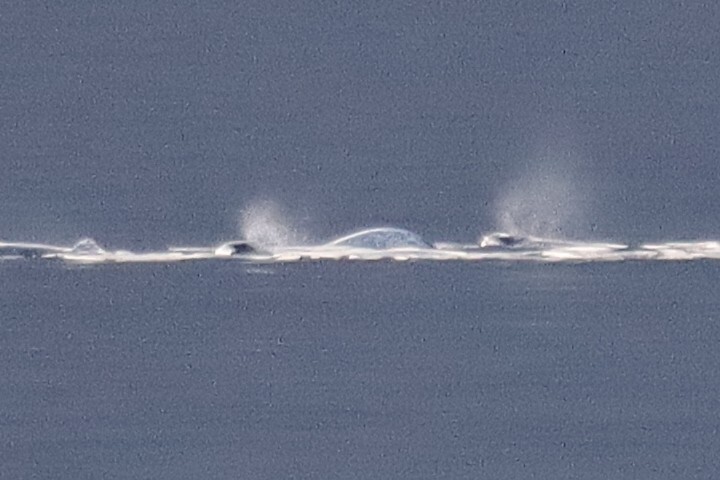
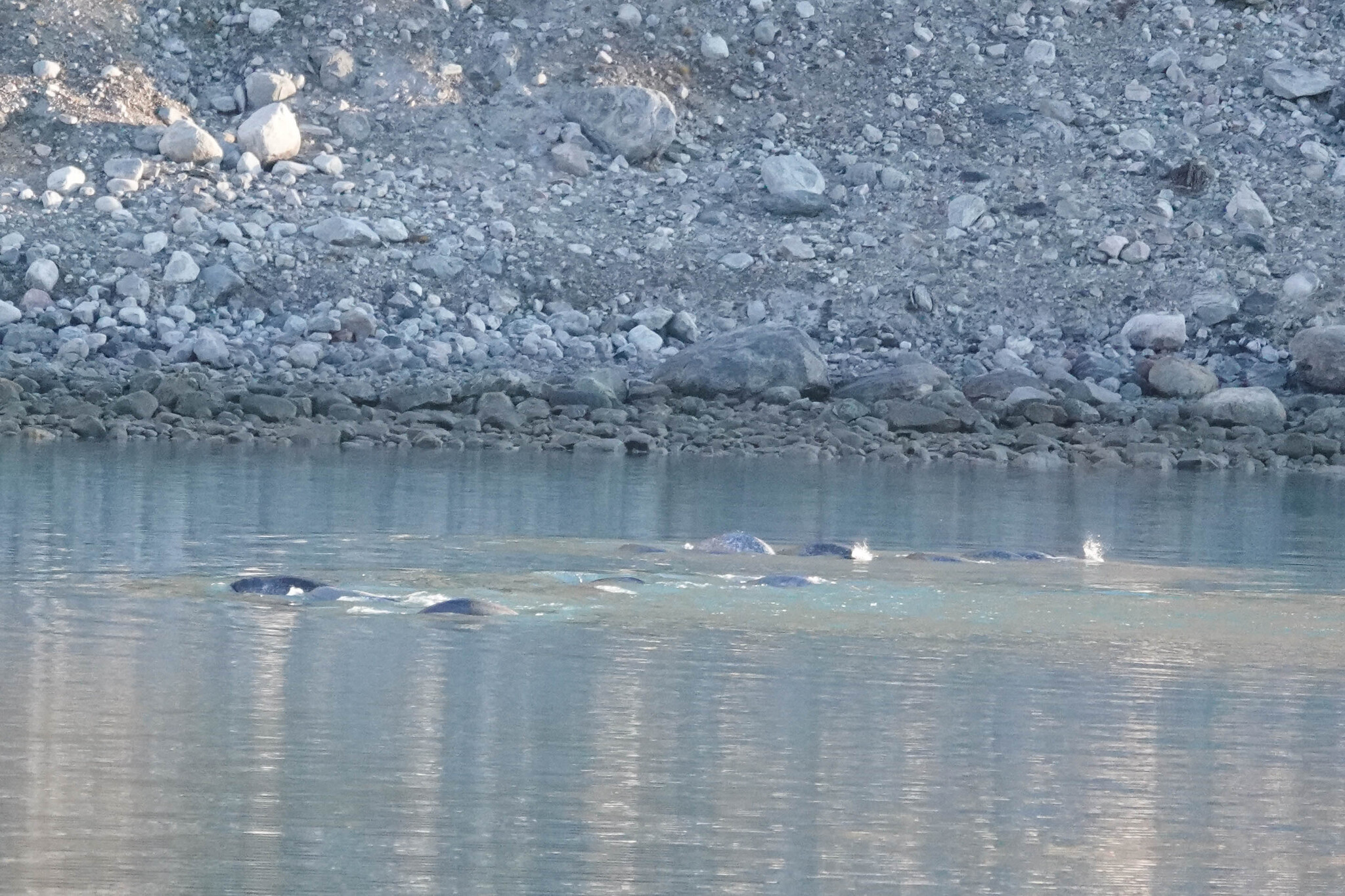
The narwhal is an exceptional diver. It regularly descends to between 800 and 1,500 m, sometimes beyond 1,600 m, the deepest documented dives reaching 1,776 m, and close to 2,370 m according to some sources, for breath-holds of 20 to 25 minutes and some fifteen deep dives a day. Social life is organised in small groups of two to ten animals, often segregated by age and by sex, which gather in hundreds or even thousands during migrations; communication rests on echolocation clicks, whistles and series of knocking sounds.
Mating takes place in spring, in April and May, in the middle of the drifting sea ice. After a gestation of about 14 to 15 months, with sources giving a range of 13 to 16 months, a single calf is born in July or August; lactation lasts at least a year, sometimes some twenty months, and the interval between two births is two to three years. Females are mature between 4 and 9 years depending on the study, males later, at around 8 to 13 years. The narwhal is among the very few mammals whose females undergo a menopause and survive long after the end of their reproductive life. The natural predators are the killer whale and the polar bear, the latter watching for animals at breathing holes.
Globally, the narwhal is listed as Least Concern (LC) on the IUCN Red List, a status that comes from the 2017 assessment and is still in force: with about 123,000 mature individuals and no confirmed global decline reaching the threat thresholds, the species falls into no higher category. This global verdict masks sharp regional disparities. Greenland lists the western population as “Near Threatened” and the eastern one as “Endangered”, and Norway considers it “Vulnerable”. In Canada, COSEWIC, which had designated it “Special Concern” in November 2004, reassessed it as “Not at Risk” in May 2024, the population having proved larger than estimated and current removals being judged sustainable.
The situation is quite different in East Greenland, where the three stocks are small and declining: the Ittoqqortoormiit (Scoresby Sund) stock is thought to amount to no more than about 11% of the 1,570 animals estimated in 1955, the Kangerlussuaq stock to about 12% of the some 1,150 narwhals estimated at the same period, and the Tasiilaq area is today all but empty, with 3 individuals estimated in 2024. The NAMMCO scientific committee has recommended zero catches there in the three management areas since 2019, a recommendation reiterated since, in particular in 2024.
The main threats are the warming of the Arctic and the retreat of the sea ice, subsistence hunting (on the order of a thousand animals a year in Canada and Greenland, for the skin and the ivory), entrapment in the ice during rapid freeze-ups, noise from shipping traffic, icebreakers and seismic surveys, and finally the bioaccumulation of contaminants, in particular heavy metals in the liver and the kidneys. The species is listed in Appendix II of CITES and protected in the United States by the Marine Mammal Protection Act.
Watching a narwhal means travelling to the Arctic. The best opportunities come in summer, when the herds move into the fjords and coastal bays of the Canadian Arctic, Greenland or Svalbard; trips are made from the edge of the sea ice or in a small boat, most often with Inuit guides whose knowledge of the aggregation sites is decisive. Outside the Arctic the species cannot be watched, and museum collections remain the only place to see a tusk in western Europe.
The approach calls for restraint: narwhals react strongly to the noise of engines, icebreakers and seismic sources, and they move away from vessels. It is better to throttle back at a good distance, let the animals decide on the approach, never cut across the path of a group or separate a female from her calf, and observe local regulations.
It is an upper left canine that grows in an anticlockwise spiral to close to 3 m. Richly innervated, it acts as a sensory organ able to detect variations in pressure, salinity and temperature, and it is also a secondary sexual character involved in competition between males.
No: although the tusk is the rule in adult males, a minority of females develop one, in a proportion estimated at between 6 and 15% depending on the study. A few individuals carry two tusks.
It commonly descends to between 800 and 1,500 m, sometimes beyond 1,600 m. The deepest documented dives reach 1,776 m, and some sources report close to 2,370 m. Breath-holds can reach 20 to 25 minutes, at a rate of some fifteen deep dives a day.
It is listed as Least Concern (LC) by the IUCN globally, on the basis of the 2017 assessment and of about 123,000 mature individuals. Some populations are nonetheless doing badly: the East Greenland population is considered Endangered, and NAMMCO has recommended zero catches there in the three management areas since 2019.
No. The species is strictly Arctic and no record is known from the English Channel, the Bay of Biscay, the Mediterranean or the overseas territories. The southernmost extralimital appearances in Europe are limited to a few cases in the North Sea: two narwhals in the Thames estuary in 1949, a female stranded in the Medway, in Kent, and a male that came up the lower Thames, and one individual found dead in the Scheldt, in Belgium, in April 2016.
The adult beluga is uniformly white and has no tusk, whereas the narwhal stays mottled with dark on a pale ground and most often carries a long spiral tooth. The two species share the absence of a dorsal fin, replaced by a simple ridge, which makes young grey narwhals difficult to identify at a distance.
Account compiled from authoritative scientific sources (IUCN, NOAA Fisheries, specialist literature) and reviewed for factual accuracy.
According to the open data of the GBIF, 95 georeferenced sightings of Monodon monoceros are recorded in our photographic index.
| Country | Notes |
|---|---|
| Canada | 72 |
| Greenland | 21 |
| unknown or invalid | 10 |
| Svalbard and Jan Mayen | 8 |
| United States of America | 5 |
| United Kingdom of Great Britain and Northern Ireland | 4 |
| Belgium | 1 |
| Netherlands | 1 |
| Norway | 1 |
| Tanzania, United Republic of | 1 |

Monthly distribution of 93 dated sightings (all years combined): the maximum is reached in August.
| Month | Notes |
|---|---|
| janvier | 0 |
| February | 1 |
| mars | 1 |
| avril | 1 |
| mai | 0 |
| juin | 9 |
| juillet | 10 |
| August | 47 |
| septembre | 24 |
| octobre | 0 |
| novembre | 0 |
| December | 0 |
These figures reflect survey effort (more boaters and more surveys in summer) as much as the actual presence of the species: to be interpreted with caution.


Photographs from GBIF under a Creative Commons licence. The author and the licence of each photograph are given; please respect them if you reuse them.
Automatic selection of the most cited works mentioning the species (source: Crossref).