| Scientific name | Mesoplodon peruvianus Reyes, Mead & Van Waerebeek, 1991 |
|---|---|
| Other names | Pygmy beaked whale, lesser beaked whale, Peruvian beaked whale, bandolero beaked whale; French: baleine à bec pygmée, mésoplodon pygmée, baleine à bec du Pérou; Spanish: ballena picuda peruana, zifio del Perú; German: Peruanischer Schnabelwal |
| Size | 3.4 to 4.1 m in adults depending on the source, the largest individuals measured reaching 3.7 to 3.9 m (holotype: adult male of 3.72 m); about 1.5 to 1.6 m at birth |
| Weight | Poorly documented: several hundred kilograms, a figure of about 500 kg having been put forward without confirmation |
| Longevity | Not documented; the available data do not allow the longevity of the species to be estimated |
| Diet | Mesopelagic fishes (lanternfishes, ophidiids, nemipterids), cephalopods (Gonatus, Teuthowenia, Histioteuthis) and crustaceans (Acanthephyra), taken by suction on deep dives |
| IUCN status | Least Concern (LC), assessment published in December 2020 (Pitman & Taylor, 2020; e.T13251A50367335), replacing the “Data Deficient” (DD) status of 2008. Population trend unknown. No subpopulation assessed separately. CITES: Appendix II. In Chile, listed as “Data Deficient” at the national level (2016). |
The pygmy beaked whale (Mesoplodon peruvianus) is the smallest member of the genus Mesoplodon: adults rarely exceed 4 metres. Described only in 1991, from Peruvian specimens, it frequents the deep waters of the eastern tropical Pacific, from Baja California to northern Chile. Inconspicuous, a deep diver and rarely seen at the surface, it has been listed as “Least Concern” by the IUCN since 2020, but is among the very few beaked whales regularly taken as bycatch in Peruvian drifting gillnets.
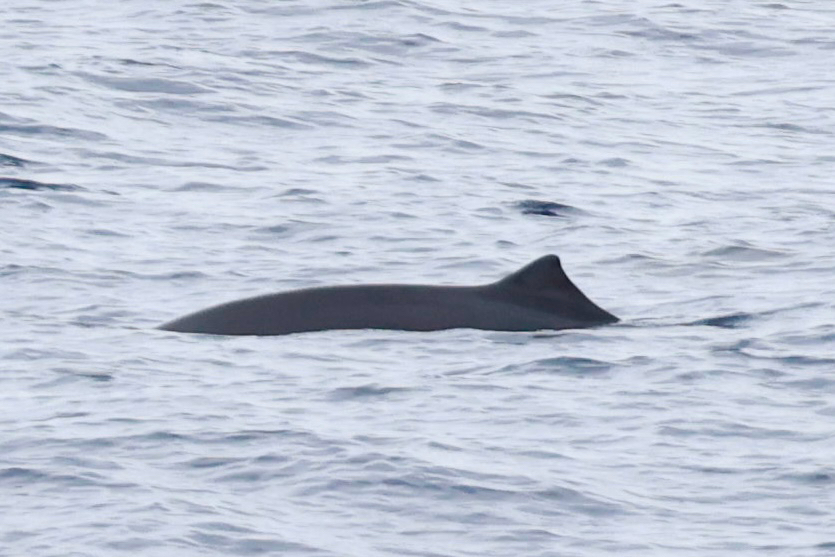
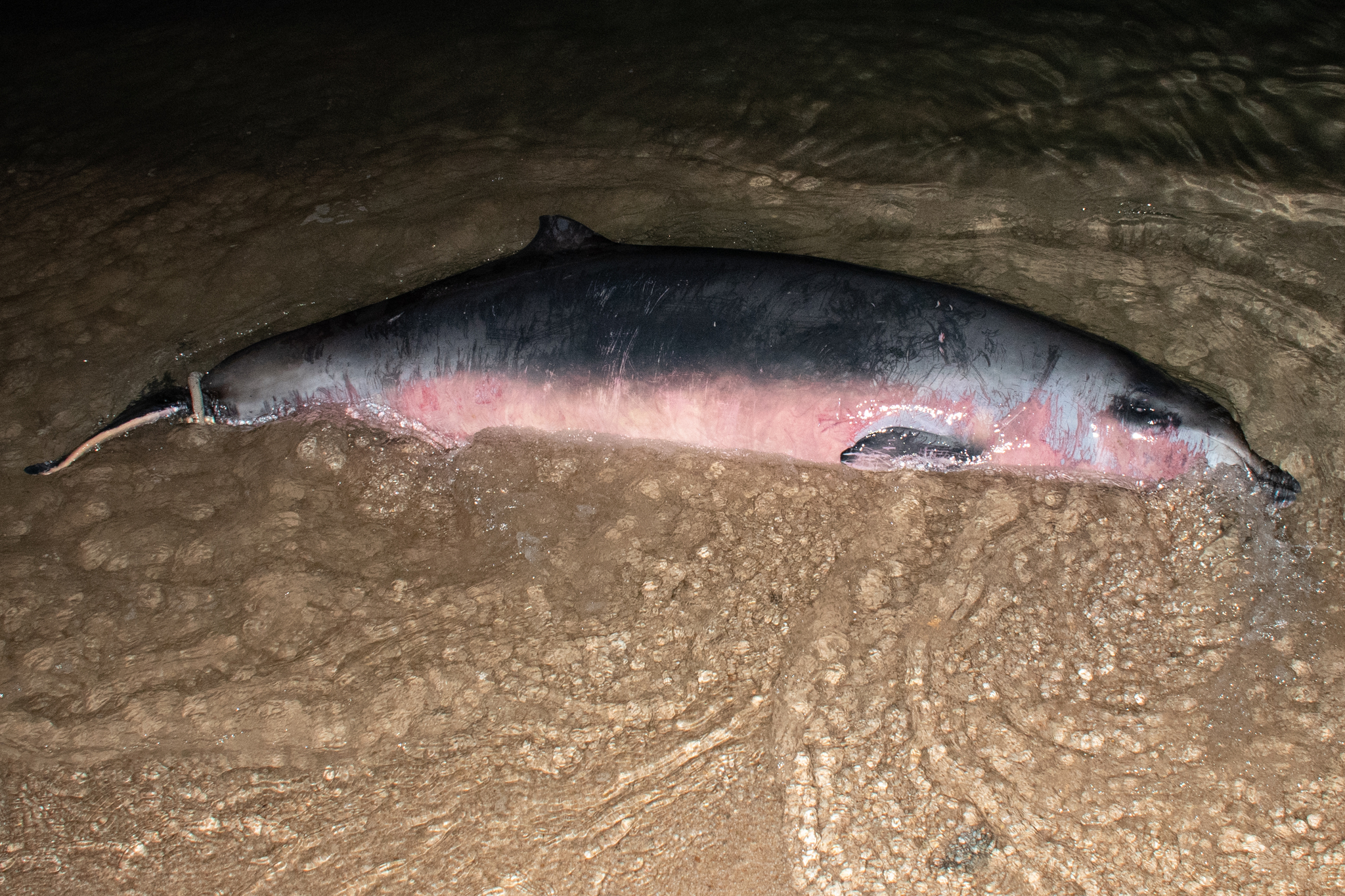
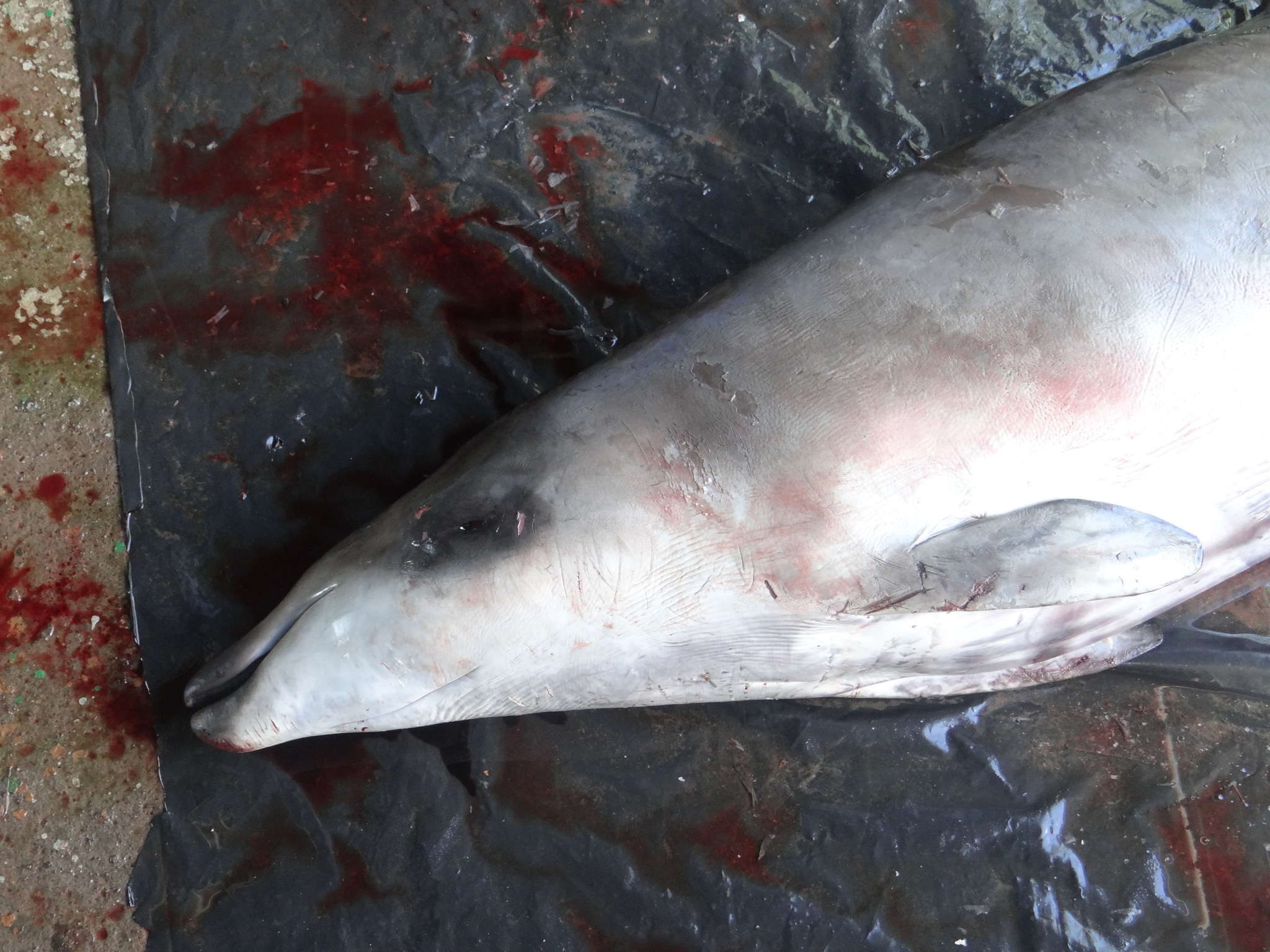
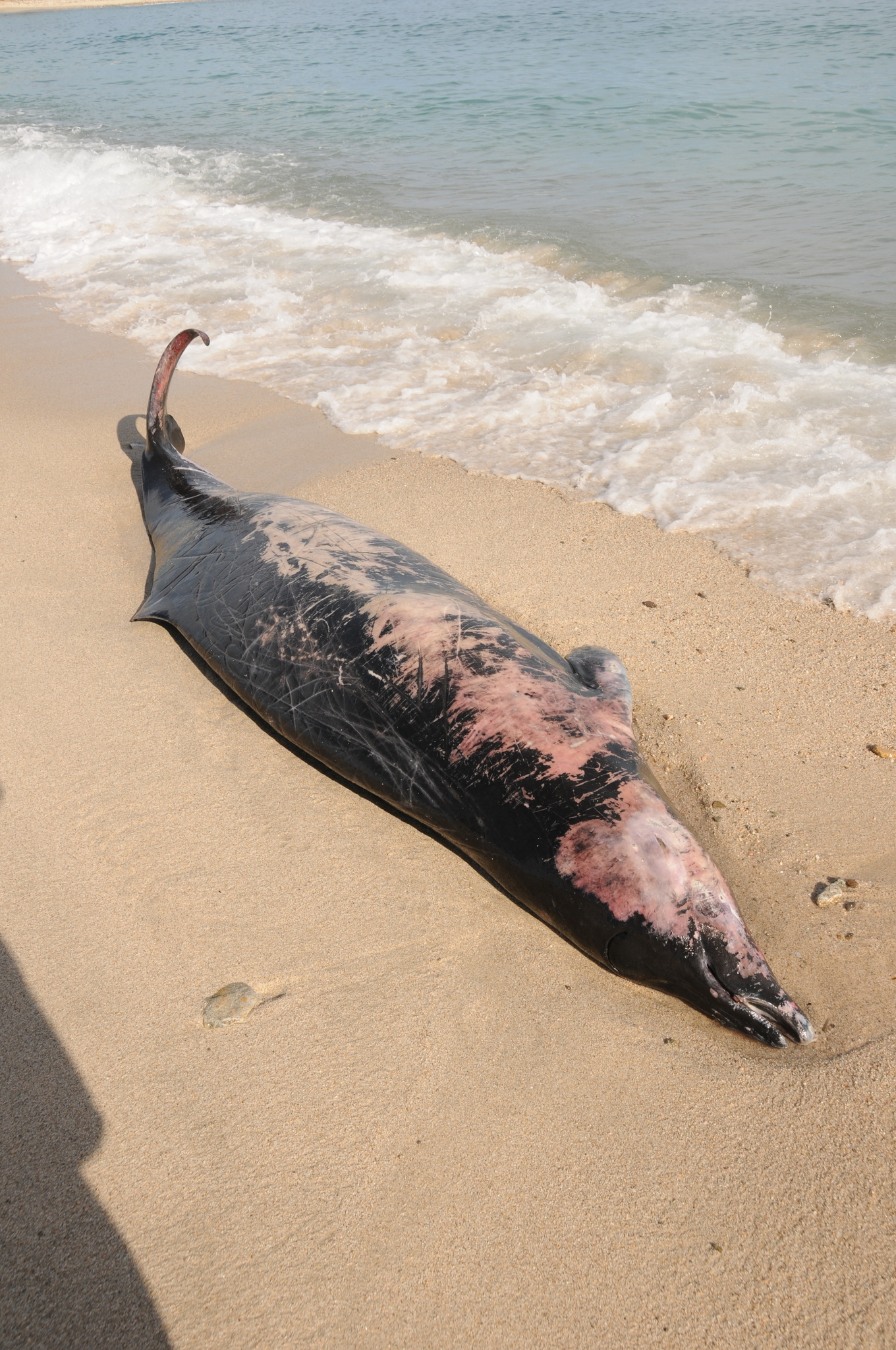
The pygmy beaked whale is the smallest of the mesoplodont beaked whales. Adults measure 3.4 to 4.1 m depending on the source, the largest individuals measured reaching 3.7 to 3.9 m; the type specimen, an adult male, reached 3.72 m, and newborns are about 1.5 to 1.6 m long. Mass remains poorly documented: it runs to several hundred kilograms, a figure of about 500 kg sometimes being put forward without confirmation by weighing. The body is distinctly fusiform, with a tail stock that is thick for the genus, laterally compressed, and broad tail flukes. The melon, slightly bulging, is continued by a short, slender beak. The dorsal fin, set in the rear third of the back, is low, broad-based and frankly triangular in shape, with a straight or barely falcate trailing edge, a silhouette sometimes compared to that of a porpoise. Shallow depressions accommodate the flippers, and the throat grooves are relatively short.
Sexual dimorphism is marked, as in all mesoplodont beaked whales. Adult males carry a lower jaw of moderately arched profile, armed with a pair of small teeth of ovoid section that erupt through the gum. These teeth are used in contests between males and leave on the flanks and the underside of the tail stock a dense network of parallel linear scars. The dorsal coloration ranges from dark grey to brown or blackish, some males being almost entirely black, while the throat, jaw and belly are lighter, pale grey to off-white. Many males bear a broad pale, cream-coloured band that begins just behind the blowhole and runs down the flank, stopping short of the dorsal fin; it is this band that earns the species the English nickname of bandolero (bandolier). Its extent varies between individuals and between regions, Peruvian males generally being less contrasted than those from the north of the range. Females and young show a much simpler coloration: grey or dark brown above, whitish to cream below, with a well-marked dark eye patch. Both sexes also carry round to oval white marks, scars from the bites of cookiecutter sharks.
Confusion is frequent. At sea, the species can be taken for one of the other mesoplodont beaked whales of the eastern tropical Pacific, in particular Blainville’s beaked whale (Mesoplodon densirostris), which is larger and whose males have a much more strongly arched jaw. Cuvier’s beaked whale (Ziphius cavirostris), common in the same waters, is distinctly more robust and has a sloping forehead and a very short beak. The best set of criteria remains the combination of a very small size, a short, slender beak and a low, triangular dorsal fin set well back, supplemented in males by the pale band on the flanks. Females and immatures remain in practice very difficult to identify visually, and identification then rests on genetics, osteology or acoustics.
The pygmy beaked whale belongs to the order Cetacea (within the Artiodactyla), to the suborder Odontoceti and to the beaked whale family, referred to in the great majority of cases as the Ziphiidae in the scientific literature and in current reference lists (Society for Marine Mammalogy, Mammal Diversity Database); the name Hyperoodontidae is an older competing usage. The genus Mesoplodon is the most species-rich of all cetacean genera.
The species was formally described in 1991 by Julio C. Reyes, James G. Mead and Koen Van Waerebeek, in the journal Marine Mammal Science, from ten specimens collected in Peru between 1976 and 1989; the holotype is an adult male of 3.72 m. A stranding at Paracas (Peru) in 1955, initially attributed to Andrews’ beaked whale, was subsequently referred to this species. Before its description, at least twenty-four sightings of an unidentified beaked whale in the eastern tropical Pacific had been recorded under the provisional name “Mesoplodon sp. A”; these are today considered to refer to Mesoplodon peruvianus. It is therefore one of the most recently recognised cetacean species.
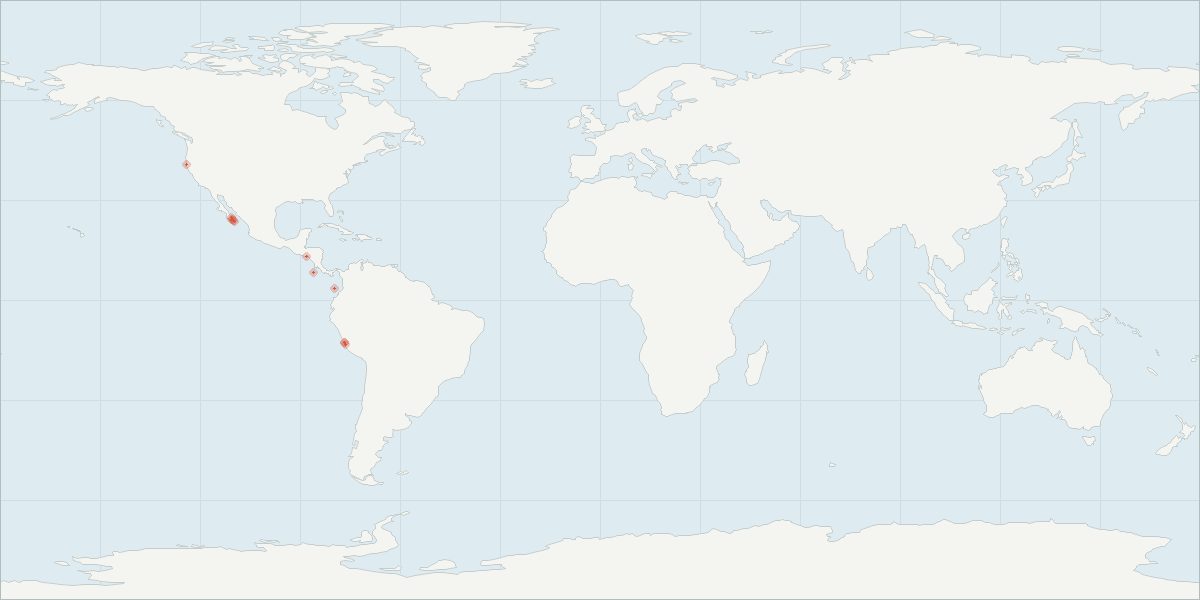
The known range is essentially limited to the eastern tropical Pacific, between Baja California (Mexico) and Peru, that is roughly from 28° N to 29-30° S. The coastal states concerned are Mexico, Guatemala, El Salvador, Honduras, Nicaragua, Costa Rica, Panama, Colombia, Ecuador, Peru and northern Chile. The Gulf of California and the waters off Baja California Sur account for a notable share of the documented sightings. In Chile, a skull collected in May 1995 on the beach at Los Choros (29° 17′ S) provided the first validated record for the country and, together with several sightings made in February 1998, pushed the known southern limit some 14 degrees of latitude further south.
Strandings have also been recorded well north of the tropical range, in California: a 3.6 m female at Salinas State Beach, in Monterey Bay (2001), then a fresh specimen in Humboldt County (2012). A single animal entangled in a net in New Zealand, held at the Museum of New Zealand (Baker & Van Helden, 1999), is interpreted as a vagrant.
The species is regarded as oceanic and frequents deep waters beyond the continental shelf. Chilean sightings do, however, report animals moving close inshore, in 20 to 70 m of water, which suggests a degree of habitat plasticity.
In France, the species occurs in no waters under national jurisdiction: it is absent from the Mediterranean, the Bay of Biscay and the English Channel, as well as from French waters in the tropical Atlantic and the Indian Ocean. The only French territory lying in the eastern tropical Pacific is Clipperton Island (île de La Passion), but the published data do not document the presence of the species in its waters.
The diet, reconstructed from stomach contents, combines mesopelagic fishes, among them the lanternfish Notoscopelus resplendens, ophidiids and nemipterids, cephalopods (Gonatus antarcticus, Teuthowenia sp., Histioteuthis sp.) and crustaceans of the genus Acanthephyra. Like other ziphiids, the animal is considered a suction feeder: by retracting the tongue and expanding the throat, it creates a drop in pressure that draws in the prey. Documented dives last 15 to 30 minutes and feeding depths are estimated at more than 500 m.
Social life is poorly known. Sightings report small groups, most often of two to four animals, sometimes including a juvenile. The species is reputed to be shy, avoids vessels and produces an inconspicuous blow, which explains how rarely it is encountered. On the acoustic side, a high-frequency echolocation signature known to bioacousticians under the code “BW70” was formally attributed to Mesoplodon peruvianus in 2025, in a study published in Marine Mammal Science: passive acoustic detection thus becomes a reliable way of monitoring the species where visual observation fails.
Breeding has barely been studied: neither gestation length, nor the interval between births, nor the age at sexual maturity has been established. Size at birth is close to 1.5 to 1.6 m, and a newborn of about 1 m was observed off Chile in February 1998. Longevity is not documented. Several parasites have been identified in the species: the trematodes Nasitrema globicephalae and Campula sp., nematodes of the genus Anisakis, and the cestodes Phyllobothrium delphini and Tetrabothrius forsteri.
The species is listed as “Least Concern” (LC) on the IUCN Red List, in an assessment published in December 2020 (Pitman & Taylor, 2020; e.T13251A50367335). It was previously considered “Data Deficient” (DD, 2008 assessment). This reclassification, shared in December 2020 by around ten other beaked whales, follows above all from a revision of the way the IUCN applies the “Data Deficient” category, and not from any demonstrated improvement in the state of the population. No subpopulation is assessed separately and the population trend remains unknown. There is no abundance estimate specific to the species: Ferguson & Barlow (1999) had estimated the total number of mesoplodont beaked whales in the eastern Pacific at 32,678 animals, the majority of which would be made up of Mesoplodon peruvianus and Mesoplodon densirostris. The species is listed in Appendix II of CITES.
The main identified threat is bycatch. The pygmy beaked whale is one of the very few beaked whales regularly documented as bycatch in the drifting gillnet fisheries targeting sharks and rays off Peru; entanglement in the deep gillnets set for swordfish and tuna is also considered a major risk. To this are added the ingestion of plastic debris, which causes intestinal obstructions, and exposure to intense anthropogenic sound, military active sonar and seismic surveying, implicated in mass strandings of several Mesoplodon species. The effects of climate change are raised but remain poorly defined. In Chile, a skull bearing two bullet impacts has documented a risk of direct killing; Chilean law no. 20,293 of 2008 protects all cetaceans in waters under national jurisdiction, and in 2016 the national classification committee adopted the “Data Deficient” category at the scale of the country.
Seeing a pygmy beaked whale is a matter of luck: the animal is small, its blow is inconspicuous, its dives last a quarter of an hour to half an hour and it tends to move away from vessels. Encounters happen almost exclusively during oceanographic surveys on the high seas in the eastern tropical Pacific, in very calm conditions and with an attentive watch. The deep waters of the Gulf of California and off Baja California Sur, together with the oceanic zone running from Mexico to Peru, account for most of the records. Strandings, in particular on the Peruvian and Californian coasts, remain the main source of specimens.
Passive acoustics has changed the picture: the attribution of the “BW70” signal to the species now makes it possible to detect it at a distance, including at night or in poor visibility, without disturbing it. In the field, good practice counts even more here than elsewhere: keep a substantial distance, never cut across the path of a group or chase it between dives, reduce and hold the engine speed steady, limit the length of the approach. Any stranding or bycatch event is worth reporting to the authorities and to local scientific networks: for a species this poorly known, every carcass examined brings irreplaceable information.
It is the smallest member of the genus Mesoplodon: adults measure 3.4 to 4.1 m depending on the source, the largest individuals measured reaching 3.7 to 3.9 m. The type specimen, an adult male, reached 3.72 m, and newborns are about 1.5 to 1.6 m long. Mass remains poorly known, of the order of a few hundred kilograms.
It is confined to the eastern tropical Pacific, between Baja California and Peru, that is roughly from 28° N to 29-30° S, with records as far as northern Chile. Strandings have been recorded further north, as far as California (Monterey Bay in 2001, Humboldt County in 2012). A single animal entangled in a net in New Zealand is interpreted as a vagrant.
No. The species is absent from the Mediterranean, the Bay of Biscay and the English Channel, as well as from French waters in the tropical Atlantic and the Indian Ocean. The only French territory lying in the eastern tropical Pacific is Clipperton Island (île de La Passion), but the published data do not document its presence in those waters.
The species was listed as “Data Deficient” in 2008 and was reclassified as “Least Concern” in December 2020. This change, shared by around ten other beaked whales, results mainly from a revision of the way the IUCN applies the “Data Deficient” category, and not from any demonstrated improvement in the state of the populations: the population trend remains unknown.
Bycatch comes first: it is one of the very few beaked whales regularly documented as bycatch in the Peruvian drifting gillnets set for sharks and rays, and the deep nets set for swordfish and tuna represent a comparable risk. To this are added the ingestion of plastics, which causes intestinal obstructions, and exposure to military sonar and to seismic surveying.
The combination of a very small size, a short, slender beak and a low, broad-based, frankly triangular dorsal fin set far back is the best criterion. In adult males there is also a broad pale, cream-coloured band running from behind the blowhole to just before the dorsal fin. Females and young, on the other hand, are very difficult to identify visually; genetics and acoustics then take over.
Profile compiled from authoritative scientific sources (IUCN, NOAA Fisheries, specialist literature) and reviewed for factual accuracy.
According to the open data of the GBIF, 12 georeferenced sightings of Mesoplodon peruvianus are recorded in our photographic index.
| Country | Notes |
|---|---|
| Peru | 8 |
| Mexico | 6 |
| United States of America | 1 |
| Colombia | 1 |
| Costa Rica | 1 |
| El Salvador | 1 |

Monthly distribution of 17 dated sightings (all years combined): the maximum is reached in novembre.
| Month | Notes |
|---|---|
| janvier | 2 |
| February | 1 |
| mars | 0 |
| avril | 2 |
| mai | 1 |
| juin | 2 |
| juillet | 0 |
| August | 1 |
| septembre | 1 |
| octobre | 2 |
| novembre | 4 |
| December | 1 |
These figures reflect survey effort (more boaters and more surveys in summer) as much as the actual presence of the species: to be interpreted with caution.


Photographs from GBIF under a Creative Commons licence. The author and the licence of each photograph are given; please respect them if you reuse them.
Automatic selection of the most cited works mentioning the species (source: Crossref).