| Scientific name | Mesoplodon mirus True, 1913 |
|---|---|
| Other names | True’s beaked whale; baleine à bec de True, baleine de True, mésoplodon superbe (French) |
| Size | 4.8 to 5.4 m in adults (largest male measured 5.35 m, largest female 5.10 m); about 2.2 m at birth |
| Weight | 1,020 to 1,400 kg; about 136 kg at birth |
| Longevity | Unknown |
| Diet | Squid and small mesopelagic fish, taken by suction during deep dives |
| IUCN status | Least Concern (LC), 2022 global assessment (Pitman, Brownell & Cholewiak), which confirms the move from “Data Deficient” (DD) to LC made in the 2020-3 edition of the Red List. European Red List: LC. No Mediterranean subpopulation: the species is not reported in the Mediterranean. |
True’s beaked whale (Mesoplodon mirus) is a small beaked whale of the warm temperate waters of the North Atlantic, 4.8 to 5.4 m long and weighing a little over a tonne. A deep diver whose blow is almost invisible, it is so inconspicuous that the very first underwater images of it were published only in 2017. Listed as Least Concern by the IUCN, it remains one of the least known large mammals on the planet.
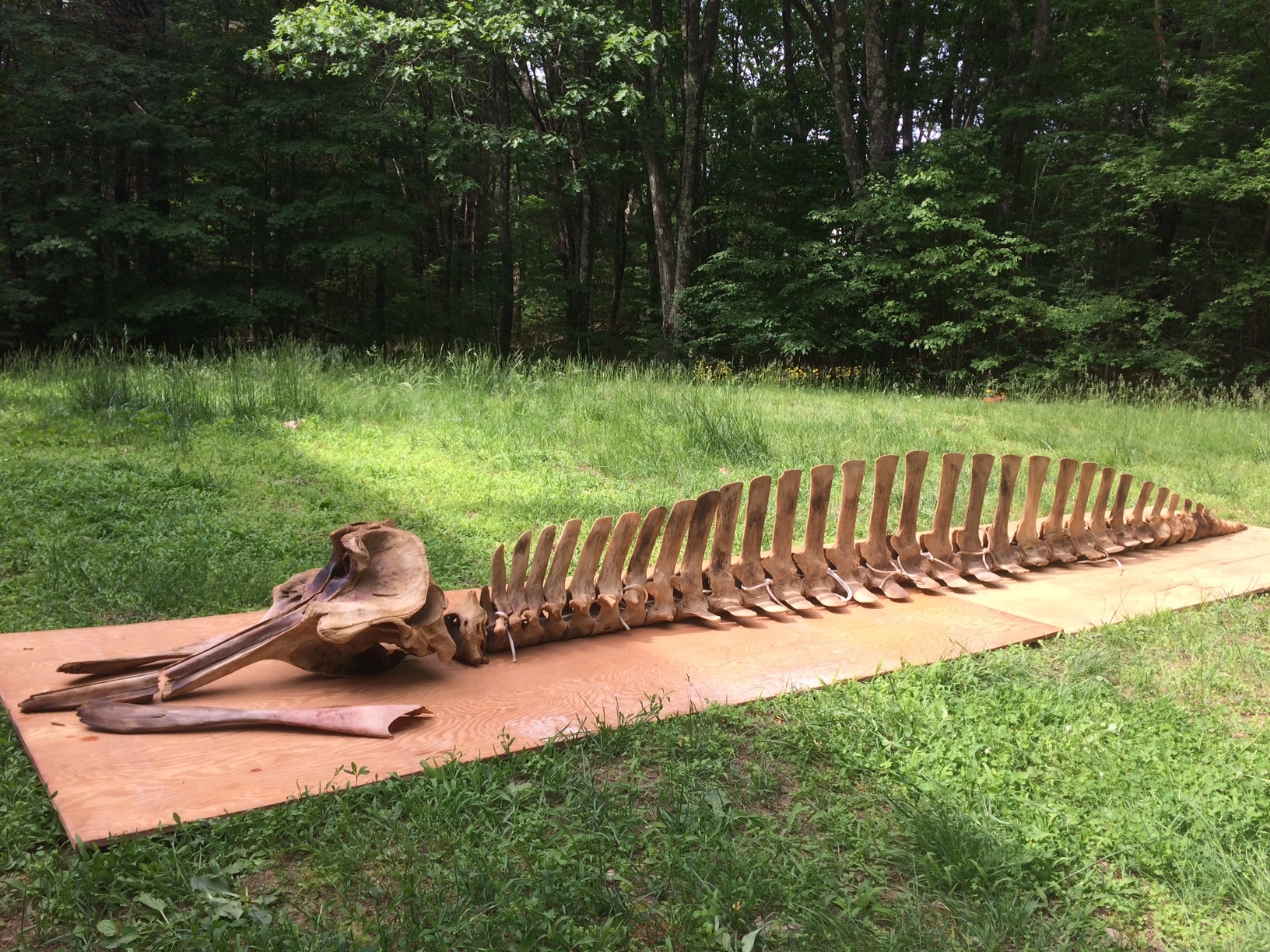
True’s beaked whale has the silhouette typical of the genus: a spindle-shaped body, robust in the middle and tapering at both ends, measuring 4.8 to 5.4 m for 1,020 to 1,400 kg. The head is small, with a rounded and markedly bulbous “melon” that joins a short, fairly straight rostrum; the mouthline is straight or barely curved. The dorsal fin, small, broad-based and slightly falcate, is set about two thirds of the way back along the body. Coloration ranges from grey to grey-brown on the back, with a paler underside and often a dark patch around the eye. This pattern is nevertheless variable: several animals observed alive in the Azores carried a pale diagonal band on the melon, running from behind the blowhole to the eye, and a subadult stranded at El Hierro (Canary Islands) in November 2012 bore a sharply outlined white “mask” covering the whole front of the head, a coloration until then unknown in the species.
Only adult males show a pair of oval teeth, set at the very tip of the lower jaw. As in all mesoplodont beaked whales, these males carry long parallel linear scars left by the teeth of their rivals, to which are added the oval bites of cookiecutter sharks. Females and young have no visible teeth: identification then rests on the position of the tooth sockets, visible only during a necropsy.
Confusion is the rule rather than the exception. The main lookalike is Gervais’s beaked whale (Mesoplodon europaeus), of comparable size and shade; True’s beaked whale is told by a more bulbous and better defined melon, and by the absence of the dark lines that sometimes mark the back of Gervais’s. Sowerby’s beaked whale (M. bidens) is recognised by its long, slender rostrum, Blainville’s (M. densirostris) by its strongly arched jaw with prominent teeth. Cuvier’s beaked whale (Ziphius cavirostris), larger (5 to 7 m) and common in the Bay of Biscay, is also a source of error: the male stranded in the Landes in 2022 was first reported as a Ziphius, and its true identity was established only after a specialist re-examined the photographs. This confusion is not recent: several old records attributed to True’s beaked whale, among them a Scottish specimen long cited in the literature, proved on re-examination to be Cuvier’s beaked whales. At sea, the low profile, the barely discernible blow and the brevity of the surfacings mean that many sightings remain labelled “Mesoplodon sp.”
True’s beaked whale belongs to the order Cetacea, suborder Odontoceti, and to the family Ziphiidae (also referred to as Hyperoodontidae). The genus Mesoplodon is the richest of all cetacean genera, with some fifteen species, and paradoxically the most poorly known. The species was described in 1913 by Frederick William True, curator at the Smithsonian Institution, from an adult female collected on 26 July 1912 at Bird Island Shoal, in the harbour of Beaufort (North Carolina, United States); the epithet mirus means “astonishing” in Latin.
For a century the species passed for the only ziphiid with an antitropical distribution, with strandings in both hemispheres. The genetic and morphological analyses published in 2021 by Carroll and colleagues showed that the animals of the Southern Hemisphere formed a distinct lineage, separated as early as the Early Pleistocene: they were described as a species in their own right, Mesoplodon eueu, Ramari’s beaked whale. Since then Mesoplodon mirus has been regarded as confined to the North Atlantic, and many profiles written before that date still wrongly credit it with records from South Africa, the Indian Ocean, Brazil, Australia or New Zealand.
The range currently recognised covers the warm temperate waters of the North Atlantic, on both sides of the basin. On the western seaboard, records run from Nova Scotia (Canada) to Florida and the Bahamas, by way of Bermuda. On the eastern seaboard, the species is known from the west coast of Ireland, which accounts for the majority of European records, from northern Scotland, the Bay of Biscay, the Azores and the Canary Islands, which mark the southern limit of its North Atlantic distribution; it has been reported neither from Madeira nor from Cape Verde. The first confirmed stranding in Great Britain is that of a female found on 29 January 2020 at Kearvaig Bay (Sutherland, Scotland); the old record from the Hebrides, long repeated in the literature, in fact corresponded to a Cuvier’s beaked whale (Ziphius cavirostris) and has been invalidated. No data attest to its presence in the Gulf of Mexico, in the Caribbean Sea or in the Mediterranean.
It is a thoroughly oceanic species, tied to deep water: the documented sightings in Macaronesia took place over depths of 600 to 2,500 m, and its preferred habitat is described as deep water of more than 2,000 m, out to the abyssal plains.
In mainland France, presence is established but exceptional. Only three sightings at sea have been confirmed, all in the abyssal zone of the southern Bay of Biscay, beyond 2,000 m depth. As for strandings, only two cases have been confirmed on the national coast: a male of 4.79 m found dead in the Landes in late August 2022, whose identity was established only after photographic expert assessment, then a subadult male that stranded alive on a beach at Capbreton (Landes) on 28 May 2026 and died before a refloating could be organised. Along the western European coasts as a whole, only some fifteen strandings have been recorded since 1900. Some national references still mention occasional presence at Mayotte and Réunion: those Indian Ocean animals are today assigned to Ramari’s beaked whale.
True’s beaked whale feeds mainly on cephalopods: beaks of unidentified squid have been found in the stomachs examined, together with small fish. Stable isotope analyses place it at the same trophic level as the other mesoplodont beaked whales with which it coexists, but lower than Cuvier’s beaked whale and the northern bottlenose whale, which suggests smaller prey. Like all ziphiids, it takes its prey by suction: the tongue is abruptly retracted, creating a drop in pressure that draws the animal into the mouth.
Social life amounts to very small groups: lone individuals, or groups of two to six animals. In Macaronesia the groups observed numbered two to four individuals, on one occasion including a female accompanied by a calf. A group of three animals filmed in the Azores stayed at the surface for some ten minutes, breathing on average every 9.7 seconds. The species is capable of breaching, a behaviour documented with certainty off Pico (Azores) and in the Bay of Biscay; the animals seen breaching in the Canary Islands could not be identified with certainty and could be Gervais’s beaked whales, which show the same behaviour in the archipelago.
Mesoplodont beaked whales belong to the category of deep divers, able to sound beyond 1,000 m for more than an hour and to reappear kilometres from the point where they went down; the dive profile specific to True’s beaked whale has not, however, been documented by tagging.
Breeding remains very poorly known. The female gives birth to a single calf of about 2.2 m and 136 kg; the largest foetus measured reached 2.185 m, and a juvenile of 2.4 m still had a healing umbilicus. Gestation length, lactation length, age at sexual maturity and longevity remain unknown. The animals frequently carry epibionts: barnacles of the genera Conchoderma and Xenobalanus, and whale lice.
True’s beaked whale is listed as Least Concern (LC) on the global IUCN Red List. It was previously among the Data Deficient species; its reclassification, made in the December 2020 edition and then confirmed at the 2022 reassessment taking the new taxonomy into account, stems above all from a change in the definition of the “data deficient” category and does not reflect a measured improvement in its conservation status. No global abundance estimate exists, and no population trend can be calculated: surveys at sea most often pool all ziphiids together.
The threats identified are those that bear on all beaked whales. Underwater noise of human origin comes first: military sonars and seismic surveying disturb animals that depend entirely on sound to feed, to orient themselves and to communicate. True’s beaked whale has so far been implicated in no mass stranding associated with a sonar exercise, unlike other ziphiids. Bycatch is documented: four True’s beaked whales are among the 46 beaked whales killed between 1989 and 1998 by the United States pelagic driftnet fishery, closed after 1996, and catches are possible in the European driftnet fishery targeting albacore. Plastic ingestion has been recorded on several occasions, from a plastic bag found in the stomach of an animal stranded in Delaware to a toothbrush ingested by an adult female stranded in Ireland in late November 2022.
The species is listed on Appendix II of CITES and Annex II of the SPAW Protocol. In France it enjoys strict protection under national regulations and under the Habitats Directive (92/43/EEC): destruction, capture, intentional disturbance, possession and sale are prohibited throughout the territory and in waters under French jurisdiction.
Seeing a True’s beaked whale is exceptional. The best chances lie in Macaronesia, where deep water comes close to the coast: off Pico and São Miguel in the Azores, and in the deep waters of the Canary Islands, where almost all the validated sightings have been made. The Bay of Biscay has a few encounters, but far offshore, beyond the edge of the continental slope.
Spotting one demands a very calm sea: the animals show a discreet back and a barely visible blow, stay at the surface only briefly and often reappear far from the point where they dived. A photograph of the head of an adult male, the only thing that reveals the position of the teeth, remains the key to a certain identification; without that picture, confusion with Gervais’s beaked whale can generally not be resolved.
Approach ethics are essential here. Ziphiids tolerate noise poorly: engines should be cut or reduced, a group should never be pursued, a good distance should be kept and the length of the watch limited, and the United States recommendations for small cetaceans mention at least some fifty metres and half an hour at most. Any sighting at sea is worth reporting to naturalist networks. In the event of a stranding, live or dead, the Réseau national échouages, the French national stranding network coordinated by the Observatoire Pelagis in La Rochelle, should be alerted without delay, and no attempt should be made to put the animal back in the water oneself.
These are the two species hardest to separate at sea: similar size, grey coloration, short rostrum. True’s beaked whale is told by a more bulbous and better defined melon and by the absence of the dark lines that sometimes mark the back of Gervais’s. In adult males, the position of the teeth at the very tip of the lower jaw is the most reliable criterion, but it is rarely observable in the field. Doubt is common: in the Canary Islands, several animals seen at the surface or breaching could not be assigned to one species or the other with certainty.
Yes, but very rarely. Only three sightings at sea have been confirmed, all in the abyssal zone of the southern Bay of Biscay, beyond 2,000 m depth. Two strandings have been confirmed on the French coast: a dead male of 4.79 m in the Landes in late August 2022, and a subadult male that stranded alive at Capbreton on 28 May 2026. The species is not reported in the Mediterranean.
The west coast of Ireland accounts for the majority of European records. In Great Britain, the first confirmed stranding is that of a female found on 29 January 2020 at Kearvaig Bay, in Sutherland, in the north of mainland Scotland. The older record of a specimen from the Hebrides, long repeated in the literature, has been invalidated: it was in fact a Cuvier’s beaked whale.
It is listed as Least Concern (LC) on the global IUCN Red List, a status confirmed at the 2022 reassessment. This listing, which succeeds the “data deficient” category, results above all from a change in the definition of the latter: there is still no global abundance estimate and no quantified trend for the species.
Long regarded as a southern population of Mesoplodon mirus, the animals from South Africa, Brazil, the Indian Ocean, Australia and New Zealand proved to be genetically and morphologically distinct. They were described in 2021 as a species in their own right, Mesoplodon eueu, Ramari’s beaked whale, listed as Data Deficient by the IUCN.
It is an oceanic species associated with deep water, generally beyond 2,000 m, observed in Macaronesia over depths of 600 to 2,500 m. It feeds mainly on squid and small fish, taken by suction. Mesoplodont beaked whales can sound beyond 1,000 m for more than an hour, but no dive profile has yet been recorded specifically for this species.
The Réseau national échouages, the French national stranding network coordinated by the Observatoire Pelagis (CNRS, La Rochelle), reachable seven days a week, should be alerted immediately, and a perimeter should be kept around the animal. The animal should not be put back in the water by oneself: these offshore cetaceans most often strand because they are sick or weakened, and handling by untrained people makes their condition worse.
Profile compiled from authoritative scientific sources (IUCN, NOAA Fisheries, specialist literature) and reviewed for factual accuracy.
According to the open data of the GBIF, 22 georeferenced sightings of Mesoplodon mirus are recorded in our photographic index.
| Country | Notes |
|---|---|
| United States of America | 18 |
| Spain | 4 |
| South Africa | 2 |
| Canada | 2 |
| Mozambique | 1 |
| Portugal | 1 |
| Saint Helena, Ascension and Tristan da Cunha | 1 |
| Australia | 1 |
| Brazil | 1 |

Monthly distribution of 27 dated sightings (all years combined): the maximum is reached in mai.
| Month | Notes |
|---|---|
| janvier | 1 |
| February | 0 |
| mars | 3 |
| avril | 1 |
| mai | 5 |
| juin | 0 |
| juillet | 5 |
| August | 3 |
| septembre | 2 |
| octobre | 2 |
| novembre | 2 |
| December | 3 |
These figures reflect survey effort (more boaters and more surveys in summer) as much as the actual presence of the species: to be interpreted with caution.


Photographs from GBIF under a Creative Commons licence. The author and the licence of each photograph are given; please respect them if you reuse them.
Automatic selection of the most cited works mentioning the species (source: Crossref).