| Scientific name | Mesoplodon bidens (Sowerby, 1804) |
|---|---|
| Other names | Sowerby’s beaked whale, North Atlantic beaked whale, North Sea beaked whale; in French: mésoplodon de Sowerby, baleine à bec de Sowerby |
| Size | 4 to 5.5 m on average (females up to about 5 m, males up to about 5.5 m); NOAA Fisheries gives a wider range, 4.4 to 6.4 m. Newborn: 2.1 to 2.7 m |
| Weight | 1,000 to 1,300 kg in adults (some sources give 900 to 1,100 kg); about 170 to 185 kg at birth |
| Longevity | Not established. The longevity of the species is unknown; the life-history parameters used for the mesoplodont beaked whales of the Northwest Atlantic mention maximum ages of 30 dental growth layers in females and 36 in males, these layers being assumed to be annual |
| Diet | Mainly mesopelagic and benthopelagic fish (hakes, cod, lanternfish, grenadiers, black cardinalfish, barracudinas…), supplemented by a small proportion of cephalopods; capture by suction |
| IUCN status | Least Concern (LC), 2020 assessment published in the December 2020 update (assessors: R. L. Pitman and R. L. Brownell Jr.). The species was previously classified as “Data Deficient” (DD). No subpopulation is assessed separately. |
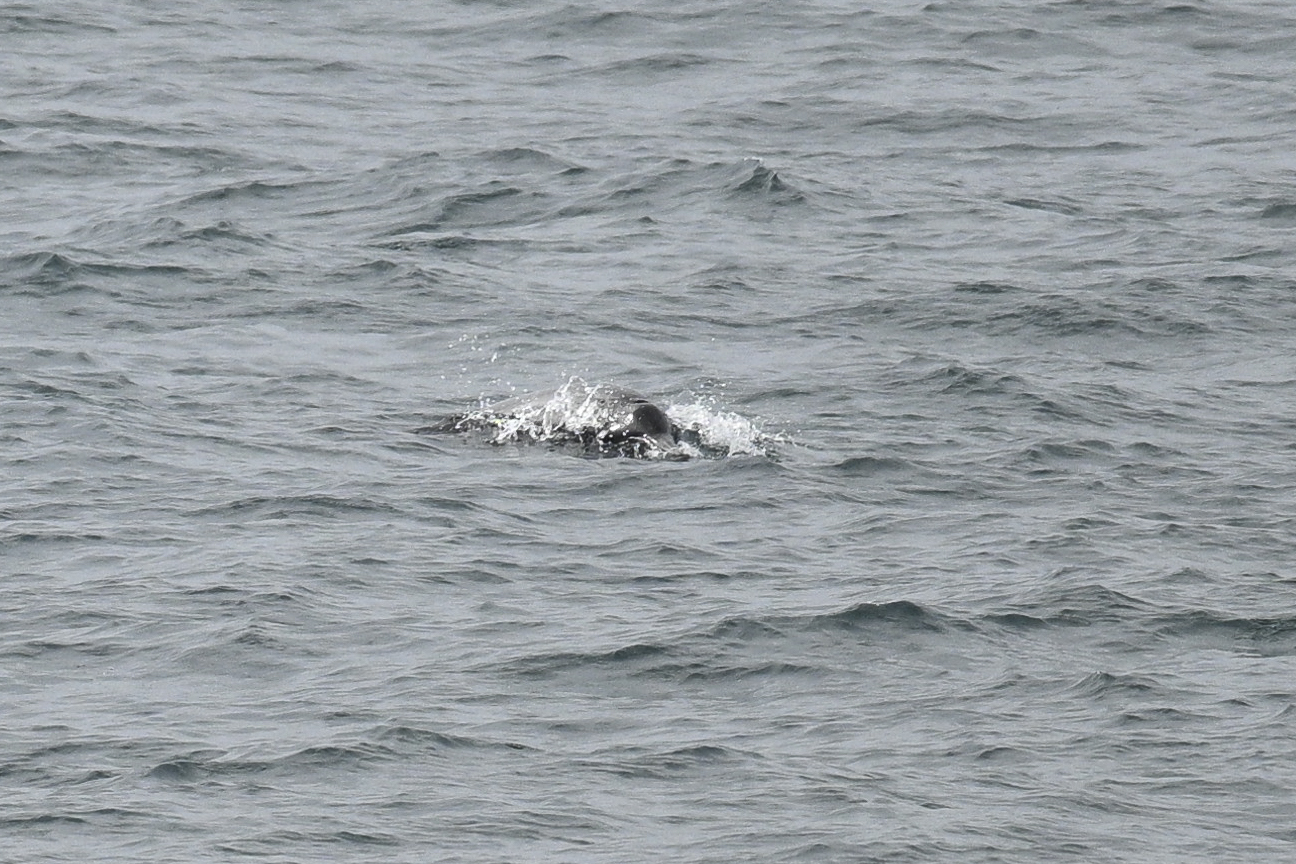
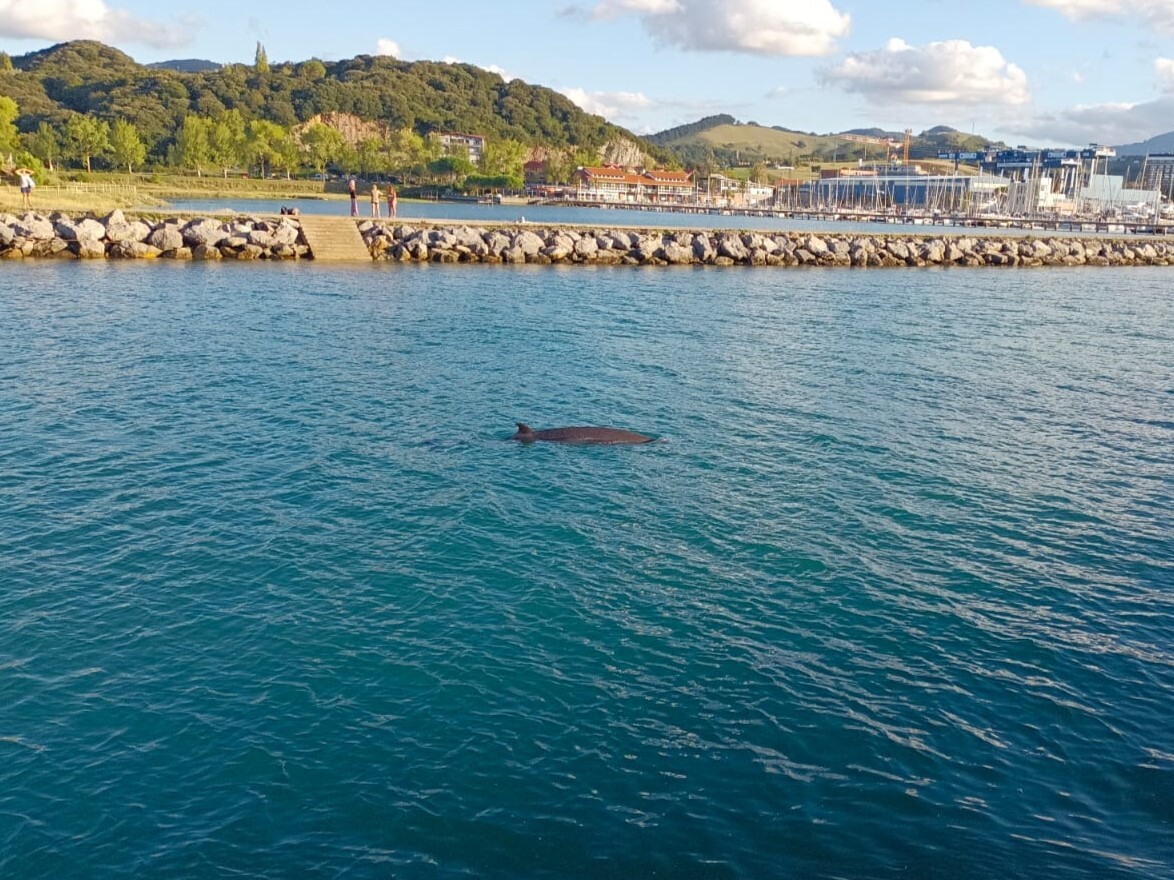
The Sowerby’s beaked whale is a medium-sized beaked whale endemic to the cold temperate and subarctic waters of the North Atlantic. The first mesoplodont ever described, in 1804, it remains one of the most elusive cetaceans: it lives offshore beyond the continental slope, dives to more than 1,000 m and flees from vessels. In France it is the mesoplodont most often found stranded, and the only beaked whale that can be observed in the English Channel.
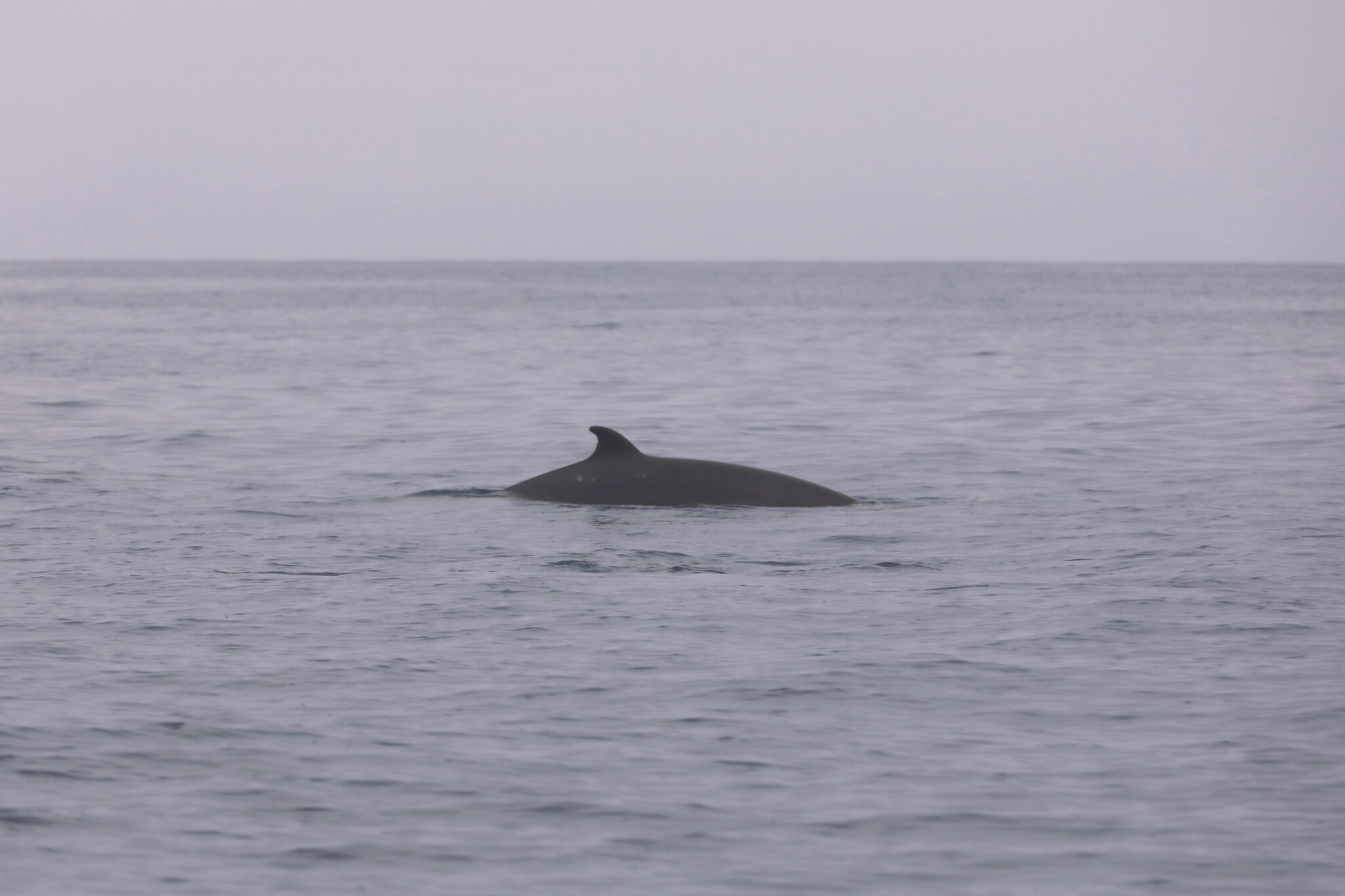
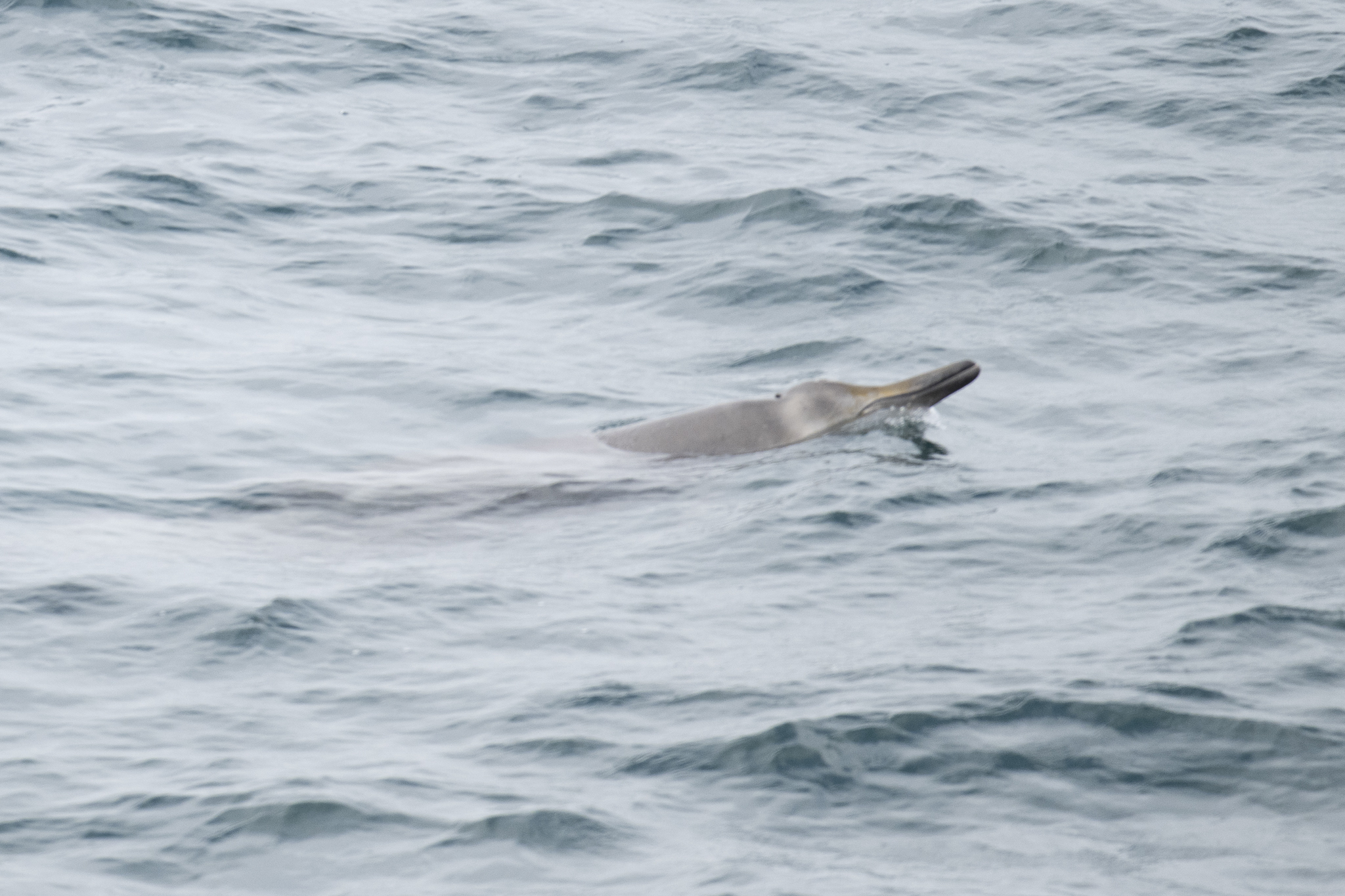
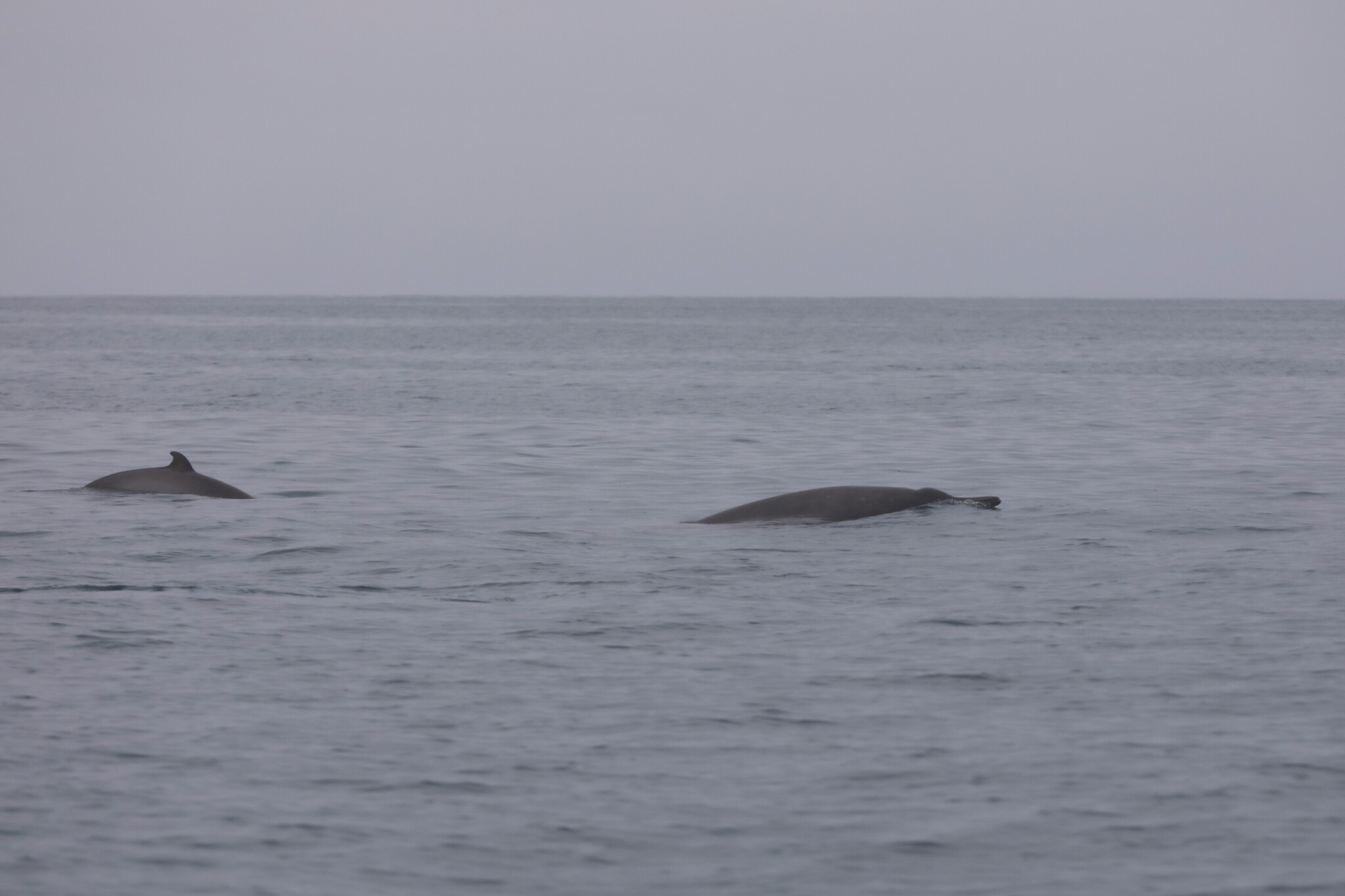
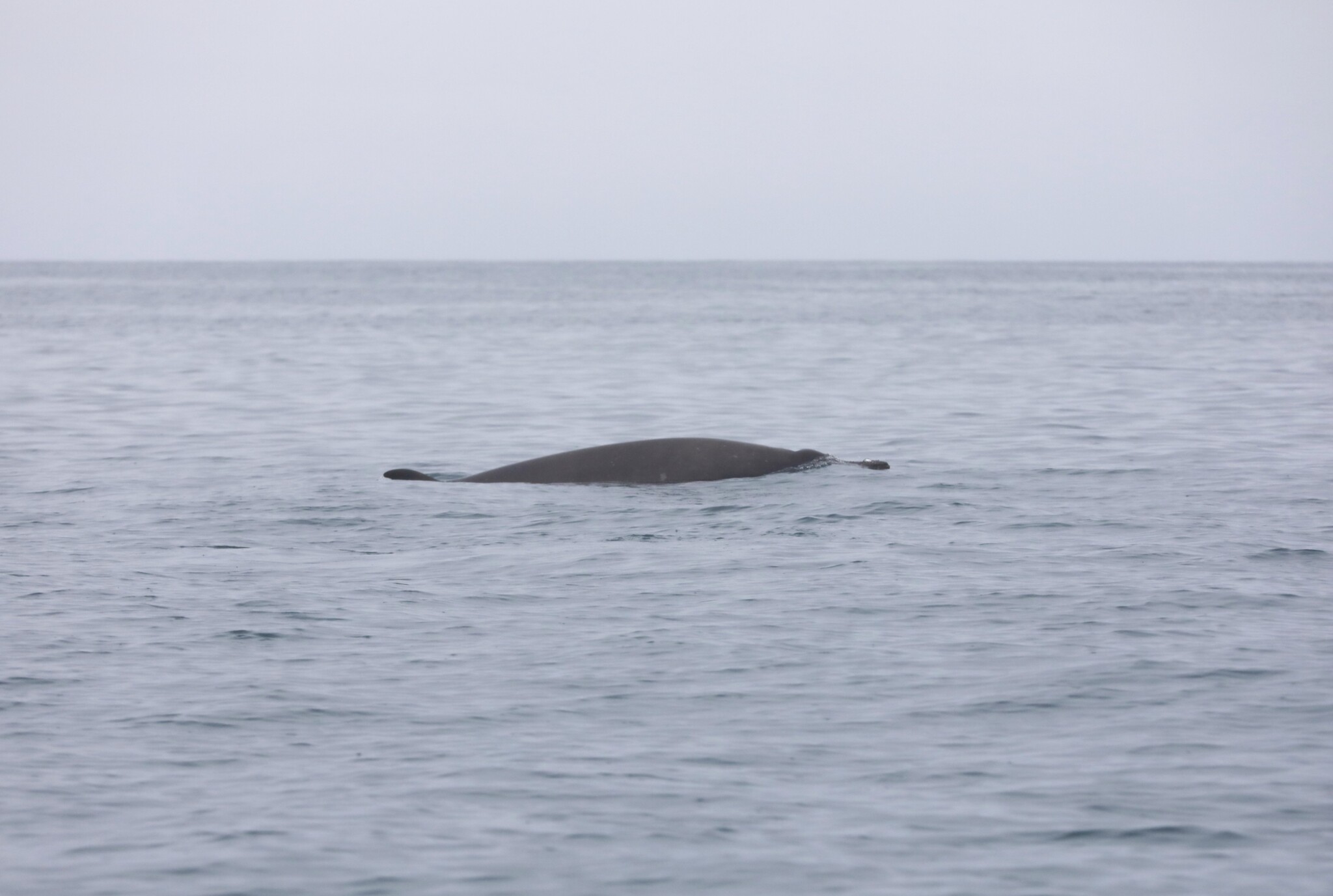
The Sowerby’s beaked whale has the streamlined outline typical of its genus: a spindle-shaped body, small flippers and a reduced dorsal fin, triangular to slightly falcate, set two thirds of the way back along the back. The head is distinguished by a long, slender beak, proportionally longer than in most other beaked whales, continued by a slightly bulging melon. The coloration is slate grey to bluish grey on the back, paler on the belly, often marked with circular scars left by cookiecutter sharks and, in males, with long straight whitish stripes that bear witness to fights between individuals.
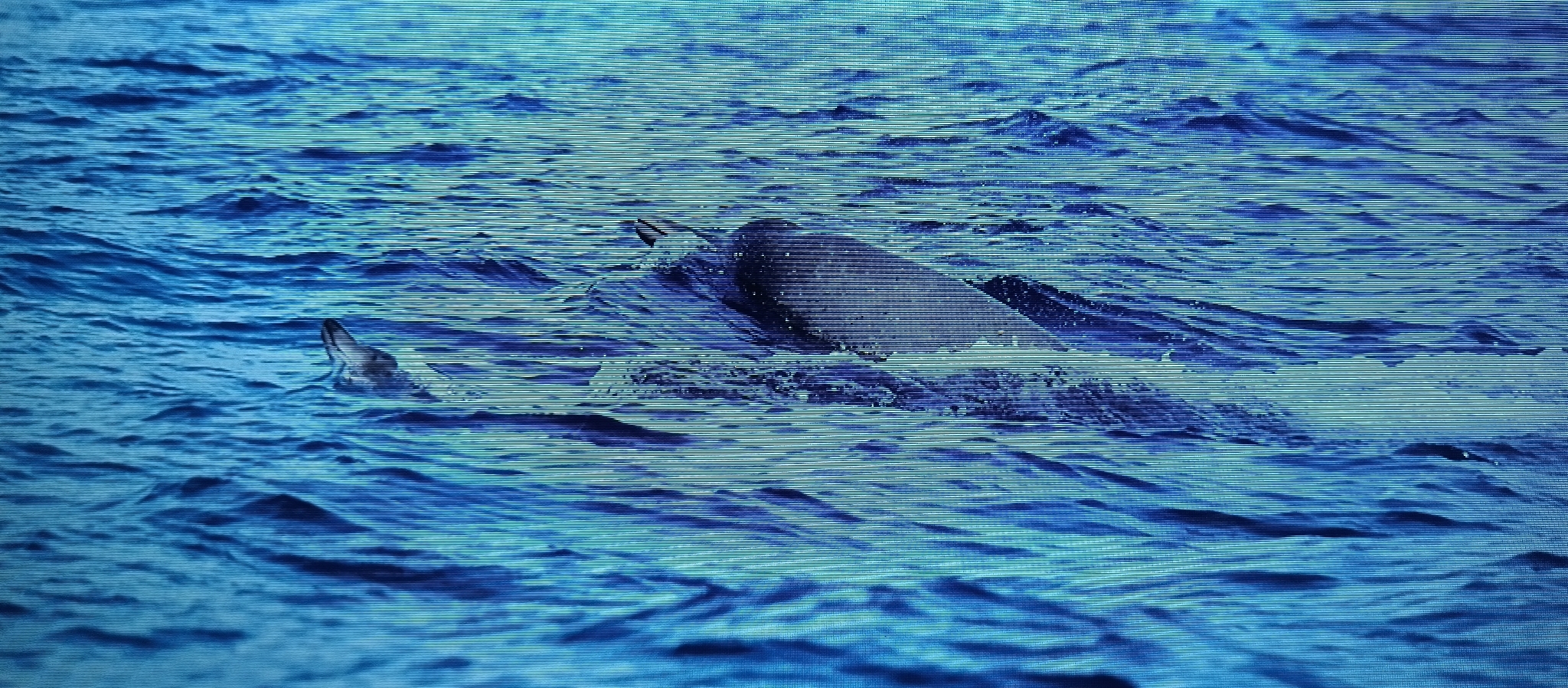
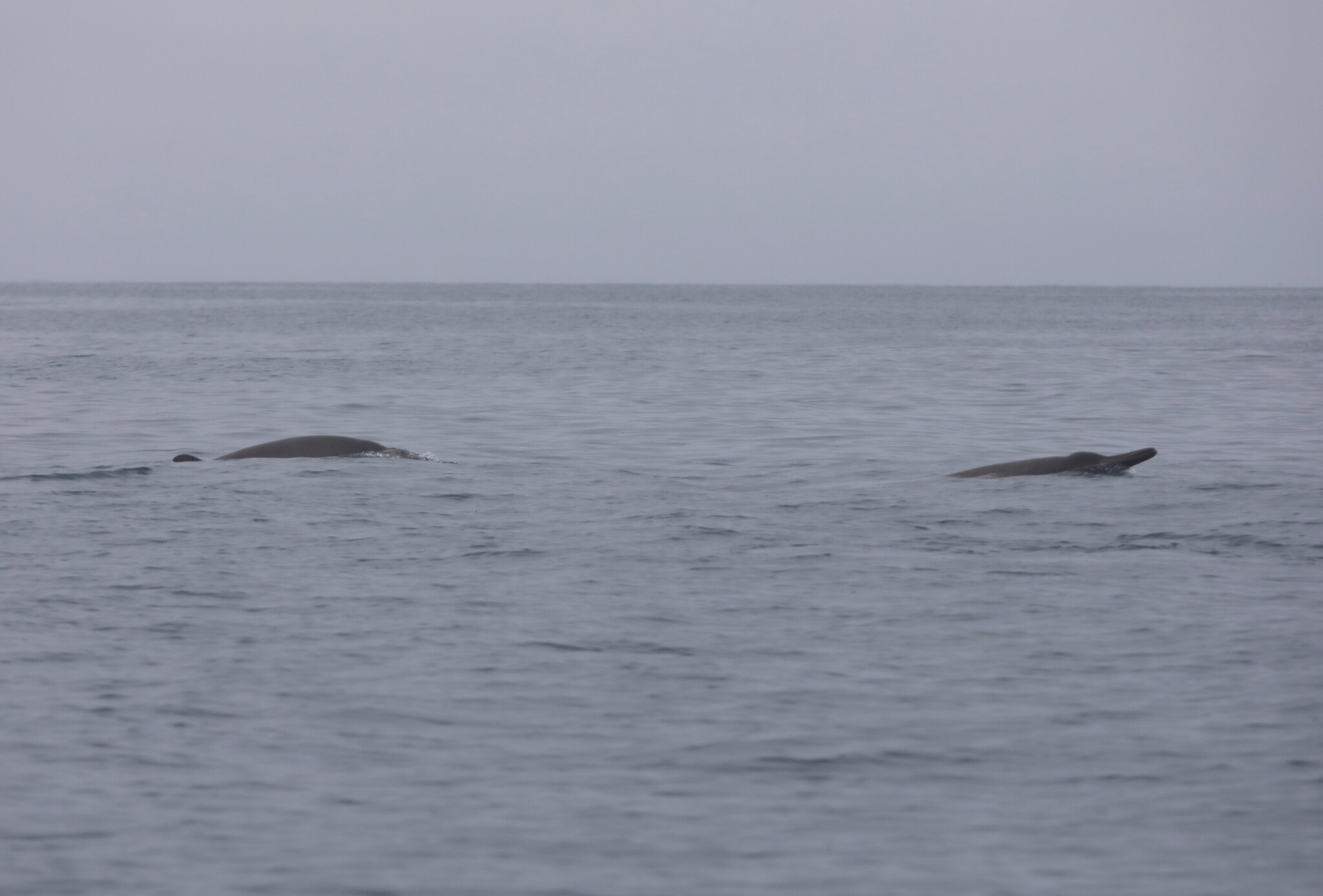
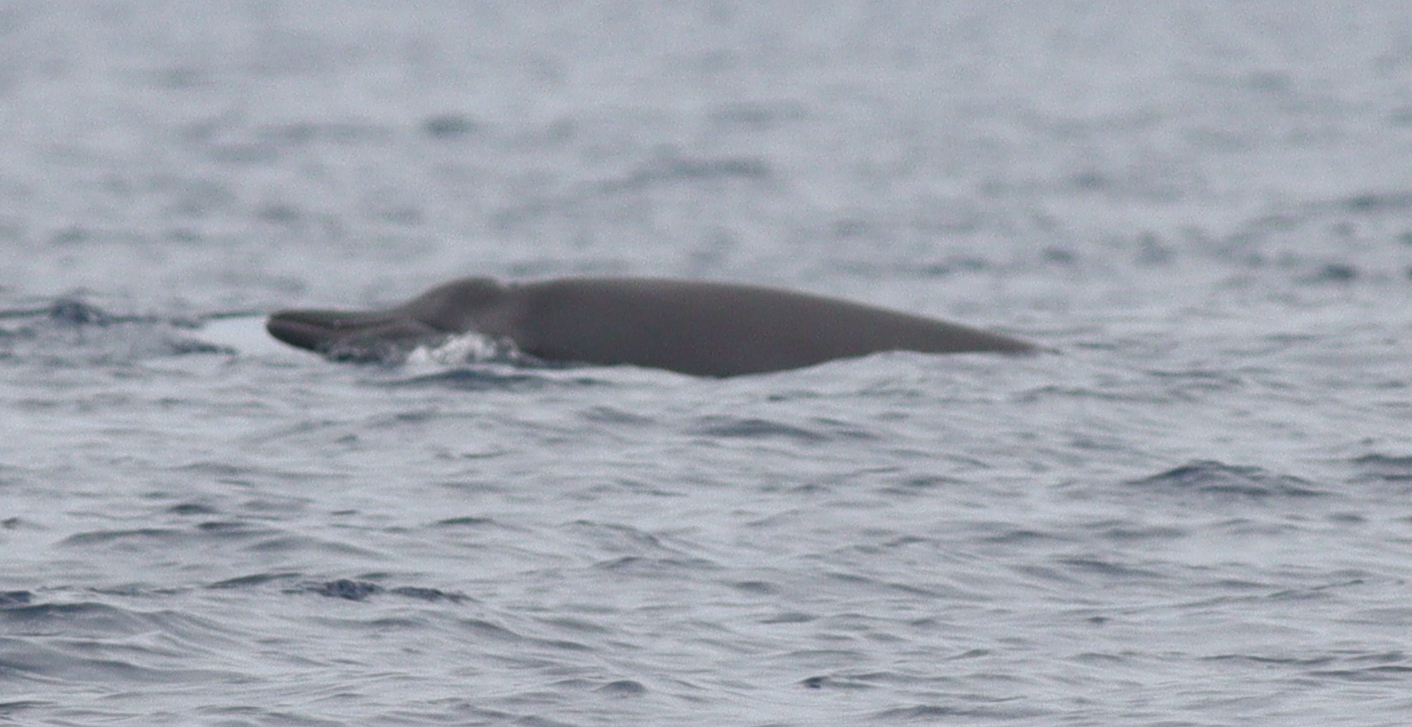
The most useful character is dental. Only adult males bear a pair of teeth, one on each side of the lower jaw, which erupt through the gum around the middle of the mandible, well behind the tip of the beak, on a barely raised arch. In females and young animals the teeth remain embedded: these animals are practically impossible to identify by sight. At the surface the species often comes up head first, at a marked angle of about 45°, showing the beak before the blowhole; it arches its back as it dives without ever raising its tail, and occasionally performs breaches, vertical leaps and lobtailing.
Confusion is frequent with the other mesoplodonts of the North Atlantic (True’s beaked whale, Gervais’s beaked whale, Blainville’s beaked whale), to the point that most sightings at sea are attributed only to the genus. Cuvier’s beaked whale, which is larger and has a distinctly shorter rostrum and an often pale head, is more easily separated. On a stranded animal, the position and shape of the male’s teeth, the length of the beak and, as a last resort, genetic analysis allow reliable identification.
Mesoplodon bidens belongs to the odontocetes, in the beaked whale family, designated Ziphiidae by most reference works and Hyperoodontidae by some, notably GBIF; the Mammal Diversity Database places it in the subfamily Hyperoodontinae. The genus Mesoplodon brings together the great majority of the known beaked whales. The species was described in 1804 by the English naturalist and illustrator James Sowerby, from the skull of a male stranded in 1800 in the Moray Firth, Scotland: it is the very first mesoplodont ever described. The epithet bidens, from the Latin bi (“two”) and dens (“tooth”), refers to the pair of teeth visible in the male; it is known today that this character is common to the whole genus, which makes the name of little diagnostic value. The scientific name is written with parentheses, (Sowerby, 1804), the species having been described in another genus before its transfer to Mesoplodon.
The species is strictly confined to the North Atlantic, approximately between 30° and 71° north. In the western Atlantic it is reported from Nantucket to Labrador, with more northerly records as far as the Labrador Sea, the Davis Strait and the ice edge; in the eastern Atlantic it extends from Madeira and the Canaries to the Norwegian Sea, including the Azores and Iceland. It frequents the deep, cold waters of the shelf edge and the continental slope, typically in 200 to 1,500 m of water, and avoids shallow shelves. Most historical records come from the British Isles: of about 90 reports listed in 1991, 80 concerned the North-East Atlantic.
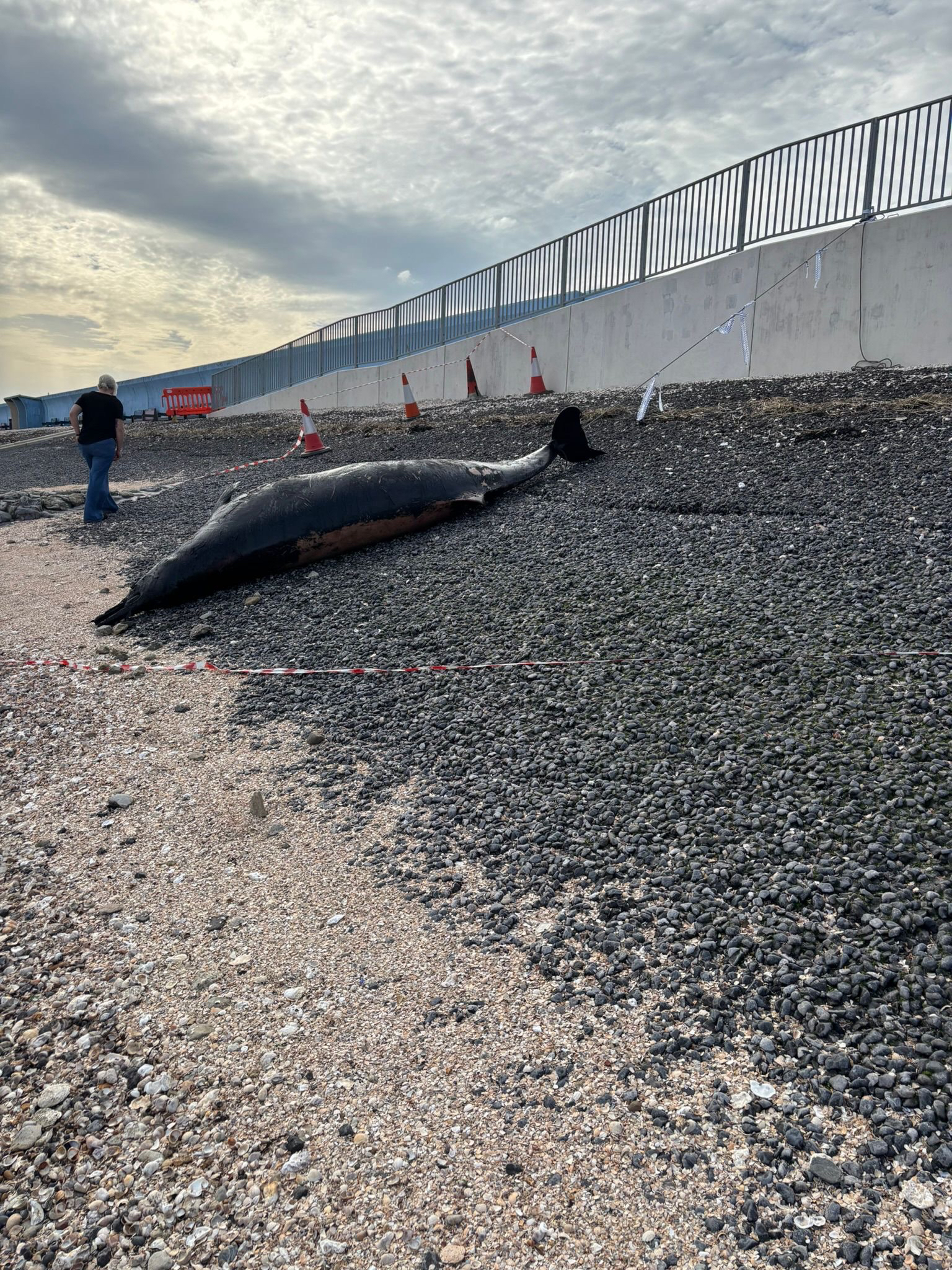
In France, the Sowerby’s beaked whale is the mesoplodont most often found on the coast. Since the 1990s, some twenty mesoplodont strandings have been recorded on the metropolitan seaboards, fifteen of them attributed to this species up to June 2025. It is known from the Bay of Biscay, where it frequents the deep water beyond the slope, and from the English Channel, where it is the only beaked whale that can be observed. Two recent cases illustrate this presence: a young animal of 2.50 m stranded at the Ouistreham ferry terminal (Calvados) in late July 2024, which left again with the rising tide, and a subadult female of 3.50 m stranded alive at Zuydcoote (Nord) on 6 June 2025, found dead the next day at Dunkirk. In the Mediterranean the species is exceptional: a few isolated records exist in the western basin and as far as the Aegean Sea, but no population is established there. It is absent from the tropical and southern French overseas waters (the Antilles, French Guiana, the Indian Ocean, the Pacific); the waters of Saint-Pierre-et-Miquelon, off Newfoundland, on the other hand lie within its Northwest Atlantic range.
Like all beaked whales, the Sowerby’s beaked whale is a deep-water hunter. It has a pair of V-shaped gular grooves which, combined with retraction of the tongue, create a drop in pressure inside the mouth that allows prey to be drawn in: this is suction feeding, the reduced dentition playing no part in seizing prey. Its diet is dominated by mesopelagic and benthopelagic fish, hakes, cod, lanternfish, grenadiers, black cardinalfish, barracudinas, with cephalopods occupying only a secondary place, unlike what is observed in several other ziphiids.
Routine dive sequences last 10 to 15 minutes, but foraging dives are far longer: they generally fall between 30 and 40 minutes and go beyond 1,000 m in depth, the maximum depth documented by acoustic tagging being about 1,400 m (capture attempts recorded down to 1,386 m, Visser et al. 2022, the Azores; mean echolocation depth 927 m). The locomotor behaviour of the species is closer to that of large diving delphinids, such as the pilot whale or Risso’s dolphin, than to that of the other mesoplodonts: descent and hunting take place at higher speed, and transits between two dives are made by swimming rapidly just below the surface rather than by intermediate dives.
Socially, the species is unobtrusive and generally seen alone, in pairs or in small groups of 3 to 10 individuals bringing together males, females and young; mass strandings have been reported. Mating appears to take place from late winter to spring, gestation lasts about 12 months and the female gives birth to a single calf of 2.1 to 2.7 m weighing close to 185 kg. Sexual maturity is thought to be reached at around 7 years. Longevity is not established.
The IUCN Red List has classified Mesoplodon bidens as “Least Concern” (LC) since the 2020 assessment, published in December 2020. This reclassification, shared by most beaked whales, follows above all from a redefinition of the “Data Deficient” category and does not reflect a demonstrated improvement in the situation: no global abundance estimate exists and no population trend can be calculated. In the Northwest Atlantic, the only available estimate covers all undifferentiated mesoplodonts, namely 7,092 individuals (CV = 0.54) for the 2011 surveys, for a minimum population estimate of 4,632 animals.
The main documented source of mortality is bycatch. In the United States pelagic driftnet fishery, now banned, 46 beaked whale deaths were observed between 1989 and 1998, including 24 Sowerby’s beaked whales; estimated catches for this species alone reached 9 individuals in 1996. Over the period 2008-2012, estimated annual mortality in the observed fisheries of the United States Atlantic exclusive economic zone is zero. Norwegian hunting, historically occasional, ceased long ago.
Underwater noise is the second major threat: ziphiids are particularly sensitive to it. In October 2020, two Sowerby’s beaked whales stranded a day apart in East Lothian, Scotland: the necropsy revealed in one of them an abnormal density of small gas bubbles in the lung tissue, and in both animals gas emboli in the mesenteric arteries, while airborne anti-submarine sonar exercises had taken place the day before the first stranding less than 150 km (80 nautical miles) away; for want of sufficient evidence, the link could not be formally established. Plastic ingestion is also cited. The species is listed in Appendix II of CITES, covered by the ASCOBANS and ACCOBAMS agreements, protected in the United States by the Marine Mammal Protection Act, and considered of “Special Concern” by COSEWIC in Canada.
The Sowerby’s beaked whale cannot be watched from the shore. Encountering it means going to sea beyond the continental slope, over depths of 200 to 1,500 m or more: in French waters that means the large canyons and the abyssal plain of the Bay of Biscay. The animal actively avoids vessels, hardly produces a visible blow and never shows its tail fluke: the observation window is often reduced to a few seconds, between two dives of more than half an hour. The best clue remains the head, which comes out first at a pronounced angle, with a long, slender beak. Passive acoustic monitoring, which detects echolocation clicks, has established itself as the most effective method for documenting its presence.
The approach must remain cautious: crossing the animal’s path, chasing it or following it at sustained speed causes immediate flight and disrupts its dive cycles. The rule is to keep a distance of several hundred metres, to hold the engine at a constant speed and not to come between the individuals of a group. In the event of a stranding, one must never try to put the animal back in the water oneself: these deep-diving cetaceans are fragile and an improvised refloating often makes their condition worse. The Réseau National Échouages, coordinated by the Observatoire Pelagis, should be alerted without delay and the surroundings kept secure while waiting for the response team.
Only in the North Atlantic, between about 30° and 71° north: from Nantucket to Labrador on the American side, with more northerly records as far as the Labrador Sea and the Davis Strait; from Madeira and the Canaries to the Norwegian Sea on the European side, including the Azores and Iceland. It frequents the cold, deep waters of the continental slope, typically in 200 to 1,500 m of water, and is present neither in the Pacific nor in the southern hemisphere.
Yes, but rarely. It is the mesoplodont most often found stranded on the French coast: fifteen cases attributed to the species up to June 2025, out of some twenty mesoplodont strandings recorded since the 1990s. It frequents the deep water of the Bay of Biscay and is the only beaked whale that can be observed in the English Channel. In the Mediterranean it is exceptional and no population is established there. In the overseas territories it is absent from the tropical and southern ones, but the waters of Saint-Pierre-et-Miquelon, off Newfoundland, belong to its range.
In mesoplodonts, the two teeth of the lower jaw play no part in feeding, prey being drawn in by suction, but are involved in fights between males and in species recognition. They erupt through the gum only in adult males, around the middle of the mandible. The long straight scars visible on the backs of males are the marks of these encounters.
Its foraging dives regularly go beyond 1,000 m, the maximum depth documented by tagging is about 1,400 m, with a prey capture attempt recorded at 1,386 m, and they most often last 30 to 40 minutes. Between two deep dives it strings together breathing sequences of a few minutes and moves by swimming fast just below the surface, a behaviour that distinguishes it from the other mesoplodonts.
It has been classified “Least Concern” (LC) by the IUCN since the 2020 assessment, after long being listed as “Data Deficient”. This change results above all from a redefinition of the DD category: no global abundance is known and no population trend is measurable. The species is listed in Appendix II of CITES and covered by the ASCOBANS and ACCOBAMS agreements.
Bycatch in fishing gear, above all driftnets and gillnets, has caused documented mortality in the Northwest Atlantic up to the closure of the fishery concerned. Underwater noise, in particular military sonar, is the other major threat: strandings of the species have coincided with sonar exercises, necropsies revealing lesions suggestive of decompression sickness, without the link having been formally established. Plastic ingestion is also reported.
Profile compiled from authoritative scientific sources (IUCN, NOAA Fisheries, specialist literature) and reviewed for factual accuracy.
According to the open data of the GBIF, 143 georeferenced sightings of Mesoplodon bidens are recorded in our photographic index.
| Country | Notes |
|---|---|
| Netherlands | 58 |
| Portugal | 29 |
| United States of America | 28 |
| Norway | 20 |
| Germany | 13 |
| United Kingdom of Great Britain and Northern Ireland | 11 |
| Ireland | 7 |
| France | 5 |
| unknown or invalid | 5 |
| Canada | 5 |

Monthly distribution of 180 dated sightings (all years combined): the maximum is reached in juillet.
| Month | Notes |
|---|---|
| janvier | 3 |
| February | 2 |
| mars | 4 |
| avril | 2 |
| mai | 11 |
| juin | 14 |
| juillet | 60 |
| August | 32 |
| septembre | 25 |
| octobre | 21 |
| novembre | 5 |
| December | 1 |
These figures reflect survey effort (more boaters and more surveys in summer) as much as the actual presence of the species: to be interpreted with caution.


Photographs from GBIF under a Creative Commons licence. The author and the licence of each photograph are given; please respect them if you reuse them.
Automatic selection of the most cited works mentioning the species (source: Crossref).