| Scientific name | Mesoplodon ginkgodens Nishiwaki & Kamiya, 1958 |
|---|---|
| Other names | Ginkgo-toothed beaked whale; Japanese beaked whale; mésoplodon de Nishiwaki, mésoplodon japonais, baleine à bec de Nishiwaki, baleine à bec aux dents de ginkgo (French) |
| Size | Maximum measured lengths of the order of 4.8 m in males and 4.9 m in females; some sources give up to 5.3 m. Newborns: 2 to 2.5 m. |
| Weight | About 1,840 kg for the heaviest published female; the mass of males and of young animals is not documented. |
| Longevity | Unknown: no life expectancy estimate is available for the species. |
| Diet | Mainly cephalopods (squid), supplemented by fish and perhaps small crustaceans. |
| IUCN status | Data Deficient (DD). Status confirmed in the review of cetacean assessments published in December 2020, at the end of which most beaked whales moved to “Least Concern” while six species, including this one, remained DD. No subpopulation is assessed separately. Appendix II of CITES. |
The ginkgo-toothed beaked whale is an Indo-Pacific beaked whale so elusive that it was not observed alive and identified with certainty until June 2024, sixty-six years after its description. Males carry a pair of flat teeth recalling a ginkgo leaf, which is the origin of the name. Classed as “Data Deficient” by the IUCN, it remains one of the least known large marine mammals.
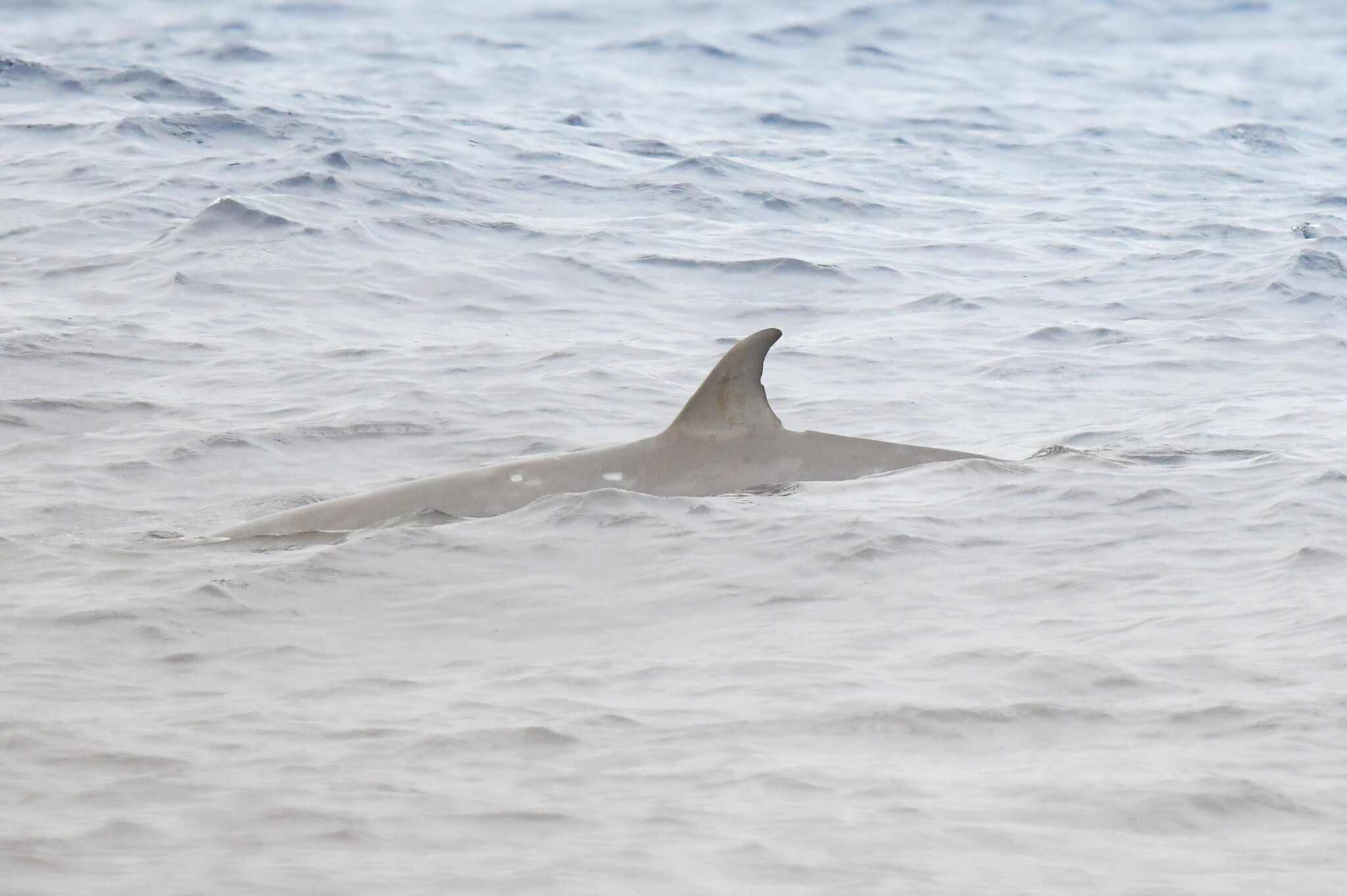
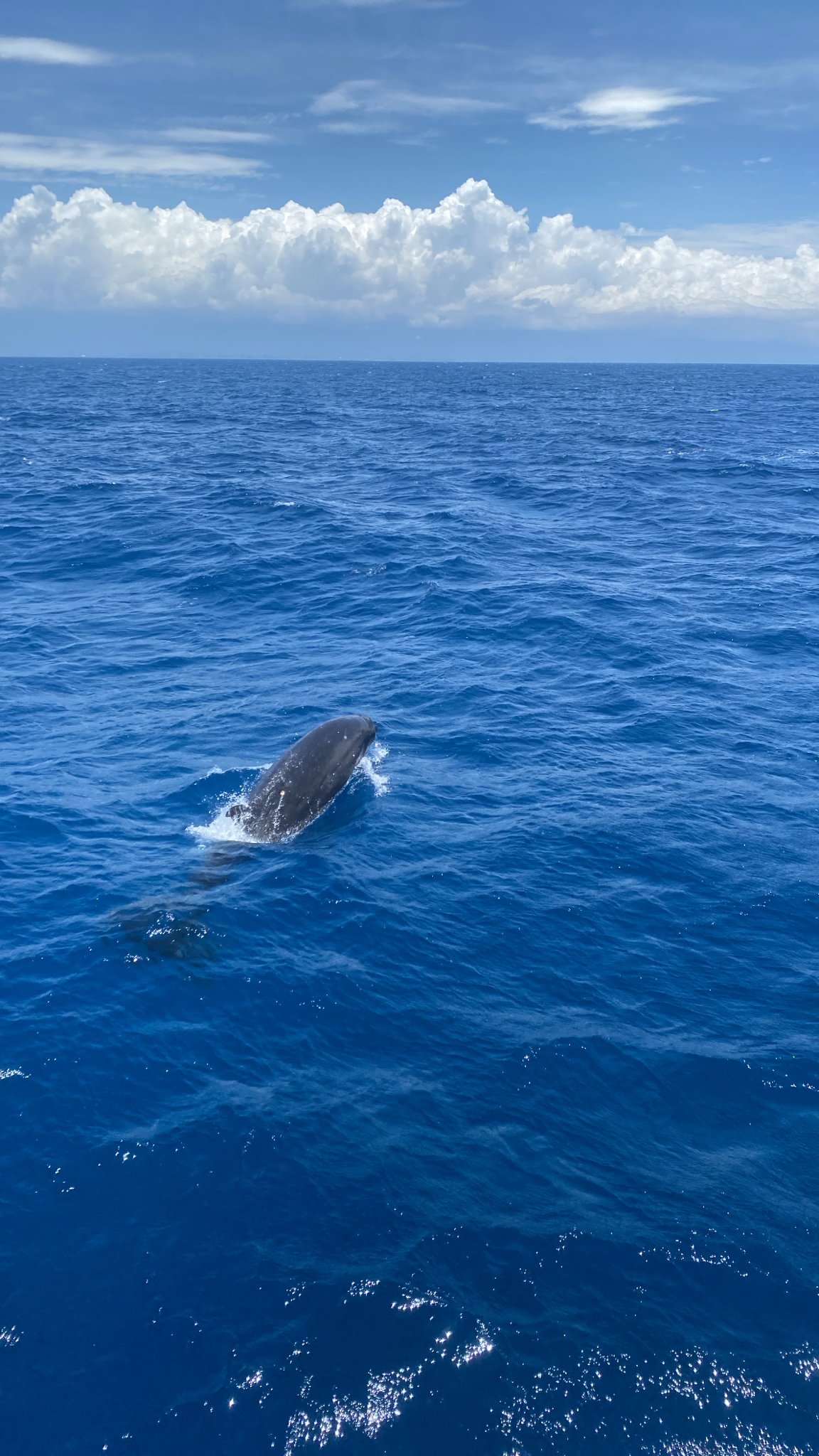
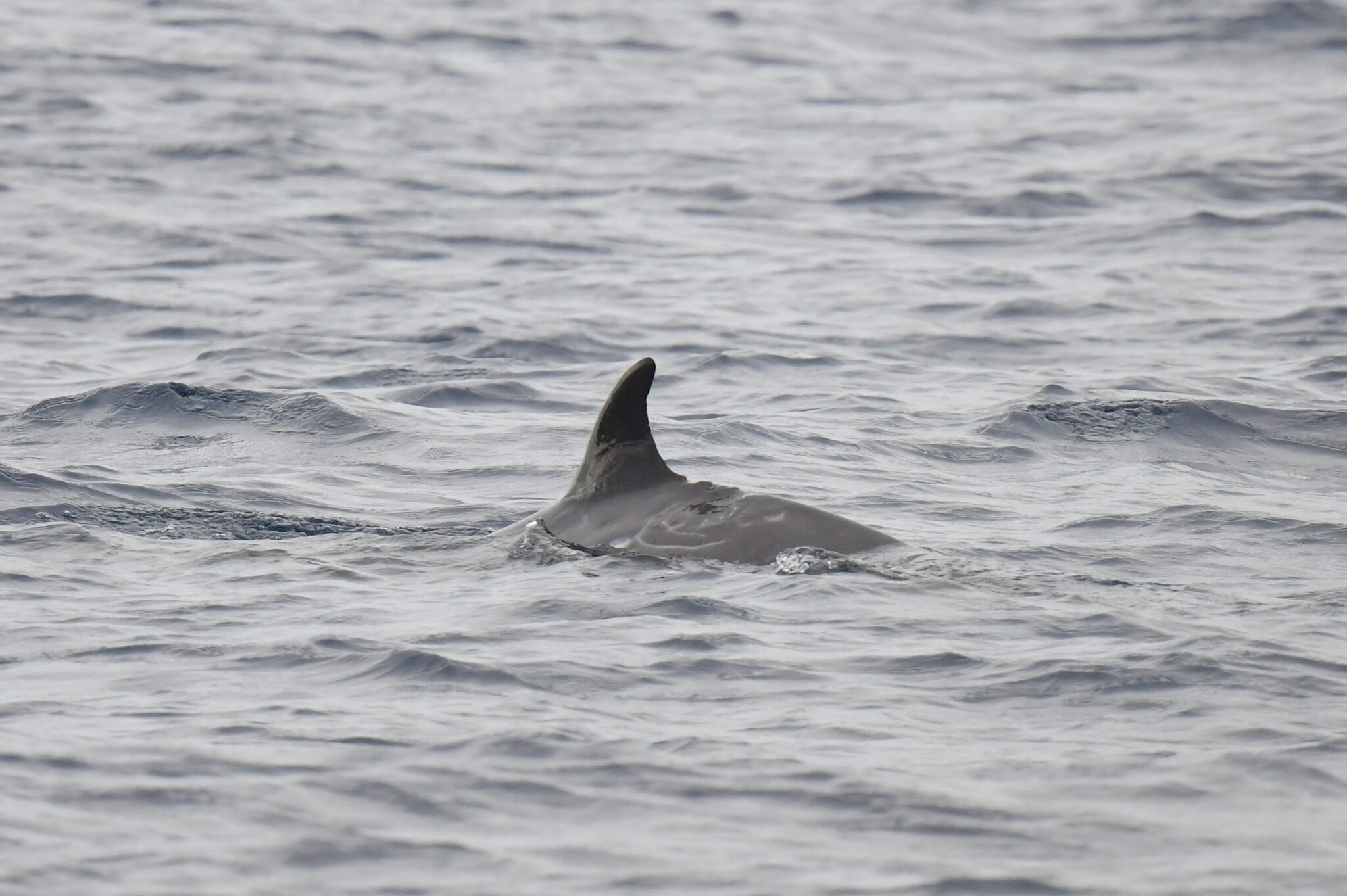
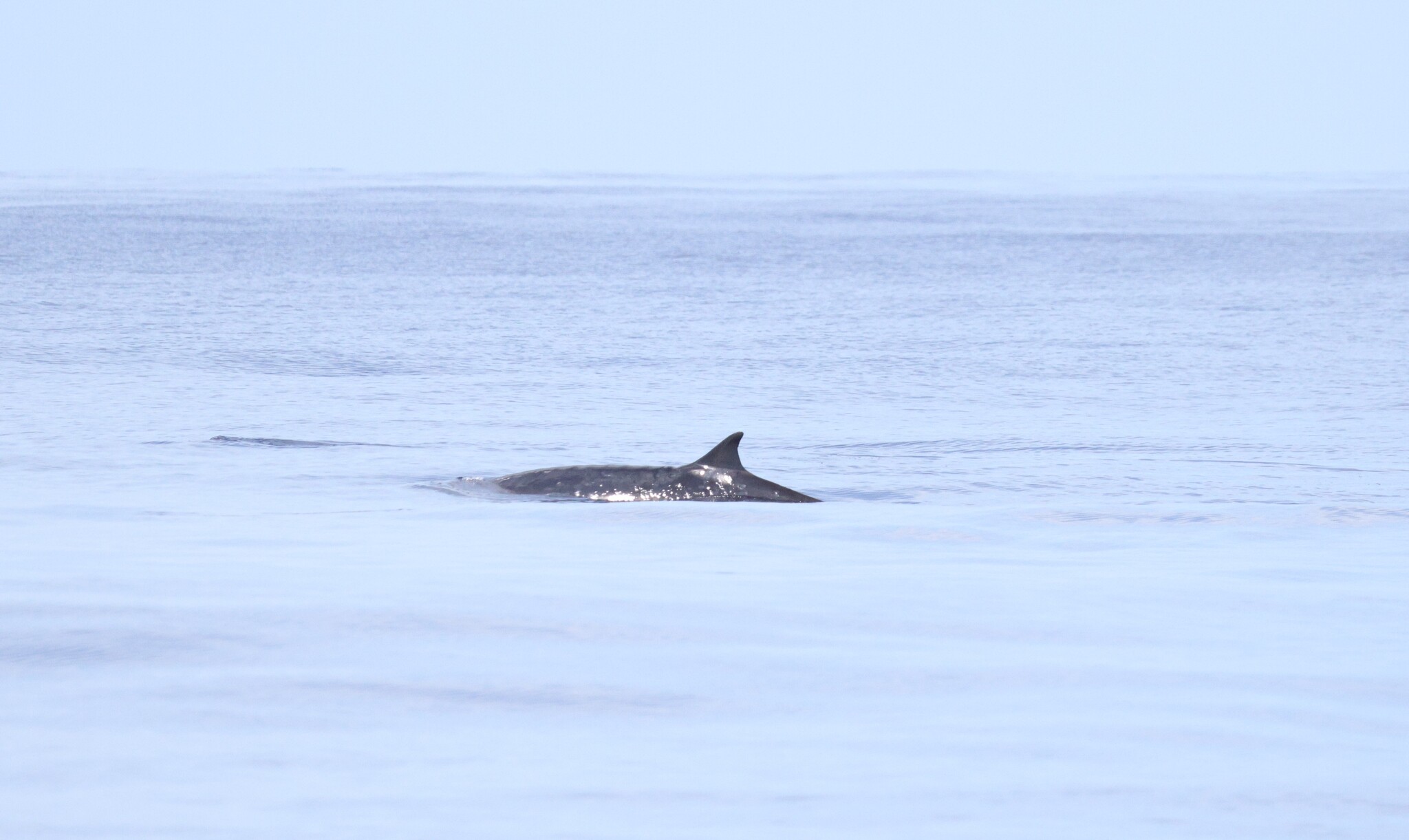
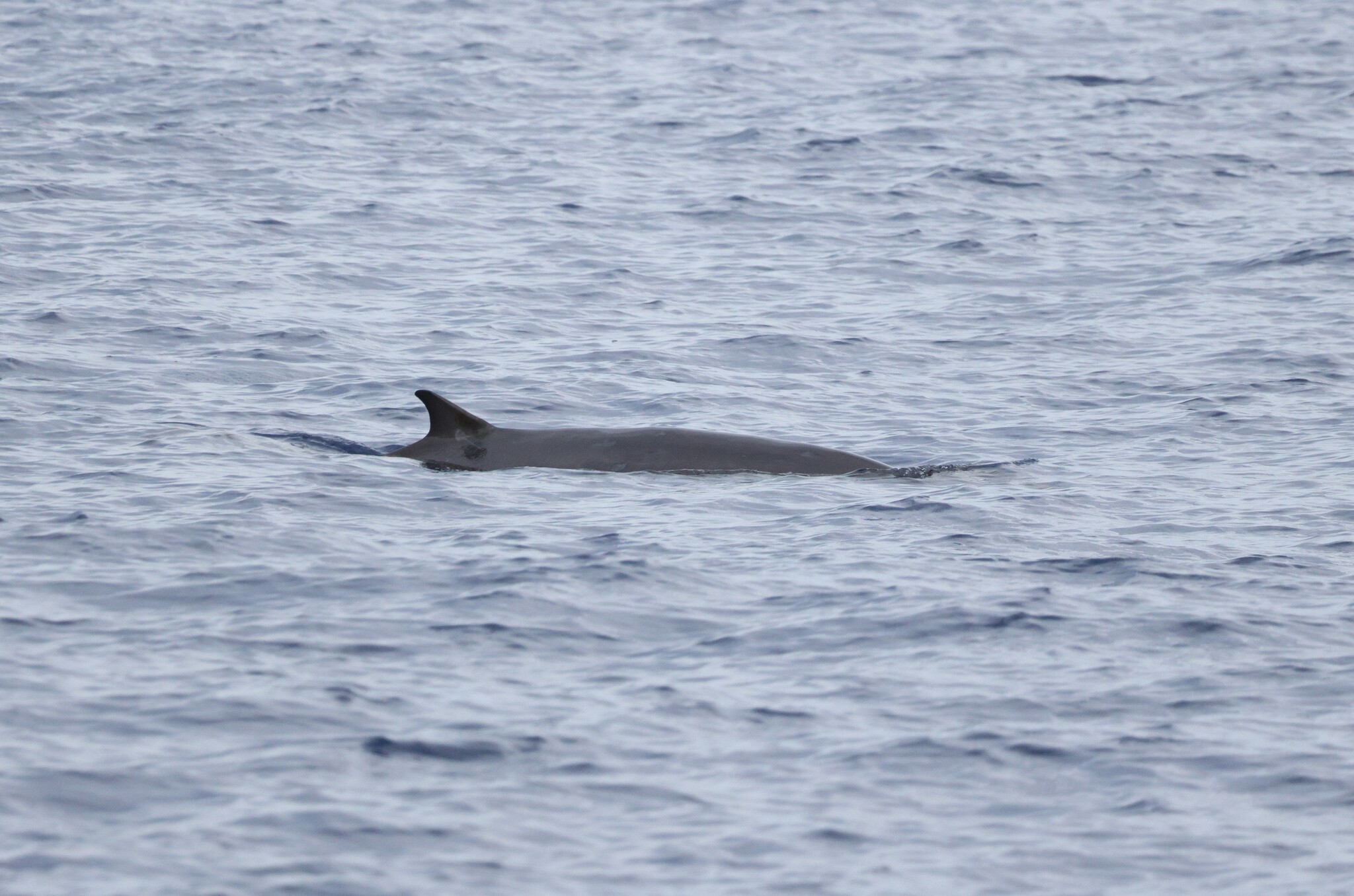
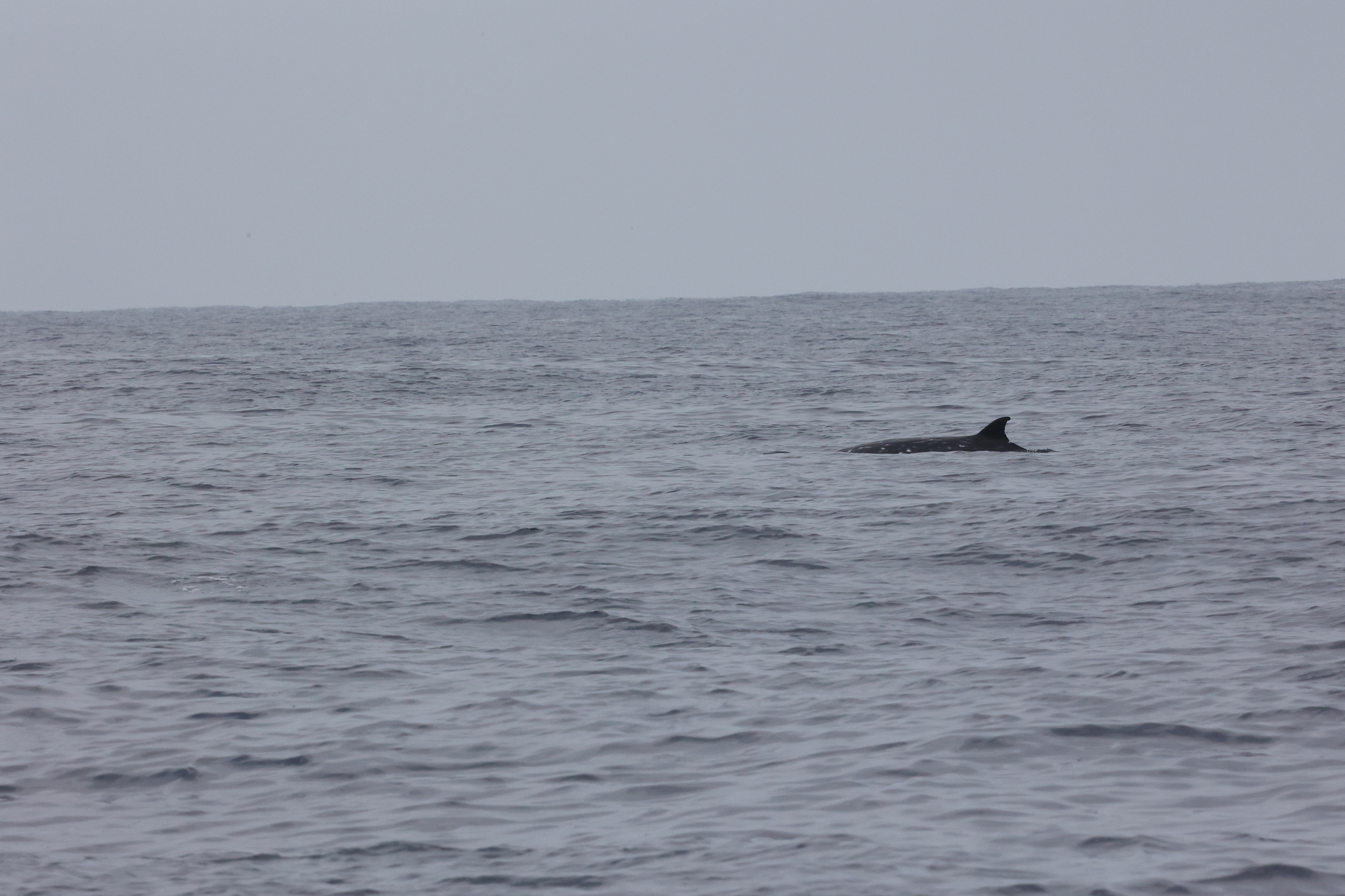
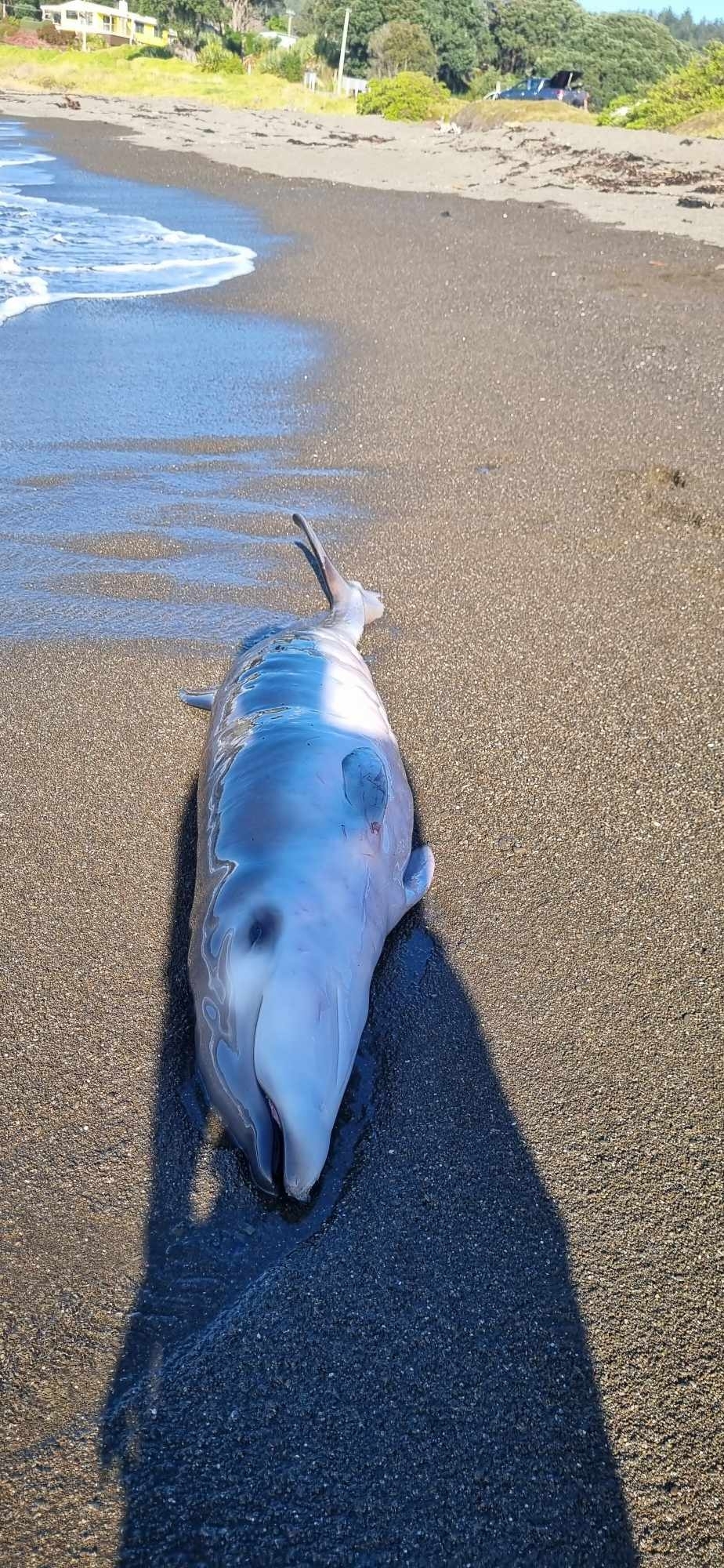
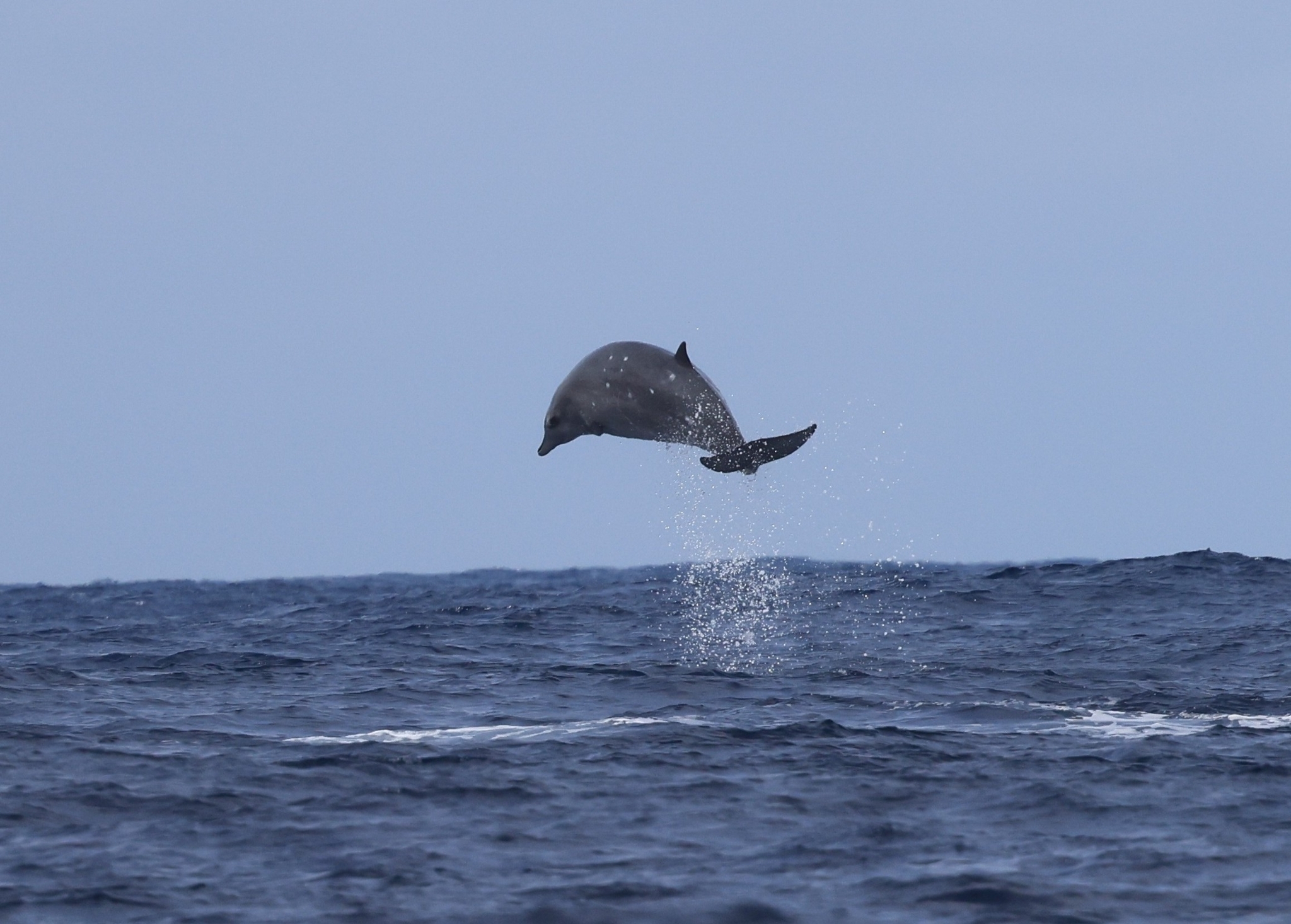
With a known maximum length of the order of 4.8 m in males and 4.9 m in females, some sources giving up to 5.3 m, this is a medium-sized cetacean with a fusiform body, somewhat stockier than most mesoplodont beaked whales. The only published weight, about 1,840 kg, is that of a female. The dorsal fin, small and slightly falcate, is set about two thirds of the way back along the body; the flippers are short, narrow and pointed, and the forehead slopes gently down to a beak of moderate length. Newborns measure 2 to 2.5 m.
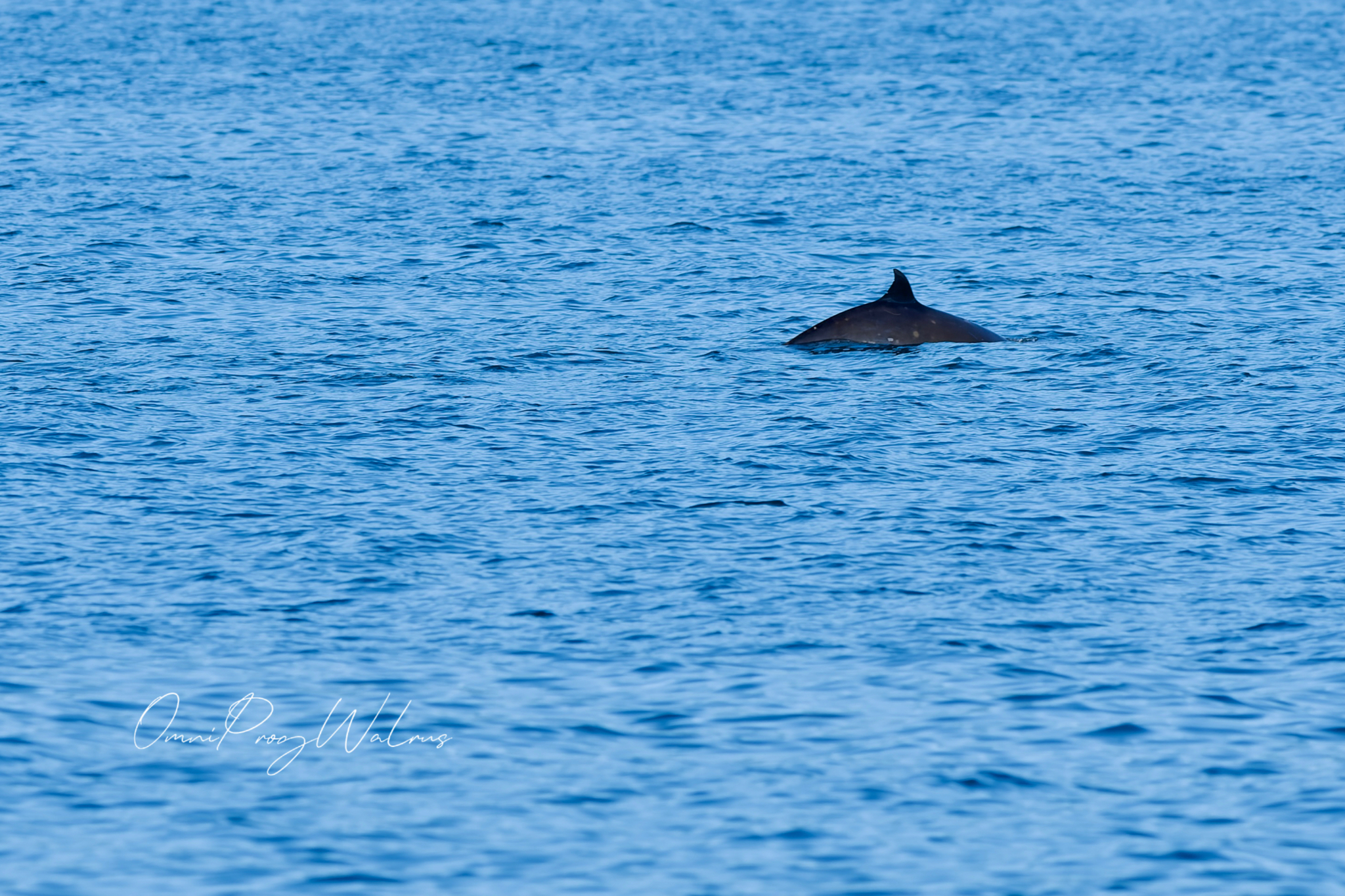
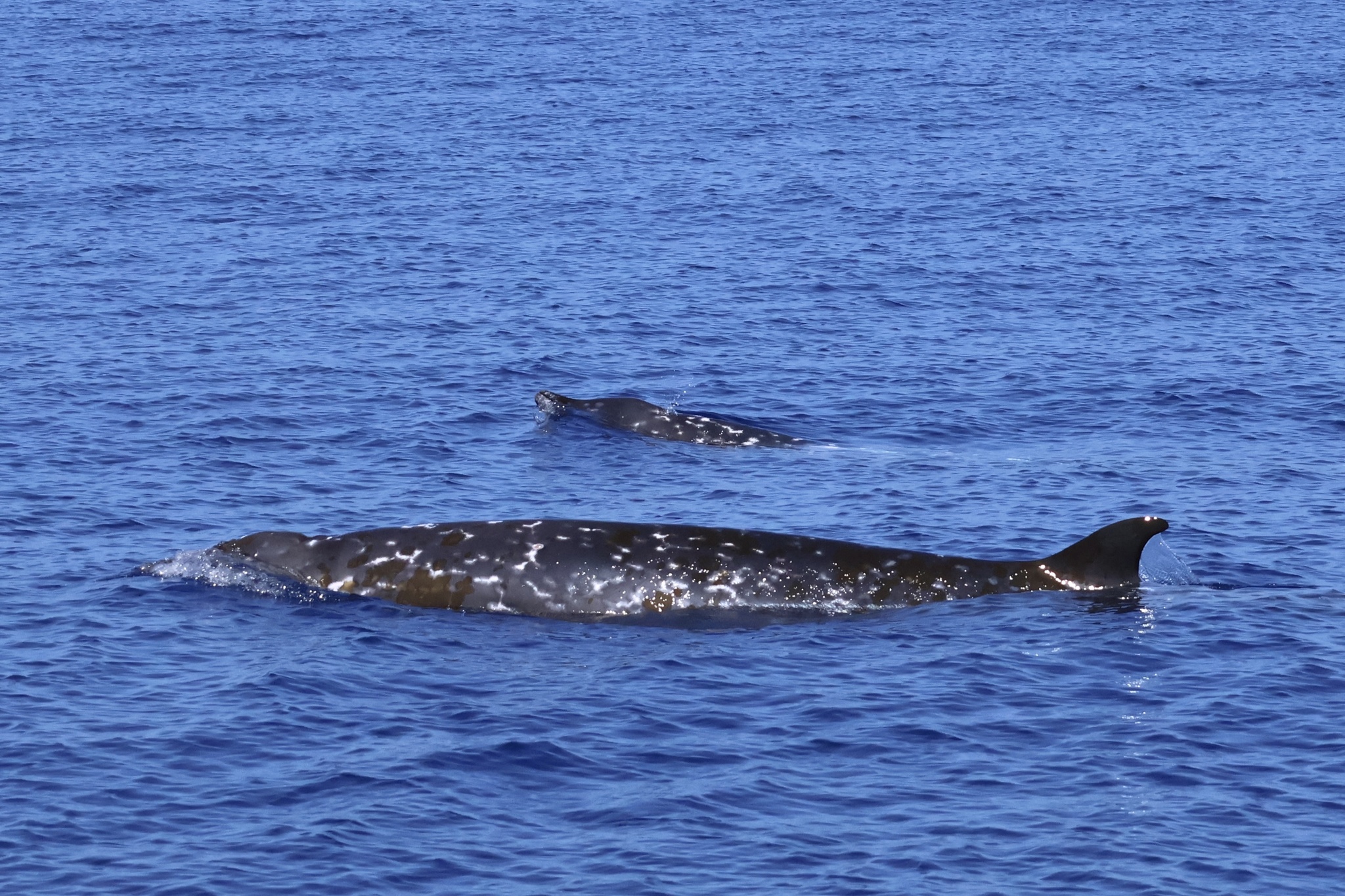
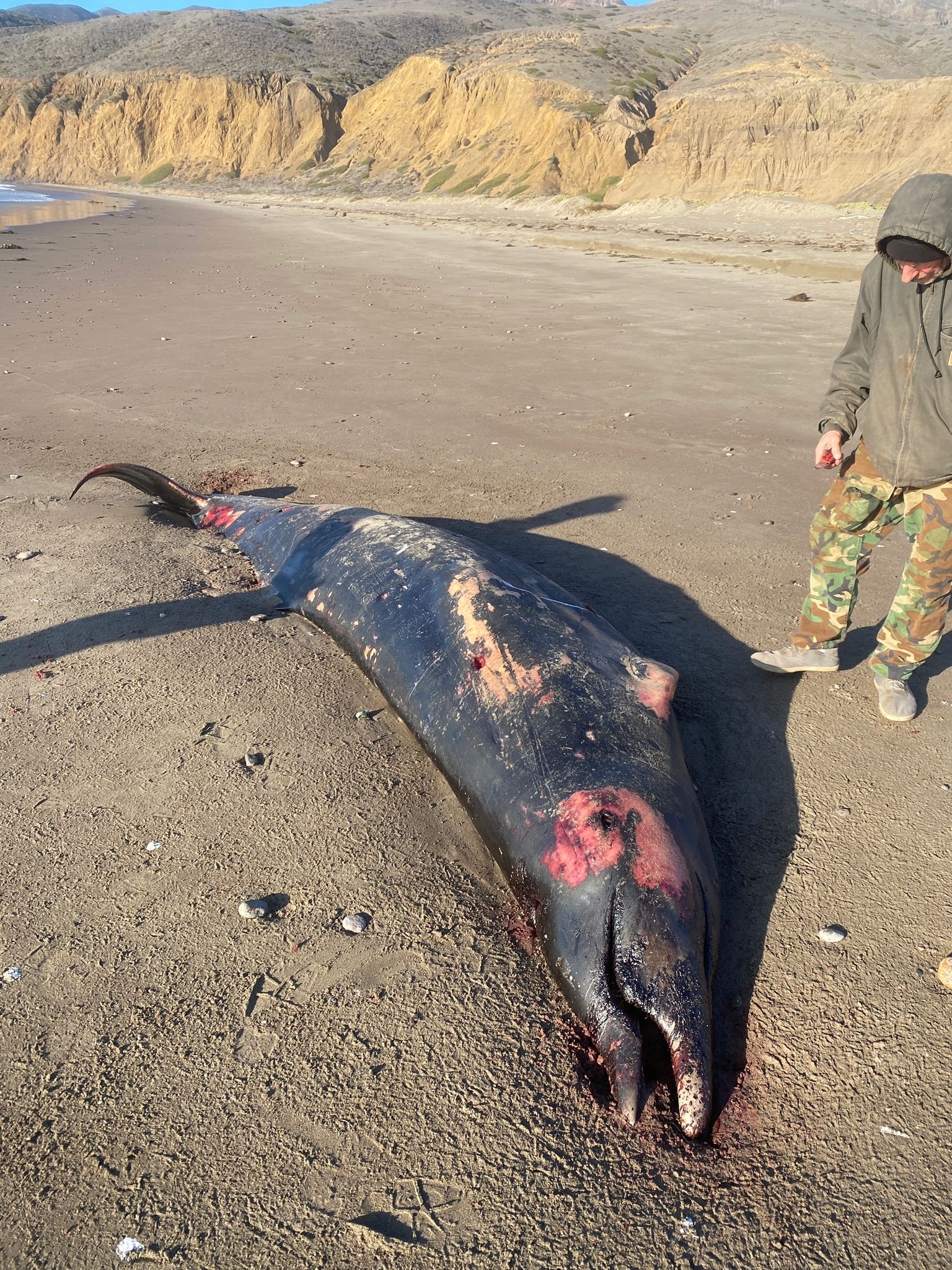
Coloration differs between the sexes. Adult males are very dark grey to almost black, paler at the tip of the beak and on top of the head, with a scattering of white spots over the rear third of the belly, scars from the bites of cookiecutter sharks (Isistius); females, paler, are medium grey with a light belly. The most diagnostic feature remains the pair of teeth that only males allow to erupt: set a little behind the middle of the lower jaw, flattened and broad, up to some ten centimetres across, the broadest in the genus, they recall the leaf of the ginkgo biloba. Unlike those of several related species, they do not arch above the rostrum and emerge only very slightly from the gum.
This slight protrusion explains why males were long described as less scarred than other mesoplodont beaked whales, whose fights leave parallel stripes; the 2024 photographs show, however, that an adult male can carry long linear scars. At sea, confusion with Hubbs’s, Perrin’s or Blainville’s beaked whales is all but inevitable: identification rests on genetics, on the shape of the teeth of adult males or on the acoustic signature.
Mesoplodon ginkgodens was described in 1958 by Nishiwaki and Kamiya, from an animal stranded on the beach at Oiso, in Sagami Bay near Tokyo. The genus Mesoplodon is by far the richest in species among the beaked whales; the family is most often referred to as the Ziphiidae, Hyperoodontidae being a synonym used by some authors.
In 1963, P. E. P. Deraniyagala described under the name Mesoplodon hotaula a 4.5 m animal stranded near Colombo, in Sri Lanka. This taxon was synonymised with M. ginkgodens as early as 1965, then reinstated in 2014 by Dalebout and colleagues, on the basis of differences in mitochondrial, autosomal and Y chromosome DNA coupled with morphological characters. The specimens from Sri Lanka, the Maldives, the Seychelles, the Gilbert Islands (Kiribati) and Palmyra Atoll therefore belong to Deraniyagala’s beaked whale: records predating 2014 are to be read with that caveat.
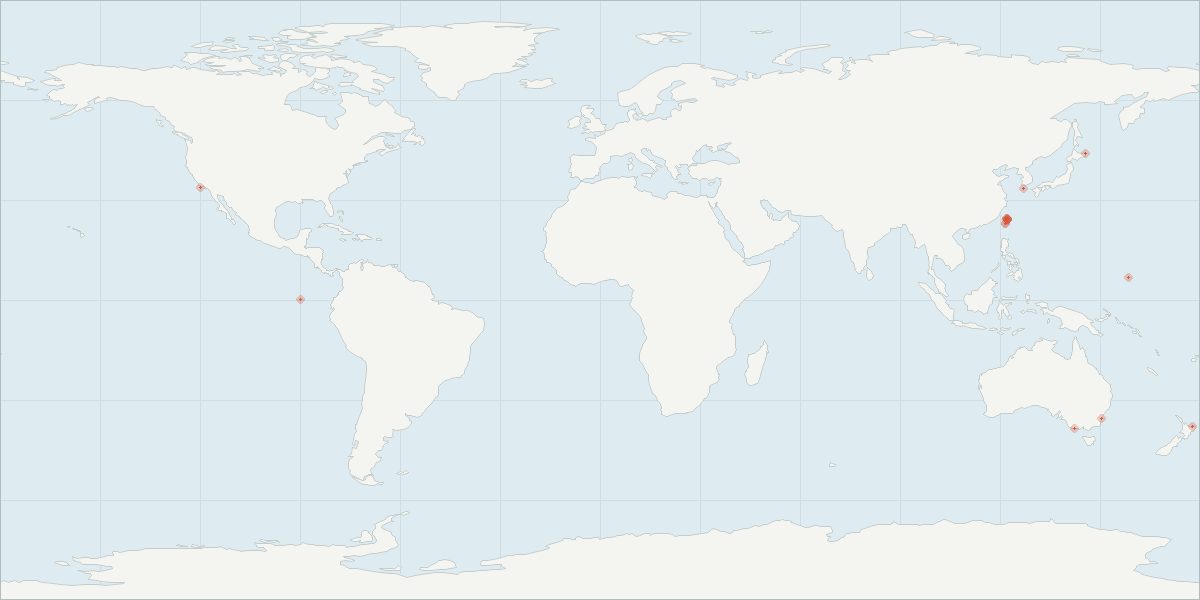
The species occurs in the warm temperate and tropical waters of the Indo-Pacific, in a decidedly pelagic setting. In the North Pacific it is known from Japan, the source of the largest number of specimens, from Korea, Taiwan, China and Vietnam, as well as from California and Mexican Baja California. Further south and in the western Indo-Pacific, strandings are documented in Australia, New Zealand, Indonesia, the Philippines (the Subic stranding, in Zambales province, in 2010) and the Galápagos (Ecuador).
The documented record remains very thin: a few dozen stranded specimens, mostly from Japan, Australia and Taiwan. The groups sighted in 2024 off Baja California were seen over depths of 861 to 2,199 m, which confirms an open-ocean ecology.
No data link the species to French waters: it is absent from the Mediterranean, the Bay of Biscay and the English Channel, and no stranding and no sighting is attributed to it in the French overseas territories.
Almost everything bearing on the biology of the species is still a matter of inference. Like other ziphiids, it is a deep diver that hunts in the mesopelagic layer; its diet, poorly documented, is dominated by cephalopods, supplemented by fish and perhaps small crustaceans. The teeth of males, too little protruding to seize prey, serve for contests between rivals, not for feeding.
Reproduction is known only in fragments: a single calf of 2 to 2.5 m at birth, with gestation, the interval between births, the age at maturity and longevity all remaining to be established. The 2024 sightings brought together a heavily scarred adult male, a female accompanied by her calf and young individuals, which suggests small structured groups rather than solitary animals. The species also emits a stereotyped echolocation signal, known as BW43, long recorded in the North Pacific without its source being known, the Perrin’s beaked whale hypothesis having for a time prevailed. It is today the most reliable means of detecting the species.
The IUCN Red List places the ginkgo-toothed beaked whale in the “Data Deficient” (DD) category, a status confirmed in the December 2020 review covering twenty-two cetaceans: most beaked whales moved there to “Least Concern”, six species including this one remaining DD for want of information. No abundance estimate exists and no trend can be calculated. The species is listed on Appendix II of CITES.
The pressures identified are those that bear on all beaked whales. A few individuals have been taken by Japanese and Taiwanese coastal fisheries, and bycatch in drifting gillnets and pelagic longlines is a continuing risk. To these are added anthropogenic noise, ziphiids being notoriously sensitive to mid-frequency active sonar, which may interrupt feeding and cause lesions resembling decompression sickness, plastic ingestion and chemical contamination.
There is no site where one can hope to see this species. It lives offshore, over depths of several hundred to several thousand metres, spends most of its time on deep dives, blows inconspicuously and shies away from vessels. The only confirmed sightings come from a survey carried out in June 2024 off north-western Baja California, aboard the Pacific Storm: five groups of mesoplodont beaked whales, twenty-one detections of the BW43 signal, a biopsy taken with a crossbow from a young male and an environmental DNA sample made it possible to link the species genetically to its call. A sighting of three animals off North Cape, New Zealand, in February 2021 had been attributed to it without genetic confirmation.
Faced with a beaked whale, the conduct to follow is simple: never cut across the animal’s path, keep a respectful distance, ease off the propulsion, do not pursue a group that is diving. A sharp photograph of the head and the jaw, with the position and the date, is worth far more scientifically than a close approach. Any stranding should be reported to the relevant network, which alone is authorised to intervene.
Adult males carry a single pair of teeth in the lower jaw, a little behind the middle of the beak. Flattened and exceptionally broad, up to some ten centimetres across, they trace a fan-shaped outline recalling the leaf of the ginkgo biloba. In females they never pierce the gum.
Yes, but only very recently: in June 2024, off north-western Baja California, animals were observed, photographed and biopsied, their identity confirmed by genetics. Until then the species was known only from stranded or captured individuals.
It is confined to the warm temperate and tropical waters of the Indo-Pacific. In the North Pacific it is reported from Japan, Korea, Taiwan, China, Vietnam, California and Mexican Baja California, as well as from the Philippines, where a stranding is documented at Subic, Zambales province, in 2010. Further south, strandings are known from Indonesia, Australia, New Zealand and the Galápagos.
No: a strictly Indo-Pacific species, it is absent from the Mediterranean, the Bay of Biscay and the English Channel, and no record is attributed to it in French overseas waters.
Long united in a single species, the two taxa were separated in 2014 by genetics. The latter occupies the tropical Indo-Pacific (Sri Lanka, the Maldives, the Seychelles, Kiribati, Palmyra) and cannot be distinguished from the former on appearance alone.
Because the available information allows neither the population size to be estimated nor a trend to be assessed. In the December 2020 review the species remained DD, the state of knowledge ruling out no category, from “Least Concern” to “Critically Endangered”.
Profile compiled from authoritative scientific sources (IUCN, NOAA Fisheries, specialist literature) and reviewed for factual accuracy.
According to the open data of the GBIF, 18 georeferenced sightings of Mesoplodon ginkgodens are recorded in our photographic index.
| Country | Notes |
|---|---|
| Chinese Taipei | 15 |
| Japan | 4 |
| Australia | 4 |
| Korea, Republic of | 2 |
| New Zealand | 2 |
| United States of America | 2 |
| Maldives | 1 |
| Marshall Islands | 1 |
| Sri Lanka | 1 |
| unknown or invalid | 1 |

Monthly distribution of 30 dated sightings (all years combined): the maximum is reached in mai.
| Month | Notes |
|---|---|
| janvier | 0 |
| February | 1 |
| mars | 0 |
| avril | 2 |
| mai | 7 |
| juin | 5 |
| juillet | 4 |
| August | 6 |
| septembre | 3 |
| octobre | 1 |
| novembre | 1 |
| December | 0 |
These figures reflect survey effort (more boaters and more surveys in summer) as much as the actual presence of the species: to be interpreted with caution.


Photographs from GBIF under a Creative Commons licence. The author and the licence of each photograph are given; please respect them if you reuse them.
Automatic selection of the most cited works mentioning the species (source: Crossref).