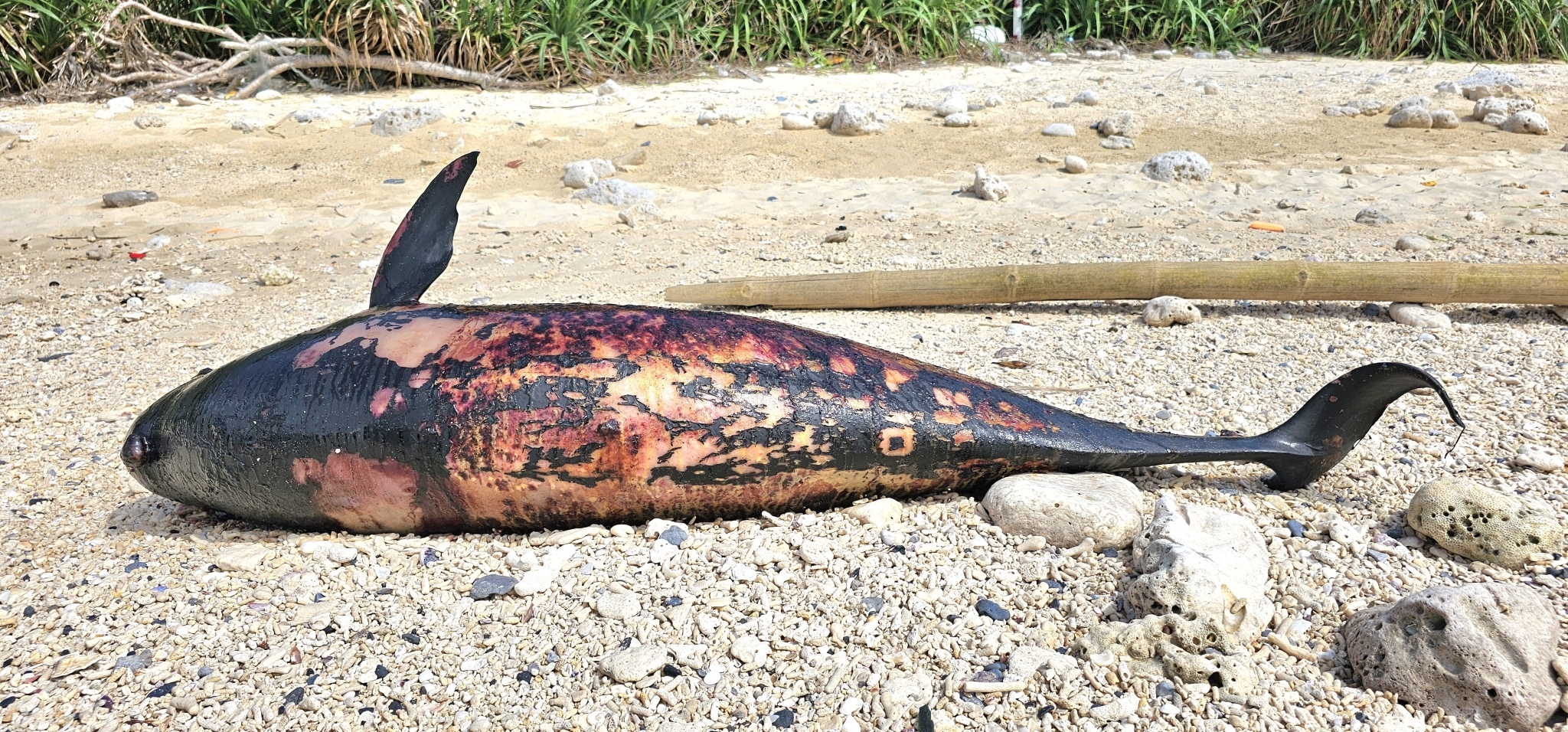
Indo-Pacific finless porpoise (Neophocaena phocaenoides)

Key facts
Scientific name Neophocaena phocaenoides (G. Cuvier, 1829)
Other names Indo-Pacific finless porpoise, black finless porpoise, Indian finless porpoise, Cuvier’s porpoise; in French: marsouin aptère, marsouin aptère de l’Inde, marsouin aptère indo-pacifique, marsouin de Cuvier, marsouin noir.
Size Adult: 1.4 to 1.7 m as a rule, up to about 1.9 m; maximum lengths close to 2.2 m appear in some sources. Newborn: 72 to 85 cm.
Weight 30 to 45 kg most often; up to about 72 kg in the largest individuals.
Longevity Life expectancy estimated at around twenty years; reported maximum ages range from 23 to 33 years.
Diet Opportunistic piscivore of shallow water: small schooling fish (clupeids, anchovies), cephalopods and crustaceans, in particular shrimp; partly benthic feeding in estuaries.
IUCN status Vulnerable (VU), global assessment published in 2017 and still in force in recent updates of the Red List; criterion A (inferred decline of at least 30% over three generations), decreasing trend. No subpopulation assessed separately. Not to be confused with Neophocaena asiaeorientalis, Endangered (EN), whose Yangtze subspecies is Critically Endangered (CR). CITES Appendix I; CMS Appendix II.

In brief

The Indo-Pacific finless porpoise (Neophocaena phocaenoides) is a small coastal cetacean of the warm seas of Asia, recognisable by the complete absence of a dorsal fin, replaced by a broad ridge covered with tubercles. Discreet and undemonstrative, it frequents the shallow waters from the Persian Gulf to Indonesia and the Taiwan Strait. The IUCN classifies it as Vulnerable, mainly because of bycatch in coastal gillnets.

Identification

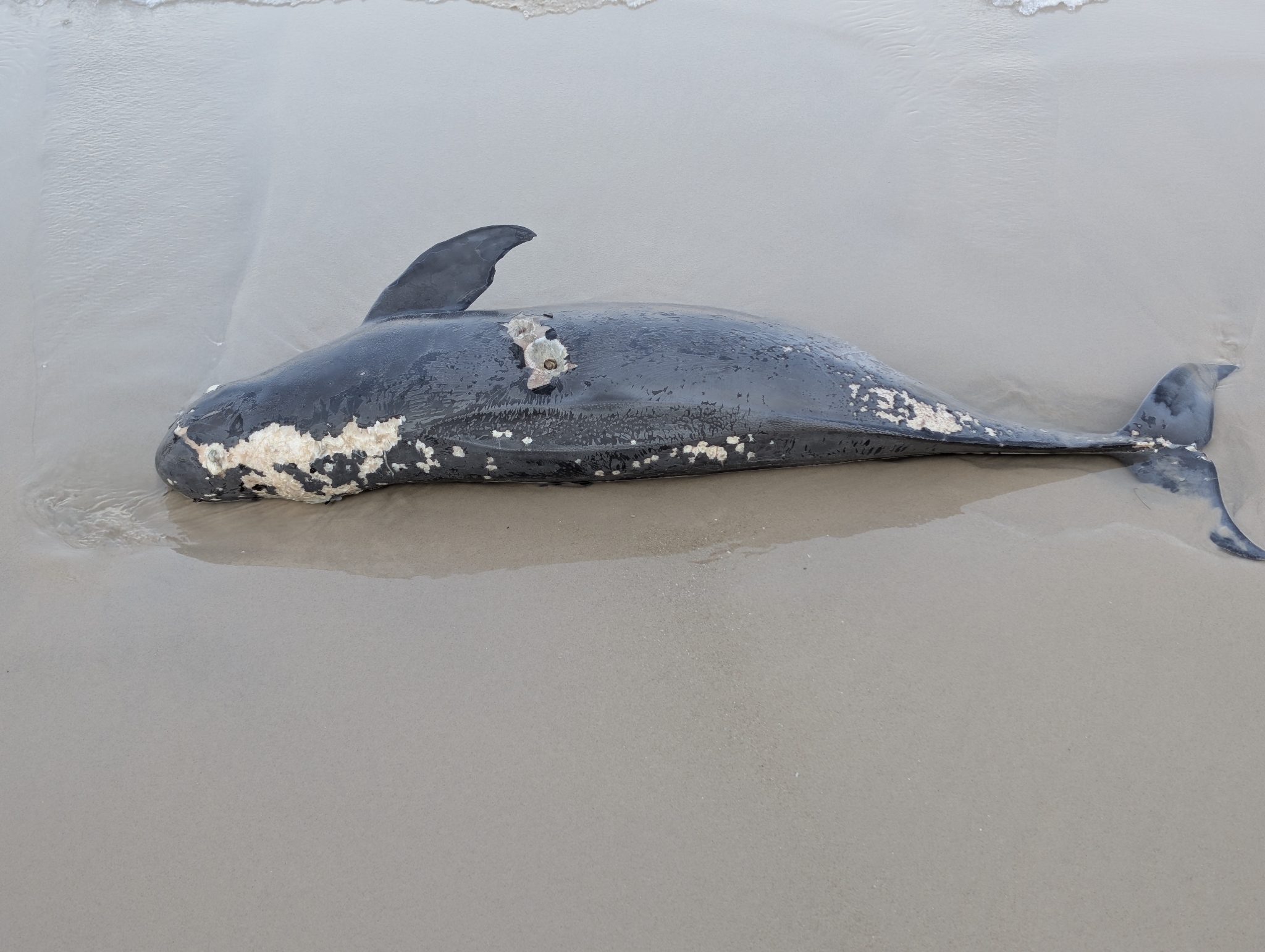
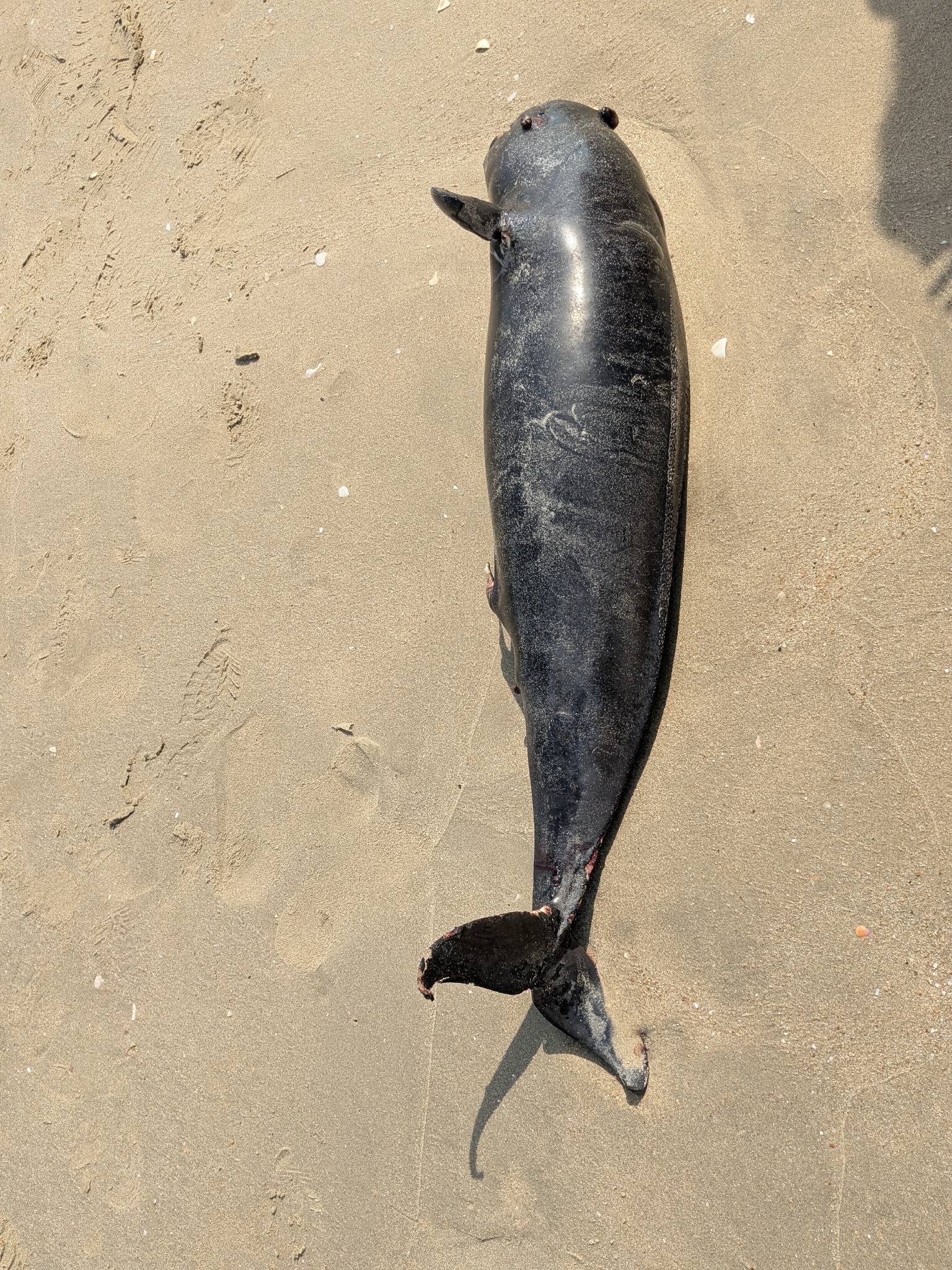
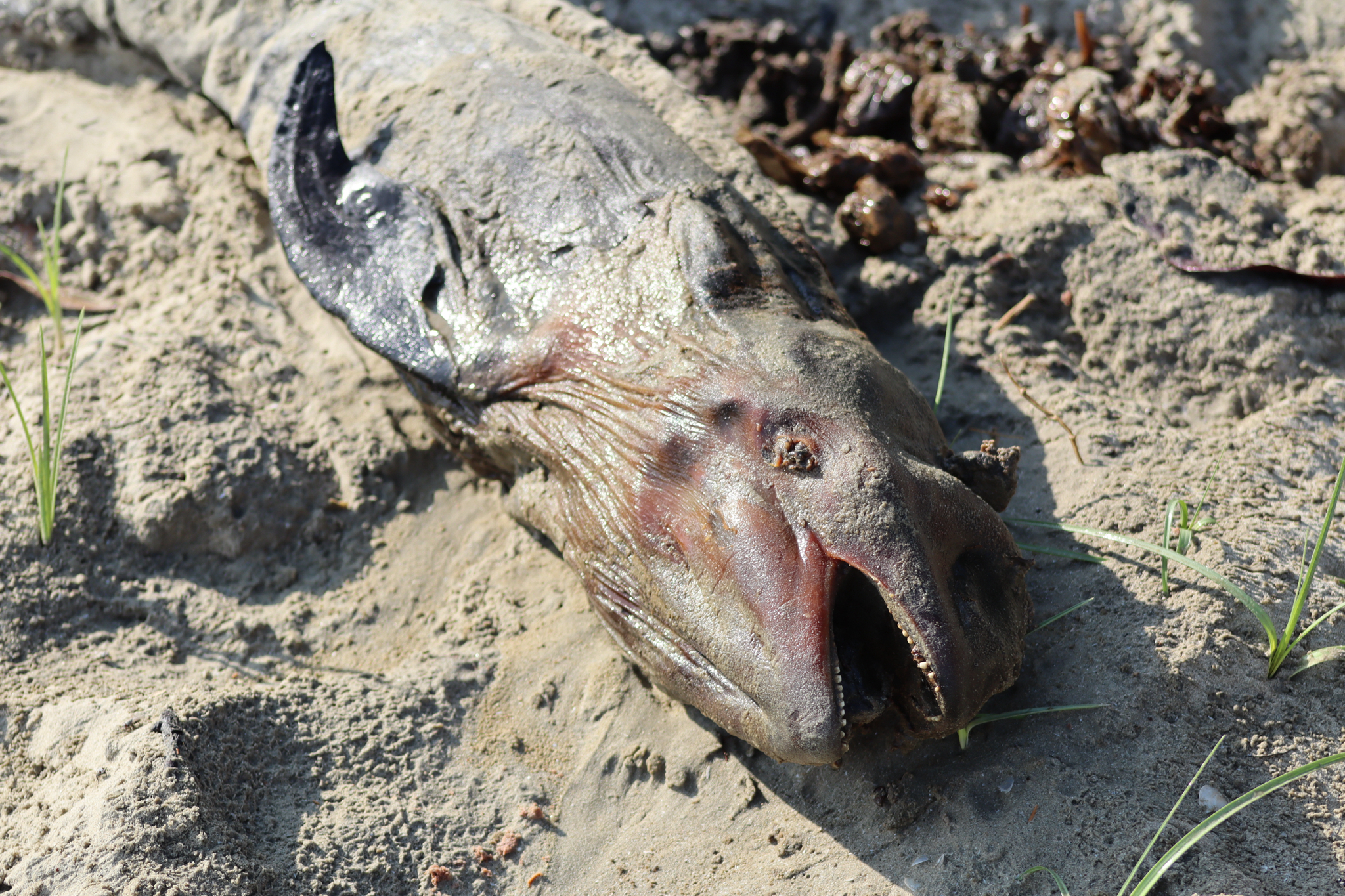
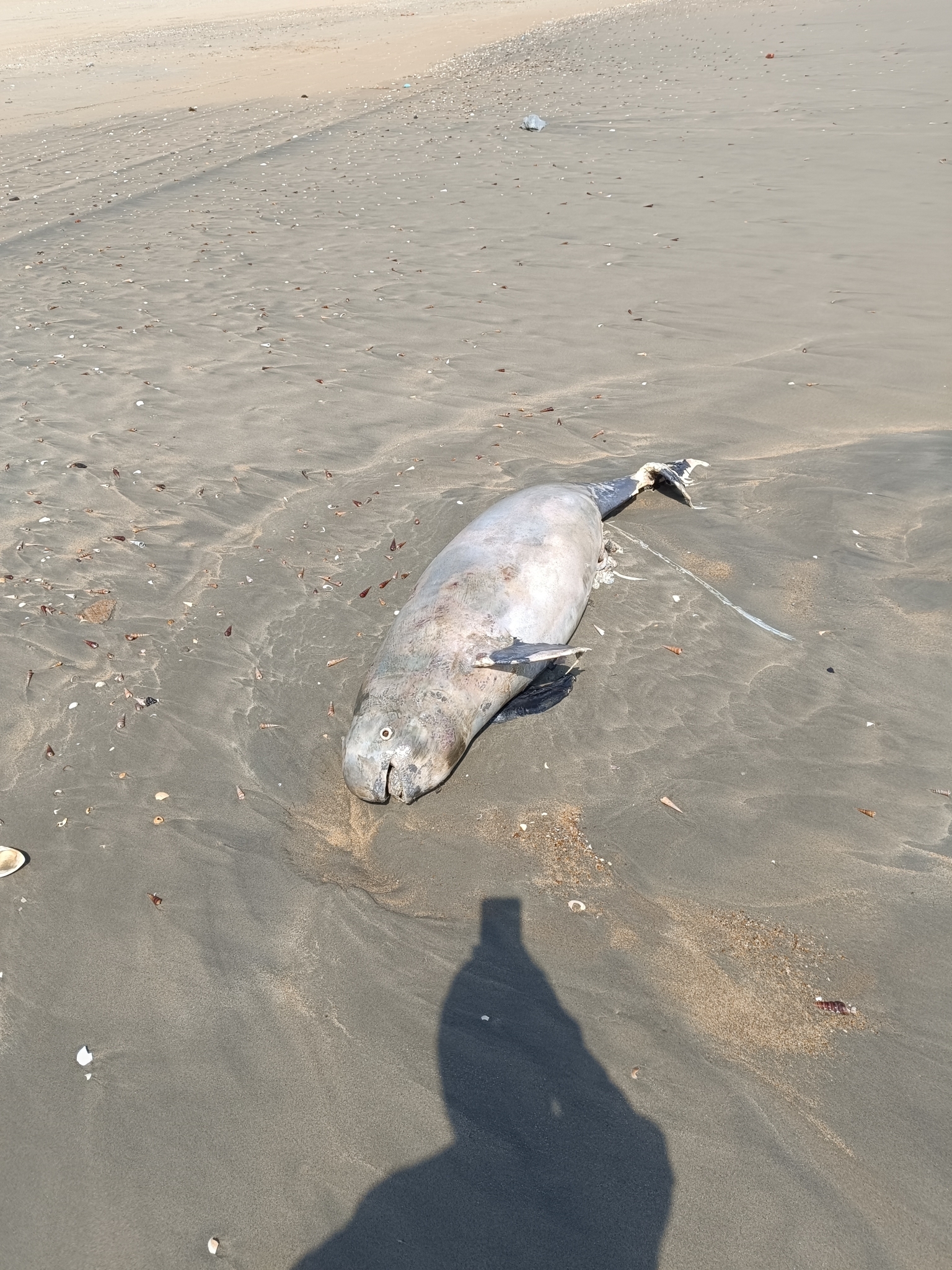
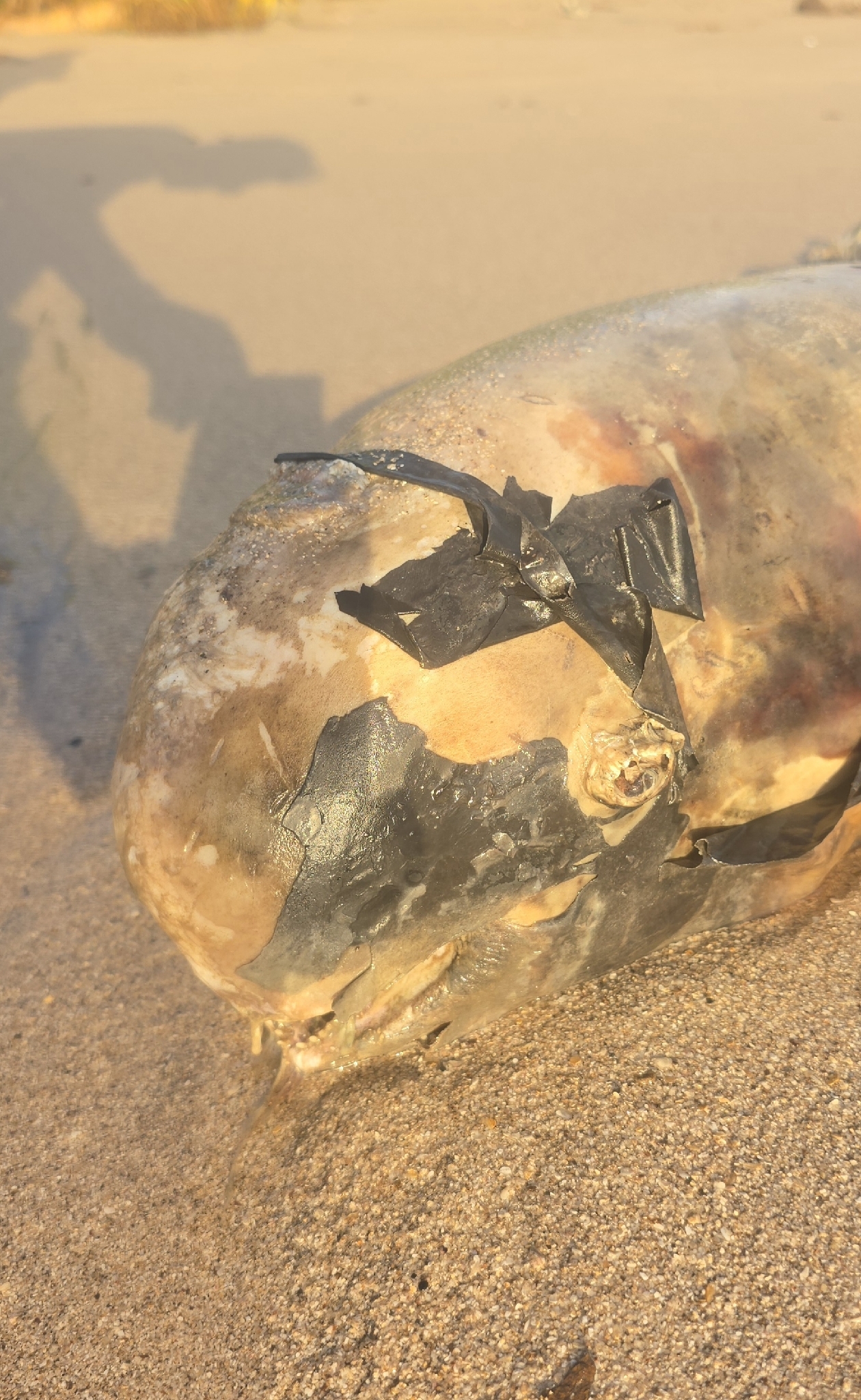
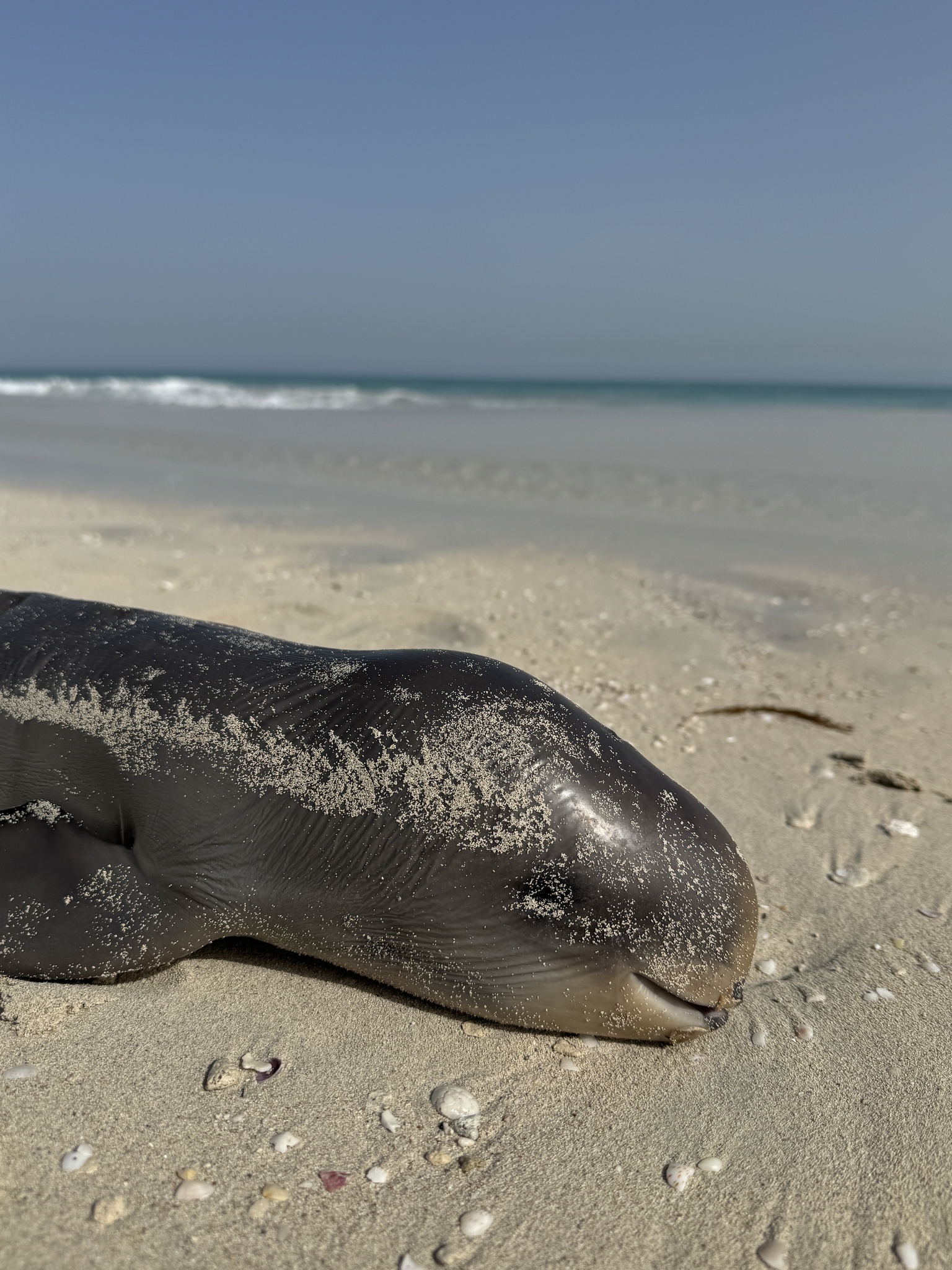
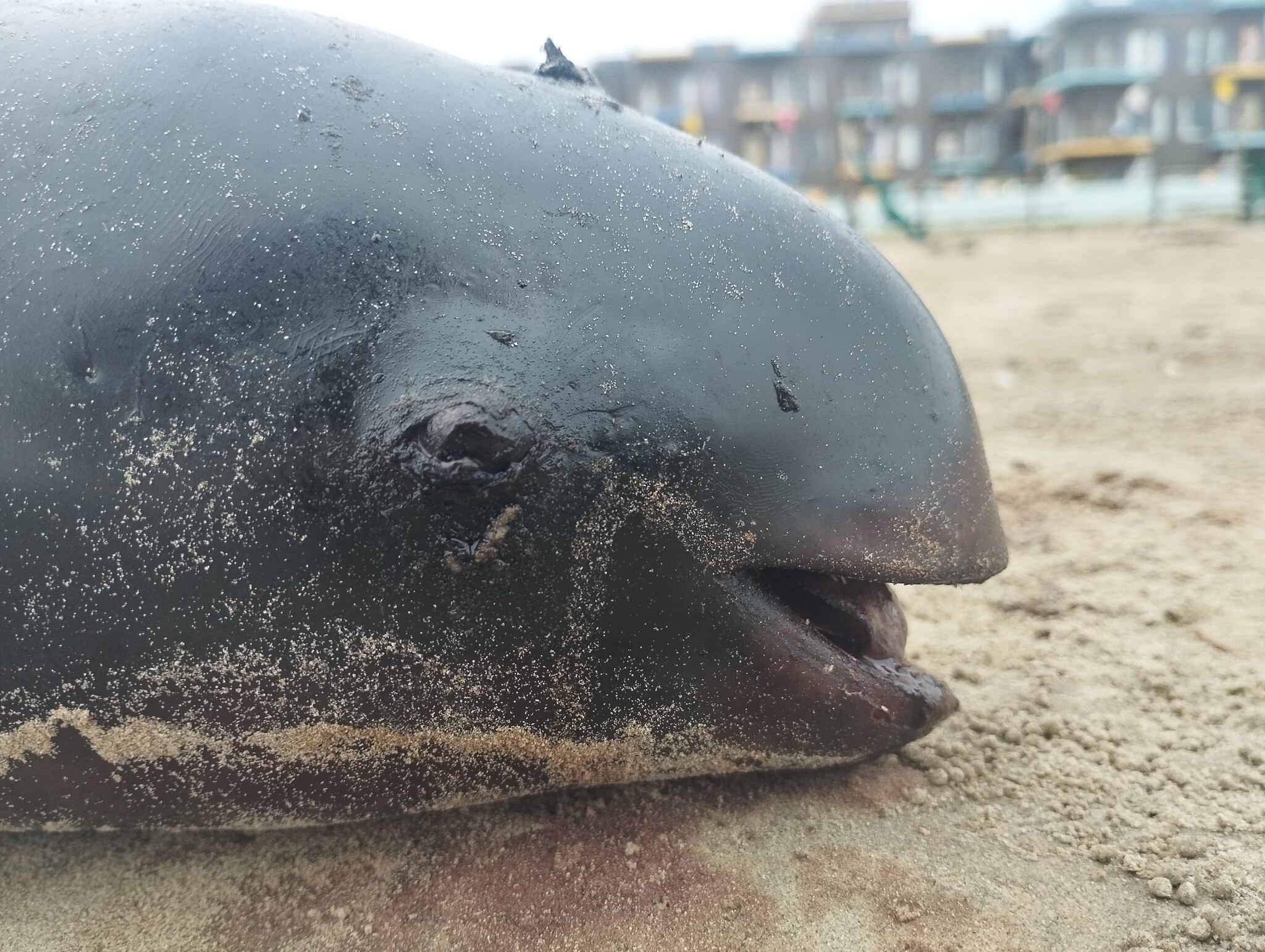
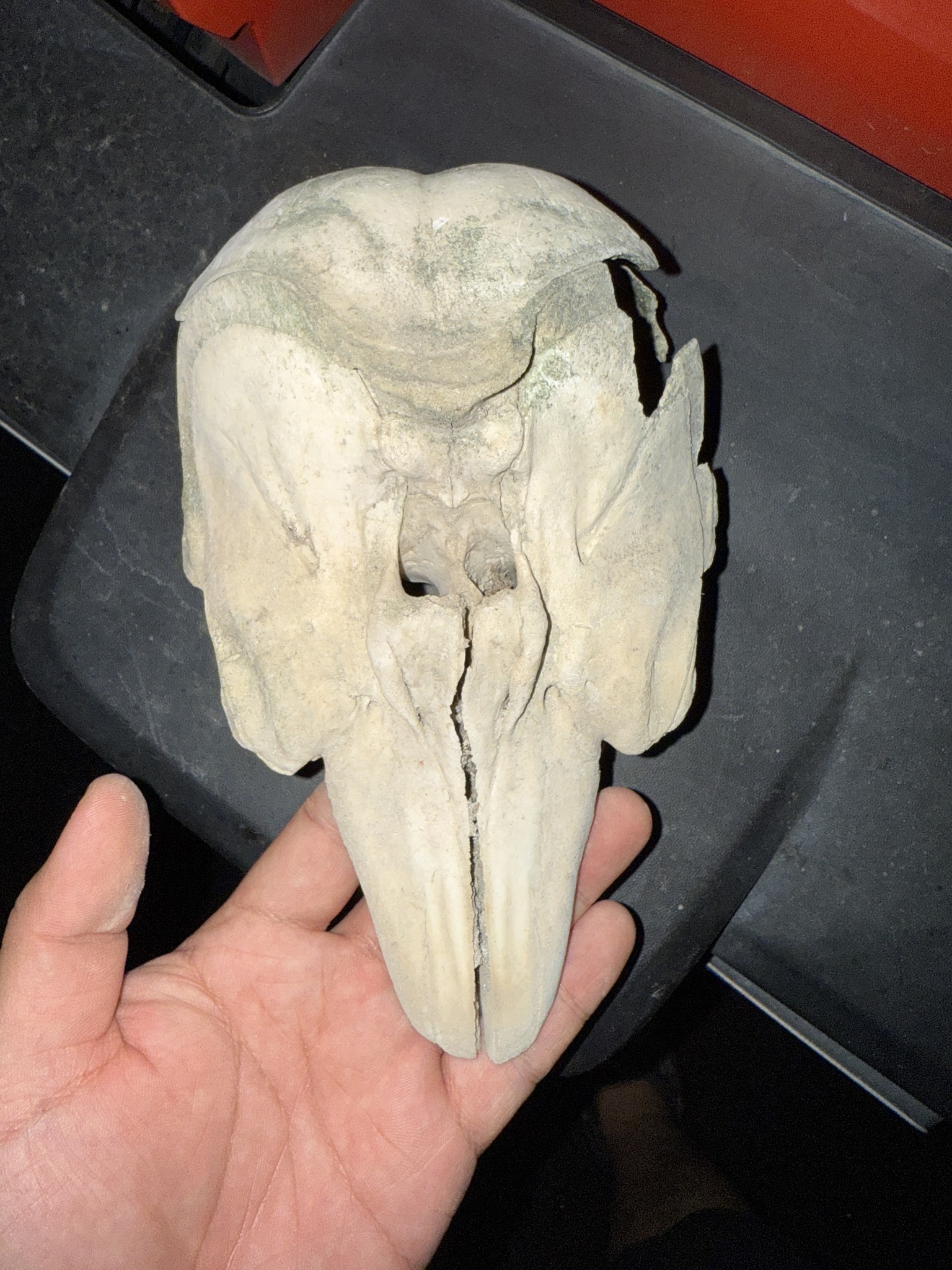
With an adult length most often between 1.4 and 1.7 m, a maximum of about 1.9 m and a mass of 30 to 45 kg, the Indo-Pacific finless porpoise is among the smallest cetaceans; some sources mention individuals reaching 2.2 m and up to 72 kg. The outline is stocky and streamlined, the head rounded and beakless, the forehead domed, which gives the profile the look of a miniature beluga. The small mouth holds 15 to 21 spade-shaped teeth in each half-jaw, a flattened dentition typical of porpoises and very different from the conical teeth of dolphins. The flippers are long and tapering.

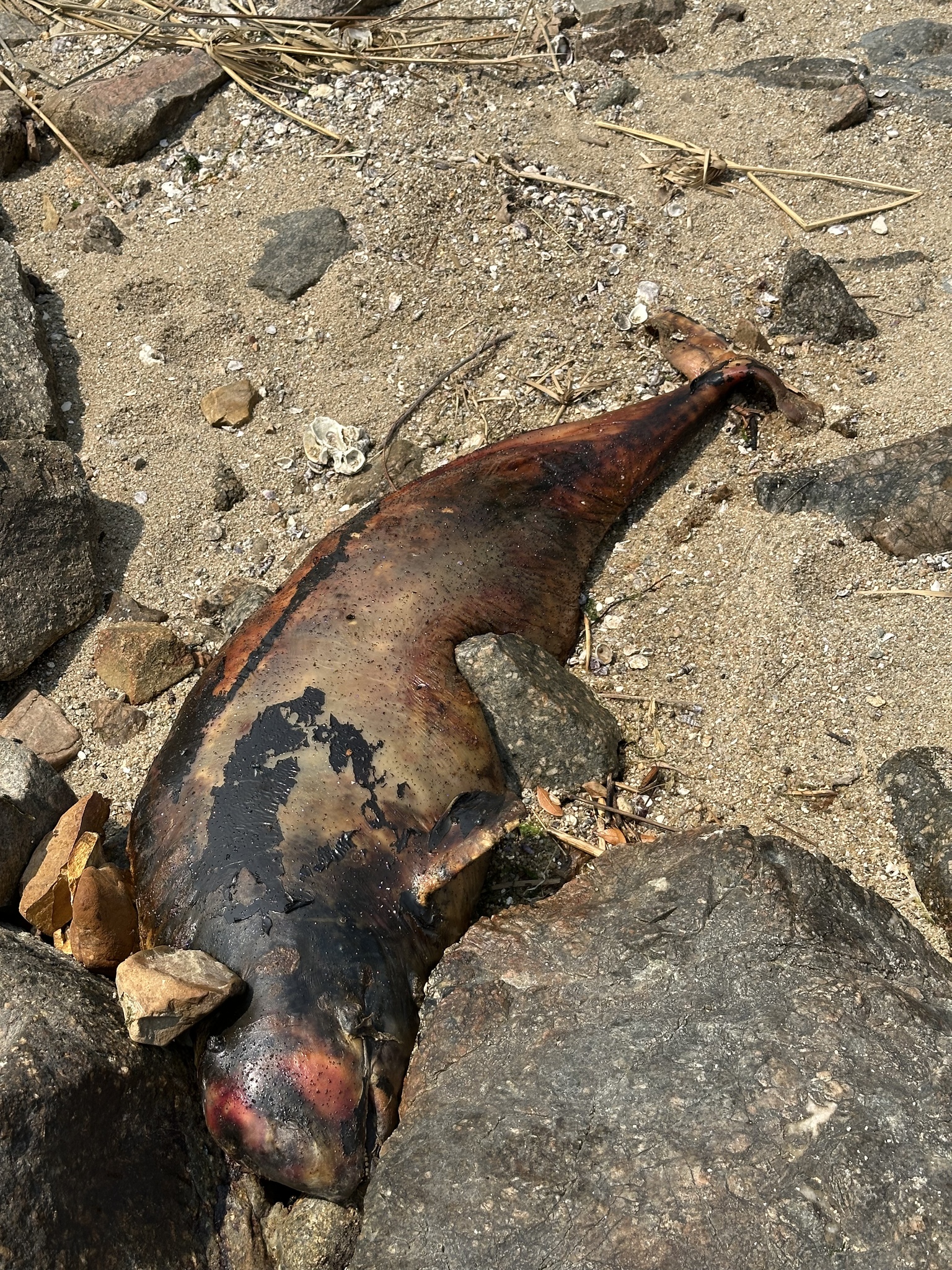
The most striking feature is the absence of a dorsal fin. In its place, a low broad ridge runs from the middle of the back to the tail stock, bristling with rows of small rounded tubercles, richly innervated and probably sensory. In this species the tuberculate area is broad, up to a dozen centimetres, and carries numerous rows of tubercles. Adult coloration is a fairly uniform grey, often blue-grey and sometimes distinctly dark, with paler areas on the throat and around the mouth; in this wide-ridged species the newborns are a creamy pale grey and darken as they grow, the reverse of the narrow-ridged finless porpoise, whose calves are born dark and lighten over four to six months. After death the skin blackens rapidly, which contributed to the old name “black finless porpoise”.

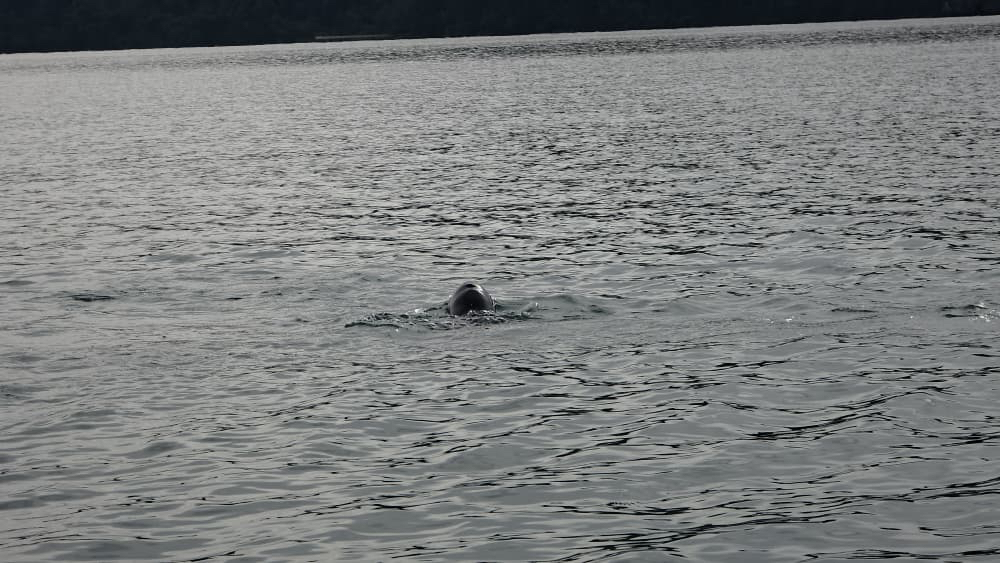
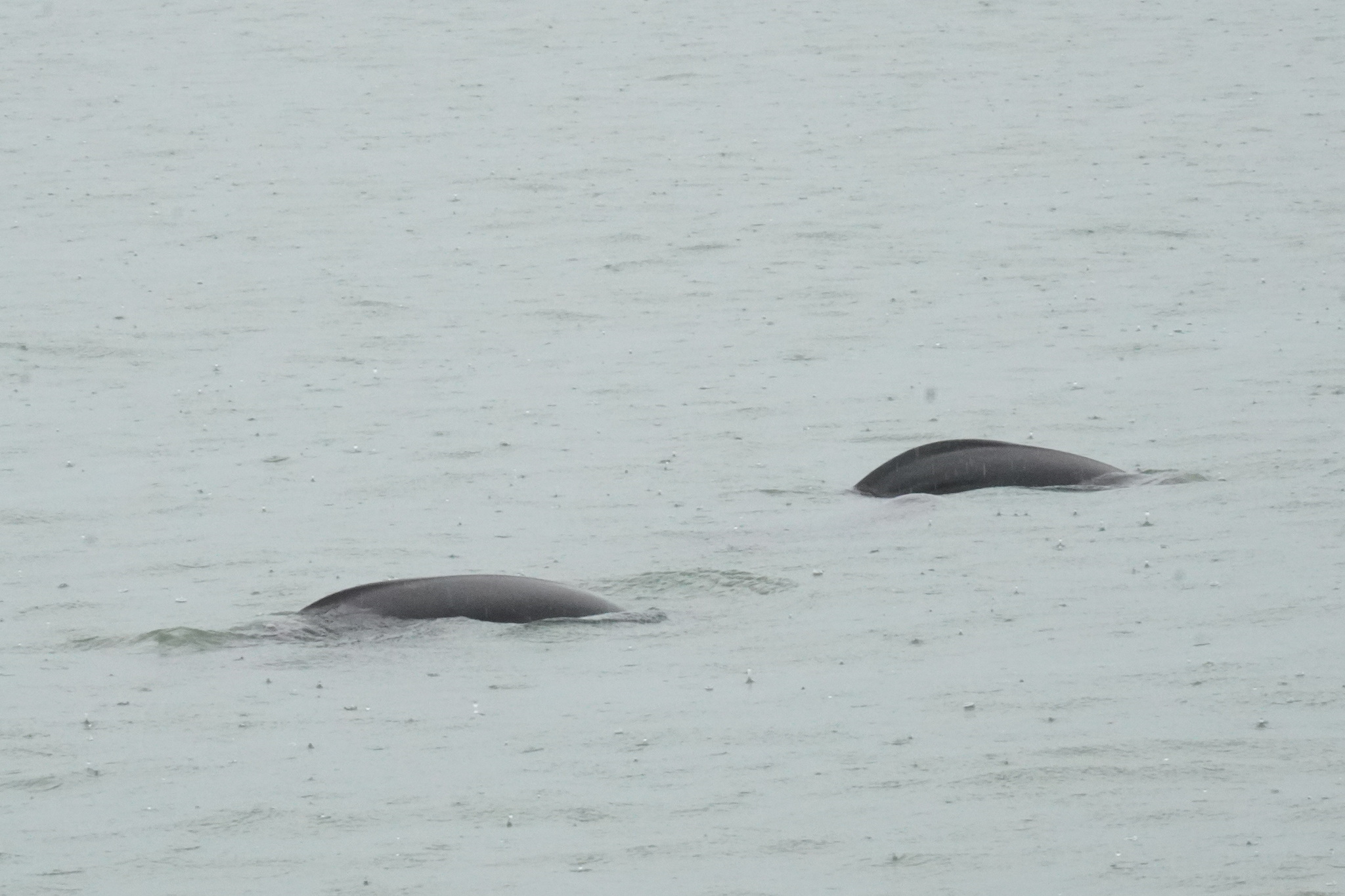
Confusion is possible with the narrow-ridged finless porpoise (Neophocaena asiaeorientalis), present in the southern East China Sea: it carries a markedly narrower and higher dorsal ridge, with far fewer rows of tubercles, a difference that can be made out on animals seen at sea. The Irrawaddy dolphin (Orcaella brevirostris), which shares several Asian estuaries and also has a round beakless head, is told apart by its small triangular dorsal fin. In practice, a small grey cetacean that rolls at the surface without ever showing a fin, in Asian coastal waters, is almost always a finless porpoise.

Taxonomy

The species was described by Georges Cuvier in 1829 and belongs to the family Phocoenidae, that of the porpoises. For a long time the genus Neophocaena held a single species, under which all populations were placed, from the coasts of Arabia to Japan. Morphological and genetic work in the 2000s brought out two forms, one with a wide dorsal ridge and one with a narrow dorsal ridge, with no intermediate, reproductively isolated since the last glacial maximum (about 18,000 years) and partly sympatric in the western Pacific. The revision by Jefferson and Wang, published in 2011, formalised the split into two species: Neophocaena phocaenoides, wide-ridged and tropical, and Neophocaena asiaeorientalis, narrow-ridged and temperate. The latter comprises two subspecies in the reference list of the Society for Marine Mammalogy, the Yangtze finless porpoise and the East Asian finless porpoise, this second taxon being raised to species rank by some authors following work in population genomics. Many documents predating 2011 deal with “Neophocaena phocaenoides” in the broad sense: data relating to the Yangtze do not concern the species presented here.

Distribution and habitat

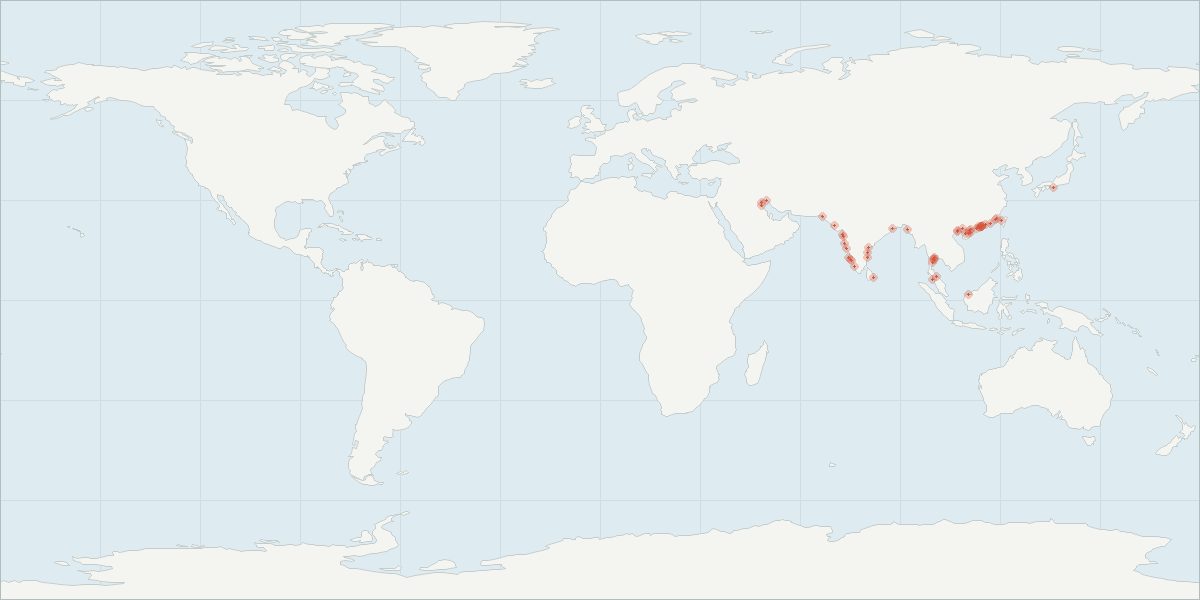
The Indo-Pacific finless porpoise occupies a narrow coastal band of the tropical Indo-Pacific, from the Persian Gulf in the west to the Taiwan Strait in the east, by way of the northern and eastern seaboard of the Indian Ocean, the Andaman Sea, the South China Sea and the Indonesian archipelago. The range states listed by the Convention on Migratory Species, a list drawn up in the broad sense, before the taxonomic revision of 2011, include in particular Iran, Iraq, Kuwait, Bahrain, Qatar, the United Arab Emirates, Saudi Arabia, Oman, Pakistan, India, the Maldives, Sri Lanka, Bangladesh, Myanmar, Thailand, Malaysia, Singapore, Indonesia, Brunei, Cambodia, Vietnam and China; it also mentions Japan and the two Koreas, which in fact fall to the narrow-ridged finless porpoise. The species is also found in the waters of Hong Kong and Taiwan, not itemised in that list. There is no confirmed record for the Philippines, nor indeed for Oman.

It is an animal of shallow water, generally within 50 m depth and often a few kilometres from shore: sheltered bays, estuaries, deltas, mangrove channels and soft sandy or muddy bottoms. It readily moves up into brackish water, but no strictly freshwater population is known in this species.

In France the Indo-Pacific finless porpoise is absent: neither the Mediterranean, nor the Bay of Biscay, nor the English Channel, nor the French overseas territories fall within its range. The only phocoenid in French waters is the harbour porpoise (Phocoena phocoena), present in the English Channel, the North Sea and the Bay of Biscay.

Biology and ecology

An opportunistic predator of shallow water, the Indo-Pacific finless porpoise takes small schooling fish, in particular clupeids and anchovies, cephalopods and crustaceans, especially shrimp. Plant debris has been found in the stomachs of animals frequenting estuaries, a sign of partly benthic feeding.

Social life is limited: the basic unit is the mother and calf pair or a pair of adults, and groups most often number one to four individuals, with temporary aggregations of twenty to fifty animals over prey-rich areas. The species does not bow-ride and practically never breaches. It swims just below the surface and merely rolls quietly on its side to breathe, barely disturbing the water. The usual sequences run three or four rapid breaths followed by a dive; most submersions last a few tens of seconds, but dives of more than four minutes have been recorded, and the animal often reappears far from the point where it went down.

Like all porpoises, it orients itself and hunts by means of narrow-band high-frequency echolocation clicks, whose energy peaks around 125 kHz, well beyond human hearing. This acoustic signature makes it possible to detect it with hydrophones in the turbid waters where visual observation fails.

Gestation lasts ten to eleven months and gives a single calf of 72 to 85 cm, births occurring, depending on the region, in spring, summer or winter. Weaning comes between six and fifteen months and the interval between two births is generally one to two years. Sexual maturity is reached at around three to six years depending on the source, several studies placing males at around four to six years and females at around six to nine years.

Status and conservation

The Indo-Pacific finless porpoise is listed as Vulnerable (VU) on the global IUCN Red List, an assessment published in 2017 and still in force in the most recent updates. The listing rests on criterion A, that is an inferred decline of at least 30% over three generations, attributable to bycatch and to habitat degradation; the trend is judged to be decreasing and no subpopulation is assessed separately. The neighbouring taxa are more threatened still: the narrow-ridged finless porpoise is Endangered (EN) and its Yangtze subspecies Critically Endangered (CR). The species is listed in Appendix I of CITES and in Appendix II of the Convention on Migratory Species.

The first threat, by far, is bycatch in coastal gillnets, set exactly where the animal lives; its build and its sensitivity to stress leave it little chance of freeing itself from a net. To this are added the hardening of the coastline, dredging and land reclamation, shipping traffic and collisions, underwater noise and contamination by persistent organic pollutants and heavy metals.

Abundance estimates remain scarce. The population in the waters of Hong Kong, one of the best monitored, has been estimated at a little over 200 individuals, with strong year-to-year fluctuations since monitoring began in 1996. On the west coast of India, mortality linked to fishing gear is estimated at about 26 animals a year for the 100 km of Goa coastline alone, and the Sindhudurg-Karwar sector was recognised as an important marine mammal area in 2019. Work published in 2025 shows that acoustic detection picks up as many as four times more porpoises than visual counts, which suggests that existing assessments rest on a very partial picture of numbers.

Watching this species

Watching an Indo-Pacific finless porpoise calls for patience and good conditions: no fin to pick out, no breach, no visible blow, only a grey back rolling for a second at the surface, preferably in a calm sea and at short range. The most accessible areas are the southern and eastern waters of Hong Kong, the west coast of India between Goa and Karnataka, the estuaries of the Bay of Bengal and the Persian Gulf. The species is generally wary of boats.

The ethics of approach are those that apply to all small coastal cetaceans: never chase an animal or cut across its path, reduce speed and keep a distance of at least a hundred metres or so, limit the length of the watch, do not come between a female and her calf. Passive listening by hydrophone often remains the best method of detection, including for monitoring programmes. Any stranding or bycatch reported to the national networks is valuable data for a species whose numbers remain largely unknown.

Frequently asked questions

Why does the Indo-Pacific finless porpoise have no dorsal fin?

It is entirely without one, which is unique among porpoises. A low broad ridge, covered with rows of small rounded and richly innervated tubercles, runs in its place from the middle of the back to the tail stock; it is credited with a sensory function. This absence of a fin makes the animal very hard to spot at sea.

Is the Indo-Pacific finless porpoise the Yangtze porpoise?

No. Since the taxonomic revision of 2011, the porpoises of the Yangtze river belong to another species, Neophocaena asiaeorientalis, with a narrow dorsal ridge, listed as Endangered and whose river subspecies is Critically Endangered. Neophocaena phocaenoides is a tropical coastal marine species that does not live in the Yangtze.

How can the two finless porpoise species be told apart?

By the dorsal ridge, first of all. Neophocaena phocaenoides has a broad tuberculate area, which can reach a dozen centimetres, with numerous rows of tubercles; Neophocaena asiaeorientalis shows a markedly narrower and higher ridge, with far fewer rows. The coloration of the young gives a second clue: in the wide-ridged form, the newborns are a creamy pale grey and darken as they grow, whereas in the narrow-ridged form they are born dark and lighten over four to six months. The two species occur side by side in the southern East China Sea.

Can it be seen in France?

No. Its range is limited to Asian coastal waters, from the Persian Gulf to the Taiwan Strait, and includes neither mainland France nor the French overseas territories. The only porpoise that can be seen in France is the harbour porpoise (Phocoena phocoena), present in the English Channel, the North Sea and the Bay of Biscay.

What are the main threats to it?

Above all bycatch in coastal gillnets, which operate in its preferred habitat: along the Goa coast in India alone, some hundred kilometres long, about 26 porpoises die each year in fishing gear. Then come the destruction of the coastline, dredging and land reclamation, ship strikes, underwater noise and chemical pollution, in particular by persistent organic pollutants and heavy metals.

How many Indo-Pacific finless porpoises are left?

No reliable global estimate exists. Only a few local populations have been counted, such as that of Hong Kong, assessed at a little over 200 individuals. Work published in 2025 shows that acoustic monitoring detects as many as four times more animals than visual counts, which indicates that actual numbers remain poorly known.

Sources

Profile compiled from authoritative scientific sources (IUCN, NOAA Fisheries, specialist literature) and reviewed for factual accuracy.

Observed distribution

According to the open data of the GBIF, 51 georeferenced sightings of Neophocaena phocaenoides are recorded in our photographic index.

Main countries of observation
CountryNotes
China22
India15
Thailand7
Hong Kong6
United States of America2
Viet Nam2
Malaysia2
Pakistan1
Saudi Arabia1
Sri Lanka1

Distribution map: Indo-Pacific finless porpoise (Neophocaena phocaenoides)

Distribution map: Indo-Pacific finless porpoise (Neophocaena phocaenoides), 51 georeferenced sightings from GBIF
51 georeferenced sightings of Neophocaena phocaenoides. Base map Natural Earth, public domain. GBIF data.
🗺️ Open the interactive mapTo zoom and pan. It uses the OpenStreetMap/CARTO base maps and the GBIF occurrence densities: no data is sent to these services before you click.

Presence through the year

Monthly distribution of 59 dated sightings (all years combined): the maximum is reached in mars.

100janvier : 9janfévrier : 4febmars : 10maravril : 6avrmai : 5maijuin : 7juinjuillet : 3juilaoût : 0Augustseptembre : 3sepoctobre : 3octnovembre : 4novdécembre : 5dec
Sightings by month
MonthNotes
janvier9
February4
mars10
avril6
mai5
juin7
juillet3
August0
septembre3
octobre3
novembre4
December5

These figures reflect survey effort (more boaters and more surveys in summer) as much as the actual presence of the species: to be interpreted with caution.

En images

Neophocaena phocaenoides
© fisheyes, CC BY-NC, 2026
Neophocaena phocaenoides
© Elias Thomas, CC BY-NC, 2026
Neophocaena phocaenoides
© pietje_paniek, CC BY-NC, 2026
Neophocaena phocaenoides
© h00dedfigure, CC BY-NC, 2026
Neophocaena phocaenoides
© 小戴菊, CC BY-NC, 2026
Neophocaena phocaenoides
© jianiweijun, CC BY-NC, 2026
Neophocaena phocaenoides
© Soham Gajre, CC BY-NC, 2026
Neophocaena phocaenoides
© Manca Alič, CC BY, 2026
Neophocaena phocaenoides
© sir_glut, CC BY-NC, 2026
Neophocaena phocaenoides
© Vladislav Isaev, CC BY, 2025
Neophocaena phocaenoides
© naturalistnkc, CC BY-NC, 2025
Neophocaena phocaenoides
© Luan Mai Sy, CC BY-NC, 2025

Photographs from GBIF under a Creative Commons licence. The author and the licence of each photograph are given; please respect them if you reuse them.

Scientific references

  1. Jefferson T., Hung S. (2004) Neophocaena phocaenoides, Mammalian Species
  2. Xu S., Sun P., Zhou K., Yang G. et al. (2007) Sequence variability at three MHC loci of finless porpoises (Neophocaena phocaenoides), Immunogenetics
  3. (2017) Neophocaena phocaenoides: Wang, J.Y. , Reeves, R., IUCN Red List of Threatened Species
  4. Chen L., Yang G. (2007) Development of tetranucleotide microsatellite loci for the finless porpoise (Neophocaena phocaenoides), Conservation Genetics
  5. CHEN L., BRUFORD M., YANG G. (2007) Isolation and characterization of microsatellite loci in the finless porpoise (Neophocaena phocaenoides), Molecular Ecology Notes
  6. ZHANG C., PARK K., KIM Z., SOHN H. et al. (2004) Distribution and Abundance of Finless Porpoise (Neophocaena phocaenoides) in the West Coast of Korea, Korean Journal of Fisheries and Aquatic Sciences
  7. XIAO J., WANG D. (2005) CONSTRUCTION OF ETHOGRAM OF THE CAPTIVE YANGTZE FINLESS PORPOISES, NEOPHOCAENA PHOCAENOIDES, Acta Hydrobiologica Sinica
  8. Xiao J., Wang D. (2006) Respiratory pattern of captive Yangtze finless porpoises (Neophocaena phocaenoides asiaeorientalis), Journal of Ethology

Automatic selection of the most cited works mentioning the species (source: Crossref).