| Scientific name | Hyperoodon ampullatus (Forster, 1770) |
|---|---|
| Other names | Hypéroodon arctique, baleine à bec commune, grand souffleur à bec d'oie (French); northern bottlenose whale (English). Former scientific names: Balaena ampullata Forster, 1770; Hyperoodon rostratus; Hyperoodon borealis; Hyperoodon butskopf. |
| Size | Females 7 to 8.7 m; males commonly 8.5 to 9.8 m, with maximum estimates reported up to about 11 m. Newborn: 3 to 3.5 m. |
| Weight | 5,800 to 7,500 kg in adults; about 300 kg at birth. |
| Longevity | At least 37 years (maximum documented age). |
| Diet | Mainly deep-water squid, in particular of the genus Gonatus, which can make up almost the whole of the stomach contents; incidentally benthic fish (Greenland halibut, herring), shrimps, sea cucumbers and starfish. |
| IUCN status | Near Threatened (NT) globally, under criterion C1; assessment by Whitehead, Reeves, Feyrer and Brownell carried out on 20 October 2020 and published in the 2021 Red List (reference e.T10707A50357742), the population trend being given as unknown. The IUCN publishes no separate assessment by subpopulation, but Canada recognises two designatable units under the Species at Risk Act: the Scotian Shelf population (the Gully canyon), listed as “Endangered”, and the Davis Strait-Baffin Bay-Labrador Sea population, listed as “Special Concern”. The species is on Appendix I of CITES and was placed in 1977 on the International Whaling Commission schedule as a protection stock with a zero quota. |
The northern bottlenose whale is the largest of the North Atlantic beaked whales, recognisable by the strongly domed forehead of old males and by its short, flask-shaped beak. An exceptional diver, it goes beyond 2,000 m to hunt deep-water squid and can stay submerged for more than two hours. Decimated by more than a century of commercial whaling, it is today listed as “Near Threatened” by the IUCN and threatened above all by underwater noise.
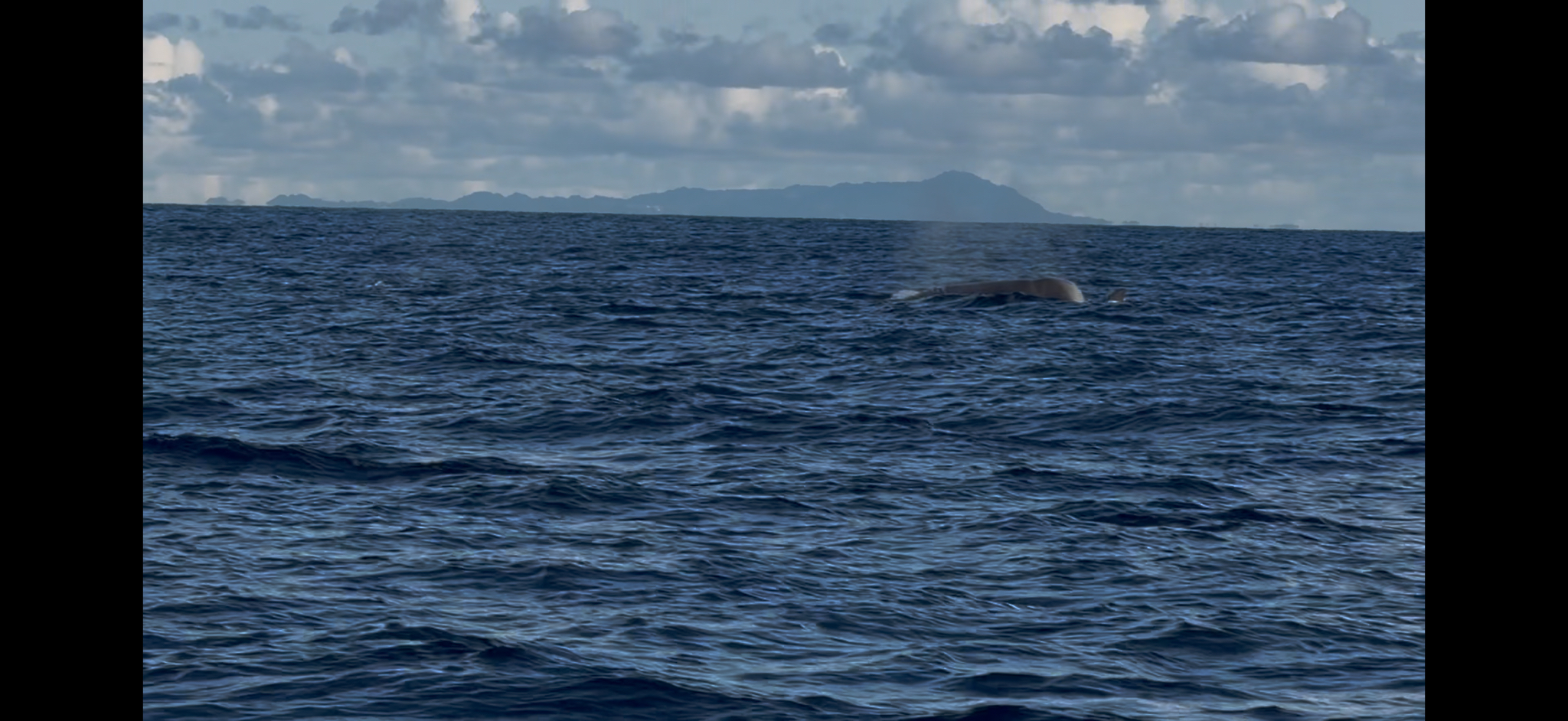
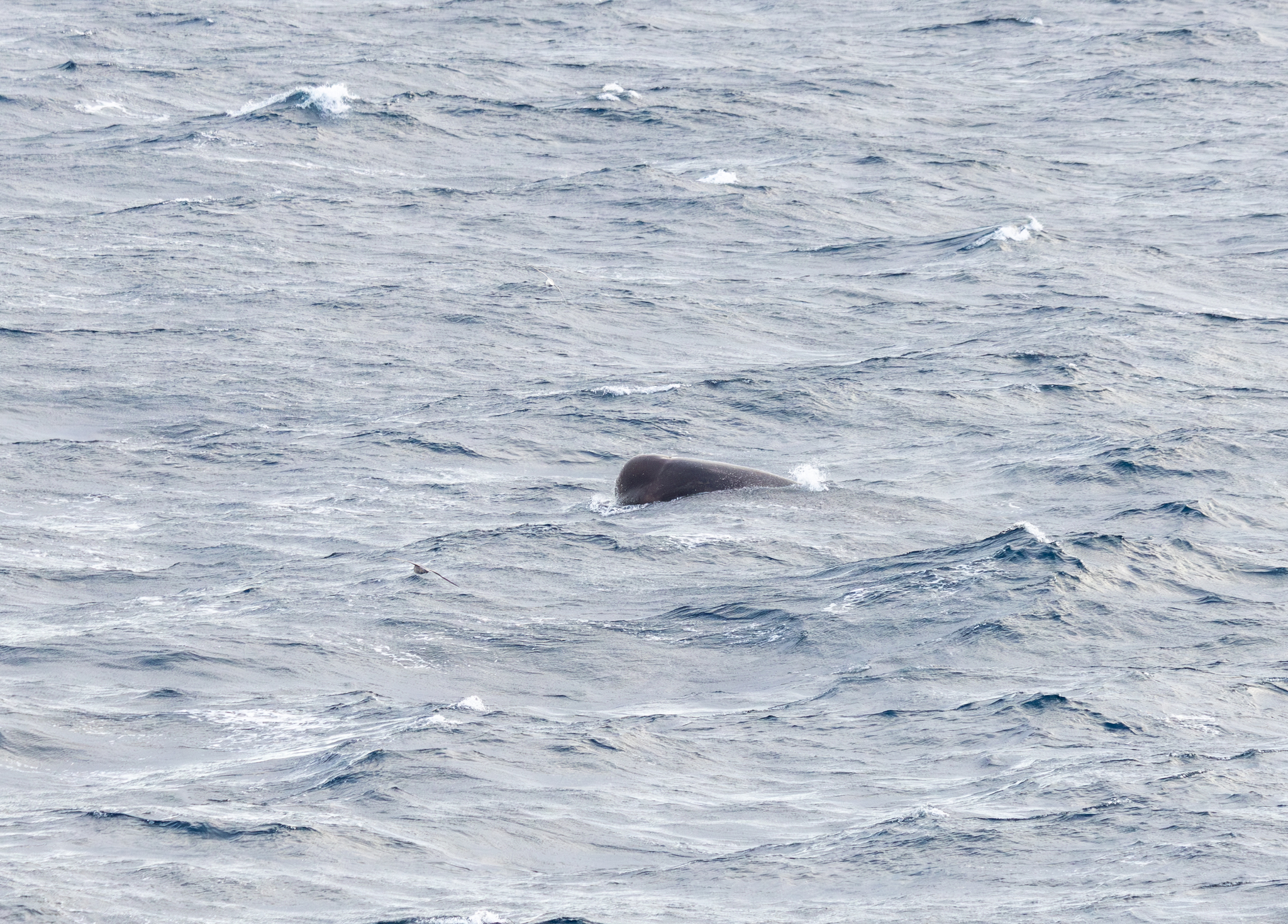
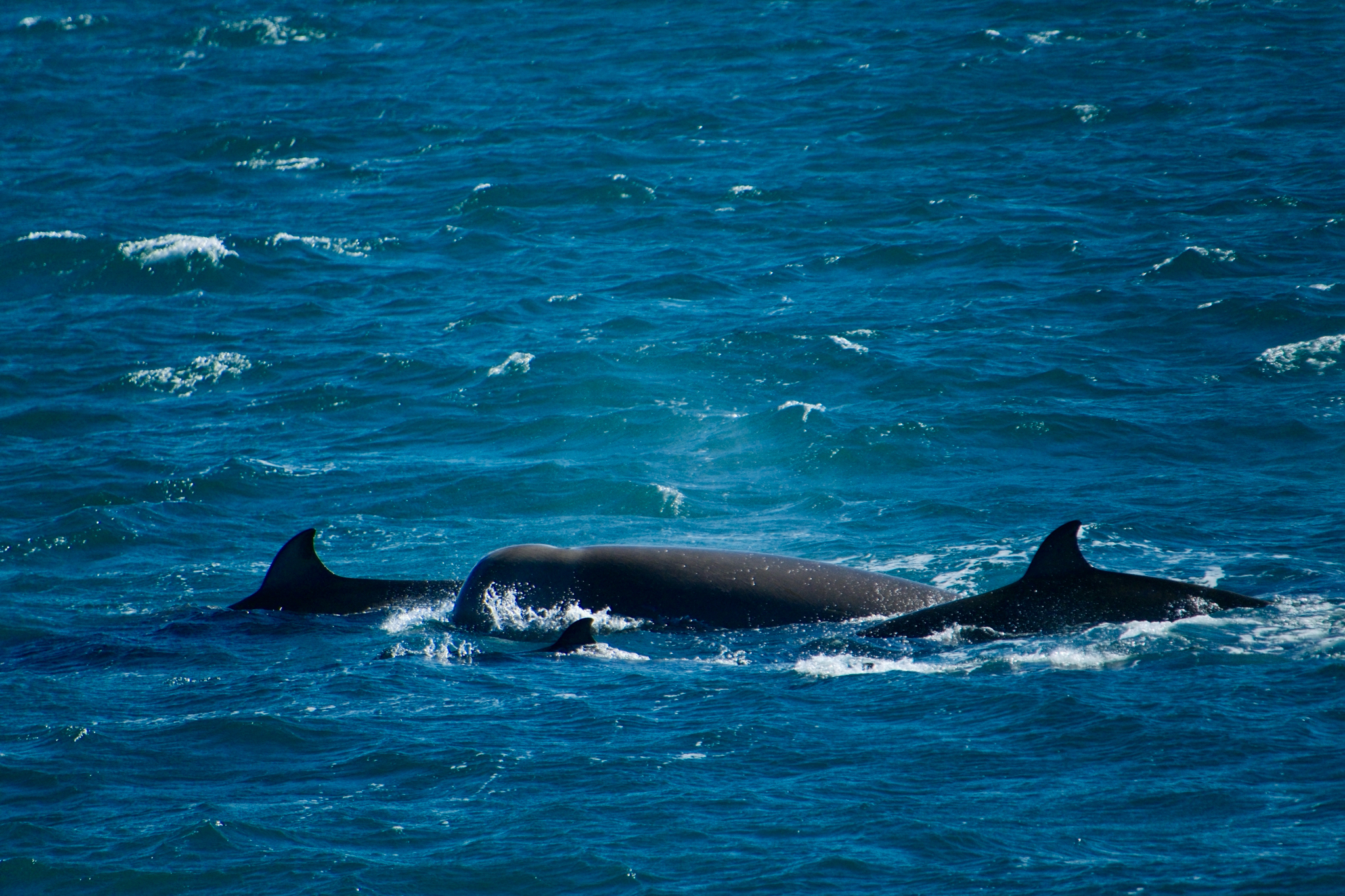
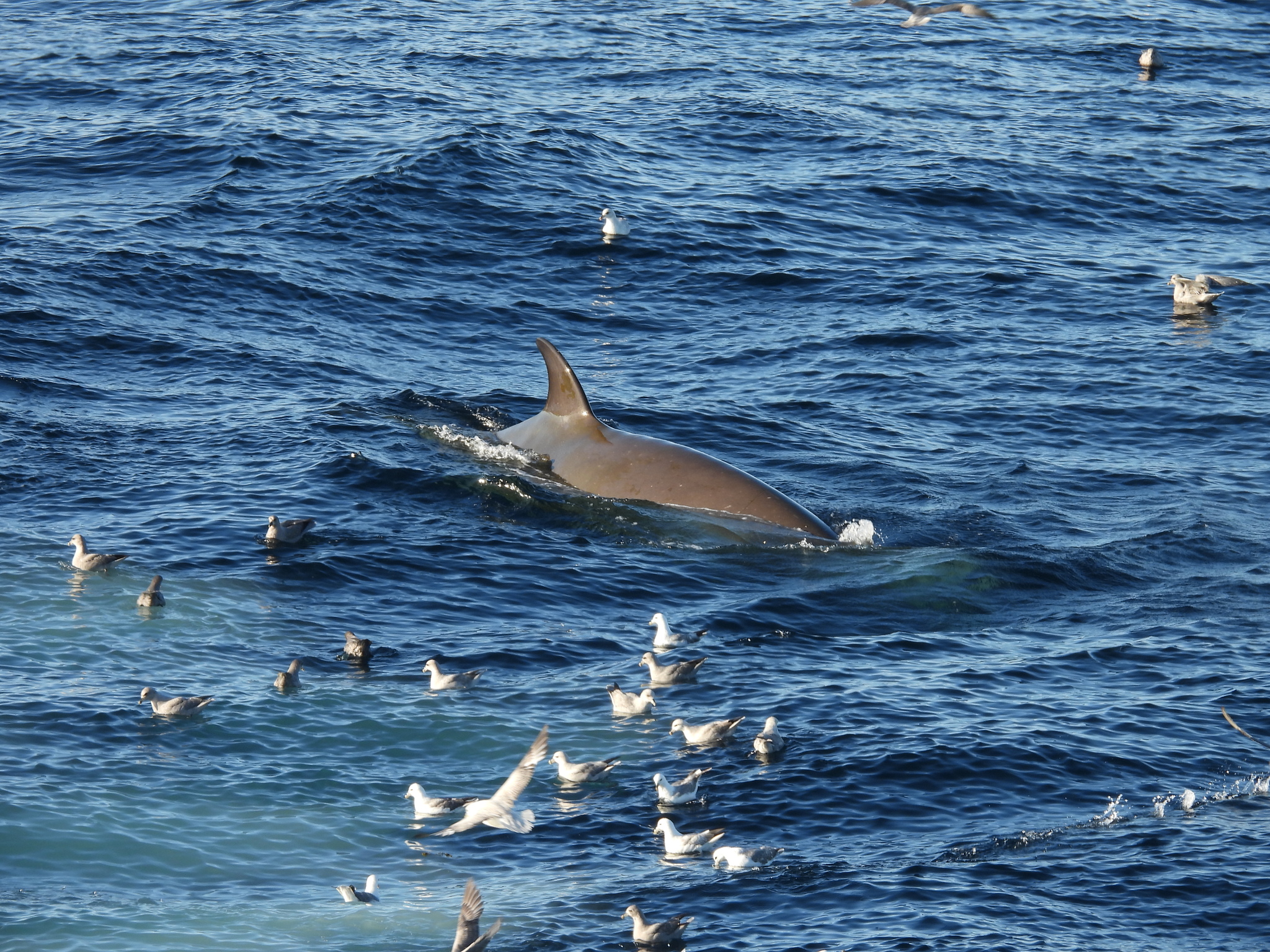
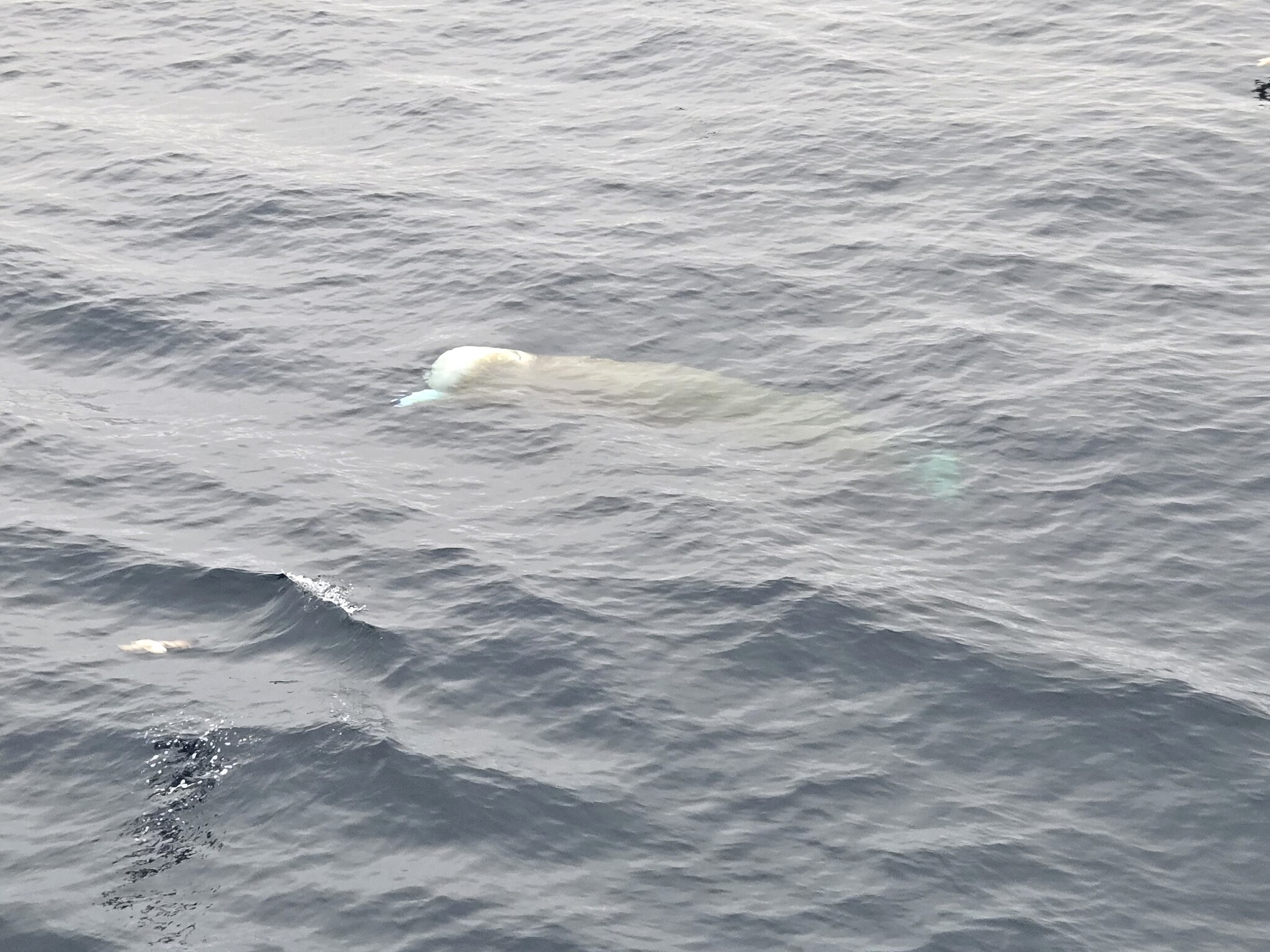
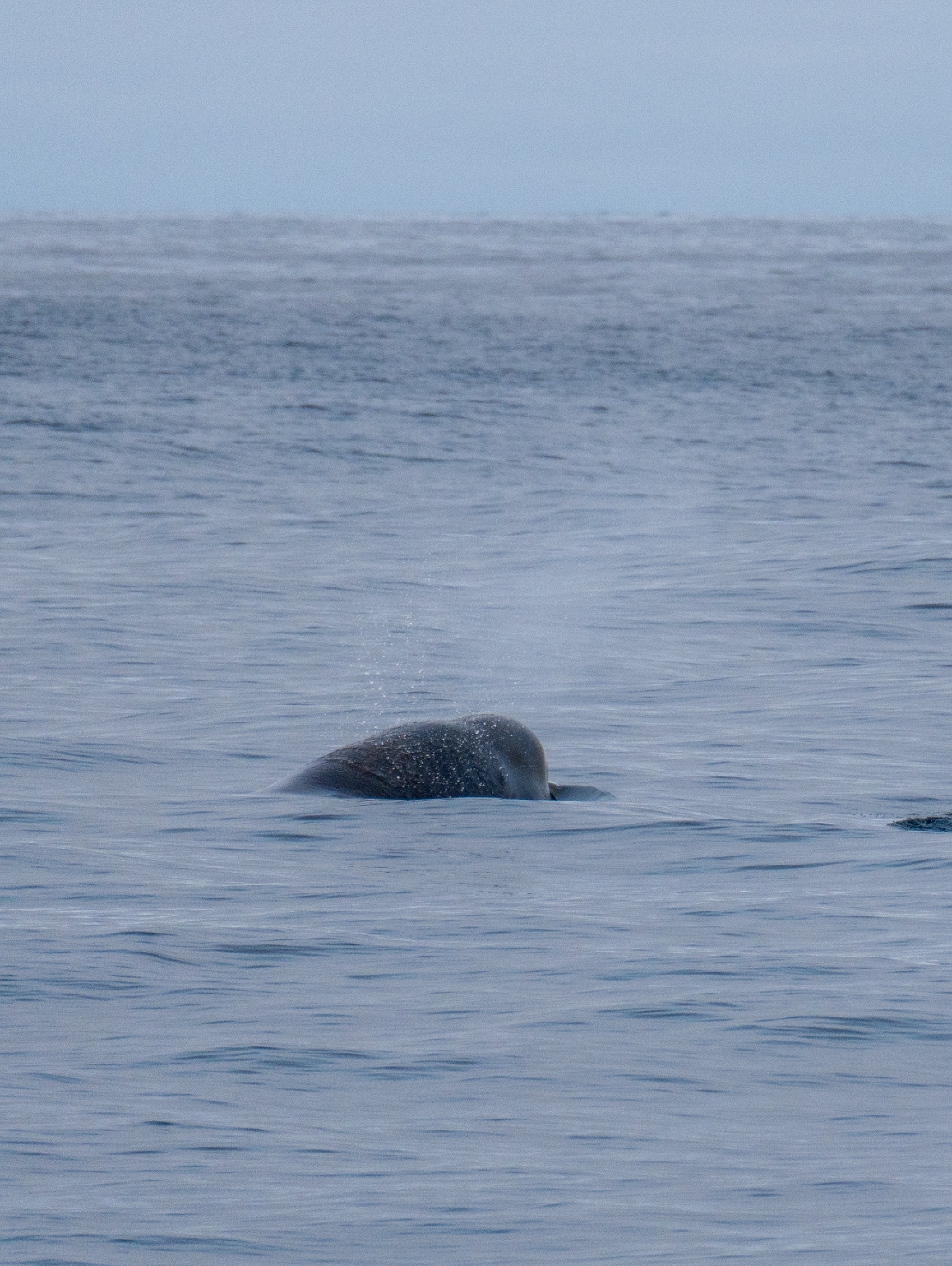
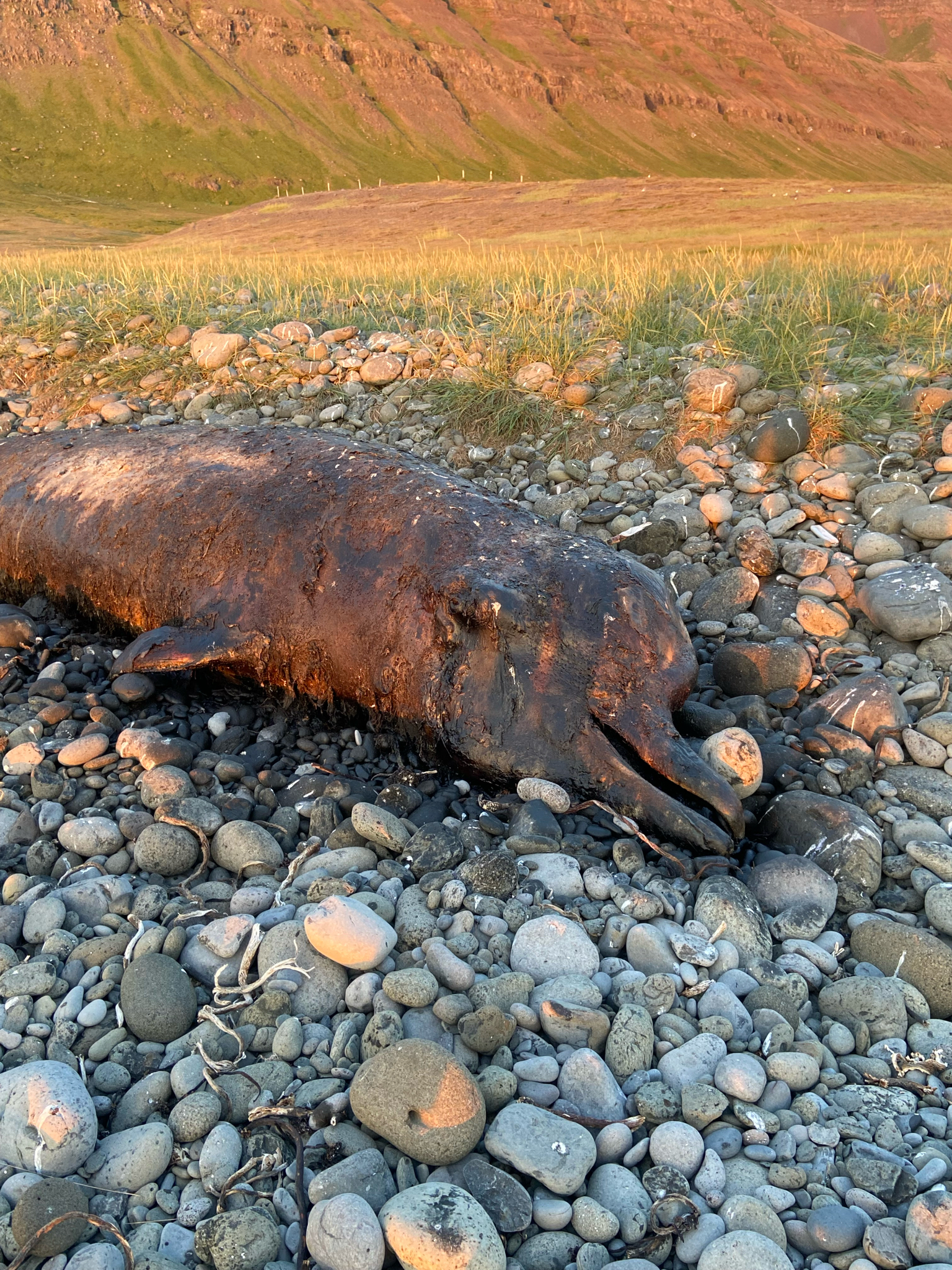
It is the largest beaked whale in the North Atlantic. The body is massive and fusiform, the head very distinctive: a domed melon surmounts a short, thick and clearly set off beak, which has earned the animal its alternative name of “common bottlenose whale”. Sexual dimorphism is marked, males reaching up to 25% more than females. In old males the melon becomes bulky, almost flattened at the front, forming a square forehead, often whitish or pale yellow, that contrasts with the rest of the body; in females and young animals it stays rounded and inconspicuous. The coloration ranges from chocolate brown to greenish brown and grey, paler on the flanks and belly, and lightens with age, some old individuals appearing almost cream on the head.
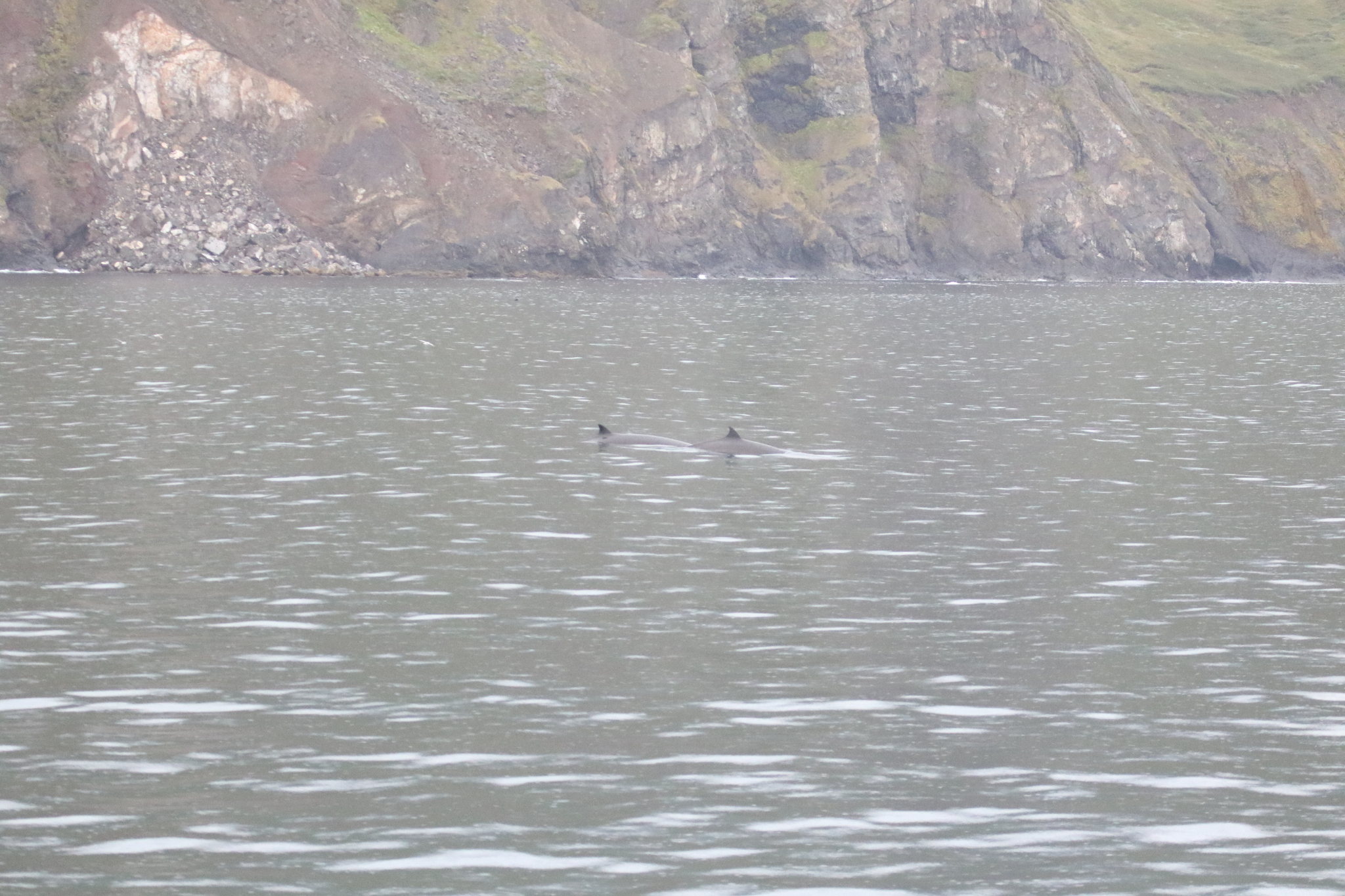
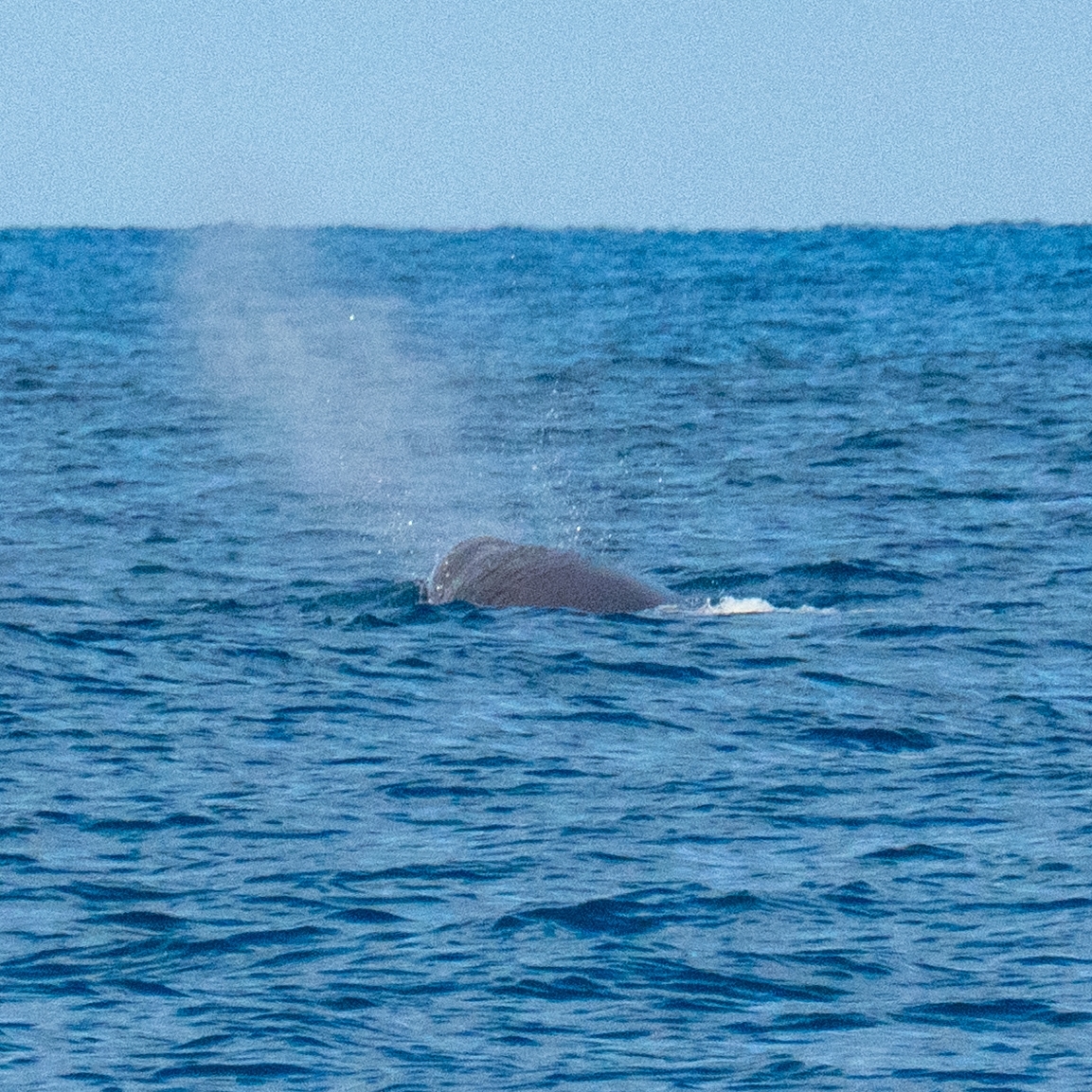
The dorsal fin, small but clearly visible, measures 30 to 38 cm; falcate and pointed, it is set behind the midpoint of the back. The flippers are short. The animal does not raise its tail flukes when it sounds. At the surface it produces a bushy blow about 1 m high, repeated every 30 to 40 seconds during the recovery sequences between two dives. The dentition is extremely reduced: only adult males carry a pair, exceptionally two, of short conical teeth at the tip of the lower jaw, often barely erupted; females have none.
The most frequent confusion involves Cuvier's beaked whale (Ziphius cavirostris), appreciably smaller (about 7 m) and lacking a prominent melon: its sloping “goose-beak” head profile, its very short beak barely set off from the forehead and its body generally covered with linear scars and pale oval marks distinguish it from the northern bottlenose whale. Beware, on the other hand, of the pale head of old males: it is not diagnostic, since old males of both species whiten on the head, and it is in fact one of the main identification traps. Sowerby's beaked whale (Mesoplodon bidens), also present in the Bay of Biscay, is smaller, more slender and has a long, thin beak, with no domed forehead. At long range, a northern bottlenose whale seen from behind may suggest another large dark odontocete, but the well-marked beak and the prominent forehead remove the doubt as soon as the head appears.
The northern bottlenose whale belongs to the odontocetes (toothed whales) and to the beaked whale group, of which the Society for Marine Mammalogy recognised 24 living species in six genera in 2024. It was described by Johann Reinhold Forster in 1770 under the name Balaena ampullata; the epithet ampullatus comes from the Latin ampulla, the “flask”, in reference to the stocky, swollen shape of the beak. Many names circulated in the nineteenth century before the nomenclature settled, in particular Hyperoodon rostratus, Hyperoodon borealis and Hyperoodon butskopf.
The family name is the subject of a long-standing debate. Hyperoodontidae, erected in 1846, predates Ziphiidae, coined by Gray in 1865; Gray acknowledged as early as 1866 the priority of the former but preferred to keep Ziphiidae, a position reaffirmed subsequently in the name of usage. Today the Society for Marine Mammalogy, the IUCN Red List and most specialists use Ziphiidae, while ITIS retains Hyperoodontidae as the valid name. The two names designate exactly the same set of species.
The genus Hyperoodon holds only two members: the northern bottlenose whale, confined to the North Atlantic, and the southern bottlenose whale (Hyperoodon planifrons), restricted to the Southern Hemisphere. Their ranges do not overlap, which rules out any risk of confusion in the field. A molecular study published in 2020 clarified relationships within the Ziphiidae: it is Shepherd's beaked whale (Tasmacetus shepherdi), the only living species to retain a complete dentition, that occupies an intermediate position between the Berardiinae (four visible teeth) and the Ziphiinae (two visible teeth). The genus Hyperoodon, for its part, belongs to the subfamily Hyperoodontinae, alongside Indopacetus and Mesoplodon.
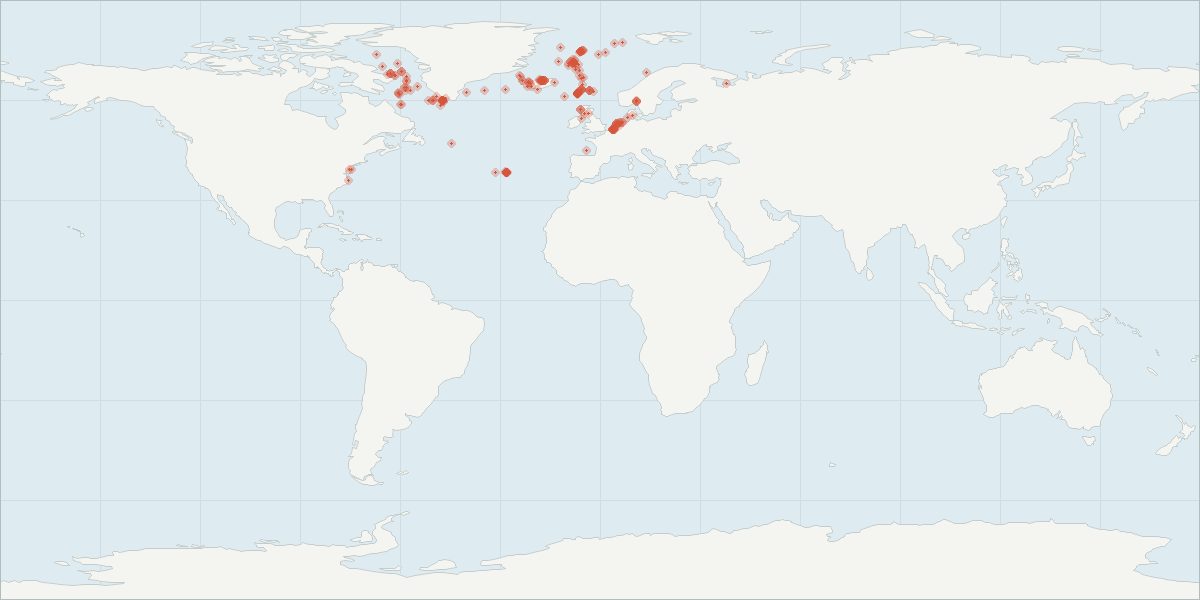
The species is endemic to the North Atlantic, where it occupies cold, temperate to subarctic offshore waters. It is found from the Davis Strait to the Labrador Sea and the Greenland Sea, around Iceland, the Faroe Islands, Norway and as far as Spitsbergen, along the edge of the sea ice in summer. To the south, regular presence stops in the vicinity of the Gully canyon (about 44°N) in the west and of the Azores (about 39°N) in the east; the extreme southern limits known are Virginia (about 36°N) on the American side and the Canary Islands (29°N) on the eastern Atlantic side, with a few isolated records in the Mediterranean, the North Sea and the Gulf of St Lawrence. It is a decidedly pelagic, deep-water species, associated with continental slopes, submarine canyons and seamounts, generally in depths greater than 500 m and most often well beyond 1,000 m.
World numbers remain poorly known and the available data do not allow a global trend to be estimated. For the north-eastern Atlantic, one estimate reported 10,000 to 45,000 individuals in 2017, a range that conveys the scale of the uncertainty. A well-studied nucleus, distinct from the others, frequents the Gully canyon and the neighbouring canyons off Nova Scotia: it has been estimated at 143 individuals (95% confidence interval: 129-156) and judged roughly stable between 1988 and 2011, thanks to photo-identification monitoring carried out without interruption since 1988.
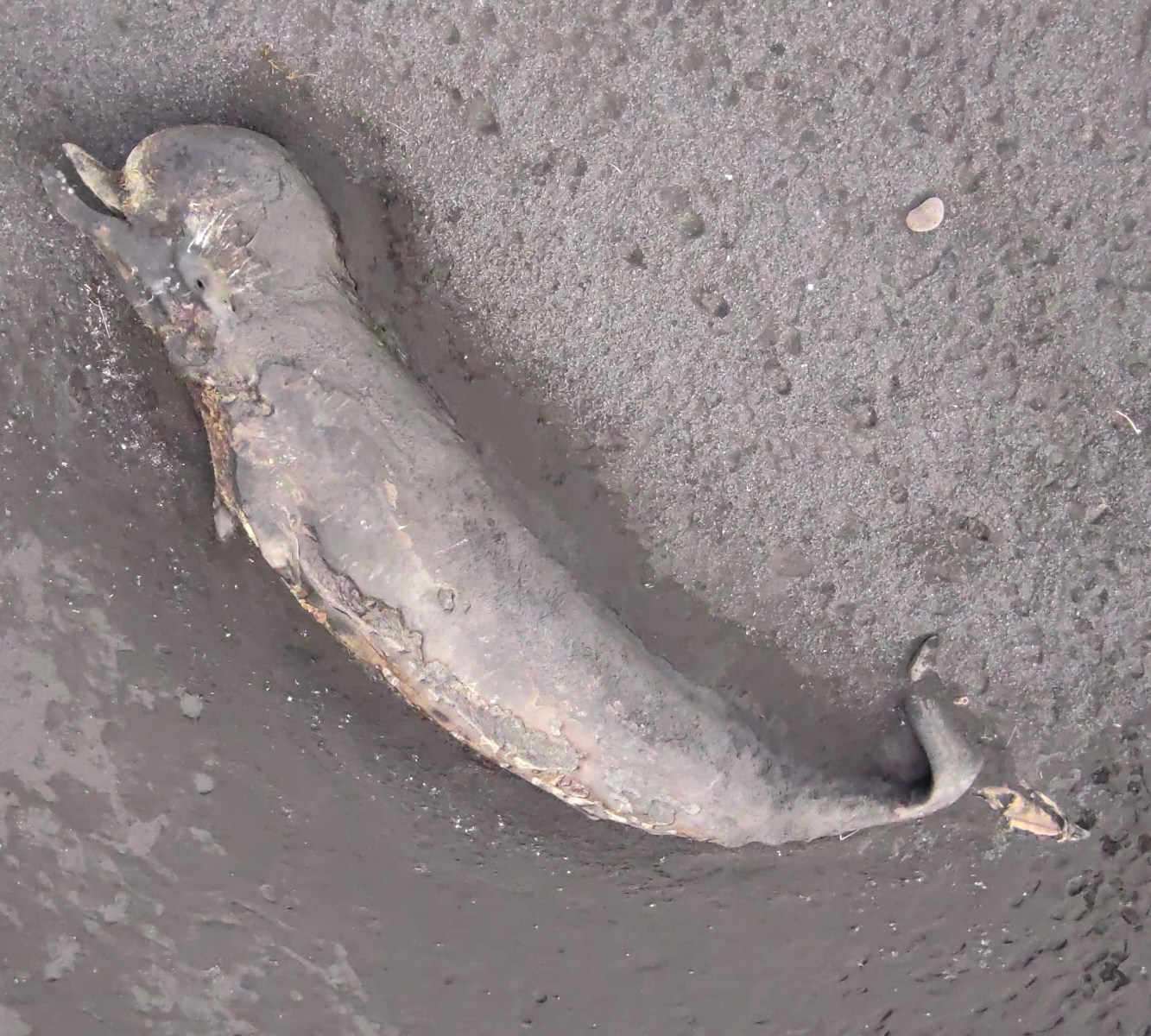
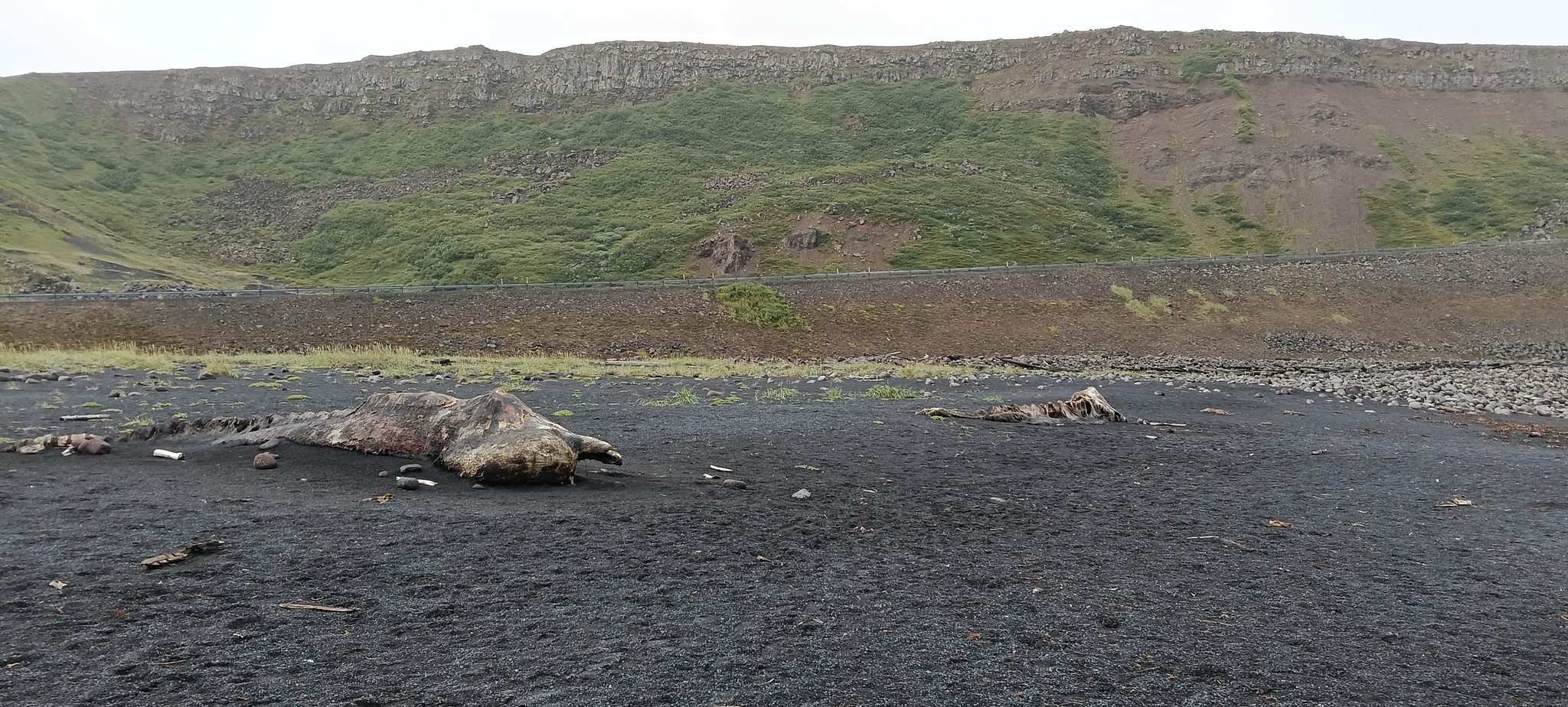
In France, the northern bottlenose whale is one of the four ziphiids recorded in the Bay of Biscay, alongside Cuvier's beaked whale and two mesoplodont beaked whales. It frequents deep offshore waters and, more rarely, the English Channel. Its presence in the Mediterranean is exceptional, and it is absent from the French overseas territories apart from the waters of Saint-Pierre-et-Miquelon. Strandings remain rare: the Réseau national échouages, coordinated by the Observatoire PELAGIS, has recorded seven along the whole of the French coast between 1990 and 2022. In November 2022, an animal stranded alive at Sangatte, in the Pas-de-Calais, was only the third case recorded for the Channel-North Sea seaboard over the entire time series.
The northern bottlenose whale feeds almost exclusively at depth, on deep-water squid, the genus Gonatus very largely dominating the stomach contents, supplemented by Greenland halibut, herring, shrimps, sea cucumbers and starfish. Young animals take shallower prey. Like the sperm whale, the species hunts on prolonged breath-holds: feeding dives most often last 10 to 60 minutes and reach 800 to 1,500 m, but a record of 2,339 m has been recorded and breath-holds reaching 130 minutes, that is more than two hours, have been documented. Prey location relies on echolocation, by means of trains of high-frequency clicks.
Social life is structured: the animals travel in groups of 4 to 20 individuals, sometimes more, in a fission-fusion system in which associations form and break up. Lasting bonds, in particular between males, have been demonstrated in the Gully population. Adult males fight by butting each other head on, which could explain the thickening of the forehead and the scars observed.
Breeding is slow. Males reach sexual maturity at around 7 to 9 years, females later, between 8 and 14 years depending on the source. Mating takes place in spring and early summer; after a gestation of about 12 months, a single calf of 3 to 3.5 m and some 300 kg is born between April and August. Maternal investment is exceptionally long: the work of Feyrer and colleagues (2020) shows that weaning is not complete before the age of 3 to 4 years, well beyond the classic estimate of one year, and that the interval between two births therefore reaches at least four years, double the two years previously accepted. Documented longevity reaches at least 37 years. This very low productivity, combined with reduced genetic diversity, makes populations slow to rebuild.
The species has a reputation for curiosity: groups readily approach stationary vessels and sometimes stay alongside them for a long time. This behaviour, which today delights observers, once made the whalers' task easier.
The northern bottlenose whale is listed as “Near Threatened” (NT) on the global IUCN Red List, in an assessment carried out on 20 October 2020 and published in 2021. The listing is made under criterion C1: the species is judged close to meeting the conditions of the “Vulnerable” category, because the population could number fewer than 10,000 mature individuals and a continuing decline of 10% over three generations is plausible given bycatch, plastic ingestion and anthropogenic noise. The IUCN points out, moreover, that the bulk of the decline due to whaling dates back more than three generations (generation length being estimated at 15.5 to 17.8 years), which rules out recourse to a criterion of past reduction; keeping the species as “Near Threatened” follows a precautionary approach, the assessment acknowledging that “Least Concern” would also be defensible. Commercial whaling, conducted by Britain, Norway and Canada from the 1850s to the early 1970s, with two phases of maximum intensity, around 1880-1920 and then 1937-1973, accounted for more than 65,000 animals landed (more than 80,000 according to some sources), not counting animals wounded and lost. Christensen and Ugland (1983) estimated the initial North Atlantic population at about 90,000 individuals, reduced to some 30,000 by 1914. The Norwegians and the British were the main operators, seeking head oil and spermaceti. Commercial whaling ceased in the early 1970s (the end of Norwegian pelagic whaling in 1973), the species was placed in 1977 on the IWC schedule as a protection stock with a zero quota, and it is on Appendix I of CITES, which prohibits international trade for commercial purposes.
Direct takes are marginal today, apart from a few animals caught during the drive hunts practised in the Faroe Islands. Present-day threats are of another order. Noise of human origin comes first: mid-frequency military sonar and seismic survey campaigns disturb communication and feeding and can drive the animals out of vital areas. A group that took refuge in Loch Long, in Scotland, in 2020 was thus linked to naval exercises. To these are added bycatch and entanglement in fishing gear, offshore oil and gas development, plastic ingestion and the effects of climate change. Low genetic diversity and the slow rate of reproduction make populations particularly sensitive to these pressures.
On the regulatory side, the species is protected in United States waters by the Marine Mammal Protection Act. In Canada, two units are recognised under the Species at Risk Act: the Scotian Shelf population, listed as “Endangered”, whose preferred habitat, the Gully canyon, holds marine protected area status, and the Davis Strait-Baffin Bay-Labrador Sea population, listed as “Special Concern”.
Seeing a northern bottlenose whale means going far from the coast, over deep water: the continental slope, submarine canyons and seamounts. In Europe, the Bay of Biscay crossings made from the ferries linking France to Spain or the United Kingdom are among the few accessible opportunities, alongside Icelandic, Faroese and Norwegian waters. In Canada, the Gully area, off Nova Scotia, holds the best-known population.
Detection remains difficult. Beaked whales spend most of their time diving, often for more than an hour, and their inconspicuous blow is hard to pick out as soon as the sea gets up: a calm sea and good visibility are practically indispensable. The useful clues are the small repeated bushy blow, the domed pale forehead of an old male and the small, set-back dorsal fin, the animal never showing its tail flukes.
The curiosity of the species calls for a strict code of conduct: never cut across an animal's path, hold a constant course and speed, let the cetaceans decide on the approach and keep to a distance of at least fifty metres or so, limiting the observation to about thirty minutes. Since noise is one of the main documented threats, acoustic discretion counts here as much as distance. In France, any stranding or animal in difficulty should be reported to the Réseau national échouages, coordinated by the Observatoire PELAGIS, without handling the animal.
Yes, but rarely. It is one of the four beaked whales recorded in the Bay of Biscay, over deep water, and frequents the English Channel more occasionally. Its presence in the Mediterranean is exceptional and in the overseas territories it occurs only in the waters of Saint-Pierre-et-Miquelon. Strandings are few: seven have been recorded on the French coast between 1990 and 2022, including an animal stranded alive at Sangatte (Pas-de-Calais) in November 2022.
The northern bottlenose whale is distinctly larger and is recognised by its strongly domed forehead, almost square in old males, overhanging a short, thick and clearly set off beak. Cuvier's beaked whale, smaller (about 7 m), has a sloping “goose-beak” head profile, with no prominent melon, a very short beak barely set off from the forehead and a body often covered with linear scars and pale oval marks. Note: the pale head of old males is not a distinguishing character, since old males of both species whiten on the head, and it is in fact one of the main identification traps. Sowerby's beaked whale, for its part, is slender with a long, thin beak.
Its hunting dives commonly reach 800 to 1,500 m and last 10 to 60 minutes. A dive to 2,339 m has been recorded, and breath-holds reaching 130 minutes, that is more than two hours, have been documented. It is one of the most accomplished divers in the animal world.
The IUCN assessment, carried out in 2020 and published in 2021, does not rest on a quantified past reduction: it points out on the contrary that the bulk of the decline caused by commercial whaling dates back more than three generations. The listing is made under criterion C1, the species being judged close to the “Vulnerable” threshold: the population could number fewer than 10,000 mature individuals and a continuing decline of 10% over three generations is plausible owing to bycatch, plastics and underwater noise. Populations also remain poorly counted, breed very slowly and show low genetic diversity. The “Near Threatened” listing reflects this precautionary approach: the species is not in immediate danger but remains fragile.
Mid-frequency sonar and seismic surveys disturb the echolocation, communication and feeding of these animals, which depend entirely on sound at depth, and can drive them out of vital areas. In several beaked whales, lesions suggestive of decompression sickness have been described after naval exercises. In 2020, the presence of a group of northern bottlenose whales in Loch Long, in Scotland, was linked to military manoeuvres.
Commercial whaling ceased in the early 1970s. The species was placed in 1977 on the International Whaling Commission schedule as a protection stock with a zero quota, and it is on Appendix I of CITES, which prohibits international trade for commercial purposes. Marginal takes persist during the drive hunts practised in the Faroe Islands. The main present-day pressures are no longer whaling but underwater noise, bycatch and industrial activities at sea.
Profile compiled from authoritative scientific sources (IUCN, NOAA Fisheries, specialist literature) and reviewed for factual accuracy.
According to the open data of the GBIF, 245 georeferenced sightings of Hyperoodon ampullatus are recorded in our photographic index.
| Country | Notes |
|---|---|
| Iceland | 48 |
| Greenland | 43 |
| Faroe Islands | 34 |
| Canada | 33 |
| Netherlands | 30 |
| Svalbard and Jan Mayen | 28 |
| Portugal | 15 |
| United Kingdom of Great Britain and Northern Ireland | 11 |
| Norway | 10 |
| United States of America | 3 |

Monthly distribution of 262 dated sightings (all years combined): the maximum is reached in mai.
| Month | Notes |
|---|---|
| janvier | 5 |
| February | 1 |
| mars | 1 |
| avril | 5 |
| mai | 60 |
| juin | 28 |
| juillet | 45 |
| August | 54 |
| septembre | 42 |
| octobre | 13 |
| novembre | 7 |
| December | 1 |
These figures reflect survey effort (more boaters and more surveys in summer) as much as the actual presence of the species: to be interpreted with caution.


Photographs from GBIF under a Creative Commons licence. The author and the licence of each photograph are given; please respect them if you reuse them.
Automatic selection of the most cited works mentioning the species (source: Crossref).