Southern bottlenose whale (Hyperoodon planifrons)

Key facts
Scientific name Hyperoodon planifrons Flower, 1882
Other names Southern bottlenose whale, Antarctic bottlenose whale, Pacific beaked whale; in French hypérodon austral, hypérodon antarctique, baleine à bec du Sud; in Spanish ballena nariz de botella del sur.
Size 6 to 7.8 m in adults; the lactating female dissected in the Antarctic in 1948 measured 7.45 m, regarded as one of the largest documented sizes for a female of the species.
Weight About 4 to 8 tonnes depending on the source; several reference works give a range of 6.9 to 8.1 t for adults.
Longevity Poorly known: the only individual whose age has been estimated, the female dissected in the Antarctic in 1948, showed 26 growth layer groups in the dental cementum (20 in the dentine), giving an age of 20 to 26 years. Some compilations put longevity at at least 37 years, but that figure is documented in the northern bottlenose whale and merely extrapolated to the southern species.
Diet Mainly oceanic and deep-water squid; incidentally fish (including the Patagonian toothfish), krill and tunicates.
IUCN status Least Concern (LC), global assessment published by Lowry & Brownell in 2020 (e.T10708A50357964). No subpopulation is assessed separately. The South African regional assessment, carried out in 2016, also applies the Least Concern category, with a trend considered stable.

In brief

The southern bottlenose whale is the beaked whale most frequently encountered in Antarctic waters, where it accounts for more than 90% of ziphiid sightings. Recognisable by its strongly domed, pale melon above a short, stocky beak, this cetacean of 6 to 7.8 m lives exclusively offshore, over depths greater than 1,000 m, and feeds mainly on squid. Listed as Least Concern by the IUCN, the species paradoxically remains one of the least studied large cetaceans in the world.

Identification

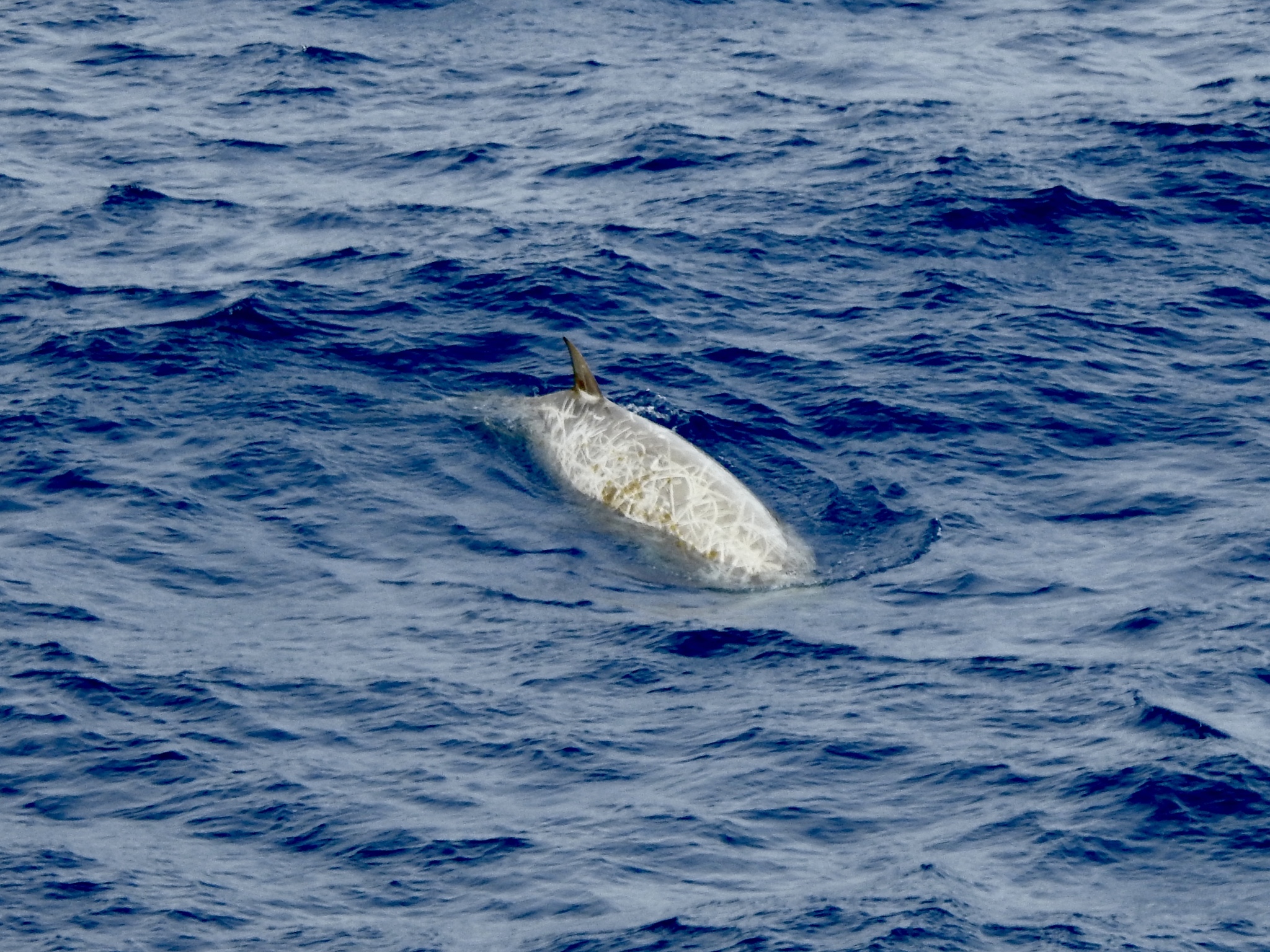
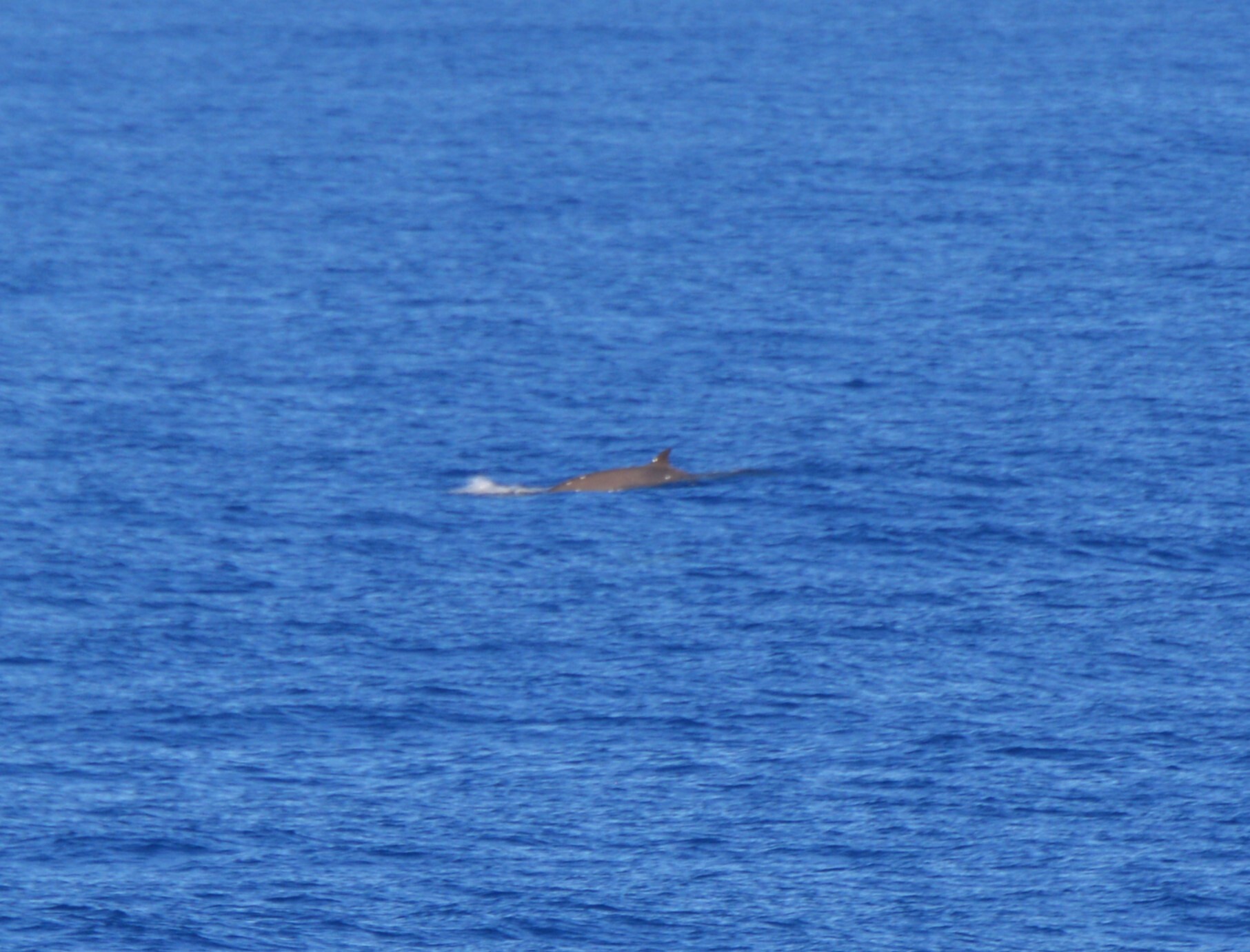
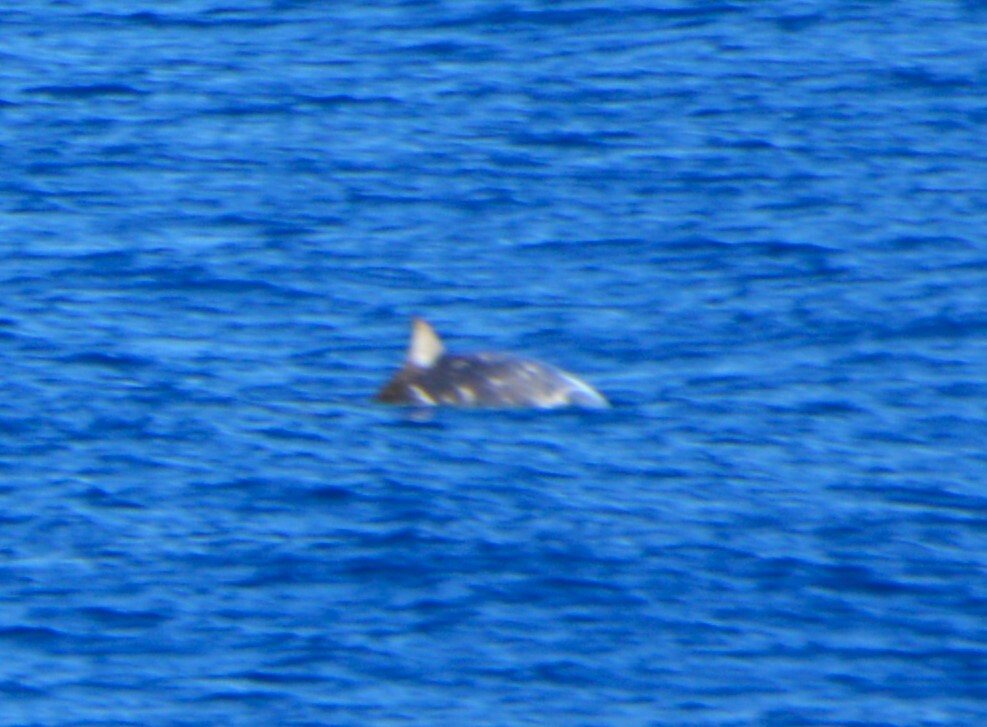
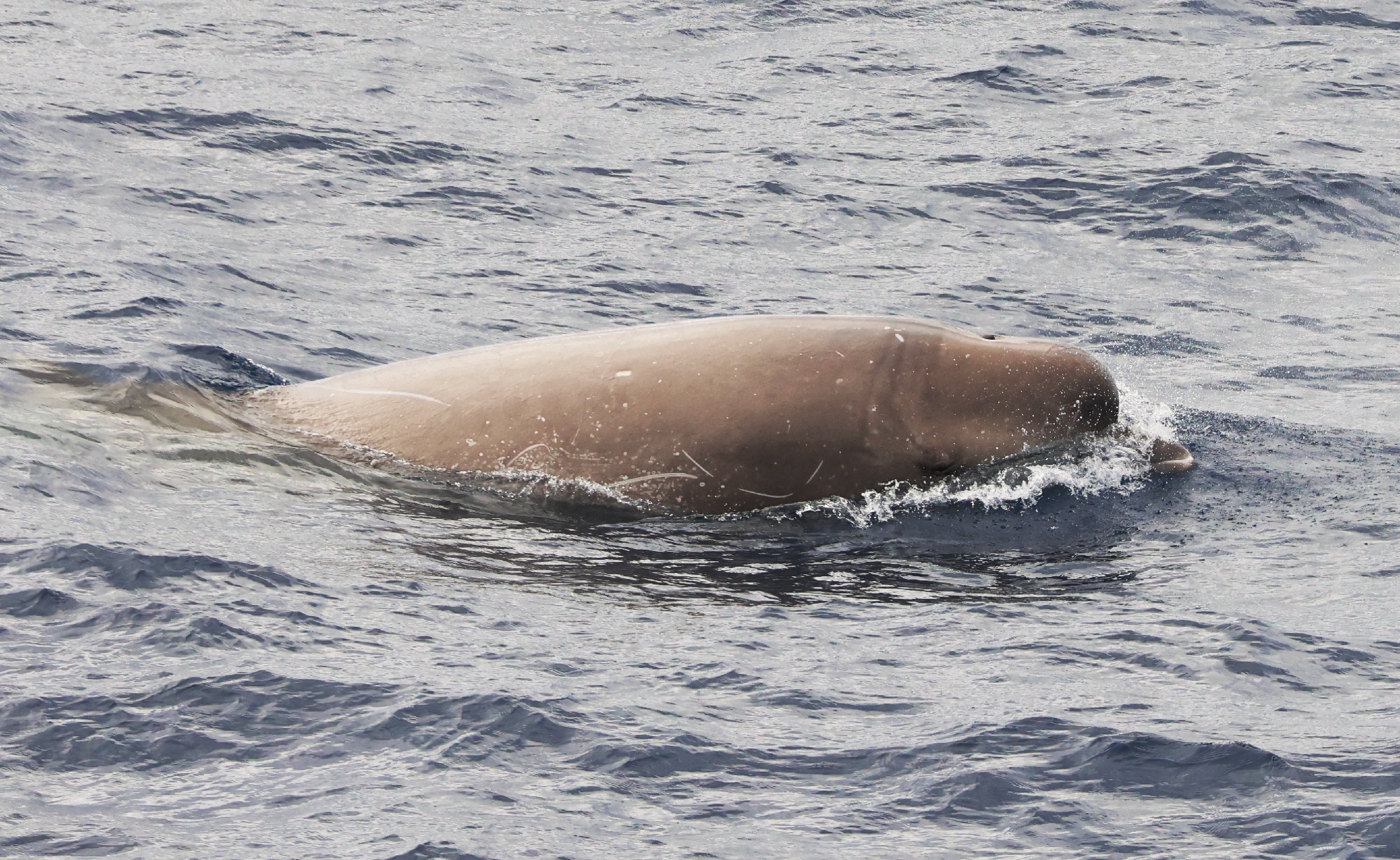
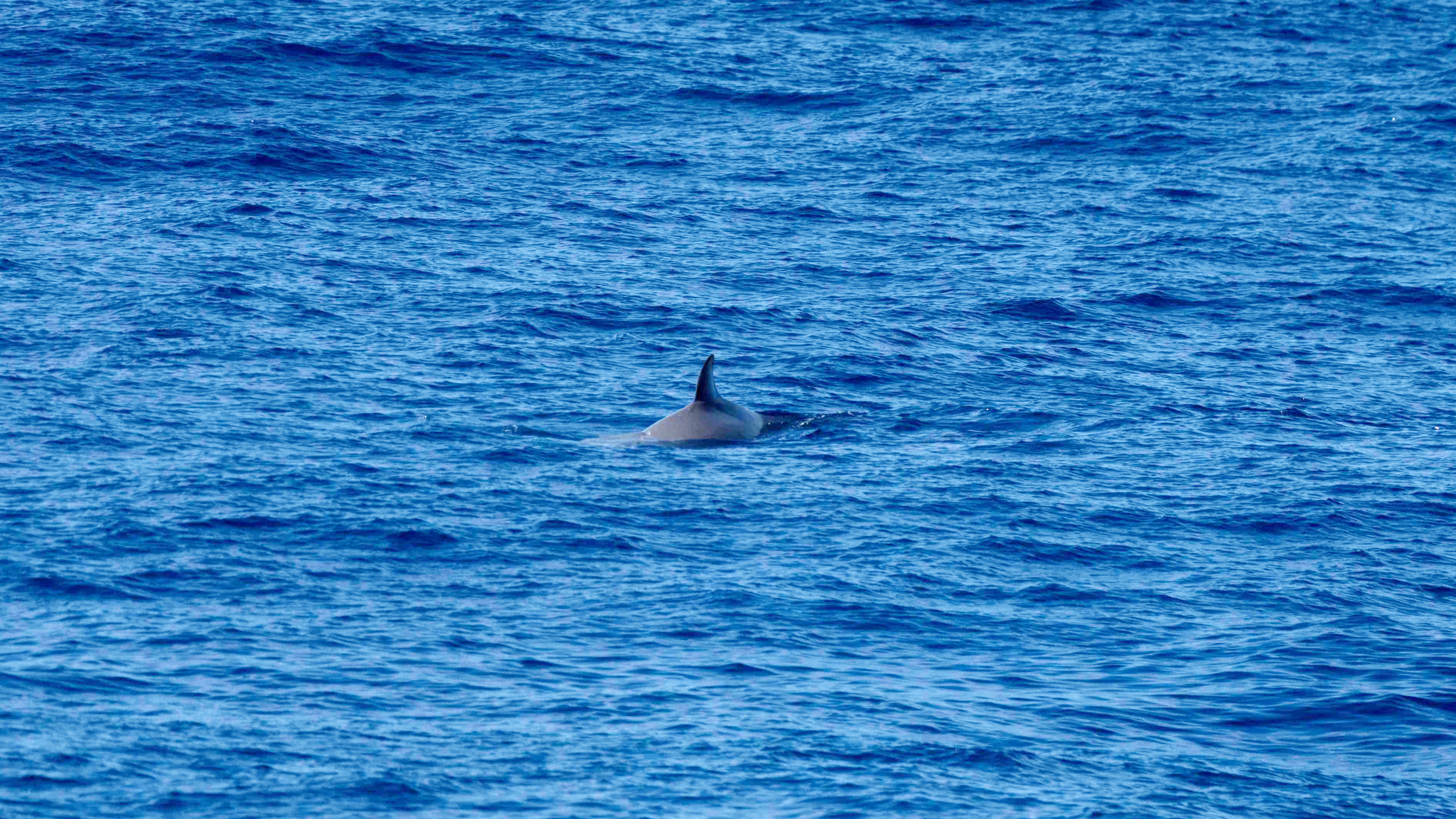
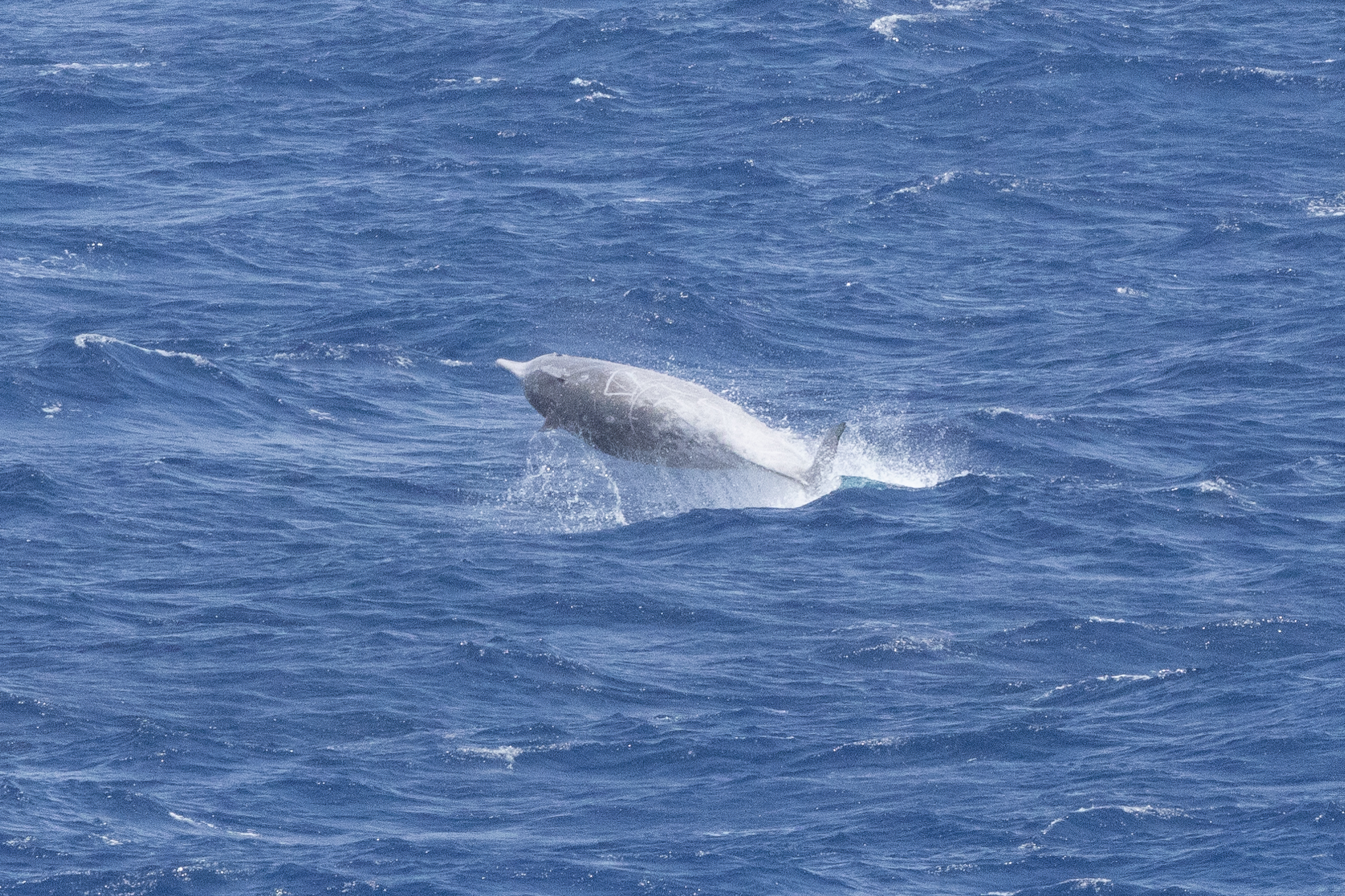
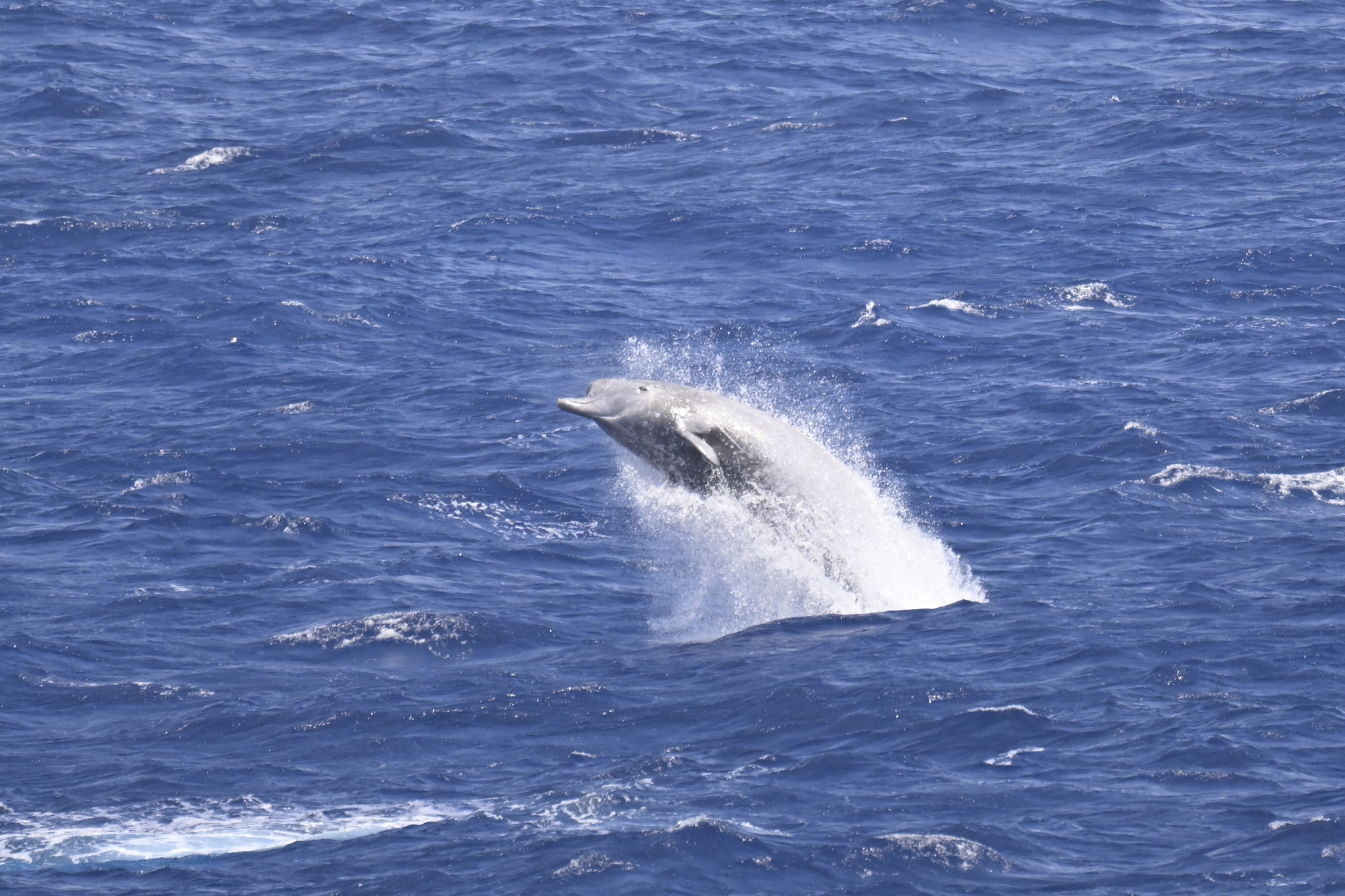
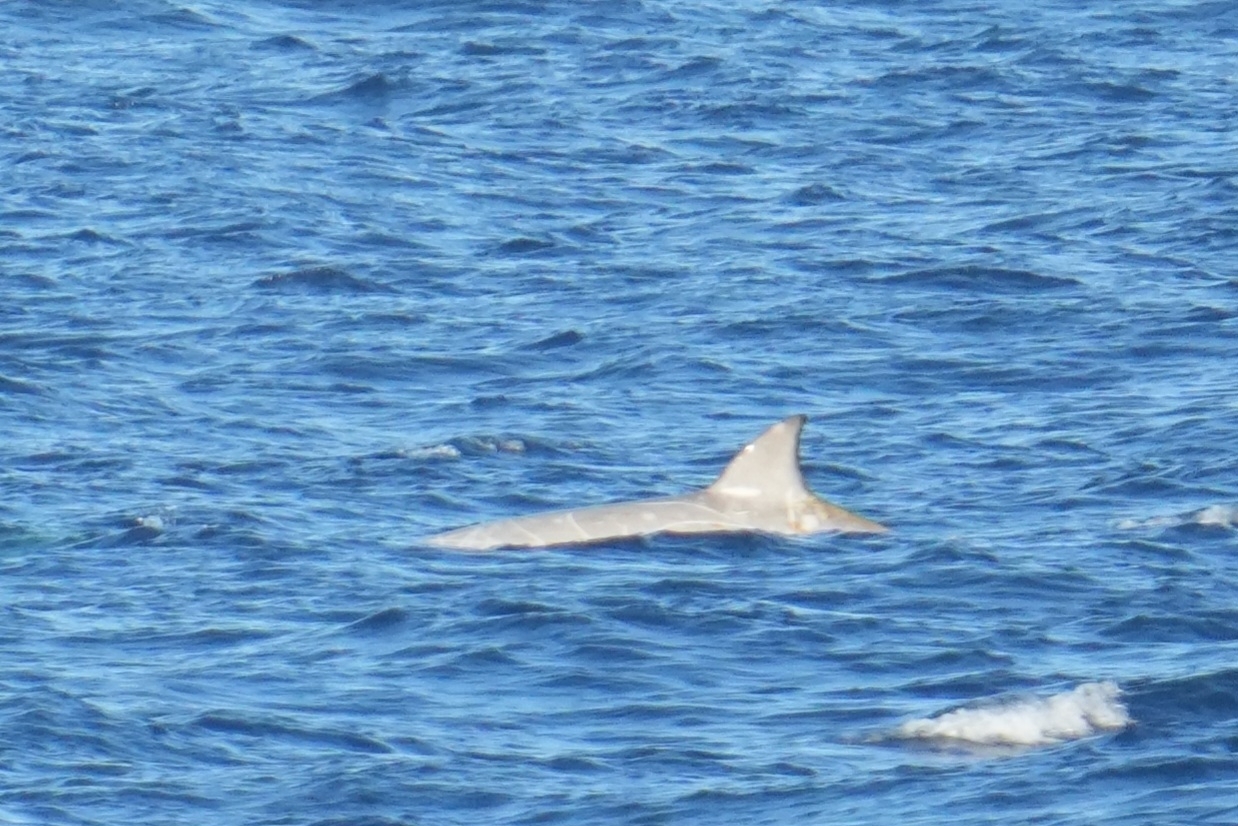
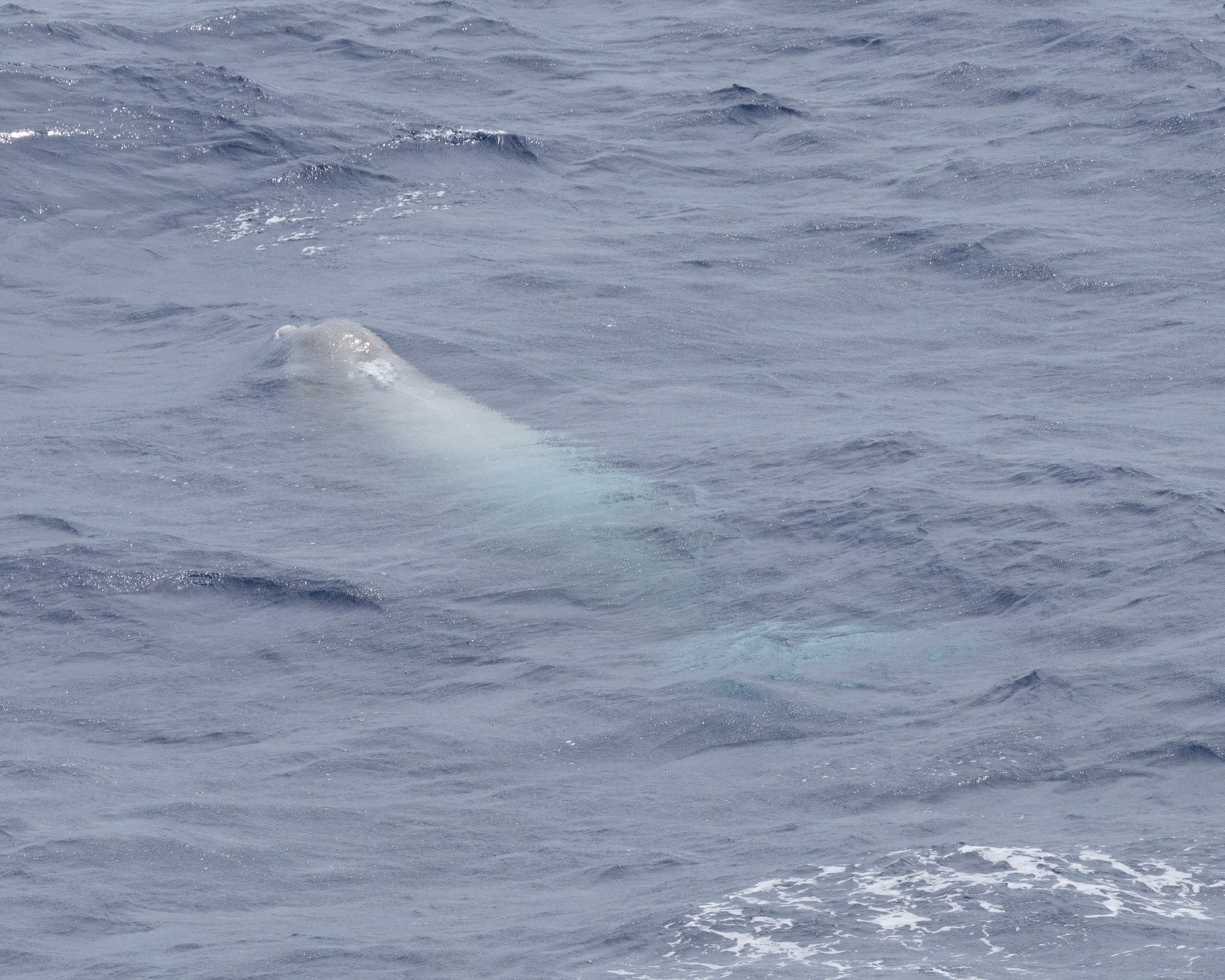
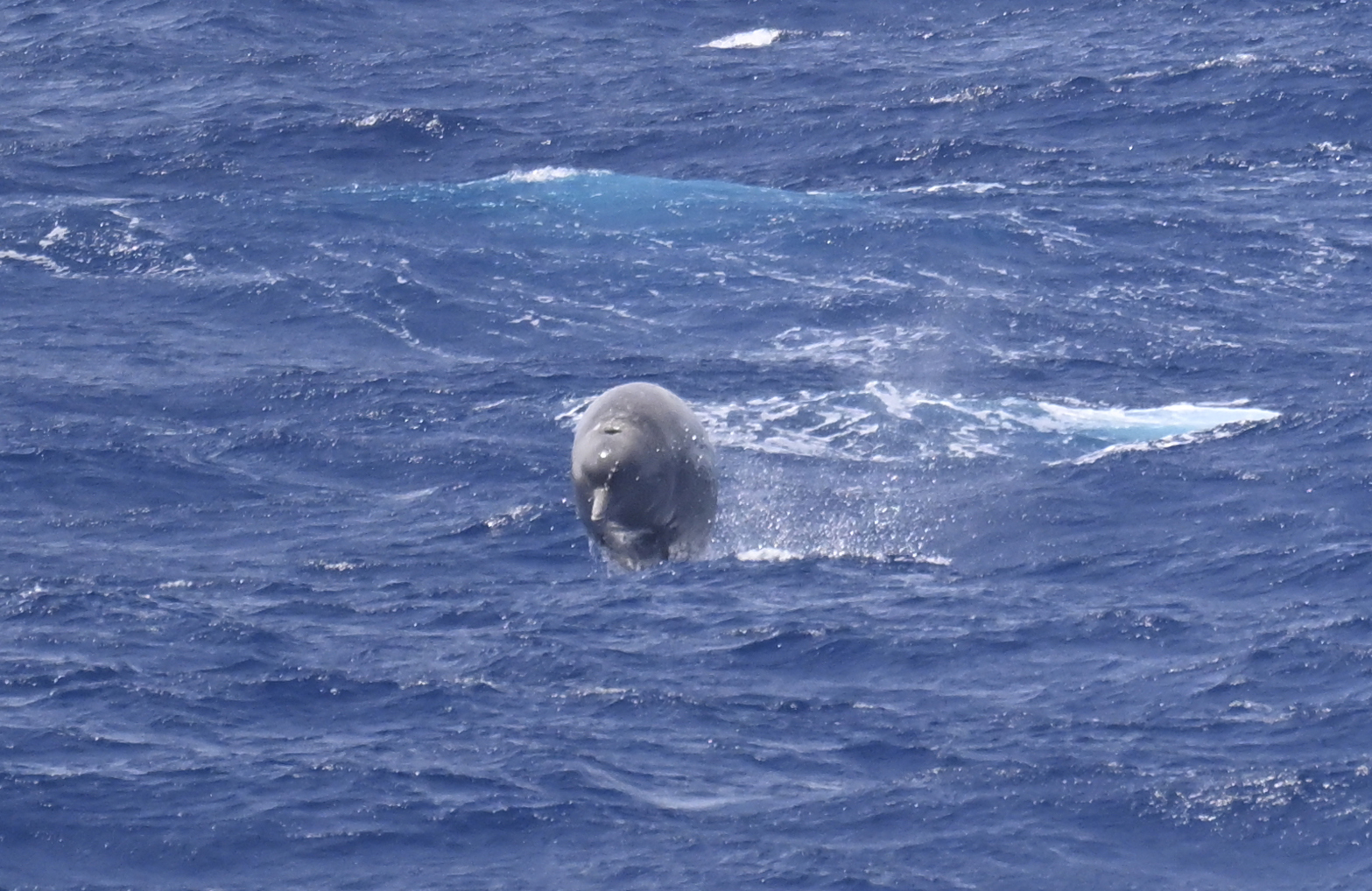
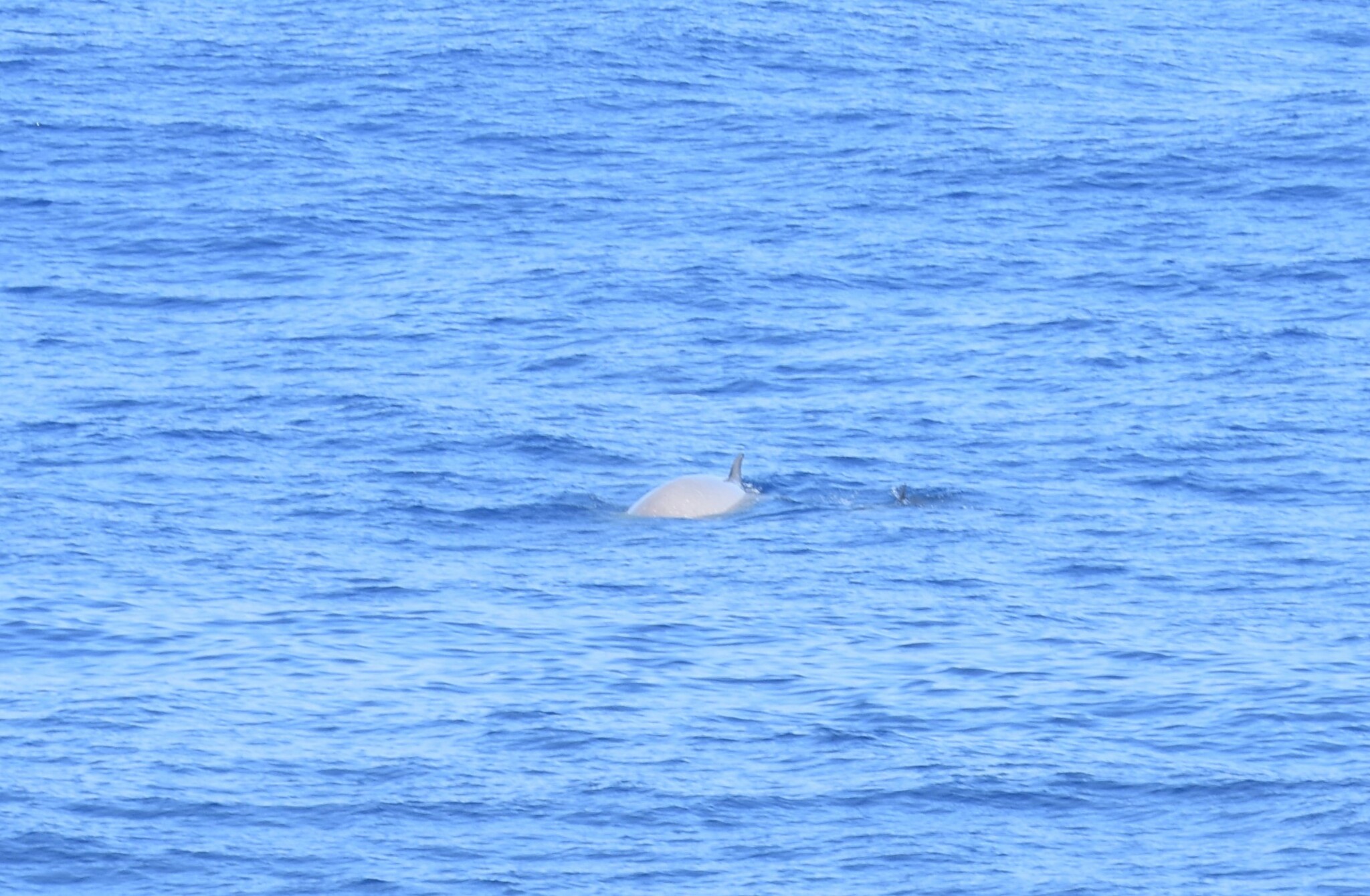
The southern bottlenose whale is a massive, stocky beaked whale whose outline is dominated by an extremely domed melon, almost vertical in old males, overhanging a short, thick and clearly set off beak. This “bottle head” is the best field character at sea, all the more so because it is often markedly paler than the rest of the body: the forehead and beak of old males may turn frankly white, while those of females stay grey. The back is pale to mid grey, sometimes brown to yellowish, a tint often attributed to colonisation of the skin by diatoms in cold waters, and the belly is paler. The dorsal fin, small relative to the size of the animal (30 to 38 cm), is falcate, generally pointed, and set well behind the midpoint of the back.

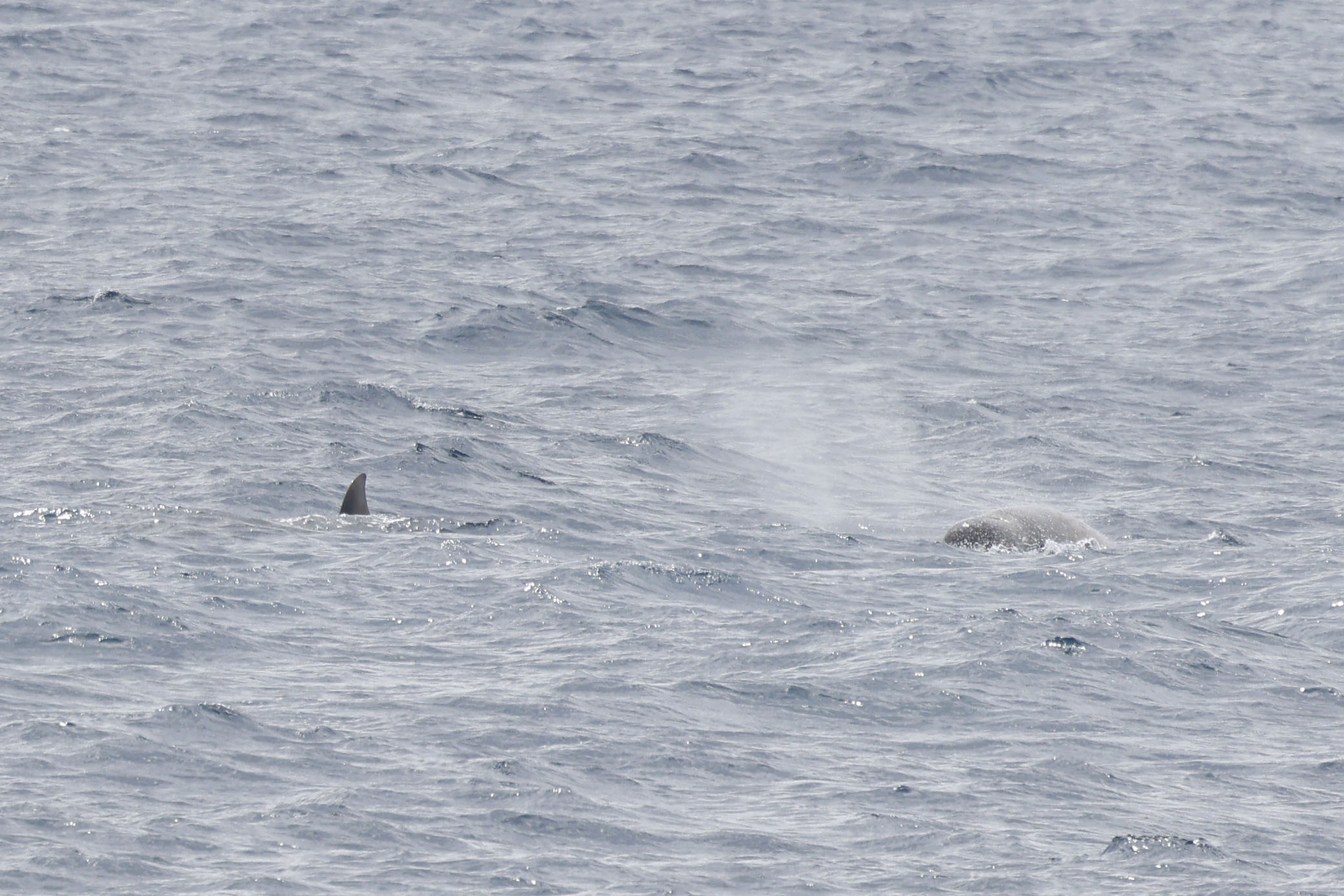
As in most ziphiids, though not in all, Berardius and Shepherd's beaked whale being the exceptions, only adult males display a pair of conical teeth at the tip of the lower jaw; females also have two, but they stay buried in the gum and never erupt. These teeth serve in fights between males and leave long parallel white scars on the body, very conspicuous in old individuals. To these scars are added healed circular marks left by cookiecutter sharks and, according to some authors, traces attributable to the suckers and hooks of large squid. The body is fusiform, the tail lacks a marked median notch, and the flippers are short. At sea the animal is undemonstrative: a low, bushy blow, a back that rolls slowly, and sequences of closely spaced breaths between two long dives.

Confusions are frequent and long blurred knowledge of the species. In the Southern Ocean, Arnoux's beaked whale (Berardius arnuxii) shares the same range, but it has a long, tapering beak, a markedly less domed forehead and teeth visible in both sexes. Cuvier's beaked whale (Ziphius cavirostris) has a “goose-beak” head profile, with no globular melon. In tropical and subtropical waters, the historical sightings of “domed-headed beaked whales” attributed to the southern bottlenose whale in fact correspond, for the most part, to Longman's beaked whale (Indopacetus pacificus), a species long overlooked. Finally, the northern bottlenose whale (Hyperoodon ampullatus), very similar but larger, is strictly restricted to the North Atlantic: no overlap in range exists between the two species of the genus.

Taxonomy

The species was described by the British zoologist William Henry Flower in 1882, from a sea-worn skull found on Lewis Island, in the Dampier Archipelago, Western Australia. It belongs to the genus Hyperoodon, which holds only two species: the northern bottlenose whale (H. ampullatus) of the North Atlantic and the southern bottlenose whale. The genus is placed in the beaked whale family, designated Ziphiidae in current taxonomic references and sometimes called Hyperoodontidae in certain classifications, after its type genus. No subspecies is recognised.

Specific validity has been debated: the comparative dissection of an Antarctic female had revealed no difference in morphometry, coloration, or digestive and reproductive anatomy from the northern bottlenose whale, leading some authors to envisage a monospecific genus with a continuous distribution. Molecular analyses have settled the matter in favour of two distinct species. A mitochondrial DNA study of two southern bottlenose whales stranded in different regions of New Zealand has also brought to light a divergence of 4.13%, above the 2% interspecific variation observed in other ziphiids, a result still unexplained that leaves open the question of geographic structuring within the species.

Distribution and habitat

The southern bottlenose whale occupies a circumpolar belt in the Southern Hemisphere, from the edge of the Antarctic sea ice to cold temperate waters. Its northern limit lies broadly around 30°S, the IUCN gives a range “south of about 30°S”, but it varies considerably from sector to sector: the documented northern limits reach about 34°S in the south-western Indian Ocean off South Africa, 34°S in the south-western Atlantic off Brazil and 33°S in the south-eastern Pacific off Chile, and extend at least to 20°S in the south-eastern Indian Ocean off Australia, where the type skull was found. To the south, the species reaches the ice edge, the southernmost record lying at 73°S in the Ross Sea. Data also exist as far as the North Island of New Zealand. It is a strictly oceanic species: it frequents deep waters beyond the continental slope, over depths exceeding 1,000 m, and practically never approaches the coast outside stranding events.

A seasonal movement is described: the animals move to high southern latitudes during the austral summer, when they are seen as far as the Ross and Weddell seas, near the ice edge, then redistribute towards lower latitudes in winter. Strandings are recorded in Argentina, the Falkland Islands, Brazil, Chile, Australia, New Zealand and South Africa, as well as on the subantarctic islands.

In France, the species is absent from the mainland: neither in the Mediterranean, nor in the Bay of Biscay, nor in the English Channel, since its range is exclusively southern. It does, on the other hand, belong to the French natural heritage through the French Southern and Antarctic Lands, where it frequents the waters of the subantarctic island districts (Crozet, Kerguelen, Saint-Paul and Amsterdam) as well as the Adélie Land sector.

Biology and ecology

The southern bottlenose whale is a hunter of cephalopods. The stomach contents analysed yield a long list of oceanic and Antarctic squid: Taonius pavo, several Histioteuthis, Gonatus antarcticus, Moroteuthopsis ingens and M. longimana, Galiteuthis glacialis, Psychroteuthis glacialis, Alluroteuthis antarcticus, Martialia hyadesii, Filippovia knipovitchi and Chiroteuthis. To these are added, more occasionally, krill, deep-water fish such as the Patagonian toothfish, and tunicates. Notably, remains of juvenile, subadult and perhaps adult colossal squid have been identified, with mantle lengths estimated at up to about 120 cm and masses estimated at up to about 13.8 kg; how the animal captures prey as powerful as this remains unknown.

Capture in all likelihood takes place by suction: by retracting the tongue and expanding the gular grooves, the animal creates a drop in pressure in the mouth that draws the prey in, a technique usual among ziphiids, whose dentition is reduced. The melon holds spermaceti, which argues for intensive use of echolocation at great depth. The stomach is highly compartmentalised, with seven chambers, of which only one is a digestive “true stomach” and six are non-digestive compartments that store and mechanically grind squid beaks and tissue.

Dives typically last 15 to 40 minutes, a long duration on the scale of cetaceans, and some observations point to submergences that may approach an hour. Between two dives, the animal blows every 30 to 40 seconds at the surface. Social life is organised in very small groups: most often 1 to 5 individuals, sometimes up to about ten, exceptionally about twenty, or even twenty-five. Breeding is poorly documented: sexual maturity is reported to be reached between 7 and 12 years depending on sex, gestation is thought to last about 12 months, and births would appear to be concentrated in spring or early austral summer, with an interval between two births of 2 to 3 years. The actual longevity has not been established: the only individual whose age has been estimated, the female dissected in 1948, was between 20 and 26 years old, which gives only a very partial glimpse of the life expectancy of the species.

Status and conservation

The southern bottlenose whale is listed as Least Concern (LC) on the global IUCN Red List, in an assessment published in 2020. This favourable status, rare among beaked whales, many of which remain in the Data Deficient category, owes much to its apparent abundance in the Southern Ocean: surveys by the International Whaling Commission have put at about 599,300 individuals (CV 15%) the whole of the ziphiids present south of the Antarctic Convergence in summer, a population made up for the most part of southern bottlenose whales; the species accounts for more than 90% of the identified ziphiid sightings within the Antarctic Circle. A South African regional assessment, for its part, gives a figure of 50,000 to 70,000 individuals with a trend judged stable. The exact world population nevertheless remains unknown, and the available data do not allow a global trend to be quantified.

The species has never been the object of a directed fishery. Forty-two individuals were taken in the Antarctic by Soviet fleets between 1970 and 1982, essentially for scientific purposes. Since then, the main identified threat has been underwater noise: ziphiids are among the cetaceans most sensitive to active military sonar and to seismic surveys, several species in the family having been involved in atypical mass strandings linked to these sound sources. Bycatch in driftnets and, more broadly, acoustic degradation of the pelagic habitat make up the other documented pressures.

In regulatory terms, the species is listed in Appendix I of CITES, which prohibits international trade for commercial purposes. It benefits from the Southern Ocean Whale Sanctuary created by the International Whaling Commission in 1994 and comes under the Memorandum of Understanding for the Conservation of Cetaceans of the Pacific Islands Region, within the framework of the Convention on Migratory Species. Under French law, like all cetaceans, it is fully protected, destruction, capture, intentional disturbance and marketing are prohibited, and it is covered by the European regulations applicable to marine mammals.

Observing this species

Seeing a southern bottlenose whale is a matter of luck. The species lives far from the coast, over great depths, dives at length and presents a low, discreet outline at the surface. The most regular encounters occur from research vessels and expedition ships that cross the Drake Passage or run along the ice edge during the austral summer (December to March), the period when the animals move to high latitudes. The subantarctic waters around the French islands of the Southern and Antarctic Lands also offer a possible setting for an encounter, but access there is strictly controlled.

In the field, searching is done with binoculars, scanning for the low blows and the grey backs that roll slowly past, often in groups of two or three. The strongly domed, pale melon, lighter than the body, is the decisive character; noting the rearward position of the small falcate dorsal fin serves to rule out Arnoux's beaked whale. Observation sequences are brief: a few minutes of breathing at the surface, then a dive of several tens of minutes at the end of which the animals generally reappear a long way off.

Approach ethics matter particularly here. Beaked whales are among the cetaceans most vulnerable to acoustic disturbance: a group should never be pursued, non-essential echo sounders should be switched off, a substantial distance should be kept, the animal should be left to choose the approach distance, and the duration of observation should be limited. Any good photograph, even a distant one, has real scientific value for a species as poorly known as this one, as does the reporting of strandings to the competent national networks, the only genuine suppliers of biological data on this cetacean of the open ocean.

Frequently asked questions

Is the southern bottlenose whale threatened?

No: it is listed as Least Concern (LC) on the global IUCN Red List, in an assessment published in 2020. It is one of the few beaked whales to hold so favourable a status, most other species in the family remaining Data Deficient. This classification reflects its apparent abundance in the Southern Ocean and the absence of directed whaling. It does not, however, mean that the species is well known: the exact world population and the population trend have not been quantified.

Can this species be seen in France?

Not in mainland France: the southern bottlenose whale is strictly confined to the Southern Hemisphere and occurs neither in the Mediterranean, nor in the Bay of Biscay, nor in the English Channel. It does, however, frequent the southern French overseas waters, around the districts of the French Southern and Antarctic Lands (Crozet, Kerguelen, Saint-Paul and Amsterdam) and in the Adélie Land sector.

How is it told apart from the northern bottlenose whale?

By geography above all: the two species never meet, the northern bottlenose whale (Hyperoodon ampullatus) being confined to the North Atlantic and the southern bottlenose whale to the Southern Hemisphere, south of about 30°S. Morphologically, the southern bottlenose whale is smaller. The two species are so close that a comparative dissection had revealed no clear external or anatomical difference; it is genetic analyses that have confirmed that they are indeed two distinct species.

What does the southern bottlenose whale eat, and how deep does it dive?

It feeds mainly on oceanic and Antarctic squid, Taonius pavo, Histioteuthis, Gonatus antarcticus, Psychroteuthis glacialis among others, supplemented by krill, a few deep-water fish such as the Patagonian toothfish, and tunicates. Remains of colossal squid have even been recovered from stomachs, with mantle lengths estimated at up to about 120 cm. It hunts over depths greater than 1,000 m, with dives typically lasting 15 to 40 minutes.

Do females have teeth?

Yes, but they are not visible. In the southern bottlenose whale, only adult males carry a pair of conical teeth visible at the tip of the lower jaw, used in fights between males and responsible for the long parallel white scars that streak old individuals. Females also have two teeth at the front of the mandible, but these remain buried in the gum and never erupt. This reduced dentition is the rule in most beaked whales, with a few exceptions such as Berardius and Shepherd's beaked whale, whose teeth are visible in both sexes.

How long does the southern bottlenose whale live?

It is not known. A single individual of the species has been the subject of an age estimate: a female dissected in the Antarctic in 1948, whose teeth showed 26 growth layer groups in the cementum (20 in the dentine), giving 20 to 26 years. The value of at least 37 years that is sometimes encountered in fact comes from the northern bottlenose whale and has only been extrapolated to the southern species. As in other large ziphiids, a lifespan of several decades is plausible, but it has not been demonstrated.

Why is this species so poorly known despite its abundance?

Because it lives exclusively offshore, in little-visited southern seas, because it spends most of its time on deep dives and because it presents a low, inconspicuous outline at the surface, hard to pick out even in a calm sea. Most of the biological knowledge comes from stranded animals and from a few specimens taken in the twentieth century, which leaves large grey areas around breeding, longevity and population structure.

Does underwater noise pose a danger to this species?

Yes, it is the emerging threat most often cited. Beaked whales are among the cetaceans most sensitive to active military sonar and to seismic surveys, several species in the family having been involved in atypical strandings associated with these sound sources. Given the abundance of the southern bottlenose whale, this pressure is not judged likely to cause a marked decline in the short term, but it does warrant particular vigilance.

Sources

Profile compiled from authoritative scientific sources (IUCN, NOAA Fisheries, specialist literature) and reviewed for factual accuracy.

Observed distribution

According to the open data of the GBIF, 61 georeferenced sightings of Hyperoodon planifrons are recorded in our photographic index.

Main countries of observation
CountryNotes
Antarctica16
South Africa11
South Georgia and the South Sandwich Islands8
Argentina8
Falkland Islands (Malvinas)3
Australia3
Chile2
New Zealand2
Sri Lanka1
Uruguay1

Distribution map: Southern bottlenose whale (Hyperoodon planifrons)

Distribution map: Southern bottlenose whale (Hyperoodon planifrons), 61 georeferenced sightings from GBIF
61 georeferenced sightings of Hyperoodon planifrons. Base map Natural Earth, public domain. GBIF data.
🗺️ Open the interactive mapTo zoom and pan. It uses the OpenStreetMap/CARTO base maps and the GBIF occurrence densities: no data is sent to these services before you click.

Presence through the year

Monthly distribution of 63 dated sightings (all years combined): the maximum is reached in janvier.

210janvier : 21janfévrier : 7febmars : 9maravril : 4avrmai : 0maijuin : 0juinjuillet : 0juilaoût : 0Augustseptembre : 3sepoctobre : 3octnovembre : 8novdécembre : 8dec
Sightings by month
MonthNotes
janvier21
February7
mars9
avril4
mai0
juin0
juillet0
August0
septembre3
octobre3
novembre8
December8

These figures reflect survey effort (more boaters and more surveys in summer) as much as the actual presence of the species: to be interpreted with caution.

En images

Hyperoodon planifrons
© Noam Markus, CC BY-NC, 2026
Hyperoodon planifrons
© Giulia Spadoni, CC BY-NC, 2026
Hyperoodon planifrons
© Giulia Spadoni, CC BY-NC, 2026
Hyperoodon planifrons
© Rosie B, CC BY-NC, 2026
Hyperoodon planifrons
© Bruno Silva, CC BY-NC, 2025
Hyperoodon planifrons
© Daniel Branch, CC BY-NC, 2025
Hyperoodon planifrons
© Stratton Hatfield, CC BY-NC, 2025
Hyperoodon planifrons
© w-c, CC BY-NC, 2025
Hyperoodon planifrons
© Chris, CC BY-NC, 2025
Hyperoodon planifrons
© Stratton Hatfield, CC BY-NC, 2025
Hyperoodon planifrons
© w-c, CC BY-NC, 2025
Hyperoodon planifrons
© Justin Ponder, CC BY, 2025

Photographs from GBIF under a Creative Commons licence. The author and the licence of each photograph are given; please respect them if you reuse them.

Scientific references

  1. Gowans S., Whitehead H. (2001) PHOTOGRAPHIC IDENTIFICATION OF NORTHERN BOTTLENOSE WHALES (HYPEROODON AMPULLATUS): SOURCES OF HETEROGENEITY FROM NATURAL MARKS, Marine Mammal Science
  2. Clarke M., Goodall N. (1994) Cephalopods in the diets of three odontocete cetacean species stranded at Tierra del Fuego, Globicephala melaena (Traill, 1809), Hyperoodon planifrons Flower, 1882 and Cephalorhynchus commersonii (Lacepede, 1804), Antarctic Science
  3. Hooker S., Whitehead H. (2002) CLICK CHARACTERISTICS OF NORTHERN BOTTLENOSE WHALES (HYPEROODON AMPULLATUS), Marine Mammal Science
  4. Benjaminsen T., Christensen I. (1979) The Natural History of the Bottlenose Whale, Hyperoodon ampullatus (Forster), Behavior of Marine Animals
  5. Reeves R., Mitchell E., Whitehead H. (1993) Status of Northern Bottlenose Whale, Hyperoodon ampullatus, The Canadian field-naturalist
  6. Santora J., Brown E. (2010) Spatial distribution patterns of southern bottlenose whales, Hyperoodon planifrons, near the South Shetland Islands, Antarctica, Marine Mammal Science
  7. Slip D., Moore G., Green K. (1995) STOMACH CONTENTS OF A SOUTHERN BOTTLENOSE WHALE, HYPEROODON PLANIFRONS, STRANDED AT HEARD ISLAND, Marine Mammal Science
  8. Santos M., Figueiredo G. (2016) A rare sighting of a bottlenose whale (Hyperoodon planifrons, Flower, 1882) in shallow waters off southeastern Brazil, Brazilian Journal of Oceanography

Automatic selection of the most cited works mentioning the species (source: Crossref).