| Scientific name | Tursiops truncatus (Montagu, 1821) |
|---|---|
| Other names | Bottlenose dolphin, common bottlenose dolphin; in French: souffleur, dauphin à gros nez, tursiops, grand dauphin commun. |
| Size | 2 to 4 m (most often 2.5 to 3.5 m; 2.28 to 3.81 m according to the OFB) |
| Weight | 135 to 650 kg (generally 200 to 500 kg) |
| Longevity | 40 to 60 years; females of more than 60 years are being monitored at Sarasota, Florida |
| Diet | Opportunistic carnivore: fish (mullet, mackerel, eels…), cephalopods and crustaceans, swallowed whole |
| IUCN status | Least Concern (LC), global assessment 2019, trend unknown. Subpopulations: inner Mediterranean LC (reassessed 2018-2021, as against VU in 2012), Gulf of Ambracia (Greece) CR, Black Sea (T. t. ponticus) EN, Fiordland (New Zealand) CR, T. t. gephyreus EN (reclassified as “Endangered” in October 2025, as against “Vulnerable” since 2019). |
The common bottlenose dolphin (Tursiops truncatus) is the delphinid most familiar to the general public, present in almost every temperate, subtropical and tropical sea in the world. Robust, grey and with a short rostrum clearly set off from the melon, it frequents bays and estuaries as readily as the open sea, and occurs along all the French maritime seaboards, mainland and overseas alike. Classed as “Least Concern” at the global scale by the IUCN, it nonetheless includes several very fragile local populations, some of them listed as “Critically Endangered”.
The common bottlenose dolphin is a medium to large delphinid with a heavy, fusiform body. Sources agree on an adult length of 2 to 4 m, most individuals falling between 2.5 and 3.5 m; the Office français de la biodiversité gives a range of 2.28 to 3.81 m, and NOAA a range of about 1.8 to 4 m. Weight varies widely with ecotype and region: 135 to 650 kg, with most animals between 200 and 500 kg. Males are on average larger than females.
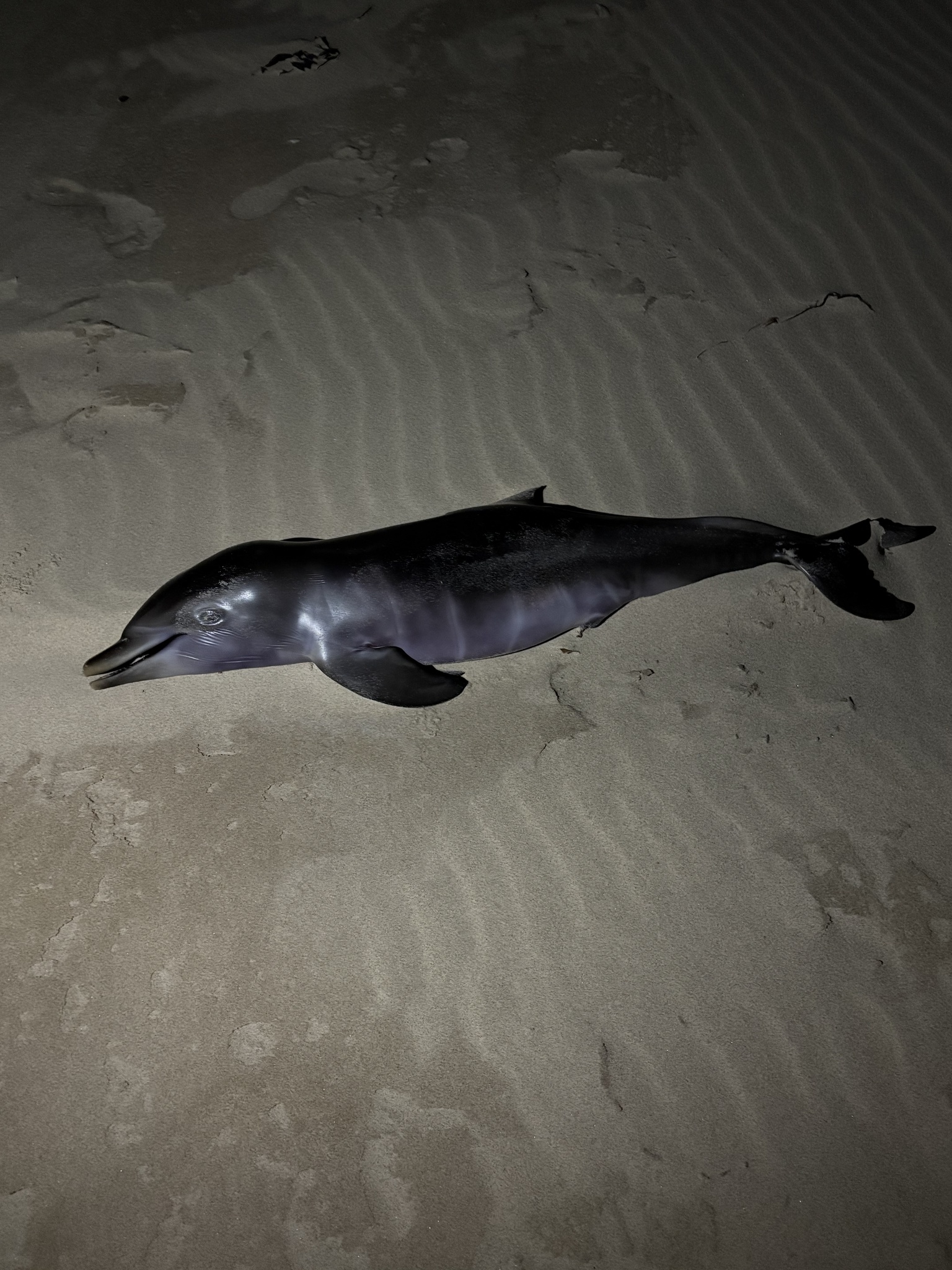
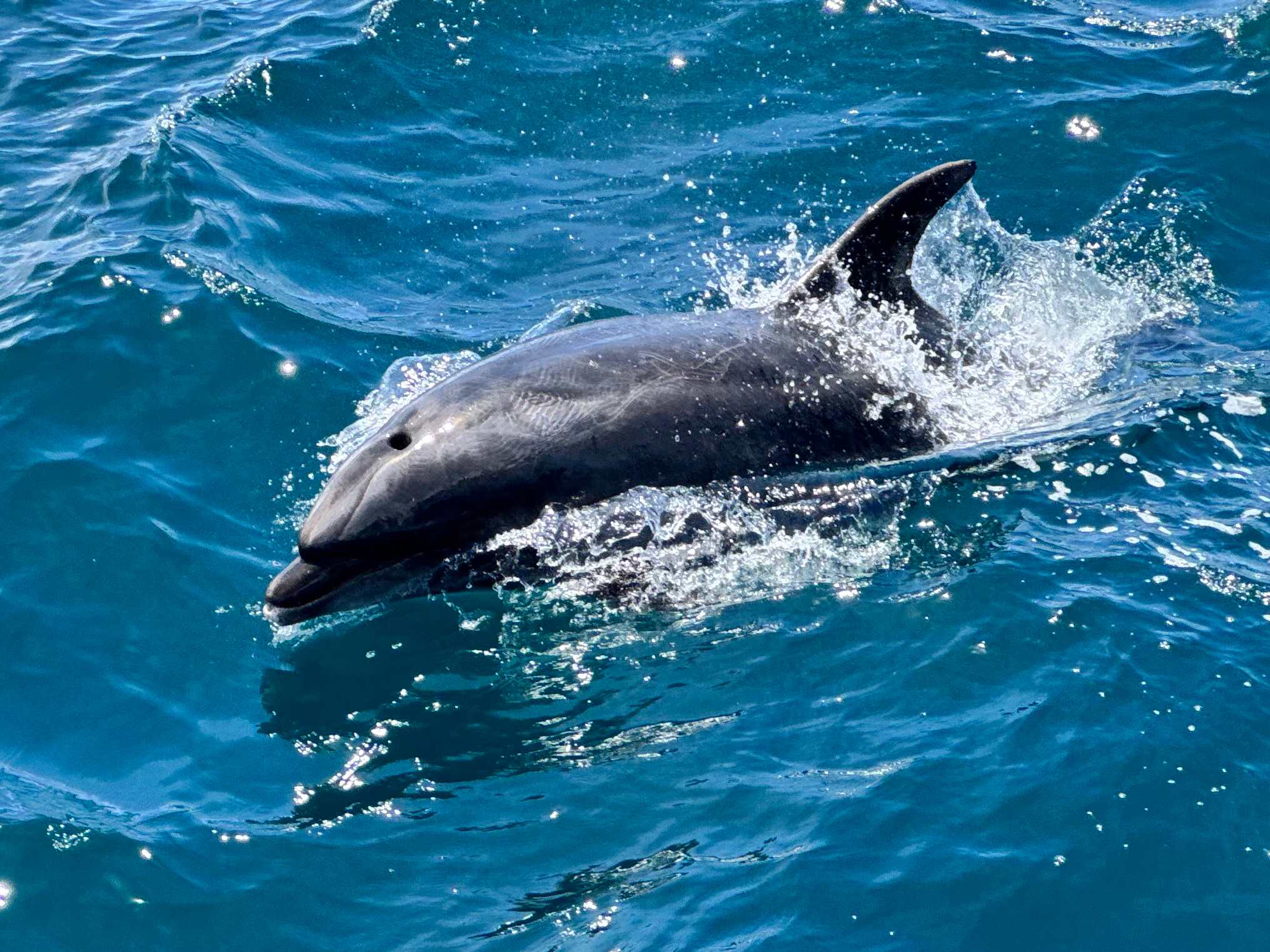
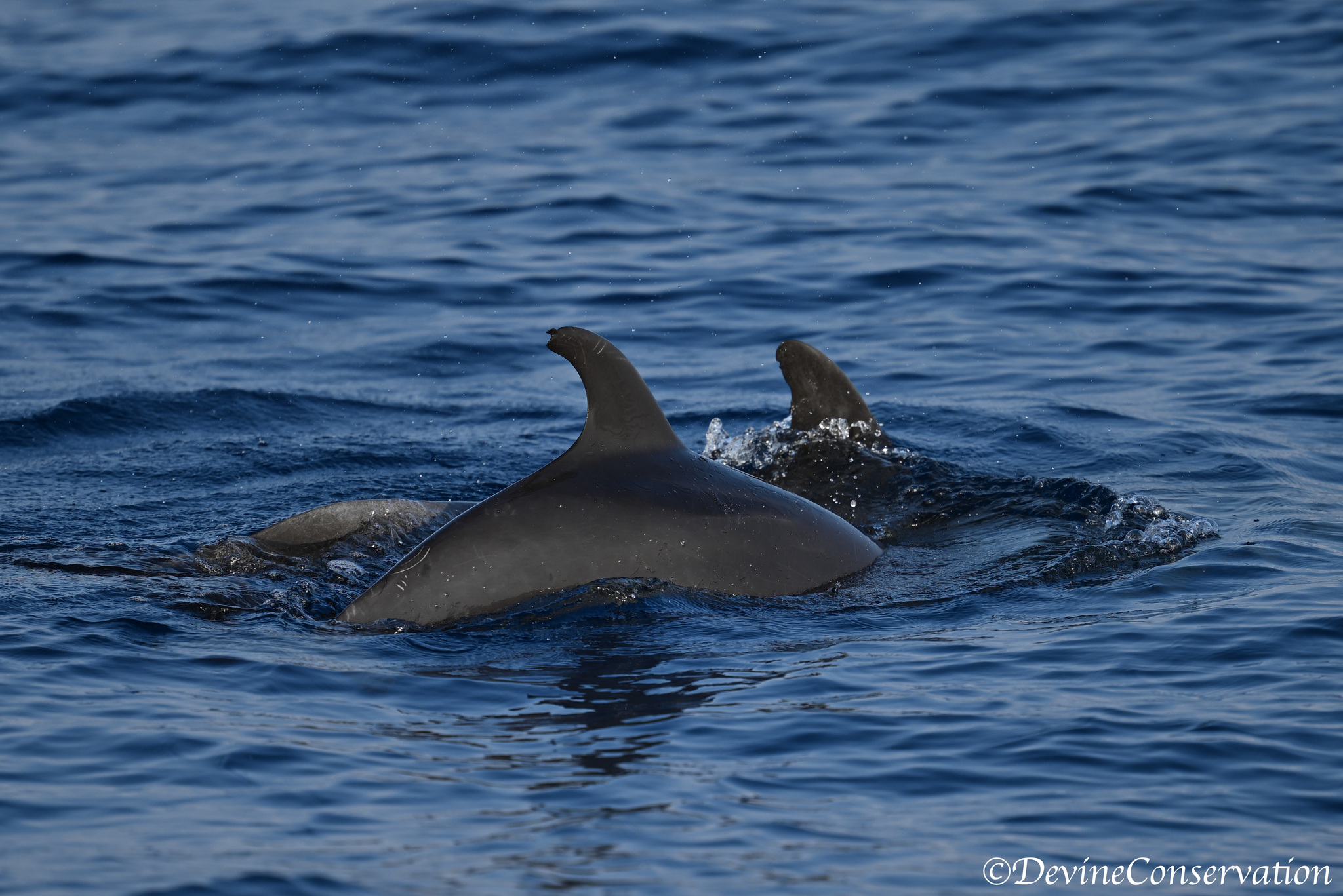
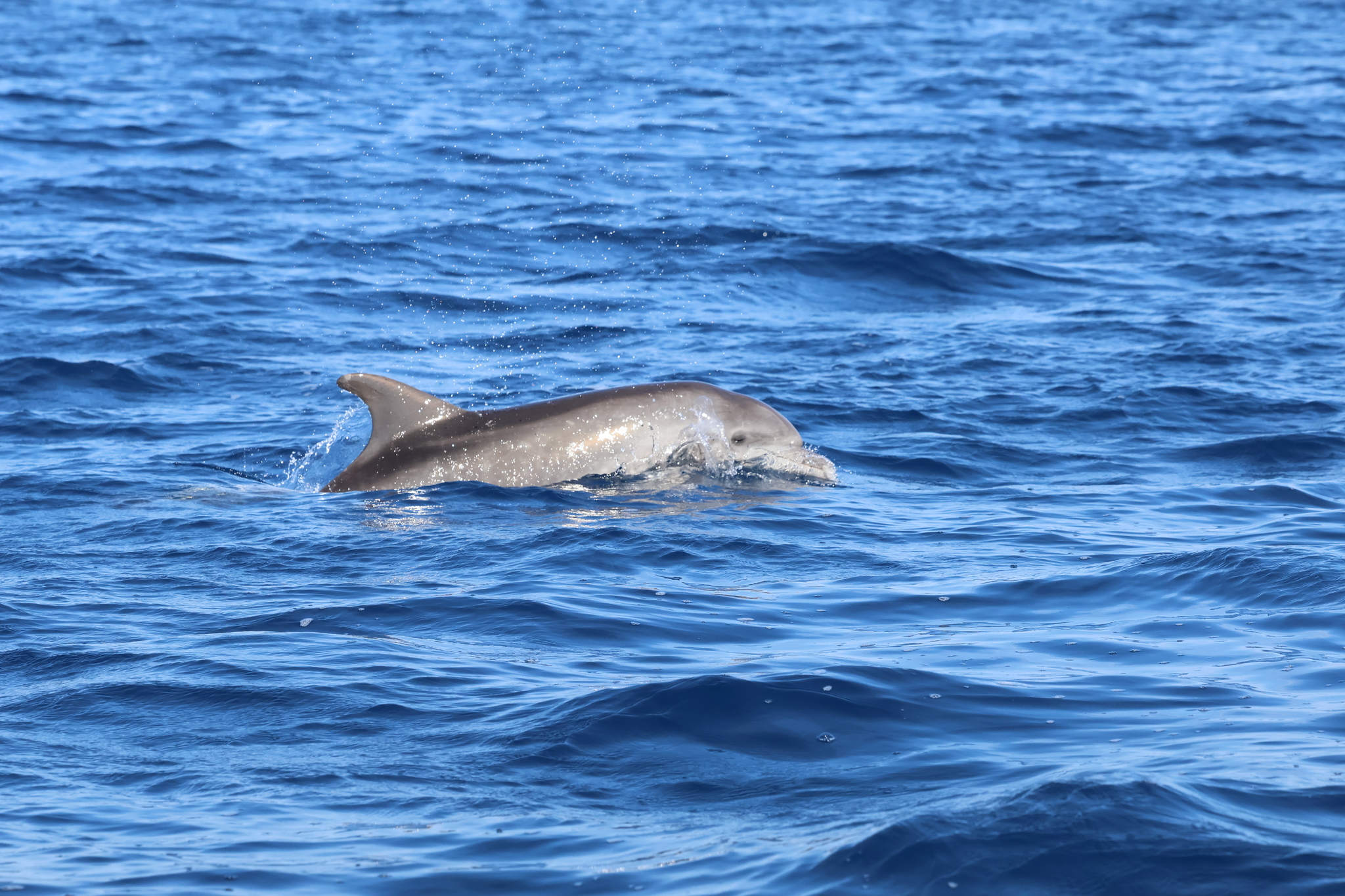
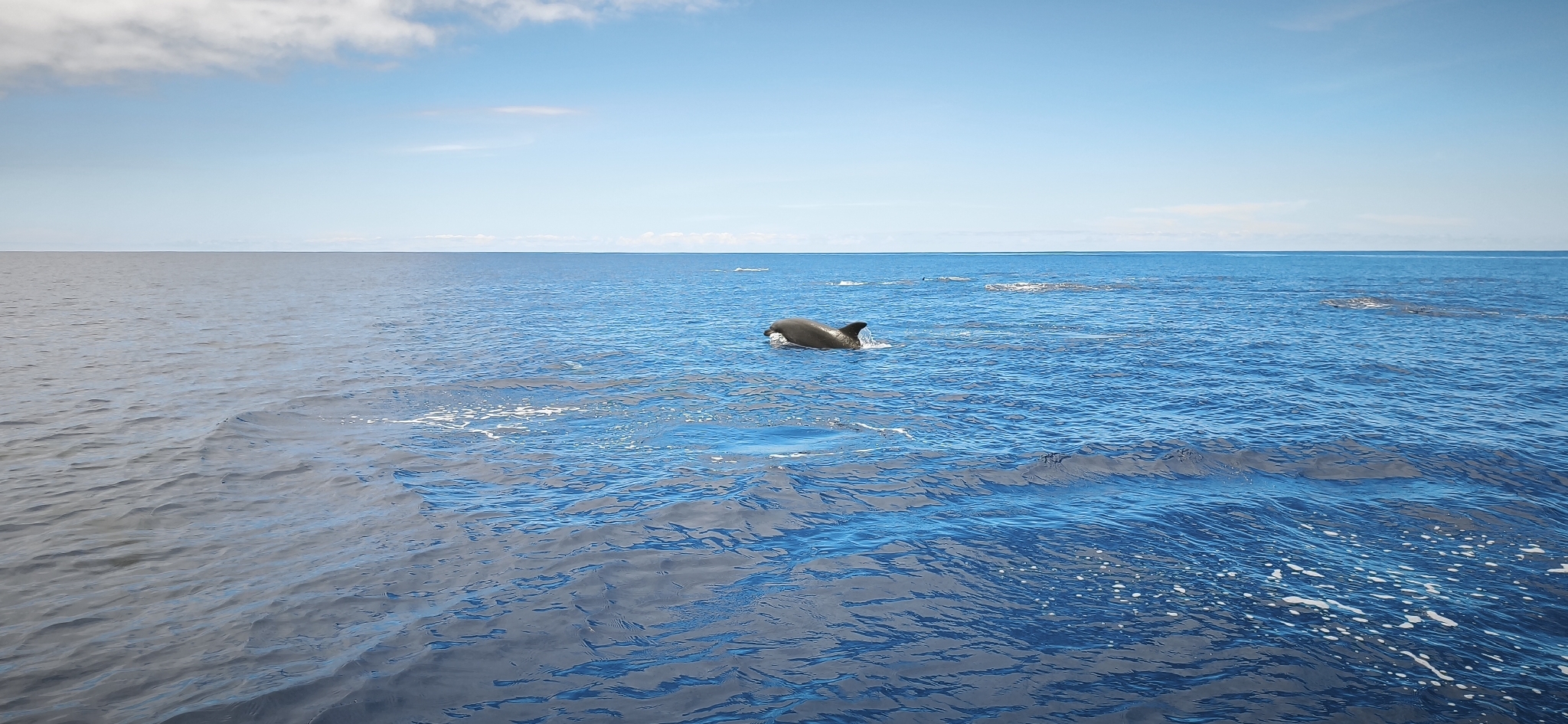
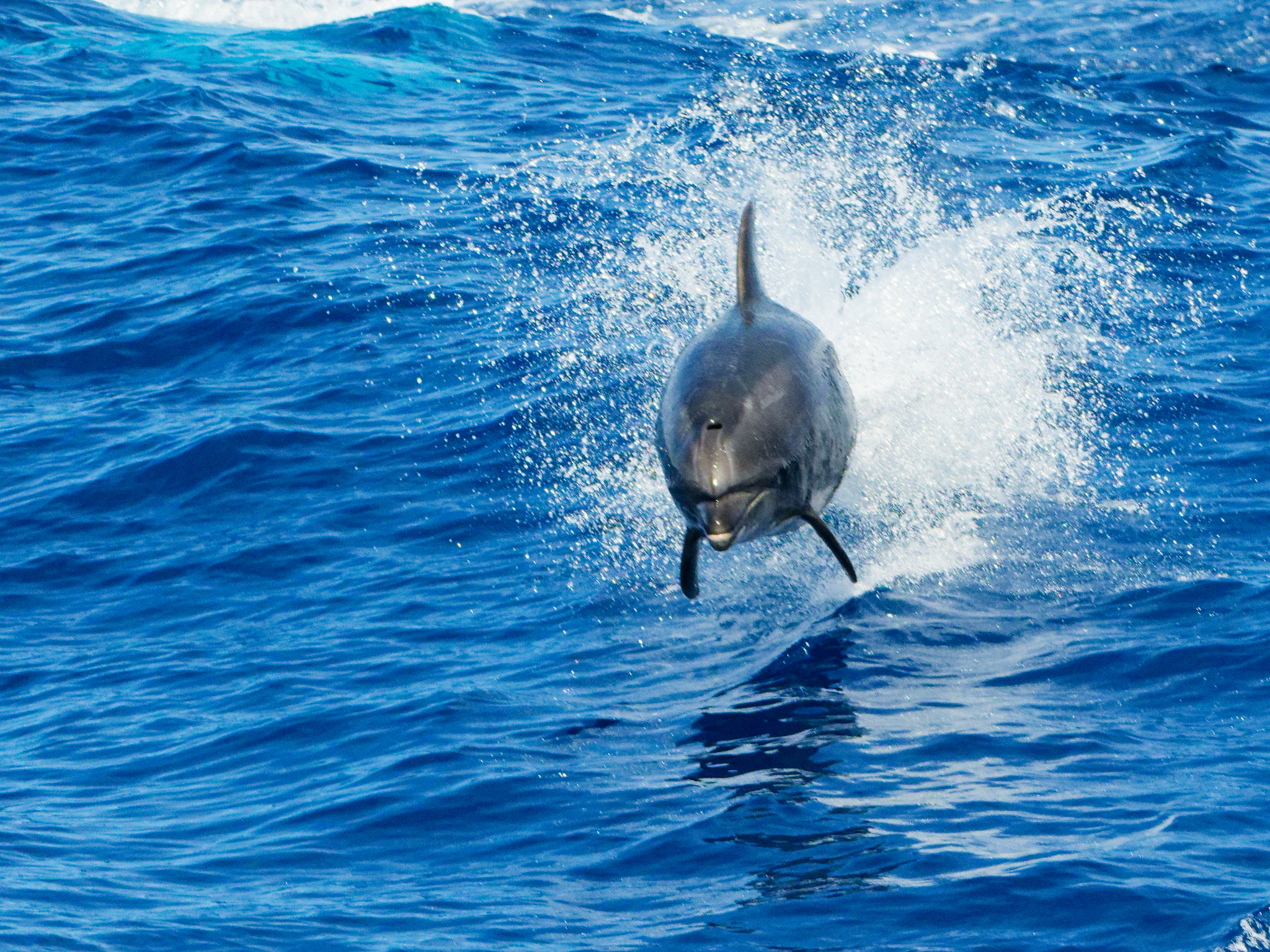
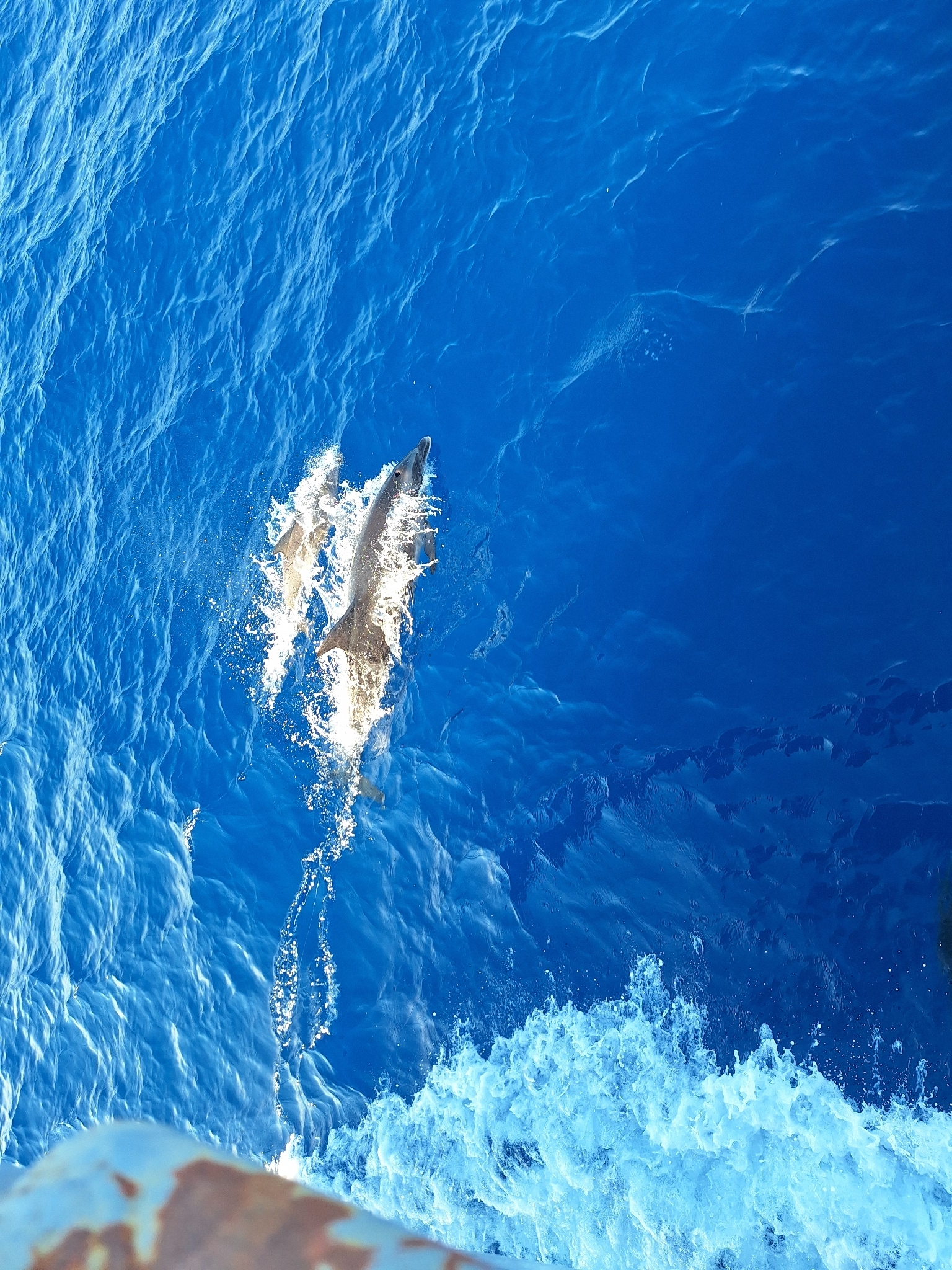
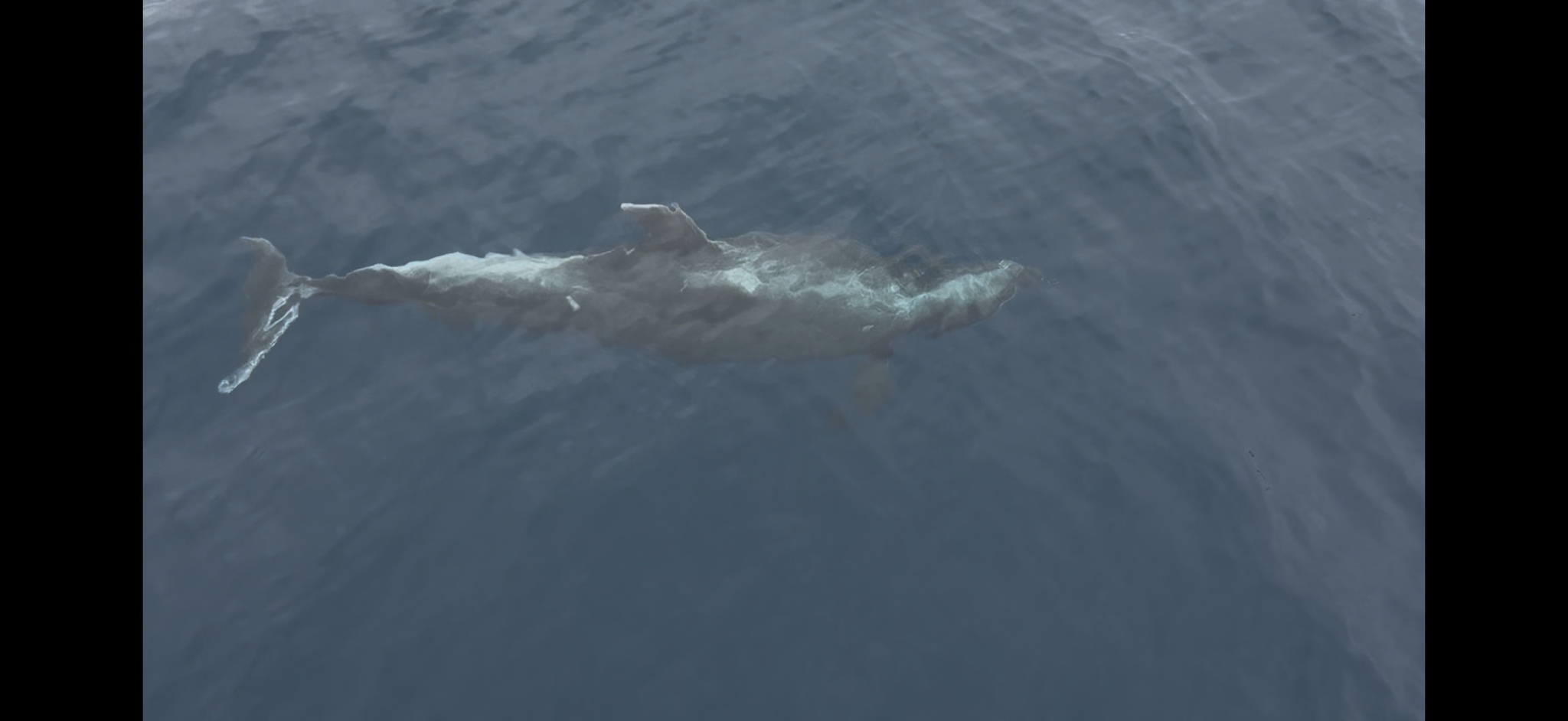
Coloration is typically dark grey to blackish on the back, light grey on the flanks and whitish on the belly, with no marked contrasting pattern. The rostrum is short and stocky, separated from the melon by a distinct crease, a decisive field character. The dorsal fin, tall and falcate, is set at mid-back; its notches and scars, unique to each individual, make photo-identification possible, the technique that underlies almost all population monitoring. Each jaw carries some twenty to thirty conical teeth, used to seize prey and not to chew. One anatomical peculiarity: five of the seven cervical vertebrae are not fused, which gives the neck greater flexibility than in most other dolphins.
Possible confusions. In the north-east Atlantic and the Mediterranean, the common bottlenose dolphin can be confused at a distance with the common dolphin (Delphinus delphis), which is smaller and more slender, with a narrow rostrum and a yellow and grey hourglass pattern on the flank, or with the striped dolphin (Stenella coeruleoalba), recognisable by its dark lateral bands. Risso’s dolphin (Grampus griseus) is distinguished by the absence of a rostrum and a pale, heavily scarred body. Elsewhere in the world, the most delicate confusion involves the sibling species of the genus Tursiops: the Indo-Pacific bottlenose dolphin (T. aduncus) and, in the coastal north-west Atlantic, Tamanend’s bottlenose dolphin (T. erebennus), recently separated; neither occurs in metropolitan French waters.
Described by George Montagu in 1821, Tursiops truncatus belongs to the family Delphinidae. Until 1998, all bottlenose dolphins were grouped in a single species; the Indo-Pacific bottlenose dolphin (T. aduncus) was then recognised as distinct, the two lineages having diverged in the Middle Pleistocene, about a million years ago. More recently, the coastal ecotype of the north-west Atlantic has been raised to species rank under the name Tamanend’s bottlenose dolphin (Tursiops erebennus). Four subspecies are recognised today within T. truncatus: the nominate form T. t. truncatus, T. t. ponticus (Black Sea), T. t. gephyreus (Lahille’s bottlenose dolphin, south-west Atlantic) and T. t. nuuanu (eastern tropical Pacific). Beyond this formal taxonomy, the species divides everywhere into two ecological ecotypes, coastal and offshore, separated genetically and morphologically, a situation that accounts for the very fine structuring of populations and for the difficulty of conservation assessments.
The common bottlenose dolphin occupies the temperate, subtropical and tropical waters of the whole globe, between about 60° N and 50° S, and is absent only from polar seas. Its world population is estimated at about 600,000 individuals. It uses an exceptionally wide range of habitats: harbours, bays, gulfs, estuaries, lagoons, coastal waters, the continental slope and the open ocean. The coastal ecotype, smaller and with proportionally larger flippers, is resident or moves little; the offshore ecotype, larger and darker, makes seasonal movements that can reach several thousand kilometres. Documented regional numbers include about 97,964 individuals in the northern Gulf of Mexico, some 110,000 along the North American east coast and 243,500 in the eastern tropical Pacific.
In France, the species occurs across all French maritime areas, mainland and overseas alike. In the English Channel, the population of the Norman-Breton Gulf (the Chausey area, west of the Bay of the Seine) is one of the largest resident coastal nuclei on the European Atlantic seaboard; the OSPAR assessment puts it at between 319 and 372 individuals (340 in 2014) and judges it stable, while the GECC has been monitoring it by photo-identification since 1997. A small resident group frequents the Île de Sein: estimated at 14 individuals in 1992, it numbered between 20 and 29 individuals over the period 2001-2014, with a trend of steady increase. The coastal populations as a whole, from the North Sea to the Celtic Seas, the Bay of Biscay and the Iberian coasts, are estimated at 3,000 to 4,000 individuals. Some nuclei have disappeared: that of the Arcachon basin, still six animals strong in 1988, died out around 2001. In the French Mediterranean, a capture-recapture study carried out across the whole continental shelf between 2013 and 2015 (766 individuals photo-identified) estimated the population at 2,350 individuals, 95% credible interval [1,827 to 3,135]; this result was used to justify a special area of conservation in the Gulf of Lion. The species is present all year round on the shelf, around Corsica (mainly in shallow coastal waters) and in the Pelagos Sanctuary, a tripartite agreement between France, Monaco and Italy. Considered common in the north-western Mediterranean in the early twentieth century, it had become scarce there in the 1950s before being seen more frequently again since the 1990s, in particular off the Îles d’Hyères.
An opportunistic carnivore, the common bottlenose dolphin eats fish, cephalopods and crustaceans: eels, mullet, mackerel, squid, shrimp and crabs depending on the region. It seizes its prey with its teeth and swallows it whole, head first. Its hunting techniques are remarkably diverse and often cultural, passed from mother to young: cooperative herding of fish schools, driving prey against a sandbank, strand feeding on mud, or taking fish from trawls and behind fishing boats.
Social life rests on a fission-fusion organisation: groups most often number 2 to 20 individuals (about fifteen on average depending on the region) but can merge into aggregations of several hundred animals. Males form lasting alliances, sometimes of long standing, and females associate in nursery groups to protect the young. Communication uses a broad acoustic repertoire (0.2 to 150 kHz) including a signature whistle specific to each individual, generally between 7 and 15 kHz and lasting less than a second, which functions as a name. Echolocation, the dolphin’s main sense, uses clicks of 50 to 128 microseconds whose peak frequencies lie between 40 and 130 kHz, effective over a detection range of about 5 to 200 m.
When diving, the species usually stays between 3 and 46 m for immersions of 20 to 40 seconds (mean about 26 s), but far greater performances have been recorded: 390 m in experimental trials and more than 492 m for an offshore female fitted with a tag, with breath-holds reaching 12 to 14 minutes. Cruising speed is slow, but bursts of about 20 km/h have been measured in the wild and close to 29 km/h in trained animals.
Breeding is possible all year round, with a spring and summer peak in many regions. After a gestation of about 12 months, the female gives birth to a single calf of 0.8 to 1.4 m and 15 to 30 kg. Lactation lasts 18 to 20 months, but the young stays with its mother for 3 to 6 years (up to 8 years in some cases). The interval between two births is 3 to 6 years. Sexual maturity is reached between 5 and 15 years depending on population and sex (generally earlier in females). Females of 45 years have still been observed breeding, and no menopause is documented in the species.
At the global scale, Tursiops truncatus is classed as “Least Concern” (LC) on the IUCN Red List, assessment of 2019 by Wells, Natoli and Braulik (e.T22563A156932432), with a population trend described as “unknown”. This global status masks highly contrasting local situations. Following the 2018-2021 assessment cycle relayed by ACCOBAMS, the “inner Mediterranean” subpopulation moved from “Vulnerable” (2012 assessment) to “Least Concern”, while the subpopulation of the Gulf of Ambracia (Greece) is listed as “Critically Endangered”; the Black Sea subspecies (T. t. ponticus) remains “Endangered”. Elsewhere, the Fiordland subpopulation (New Zealand) is “Critically Endangered” (205 individuals estimated in 2008, of which 123 mature) and Lahille’s bottlenose dolphin (T. t. gephyreus), classed as “Vulnerable” in 2019, was reclassified as “Endangered” (EN) in October 2025, because of the continuing decline of its numbers in the face of catches in gillnets, coastal degradation and pollution. Worth noting: many French institutional materials still display the “Vulnerable” status for the Mediterranean, which predates the 2021 reassessment.
In France, the common bottlenose dolphin is a fully protected species (killing, capture and intentional disturbance are prohibited), listed in Annexes II and IV of the Habitats Directive, which requires the designation of special areas of conservation, as well as in Appendix II of CITES and of the CMS, and covered by the ACCOBAMS and ASCOBANS agreements. The Red List of the mammals of metropolitan France (UICN France, 2017) classes the species as “Least Concern” at national level, with two separate assessments by population: “Least Concern” (LC) for the North-East Atlantic, but “Near Threatened” (NT, criterion pr. C2a(ii)) for the Mediterranean.
The threats are the same everywhere, but strike all the harder where coastal populations are small and faithful to their site: bycatch in gillnets, trawls, seines and longlines; scarcer prey linked to overfishing; chemical contaminants (PCBs, flame retardants) that accumulate at the top of the food web; noise pollution; ship strikes; toxic algal blooms; oil spills, since after Deepwater Horizon the reproductive success of the females monitored in Barataria Bay (Louisiana) fell to 20% of pregnancies producing a viable calf, against 83% in reference populations; and finally directed hunts (Japan, the Faroe Islands), live capture for captivity and disturbance by poorly regulated watching tourism.
The common bottlenose dolphin is one of the cetaceans most accessible to observation from the French coast. In the English Channel, the Norman-Breton Gulf (the Chausey archipelago, west of the Bay of the Seine) offers possible encounters all year round. In Brittany, a small resident group frequents the Île de Sein and the Molène archipelago. In the Mediterranean, the species is present across the whole continental shelf in all seasons, from the Gulf of Lion to the Îles d’Hyères and the waters around Corsica, where it favours shallow coastal waters. The offshore populations of the Bay of Biscay, harder to reach, are seen mainly during crossings or survey cruises. In the overseas territories, coastal groups are known in the French Antilles, at Réunion and in French Polynesia, where tourist pressure has already led animals to desert traditional resting sites.
Observation must remain passive. In French marine protected areas, intentional disturbance is prohibited and approaching closer than 100 m is forbidden. Good practice consists of never cutting across a group’s path or pursuing it, reducing speed and holding a steady course, limiting observation time, not entering the water with the animals and never feeding them. Choosing accredited operators and passing sightings on to naturalist networks (at-sea sightings, the national stranding network) contributes directly to the scientific monitoring of populations.
Not at the global scale: the IUCN classes it as “Least Concern” (2019 assessment), with a world population of about 600,000 individuals but a trend described as unknown. Several local populations, on the other hand, are in serious difficulty: that of the Gulf of Ambracia in Greece and that of Fiordland in New Zealand are “Critically Endangered”; the Black Sea subspecies is “Endangered”, as is Lahille’s bottlenose dolphin (T. t. gephyreus, south-west Atlantic), reclassified as “Endangered” in October 2025. The small coastal groups, highly faithful to their site, are the most vulnerable: the one in the Arcachon basin died out around 2001.
The common bottlenose dolphin is distinctly heavier (2 to 4 m against about 1.7 to 2.4 m), of a uniform grey with no contrasting pattern, with a short, stocky rostrum separated from the melon by a marked crease. The common dolphin is slimmer, with an elongated rostrum and above all a flank bearing an ochre-yellow and grey hourglass pattern, very visible when the animal breaches. The striped dolphin, another frequent confusion in the Mediterranean, carries clear-cut dark lateral bands.
On all three seaboards. In the English Channel, the Norman-Breton Gulf (Chausey, west of the Bay of the Seine) holds one of the largest resident nuclei in Atlantic Europe, estimated at between 319 and 372 individuals. In Brittany, a small resident group of 20 to 29 individuals frequents the Île de Sein. In the Mediterranean, the species is present all year round across the whole continental shelf, the Gulf of Lion, the Îles d’Hyères and Corsica, with a population estimated at about 2,350 individuals. Coastal groups also exist in the French Antilles, at Réunion and in French Polynesia.
Routinely, it stays between 3 and 46 m for dives of only 20 to 40 seconds. But its real capacities are far greater: 390 m reached in experimental trials, and more than 492 m for an offshore female fitted with a tag. The maximum documented breath-hold ranges from 7 minutes 15 seconds in a coastal animal to 14 minutes in an offshore individual followed by telemetry.
Yes. The IUCN assesses the Mediterranean subpopulation separately; long classed as “Vulnerable” (2012 assessment), it was then reclassified as “Least Concern” at the end of the 2018-2021 cycle. Note that many French documents and information panels still display the former “Vulnerable” status. At national level, the Red List of the mammals of metropolitan France (UICN France, 2017) separately assesses the Mediterranean population as “Near Threatened” (NT), against “Least Concern” for the North-East Atlantic. This population remains strictly protected and is the subject of special areas of conservation under the Habitats Directive, such as the one created in the Gulf of Lion.
From 40 to 60 years depending on the source, NOAA giving 40 to 60 years and the OFB 40 to 50 years. Long-term monitoring of the Sarasota population, in Florida, has shown females passing 60 years and still breeding at 45. Females generally live longer than males, and no menopause is documented in this species.
Profile compiled from authoritative scientific sources (IUCN, NOAA Fisheries, specialist literature) and reviewed for fact-checking.
According to the open data of the GBIF, 18,452 georeferenced sightings of Tursiops truncatus are recorded in our photographic index.
| Country | Notes |
|---|---|
| United States of America | 9,386 |
| Greece | 1,964 |
| Mexico | 1,004 |
| Portugal | 728 |
| Spain | 685 |
| United Kingdom of Great Britain and Northern Ireland | 670 |
| New Zealand | 515 |
| Australia | 457 |
| Croatia | 363 |
| Ecuador | 346 |

Monthly distribution of 18,548 dated sightings (all years combined): the maximum is reached in August.
| Month | Notes |
|---|---|
| janvier | 1,231 |
| February | 1,240 |
| mars | 1,513 |
| avril | 1,595 |
| mai | 1,445 |
| juin | 1,447 |
| juillet | 2,240 |
| August | 2,648 |
| septembre | 1,837 |
| octobre | 1,079 |
| novembre | 1,094 |
| December | 1,179 |
These figures reflect survey effort (more boaters and more surveys in summer) as much as the actual presence of the species: to be interpreted with caution.


Photographs from GBIF under a Creative Commons licence. The author and the licence of each photograph are given; please respect them if you reuse them.
Automatic selection of the most cited works mentioning the species (source: Crossref).