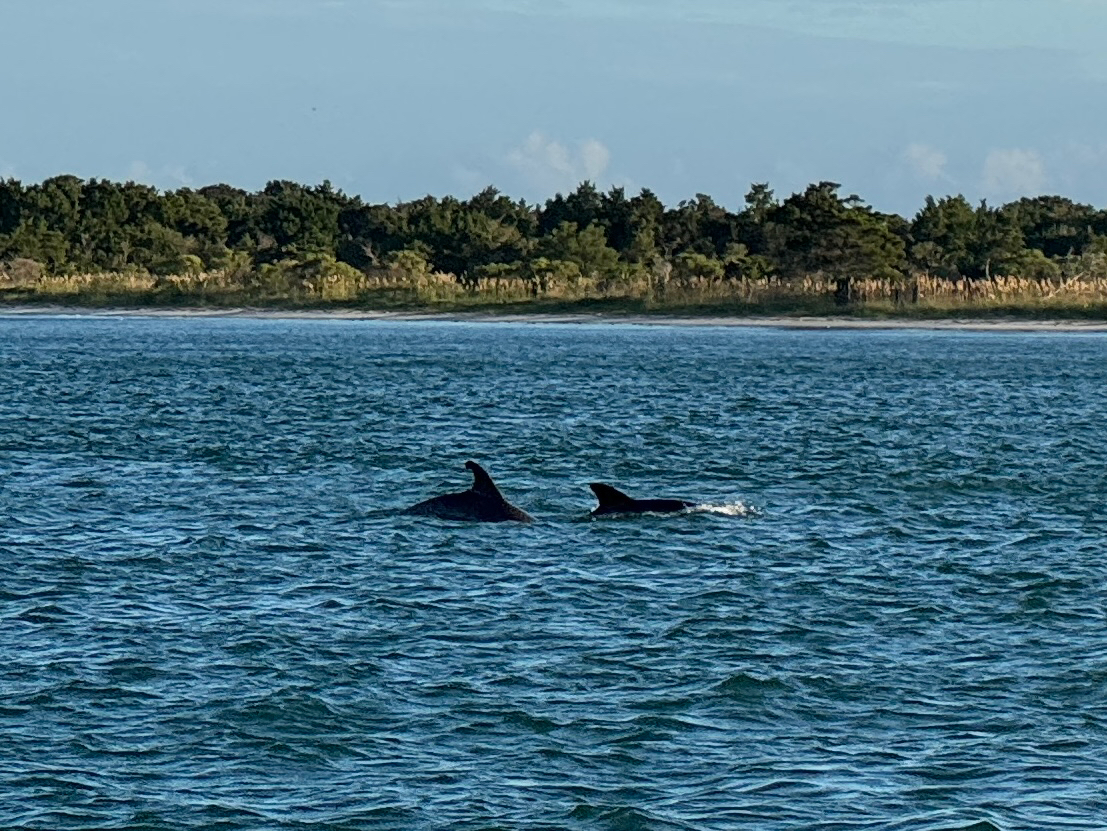
Tamanend's bottlenose dolphin (Tursiops erebennus)

Key facts
Scientific name Tursiops erebennus (Cope, 1865)
Other names Tamanend’s bottlenose dolphin (English); “coastal ecotype” of the Northwest Atlantic bottlenose dolphin (the designation in use before 2022). Historical synonyms and combinations: Delphinus erebennus Cope, 1865 (original description); Tursio erebennus Gray, 1871; Tursiops subridens True, 1884; Tursiops tursio erebennus Trouessart, 1905. No standardised French vernacular name exists to date: “grand dauphin de Tamanend” is the literal translation of the English name adopted by the 2022 authors.
Size Maximum known total length: 286 cm; mean of 256 cm in physically mature adults. Length of females at sexual maturity: about 215 cm (South Carolina). Condylobasal length of the skull: 426-510 mm.
Weight The published data contain no mass values specific to Tursiops erebennus. As an indication, NOAA gives 135 to 635 kg (300-1,400 lb) for bottlenose dolphins in the broad sense, a range that includes the offshore form, which is markedly more massive.
Longevity The available data do not allow a longevity specific to the species to be given. NOAA uses 40 to 60 years for bottlenose dolphins in general. Sexual maturity of females at around 10 years; interval between births of 2 to 4 years (South Carolina, 1992-2022).
Diet Coastal and estuarine fish, dominated by sciaenids (Atlantic croaker, weakfish): 95% frequency of occurrence in 146 stomachs analysed in North Carolina, for 31 prey species recorded. Also mullet, menhaden, herring, anchovy, sparids and coastal squid. The diet varies with habitat, sex and age.
IUCN status Not Evaluated (NE). No assessment of its own on the IUCN Red List since the species was recognised in 2022-2023; the Mammal Diversity Database records “Not Evaluated”. The populations concerned were previously covered by the assessment of Tursiops truncatus, “Least Concern” (LC) at global level. The regional units of T. truncatus have no bearing whatever on T. erebennus: the “inner Mediterranean” subpopulation was reclassified from “Vulnerable” to “Least Concern” in the 2018-2021 IUCN reassessments, while the Gulf of Ambracia subpopulation is “Critically Endangered” (CR) and the Black Sea subspecies (T. t. ponticus) “Endangered” (EN). In the United States: five coastal stocks listed as depleted and strategic under the Marine Mammal Protection Act; the species is not listed under the Endangered Species Act.

In brief

Tamanend’s bottlenose dolphin (Tursiops erebennus) is a delphinid species of the coastal and estuarine waters of the Atlantic seaboard of the United States, from New York to Florida. Long confused with the coastal form of the common bottlenose dolphin (Tursiops truncatus), it was reinstated as a distinct species in 2022 on the basis of genetic and cranial data, then validated by the Society for Marine Mammalogy in 2023. Smaller and more slender than its offshore cousin, it has not yet been assessed on the IUCN Red List.

Identification

It is a small bottlenose dolphin. The 2022 taxonomic revision gives a maximum known total length of 286 cm and a mean of 256 cm in physically mature animals, values markedly lower than those of the offshore common bottlenose dolphin, for which NOAA gives 1.8 to 4.0 m. The skull is proportionally short: condylobasal length of 426 to 510 mm, rostrum of 226 to 279 mm, width of the internal nares of 56 to 73 mm. The vertebral formula is C 7 + T 12 + L 14-15 + Ca 26-28, that is 59 to 61 vertebrae, and each tooth row has on average 23 to 24 alveoli. Sexual dimorphism exists, males generally being larger than females according to the cranial measurements. The weight specific to the species has not been published: the range of 135 to 635 kg given by NOAA covers bottlenose dolphins in the broad sense and takes in the offshore form, which is far more massive.

Coloration has not been formally described as a diagnostic character. Cope noted only that his type specimen was dark, hence, probably, the epithet erebennus, in reference to Erebus, the Greek deity of darkness.

Possible confusions: in the field, Tursiops erebennus and Tursiops truncatus cannot be reliably separated by sight. The most useful clues are ecological: Tamanend’s bottlenose dolphin frequents inshore waters, bays and estuaries, generally less than 7.5 km from the coast, whereas the common bottlenose dolphin occupies the open sea, beyond about 35 km. South of Cape Hatteras, 70% of the bottlenose dolphins observed in less than 20 m of water belong to the coastal form, against fewer than 10% beyond 35 m depth. Certain distinction rests on five cranial characters (raised cranial vertex, shorter lacrimal with a flat anterior end, straight pharyngeal crest, intermediate to narrow vomer, acutely angled pterygoid hamuli) and on a fixed difference in the control region of the mitochondrial DNA.

Taxonomy

Order Cetartiodactyla, suborder Odontoceti, family Delphinidae, genus Tursiops. Edward Drinker Cope described the animal in 1865 under the name Delphinus erebennus, from an incomplete postcranial skeleton (holotype ANSP 3020, Academy of Natural Sciences of Drexel University), of unknown sex and at least 228.6 cm long, caught in a fisherman’s seine at Red Bank on the Delaware, in West Deptford Township (New Jersey). Cope already noted a smaller size and a reduced number of vertebrae and ribs compared with the bottlenose dolphin. The taxon was nevertheless placed in synonymy with Tursiops truncatus, and for decades cetologists spoke of two “ecotypes”, coastal and offshore.

Costa, McFee, Wilcox, Archer and Rosel (Zoological Journal of the Linnean Society, 2022, vol. 196, p. 1608-1636) re-examined cranial morphology, mitochondrial DNA and nuclear markers: the divergences observed led them to resurrect the name Tursiops erebennus for the coastal form, the name T. truncatus remaining attached to the offshore form. The vernacular name honours Chief Tamanend (1628-1701), of the Turtle Clan of the Lenni-Lenape nation, and was chosen in consultation with the Nanticoke Lenni-Lenape Tribal Nation. The Society for Marine Mammalogy added the species to its official list in 2023; the genus Tursiops therefore now holds three species (T. truncatus, T. aduncus, T. erebennus), with the reservation, voiced by the Mammal Diversity Database, that a broader revision of the genus remains necessary.

Distribution and habitat

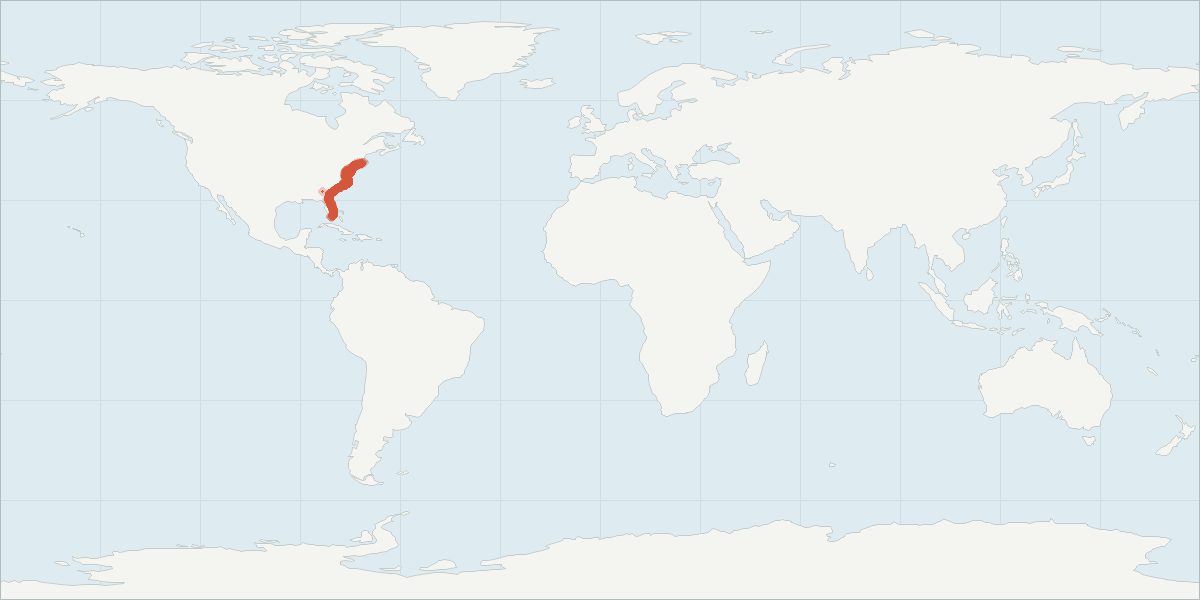
The known range extends continuously along the North American Atlantic coast, from the vicinity of Long Island (New York) to the east coast of the Florida peninsula, which the 2022 authors take as the confirmed southern limit. The species occupies shallow inshore waters, bays and estuaries, as well as the inner fringe of the continental shelf: individuals of the coastal form have been identified in up to 97 m of water, but their density falls away rapidly with depth.

To the north, sightings remained rare beyond New Jersey before 2009; a notable influx was recorded in the summer of 2009 in western Long Island Sound and then as far as Montauk Point, and the species has been a regular component of New York waters in the warm season since 2014. In Chesapeake Bay and the Potomac, the dolphins are present from April to October, with a peak in July; close to 2,000 individuals have been photo-identified there since 2015. Some stocks are resident, others migratory and move south in winter to the waters of North Carolina and Florida.

The extension of the range into the Gulf of Mexico and the Caribbean Sea remains undetermined: the coastal dolphins of those regions are genetically close to T. erebennus, but their assignment to the species has not been settled and is the subject of ongoing research.

Presence in France: none. The species is reported neither in the Mediterranean, nor in the Bay of Biscay, nor in the English Channel, nor in the French overseas territories; it is strictly confined to the Northwest Atlantic. The “bottlenose dolphin” seen in France is Tursiops truncatus.

Biology and ecology

The diet is dominated by coastal and estuarine fish, in particular sciaenids (croakers and weakfishes). A study of 146 stomachs of coastal dolphins from North Carolina recorded 31 prey species, sciaenids appearing in 95% of the contents. The diet varies with habitat: Atlantic croaker dominates in animals stranded in the estuaries, weakfish in those from the marine environment, where coastal squid are also taken; the share of croaker is higher in males and in adults. Mullet and menhaden complete the menu.

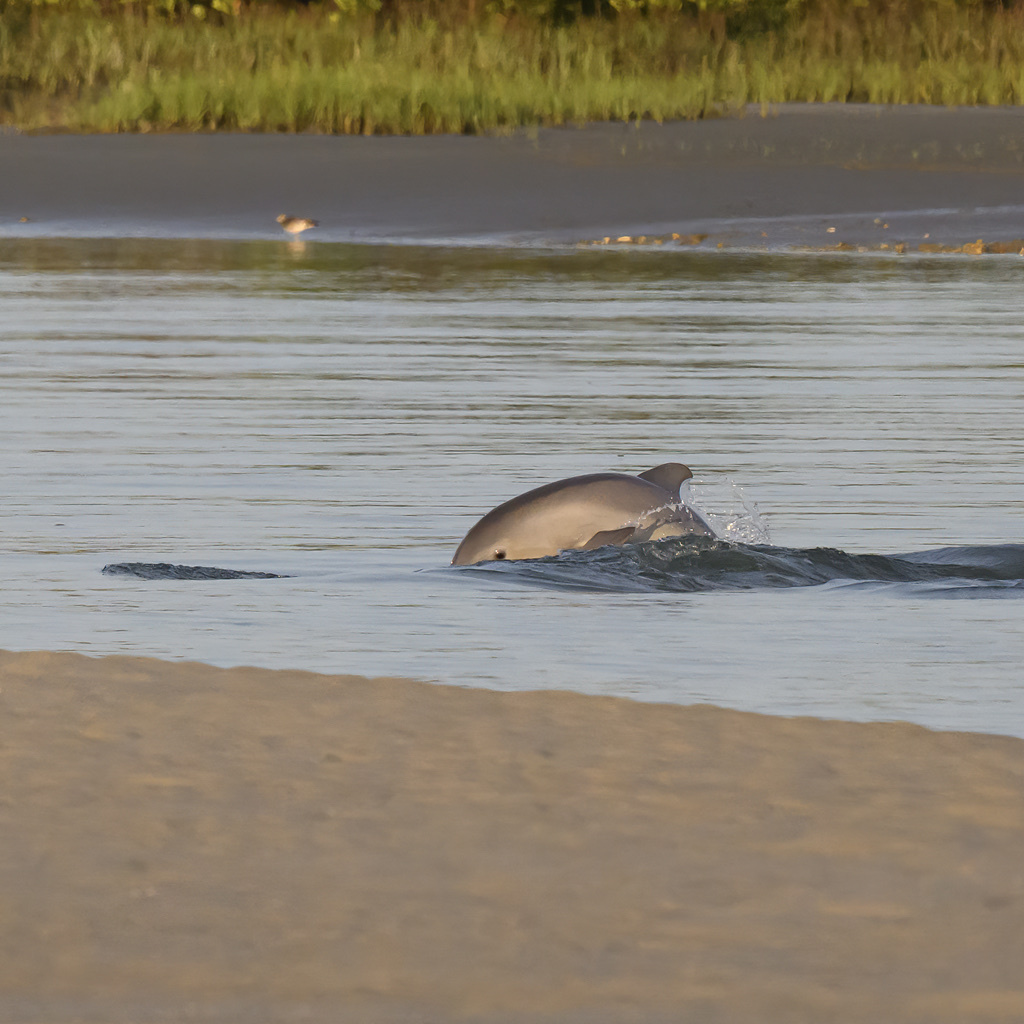
The species is well known for a rare hunting technique, strand feeding: at low tide, dolphins drive a shoal of fish in synchrony against the mudflats of the South Carolina and Georgia marshes, throw themselves partly out of the water onto the mud and seize the stranded prey. These populations are the only ones known to perform this behaviour daily; it is transmitted culturally from mother to calf within very close-knit resident groups. Photo-identification studies show strong site fidelity, in particular around Charleston.

Breeding: a 2025 study of carcasses collected in South Carolina between 1992 and 2022 estimates the age at sexual maturity of females at about 10 years, for a length of about 215 cm, and the interval between two births at 2 to 4 years. The left ovary accumulates more corpora lutea and generally weighs more than the right, a sign of asymmetric ovarian activity. The longevity specific to T. erebennus has not been published; NOAA uses 40 to 60 years for bottlenose dolphins in general.

Status and conservation

IUCN status: Not Evaluated (NE). The species has not yet been the subject of an assessment of its own since its recognition in 2022-2023; it was previously subsumed within Tursiops truncatus, listed as “Least Concern” (LC) at global level. The regional assessments of T. truncatus bear no geographical relation to T. erebennus: the “inner Mediterranean” subpopulation moved from “Vulnerable” to “Least Concern” in the 2018-2021 IUCN reassessments, that of the Gulf of Ambracia is “Critically Endangered” and the Black Sea subspecies “Endangered”.

In the United States, the species is not listed under the Endangered Species Act but is protected by the Marine Mammal Protection Act. Five coastal stocks (Northern Migratory, Southern Migratory, South Carolina/Georgia, Northern Florida, Central Florida) are classed as depleted and, on that basis, strategic. This designation goes back to the unusual mortality event (UME) of 1987-1988, due to a morbillivirus, which is thought to have killed 10 to 50% of the coastal stock then regarded as a single unit. A second morbillivirus episode, in 2013-2015, caused the stranding of about 1,827 bottlenose dolphins from New York to northern Florida, including 305 in South Carolina and Georgia, striking coastal animals harder than the estuarine residents.

Numbers (aerial surveys of summer 2021, NOAA): 9,121 individuals (CV = 0.28) for the South Carolina/Georgia stock, 3,619 (CV = 0.35) for northern Florida, 2,541 (CV = 0.46) for central Florida. The trends are not conclusive: a possible decline between 2002-2004 and 2016 is not statistically significant.

Documented threats: bycatch, above all entanglement in blue crab pots (31 confirmed cases in South Carolina between 2006 and 2020, the most frequent anthropogenic cause), as well as lines and hooks; contamination by persistent organic pollutants, with very high PCB burdens in the blubber near Brunswick (Georgia, a Superfund site), Charleston and Beaufort, exceeding toxicity thresholds and associated with excess mortality among firstborn calves; epizootics; degradation of estuarine habitats; disturbance and illegal feeding. Of 837 strandings recorded in South Carolina between 2006 and 2020 (55.8 per year on average), 22.9% of those for which a diagnosis could be reached showed signs of human interaction.

Watching this species

The species can be seen all year round in the inshore waters of the south-eastern United States, and seasonally further north. The most accessible sites are the marshes and mudflats of the Lowcountry of South Carolina and Georgia (Charleston, Kiawah, Beaufort, Hilton Head), where strand feeding takes place on the falling tide and can be watched from the bank, at a distance. In Chesapeake Bay and the Potomac, the dolphins are present from April to October with a peak in July, and the Chesapeake DolphinWatch citizen science programme collects reports from the public. In New York State, sightings are concentrated in the warm months.

Ethics: the United States federal guidelines (NOAA Fisheries) call for staying at least 50 yards (about 46 m) from dolphins when watching them from a boat, a distance raised to 100 yards in certain places; coming closer may constitute harassment, prohibited under the Marine Mammal Protection Act, as is feeding a marine mammal. For strand feeding, the advice is never to approach, to cut engines and to avoid any wake: the behaviour takes place in very shallow water and disturbance may compromise the catch, or even injure the animals.

Frequently asked questions

Why is Tursiops erebennus now regarded as a species in its own right?

Because the integrative study by Costa and colleagues (2022) showed that the coastal bottlenose dolphins of the Northwest Atlantic differ from the offshore ones by five cranial characters, by a fixed difference in the control region of the mitochondrial DNA and by divergent nuclear markers. They are even genetically closer to the coastal dolphins of the Gulf of Mexico and the Caribbean than to the neighbouring offshore bottlenose dolphins. The Society for Marine Mammalogy validated the species in 2023.

How can it be told from the common bottlenose dolphin (Tursiops truncatus)?

Not reliably by sight. T. erebennus is smaller (286 cm at the known maximum, against up to about 4 m for T. truncatus) and more slender, but the most useful clue remains habitat: it frequents bays, estuaries and inshore waters, generally less than 7.5 km from the shore, whereas the common bottlenose dolphin occupies the open sea, beyond about 35 km. Certain identification goes through genetics or examination of the skull.

Is Tamanend’s bottlenose dolphin present in France?

No. The species is confined to the Northwest Atlantic, between New York and Florida, and has never been reported in the Mediterranean, in the Bay of Biscay, in the English Channel or in the French overseas territories. The bottlenose dolphin seen off the French coasts, including in the Pelagos Sanctuary, is Tursiops truncatus.

What is its conservation status?

The IUCN has not yet assessed it: the status is “Not Evaluated” (NE), the species being of too recent recognition. In the United States it has the benefit of the Marine Mammal Protection Act, and five of its coastal stocks are officially classed as depleted, that is, below their optimum productivity level, a legacy of the morbillivirus epizootic of 1987-1988.

What is strand feeding?

It is a cooperative hunting technique practised at low tide in the marshes of South Carolina and Georgia: the dolphins drive a shoal of mullet or menhaden in synchrony against a muddy bank, propel themselves partly out of the water and pick up the stranded fish before sliding back. These populations are the only ones known to do this daily, and the behaviour is transmitted culturally from mother to calf.

How many individuals are left?

There is no global estimate for the species. NOAA’s aerial surveys of summer 2021 give 9,121 individuals (CV = 0.28) for the South Carolina/Georgia stock, 3,619 (CV = 0.35) for northern Florida and 2,541 (CV = 0.46) for central Florida; the northern migratory stock was estimated at 6,639 individuals in 2016. To these are added several resident estuarine stocks not counted here. The trends remain undetermined, for want of sufficient precision.

Sources

Profile compiled from authoritative scientific sources (IUCN, NOAA Fisheries, specialist literature) and reviewed for factual accuracy.

Observed distribution

According to the open data of the GBIF, 3,019 georeferenced sightings of Tursiops erebennus are recorded in our photographic index.

Main countries of observation
CountryNotes
United States of America3,019

Distribution map: Tamanend's bottlenose dolphin (Tursiops erebennus)

Distribution map: Tamanend's bottlenose dolphin (Tursiops erebennus), 3,019 georeferenced sightings from GBIF
3,019 georeferenced sightings of Tursiops erebennus. Base map Natural Earth, public domain. GBIF data.
🗺️ Open the interactive mapTo zoom and pan. It uses the OpenStreetMap/CARTO base maps and the GBIF occurrence densities: no data is sent to these services before you click.

Presence through the year

Monthly distribution of 3,019 dated sightings (all years combined): the maximum is reached in juillet.

3960janvier : 248janfévrier : 136febmars : 263maravril : 227avrmai : 284maijuin : 269juinjuillet : 396juilaoût : 362Augustseptembre : 238sepoctobre : 198octnovembre : 169novdécembre : 229dec
Sightings by month
MonthNotes
janvier248
February136
mars263
avril227
mai284
juin269
juillet396
August362
septembre238
octobre198
novembre169
December229

These figures reflect survey effort (more boaters and more surveys in summer) as much as the actual presence of the species: to be interpreted with caution.

En images

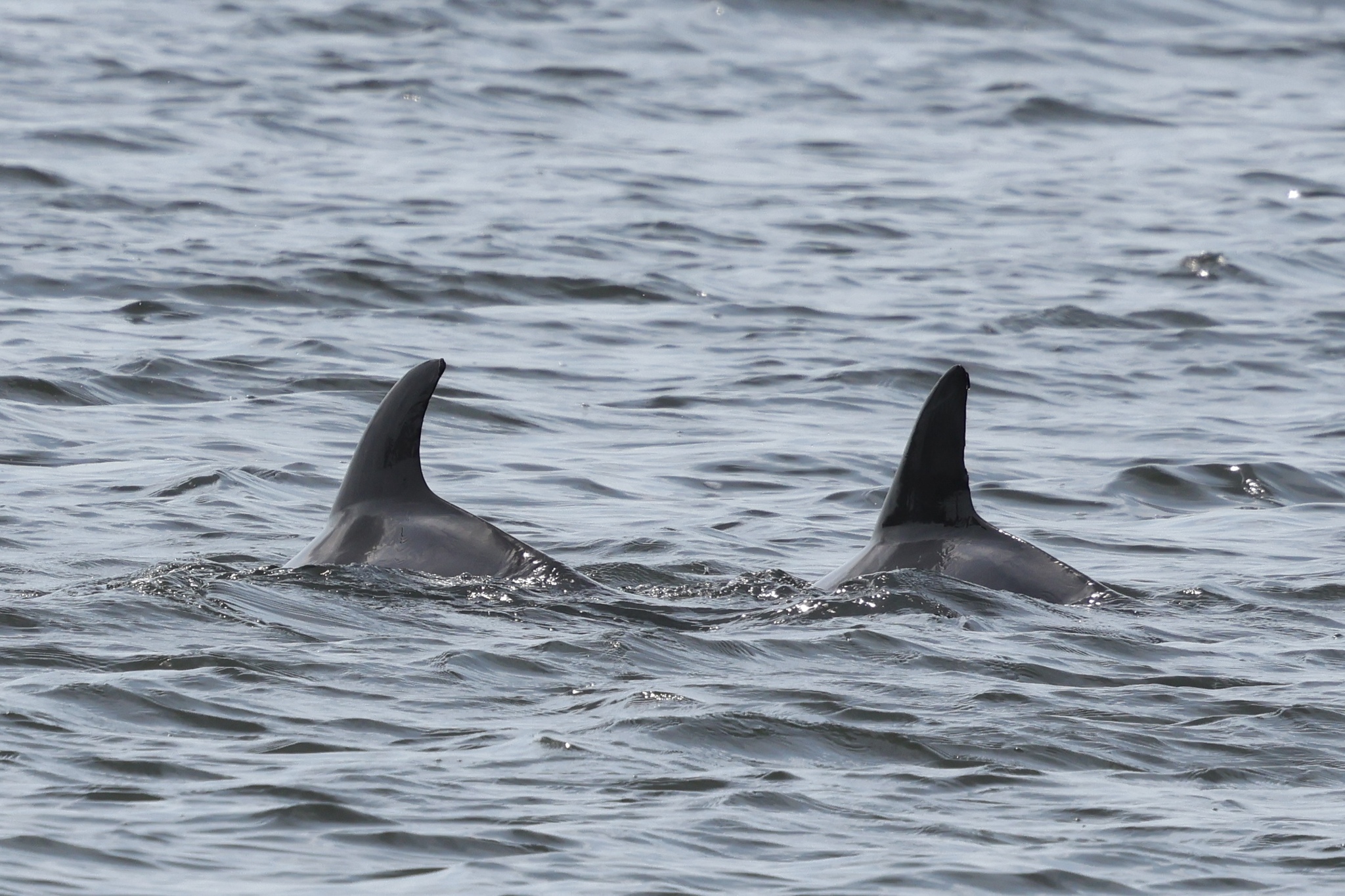
Tursiops erebennus
© gmskupien, CC BY-NC, 2026
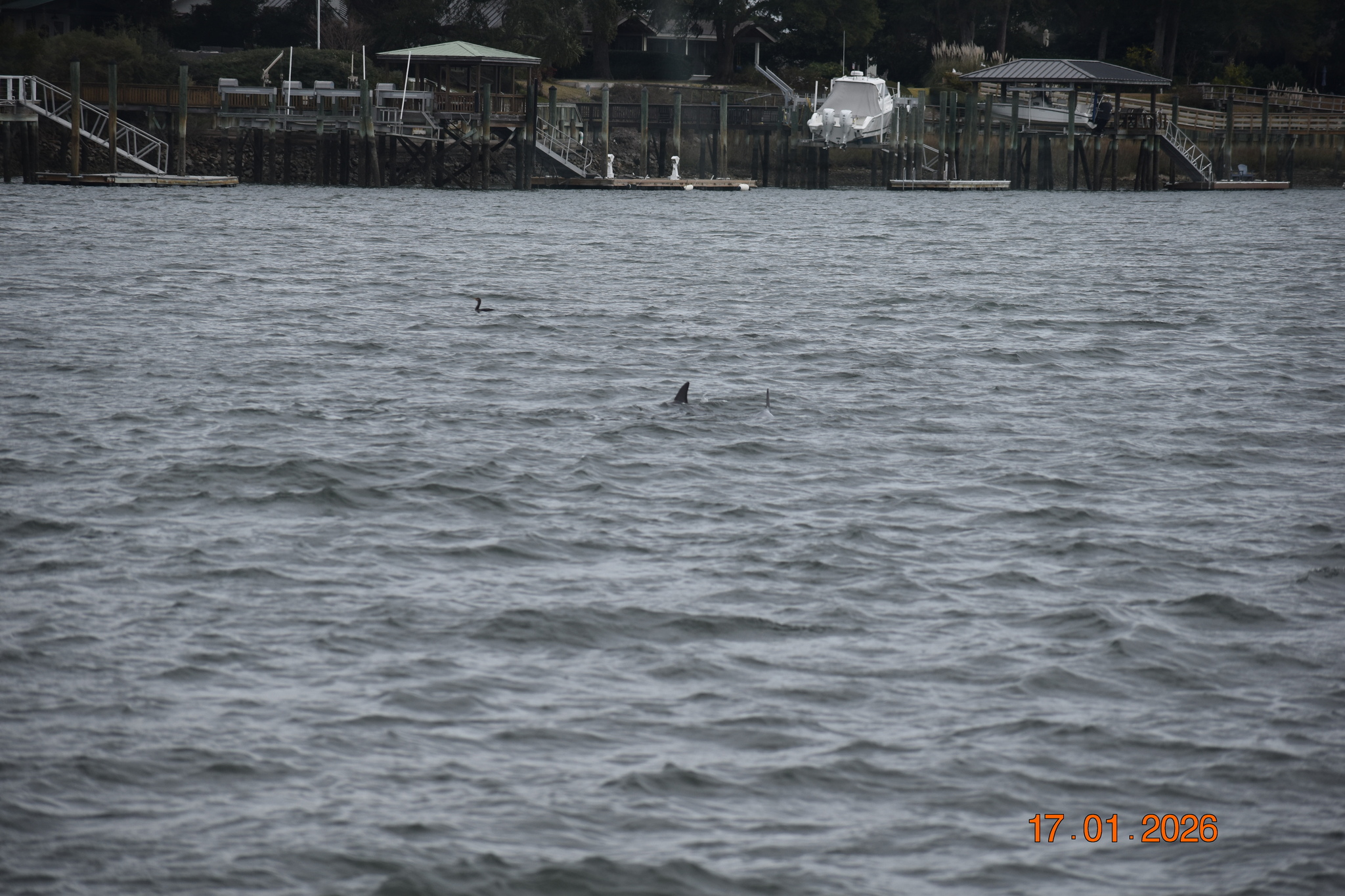
Tursiops erebennus
© John C., CC BY-NC, 2026
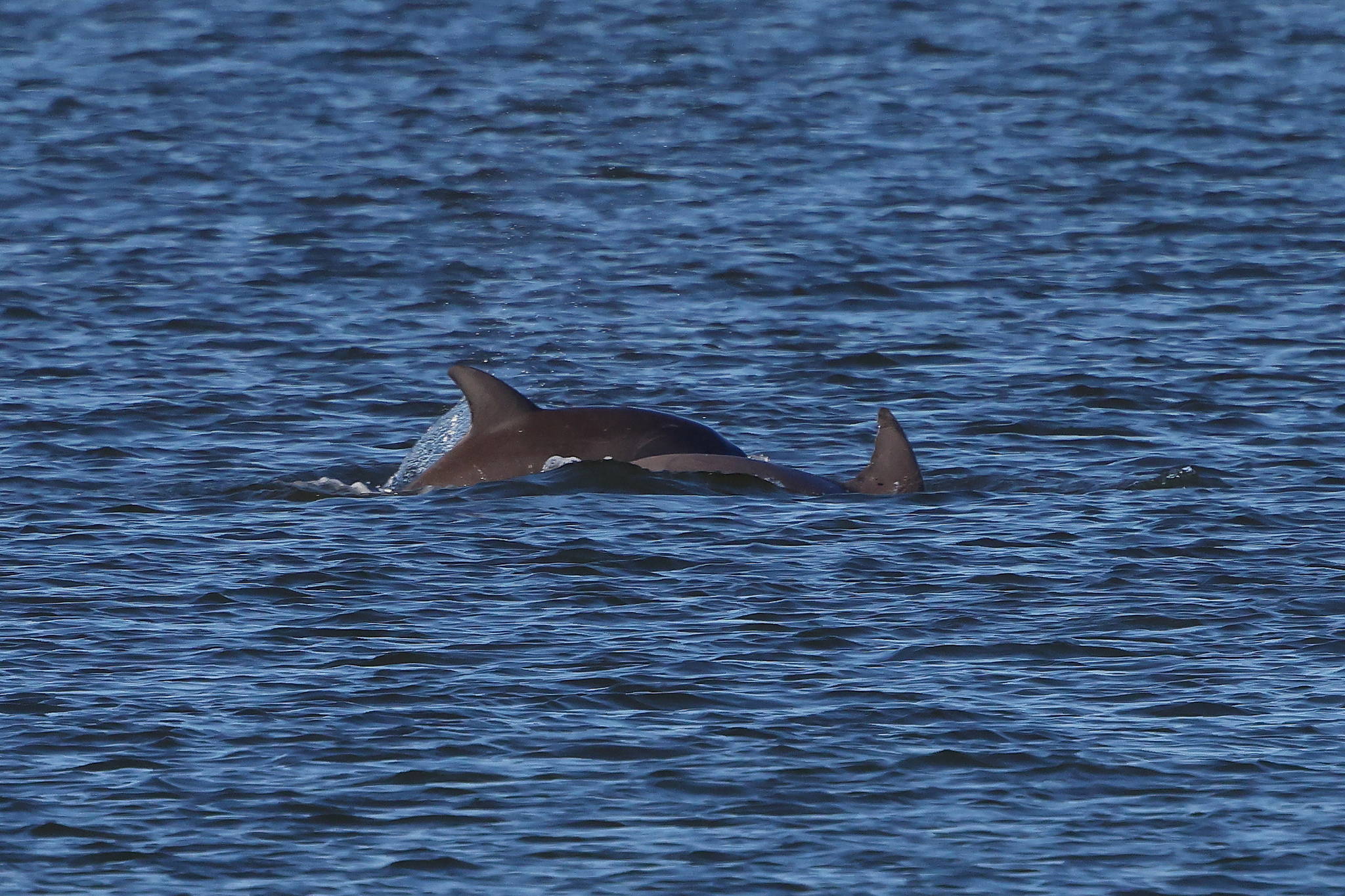
Tursiops erebennus
© Samrudh Nandagopal, CC BY-NC, 2026
Tursiops erebennus
© Max O'Halloran, CC BY-NC, 2026
Tursiops erebennus
© Michael Hayward, CC BY-NC, 2026
Tursiops erebennus
© moth-_-man, CC BY-NC, 2026
Tursiops erebennus
© sparkypetunia, CC BY-NC, 2026
Tursiops erebennus
© urbanwoods, CC BY-NC, 2026
Tursiops erebennus
© Dean Firth, CC BY-NC, 2026
Tursiops erebennus
© Cloud, CC BY-NC, 2026
Tursiops erebennus
© arvande, CC BY-NC, 2026
Tursiops erebennus
© Matt Spangler, CC BY-NC, 2026

Photographs from GBIF under a Creative Commons licence. The author and the licence of each photograph are given; please respect them if you reuse them.

Scientific references

  1. Stromberg M. (1985) Fat distribution in the skin of bottlenose dolphins (Tursiops truncatus and Tursiops gilli), Journal of Morphology
  2. Perkins-Taylor C., McFee W., McGlinn D., Greig T. et al. (2024) Utilizing Drones to Assess the Body Condition of Tamanend’s Bottlenose Dolphins (Tursiops erebennus) in the Charleston Estuarine System, Aquatic Mammals
  3. Krzewinski M., McFee W., Young R. (2024) Spatial and temporal trends of Tamanend’s bottlenose dolphin (Tursiops erebennus) strandings in South Carolina, USA, 2006–2020, J. Cetacean Res. Manage.
  4. Principe N., McFee W., Levine N., Balmer B. et al. (2023) Using Unoccupied Aerial Systems (UASs) to Determine the Distribution Patterns of Tamanend’s Bottlenose Dolphins (Tursiops erebennus) across Varying Salinities in Charleston, South Carolina, Drones
  5. DiVittore‐Goodrum B., Gibson Q. (2024) The role of habitat use and sociality on skin lesions in Tamanend's bottlenose dolphins (Tursiops erebennus) in the St. Johns River, Florida, Marine Mammal Science
  6. Brightwell K., Krzyszczyk E., Gibson Q. (2024) Dynamics of multilevel alliances in St. Johns River, Florida, Tamanend's bottlenose dolphins (Tursiops erebennus) with respect to an epizootic unusual mortality event, Marine Mammal Science
  7. Trabue S., Rekdahl M., Rosenbaum H. (2024) Photo-Identification and Skin Lesion Prevalence of Bottlenose Dolphins (Tursiops erebennus) in the Waters of New York and New Jersey, Aquatic Mammals
  8. Mayer W. (1950) Tursiops gillii, the Bottlenosed Dolphin, a New Record from the Gulf of California, with Remarks on Tursiops nuuanu, American Midland Naturalist

Automatic selection of the most cited works mentioning the species (source: Crossref).