Indo-Pacific bottlenose dolphin (Tursiops aduncus)

Key facts
Scientific name Tursiops aduncus Tursiops aduncus (Ehrenberg, 1833); the basionym Delphinus aduncus Ehrenberg is sometimes dated to 1832, hence the form “(Ehrenberg, 1832 [1833])” used by the World Register of Marine Species.
Other names Indian Ocean bottlenose dolphin; spotted bottlenose dolphin. In French: grand dauphin de l’océan Indien, dauphin souffleur de l’Indo-Pacifique. In Afrikaans: Indiese Oseaan-stompneusdolfyn.
Size Adult: about 2.3 to 2.7 m (maximum close to 2.7 m). Newborn: 0.84 to 1.1 m.
Weight Up to about 230 kg in adults; 9 to 21 kg at birth.
Longevity More than 40 years, with individuals documented up to 49 years; generation time estimated at about 21 years.
Diet Piscivorous and teuthophagous: benthic, reef and schooling fish (about 87% of prey) and cephalopods, mainly squid (about 13%), generally less than 30 cm long; crustaceans incidentally.
IUCN status Near Threatened (NT) globally, 2019 reassessment, published in the December 2019 Red List update, which replaced the earlier “Data Deficient” (DD) status; that status is still in force in the current version of the Red List. Regional assessments: Endangered (EN, criterion B(1+2)ab(iii) D) on Réunion on the Red List of threatened species in France, a status judged equivalent on Mayotte; in South Africa (2016 regional assessment), Vulnerable (VU C2a(ii)) for the Ifafa-Kosi Bay subpopulation, Near Threatened (NT B2ab(iii,v)) for the Ifafa-False Bay subpopulation and Data Deficient for the seasonal subpopulation. The species is listed in Appendix II of CITES. It is not present in the Mediterranean, where the bottlenose dolphin is represented by Tursiops truncatus.

In brief

The Indo-Pacific bottlenose dolphin is a strictly coastal delphinid of the warm waters of the Indian Ocean and the western Pacific. Long confused with the common bottlenose dolphin, it has only been recognised as a species in its own right since the late 1990s: it is smaller, its rostrum is proportionally longer and its belly becomes covered with grey speckling with age. Listed as Near Threatened (NT) globally since 2019, it lives in small resident communities strongly attached to their bays and lagoons, which makes them vulnerable; in France it occurs only in the overseas territories, on Mayotte, on Réunion and in New Caledonia.

Identification

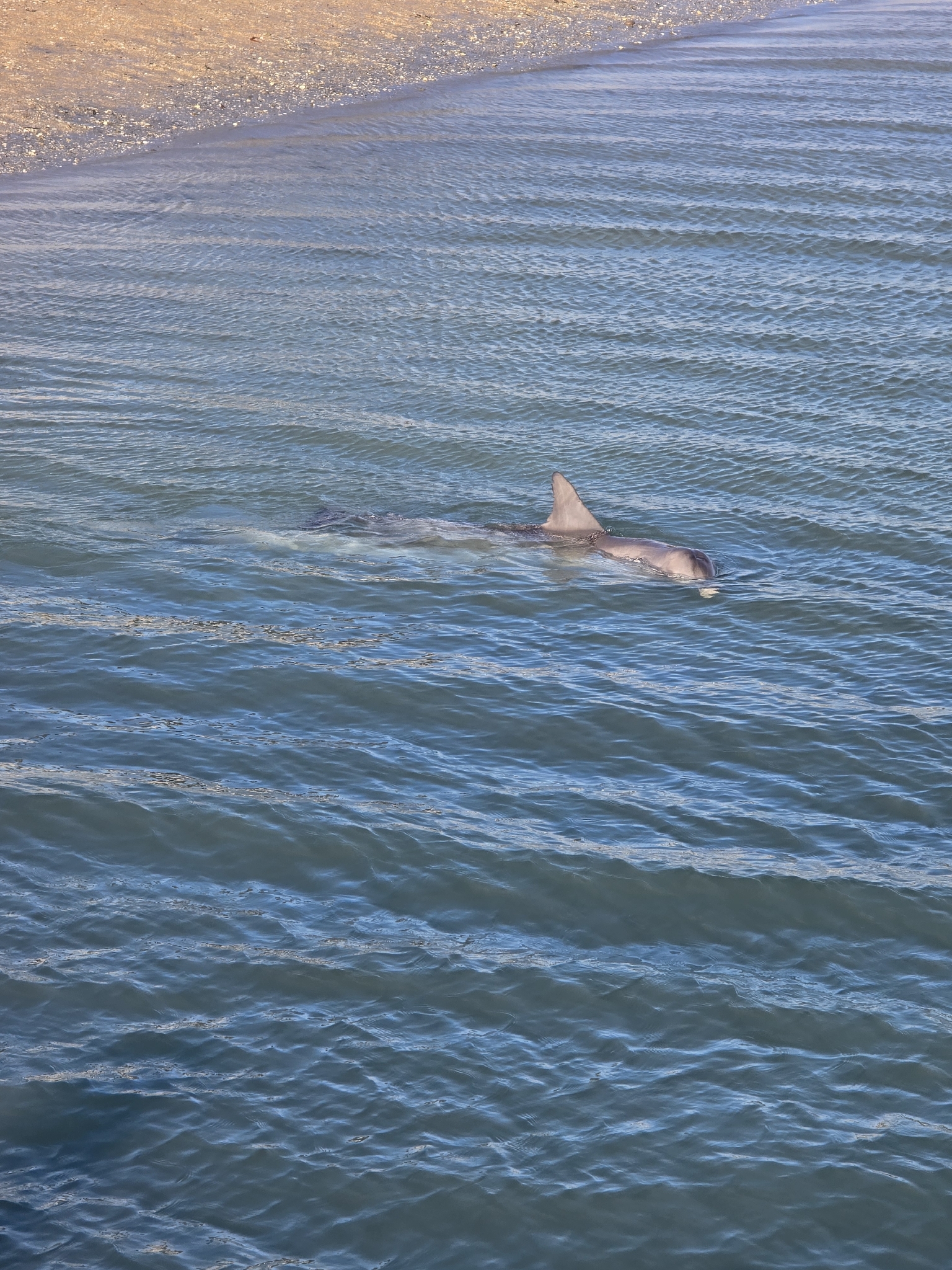
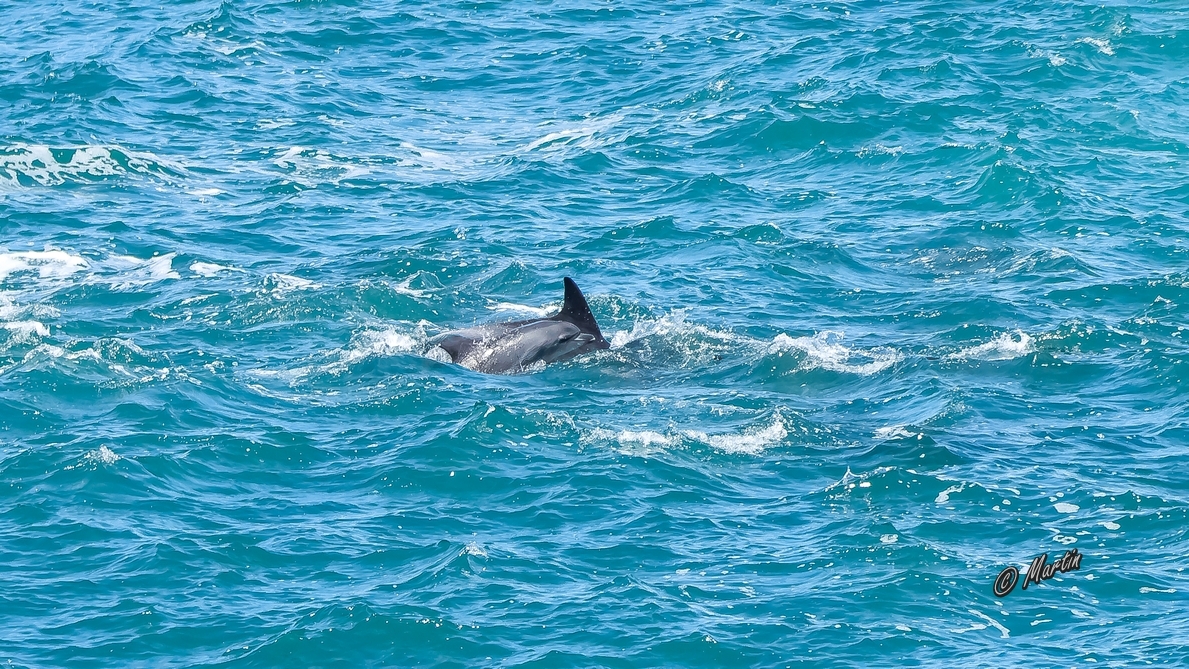
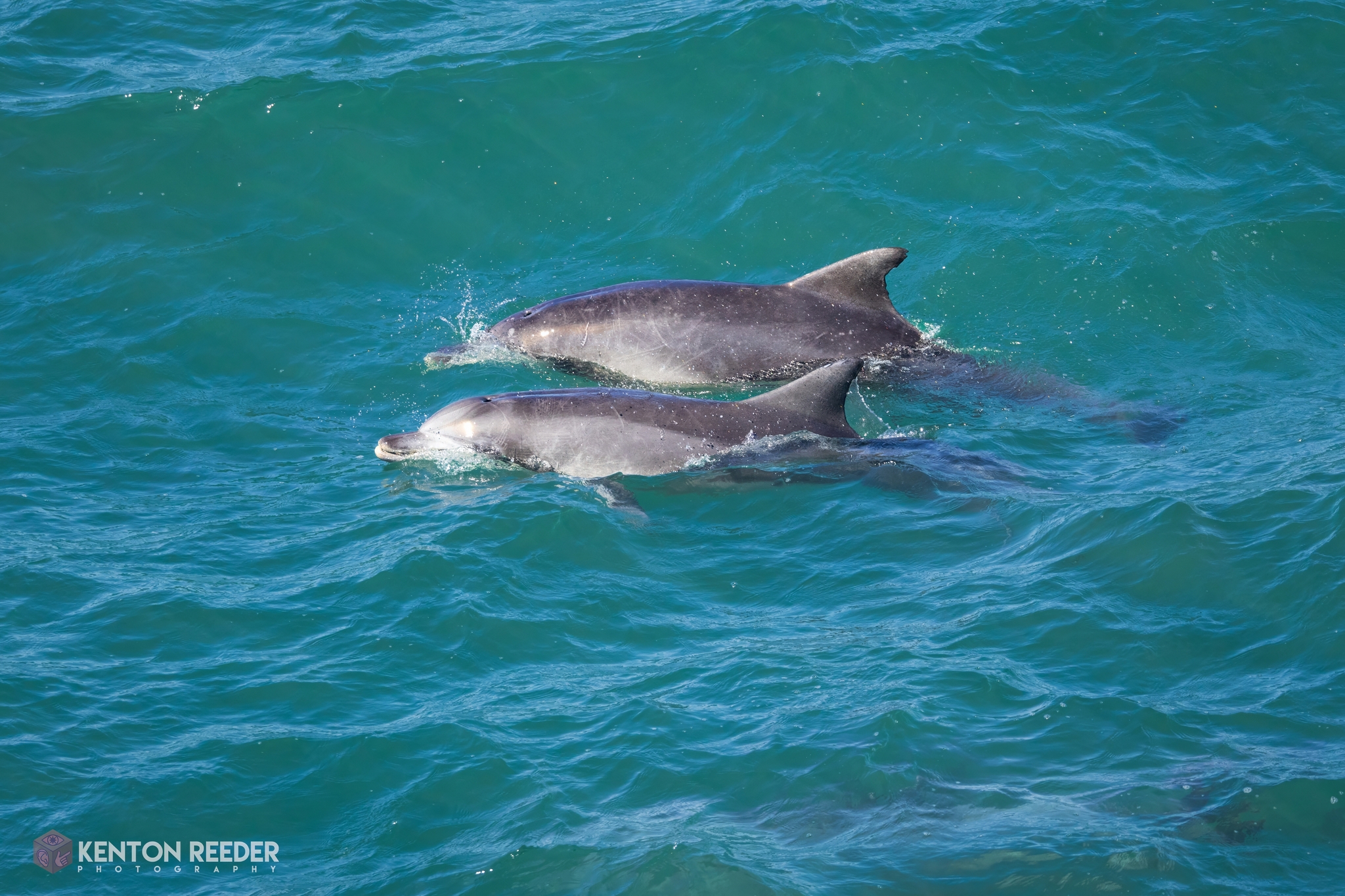
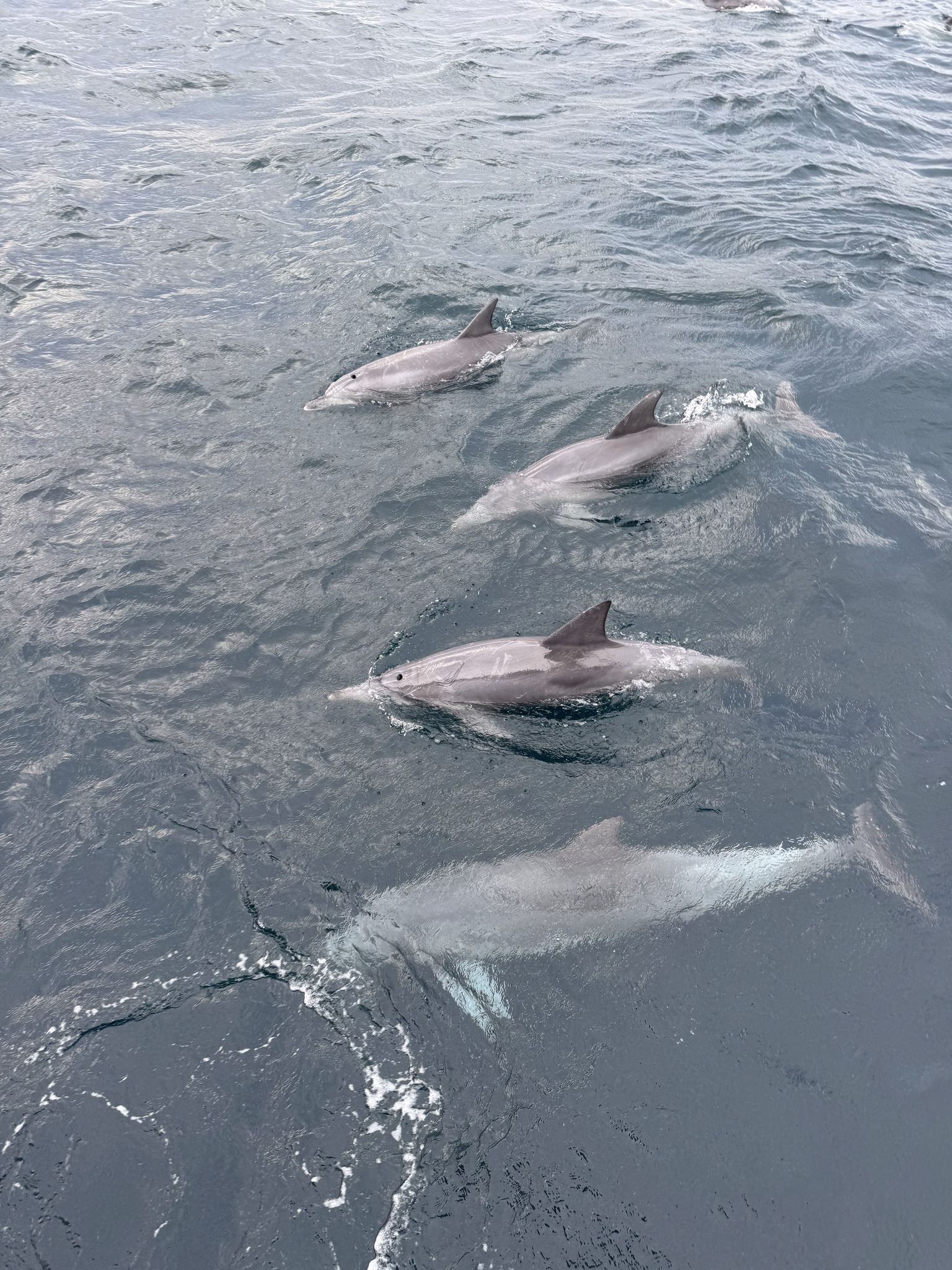
Robust in outline, though slightly slimmer than the common bottlenose dolphin, the Indo-Pacific bottlenose dolphin has a medium-sized rostrum clearly set off from the melon by a marked crease, and a tall, slightly falcate dorsal fin set on a broad base. The coloration is grey to dark grey on the back, with paler flanks and a light underside, sometimes faintly pink. The most distinctive feature appears with age: small dark spots or speckles develop on the belly and lower flanks of adults, absent in the common bottlenose dolphin. The dentition comprises some twenty to thirty conical teeth in each half of the jaw, generally more than in its relative. Sexual dimorphism is slight.

Adults most often measure between 2.3 and 2.7 m, the maximum reported length being close to 2.7 m, for a mass of up to about 230 kg. Newborns measure 0.84 to 1.1 m and weigh 9 to 21 kg. Animals from eastern Australia, as recorded by the Australian federal authorities, have a smaller mean adult size, of the order of 2.3 m: as in many coastal delphinids, size varies appreciably from one region to another.

The most frequent confusion is with the common bottlenose dolphin (Tursiops truncatus), larger, more heavily built, with a proportionally shorter rostrum and an unspeckled belly; the two species do occur together locally and sometimes form mixed groups. In the western Indian Ocean, confusion is also possible with the Indian Ocean humpback dolphin (Sousa plumbea), recognisable by its dorsal hump and heavier build. In south-eastern Australia, the “Burrunan form”, described in 2011 as Tursiops australis, was long referred sometimes to T. aduncus and sometimes to T. truncatus; the osteological analysis of Jedensjö et al. (2020) places it within T. truncatus, and T. aduncus does not appear to reach the south-east of the continent, its recognised Australian range covering the northern, eastern and western coasts. The validity of the Burrunan taxon remains debated.

Taxonomy

Order Cetartiodactyla (cetaceans), suborder Odontoceti, family Delphinidae, subfamily Delphininae, genus Tursiops. The species was described by Ehrenberg from a specimen from the Dahlak Archipelago, in the Red Sea, its type locality. Until 1998, all bottlenose dolphins were grouped in a single species, Tursiops truncatus; morphological and genetic work in the late 1990s led to T. aduncus being recognised as a distinct species.

The taxonomy of the genus remains unsettled. Phylogenomic analyses show a deep division between the truncatus and aduncus lineages, and marked structure within T. aduncus itself: the South African coastal form is as genetically differentiated from the Asian form as it is from T. truncatus, which has led some authors to consider at least three species within the genus. The Atlas des mammifères sauvages de France accordingly distinguishes two phylogenetic units: one running along the African coasts, from Oman to South Africa, which includes the animals of Mayotte and Réunion; the other covering the eastern Indian Ocean and the western Pacific, to which those of New Caledonia belong.

The Burrunan dolphin (Tursiops australis), described in 2011, is not recognised as a valid species by the taxonomy committee of the Society for Marine Mammalogy, which does not include it in its list and considers the original description problematic (morphological comparisons limited to Australian dolphins, widely overlapping measurements, weak phylogenetic support). The osteological study of Jedensjö et al. (2020), covering 264 Tursiops skulls including the holotypes, places the specimens attributed to T. australis within T. truncatus, and not within T. aduncus. The committee also recognises no subspecies within T. aduncus.

Range and habitat

The species occupies the warm temperate and tropical waters of the Indian Ocean and the western Pacific. Its range extends from South Africa (False Bay, Cape Agulhas) northwards along the East African coast to the Red Sea, the Persian Gulf, the Arabian Sea and the Bay of Bengal, then eastwards across the Indo-Malay archipelago as far as southern Japan to the north-east, and to Australia (eastern, northern and western coasts), the Solomon Islands and New Caledonia to the south-east. It includes many oceanic islands, such as Zanzibar and Madagascar.

It is a decidedly coastal dolphin: it frequents bays, estuaries, mangroves, seagrass beds, soft bottoms and coral or rocky reefs, generally in less than 50 to 100 m of water. Along the South African coast, it stays in water no deeper than 30 to 50 m and within 10 km of the shore, the majority of animals moving between 500 m and 2 km from the coast. It appears to seek out temperatures of 20 to 30 °C.

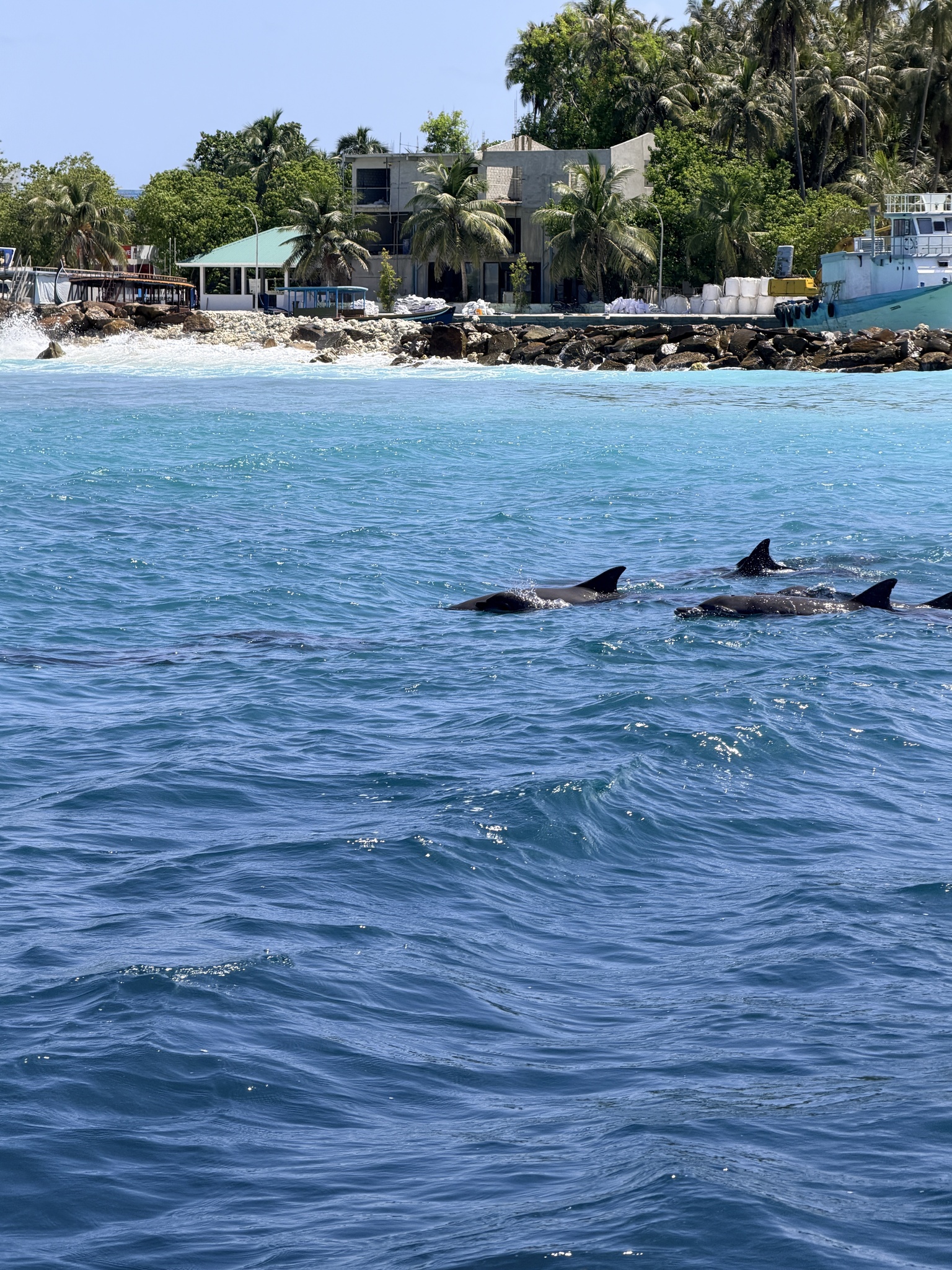
In France, the species is absent from the mainland, neither the Mediterranean, nor the Bay of Biscay, nor the English Channel, and its presence is limited to three overseas territories. On Mayotte, it frequents the lagoon (978 km²) and the Iris Bank, where a single panmictic population of about 82 individuals has been estimated. On Réunion, it occupies a narrow coastal strip of about 220 km², within 1.5 km of the shore; the resident population is thought to number fewer than 100 individuals and appears genetically isolated from the other islands of the Indian Ocean. In New Caledonia, it is known from all the lagoon waters of Grande Terre, as well as from Ouvéa and the Chesterfields, with at least six distinct populations of 42 to 131 individuals. A photo-identification study carried out from 1997 to 2019 in the south of the territory recorded 338 individuals in three weakly connected communities (south-west lagoon, south lagoon, Isle of Pines), to be treated as separate management units. The species has never been recorded in the Îles Éparses.

Biology and ecology

The diet is dominated by fish, of the order of 87% of the prey identified, supplemented by cephalopods, mainly squid (about 13%), and incidentally by crustaceans. Prey, generally under 30 cm, combine benthic and reef fish with pelagic shoals; one study recorded some fifty species of bony fish and three species of squid. On Mayotte, stable isotopes indicate a diet made up of fish of high trophic level, such as the bluefin trevally and the crocodile needlefish. In New Caledonia, analysis of the stomach contents of a stranded animal yielded eight fish species, mostly lagoon species.

The species is well known for “sponging”, observed in Shark Bay (Western Australia): a few per cent of the population carry a conical sponge on the rostrum to probe soft bottoms and flush out camouflaged fish, while protecting their beak from abrasion. This technique is passed on almost exclusively from mother to daughter within a single maternal lineage: it is the first documented case of material culture in a marine mammal. Red Sea dolphins have also been observed rubbing against corals and sponges whose metabolites have antibacterial properties.

Social life follows a fission-fusion pattern: groups, whose composition changes within a few days or even a few hours, typically number 5 to 15 individuals, with means of 8 on Réunion, 6.5 on Mayotte and 5 in New Caledonia; gatherings of several tens to several hundred animals are possible elsewhere. Females maintain lasting affinity networks and adult males form stable alliances for reproductive purposes. Communication relies on echolocation, signature whistles specific to each individual and tactile contact. Dives reach about a hundred metres and some twenty minutes.

Sexual maturity is reached at around 7 to 12 years in females and 11 to 15 years in males, depending on the region. After a gestation of about 12 months, the female gives birth to a single calf; lactation continues for nearly three years and weaning takes place between 1.5 and 3.5 years, the young animal sometimes staying with its mother until five years of age. The interval between two births is 3 to 6 years. No clear breeding season has been demonstrated on Réunion, on Mayotte or in New Caledonia, whereas spring or summer peaks occur elsewhere. Longevity exceeds 40 years, with individuals documented up to 49 years, and generation time is estimated at about 21 years. Natural predators are mainly large sharks (white, tiger, bull) and the killer whale.

Status and conservation

After long being classified as “Data Deficient” (DD), the species was reassessed in 2019 and has since been listed as Near Threatened (NT) on the global IUCN Red List, a change published in the December 2019 update and still in force. There is no global abundance estimate: the species takes the form of a mosaic of small resident populations, more or less isolated.

Bycatch is the dominant threat across the whole range, the species being coastal and therefore in constant contact with fisheries. In South Africa, the large-mesh nets installed to protect bathers from sharks killed an average of 37 dolphins a year between 1980 and 2005 (extremes 14 to 62); annual catches fell from 45 ± 14 in the 1990s to 27 ± 7 in the 2000s, following the removal of nets and their partial replacement by baited drumlines. In the Arafura and Timor seas, some 8,400 individuals are reported to have been taken as bycatch by Taiwanese gillnets between 1974 and 1986. To these are added chemical pollution (PCB and DDT levels remain high, and nearly 80% of a female’s toxic load is transferred to her first calf through lactation), the degradation of coastal habitats, competition with fisheries, underwater noise, direct takes (drive hunts in some countries, live capture for captivity, in particular in the Solomon Islands) and disturbance linked to tourism.

The regional assessments are more alarming than the global status. In South Africa, the 2016 assessment classifies the Ifafa-Kosi Bay subpopulation as Vulnerable (VU, criterion C2a(ii)), the Ifafa-False Bay subpopulation as Near Threatened (NT, B2ab(iii,v)) and the seasonal subpopulation as Data Deficient, with a declining trend linked to the shark nets. In France, the regional Red List classifies the species as Endangered (EN, criterion B(1+2)ab(iii) D) on Réunion, a status judged equivalent on Mayotte, because of very small numbers and an exclusively coastal habitat under growing pressure: coastal development, mining operations, underwater works, land-derived sediment and noise pollution. Injuries linked to bottom longlines have been documented on Mayotte, where skin fungal infections could be related to the degradation of the environment. In New Caledonia, nearly 39% of the individuals photo-identified in the south carry injuries, some of them attributable to boat propellers.

The species is listed in Appendix II of CITES. In France it is protected: capture, destruction, intentional disturbance and degradation of its habitat are prohibited. A conservation plan has been drawn up on Réunion. Its low productivity (late maturity, a single calf per birth, long intervals between births) makes any recovery in numbers very slow.

Observing this species

In France, watching this species is possible only in the overseas territories. The Mayotte lagoon, the western coastal strip of Réunion and the lagoons of New Caledonia offer possible encounters all year round, with no marked seasonality, since these are resident populations. The species is picked out by its small groups of five to about ten animals moving close to shore, often in shallow water, over seagrass beds, coral heads or sandy bottoms. Unlike the common bottlenose dolphin, it has a reputation for being more discreet and harder to approach.

The first step in identification is to check size, rostrum length and, in adults, the presence of belly speckling; on Mayotte and Réunion it must also be told apart from the Indian Ocean humpback dolphin, heavier and humped.

Since these populations are tiny and sedentary, watching pressure is not trivial: whale-watching targeting the species is explicitly identified as a disturbance factor liable to alter its behaviour, its distribution and its abundance. Good practice is to let the animals take the initiative, never to cut across the path of a group or pursue it, to reduce speed and if possible switch off the engine, to limit the length of the approach and the number of boats, and to refrain from entering the water. Groups containing newborns should be avoided. Marine protected areas, in particular the Parc naturel marin de Mayotte, issue local guidelines that should be followed; in New Caledonia, limiting vessel speed in the habitats used by the species is among the recommended management measures. Reporting sightings to local monitoring networks is a useful contribution to knowledge of these populations.

Frequently asked questions

How can the Indo-Pacific bottlenose dolphin be told from the common bottlenose dolphin?

It is smaller (about 2.3 to 2.7 m, against frequently more than 3 m in Tursiops truncatus) and slightly slimmer, its rostrum is proportionally longer, its dorsal fin has a broader base, and above all adults develop small dark spots on the belly and lower flanks with age, absent in the common bottlenose dolphin. It also has slightly more teeth in each half of the jaw. The two species can occur together and form mixed groups.

Does it occur in France?

Yes, but only in the overseas territories. It is absent from mainland France (the Mediterranean, the Bay of Biscay, the English Channel). It is seen in the Mayotte lagoon and at the Iris Bank, in a narrow coastal strip of Réunion, and in the lagoon waters of New Caledonia, including Ouvéa and the Chesterfields. It has never been reported in the Îles Éparses.

What is its conservation status?

It has been listed as Near Threatened (NT) on the global IUCN Red List since the 2019 reassessment, which ended a long period in the “Data Deficient” category. Local assessments are more severe: Endangered on Réunion and Mayotte, Vulnerable for one of the South African subpopulations. Bycatch in fishing gear, including shark nets, is the main threat.

Is the Burrunan dolphin a form of this species?

No. Described in 2011 as Tursiops australis from animals in south-eastern Australia, this taxon is not recognised as a valid species by the taxonomy committee of the Society for Marine Mammalogy, which considers the original description problematic. The osteological study of Jedensjö et al. (2020), based on 264 Tursiops skulls, places the specimens attributed to T. australis within T. truncatus, and not within T. aduncus. The committee moreover recognises no subspecies within T. aduncus, whose Australian range covers the northern, eastern and western coasts, but not the south-east of the continent.

Does it really use tools?

Yes. In Shark Bay, Western Australia, a small fraction of the population practises “sponging”: the dolphins cap their rostrum with a conical sponge to search soft bottoms without grazing their beak and to flush out buried fish. This technique is passed on almost exclusively from mother to daughters, and is the first documented example of material culture in a marine mammal.

How long does it live, and how deep does it dive?

Longevity exceeds 40 years, individuals of 49 years having been documented. It is a shallow-water species, generally over less than 50 to 100 m of water, but able to dive to about a hundred metres and to stay down for some twenty minutes.

Can you swim with it?

It is not advisable, and it may be illegal. The species is protected in France: capture, destruction and intentional disturbance are prohibited. The overseas populations number only a few tens to a few hundred individuals, and watching tourism is identified as a pressure capable of altering their behaviour, their distribution and their abundance. It is better to watch from the boat, at a distance, without pursuing the animals or approaching groups with newborns.

Sources

Species profile compiled from authoritative scientific sources (IUCN, NOAA Fisheries, specialist literature) and checked for factual accuracy.

Observed distribution

According to the open data of the GBIF, 2,113 georeferenced sightings of Tursiops aduncus are recorded in our photographic index.

Main countries of observation
CountryNotes
Australia1,378
South Africa186
Egypt108
Korea, Republic of79
Tanzania, United Republic of50
Kenya43
Indonesia30
Maldives25
Mozambique23
Réunion20

Distribution map: Indo-Pacific bottlenose dolphin (Tursiops aduncus)

Distribution map: Indo-Pacific bottlenose dolphin (Tursiops aduncus), 2,113 georeferenced sightings from GBIF
2,113 georeferenced sightings of Tursiops aduncus. Base map Natural Earth, public domain. GBIF data.
🗺️ Open the interactive mapTo zoom and pan. It uses the OpenStreetMap/CARTO base maps and the GBIF occurrence densities: no data is sent to these services before you click.

Presence through the year

Monthly distribution of 2,119 dated sightings (all years combined): the maximum is reached in juillet.

2710janvier : 160janfévrier : 117febmars : 167maravril : 155avrmai : 147maijuin : 176juinjuillet : 271juilaoût : 236Augustseptembre : 174sepoctobre : 157octnovembre : 203novdécembre : 156dec
Sightings by month
MonthNotes
janvier160
February117
mars167
avril155
mai147
juin176
juillet271
August236
septembre174
octobre157
novembre203
December156

These figures reflect survey effort (more boaters and more surveys in summer) as much as the actual presence of the species: to be interpreted with caution.

En images

Tursiops aduncus
© bitsandbugs, CC0, 2026
Tursiops aduncus
© Martin Etsebeth, CC BY-NC, 2026
Tursiops aduncus
© placidus, CC BY-NC, 2026
Tursiops aduncus
© Haneef Tayob, CC BY, 2026
Tursiops aduncus
© Kenton, CC BY-NC, 2026
Tursiops aduncus
© Jason van Weenen, CC BY-NC, 2026
Tursiops aduncus
© cat41895, CC BY-NC, 2026
Tursiops aduncus
© Helen Badenhorst, CC BY-NC, 2026
Tursiops aduncus
© kima486, CC BY-NC, 2026
Tursiops aduncus
© Bel LI, CC BY-NC, 2026
Tursiops aduncus
© curl2, CC BY-NC, 2026
Tursiops aduncus
© James H, CC BY, 2026

Photographs from GBIF under a Creative Commons licence. The author and the licence of each photograph are given; please respect them if you reuse them.

Scientific references

  1. Ross G., Cockcroft V. (1990) Comments on Australian Bottlenose Dolphins and the Taxonomic Status of Tursiops aduncus (Ehrenberg, 1832), The Bottlenose Dolphin
  2. Jardine J., Dubey J. (2002) Congenital Toxoplasmosis in a Indo-Pacific Bottlenose Dolphin (Tursiops aduncus), Journal of Parasitology
  3. Funasaka N. (2011) Seasonal Difference of Diurnal Variations in Serum Melatonin, Cortisol, Testosterone, and Rectal Temperature in Indo-Pacific Bottlenose Dolphins (Tursiops aduncus), Aquatic Mammals
  4. Wang J. (2018) Bottlenose Dolphin, Tursiops Aduncus, Indo-Pacific Bottlenose Dolphin, Encyclopedia of Marine Mammals
  5. Lauderdale L., Walsh M., Mellen J., Granger D. et al. (2021) Environmental enrichment, training, and habitat characteristics of common bottlenose dolphins (Tursiops truncatus) and Indo-Pacific bottlenose dolphins (Tursiops aduncus), PLOS ONE
  6. SHIRAKIHARA M., YOSHIDA H., SHIRAKIHARA K. (2003) Indo-Pacific bottlenose dolphins Tursiops aduncus in Amakusa, western Kyushu, Japan, Fisheries Science
  7. Koga S. (2019) Reproductive Ability of Elderly Male Indo-Pacific Bottlenose Dolphins (Tursiops aduncus) in Captivity, Mammal Study
  8. Song K. (2014) Status of Indo-Pacific Bottlenose Dolphins (Tursiops aduncus) around Jeju Island, Korea, Pacific Science

Automatic selection of the most cited works mentioning the species (source: Crossref).