| Scientific name | Globicephala macrorhynchus Gray, 1846 |
|---|---|
| Other names | Globicéphale du Pacifique, globicéphale de Siebold, baleine pilote, all in French; short-finned pilot whale (English) |
| Size | Males commonly 4 to 6 m, exceptionally up to 7.2 m; females 3 to 5 m, up to 5.5 m. Size varies between forms: males of the “Shiho” type measure 5 to 6 m and females 4 to 5 m, against 4 to 5 m and 3 to 4 m respectively in the “Naisa” type. Newborn: 1.4 to 1.9 m. |
| Weight | Most often 1,000 to 3,000 kg, up to about 4,000 kg in very large males. About 60 kg at birth. |
| Longevity | About 45 years in males, up to 60 to 63 years in females. |
| Diet | Teuthophagous: mainly squid, supplemented by octopus and fish, caught on deep dives (often beyond 300 m). A commonly cited estimate puts the daily ration at around 45 kg in an adult. |
| IUCN status | Least Concern (LC), global assessment of 2018; the species had previously been listed as Data Deficient (DD) in the 2008 assessment. The trend of the global population is not established. There is no Mediterranean subpopulation: the short-finned pilot whale is absent from that basin, where only the long-finned pilot whale is present. In the French regional red lists, the species is considered Near Threatened (NT) in Martinique and Guadeloupe. |
The short-finned pilot whale is a large delphinid with a bulbous forehead and an almost black body, which frequents the warm waters of all three oceans. A squid hunter able to dive to more than 1,000 m, it lives in close-knit matrilineal family groups in which females have a long post-reproductive life comparable to that of killer whales. Listed as Least Concern at global level, it remains exposed to bycatch, to directed hunting and to disturbance; in France it is common and resident in the waters of the Antilles.
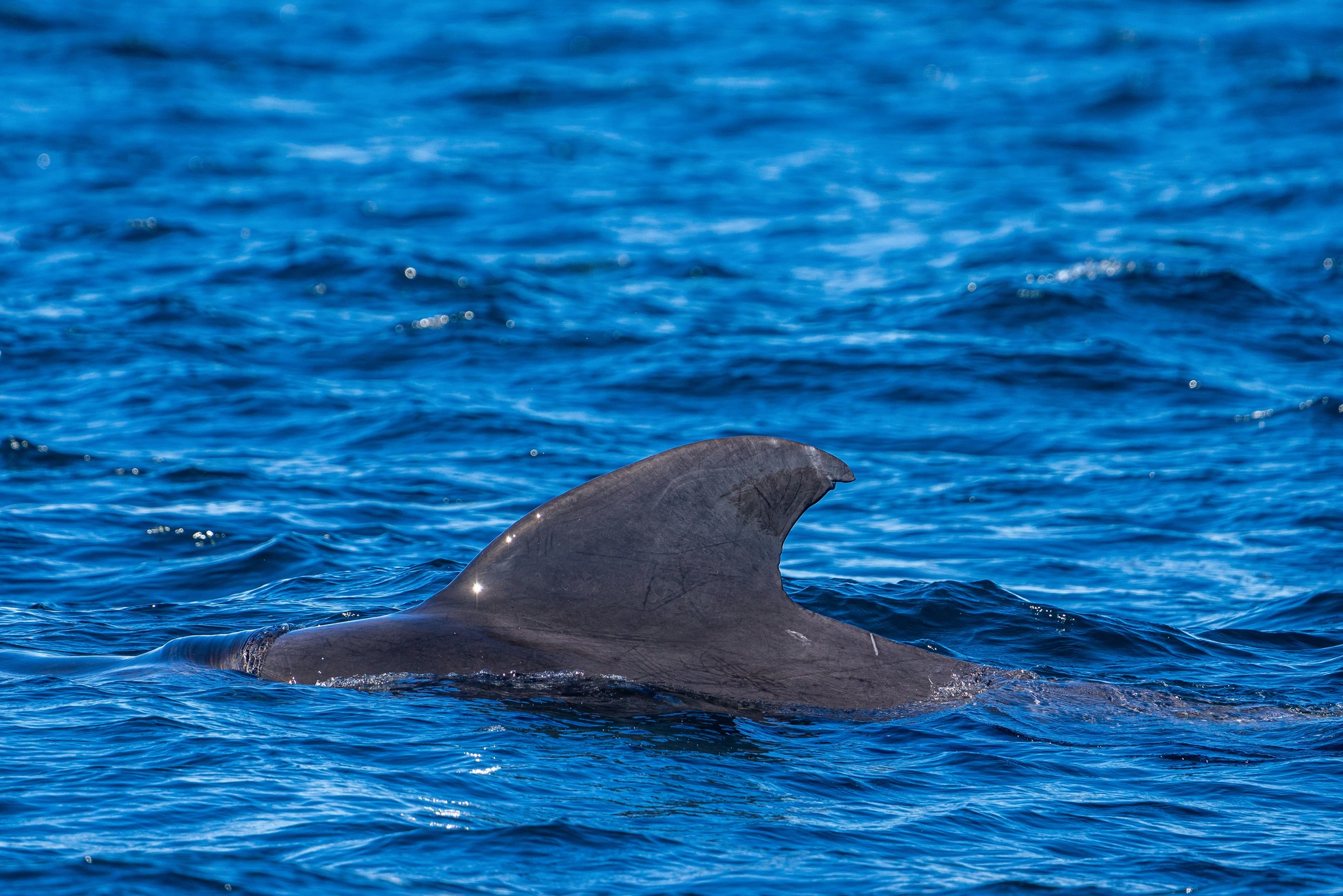
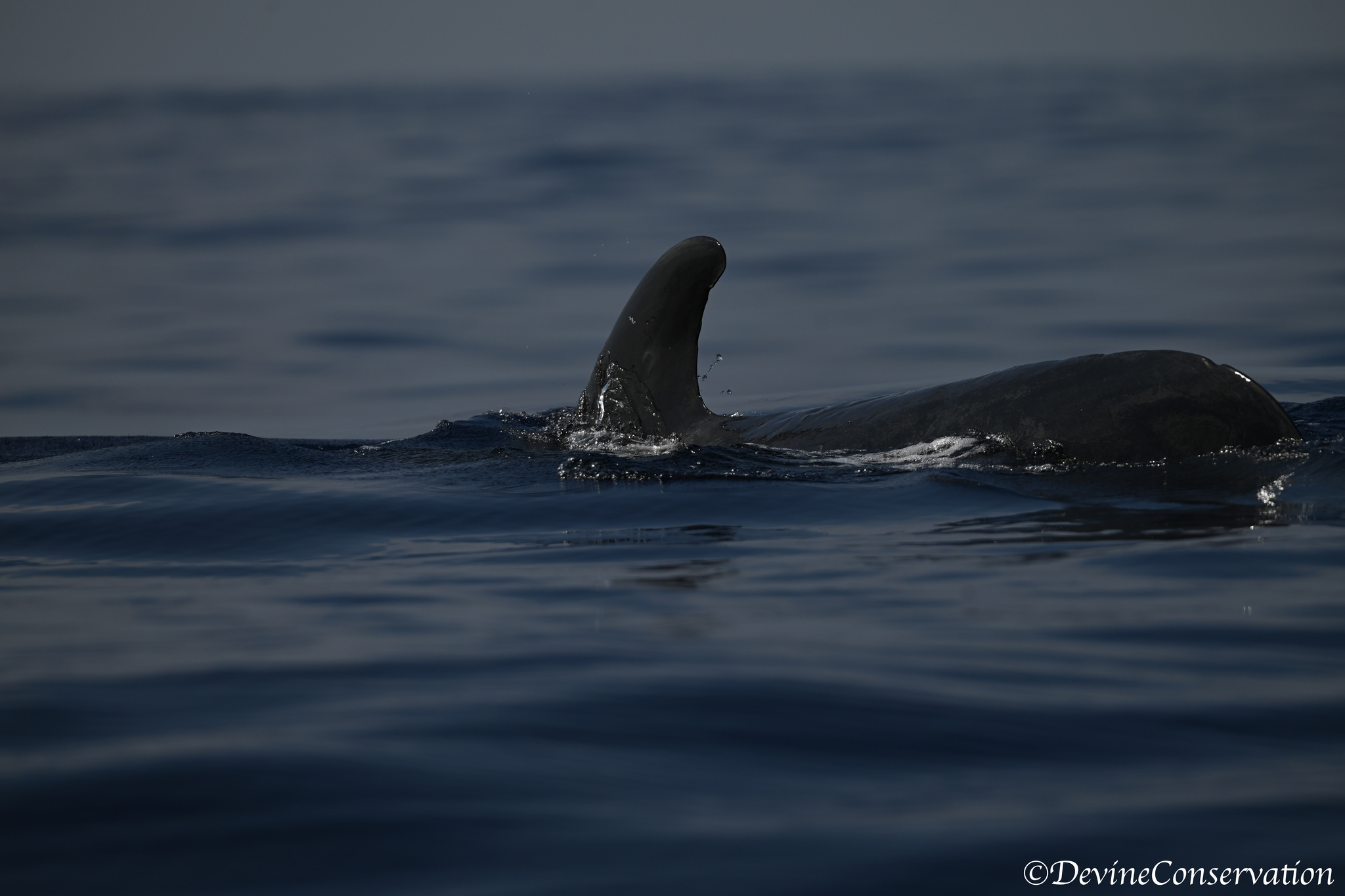
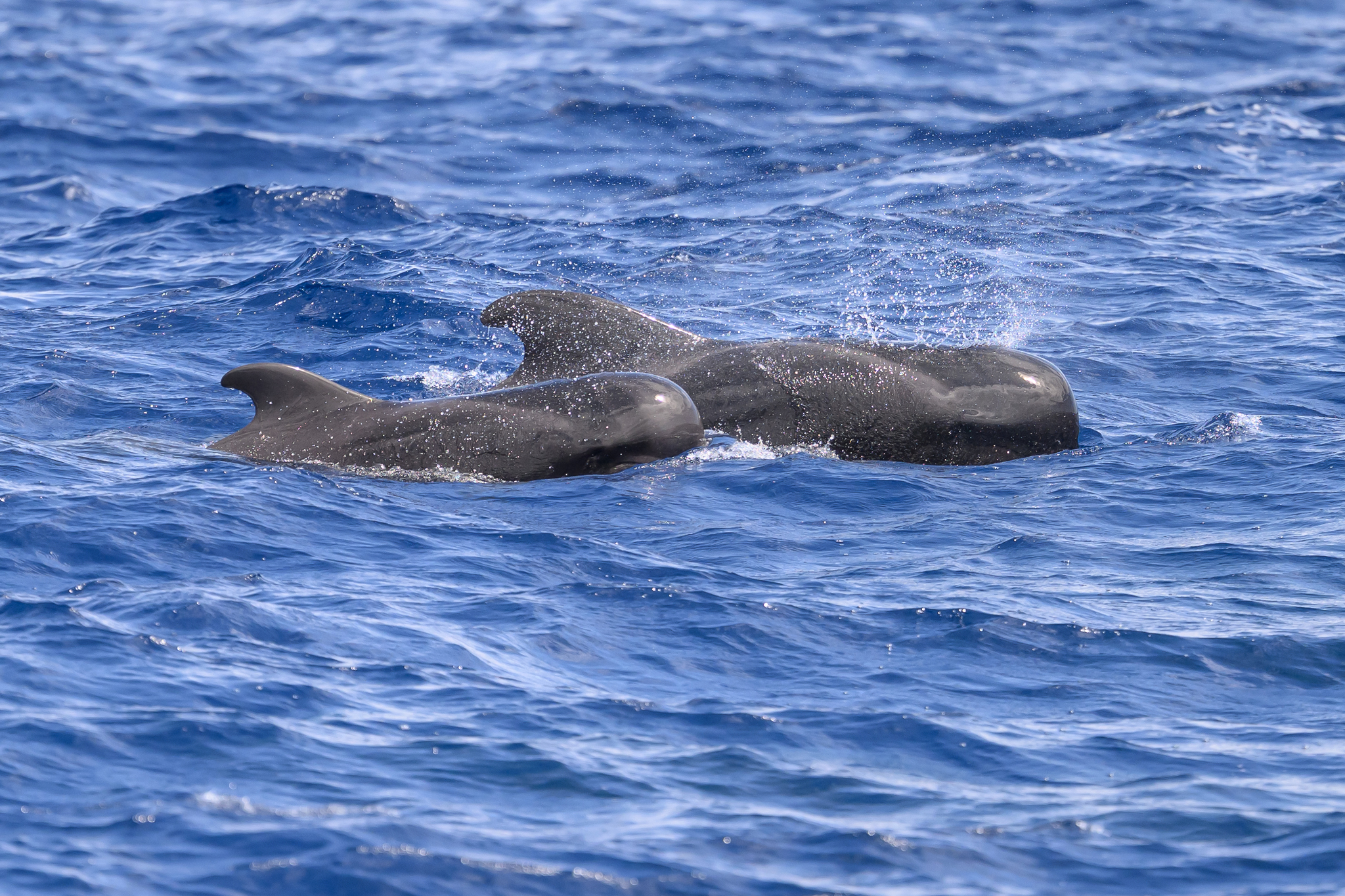
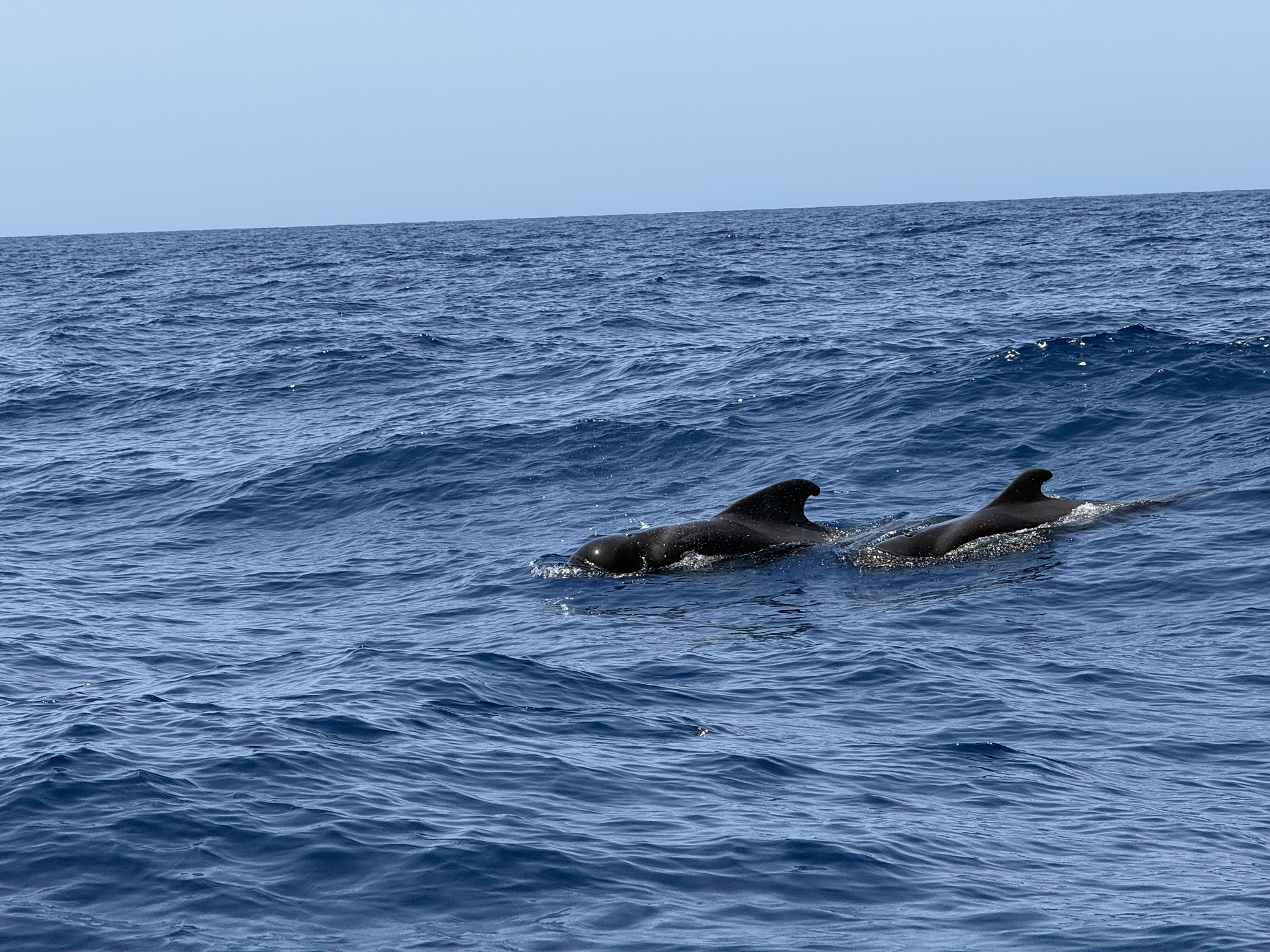
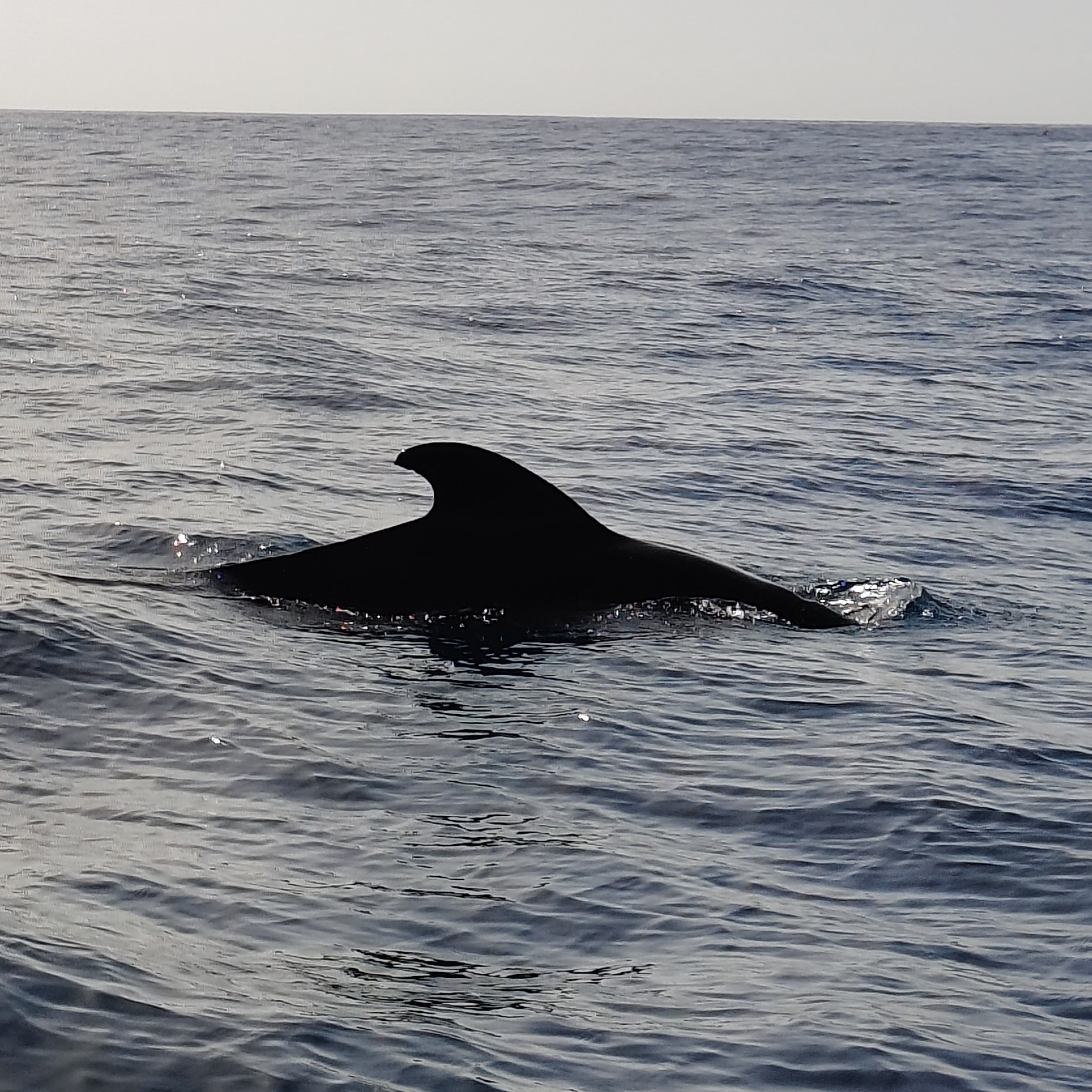
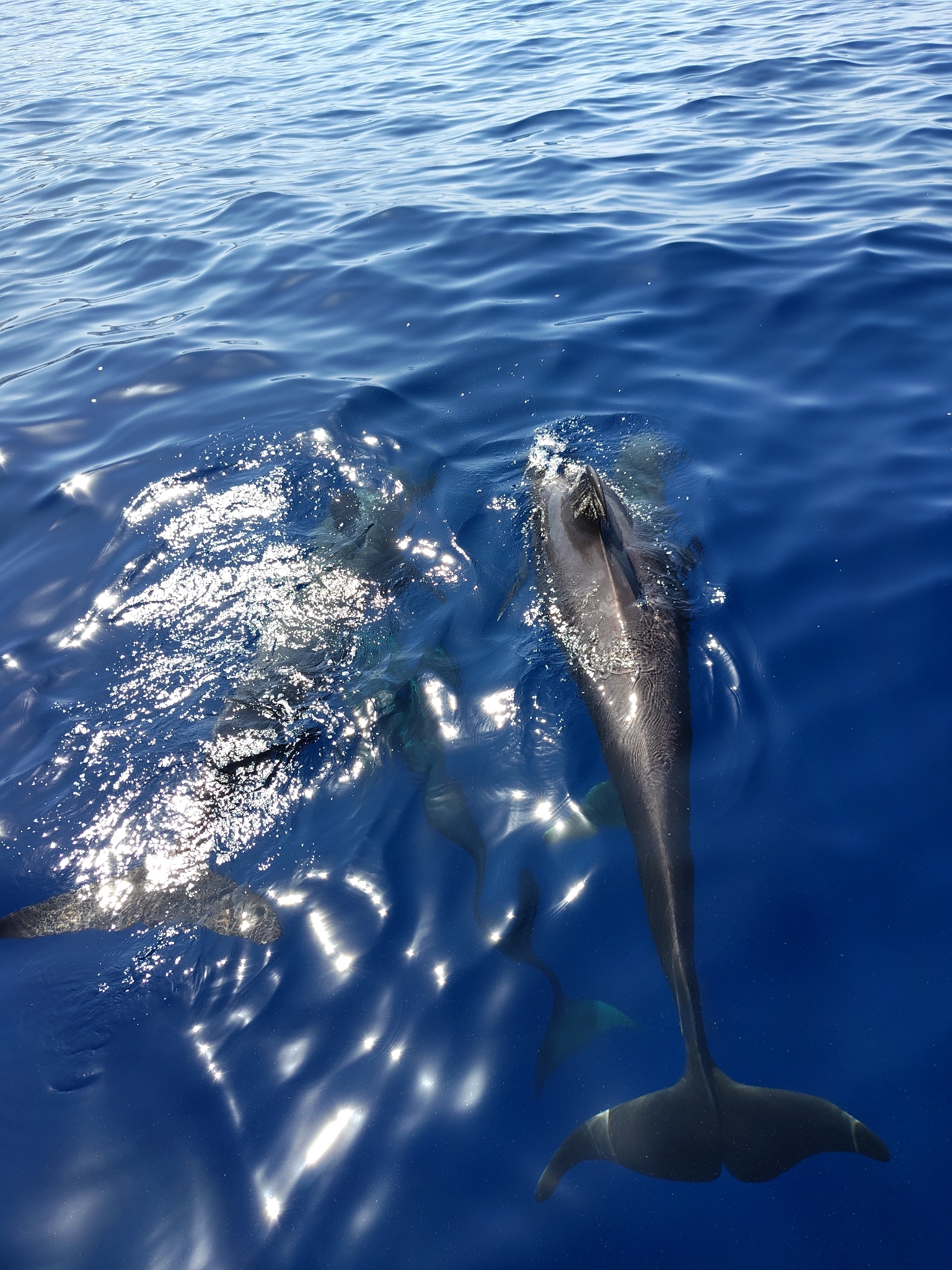
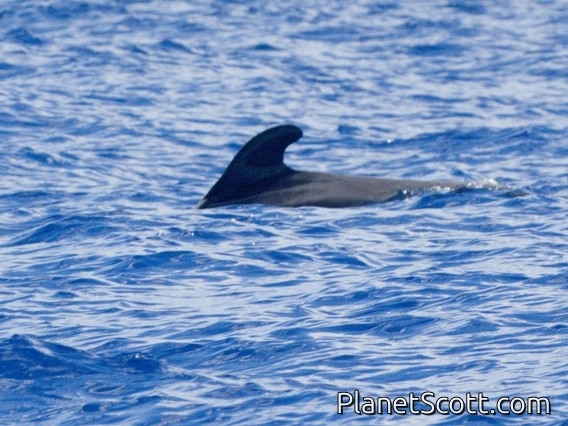
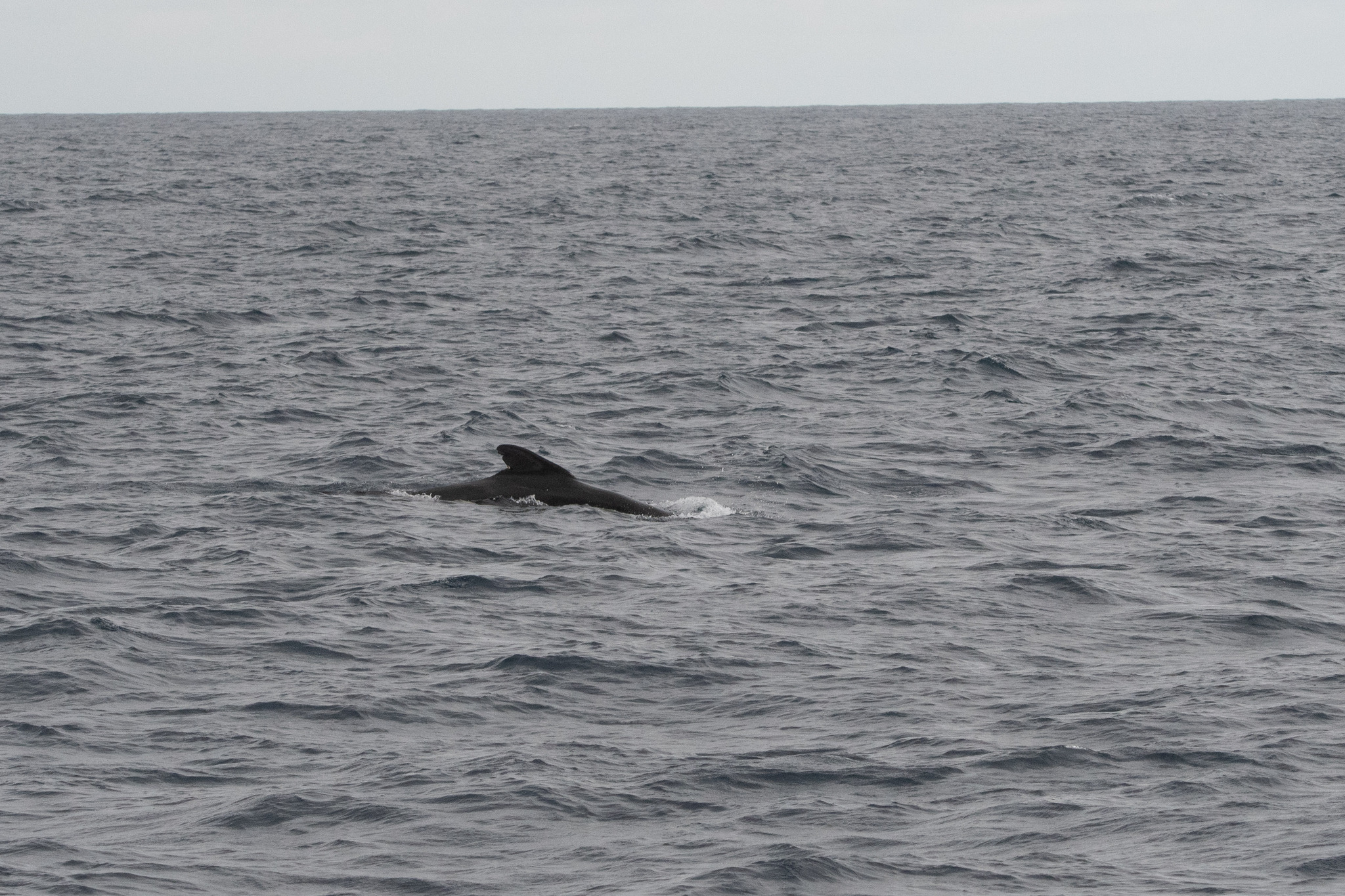
The short-finned pilot whale is one of the largest delphinids. Males commonly measure 4 to 6 m and exceptionally reach 7.2 m, the largest of them approaching 3,000 kg, while females most often stay between 3 and 5 m, hardly exceeding 5.5 m, for a mean weight of the order of 1,500 kg. Size also varies with the geographical form, animals of the North Pacific “Shiho” type being markedly larger than those of the “Naisa” type. This marked sexual dimorphism is one of the most pronounced among dolphins. The outline is massive and stocky: the head, which has no beak, is dominated by a globular melon that becomes distinctly overhanging in old males, to the point of projecting beyond the mouth. The dorsal fin, set well forward of the middle of the back, is longer than it is high, with a very broad base and a tip curved backwards; it thickens and becomes rounded with age in males. The flippers, short and angular, represent about one sixth of the body length, and it is this feature that gives the species its English name of “short-finned pilot whale”.
The body is black to very dark grey, relieved by a few pale markings: a grey-white patch shaped like an anchor or a “tie” on the throat and chest, a pale band running diagonally up behind each eye and, in many individuals, a greyish saddle behind the dorsal fin. The dentition is reduced for a delphinid: only 7 to 9 short, pointed teeth in each half-jaw, suited to seizing soft prey rather than to cutting.
The trickiest confusion is with the long-finned pilot whale (Globicephala melas), very close morphologically and practically impossible to tell apart at sea. The separating criteria are above all anatomical: longer flippers (about one fifth of the body) and more numerous teeth in the long-finned pilot whale, a shorter and broader rostrum in the short-finned pilot whale. In practice it is location that most often settles the matter, as the two species overlap little: the short-finned pilot whale occupies warm waters, the long-finned pilot whale cold temperate waters and the Mediterranean. Confusion is also possible with the false killer whale (Pseudorca crassidens), whose outline is far more slender, whose head is much less bulky and whose movements are brisker, as well as with the smaller melon-headed whale and pygmy killer whale, whose size and head profile differ clearly.
Described by Gray in 1846, Globicephala macrorhynchus belongs to the family Delphinidae and to the subfamily Globicephalinae, which also brings together the false killer whale, the pygmy killer whale and the melon-headed whale. The genus Globicephala holds only two species: the short-finned pilot whale and the long-finned pilot whale (Globicephala melas), tied to cooler waters. No subspecies is universally recognised, but genetic work distinguishes at least three divergent forms: the “Shiho” type, present in the eastern Pacific and off northern Japan, the “Naisa” type, which occupies the central and western Pacific as well as the Indian Ocean, and an Atlantic form. Mitochondrial data place the Shiho/Naisa separation at around 17,500 years and the individualisation of the Atlantic form at around 12,500 years. The Shiho and Naisa types differ in size, animals of the Shiho type being the larger, as well as in the shape of the skull and of the head, more rounded in the former, and in Japan they occupy ranges that overlap very little.
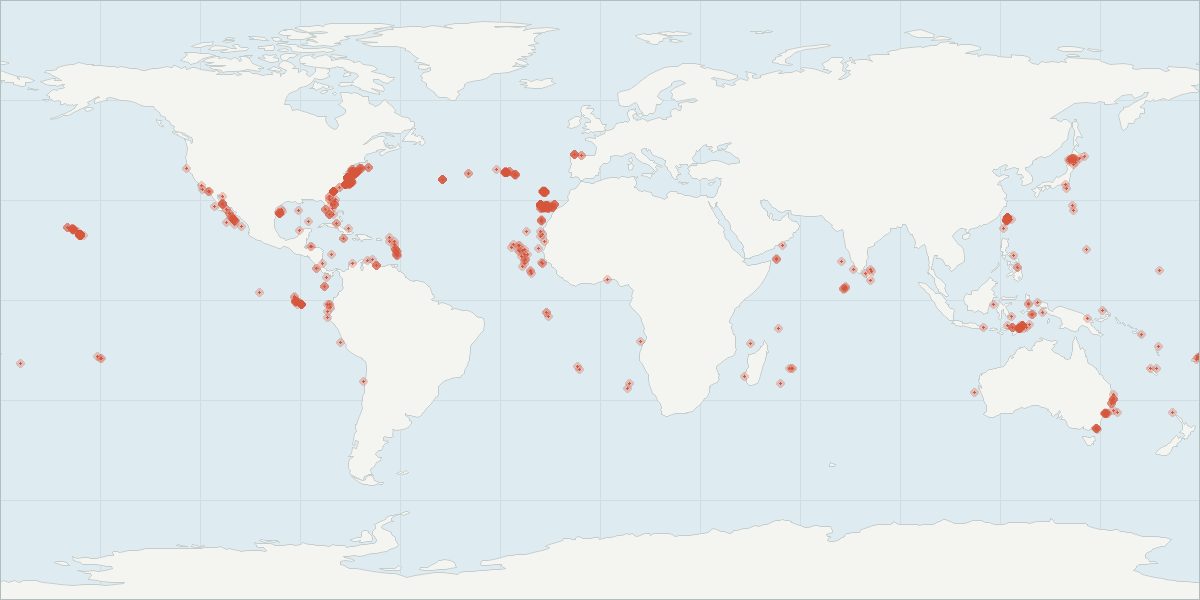
The species has a circumglobal distribution in the tropical, subtropical and warm temperate waters of the Atlantic, Indian and Pacific Oceans, roughly between 50° N and 40° S. It is tied to deep water: continental slopes, the slopes of oceanic islands and offshore areas where squid are abundant. Several well studied resident populations exist around Hawaii, in Southern California, off Japan, at Madeira and in the Canary Islands. The world population is estimated at about 700,000 individuals, of which nearly 589,000 for the eastern tropical Pacific alone. In United States waters, five stocks are recognised, with estimates of the order of 800 animals on the West Coast, 18,700 to 21,500 on the East Coast, 1,300 in the Gulf of Mexico and 19,000 around Hawaii. In the north-east Atlantic, the northern limit of the regular range lies at the Macaronesian archipelagos: Madeira holds a resident island population estimated at about 140 individuals, and the Canary Islands an abundance of about 1,980 individuals (95% CI: 1,442-2,324), of which some 636 resident in south-west Tenerife and more than 400 animals photo-identified over the years; more recent estimates (2015-2020) place the resident community of Tenerife at around 362 individuals. Individuals are also reported further north, as far as the Azores.
In mainland France, the short-finned pilot whale is absent from the Mediterranean, where the genus is represented only by the long-finned pilot whale. Its presence in the Bay of Biscay and along the Atlantic seaboard is exceptional: the species is regarded there as a vagrant north of Spain, and the first French record corresponds to a stranding on the coast of the Île de Ré in May 1966. The situation is quite different overseas. In the French Antilles the species is common and resident: it is one of the twenty or so marine mammal species recorded in the Agoa sanctuary, a marine protected area created on 5 October 2010 and recognised on 23 October 2012 as a Specially Protected Area of Caribbean Importance under the SPAW Protocol, which covers the 143,256 km² of the exclusive economic zone of Martinique, Guadeloupe, Saint Martin and Saint Barthélemy. It is also reported in the French tropical waters of the Indian Ocean, at Réunion, and in French Polynesia.
The short-finned pilot whale is above all a hunter of cephalopods. Its diet rests mainly on squid, supplemented by octopus and various fish, caught on deep dives generally made at night or at dusk, when the prey rise in the water column. Feeding dives commonly reach 600 to 700 m for some fifteen minutes, and the documented record is 1,018 m for 21 minutes. What sets the species apart has less to do with depth than with speed: at the end of the descent, the animals perform genuine sprints to intercept large squid, a behaviour that has earned them the nickname of “cheetahs of the deep”. The attack is accompanied by a rapid crackle of echolocation clicks.
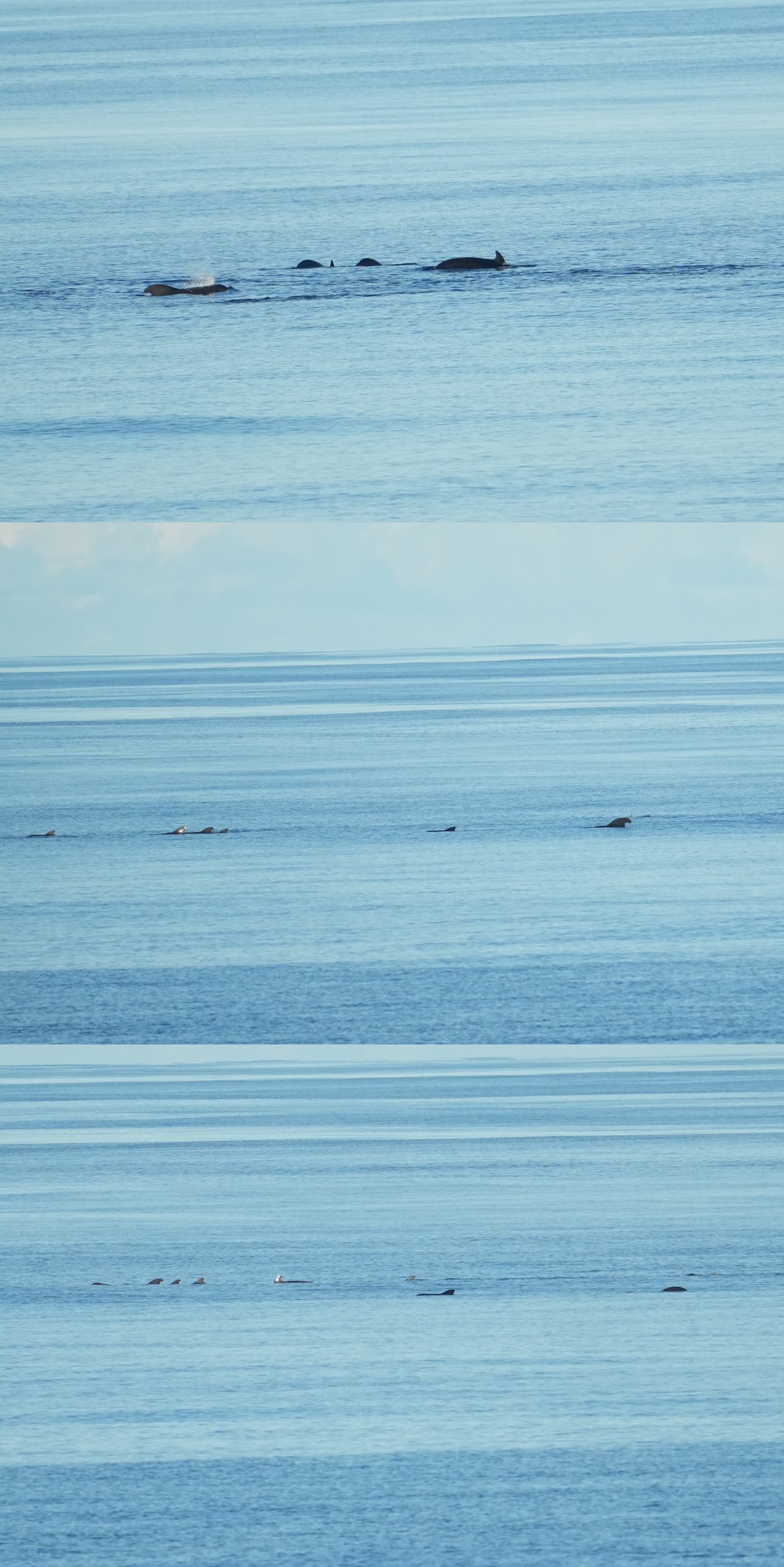
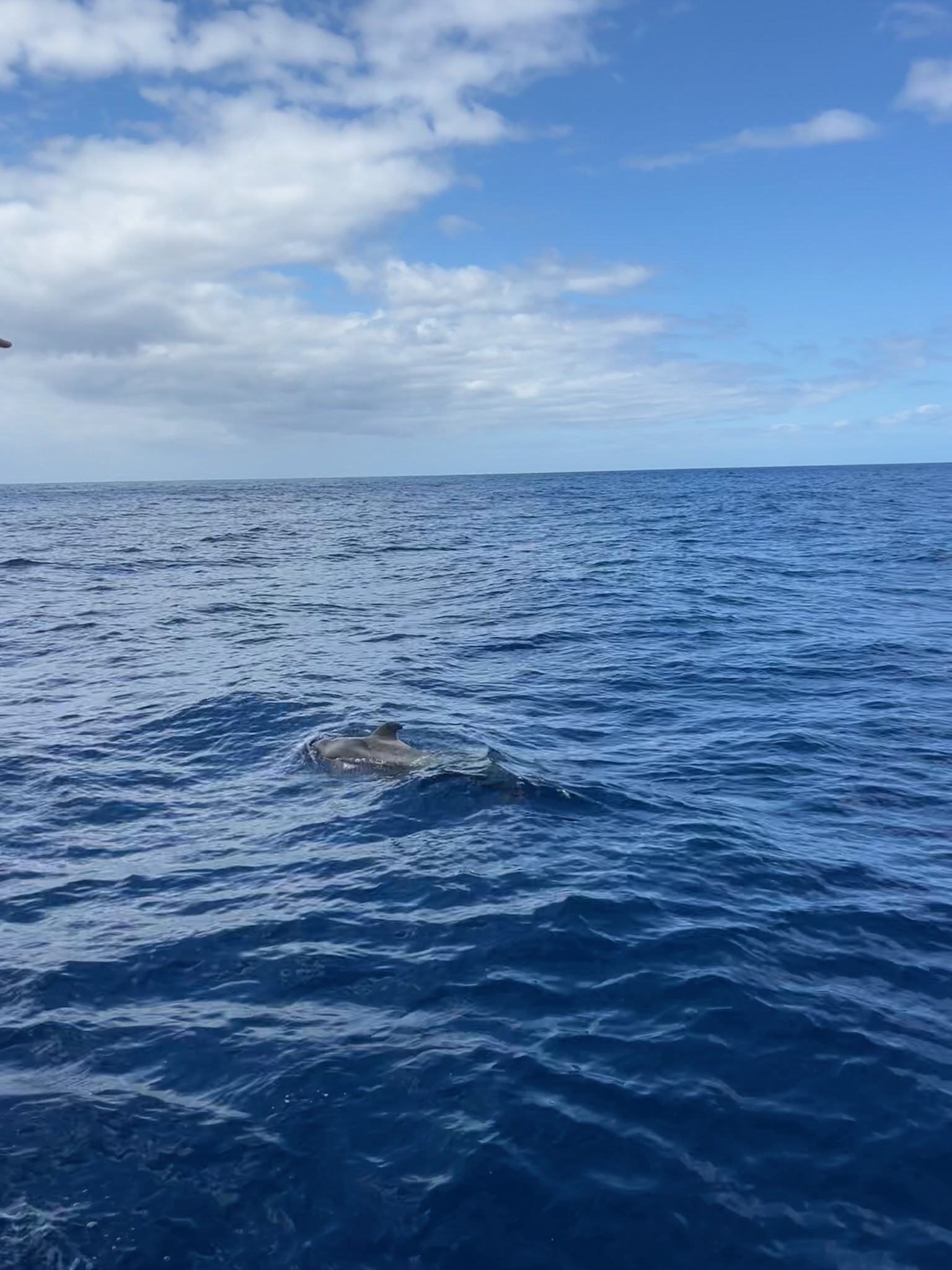
Social life is one of the most remarkable traits of the species. Groups typically number 10 to 50 individuals, with temporary aggregations that can bring together several hundred animals, in particular in the Caribbean. These units are matrilineal and very stable: males and females alike most often remain all their lives in the group in which they were born, mating taking place during temporary encounters between groups, which limits inbreeding. Mature males are markedly fewer there than mature females, of the order of one to eight, because of their higher mortality and their shorter longevity. This extreme cohesion partly explains the propensity of the species for mass strandings, when an animal in difficulty is followed by its companions. At the surface, groups spend a great deal of time resting, lined up side by side and motionless, and often appear indifferent to boats or avoid them.
Breeding is slow. Females reach sexual maturity at around 7 to 12 years, males markedly later, between 12 and 17 years. After a gestation of about 15 months, a single calf is born, suckled for at least two years, sometimes for much longer in the case of the last-born. The interval between two births is 5 to 8 years, so that a female produces only 4 to 5 young in the course of her life. Females stop breeding at around 40 years but can live to some sixty years: the short-finned pilot whale is thus one of the few mammals, along with the killer whale and a few other odontocetes, to show a true menopause followed by a long post-reproductive life, older females playing a key role in the memory of the group and in accompanying the young.
The IUCN Red List has listed Globicephala macrorhynchus as Least Concern (LC) since the 2018 assessment, which replaced the Data Deficient listing adopted in 2008. This favourable status rests on a very wide range and on large global numbers, but the overall trend remains undetermined, in the absence of comparable monitoring across the different populations. Some of these populations, in particular the southern form exploited off Japan, are the subject of specific concern. In France, the regional red lists of Martinique and Guadeloupe list the species as Near Threatened.
Pressures are multiple. Bycatch in gillnets and longlines is the leading cause of human-induced mortality in American waters, and affects the species across much of its range. A directed hunt persists in Japan, by drive and harpooning, with an average of about 73 animals taken per year between 2010 and 2023. In the Lesser Antilles, the artisanal fishery of Saint Vincent and the Grenadines took 5,896 short-finned pilot whales between 1949 and 2017. To this are added ship strikes, underwater noise and military sonar, suspected in certain mass strandings, the accumulation of persistent contaminants such as PCBs, DDT and mercury, and the effects of warming, which appears to be shifting the range of the species northwards. The small resident island populations of Madeira and the Canary Islands, numbering from a few hundred to a few dozen animals, are particularly vulnerable to shipping traffic and to disturbance. The short-finned pilot whale is listed in Appendix II of CITES and in Annex II of the SPAW Protocol for the Caribbean; it is protected in the United States by the Marine Mammal Protection Act and, in the French Antilles, benefits from the framework of the Agoa sanctuary.
The best watching sites are those that hold resident populations. In the Canary Islands, south-west Tenerife and the strait that separates the island from La Gomera offer one of the few opportunities in the world to meet the species all year round, a short distance from the coast; Madeira, home to a small resident island population, and Hawaiian waters are other prime locations. In French waters, it is the Antilles that concentrate the sightings: since April 2021 the Agoa sanctuary has been running survey trips at sea along transects, in particular within the regional CARI’MAM project, and the species is encountered regularly off the leeward coasts of Guadeloupe and Martinique. Groups are spotted by their stillness at the surface, by the tight line of their backs and by the very distinctive outline of the dorsal fin, broad and set far forward.
Watching must remain respectful: resting groups are particularly sensitive to disturbance, and resident populations face both the pressure of intense inter-island shipping traffic and that of watching activities which are sometimes poorly regulated. In French waters in the Antilles, approaching marine mammals is prohibited within 300 metres, exemptions down to 100 metres being possible only under strict conditions, in a commercial, scientific or educational setting. The common-sense rule remains the same everywhere: never cut across the path of a group, do not come between a female and her calf, limit the length of the approach and let the animals decide on the encounter.
The two species resemble each other to the point of being almost indistinguishable at sea. The short-finned pilot whale has shorter flippers (about one sixth of the body length against one fifth), fewer teeth (7 to 9 in each half-jaw) and a shorter, broader rostrum. The most reliable criterion remains geographical: the short-finned pilot whale occupies warm waters, the long-finned pilot whale cold temperate waters and the Mediterranean.
Males commonly measure 4 to 6 m and exceptionally reach 7.2 m; females are 3 to 5 m, up to 5.5 m. Size depends a great deal on the geographical form: males of the North Pacific “Shiho” type measure 5 to 6 m and females 4 to 5 m, against 4 to 5 m and 3 to 4 m respectively in the “Naisa” type, which is more widespread. The newborn measures 1.4 to 1.9 m for some sixty kilos.
Yes, but mainly overseas. The species is common and resident in the French Antilles, in the Agoa sanctuary, and it is also reported at Réunion and in French Polynesia. In mainland France it is absent from the Mediterranean and only exceptional along the Atlantic seaboard: the first French record corresponds to a stranding on the Île de Ré in May 1966.
Its feeding dives commonly reach 600 to 700 m for some fifteen minutes. The deepest documented dive is 1,018 m, lasting 21 minutes. The species is nicknamed “cheetah of the deep” because of the sprints it performs at the end of the descent to catch large squid.
Their groups are matrilineal and extremely close-knit, males and females most often remaining all their lives alongside their relatives. When one individual strands or becomes disoriented, the others tend to follow it, which turns an individual incident into a mass stranding. Disease, harmful algal blooms and exposure to intense sounds are among the triggering factors that have been studied.
Yes. Females stop breeding at around 40 years while they can live to some sixty years. The short-finned pilot whale is one of the very few mammals, along with the killer whale in particular, to show a long post-reproductive life; older females continue to accompany the group and may suckle their last calf very late.
At global level it has been listed as Least Concern by the IUCN since the 2018 assessment, with numbers estimated at around 700,000 individuals. It nevertheless remains exposed to bycatch, to directed hunting in Japan and in the Lesser Antilles, to ship strikes, to underwater noise and to contaminants; in Martinique and Guadeloupe, the regional red lists list it as Near Threatened. The small resident island populations, such as those of Madeira and the Canary Islands, are the most fragile.
Profile compiled from authoritative scientific sources (IUCN, NOAA Fisheries, specialist literature) and reviewed for factual accuracy.
According to the open data of the GBIF, 1,610 georeferenced sightings of Globicephala macrorhynchus are recorded in our photographic index.
| Country | Notes |
|---|---|
| Spain | 700 |
| United States of America | 386 |
| Portugal | 224 |
| Chinese Taipei | 35 |
| Mexico | 35 |
| Ecuador | 33 |
| Australia | 33 |
| Indonesia | 28 |
| Japan | 23 |
| Cabo Verde | 14 |

Monthly distribution of 1,641 dated sightings (all years combined): the maximum is reached in August.
| Month | Notes |
|---|---|
| janvier | 95 |
| February | 126 |
| mars | 134 |
| avril | 111 |
| mai | 113 |
| juin | 103 |
| juillet | 165 |
| August | 248 |
| septembre | 132 |
| octobre | 221 |
| novembre | 113 |
| December | 80 |
These figures reflect survey effort (more boaters and more surveys in summer) as much as the actual presence of the species: to be interpreted with caution.


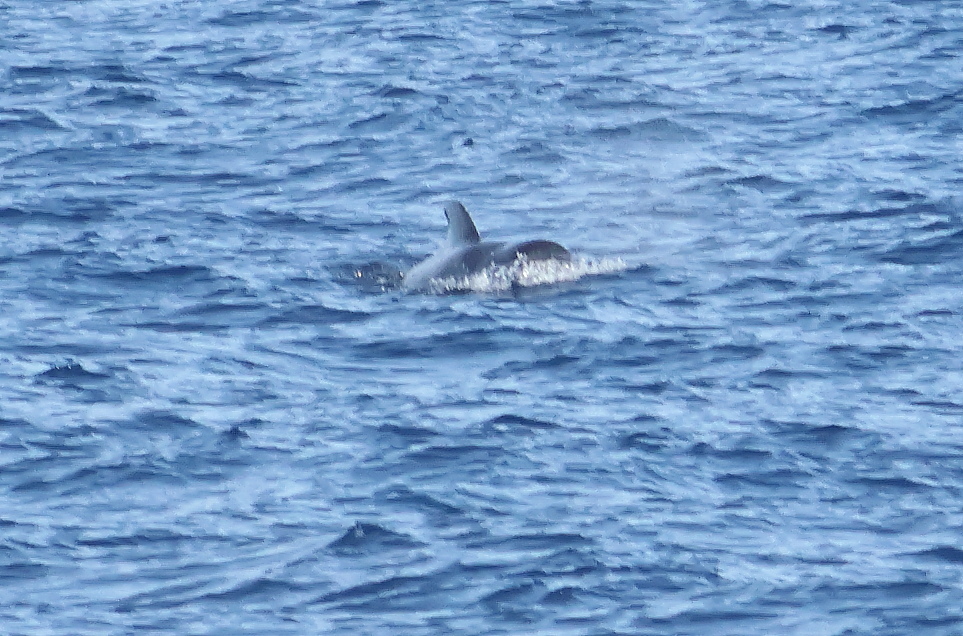
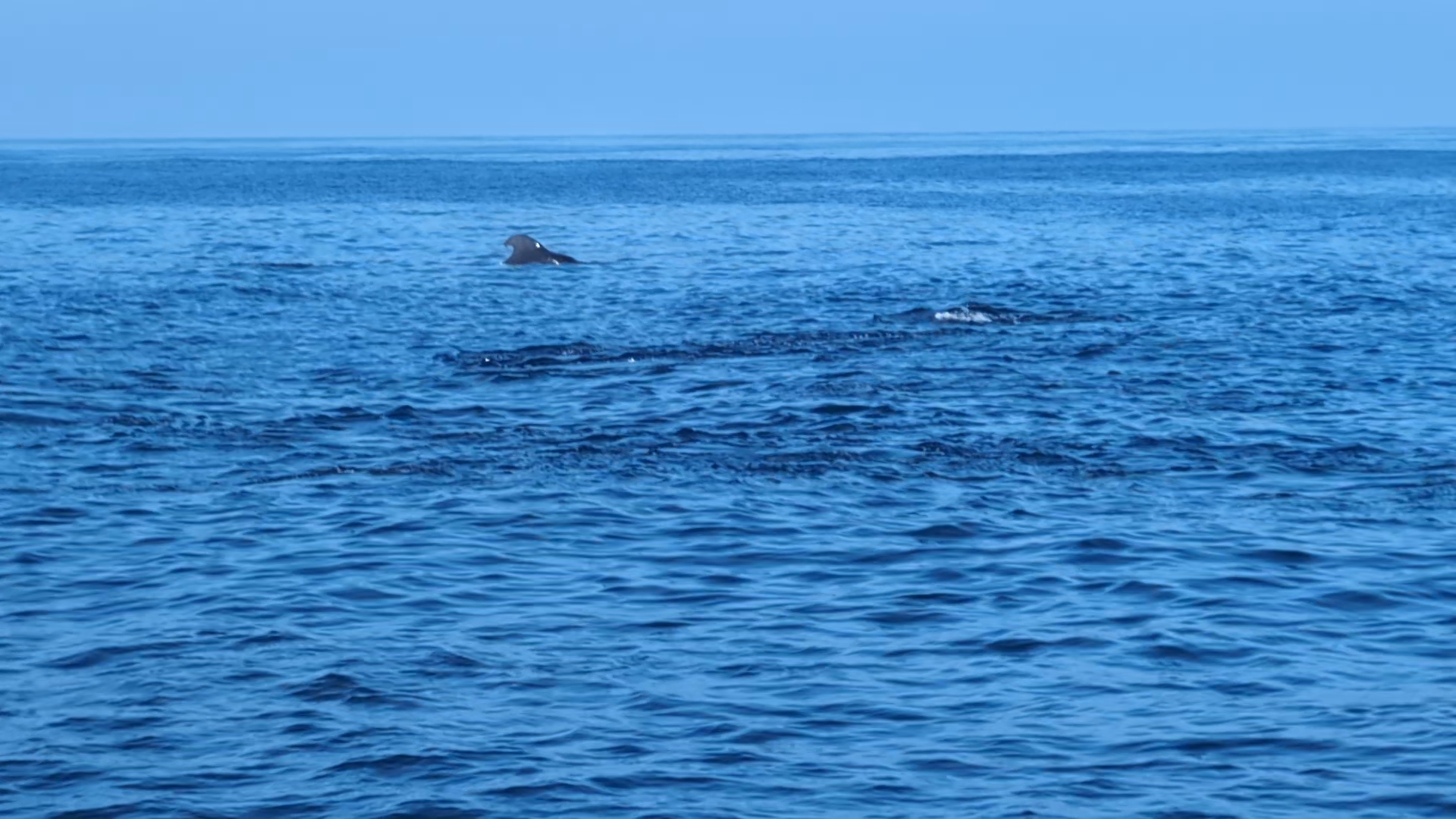
Photographs from GBIF under a Creative Commons licence. The author and the licence of each photograph are given; please respect them if you reuse them.
Automatic selection of the most cited works mentioning the species (source: Crossref).