| Scientific name | Globicephala melas (Traill, 1809) |
|---|---|
| Other names | In French: globicéphale noir, globicéphale commun, globicéphale à longues nageoires, baleine pilote, dauphin pilote; in English: long-finned pilot whale |
| Size | Females 4.5 to 5.5 m, males 5.5 to 6.5 m (exceptionally up to 7.6 m); newborns 1.6 to 2.0 m |
| Weight | 1 to 2.3 t on average, large males reaching 2.5 to 3 t; newborns 75 to 80 kg |
| Longevity | About 35 to 46 years in males, up to around sixty years in females |
| Diet | Mostly cephalopods (squid, octopus), supplemented by pelagic and demersal fish (herring, mackerel, hake, cod, lanternfish) and sometimes crustaceans |
| IUCN status | Least Concern (LC) at the global scale, 2018 assessment (Minton, Reeves & Braulik), population trend unknown. Two Mediterranean subpopulations assessed separately in 2021: the inner Mediterranean “Endangered” (EN, criterion C2a(ii)) and the Strait of Gibraltar “Critically Endangered” (CR). |
The second largest delphinid after the killer whale, the long-finned pilot whale is a stocky, entirely black cetacean, recognisable by its bulbous melon and its very long flippers. A deep diver and a squid hunter, it lives in close-knit matrilineal societies in which the young never leave their mother. Classified as Least Concern at the global scale, it is by contrast threatened in the Mediterranean, where its two subpopulations are among the most fragile in the basin.
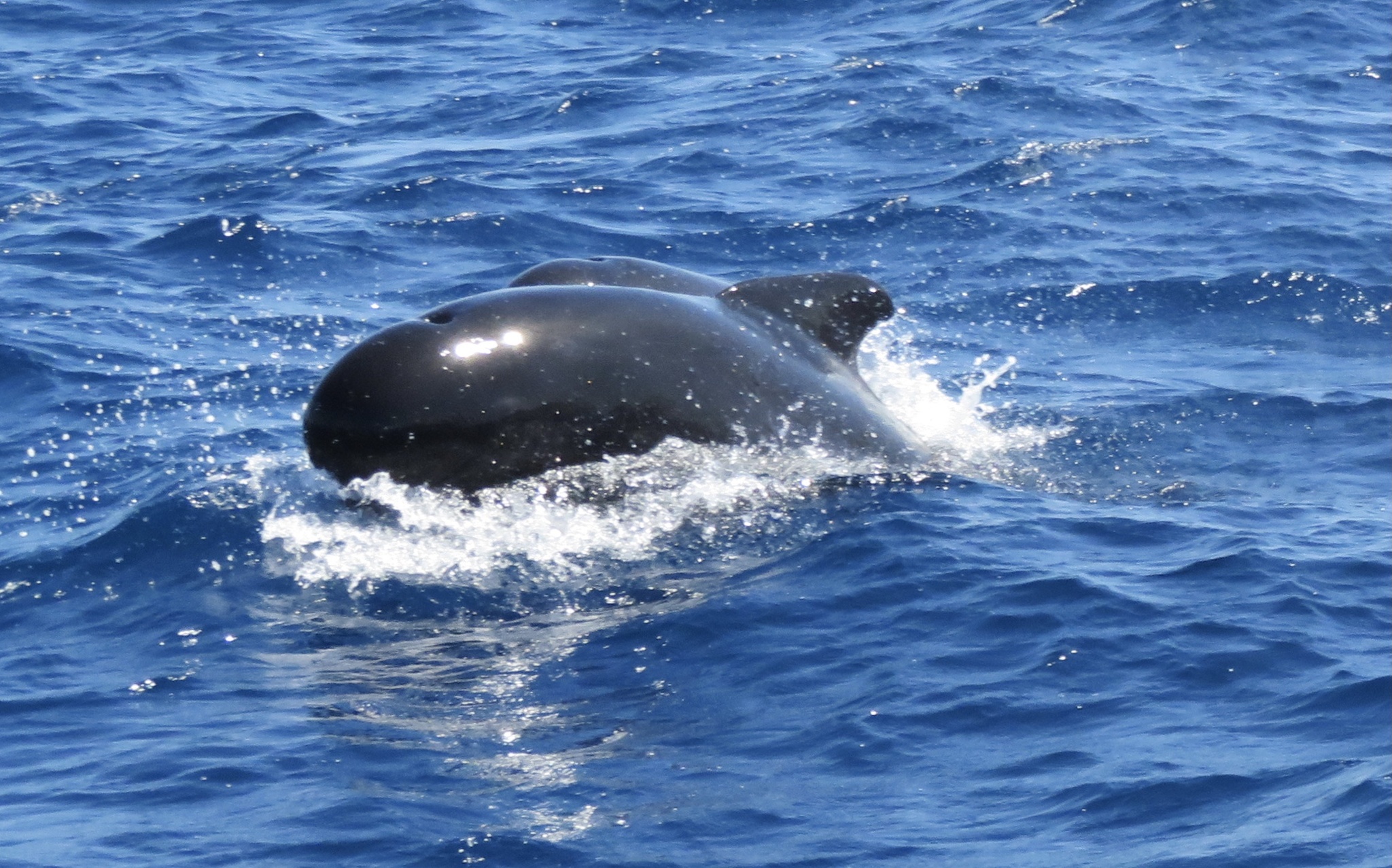
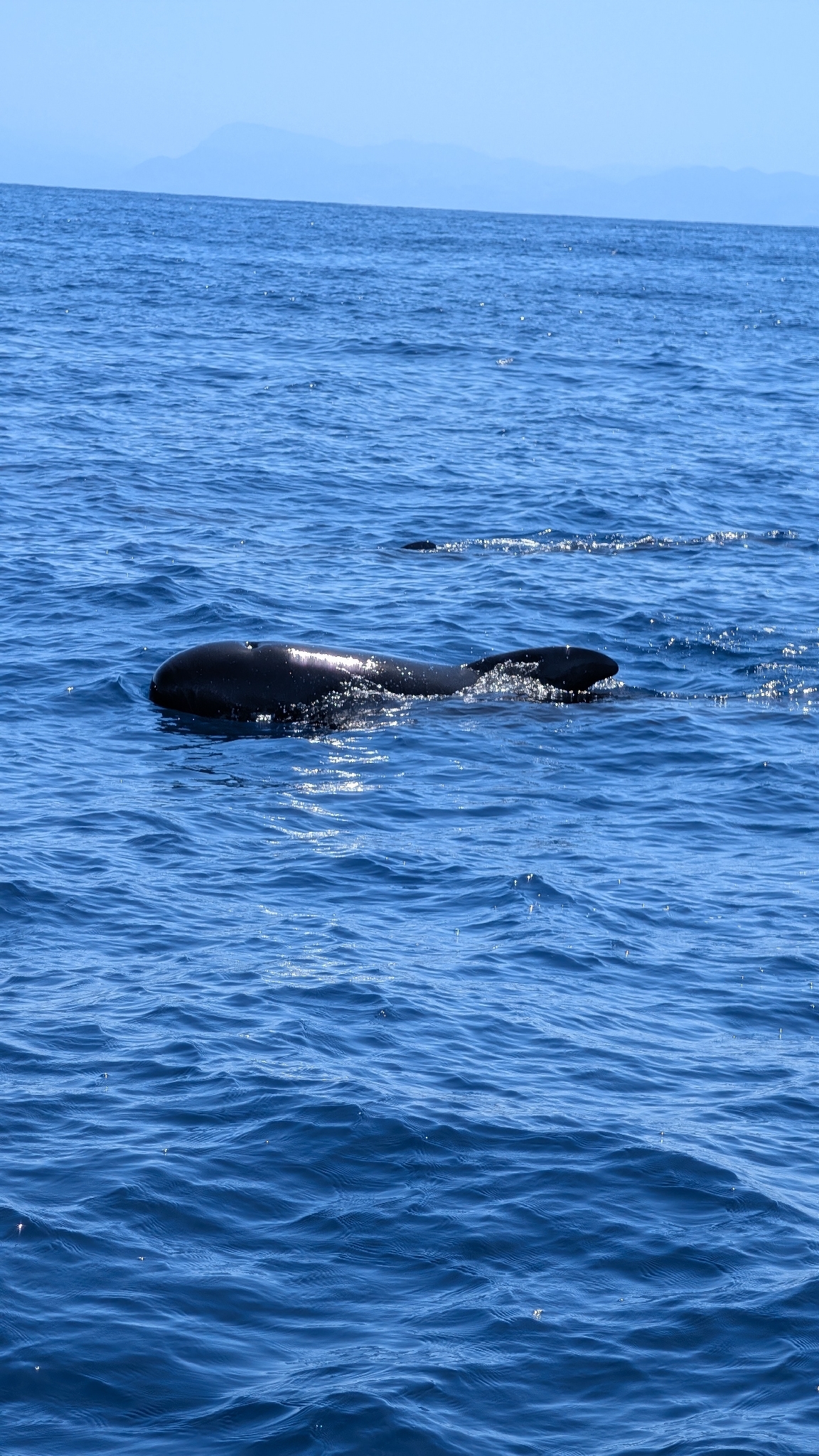
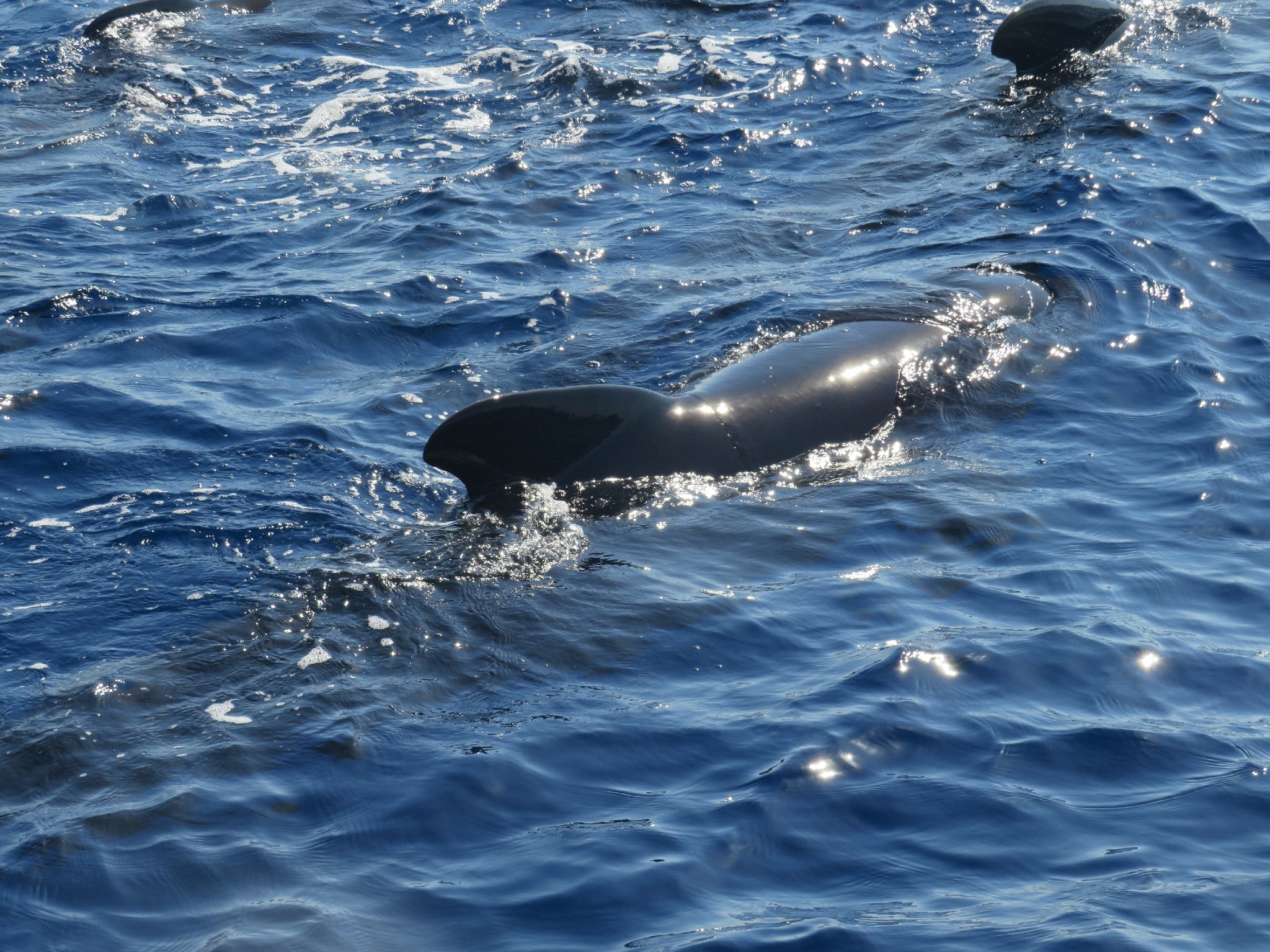
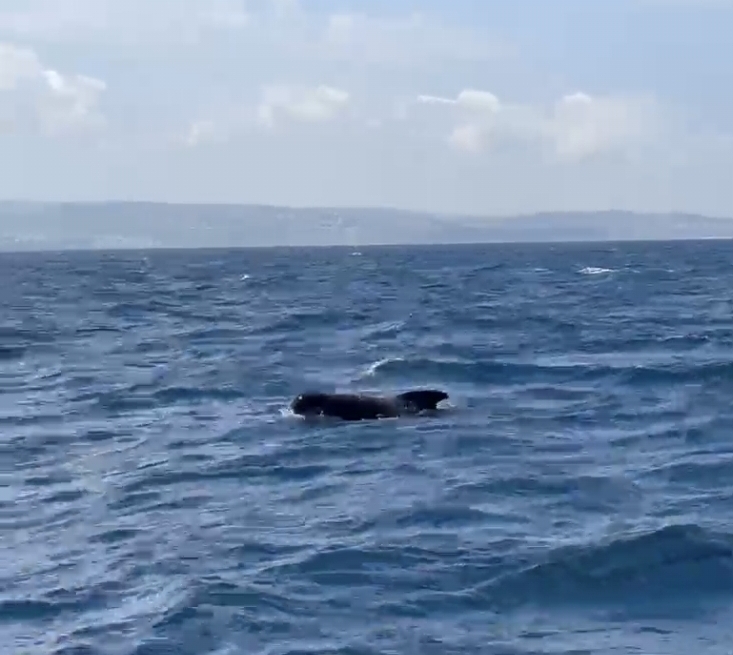
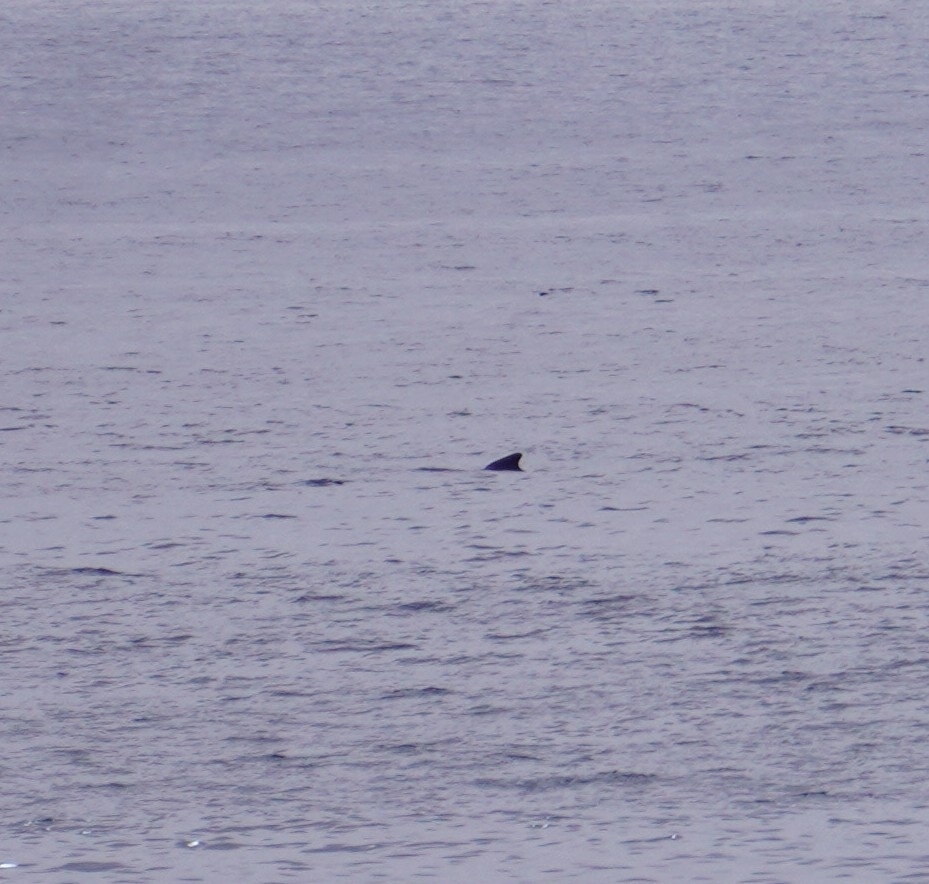
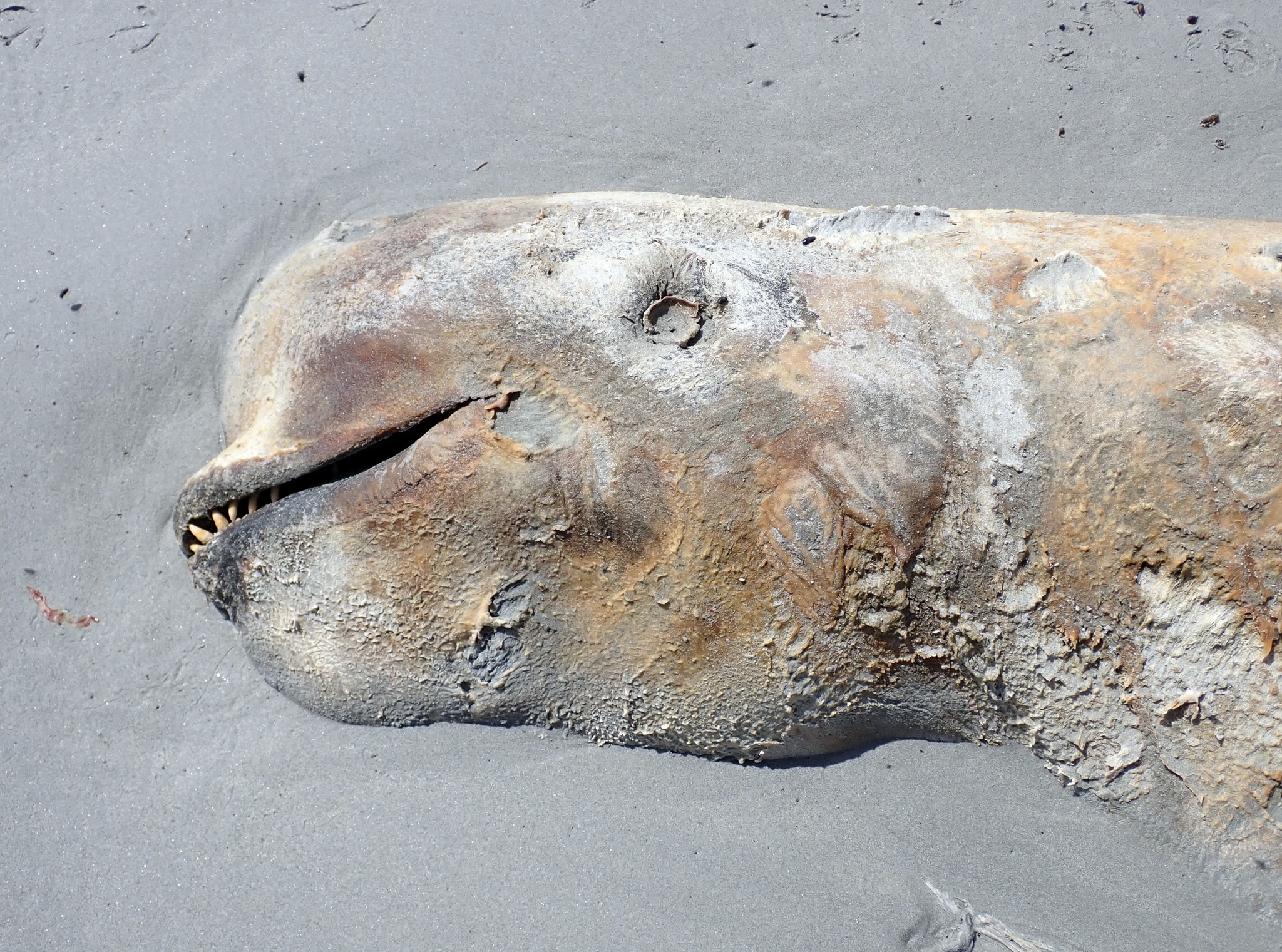
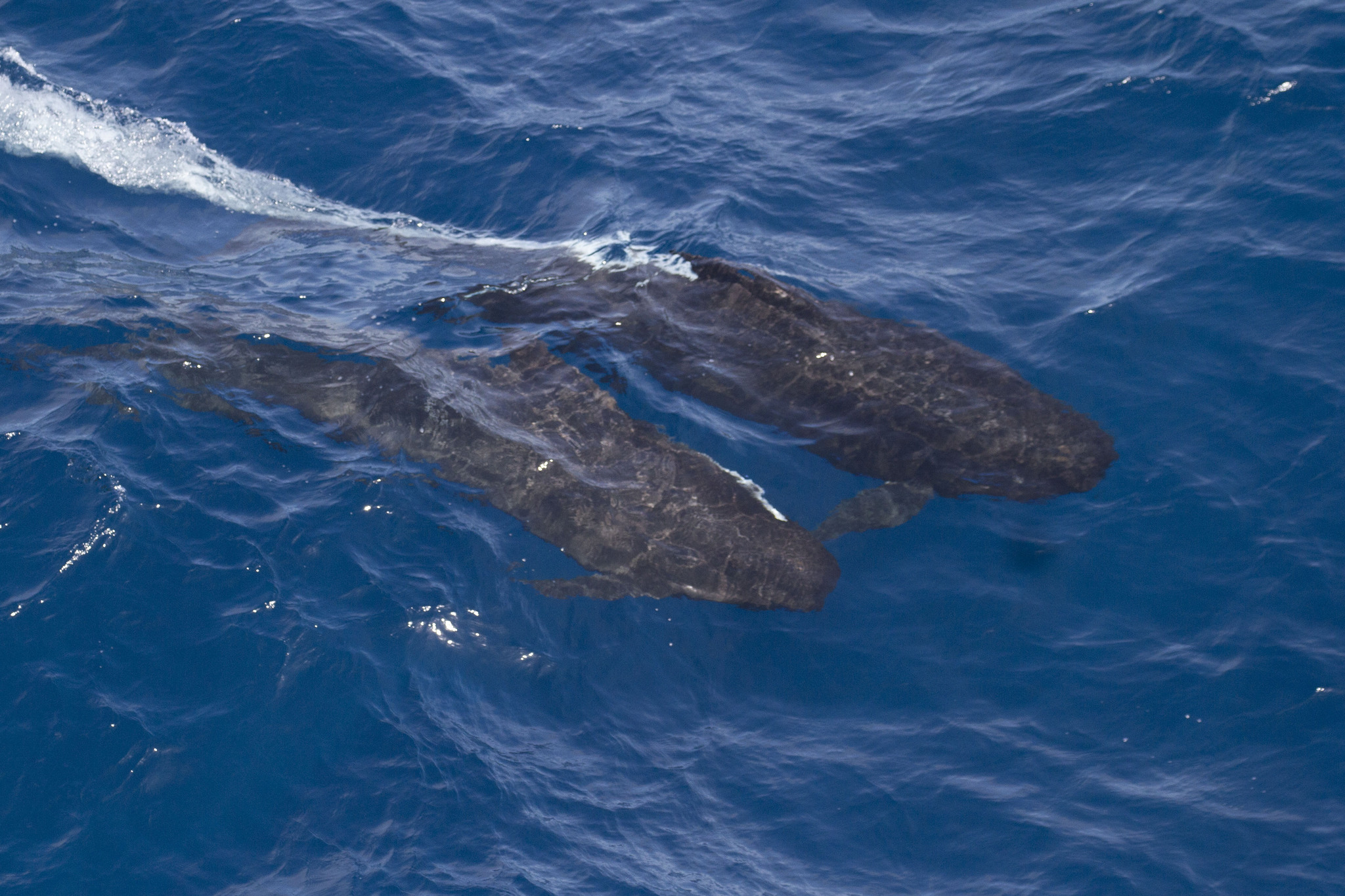
The long-finned pilot whale has a massive and immediately recognisable outline: a thick, tapering body and a head with no visible rostrum, topped by a large, globular melon that develops a pronounced crease in old males. The dorsal fin, set well forward, in the first third of the body, is low but very broad at the base, distinctly longer than it is high, and becomes rounded with age in adult males. The flippers, sickle-shaped, narrow and exceptionally elongated, make up 18% to 27% of total body length: it is this character that gives the species its name of “long-finned pilot whale”. The mouth carries 8 to 13 pairs of conical, blunted teeth in each jaw, a modest set suited to catching soft prey.
The coloration is a deep black, sometimes dark brown or slate grey depending on the light. Two pale markings allow identification at close range: a greyish-white anchor-shaped or W-shaped patch on the throat, which continues as a thin ventral “necktie” as far as the navel, and a greyish diagonal blaze behind the eye, often faint. Sexual dimorphism is clear, adult males being appreciably longer and heavier than females, with a more prominent melon and a thicker dorsal fin.
The main source of confusion is the short-finned pilot whale (Globicephala macrorhynchus), morphologically very close: at sea, the two species can be told apart only by subtle differences in size, in colour pattern and above all in flipper length, shorter in the tropical species. Fortunately their ranges overlap little, the long-finned pilot whale occupying temperate to cold waters. The false killer whale, more slender and with a tapering head, and Risso’s dolphin, pale grey and covered in scars, are more easily distinguished.
Described as Delphinus melas by the Scottish naturalist Thomas Stewart Traill in 1809, the animal was long referred to under the spelling Globicephala melaena, the epithet melas having been restored in 1986. The species belongs to the family Delphinidae, the oceanic dolphins, and to the genus Globicephala, which holds only one other living species, the short-finned pilot whale (G. macrorhynchus). With its large males exceeding six metres, the long-finned pilot whale is the second largest delphinid after the killer whale.
Two living subspecies are recognised: G. melas melas in the North Atlantic and G. melas edwardii in the southern hemisphere. A third form, now extinct, occupied the western North Pacific and is known only from remains dated to the eighth to the twelfth century, which accounts for the present absence of the species from that region.
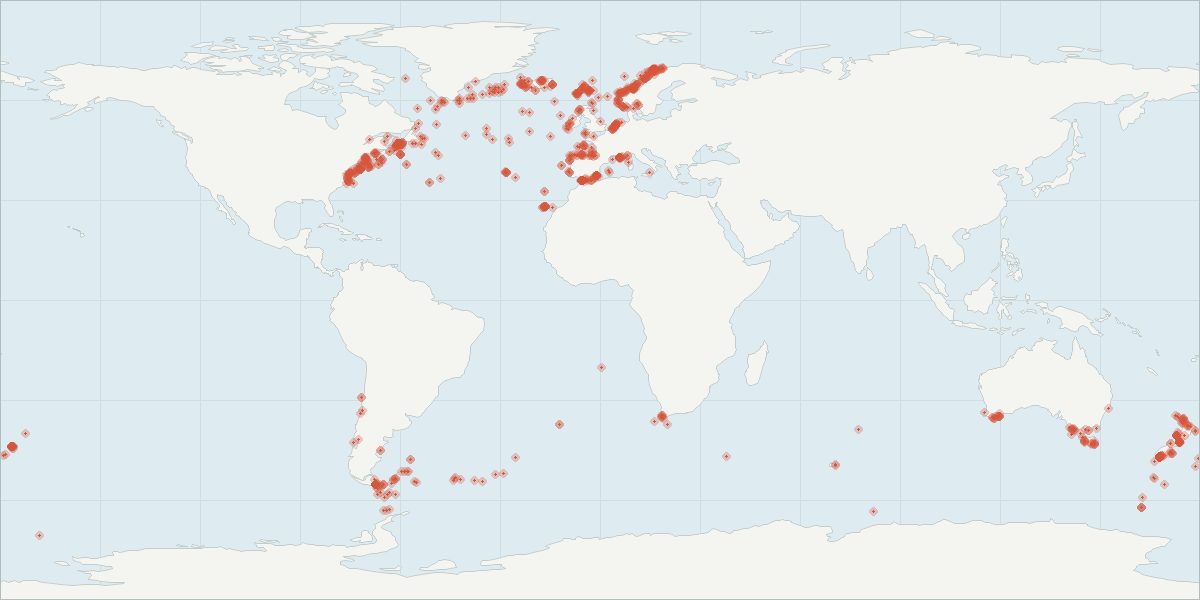
The range of the long-finned pilot whale is described as antitropical: the species occupies two broad belts of temperate to subpolar water separated by the intertropical zone, which it does not cross. In the northern hemisphere it is confined to the North Atlantic, from the east coast of the United States and the Gulf of St Lawrence to Greenland, Iceland, the Faroe Islands, the Barents Sea and the North Sea, then southwards along Atlantic Europe, the Azores and Madeira as far as the Strait of Gibraltar and the western Mediterranean. In the southern hemisphere the distribution is circumglobal between about 19° and 60° south, with regular sightings as far as the Antarctic Convergence and, exceptionally, to 68° S at the edge of the sea ice.
It is an essentially oceanic species, associated with the deep water of the continental slope and with submarine canyons, but one that sometimes comes close inshore following its prey.
In France, the long-finned pilot whale occurs in the western Mediterranean basin, where the Pelagos Sanctuary and the Ligurian Sea are the main areas of summer encounter, and in the Bay of Biscay, where it frequents depths of 100 to 2,000 m and where groups of five to ten animals, sometimes several dozen, are seen inshore each summer. The species also frequents French overseas waters, in particular around Saint Pierre and Miquelon and the subantarctic islands of the French Southern Territories. Its presence in the northern Mediterranean basin becomes scarce from November to May, which suggests seasonal movements linked to prey availability.
The long-finned pilot whale is above all a hunter of cephalopods. Squid, foremost among them the European flying squid in the north-east Atlantic, together with histioteuthids and ommastrephids in the Mediterranean, largely dominate its diet, supplemented by octopus and, when cephalopods become scarce, by fish such as herring, mackerel, hake, cod or lanternfish. Hunting is done by echolocation, mainly at night, at roughly 200 to 500 m deep. Foraging dives commonly reach 600 m and last ten to sixteen minutes; a maximum of 852 m and submersions of eighteen minutes have been recorded by tags, but most daily dives remain brief, six out of ten lasting less than three minutes.
The social life of the species is one of the most stable among cetaceans. The animals form pods of 20 to 150 individuals, sometimes aggregations of several hundred up to a thousand, structured into lasting matrilines of about eight to twelve animals. Remarkably, neither females nor males leave their mother’s group: mating takes place during encounters between different groups, which avoids inbreeding while preserving family bonds for life. Older females take an active part in looking after the young, including calves that are not their own. The vocal repertoire, rich in whistles, calls and repeated sequences, extends from 1 to 20 kHz.
Females reach sexual maturity at about eight years, males at about twelve. Gestation lasts twelve to sixteen months and leads to the birth of a single calf every three to six years. Lactation extends from 18 to 44 months, and some old females go on producing milk well beyond that, for up to about ten years. Males live 35 to 46 years, females up to around sixty. The brain of the species has yielded a striking finding: a study published in 2014 counted about 37.2 billion neocortical neurons in it, close to twice the number estimated in humans, a result that still feeds scientific debate on counting methods.
At the global scale, the long-finned pilot whale is classified as Least Concern (LC) on the IUCN Red List, an assessment carried out and published in 2018; the population trend is described there as unknown, for want of sufficient data series across the whole range. North Atlantic numbers are large: the 2015 NASS surveys estimated 344,148 individuals (95% CI: 162,795 to 727,527) for the Iceland and Faroe Islands area and 9,180 for western Greenland, and analysis of the 1987-2015 series did not bring to light any significant decline.
The Mediterranean situation is quite different. Long classified as “Data Deficient“, the population of the basin was split and reassessed in 2021: the inner Mediterranean subpopulation is now Endangered (EN) and that of the Strait of Gibraltar Critically Endangered (CR), classifications taken up by ACCOBAMS Resolution 8.12. About 2,888 individuals (95% CI: 2,565 to 3,270) have been estimated between the Strait of Gibraltar, the northern Alboran Sea and the Gulf of Vera over the period 1992-2010 (data from A. Cañadas). No robust estimate is available for the north-west of the basin, where the species is encountered only in scattered fashion; the Endangered listing of the inner Mediterranean subpopulation rests on a figure of fewer than 2,500 mature individuals (criterion C2a(ii)). Genetic diversity there is low and exchanges with the Atlantic are restricted. A morbillivirus epizootic hit the pilot whales of the Alboran Sea hard in 2006-2007, with an uncertain capacity for recovery.
The main threats are bycatch in gillnets, pelagic longlines and trawls, the chemical contaminants and mercury that accumulate along the food chain, underwater noise, military sonar and seismic surveying foremost among them, disease, and the effects of climate change on prey distribution. To these is added a directed hunt: the Faroese grindadráp, practised since Norse settlement and documented in writing since 1584, with continuous and reliable catch statistics since 1709, takes an average of 632 animals a year since 2000 (from 0 to 1,203 depending on the year), and Greenland takes about 248 a year. In 2008, the chief medical officers of the Faroe Islands recommended that pilot whale meat no longer be regarded as fit for human consumption because of its mercury levels.
The species is listed in Appendix II of CITES; its North Sea and Baltic Sea populations appear in Appendix II of CMS, and the species is covered by the ASCOBANS and ACCOBAMS agreements. In France it holds protected species status: killing, capture, keeping and intentional disturbance are prohibited and carry criminal penalties.
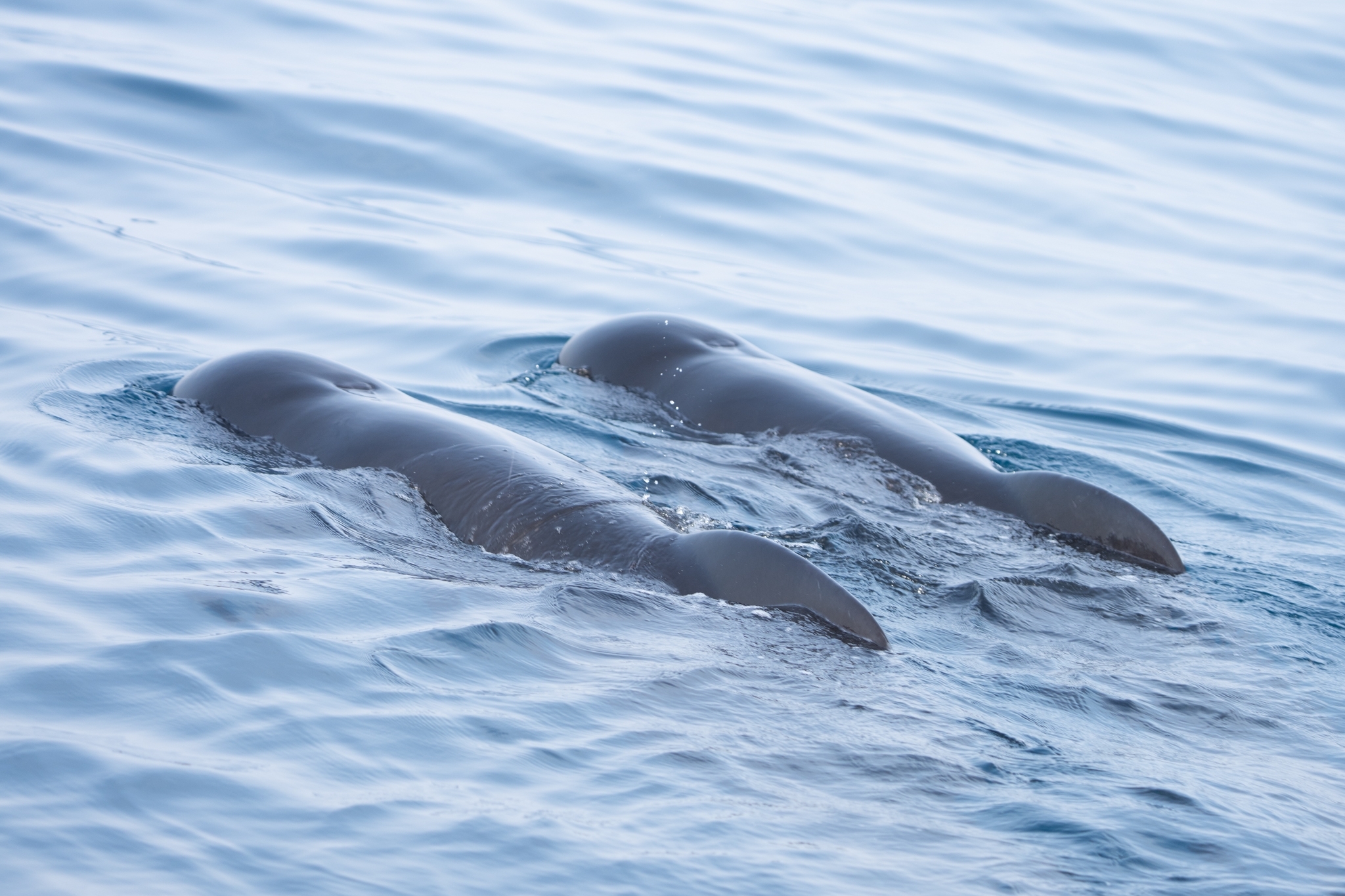
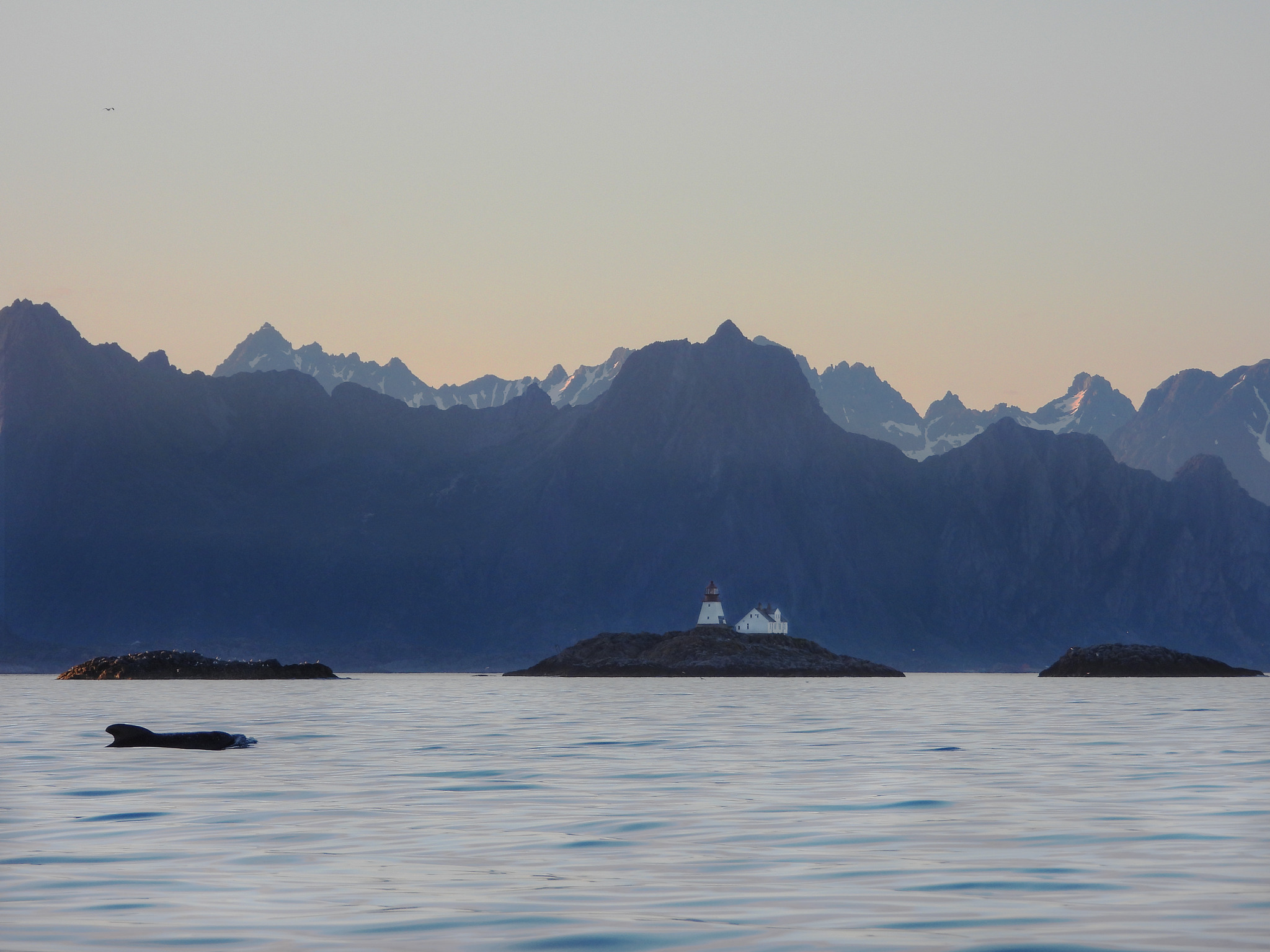
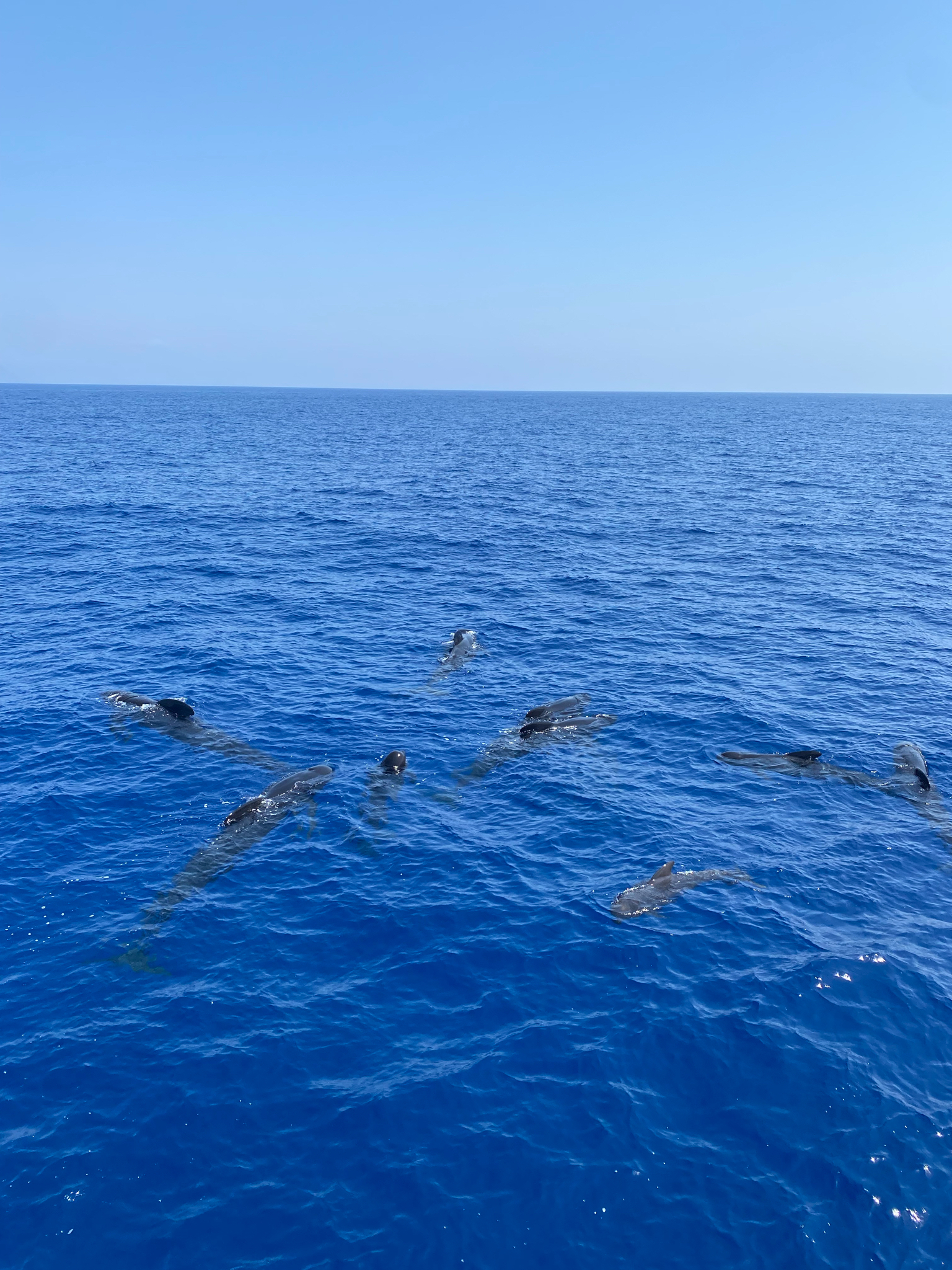
In the French Mediterranean, the best period for watching runs from June to September, the Ligurian Sea and the Pelagos Sanctuary accounting for most summer encounters. In the Bay of Biscay, groups are reported each summer over the continental slope and the canyons, in 100 to 2,000 m of water. The species can be picked out at a distance by its long periods of rest at the surface, where the animals float motionless side by side, lined up in a “chorus line”; the blow is low and diffuse, and pilot whales readily spyhop, raising the head vertically to look around. When travelling quietly they often move at only 1.5 knots, which makes approach easier.
This apparent slowness should not encourage persistence. Daytime resting phases are vital for a species that hunts at depth by night, and disturbing them carries a real energy cost. Responsible conduct means never cutting across the path of a group or splitting it up, staying more than 100 m away, approaching slowly and on a parallel course, limiting the watch to about fifteen minutes and never attempting to swim with the animals. Reporting sightings to the national scientific networks, noting the date, the position and the size of the group, contributes directly to the monitoring of a species still poorly known in French waters.
It is a dolphin. Despite its nickname of “pilot whale”, it belongs to the family Delphinidae, that of the oceanic dolphins, and is its second largest member after the killer whale. Its stocky build and its head without a rostrum simply give it a more “whale-like” outline than that of the familiar dolphins.
It is very difficult at sea: the two species differ only in shades of size and coloration and above all in the length of the flippers, which reach 18% to 27% of body length in the long-finned pilot whale against distinctly less in the short-finned. The most reliable criterion remains geographical, the long-finned pilot whale occupying temperate to cold waters and its relative the warm waters.
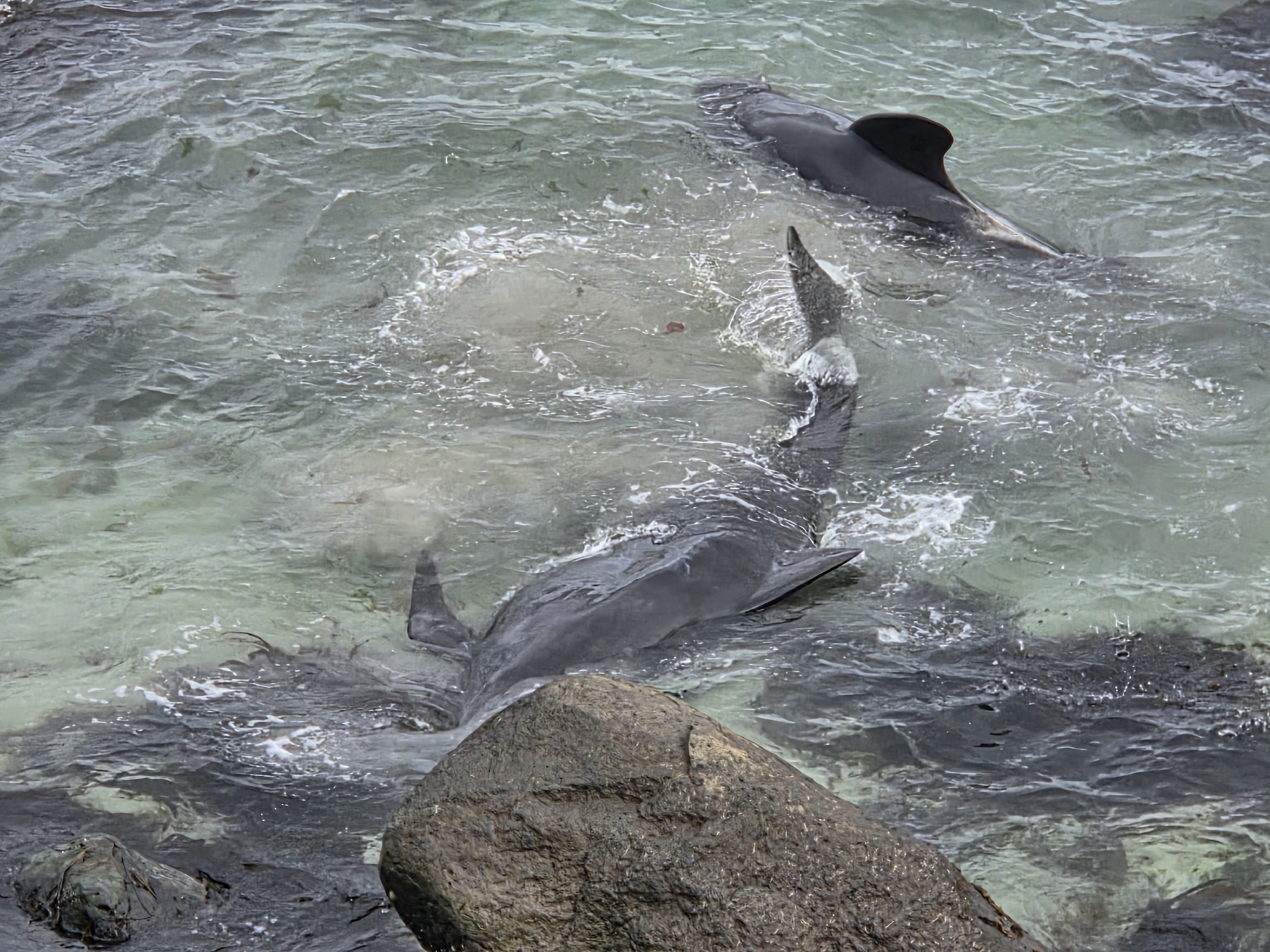
The long-finned pilot whale is the species most frequently involved in mass strandings. The leading hypothesis rests on the extreme cohesion of the group: when one animal strands, the others tend to follow it rather than leave it. Navigational errors in shallow bays and anthropogenic factors such as sonar are also put forward. In September 2020, about 470 animals stranded at Macquarie Harbour, in Tasmania, the largest episode ever recorded in Australia; some hundred animals could be saved.
Yes. The long-finned pilot whale frequents the western Mediterranean basin, in particular the Pelagos Sanctuary and the Ligurian Sea in summer, and the Bay of Biscay, where it is seen every year over the continental slope. It is also present in the French waters of Saint Pierre and Miquelon and of the subantarctic French Southern Territories. Encounters there nevertheless remain scattered: no robust estimate of numbers is available for the north-west Mediterranean.
Its foraging dives commonly reach 600 m for durations of ten to sixteen minutes, and a maximum depth of 852 m as well as breath-holds of eighteen minutes have been recorded by tags. Most daily dives are nevertheless short: six out of ten last less than three minutes.
Yes, in two regions of the North Atlantic. In the Faroe Islands, the traditional drive hunt called the grindadráp is documented in writing since 1584, with continuous catch statistics since 1709; it takes an average of 632 animals a year since 2000, with wide variation from one year to the next. Greenland takes about 248 a year. In 2008, the Faroese health authorities recommended that this meat no longer be eaten because of its mercury contamination.
Sheet compiled from authoritative scientific sources (IUCN, NOAA Fisheries, specialist literature) and reviewed for factual accuracy.
According to the open data of the GBIF, 1,176 georeferenced sightings of Globicephala melas are recorded in our photographic index.
| Country | Notes |
|---|---|
| Spain | 173 |
| Canada | 153 |
| United States of America | 143 |
| Norway | 133 |
| Morocco | 132 |
| New Zealand | 118 |
| Australia | 48 |
| Netherlands | 47 |
| Iceland | 43 |
| Faroe Islands | 40 |

Monthly distribution of 1,196 dated sightings (all years combined): the maximum is reached in August.
| Month | Notes |
|---|---|
| janvier | 50 |
| February | 48 |
| mars | 55 |
| avril | 80 |
| mai | 107 |
| juin | 123 |
| juillet | 169 |
| August | 219 |
| septembre | 148 |
| octobre | 82 |
| novembre | 65 |
| December | 50 |
These figures reflect survey effort (more boaters and more surveys in summer) as much as the actual presence of the species: to be interpreted with caution.


Photographs from GBIF under a Creative Commons licence. The author and the licence of each photograph are given; please respect them if you reuse them.
Automatic selection of the most cited works mentioning the species (source: Crossref).