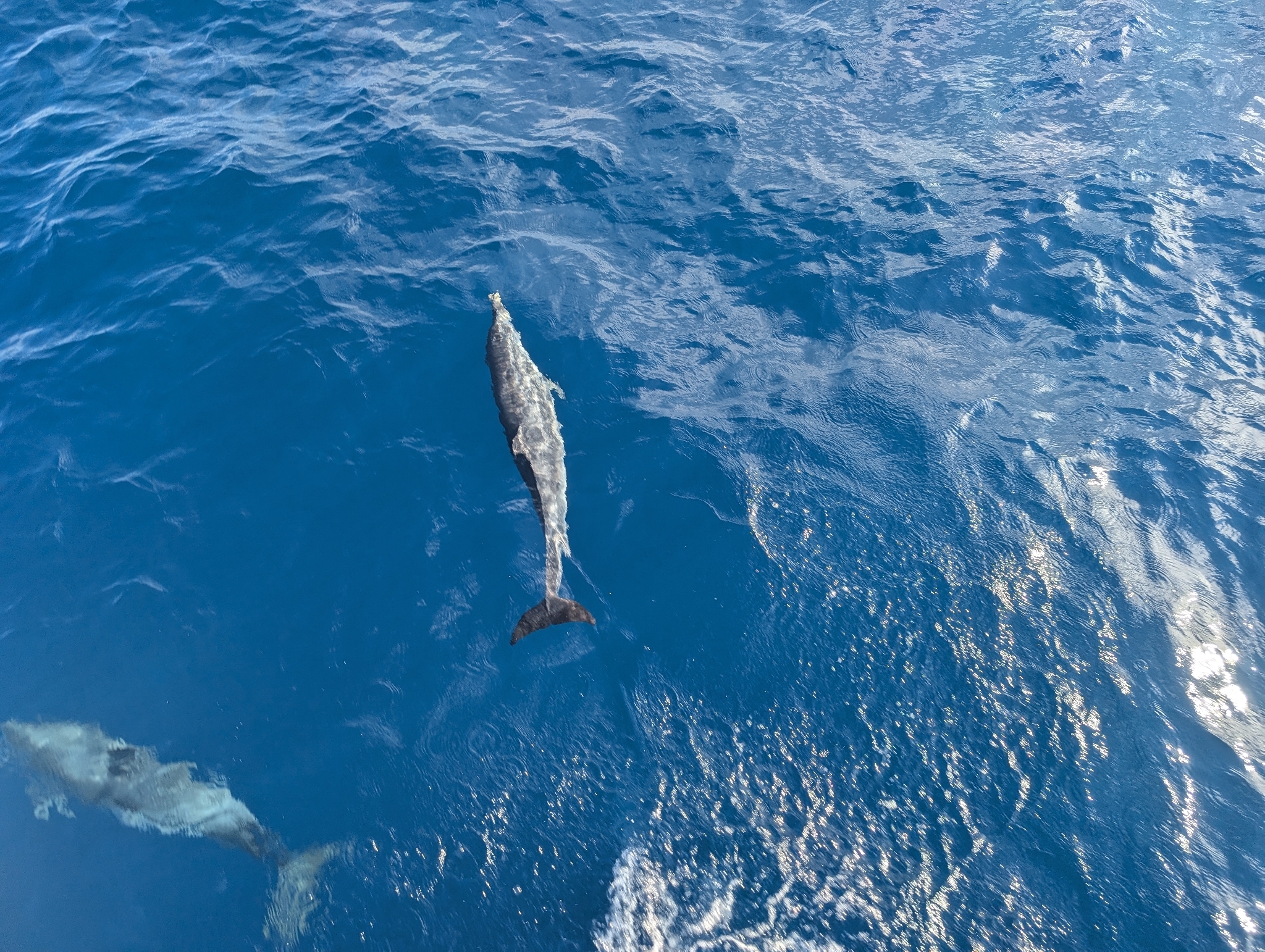
| Scientific name | Stenella attenuata (Gray, 1846) |
|---|---|
| Other names | Pantropical spotted dolphin, spotted porpoise, bridled dolphin, narrow-snouted dolphin (English); dauphin tacheté, dauphin douteux, dauphin à taches (French) |
| Size | 1.6 to 2.6 m in adults (about 80-90 cm at birth) |
| Weight | About 90 to 120 kg; the greatest weight recorded in the literature is 119 kg (male of 2.57 m) |
| Longevity | Of the order of 40 years; the documented maximum is about 46 years |
| Diet | Mesopelagic fish and cephalopods (squid, lanternfish), surface fish such as flying fish and mackerel |
| IUCN status | Least Concern (LC), global assessment of 2018 (Kiszka & Braulik), still in force in the current edition of the Red List (version 2026-1, July 2026). No subpopulation is assessed separately, but the “northeastern offshore” and “coastal” stocks of the eastern tropical Pacific are classed as “depleted” by the United States under the Marine Mammal Protection Act. |
The pantropical spotted dolphin is one of the most abundant delphinids in the warm waters of the globe, present in all three oceans between about 40° N and 40° S. A slender silhouette, a fine rostrum with a white tip and speckling that accumulates with age are its distinguishing features. Classed as Least Concern by the IUCN, it remains closely bound up with the history of the purse-seine tuna fishery of the eastern tropical Pacific.
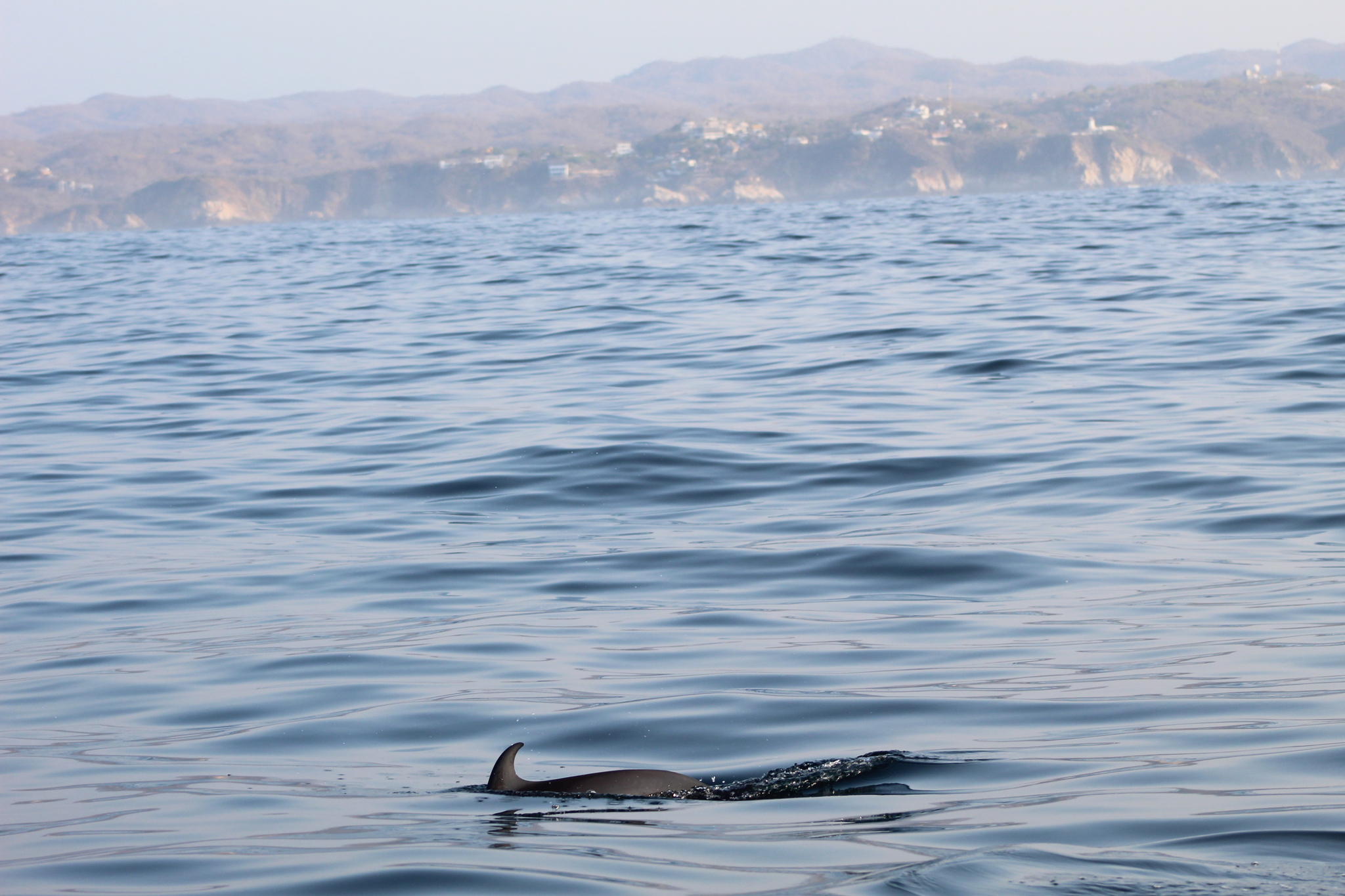
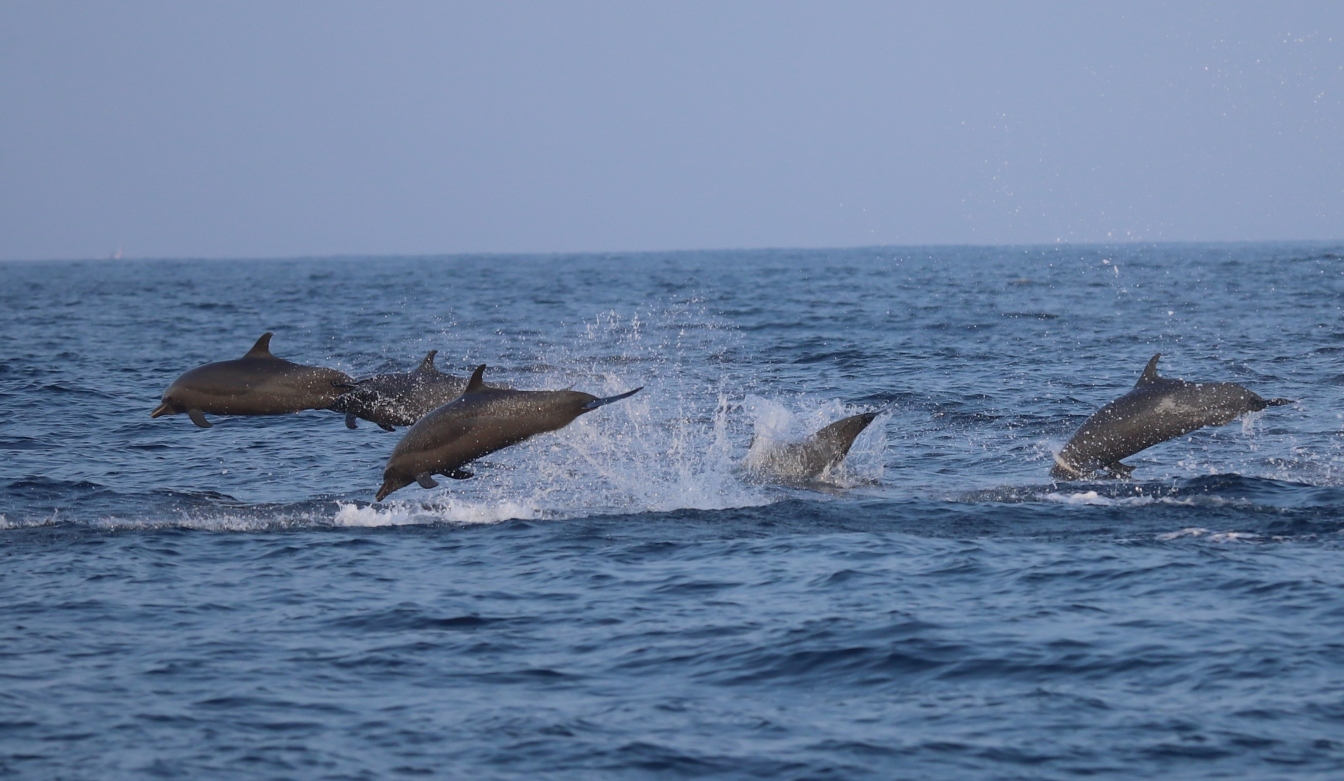
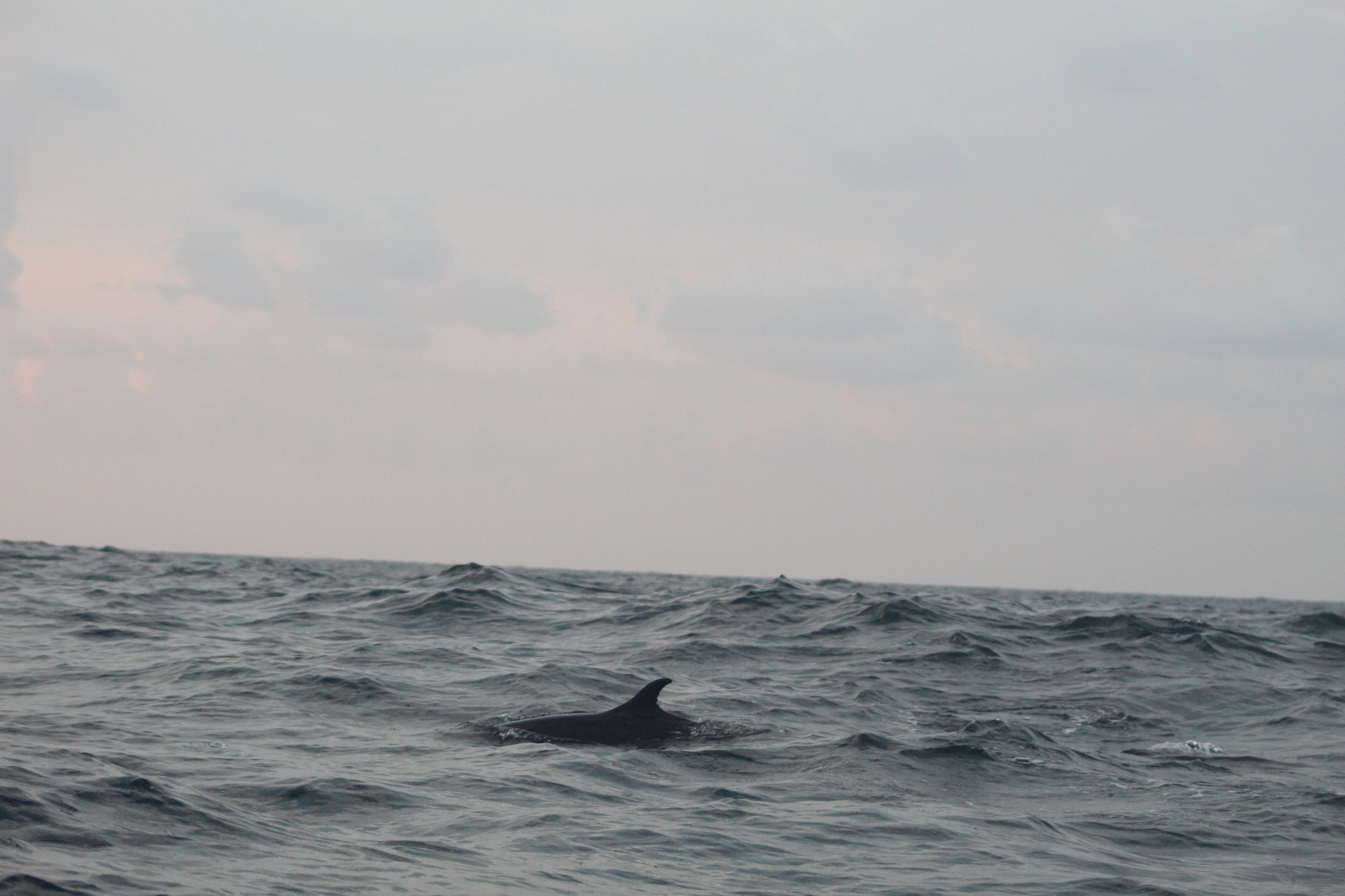
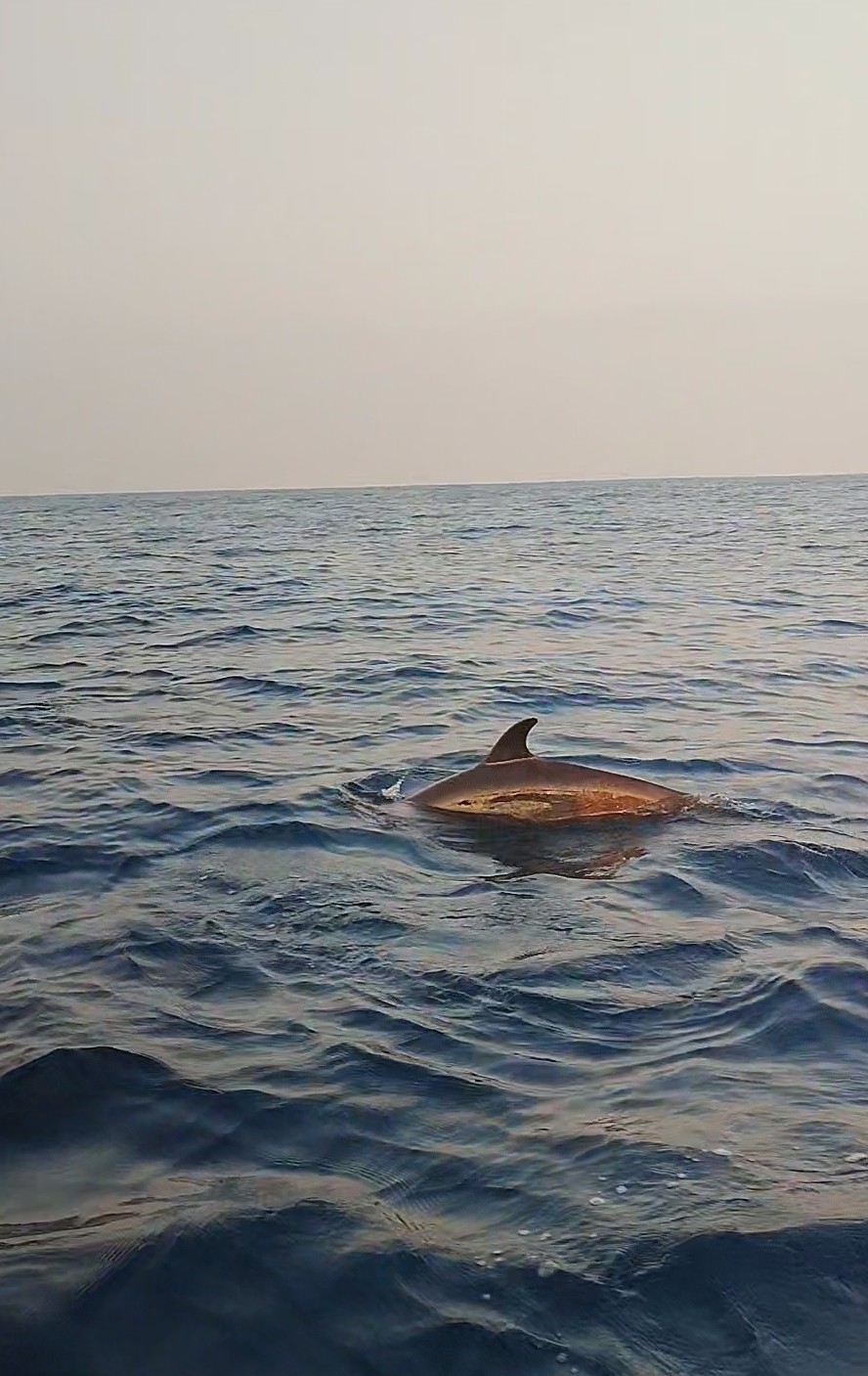
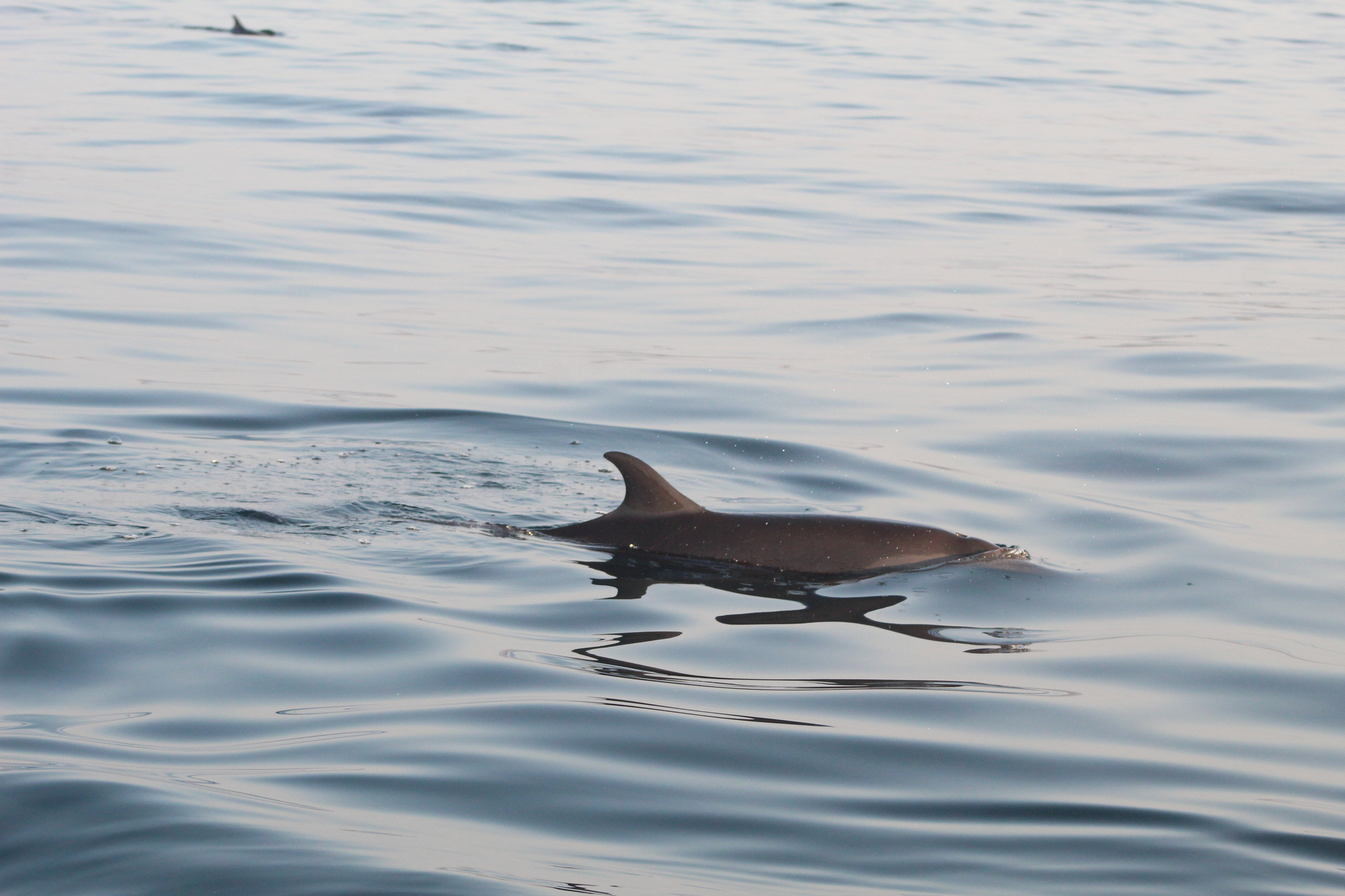
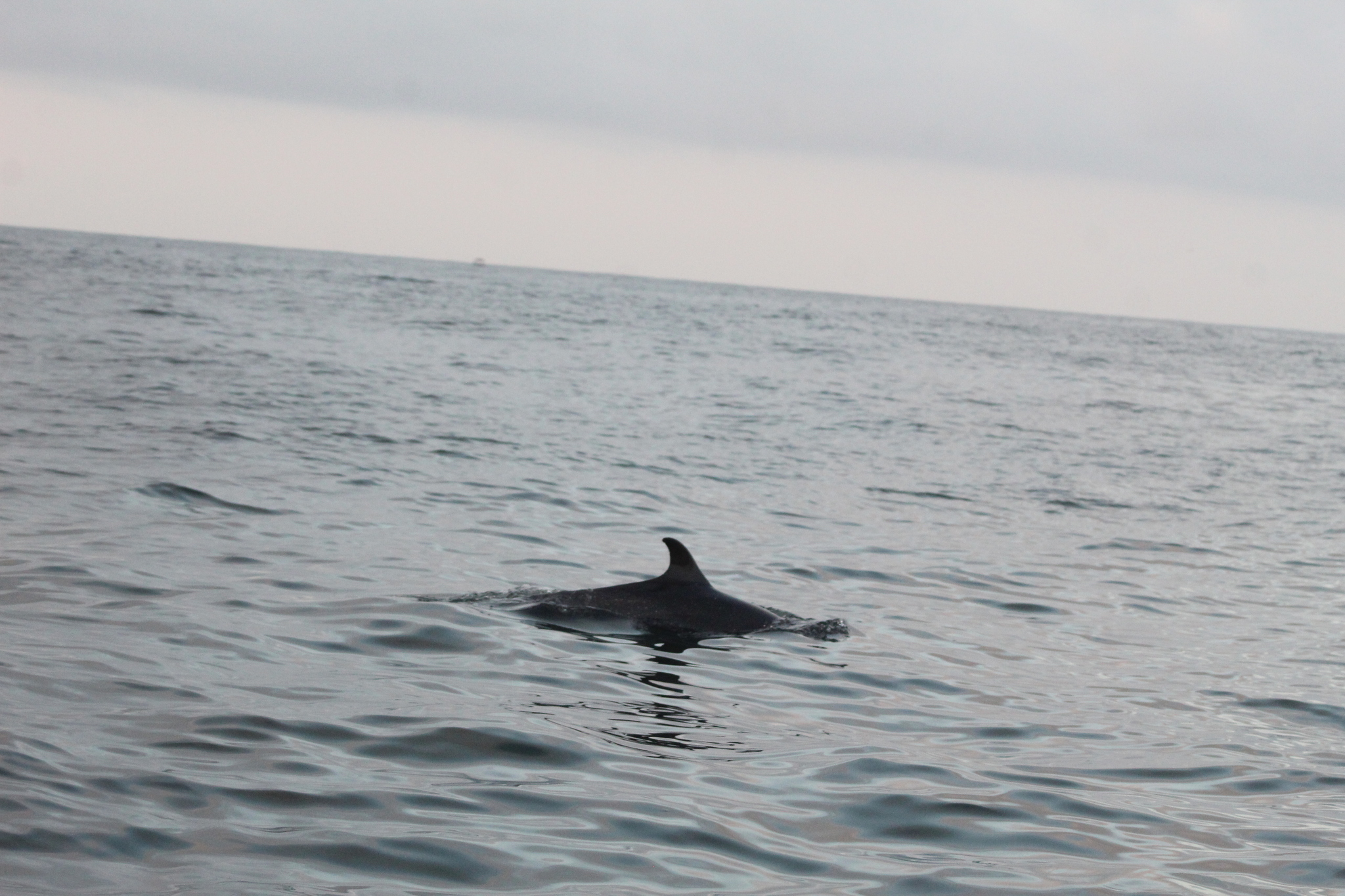
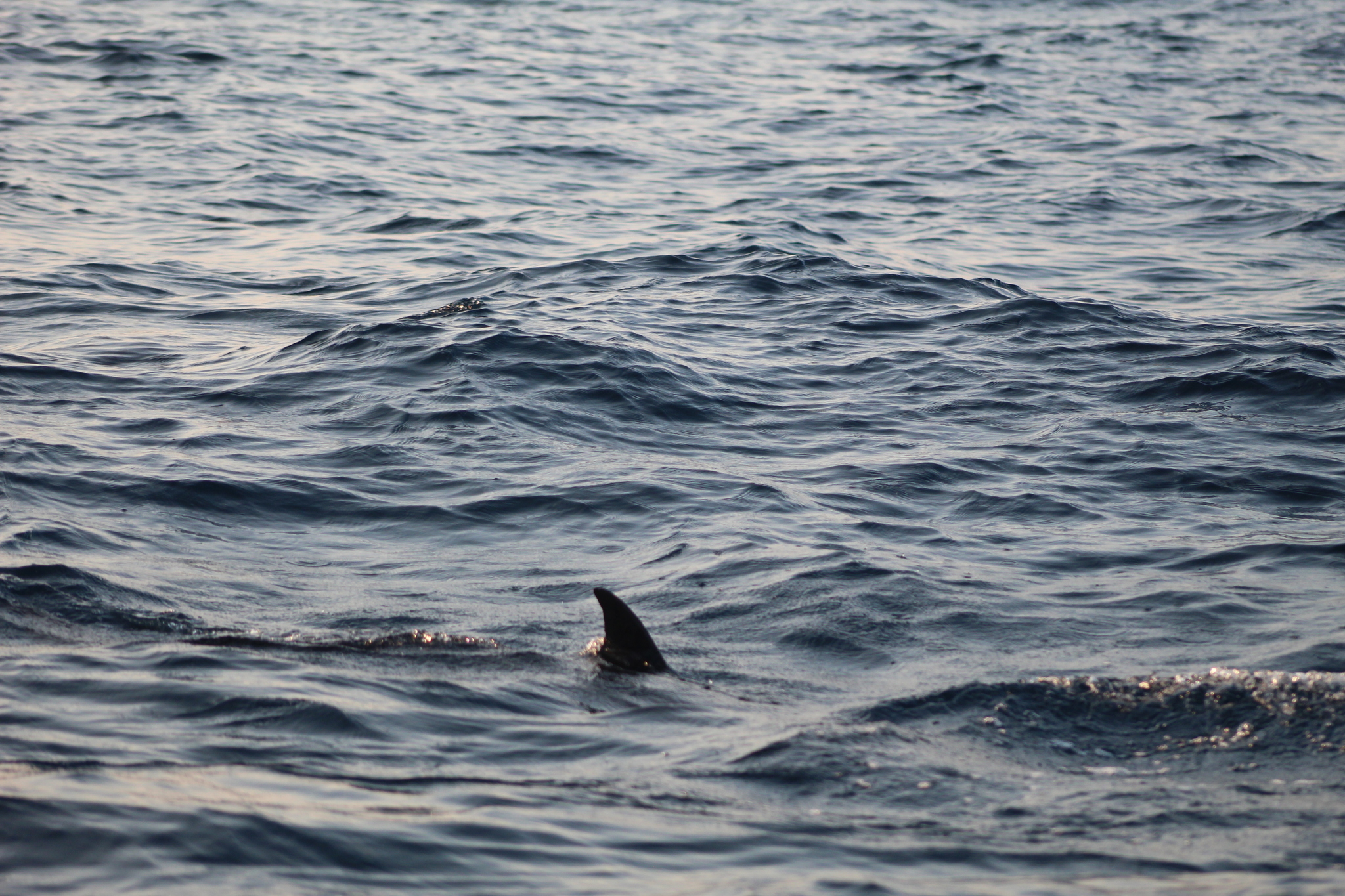
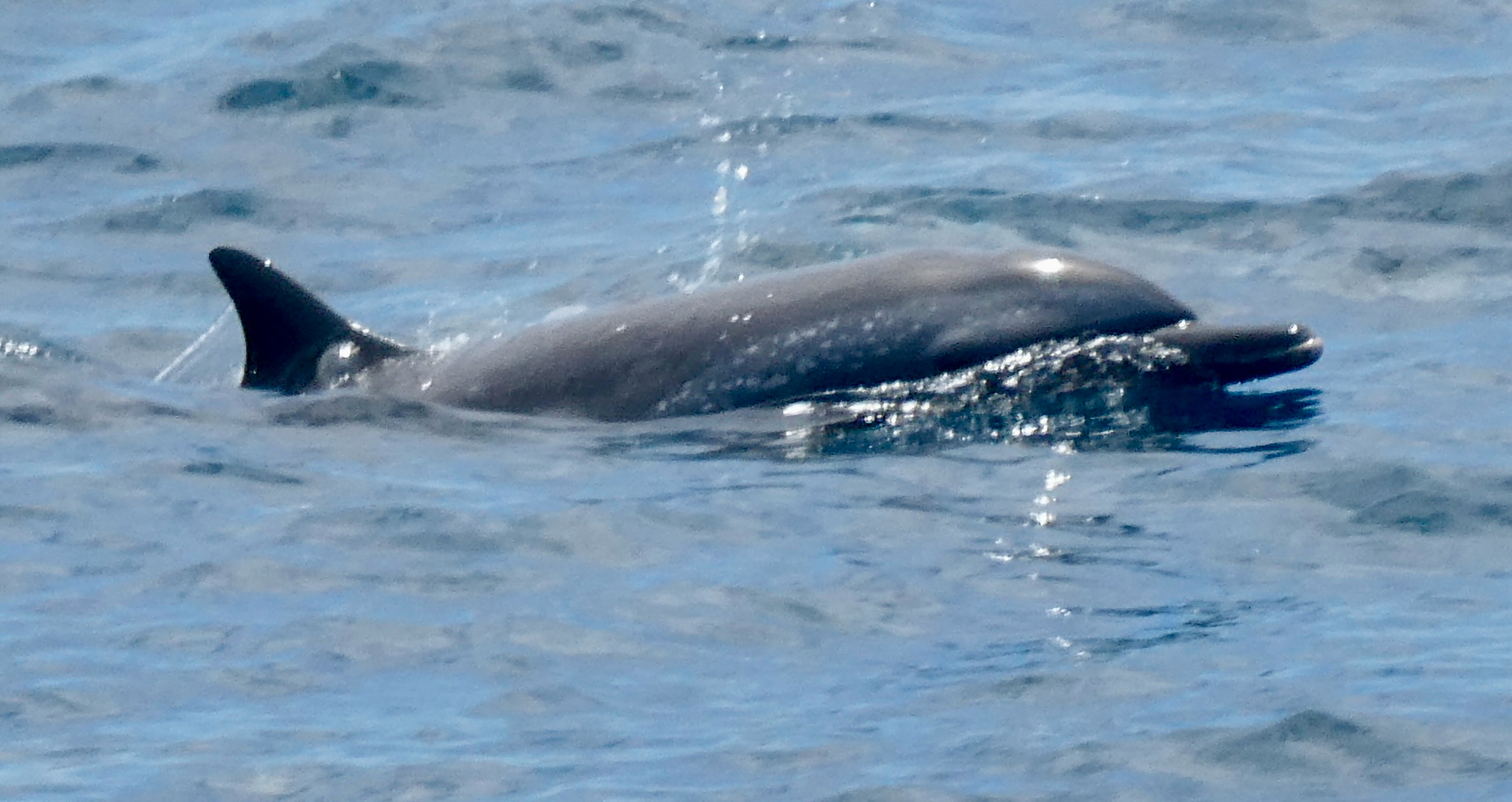
Of medium size for an oceanic dolphin, the pantropical spotted dolphin generally measures between 1.6 and 2.6 m and weighs 90 to 120 kg, the greatest recorded weight being 119 kg for a male of 2.57 m. The body is streamlined, distinctly slimmer than that of the common bottlenose dolphin, and is continued by a long, narrow rostrum whose tip is most often white, a character very useful in the field. A marked groove separates the melon from the rostrum. The dorsal fin, tall and falcate, is among the most tapered in the group. The coloration breaks down into three zones: a dark grey dorsal cape that descends in a point onto the flanks, mid-grey flanks and a pale belly. A fine dark line links the rostrum to the eye. Each half-jaw bears 35 to 48 conical teeth, adapted to gripping slippery prey.
The spots that give the species its name are absent at birth. Dark speckles appear first on the pale parts around weaning, then pale spots develop on the cape as maturity approaches. Older animals can look almost uniformly grizzled. The intensity of the speckling varies strongly from region to region: very marked in the coastal populations of the eastern Pacific, intermediate off Japan and in the eastern Indian Ocean, almost absent around Hawaii.
The most frequent confusion concerns the Atlantic spotted dolphin (Stenella frontalis), confined to the warm waters of the Atlantic: it is stockier, its rostrum is shorter and thicker, its head more rounded, and its adult speckling more extensive. The spinner dolphin (Stenella longirostris), often encountered in mixed groups, is distinguished by an even finer rostrum, a straighter dorsal fin and its characteristic spinning leaps. Unspotted juveniles may also be taken for young common bottlenose dolphins.
Stenella attenuata belongs to the family Delphinidae and to the subfamily Delphininae. The species was described by the British zoologist John Edward Gray under the name Steno attenuatus, from a specimen held at the British Museum; the type locality, designated after the fact, is Cape Horn, very far from the actual range of the species. Many names circulated before the genus Stenella was stabilised in the twentieth century, among them Delphinus pernettyi, Delphinus velox and Prodelphinus attenuatus.
Two subspecies are recognised today: Stenella attenuata attenuata, the oceanic form widespread throughout the warm seas, and Stenella attenuata graffmani, the coastal form of the eastern tropical Pacific, more heavily spotted. The genus Stenella is recognised as paraphyletic by molecular work, but the taxonomy committee of the Society for Marine Mammalogy has chosen not to alter the nomenclature until the position of the “problem” dolphin genera has been clarified.
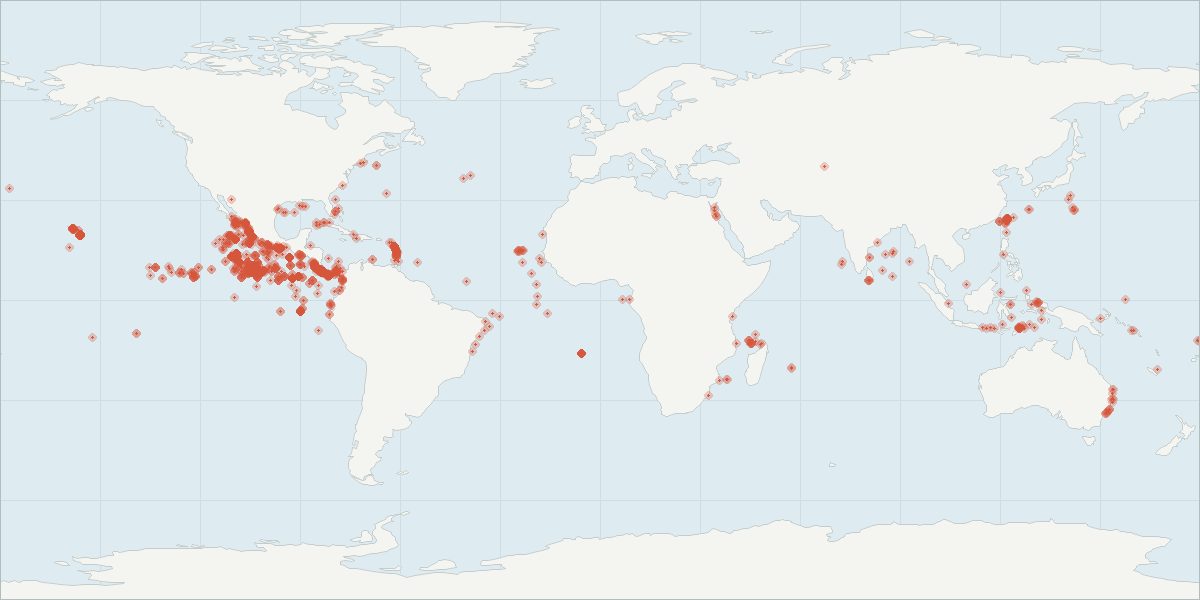
The species occupies the tropical and subtropical waters of the Atlantic, the Indian Ocean and the Pacific, roughly between 40° N and 40° S, as well as the Red Sea and the Persian Gulf. It seeks waters whose surface temperature generally exceeds 25 °C and frequents above all the open sea, continental slopes and island slopes; the coastal subspecies graffmani is the exception, confined to a coastal strip less than 200 km wide, from southern Mexico to Peru (the oceanic form, for its part, concentrates where the mixed layer is shallow and the thermocline sharp, at about 50 m or less).
In France, the pantropical spotted dolphin is an exclusively overseas species: it is absent from metropolitan waters (the English Channel, the Bay of Biscay, the Mediterranean), which lie beyond its thermal limit. It is, on the other hand, regularly observed in the French Antilles, in French Guiana, at La Réunion, at Mayotte, in New Caledonia and in French Polynesia, as well as in the Îles Éparses. In the Caribbean it is among the dolphins most frequently encountered off the island slopes. Around La Réunion, where it frequents deep water rather than the coast, a first estimate puts the population at about 4,400 individuals. Elsewhere, the northern Gulf of Mexico holds about 37,200 individuals according to the United States assessments, and the Hawaiian archipelago supports a pelagic stock to which three distinct island stocks are added (Oʻahu, the four-island group, the island of Hawaii).
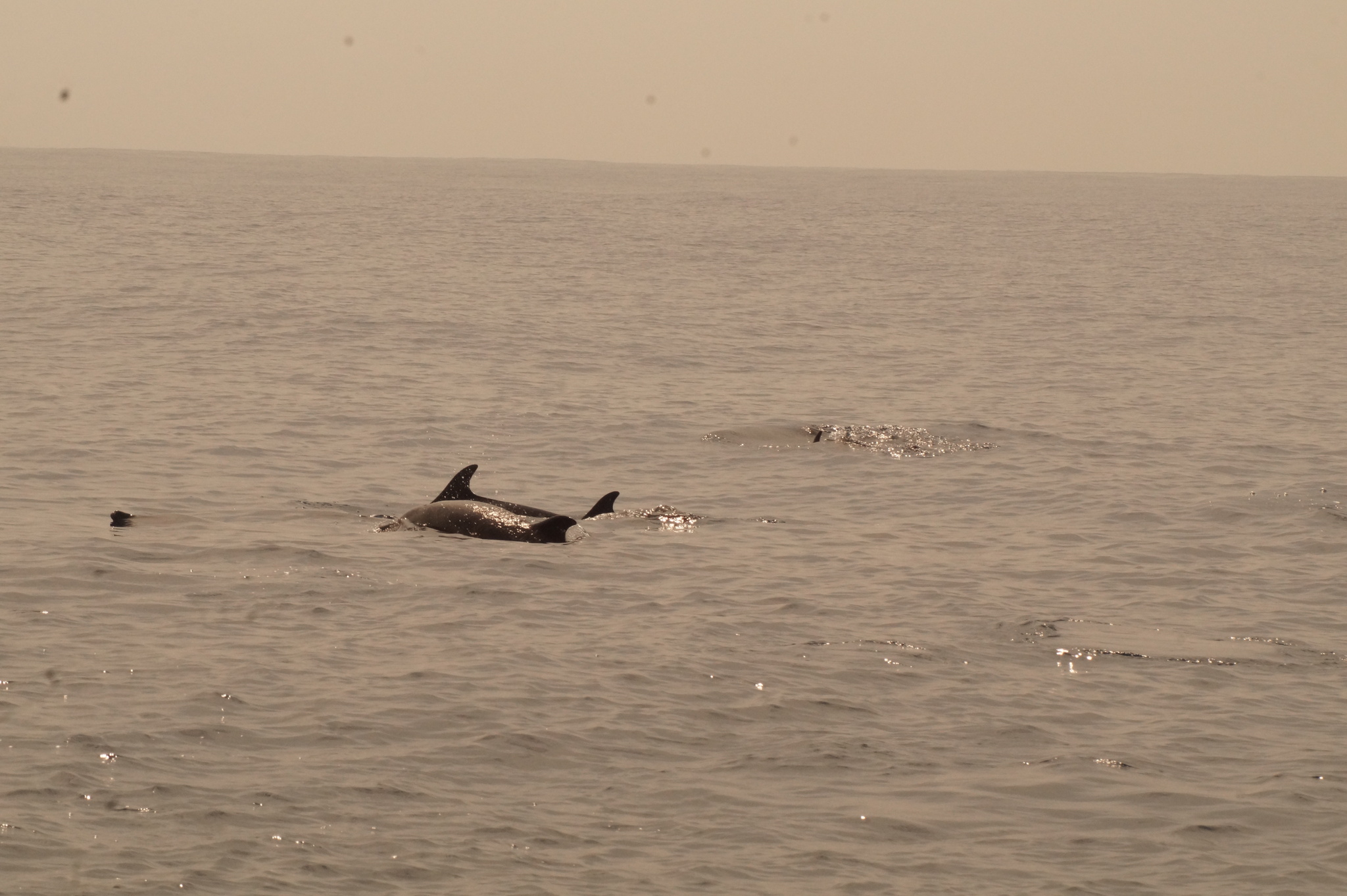
A highly gregarious species, the pantropical spotted dolphin is most often found in groups of a few dozen to several hundred individuals, gatherings of a thousand not being rare offshore; the coastal form of the eastern Pacific, by contrast, forms small units of about fifty animals. Interspecific associations are frequent, in particular with the spinner dolphin, the rough-toothed dolphin (Steno bredanensis), the short-finned pilot whale and the melon-headed whale.
The diet is dominated by mesopelagic fish and cephalopods, supplemented by surface prey such as flying fish and mackerel. The activity rhythm follows the vertical migration of the micronekton: the animals feed mainly at night, when the prey rise, and spend the day in the surface layer, between about one hundred and three hundred metres. Dives of the order of 200 m, lasting three to four minutes, have been documented. In the eastern tropical Pacific, the species associates in a lasting way with schools of yellowfin tuna, a relationship that has had heavy consequences for it.
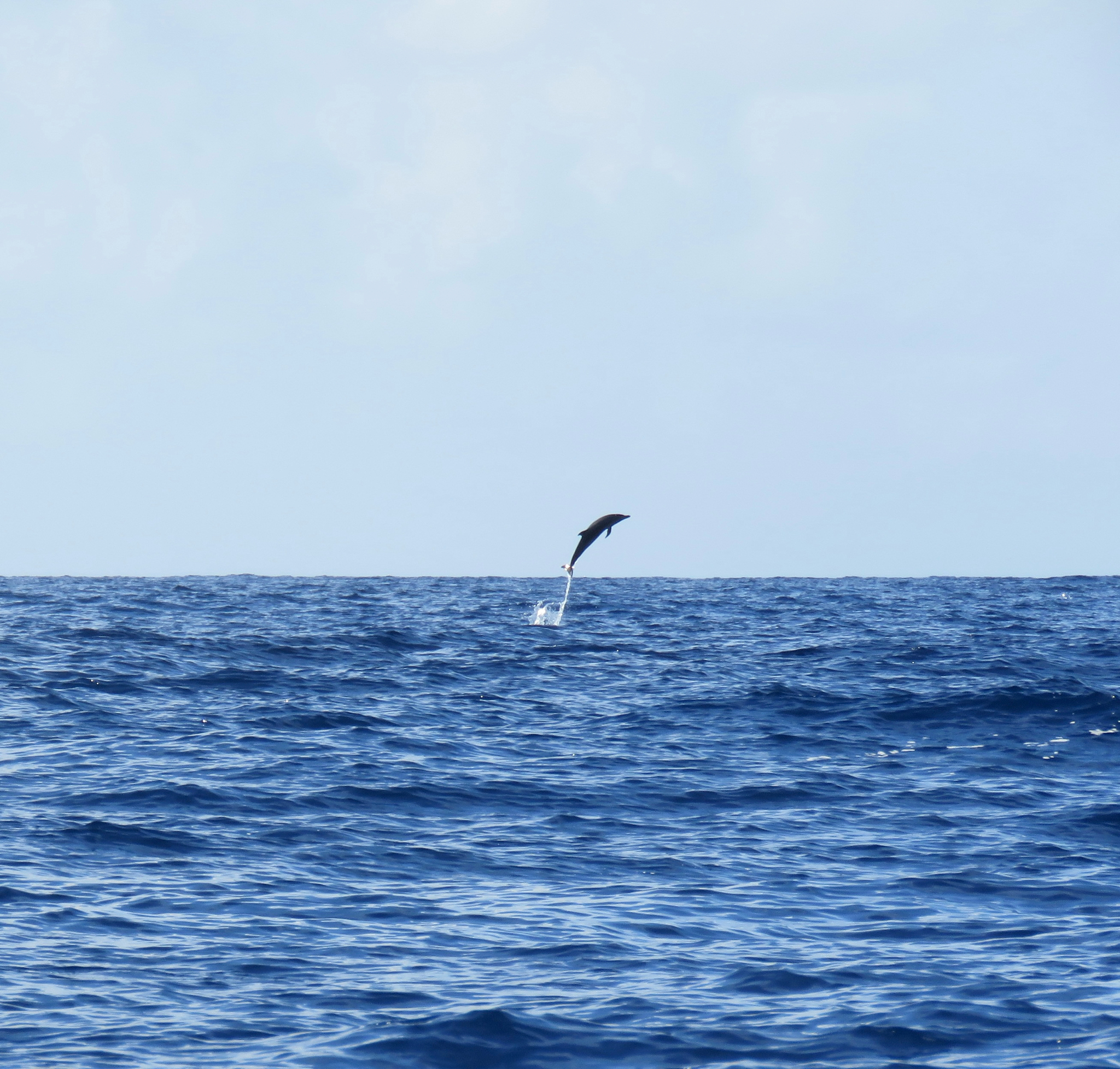
Breeding is spread over the whole year, with no strictly defined calving season, but with two or three weakly marked peaks (in spring and in autumn in particular in the eastern tropical Pacific). Gestation lasts about eleven months and produces a single newborn of 80 to 90 cm. Lactation continues until two years of age, although the young begin to take solid prey from three to six months. The interval between two births varies from 2.5 to 4 years depending on the population. Sexual maturity is reached at around 9 years in females and 12 years in males, some sources giving a mean of about 11 years. Longevity is close to 40 years, the oldest documented individual reaching about 46 years. A fast swimmer and an acrobat, the species strings together leaps and breaches and communicates by individualised whistles and click trains.
The IUCN Red List classes Stenella attenuata as Least Concern (LC) on the basis of the 2018 global assessment, still in force. The available estimates total more than 2.5 million individuals, several ocean regions not yet having been assessed; the known removals outside the eastern Pacific do not support the conclusion of a global reduction reaching the 30% threshold set by the Red List criteria.
This favourable status masks a heavy history. In the eastern tropical Pacific, the practice of encircling dolphin schools with purse seines in order to catch the tuna swimming beneath them caused the highest mortality of marine mammals ever attributed to a fishery. The “northeastern offshore” stock is reported to have declined by about 76% over the last three generations, that is nearly seventy years; this decline has ceased, but the stock is still officially regarded as depleted by the United States, as is the coastal stock of the same region. The Marine Mammal Protection Act (1972), the Dolphin Safe label (1990), the La Jolla Agreement (1992) and then the Agreement on the International Dolphin Conservation Program brought mortality down from the order of 130,000 individuals in 1986 to fewer than a thousand in the mid-2020s, without the expected demographic recovery being fully observed.
The current threats are bycatch in gillnets, trawls and longlines, together with directed takes: Japan took an average of 71 individuals a year between 2010 and 2019, and the species is hunted for food in Indonesia, in the Philippines and in some islands of the Pacific and of the Caribbean. Illegal feeding and harassment are a problem in Hawaii. The species is listed in Appendix II of CITES and in Annex II of the SPAW Protocol since 1991; in France it is fully protected by national and European law, which prohibits its capture, its intentional disturbance and its commercial exploitation.
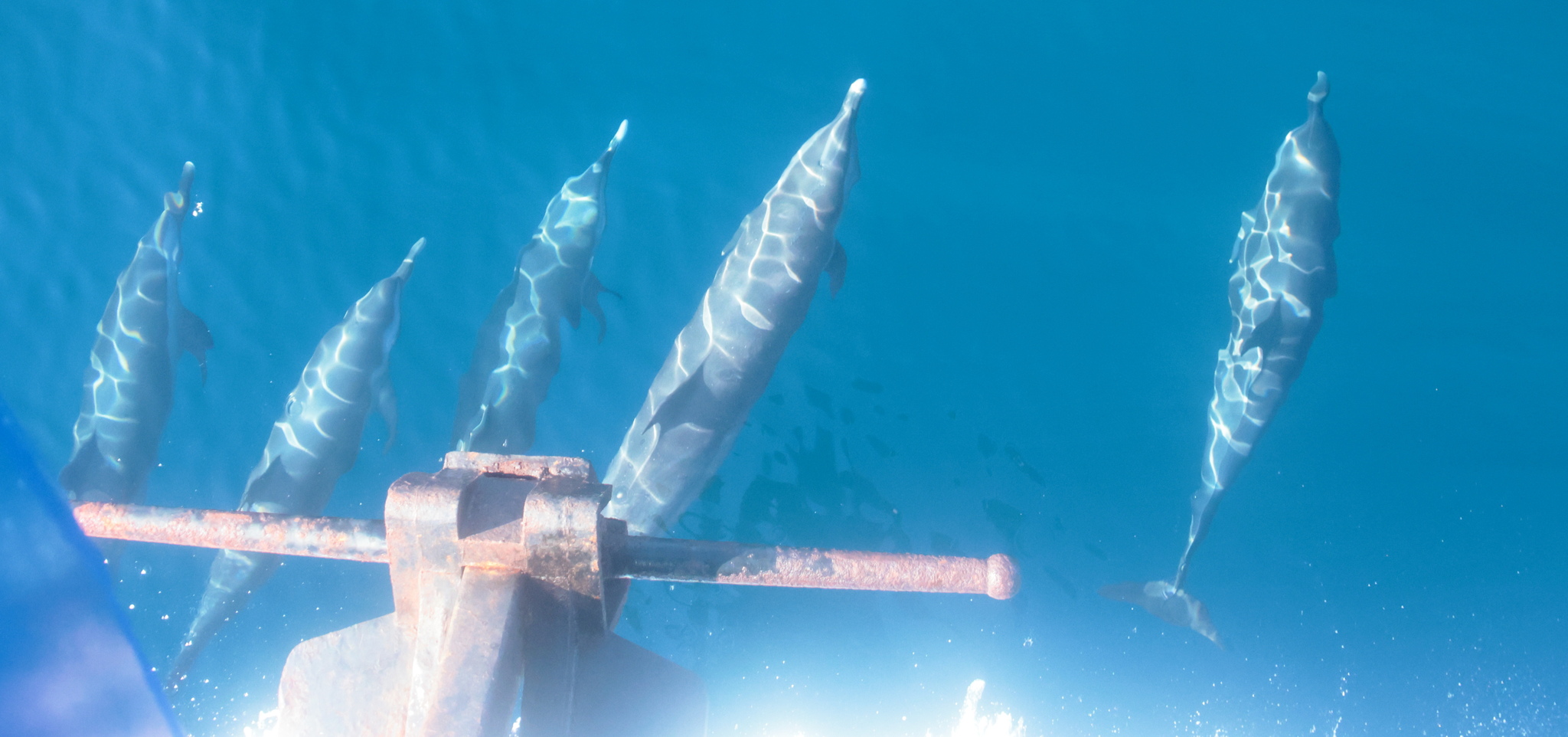
In French waters, the species is seen only overseas: the Antilles, French Guiana, La Réunion, Mayotte, New Caledonia, French Polynesia. Encounters take place offshore, often over island slopes and deep ground, and are possible all year round at these latitudes. Its behaviour makes it easy to pick out: high leaps, sheets of spray, compact groups active at the surface, and a marked tendency to come and surf the bow wave of vessels. The presence of seabirds hunting, or of other cetaceans, spinner dolphins in particular, is a good indication.
Responsible watching means approaching slowly and from the side, never head on and never across the path of the group, limiting the length of the encounter, never separating a calf from its mother and moving away at the slightest avoidance reaction. Entering the water and feeding are to be ruled out: besides the stress imposed on the animals, they are liable to constitute intentional disturbance, prohibited by French regulations. Using an operator that has signed a local cetacean approach charter is the best guarantee of a respectful encounter.
The pantropical spotted dolphin is more slender, with a long, fine rostrum generally white at its tip. The Atlantic spotted dolphin (Stenella frontalis) is stockier, its head more rounded, its rostrum shorter and thicker, and its adult speckling more extensive. Distribution also helps: Stenella frontalis is confined to the warm waters of the Atlantic, whereas the pantropical spotted dolphin frequents all three oceans.
No. The species seeks waters whose surface temperature generally exceeds 25 °C and keeps approximately between 40° N and 40° S. The English Channel, the Bay of Biscay and the Mediterranean lie outside its range. In France it is seen only in tropical overseas waters: the Antilles, French Guiana, La Réunion, Mayotte, New Caledonia, French Polynesia and the Îles Éparses.
In the eastern tropical Pacific, groups of pantropical spotted dolphins associate in a lasting way with schools of yellowfin tuna, probably because the two species exploit the same resources. Purse seiners long used the dolphins, visible at the surface, to locate and then encircle the tuna, which caused considerable mortality before the protective measures came into force.
No. Newborns, 80 to 90 cm long, are without spots. Dark speckles appear on the pale parts around weaning, then pale spots develop on the dorsal cape as sexual maturity approaches. Older individuals can look almost entirely speckled. The intensity of the speckling also varies from region to region: it is very marked in the coastal forms of the eastern Pacific and almost absent around Hawaii.
It feeds mainly on mesopelagic fish and cephalopods, supplemented by surface prey such as flying fish. Feeding activity is mainly nocturnal, when the prey rise towards the surface; by day the animals stay within the first one hundred to three hundred metres. Dives of about 200 m, lasting three to four minutes, have been documented.
It is classed as Least Concern (LC) by the IUCN, with more than 2.5 million individuals counted worldwide. Some populations nevertheless remain fragile: the eastern tropical Pacific stock known as “northeastern offshore” is reported to have declined by about 76% in three generations and remains, like the coastal stock of the same region, officially regarded as depleted by the United States. Bycatch in fishing gear and directed hunts in several regions are the main current pressures.
Longevity is of the order of 40 years. The oldest documented individual reached about 46 years. Females reach sexual maturity at around 9 years and males at around 12 years, with an interval of 2.5 to 4 years between two births depending on the population.
Profile compiled from authoritative scientific sources (IUCN, NOAA Fisheries, specialist literature) and reviewed for factual accuracy.
According to the open data of the GBIF, 2,251 georeferenced sightings of Stenella attenuata are recorded in our photographic index.
| Country | Notes |
|---|---|
| Mexico | 556 |
| Costa Rica | 277 |
| France | 243 |
| United States of America | 103 |
| Panama | 77 |
| Chinese Taipei | 46 |
| Guatemala | 42 |
| Ecuador | 39 |
| Martinique | 30 |
| unknown or invalid | 29 |

Monthly distribution of 2,270 dated sightings (all years combined): the maximum is reached in janvier.
| Month | Notes |
|---|---|
| janvier | 435 |
| February | 293 |
| mars | 247 |
| avril | 224 |
| mai | 144 |
| juin | 63 |
| juillet | 94 |
| August | 97 |
| septembre | 57 |
| octobre | 413 |
| novembre | 94 |
| December | 109 |
These figures reflect survey effort (more boaters and more surveys in summer) as much as the actual presence of the species: to be interpreted with caution.


Photographs from GBIF under a Creative Commons licence. The author and the licence of each photograph are given; please respect them if you reuse them.
Automatic selection of the most cited works mentioning the species (source: Crossref).