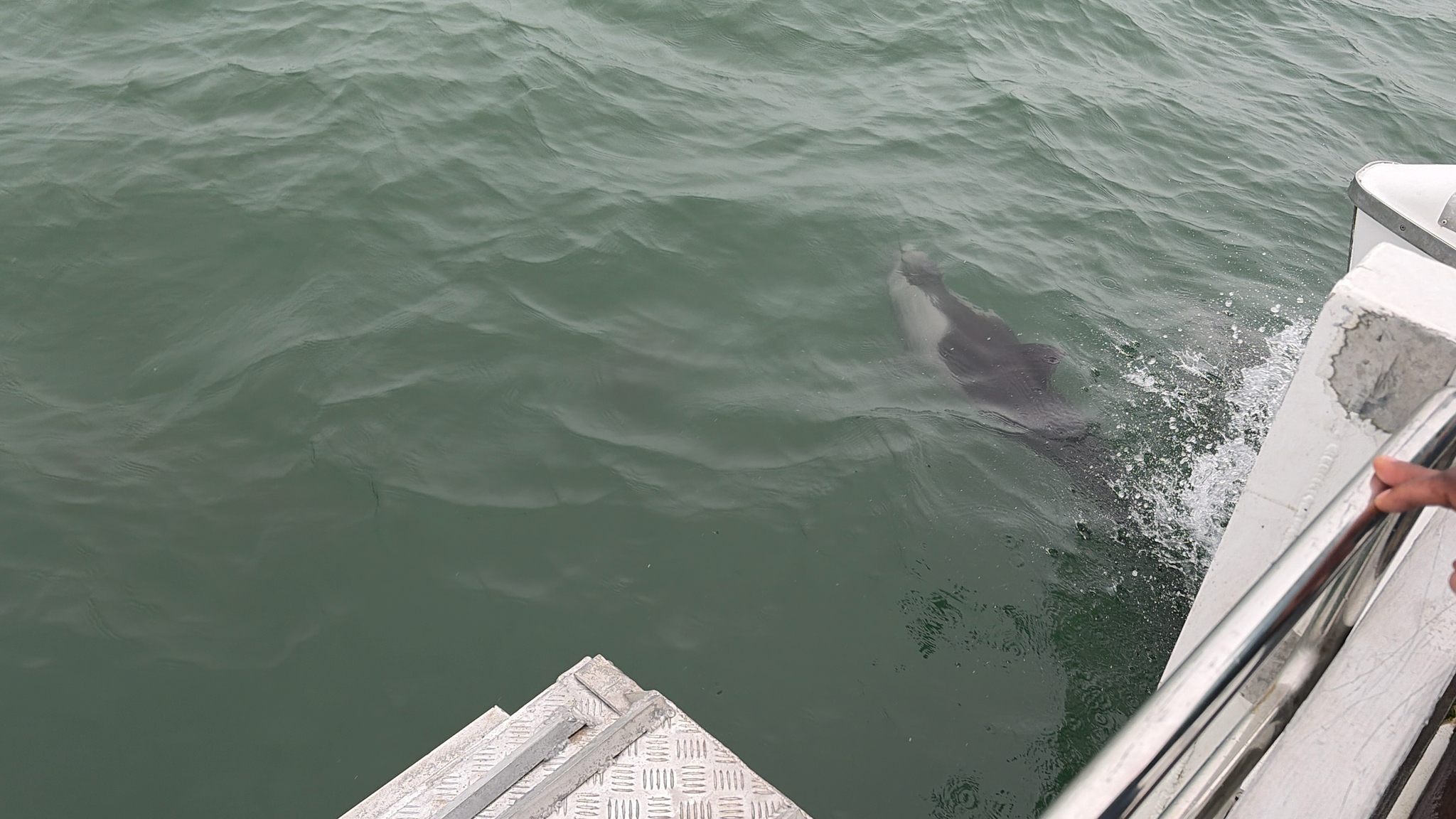
Heaviside's dolphin (Cephalorhynchus heavisidii)

Key facts
Scientific name Cephalorhynchus heavisidii (Gray, 1828)
Other names Heaviside’s dolphin, Haviside’s dolphin, Benguela dolphin. In French: dauphin du Cap, dauphin de Heaviside, céphalorhynque du Cap, céphalorhynque de Heaviside, dauphin du Benguela.
Size About 1.70 to 1.75 m in adults; newborn about 0.85 m.
Weight 60 to 75 kg.
Longevity Around twenty years; the oldest documented individual was 26 years old.
Diet Demersal fish and cephalopods: mainly juvenile hake (Merluccius capensis) and octopus, supplemented by gobies, horse mackerel (Trachurus) and squid.
IUCN status Near Threatened (NT). The species, long listed as “Data Deficient” (DD), was reclassified as NT in 2017; that status remains the one retained in the most recent edition of the Red List. Population trend unknown. At national level, South Africa assesses it as Least Concern (LC, 2016 assessment). No subpopulation is distinguished by the Red List, but genetics identifies two metapopulations, northern and southern, with limited exchange.

In brief

Heaviside’s dolphin is a small, stocky delphinid with a strongly contrasted black, grey and white pattern, endemic to the Benguela Current ecosystem, on the south-western coast of Africa. About 1.70 m long and weighing 60 to 75 kg, it lives a short distance from the shore, in cold water of 9 to 15 °C, from southern Angola to the Cape Peninsula. The IUCN lists it as Near Threatened (NT), most of the uncertainty bearing on bycatch and on the sensitivity of this very restricted-range species to ocean warming.

Identification

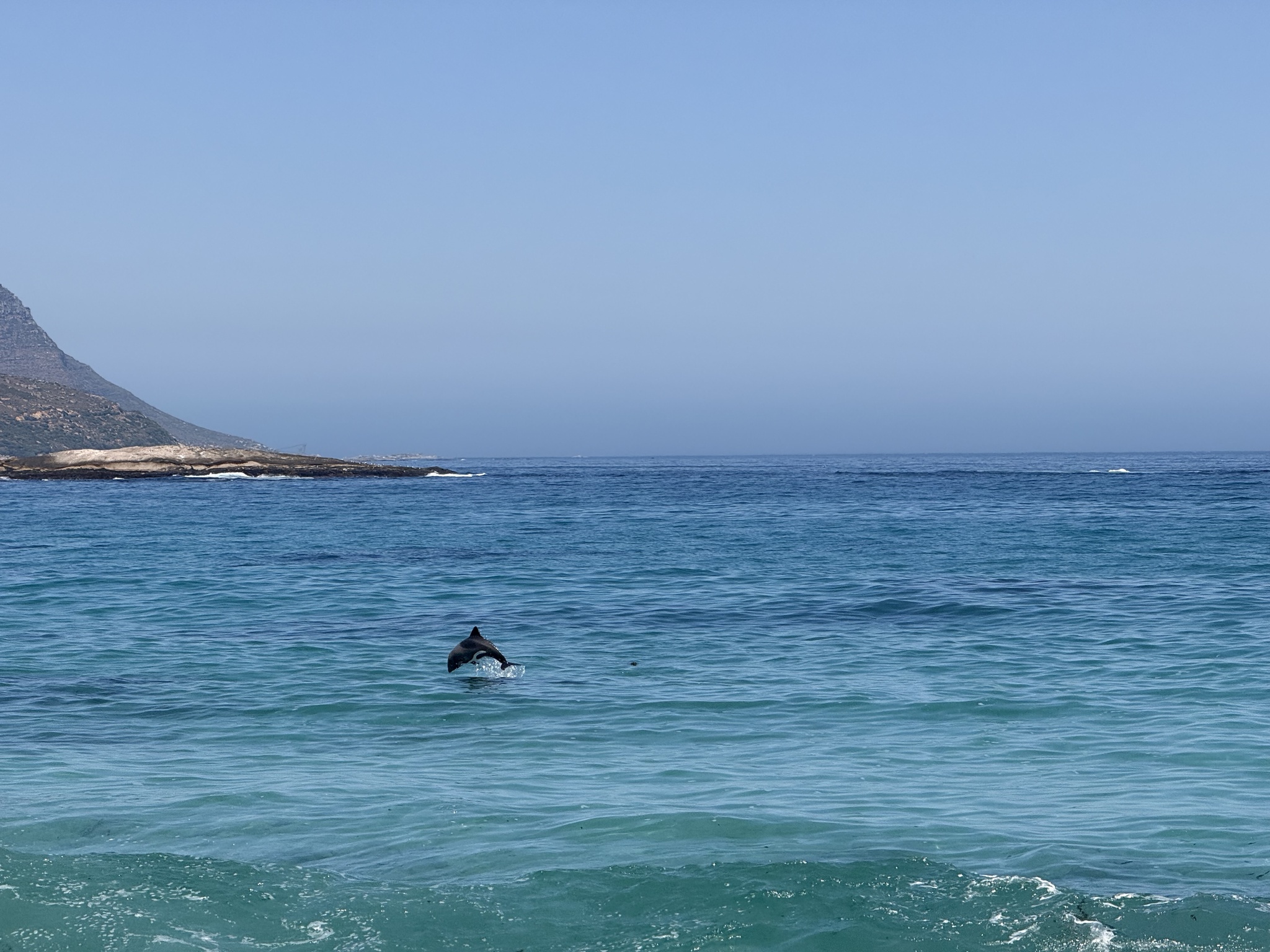
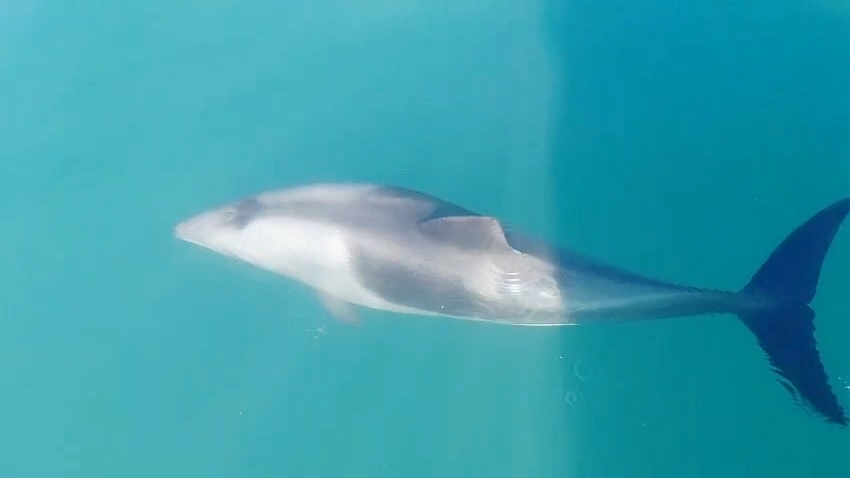
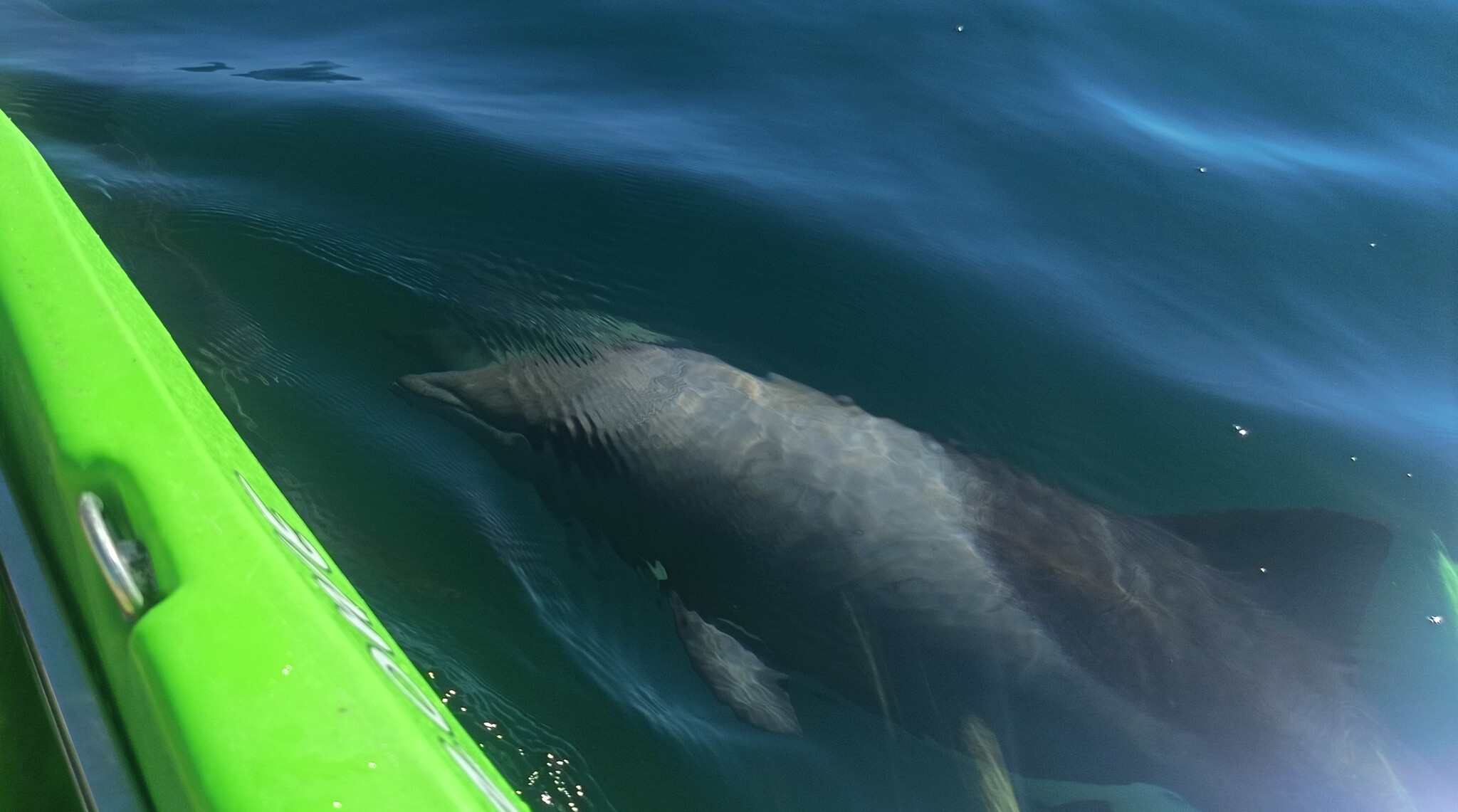
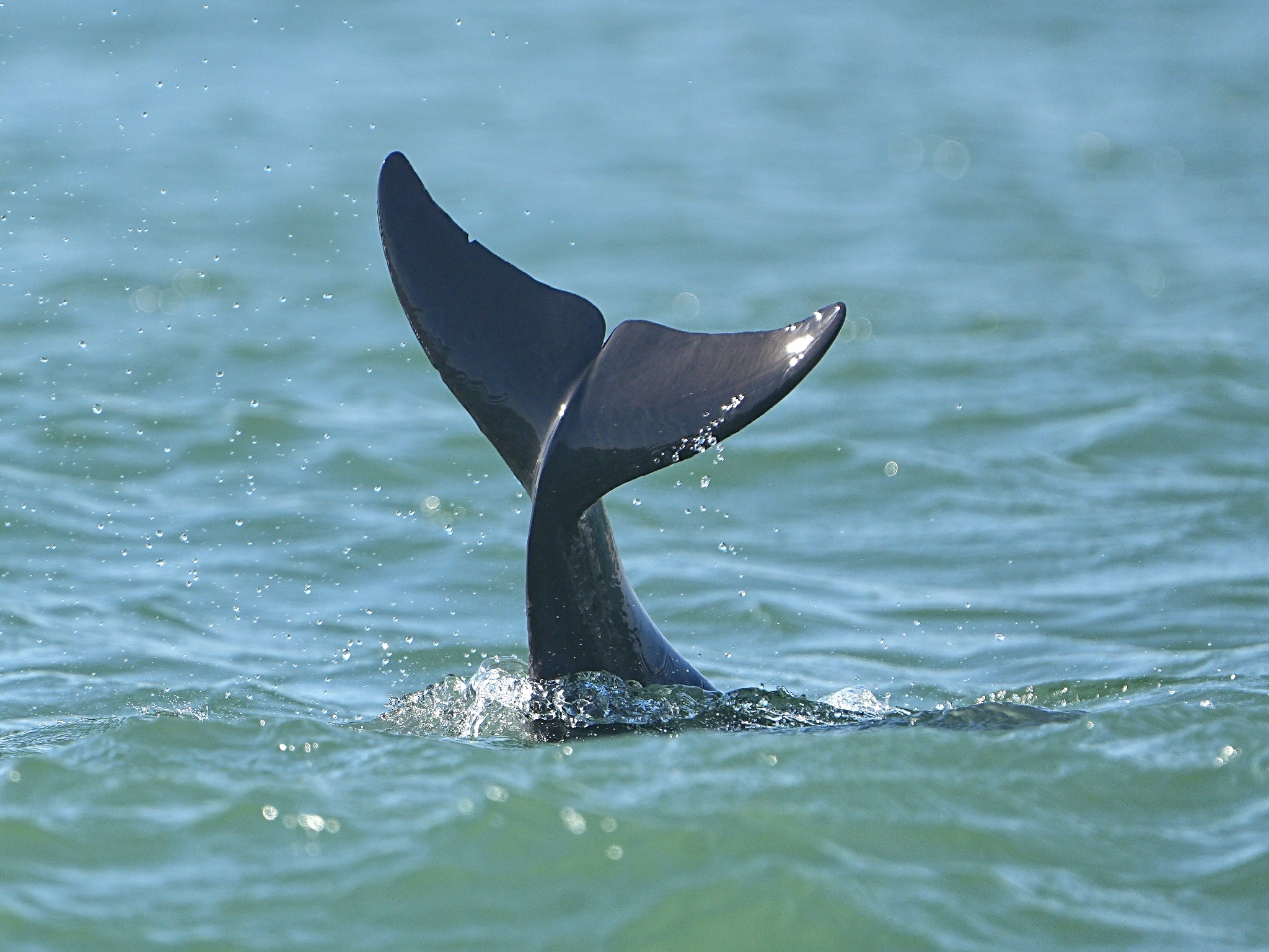
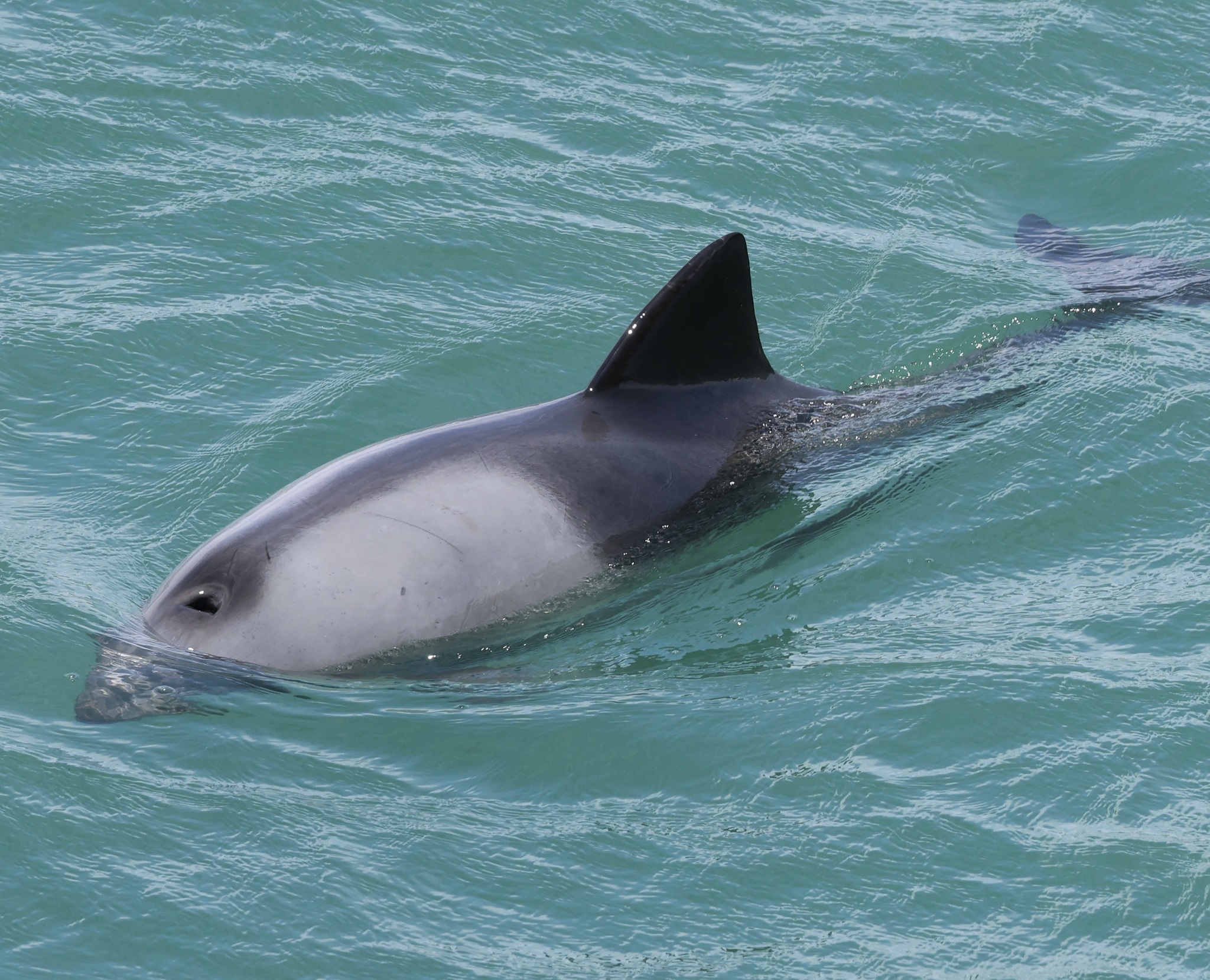
Heaviside’s dolphin is among the smallest delphinids: adults rarely exceed 1.70 to 1.75 m and weigh 60 to 75 kg. The outline is massive and compact, with a conical head lacking a true rostrum, short, rounded, paddle-shaped flippers, and a markedly triangular dorsal fin with a straight trailing edge, set at mid-back. The mouth carries 48 to 70 slender teeth. Sexual dimorphism is slight: males and females reach comparable sizes and can be told apart with certainty only by the shape of the genital patch, pointed in the male, broadened in the female to take in the mammary slits.

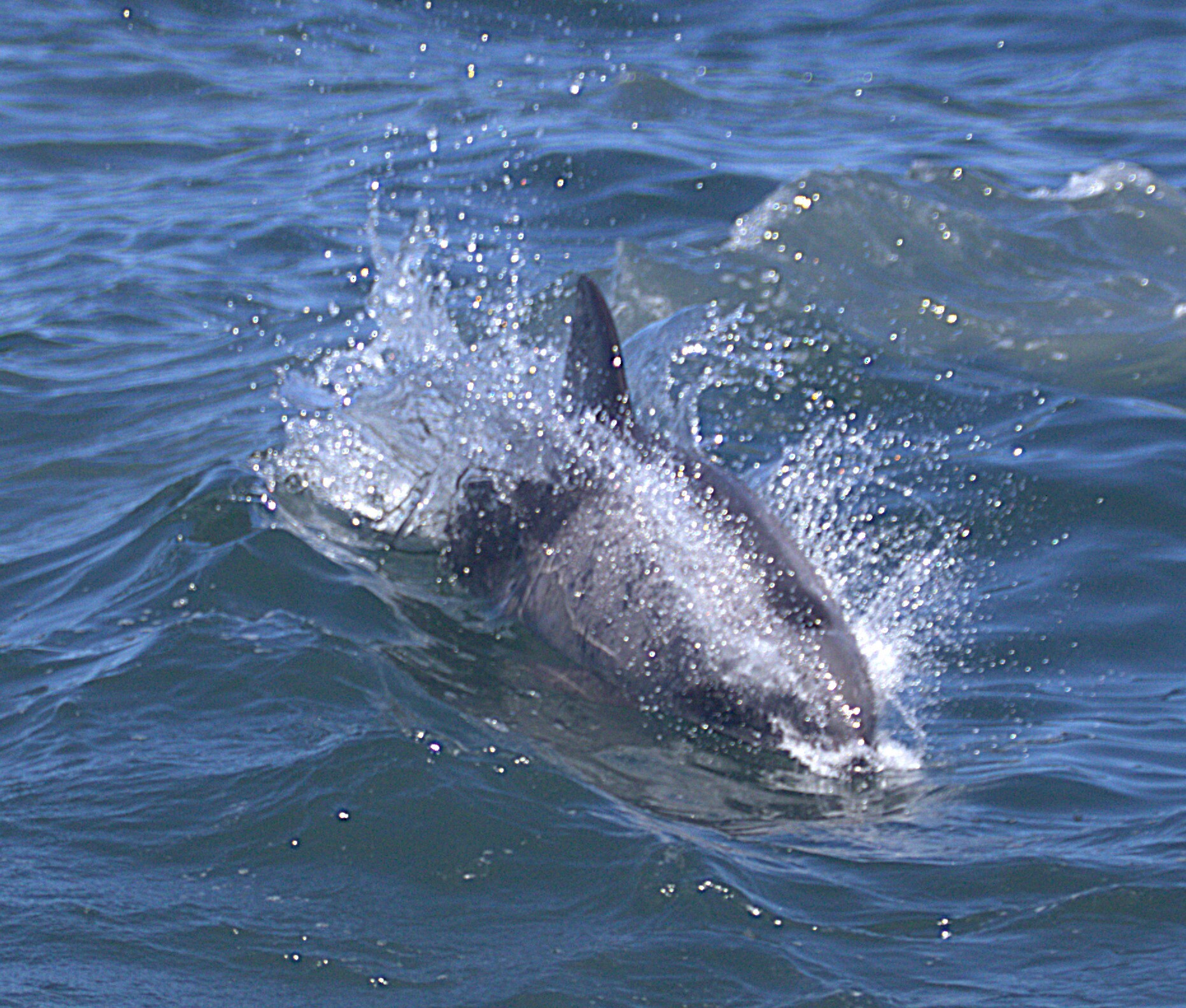
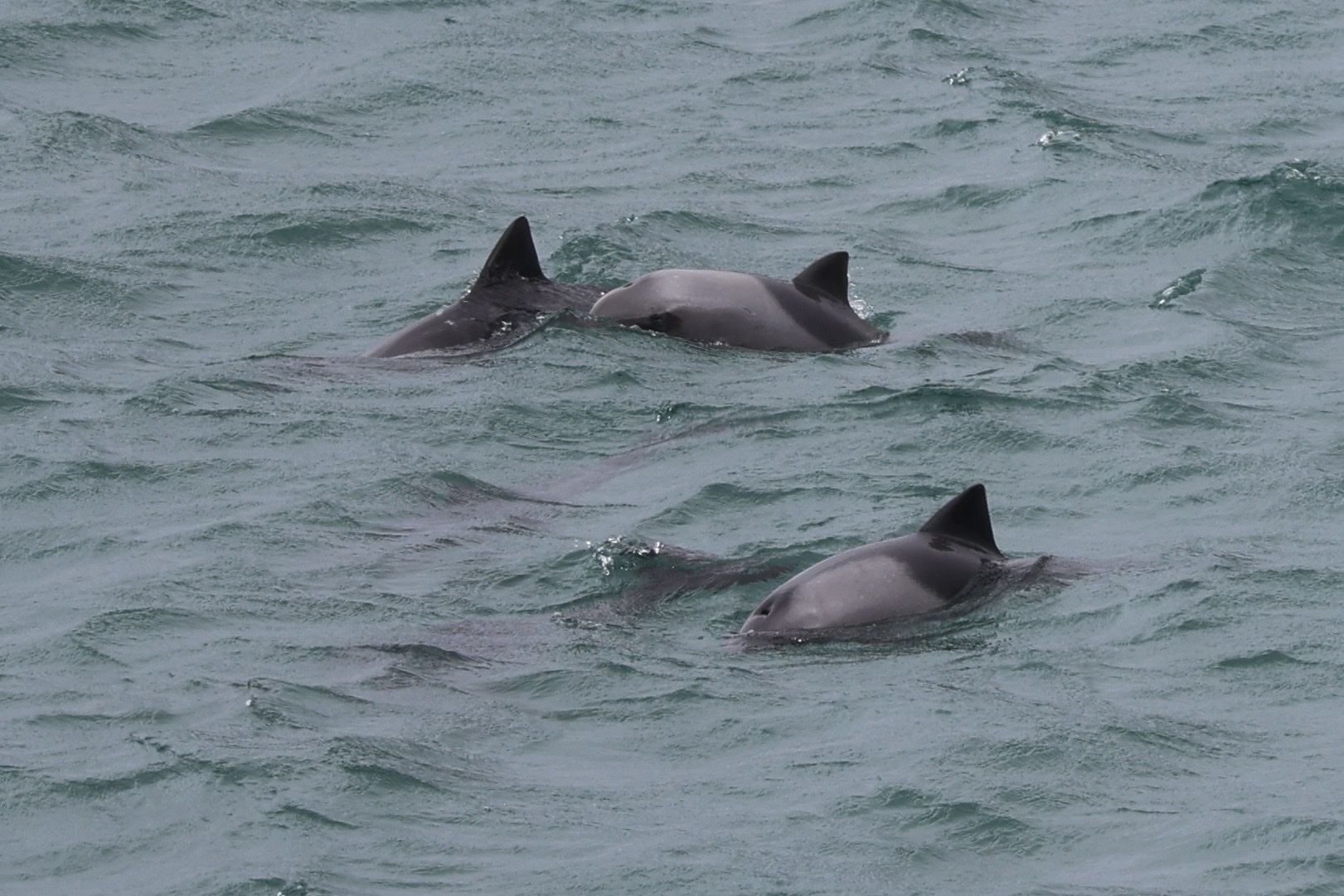
Coloration is the best criterion. The front of the body, head and thorax included, is light to ash grey, with a darker eye patch. From the dorsal fin back, the body turns very dark grey to bluish black, as do the dorsal fin and the tail flukes. The belly is pure white and rises onto the flanks in a characteristic trident pattern, whose middle prong extends backwards to beneath the tail stock. Seen from the side and at a distance, the animal therefore appears two-toned, dark behind, pale in front.

Confusion is possible with the dusky dolphin (Sagmatias obscurus, long placed in the genus Lagenorhynchus), which shares its entire range and sometimes forms mixed groups: the latter is larger, more slender, its dorsal fin is falcate and two-toned, and its flanks carry broad pale hourglass bands. The common bottlenose dolphin, also present in some Namibian bays, is much bigger, uniformly grey and fitted with a distinct beak; it favours the very shallow, sheltered waters of the bays, whereas Heaviside’s dolphin is found mainly over depths of a few tens of metres, about 35 m on average in the Namibian Islands Marine Protected Area, even though it regularly comes right inshore. At a distance, the contrasted livery also leads to confusion with a young killer whale. Lastly, despite a similar pattern, Commerson’s dolphin does not compete for identification: it lives at the other end of the Southern Hemisphere.

Taxonomy

Described by the British zoologist John Edward Gray in 1828, Cephalorhynchus heavisidii belongs to the family Delphinidae and to the subfamily Lissodelphininae. Its species name comes from a mistake: the type specimen, taken off the Cape of Good Hope, had been brought back to the United Kingdom by a captain of the British East India Company named Haviside, whom Gray confused with the surgeon and collector John Heaviside. The faulty spelling has remained, and French usage still hesitates between the names dauphin de Heaviside and dauphin du Cap, the latter being the more widely used; in Namibia the animal is readily called the Benguela dolphin.

The genus Cephalorhynchus classically brought together four coastal species of the Southern Hemisphere: Commerson’s dolphin, the Chilean dolphin, Hector’s dolphin and Heaviside’s dolphin. A phylogenomic, morphological and acoustic revision published in 2025 attached two further species to it, Peale’s dolphin and the hourglass dolphin, bringing the genus to six species. The genetic data indicate that the genus originated in southern Africa, from which it is thought to have spread to the rest of the Southern Hemisphere along the Antarctic Circumpolar Current.

Distribution and habitat

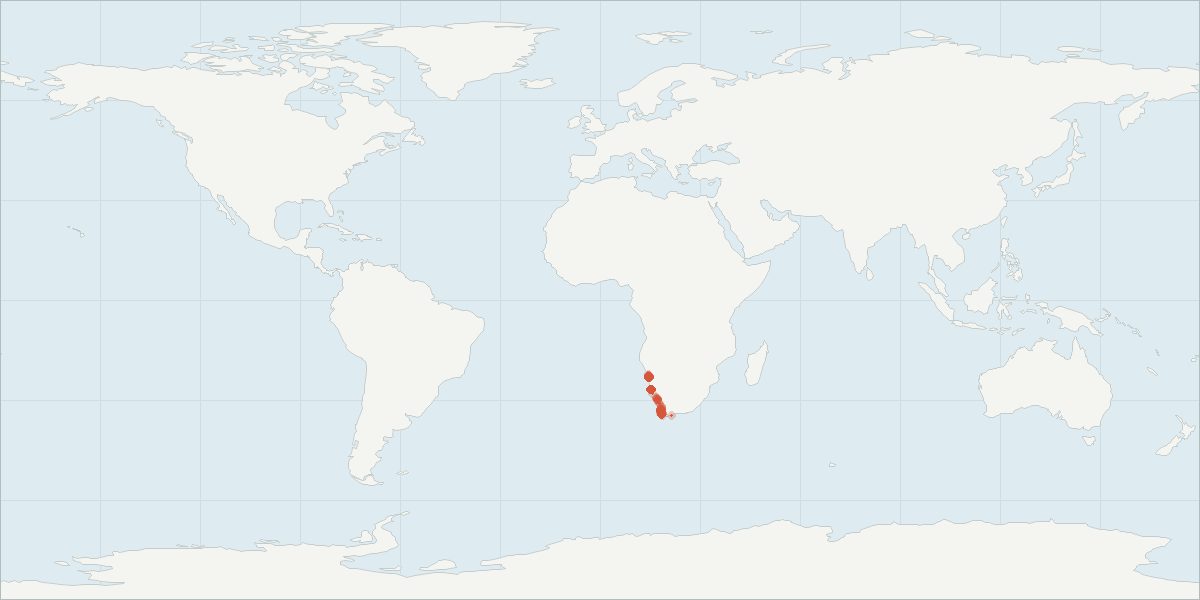
The species is strictly endemic to the Benguela Current ecosystem, on the Atlantic seaboard of southern Africa. Its range extends continuously over about 2,500 km, from southern Angola to the Cape Peninsula, in South Africa, where sightings become very rare beyond Cape Point. The northern limit is poorly defined and could shift with the seasonal fluctuations of the current.

It is a resolutely coastal animal: more than 85% of sightings concern depths of less than 100 m and water of 9 to 15 °C, generally within 8 to 10 km of the shore. In the Namibian Islands Marine Protected Area, detections occur over an average depth of 35 m. The distribution there is remarkably predictable, with very regular use of the exposed rocky points that close off the bays. Home ranges are small, 50 to 80 km of coast, and site fidelity is strong: some individuals have been photo-identified at the same place over ten years. The species is not migratory.

Heaviside’s dolphin is entirely absent from French waters, in the Mediterranean, the Bay of Biscay and the English Channel as much as overseas. Under French jurisdiction, the only coastal Cephalorhynchus is Commerson’s dolphin, whose subspecies Cephalorhynchus commersonii kerguelenensis frequents the coasts of the Kerguelen Islands. Since the 2025 taxonomic revision, the hourglass dolphin (Cephalorhynchus cruciger), circumpolar between 45° S and the Antarctic sea ice, also belongs to the genus and frequents the southern waters of the French Southern and Antarctic Lands.

Biology and ecology

The diet is dominated by bottom-dwelling fish and cephalopods, in particular juvenile Cape hake and octopus; gobies, horse mackerel and squid round out the menu, in proportions that vary between sectors. Hunting takes place mainly near the bottom, at shallow depth. Satellite tag monitoring recorded a maximum dive of 147 m, but 90% of dives stay above 30 m and most last less than two minutes.

Along the South African coast, the species follows a marked daily rhythm: the animals rest and socialise close inshore in the morning, then move offshore at the end of the day to intercept prey that rises through the water column at night. This pattern is much less clear-cut at Walvis Bay and Lüderitz, in Namibia, where the dolphins often remain coastal at night, probably because prey is distributed differently there.

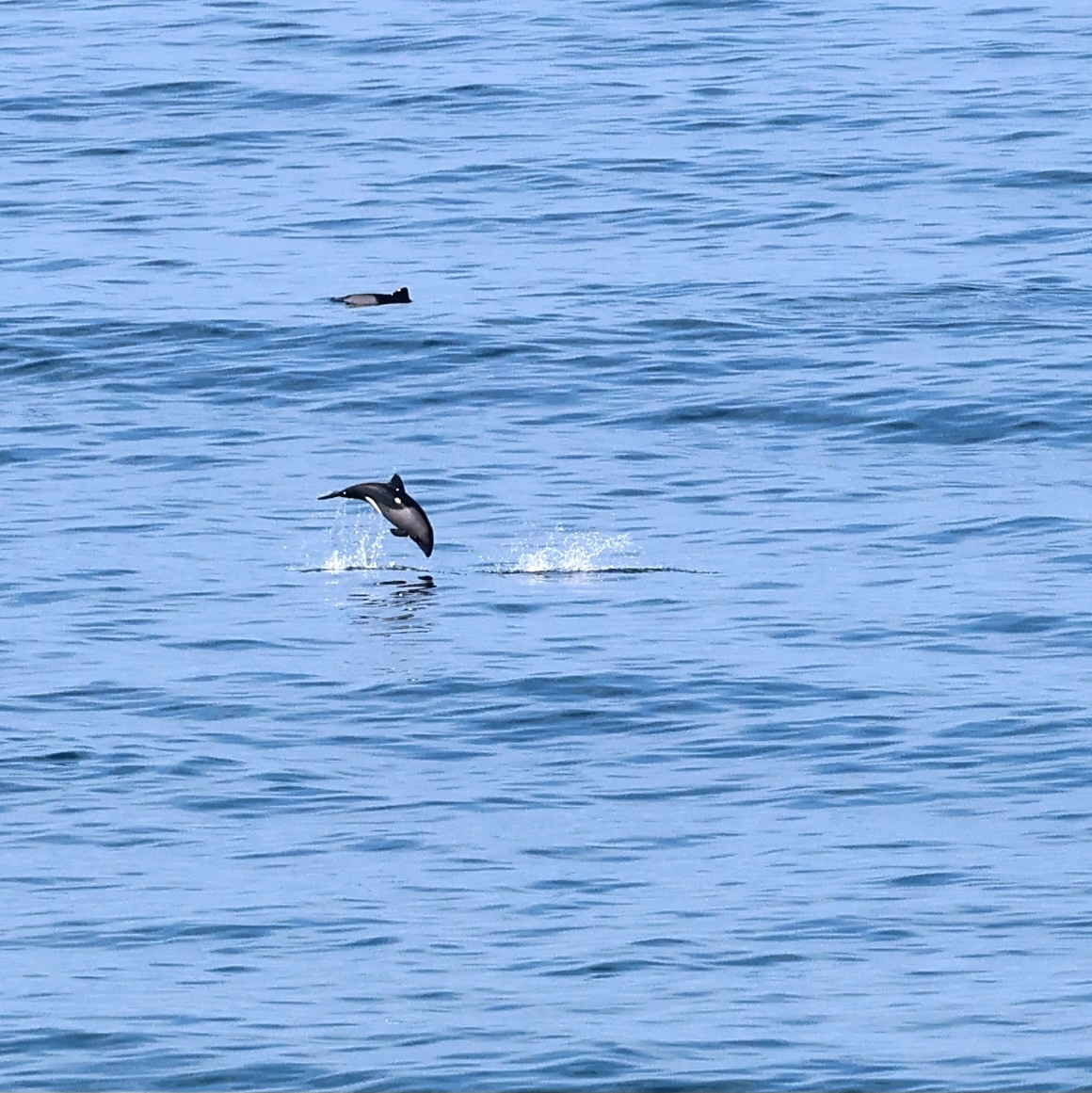
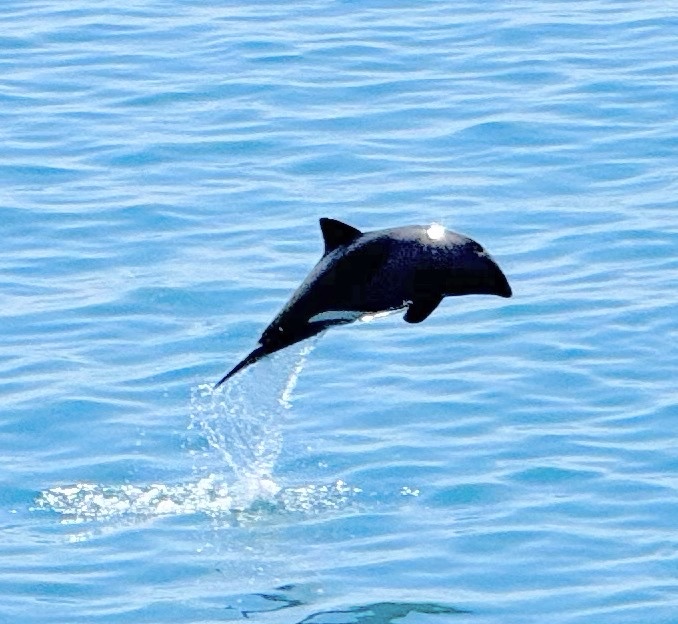
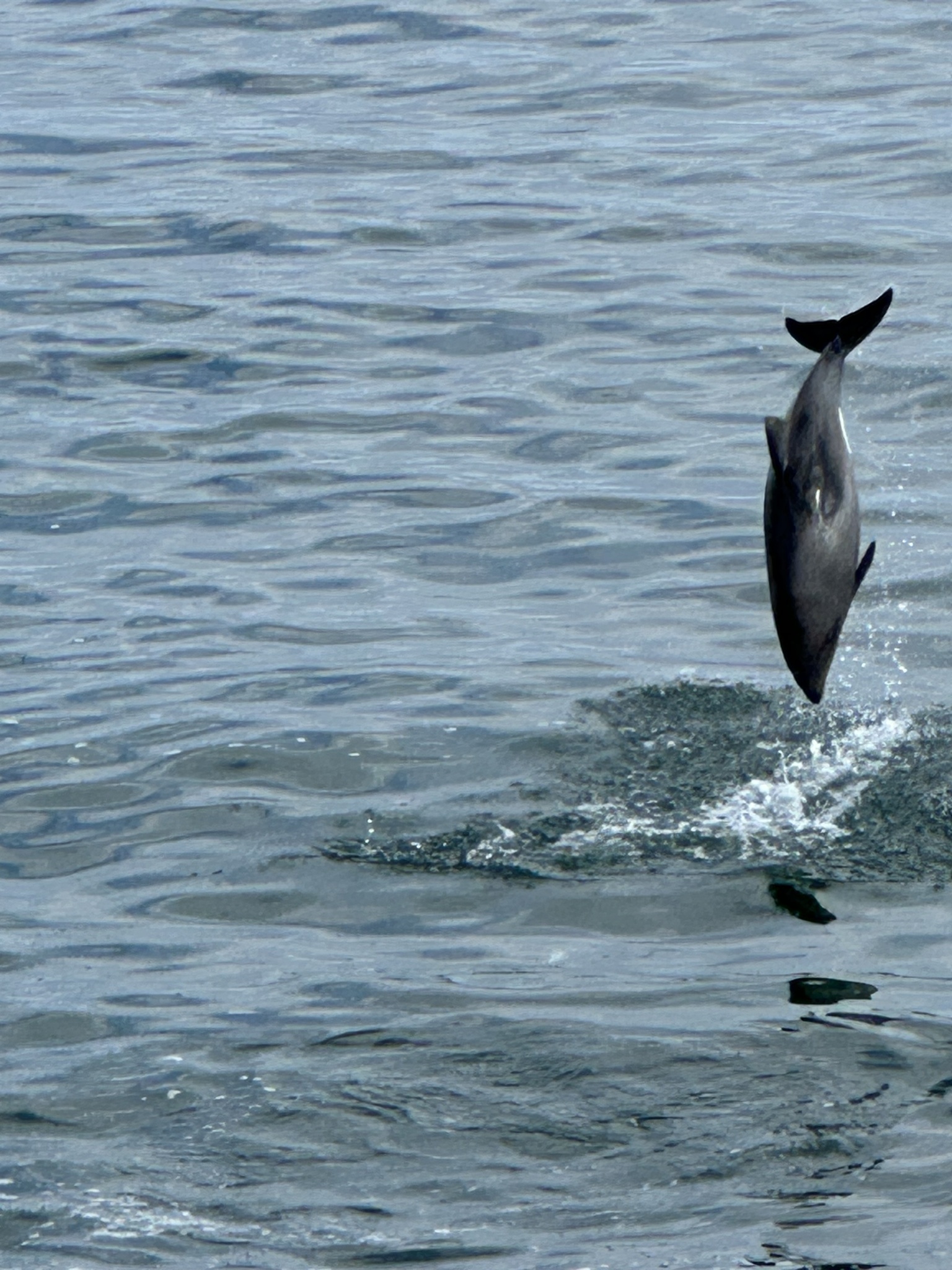
Social life is organised in very small groups, most often of two or three individuals, exceptionally up to about ten; gatherings of several tens to a hundred animals form in the richest sectors. These dolphins are acrobatic, readily approach boats and bow-ride; their most recognisable move is a vertical leap, the body entirely clear of the water, followed by a head-first re-entry with almost no splash.

Acoustically, the species does not whistle. It emits narrow-band high-frequency echolocation clicks, centred around 125 to 130 kHz, outside the hearing sensitivity of the killer whale: this is a form of acoustic concealment from the predator. It also produces a second type of click, lower-pitched and broader-band, used in social interactions, a signal that carries further but exposes it more to listening killer whales.

Breeding is still poorly known. Sexual maturity is reached between 5 and 9 years, mating can take place all year round and gestation lasts 10 to 11 months. A single calf of about 85 cm is born every two to four years, births being concentrated rather in the austral summer. The killer whale is the only confirmed predator; scars also attest to shark attacks.

Status and conservation

No abundance estimate covers the whole range. Regional surveys give 6,345 individuals (confidence interval 3,573 to 11,267) over 390 km of coastline between Table Bay and Lambert’s Bay, in South Africa, about 1,594 animals in the Namibian Islands Marine Protected Area, and some 508 and 494 dolphins around Walvis Bay and Lüderitz respectively. The South African national assessment retains with certainty more than 1,000 mature individuals in the area assessed, and possibly more than 10,000 along the whole of the South African west coast.

The main direct threat remains bycatch in coastal fishing gear: beach seines, purse seines, trawls and gillnets. In South Africa, annual bycatch mortality is estimated at fewer than a hundred animals, but it is poorly quantified elsewhere. The growth of pelagic trawling targeting Cape horse mackerel is an emerging threat, to which are added illegal direct catches, the meat having historically been eaten. The species is also among the cetaceans judged most vulnerable to climate change: confined to a narrow thermal window of 9 to 15 °C on a continental shelf flanked to the north and south by warm water, it has no refuge towards the poles should warming occur. To this are added the expansion of the ports of Walvis Bay and Lüderitz, hydrocarbon exploration, offshore diamond and phosphate extraction, and growing boat traffic, a collision with a propeller having been documented in 2010.

Heaviside’s dolphin is listed in Appendix II of CITES and in Appendix II of the Convention on Migratory Species, as well as in the Memorandum of Understanding concerning the Conservation of the Manatee and Small Cetaceans of Western Africa and Macaronesia, concluded in 2008. It benefits from regulated fishing zones and from several marine protected areas, among them the Namibian Islands Marine Protected Area, proclaimed in 2008, which covers about 9,500 km² along 400 km of coast. The priorities identified concern standardised abundance monitoring and the reduction of bycatch.

Observing this species

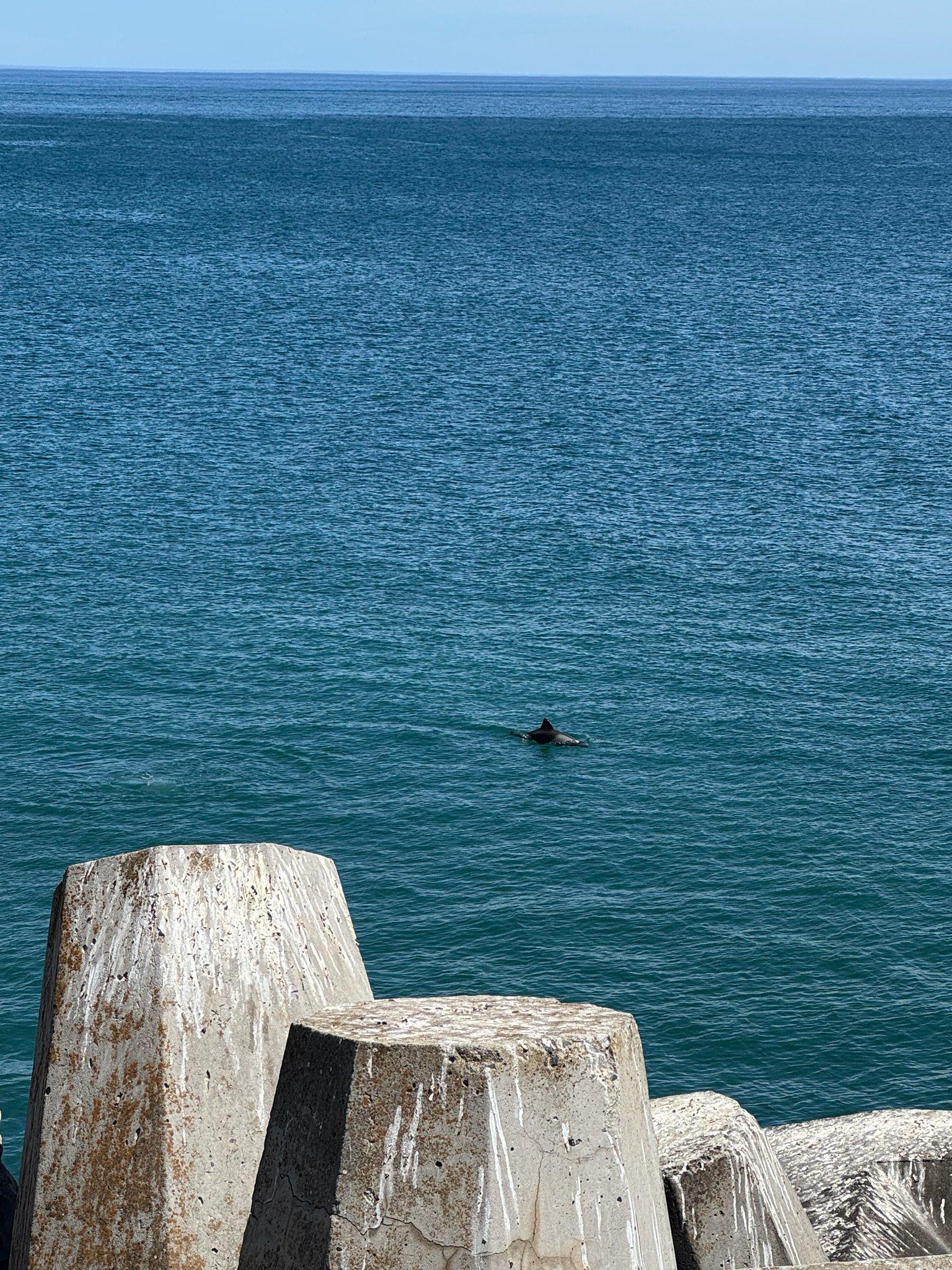
Three sectors account for most of the sightings: Walvis Bay and Lüderitz in Namibia, and the South African west coast, from Hout Bay and Table Bay to Lambert’s Bay. Morning trips are the most favourable, since the animals then move closer inshore to rest and socialise, and because the south-easterly wind often gets up in the afternoon. From the coast, look at the foot of the exposed rocky points that close off the bays: these aggregation sites are used with great consistency from one year to the next. The clues to pick out are small dark triangular fins surfacing in twos or threes, and above all the very characteristic vertical leaps without splash.

The species readily comes to the bow, which makes the approach easy but can be misleading: watching activity remains lightly regulated over part of its range, and repeated boat presence is known to reduce resting time in other coastal dolphins. Good practice consists in letting the animal decide on the approach, holding a steady speed with no abrupt manoeuvre, never cutting across the path of a group or splitting it, limiting the length of the encounter and giving up on entering the water. Photographing the dorsal fin in profile, whose notches allow individual identification, is the best way of turning a trip into data useful to local research teams.

Frequently asked questions

Why does this dolphin bear the name Heaviside?

By mistake. The specimen used for the description had been brought back from the Cape of Good Hope by a captain of the British East India Company named Haviside. In 1828, John Edward Gray confused him with the surgeon and collector John Heaviside and latinised that surname as heavisidii. The faulty spelling has remained; in French, the name in use today is dauphin du Cap.

Can it be seen in France?

No. The species is endemic to the Benguela Current, on the south-western coast of Africa, and has never been reported in the Mediterranean, in the Bay of Biscay, in the English Channel or in the French overseas territories. The only coastal Cephalorhynchus present under French jurisdiction is Commerson’s dolphin of the Kerguelen Islands, which belongs to a different species; to it is added, in the southern waters of the TAAF, the hourglass dolphin, attached to the genus Cephalorhynchus since the 2025 revision.

How many Heaviside’s dolphins are left?

No global estimate exists. Local surveys give about 6,345 individuals over 390 km of South African coast, some 1,594 in the Namibian Islands Marine Protected Area, and about 500 animals around Walvis Bay as around Lüderitz. South Africa retains with certainty more than 1,000 mature individuals, and possibly more than 10,000 over the whole of its west coast, but the overall population trend remains unknown.

How is it told apart from the dusky dolphin, with which it coexists?

Heaviside’s dolphin is markedly smaller and stockier, its dorsal fin is triangular with a straight edge, and its livery sets a light grey fore-body against a bluish black hind-body marked by a white ventral trident. The dusky dolphin is larger and more streamlined, its fin is falcate and two-toned, and its flanks carry broad pale hourglass-shaped bands.

Why does this species not whistle?

Like the other Cephalorhynchus dolphins and the porpoises, it has evolved towards narrow-band high-frequency clicks, centred around 125 to 130 kHz, which the killer whale does not hear: this is a strategy of acoustic concealment from the predator. It does, however, keep a second type of click, lower-pitched and broadband, reserved for social exchanges, which carries further at the cost of an increased risk of being detected.

Sources

Profile compiled from authoritative scientific sources (IUCN, NOAA Fisheries, specialist literature) and reviewed for factual accuracy.

Observed distribution

According to the open data of the GBIF, 221 georeferenced sightings of Cephalorhynchus heavisidii are recorded in our photographic index.

Main countries of observation
CountryNotes
South Africa119
Namibia104

Distribution map: Heaviside's dolphin (Cephalorhynchus heavisidii)

Distribution map: Heaviside's dolphin (Cephalorhynchus heavisidii), 221 georeferenced sightings from GBIF
221 georeferenced sightings of Cephalorhynchus heavisidii. Base map Natural Earth, public domain. GBIF data.
🗺️ Open the interactive mapTo zoom and pan. It uses the OpenStreetMap/CARTO base maps and the GBIF occurrence densities: no data is sent to these services before you click.

Presence through the year

Monthly distribution of 221 dated sightings (all years combined): the maximum is reached in December.

350janvier : 20janfévrier : 15febmars : 20maravril : 18avrmai : 11maijuin : 10juinjuillet : 16juilaoût : 19Augustseptembre : 21sepoctobre : 20octnovembre : 16novdécembre : 35dec
Sightings by month
MonthNotes
janvier20
February15
mars20
avril18
mai11
juin10
juillet16
August19
septembre21
octobre20
novembre16
December35

These figures reflect survey effort (more boaters and more surveys in summer) as much as the actual presence of the species: to be interpreted with caution.

En images

Cephalorhynchus heavisidii
© AllyP, CC0, 2026
Cephalorhynchus heavisidii
© Richard Jessnitz, CC BY-NC, 2026
Cephalorhynchus heavisidii
© Jen, CC BY-NC, 2026
Cephalorhynchus heavisidii
© Sharon Louw, CC BY-NC, 2026
Cephalorhynchus heavisidii
© Sam Timmings, CC BY-NC, 2026
Cephalorhynchus heavisidii
© Nick Leggatt, CC BY-NC, 2026
Cephalorhynchus heavisidii
© chrisdt, CC BY, 2026
Cephalorhynchus heavisidii
© sharon stanton, CC BY-NC, 2026
Cephalorhynchus heavisidii
© Rails and roadtrips, CC BY-NC, 2026
Cephalorhynchus heavisidii
© Cricket Raspet, CC BY, 2026
Cephalorhynchus heavisidii
© Darrell Parsons, CC BY-NC, 2026
Cephalorhynchus heavisidii
© leekelai, CC BY-NC, 2026

Photographs from GBIF under a Creative Commons licence. The author and the licence of each photograph are given; please respect them if you reuse them.

Scientific references

  1. Elwen S., Meÿer M., Best P., Kotze P. et al. (2006) RANGE AND MOVEMENTS OF FEMALE HEAVISIDE'S DOLPHINS (CEPHALORHYNCHUS HEAVISIDII), AS DETERMINED BY SATELLITE-LINKED TELEMETRY, Journal of Mammalogy
  2. Martin M., Elwen S., Kassanjee R., Gridley T. et al. (2019) To buzz or burst-pulse? The functional role of Heaviside's dolphin, Cephalorhynchus heavisidii, rapidly pulsed signals, Animal Behaviour
  3. Leeney R. (2011) Using Static Acoustic Monitoring to Describe Echolocation Behaviour of Heaviside’s Dolphins (Cephalorhynchus heavisidii) in Namibia, Aquatic Mammals
  4. Morisaka T., Karczmarski L., Akamatsu T., Sakai M. et al. (2011) Echolocation signals of Heaviside’s dolphins (Cephalorhynchus heavisidii), The Journal of the Acoustical Society of America
  5. Martin M., Gridley T., Elwen S., Jensen F. et al. (2018) Heaviside's dolphins (Cephalorhynchus heavisidii) relax acoustic crypsis to increase communication range, Proceedings of the Royal Society B: Biological Sciences
  6. Stockin K., Law R., Roe W., Meynier L. et al. (2010) PCBs and organochlorine pesticides in Hector’s (Cephalorhynchus hectori hectori) and Maui’s (Cephalorhynchus hectori maui) dolphins, Marine Pollution Bulletin
  7. Watkins W., Schevill W., Best P. (1977) Underwater Sounds of Cephalorhynchus heavisidii (Mammalia:Cetacea), Journal of Mammalogy
  8. Elwen S., Leeney R. (2010) Injury and Subsequent Healing of a Propeller Strike Injury to a Heaviside's Dolphin (Cephalorhynchus heavisidii), Aquatic Mammals

Automatic selection of the most cited works mentioning the species (source: Crossref).