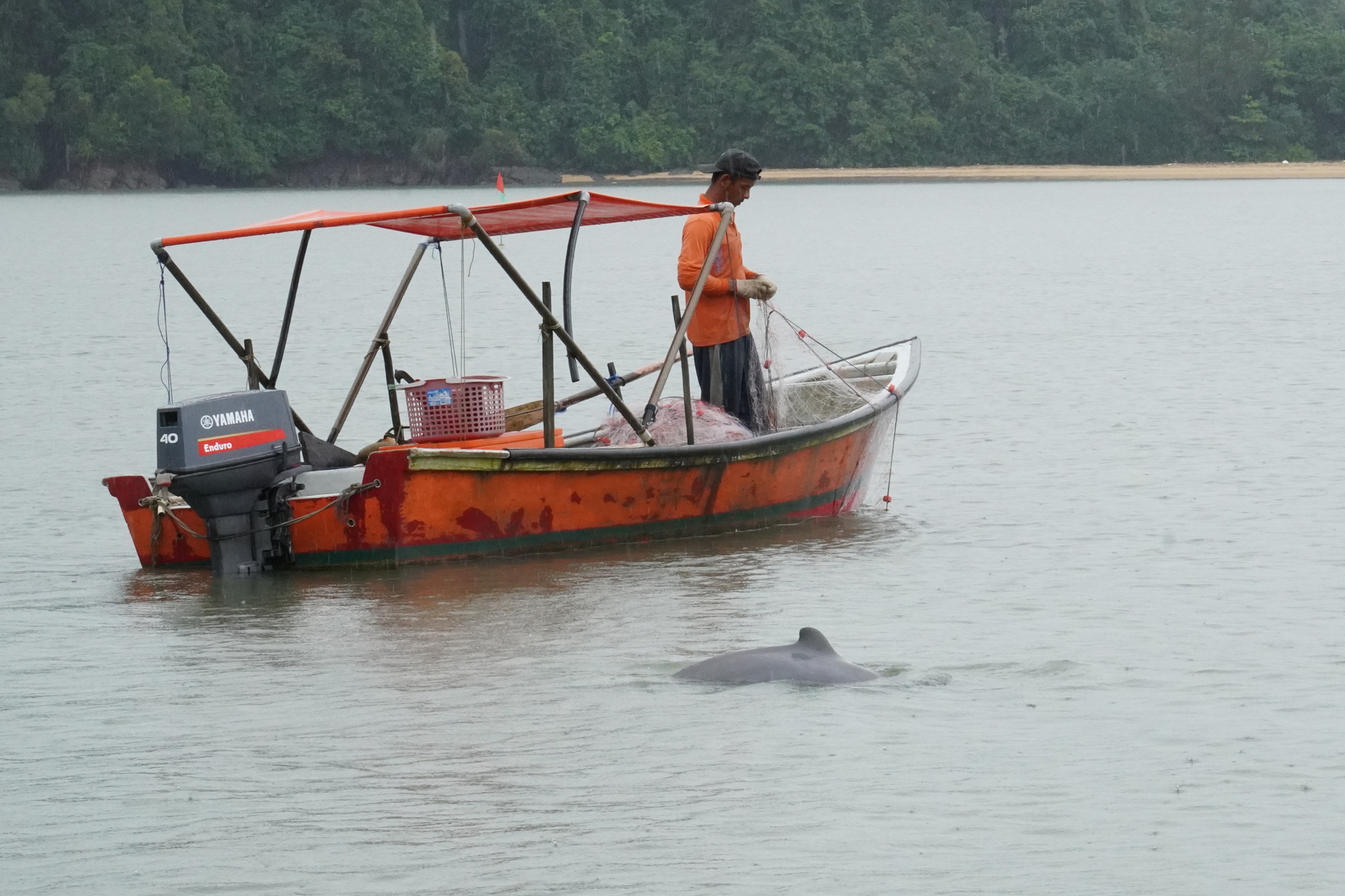
Irrawaddy dolphin (Orcaella brevirostris)

Key facts
Scientific name Orcaella brevirostris (Owen in Gray, 1866)
Other names Irrawaddy dolphin; French: orcelle, orcelle de l’Irrawaddy; German: Irawadidelfin; Indonesian: pesut Mahakam; Japanese: カワゴンドウ / kawagondō
Size 2.1 to 2.3 m on average in adults; males, which are larger, reach 2.7 m and the recorded maximum is 2.75 m. Newborn: about 1 m
Weight Generally 115 to 145 kg, with a reported range of 90 to 200 kg. Newborn: about 10 kg
Longevity About 30 years; the oldest documented individual was estimated at 28 years
Diet Bony fish (including catfish) and fish eggs, prawns and other crustaceans, cephalopods (squid, cuttlefish, octopus) in marine populations
IUCN status Endangered (EN), criteria A2cd+3cd+4cd, assessment of 30 August 2017, status still in force in the current edition of the Red List. Six isolated subpopulations are assessed separately and all classed as Critically Endangered (CR): the Ayeyarwady river (Myanmar), the Mahakam river (Indonesia), the Mekong (Cambodia), Songkhla Lake (Thailand), Malampaya Sound and Iloilo-Guimaras (the Philippines)

In brief

The Irrawaddy dolphin is a small, stocky delphinid with no beak, a rounded head and a surprisingly mobile neck, which frequents the turbid coastal waters, estuaries, brackish lagoons and large rivers of the Bay of Bengal and South East Asia, which it sometimes ascends more than 1,000 km from the sea. Listed as Endangered by the IUCN, it has six isolated populations classed as Critically Endangered, with drowning in gillnets remaining by far the leading cause of death. It owes its fame to the cooperative fishing it has long practised with the cast-net fishers of the Ayeyarwady, in Myanmar.

Identification

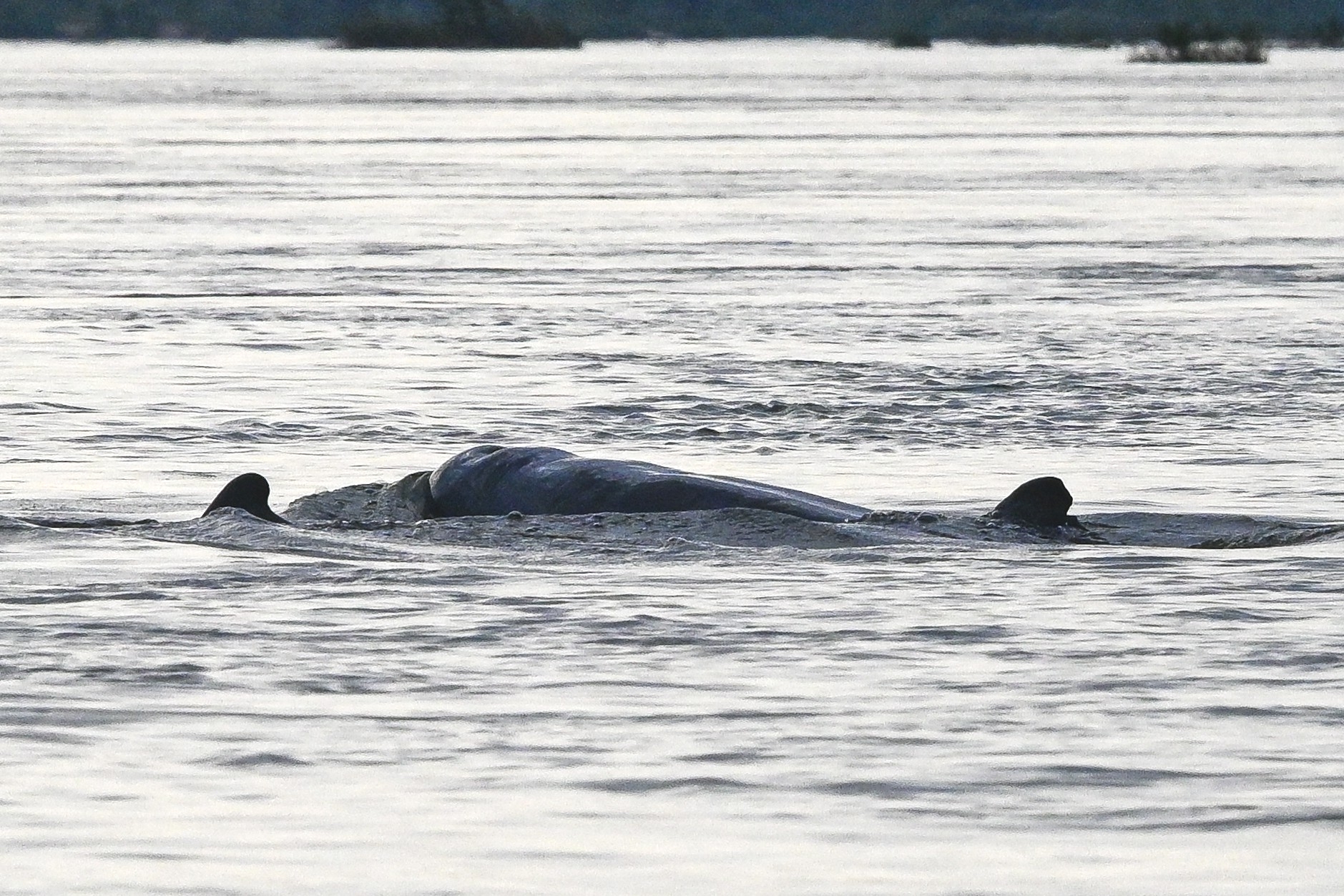
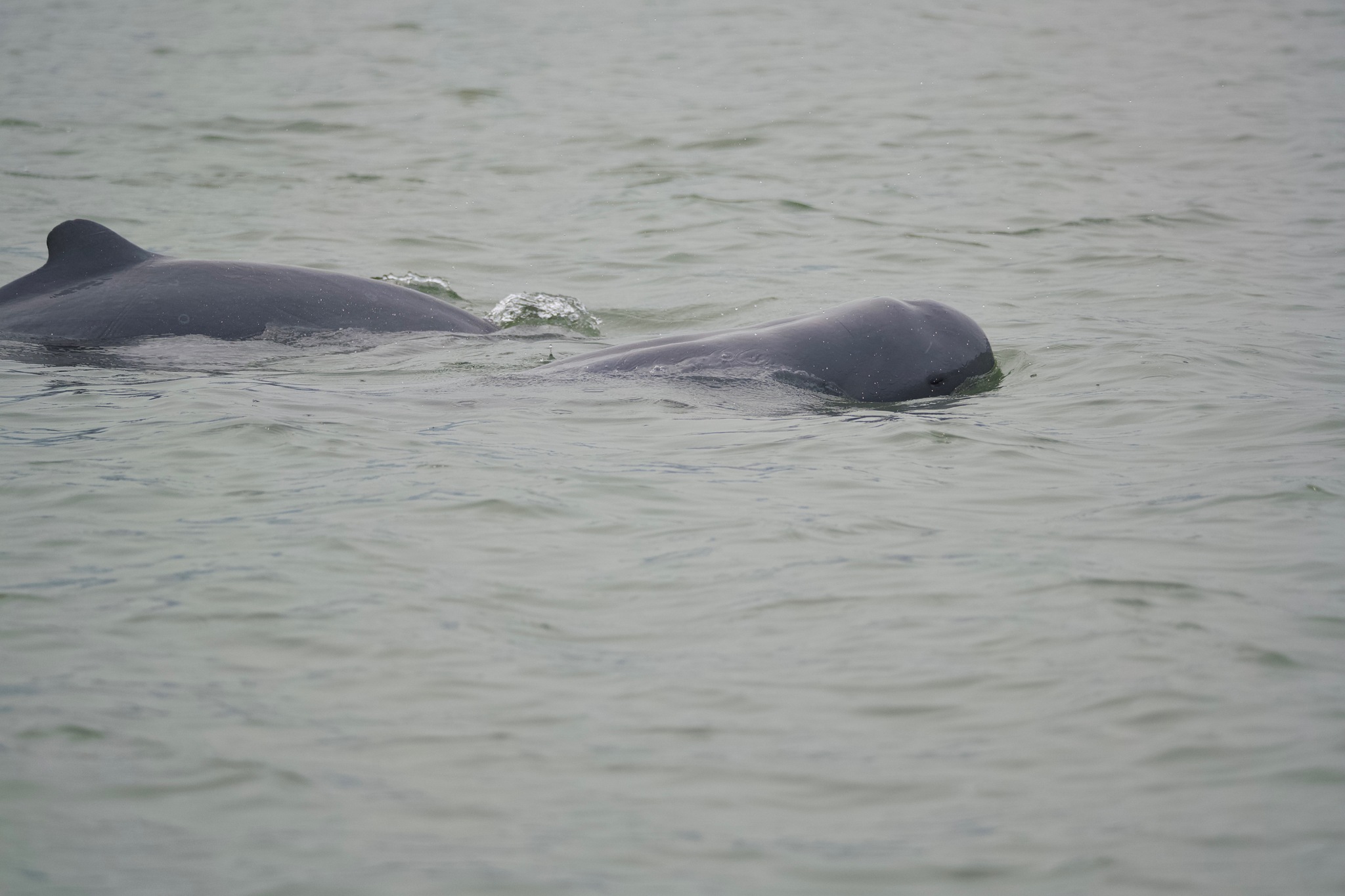
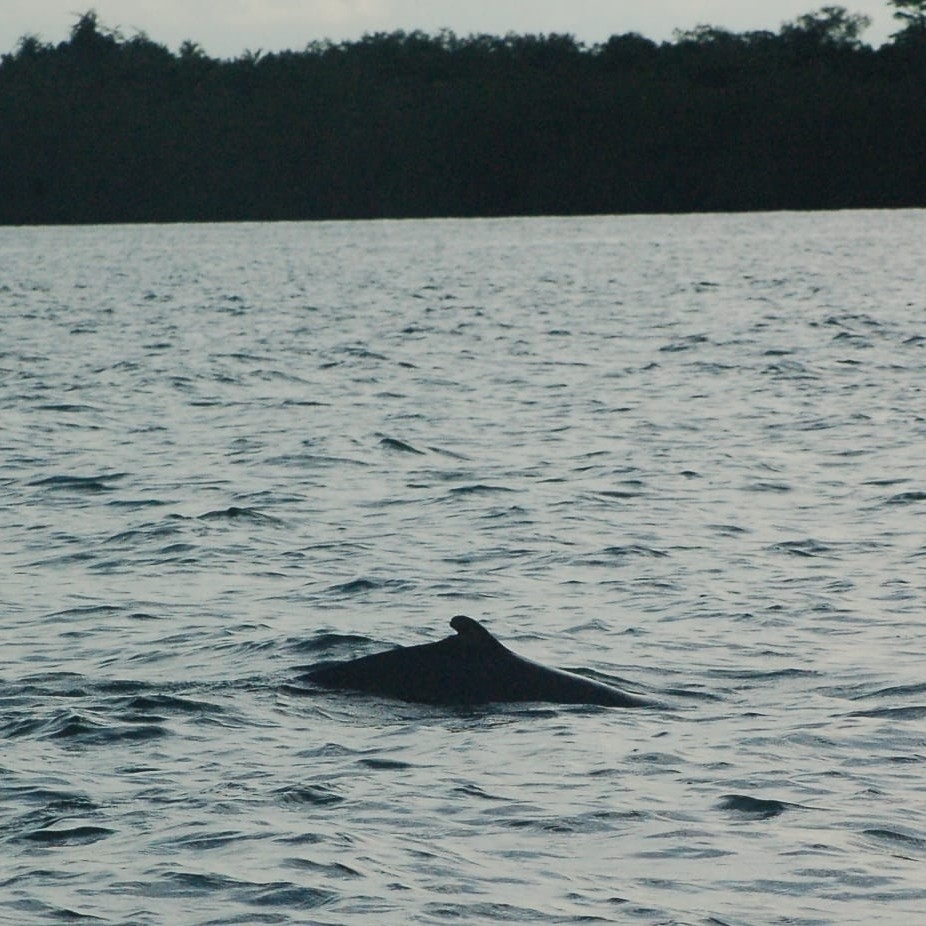
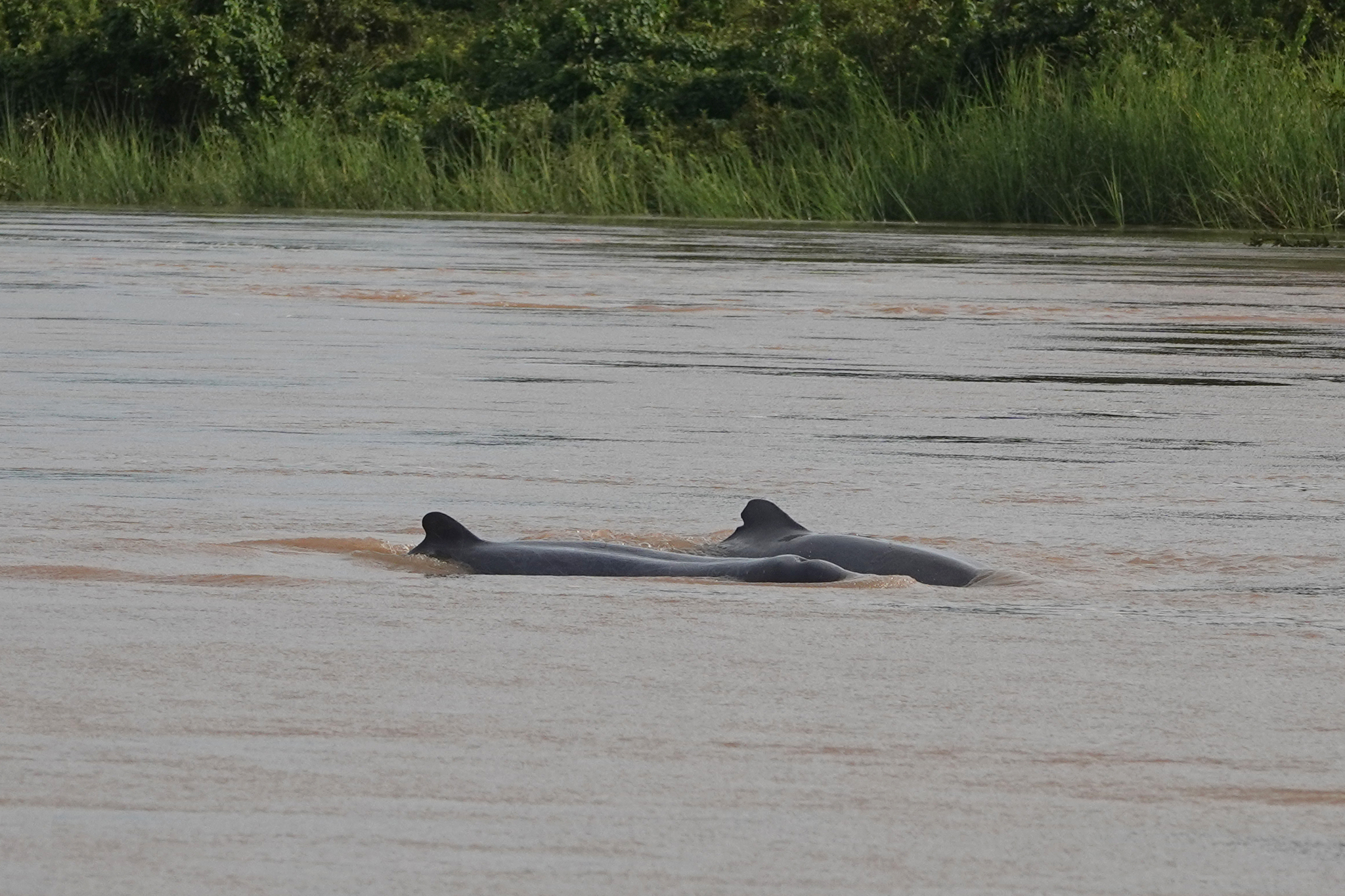
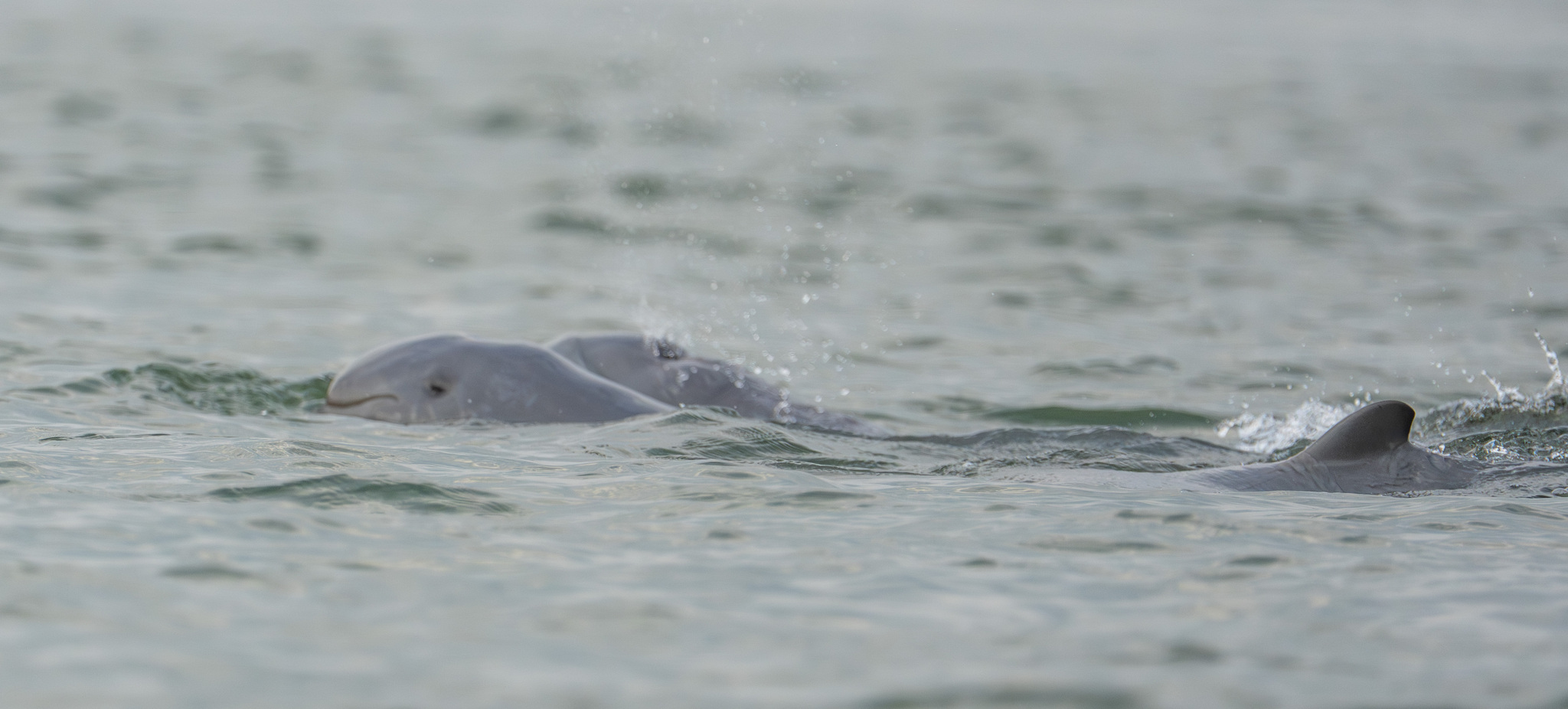
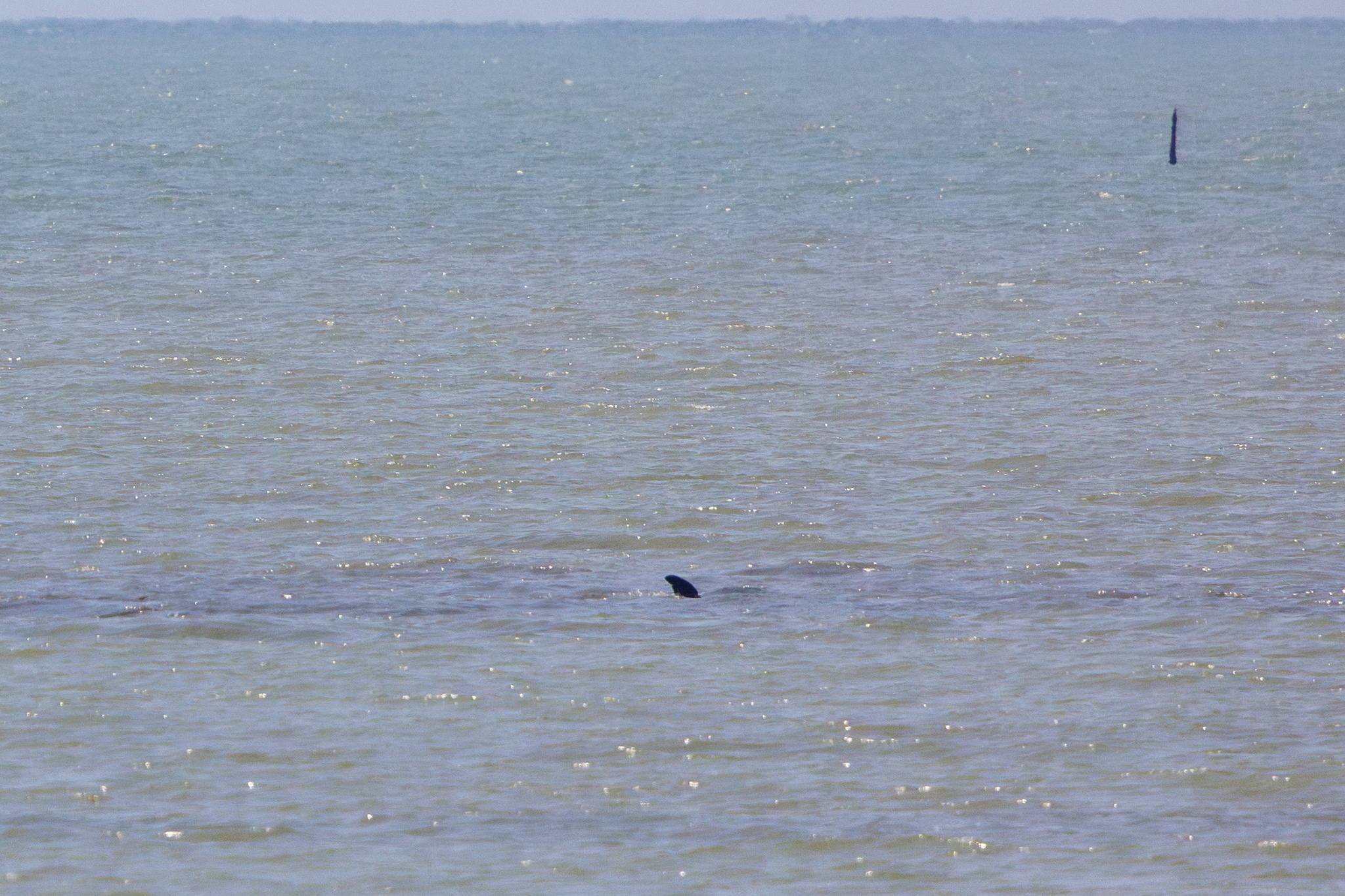
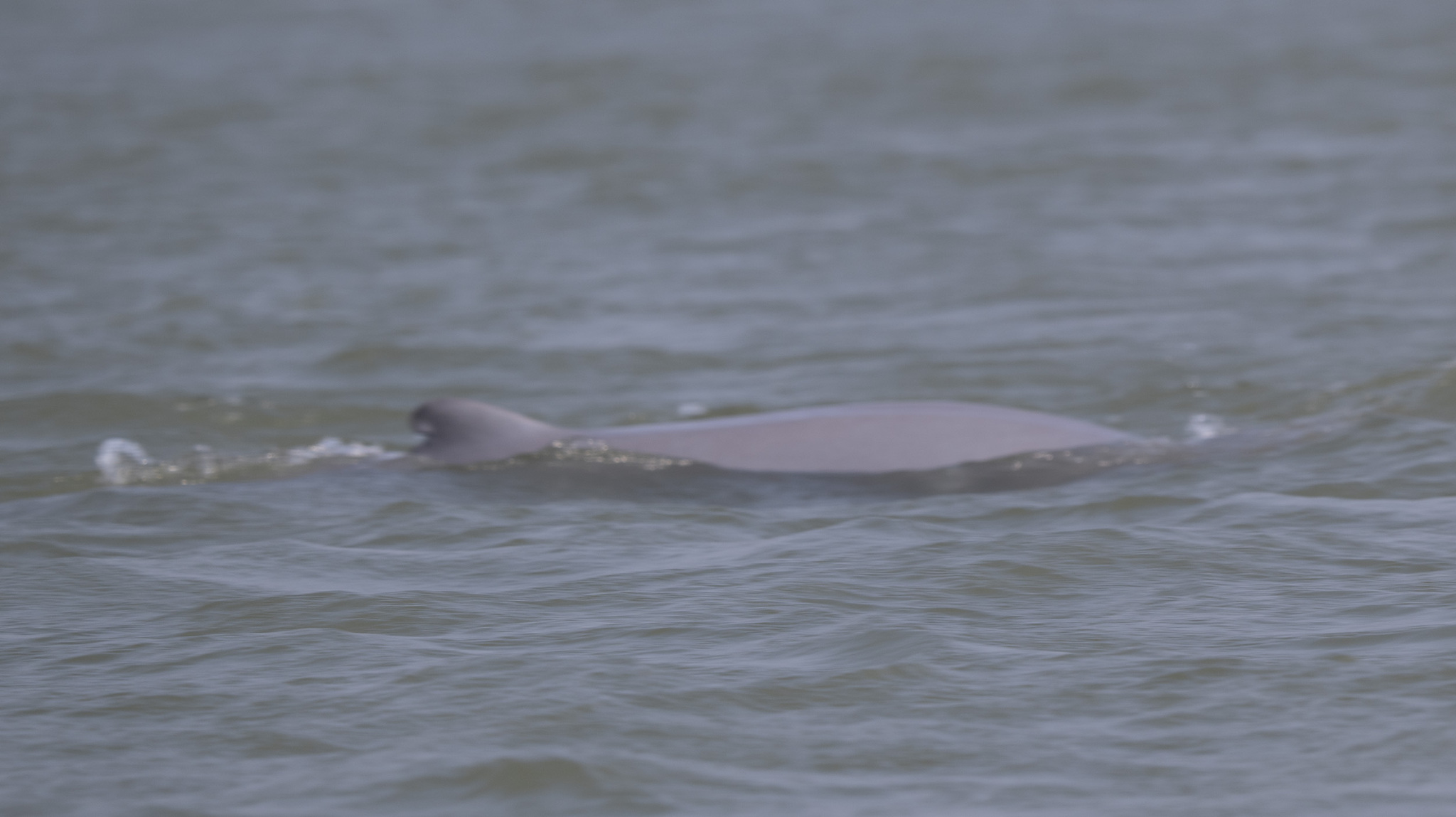
The Irrawaddy dolphin has a silhouette that is immediately recognisable to anyone who manages to see it properly: a massive slate-grey to dark blue-grey body, paler on the belly and with no contrasting pattern, topped by a rounded head with a bulbous melon and no rostrum at all. A skin fold marks the back of the skull: since the cervical vertebrae are not fused, the animal can genuinely turn its head, a flexibility rare among cetaceans that helps it search the bottom in very shallow water. The dorsal fin is small, low, triangular with a rounded tip, and set well back, two thirds of the way along the back. The flippers are broad and long, with a convex leading edge and a rounded tip. The mouth holds 12 to 19 peg-like teeth on each side of each jaw, and the blowhole, U-shaped, has the distinctive feature of being offset to the left of the midline and of opening forwards.

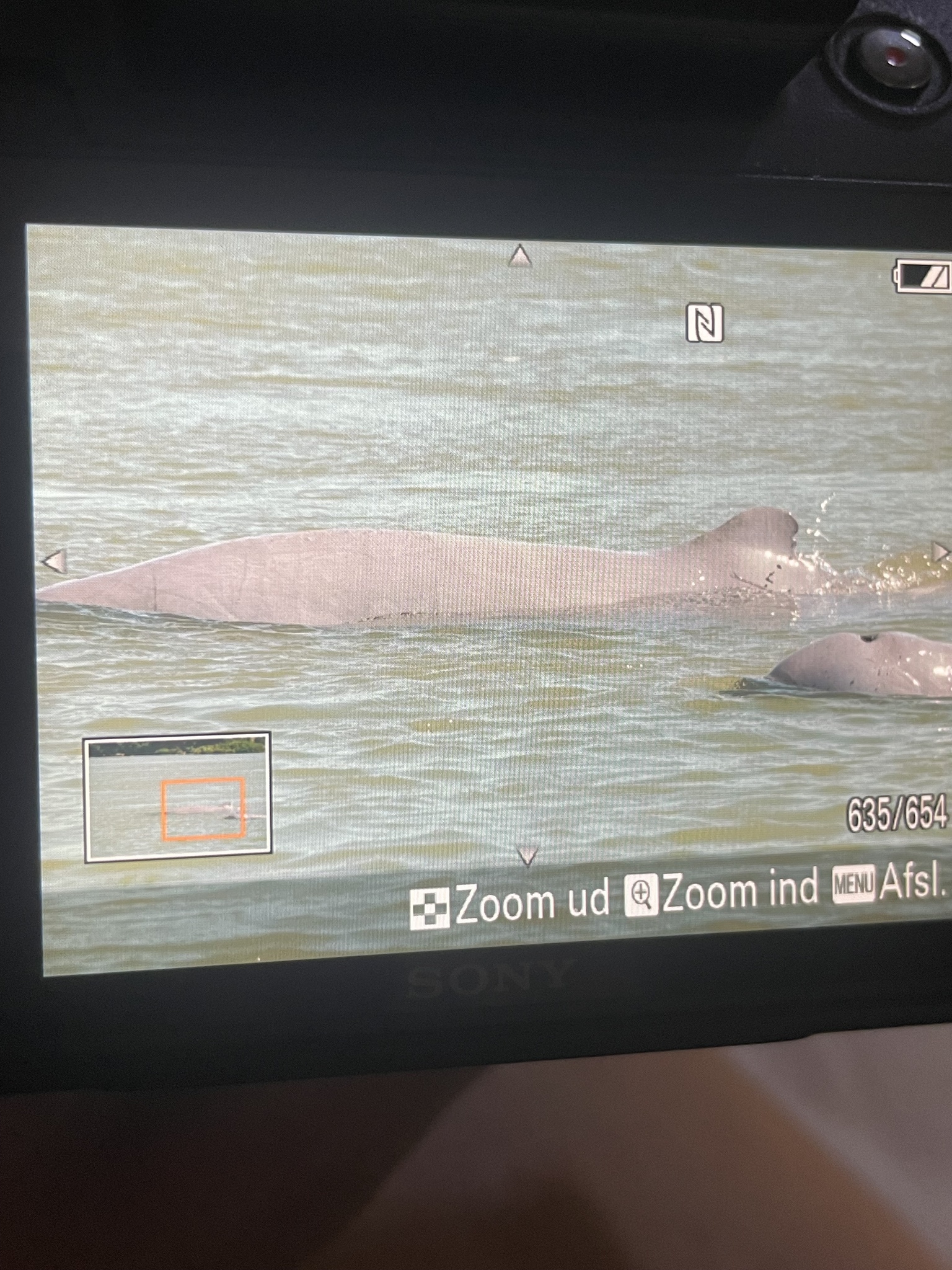
In the field, identification rests above all on surface behaviour. It is a slow swimmer, which surfaces to breathe in an inconspicuous roll, with a blow that is barely visible, and which never rides the bow wave of boats; it even tends to avoid them. It is therefore rarely in view for more than a second or two, often in sediment-laden water. Two more spectacular behaviours sometimes betray its presence: spyhopping, with the head held vertically out of the water, and the spitting of jets of water from the mouth that can carry up to 1.5 m, apparently used to herd or disorient prey.

Confusion is a real possibility. The most frequent involves the finless porpoises of the genus Neophocaena, of similar size and with an equally rounded head, but entirely lacking a dorsal fin: a back carrying a fin, however small, settles the question. The resemblance often mentioned with the beluga is purely convergent and has no value for identification, the two animals sharing neither family nor range. Finally, the Australian snubfin dolphin (Orcaella heinsohni), a very close relative, occupies a separate range that does not overlap with its own: it differs in having a three-tone coloration with a white belly, where the Irrawaddy dolphin shows only two, in lacking the median dorsal groove in front of the fin, and in the height of its dorsal fin.

Taxonomy

The Irrawaddy dolphin belongs to the family Delphinidae and, within it, to the subfamily Globicephalinae, which includes the pilot whales. Its appearance, bulging forehead, absence of a beak, creased neck, long led it to be placed close to the Monodontidae, the family of the beluga and the narwhal; molecular analyses have ruled out that hypothesis and confirm unambiguously that it belongs to the delphinids. Some studies had also placed it near the genus Orcinus (the killer whale), but more recent work attaches it firmly to the Globicephalinae.

The genus Orcaella holds only two species. Until 2005, the Irrawaddy dolphin was regarded as its only representative; that year the populations of northern Australia were raised to a distinct species, the Australian snubfin dolphin (Orcaella heinsohni), on the basis of genetic divergences of the order of 5.9%, together with cranial and colour differences. The species was described by Richard Owen in a publication by John Edward Gray in 1866, hence the conventional authority “(Owen in Gray, 1866)”. The epithet brevirostris comes from the Latin brevis, “short”, and rostrum, “beak”. Two names coexist in French: “dauphin de l’Irrawaddy”, the more common, and “orcelle”, sometimes given more fully as “orcelle de l’Irrawaddy”.

Distribution and habitat

The species occupies a discontinuous range in the tropical and subtropical waters of the Indo-Pacific, from the Bay of Bengal to insular South East Asia: Bangladesh, India, Myanmar, Thailand, Cambodia, Viet Nam, Malaysia, Brunei, Singapore, Indonesia and the Philippines. It is no longer present in Laos.

Contrary to a widespread idea, it is not a river dolphin in the strict sense but a euryhaline species, able to live in salt water as well as fresh. Most of the numbers occupy shallow, turbid coastal waters, mangroves, deltas and estuaries; only three populations are strictly riverine, in the Ayeyarwady, the Mekong and the Mahakam, and those stay far from the sea, on the middle and upper reaches, while two others are confined to brackish lagoons, Chilika Lake in India and Songkhla Lake in Thailand.

Numbers are very uneven. Bangladesh holds by far the largest known contingent, with nearly 5,800 individuals estimated in coastal waters and about 450 in the channels of the Sundarbans. Chilika Lake, in Odisha, held 159 at the 2025 census and has the highest concentration in the world in a single body of water. The Cambodian Mekong held 111 dolphins in November 2025, then 113 in February 2026 after a further birth, confined to a stretch of about 180 km between Kratie and the Lao border. The Ayeyarwady now holds no more than a few dozen, about 60 according to the WCS, along 400 km between Mingun and Bhamo, as does the Mahakam in Borneo; Songkhla Lake held no more than 17 in 2025, and Malampaya Sound, in the Philippines, about 35, against 77 estimated in 2001.

The species is absent from French waters. No data document it in the Mediterranean, in the Bay of Biscay or in the English Channel, nor in the overseas territories: its range overlaps no French territory, and no representative of the genus Orcaella frequents waters under French jurisdiction.

Biology and ecology

The Irrawaddy dolphin lives in small groups, most often of two to six animals, exceptionally up to twenty gathered in the deep pools of rivers. Its diet is opportunistic and varies with habitat: bony fish, among them catfish, fish eggs, prawns and benthic crustaceans, to which squid, cuttlefish and octopus are added in marine populations. It hunts mainly near the bottom, follows the tidal movements that concentrate prey, and its mobile neck lets it search effectively in very shallow water. Its sonar emits clicks, creaks and buzzes around 60 kHz, a narrow beam well suited to the cluttered, sediment-laden waters it frequents.

Dives typically last from 30 seconds to a little over 2 minutes, with a documented maximum of 12 minutes; a mean duration of about 115 seconds has been measured on diving groups. Ordinarily a slow swimmer, the animal can reach 20 to 25 km/h when pursued.

Breeding data remain partial and the estimates vary: sexual maturity is placed between 3 and 6 years by some work, between 7 and 9 years by other studies. Gestation is generally estimated at 14 months, with a range sometimes given as 9 to 14 months. Matings are reported from December to June in the northern hemisphere. The female gives birth to a single calf of about 1 m and 10 kg, which begins to take fish at around 6 months and is weaned at about 2 years; the interval between two births is two to three years, which gives the species a very low recovery potential. Longevity is close to 30 years.

One behavioural peculiarity has made its reputation: the cooperative fishing it practises with people on the Ayeyarwady. The fishers signal their presence by tapping the hull or striking the water; the dolphins then drive the shoals of fish in a half-circle towards the boat, the fisher throws the cast net, and the dolphins take the fish that are disoriented or escape from it. The tradition is documented from the nineteenth century, disputes over the sharing of catches were brought before local courts in 1879, and it is found, in related forms, only at Laguna in Brazil and among the Imraguen of Mauritania. It is in sharp retreat today, for want of trained fishers and of fish.

Status and conservation

The Irrawaddy dolphin is classed as Endangered (EN) on the IUCN Red List, under criteria A2cd+3cd+4cd, following an assessment dated 30 August 2017 that is still in force in the current edition of the Red List. The estimated decline exceeds 50% over three generations. Six isolated subpopulations are the subject of separate assessments and are all classed as Critically Endangered (CR): the Ayeyarwady, the Mahakam, the Mekong, Songkhla Lake, together with two marine populations in the Philippines, Malampaya Sound and Iloilo-Guimaras.

The first threat, very largely the dominant one, is bycatch in gillnets, in which the animal drowns within minutes. Next come electrofishing and blast fishing, the building of dams that fragment the river populations, the Don Sahong dam, work on which began in 2014 near the Lao-Cambodian border, and the Sambor and Stung Treng projects, artisanal gold mining and mercury contamination, pesticides, river traffic and the noise that goes with it, the degradation of coastal habitats, removals for dolphinaria and poorly regulated tourism. Historically, the species was also killed for its oil.

The disappearance of the species in Laos illustrates this trajectory: the transboundary Cheuteal pool, which still held 17 individuals in 1993, emptied down to the last animal, the identified individual ID#35, which died in mid-February 2022 from injuries caused by illegal fishing gear.

On the regulatory side, the species has been listed in Appendix I of CITES since 2004, which prohibits all international trade for commercial purposes, and in Appendices II (since 1991) and I (since 2009) of the Convention on Migratory Species. It benefits from national protection, in particular the Cambodian fisheries law and Schedule I of the Indian Wildlife Protection Act, and from dedicated areas: a protected 74 km stretch of the Ayeyarwady created in 2005, a protection zone on the Mekong introduced in 2012, the Sundarbans sanctuaries in Bangladesh and Malampaya Sound in the Philippines.

One encouraging signal does exist, however. On the Cambodian Mekong, river patrols and the systematic removal of illegal nets have reversed the curve: after 80 individuals in 2015 and 89 in 2020, there were 8 births for 5 deaths in 2023, 9 births for 4 deaths in 2024, then no recorded mortality between 13 November 2024 and 13 November 2025, a first since monitoring began in 2002. Numbers rose to 111 in November 2025, then to 113 in February 2026.

Watching this species

Since the species is absent from French waters, watching it means travelling. The sites most regularly visited are the Mekong around Kratie and Kampi, in Cambodia; Chilika Lake, in Indian Odisha; the channels of the Sundarbans in Bangladesh; the protected segment of the Ayeyarwady upstream of Mandalay; the Mahakam river in Borneo; the coastal waters of Sarawak; and the Gulf of Thailand.

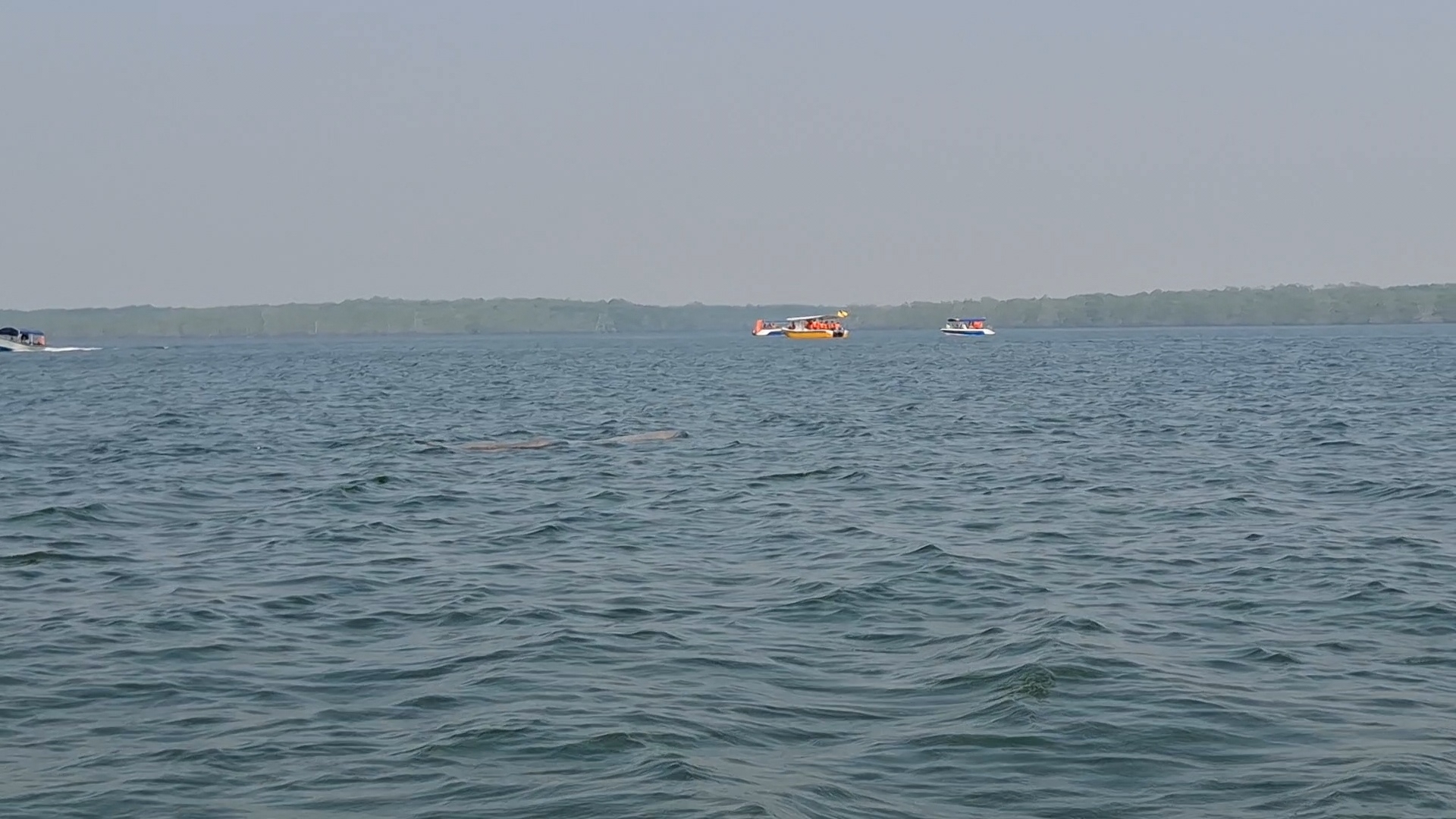
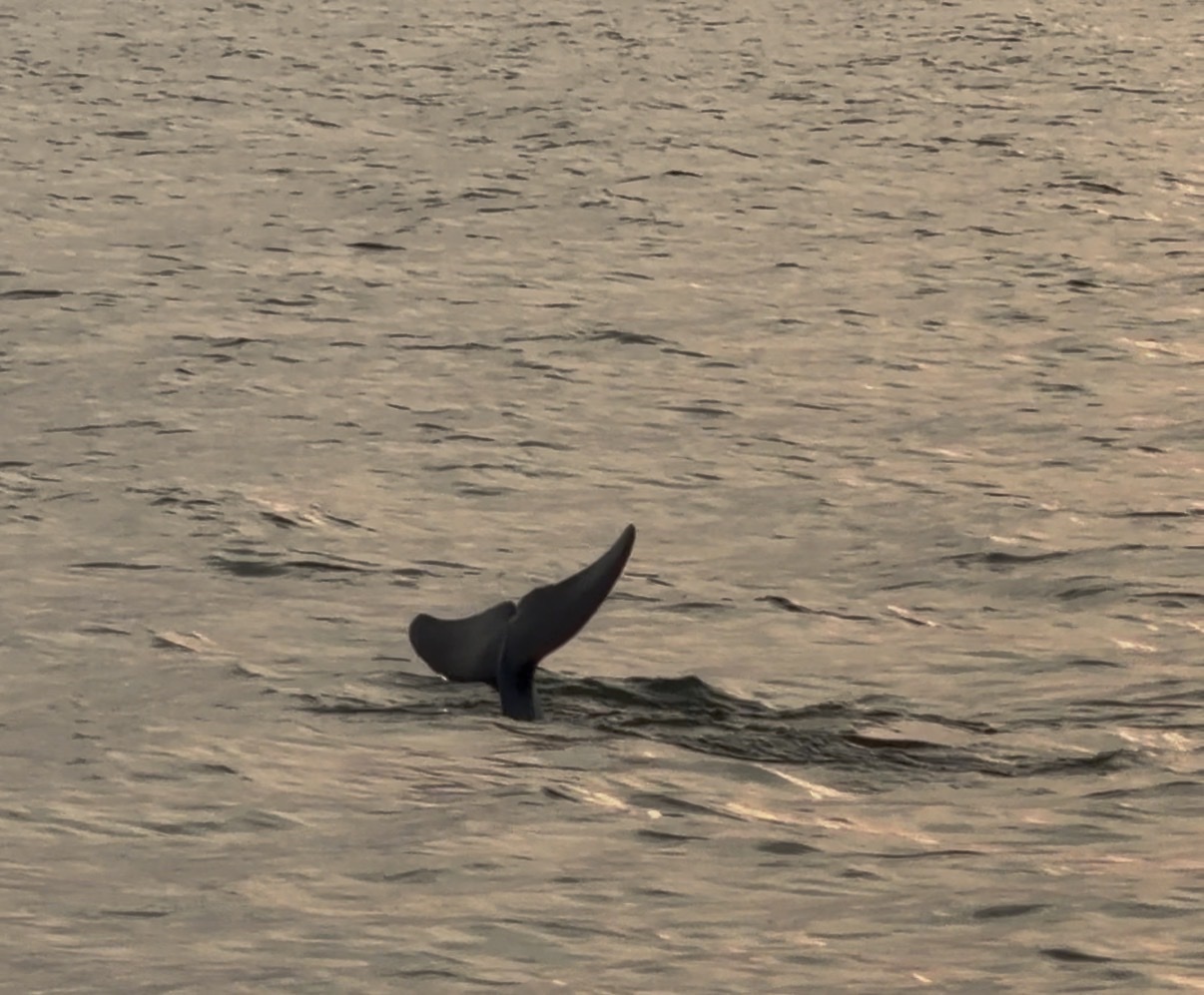
Expect a frustrating rather than a spectacular sighting. The animal does not breach, does not come to the bow and tends to flee boats: what one looks for is a small grey back and a short, rounded fin breaking the surface for one or two seconds, often in opaque water. The best conditions are calm water, early in the morning or late in the afternoon, from a boat with the engine switched off.

Ethics count here more than elsewhere, because several of these populations number fewer than a hundred animals and disturbance bears directly on their survival. The thing to do is to favour operators who cut the engine or move by paddle, never to cross the path of a group or come between a female and her calf, to limit the length of an approach and to refuse any trip promising swimming or contact. Tourist numbers have risen from some fifty visitors a year in 2000 to around 30,000 a year at Kratie: this income funds part of the surveillance of the river, but it benefits the dolphins only if it remains regulated. Finally, the species was long captured for the dolphinaria of Asia and Oceania: staying away from those establishments is among the useful things to do.

Frequently asked questions

Does the Irrawaddy dolphin live in fresh water or at sea?

Both. It is a euryhaline species, able to move from salt water to fresh water. The great majority of the numbers occupy shallow coastal waters, estuaries and mangroves; only three populations are strictly riverine (Ayeyarwady, Mekong, Mahakam), and those ascend far inland, sometimes more than 1,000 km from the sea, while two others live in brackish lagoons (Chilika and Songkhla lakes). It does not belong to the group of true river dolphins.

What exactly is its status on the IUCN Red List?

Endangered (EN) at species level, under criteria A2cd+3cd+4cd, from an assessment of 30 August 2017 that is still in force. Six isolated subpopulations are in addition assessed separately and all classed as Critically Endangered (CR): Ayeyarwady, Mahakam, Mekong, Songkhla Lake, Malampaya Sound and Iloilo-Guimaras.

Can it be seen in France?

No. The species is absent from the Mediterranean, the Bay of Biscay and the English Channel, as from all French overseas waters. Its range, limited to the Bay of Bengal and South East Asia, overlaps no French territory, and no species of the genus Orcaella frequents waters under French jurisdiction.

Is it related to the beluga, which it resembles?

No. The resemblance, rounded head, absence of a beak, flexible neck, uniform shade, is a case of convergence. The beluga belongs to the Monodontidae, whereas the Irrawaddy dolphin is a delphinid of the subfamily Globicephalinae, related to the pilot whales. Genetic analyses have settled this point definitively.

How does cooperative fishing with Burmese fishers work?

On the Ayeyarwady, the fisher signals his presence by tapping the hull of his canoe or striking the water. The dolphins that answer the signal drive a shoal of fish in a half-circle towards the boat; the fisher then throws his cast net, and the dolphins catch the fish that are disoriented or escape from it. Documented from the nineteenth century, this practice has no known equivalent other than at Laguna, in Brazil, and among the Imraguen of Mauritania. It is in sharp decline today.

How many Irrawaddy dolphins are left in the Mekong?

111 individuals were counted in November 2025, and 113 in February 2026 after a further birth, along a stretch of about 180 km in northern Cambodia, against 80 in 2015 and 89 in 2020. Since 2023, births have exceeded deaths: no death at all was recorded between November 2024 and November 2025, a reversal attributed to river patrols and the removal of illegal nets. The species has, on the other hand, disappeared from Laos: the last individual of the transboundary Cheuteal pool died in mid-February 2022.

Sources

Profile compiled from authoritative scientific sources (IUCN, NOAA Fisheries, specialist literature) and reviewed for factual accuracy.

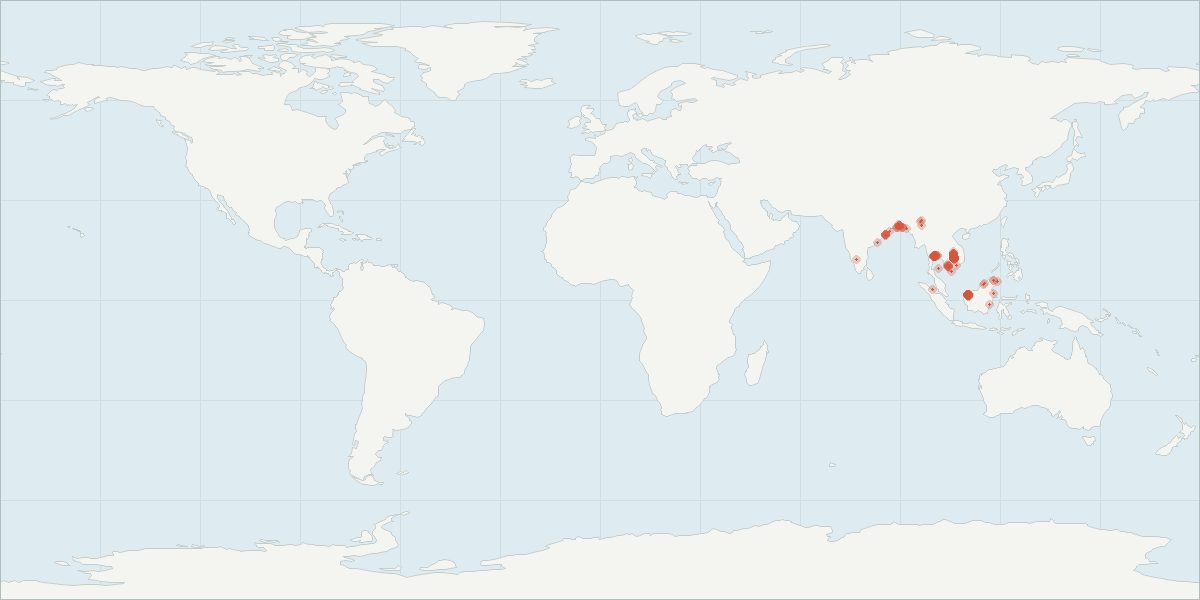
Observed distribution

According to the open data of the GBIF, 239 georeferenced sightings of Orcaella brevirostris are recorded in our photographic index.

Main countries of observation
CountryNotes
Malaysia80
Cambodia77
Thailand34
India15
Bangladesh12
Viet Nam9
Lao People’s Democratic Republic8
Indonesia5
Myanmar3
Australia2

Distribution map: Irrawaddy dolphin (Orcaella brevirostris)

Distribution map: Irrawaddy dolphin (Orcaella brevirostris), 239 georeferenced sightings from GBIF
239 georeferenced sightings of Orcaella brevirostris. Base map Natural Earth, public domain. GBIF data.
🗺️ Open the interactive mapTo zoom and pan. It uses the OpenStreetMap/CARTO base maps and the GBIF occurrence densities: no data is sent to these services before you click.

Presence through the year

Monthly distribution of 243 dated sightings (all years combined): the maximum is reached in juillet.

470janvier : 20janfévrier : 33febmars : 32maravril : 9avrmai : 13maijuin : 10juinjuillet : 47juilaoût : 26Augustseptembre : 12sepoctobre : 10octnovembre : 17novdécembre : 14dec
Sightings by month
MonthNotes
janvier20
February33
mars32
avril9
mai13
juin10
juillet47
August26
septembre12
octobre10
novembre17
December14

These figures reflect survey effort (more boaters and more surveys in summer) as much as the actual presence of the species: to be interpreted with caution.

En images

Orcaella brevirostris
© Frank Andresen, CC BY-NC, 2026
Orcaella brevirostris
© leuli, CC BY-NC, 2026
Orcaella brevirostris
© thomasvikstrom, CC BY-NC, 2026
Orcaella brevirostris
© Manuel Piana, CC BY-NC, 2026
Orcaella brevirostris
© carsten_renker, CC BY-NC, 2026
Orcaella brevirostris
© 高任飞, CC BY-NC, 2026
Orcaella brevirostris
© Kurniawan Tjandra, CC BY-NC, 2026
Orcaella brevirostris
© Zsombor Károlyi, CC BY-NC, 2026
Orcaella brevirostris
© Gaspard François, CC BY-NC, 2026
Orcaella brevirostris
© Keith Martin-Smith, CC BY-NC-SA, 2026
Orcaella brevirostris
© John Witton, CC BY, 2026
Orcaella brevirostris
© 小戴菊, CC BY-NC, 2026

Photographs from GBIF under a Creative Commons licence. The author and the licence of each photograph are given; please respect them if you reuse them.

Scientific references

  1. Stacey P., Arnold P. (1999) Orcaella brevirostris, Mammalian Species
  2. Baird I., Beasley I. (2005) Irrawaddy dolphin Orcaella brevirostris in the Cambodian Mekong River: an initial survey, Oryx
  3. Ponnampalam L. (2013) Short Note: Behavioral Observations of Coastal Irrawaddy Dolphins (Orcaella brevirostris) in Trat Province, Eastern Gulf of Thailand, Aquatic Mammals
  4. (2004) Orcaella brevirostris (Malampaya Sound subpopulation): Smith, B.D. & Beasley, I., IUCN Red List of Threatened Species
  5. (2004) Orcaella brevirostris (Mekong River subpopulation): Smith, B.D. & Beasley, I., IUCN Red List of Threatened Species
  6. (2004) Orcaella brevirostris (Ayeyarwady River subpopulation): Smith, B.D., IUCN Red List of Threatened Species
  7. (2004) Orcaella brevirostris (Songkhla Lake subpopulation): Smith, B.D. & Beasley, I., IUCN Red List of Threatened Species
  8. FREELAND W., BAYLISS P. (1989) The Irrawaddy River Dolphin (Orcaella brevirostris) in Coastal Waters of the Northern Territory, Australia: Distribution, Abundance and Seasonal Changes, Mammalia

Automatic selection of the most cited works mentioning the species (source: Crossref).