| Scientific name | Sotalia guianensis (P.-J. van Beneden, 1864) |
|---|---|
| Other names | Guiana dolphin, costero; French: sotalie, sotalie de Guyane, marsouin (local usage in French Guiana); Brazilian Portuguese: boto-cinza; Spanish: tonina costera |
| Size | 1.50 to 2.10 m; most often 1.70 to 1.90 m in adults; about 90 cm at birth |
| Weight | 55 to 80 kg as a rule; individuals approaching 120 kg have been reported |
| Longevity | About 30 years at most (maximum ages determined: 29 years in males, 30 years in females) |
| Diet | Teleost fish (more than 90% of prey, mostly species under 20 cm), cephalopods and crustaceans, in particular penaeid shrimps |
| IUCN status | Near Threatened (NT), criteria A2d+3d+4d, global assessment published in 2018 (errata version 2019), which replaced the “Data Deficient” (DD) status. Regional statuses are more severe: Endangered (EN, criterion C2a(ii)) on the French Guiana Red List (2017); Vulnerable in Brazil, Colombia and Venezuela. |
The Guiana dolphin, or costero, is a small coastal delphinid of the western tropical Atlantic, occurring from Honduras to southern Brazil and, for France, in the waters of French Guiana alone. Rarely more than two metres long, it frequents turbid estuaries and sheltered bays less than 25 metres deep, where it makes use of an electric sense: it is the first cetacean in which electroreception was demonstrated, in 2012. Listed as Near Threatened (NT) globally since 2018, it is Endangered (EN) on the French Guiana Red List.
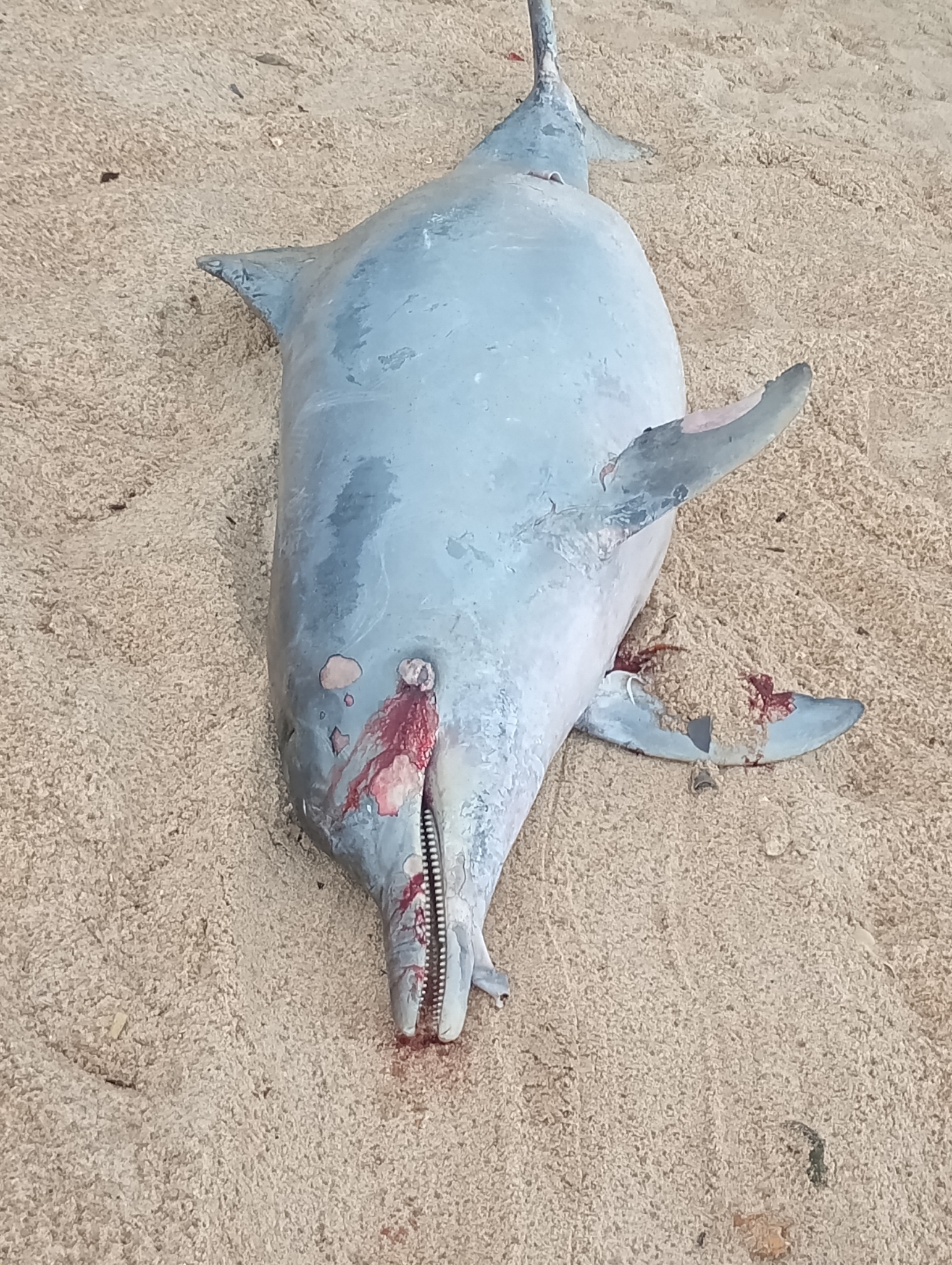
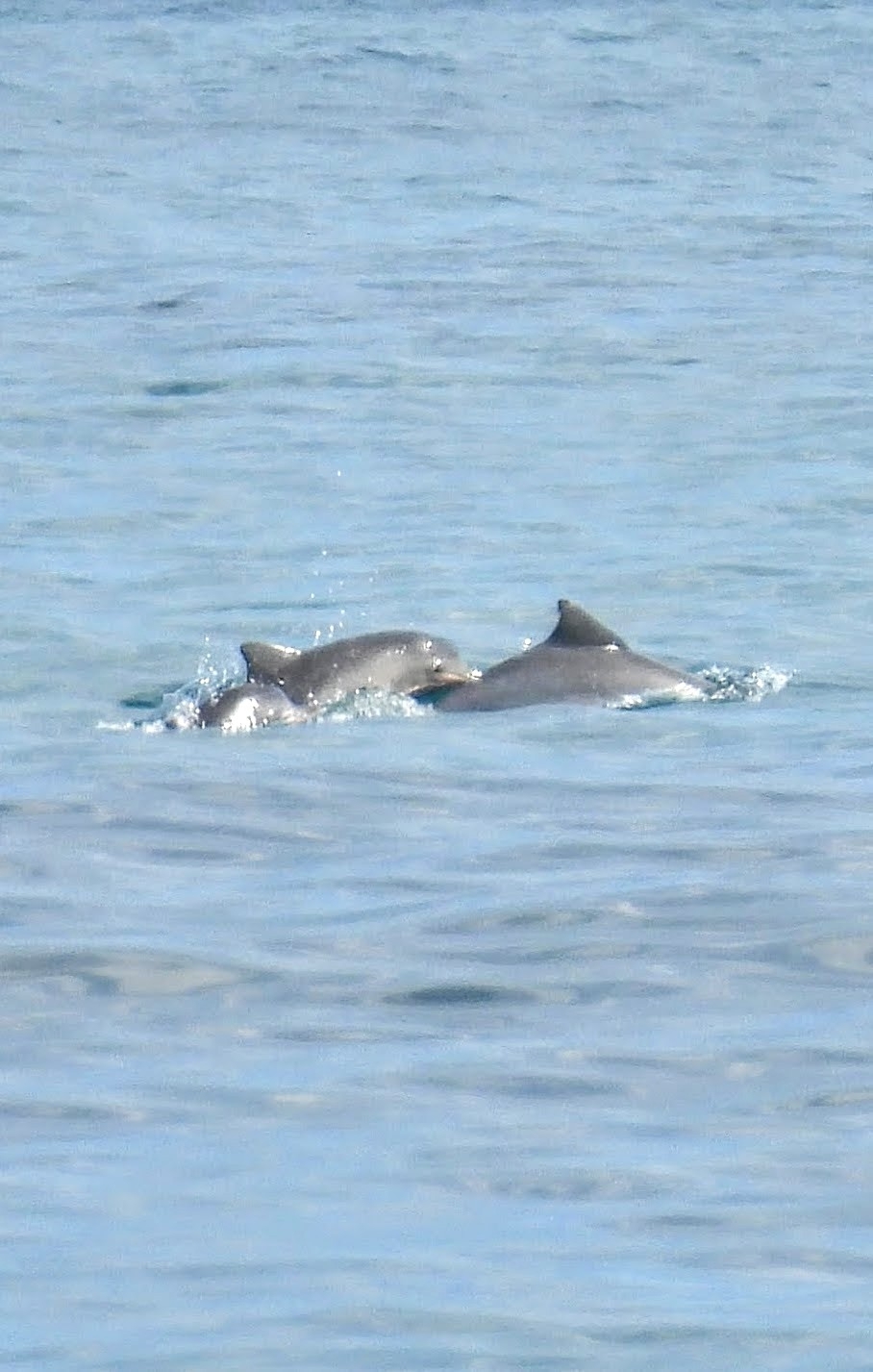
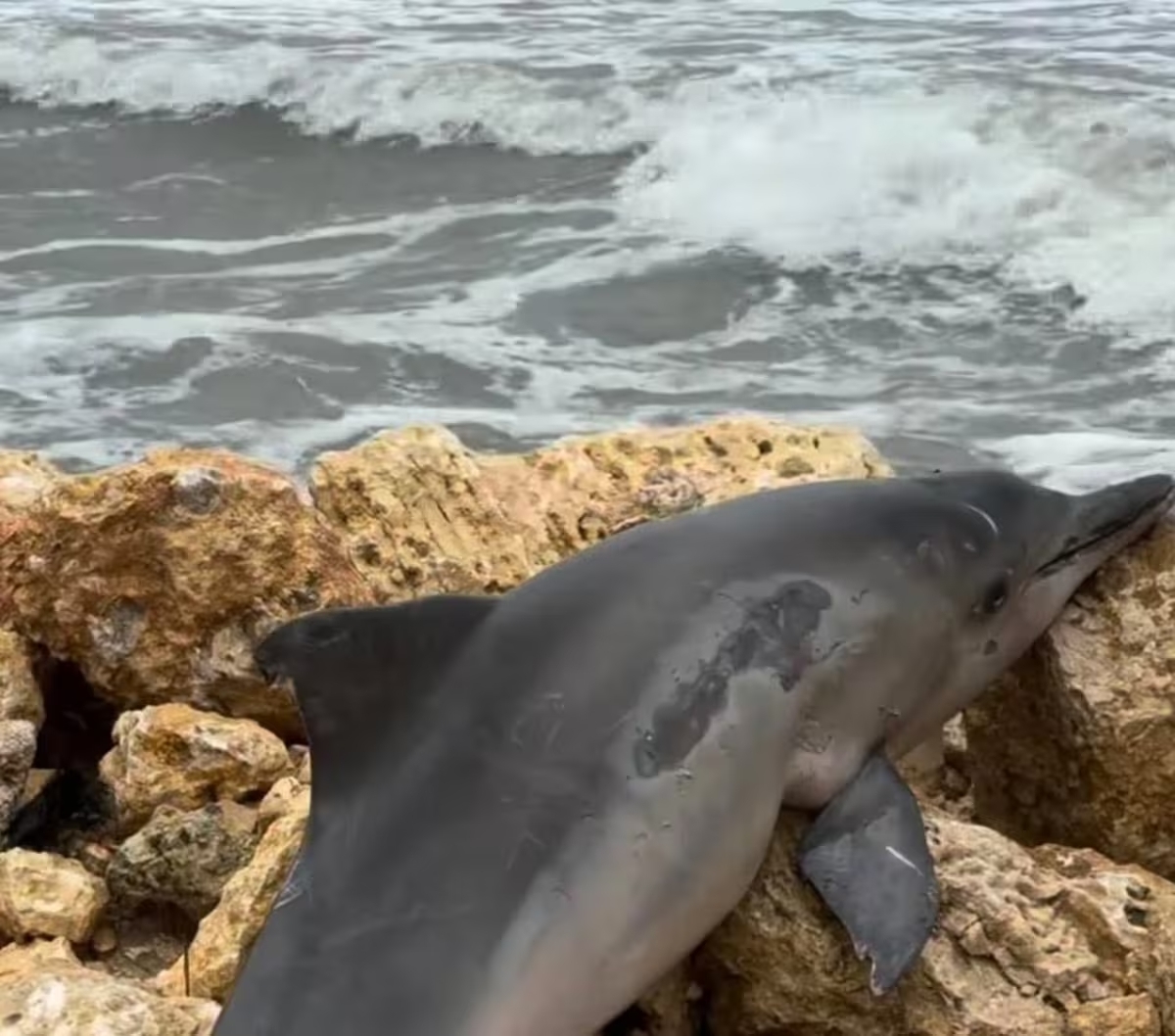
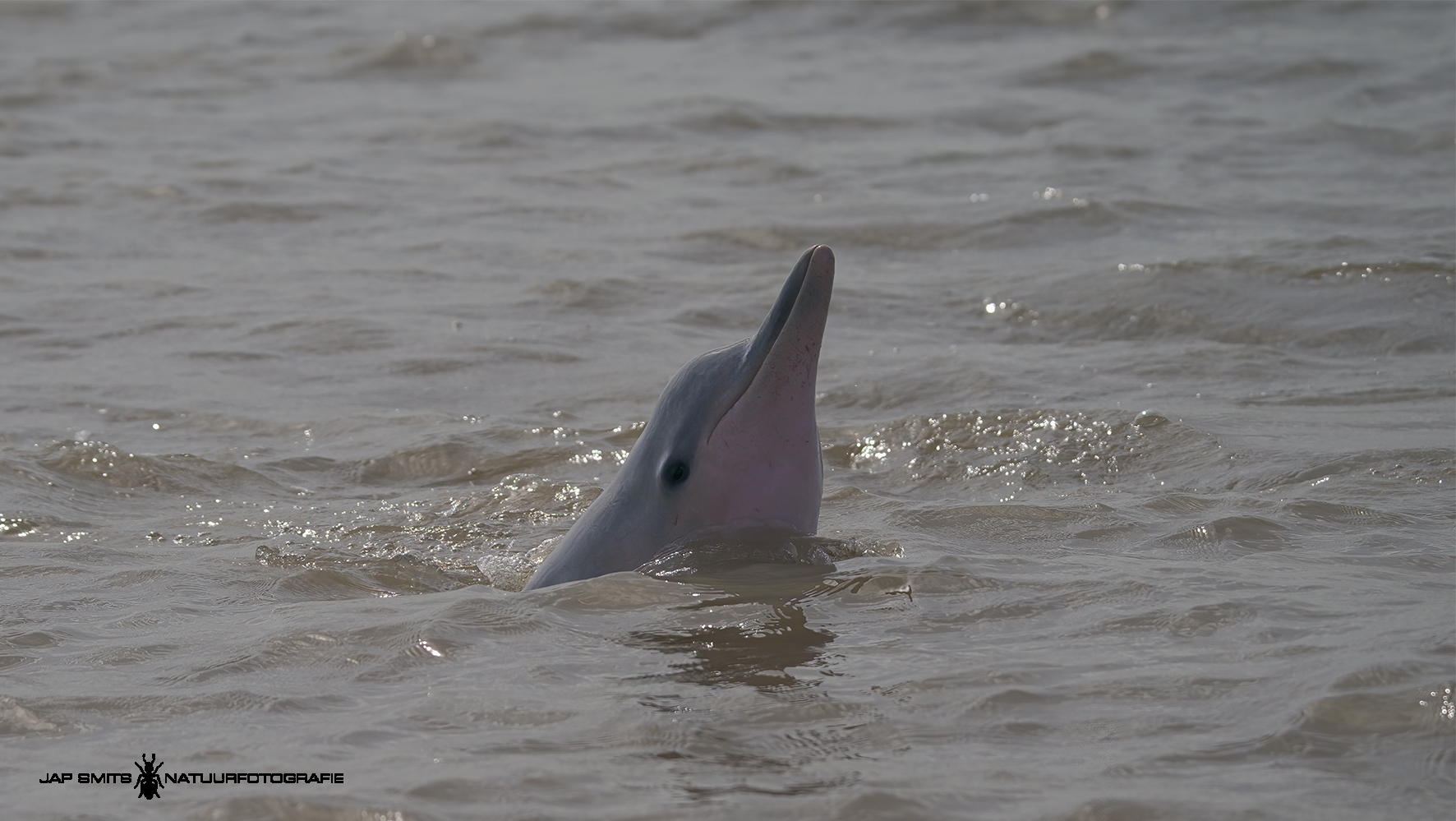
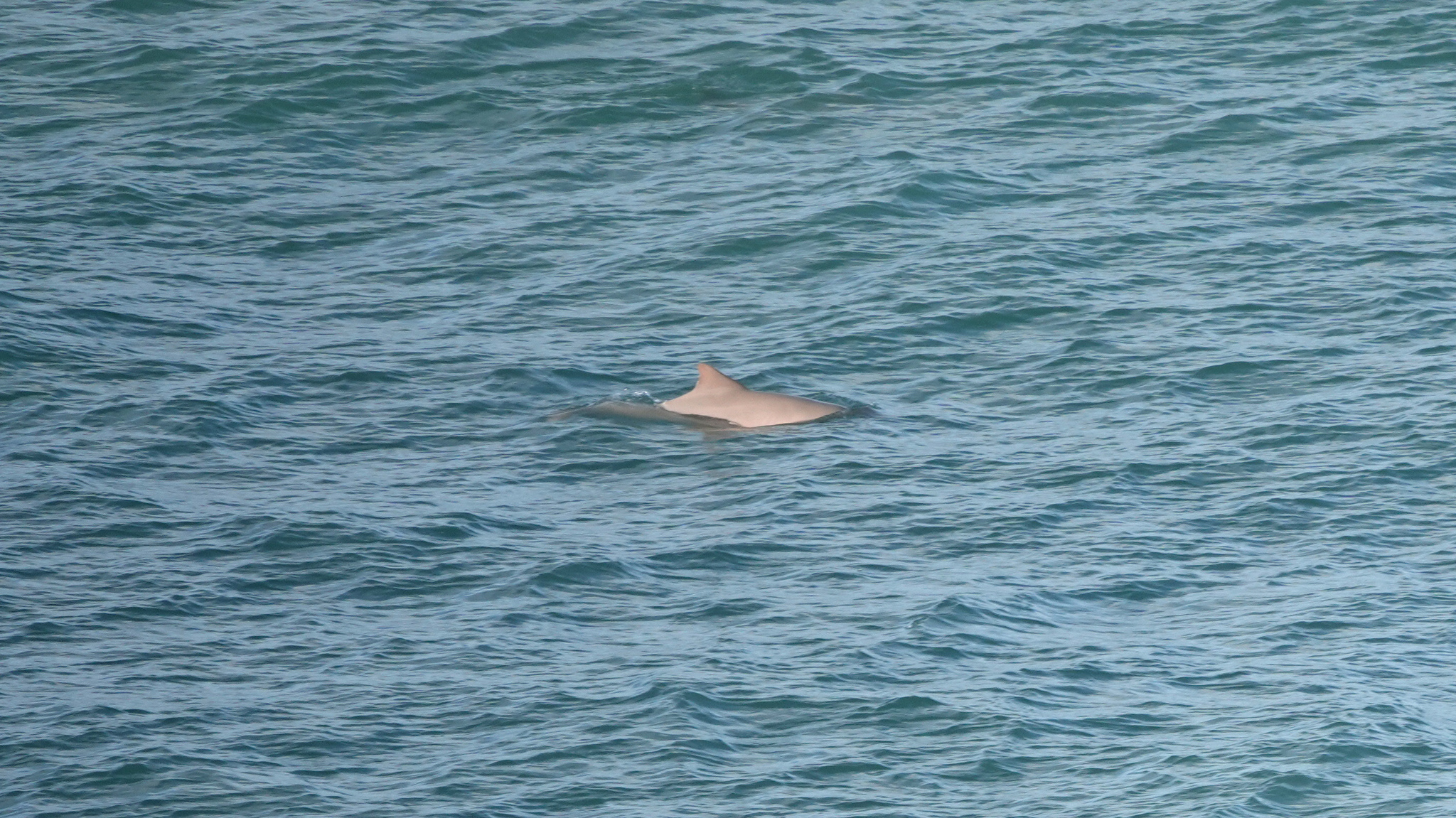
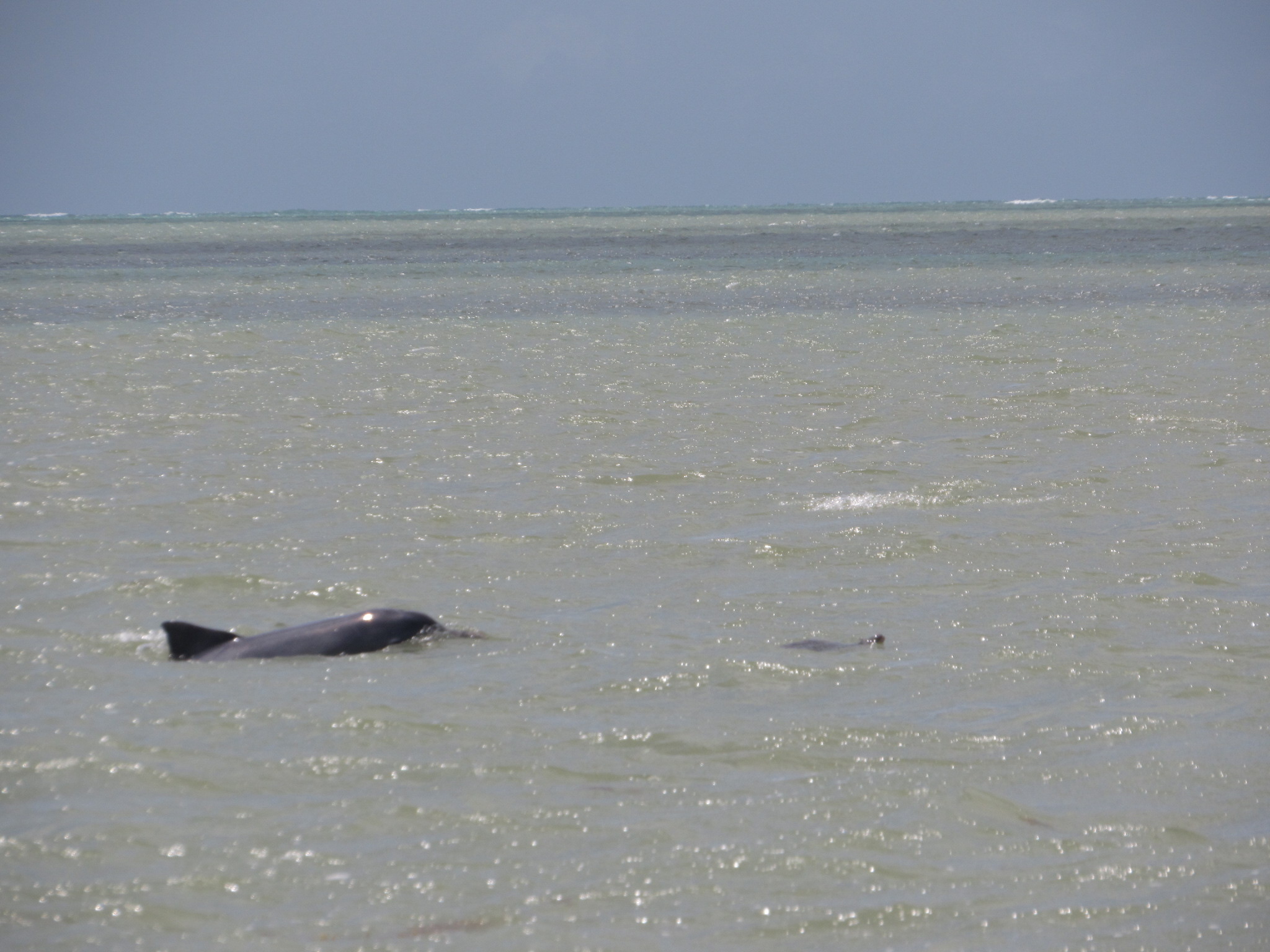
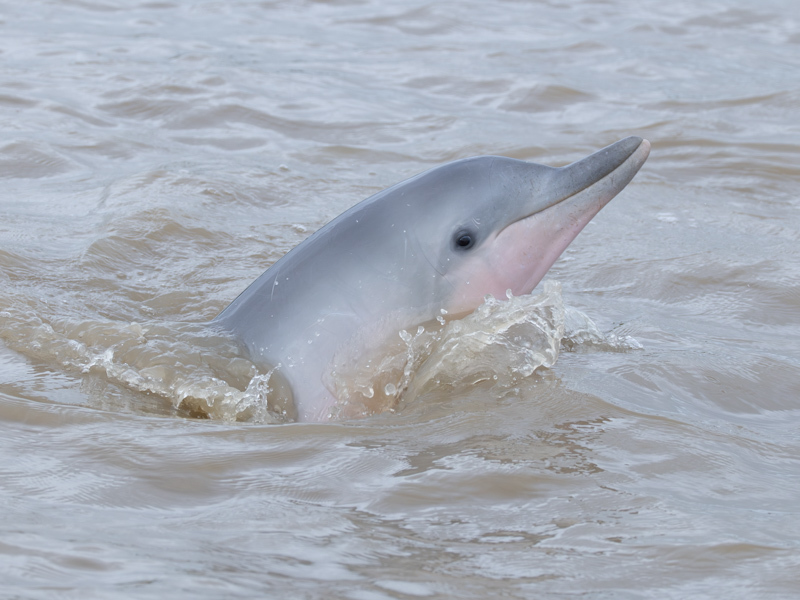
The Guiana dolphin is among the smallest delphinids in the world. Adults most often measure 1.70 to 1.90 m, the known range running from about 1.50 to 2.10 m, for a mass of 55 to 80 kg; individuals approaching 120 kg have been reported. The body is stocky, blue-grey to light grey on the back, light grey to pinkish on the belly. The rostrum is slender, elongated and well set off from the melon, and each half-jaw bears 26 to 35 teeth. The dorsal fin, set at the middle of the back, is small (11 to 13 cm high), triangular and barely falcate. The rostrum is dotted with small hairless pits, the vibrissal crypts, which are electroreceptive ampullary structures: it is in this species that electroreception was demonstrated for the first time in a cetacean, in 2012.
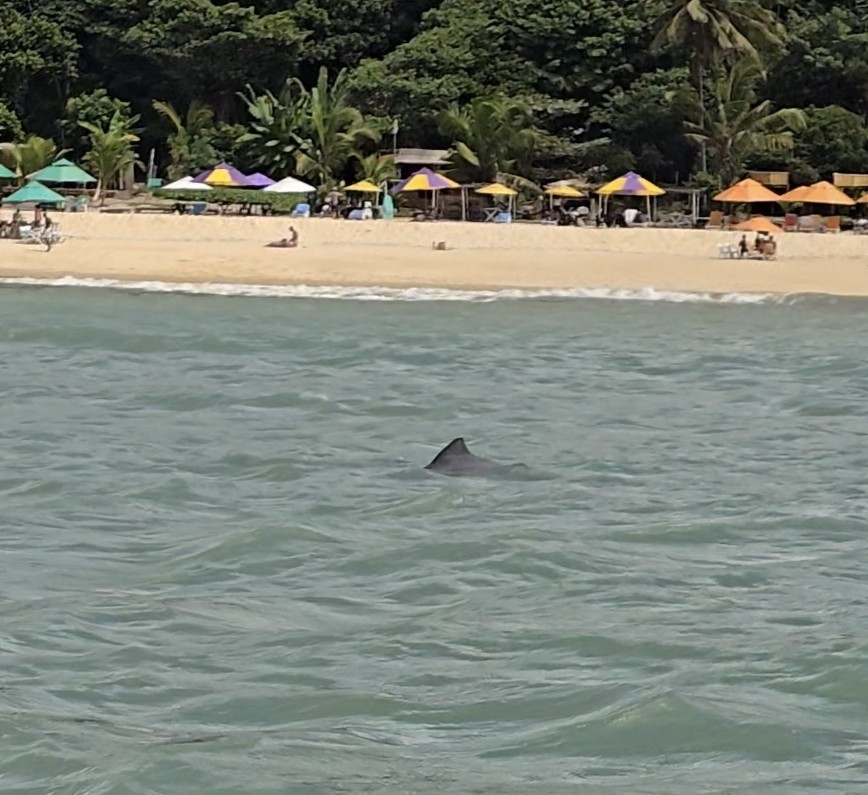
Two confusions dominate. The common bottlenose dolphin (Tursiops truncatus), which frequents the same bays, is distinctly larger and heavier, its dorsal fin higher and clearly falcate, its rostrum shorter; it readily rides the bow wave, which the Guiana dolphin almost never does: unobtrusive, it moves away from boats, its surfacings are brief and it often comes up smeared with mud, a sign of feeding close to the bottom. The tucuxi (Sotalia fluviatilis), its only congener, closely resembles it but remains smaller and strictly riverine, confined to the Amazon basin. The confusion of names is persistent: the literature predating the separation of the two species used “tucuxi” for both, whereas in Brazil the Guiana dolphin is today called “boto-cinza”.
Sotalia guianensis (P.-J. van Beneden, 1864) belongs to the order Cetartiodactyla and to the family Delphinidae, that of the oceanic dolphins. The genus Sotalia holds only two species: the Guiana dolphin, marine and coastal, and the tucuxi (Sotalia fluviatilis), confined to Amazonian fresh waters. Long held to be two ecotypes of a single species, they were separated at species rank by molecular work (Cunha et al., 2005; Caballero et al., 2007); the two available names were allocated according to their type locality, guianensis (described from the coasts of the Guianas) going to the marine populations and fluviatilis (described from the upper Amazon) to the river dolphins. In the French TaxRef reference system, the species carries the code CD_NOM 521606.
Endemic to the Atlantic and Caribbean seaboards of Central and South America, the species occupies a continuous coastline running from central Honduras (about 16° N) to Florianópolis, in southern Brazil (about 27°35′ S): Nicaragua, Costa Rica, Panama, Colombia, Venezuela, including Lake Maracaibo, Trinidad and Tobago, Guyana, Suriname, French Guiana and Brazil.
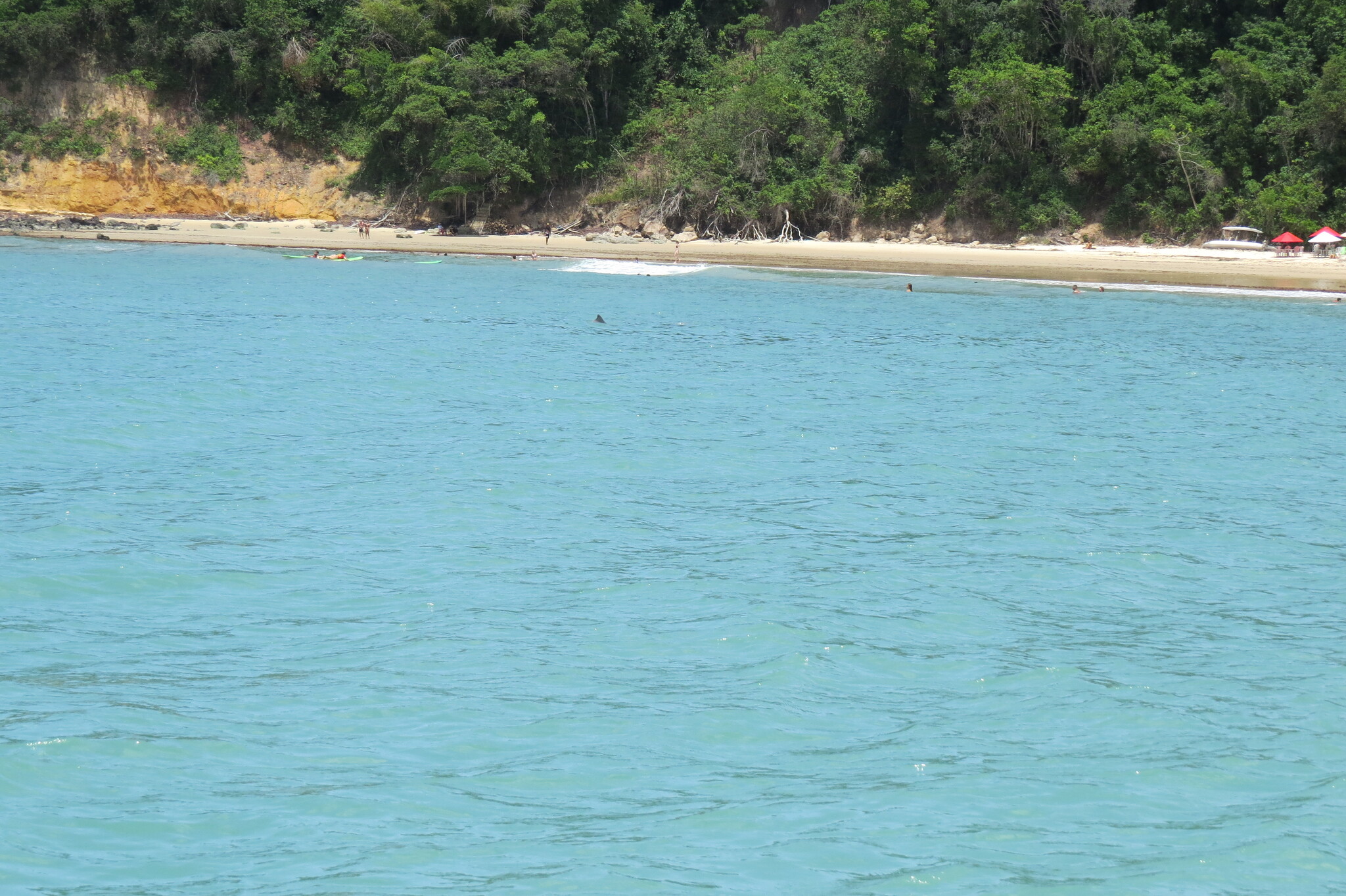
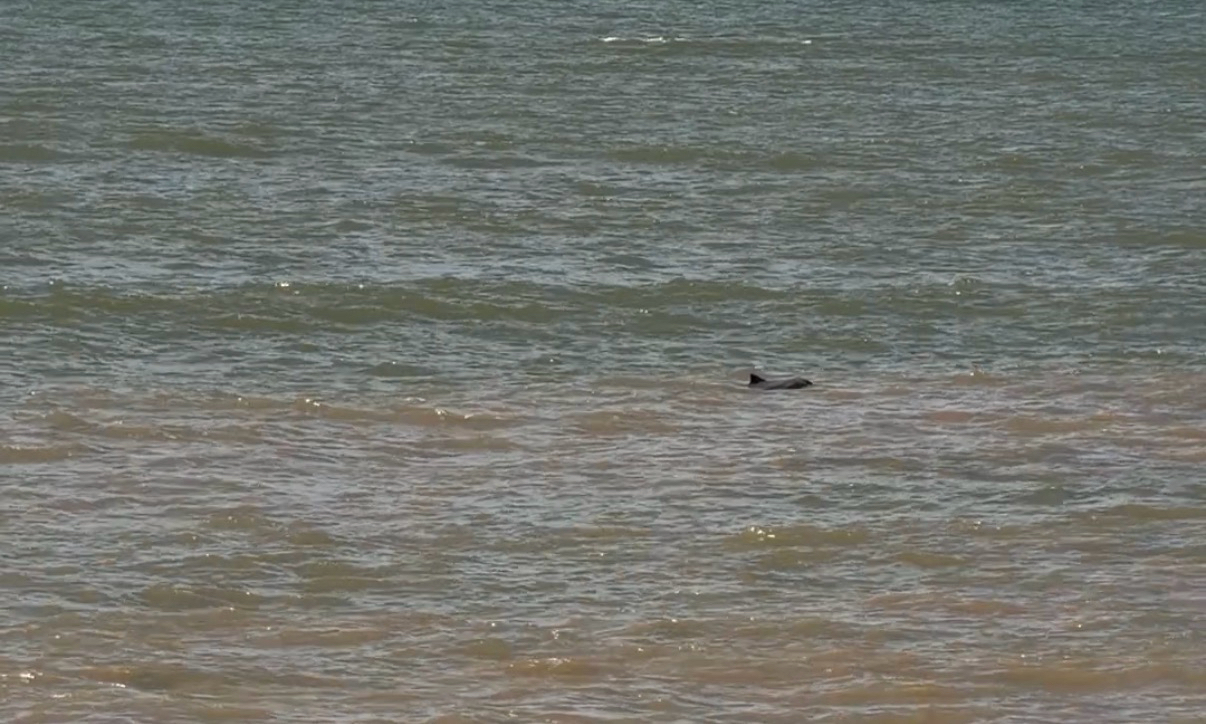
It is tied to warm, shallow and often very turbid waters: open bays, estuaries, river mouths, mangrove coasts and the rare rocky outcrops. It seldom goes beyond depths of 25 to 30 metres and, in French Guiana, has not been observed more than 36 km offshore nor more than 18 km upstream in the rivers. Its distribution is fragmented into nuclei between which genetic exchange is low.
In France, the Guiana dolphin occurs only in French Guiana, along some 300 km of coastline, chiefly near rocky sites and at the mouths of the Maroni, the Kourou, the Cayenne, the Mahury, the Approuague and the Oyapock, with sightings more numerous from June to December. It frequents neither the Mediterranean, nor the Bay of Biscay, nor the English Channel.
The diet is dominated by teleost fish, more than 90% of the prey identified, with some sixty demersal and pelagic species recorded and a predominance of individuals under 20 cm; cephalopods and crustaceans, in particular penaeid shrimps, complete the menu. Hunting techniques are varied: striking fish with the tail fluke to stun them, coordinated herding of shoals, sometimes towards the beach at the cost of a deliberate partial stranding.
The vibrissal crypts of the rostrum, two to ten on each side of the upper jaw, form richly innervated ampullary structures. Psychophysical experiments carried out on one male established a detection threshold for electric fields of 4.6 µV/cm, a sensitivity about ten times greater than that of the platypus (estimated at 40-50 µV/cm), but far below that of sharks and rays. This electric sense, long held to be peculiar to the Guiana dolphin, the only species in which it had been demonstrated until 2023, the year in which it was also shown in the common bottlenose dolphin (Tursiops truncatus), complements echolocation in locating prey at short range in sediment-laden water or when the animal is probing the bottom.
Groups most often number 2 to 6 individuals; in French Guiana, the mean size reaches 6.3 individuals during boat-based surveys, with exceptional gatherings of 50 animals. Sedentary and faithful to their site, these dolphins occupy small home ranges and, living in shallow water, make short dives.
Sexual maturity is reached at around 5 to 8 years in females (164 to 169 cm) and around 7 years in males (170 to 175 cm). Gestation lasts 11 to 12 months, the newborn measures some 90 cm and, in French Guiana, births are concentrated in October and November, at the end of the dry season. The interval between two births is close to two years and fecundity declines markedly after 25 years. The maximum documented longevity is about 30 years (29 years in males, 30 years in females).
The global IUCN Red List places the Guiana dolphin among the Near Threatened species (NT), criteria A2d+3d+4d, following the assessment by Secchi, Santos & Reeves published in 2018 (errata version 2019), which moved it from “Data Deficient” to “Near Threatened”. Regional statuses are more alarming: Vulnerable in Brazil, Colombia and Venezuela, Endangered (EN, criterion C2a(ii)) on the Red List of the vertebrates of French Guiana published in 2017, on the basis of an abundance estimated at 1,942 individuals (95% CI: 928-4,063), an extent of occurrence below 11,000 km², fewer than 2,500 mature individuals and a declining trend.
The main threat is bycatch in gillnets, seine nets and shrimp pots: in French Guiana, analysis of the 43 stranded dolphins recorded between 2014 and 2020 identifies it as the leading identifiable cause of mortality. To this are added the degradation of coastal habitats, pollution from gold mining and mercury, seismic and oil surveys, noise from vessels and worksites, collisions and the accumulation of organochlorines in the blubber. In Guanabara Bay, Brazil, the resident population fell from 62 to 39 individuals between 2000 and 2015, a decline of about 37%.
The species has been listed in Appendix I of CITES since 1982, in Appendix II of the CMS since 1985 and in Annex II of the SPAW Protocol to the Cartagena Convention. In France, the order of 1 July 2011 protects all marine mammals: capture, destruction, intentional disturbance and trade are prohibited. The nature reserves of Île du Grand-Connétable and Amana cover part of its habitat, and the COAST project, run by GEPOG and WWF, combines aerial survey, passive acoustics and photo-identification there.
In French Guiana, the species can be seen all year round, the best conditions coming together in the dry season, early in the morning before the wind rises and in a calm sea. The most favourable sectors are the Cayenne peninsula and its islets, the coast off Rémire-Montjoly, the approaches to Kourou and the Îles du Salut, and the waters of the Île du Grand-Connétable nature reserve.
The animal is wary: it must never be chased or cut off, intentional disturbance being prohibited into the bargain. A distance of at least a hundred metres, a steady speed and an engine at idle remain the rule. The shore, the jetties and the islets reachable on foot offer excellent opportunities to watch without disturbance; sightings and strandings can be reported to GEPOG and to the French Guiana stranding network.
Yes, but only in French Guiana, the sole French territory within its range. It is absent from the Mediterranean, the Bay of Biscay and the English Channel.
The 2017 regional assessment gives about 1,942 individuals (95% CI: 928-4,063) and fewer than 2,500 mature individuals. A survey conducted in 2017-2018 put at 128 the number of dolphins using the waters off Cayenne.
Yes: the vibrissal crypts of its rostrum detect electric fields from 4.6 µV/cm, which helps it locate its prey in very turbid water. It is in this species that electroreception was demonstrated for the first time in a cetacean, in 2012; it has since also been shown in the common bottlenose dolphin (Tursiops truncatus), in 2023.
The tucuxi (Sotalia fluviatilis) is smaller and strictly Amazonian, whereas the Guiana dolphin is marine and estuarine. The two species were separated in the mid-2000s on genetic grounds, each available name being assigned according to its type locality.
Bycatch in fishing gear, in particular gillnets, ahead of habitat degradation, pollution and underwater noise.
Profile compiled from authoritative scientific sources (IUCN, NOAA Fisheries, specialist literature) and reviewed for factual accuracy.
According to the open data of the GBIF, 303 georeferenced sightings of Sotalia guianensis are recorded in our photographic index.
| Country | Notes |
|---|---|
| Brazil | 199 |
| Suriname | 66 |
| French Guiana | 22 |
| Colombia | 10 |
| Costa Rica | 5 |
| Venezuela (Bolivarian Republic of) | 1 |

Monthly distribution of 303 dated sightings (all years combined): the maximum is reached in novembre.
| Month | Notes |
|---|---|
| janvier | 31 |
| February | 33 |
| mars | 16 |
| avril | 19 |
| mai | 9 |
| juin | 18 |
| juillet | 33 |
| August | 38 |
| septembre | 26 |
| octobre | 25 |
| novembre | 39 |
| December | 16 |
These figures reflect survey effort (more boaters and more surveys in summer) as much as the actual presence of the species: to be interpreted with caution.


Photographs from GBIF under a Creative Commons licence. The author and the licence of each photograph are given; please respect them if you reuse them.
Automatic selection of the most cited works mentioning the species (source: Crossref).