| Scientific name | Lagenodelphis hosei (Fraser, 1956) |
|---|---|
| Other names | Sarawak dolphin, Bornean dolphin, white-bellied dolphin, short-snouted dolphin; “dauphin cochon”, the pig dolphin, in the French Antilles. In English: Fraser’s dolphin, Sarawak dolphin, shortsnout dolphin. |
| Size | Adult: 2.0 to 2.7 m (males up to 2.7 m, females up to about 2.6 m); newborn: about 1 m |
| Weight | Adult: about 160 to 210 kg (some sources give a wider range, from 120 to 210 kg); newborn: about 20 kg |
| Longevity | At least 18 years |
| Diet | Mesopelagic fish, squid and other cephalopods, crustaceans (shrimps), most often taken between 250 and 500 m depth |
| IUCN status | Least Concern (LC) globally, assessment published in November 2018 as part of the update of 35 cetacean assessments (status unchanged from the previous assessment); no subpopulation is assessed separately. Regional statuses in overseas France: Least Concern in Martinique (regional Red List of April 2020), Data Deficient in Guadeloupe (2021 regional Red List, published in January 2022) and on Réunion. |
The only member of its genus, Fraser’s dolphin is a stocky delphinid of the deep tropical waters of all three oceans. Described in 1956 from a single skull brought back from Borneo, it remained almost unknown to naturalists until the early 1970s. It travels in tight, highly synchronised schools that may number several hundred animals, feeds at depth and remains classified as Least Concern by the IUCN.
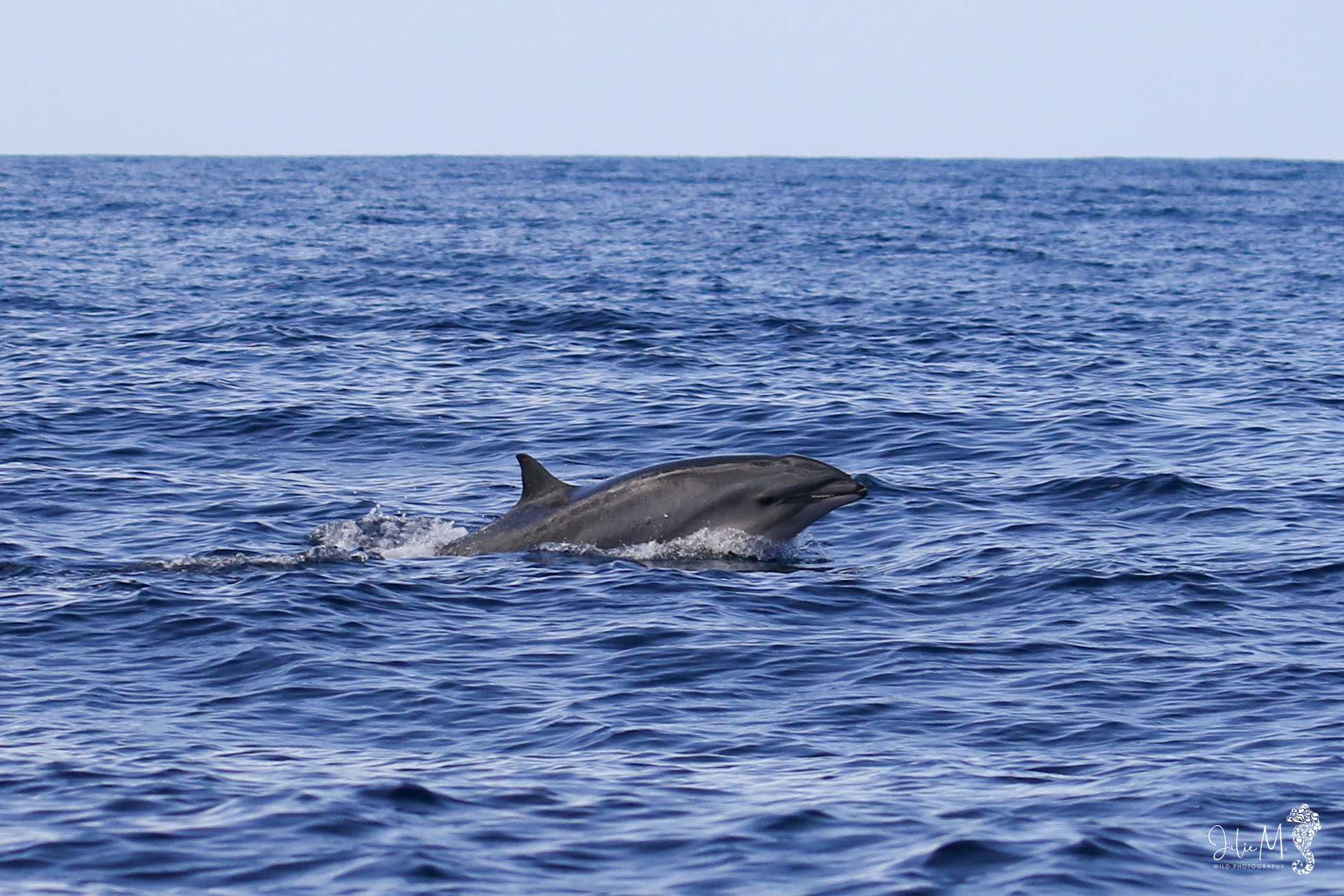
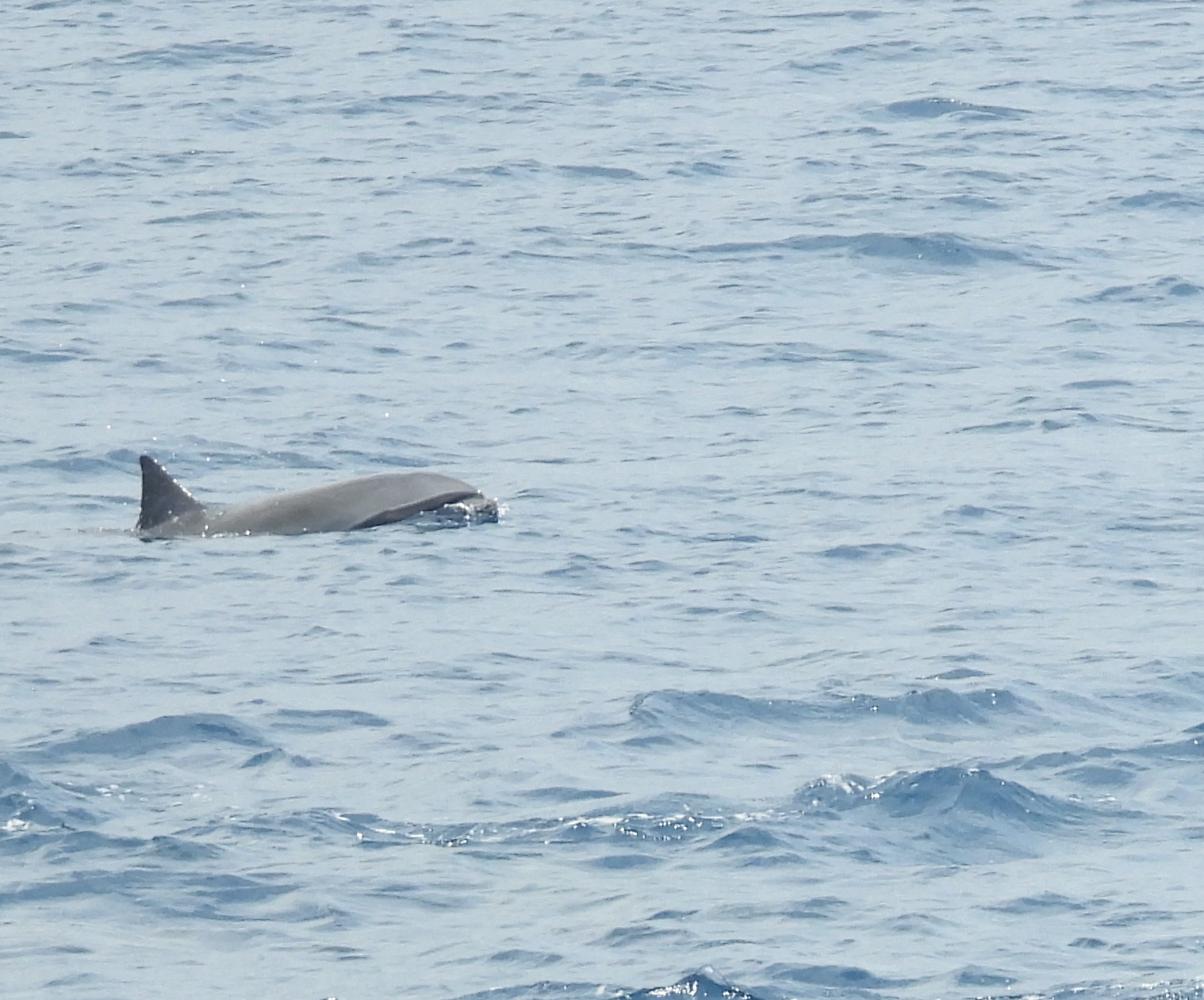
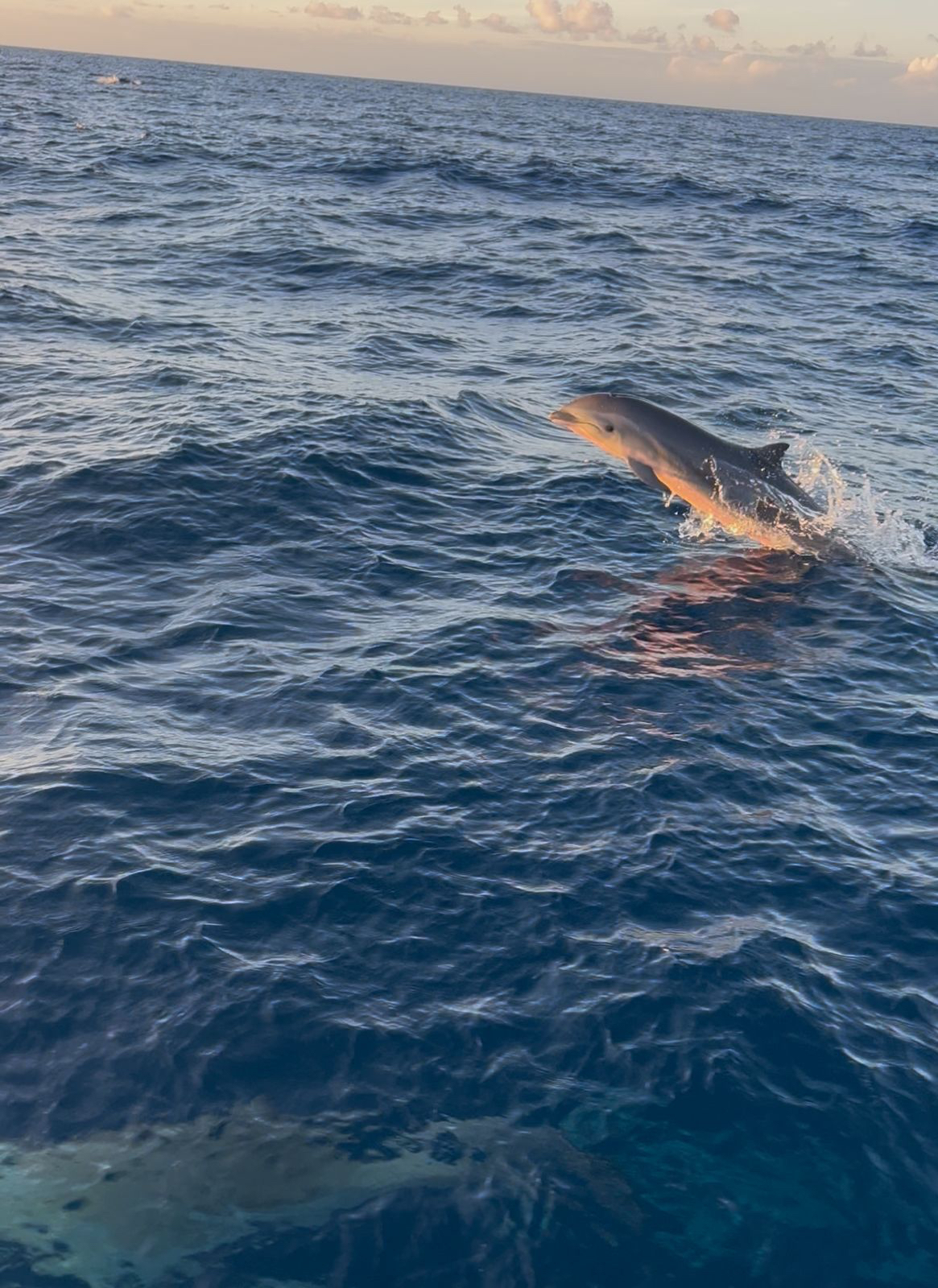
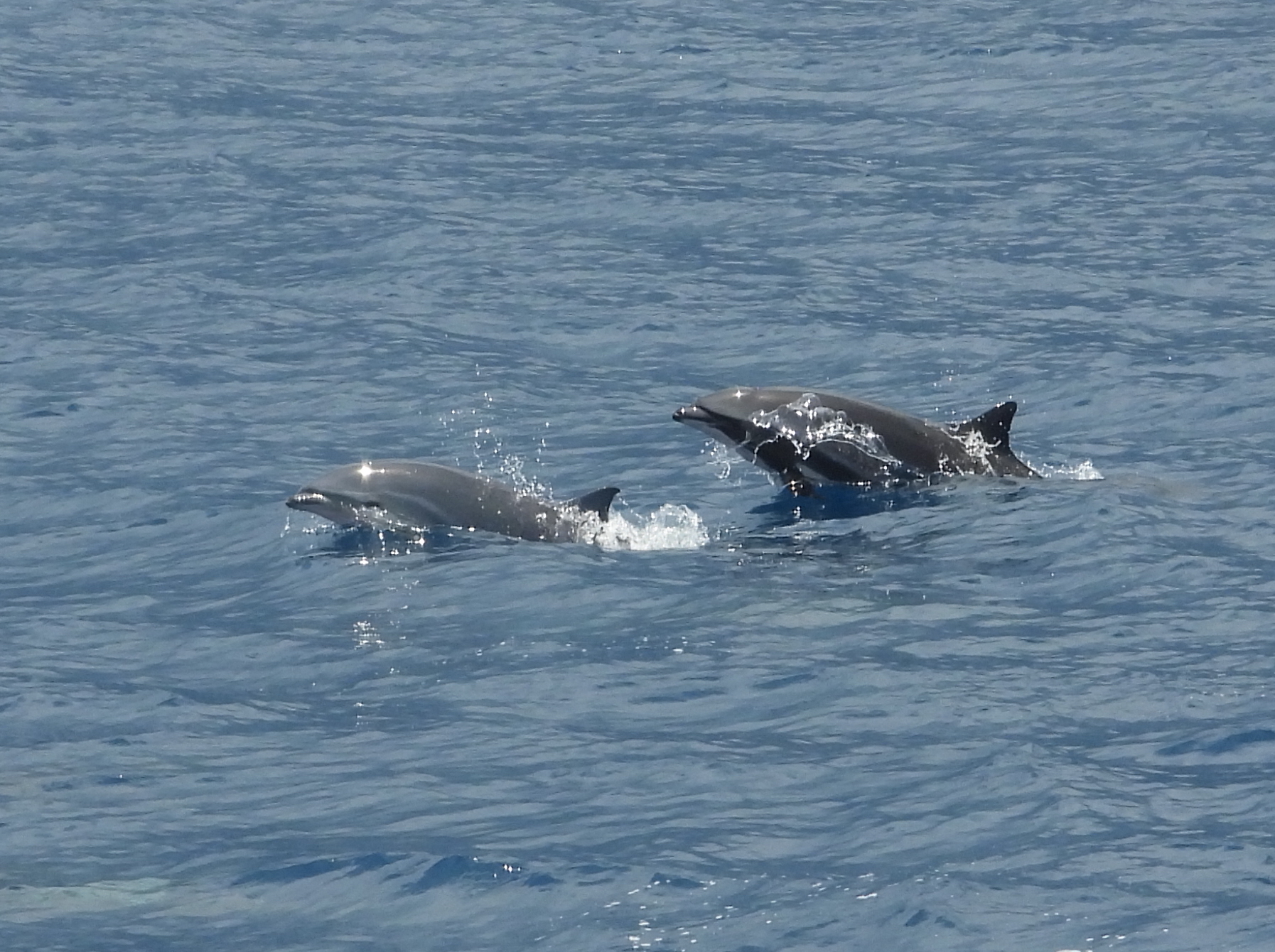
Fraser’s dolphin is recognised first of all by its compact outline: a thick, tapering body, a small head extended by a very short but clearly marked rostrum, and above all surprisingly reduced appendages. The dorsal fin, small, triangular or slightly falcate, is set at mid-back; the flippers and the tail fluke look too small for the animal. Adults measure 2.0 to 2.7 m and generally weigh between 160 and 210 kg, males being slightly larger and heavier than females. At birth the calf measures about 1 m and weighs some twenty kilos.
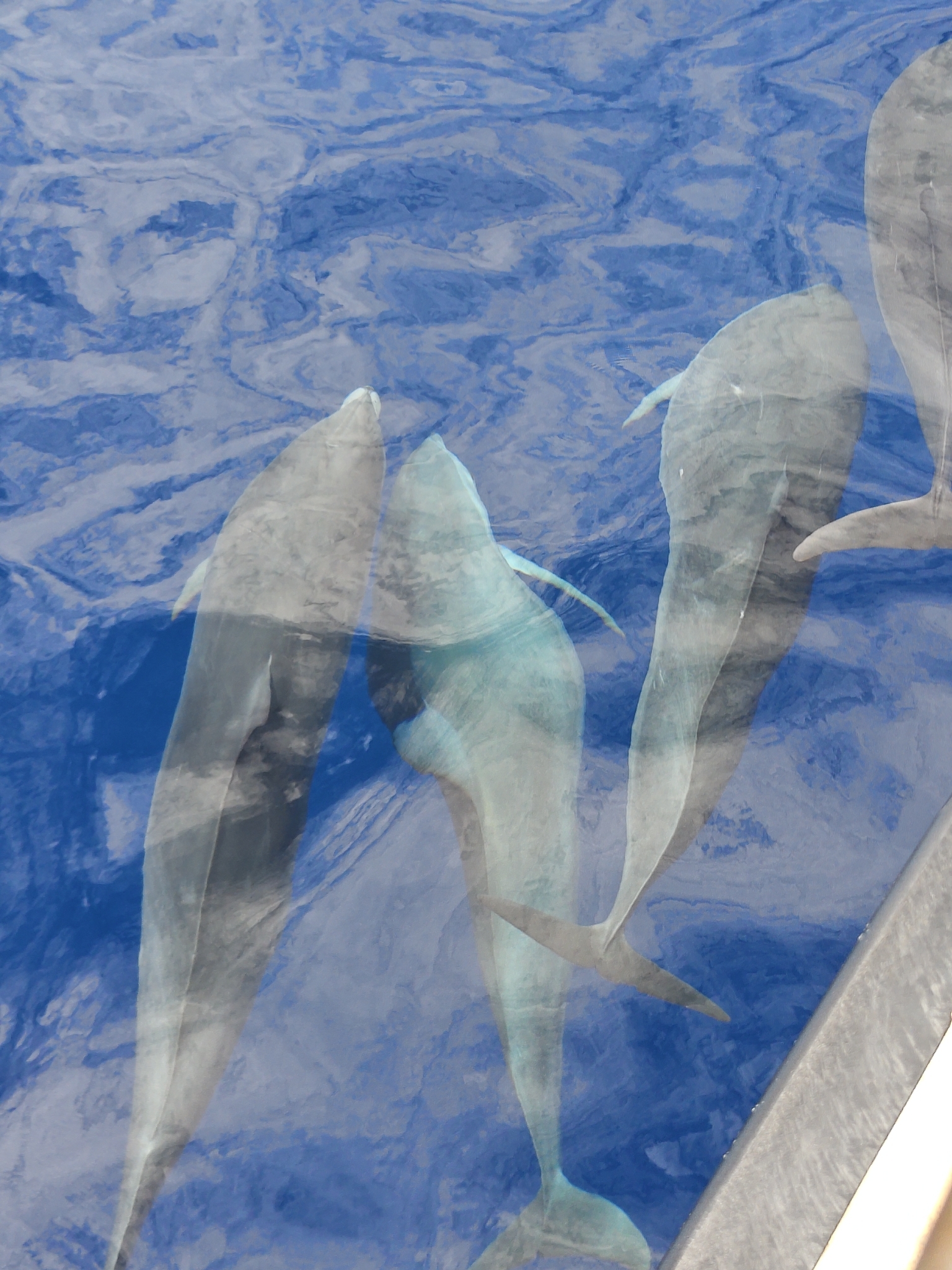
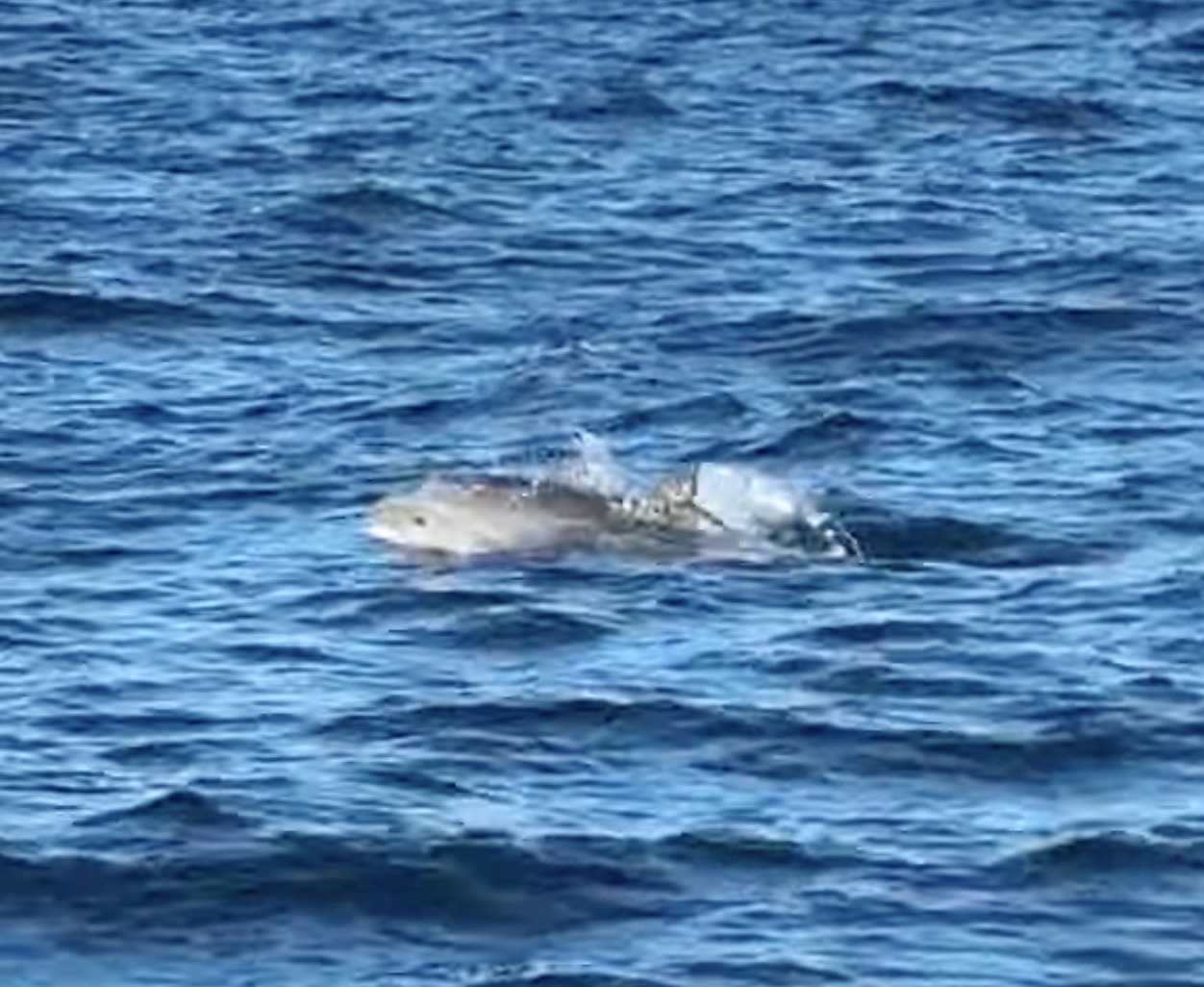
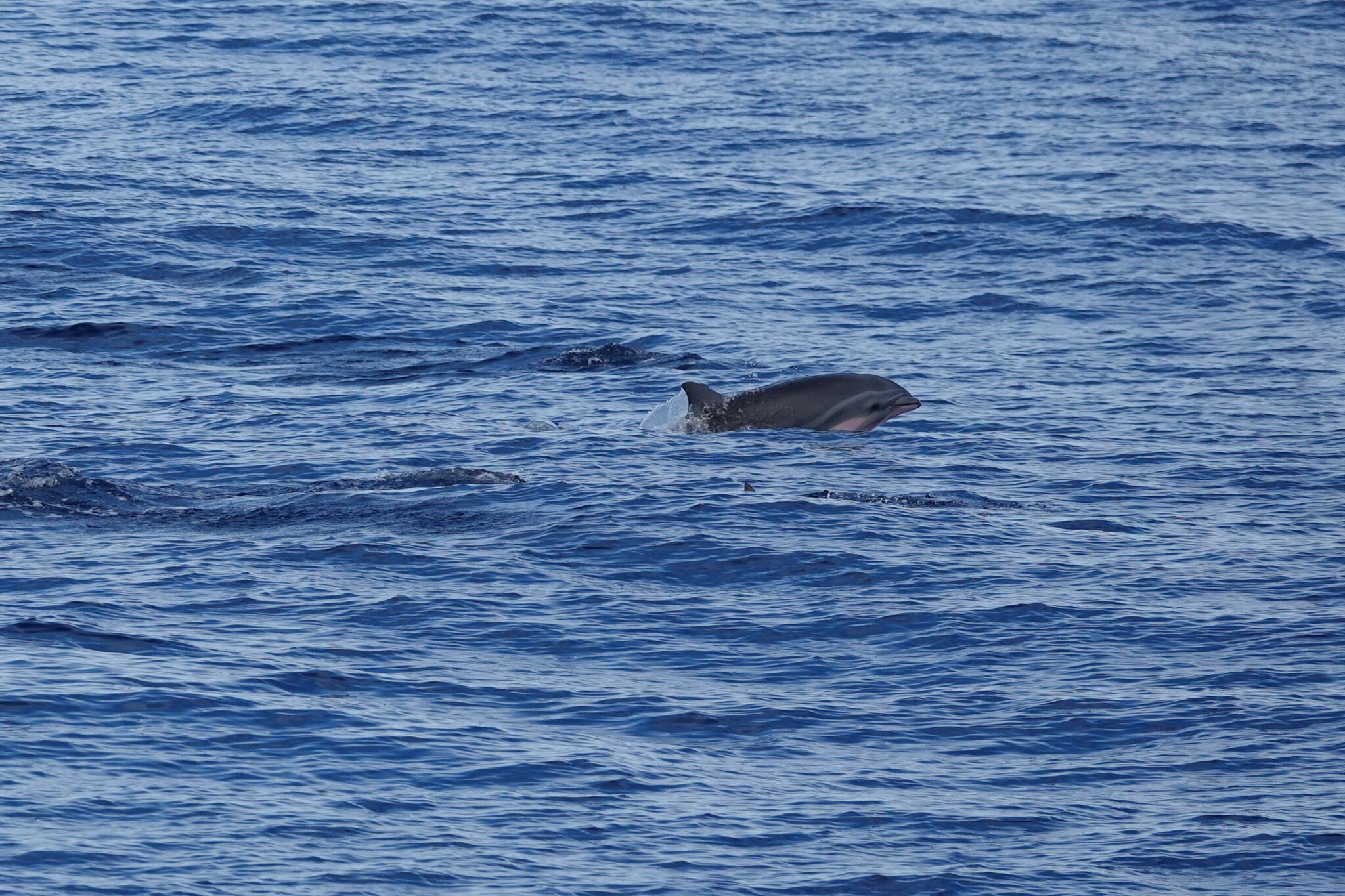
The coloration is distinctive. The back is blue-grey to brown-grey, the belly whitish to distinctly pink, hence the Antillean nickname “dauphin cochon”, the pig dolphin. A cream line runs along the flank, underlined by a dark band that starts at the rostrum or the eye and extends towards the rear of the body. In some males, particularly in the eastern Pacific, this band thickens and darkens to the point of forming a strongly contrasted “bandit” mask; it is more discreet in females and young animals, and newborns are on the whole duller. The shape of the dorsal fin also differs with sex, rather triangular in males, more falcate in females. The jaws carry numerous small conical teeth: published counts range from 20 to 44 pairs per jaw, the higher values (38 to 44) being the most frequently cited.
The commonest confusion at sea is with the striped dolphin (Stenella coeruleoalba), which shares a dark lateral band and frequents the same latitudes. The much shorter rostrum, the stocky outline and the small flippers and dorsal fin settle the question as soon as the animal is properly seen. Mixed schools with the melon-headed whale (Peponocephala electra), which are very frequent, make counts harder on the other hand: that species lacks a rostrum and carries a markedly taller dorsal fin.
The species belongs to the family Delphinidae, subfamily Delphininae, and on its own makes up the genus Lagenodelphis, which is monospecific. The genus name is a contraction of Lagenorhynchus and Delphinus: it reflects the intermediate position that its describer attributed to the animal between those two delphinid genera.
The history of its description is unusual. A skull collected in 1895 by Charles E. Hose on a beach in Sarawak, in northern Borneo, was deposited at the British Museum, where it lay unexamined for decades. Only in 1956 did the British cetologist Francis Charles Fraser examine it, recognise an undescribed taxon and publish the formal description of the species, hence the binomial Lagenodelphis hosei, which links the two men. It was not until 1971 that complete specimens were at last obtained, from stranded or captured animals, and that the species was documented in the wild. No subspecies is recognised.
Fraser’s dolphin is a pantropical species, present in the warm, subtropical and tropical waters of the Pacific, Indian and Atlantic oceans, roughly between 30° N and 30° S. The Pacific holds most of the reliable sightings, in particular the eastern tropical Pacific, the Philippine Sea and the Hawaiian archipelago; the species is also known from the Gulf of Mexico, the Lesser Antilles and several sectors of the Indian Ocean.
It is a decidedly offshore animal, associated with deep water: it frequents depths greater than 500 m and is most often encountered beyond 1,000 m. It comes close to the coast only where the continental shelf is narrow and great depth meets the land, a configuration typical of volcanic oceanic islands and of upwelling areas.
In French waters, the species occurs throughout the overseas maritime zones that fall within its latitude band, with the exception of French Guiana and Clipperton. It is recorded in the Agoa Sanctuary, a marine protected area covering the exclusive economic zone of the French Antilles, and occasionally off Réunion, notably in the Saint-Pierre sector, where it is regularly encountered in association with the melon-headed whale.
In mainland France its presence is exceptional and corresponds to no established population. The reference event remains the mass stranding of eleven animals in late May 1984 at Tréguier, in the Côtes-d’Armor: it is the first European record of the species, and one of the skeletons, 213 cm long, is held in the collections of the natural history museum in La Rochelle. Occasional strandings of this kind have also been reported in Scotland, in Uruguay and in southern Australia, and have been linked to temporary oceanographic anomalies. No regular presence is documented in the Mediterranean or in the Bay of Biscay.
Fraser’s dolphin is a predator of the deep layers. Its diet combines mesopelagic fish, squid and crustaceans, taken mainly between 250 and 500 m, where sunlight barely penetrates and hunting relies on echolocation. Markedly deeper dives are documented, beyond 600 m and down to about a thousand metres. Prey are swallowed whole, the conical dentition serving only to seize them.
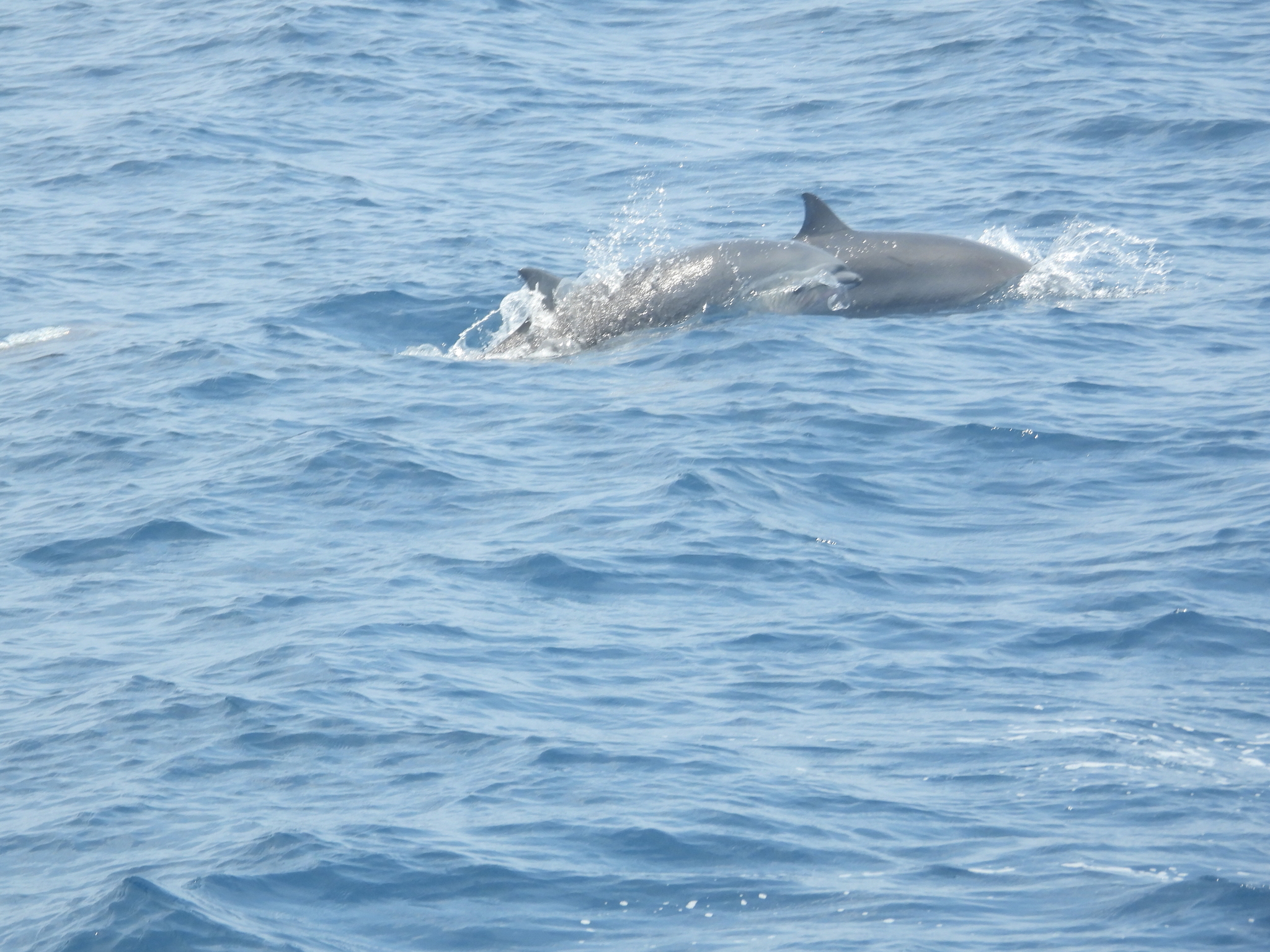
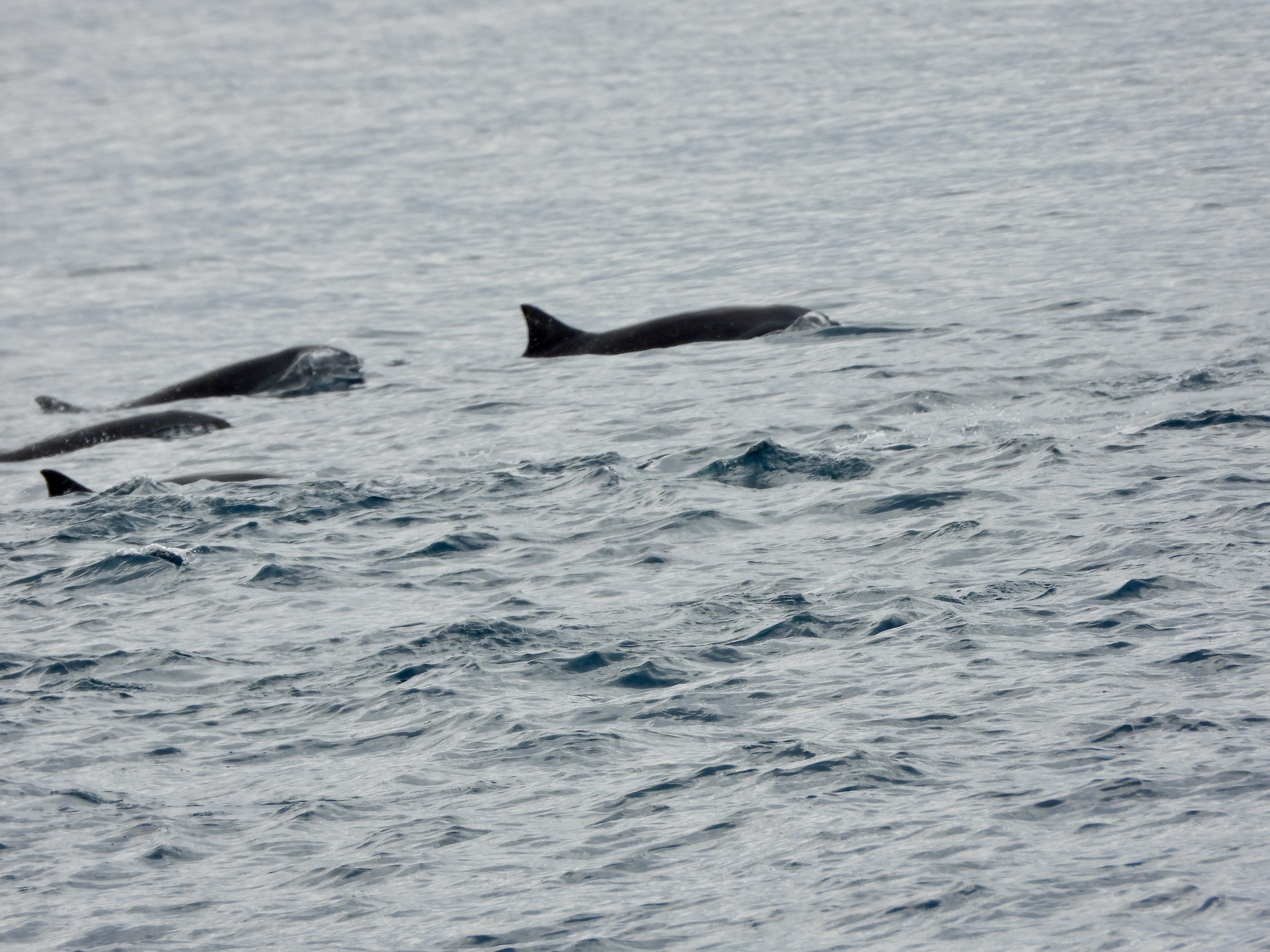
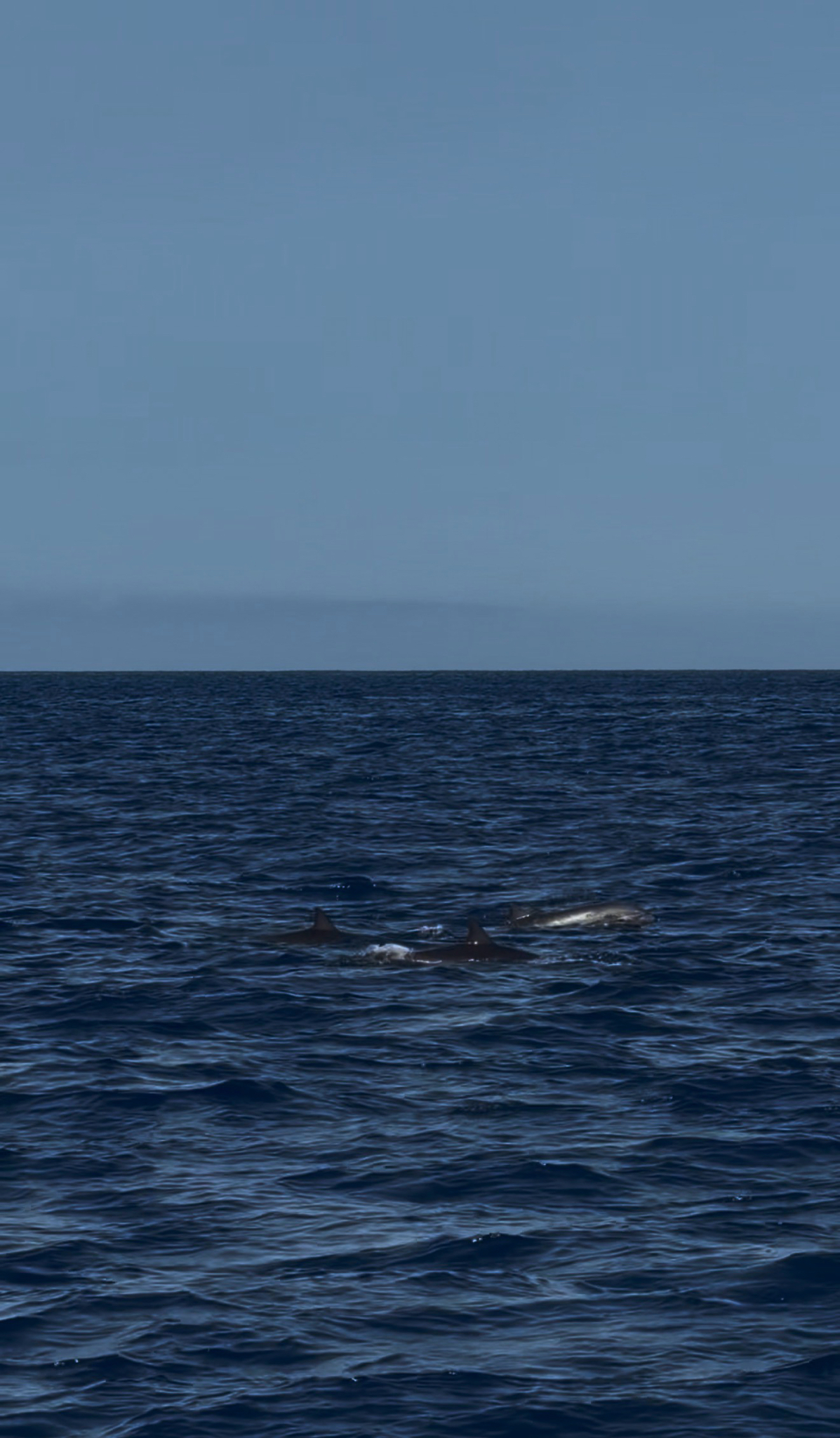
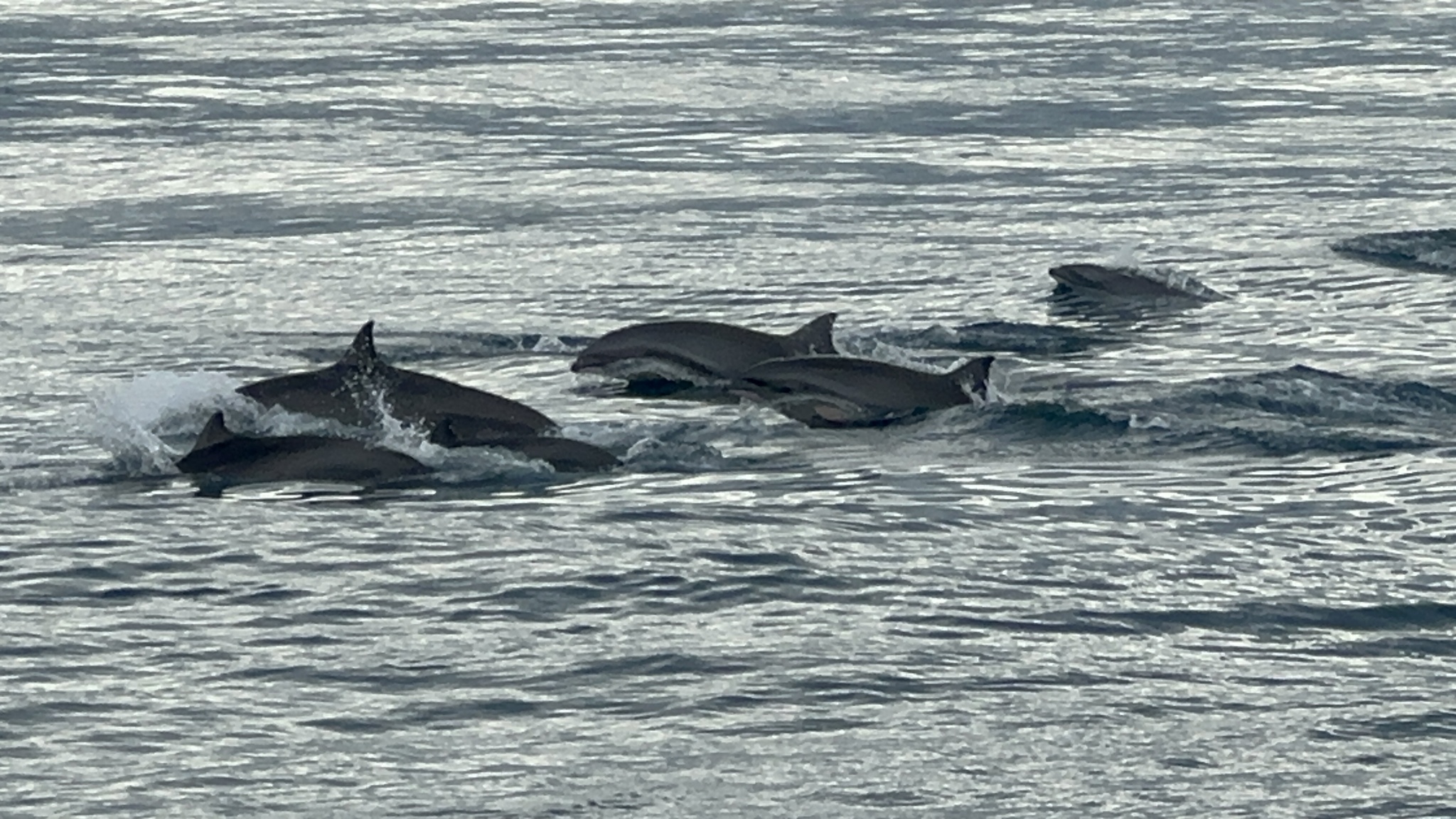
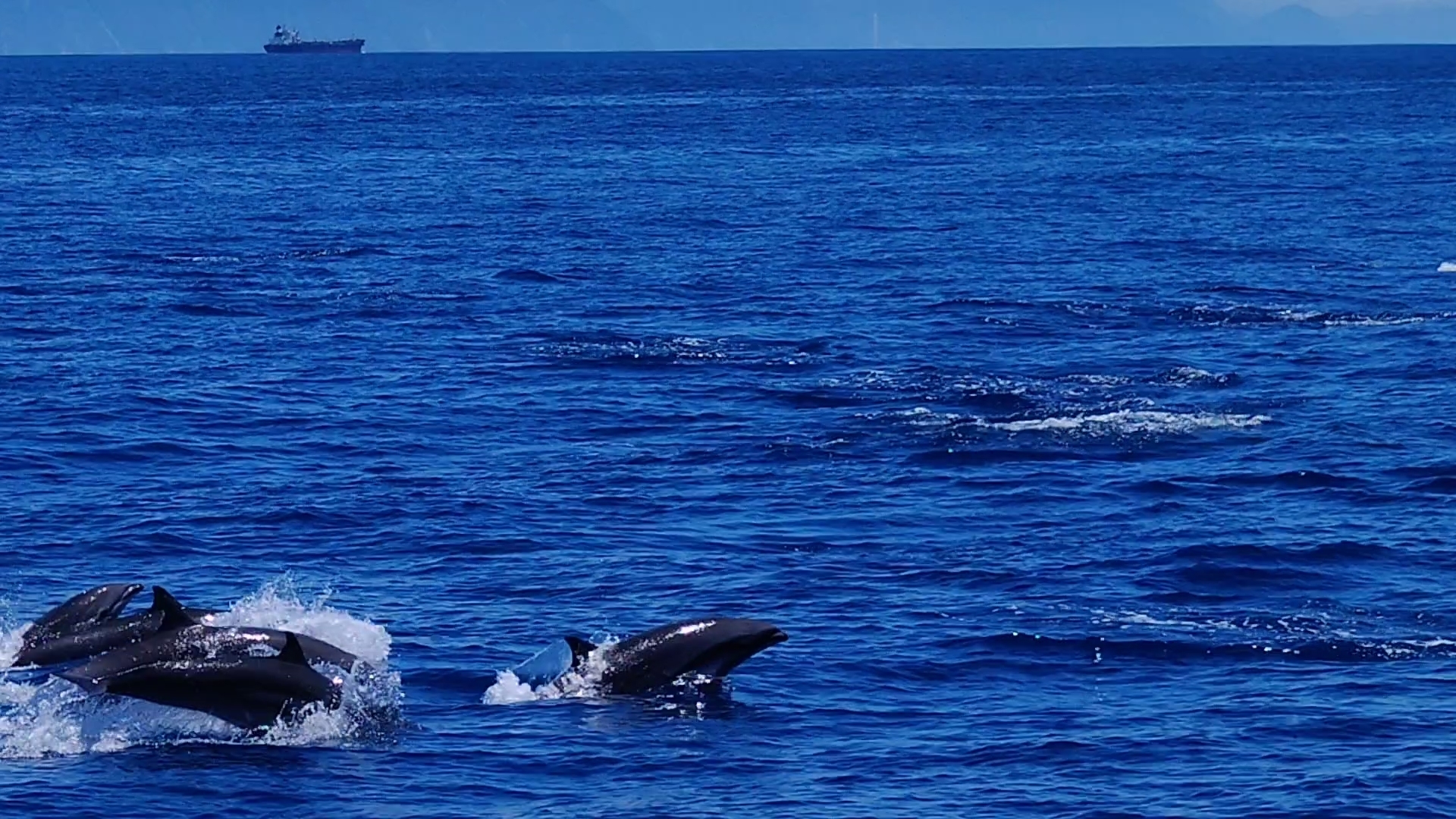
It is one of the most gregarious delphinids. Groups most often number a few dozen to a few hundred animals, and gatherings on the order of a thousand have been reported. These schools are remarkably tight and swim in highly synchronised formation, in a “chorus line”, the animals surfacing together in a sheet of spray. Travelling speed is high, of the order of 25 to 30 km/h when fleeing. Behaviour towards vessels varies from region to region: wary and evasive over much of the range, where the collective flight of a school is a striking sight, the species is more inquisitive elsewhere. Multi-species associations are frequent, first of all with the melon-headed whale, but also with the common bottlenose dolphin, the pantropical spotted dolphin, the spinner dolphin and the false killer whale.
Reproduction remains imperfectly known. Sexual maturity is reached at around 5 to 8 years in females and 7 to 10 years in males. Gestation lasts 10 to 12.5 months depending on the source and produces a single calf, births being spread over the year with a seasonal peak; the interval between two births is about two years. Documented longevity exceeds 18 years. Presumed predators are the killer whale, the false killer whale and large sharks, but predation has never been directly observed.
The species is classified as Least Concern (LC) on the IUCN global Red List, a status confirmed in the November 2018 update, which reassessed 35 cetaceans without changing its classification. No global population estimate exists. The available figures are regional: at least 100,000 to 289,000 animals in the eastern tropical Pacific, about 10,000 for the Hawaiian stock, and a very low figure of about 213 animals for the northern Gulf of Mexico; the North-West Atlantic stock has not been quantified. The growing number of sightings since the 1980s suggests that the species is less rare than was long thought, its inconspicuousness owing mainly to its offshore habitat.
The main threats are bycatch in gillnets, purse seines, trawls, driftnets, pots, longlines and shark nets, as well as tuna purse-seine operations. To these are added directed hunts, for meat and oil, in Indonesia, Japan, the Philippines, Sri Lanka and the Lesser Antilles. Pathogens constitute an emerging threat: a previously undescribed cetacean morbillivirus has been characterised in an animal stranded on Maui, in Hawaii.
The species is listed in Appendix II of CITES, in Appendix II of the Convention on Migratory Species for the South-East Asian populations, and in Annex II of the SPAW Protocol in the Caribbean; it falls under the memoranda of understanding on Pacific cetaceans and on West African aquatic mammals. In the United States it is protected by the Marine Mammal Protection Act. In France it has full protection: intentional capture, disturbance and habitat destruction are prohibited, and bycatch must be reported. Under the French regional Red Lists, it is classified as Least Concern in Martinique (April 2020) and as Data Deficient in Guadeloupe (2021 list, published in January 2022), as on Réunion.
Watching a Fraser’s dolphin means going well away from the coast, over deep water. In French waters the best chances are in the Agoa Sanctuary, around Guadeloupe, Martinique, Saint-Martin and Saint-Barthélemy, and off Réunion, notably in the Saint-Pierre sector, where encounters remain occasional. The species is present all year round within its tropical zone, with no marked seasonality known.
The detection cues are characteristic: a dense, compact school rather than a spread-out troop, simultaneous surfacings and an abundant sheet of spray, often visible from a distance, and frequently the joint presence of melon-headed whales. On closer approach, the stocky outline, the very short rostrum and the small triangular dorsal fin remove any doubt with the striped dolphin.
As these animals are naturally wary, the approach must remain cautious. Any intercept course should be avoided, speed kept constant and distance sufficient, a group never split, and the attempt abandoned as soon as the animals move away. In waters under French jurisdiction, intentional disturbance is prohibited, and the Agoa Sanctuary specifically governs the conditions for approaching marine mammals.
Because it lives offshore, over deep water, and generally avoids vessels. The species was described in 1956 from a single skull collected in Borneo in 1895, and complete specimens and sightings at sea had to wait until 1971. The number of sightings only really increased from the 1980s onwards.
No, not under normal conditions. The species is tropical and has no established population in the English Channel, the Atlantic or the Mediterranean. The only notable record is a mass stranding of eleven animals at Tréguier, in the Côtes-d’Armor, in late May 1984, which is the first European record of the species.
Both species carry a dark lateral band, but Fraser’s dolphin has a much stockier body, a very short rostrum, a small triangular dorsal fin and visibly reduced flippers. The striped dolphin is more slender, with an elongated rostrum and a taller, more falcate dorsal fin.
Most of its food is taken between 250 and 500 m depth, in the mesopelagic layer where light barely penetrates. Deeper dives, beyond 600 m and down to about a thousand metres, are documented. Hunting there relies on echolocation.
Schools most often number a few dozen to a few hundred animals, and gatherings approaching a thousand have been reported. They swim in a highly synchronised, tight formation. The commonest association is with the melon-headed whale, but mixed groups also occur with the common bottlenose dolphin, the pantropical spotted dolphin, the spinner dolphin and the false killer whale.
It is classified as Least Concern by the IUCN, a status confirmed in November 2018. In overseas France it is classified as Least Concern on the regional Red List of Martinique (April 2020) and as Data Deficient in Guadeloupe (2021 list, published in January 2022), as on Réunion. No global population size has been established, but the regional estimates are large in the eastern tropical Pacific. The main pressures remain bycatch in fishing gear and directed hunts in Indonesia, Japan, the Philippines, Sri Lanka and the Lesser Antilles.
Profile compiled from authoritative scientific sources (IUCN, NOAA Fisheries, specialist literature) and reviewed for factual accuracy.
According to the open data of the GBIF, 106 georeferenced sightings of Lagenodelphis hosei are recorded in our photographic index.
| Country | Notes |
|---|---|
| Chinese Taipei | 36 |
| Indonesia | 17 |
| Guadeloupe | 8 |
| Australia | 7 |
| Philippines | 6 |
| Timor-Leste | 5 |
| Martinique | 4 |
| United States of America | 4 |
| Saint Lucia | 3 |
| Spain | 2 |

Monthly distribution of 107 dated sightings (all years combined): the maximum is reached in August.
| Month | Notes |
|---|---|
| janvier | 5 |
| February | 12 |
| mars | 5 |
| avril | 13 |
| mai | 3 |
| juin | 11 |
| juillet | 12 |
| August | 15 |
| septembre | 6 |
| octobre | 13 |
| novembre | 6 |
| December | 6 |
These figures reflect survey effort (more boaters and more surveys in summer) as much as the actual presence of the species: to be interpreted with caution.


Photographs from GBIF under a Creative Commons licence. The author and the licence of each photograph are given; please respect them if you reuse them.
Automatic selection of the most cited works mentioning the species (source: Crossref).