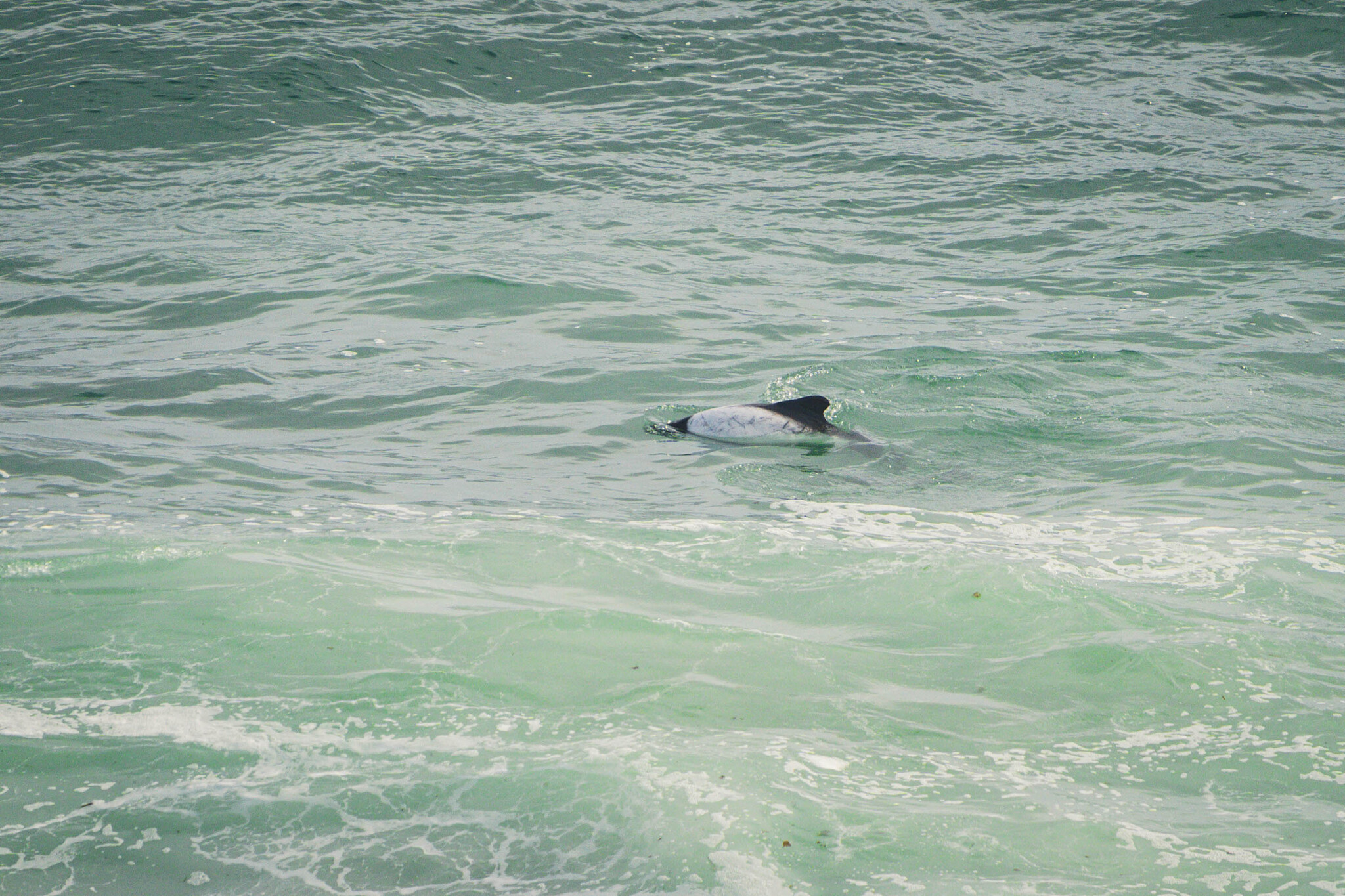
Commerson's dolphin (Cephalorhynchus commersonii)

Key facts
Scientific name Cephalorhynchus commersonii (Lacépède, 1804)
Other names Céphalorhynque de Commerson, “dauphin panda” (French); tonina overa, delfín blanco, jacobita (South American Spanish); Commerson's dolphin, skunk dolphin (English). The Kerguelen subspecies is sometimes called the Kerguelen Commerson's dolphin.
Size 1.2 to 1.7 m in adults; animals from Kerguelen are larger and reach about 1.8 m. Newborns measure 55 to 75 cm.
Weight 35 to 60 kg as a rule in South American animals, up to about 86 kg in the Kerguelen subspecies. Newborns weigh 4.5 to 7 kg.
Longevity Around ten to 18 years in the wild. In captivity, the usual life expectancy is 15 to 18 years, with individuals exceeding 25 years and a known record of about 33 years.
Diet Opportunistic carnivore: small coastal and pelagic fish (hake, sardines, silversides, anchovies), cephalopods (squid, octopus), crustaceans (shrimp, mysids) and benthic invertebrates. At Kerguelen it feeds in particular on the icefish Champsocephalus gunnari and on the fauna of the kelp beds. In captivity, the daily ration is between 3 and 6 kg.
IUCN status Least Concern (LC) globally, 2017 assessment, errata version published in 2018 (Crespo, Olavarria, Dellabianca, Iñíguez, Ridoux & Reeves), a status still in force in the 2025-2 edition of the Red List. In France, the endemic Kerguelen subspecies (Cephalorhynchus commersonii ssp. kerguelenensis) is listed as Endangered (EN, criterion D, trend unknown) on the French Red List of threatened species, Vertebrates of the French Southern and Antarctic Lands (IUCN France, MNHN & TAAF, March 2015).

In brief

Commerson's dolphin is a small coastal delphinid with a spectacular black and white pattern, which earns it the nickname “panda dolphin”. It occupies two entirely separate ranges: the cold waters off southern South America on the one hand, the Kerguelen archipelago on the other, some 8,500 km of ocean apart. Listed as Least Concern globally, it is by contrast considered Endangered in France, where its endemic Kerguelen subspecies numbers only a few dozen to about a hundred individuals in the Golfe du Morbihan.

Identification

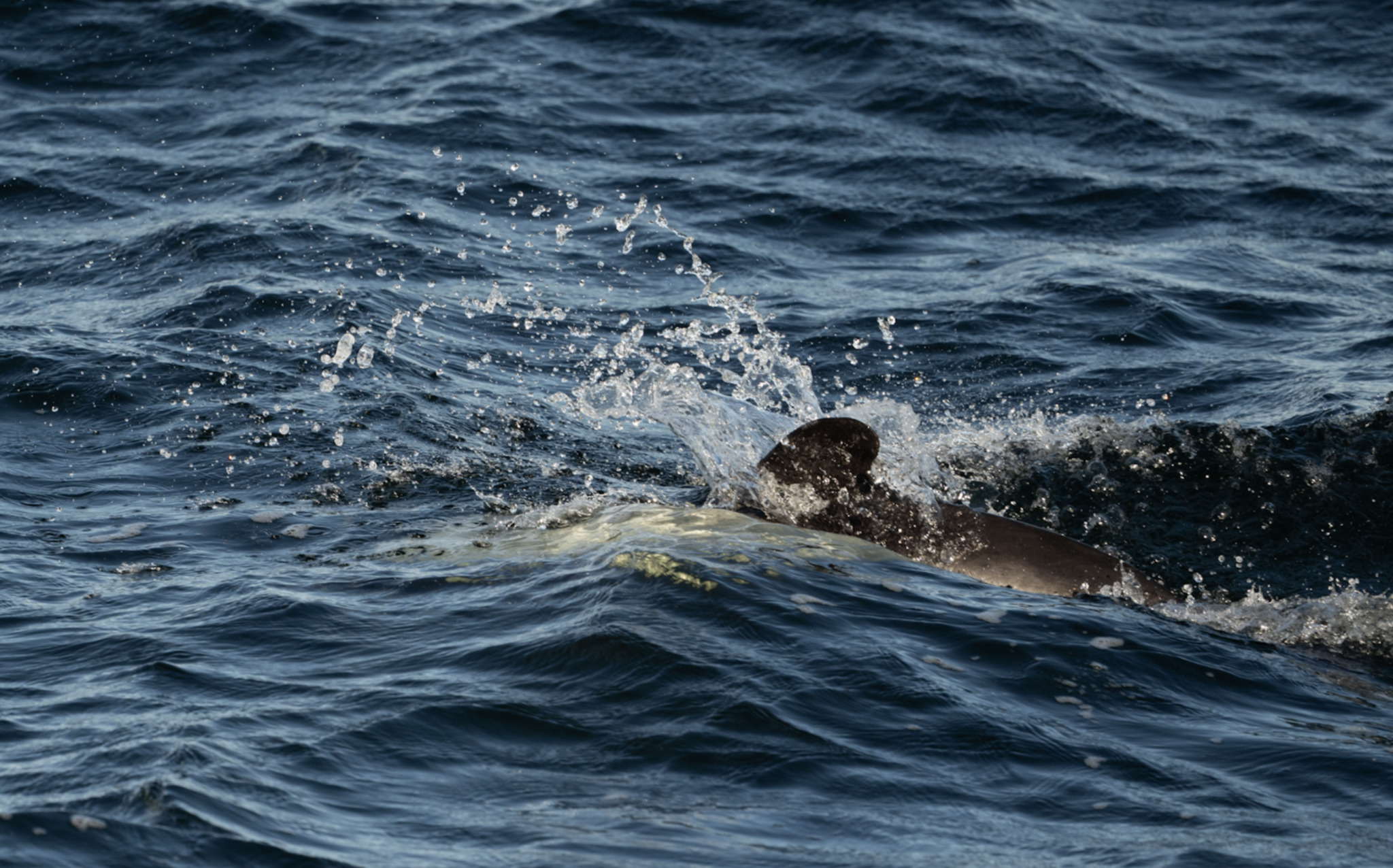
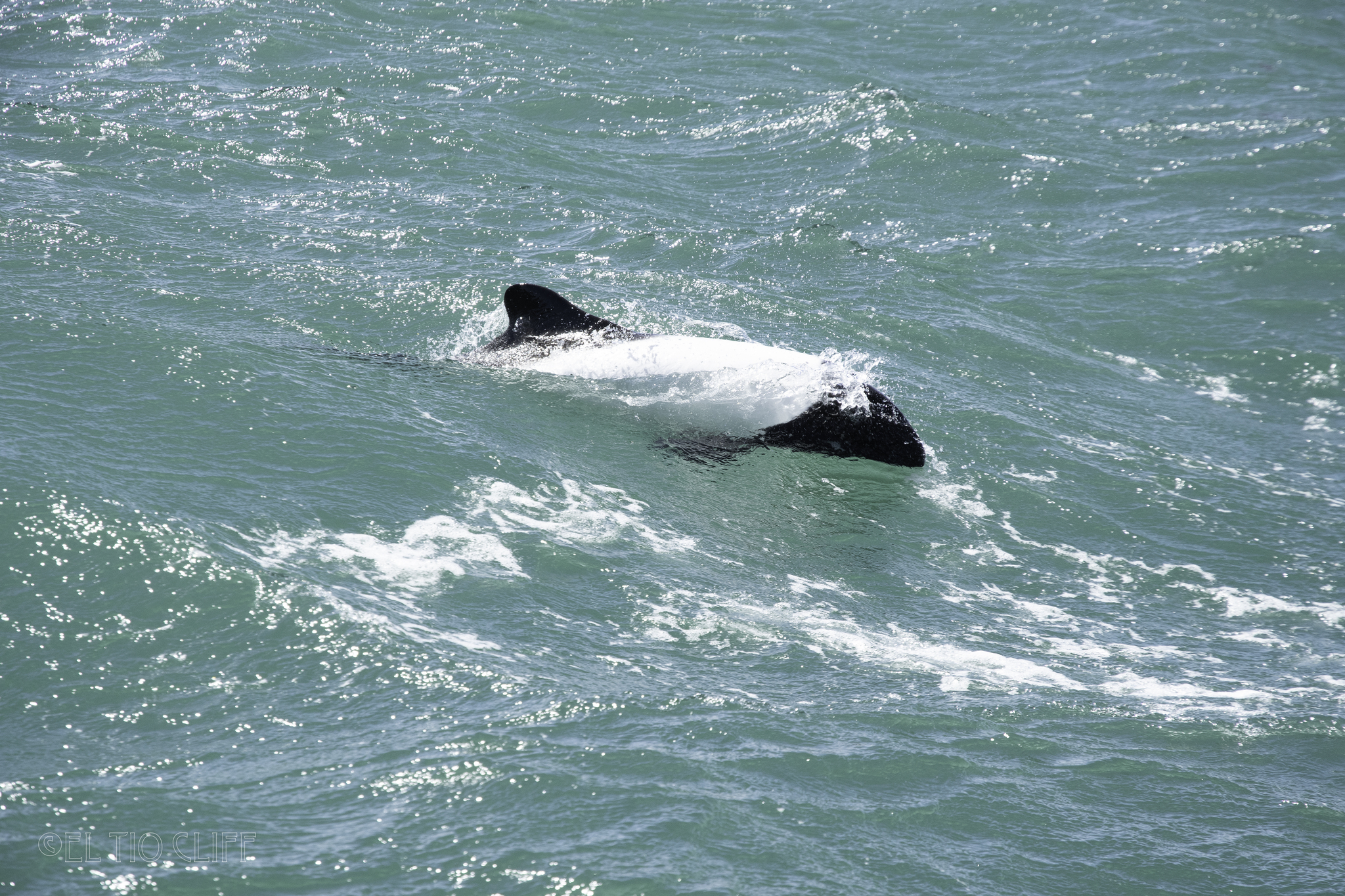
Commerson's dolphin is one of the smallest cetaceans in the world: 1.2 to 1.7 m for 35 to 60 kg in South American animals, a little more in those from Kerguelen, which can approach 1.8 m and 86 kg. The outline is stocky, almost torpedo-shaped, with a conical head lacking a beak, a gently sloping forehead and a low dorsal fin with a rounded trailing edge, shaped like a spatula or a wave, a profile very different from the falcate triangle of common dolphins or common bottlenose dolphins. Females are on average slightly larger than males. Each jaw carries about 29 to 30 pairs of fine, pointed teeth, in the order of 116 to 120 teeth in all; the range reported in the literature runs from 26 to 35 teeth on each side of each jaw, that is 104 to 140 teeth.

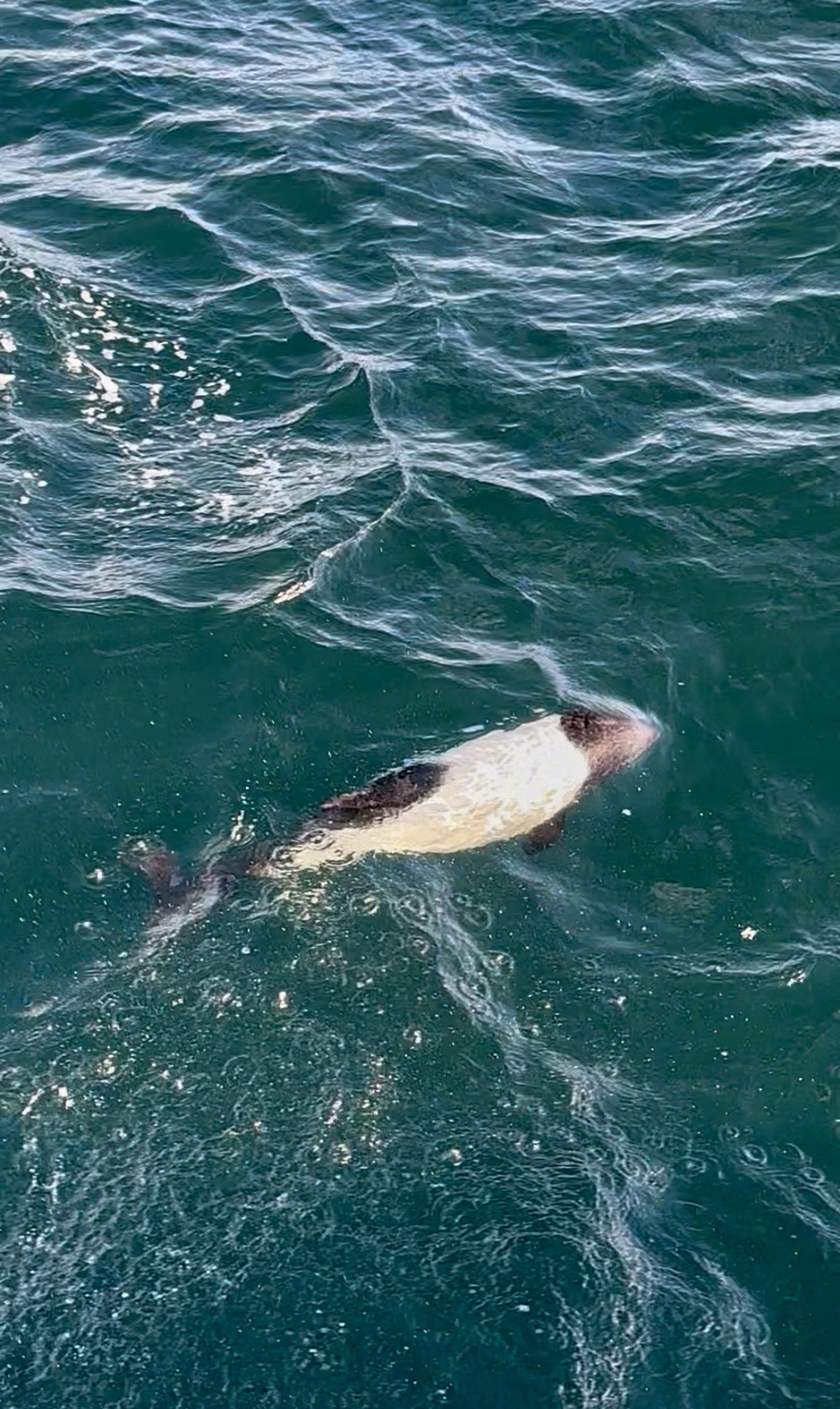
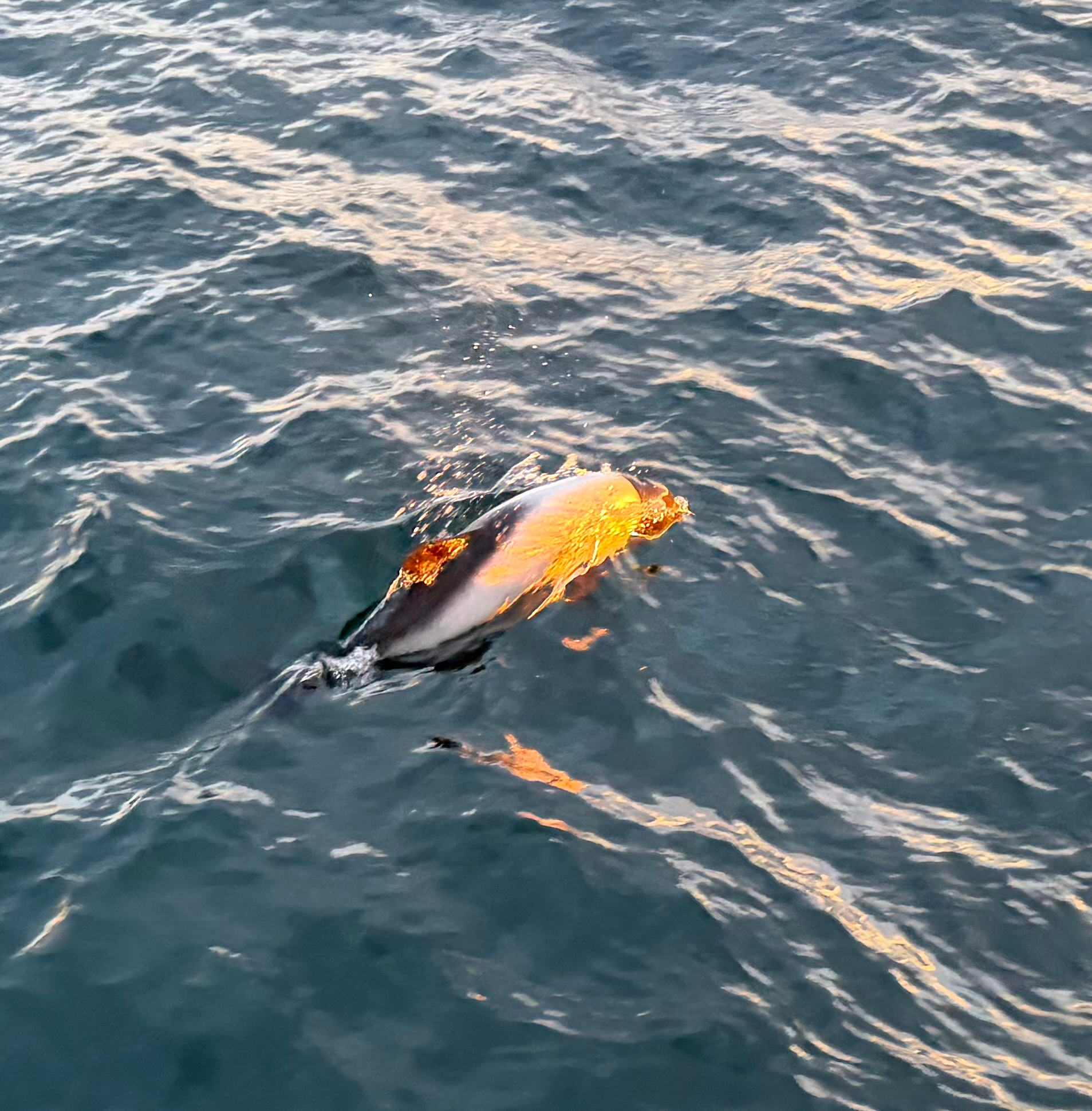
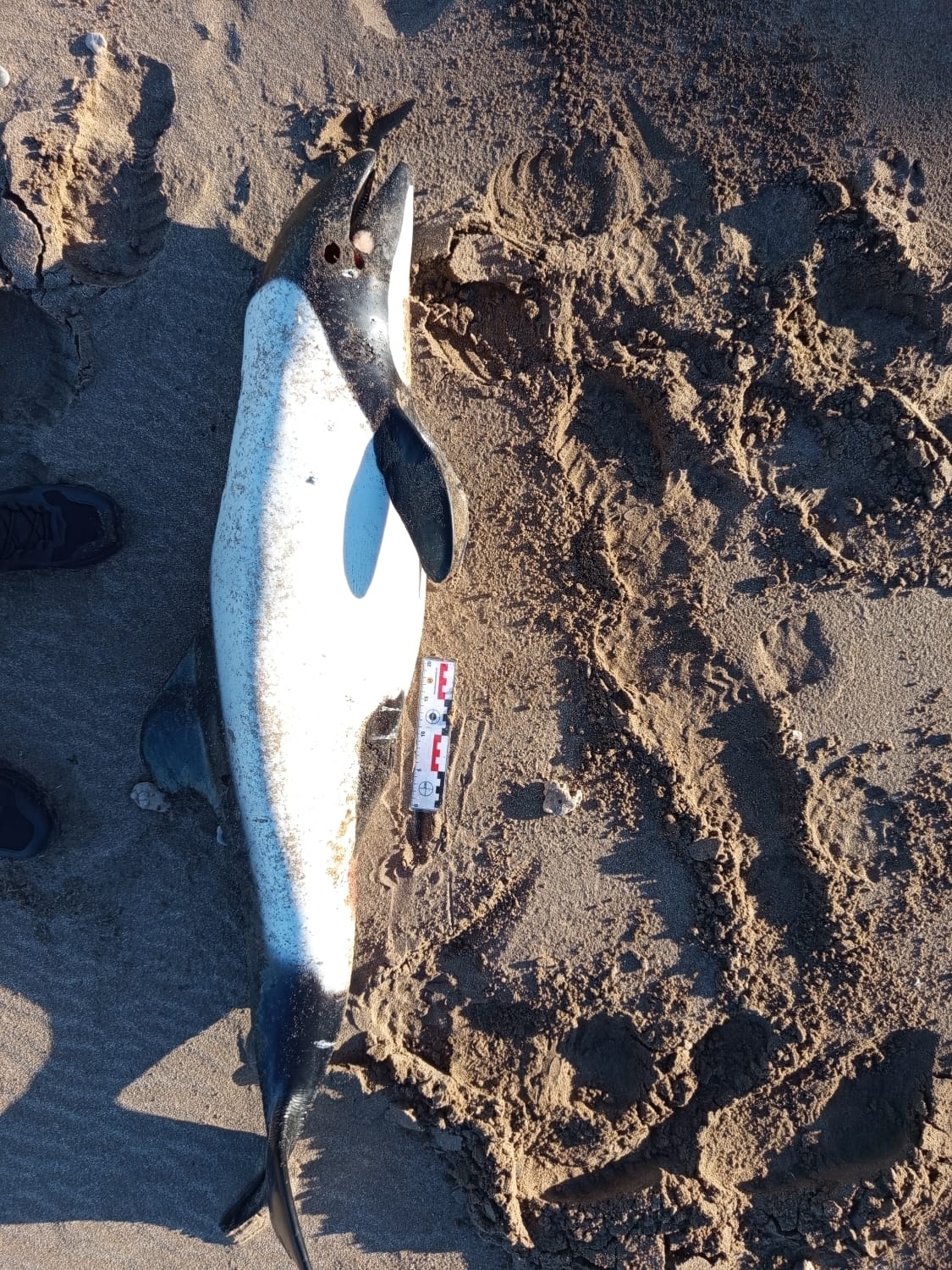
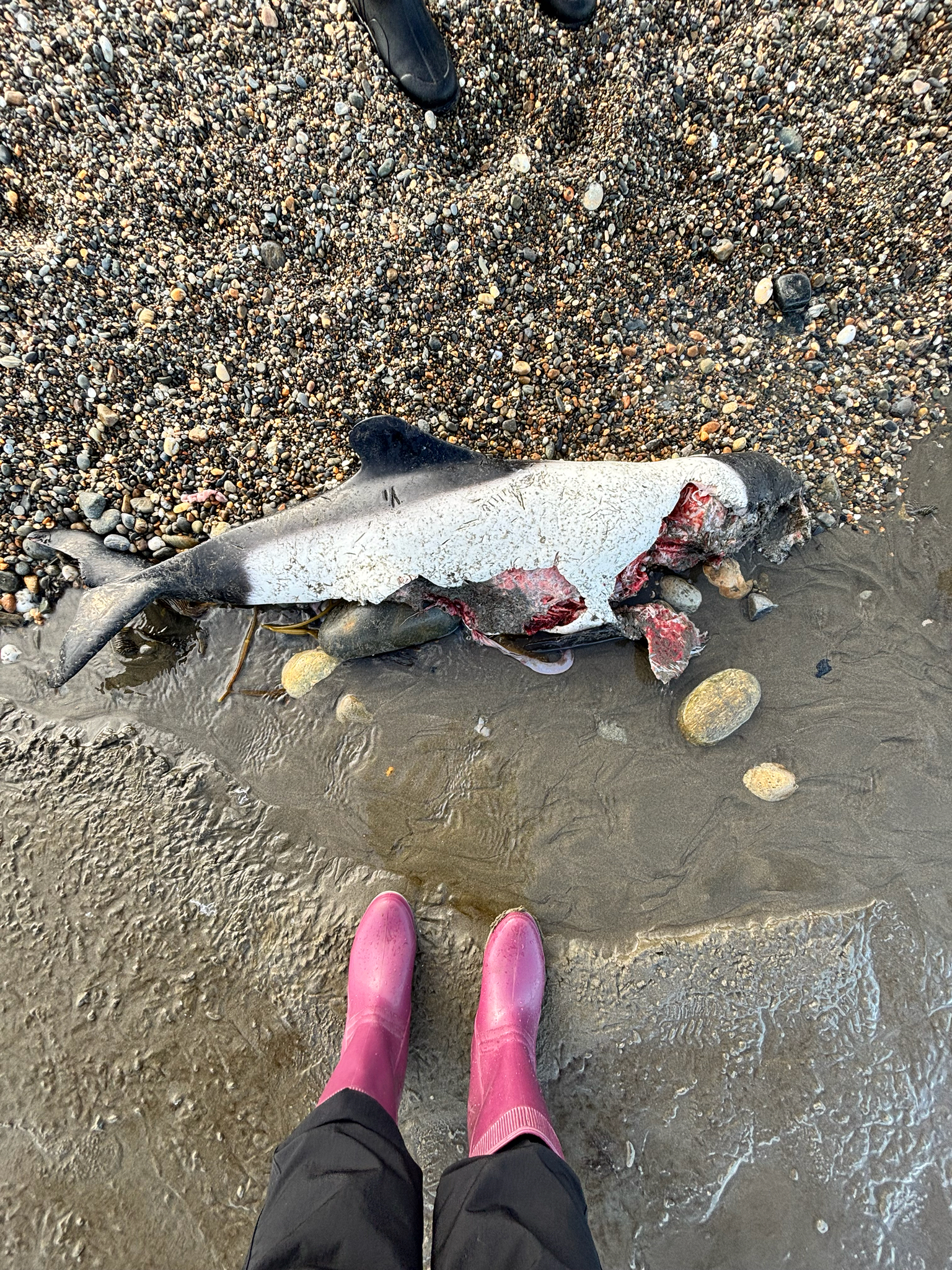
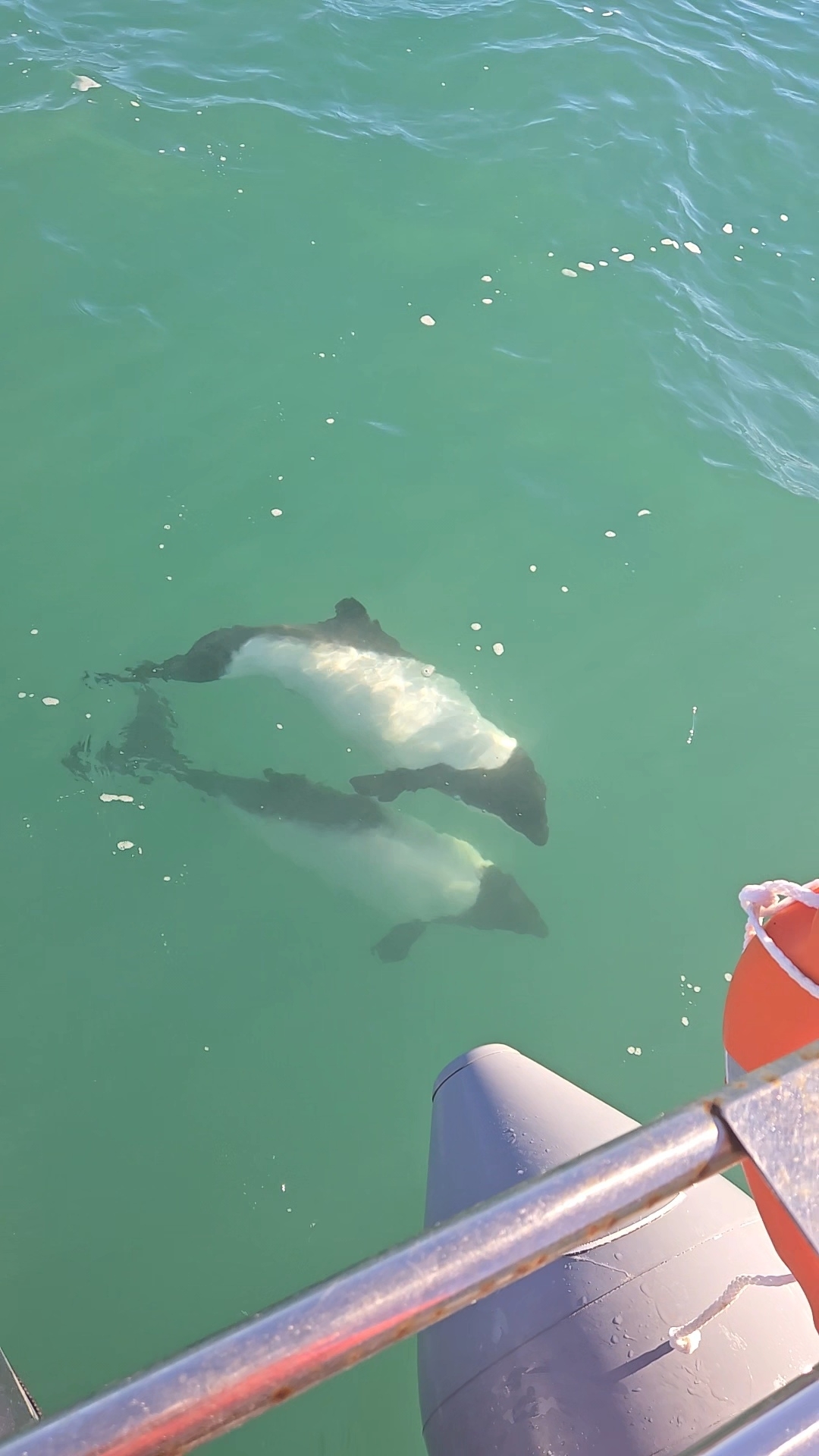
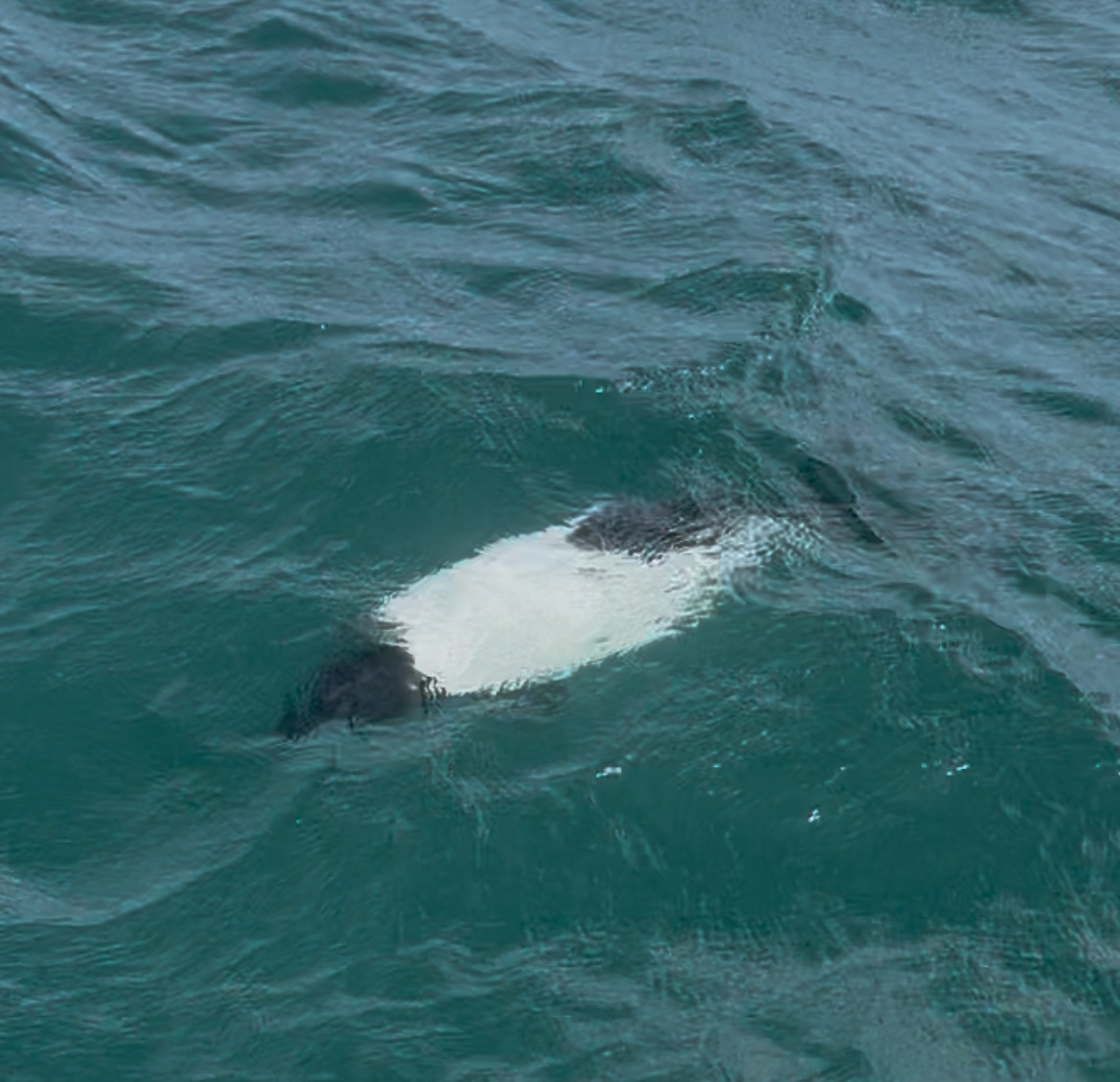
It is the coloration that makes the species immediately recognisable. In the South American subspecies, the head, the dorsal fin, the flippers and the tail are deep black, while the throat, the flanks and most of the body are a brilliant white, with a sharp boundary, as though cut with scissors. This clear-cut contrast is the origin of the nickname “panda dolphin”. A dark ventral patch, shaped like an elongated teardrop in males and rounder in females, makes it possible to sex animals underwater or on good photographs. Newborns are born grey to dark brown and acquire their final contrast only after four to six months.

The Kerguelen subspecies is distinguished by its larger size and a muted contrast: the “black” areas are in fact dark grey, the “white” areas light grey except on the belly, and the boundaries between colour fields are blurred rather than sharp.

Confusion remains limited, but not impossible. Two of the three other species in the genus Cephalorhynchus are out of range: Hector's dolphin, in New Zealand, and Heaviside's dolphin, in southern Africa. The Chilean dolphin (C. eutropia), by contrast, which extends down to Cape Horn, is directly sympatric with Commerson's dolphin in a small part of southern Chile, the Strait of Magellan and the channels of Tierra del Fuego. Its stocky outline and its low, rounded dorsal fin are very similar, but it is uniformly dark grey, without the slightest white dorsal field, which settles the confusion on sight. In Atlantic Patagonia, Commerson's dolphin instead shares the water with Peale's dolphin and Burmeister's porpoise, both markedly darker and without a white dorsal field. The hourglass dolphin, also black and white, is distinguished by its tall, hooked dorsal fin and by its frankly oceanic habits.

Taxonomy

Commerson's dolphin (Cephalorhynchus commersonii, Lacépède, 1804) belongs to the family Delphinidae and to the genus Cephalorhynchus, which brings together four species of small coastal dolphins of the southern hemisphere: Commerson's dolphin, the Chilean dolphin (C. eutropia), Heaviside's dolphin (C. heavisidii) and Hector's dolphin (C. hectori).

The name honours Philibert Commerson, the naturalist aboard Bougainville's expedition, who in December 1767 observed small dolphins with a glossy white body and black extremities in the Strait of Magellan and near Tierra del Fuego. His description was passed on to Buffon, then to Lacépède, who published it in 1804; in the absence of a collected specimen, it is this text that serves as the type for Delphinus commersonii.

Two subspecies are recognised today. Cephalorhynchus commersonii commersonii occupies southern South America. Cephalorhynchus commersonii kerguelenensis, described in 2007 by Robineau, Goodall, Pichler and Baker, is endemic to the Kerguelen Islands; its validity rests on geographic isolation, differences in pigmentation and morphology, and the absence of gene flow with the South American population. The spelling kerguelensis is also encountered in the literature.

Range and habitat

The species has one of the most remarkable distributions of any cetacean: two populations separated by about 130° of longitude, some 8,500 km, with no documented exchange between them.

The nominate subspecies, Cephalorhynchus commersonii commersonii, frequents the cold waters of the southern cone of South America, from Argentine Patagonia (from about 41°30′S, provinces of Chubut and Santa Cruz) to Tierra del Fuego and the Strait of Magellan, around 55°S, as well as southern Chile and the Falkland Islands. The subspecies kerguelenensis is confined to the surroundings of the Kerguelen archipelago, in the southern Indian Ocean, between roughly 48°30′ and 49°45′S, with a marked preference for the fjords and inlets of the Golfe du Morbihan, on the eastern side of the archipelago, as well as for the northern and southern coasts.

Everywhere, the animal is strictly coastal: the surveys carried out on the Patagonian shelf have always recorded it less than 60 km from shore, in waters less than 200 m deep and with temperatures ranging between 7 and 14 °C. It readily enters sheltered bays, rias, river mouths and even harbours.

In France, Commerson's dolphin occurs only in the overseas waters: it is entirely absent from the Mediterranean, the Bay of Biscay and the English Channel, and therefore appears neither among the species of the Pelagos Sanctuary nor among those of the ACCOBAMS agreement. It does, however, live year-round at Kerguelen, within the national nature reserve of the French Southern Lands, which makes it one of the few cetaceans resident in and endemic to a French territory.

Biology and ecology

Commerson's dolphin is a generalist predator of shallow waters. It takes small schooling fish, hake, sardines, silversides, anchovies, squid and octopus, shrimp and mysids, as well as benthic invertebrates that it dislodges from the bottom. At Kerguelen, its diet rests largely on the icefish Champsocephalus gunnari and on the fauna associated with the kelp forests, with notable variation from one individual to another. Hunting is often cooperative, with several animals concentrating a shoal of prey.

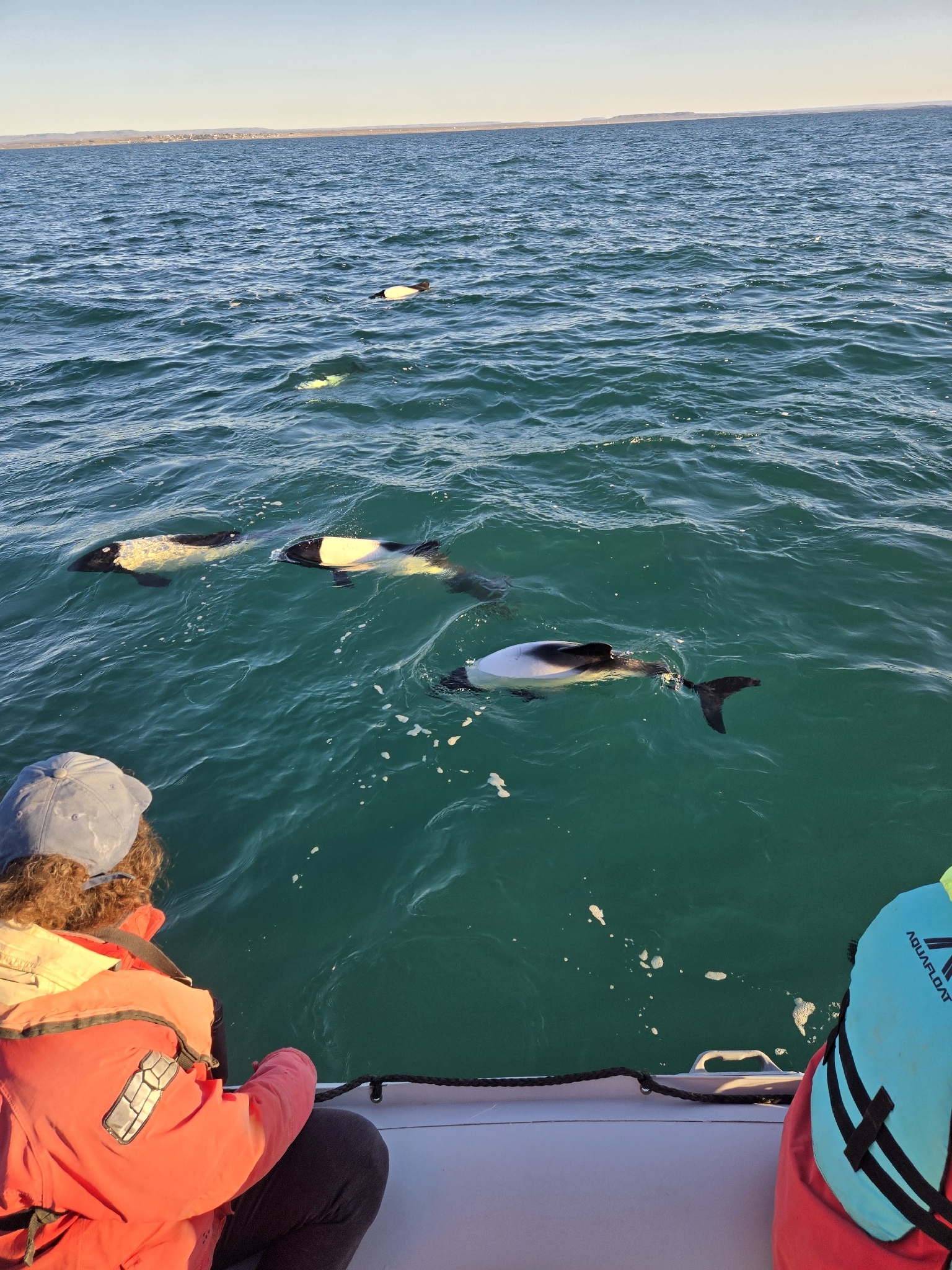
It is an eminently social but not very gregarious species: groups rarely exceed ten individuals and most often number 2 to 3 animals, the mean school size recorded in the Ría Deseado being 2.0 ± 1.2, even though temporary gatherings of about a hundred animals have been reported. Surface behaviour is spectacular, fast and erratic swimming, breaches, spins, surfing in the breaking waves, and a marked tendency to come and bow-ride. The animals frequently swim upside down, a behaviour that may improve the visual detection of prey. Cruising speed is in the order of 11 to 13 km/h.

Dives remain shallow, in keeping with the habitat: the species rarely goes beyond 200 m. Acoustically, Commerson's dolphin emits narrow-band high-frequency clicks (known as NBHF), whose centroid frequency lies around 130 to 133 kHz for a bandwidth of about 12 kHz. These signals, well above the band of best hearing of killer whales, amount to a form of acoustic crypsis. Unlike most delphinids, the species does not whistle: the reference recordings have revealed no tonal sound and no signal below 100 kHz, the rare older mentions of low-frequency sounds being attributed today to recording artefacts.

Breeding is seasonal. Mating takes place in the austral spring and summer, from late September to early February, and gestation lasts 11 to 12 months, so that births occur in the same period. The female gives birth to a single calf, 55 to 75 cm for 4.5 to 7 kg, which she suckles for several months, up to about nine months. Sexual maturity is reached at around 5 to 8 years in females and 5 to 9 years in males. In the wild, observed longevity runs from about ten years to around 18 years; in captivity, individuals have exceeded 25 years, the known record approaching 33 years.

Status and conservation

Globally, Commerson's dolphin is listed as Least Concern (LC) on the IUCN Red List, a status arising from the 2017 assessment (2018 errata version) and still in force. It is the only representative of the genus Cephalorhynchus listed as Least Concern: Hector's dolphin is Endangered, its North Island subspecies, C. hectori ssp. maui, being even Critically Endangered, while the Chilean dolphin and Heaviside's dolphin are Near Threatened. This reassuring listing nonetheless conceals declines suspected in certain parts of the range, and the overall population trend is not quantified.

Abundance estimates remain partial. Eight scientific surveys carried out between 2009 and 2015 over 8,535 km of transects on the southern Patagonian shelf led to a modelled estimate of about 21,900 individuals, with a very wide margin of uncertainty (95% confidence interval: 6,000 to 80,000). Locally, the Ría Deseado, in Argentina, holds only a small resident nucleus: photo-identification and capture-mark-recapture monitoring carried out in 2002-2004 estimated adult abundance there at 34-35 individuals in spring, 16 in winter and 7 in autumn, for a mean group size of 2.0 ± 1.2 (Righi et al., Aquatic Mammals, 2013), the estuary being moreover confirmed as a breeding site.

The main threat is bycatch. Commerson's dolphin is the small cetacean most affected by incidental mortality in the artisanal gillnets of the provinces of Santa Cruz and Tierra del Fuego, in Argentina; pelagic trawls are an additional pressure. Historically, thousands of animals were killed in the 1970s and 1980s to serve as bait in crab traps, a practice now banned. To this are added contamination by heavy metals and industrial pollutants, as well as the disturbance linked to tourist watching in northern Patagonia. The species is listed in Appendix II of CITES and in Appendix II of the Convention on Migratory Species.

In France, the situation is distinctly more worrying. The endemic Kerguelen subspecies is listed as Endangered (EN) under criterion D, which covers populations of very small size, on the Red List of vertebrates of the French Southern and Antarctic Lands published by IUCN France, the Muséum national d'Histoire naturelle and the TAAF in March 2015; its trend is given as unknown. Photo-identification monitoring run since 2012 by the national nature reserve of the French Southern Lands, supplemented by skin biopsies and C-POD acoustic recorders, has estimated abundance in the Golfe du Morbihan at between 40 and 100 individuals per year over the period 2012-2020, for an annual survival of about 0.82. The finely drawn black mark behind the blowhole serves there as a fingerprint for recognising each animal.

Watching this species

Commerson's dolphin is among the easiest cetaceans to watch, provided one goes to the right places. Argentine Patagonia offers the best opportunities: the Ría Deseado, at Puerto Deseado, in the province of Santa Cruz, is a breeding site which the animals enter daily with the tide; Puerto San Julián and the bay of Bahía Bustamante are also well known. Further south, the Strait of Magellan and the Falkland Islands hold the species, as do the coasts of southern Chile. The best period runs from the austral spring to summer, that is from November to March, when the animals concentrate close to the coast and births take place.

The species is naturally curious and frequently comes to ride the bow wave, which makes watching spectacular from small boats. It should be kept in mind, however, that groups are small, two or three animals most often, and that local nuclei sometimes number only a few dozen individuals: watching pressure is therefore concentrated on very few animals. This trust imposes in return a real discipline: approach slowly and from the side rather than cutting across the group's path, never separate a female from her calf, cut the engine or hold a constant speed nearby, limit the duration of the approach and the number of boats at once, and give up entering the water. Disturbance by dolphin-watching activities is explicitly identified as a pressure in northern Patagonia.

At Kerguelen, watching falls within a quite different framework: the archipelago is reachable only by supply ship and the whole of the Golfe du Morbihan lies within a national nature reserve where regulations strictly govern approaches to wildlife. Encounters there remain the preserve of scientific staff and monitoring campaigns.

Frequently asked questions

Why is Commerson's dolphin called the “panda dolphin”?

Because of its two-tone coloration with its extreme contrast: black head, dorsal fin, flippers and tail, brilliant white body and throat, with sharp boundaries between the two colours. The nickname applies above all to the South American subspecies; in the Kerguelen one, the fields are grey and far less clear-cut.

Can Commerson's dolphins be seen in France?

Yes, but only overseas. The species is absent from the Mediterranean, the Bay of Biscay and the English Channel. An endemic subspecies, Cephalorhynchus commersonii kerguelenensis, does however live year-round in the waters of the Kerguelen archipelago, within the national nature reserve of the French Southern Lands.

How many Commerson's dolphins are left at Kerguelen?

Photo-identification monitoring run since 2012 by the nature reserve has estimated abundance in the Golfe du Morbihan at between 40 and 100 individuals per year over the period 2012-2020. This very small population size justifies listing the subspecies as Endangered (criterion D) on the French Red List of TAAF vertebrates published in 2015.

How big is Commerson's dolphin?

It is one of the smallest cetaceans in the world: 1.2 to 1.7 m for 35 to 60 kg in animals from Patagonia. Those from Kerguelen are larger, up to about 1.8 m and 86 kg. Newborns measure 55 to 75 cm for 4.5 to 7 kg.

Is Commerson's dolphin threatened?

Globally, it has been listed as Least Concern (LC) since the 2017 assessment, revised in 2018, the only one of its genus in that category, Hector's dolphin being Endangered and the Chilean and Heaviside's dolphins Near Threatened. Local declines are nonetheless suspected, and the Kerguelen population is listed as Endangered in France. Bycatch in the artisanal gillnets of Argentina is the leading threat.

How can it be told apart from other black and white dolphins?

Its small size, its conical beakless head and its low dorsal fin with a rounded edge are diagnostic. In Patagonia, Peale's dolphin and Burmeister's porpoise are darker and without a white dorsal field, while the hourglass dolphin, also two-tone, has a tall, hooked dorsal fin and stays offshore. Hector's dolphin and Heaviside's dolphin live in New Zealand and southern Africa respectively; only the Chilean dolphin shares a small area of southern Chile (Strait of Magellan, channels of Tierra del Fuego) with Commerson's dolphin, but it is uniformly dark grey, without a white field.

How many individuals are there in groups of Commerson's dolphins?

They are small groups: two to three animals most often, rarely more than ten. The mean group size measured in the Ría Deseado, in Argentine Patagonia, is 2.0 ± 1.2 individuals. Temporary gatherings of about a hundred animals have nonetheless been reported, generally linked to a concentration of prey.

Does Commerson's dolphin whistle like other dolphins?

No. Unlike most delphinids, it does not produce whistles. Its communication and its echolocation rest on narrow-band high-frequency clicks (NBHF), centred around 130 to 133 kHz. No tonal sound and no signal below 100 kHz has been revealed in the reference recordings; these very high frequencies lie above the band of best hearing of killer whales, which amounts to a form of acoustic crypsis.

Sources

Profile compiled from authoritative scientific sources (IUCN, NOAA Fisheries, specialist literature) and reviewed for factual accuracy.

Observed distribution

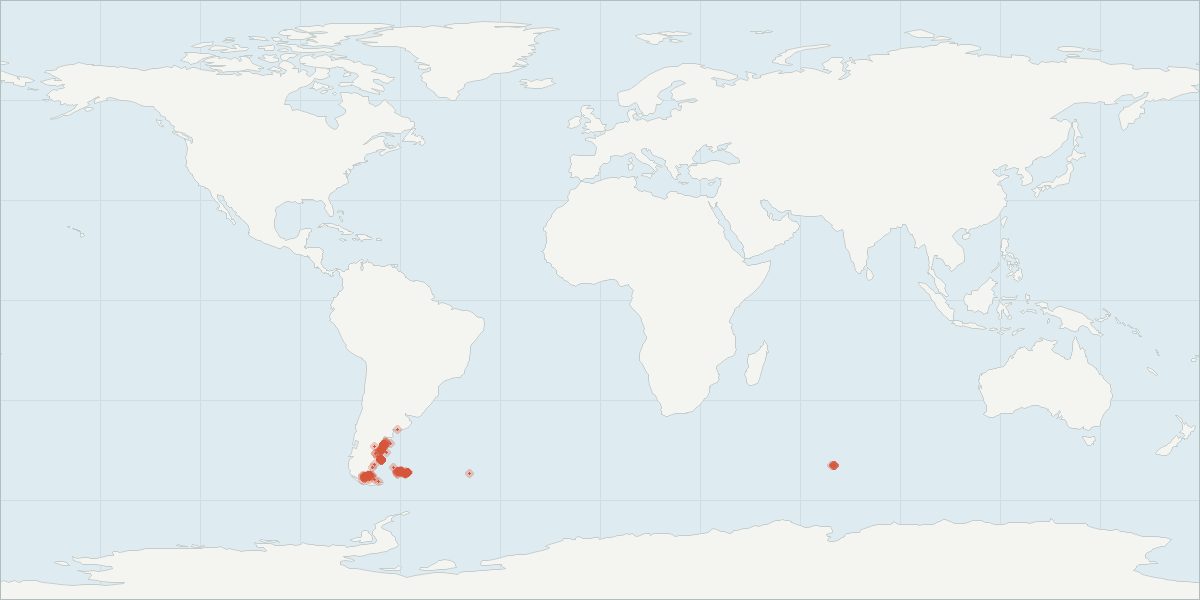
According to the open data of the GBIF, 313 georeferenced sightings of Cephalorhynchus commersonii are recorded in our photographic index.

Main countries of observation
CountryNotes
Argentina116
Falkland Islands (Malvinas)115
Chile86
French Southern Territories10
South Georgia and the South Sandwich Islands1

Distribution map: Commerson's dolphin (Cephalorhynchus commersonii)

Distribution map: Commerson's dolphin (Cephalorhynchus commersonii), 313 georeferenced sightings from GBIF
313 georeferenced sightings of Cephalorhynchus commersonii. Base map Natural Earth, public domain. GBIF data.
🗺️ Open the interactive mapTo zoom and pan. It uses the OpenStreetMap/CARTO base maps and the GBIF occurrence densities: no data is sent to these services before you click.

Presence through the year

Monthly distribution of 319 dated sightings (all years combined): the maximum is reached in janvier.

690janvier : 69janfévrier : 27febmars : 58maravril : 6avrmai : 4maijuin : 3juinjuillet : 4juilaoût : 2Augustseptembre : 10sepoctobre : 15octnovembre : 55novdécembre : 66dec
Sightings by month
MonthNotes
janvier69
February27
mars58
avril6
mai4
juin3
juillet4
August2
septembre10
octobre15
novembre55
December66

These figures reflect survey effort (more boaters and more surveys in summer) as much as the actual presence of the species: to be interpreted with caution.

En images

Cephalorhynchus commersonii
© jrecloux, CC BY-NC, 2026
Cephalorhynchus commersonii
© lippideehippi, CC BY-NC, 2026
Cephalorhynchus commersonii
© Ariel Cabrera Foix, CC BY-NC-SA, 2026
Cephalorhynchus commersonii
© marcela martinez, CC BY-NC, 2026
Cephalorhynchus commersonii
© lippideehippi, CC BY-NC, 2026
Cephalorhynchus commersonii
© Victoria, CC BY-NC, 2026
Cephalorhynchus commersonii
© Haitong and Nicola, CC BY-NC, 2026
Cephalorhynchus commersonii
© Tomás Tamagno, CC BY, 2026
Cephalorhynchus commersonii
© Gonzalo, CC BY-NC, 2026
Cephalorhynchus commersonii
© River Ahlquist, CC BY, 2026
Cephalorhynchus commersonii
© Tomás Tamagno, CC BY, 2026
Cephalorhynchus commersonii
© jakeh2022, CC BY-NC, 2026

Photographs from GBIF under a Creative Commons licence. The author and the licence of each photograph are given; please respect them if you reuse them.

Scientific references

  1. Riccialdelli L., Newsome S., Dellabianca N., Bastida R. et al. (2013) Ontogenetic diet shift in Commerson’s dolphin (Cephalorhynchus commersonii commersonii) off Tierra del Fuego, Polar Biology
  2. Dziedzic A., De Buffrenil V. (1989) Acoustic Signals of the Commerson's Dolphin, Cephalorhynchus commersonii, in the Kerguelen Islands, Journal of Mammalogy
  3. Joseph B., Antrim J., Cornell L. (1987) Commerson's dolphin (Cephalorhynchus commersonii): A discussion of the first live birth within a marine zoological park, Zoo Biology
  4. del Castillo D., Segura V., Flores D., Cappozzo H. et al. (2016) Cranial development and directional asymmetry in Commerson’s dolphin,Cephalorhynchus commersonii commersonii: 3D geometric morphometric approach, Journal of Mammalogy
  5. Coscarella M., Crespo E. (2009) Feeding aggregation and aggressive interaction between bottlenose (Tursiops truncatus) and Commerson’s dolphins (Cephalorhynchus commersonii) in Patagonia, Argentina, Journal of Ethology
  6. Robineau D. (1984) Morphologie externe et pigmentation du dauphin de Commerson, Cephalorhynchus commersonii (Lacépède, 1804), en particulier celui des îles Kerguelen, Canadian Journal of Zoology
  7. Iñíguez M., Tossenberger V. (2007) Commerson's Dolphins (Cephalorhynchus commersonii) off Ría Deseado, Patagonia, Argentina, Aquatic Mammals
  8. Amundin M., Cranford T. (1990) Forehead Anatomy of Phocoena Phocoena and Cephalorhynchus Commersonii: 3-Dimensional Computer Reconstructions with Emphasis on the Nasal Diverticula, Sensory Abilities of Cetaceans

Automatic selection of the most cited works mentioning the species (source: Crossref).