| Scientific name | Delphinus delphis Linnaeus, 1758 |
|---|---|
| Other names | Short-beaked common dolphin; dauphin commun (French); delfín común (Spanish); delfino comune (Italian). Not to be confused with the “hourglass dolphin” (Sagmatias cruciger), a distinct Antarctic species. |
| Size | 1.8 to 2.6 m depending on sources and populations (mean of about 1.8-2 m; 1.9-2.5 m commonly cited); newborn 70 to 100 cm |
| Weight | About 77 kg on average (NOAA); range of 80 to 235 kg depending on sources; males are slightly heavier than females |
| Longevity | About 35 years (NOAA), up to 40 years according to other sources; in the Bay of Biscay, female longevity fell from 24 to 17 years between 1997 and 2019 (Observatoire Pelagis) |
| Diet | Small schooling pelagic fish (sardine, anchovy, sardinella, mackerel, herring) and cephalopods; more than 90% fish in Mediterranean stomach contents; hunting mainly at night, routine dives to around 30-70 m, down to about 300 m |
| IUCN status | Least Concern (LC) globally (2021 assessment, Red List edition 2025-2). Subpopulations assessed separately: Inner Mediterranean Endangered (EN, A2cde;C1, fewer than 2,500 mature individuals); Gulf of Corinth Critically Endangered (CR); Black Sea subspecies Delphinus delphis ponticus Vulnerable (VU) |
The common dolphin is a small, slender delphinid, immediately recognisable by the yellow and grey hourglass pattern on its flanks. Gregarious and very active, it forms groups of a few dozen to several thousand animals and is among the most abundant cetaceans on the planet. Listed as Least Concern (LC) globally, it is nevertheless the subject of acute concern in the Mediterranean (Endangered subpopulation) and in the Bay of Biscay, where bycatch in fishing gear causes mass strandings on the French coast every winter.
The common dolphin is a medium-sized delphinid with a streamlined outline, a well-marked and moderately long rostrum and a rather tapered melon. Sources agree on an adult size of between roughly 1.8 and 2.6 m: NOAA gives a mean of about 1.8 m (6 feet) for a range of 1.8 to 2.4 m, several European references give 1.9 to 2.5 m, the GREC 2 to 2.5 m and the American Cetacean Society up to 2.3-2.6 m. Weight varies widely between sources and populations: about 77 kg on average for NOAA (170 pounds), 80 to 235 kg according to other references, up to 135 kg for the ACS. Males are slightly larger than females. The jaws carry numerous small, pointed, interlocking teeth: NOAA gives 40 to 57 pairs per jaw, other sources up to 50-60 per half-jaw.
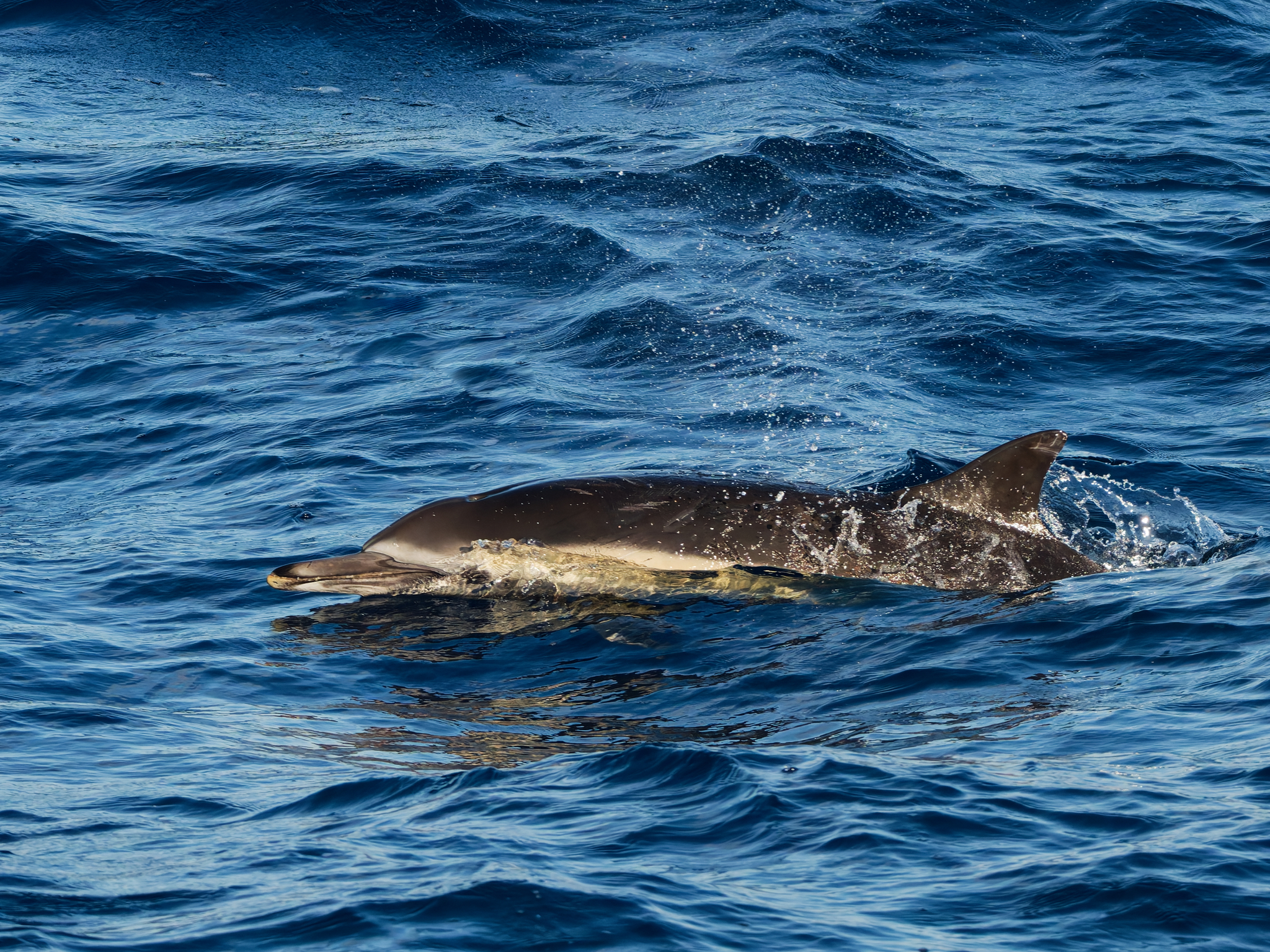
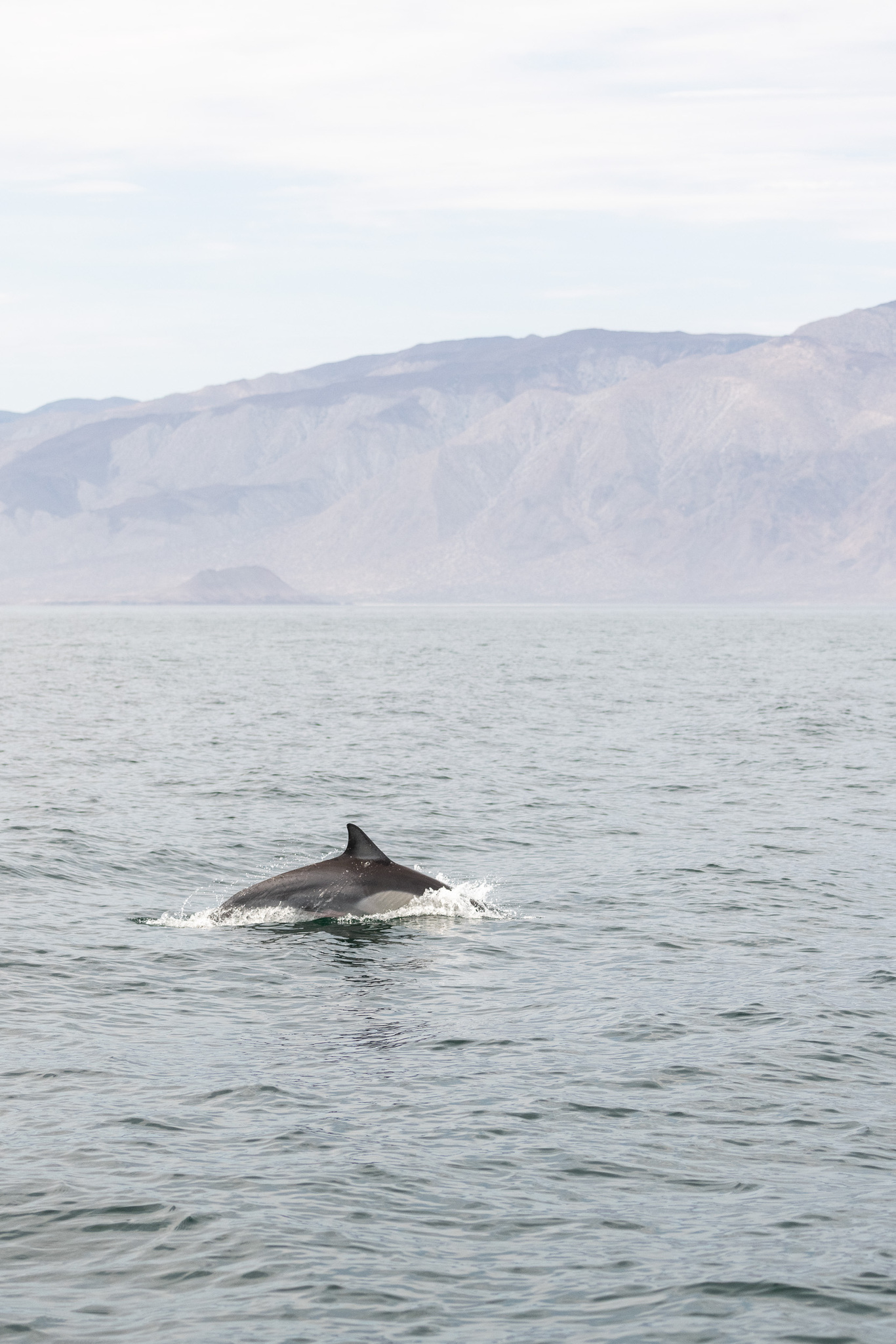
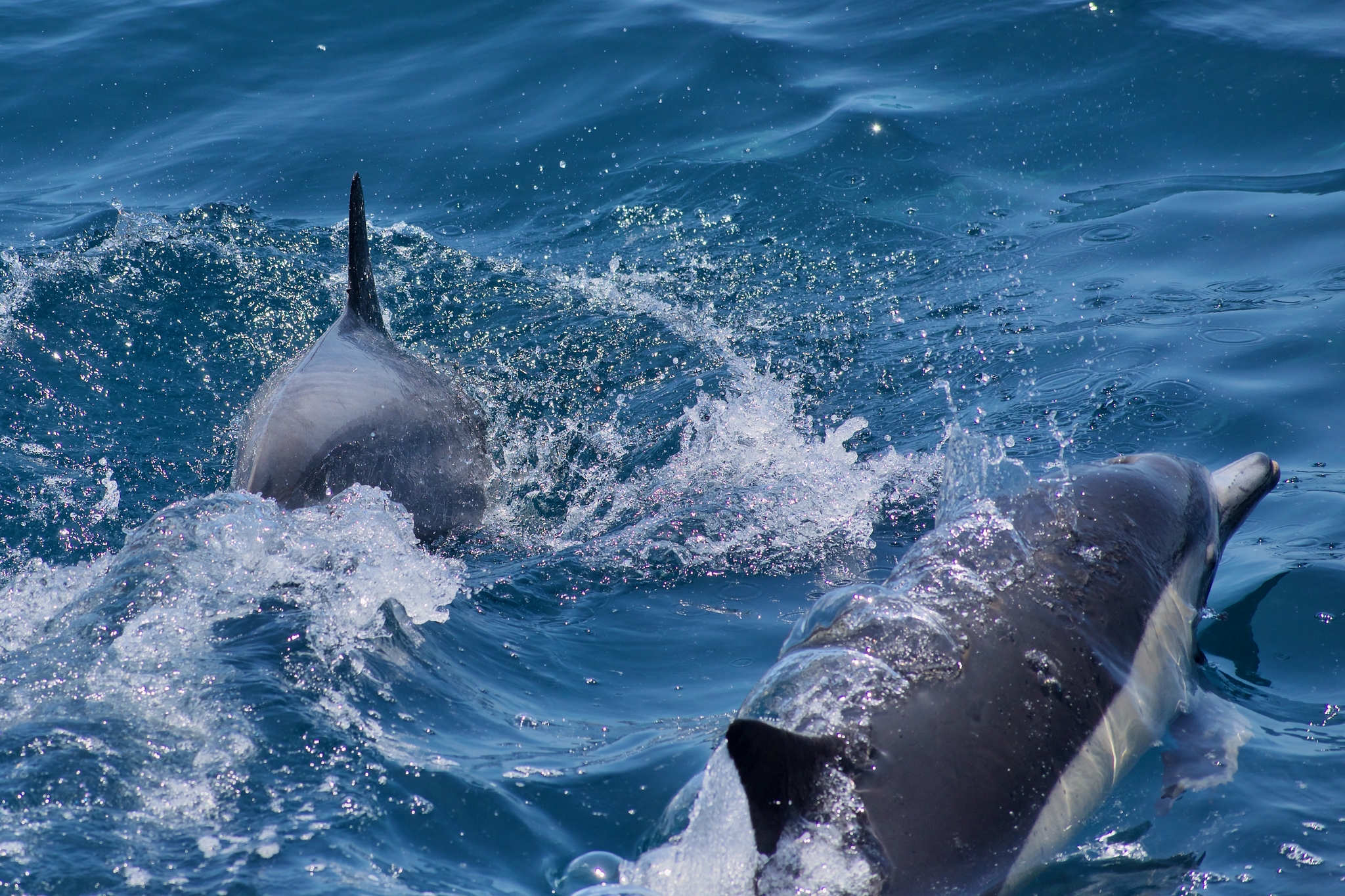
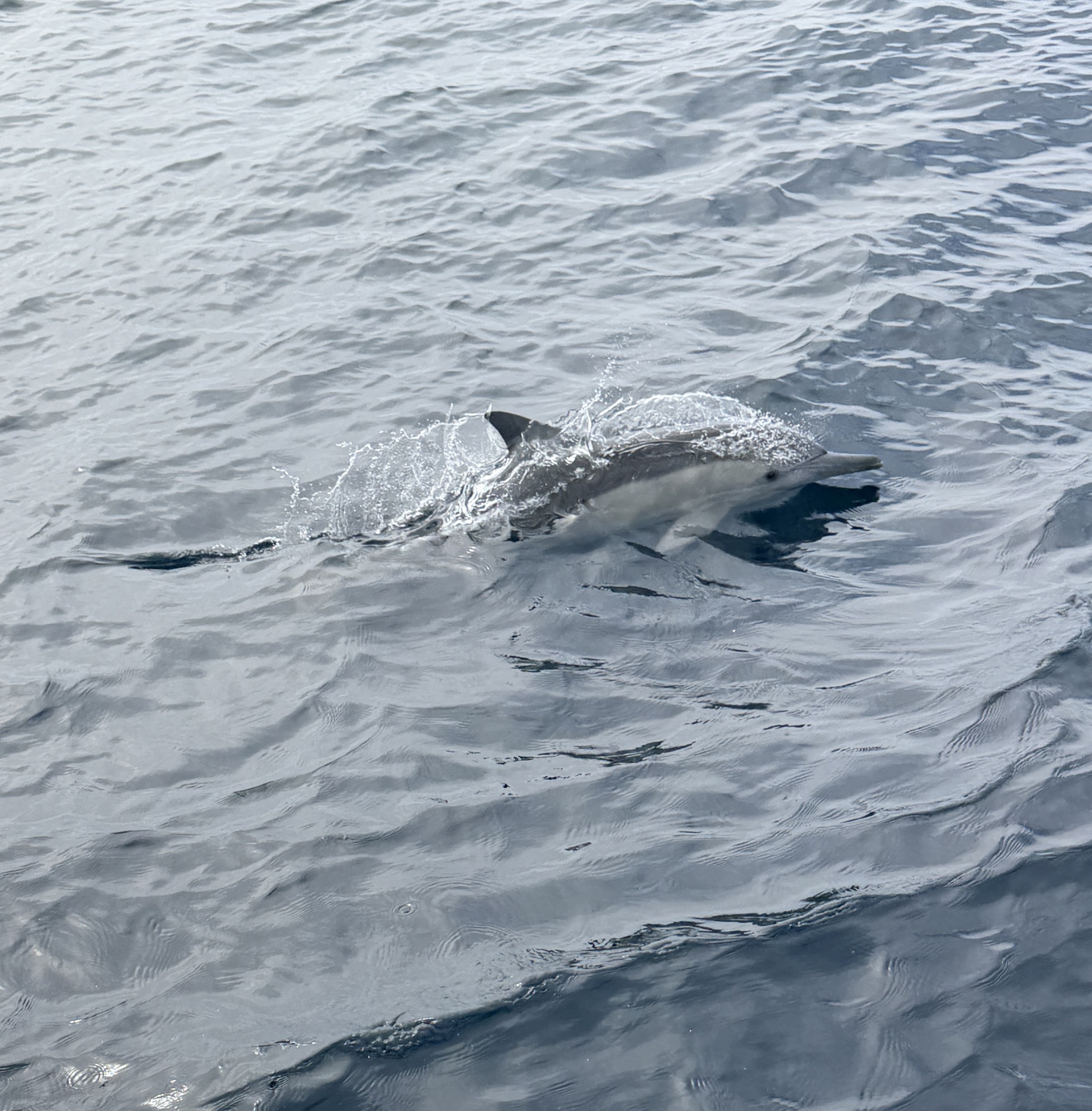
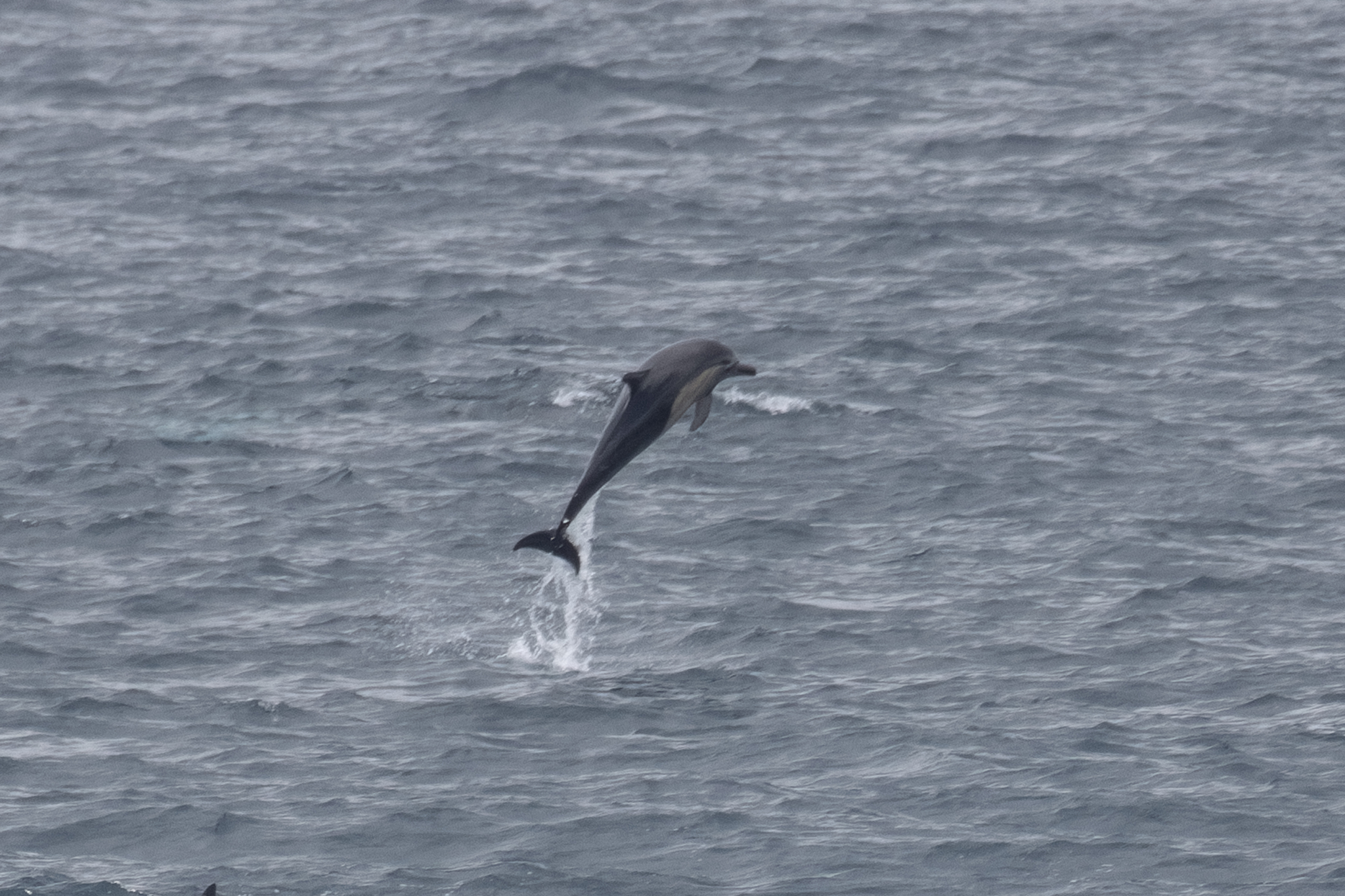
The decisive identification feature remains the colour pattern. The back is dark grey to almost black, the belly white, and above all the flanks carry an hourglass (or “cross”) pattern formed by a broad yellowish to ochre patch ahead of the dorsal fin and a blue-grey patch behind it. The dorsal fin, fairly tall and triangular to falcate, is often marked with a pale patch at its centre. A dark line runs from the beak to the flipper. No other cetacean of the north-east Atlantic or the Mediterranean shows this yellow panel, which remains visible at a distance on a breaching animal.
Possible confusions mainly involve the striped dolphin (Stenella coeruleoalba), of similar size and often in active groups, but with no yellow patch: it carries instead a dark flank-eye-anus stripe and uniform blue-grey flanks. Risso’s dolphin is distinctly greyer, bulkier and has no rostrum; the common bottlenose dolphin is stockier, uniform grey and short-beaked. The so-called “long-beaked” forms (now treated as subspecies, see taxonomy) are duller, with a longer rostrum, and tend to occupy coastal waters.
Delphinus delphis Linnaeus, 1758, family Delphinidae, suborder Odontoceti. The taxonomy of the genus Delphinus has changed a great deal. For a long time two species were distinguished: the short-beaked common dolphin (D. delphis) and the long-beaked common dolphin (D. capensis). Recent genetic work has shown that the various “long-beaked” populations are not related to one another: they are convergent local adaptations to coastal waters. The classification followed today therefore recognises only one species, Delphinus delphis, with four subspecies: D. d. delphis (the nominate form, with a circumglobal range: eastern and western Atlantic, Pacific, Mediterranean and southern hemisphere), D. d. bairdii (north-east Pacific, long-beaked form), D. d. ponticus (Black Sea) and D. d. tropicalis (Indo-Pacific, very long-rostrum form). This revision explains why the French name “dauphin commun à bec court”, still very widespread, is tending to be replaced by the simple “dauphin commun”. Some older texts still cite D. d. capensis as a South Atlantic subspecies: this combination is no longer accepted by recent references, in particular WoRMS and the Society for Marine Mammalogy taxonomy committee.
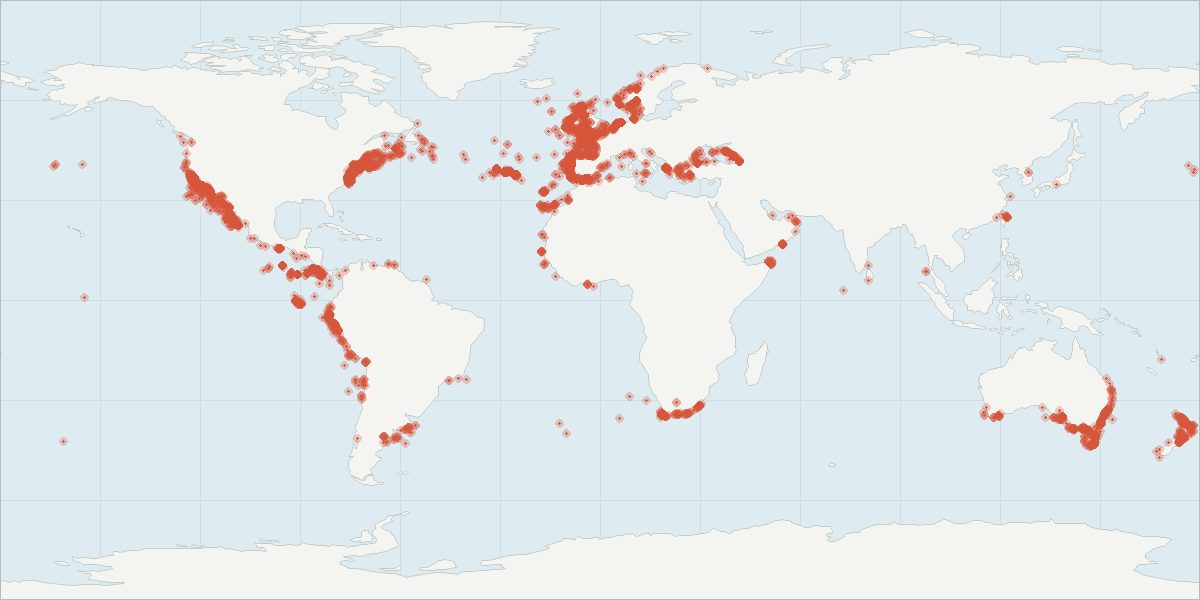
The species occupies the tropical to cool temperate waters of the three great oceans, roughly between 60°N and 50°S. It is particularly abundant in the north-east Atlantic, around Japan, off California and in New Zealand. In the Mediterranean and the Black Sea, by contrast, the species is very greatly reduced compared with its historical abundance: the Inner Mediterranean subpopulation is Endangered and the Black Sea subspecies Vulnerable; in the western basin, only the Alboran Sea still holds a substantial population nucleus. The common dolphin is above all an offshore and slope species: NOAA places it preferentially in water depths of between about 90 and 2,000 m, in association with submarine ridges, seamounts and upwelling areas where prey concentrate. The coastal forms (the long-beaked subspecies) are an exception.
In the north-east Atlantic, the SCANS surveys synthesised by OSPAR give about 468,400 animals (CV 33%) in 2005/2007 and 487,100 (CV 25%) in 2016, with no decline detected between these two estimates. Globally, a figure of the order of 6 million animals is commonly put forward, which would make it the most abundant cetacean in the world; this is no more than an order of magnitude, as no consolidated global estimate is available.
In France, the common dolphin is one of the most frequent cetaceans of the Bay of Biscay, where it occurs over the continental shelf and slope, and it is regular in the western English Channel. In the French Mediterranean the situation is the reverse: the GREC describes a species absent from the northern parts of the basin, almost absent from the French Mediterranean coast and only exceptional in the Gulf of Lion, while it remains well present in the south-west of the basin (the Alboran Sea, outside the Inner Mediterranean subpopulation) and locally in the eastern Mediterranean (Greece). In the French overseas territories the common dolphin is no more than exceptional: the GREC describes it as very rare, the bulk of the species’ global distribution lying in the temperate and subtropical waters of both hemispheres.
The common dolphin feeds mainly on small schooling pelagic fish and on cephalopods. In the Mediterranean, the stomach content analysis reported by the GREC shows more than 90% fish (sardine, sardinella, anchovy). NOAA indicates that the animals often rest by day and hunt by night, exploiting the diel vertical migration of the plankton and its predators: routine feeding dives are made to around 30 m, other work gives rather a usual depth of the order of 70 m, and the species can descend to about 300 m.
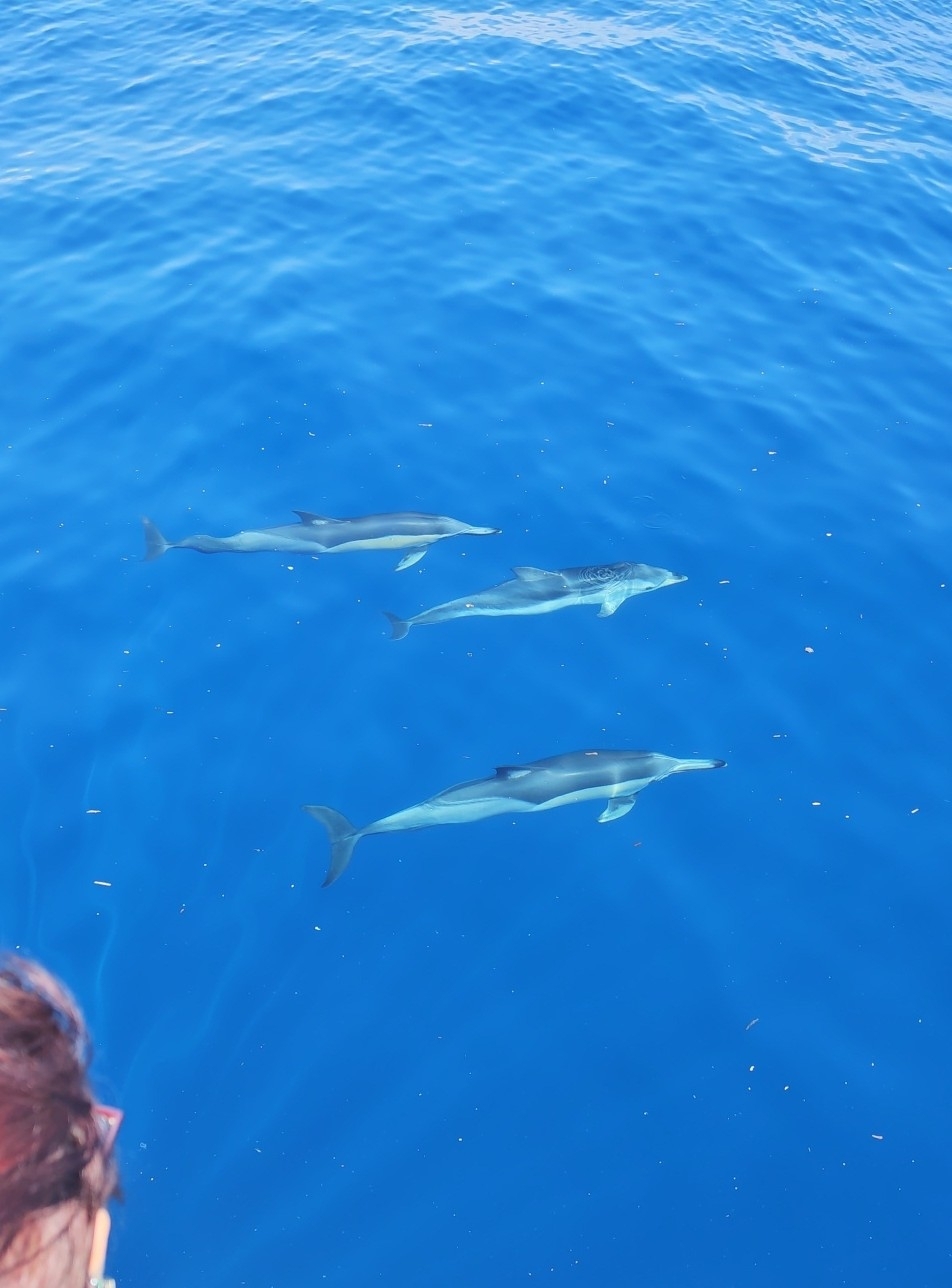
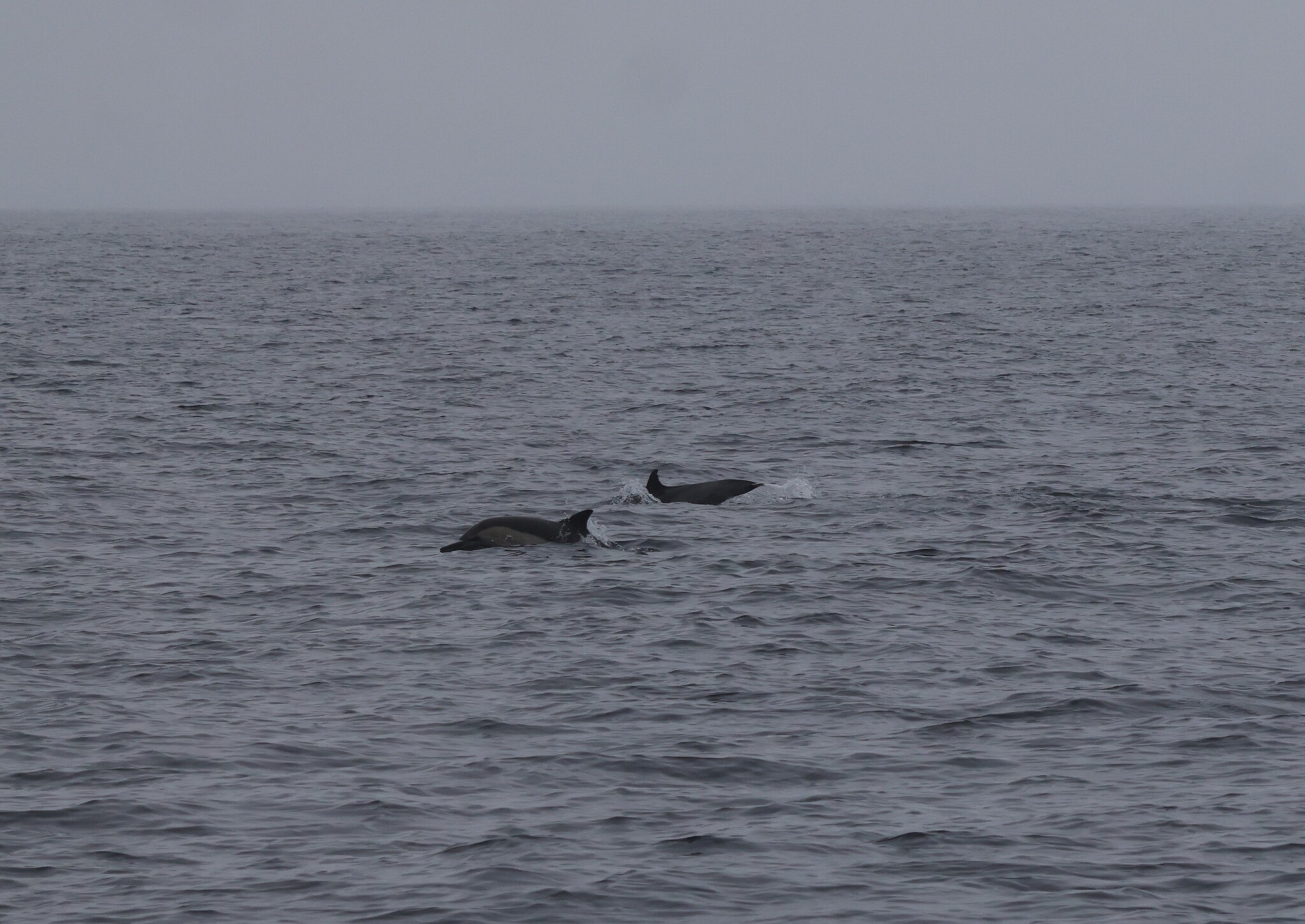
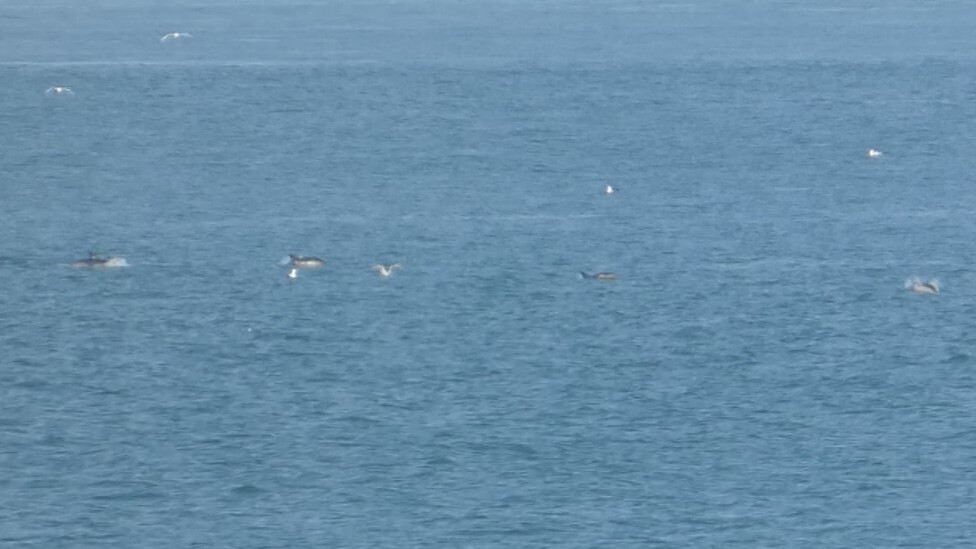
It is an extremely social species. NOAA describes groups averaging several hundred animals, with “mega-pods” exceptionally reaching 10,000 animals; in the Mediterranean, the GREC observes rather bands of 10 to 40 animals. The social structure includes nursery groups, groups of young males and mixed assemblages. Common dolphins breach a great deal, readily ride the bow waves of vessels and cooperate to herd fish schools; they sometimes associate with other delphinids and with large whales.
Breeding: gestation lasts 10 to 11 months and the newborn measures 70 to 100 cm for some ten kilos. Weaning occurs at around one year according to NOAA, with wide variation between populations (5 to 19 months depending on the study). The interval between two births is 2 to 3 years. The age at first breeding varies between studies and regions: NOAA gives about 8 years for females and 10 years for males (range 5-12 years), while the Observatoire Pelagis work on the Bay of Biscay indicates first breeding at around 7 years. In the Mediterranean, births occur mainly in summer. Longevity is estimated at about 35 years by NOAA, up to 40 years according to other sources.
Globally, Delphinus delphis is listed as Least Concern (LC) on the IUCN Red List (2021 assessment, carried over into Red List edition 2025-2). NOAA stresses that the data are insufficient to establish a global trend.
Three regional entities are assessed separately and are far more threatened: the so-called “Inner Mediterranean” subpopulation (Mediterranean waters east of the Almeria-Oran front, Alboran excluded) is Endangered (EN, criteria A2cde;C1), with fewer than 2,500 mature individuals, a continuing decline estimated at 20% or more over two generations and a suspected reduction of about 66% over three generations; the Gulf of Corinth subpopulation (Greece) is Critically Endangered (CR), photo-identification studies there recording only some twenty animals; the Black Sea subspecies, D. d. ponticus, is Vulnerable (VU), a legacy in particular of the industrial hunts of the twentieth century.
The documented threats are bycatch (gillnets, purse seines, trawls, longlines), the direct hunts still practised in a few regions, chemical contamination, the decline of small pelagic fish resources and competition with fisheries, together with disturbance and noise pollution.
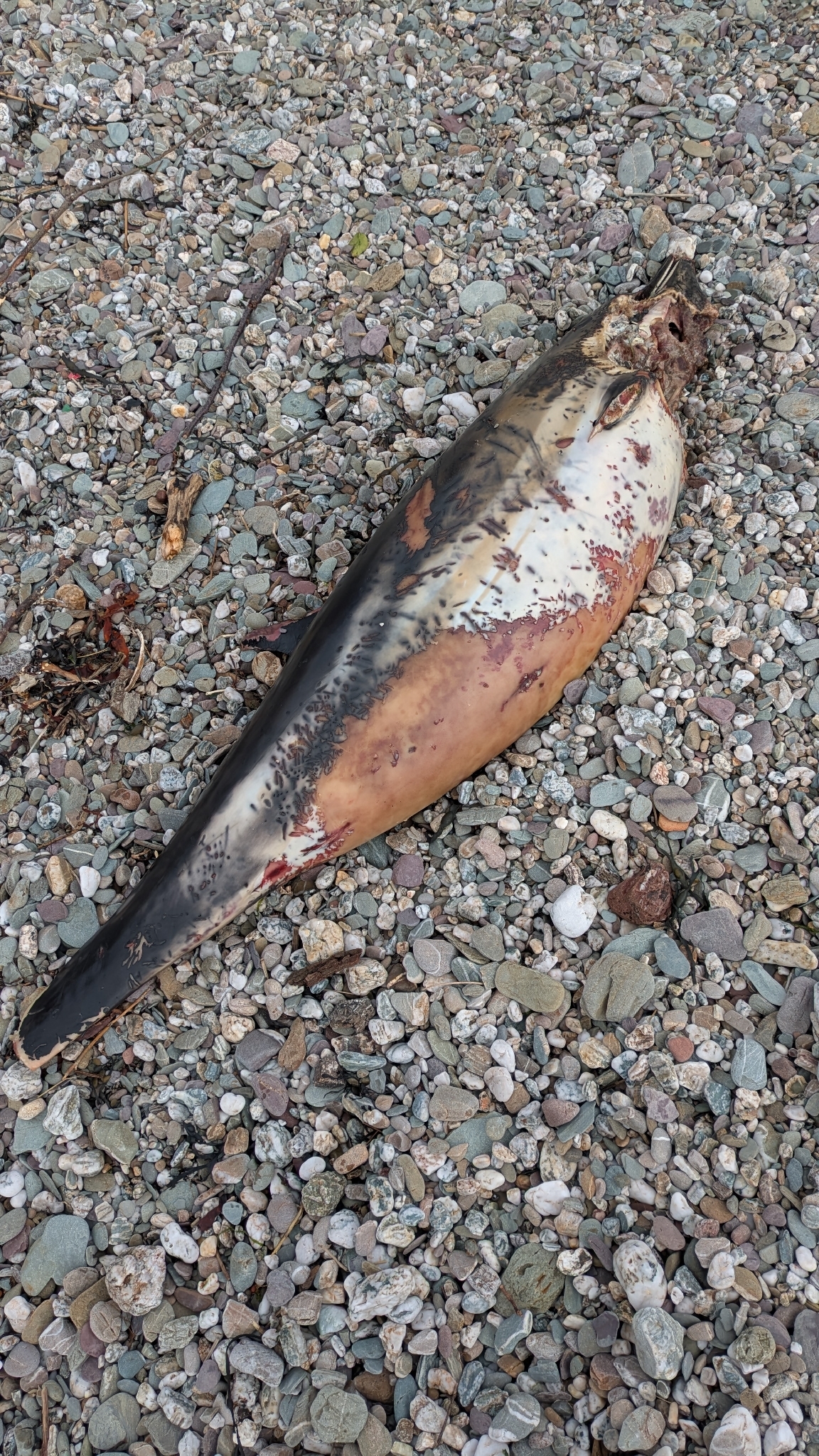
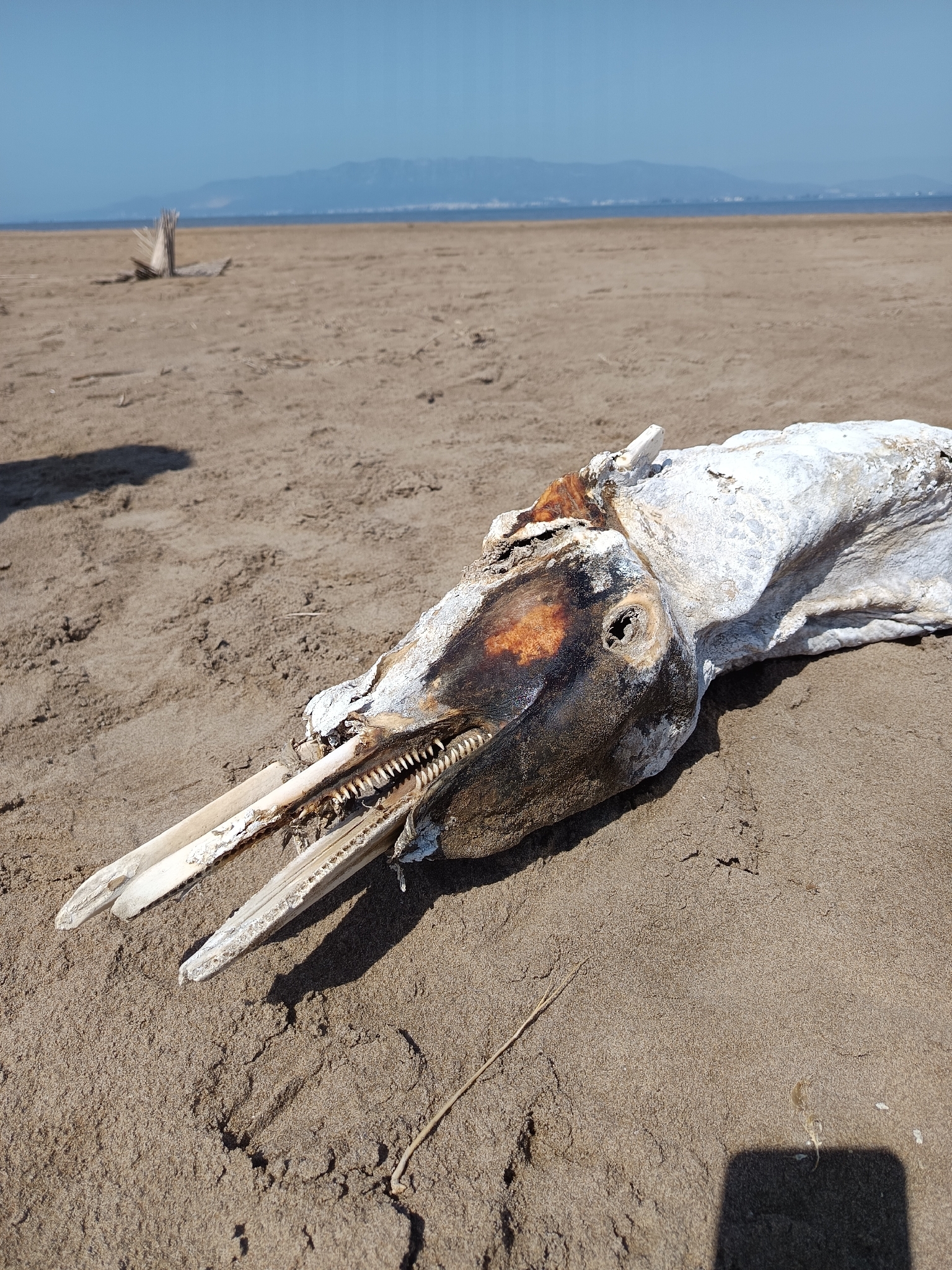
France holds one of the world’s black spots. Every winter, hundreds to more than a thousand common dolphins strand on the Atlantic seaboard, with traces of fishing gear in a large majority of cases. The French Ministry for the Ecological Transition reports, for the winter of 2023-2024, 624 stranded common dolphins of which 176 carried gear marks, that is about 1,450 bycatch deaths estimated between December 2023 and March 2024, against an average of 6,100 a year over 2017-2023, a mortality “divided by four” after the 30-day spatio-temporal closure (22 January-20 February 2024) imposed on about 300 vessels over 8 m, a measure renewed in 2025 and 2026. ICES recommends closures at the peak mortality periods (December to March and July to August) and the mandatory use of acoustic deterrents. A study by the Observatoire Pelagis (La Rochelle Université-CNRS) further shows that the longevity of females in the Bay of Biscay fell from 24 to 17 years between 1997 and 2019, that is seven years lost under the effect of human-induced mortality. The species is listed in CITES Appendix II and protected in France.
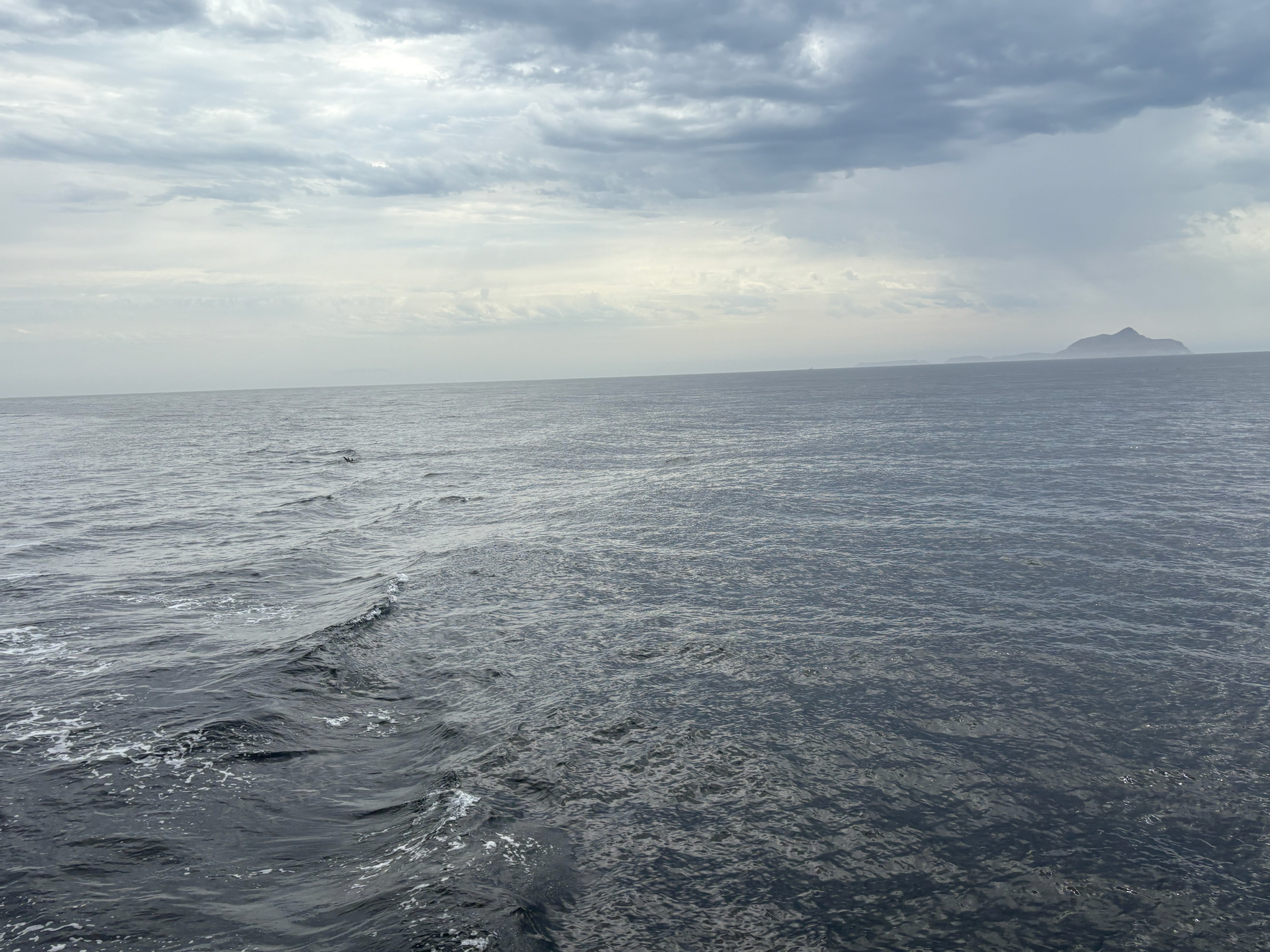
The common dolphin is one of the easiest species to encounter at sea on the French Atlantic seaboard: the Bay of Biscay, the approaches to the continental slope, the western English Channel, with sightings possible all year round from ferries, cruise ships or dedicated survey trips. Its frequent breaching, its speed and its marked taste for the bows of boats make it very conspicuous; the yellow panel on the flank can then be seen clearly. In the French Mediterranean, by contrast, it should not be expected: sightings there are rare, and most of them are in fact striped dolphins, which are very common in the Pelagos Sanctuary.
On the ethical side, one should never chase a group or cut across its course, should let the animals come to the bow of their own accord, keep a constant speed and move away slowly, avoid splitting a group containing newborns, limit the length of the approach and not enter the water with them. In France, the intentional disturbance of cetaceans is prohibited and approach rules govern watching activities, in particular in the Pelagos Sanctuary. Reporting a stranding to the national stranding network (Réseau national échouages), coordinated by the Observatoire Pelagis, is a concrete and valuable contribution to monitoring the species.
The decisive feature is the yellowish to ochre patch on the flank, ahead of the dorsal fin, which together with the blue-grey patch behind forms an hourglass pattern. The striped dolphin never has any yellow: its flanks are uniform blue-grey, crossed by a dark stripe running from the eye to the anus. The common dolphin also has a slightly longer rostrum and a more slender outline. Take care too not to confuse this hourglass pattern with the “hourglass dolphin” (Sagmatias cruciger), an entirely different species confined to Antarctic and subantarctic waters.
Not globally: the IUCN lists it as Least Concern (LC) and it remains one of the most abundant cetaceans on the planet, with, for example, nearly 490,000 animals estimated in the north-east Atlantic in 2016. But some regional entities are in serious difficulty: the Inner Mediterranean subpopulation is Endangered, that of the Gulf of Corinth Critically Endangered, and the Black Sea subspecies Vulnerable. This is the typical case of a globally abundant species whose local populations are collapsing.
Because they are caught accidentally in fishing gear, mainly pelagic pair trawls and nets, at the time when dolphins and fish schools concentrate on the shelf of the Bay of Biscay. For the winter of 2023-2024, 624 stranded common dolphins were recorded on the Atlantic and English Channel coasts, of which 176 carried gear marks, and total bycatch mortality was estimated at about 1,450 animals, against an average of 6,100 a year between 2017 and 2023.
Yes, measurably so. The 30-day closure put in place from 22 January to 20 February 2024, which concerned about 300 vessels over 8 metres, translated, according to the French Ministry for the Ecological Transition, into a bycatch mortality divided by four compared with the average of previous years. The measure was renewed in 2025 and 2026, with a target of reopening in 2027, at the cost of a loss of turnover estimated at more than 30 million euros for the industry.
It is very unlikely. The GREC describes a species absent from the northern parts of the basin and almost absent from the French Mediterranean coast, with only exceptional sightings in the Gulf of Lion; it remains, on the other hand, well present in the south-west of the basin, in particular in the Alboran Sea. The common dolphin was nevertheless once more abundant than the striped dolphin in certain Mediterranean coastal areas: its decline, linked in particular to the fall in small pelagic fish and to habitat degradation, is one of the best documented declines in the basin.
It is a moderate diver. Usual feeding dives are around 30 m according to NOAA, and rather towards 70 m according to other work, the species exploiting above all the surface layer into which fish and squid rise at night. The maximum depth reported is about 300 m. The available data do not allow a reliable mean breath-hold duration to be given for the species.
Profile compiled from authoritative scientific sources (IUCN, NOAA Fisheries, specialist literature) and reviewed for factual accuracy.
According to the open data of the GBIF, 9,185 georeferenced sightings of Delphinus delphis are recorded in our photographic index.
| Country | Notes |
|---|---|
| United States of America | 3,805 |
| Portugal | 1,085 |
| United Kingdom of Great Britain and Northern Ireland | 666 |
| Mexico | 529 |
| New Zealand | 443 |
| Australia | 416 |
| Spain | 409 |
| France | 251 |
| Netherlands | 238 |
| Costa Rica | 170 |

Monthly distribution of 9,303 dated sightings (all years combined): the maximum is reached in juillet.
| Month | Notes |
|---|---|
| janvier | 600 |
| February | 658 |
| mars | 853 |
| avril | 796 |
| mai | 700 |
| juin | 763 |
| juillet | 1,233 |
| August | 1,188 |
| septembre | 891 |
| octobre | 727 |
| novembre | 451 |
| December | 443 |
These figures reflect survey effort (more boaters and more surveys in summer) as much as the actual presence of the species: to be interpreted with caution.


Photographs from GBIF under a Creative Commons licence. The author and the licence of each photograph are given; please respect them if you reuse them.
Automatic selection of the most cited works mentioning the species (source: Crossref).