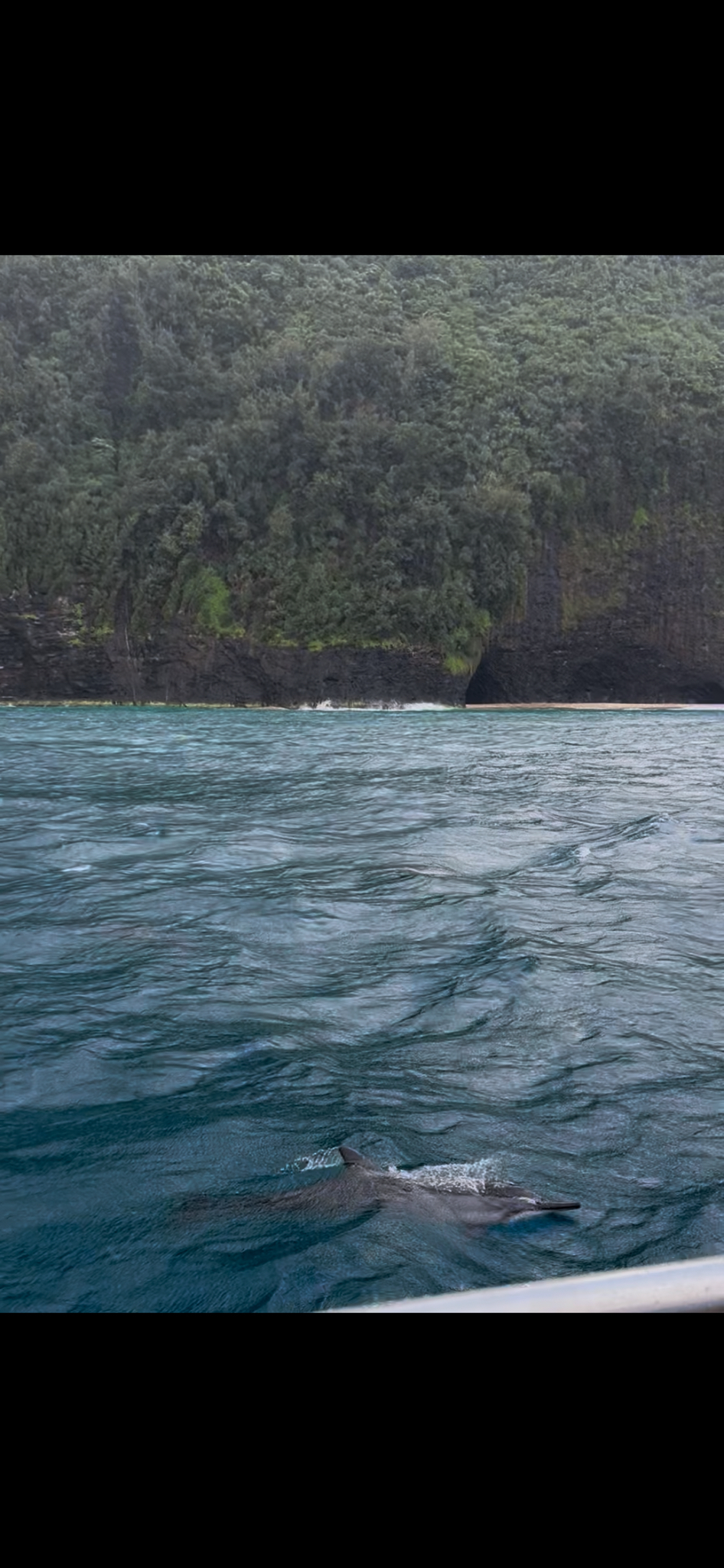
Spinner dolphin (Stenella longirostris)

Key facts
Scientific name Stenella longirostris (J. E. Gray, 1828)
Other names Spinner dolphin, long-snouted dolphin; in French: dauphin à long bec, dauphin longirostre, dauphin fileur, sténelle à long bec; in Spanish: delfín tornillón, estenela giradora
Size 1.3 to 2.4 m (widest published range: 129 to 235 cm); males slightly larger than females
Weight about 23 to 80 kg depending on the population (NOAA: 59 to 77 kg; some French sources mention up to 100 kg)
Longevity About 20 to 25 years, with a few individuals exceeding 25 years
Diet Mesopelagic carnivore: small fish under 20 cm (including myctophids), squid and sergestid shrimps, taken at night between 200 and 300 m (up to 400 m according to some sources). Exception: the dwarf spinner dolphin feeds on benthic reef organisms.
IUCN status Least Concern (LC), Braulik & Reeves assessment published in 2018 (version 3.1 criteria), population trend unknown. Previously: DD in 2008 and 2012, LR/cd in 1996. Subspecies Stenella longirostris orientalis (eastern spinner dolphin, eastern tropical Pacific): Vulnerable (VU) since 2012. French regional Red Lists: Data Deficient in Martinique (2020), not evaluated in Guadeloupe (2022).

In brief

The spinner dolphin is a small pantropical delphinid, well known for the spinning leaps in which it can complete up to seven full turns about its own axis before falling back. Distributed between 40°N and 40°S in all three oceans but absent from the Mediterranean, it is among the most abundant cetaceans on the planet: the sum of the available estimates exceeds one million individuals. Classed as Least Concern (LC) by the IUCN since 2018, it remains locally threatened by bycatch, direct hunting and tourist disturbance of its daytime resting areas.

Identification

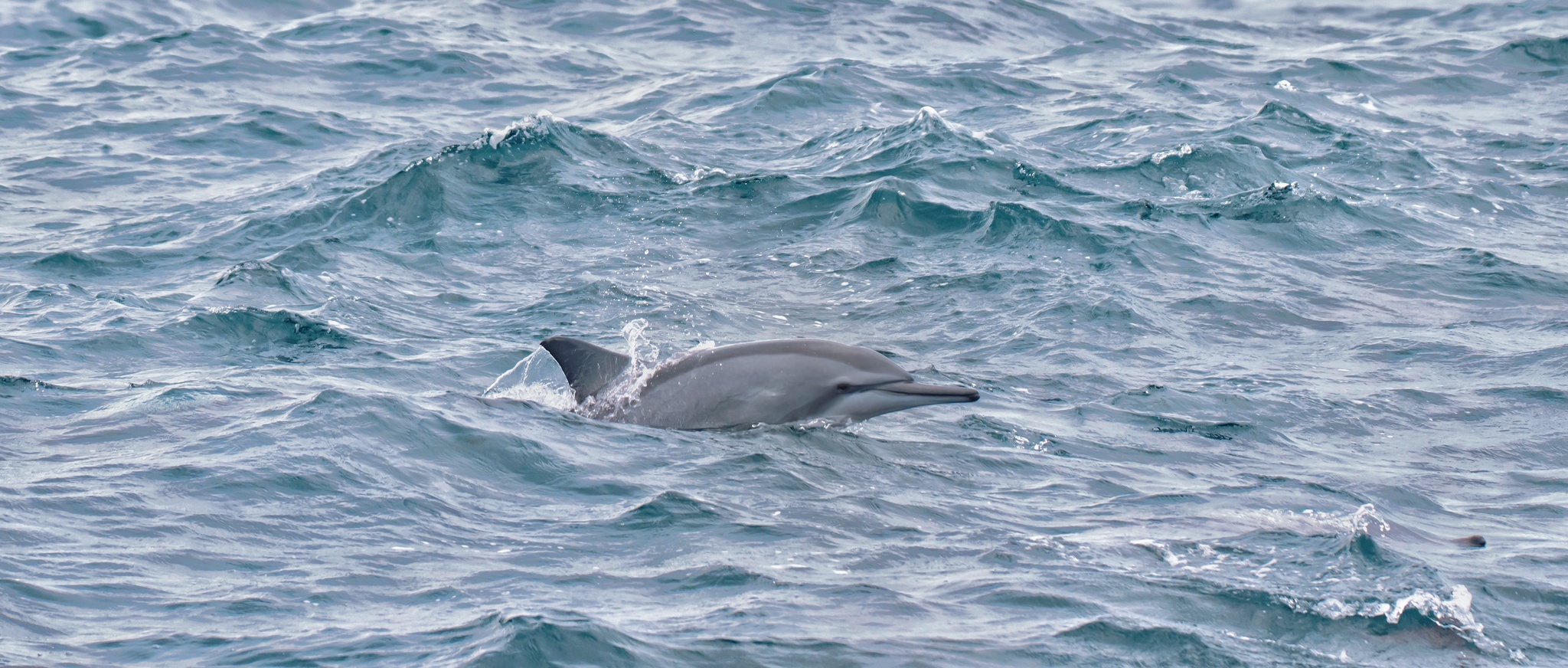
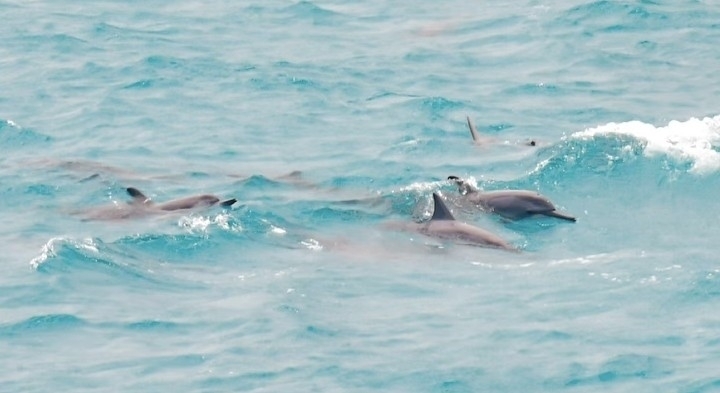
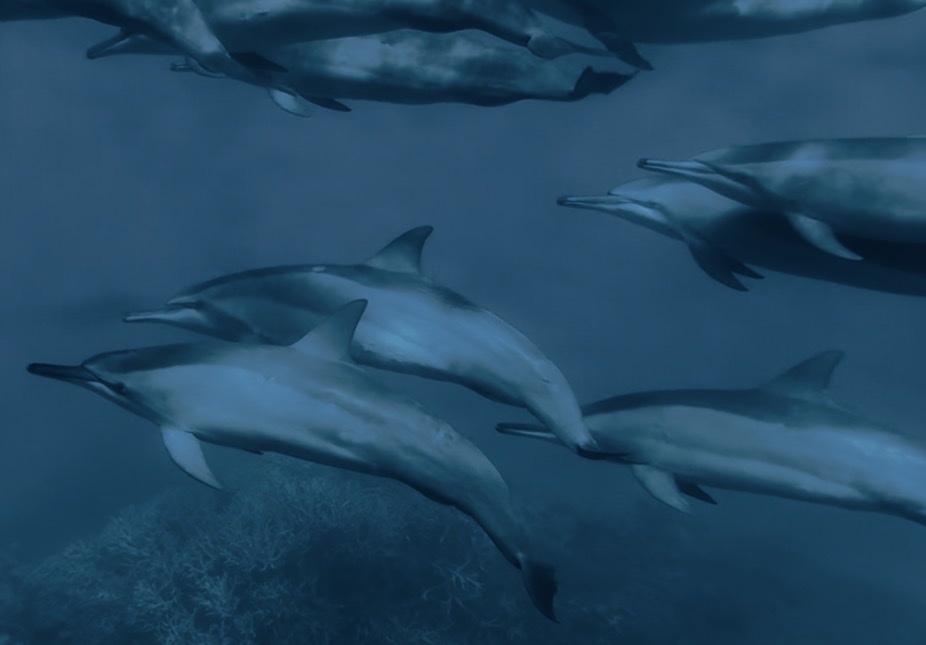
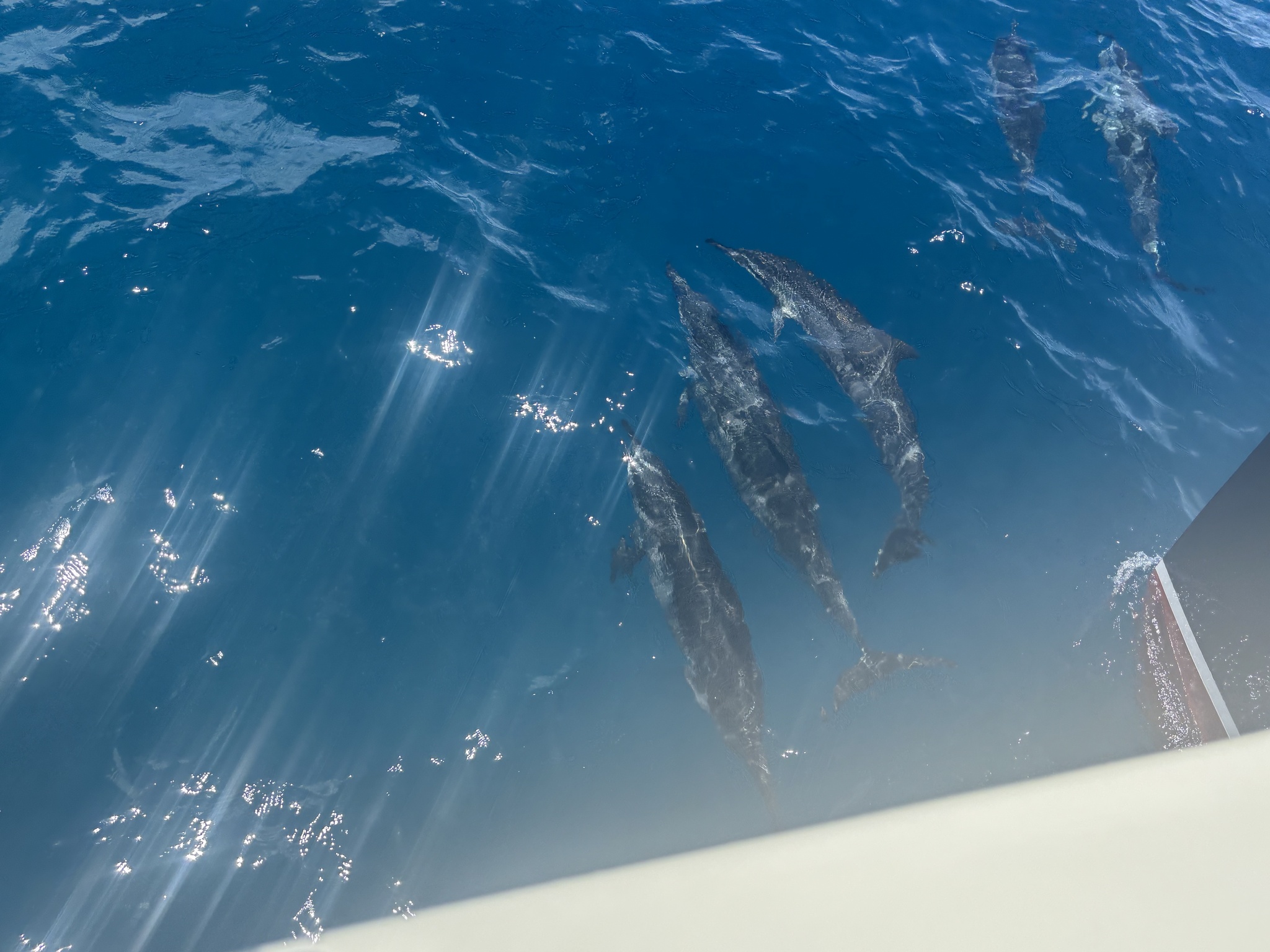
The spinner dolphin is a small delphinid with a slender, streamlined build. Sources agree on an adult length of between about 1.3 and 2.4 m, the widest published range running from 129 to 235 cm; mass runs from about 23 to 80 kg depending on the population (some French sources mention up to 100 kg for the largest individuals, while NOAA gives 59 to 77 kg). Males are on average slightly larger than females. The most immediately recognisable feature is the rostrum: very long, very fine, continued by a tapering melon that gives the head an almost conical profile, and it is this that earns the species its Latin epithet longirostris, “long beak”. The jaws carry an exceptionally high number of teeth for a dolphin, in the order of 45 to 62 fine, pointed teeth on each side of each jaw.

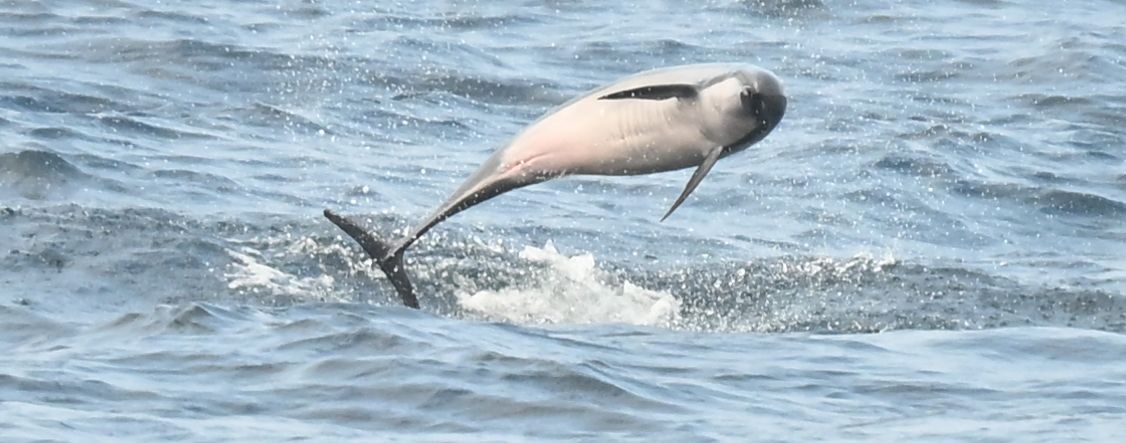
The colour pattern is described as “tripartite”: dark grey dorsal cape, light grey lateral panel, white to very pale grey underside. A dark band links the eye to the flipper, and the lips and the tip of the rostrum are black. The dorsal fin, of medium size, is falcate to distinctly triangular depending on subspecies and sex. It is in the eastern subspecies of the eastern tropical Pacific that the morphology becomes most unusual: adult males develop an erect dorsal fin, sometimes canted forward, together with a pronounced post-anal hump beneath the tail stock, which gives them a very characteristic asymmetrical silhouette. The dwarf form of South-East Asia is markedly smaller and stockier.

Possible confusion concerns above all the other Stenella: the pantropical spotted dolphin (Stenella attenuata), with a shorter and thicker rostrum, the Clymene dolphin (S. clymene), the striped dolphin (S. coeruleoalba) and the Atlantic spotted dolphin (S. frontalis). In tropical waters, the long-beaked common dolphin (long-rostrum forms of Delphinus delphis; the former “Delphinus capensis” is no longer recognised as a valid species and is today placed in synonymy with D. delphis), the rough-toothed dolphin (Steno bredanensis) and young common bottlenose dolphins (Tursiops truncatus) may also be mistaken for it. In practice, the combination of a very fine rostrum, small size, large groups and repeated spinning leaps almost always settles the matter: no other cetacean strings together rotations so numerous, so regular and so complete about the body axis. The Clymene dolphin (S. clymene) also spins as it leaves the water, but far less often and far less elaborately.

Taxonomy

Stenella longirostris (Gray, 1828) belongs to the family Delphinidae, subfamily Delphininae. The original synonym is Delphinus longirostris Gray, 1828. Genetic work shows that the genus Stenella is paraphyletic, and the IUCN indicates that a restructuring of the Delphininae is likely in the years to come.

Four subspecies are currently recognised: S. l. longirostris, known as Gray's spinner dolphin or the Hawaiian spinner dolphin, the most widespread; S. l. orientalis, the eastern spinner dolphin, of the eastern tropical Pacific; S. l. centroamericana, the Central American spinner dolphin, coastal; and S. l. roseiventris, the dwarf spinner dolphin, of the shallow waters of South-East Asia. A zone of hybridisation exists between Gray's spinner dolphin and the eastern form, where an intermediate known as the “white-bellied spinner” appears. The IUCN also reports that the small individuals of Arabian waters (Red Sea, Persian Gulf) and morphologically distinct animals from West Africa could correspond to subspecies not yet described. Several studies have brought out strong genetic structuring into metapopulations, in particular where island communities are closely tied to resting habitats, as in the Hawaiian archipelago and in the South Pacific.

Distribution and habitat

The species occupies the tropical and subtropical waters of both hemispheres, from about 40°N to 40°S, in the Pacific, Atlantic and Indian oceans, including the Persian Gulf and the Red Sea. The IUCN states explicitly that it is absent from the Mediterranean Sea. It frequents the open sea as readily as the coastal waters associated with islands and banks; in the eastern tropical Pacific it is encountered in very large numbers several hundred kilometres from any land, in the “tropical surface waters” characterised by a shallow mixed layer and a sharp thermocline.

In France, the spinner dolphin is absent from metropolitan waters: neither the Mediterranean, nor the Bay of Biscay, nor the English Channel. The Office français de la biodiversité, on the other hand, records it as present throughout the overseas maritime areas, with the exception of Saint Pierre and Miquelon, the subantarctic islands of the TAAF and Adélie Land. The IUCN list of countries and territories cites in particular French Guiana, French Polynesia, Martinique, New Caledonia, La Réunion, Saint Martin and Wallis and Futuna; Mayotte is mentioned in the text of the assessment in connection with bycatch. At La Réunion, the association Globice puts the population at about 210 individuals, concentrated on the west coast, in particular off Saint-Gilles, over pale, gently sloping white sand bottoms. In the French Antilles the species occurs in the Agoa Sanctuary, where the regional Red Lists classify it as Data Deficient (Martinique, 2020) and not evaluated (Guadeloupe, 2022). It is the only dolphin to enter lagoons regularly, a behaviour documented at Mayotte and in French Polynesia.

Biology and ecology

The spinner dolphin follows a strongly marked diel cycle. By day it rests in sheltered bays and shallow waters close to deep ground, in resting bouts of about four to five hours. In the late afternoon it moves offshore to hunt through the night. Its diet is based on the mesopelagic fauna: small fish under 20 cm from several families, among them myctophids, squid and sergestid shrimps, generally taken between 200 and 300 m depth; some French sources mention dives to 400 m. The dwarf spinner dolphin is an exception: it feeds on benthic organisms associated with reefs, in all likelihood by day.

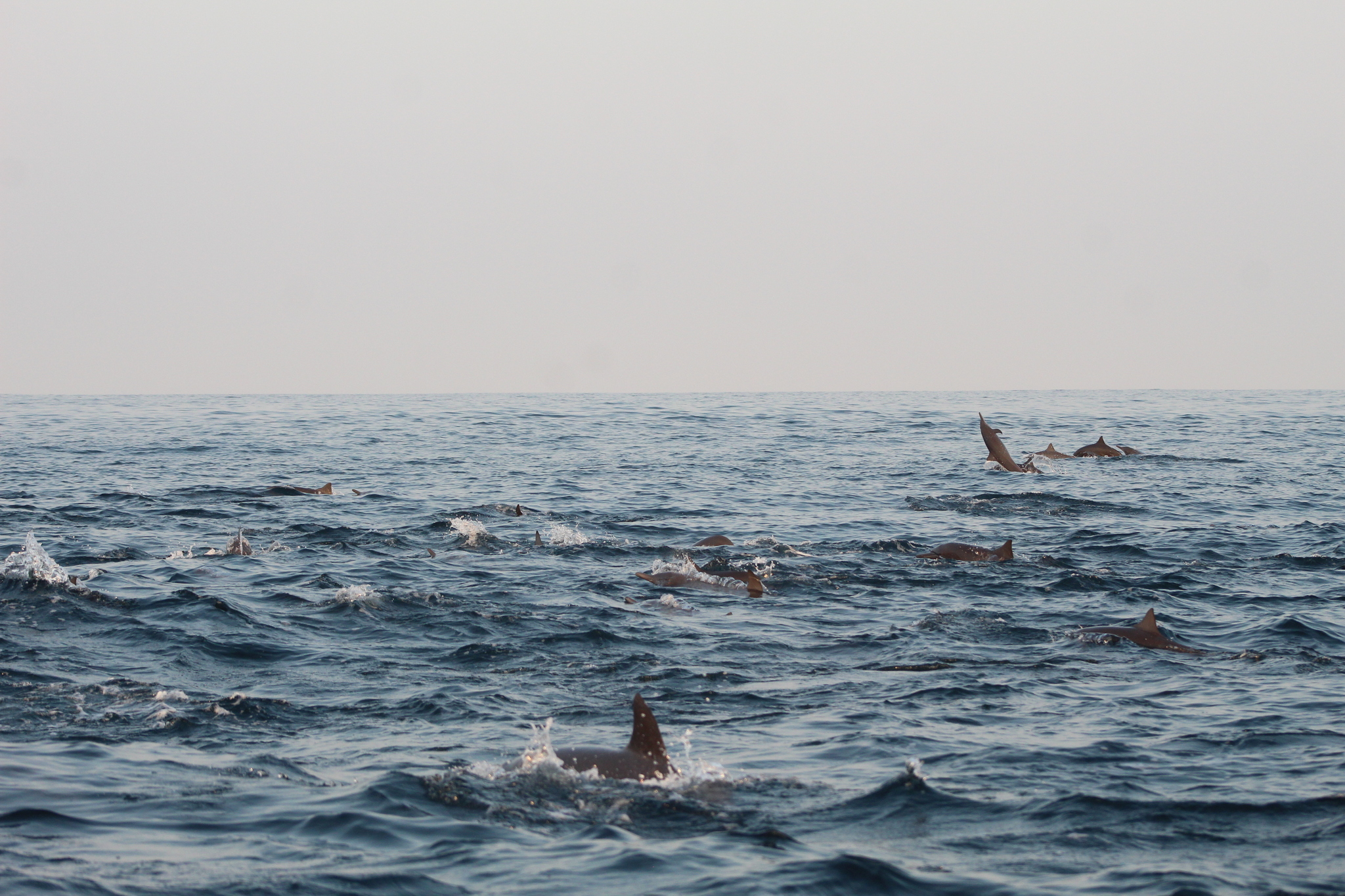
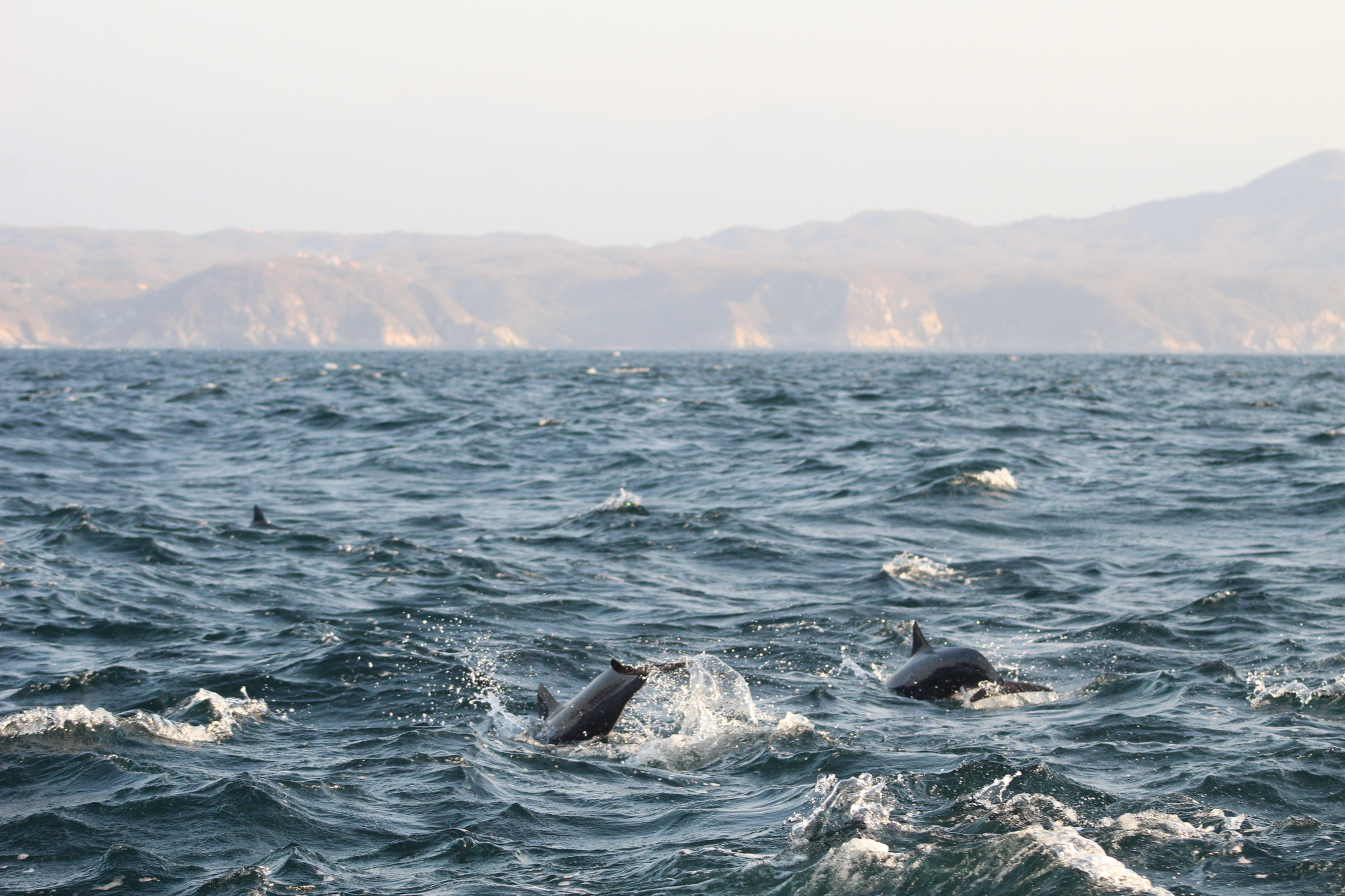
The species is extremely gregarious. Groups range from a few individuals to a thousand and more, and are on average larger offshore than inshore; the numbers most commonly reported lie between 20 and 100 animals. In the eastern tropical Pacific the schools regularly associate with the pantropical spotted dolphin, with yellowfin tuna and with several species of seabird, an association that lies behind the tragedy of the tuna fishery. Social organisation is fluid, with family groups and male coalitions.

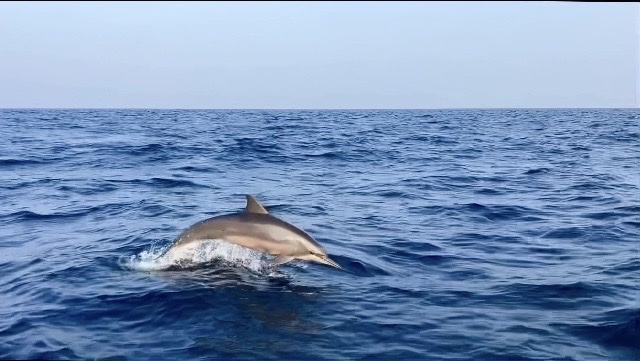
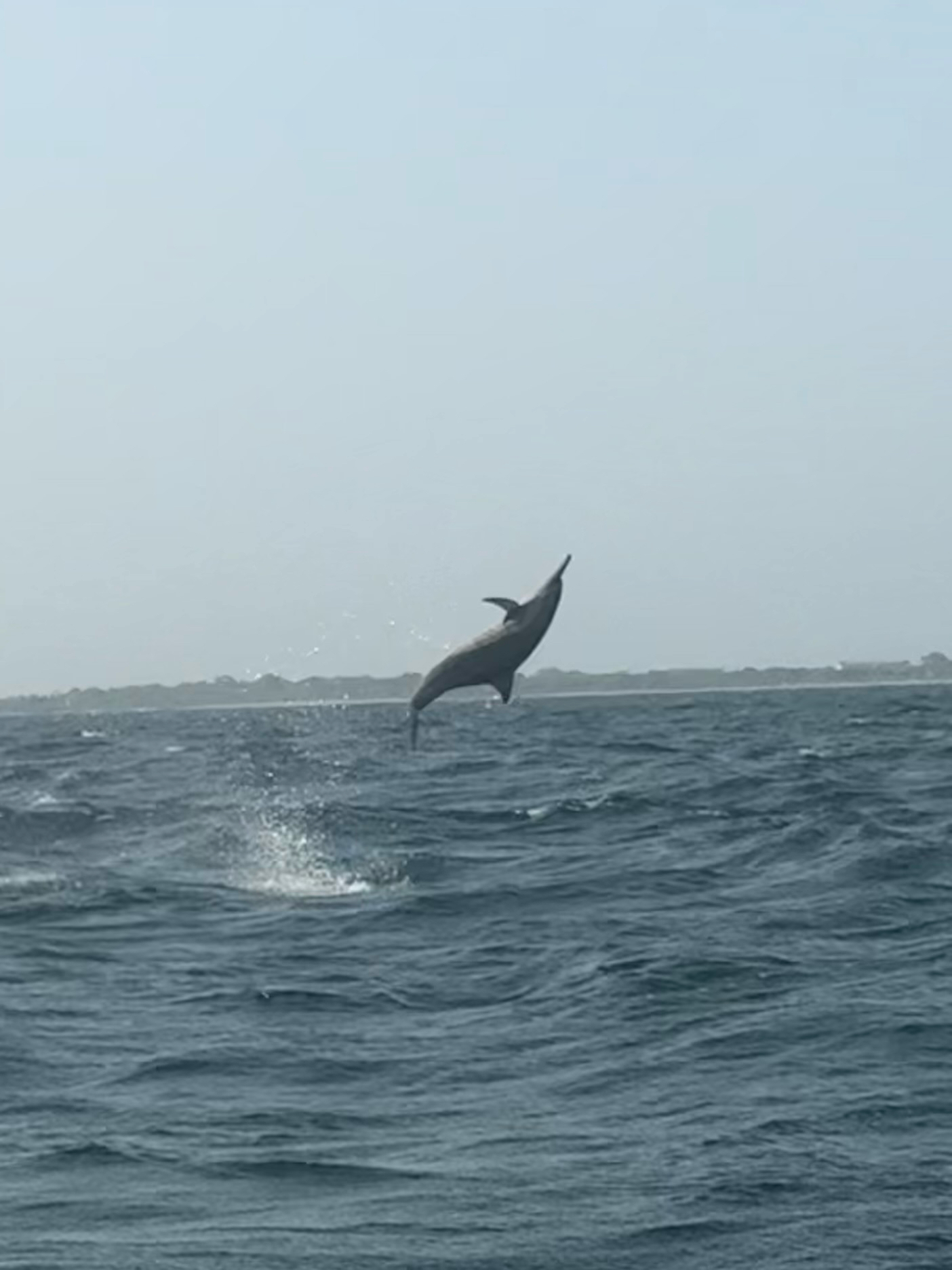
The spinning leap is the signature of the species: the dolphin leaves the water head first and performs two to seven complete turns in the air, up to about three metres high. Swimming and rotation speed underwater determines how many turns can be achieved. Other delphinids, such as the Clymene dolphin, also spin about their longitudinal axis, but never with this regularity or this complexity. The functional hypotheses favoured by NOAA are acoustic signalling and communication, together with the dislodging of ectoparasites such as remoras.

Reproduction is slow. Gestation lasts about ten to eleven months, lactation one to two years, and the interval between two births is about three years, with no strict season. Females reach sexual maturity at around 4 to 7 years, males at around 7 to 10 years. The longevity commonly accepted is 20 to 25 years, with a few individuals exceeding 25 years.

Status and conservation

The IUCN assessment in force (Braulik & Reeves, published in 2018, assessment date 20 February 2018) classes Stenella longirostris as Least Concern (LC, version 3.1 criteria). The global population trend is given as unknown. The species was classed as Data Deficient (DD) in 2008 and 2012, and Lower Risk/conservation dependent (LR/cd) in 1996. The reclassification as LC rests on high abundance and a pantropical distribution, in the absence of evidence that the threats are significant across the range as a whole; the IUCN notes, however, that there is not enough information to rule out a global decline of 30% or more over three generations, which would warrant a classification as Vulnerable.

The most threatened subspecies is the eastern form, S. l. orientalis, classed as Vulnerable since 2012. Between 1960 and 1972, more than 4 million dolphins, mainly pantropical spotted dolphins and spinner dolphins, were killed in the purse-seine fishery targeting yellowfin tuna in the eastern tropical Pacific, fishermen deliberately encircling the dolphin groups in order to locate and catch the tuna. This mortality is reported to have reduced the eastern spinner population by 65%. Since the introduction by the IATTC (Inter-American Tropical Tuna Commission) of per-vessel mortality limits, declared catches have fallen to a few hundred individuals a year, but the subspecies is recovering only very slowly: a growth rate estimated at 1.1% per year in the early 2000s, not significantly different from zero.

Elsewhere, the main threats are bycatch in purse seines, gillnets and trawls, the species being both one of the most abundant and one of the most frequently caught; direct hunting (the Solomon Islands, with 214 individuals a year on average between 2000 and 2002, mainly for the teeth; drive hunting at Anakao, Madagascar); the use of the flesh as shark bait (Tanzania, the Philippines, Venezuela); shark nets; and disturbance of the resting areas by tourism. West of Hawaii, the abundance estimates for 2011 and 2012 were lower than those of all previous years, which suggests a possible long-term impact of tourism on the local population. NOAA also cites the ingestion of plastic debris, anthropogenic noise and disease (toxoplasmosis, morbillivirus).

The species is listed in Appendix II of CITES and in Annex II of the SPAW Protocol for the Caribbean. In the United States it is protected by the Marine Mammal Protection Act and the eastern stock is there declared “depleted”. In France it enjoys full protection: destruction, capture, mutilation and intentional disturbance, including pursuit and harassment, are prohibited, on pain of three years' imprisonment and a fine of €150,000.

Watching this species

For a French-speaking observer, the best opportunities lie overseas. At La Réunion, the small resident population of about 210 individuals rests in the morning on the west coast, towards Saint-Gilles, before moving offshore in the early afternoon: morning trips are therefore the most favourable. At Mayotte and in French Polynesia the species enters the lagoons regularly, a behaviour unique among the dolphins of those waters. In the French Antilles it is among the species seen within the Agoa Sanctuary. Groups can be picked out from a distance by their repeated spinning leaps and bursts of spray; the animals readily come to bow-ride.

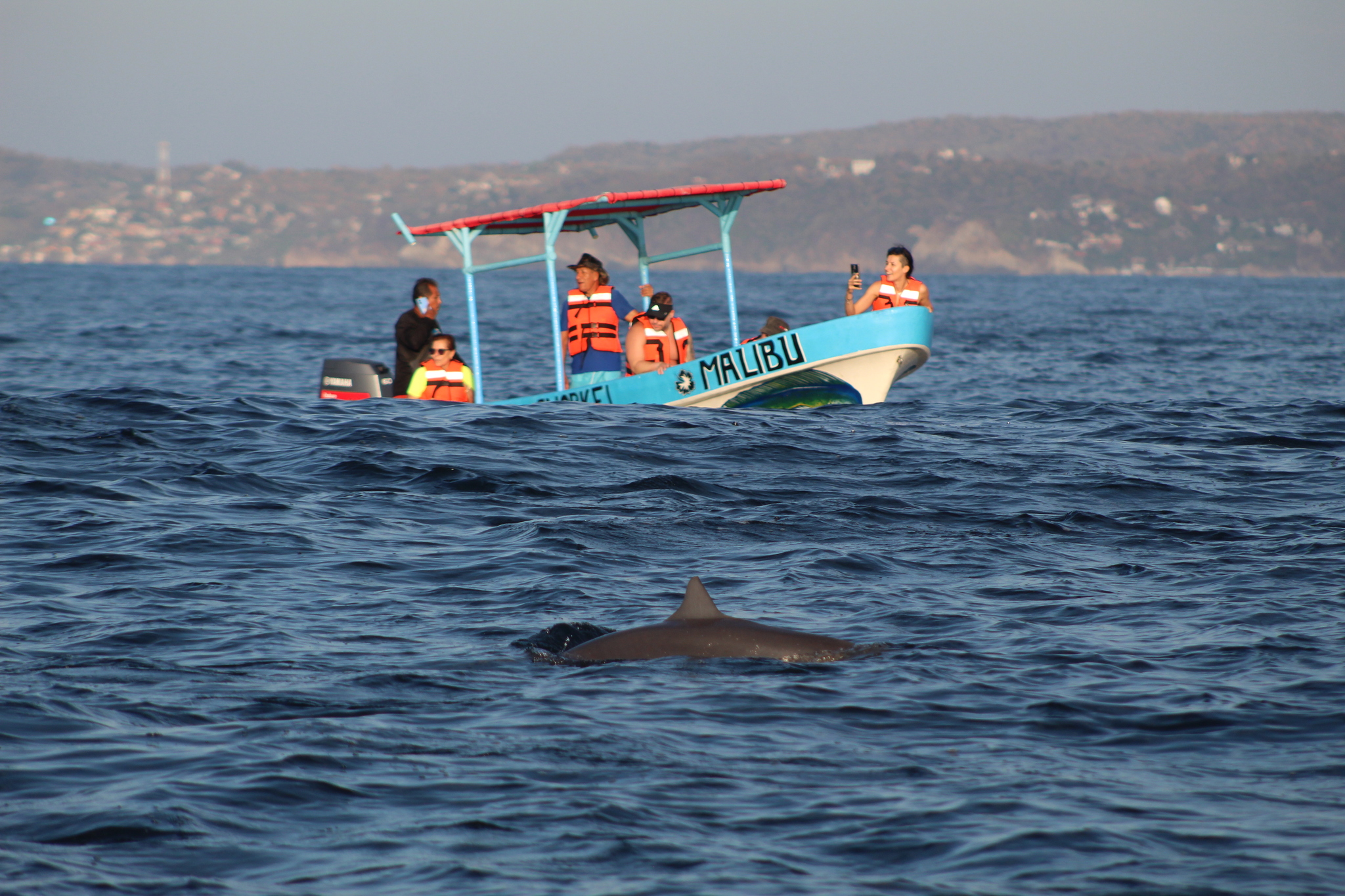
The ethical issue is particularly acute here, because the areas where the species is most easily watched are precisely its daytime resting grounds. Disturbance diverts the animals from vital activities and constitutes a documented threat: NOAA reports up to thirteen boats surrounding one and the same group at once and more than sixty swimmers in the water. In Hawaii, a federal regulation in force since 2021 prohibits swimming with spinner dolphins, approaching them or remaining within 50 yards (about 46 m) of them inside the 2 nautical miles around the main islands, with a proposed federal rule (published on 28 September 2021) providing for time-area closures, from 6 am to 3 pm, in five essential resting bays: Kealakekua, Hōnaunau, Kauhakō and Makako (island of Hawaii) and La Perouse Bay (Maui). In the Red Sea, the Samadai reef in Egypt is subject to a limit on visitor numbers. The common-sense rule holds everywhere: never cut across the path of a group, do not enter the water over a resting area, limit the length of the approach and let the animals decide on contact.

Frequently asked questions

Why does the spinner dolphin turn about its own axis when it leaps?

It leaves the water head first and can string together two to seven complete turns in the air, up to about three metres high. The number of turns depends on its swimming and rotation speed underwater just before it breaks the surface. The hypotheses favoured by NOAA are acoustic signalling and communication within the group, together with the dislodging of ectoparasites such as remoras. No single explanation commands consensus to date. Other delphinids, the Clymene dolphin in particular, also spin about their longitudinal axis, but markedly less regularly and less spectacularly.

Can the spinner dolphin be seen in metropolitan France?

No. The species is absent from the Mediterranean, as the IUCN states explicitly, as it is from the Bay of Biscay and the English Channel. The Office français de la biodiversité, on the other hand, records it as present throughout the overseas maritime areas, except Saint Pierre and Miquelon, the subantarctic islands of the TAAF and Adélie Land: La Réunion, Mayotte, the Antilles, French Guiana, New Caledonia, French Polynesia and Wallis and Futuna.

What exactly is its conservation status?

The species has been classed as Least Concern (LC) by the IUCN since the 2018 assessment, with a population trend given as unknown. It was previously Data Deficient (2008 and 2012). One caveat, however: the eastern subspecies of the eastern tropical Pacific, Stenella longirostris orientalis, has been classed as Vulnerable (VU) since 2012, its population having been reduced by about 65% by the tuna fishery and showing no clear sign of recovery.

How many spinner dolphins are left in the world?

There is no global estimate. The sum of the available regional estimates exceeds one million individuals, but the IUCN stresses that they cover only a small fraction of the range and that the actual number is in all likelihood far higher. A few benchmarks: about 613,000 eastern spinner dolphins in 2003, 801,000 white-bellied spinner dolphins in 2000 in the eastern tropical Pacific, 6,961 individuals in the Egyptian Red Sea, but only 631 around the island of Hawaii, about 210 at La Réunion and 135 at Moorea.

Is it permitted to swim with spinner dolphins?

That depends on the jurisdiction, but the trend is towards prohibition. In Hawaii, a federal rule of 2021 prohibits swimming with the species, approaching it or remaining within 50 yards (about 46 m) of it inside the 2 nautical miles around the main islands; a proposed rule published on 28 September 2021 further provides for the closure, from 6 am to 3 pm, of five essential resting bays (Kealakekua, Hōnaunau, Kauhakō and Makako on the island of Hawaii, and La Perouse Bay on Maui). In France, the species enjoys full protection: intentional disturbance, including pursuit and harassment, is punishable by three years' imprisonment and a fine of €150,000. The problem is made worse by the fact that the easy watching areas are its daytime resting grounds.

How can the spinner dolphin be told apart from the other Stenella?

Three criteria combine: an exceptionally long and fine rostrum continued by a tapering melon, a tripartite colour pattern (dark grey dorsal cape, light grey flanks, white belly) with a dark band from the eye to the flipper, and often large groups that repeat spinning leaps. The pantropical spotted dolphin has a shorter and thicker rostrum; the Clymene dolphin, a very close relative, also leaps with a spin but less often and less completely. In the eastern subspecies, adult males carry an erect dorsal fin, or one canted forward, and a pronounced post-anal hump, a silhouette that no other Stenella shows.

Why was tuna fishing so destructive for this species?

In the eastern tropical Pacific, spinner dolphins and pantropical spotted dolphins swim above the schools of yellowfin tuna. Fishermen therefore used the dolphins to locate the tuna, deliberately encircling them with purse seines. Between 1960 and 1972, more than 4 million dolphins were killed in this way. Since the introduction of per-vessel mortality limits by the IATTC, declared catches have fallen to a few hundred a year, but the eastern subspecies is recovering only at an estimated rate of 1.1% per year, not significantly different from zero.

Sources

Profile compiled from authoritative scientific sources (IUCN, NOAA Fisheries, specialist literature) and reviewed for factual accuracy.

Observed distribution

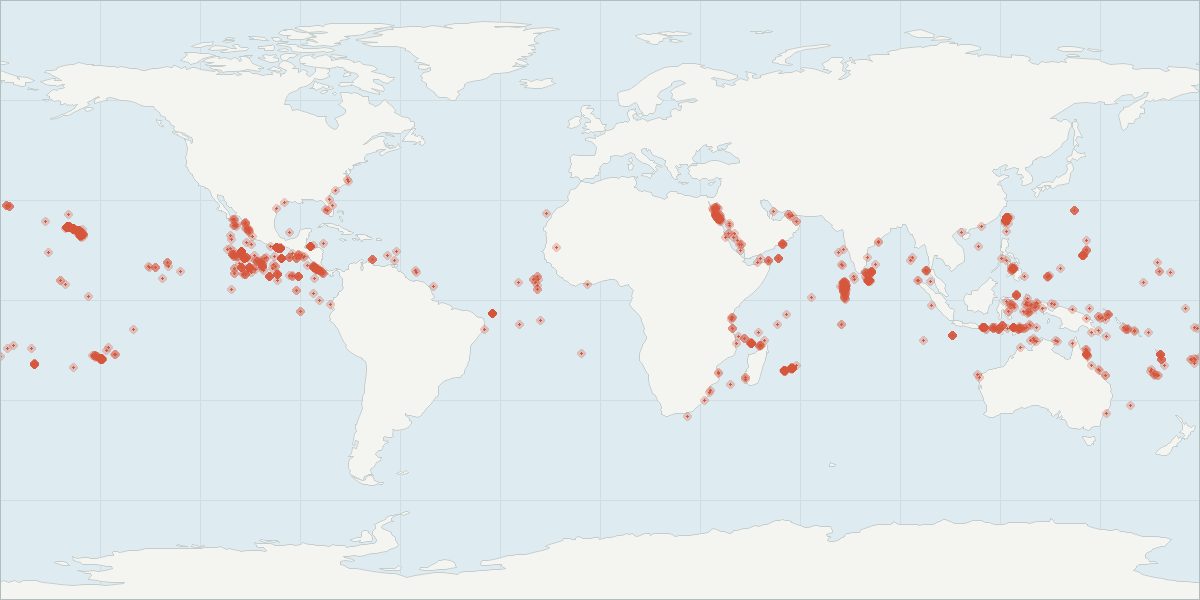
According to the open data of the GBIF, 2,443 georeferenced sightings of Stenella longirostris are recorded in our photographic index.

Main countries of observation
CountryNotes
United States of America834
Chinese Taipei208
Mexico187
Indonesia148
Sri Lanka106
Egypt106
Maldives85
French Polynesia73
Brazil49
Mauritius47

Distribution map: Spinner dolphin (Stenella longirostris)

Distribution map: Spinner dolphin (Stenella longirostris), 2,443 georeferenced sightings from GBIF
2,443 georeferenced sightings of Stenella longirostris. Base map Natural Earth, public domain. GBIF data.
🗺️ Open the interactive mapTo zoom and pan. It uses the OpenStreetMap/CARTO base maps and the GBIF occurrence densities: no data is sent to these services before you click.

Presence through the year

Monthly distribution of 2,489 dated sightings (all years combined): the maximum is reached in avril.

2960janvier : 173janfévrier : 160febmars : 277maravril : 296avrmai : 150maijuin : 153juinjuillet : 210juilaoût : 281Augustseptembre : 209sepoctobre : 193octnovembre : 198novdécembre : 189dec
Sightings by month
MonthNotes
janvier173
February160
mars277
avril296
mai150
juin153
juillet210
August281
septembre209
octobre193
novembre198
December189

These figures reflect survey effort (more boaters and more surveys in summer) as much as the actual presence of the species: to be interpreted with caution.

En images

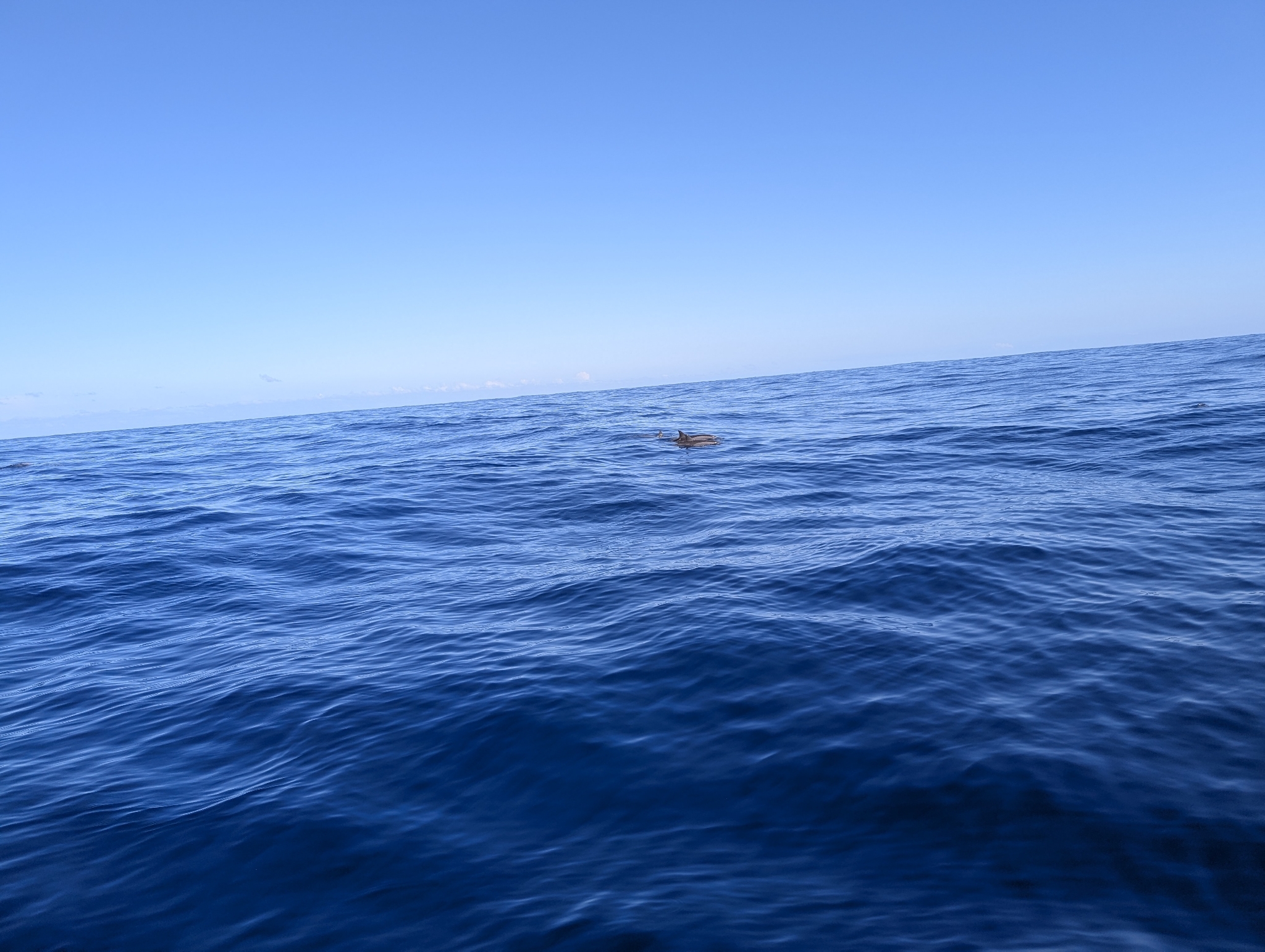
Stenella longirostris
© M Fontana (M), CC BY-NC, 2026
Stenella longirostris
© bubo_z, CC BY-NC, 2026
Stenella longirostris
© myw9717, CC BY-NC, 2026
Stenella longirostris
© phillscott, CC BY-NC, 2026
Stenella longirostris
© ivanmirandaf, CC BY-NC, 2026
Stenella longirostris
© Heather, CC BY-NC, 2026
Stenella longirostris
© ivanmirandaf, CC BY-NC, 2026
Stenella longirostris
© Kristopher Kusnerik, CC BY-NC, 2026
Stenella longirostris
© patfarrar, CC BY-NC, 2026
Stenella longirostris
© ivanmirandaf, CC BY-NC, 2026
Stenella longirostris
© afahawkins, CC BY-NC, 2026
Stenella longirostris
© twilightecologist, CC BY-NC, 2026

Photographs from GBIF under a Creative Commons licence. The author and the licence of each photograph are given; please respect them if you reuse them.

Scientific references

  1. Migaki G., Sawa T., Dubey J. (1990) Fatal Disseminated Toxoplasmosis in a Spinner Dolphin ( Stenella longirostris ), Veterinary Pathology
  2. Psarakos S., Herzing D., Marten K. (2003) Mixed-species associations between Pantropical spotted dolphins (Stenella attenuata) and Hawaiian spinner dolphins (Stenella longirostris) off Oahu, Hawaii, Aquatic Mammals
  3. Perrin W. (1998) Stenella longirostris, Mammalian Species
  4. Fielding R., Evans D. (2014) Mercury in Caribbean dolphins (Stenella longirostris and Stenella frontalis) caught for human consumption off St. Vincent, West Indies, Marine Pollution Bulletin
  5. Stack S., Olson G., Neamtu V., Machernis A. et al. (2020) Identifying spinner dolphin Stenella longirostris longirostris movement and behavioral patterns to inform conservation strategies in Maui Nui, Hawai‘i, Marine Ecology Progress Series
  6. Perrin W., Miyazaki N., Kasuya T. (1989) A DWARF FORM OF THE SPINNER DOLPHIN (STENELLA LONGIROSTRIS) FROM THAILAND, Marine Mammal Science
  7. Gruden P., White P., Oswald J., Barkley Y. et al. (2015) Differences in oscillatory whistles produced by spinner (Stenella longirostris) and pantropical spotted (Stenella attenuata) dolphins, Marine Mammal Science
  8. Rio R. (2023) First acoustic evidence of signature whistle production by spinner dolphins (Stenella longirostris), Animal Cognition

Automatic selection of the most cited works mentioning the species (source: Crossref).