Atlantic white-sided dolphin (Leucopleurus acutus)

Key facts
Scientific name Leucopleurus acutus (J. E. Gray, 1828). Synonym still widely used: Lagenorhynchus acutus.
Other names Atlantic white-sided dolphin, jumper, squidhound; in French lagénorhynque à flancs blancs de l’Atlantique, dauphin à flancs blancs, “sauteur” and “cochon de mer” (Quebec); delfín de flancos blancos (Spanish).
Size 1.90 to 2.80 m; mean length about 2.50 m. Males exceed females by 20 to 30 cm (females rarely beyond 2.50 m). Maximum recorded: 2.98 m in the Faroese catches of 1996-2023. Newborn: about 1.10 m (1.00 to 1.30 m).
Weight Adults: about 165 to 230 kg (some sources give up to 250 kg); maximum weight measured in the Faroe Islands: 236 kg. Newborn: 25 to 35 kg.
Longevity Up to 22 years in males and 27 years in females.
Diet Schooling pelagic and demersal fish: Atlantic herring (above all in summer), blue whiting, mackerel, gadids (cod, haddock), hakes and sand eels, supplemented by squid and octopus. An opportunistic diet, varying with region and season.
IUCN status Least Concern (LC). Global assessment of 2019 (G. Braulik, IUCN Red List e.T11141A50361160); the regional assessment for Europe also concludes “Least Concern”. No subpopulation is assessed separately, and no global population trend has been established.

In brief

The Atlantic white-sided dolphin is a stocky, fast and highly gregarious delphinid, endemic to the cold temperate and subpolar waters of the North Atlantic. It is recognised unambiguously by the white patch extended by a long ochre-yellow streak that runs along the rear of its flanks, below and behind a tall, pointed dorsal fin, a pattern unique in the region. Abundant over the continental shelves, from Iceland to the Gulf of Maine, it is listed as “Least Concern” by the IUCN, despite hunting still practised in the Faroe Islands and Greenland.

Identification

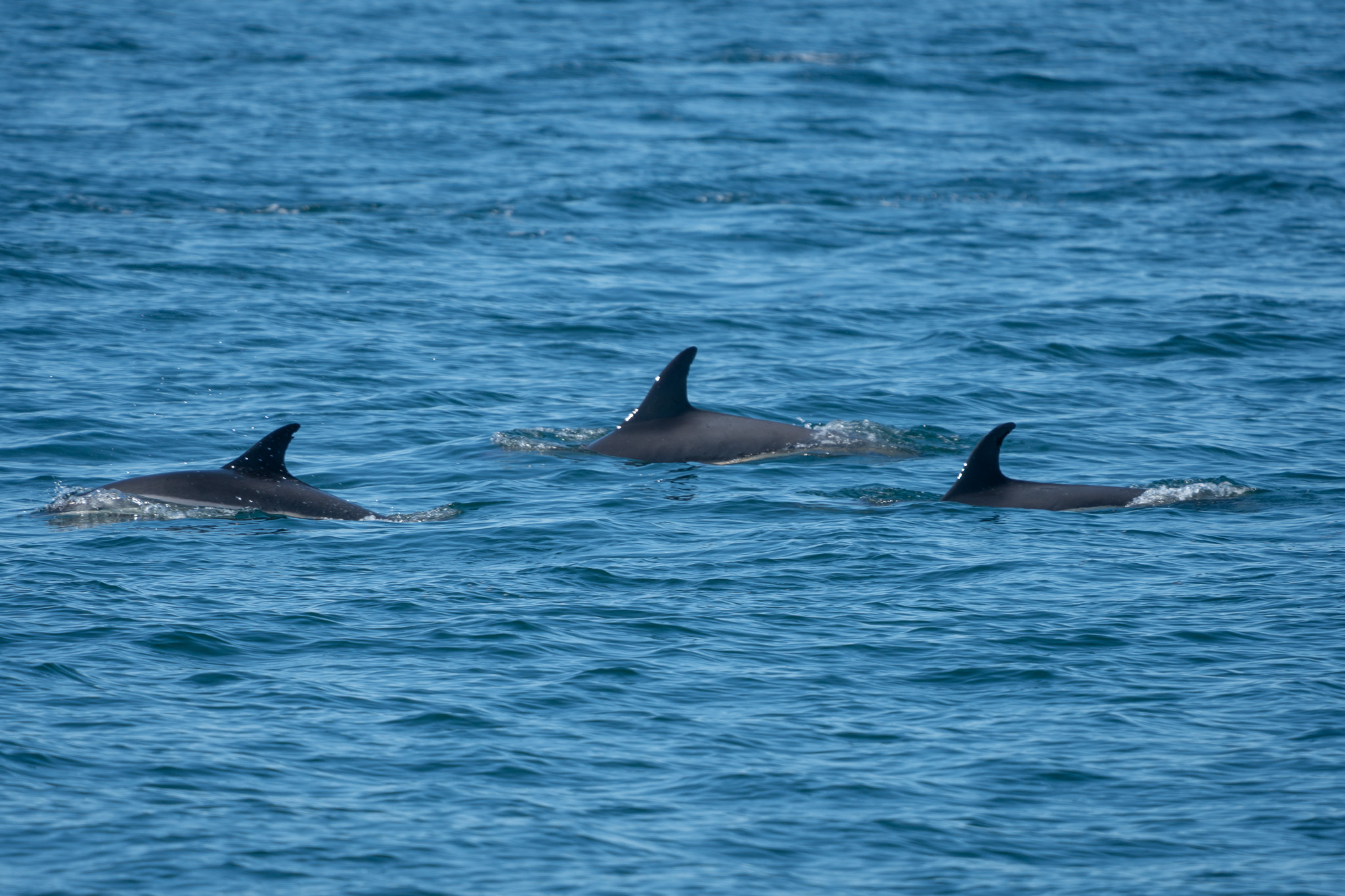
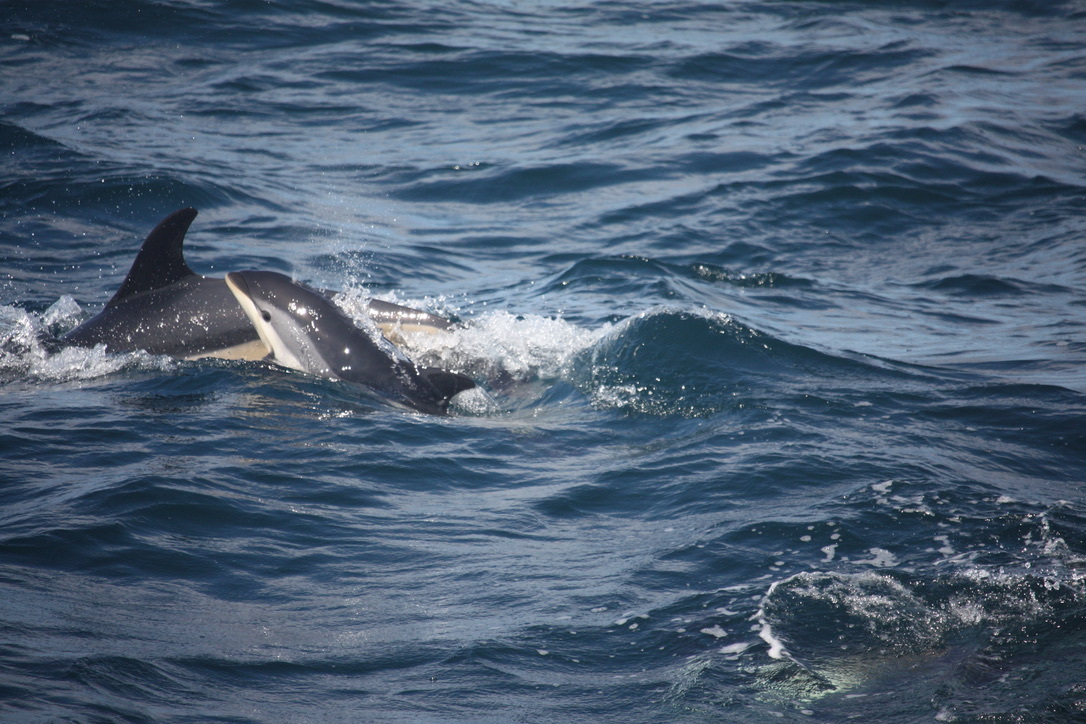
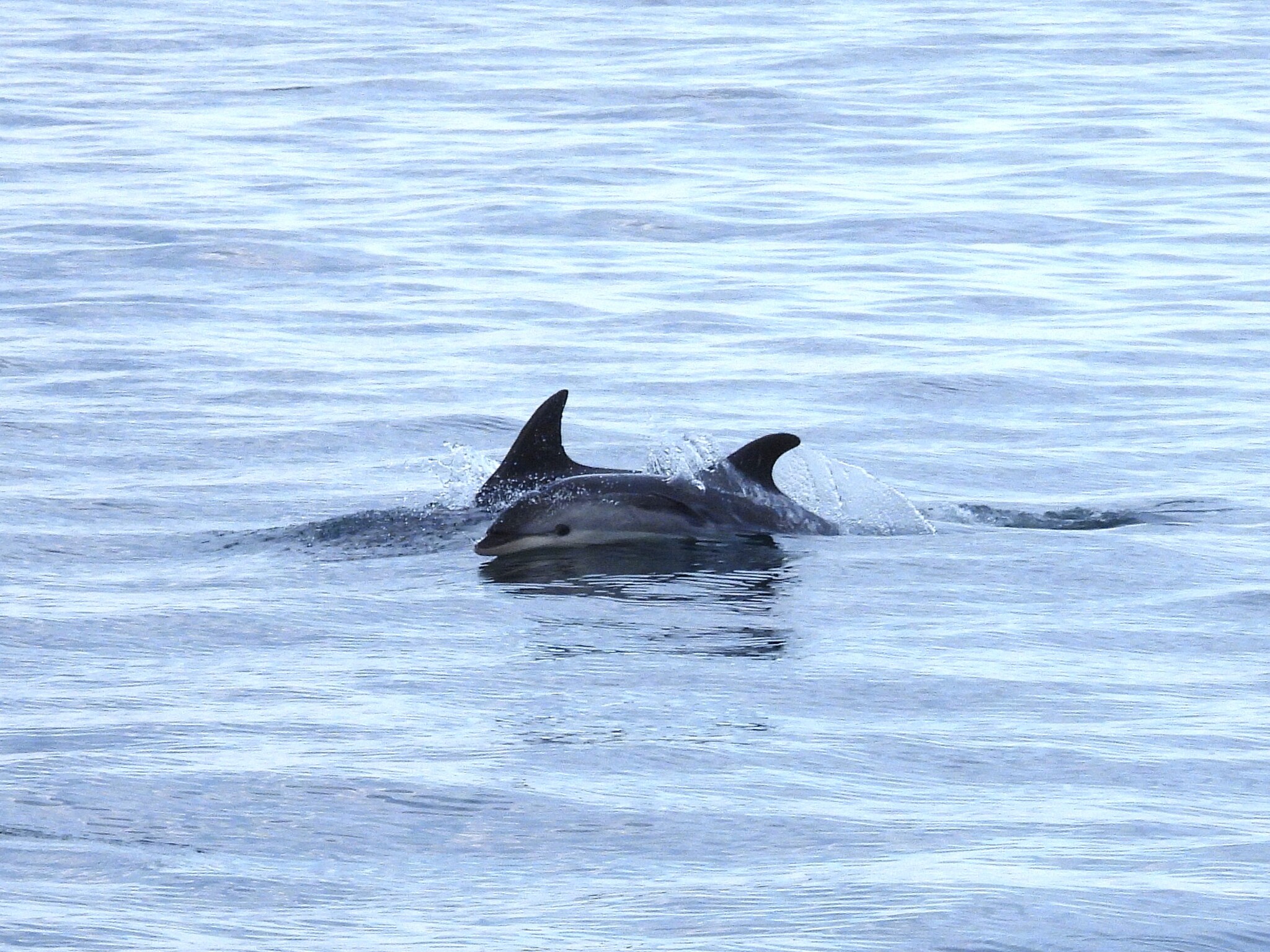
The Atlantic white-sided dolphin is a stocky, muscular delphinid, with an outline distinctly more massive than that of a common dolphin. The beak is short but well set off from the melon, black above and pale on the lower jaw. The dorsal fin, set at the middle of the back, is tall, markedly falcate and pointed, and can reach some fifty centimetres; the flippers, triangular, measure up to about thirty centimetres. Each jaw carries 29 to 40 pairs of small conical teeth. The tail stock is thick and laterally compressed, which gives the animal a very compact look when it leaps.

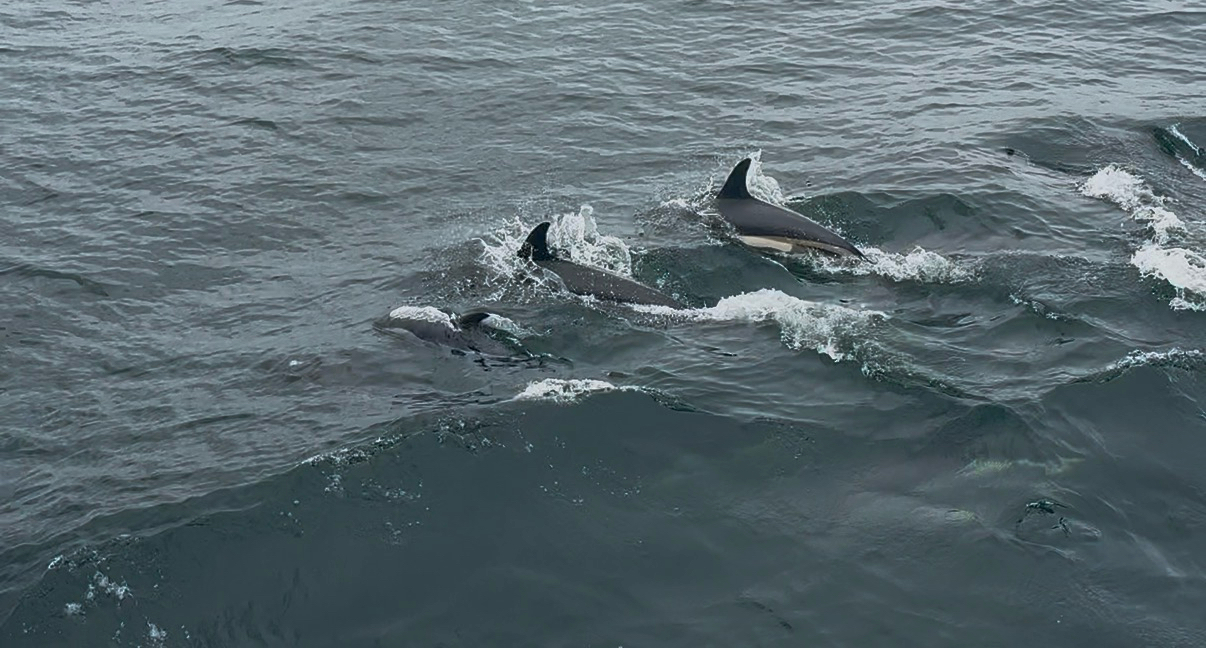
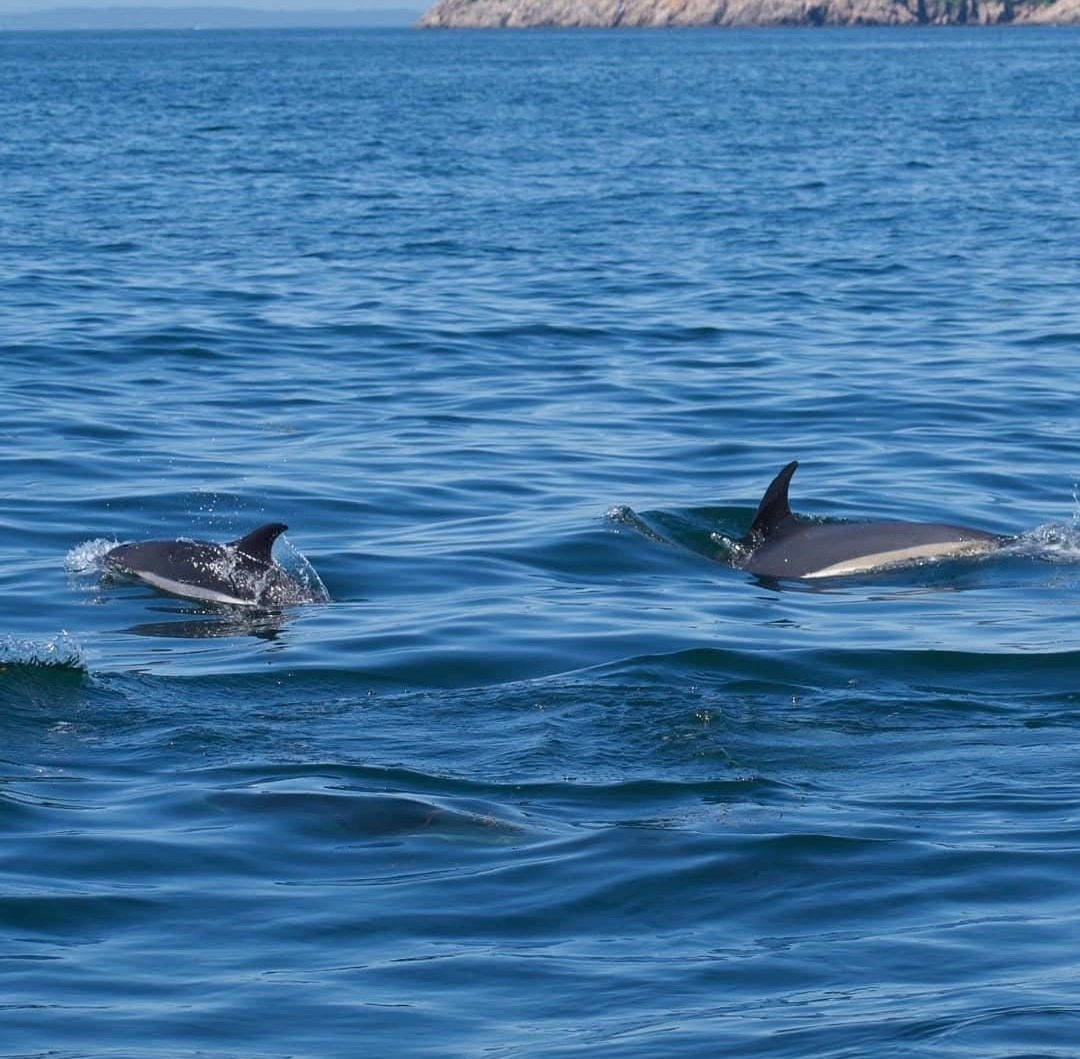
It is the coloration that marks out the species. The back carries a dark grey to black cape, the flanks are pale grey, and the belly, throat and chin are white. Below and just behind the dorsal fin appears a sharply outlined oval white patch, extended rearwards by a long ochre-yellow to straw-yellow streak that runs as far as the tail stock. No other cetacean of the North Atlantic shows this yellow streak: when it is visible, identification is settled. A fine, lighter grey line also runs from the beak to the tail stock, passing above the eye.

Confusion is common at sea, above all at a distance or in a rough sea. The main look-alike is the white-beaked dolphin (Lagenorhynchus albirostris), which shares the same range: it is more massive, its beak is often pale, and it carries a pale grey or whitish area behind the dorsal fin, but never yellow, as well as a dorsal fin with a broader base. The common dolphin (Delphinus delphis) is smaller and more slender, with an hourglass pattern whose ochre panel lies forward of the dorsal fin and not behind it. Beware too of misleading vernacular names: the “Pacific white-sided dolphin” (Sagmatias obliquidens, long named Lagenorhynchus obliquidens), also called Gill’s dolphin, is a distinct species, confined to the North Pacific.

Taxonomy

Described by the British zoologist John Edward Gray in 1828 under the name Delphinus (Grampus) acutus, the species owes its epithet to the Latin acutus, “pointed”, in reference to its tapering dorsal fin. It was long placed in the genus Lagenorhynchus, alongside the white-beaked dolphin and several southern dolphins. Molecular analyses have however repeatedly shown this genus to be artificial: the taxonomic revision by Vollmer and colleagues (2019), then the phylogenomic, morphological and acoustic data published by Galatius and colleagues (2025), led to the species being transferred to the monotypic genus Leucopleurus. The Mammal Diversity Database today retains Leucopleurus acutus, while noting that some datasets give conflicting signals and that the case warrants further work. Several administrations, among them NOAA Fisheries in its 2021 stock assessment report, have continued to use Lagenorhynchus acutus pending a broader consensus: the two binomials do designate the same animal. No subspecies is recognised. Family: Delphinidae.

Distribution and habitat

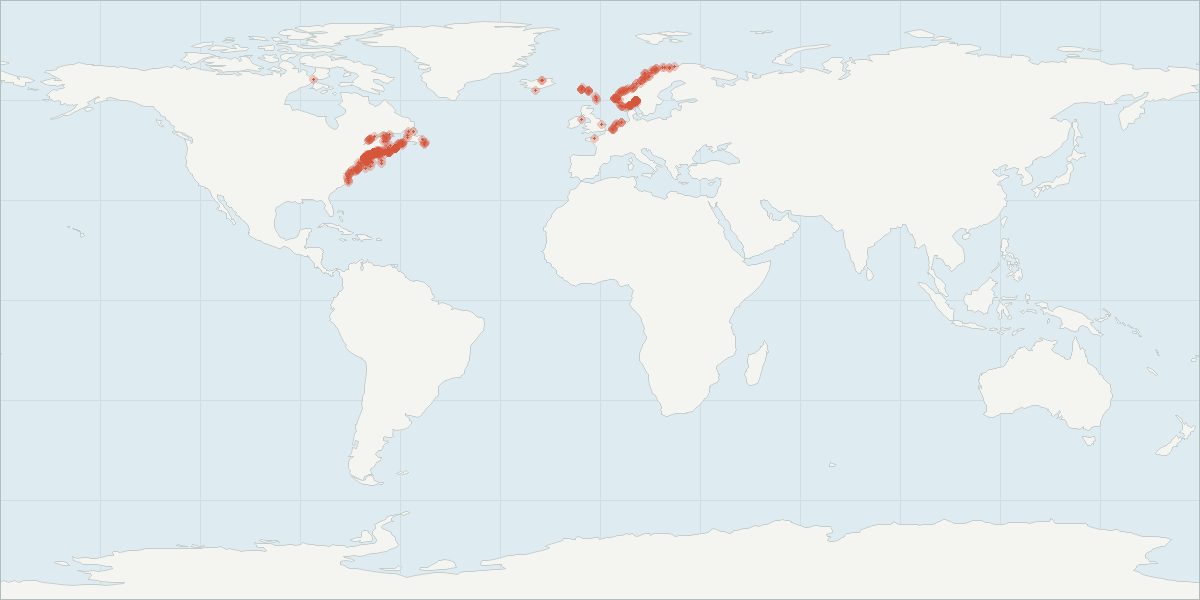
The species is endemic to the cold temperate and subpolar North Atlantic, roughly between 38° and 80° north. In the west, it occupies the waters running from western and southern Greenland to Cape Cod, with occasional sightings further south, as far as Virginia and the Carolinas. In the east, it frequents the waters enclosed by eastern Greenland, Iceland, the Faroe Islands, the Norwegian Sea, western and northern Scotland, Ireland, the northern North Sea and the Celtic Sea.

The Atlantic white-sided dolphin is above all an animal of the continental shelf and its slope: it concentrates around the 100 m isobath and along shelf breaks, in waters generally below 12 °C, colder and slightly less saline than those sought by the common dolphin. The known areas of high density are the Gulf of Maine and the Bay of Fundy, the Gulf of St Lawrence, western Scotland and the Faroe-Shetland Channel, together with the broad triangle enclosed by Iceland, Greenland and the British Isles. The species does not undertake a strict seasonal migration: it moves within its home range following its prey, with southward movements in winter and spring along the North American coast. Individuals fitted with satellite tags have covered more than 300 km in 64 hours.

In France, the species is at the southern limit of its range: NAMMCO places the southern edge of its regular distribution off Brittany. It is reported in the English Channel and along the Atlantic seaboard, as far as the Bay of Biscay, but sightings and strandings there remain rare and very irregular from one year to the next, to the point that recent annual reports of the Réseau national échouages make no mention of it. It is on the other hand far more regular in the waters of Saint-Pierre-et-Miquelon. It is not part of the Mediterranean fauna, the southernmost known sightings lying in the vicinity of the Strait of Gibraltar.

Biology and ecology

An opportunistic hunter, the Atlantic white-sided dolphin exploits shoals of shelf fish. In the north-eastern Atlantic, herring, blue whiting and mackerel dominate; in American waters, analysis of stomach contents has brought out silver hake, the octopus Bathypolypus bairdii and haddock, herring becoming the main prey in summer and almost disappearing from the diet in winter. Groups hunt cooperatively near the surface; dives most often last less than five minutes and the species exploits the water column down to about a hundred metres.

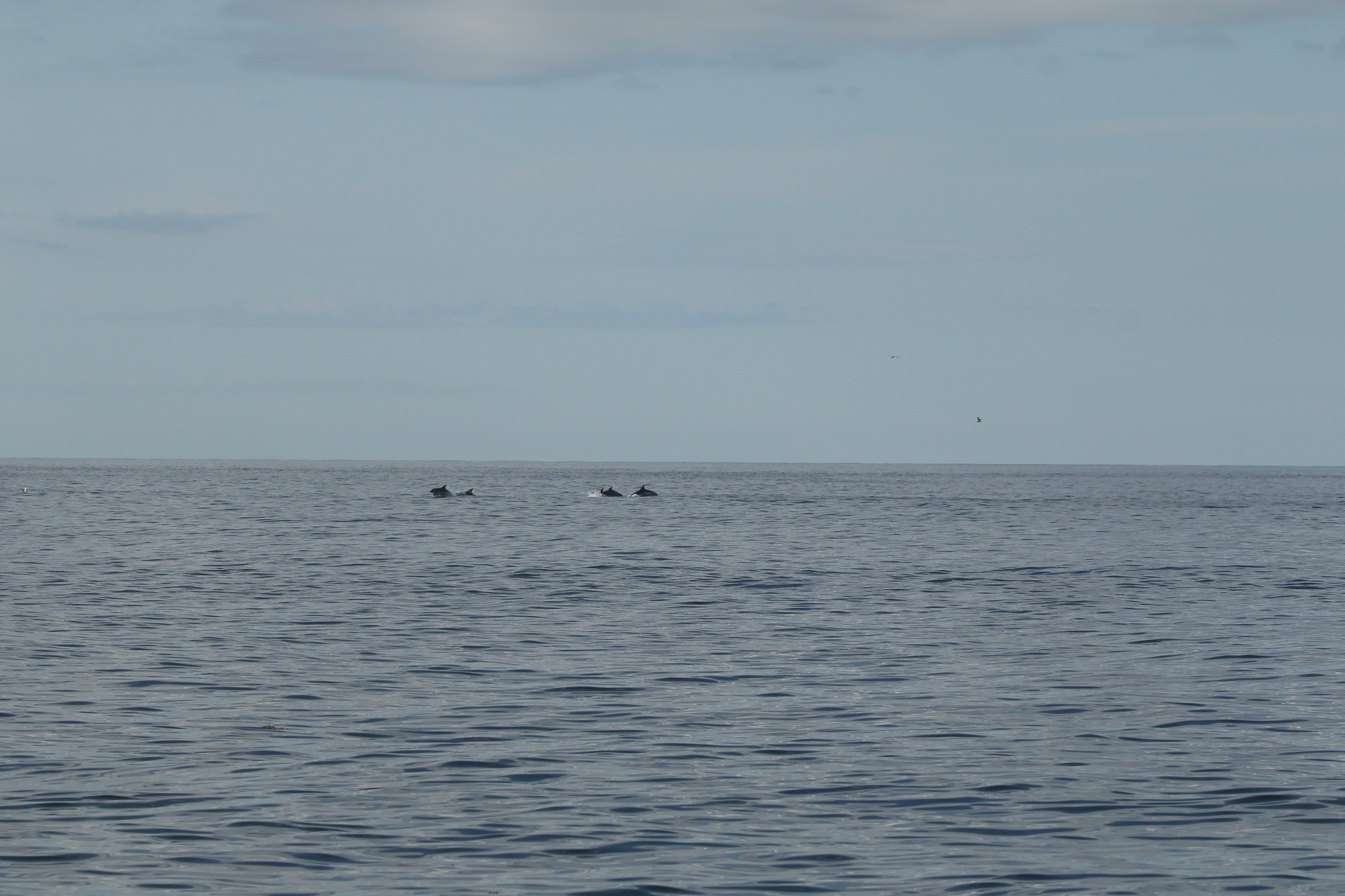
Highly gregarious, this dolphin is generally encountered in groups of five to some fifty individuals, but gatherings of several hundred, or even a thousand animals, are not rare where prey is abundant. Social organisation is of the fission-fusion type, group composition changing frequently, and the members of a single group are not necessarily related. The acoustic repertoire combines whistles, echolocation clicks and buzzes. The animal is fast, with bursts of the order of 35 km/h attributed to it, decidedly acrobatic, and it readily approaches the bow of fast vessels. Its natural predators are the killer whale and large sharks.

Breeding follows a well marked calendar. Gestation lasts 10 to 12 months, most often cited at around eleven months; births are spread from May to August with a clear peak in June and July. The newborn measures about 1.10 m for 25 to 35 kg and lactation continues to about eighteen months. Females give birth every two to three years. Sexual maturity is reached at about 6 to 12 years in females (at a length of 201 to 222 cm) and at about 7 to 11 years in males (215 to 230 cm). The maximum known lifespan is 22 years in males and 27 years in females.

The Atlantic white-sided dolphin is, finally, one of the cetaceans most prone to mass strandings, which involve above all females, young animals and immature males, on gently shelving shores. The hook of Cape Cod, in Massachusetts, is a global black spot for this, owing to its dead-end geometry and to tidal ranges among the largest on the American east coast. In late June 2024, 146 individuals stranded there at Wellfleet: this is the largest mass stranding of dolphins ever recorded in the United States, and about a hundred animals could be returned to the water alive.

Status and conservation

The species is listed as “Least Concern” (LC) on the global IUCN Red List, in an assessment carried out in 2019, and the same status emerges from the European regional assessment. This listing rests on a wide distribution and high numbers: about 93,233 individuals (CV = 0.71) for the North-West Atlantic stock in the 2016 surveys, 131,022 individuals (CV = 0.73) in the central North Atlantic in the NASS survey of 2015, and a total probably above 200,000 animals east of Greenland according to NAMMCO. On the European side, the SCANS surveys gave 15,510 individuals (CV = 0.72) in 2016, then 3,504 (CV = 0.46) in 2022; this apparent fall is explained above all by the fact that a high-density sector west of Scotland was not covered in 2022, and not by a demonstrated collapse.

Direct hunting remains the most visible pressure. In the Faroe Islands, the species is taken during the traditional drive hunts (grindadráp), with extremely variable catches: nil in some years, 773 in 2002, 488 in 2017, then an exceptional kill of 1,423 animals in September 2021, the largest ever recorded in the archipelago. Faced with the feeling this aroused, the Faroese Ministry of Fisheries set a provisional ceiling of 500 individuals a year for 2022 and 2023, pending an opinion from the NAMMCO scientific committee; that commission’s working group concluded in 2023 that takes of up to 750 animals a year would remain sustainable. Catches declared since have stayed modest (0 in 2022, 10 in 2023, 150 in 2024, 53 in 2025). Greenland also takes more than a hundred a year (155 in 2023, 172 in 2024).

Bycatch is the second pressure: the species becomes entangled in pelagic trawls and driftnets, in particular in Canada, the United States, Ireland and the United Kingdom. In American waters, mean annual fishery-related mortality was estimated at 27 individuals over the period 2015-2019, well below the potential biological removal calculated at 544. To these are added chemical contamination, the species being among the cetaceans most heavily laden with PCBs, DDT, DDE, PBDEs and cadmium, underwater noise (the sighting rate falls when seismic airguns are firing) and the redistribution of prey linked to warming waters.

On the regulatory side, the Atlantic white-sided dolphin is listed in Appendix II of CITES and in Appendix II of the Convention on Migratory Species (North Sea and Baltic populations), and falls under the ASCOBANS agreement. In the United States, it is protected by the Marine Mammal Protection Act without being listed under the Endangered Species Act. In France, it is among the protected marine mammals: capture, intentional disturbance and killing are prohibited, and bycatch must be reported.

Watching this species

The best chances of a sighting lie far from the French coast: Iceland, the Faroe Islands, Norway, northern and western Scotland (the Hebrides, the Faroe-Shetland Channel), offshore Ireland. In North America, the Gulf of Maine and the Bay of Fundy from June to October, together with the Gulf of St Lawrence, offer regular encounters from watching trips. In mainland France, the species is an exception: a few reports in the English Channel and in the Bay of Biscay, most often offshore, from ferries or during scientific surveys.

At sea, the most reliable clue is behaviour: a very active group, leaping often and swimming fast, whose tall pointed dorsal fin stands out against the surface. The next thing to look for is the sequence white patch then ochre-yellow streak at the rear of the flank, the only criterion that definitively rules out the white-beaked dolphin; in poor light, photography is often needed to settle the matter, since the yellow tone can appear greyish against the light.

The approach must remain respectful: keep a distance of the order of 100 metres, never cut across the path of a group or split it, hold a steady speed and course, limit the length of the observation and always leave the initiative for coming closer to the animals. In France, any stranded animal, alive or dead, must be reported to the Réseau national échouages coordinated by Observatoire Pelagis, with no handling by the public: mass strandings of this species call for trained teams.

Frequently asked questions

Why does one read sometimes Lagenorhynchus acutus, sometimes Leucopleurus acutus?

It is the same animal. The species was long placed in the genus Lagenorhynchus, but genetics showed that this genus brought together unrelated dolphins. The revision by Vollmer and colleagues (2019), confirmed by the phylogenomic work of Galatius and colleagues (2025), transferred it to the genus Leucopleurus, of which it is the only species. Some institutions, such as NOAA Fisheries in its 2021 stock report, have kept the old name pending a broader consensus.

How can it be told apart from the white-beaked dolphin, with which it shares its range?

The decisive criterion is the ochre-yellow streak that extends the white patch on the flanks, behind the dorsal fin: it occurs only in the Atlantic white-sided dolphin. The white-beaked dolphin is also more massive, its beak is often pale and its rear marking is grey or whitish, never yellow.

Can it be watched from the French coast?

Only with great difficulty. France lies at the southern limit of its regular range, which NAMMCO places off Brittany. The species is reported in the English Channel and in the Bay of Biscay, but rarely and irregularly. It is far more frequent in the waters of Saint-Pierre-et-Miquelon, and absent from the Mediterranean.

Is the species threatened?

No, by the current criteria: it has been listed as “Least Concern” by the IUCN since the assessment of 2019, with numbers running into hundreds of thousands of individuals across the North Atlantic. It is nevertheless subject to direct hunting in the Faroe Islands and Greenland, to bycatch in pelagic trawls, to heavy contamination by persistent organic pollutants and cadmium, and to acoustic disturbance.

Why does it strand so often in groups?

It is a shelf species, highly gregarious and strongly cohesive: when one individual commits itself to a trapping bay, the whole group follows. Hook-shaped sites with a large tidal range and muddy bottoms, such as Wellfleet on Cape Cod, also disturb echolocation. The stranding of 146 individuals that occurred at that spot in late June 2024 is the largest ever recorded in the United States; about a hundred animals were saved there.

What size does it reach and how long does it live?

Adults measure 1.90 to 2.80 m for about 165 to 230 kg, with a record of 2.98 m and 236 kg recorded in the Faroese catches. Males live up to 22 years and females up to 27 years.

At what age does it breed?

Females reach sexual maturity at about 6 to 12 years, at a length of 201 to 222 cm, and males at about 7 to 11 years, at 215 to 230 cm. Gestation lasts 10 to 12 months, births are concentrated in June and July, and females give birth every two to three years.

Sources

Profile compiled from authoritative scientific sources (IUCN, NOAA Fisheries, specialist literature) and reviewed for factual accuracy.

Observed distribution

According to the open data of the GBIF, 668 georeferenced sightings of Lagenorhynchus acutus are recorded in our photographic index.

Main countries of observation
CountryNotes
United States of America539
Canada175
Norway128
unknown or invalid14
Faroe Islands14
Netherlands11
United Kingdom of Great Britain and Northern Ireland8
Iceland3
Sweden3
France1

Distribution map: Atlantic white-sided dolphin (Lagenorhynchus acutus)

Distribution map: Atlantic white-sided dolphin (Lagenorhynchus acutus), 668 georeferenced sightings from GBIF
668 georeferenced sightings of Lagenorhynchus acutus. Base map Natural Earth, public domain. GBIF data.
🗺️ Open the interactive mapTo zoom and pan. It uses the OpenStreetMap/CARTO base maps and the GBIF occurrence densities: no data is sent to these services before you click.

Presence through the year

Monthly distribution of 748 dated sightings (all years combined): the maximum is reached in August.

2090janvier : 11janfévrier : 13febmars : 21maravril : 30avrmai : 80maijuin : 37juinjuillet : 122juilaoût : 209Augustseptembre : 160sepoctobre : 27octnovembre : 32novdécembre : 6dec
Sightings by month
MonthNotes
janvier11
February13
mars21
avril30
mai80
juin37
juillet122
August209
septembre160
octobre27
novembre32
December6

These figures reflect survey effort (more boaters and more surveys in summer) as much as the actual presence of the species: to be interpreted with caution.

En images

Lagenorhynchus acutus
© buizel42, CC BY-NC, 2026
Lagenorhynchus acutus
© mel_watson, CC BY-NC, 2026
Lagenorhynchus acutus
© Bradley Rasmussen, CC BY-NC, 2026
Lagenorhynchus acutus
© Chase Zobl, CC BY-NC, 2026
Lagenorhynchus acutus
© fuscus, CC BY-NC, 2026
Lagenorhynchus acutus
© Cindi Tanner, CC BY-NC, 2026
Lagenorhynchus acutus
© shark-platinum, CC BY-NC, 2026
Lagenorhynchus acutus
© Oliver W Patrick, CC BY-NC, 2026
Lagenorhynchus acutus
© J. Burke Korol, CC BY-NC, 2026
Lagenorhynchus acutus
© Randi Jepsen, CC BY-NC-SA, 2026
Lagenorhynchus acutus
© Julian Bell, licence spécifique, 2026
Lagenorhynchus acutus
© Randi Jepsen, CC BY-NC-SA, 2026

Photographs from GBIF under a Creative Commons licence. The author and the licence of each photograph are given; please respect them if you reuse them.

Scientific references

  1. Rogan E., Baker J., Jepson P., Berrow S. et al. (1997) A mass stranding of white‐sided dolphins ( Lagenorhynchus acutus ) in Ireland: biological and pathological studies, Journal of Zoology
  2. Schick L., IJsseldijk L., Grilo M., Lakemeyer J. et al. (2020) Pathological Findings in White-Beaked Dolphins (Lagenorhynchus albirostris) and Atlantic White-Sided Dolphins (Lagenorhynchus acutus) From the South-Eastern North Sea, Frontiers in Veterinary Science
  3. Ewing R., Zaias J., Stamper M., Bossart G. et al. (2002) PREVALENCE OF SARCOCYSTIS SP. IN STRANDED ATLANTIC WHITE-SIDED DOLPHINS (LAGENORHYNCHUS ACUTUS), Journal of Wildlife Diseases
  4. Gaskin D. (1992) Status of the Atlantic White-sided Dolphin, Lagenorhynchus acutus, in Canada, The Canadian field-naturalist
  5. Wilson J., Moore M., Stegeman J. (2010) Catalytic and immunochemical detection of hepatic and extrahepatic microsomal cytochrome P450 1A1 (CYP1A1) in white-sided dolphin (Lagenorhynchus acutus), Aquatic Toxicology
  6. Simard P., Gowans S. (2004) Two Calves in Echelon: An Alloparental Association in Atlantic White-Sided Dolphins (Lagenorhynchus acutus)?, Aquatic Mammals
  7. Larrat S. (2012) Short Note: Rake Marks on a Harbor Porpoise (Phocoena phocoena) Calf Suggestive of a Fatal Interaction with an Atlantic White-Sided Dolphin (Lagenorhynchus acutus), Aquatic Mammals
  8. Schevill W. (1956) Lagenorhynchus acutus off Cape Cod, Journal of Mammalogy

Automatic selection of the most cited works mentioning the species (source: Crossref).