| Scientific name | Lissodelphis borealis (Peale, 1848) |
|---|---|
| Other names | Dauphin du Nord, lissodelphe boréal, dauphin aptère du Pacifique Nord (French); northern right whale dolphin (English); delfín liso boreal, delfín franco boreal (Spanish). |
| Size | 2 to 3 m; males average about 2.4 m and exceptionally reach 3.0 to 3.1 m, females about 2.1 m and rarely exceed 2.3 m. |
| Weight | About 60 to 115 kg depending on size and sex; adults most often lie between 60 and 100 kg. |
| Longevity | About 42 years. |
| Diet | Fish, mostly mesopelagic, largely dominant: about 89% of stomach contents in the few stomachs analysed (n = 2, Chou et al. 1995), of which close to 89% lanternfish (Myctophidae), supplemented by Pacific hake and Pacific saury; cephalopods, mainly squid (the hooked squid Abraliopsis felis), for about 11%. |
| IUCN status | Least Concern (LC), 2018 assessment (Braulik & Jefferson); population trend unknown. No subpopulation is assessed separately. Listed in Appendix II of CITES. |
The northern right whale dolphin is a slender black and white delphinid entirely lacking a dorsal fin, a feature that makes it unique among the dolphins of the Northern Hemisphere and gives it its name, by analogy with the right whales. An offshore species of the temperate North Pacific, it forms schools of several hundred animals, often mixed with Pacific white-sided dolphins, and leaps clear of the water in spectacular low, skimming series. Listed as Least Concern by the IUCN since 2018, it suffered massive bycatch in the 1980s in the high-seas driftnet fisheries, now banned.
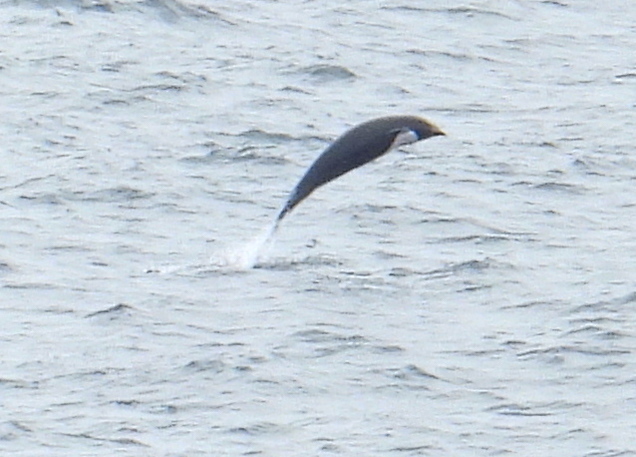
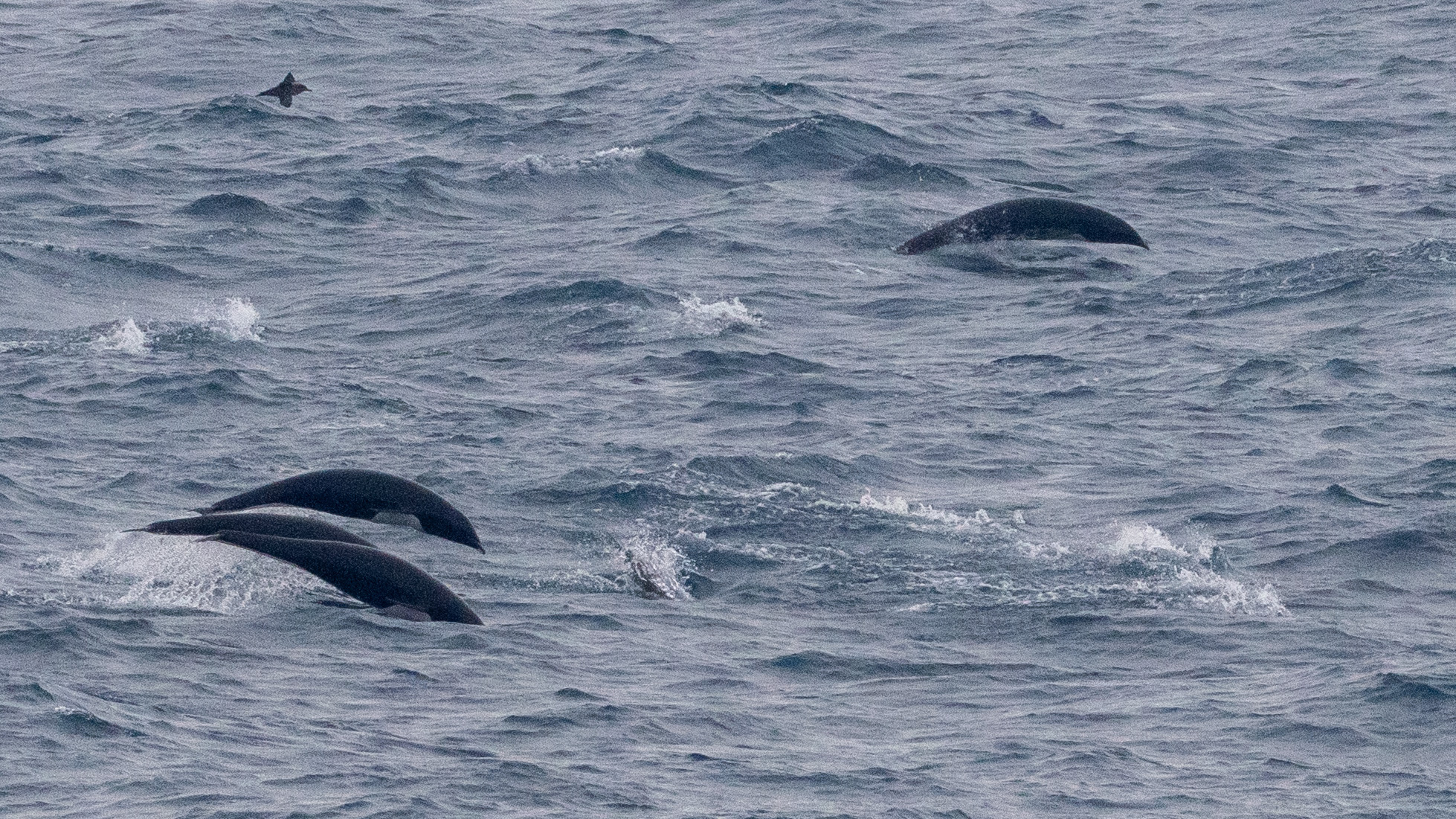
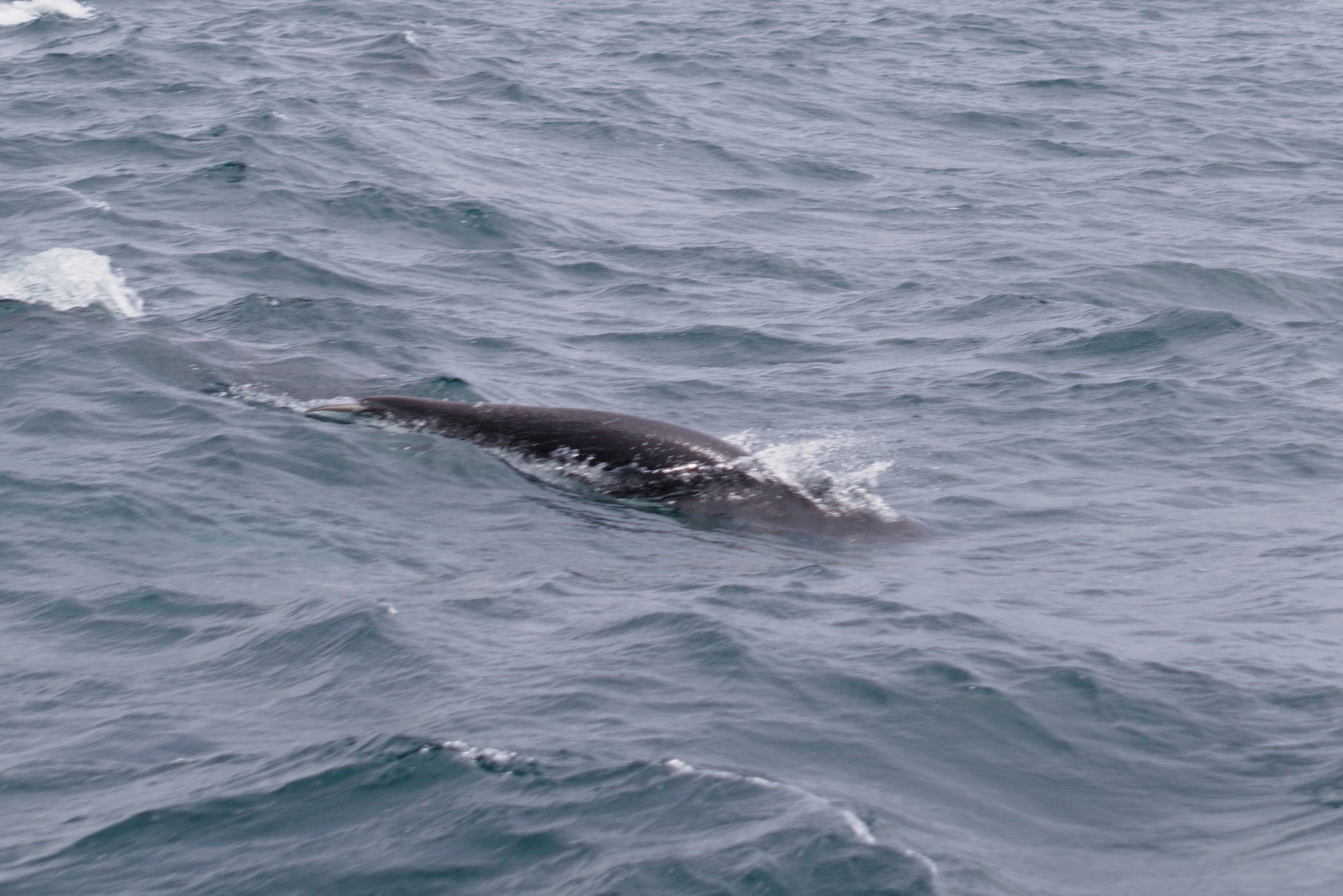
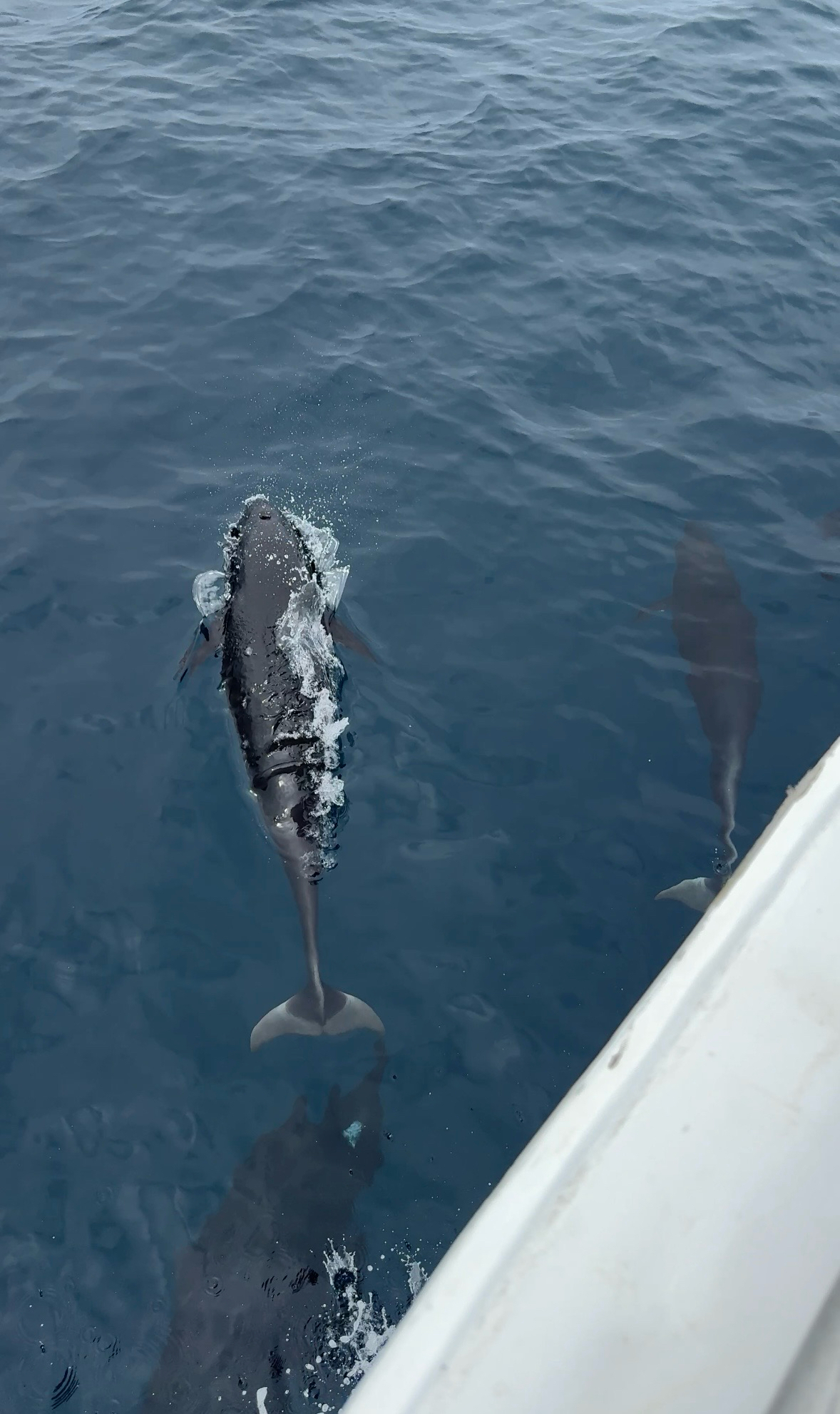
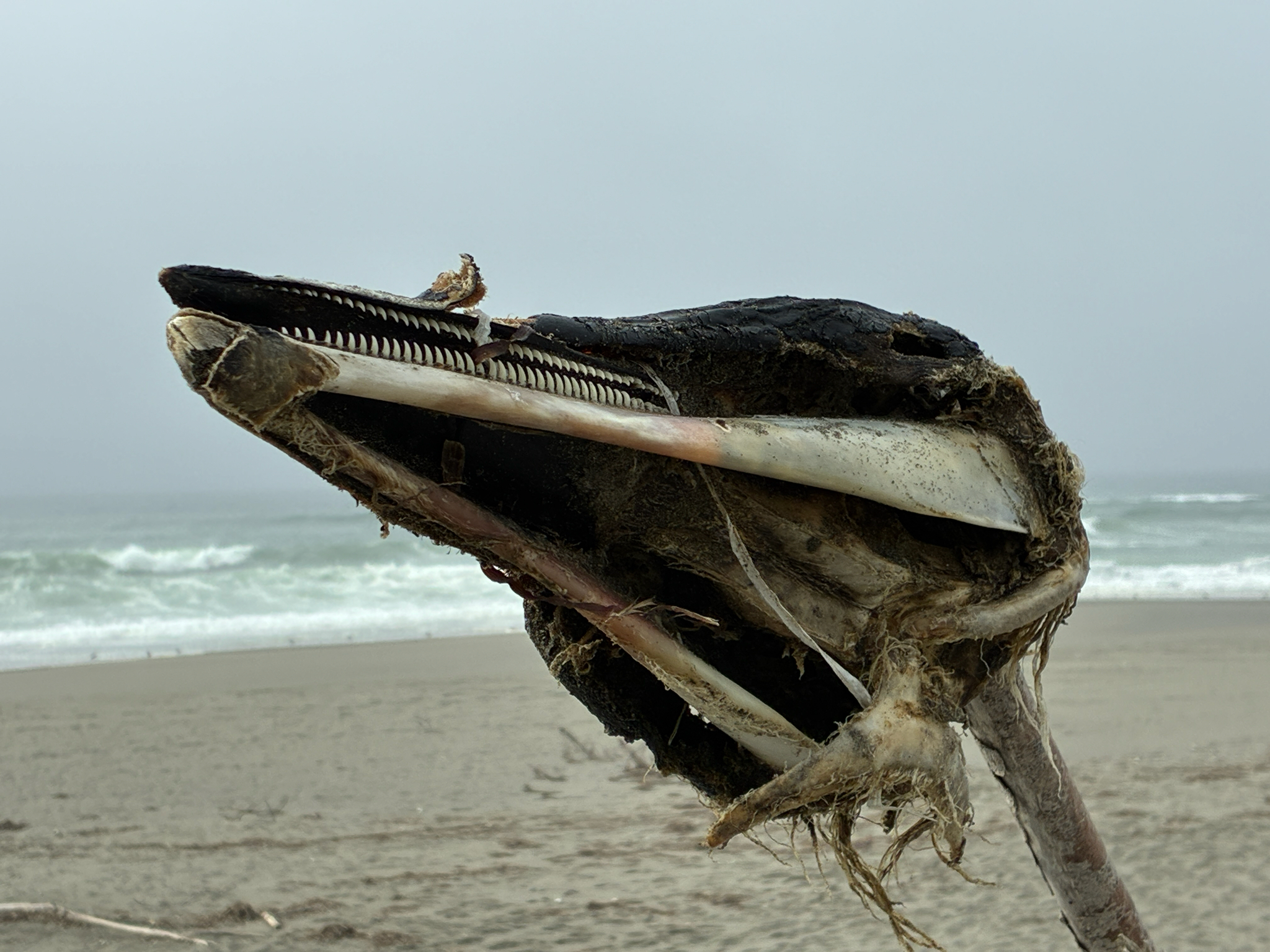
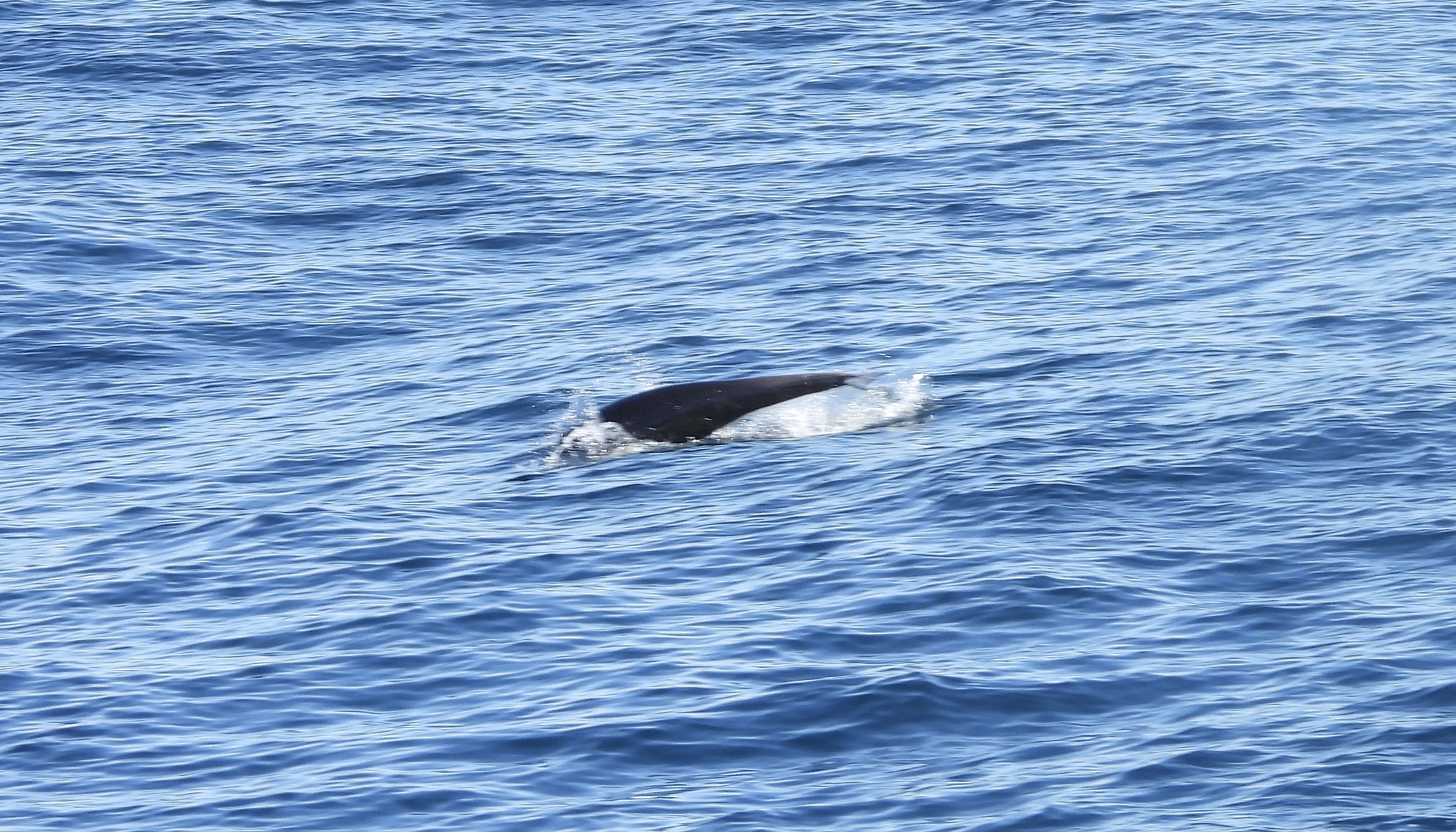
The complete absence of a dorsal fin, and even of the slightest dorsal ridge, is enough to identify this species: no other dolphin in the Northern Hemisphere has a back as perfectly smooth. The body is extremely streamlined, almost eel-like, extended by a slender tail stock. The head is small, the forehead gently sloping, the rostrum short but clearly set off from the melon, with a straight mouthline. The flippers are small, tapering and falcate, the tail flukes triangular and proportionally modest. The dentition comprises 37 to 54 pairs of slender conical teeth in each jaw, not visible from outside.
The coloration is a deep black, sometimes slate grey, contrasting with a white ventral band that runs from the tail stock to the throat, where it widens markedly into a thoracic patch clearly visible when the animal rolls over. The underside of the flukes is white, the upper side edged with a pale grey margin, and a small white mark often adorns the tip of the rostrum. In females, the white band is broader in the genital region. Newborns are a uniform greyish brown to cream and acquire the black and white contrast of the adult only at about one year of age.
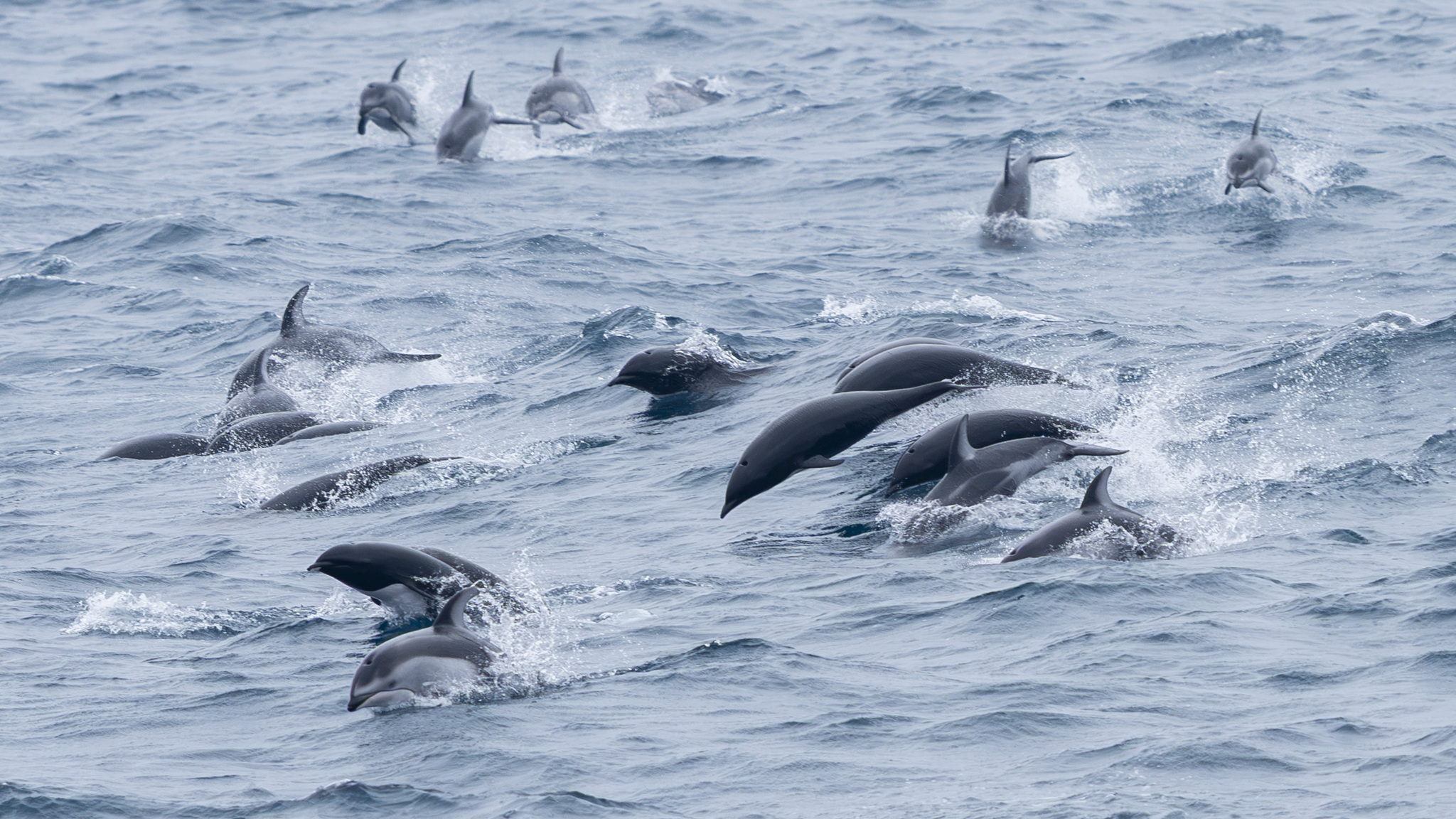
Confusion is rare but possible. The southern right whale dolphin (Lissodelphis peronii), the only congener, is far more extensively white and lives exclusively in the Southern Hemisphere: the two ranges do not overlap. At a distance, a fast-moving school may suggest a group of sea lions or fur seals porpoising, since the animals string together low, skimming leaps that send water flying like skipping stones. Dall’s porpoise, also black and white and present in the same waters, is told apart at once by its stocky outline, its small triangular dorsal fin with a white tip, often canted forward, and by the rooster tail of water it throws up when swimming fast at the surface. Finally, mixed schools with the Pacific white-sided dolphin are frequent, and one then has to look, within the mass, for the uniformly black backs with no fin.
The northern right whale dolphin belongs to the family Delphinidae and to the genus Lissodelphis, whose name combines the Greek lissos, “smooth”, and delphis, “dolphin”, in reference to the finless back. The epithet borealis refers to the northern distribution of the species. The genus contains only two species: L. borealis in the North Pacific and L. peronii (Lacépède, 1804) in southern waters. The common name right whale dolphin points to the morphological analogy with the right whales of the genus Eubalaena, which also lack a dorsal fin, a convergence of shape rather than a relationship. The species was described by the American naturalist Titian Peale in 1848, from material collected during the United States Exploring Expedition in the Pacific. Individuals showing characters intermediate with the Pacific white-sided dolphin (Aethalodelphis obliquidens, formerly Lagenorhynchus obliquidens) have been reported at sea and interpreted as probable hybrids.
The species is strictly confined to the cool temperate North Pacific, mainly between 30° and 50° north, with occasional records across a wider band, from about 20° to 55° N. In the eastern Pacific it frequents the waters of the Gulf of Alaska, British Columbia, Washington, Oregon and California, as far as Baja California; sightings as far south as 29° N have been recorded during episodes of unusual cooling. In the western Pacific it occupies the sector of the Kuril Islands and Kamchatka as far as the Sanriku coast, on the Japanese island of Honshu, and crosses the basin in the open sea.
This is an essentially offshore species, frequenting the shelf edge, the slope and deep oceanic waters, and rarely staying close to the coast. Its distribution is strongly constrained by water temperature: sightings are concentrated between about 8 and 19 °C, exceptionally up to 24 °C. This thermal control translates into marked seasonal movements, northwards and offshore in summer, southwards and sometimes closer to the coast in winter and spring. Incursions into inland waters, such as the Salish Sea or Puget Sound, are regarded as accidental: intensive aerial surveys conducted between 2013 and 2016 over more than 35,000 km of transects detected no individuals there.
This species is absent from French waters. It occurs neither in the English Channel, nor in the Bay of Biscay, nor in the Mediterranean, and it has never been reported in the French overseas territories, none of which lies in the temperate North Pacific. Any mention of a right whale dolphin in France would reflect a confusion of nomenclature with the southern species.
The northern right whale dolphin feeds mainly in the mesopelagic layer, diving to at least 200 m and able to stay submerged for up to about six minutes. Fish make up the bulk of the diet, about 89% of stomach contents in the few stomachs analysed (n = 2, Chou et al. 1995), with a very clear dominance of lanternfish (Myctophidae), which alone account for close to 89% of the fish fraction, supplemented by Pacific hake and Pacific saury; squid, in particular the hooked squid Abraliopsis felis, account for about 11%. These proportions rest on a very small sample and give only a partial picture of the actual diet. Exploiting these migrating prey partly explains the nocturnal activity and the vertical movements observed.
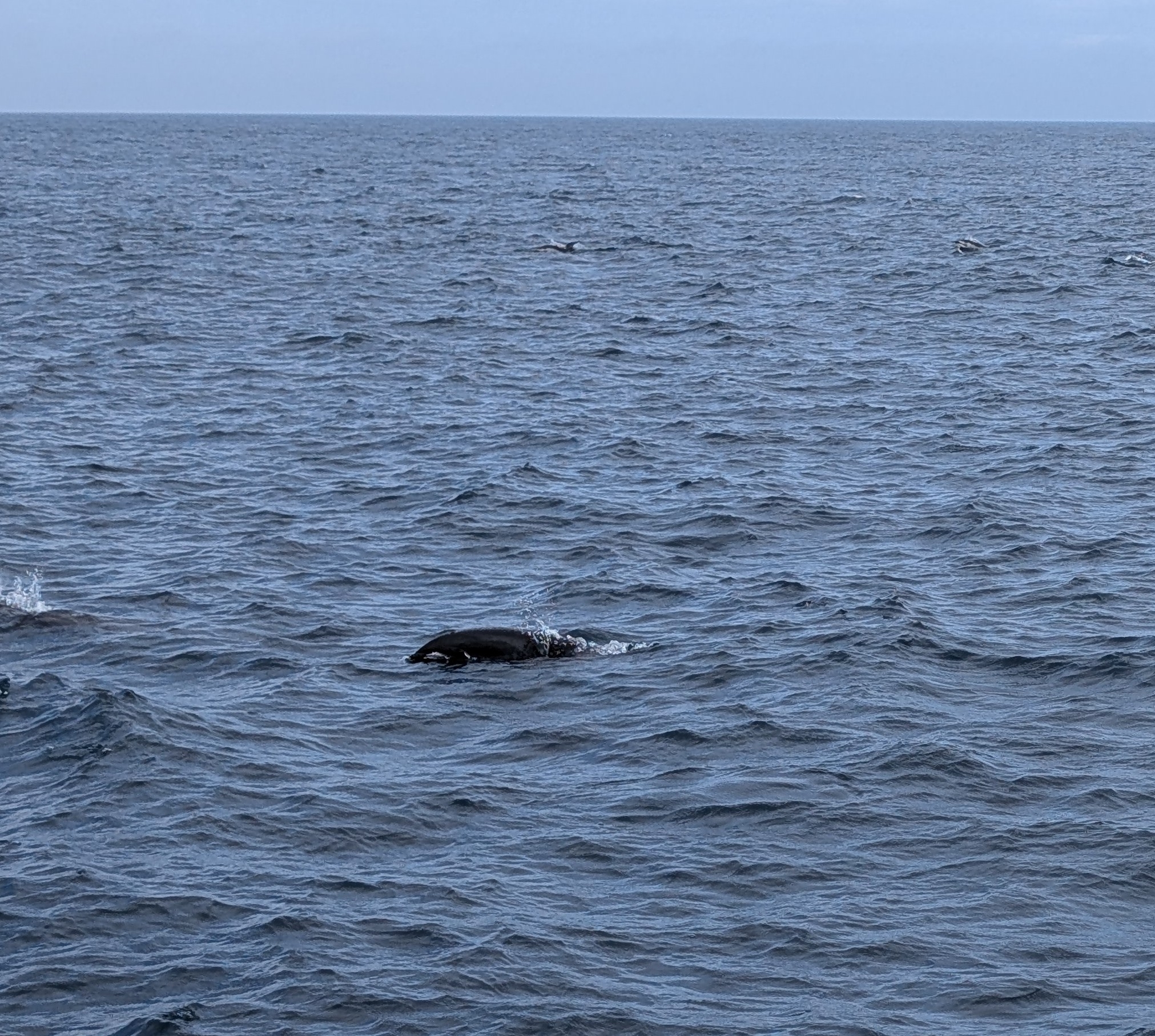
It is a highly gregarious species. Schools commonly number 100 to 200 animals, averaging about 110 in the eastern Pacific and closer to 200 in the west, but gatherings of several thousand, up to 3,000 animals, have been documented. Interspecific associations are the rule rather than the exception: the Pacific white-sided dolphin is the most frequent companion, but mixed schools with Risso’s dolphin, the short-finned pilot whale, Dall’s porpoise, Baird’s beaked whale, the sperm whale or the humpback whale have been reported.
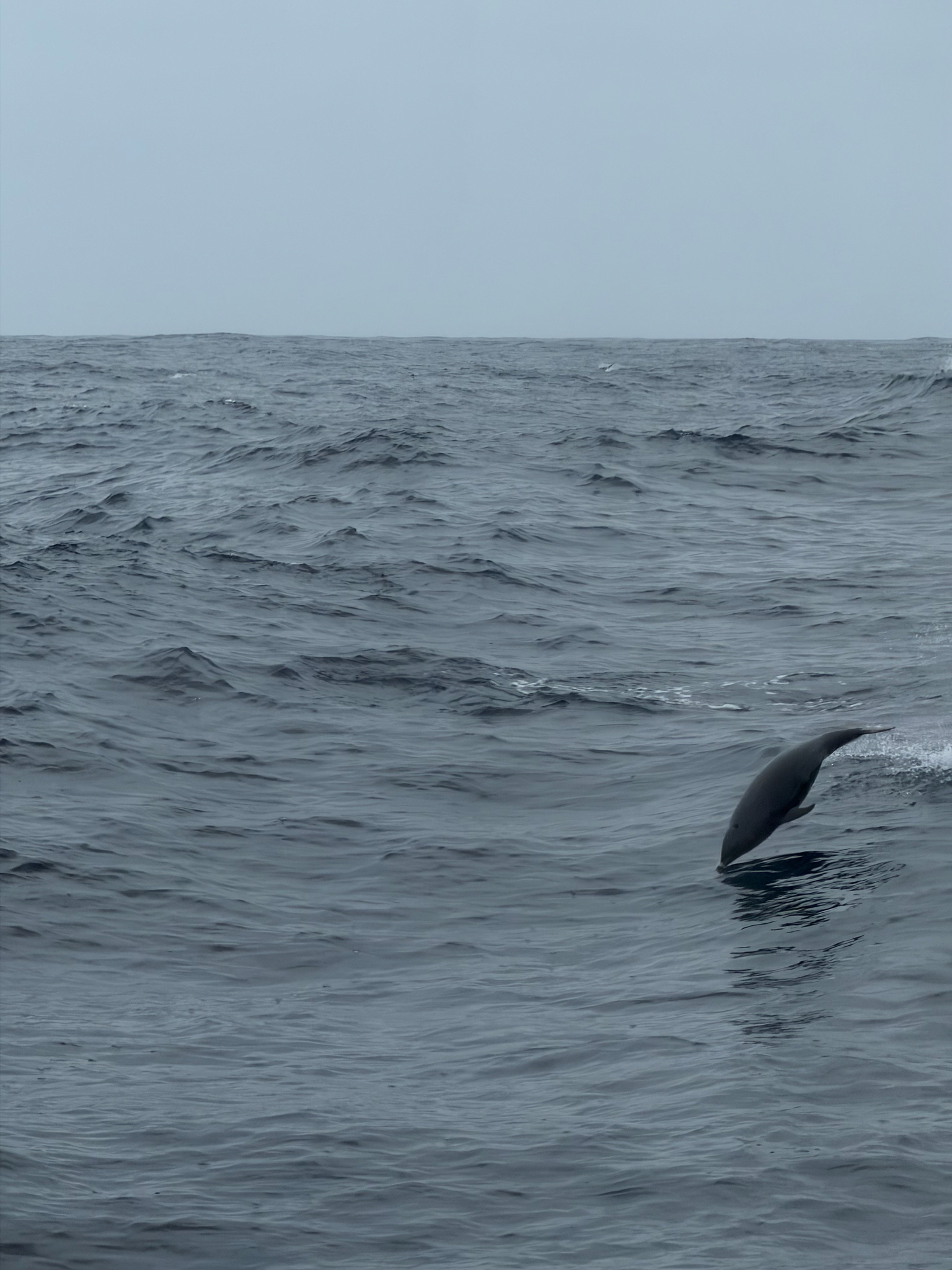
A fast swimmer, it travels at about 26 km/h when cruising and reaches bursts of 30 to 40 km/h. It strings together low, skimming leaps over long distances, each leap covering up to 6 to 7 m, and punctuates its movements with belly flops and tail slaps. Unlike most delphinids, it does not produce whistles: its acoustic repertoire consists of clicks and pulsed sounds, and some repetitive patterns among them could play a role close to that of signature whistles.
Sexual maturity is reached at around ten years in both sexes, between 9.9 and 10.1 years in males and 9.7 and 10.4 years in females, at lengths of about 215 cm and 200 cm respectively. Gestation lasts a little over a year, 12.1 to 12.3 months, and leads to the birth of a single calf, with a peak of births in July and August. The minimum interval between two births is estimated at two years. Longevity is close to 42 years. No case of predation has been formally documented, but the killer whale and large sharks are regarded as the most likely predators.
The International Union for Conservation of Nature lists the northern right whale dolphin as Least Concern (LC) following the assessment carried out in 2018; the trend of the global population remains unknown, for want of comparable abundance series across the whole range. Total numbers in the North Pacific are estimated at about 68,000 animals, of which some 26,000 for the California-Oregon-Washington stock, the minimum estimate adopted for that stock being about 18,600 animals. The species is listed in Appendix II of CITES and, in United States waters, is protected under the Marine Mammal Protection Act.
The major historical threat remains bycatch in the large pelagic driftnets. The squid fleets deployed by Japan, Taiwan and South Korea over a vast area of the central North Pacific were killing, in the late 1980s, an estimated 15,000 to 24,000 northern right whale dolphins a year. This mortality reduced the oceanic population by an amount difficult to quantify precisely, but regarded as substantial. The United Nations moratorium on large-scale high-seas driftnets, which came into force in 1993, put an end to that slaughter and is the most effective conservation measure the species has benefited from.
Bycatch nevertheless persists within exclusive economic zones, in particular in the California and Oregon drift gillnet fishery, where about 151 deaths were estimated between 1996 and 2002. The Pacific Offshore Cetacean Take Reduction Plan, adopted in 1997, requires among other things the use of acoustic deterrents (pingers); their effect on catches of this species has not been shown to be statistically significant. To these are added a small direct hand-harpoon hunt practised in Japan, exposure to persistent organic pollutants, with high PCB concentrations recorded in one individual, and underwater noise of human origin, liable to disturb communication, foraging and orientation. Strandings remain infrequent, which limits the sources of biological data.
Watching the northern right whale dolphin means going well offshore: the species frequents the shelf edge, the slope and deep water, and enters bays only exceptionally. The best opportunities arise along the west coast of North America, in particular in the Monterey Bay area of central California, where a submarine canyon brings deep water close to the shore, and off Oregon and Washington. Encounters are more likely from late autumn to spring, when the cooling of surface waters brings the species back south and towards the coast; in Japan, the waters off the Sanriku coast offer comparable opportunities.
Spotting rarely relies on the outline of a dorsal fin, absent by definition, but on the disturbance at the surface: a long trail of white spray produced by the skimming leaps of the school, visible from a good distance. The animals are generally undemonstrative towards boats, even if they occasionally bow-ride, and mixed schools with the more inquisitive Pacific white-sided dolphin increase the chances of a close approach.
As with any cetacean, watching should remain passive: approach from behind and at an angle, never by cutting across the group’s course, steady and reduced speed nearby, a distance of at least a hundred metres, limited observation time, engine idling without abrupt manoeuvres, and immediate withdrawal at any sign of avoidance, prolonged dives, repeated changes of course, dispersal. Groups containing newborns call for heightened caution. Photographing the white ventral markings and passing sightings on to citizen science programmes is a useful contribution to knowledge of a species that is still poorly monitored.
Its back is perfectly smooth, with no fin and not even a dorsal ridge, which makes it unique among the dolphins of the Northern Hemisphere. That feature gives it its English name of right whale dolphin, by analogy with those large whales, which also lack a dorsal fin. It is a morphological convergence, with no relationship between the two groups; this very streamlined outline goes with an offshore way of life and fast swimming in skimming leaps.
No. The species is strictly confined to the temperate North Pacific, between about 30° and 50° north. It has never been reported in the English Channel, the Bay of Biscay, the Mediterranean or the waters of the French overseas territories. Its only congener, the southern right whale dolphin (Lissodelphis peronii), lives in the Southern Hemisphere and is no more present in French waters.
The IUCN has listed it as Least Concern (LC) since the 2018 assessment, with an unknown population trend. Numbers in the North Pacific are estimated at about 68,000 animals, of which some 26,000 for the California-Oregon-Washington stock. The species is listed in Appendix II of CITES and protected by the Marine Mammal Protection Act in United States waters.
In the late 1980s, the squid fishing fleets of Japan, Taiwan and South Korea were killing between 15,000 and 24,000 northern right whale dolphins a year in their large driftnets in the central North Pacific. This mortality reduced the oceanic population by a proportion that is difficult to quantify but judged to be large. The United Nations moratorium on large-scale high-seas driftnets, which came into force in 1993, brought it to an end.
It hunts in the mesopelagic layer, diving to at least 200 m and able to stay submerged for up to about six minutes. The few stomachs analysed, only two individuals (Chou et al. 1995), contained about 89% fish, with a very strong dominance of lanternfish (Myctophidae), supplemented by Pacific hake and Pacific saury; squid, including the hooked squid Abraliopsis felis, accounted for about 11%. This sample remains too small to describe the diet of the species precisely.
Mixed schools are very frequent, in particular with the Pacific white-sided dolphin, but also with Risso’s dolphin, the short-finned pilot whale, Dall’s porpoise, Baird’s beaked whale, the sperm whale or the humpback whale. These associations probably rest on the exploitation of the same mesopelagic resources and on the advantages of a large group against predators. Individuals with intermediate characters, interpreted as probable hybrids with the Pacific white-sided dolphin (Aethalodelphis obliquidens), have been observed at sea.
Profile compiled from authoritative scientific sources (IUCN, NOAA Fisheries, specialist literature) and reviewed for factual accuracy.
According to the open data of the GBIF, 235 georeferenced sightings of Lissodelphis borealis are recorded in our photographic index.
| Country | Notes |
|---|---|
| United States of America | 225 |
| Japan | 10 |
| Canada | 5 |
| unknown or invalid | 2 |
| Russian Federation | 2 |

Monthly distribution of 242 dated sightings (all years combined): the maximum is reached in octobre.
| Month | Notes |
|---|---|
| janvier | 16 |
| February | 6 |
| mars | 33 |
| avril | 18 |
| mai | 23 |
| juin | 23 |
| juillet | 21 |
| August | 26 |
| septembre | 29 |
| octobre | 40 |
| novembre | 4 |
| December | 3 |
These figures reflect survey effort (more boaters and more surveys in summer) as much as the actual presence of the species: to be interpreted with caution.


Photographs from GBIF under a Creative Commons licence. The author and the licence of each photograph are given; please respect them if you reuse them.
Automatic selection of the most cited works mentioning the species (source: Crossref).