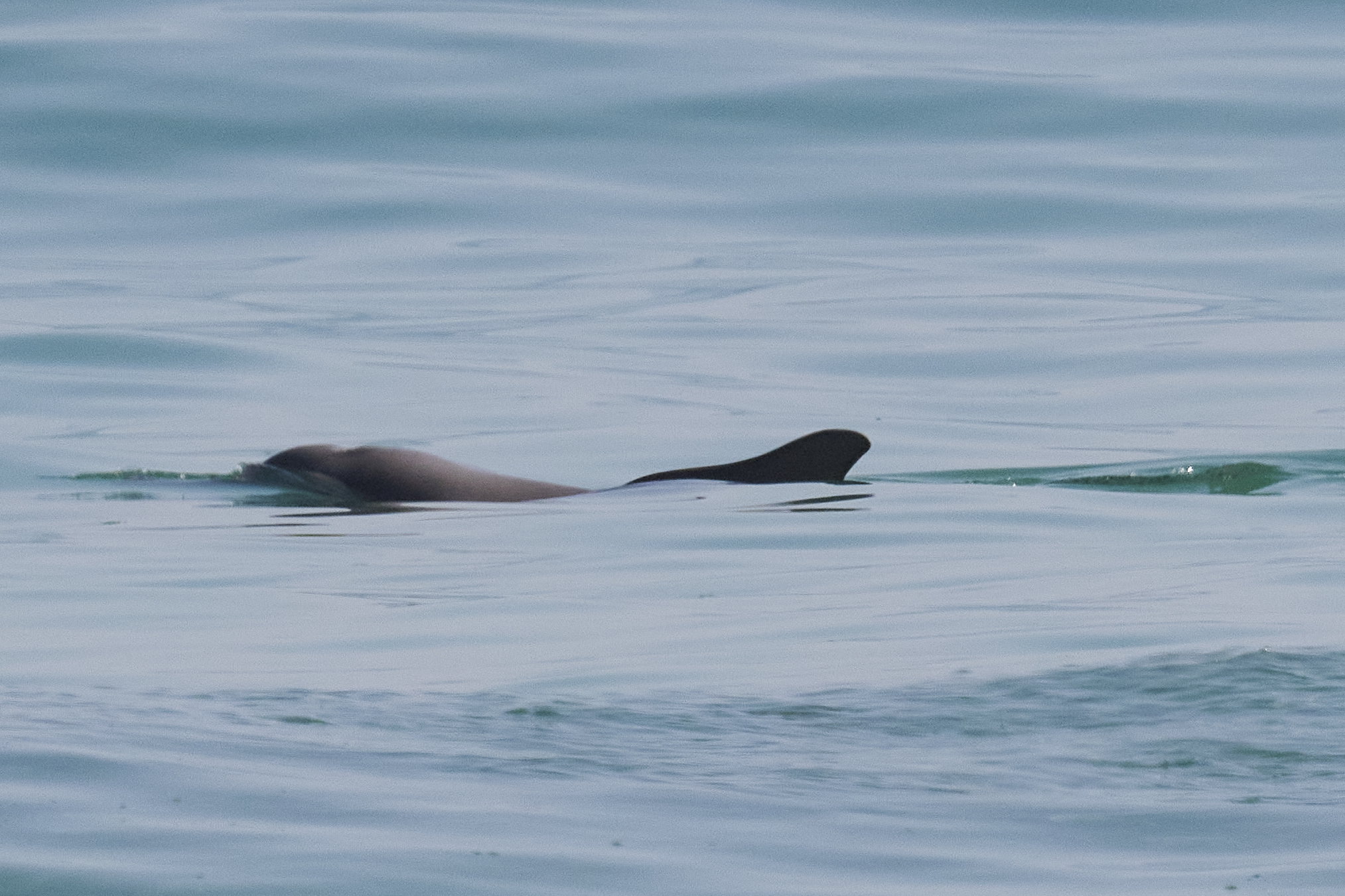
Indian Ocean humpback dolphin (Sousa plumbea)

Key facts
Scientific name Sousa plumbea (G. Cuvier, 1829)
Other names In French: Sousa plumbé, dauphin à bosse indien, dauphin à bosse de l’océan Indien; in English: Indian Ocean humpback dolphin. Not to be confused with the “Indo-Pacific humpback dolphin”, a name that today designates the neighbouring species Sousa chinensis, nor with the Atlantic humpback dolphin (Sousa teuszii) or the Australian humpback dolphin (Sousa sahulensis).
Size 2.0 to 2.8 m on average; individuals exceeding 3 m have been reported in the Arabian Sea and along the Indian coasts. Length at birth estimated at about 105-112 cm.
Weight About 150 to 280 kg depending on the sources and the regions, males being on average larger and heavier than females.
Longevity Analyses of dental growth layers place the longevity of the species at around 40 years, the highest value generally cited for the genus Sousa. The most recent study (Plön et al., Marine Mammal Science, 2026), covering 119 individuals (74 males and 45 females) caught in the KwaZulu-Natal shark nets over forty years, does not set a maximum age but does specify the growth schedule: physical maturity is reached at about 24 years and 268 cm in males, at about 13 years and 246 cm in females, whereas sexual maturity occurs much earlier (7.5 years in males, 8 years in females). The generation length used for assessing extinction risk is about 25 years, three generations corresponding to 75 years.
Diet Coastal and estuarine fish (sciaenids, mullets, sardines, mackerel, pomfrets), supplemented by cephalopods and crustaceans.
IUCN status Endangered (EN), criterion A4cd, assessment by Braulik et al. 2017, status maintained in version 2025-2 of the Red List; population trend decreasing. No subpopulation is assessed separately, but several local populations (Menai Bay in Zanzibar, Mayotte) meet the criteria of the most alarming categories at the regional scale.

In brief

The Indian Ocean humpback dolphin (Sousa plumbea) is a slate-grey coastal delphinid, immediately recognisable by the elongated fatty thickening, the “hump”, that carries its small triangular dorsal fin. Strictly tied to the shallow coastal fringe, from the southern tip of South Africa to India and the Persian Gulf, it shares its habitat with the most intense of human activities: net fishing, ports, dredging, urbanisation of the shoreline. The IUCN classifies it as “Endangered” and most known populations number only a few dozen to a few hundred animals, the only population of appreciable size documented to date being in the southern Persian Gulf; in France, it is documented only in Mayotte, where a single individual is thought to remain.

Identification

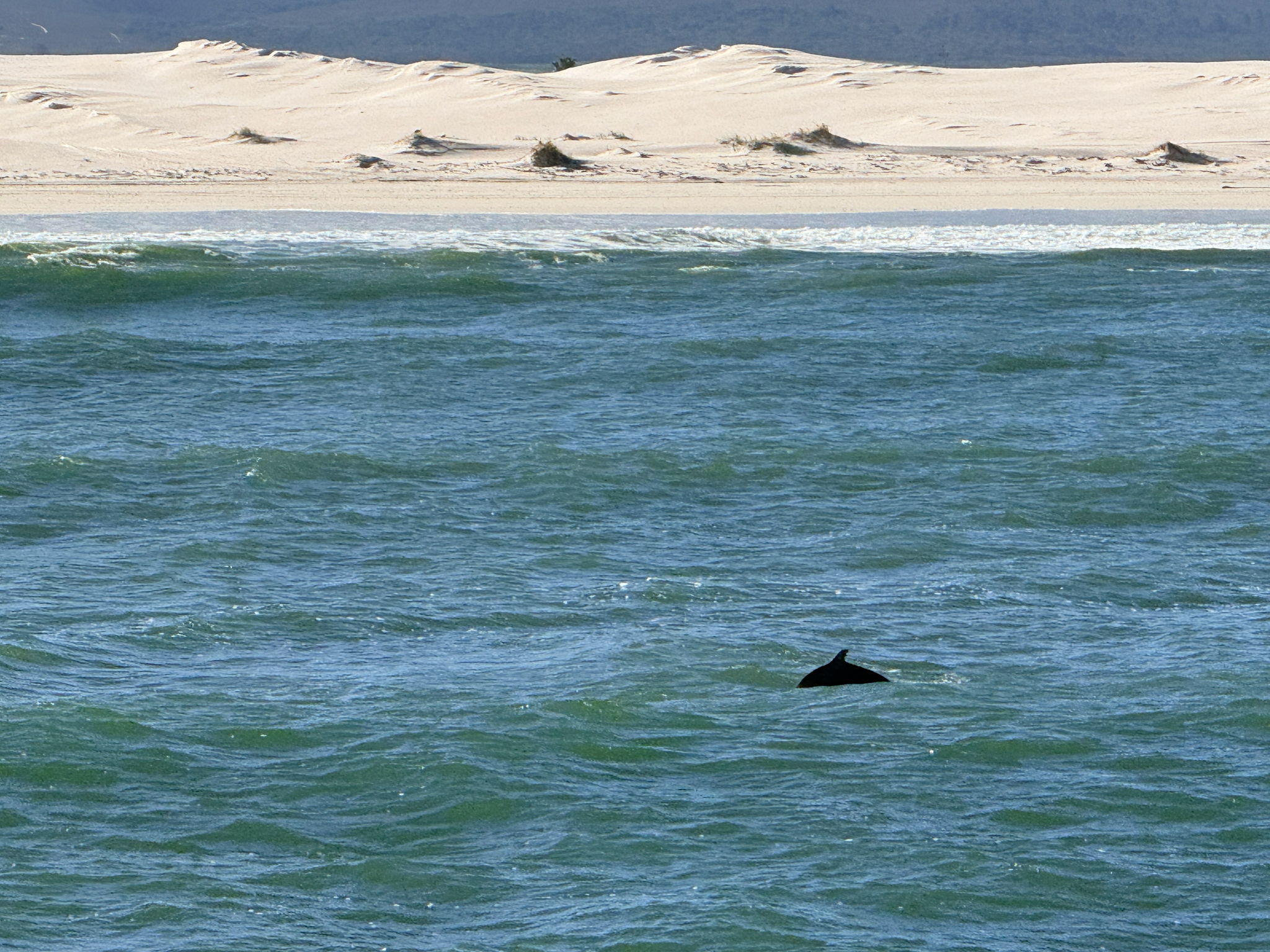
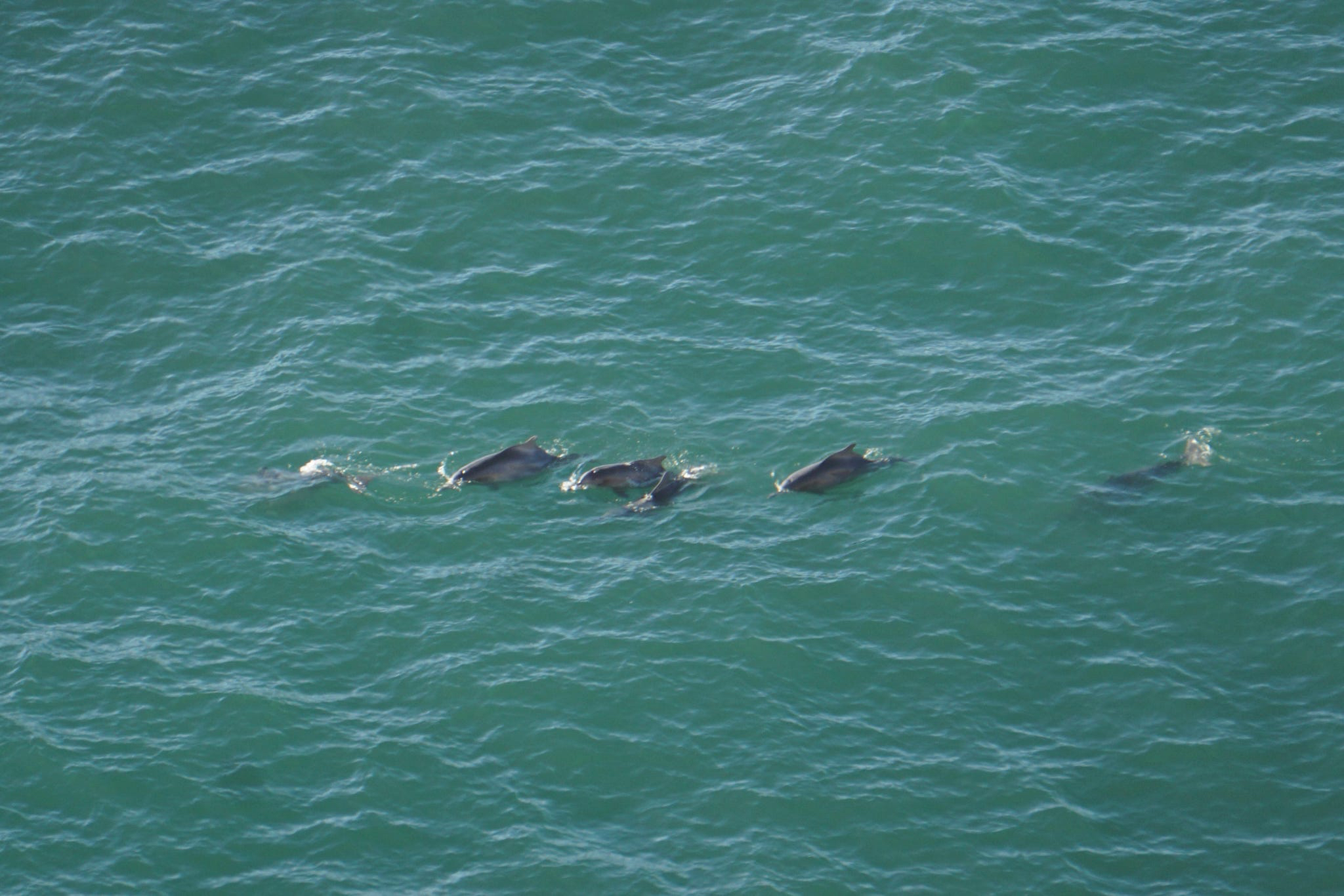
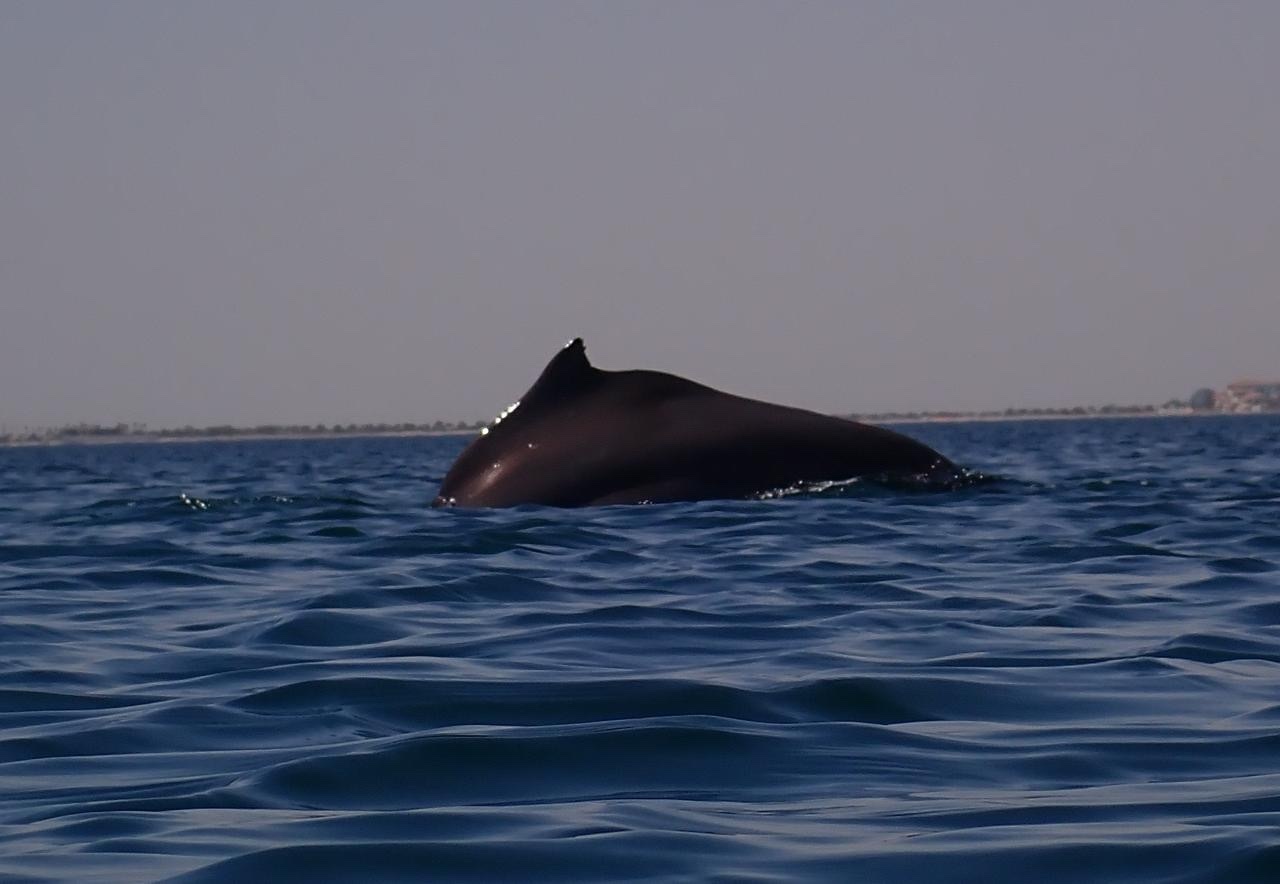
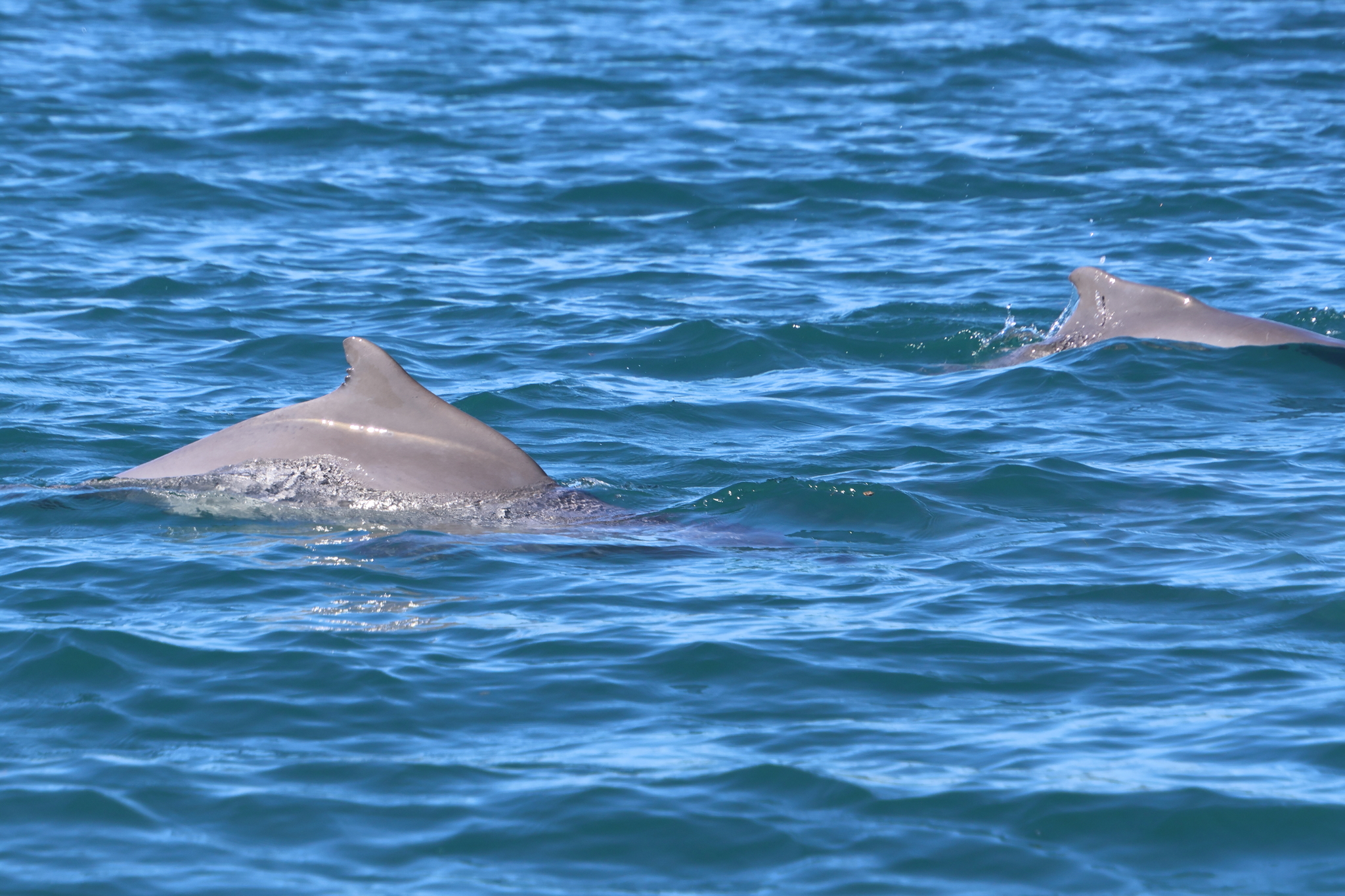
This is a robust, stocky dolphin, 2.0 to 2.8 m for 150 to 280 kg, with a long, narrow rostrum clearly set off from the melon. Its morphological signature is the dorsal hump: a ridge of fatty and connective tissue drawn out along the back, at the top of which stands a short dorsal fin, broad at the base and triangular in profile, almost hook-shaped. This hump is more developed in S. plumbea than in the Indo-Pacific and Australian humpback dolphins. The caudal peduncle also carries pronounced keels, above as well as below. The jaws hold of the order of 29 to 38 pairs of conical teeth, a character used to identify stranded animals.

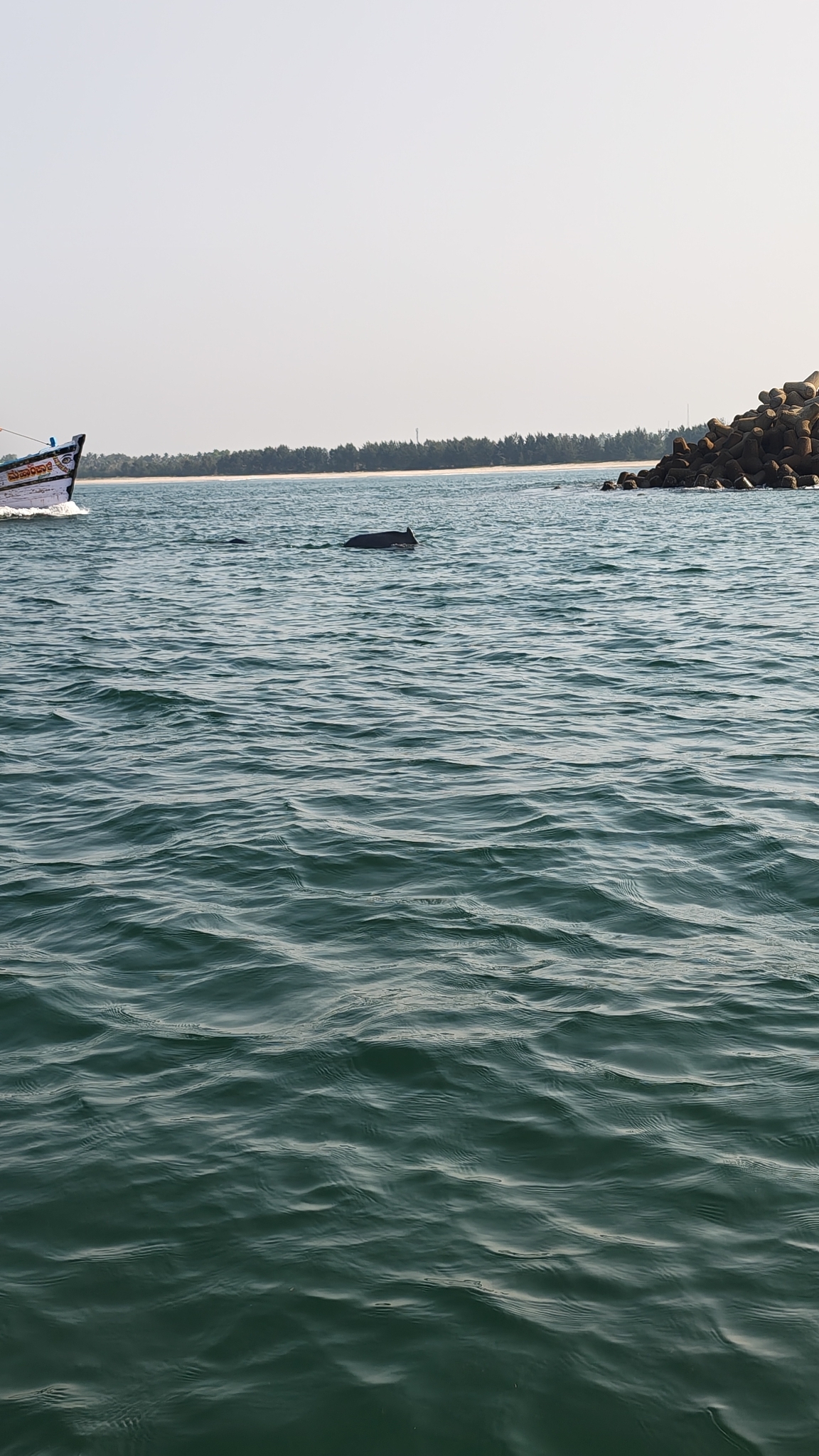
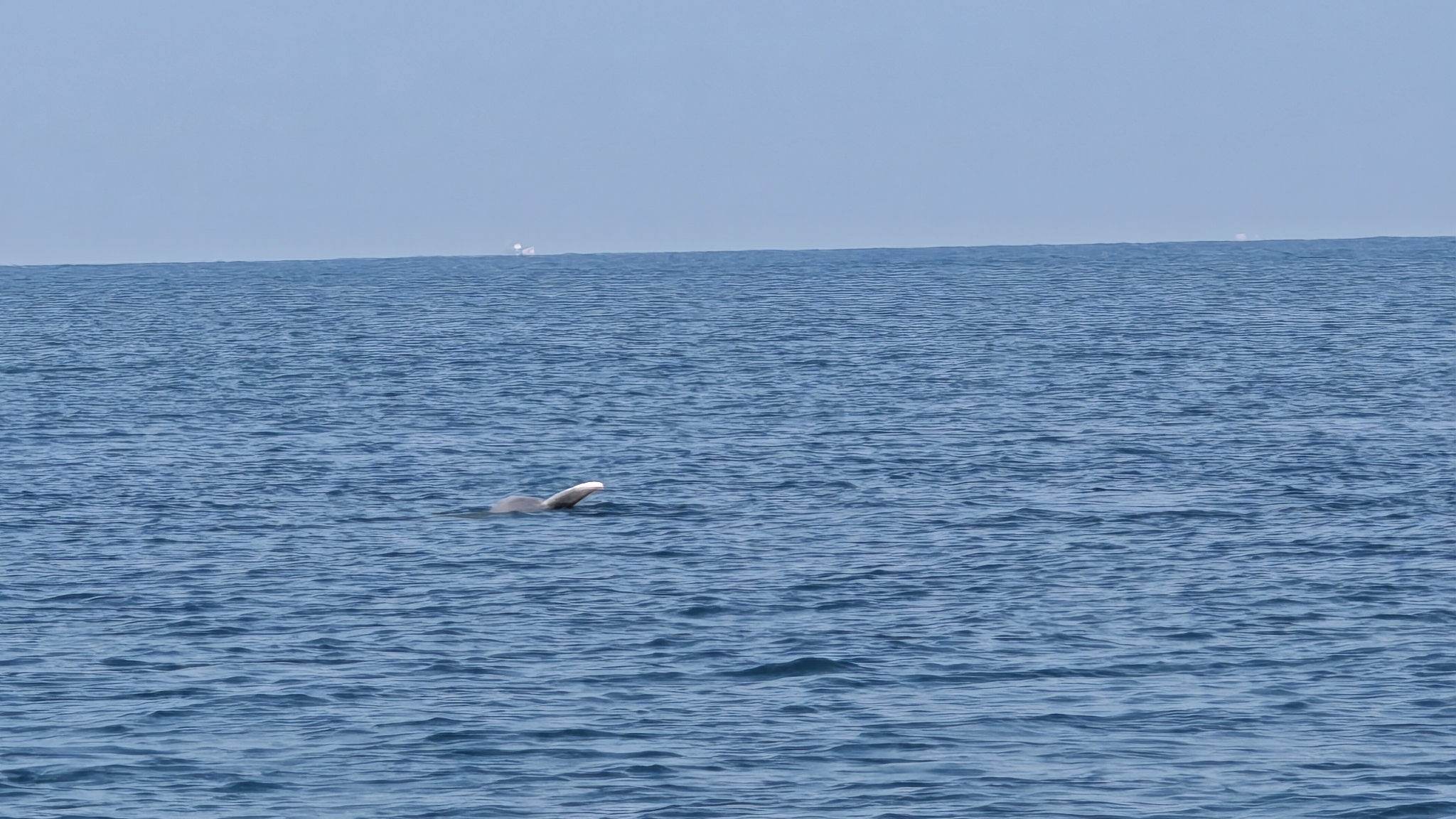
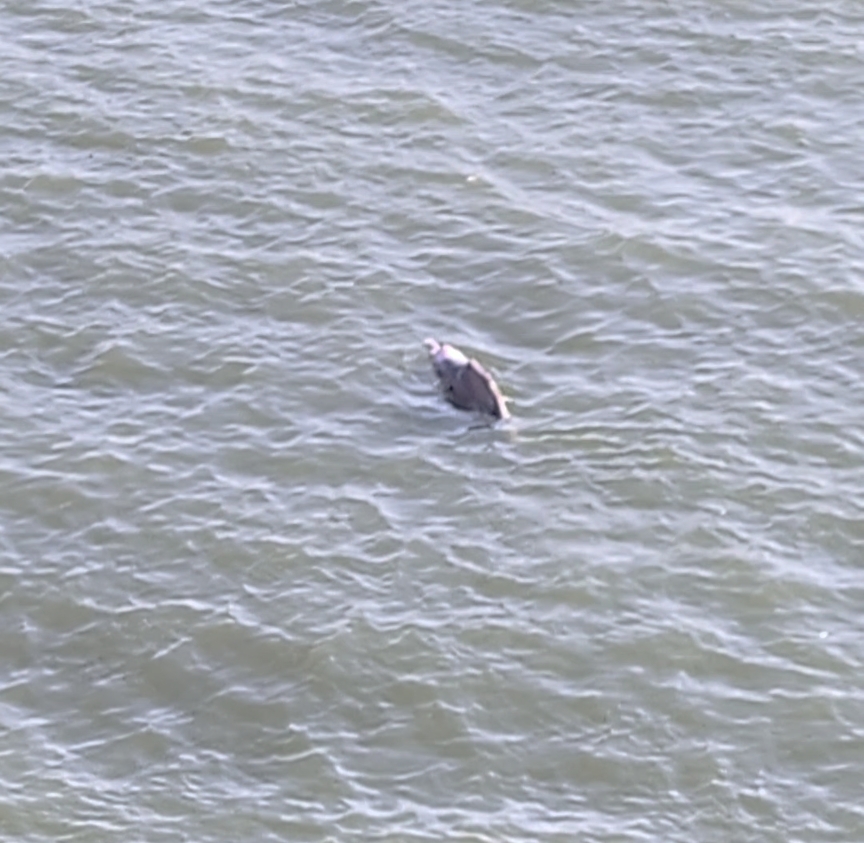
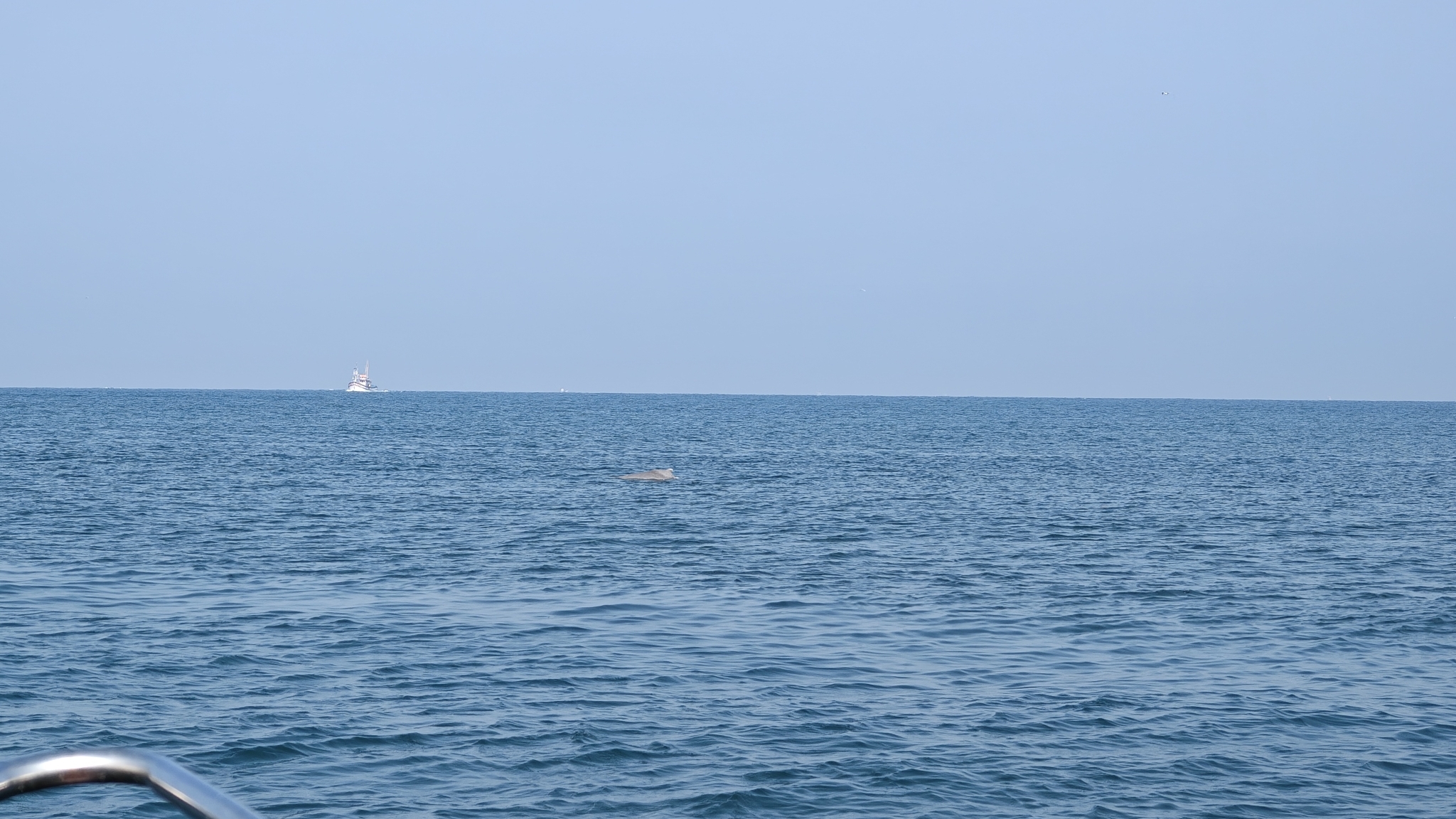
The coloration justifies the species name: plumbea means “of lead”. The body is a uniform slate grey, paler on the underside; some adults show whitish speckling and, more rarely, pinkish tints. Young animals are a paler and more even grey, the back/belly contrast becoming sharper with age. At sea, the species gives itself away by a characteristic surfacing: the rostrum breaks the surface first, at an angle of 30 to 45 degrees, before the back and the hump appear in a slow roll. Breaches are rare and the animal is generally discreet, even shy of boats.

Two confusions are common. The first concerns the Indo-Pacific bottlenose dolphin (Tursiops aduncus), which frequents exactly the same bays: it has no hump, its dorsal fin is tall and clearly falcate, its rostrum shorter and its behaviour far more demonstrative. The second concerns the Indo-Pacific humpback dolphin (Sousa chinensis), whose range begins around the Bay of Bengal: its hump is far less marked, its dorsal fin proportionally larger, and the adults of several populations become very pale, almost white or pink, which never happens in S. plumbea.

Taxonomy

Sousa plumbea belongs to the family Delphinidae and to the genus Sousa Gray, 1866, which brings together the humpback dolphins. The species was described by Georges Cuvier in 1829 under the name Delphinus plumbeus; the valid combination today is Sousa plumbea (G. Cuvier, 1829). Several later names are treated as synonyms, in particular Sotalia lentiginosa, Sotalia fergusoni and Steno plumbeus.

For most of the twentieth century, the humpback dolphins of the western Indian Ocean were treated as a simple geographical form, or a subspecies, of Sousa chinensis. The taxonomic revision published by Jefferson and Rosenbaum in 2014 in Marine Mammal Science (volume 30, pages 1494-1541) changed that reading: by combining skeletal morphology, external morphology, coloration, molecular genetics and biogeography, it recognises four distinct species within the genus, S. teuszii in the African Atlantic, S. plumbea in the western Indian Ocean, S. chinensis from the Bay of Bengal to South-East Asia, and S. sahulensis, described on that occasion for Australian waters and the south of New Guinea. The recent recognition of S. plumbea partly explains the delay accumulated in its protection and the still common use, in the older literature, of the name “Sousa chinensis” for animals from the Indian Ocean.

Range and habitat

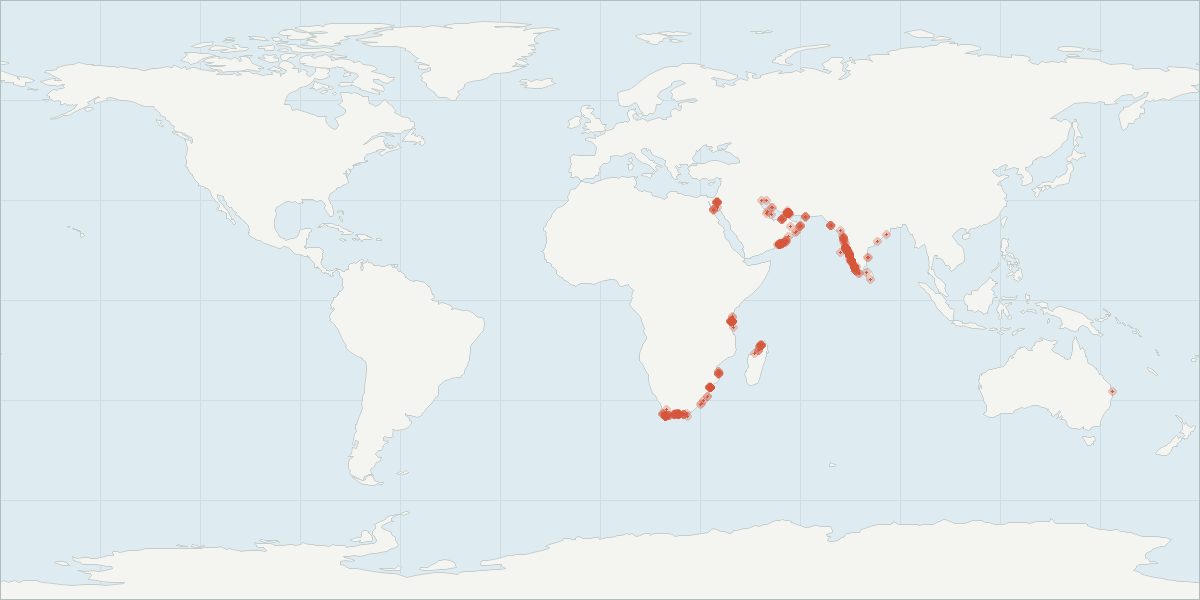
The species occupies a continuous but fragmented coastal strip that follows the western and northern rim of the Indian Ocean, across some 23 coastal states. It extends from the south of South Africa (Western Cape and Eastern Cape) northwards along Mozambique, Tanzania, where the islands of Unguja and Pemba hold well-studied populations, Kenya and Somalia, then into the Red Sea (Sudan, Eritrea, Djibouti, Egypt), the Gulf of Aden, Yemen and Oman, before entering the Persian Gulf (Iran, the United Arab Emirates, Qatar, Bahrain, Kuwait, Iraq, Saudi Arabia) and continuing as far as Pakistan, India, mainly the west coast, but also the Gulf of Mannar and the Palk Strait on the eastern seaboard, and Sri Lanka, the eastern limit of the range lying in the south of the Bay of Bengal, towards Bangladesh, where the species gives way to Sousa chinensis. Madagascar also holds the species, in particular around Nosy Be and the Ampasindava Peninsula.

It is an obligate coastal species: it frequents water less than 20 to 25 m deep, most often within two kilometres of the shore, and favours sheltered bays, estuaries and river mouths, lagoons, mangroves, coral reefs and rocky coasts. Large-scale movements are limited, the animals working linear home ranges along the coast.

In France, the presence of S. plumbea is documented in Mayotte, in the lagoon and its surroundings. The Office français de la biodiversité states that it is very probably the only species of the genus Sousa present in French maritime waters, the sightings reported from Réunion before 2015 now being called into question. The species is absent from the French Mediterranean, the Bay of Biscay and the English Channel. The situation in Mayotte is critical: the local stranding network (REMMAT) has raised the alarm over the condition of an individual that may be the last on the island, whereas three animals were still recorded there in 2004; for several months this animal has carried a substantial lesion of the right caudal peduncle, possibly linked to a skin condition of the lobomycosis type already observed in Indo-Pacific bottlenose dolphins of the lagoon.

Biology and ecology

The diet is dominated by coastal and estuarine fish: sciaenids, mullets, sardines, mackerel and pomfrets are among the prey regularly cited, supplemented by cephalopods and crustaceans. Hunting takes place near the bottom, in very shallow water, often in small coordinated groups; the animals sometimes follow fishing boats and interact with the gear, which can cause losses for fishers and raise the risk of bycatch. Echolocation is suited to this cluttered setting: at Zanzibar, the clicks of S. plumbea show a median peak frequency of about 97 kHz, against 73 kHz in the sympatric Indo-Pacific bottlenose dolphin, higher frequencies, better resolved at short range, consistent with a turbid coastal habitat.

Social life rests on small groups, generally of fewer than ten individuals, with a fission-fusion organisation and strong seasonal variability; gatherings of several dozen, exceptionally of a hundred animals, have been reported. Associations with the Indo-Pacific bottlenose dolphin are frequent. Dives are short, the species rarely moving in water deeper than twenty metres.

Breeding is slow, which sharply limits the recovery capacity of populations. Gestation lasts 10 to 12 months and lactation can continue beyond two years. In South Africa, sexual maturity is reached at about 7.5 years and 210 cm in males, at about 8 years and 220 cm in females; physical maturity comes only much later, at about 24 years and 268 cm in males and about 13 years and 246 cm in females. Older work estimated the interval between two births at about three years; the most recent analysis of animals taken as bycatch in KwaZulu-Natal, based on an ovulation rate of 0.2 per year, concludes instead for an interval closer to five years. A female therefore produces, at best, only a few calves over her lifetime.

Status and conservation

Sousa plumbea is classified as “Endangered” (EN) on the IUCN Red List, a status arising from the assessment carried out by Braulik and colleagues in 2017 and maintained in version 2025-2 of the Red List. The data do not allow the trend to be quantified precisely, but the scale of the threats across a sufficient part of the range leads to the inference of a decline of at least 50% over three generations, that is about 75 years (criterion A4cd). The overall trend is downward, and vast portions of the range, the Red Sea, Somalia, Pakistan, much of the Indian coast, remain without any abundance estimate.

Where counts exist, numbers are almost everywhere low. The South African population is estimated at fewer than 500 individuals. At Menai Bay, in the south of Zanzibar, abundance fell from 63 animals in 2002 to 19 non-calf individuals in 2015, a drop of 63% in thirteen years, with a very high risk of local extinction; in Kenya, fewer than 200 individuals are thought to remain. In Mayotte, a single animal is thought to be still present. The only population of appreciable size documented to date is in the south of the Persian Gulf: photo-identification monitoring carried out in 2014-2015 along the coasts of the Emirate of Abu Dhabi estimated 701 individuals (95% confidence interval: 473-845), the largest number ever reported for the species.

The leading cause of mortality is bycatch in bottom-set gillnets, which are everywhere along the coasts of the range. To this are added the bathing-protection shark nets of KwaZulu-Natal, which killed 203 humpback dolphins between 1980 and 2009, the destruction and artificial hardening of coastal habitats (dredging, land reclamation, port construction, blasting), chemical pollution, organochlorines are found at high concentrations in stranded animals, noise pollution, shipping traffic and collisions, disturbance by unregulated watching tourism, and, in several countries, direct capture for consumption or for bait. Mortality among young animals is high.

On the regulatory side, the genus Sousa is listed in Appendix I of CITES, which prohibits international trade for commercial purposes, and the species falls under Appendix II of the Convention on Migratory Species. In France, marine mammals benefit from strict protection, applicable in Mayotte. In 2024, the creation of the HuDoNet network, which brings together 72 scientists from 17 countries of the western Indian Ocean and the Arabian Sea, made it possible to launch a coordinated action plan across the whole range, structured around biological research, threats, public policy and the engagement of coastal communities.

Watching this species

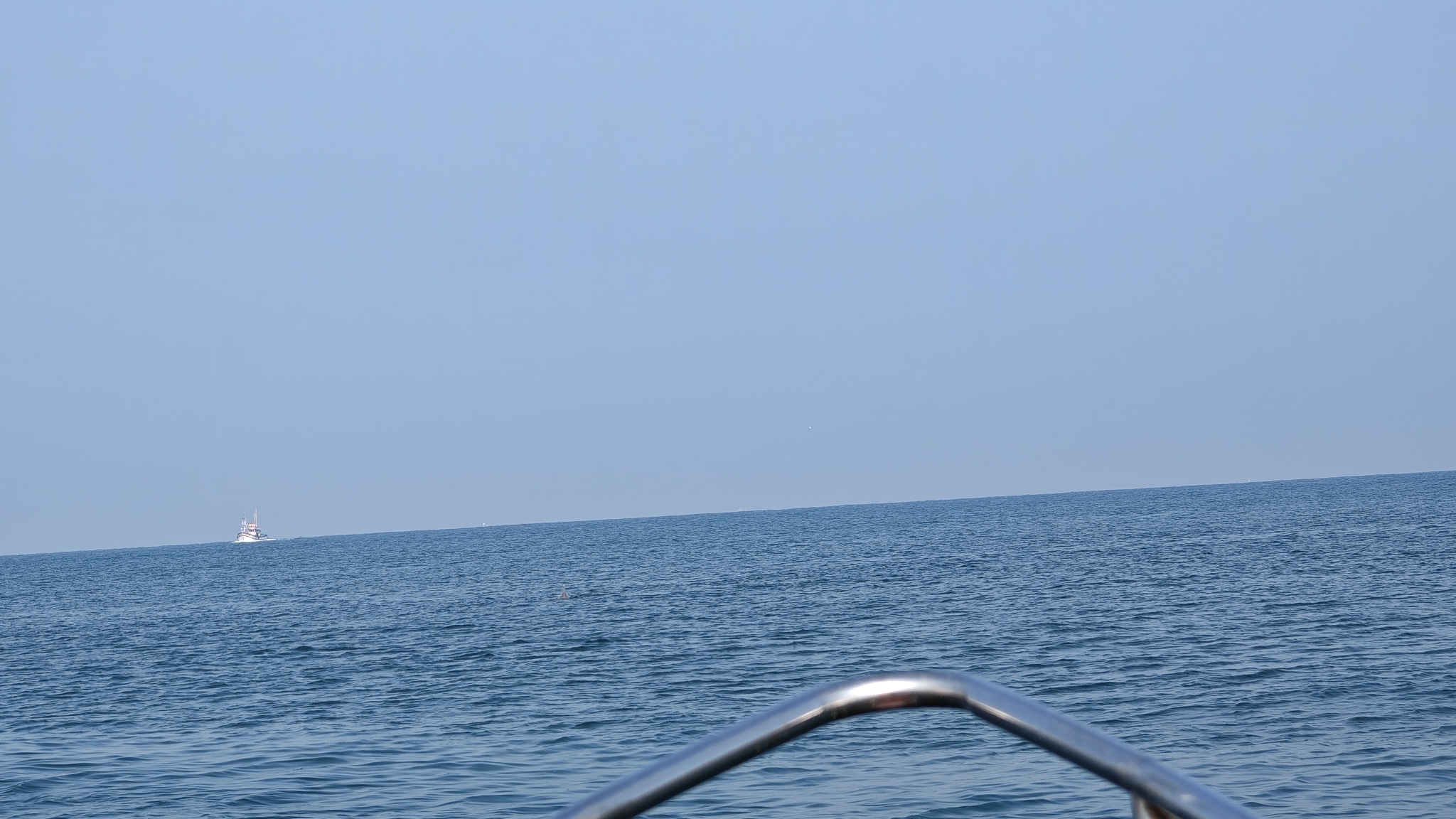
The Indian Ocean humpback dolphin is among the hardest delphinids to watch: it is discreet, rarely breaches, blows inconspicuously and often moves away from boats. It is almost always met very close to the shore, sometimes in the surf zone, which makes it possible to spot it from the coast, a cliff or a beach. The regions where encounters are most regular are South Africa (Algoa Bay, Plettenberg Bay, Mossel Bay, Richards Bay), Mozambique (Maputo Bay, the Bazaruto Archipelago, Beira), Zanzibar, southern Kenya around Shimoni, the Arabian Sea coast of Oman, the coastal waters of Abu Dhabi in the Persian Gulf, Madagascar around Nosy Be, and Goa and Kochi in India.

Since the species is Endangered and the local populations very small, the ethics of watching come before the performance. The engine should be cut or the speed clearly reduced on approach, a good distance kept, a group never chased or encircled, repeated approaches cut short and groups containing young animals avoided altogether. Entering the water is not advised: it is particularly disturbing for these animals. In Mayotte, the approach of marine mammals is regulated by prefectural order and offences are punishable by fines of up to 750 euros; the Parc naturel marin recommends in particular no longer approaching marine mammals after 2 p.m., so as to leave them a period of quiet. Photographing the dorsal fin and the hump, noting the date, the time, the position and the behaviour, is a useful contribution: these images feed the photo-identification catalogues and, in Mayotte, the monitoring carried out by the REMMAT stranding network.

Frequently asked questions

Is the Indian Ocean humpback dolphin present in France?

Yes, but only in Mayotte, in the Indian Ocean. The Office français de la biodiversité considers that Sousa plumbea is very probably the only humpback dolphin species present in French maritime waters, the sightings reported from Réunion before 2015 now being called into question. The situation there is critical: the Mayotte stranding network has raised the alarm over the condition of an animal that may be the last on the island, whereas three individuals were still recorded there in 2004. The species is absent from the Mediterranean, the Bay of Biscay and the English Channel.

Why does this species have a hump on its back?

The hump is a thickening of fatty and connective tissue on the back, at the base of the dorsal fin, which gives the animal its characteristic outline. It is particularly developed in Sousa plumbea, more so than in the Indo-Pacific and Australian humpback dolphins, and is the most reliable field character for telling the species apart from the Indo-Pacific bottlenose dolphin, which frequents the same bays but has none at all.

What exactly is its conservation status?

It is classified as “Endangered” (EN) on the IUCN Red List, a status arising from the 2017 assessment and maintained in version 2025-2 of the Red List. This classification rests on criterion A4cd, that is an inferred decline of at least 50% over three generations, or about 75 years. The species is also listed in Appendix I of CITES and in Appendix II of the Convention on Migratory Species.

What is the main threat hanging over it?

Bycatch in bottom-set gillnets, very widespread across the whole of its coastal range, is the leading identified cause of mortality. In South Africa the bathing-protection shark nets of KwaZulu-Natal are added to this; they killed 203 humpback dolphins between 1980 and 2009. The degradation of coastal habitats, chemical and noise pollution and shipping traffic make the picture worse.

How many are left?

There is no global estimate and vast portions of the range have never been surveyed. The regional figures available are almost all low: fewer than 500 individuals in South Africa, fewer than 200 in Kenya, 19 non-calf animals recorded at Menai Bay (Zanzibar) in 2015 against 63 in 2002, and a single animal in Mayotte. The great exception is the south of the Persian Gulf: a photo-identification study carried out in 2014-2015 along the coasts of Abu Dhabi estimated 701 dolphins (95% confidence interval: 473-845), the highest abundance reported for the species. These populations are largely isolated from one another, which raises the risk of local extinctions.

How long does it live?

Analyses of dental growth layers place longevity at around 40 years, the highest value generally cited for the genus Sousa. Growth is slow: sexual maturity is reached at about 7.5 years in males and 8 years in females, but physical maturity comes only at about 24 years in males and 13 years in females. The generation length used by the IUCN is about 25 years.

How can it be told apart from the Indo-Pacific humpback dolphin?

The two species scarcely meet: Sousa plumbea occupies the western Indian Ocean as far as India, Sri Lanka and the south of the Bay of Bengal, while Sousa chinensis takes over from the Bay of Bengal to South-East Asia. Morphologically, S. plumbea has a markedly more pronounced dorsal hump, a proportionally smaller dorsal fin and keeps a lead-grey tint into adulthood, whereas the adults of several populations of S. chinensis become very pale, sometimes white or pink. The two species were separated by the taxonomic revision of 2014.

Sources

Sheet compiled from authoritative scientific sources (IUCN, NOAA Fisheries, specialist literature) and reviewed for factual accuracy.

Observed distribution

According to the open data of the GBIF, 432 georeferenced sightings of Sousa plumbea are recorded in our photographic index.

Main countries of observation
CountryNotes
India143
Oman89
South Africa71
Tanzania, United Republic of46
Mozambique28
Madagascar14
United Arab Emirates9
Iran (Islamic Republic of)9
Jordan7
Egypt4

Distribution map: Indian Ocean humpback dolphin (Sousa plumbea)

Distribution map: Indian Ocean humpback dolphin (Sousa plumbea), 432 georeferenced sightings from GBIF
432 georeferenced sightings of Sousa plumbea. Base map Natural Earth, public domain. GBIF data.
🗺️ Open the interactive mapTo zoom and pan. It uses the OpenStreetMap/CARTO base maps and the GBIF occurrence densities: no data is sent to these services before you click.

Presence through the year

Monthly distribution of 434 dated sightings (all years combined): the maximum is reached in February.

850janvier : 22janfévrier : 85febmars : 31maravril : 17avrmai : 19maijuin : 17juinjuillet : 23juilaoût : 26Augustseptembre : 22sepoctobre : 64octnovembre : 66novdécembre : 42dec
Sightings by month
MonthNotes
janvier22
February85
mars31
avril17
mai19
juin17
juillet23
August26
septembre22
octobre64
novembre66
December42

These figures reflect survey effort (more boaters and more surveys in summer) as much as the actual presence of the species: to be interpreted with caution.

En images

Sousa plumbea
© citi2024, CC0, 2026
Sousa plumbea
© Mark Brown, CC BY-NC, 2026
Sousa plumbea
© citi2024, CC0, 2026
Sousa plumbea
© beachbumally, CC BY-NC, 2026
Sousa plumbea
© edblackthorne, CC BY-NC, 2026
Sousa plumbea
© citi2024, CC0, 2026
Sousa plumbea
© citi2024, CC0, 2026
Sousa plumbea
© AJMAL SHA, CC BY-NC, 2026
Sousa plumbea
© citi2024, CC0, 2026
Sousa plumbea
© Nick Leggatt, CC BY-NC, 2026
Sousa plumbea
© citi2024, CC0, 2026
Sousa plumbea
© maholsteinat, CC BY-NC, 2026

Photographs from GBIF under a Creative Commons licence. The author and the licence of each photograph are given; please respect them if you reuse them.

Scientific references

  1. Braulik G., Findlay K., Cerchio S., Baldwin R. et al. (2015) Assessment of the Conservation Status of the Indian Ocean Humpback Dolphin (Sousa plumbea) Using the IUCN Red List Criteria, Advances in Marine Biology
  2. Koper R., Karczmarski L., du Preez D., Plön S. et al. (2015) Sixteen years later: Occurrence, group size, and habitat use of humpback dolphins (Sousa plumbea) in Algoa Bay, South Africa, Marine Mammal Science
  3. Plön S., Cockcroft V., Froneman W. (2015) The Natural History and Conservation of Indian Ocean Humpback Dolphins (Sousa plumbea) in South African Waters, Advances in Marine Biology
  4. Keith M., Atkins S., Johnson A., Karczmarski L. et al. (2013) Area utilization patterns of humpback dolphins (Sousa plumbea) in Richards Bay, KwaZulu-Natal, South Africa, Journal of Ethology
  5. James B., Bester M., Penry G., Gennari E. et al. (2015) Abundance and degree of residency of humpback dolphinsSousa plumbeain Mossel Bay, South Africa, African Journal of Marine Science
  6. Kiani M., Van Waerebeek K. (2015) A Review of the Status of the Indian Ocean Humpback Dolphin (Sousa plumbea) in Pakistan, Advances in Marine Biology
  7. Hemami M., Ahmadi M., Sadegh-Saba M., Moosavi S. et al. (2018) Population estimate and distribution pattern of Indian Ocean humpback dolphin (Sousa plumbea) in an industrialised bay, northwestern Persian Gulf, Ecological Indicators
  8. Cerchio S., Andrianarivelo N., Andrianantenaina B. (2015) Ecology and Conservation Status of Indian Ocean Humpback Dolphins (Sousa plumbea) in Madagascar, Advances in Marine Biology

Automatic selection of the most cited works mentioning the species (source: Crossref).