| Scientific name | Sousa chinensis (Osbeck, 1765) |
|---|---|
| Other names | Dauphin blanc de Chine, sousa de l’Indo-Pacifique (French); Indo-Pacific humpback dolphin and Chinese white dolphin (English); Zhonghua bai haitun (Chinese); Lumba lumba putih Cina (Indonesian) |
| Size | Adults 2 to 2.8 m on average (some sources widen the range to 3.5 m); newborns about 1 m (101 cm on average) |
| Weight | 150 to 230 kg in adults |
| Longevity | 38 years for the oldest documented individual; some animals are reported to reach around forty years. Generation length estimated at 25 years |
| Diet | Coastal, estuarine and reef fish (at least 24 species recorded in Hong Kong, including Johnius spp., Collichthys lucida and Thryssa spp.); occasional cephalopods; crustaceans rare |
| IUCN status | Vulnerable (VU), criteria A3cd+4cd, assessed 22 June 2015 and published in 2017 (version corrected in 2018), decreasing trend, severely fragmented population. Notable subpopulation/subspecies: Sousa chinensis ssp. taiwanensis (Eastern Taiwan Strait), Critically Endangered (CR), criteria C2a(i,ii);D, assessed 10 January 2017 and published in 2018, 37 to 44 mature individuals, area of occupancy of about 750 km²; listed as “endangered” under the United States Endangered Species Act since 2018, with recent monitoring recording no more than 45 to 50 animals |
The Indo-Pacific humpback dolphin is a strictly coastal delphinid of the shallow waters of the eastern Indian Ocean and the western Pacific, well known for the white then pink hue that adults take on in Chinese and Thai waters. Tied to estuaries and mangroves, it lives in direct contact with the most urbanised coastlines in Asia. Listed as Vulnerable by the IUCN, it includes a Taiwanese subspecies that is Critically Endangered, reduced to a few dozen individuals.
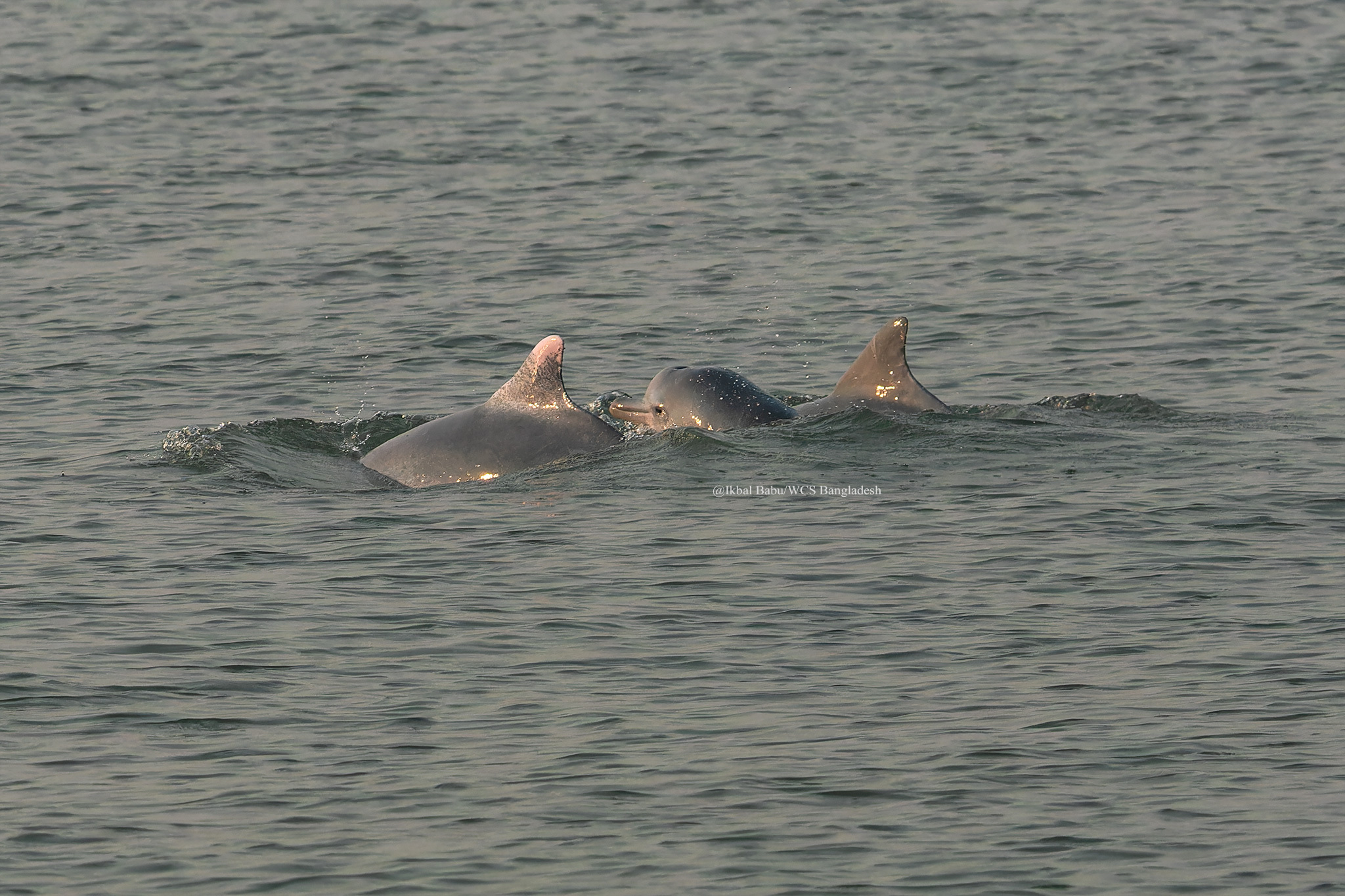
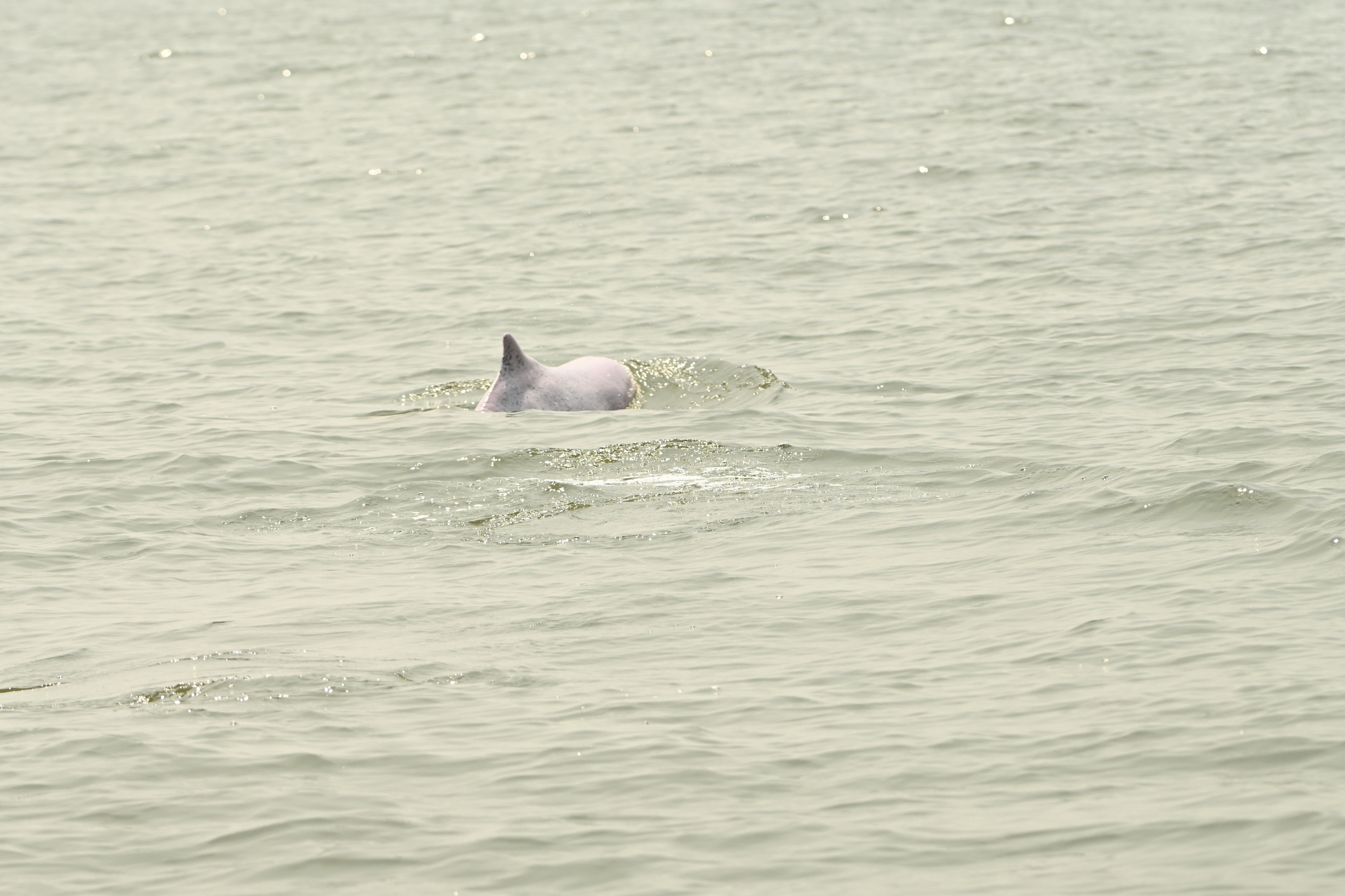
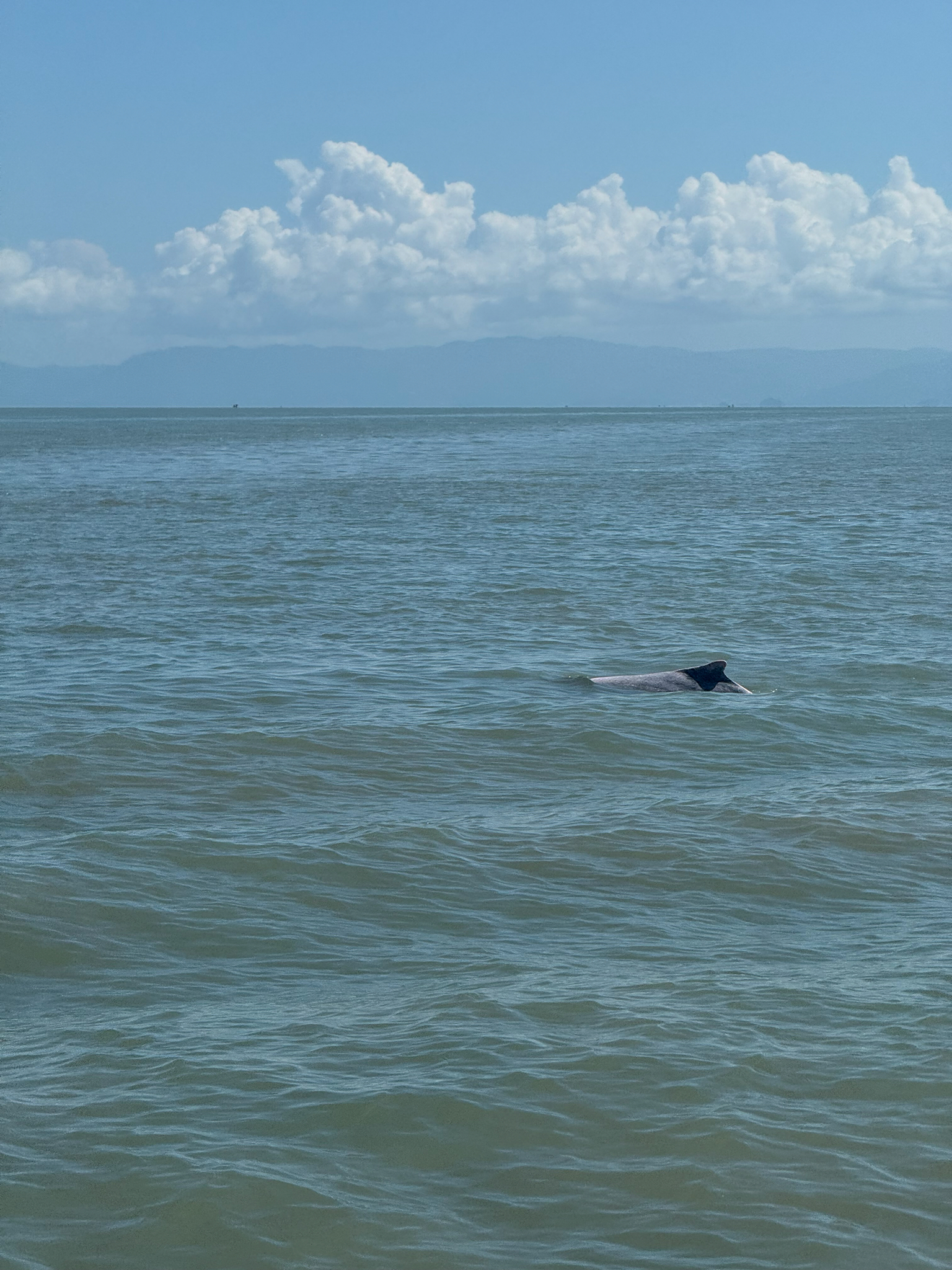
The Indo-Pacific humpback dolphin is a delphinid with a robust body and a long rostrum, clearly set off from the melon. The flippers are broad and rounded at the tip, the tail fluke ample. The most distinctive feature remains the dorsal fin: short and triangular, it sits on a broad, slightly domed base. This dorsal “hump”, which gives the group its name, is nevertheless far less pronounced than in the Indian Ocean humpback dolphin (Sousa plumbea) and is practically absent in Chinese populations. Adults most often measure 2 to 2.8 m, some compilations widen the range to 3.5 m, for 150 to 230 kg; newborns average 101 cm.
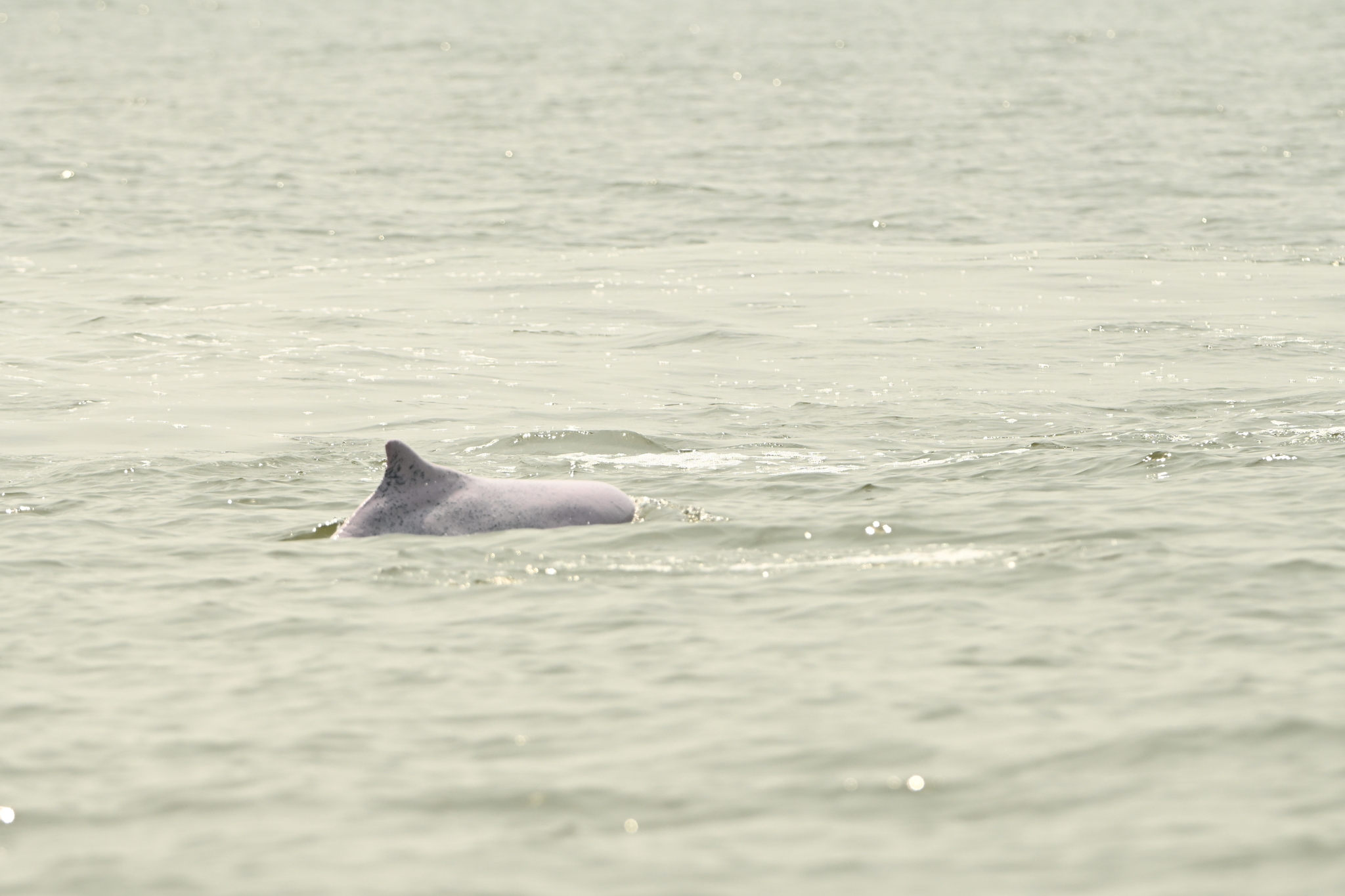
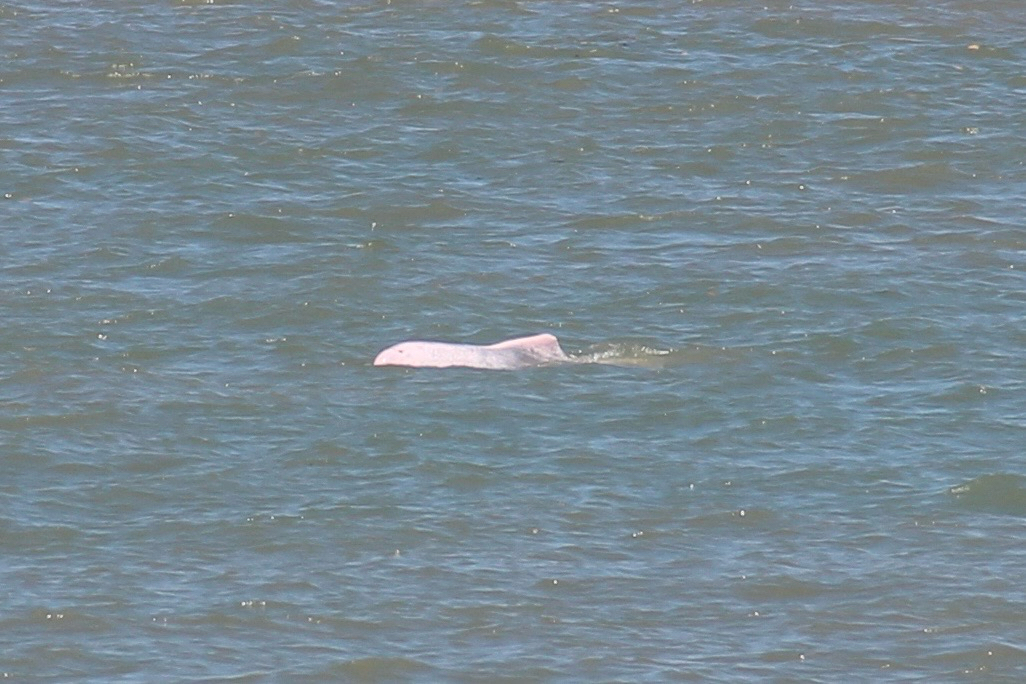
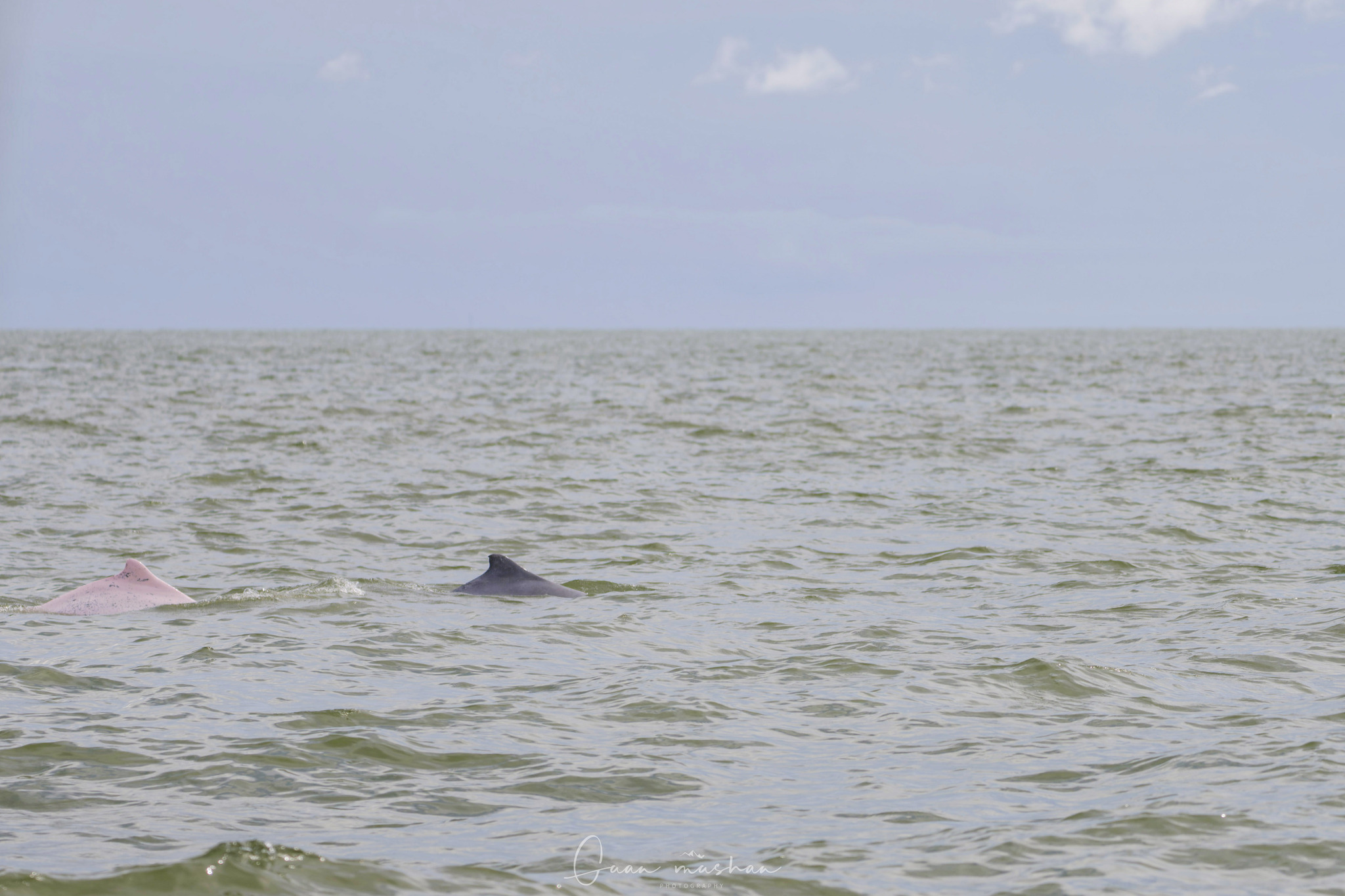
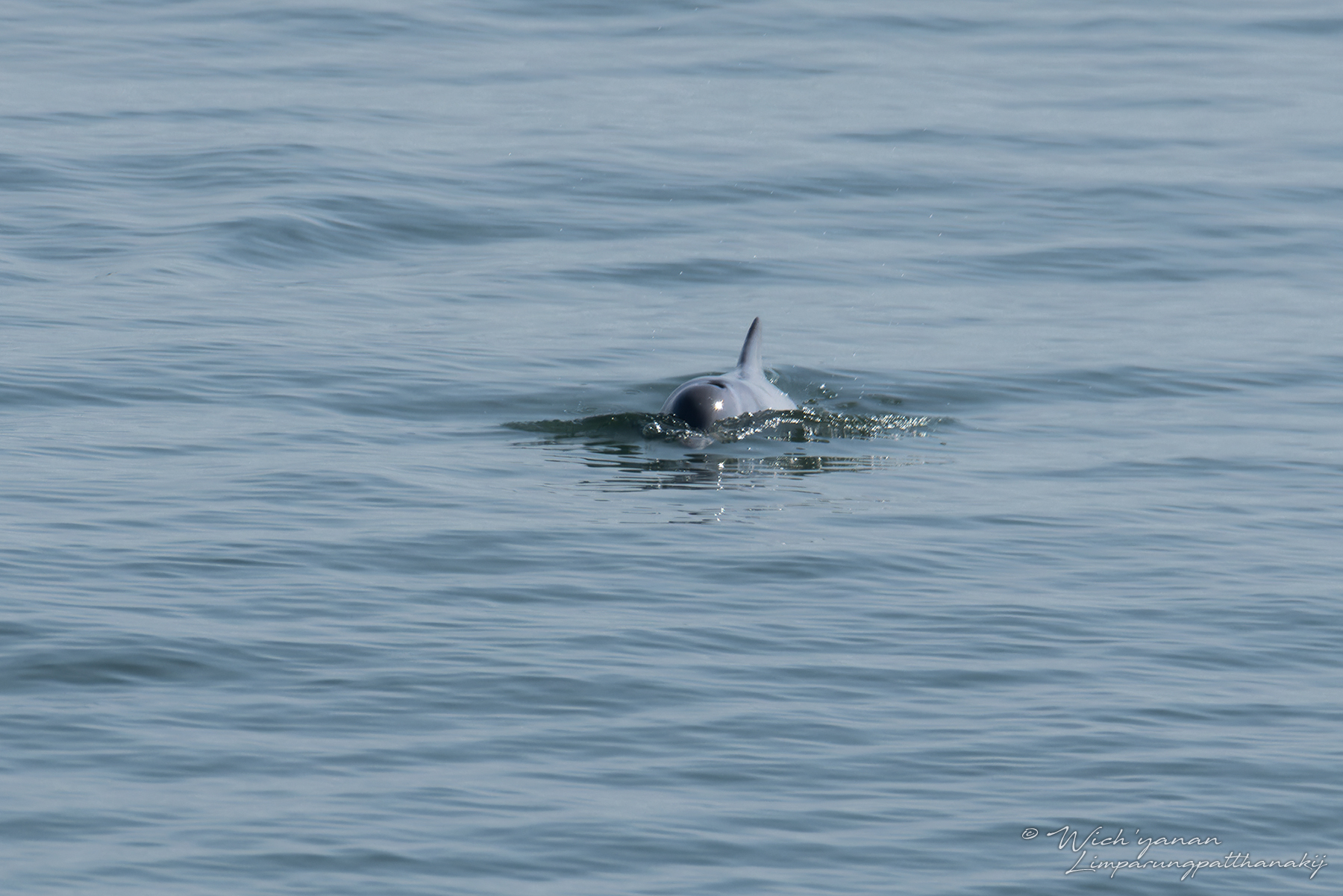
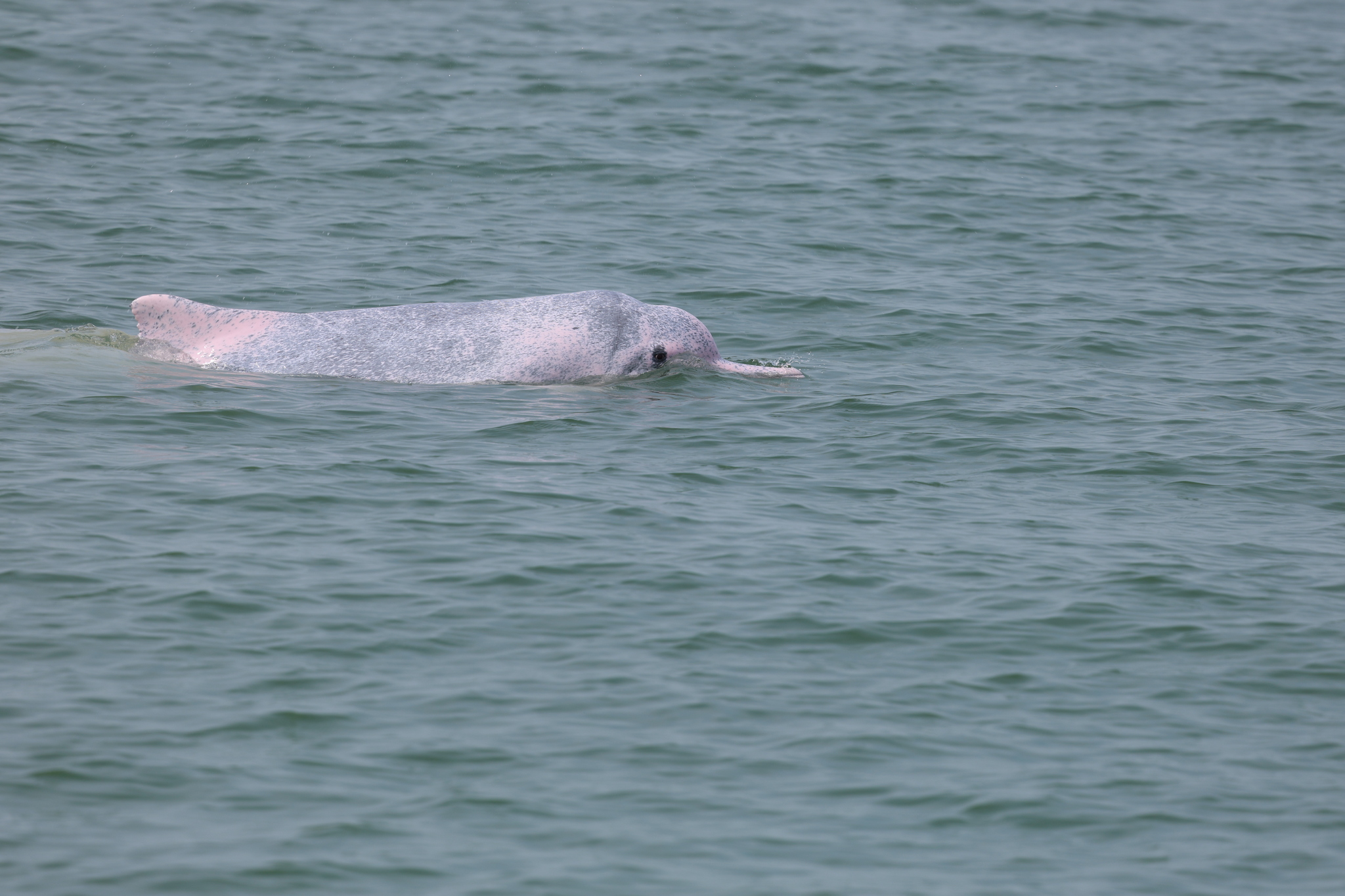
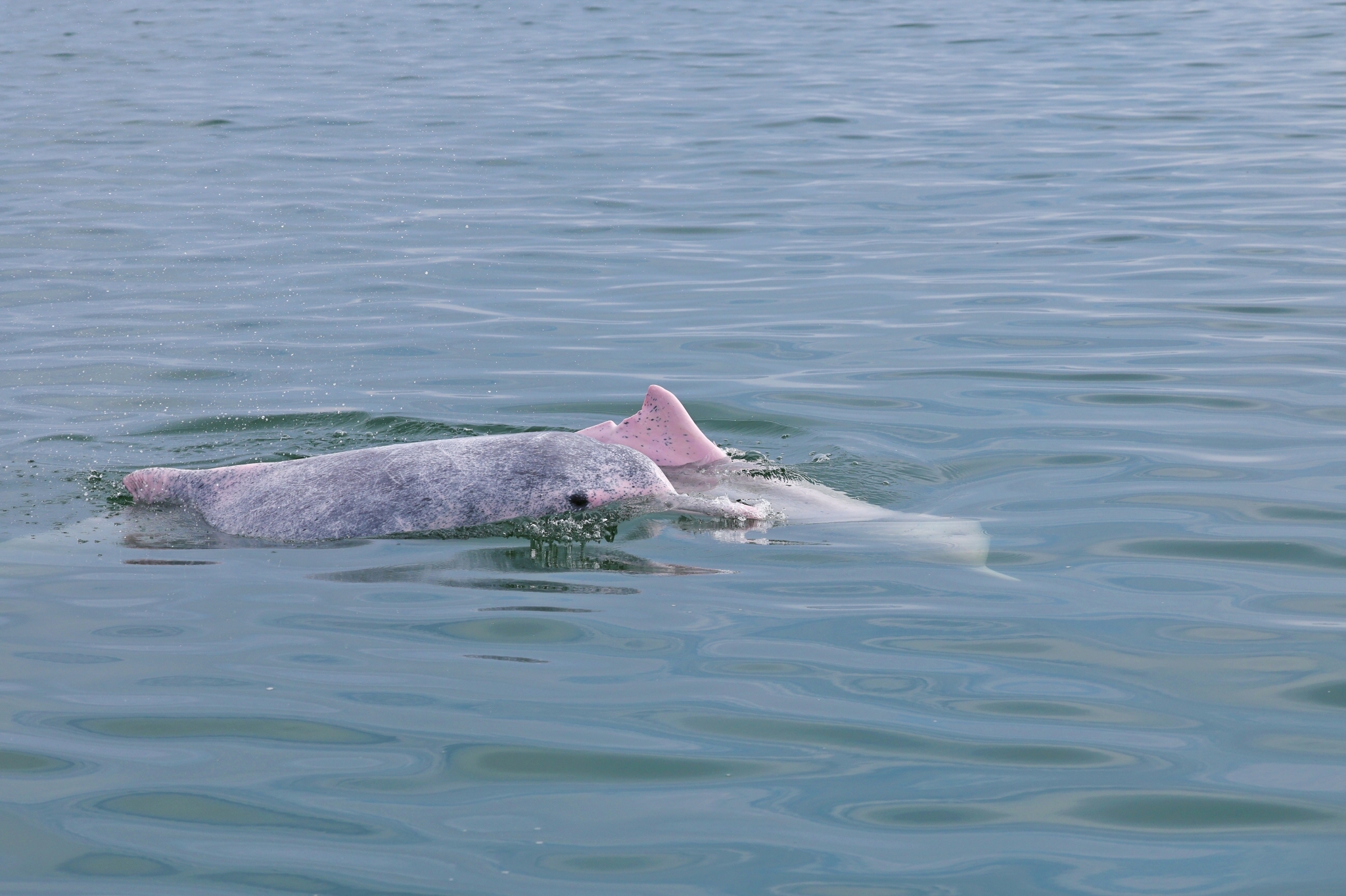
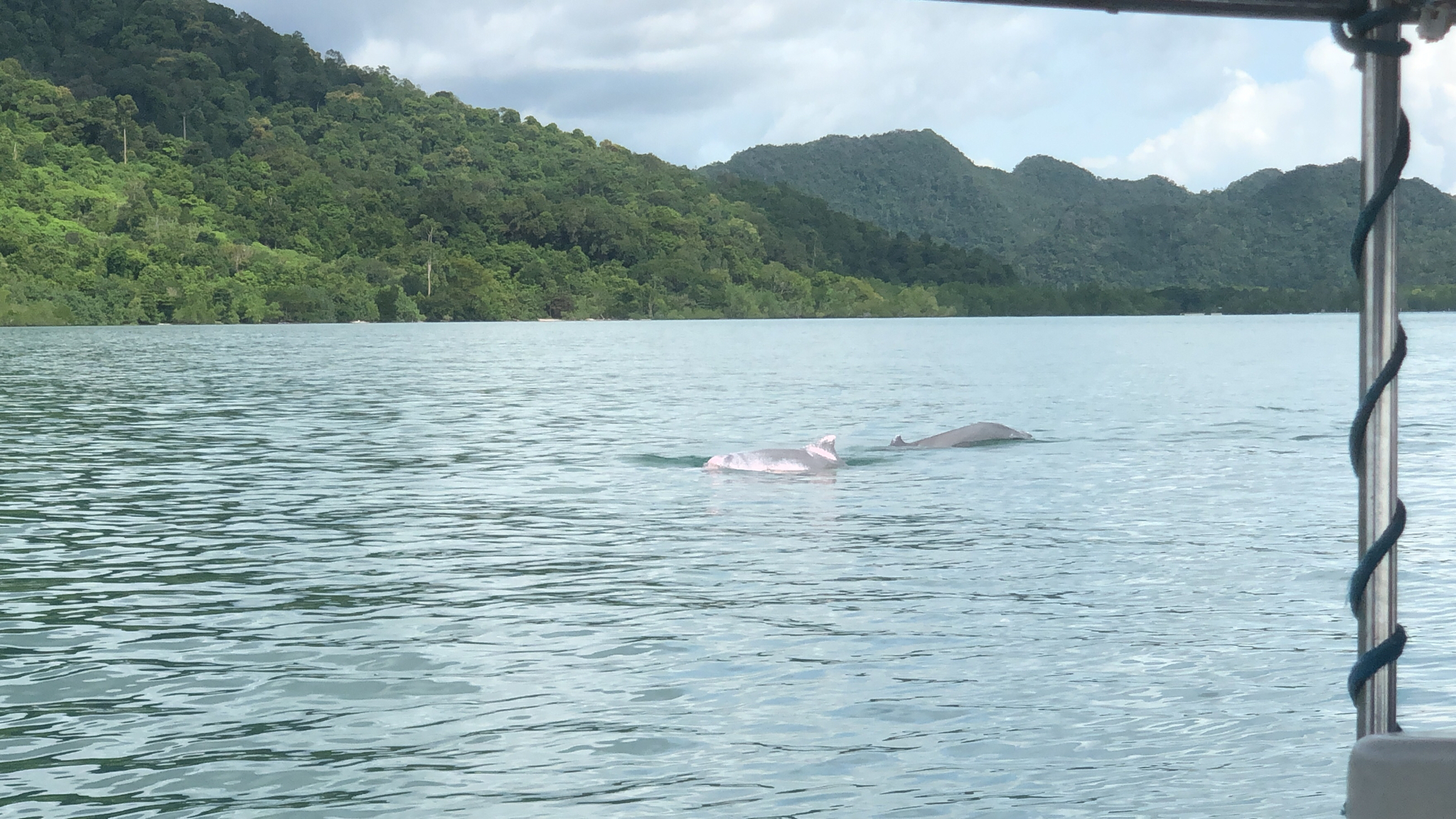
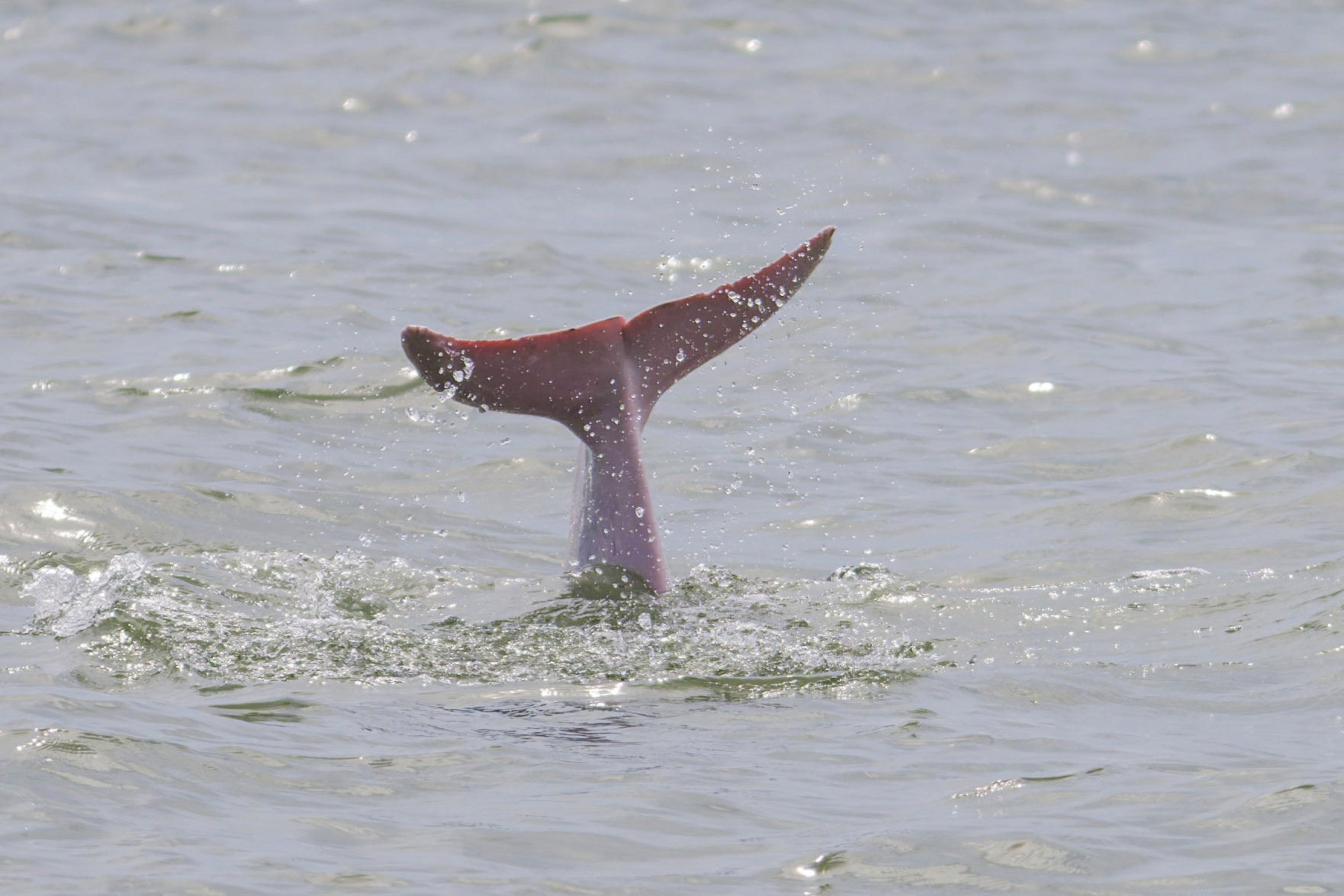
Coloration changes radically with age and is the best identification cue. Calves are born dark grey to almost black, lighten through a mottled grey, then turn white in adulthood. In Chinese and Thai waters, older animals appear distinctly pink: this hue does not come from a pigment but from very well developed superficial blood vessels, linked to thermoregulation. The Taiwanese subspecies is distinguished by dark spots that persist throughout life on the dorsal fin.
Confusion is limited. The Indo-Pacific bottlenose dolphin (Tursiops aduncus), which often shares the same bays, has a shorter rostrum, a clearly set off falcate dorsal fin, and never turns white or pink. The Irrawaddy dolphin (Orcaella brevirostris) has no beak and carries a tiny dorsal fin; the finless porpoise (Neophocaena) has no dorsal fin at all. Within the genus Sousa, the ranges barely overlap: S. plumbea occupies the western Indian Ocean, S. sahulensis northern Australia and southern New Guinea, S. teuszii West Africa.
Described under the name Delphinus chinensis by Pehr Osbeck in 1765, Sousa chinensis belongs to the family Delphinidae. The genus Sousa has been thoroughly revised: the review by Jefferson and Rosenbaum (2014), based on cranial morphology and on mitochondrial and nuclear DNA, split the former Indo-Pacific humpback dolphins into three species, S. plumbea, S. chinensis and the newly described S. sahulensis, to which S. teuszii in the Atlantic is added. Two subspecies are recognised: the nominate form S. c. chinensis and S. c. taiwanensis (Wang et al., 2015), confined to the Eastern Taiwan Strait and validated by the taxonomy committee of the Society for Marine Mammalogy. Questions remain open: animals from the Bay of Bengal show genetic signatures that would align them more closely with S. sahulensis, so that the confirmed range of S. chinensis extends with certainty only as far as the Bangladesh-Myanmar border.
The species occurs in tropical to warm temperate coastal waters of the eastern Indian Ocean and the western Pacific. The northernmost sightings come from the approaches to the mouth of the Yangtze, in central China; the range then runs south through South-East Asia and back up westwards along the Bay of Bengal, at least as far as the coast of Odisha, in eastern India. The range states listed by the IUCN are Bangladesh, Brunei, Cambodia, China, Hong Kong, India, Indonesia, Malaysia, Myanmar, the Philippines, Singapore, Taiwan, Thailand and Vietnam.
The animal is firmly inshore: it is rarely seen beyond 20 to 30 m of depth or more than a few kilometres from the shore, and its highest densities are found in and around estuaries, mangroves, coastal lagoons and sand and mud banks. It sometimes enters watercourses, but rarely goes more than a few kilometres upstream and stays within the zone of tidal influence. Its distribution is fragmented: in China, where fishers reported it almost continuously along the coast a few decades ago, six to eight areas of regular presence remain today.
The species is present neither in mainland France, nor in the Mediterranean, nor in the Bay of Biscay, nor in the English Channel, nor in the French overseas territories. The only humpback dolphin documented in French waters is a related species, the Indian Ocean humpback dolphin (Sousa plumbea, listed as Endangered), recorded at Mayotte.
An opportunist, the Indo-Pacific humpback dolphin takes a wide range of coastal, estuarine and reef fish; cephalopods supplement the menu in some regions, and crustaceans are rare in it. In Hong Kong, at least 24 fish species and one cephalopod have been identified, the dominant prey being sciaenids of the genus Johnius, Collichthys lucida and anchovies of the genus Thryssa. Feeding behaviour adapts to human activities: the animals follow trawlers in the Pearl River Estuary, pick up fish escaping from nets being hauled in Bangladesh and exploit catfish in Peninsular Malaysia.
Groups most often number 2 to 6 individuals, with gatherings of several dozen behind fishing boats; in Bangladesh, the median size reaches 19 animals and groups of more than 200 have been recorded. Social organisation is of the fission-fusion type, made up of generally brief associations, more stable however in the small Taiwanese population. Movements are limited: individual home ranges cover on average 135 km² in Hong Kong, 84 km² at Xiamen and 169 km² in the Zhanjiang-Leizhou region, and no large-scale migration is known. Dives are short: in Hong Kong, most groups stay submerged for less than a minute, the durations measured ranging from about 10 to 277 seconds (a little more than four minutes at most). This breathing profile is consistent with the shallow depth of the waters used, rarely more than 20 or 30 m.
Reproduction is slow. A single calf is born after a gestation of a little under a year (10 to 12 months depending on the source). Births occur all year round, with a marked peak from March to June in Hong Kong. The interval between two calvings is long for a dolphin: three to five years depending on the study, with a mean of five years measured on 60 females monitored by photo-identification in Hong Kong. Females are mature at around 9-10 years (11 to 12 years according to the Taiwanese data), males a few years later; physical maturity is reached at around 14-17 years and generation length is estimated at 25 years. Natural predation is almost unknown, the estuarine waters used holding few large sharks and killer whales.
On the global IUCN Red List, Sousa chinensis is listed as Vulnerable (VU) under criteria A3cd+4cd. The assessment, dated 22 June 2015, was published in 2017 (version corrected in 2018) and is flagged as needing updating; the trend is decreasing and the population is described as severely fragmented. The listing rests on an inferred reduction of at least 30% in numbers over three generations, that is about 75 years (from 1960 to 2035). There is no global estimate: the sum of known numbers comes to about 5,000 individuals, for less than a third of the range actually surveyed. The largest known unit is that of the Pearl River Estuary and Hong Kong, put at about 2,500 animals; Hong Kong waters themselves hold only 32 to 87 according to the transect surveys of the past ten years.
Bycatch in fishing gear, gillnets and trawls first and foremost, is the main threat, followed by habitat loss and degradation linked to coastal development. To these are added ship strikes, the fast ferries of the Pearl River Estuary reaching 30 to 40 knots, chemical contamination (DDT, PCBs, mercury, flame retardants), underwater noise and the reduction of freshwater inflows to estuaries. The species is listed in Appendix I of CITES and Appendix II of the Bonn Convention; it is afforded first-class state protection in China and protected by several ordinances in Hong Kong, and in 2014 Bangladesh created a marine protected area of about 1,700 km² covering a large part of the sightings off the Sundarbans.
Hong Kong remains the best site in the world for watching the species: boat trips have been run there since the 1990s, exclusively in the western waters of the territory, north Lantau (Sha Chau and Lung Kwu Chau, The Brothers), west Lantau around Tai O, south-west and south Lantau, and the Soko Islands, the highest densities being recorded in the waters west of Lantau; an official code of conduct governs these activities. Elsewhere, regular sightings occur in the Langkawi archipelago and on the Matang coast in Malaysia, in the Gulf of Thailand and, in Cambodia, in the Kampot and Koh Kong regions. Since the animals are coastal and not very demonstrative, watching from the shore or from a boat with the engine switched off often gives better results than an approach. Harassment by unregulated operators is explicitly listed among the pressures recorded on Chinese populations: never cut across the path of a group, slow down, keep your distance and give up any approach to females accompanied by a calf. On the west coast of Taiwan, where only a few dozen animals survive, any additional disturbance must be avoided.
Adults in Chinese and Thai waters turn white, with a distinct pink tinge. This colour does not come from a pigment but from very well developed superficial blood vessels, involved in thermoregulation. The young, for their part, are born dark grey to almost black and lighten gradually.
No. Sousa chinensis is absent from the Mediterranean, the Bay of Biscay, the English Channel and French overseas waters. The only humpback dolphin documented in French waters is a related species, Sousa plumbea, recorded at Mayotte and listed as Endangered by the IUCN.
No global estimate exists. The sum of known numbers comes to about 5,000 individuals, but less than a third of the range has been surveyed. The largest core, that of the Pearl River Estuary and Hong Kong, is put at some 2,500 animals.
Bycatch in fishing gear, gillnets and trawls in particular, is the leading cause of human-induced mortality across the range, ahead of habitat loss linked to coastal development, ship strikes and chemical contamination.
The dolphins of the Eastern Taiwan Strait form a distinct subspecies, Sousa chinensis taiwanensis, described in 2015. Confined to a narrow band of estuarine waters off the west coast of the island, they number 37 to 44 mature individuals and are listed as Critically Endangered; more than 30% of the animals photographed bear injuries caused by fishing gear.
The Indo-Pacific bottlenose dolphin (Tursiops aduncus) has a shorter rostrum and a clearly set off falcate dorsal fin, and it keeps a grey livery all its life. The humpback dolphin has a long beak, a short dorsal fin set on a broad, slightly domed base, and turns white or pink with age.
Only in the western waters of the territory: north Lantau (Sha Chau and Lung Kwu Chau, The Brothers), west Lantau around Tai O, south-west and south Lantau, and the Soko Islands. The highest densities are recorded west of Lantau. The species does not use the eastern waters of Hong Kong.
Not long. Monitoring carried out in Hong Kong shows that most groups stay submerged for less than a minute, the durations measured ranging from about 10 to 277 seconds. These brief dives match an animal that hunts in waters rarely more than 20 to 30 m deep.
Profile compiled from authoritative scientific sources (IUCN, NOAA Fisheries, specialist literature) and reviewed for factual accuracy.
According to the open data of the GBIF, 206 georeferenced sightings of Sousa chinensis are recorded in our photographic index.
| Country | Notes |
|---|---|
| Hong Kong | 96 |
| China | 44 |
| Thailand | 31 |
| Chinese Taipei | 9 |
| India | 8 |
| Macao | 8 |
| Malaysia | 8 |
| Australia | 5 |
| South Africa | 3 |
| Bangladesh | 2 |

Monthly distribution of 217 dated sightings (all years combined): the maximum is reached in August.
| Month | Notes |
|---|---|
| janvier | 22 |
| February | 18 |
| mars | 17 |
| avril | 14 |
| mai | 7 |
| juin | 19 |
| juillet | 16 |
| August | 38 |
| septembre | 16 |
| octobre | 15 |
| novembre | 26 |
| December | 9 |
These figures reflect survey effort (more boaters and more surveys in summer) as much as the actual presence of the species: to be interpreted with caution.


Photographs from GBIF under a Creative Commons licence. The author and the licence of each photograph are given; please respect them if you reuse them.
Automatic selection of the most cited works mentioning the species (source: Crossref).