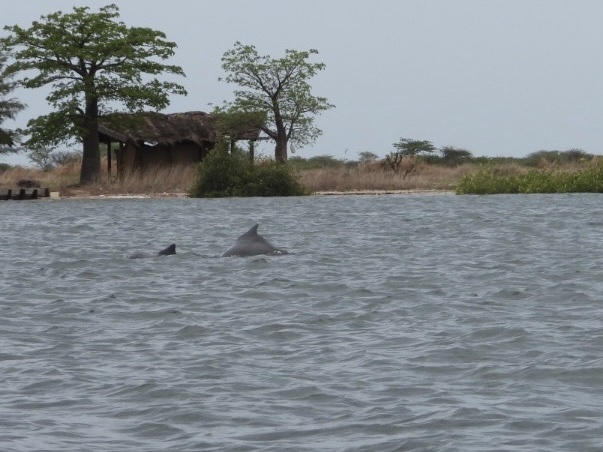
Atlantic humpback dolphin (Sousa teuszii)

Key facts
Scientific name Sousa teuszii (W. Kükenthal, 1892)
Other names Sousa de l’Atlantique; “dauphin du Cameroun” for the Gulf of Guinea population, both in French; English: Atlantic humpback dolphin; former scientific name: Sotalia teuszii.
Size Adults most often 2 to 2.5 m; maximum documented length of about 2.8 m, reached by large males.
Weight About 100 to 150 kg in most adults; up to about 280 kg in the largest males; about 14 kg at birth.
Longevity Longevity not established. Sexual maturity in females estimated at around 9 to 10 years, interval between two births of 3 to 5 years, generation length estimated at about 25 years.
Diet Schooling and demersal coastal fish: mullet, bonga shad, grunts, snappers, emperors, croakers, flatfish, threadfins, sicklefish, bonito, sardines, herring and sea bream; supplemented by cephalopods and invertebrates, including mantis shrimps.
IUCN status Critically Endangered (CR), criteria A3cd+4cd; C2a(i). Status set by the 2017 assessment (errata version published in 2018, by T. Collins, G. Braulik and W. Perrin), which moved the species from Vulnerable (2012 assessment) to Critically Endangered. Population trend declining. Total population inferred at fewer than 3,000 individuals, for about 1,500 mature individuals at most, with no subpopulation estimated at more than 250 mature individuals. No subpopulation is assessed separately to date.

In brief

The Atlantic humpback dolphin is the only cetacean strictly endemic to the coast of West and Central Africa, where it occupies very shallow water, from southern Morocco to Angola. Recognisable by the fleshy hump that carries its small dorsal fin, it lives in small, inconspicuous groups very close to shore. With a total population estimated at fewer than 3,000 individuals, probably no subpopulation exceeding 250 breeding adults, and heavy bycatch in artisanal gillnets, it is one of the most threatened dolphins in the world: it has been listed as Critically Endangered since 2017.

Identification

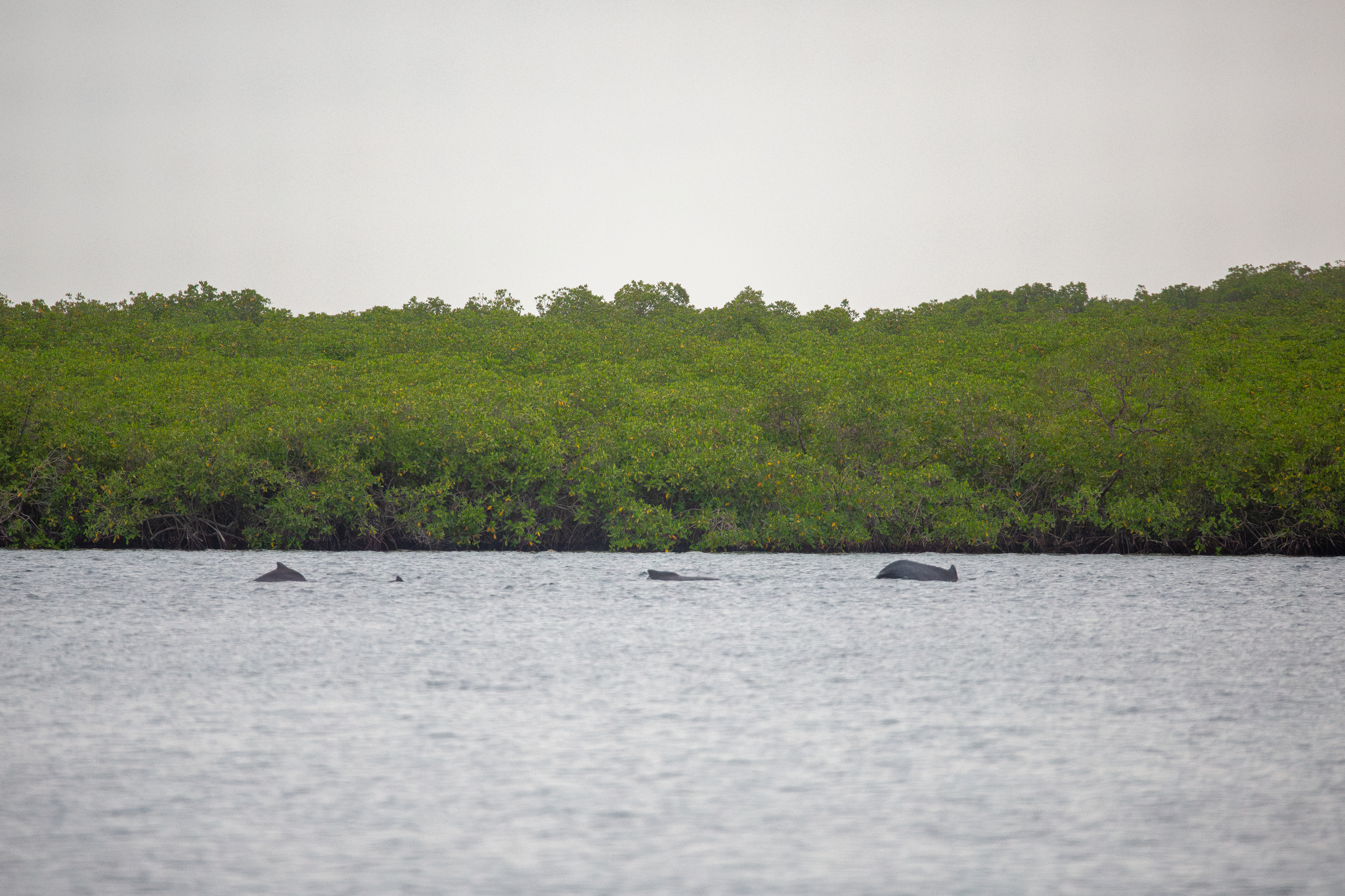
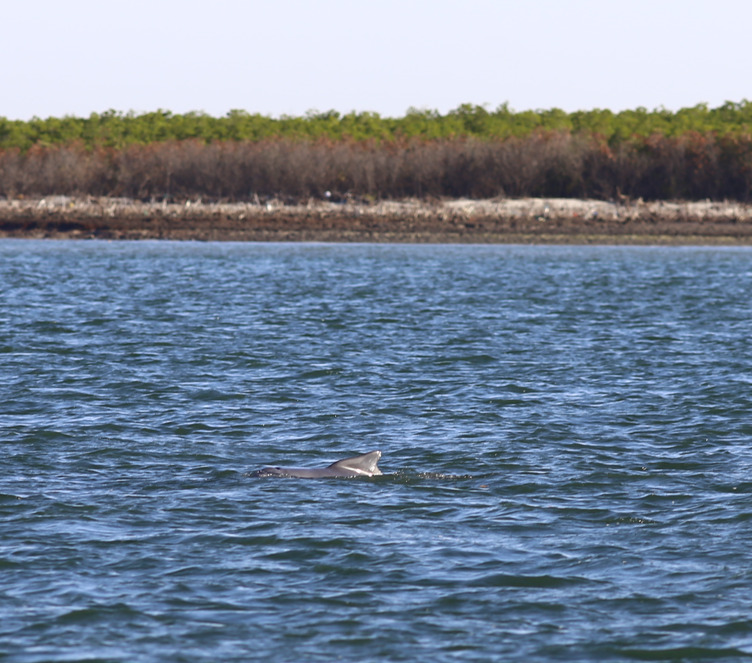
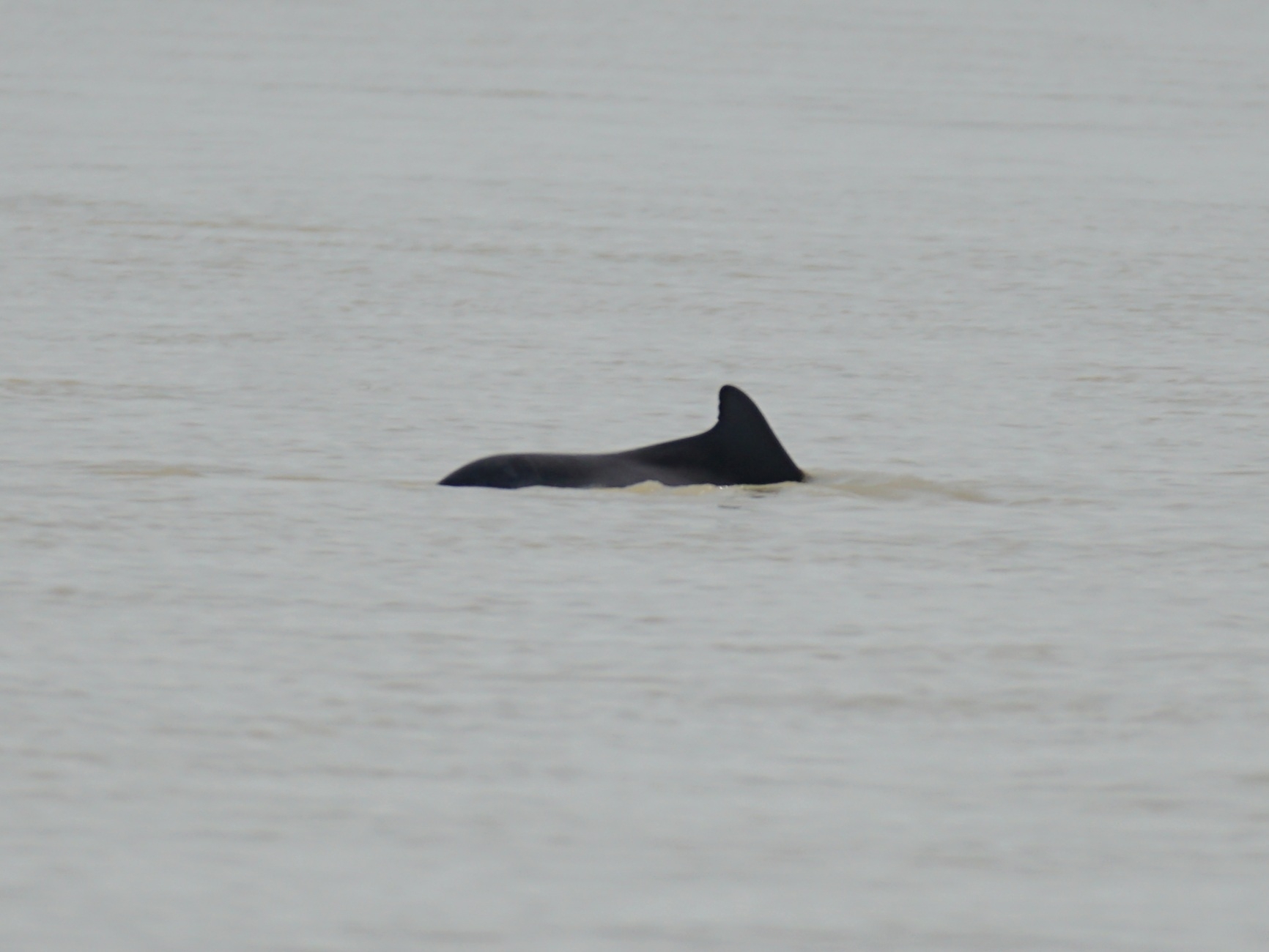
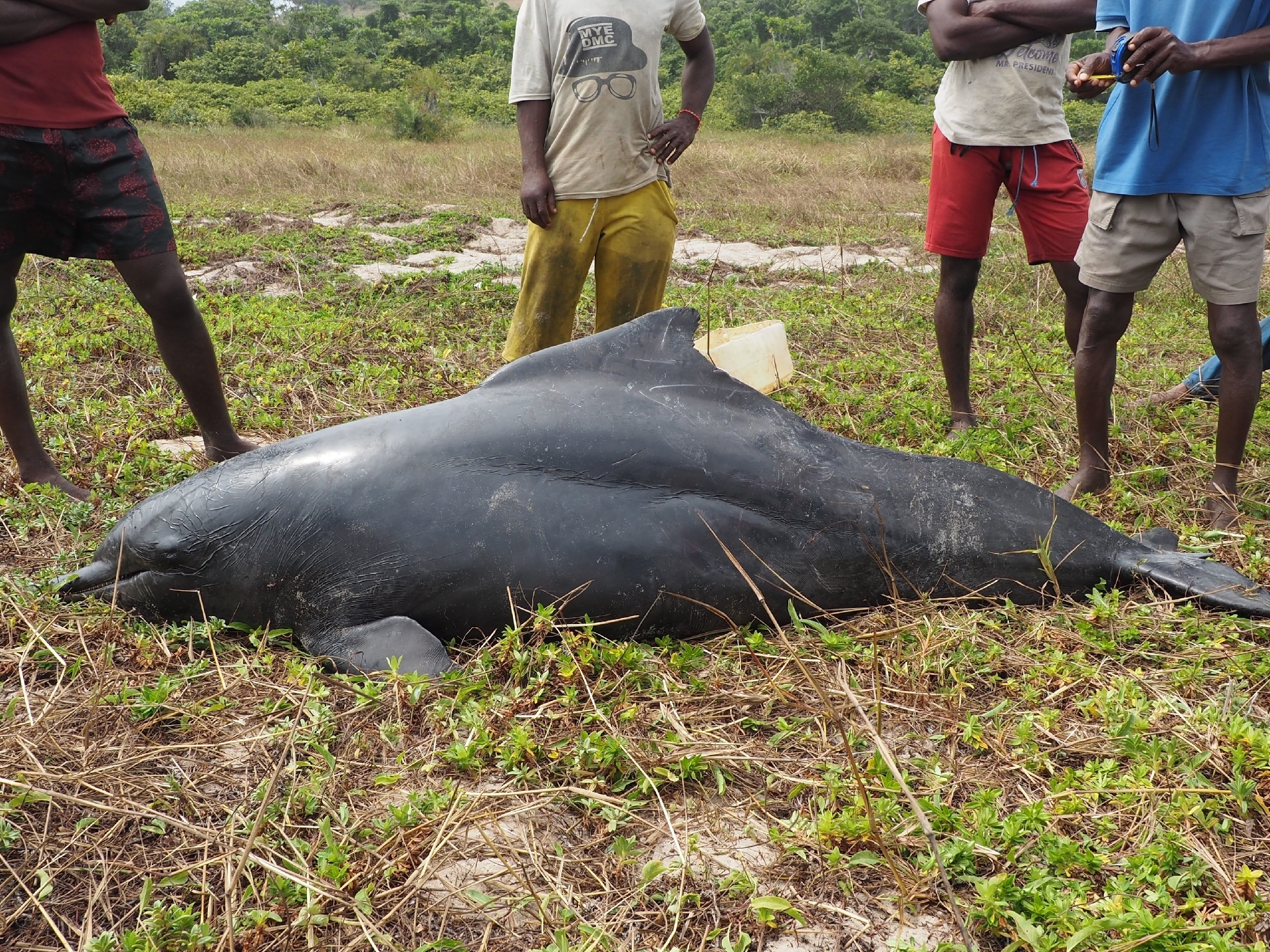
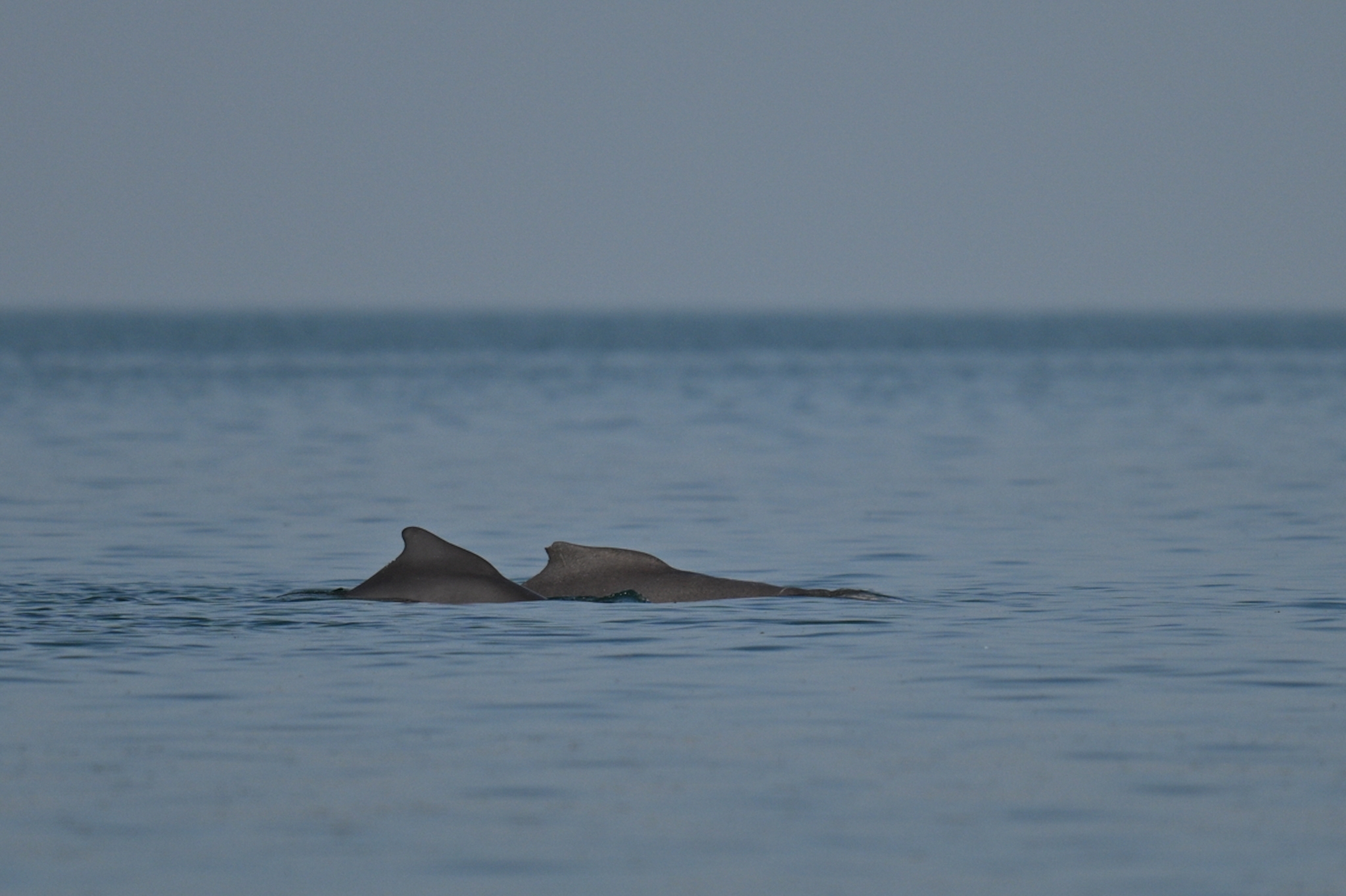
The Atlantic humpback dolphin is a stocky delphinid with a heavy body, whose outline is dominated by a unique feature: a swelling of connective tissue in the middle of the back, on which stands a surprisingly small dorsal fin, some fifteen centimetres high, short, slightly falcate and rounded at the tip. This combination of “large hump, small fin” is found in no other cetacean of the eastern Atlantic. The rostrum is long, slender and clearly set off from the melon; the flippers are broad, with a straight trailing edge. The coloration is slate grey on the back and flanks, lightening gradually to pale grey, sometimes almost whitish, on the belly; depending on the light, the animals appear brownish grey to almost black. Young animals are a lighter grey than adults. The jaw carries 26 to 31 conical teeth per row, about thirty in all, distinctly fewer than in its Indo-Pacific congeners, which have 33 to 37 per row, and the skull is shorter and broader than that of the other Sousa.

Sexual dimorphism is marked: males are larger and more robust, with a distinctly more developed dorsal hump and a more pronounced caudal keel than females. Surface behaviour also helps with identification: the animal rolls slowly, often brings the rostrum out of the water before diving, does not bow-ride and breaches only very rarely. It travels slowly, at a speed of 1 to 7 km/h (an average of around 4 km/h), and generally dives for less than three minutes.

Possible confusions are few but real. The common bottlenose dolphin (Tursiops truncatus) shares the whole range and occupies the same coastal waters; in Dakhla Bay the two species are even regularly seen in mixed association, a situation unknown elsewhere. The common bottlenose dolphin is immediately distinguished by the absence of a hump and by a tall, broad and markedly falcate dorsal fin. The three other species of the genus Sousa, S. plumbea, S. chinensis and S. sahulensis, are allopatric and are never found in the Atlantic. Finally, the closeness of the names can mislead: the Guiana dolphin (Sotalia guianensis), which lives off the coast of French Guiana, belongs to a neighbouring genus to which S. teuszii was initially assigned, but it is much smaller and has no hump.

Taxonomy

The species was described in 1892 by the German zoologist Willy Kükenthal, under the name Sotalia teuszii, from a single skull collected at Man O’War Bay, in the Cameroon estuary, near present-day Douala. The specific epithet honours Eduard Teusz, then in charge of the local plantations, who had collected the specimen. The description came with a mistake that has remained famous: stomach contents made up of grasses, plant material and mangrove fruit, assumed to come from the same animal, led Kükenthal to consider a herbivorous cetacean. The correspondence exchanged with the naturalist Pieter-Joseph Van Beneden shows how confused the circumstances of the find were, the material having changed hands several times: in all likelihood it was a manatee stomach wrongly associated with a dolphin skull.

The species is today placed in the family Delphinidae and in the genus Sousa, which brings together four species of humpback dolphin: S. teuszii in the eastern Atlantic, S. plumbea in the western Indian Ocean, S. chinensis in the Indo-Pacific and S. sahulensis in Australian waters. S. teuszii is the only Atlantic representative of the genus, and the most threatened of the four.

Distribution and habitat

The species is strictly endemic to the tropical and subtropical coastal fringe of the African Atlantic. Its present-day presence is confirmed in fourteen of the nineteen States that make up the range: Dakhla Bay in southern Morocco, Mauritania, Senegal, the Gambia, Guinea-Bissau, Guinea, Sierra Leone, Togo, Benin, Nigeria, Cameroon, Gabon, the Republic of the Congo and Angola. The known latitudinal limits run from 23°54.5′ N to 15°38.4′ S. The distribution is fragmented: large stretches separate apparently isolated population nuclei, the Dakhla one lying more than 400 km from the nearest documented Mauritanian group.

The habitat is remarkably narrow. The animals keep almost exclusively inshore of the 20 m isobath, most sightings come from depths of less than 5 m and within 13 km of the shore, in estuaries, mangrove channels, semi-enclosed bays, coastal archipelagos, mudflats, sandbanks, seagrass beds and exposed open coasts. The species is confined to waters whose mean annual temperature exceeds 15°C and does not occur around oceanic islands separated from the continent by deep water.

The Atlantic humpback dolphin is entirely absent from French waters: neither the Mediterranean, nor the Bay of Biscay, nor the English Channel, nor any overseas territory lies within its range, whose northern limit is at Dakhla.

Biology and ecology

It is a generalist predator of shallow water. The prey identified cover a wide range of coastal benthic and pelagic fish, mullet, bonga shad, grunts, snappers, emperors, croakers, flatfish, threadfins, sicklefish, bonito, sardines, herring and sea bream, to which are added cephalopods and invertebrates such as mantis shrimps. Hunting alternates between individual searching and cooperative herding: the dolphins encircle the shoals and sometimes drive them against the shore, a tactic that exploits the shallow depth.

Social life is organised in small units. About 65% of the sightings on record involve ten animals or fewer, groups of four to seven individuals being the most frequent; gatherings of up to 45 animals have nevertheless been reported. Some areas show strong affiliations and a group structure that is stable over time. The acoustic repertoire combines broadband echolocation clicks, pulsed sounds and whistles; the latter are mostly simple, more than 85% having only a single inflection point, for a mean fundamental frequency of between 4.8 and 8.2 kHz.

Breeding remains poorly documented and most of the parameters are extrapolated from the sister species. Females are thought to reach sexual maturity at around 9 to 10 years and to give birth every 3 to 5 years, after which the newborn weighs some fifteen kilograms. Births appear to be possible all year round with seasonal peaks, calving having been observed in March to April and in late April to May depending on the region. This low fecundity, combined with a generation length estimated at about 25 years, gives the species an extremely slow capacity for recovery: a mean annual adult mortality of only 5.3% would be enough to cause a decline of 80% in 75 years.

Status and conservation

The Atlantic humpback dolphin is among the most threatened cetaceans on the planet. Listed as Vulnerable in 2012, it was reclassified as Critically Endangered (CR, criteria A3cd+4cd; C2a(i)) in 2017, a status still in force, with a declining population trend. No robust abundance estimate exists for even one State within the range; the figures that are known come from local photo-identification programmes and are tiny: 103 individuals identified in the Saloum Delta in Senegal, 47 animals over an area of 25 km by 15 km at the Río Nuñez in Guinea, 10 individuals along 35 km of coast in southern Angola. The global population is inferred at fewer than 3,000 animals, for about 1,500 mature individuals at most, with no subpopulation estimated at more than 250 mature individuals.

Bycatch in the gillnets of artisanal fisheries is the dominant threat across the whole range; “anti-shark” nets add to it. Next come deliberate takes, the animals caught being eaten as marine bushmeat or used as bait, then the destruction and degradation of coastal habitats: coastal development, dredging, pollution, alteration of estuaries and mangroves. The scarcity of prey linked to overfishing, anthropogenic noise, ship strikes, disturbance by tourism and climate change complete the picture, with levels of impact that are still poorly quantified.

The species benefits from an international regulatory framework: listed on Appendix I of CITES, on Appendix II of the CMS (Convention on Migratory Species) since 1991 and then on its Appendix I since 2009. A CMS Concerted Action was adopted in 2017 and renewed at COP13 in 2020, together with the drafting of a species action plan. The Consortium for the Conservation of the Atlantic Humpback Dolphin (CCAHD), set up in June 2020 and incorporated as a foundation in the Netherlands, brings together more than 100 specialists and organisations from the 19 States of the range. It coordinates field campaigns (photo-identification, environmental DNA, passive acoustics), local ecological knowledge surveys, stranding networks and dialogue with government bodies, and published in 2021 a report ranking conservation priorities. In the United States, the species was listed as “endangered” under the Endangered Species Act with effect from 22 March 2024.

Watching this species

There is no organised commercial watching activity built around this species, and the fragility of its populations makes that absence desirable. Encounters remain rare, chance events confined to a few well identified areas: Dakhla Bay, at the far north of the range, where a small resident community has been monitored since the 1990s; Banc d’Arguin National Park in Mauritania, where most of the reports are concentrated between Iwik and Aouatif Bay; the Saloum Delta in Senegal; the Río Nuñez estuary in Guinea. The animals often stay a few hundred metres from the shore, which makes watching from land possible, the best option because it is entirely non-intrusive.

The species is notoriously shy: it avoids boats, does not come to the bow and breaks off its activity when approached. Given the tiny size of the population nuclei, any disturbance carries a high potential cost. Good practice means never pursuing a group, cutting the engine or holding a steady and reduced speed, keeping a distance of at least 100 m, never coming between a female and her calf, and limiting the length of the encounter. Photographs of the dorsal fin and the hump, dated and geolocated, have real scientific value: passed to the CCAHD consortium or to protected area managers, they feed the photo-identification catalogues, the main source of knowledge about numbers. Since confusion with the common bottlenose dolphin is frequent, it is useful to photograph the whole back systematically rather than the head alone.

Frequently asked questions

Why is this dolphin considered one of the most threatened in the world?

Three factors combine. Its range is narrow and strictly coastal, which makes it coincide almost exactly with the artisanal fishing and urbanised areas of the West African coast. Its global population is fewer than 3,000 individuals, spread across isolated nuclei none of which is thought to hold more than 250 breeding adults. Finally, its reproduction is very slow: an adult mortality of only 5.3% a year would be enough to reduce the species by 80% in 75 years.

Where does its “hump” come from?

It is a thickening of connective tissue in the middle of the back, on which a short dorsal fin of some fifteen centimetres is set. This hump is present in both sexes but distinctly more developed in adult males, which also have a more pronounced caudal keel. It is the most reliable identification feature in the field.

Does the Atlantic humpback dolphin occur in France?

No. The species is absent from the Mediterranean, the Bay of Biscay, the English Channel and all the French overseas territories. The northern limit of its range lies in Dakhla Bay, in southern Morocco. Off the coast of French Guiana lives another coastal species with a similar name, the Guiana dolphin (Sotalia guianensis), which belongs to a different genus and has no hump.

Is it true that it used to fish with Mauritanian fishermen?

Cooperative fishing between the humpback dolphin and the Imraguen of the Mauritanian coast has long been documented: the fishermen struck the water or whistled to attract the dolphins, which drove the mullet shoals towards the shore and towards the nets, taking advantage of them themselves. The practice was described as early as the 1970s, but the available data do not make it possible to establish to what extent it continues today.

How long does it live?

The longevity of the species has not been established: no ageing study has been possible on a sufficient sample. The known parameters, often extrapolated from the other humpback dolphins, indicate sexual maturity in females at around 9 to 10 years, an interval between births of 3 to 5 years and a generation length estimated at about 25 years, which suggests a long-lived species.

What is actually being done to protect it?

The species is listed on Appendix I of CITES and on Appendix I of the CMS since 2009 (Appendix II since 1991). A CMS Concerted Action, adopted in 2017 and renewed in 2020, frames the drafting of an international action plan. In the field, the Consortium for the Conservation of the Atlantic Humpback Dolphin, set up in June 2020, which brings together more than 100 specialists and organisations from the 19 States of the range, runs photo-identification, environmental DNA and passive acoustics campaigns, develops stranding networks and works with fishing communities to reduce bycatch.

Sources

Profile compiled from authoritative scientific sources (IUCN, NOAA Fisheries, specialist literature) and reviewed for factual accuracy.

Observed distribution

According to the open data of the GBIF, 26 georeferenced sightings of Sousa teuszii are recorded in our photographic index.

Main countries of observation
CountryNotes
Senegal16
Guinea-Bissau5
Gabon2
Congo1
Mauritania1
Western Sahara1

Distribution map: Atlantic humpback dolphin (Sousa teuszii)

Distribution map: Atlantic humpback dolphin (Sousa teuszii), 26 georeferenced sightings from GBIF
26 georeferenced sightings of Sousa teuszii. Base map Natural Earth, public domain. GBIF data.
🗺️ Open the interactive mapTo zoom and pan. It uses the OpenStreetMap/CARTO base maps and the GBIF occurrence densities: no data is sent to these services before you click.

Presence through the year

Monthly distribution of 25 dated sightings (all years combined): the maximum is reached in juin.

50janvier : 3janfévrier : 3febmars : 1maravril : 3avrmai : 3maijuin : 5juinjuillet : 2juilaoût : 0Augustseptembre : 0sepoctobre : 2octnovembre : 1novdécembre : 2dec
Sightings by month
MonthNotes
janvier3
February3
mars1
avril3
mai3
juin5
juillet2
August0
septembre0
octobre2
novembre1
December2

These figures reflect survey effort (more boaters and more surveys in summer) as much as the actual presence of the species: to be interpreted with caution.

En images

Sousa teuszii
© Adrien Groul, CC BY-NC, 2026
Sousa teuszii
© Mayeul Dalleau - Seanopsis, CC BY-NC, 2024
Sousa teuszii
© hchavez, CC BY-NC, 2024
Sousa teuszii
© Yorick Van Hoef, CC BY-NC, 2024
Sousa teuszii
© Axel Hochkirch, CC BY-NC, 2024
Sousa teuszii
© Charlotte Kirchner, CC BY, 2023
Sousa teuszii
© mcgowenm, CC BY-NC, 2022
Sousa teuszii
© mcgowenm, CC BY-NC, 2022
Sousa teuszii
© mcgowenm, CC BY-NC, 2022
Sousa teuszii
© Peter Sackl, CC BY-NC-ND, 2022
Sousa teuszii
© Lucy Keith-Diagne, CC BY, 2021
Sousa teuszii
© Lucy Keith-Diagne, CC BY, 2019

Photographs from GBIF under a Creative Commons licence. The author and the licence of each photograph are given; please respect them if you reuse them.

Scientific references

  1. Van Waerebeek K., Barnett L., Camara A., Cham A. et al. (2004) Distribution, Status, and Biology of the Atlantic Humpback Dolphin, Sousa teuszii (Kükenthal, 1892), Aquatic Mammals
  2. Weir C. (2009) Distribution, behaviour and photo-identification of Atlantic humpback dolphinsSousa teusziioff Flamingos, Angola, African Journal of Marine Science
  3. Collins T. (2015) Re-assessment of the Conservation Status of the Atlantic Humpback Dolphin, Sousa teuszii (Kükenthal, 1892), Using the IUCN Red List Criteria, Advances in Marine Biology
  4. Weir C., Collins T. (2015) A Review of the Geographical Distribution and Habitat of the Atlantic Humpback Dolphin (Sousa teuszii), Advances in Marine Biology
  5. Weir C., Waerebeek K., Jefferson T., Collins T. et al. (2011) West Africa's Atlantic Humpback Dolphin (Sousa teuszii): Endemic, Enigmatic and Soon Endangered?, African Zoology
  6. WEIR C. (2010) FIRST DESCRIPTION OF ATLANTIC HUMPBACK DOLPHINSOUSA TEUSZIIWHISTLES, RECORDED OFF ANGOLA, Bioacoustics
  7. Weir C. (2015) Photo-identification and habitat use of Atlantic humpback dolphins Sousa teuszii around the Río Nuñez Estuary in Guinea, West Africa, African Journal of Marine Science
  8. (2017) Sousa teuszii: Collins, T., Braulik, G.T. & Perrin, W., IUCN Red List of Threatened Species

Automatic selection of the most cited works mentioning the species (source: Crossref).