Chilean dolphin (Cephalorhynchus eutropia)

Key facts
Scientific name Cephalorhynchus eutropia (Gray, 1846)
Other names Chilean dolphin, black dolphin; delfín chileno, tonina (Chile); dauphin du Chili, dauphin noir, dauphin noir du Chili (French)
Size 1.60 to 1.70 m as an adult
Weight about 57 kg on average, up to 63 kg
Longevity not established; at most about twenty years in the closely related species of the genus
Diet coastal fish (sardines, anchovies, rockfish), cephalopods and probably crustaceans
IUCN status Near Threatened (NT), criteria C1+2a(i), assessment of 25 July 2017 (Heinrich & Reeves), population trend declining; no subpopulation assessed separately, but two genetically distinct units are recognised (north of Chiloé / southern fjords). Chilean national status: Vulnerable.

In brief

The Chilean dolphin (Cephalorhynchus eutropia) is the only cetacean endemic to Chile. This small, stocky delphinid of about 1.7 m frequents only the cold, shallow coastal waters of the country, from the Valparaíso region to Cape Horn, where it lives in tiny and highly sedentary groups. The IUCN Red List classifies it as Near Threatened (NT), for a population estimated at a few thousand individuals and declining.

Identification

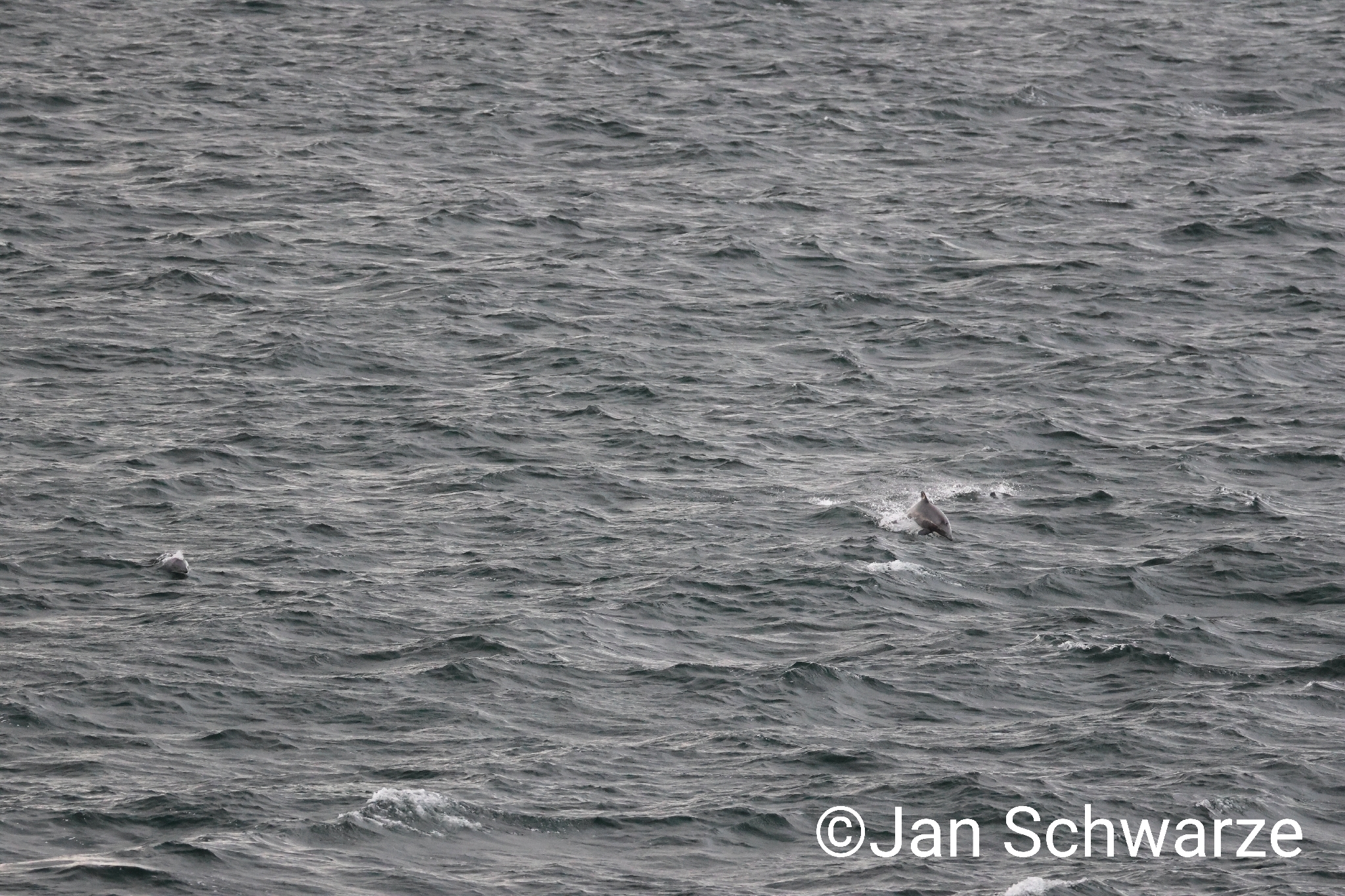
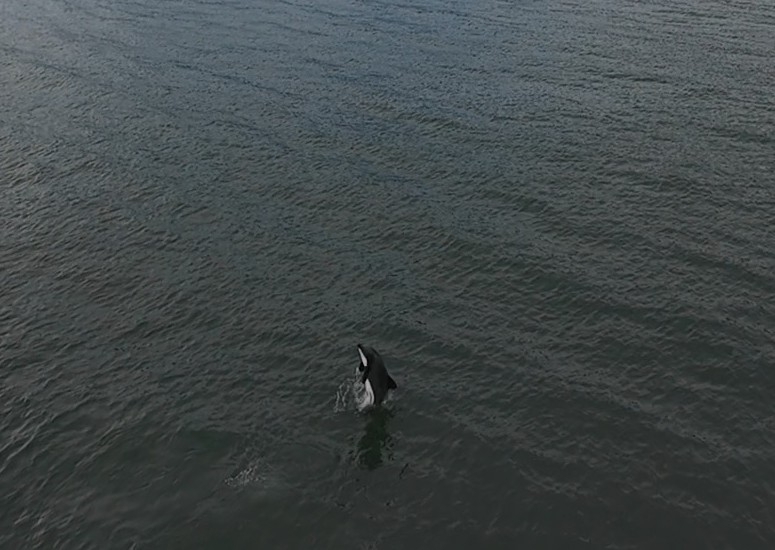
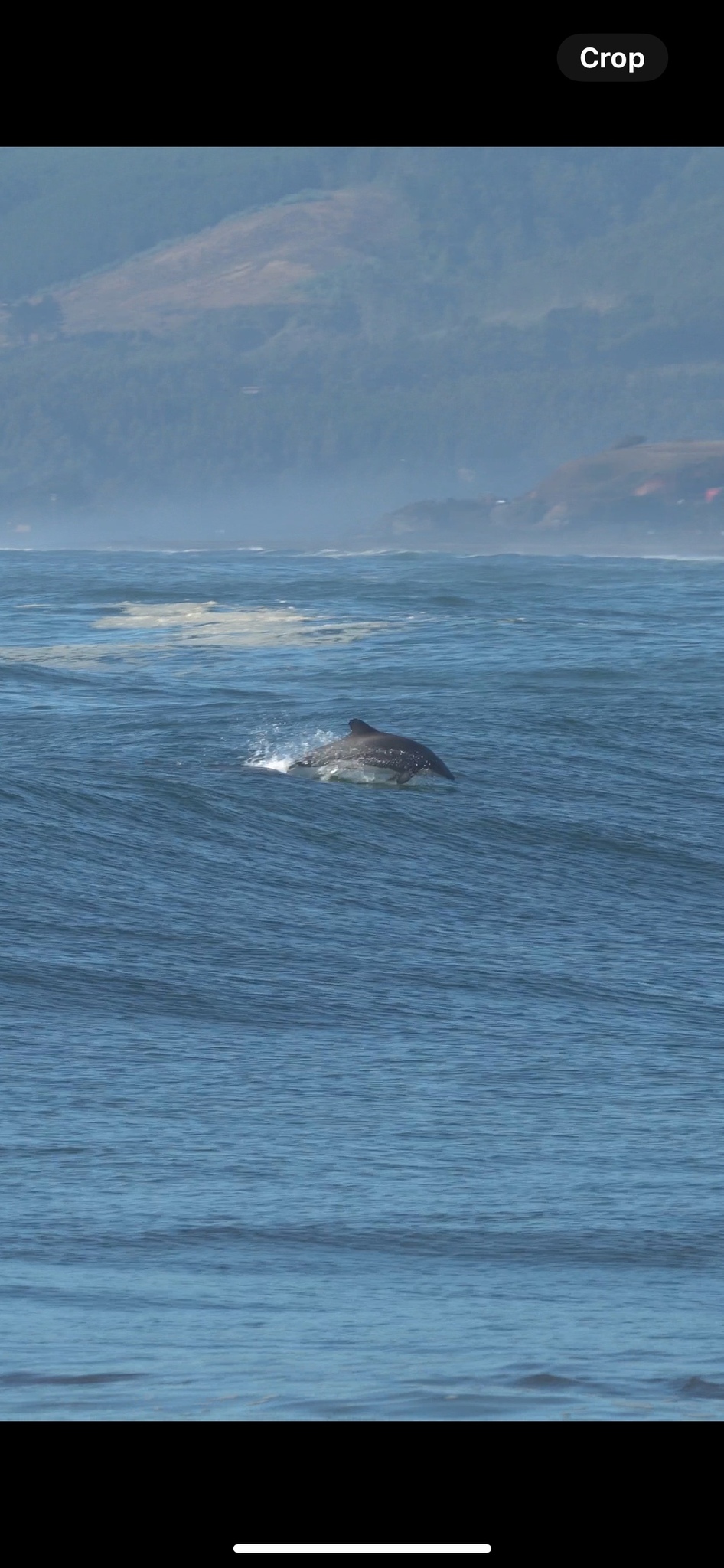
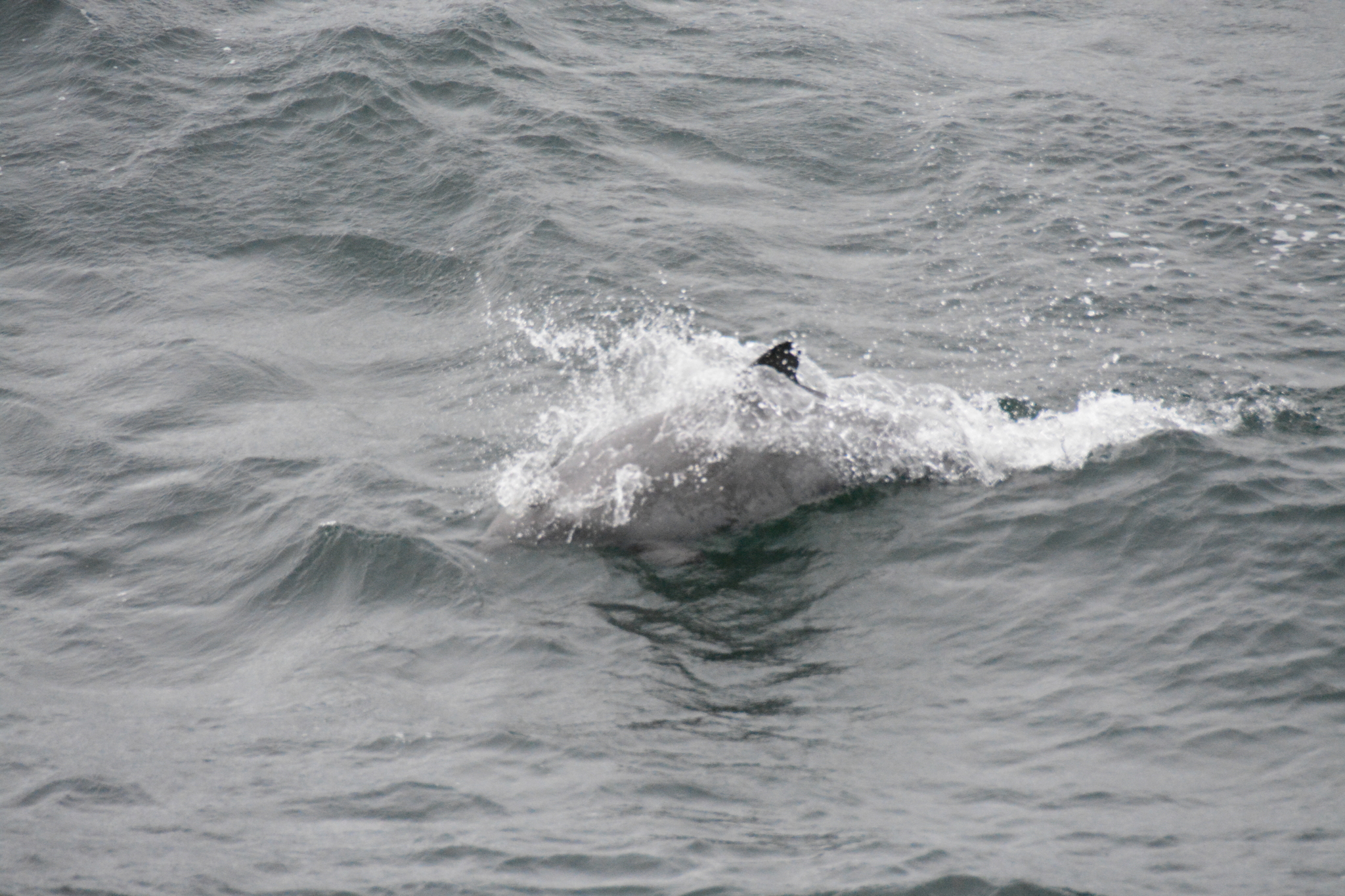
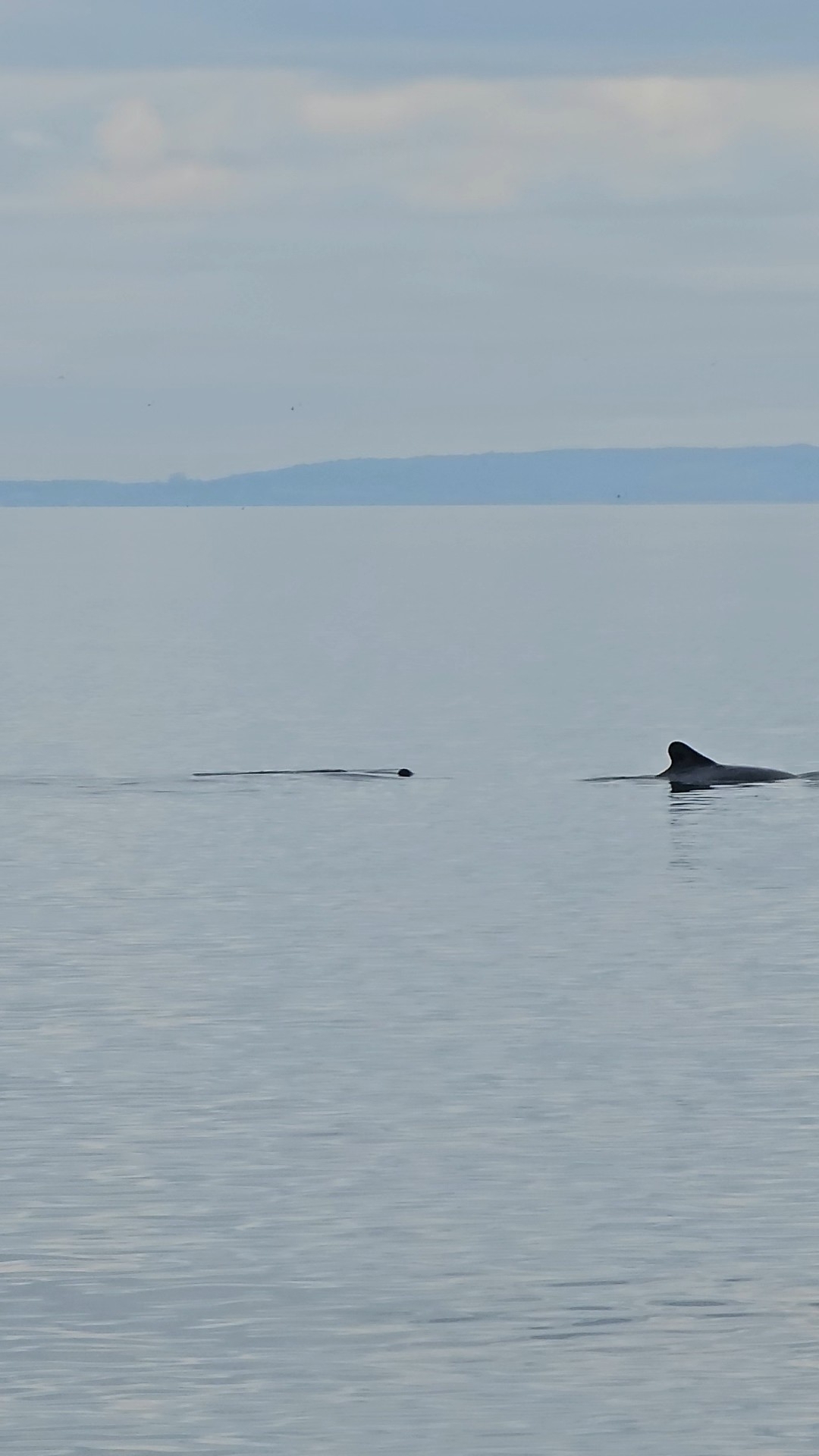
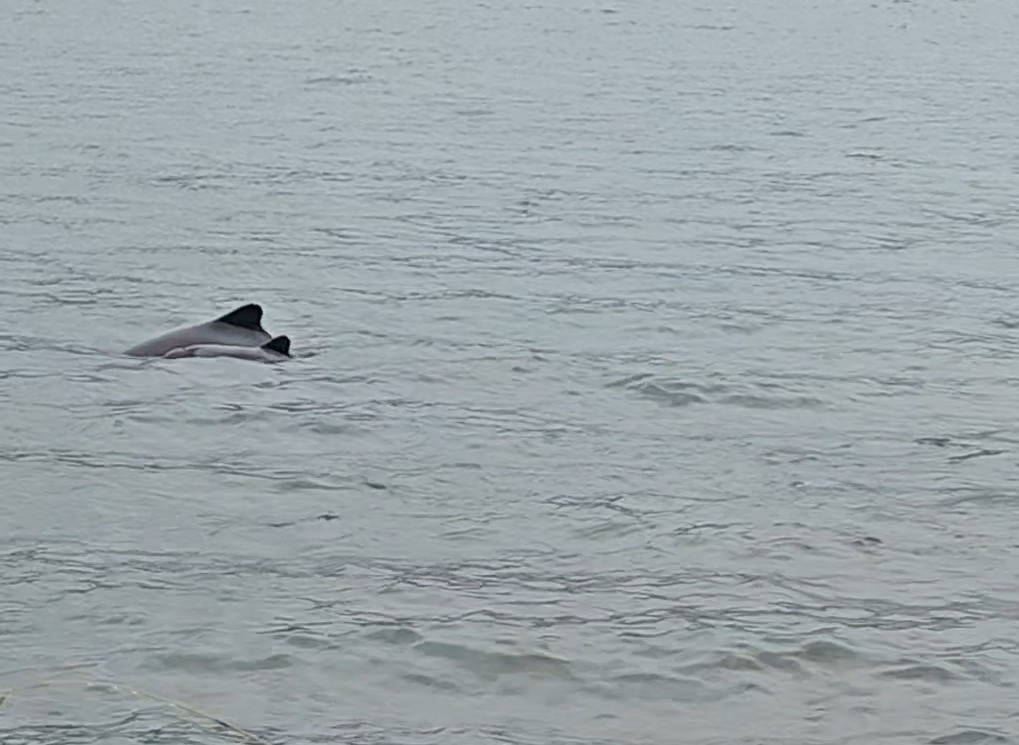
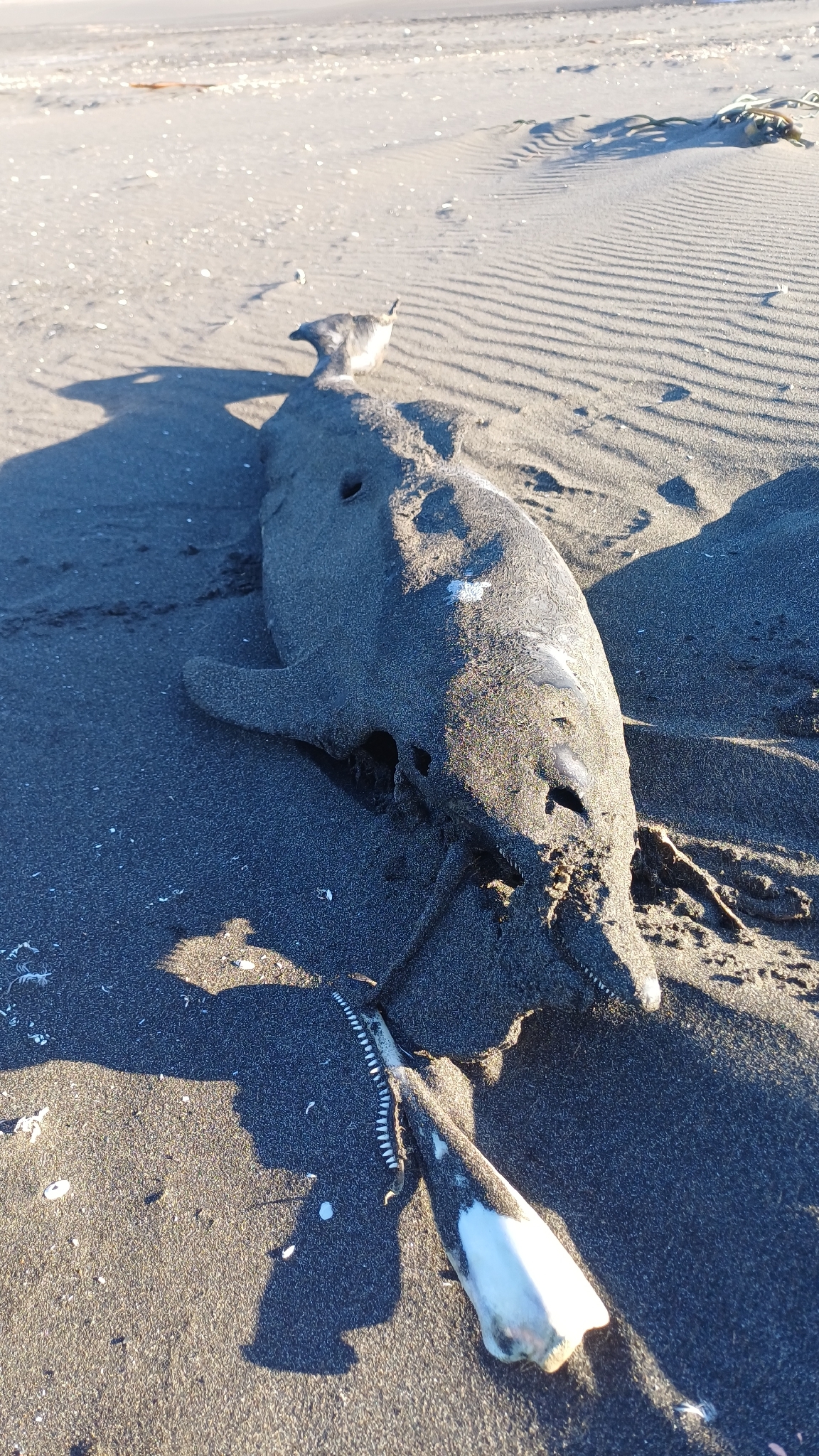
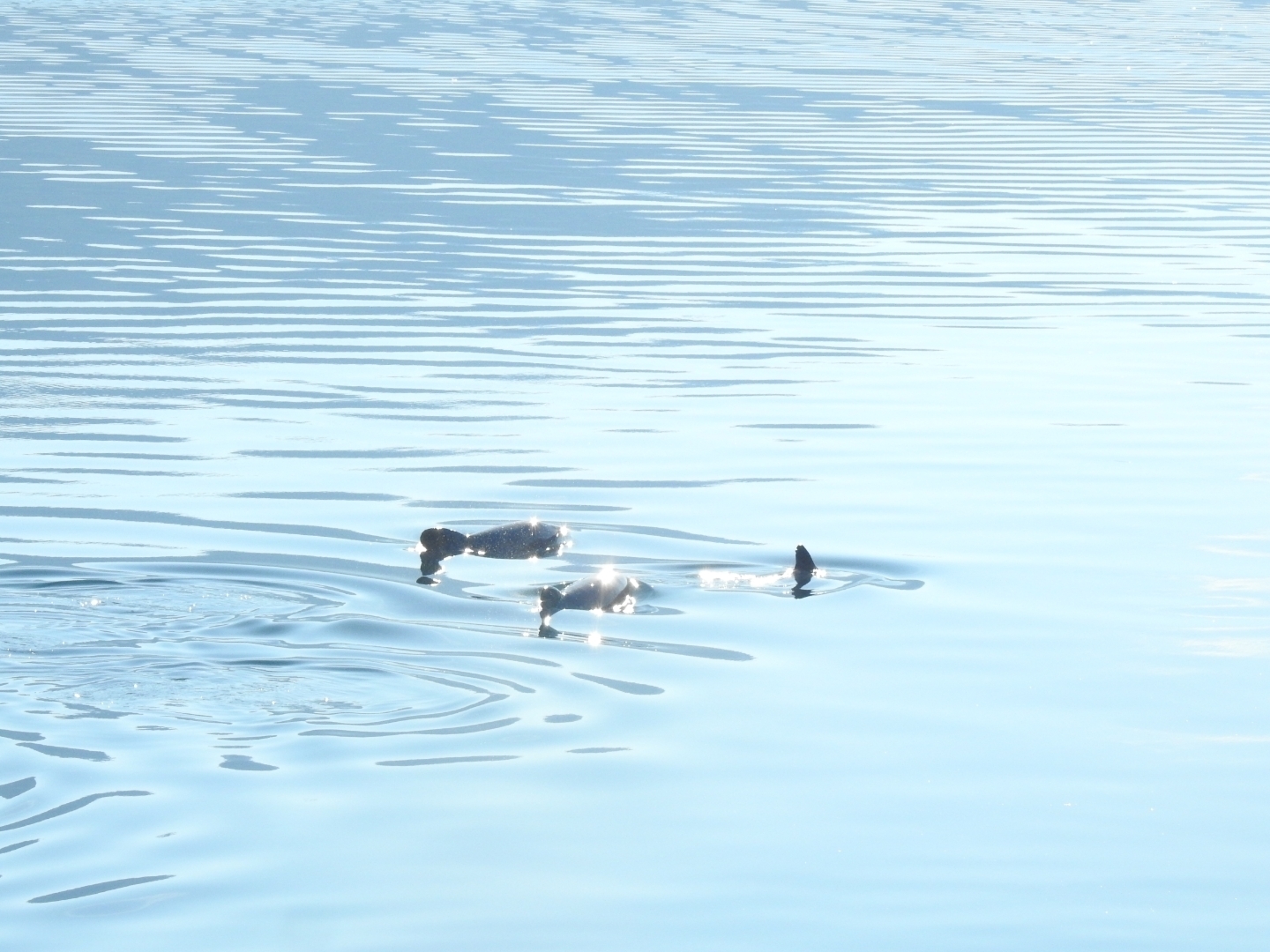
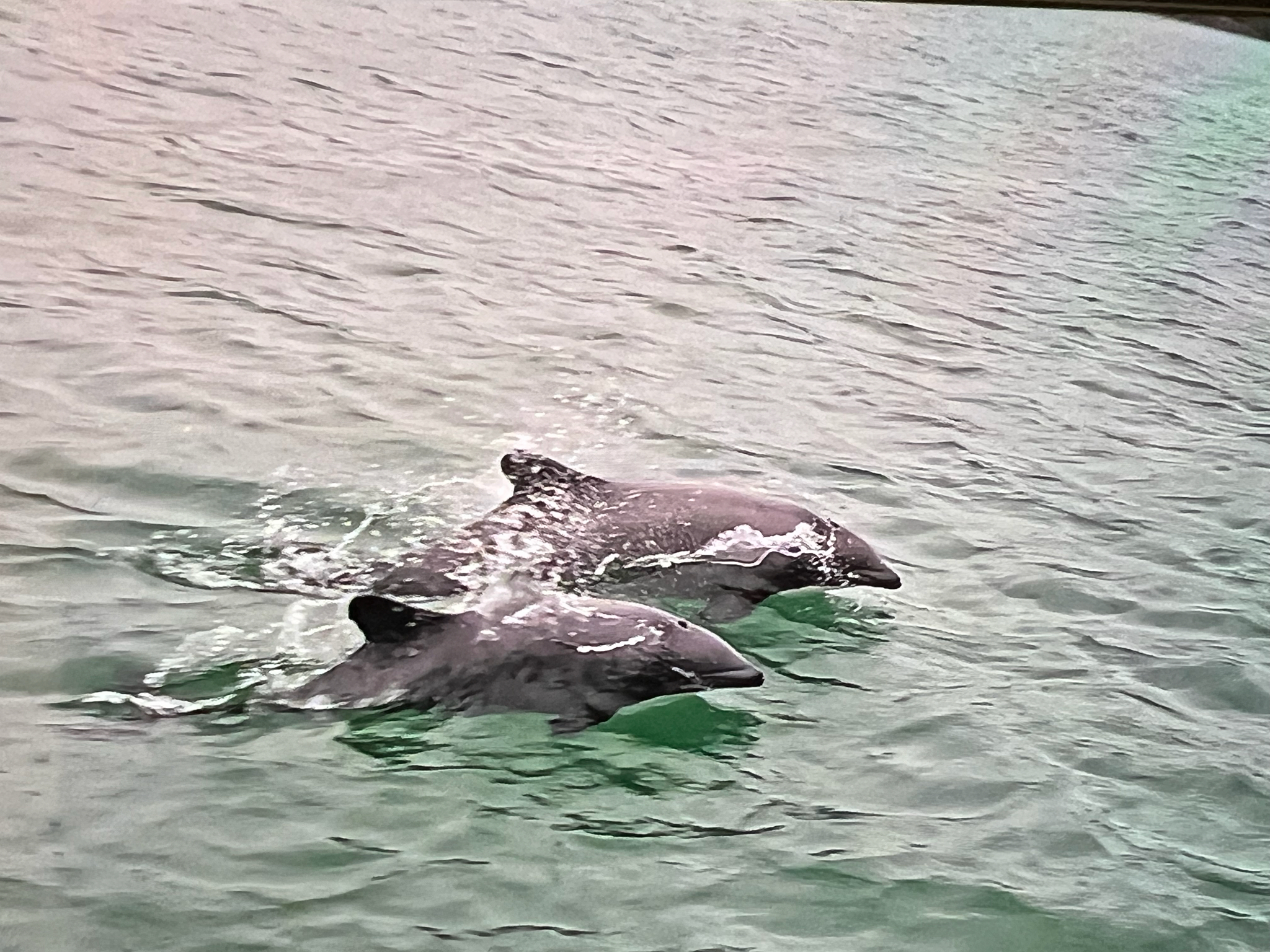
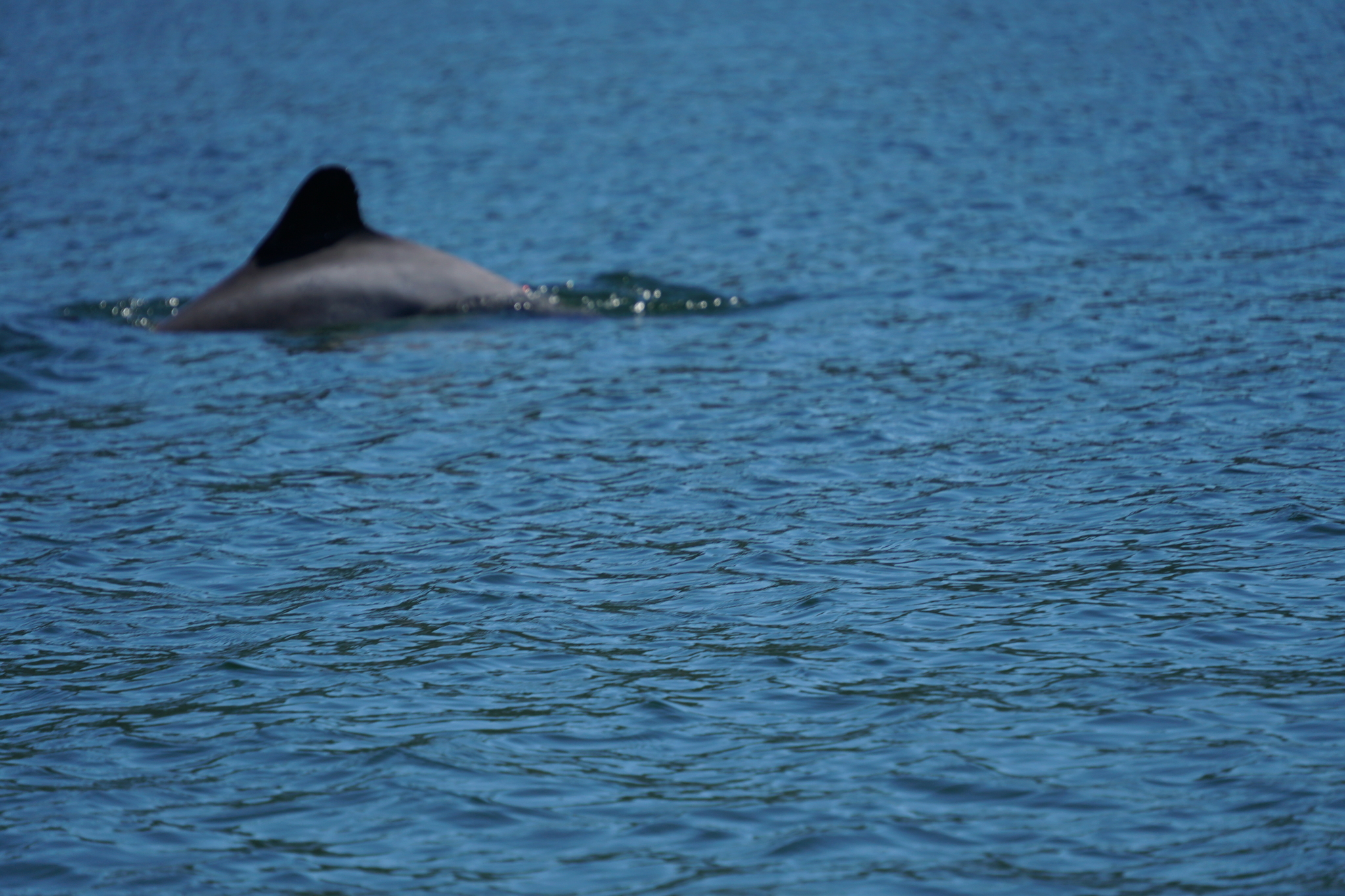
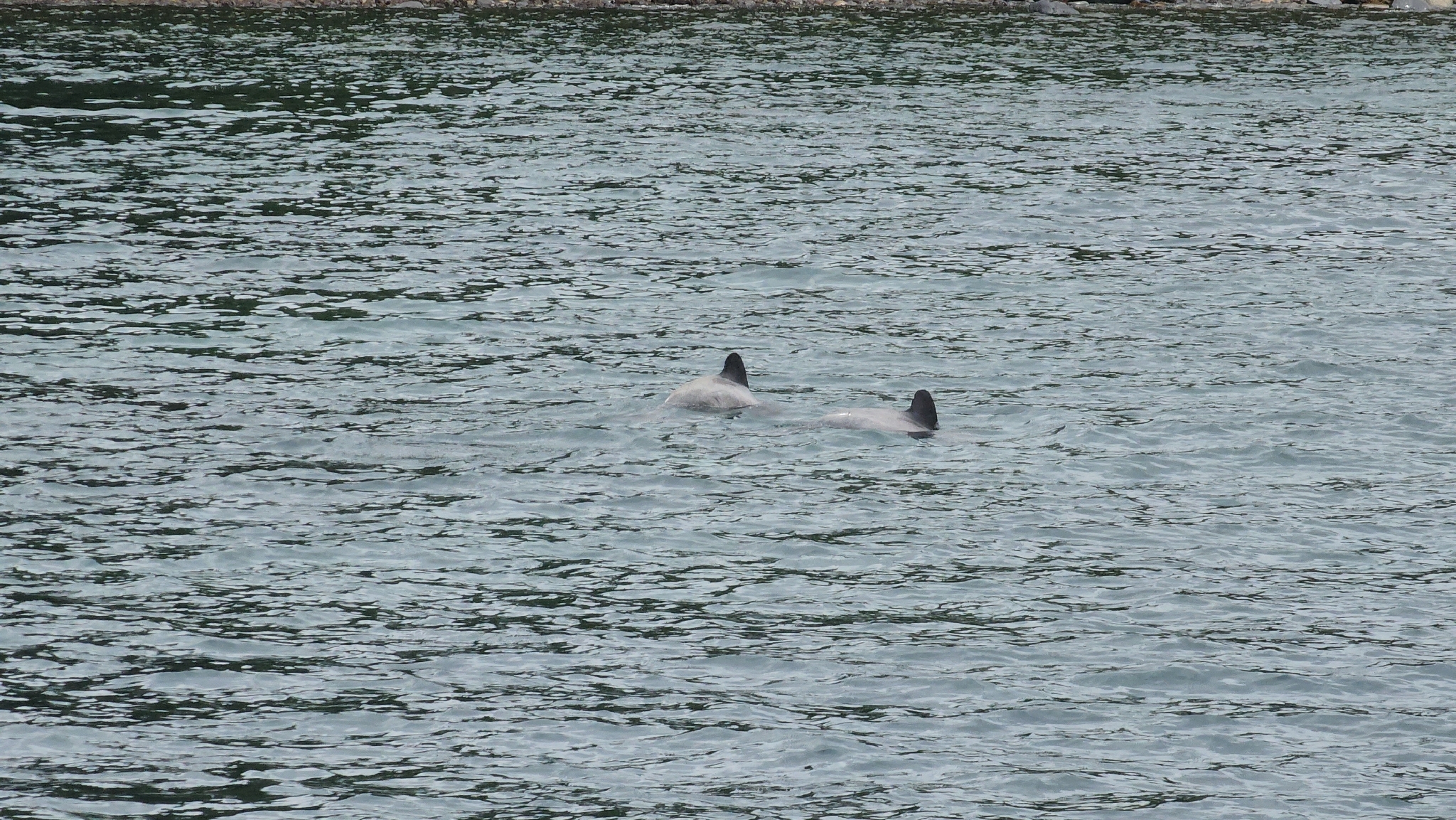
Small and robust, the Chilean dolphin measures 1.60 to 1.70 m as an adult for a mean weight of about 57 kg, up to 63 kg, females being slightly larger than males. The head is conical and bears no distinct beak; the flippers are short and rounded, and the dorsal fin, low and distinctly rounded at its tip, is the best identification criterion, a character shared with the other small cephalorhynchs (Commerson’s, Heaviside’s, Hector’s) but not with Peale’s dolphin or the hourglass dolphin, both recently placed in the genus. The dentition comprises 28 to 34 teeth on each side of the upper jaw and 29 to 33 on each side of the lower jaw, a total of the order of 115 to 135 teeth.

The name “black dolphin”, still widespread, is misleading: the animal is grey. The back and the dorsal fin are dark grey, the head and the flanks a lighter grey, while the throat, the belly, the rear of the flippers and the genital area are white, with a greyish band crossing the chest. Seen from a distance, in the turbid waters it favours, it appears uniformly dark: hence the confusion.

Three species can be mistaken for it in the same waters. Peale’s dolphin (Cephalorhynchus australis, long placed in the genus Lagenorhynchus) is larger, with a pointed falcate dorsal fin and contrasted flanks; it sometimes forms mixed groups with it. Burmeister’s porpoise (Phocoena spinipinnis), just as unobtrusive, is recognised by its triangular dorsal fin set very far back. Commerson’s dolphin (Cephalorhynchus commersonii), of the Strait of Magellan and the Atlantic seaboard, displays for its part a sharp black and white contrast.

Taxonomy

Described by the British zoologist John Edward Gray in 1846, Cephalorhynchus eutropia belongs to the family Delphinidae. The genus name combines the Greek roots kephalê (head) and rhynchos (snout). The genus classically brought together four small dolphins of the Southern Hemisphere, Commerson’s, Chilean, Heaviside’s and Hector’s; molecular work published in 2006 having shown that Peale’s dolphin and the hourglass dolphin fall within this group, a recent revision has formally transferred them to it, bringing the genus to six species. The cephalorhynchs are the only delphinids that do not produce whistles. Genetics further distinguishes two subpopulations, north of the main island of Chiloé and south of the Laguna San Rafael, probably the legacy of a postglacial recolonisation of the fjords from a northern coastal refuge.

Distribution and habitat

The species is confined to the Chilean coast, from about 30° S to Cape Horn (56° S). It occupies two contrasting biogeographical settings: north of Chiloé (42° S), open coasts, bays and river mouths exposed to the Pacific; to the south, the sheltered maze of archipelagos, channels and fjords. Sightings become scarce south and east of Punta Arenas (53° S), and a few stray individuals have been reported on the Argentine Atlantic coast, mixed in with groups of Commerson’s dolphins. The animal stays in cold water, most often over less than 20 to 30 m of depth and less than a kilometre from the shore; it seeks out freshwater influence, strong tidal currents and the shallows at the mouths of fjords, and readily enters estuaries. Its strongholds are Constitución, the Gulf of Arauco, the approaches to Puerto Montt, the south-east of the Chiloé archipelago, the Laguna San Rafael, Puerto Edén and Puerto Natales. The species is absent from French waters, the Mediterranean, the Bay of Biscay, the English Channel and the overseas territories included: the only cephalorhynch present under French sovereignty is Commerson’s dolphin, in the Kerguelen Islands.

Biology and ecology

Groups number 2 to 15 animals, with temporary aggregations of 50 to 60 individuals on the open coasts of the north. Site fidelity is remarkable: identified by the markings on their dorsal fin, the animals concentrate their activity on a few bays and channels, in all seasons, and one individual was resighted less than 1,000 m from its first sighting eighteen years later. No systematic study of the diet has been published; the available data indicate coastal fish, sardines, anchovies, rockfish, cephalopods and probably crustaceans, the prey being gathered by circular or zigzag movements. Breeding remains poorly known: mating in early austral winter, births in spring and early summer, one calf every two to three years, sexual maturity between 5 and 9 years, generation length estimated at 14 years. The available data do not allow a maximum longevity to be established, that of closely related species being around twenty years. Wary, the species avoids boats, especially in the south. Killer whales and sharks are presumed predators, with no predation observed.

Status and conservation

The species is listed as Near Threatened (NT) on the IUCN Red List, under criteria C1+2a(i); the assessment in force dates from 25 July 2017 and the trend is noted as declining. It was already NT in 2008 and 2013. The assessors stress that the total population, of the order of a few thousand animals, in all likelihood places the species below the threshold of 10,000 mature individuals corresponding to the Vulnerable category; in the absence of an estimate of the rate of decline, the listing remains NT pending better data. In Chile, the national classification places it among Vulnerable species. Regional figures illustrate this scarcity: 60 animals over 270 km² in the south-east of Chiloé, about 300 in the inland seas of the archipelago and some 2,200 (95% confidence interval: 1,340 to 3,867) for the whole of northern Chilean Patagonia, according to an estimate published in 2023. Historically, the animal was harpooned for food and as bait for southern king crab traps: up to 600 dolphins a year were still being killed in 1992 near the western entrance to the Strait of Magellan, Peale’s dolphin making up the bulk of these catches. The foremost present-day threat is bycatch in coastal gillnets, aggravated by the growth of salmon farming and shellfish farming: exclusion from entire bays, vessel traffic, entanglement in anti-sea lion nets. Two individuals have also tested positive for the H5N1 avian influenza virus during the Chilean epizootic of December 2022 to April 2023. Hunting is prohibited in Chile, where Law 20.293 of 2008 protects all cetaceans and makes the waters under national jurisdiction a sanctuary; the species is listed in Appendix II of CITES and in that of the Convention on Migratory Species.

Watching this species

Observation is possible only on the Chilean coast: the Gulf of Arauco, the south-east of the island of Chiloé around Quellón and Queilen, the Laguna San Rafael, the channels of the Puerto Natales region. The animal should be looked for in shallow bays and river mouths, on a running tide, often a few hundred metres from the shore; watching from the coast with binoculars is more rewarding and far less disturbing than an approach by boat. The species is sensitive to disturbance: never cut across the path of a group, throttle back, keep your distance, limit the length of the watch and refrain from any pursuit and from entering the water. As the groups are tiny and sedentary, photo-identification of dorsal fins is a useful contribution to scientific monitoring.

Frequently asked questions

Is the black dolphin really black?

No. The name comes from the dark appearance of the animal glimpsed from a distance in turbid water. Close up, the coloration is made of shades of grey, with a throat, a belly and white markings that stand out very clearly.

Can it be seen in French waters?

No: the species is endemic to Chile. The only representative of the genus present under French sovereignty is Commerson’s dolphin, in the Kerguelen Islands.

How many Chilean dolphins are left?

No complete census exists. The IUCN estimates the total population at a few thousand individuals, of which about 2,200 are in northern Chilean Patagonia and a few hundred in the inland seas of Chiloé.

Why is the species not listed as Vulnerable?

Its population is probably below the threshold of 10,000 mature individuals, but no reliable estimate of the rate of decline is available. The IUCN therefore maintains the Near Threatened category pending better data.

What size and weight does it reach?

It is one of the smallest delphinids: 1.60 to 1.70 m as an adult, for a mean weight of about 57 kg and a documented maximum of 63 kg. Females are slightly larger than males.

How can it be told apart from Peale’s dolphin?

The Chilean dolphin is smaller, grey and white, with a low, rounded dorsal fin. Peale’s dolphin, now placed in the same genus, is larger, more contrasted on the flanks, and its dorsal fin is tall, pointed and curved.

What is its main threat today?

Bycatch in coastal gillnets, to which are added the habitat loss and the disturbance linked to salmon farming and shellfish farming in the southern fjords.

Sources

Species account compiled from authoritative scientific sources (IUCN, NOAA Fisheries, specialist literature) and reviewed for factual accuracy.

Observed distribution

According to the open data of the GBIF, 125 georeferenced sightings of Cephalorhynchus eutropia are recorded in our photographic index.

Main countries of observation
CountryNotes
Chile126
Argentina3

Distribution map: Chilean dolphin (Cephalorhynchus eutropia)

Distribution map: Chilean dolphin (Cephalorhynchus eutropia), 125 georeferenced sightings from GBIF
125 georeferenced sightings of Cephalorhynchus eutropia. Base map Natural Earth, public domain. GBIF data.
🗺️ Open the interactive mapTo zoom and pan. It uses the OpenStreetMap/CARTO base maps and the GBIF occurrence densities: no data is sent to these services before you click.

Presence through the year

Monthly distribution of 127 dated sightings (all years combined): the maximum is reached in February.

230janvier : 15janfévrier : 23febmars : 21maravril : 7avrmai : 4maijuin : 5juinjuillet : 4juilaoût : 7Augustseptembre : 7sepoctobre : 13octnovembre : 10novdécembre : 11dec
Sightings by month
MonthNotes
janvier15
February23
mars21
avril7
mai4
juin5
juillet4
August7
septembre7
octobre13
novembre10
December11

These figures reflect survey effort (more boaters and more surveys in summer) as much as the actual presence of the species: to be interpreted with caution.

En images

Cephalorhynchus eutropia
© Jan Schwarze, CC BY-NC, 2026
Cephalorhynchus eutropia
© eraffo, CC BY-NC, 2026
Cephalorhynchus eutropia
© clarizzi, CC BY-NC, 2026
Cephalorhynchus eutropia
© Andres de Miguel, CC BY-NC, 2026
Cephalorhynchus eutropia
© Vicente Aravena, CC BY-NC, 2026
Cephalorhynchus eutropia
© Aaron Loyola, CC BY-NC, 2026
Cephalorhynchus eutropia
© chalo, CC BY-NC, 2026
Cephalorhynchus eutropia
© Rocío Elisa, CC BY-NC, 2026
Cephalorhynchus eutropia
© millaray_suazo, CC BY-NC, 2026
Cephalorhynchus eutropia
© Jeffrey H. Skevington, CC BY-NC, 2026
Cephalorhynchus eutropia
© Lucas Illanes, CC BY, 2026
Cephalorhynchus eutropia
© Samantha Ramírez, CC BY-NC, 2026

Photographs from GBIF under a Creative Commons licence. The author and the licence of each photograph are given; please respect them if you reuse them.

Scientific references

  1. Ribeiro S., Viddi F., Cordeiro J., Freitas T. et al. (2007) Fine-scale habitat selection of Chilean dolphins (Cephalorhynchus eutropia): interactions with aquaculture activities in southern Chiloé Island, Chile, Journal of the Marine Biological Association of the United Kingdom
  2. Ribeiro S., Viddi F., Freitas T. (2005) Behavioural Responses of Chilean Dolphins (Cephalorhynchus eutropia) to Boats in Yaldad Bay, Southern Chile, Aquatic Mammals
  3. Götz T., Antunes R., Heinrich S. (2010) Echolocation clicks of free-ranging Chilean dolphins (Cephalorhynchus eutropia), The Journal of the Acoustical Society of America
  4. Stockin K., Law R., Roe W., Meynier L. et al. (2010) PCBs and organochlorine pesticides in Hector’s (Cephalorhynchus hectori hectori) and Maui’s (Cephalorhynchus hectori maui) dolphins, Marine Pollution Bulletin
  5. Espinosa-Miranda C., Cáceres B., Blank O., Fuentes-Riquelme M. et al. (2020) Entanglements and Mortality of Endemic Chilean Dolphins (Cephalorhynchus eutropia) in Salmon Farms in Southern Chile, Aquatic Mammals
  6. Torres P., Oporto J., Brieva L., Escare L. et al. (1992) Gastrointestinal Helminths of the Cetaceans Phocoena spinipinnis (Burmeister, 1865) and Cephalorhynchus eutropia (Gray, 1846) from the Southern Coast of Chile, Journal of Wildlife Diseases
  7. Pérez‐Álvarez M., Alvarez E., Aguayo‐Lobo A., Olavarría C. et al. (2007) Occurrence and distribution of Chilean dolphin (Cephalorhynchus eutropia) in coastal waters of central Chile, New Zealand Journal of Marine and Freshwater Research
  8. Dawson S. (2018) Cephalorhynchus Dolphins, Encyclopedia of Marine Mammals

Automatic selection of the most cited works mentioning the species (source: Crossref).