| Scientific name | Berardius arnuxii Duvernoy, 1851 |
|---|---|
| Other names | Southern four-toothed whale, southern giant bottlenose whale, New Zealand beaked whale; in French: baleine à bec d’Arnoux, bérardie d’Arnoux, bérardien d’Arnoux, bérardie australe, bérardius du Sud; in Spanish: zifio de Arnoux. |
| Size | Adults 9 to 10 m; the largest specimens actually measured reach about 9.7 to 9.75 m (females slightly larger than males). Newborn: about 4 m. Animals estimated at 12 m have been reported at sea, but no measured specimen has confirmed that size. |
| Weight | About 9 tonnes in the adult. |
| Longevity | Unknown: no Arnoux’s beaked whale has ever been aged. By analogy with Baird’s beaked whale, the only species of the genus for which ages have been determined, maximum longevity would be strongly dimorphic, of the order of 84 years in males against about 54 years in females; it is from this extrapolation that the figure of “up to 80 years” often quoted for Arnoux’s beaked whale comes. |
| Diet | Essentially cephalopods of the Southern Ocean (in particular Batoteuthis skolops, Moroteuthopsis longimana, Galiteuthis glacialis, Taonius sp.), supplemented by benthic and pelagic fish. Prey are taken by suction, not by grasping. |
| IUCN status | Least Concern (LC). Assessment carried out in 2020, published in an amended version in 2021 (R. L. Brownell Jr. & B. L. Taylor, e.T2762A197190014). No subpopulation is assessed separately. Older sources still show “Data Deficient” (DD) or “Lower Risk / conservation dependent” (LR/cd): these statuses are out of date. |
Arnoux’s beaked whale is the largest beaked whale of the Southern Hemisphere: a dark cetacean of 9 to 10 metres, with a long tapering beak and a body streaked with pale scars. Inconspicuous and rarely encountered alive, it occupies the Southern Ocean, where it often keeps in direct contact with the Antarctic sea ice, diving for up to an hour at a time. It has never been the object of large-scale commercial whaling and is today listed as “Least Concern” on the IUCN Red List.
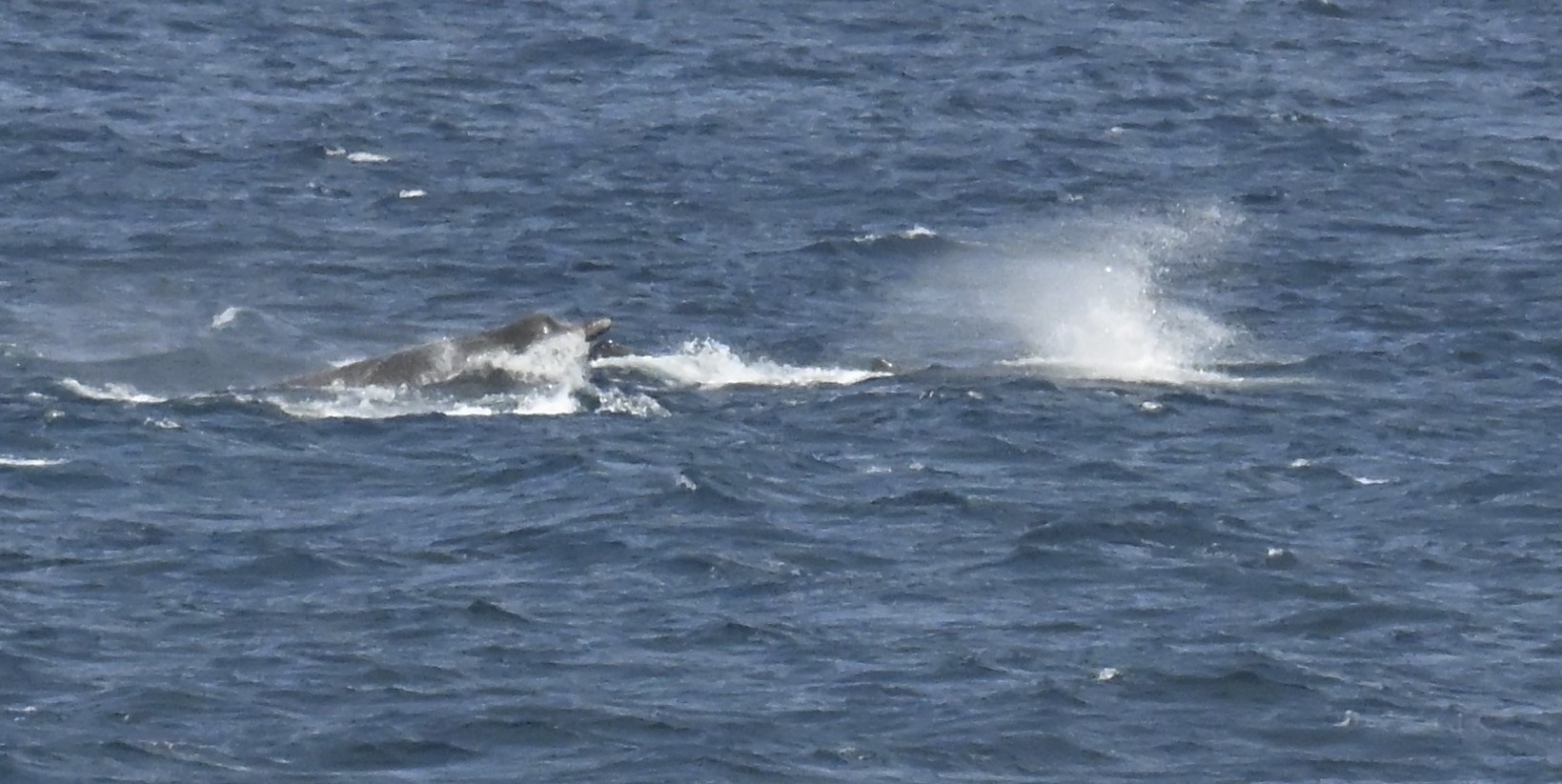
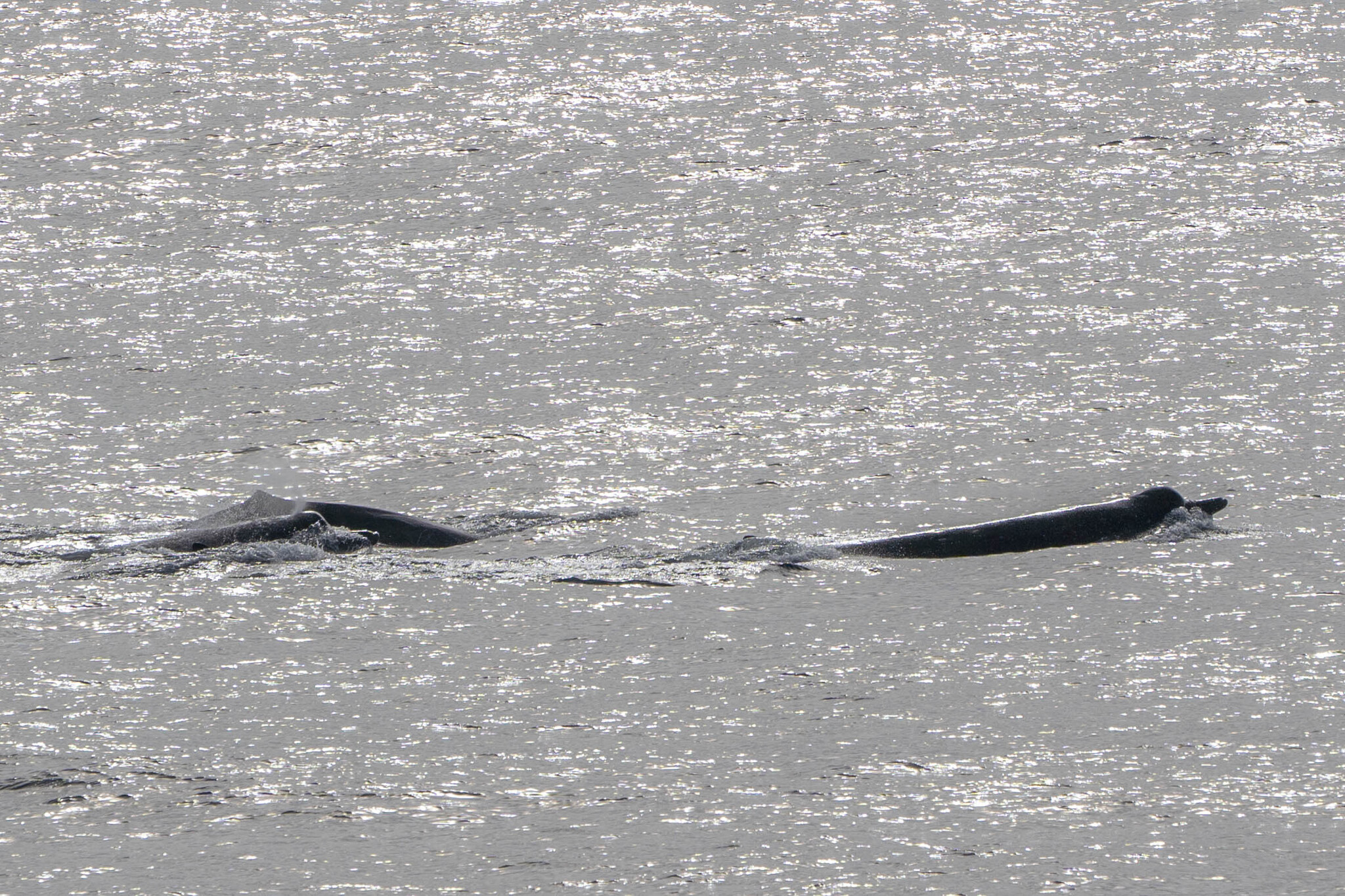
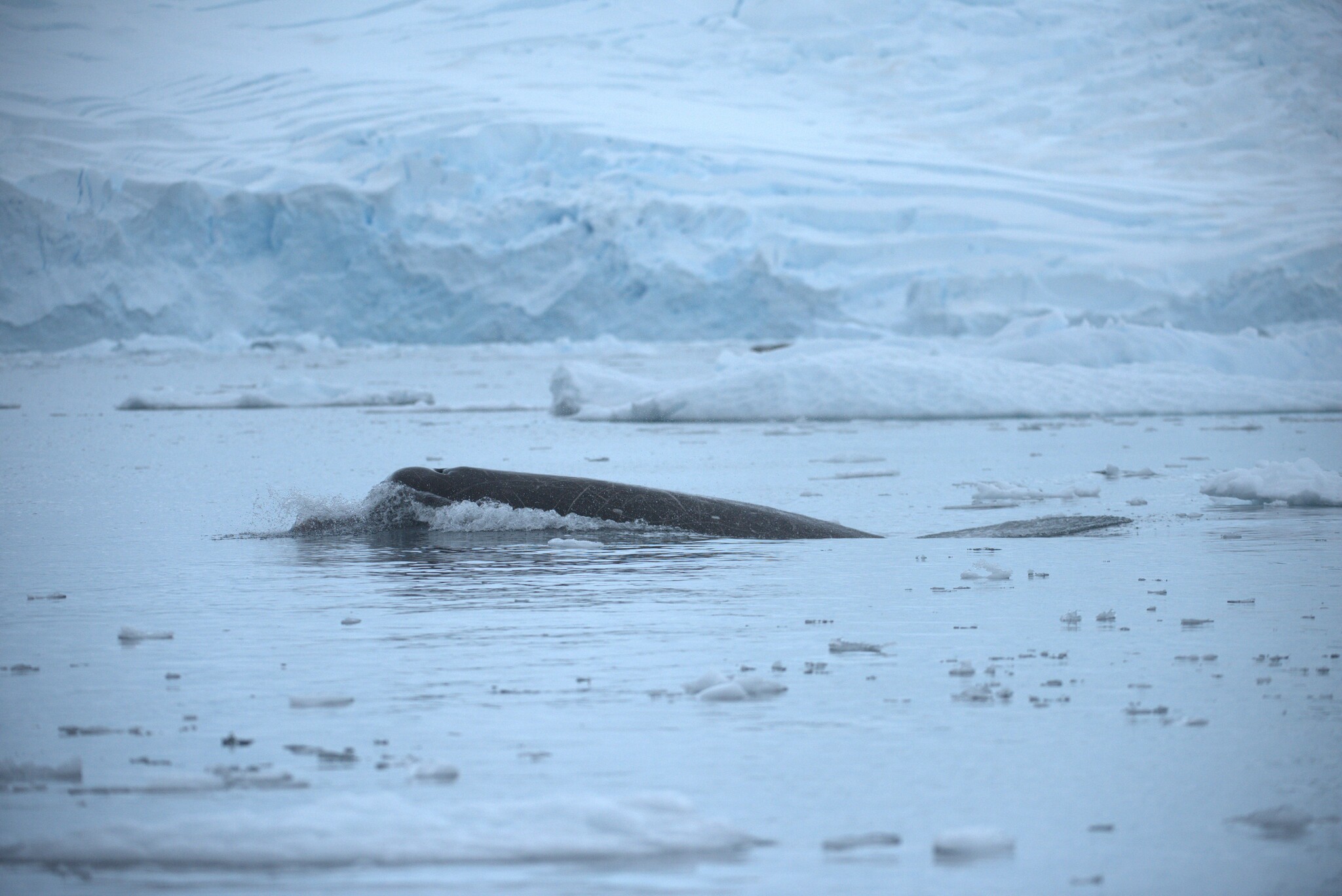
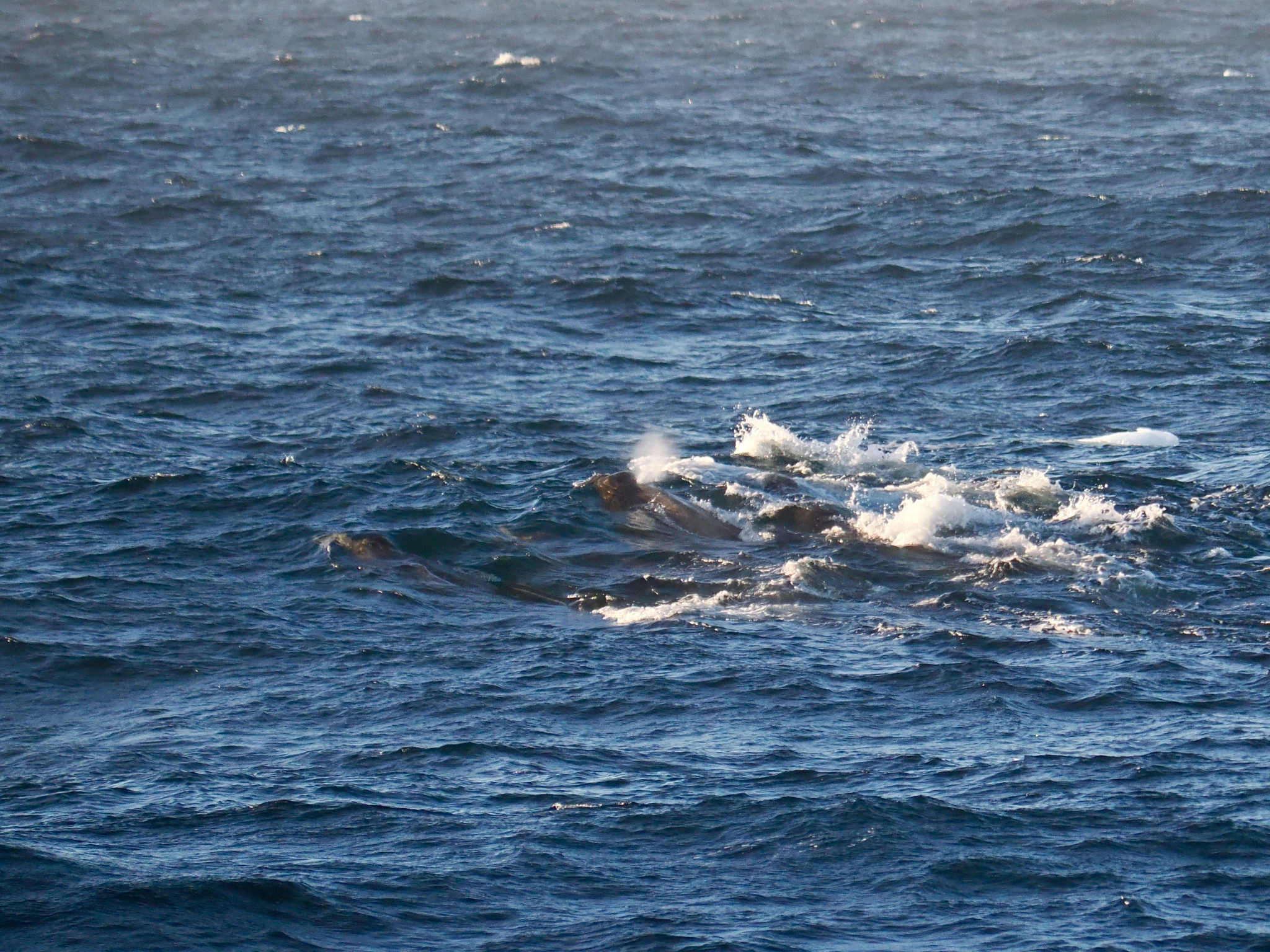
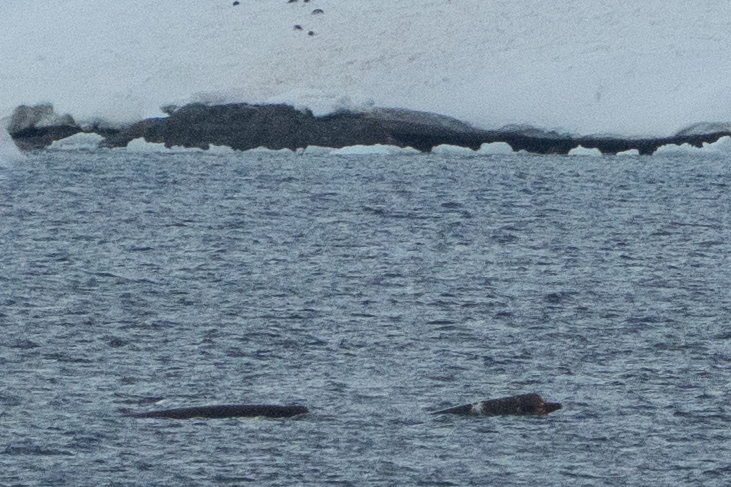
The body is fusiform, bulky at the front and tapering towards the rear, slate grey to dark brown on the back, paler on the belly and often pale on the top of the head. The dorsal fin, small, triangular and slightly falcate, is set very far back, at about two thirds of the body length; the flippers are short and rounded. The head carries a bulging melon that drops steeply to a long, tubular beak, the lower jaw projecting well beyond the upper one. The blow is low and diffuse, hard to pick out in a rough sea. A thick, lipid-rich layer of blubber provides thermal insulation in water close to freezing point.
The most diagnostic character lies in the dentition. The lower jaw carries two pairs of teeth: a front pair, large and triangular, which stays visible when the mouth is closed, and a smaller, conical rear pair. The three species of the genus Berardius, Arnoux’s beaked whale, Baird’s beaked whale and Sato’s beaked whale, are distinctive in that these teeth erupt in both sexes, whereas in most ziphiids only adult males carry them. The only other ziphiid whose teeth erupt in both sexes is Shepherd’s beaked whale (Tasmacetus shepherdi), but that species has a full dentition of several dozen teeth, unrelated to the two pairs of Berardius. These teeth serve in social confrontations: adults, males as well as females, build up with age a dense network of parallel linear scars, so that the most heavily streaked individuals are also the oldest. To these are added round or oval whitish bites left by the cookiecutter shark, and sometimes killer whale tooth marks on the tail flukes and the fins.
Confusion is frequent. The southern bottlenose whale (Hyperoodon planifrons), which shares the same range, is smaller, paler, with a very bulging forehead, a short beak and a single pair of teeth visible in the adult male: the two exposed front pairs of Berardius are the best criterion. The southern mesoplodont beaked whales are markedly smaller and never show the long straight back, from melon to dorsal fin, visible out of the water, that characterises Berardius at the surface. Cuvier’s beaked whale (Ziphius cavirostris) has a shorter head profile, “goose-beaked”, and a coloration that is often very pale on the head. Shepherd’s beaked whale, also a southern species and present in cold temperate waters, is markedly smaller, has a finer beak and a contrasted coloration with pale flanks, and does not show the pair of large triangular teeth at the tip of the jaw. Finally, Baird’s beaked whale (Berardius bairdii) is almost identical in appearance but strictly confined to the North Pacific: the two species never meet.
Arnoux’s beaked whale is a toothed whale (odontocete) of the beaked whale family. This family is most often designated under the name Ziphiidae, but some taxonomic references, among them the GBIF backbone, use the name Hyperoodontidae for the same group. The genus Berardius, of which the species is the type, brings together three living species: Arnoux’s beaked whale in the Southern Hemisphere, Baird’s beaked whale (Berardius bairdii Stejneger, 1883) and Sato’s beaked whale (Berardius minimus Yamada, 2019), both of them confined to the North Pacific; a fossil species, B. kobayashii, was described in 2021. The genus is documented in the fossil record from the Middle Miocene onwards.
The genus name honours Admiral Auguste Bérard, commander of the French corvette Le Rhin; the specific epithet pays tribute to the ship’s surgeon Arnoux, who collected a skull on a beach at Akaroa, on the Banks Peninsula in New Zealand. Taken back to the Muséum national d’Histoire naturelle in Paris, this skull served as the basis for the description published by Georges Louis Duvernoy in 1851. Duvernoy having omitted an “o” in transcribing the name, many faulty spellings still circulate (arnouxii, arnouxi, arnuxi). The extreme resemblance to Baird’s beaked whale long kept their possible conspecificity under debate; genetics and the complete geographical separation of the two ranges have settled the question in favour of two distinct species.
The species is circumpolar in the Southern Hemisphere, from the edge of the Antarctic ice shelves (to about 78°S) north as far as cold temperate waters, the northern limit of its usual range lying around 34°S. A carcass stranded on the coast of São Paulo, Brazil (around 24°S), is the northernmost record known and remains an isolated case. Strandings and sightings come mainly from New Zealand, Argentina, Australia (Western Australia, South Australia, Tasmania, New South Wales), South Africa and South Georgia, which supports a distribution running right round the Antarctic continent.
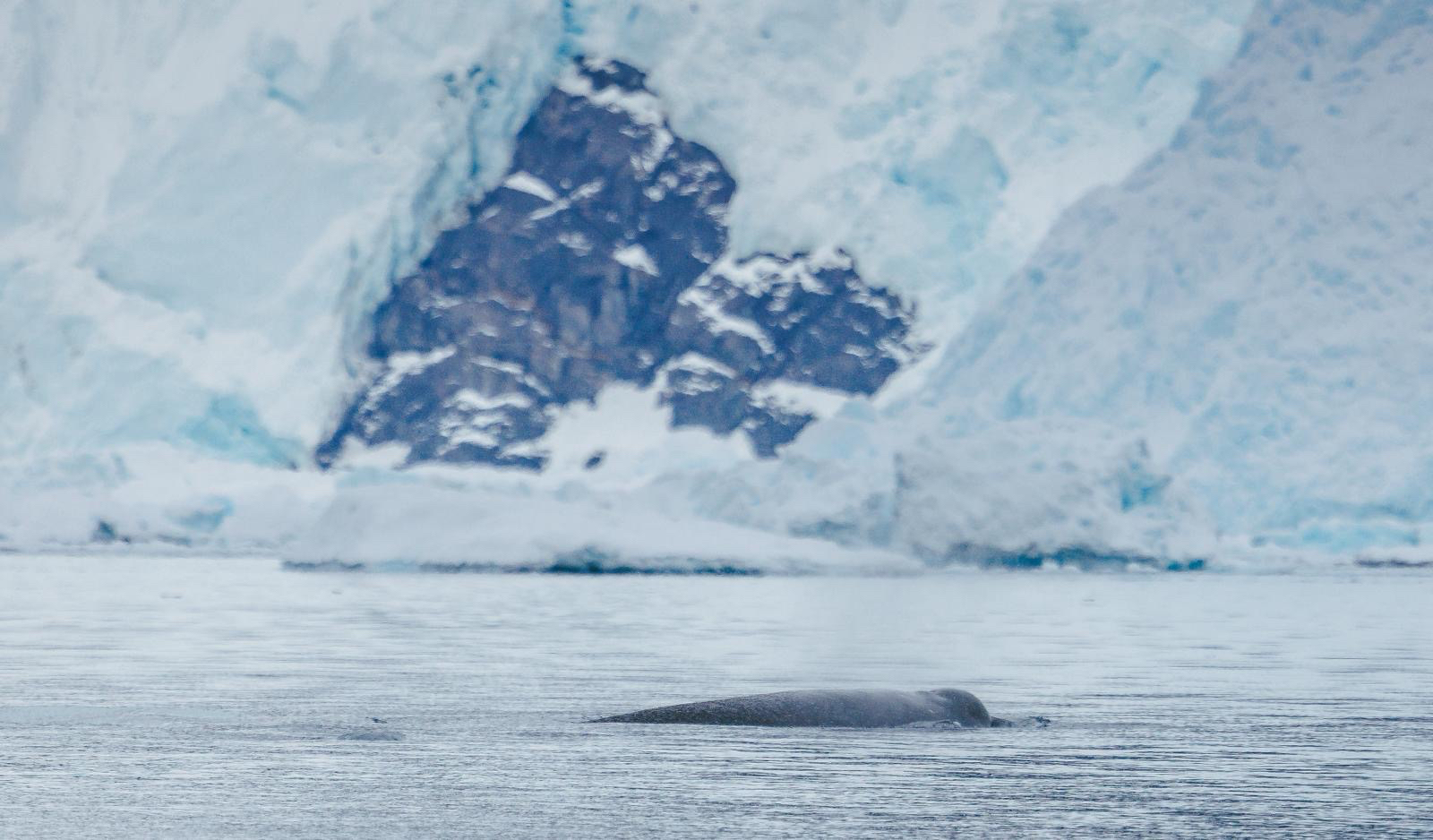
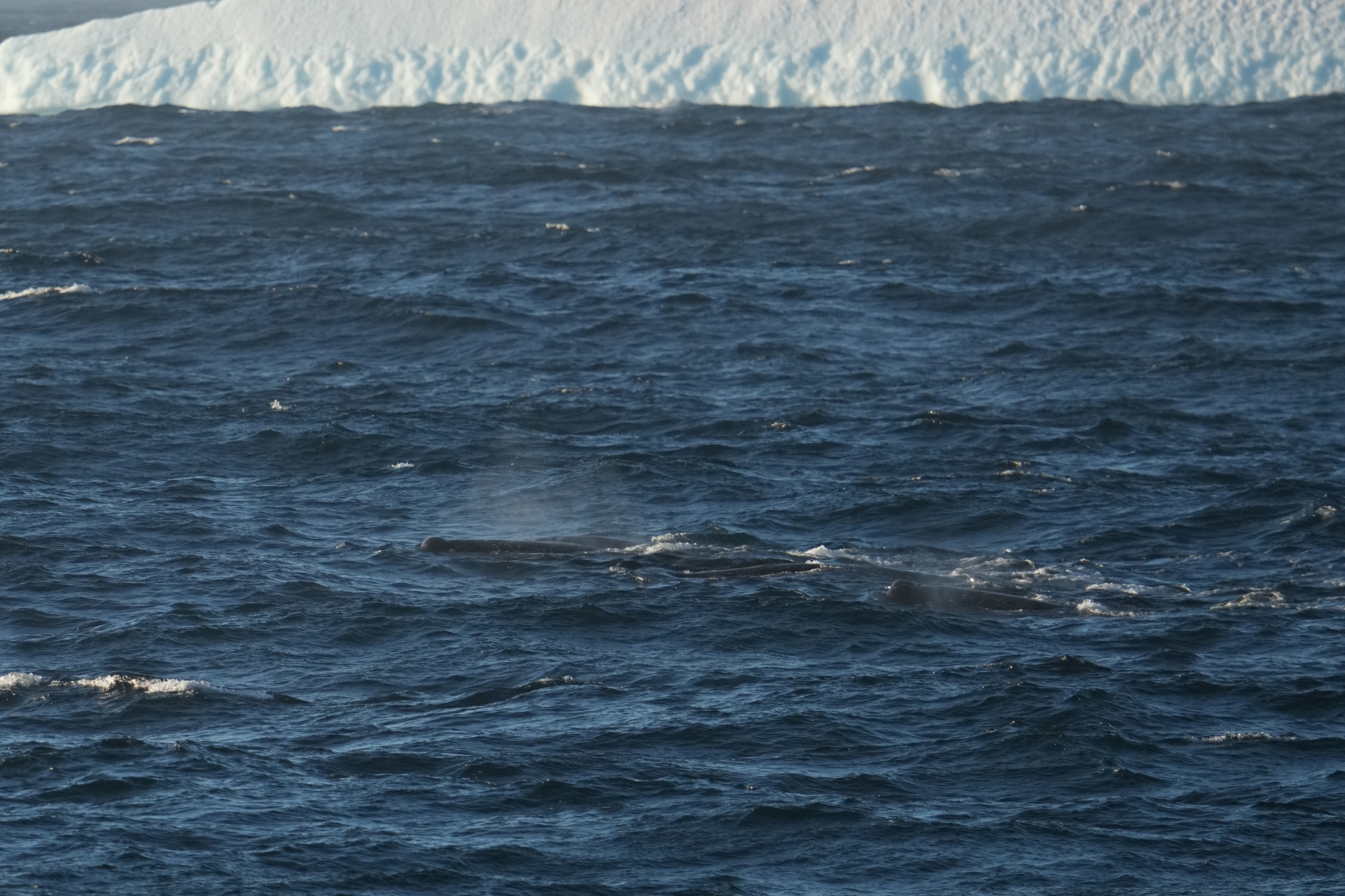
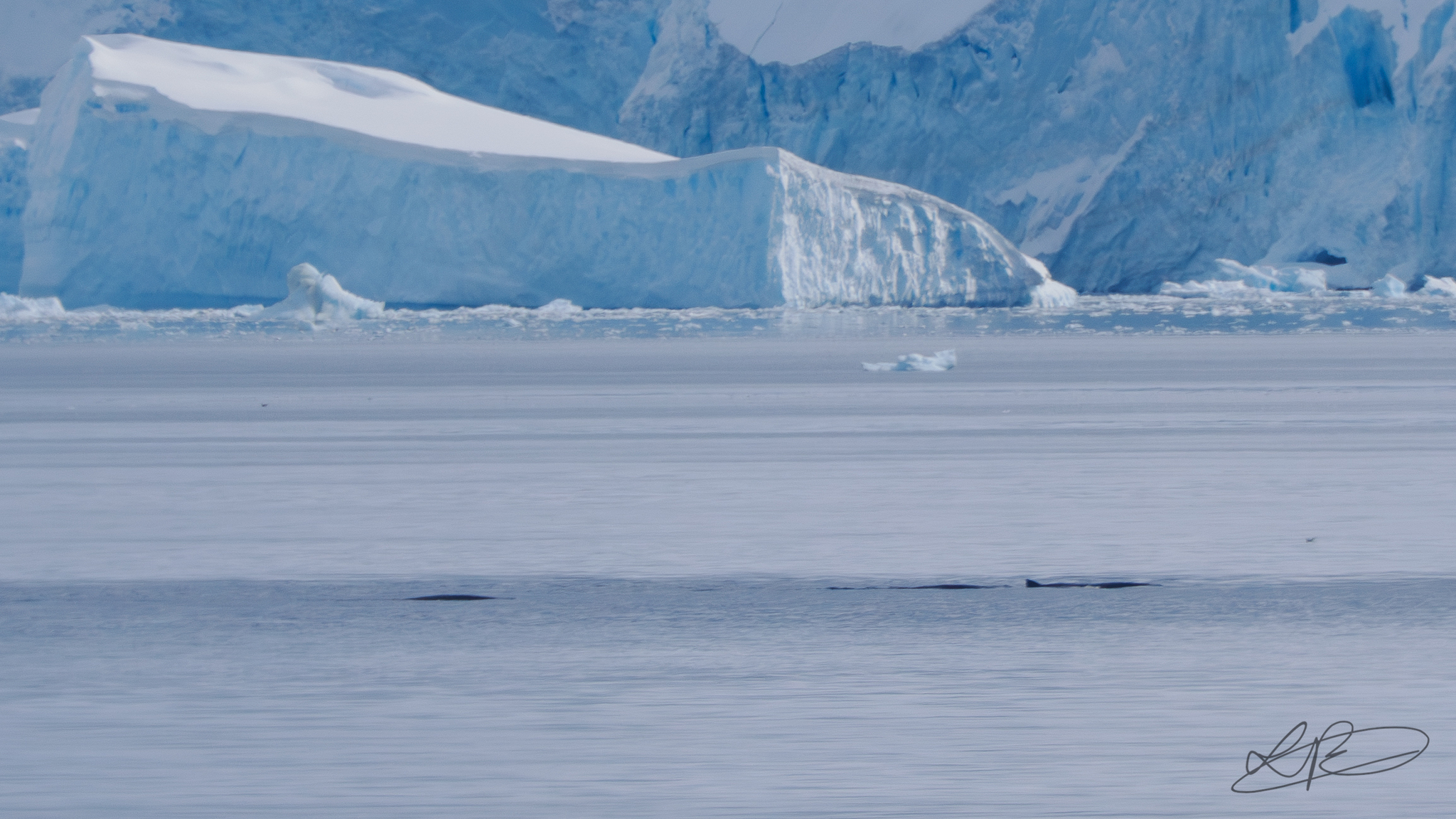
The most complete synthesis available, published in Marine Mammal Science from 108 documented sightings totalling at least 1,125 individuals, corrects several received ideas. Contrary to the classic image of the strictly pelagic beaked whale, Arnoux’s beaked whale frequents above all modest depths: about half of the individuals recorded were over bottoms of less than 500 m and more than three quarters over less than 1,000 m; north of the Southern Ocean, 71% of the animals were seen inside the 250 m isobath, including very close inshore and right to the head of fjords. The association with sea ice is striking: south of 60°S, 92% of opportunistic sightings are linked to ice, and close to two thirds lie in immediate contact with fast ice, the front of ice shelves or glaciers. The animals are recorded in every month of the year except July and August, a gap the authors attribute to the near absence of survey effort in the depth of the austral winter, and the data show no indication of marked seasonal migration.
In France, the species concerns only the southern overseas waters: it is absent from the Mediterranean, the Bay of Biscay and the English Channel, where no record exists. The Red List of threatened species in France, in its chapter devoted to the vertebrates of the French Southern and Antarctic Lands, treats it differently from one sector to another: in the French Southern Territories (Crozet, Kerguelen, Saint-Paul and Amsterdam) it appears among the regular visiting species, with no TAAF category assigned; in Adélie Land it is recorded among the occasional species (category NAb, “not applicable”).
Arnoux’s beaked whale is a deep-water predator that hunts by echolocation. Like the other ziphiids, it has no functional grasping teeth and sucks in its prey: a pair of V-shaped throat grooves makes it possible to create a drop in pressure in the mouth when the tongue retracts, drawing in squid and fish. The prey identified are above all squid of the Southern Ocean, supplemented by benthic and pelagic fish.
Dives regularly exceed 500 m and could reach considerably greater depths. Their duration is most often 15 to 25 minutes, but one-hour submersions are documented, with an observed maximum of 70 minutes at narrow leads open in the sea ice; the animals then spend 5 to 15 minutes at the surface, motionless and breathing hard, before diving again. This capacity allows them to cover several kilometres under the ice between two breaths and to exploit sub-ice habitats out of reach of the other large marine predators.
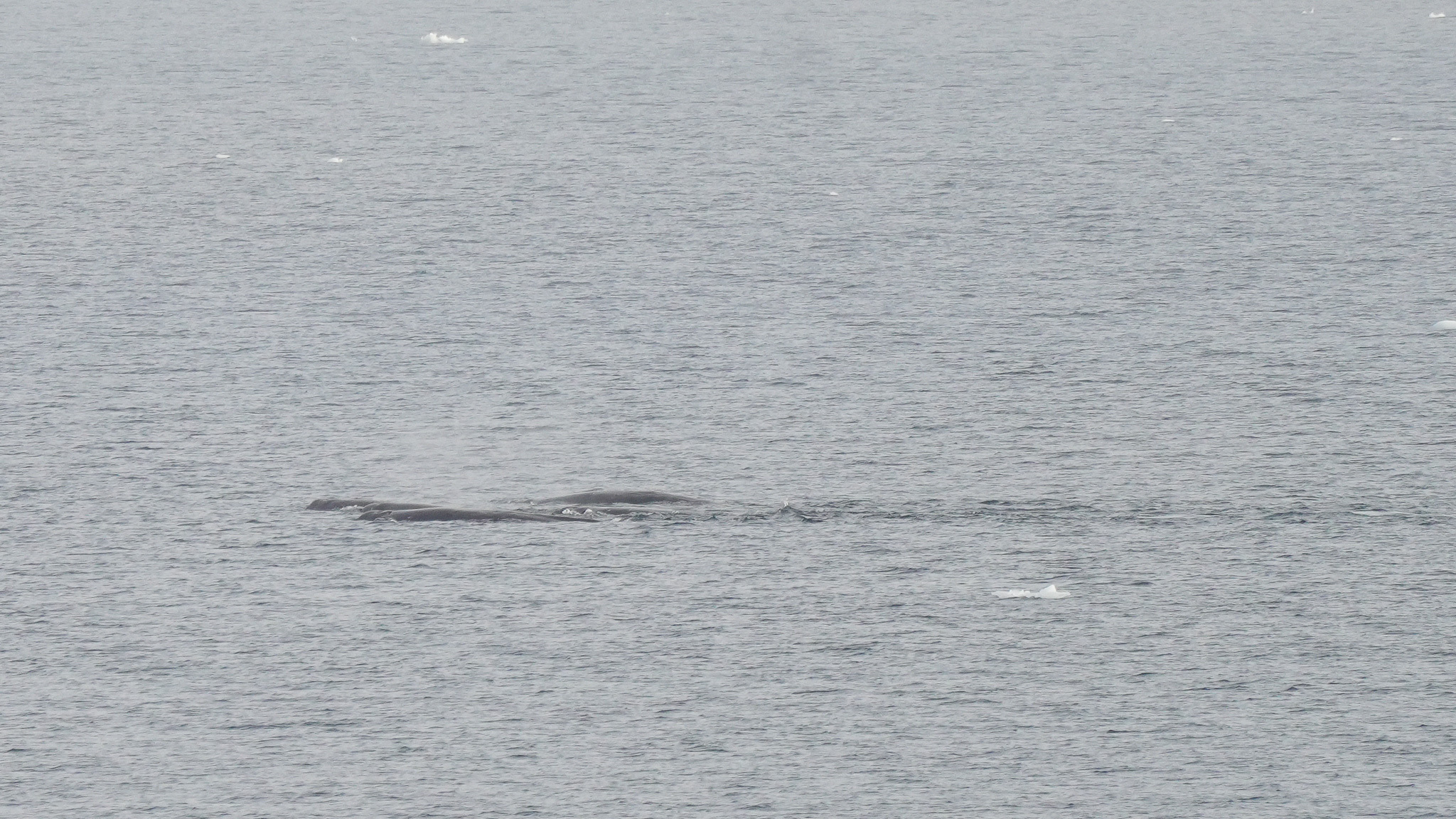
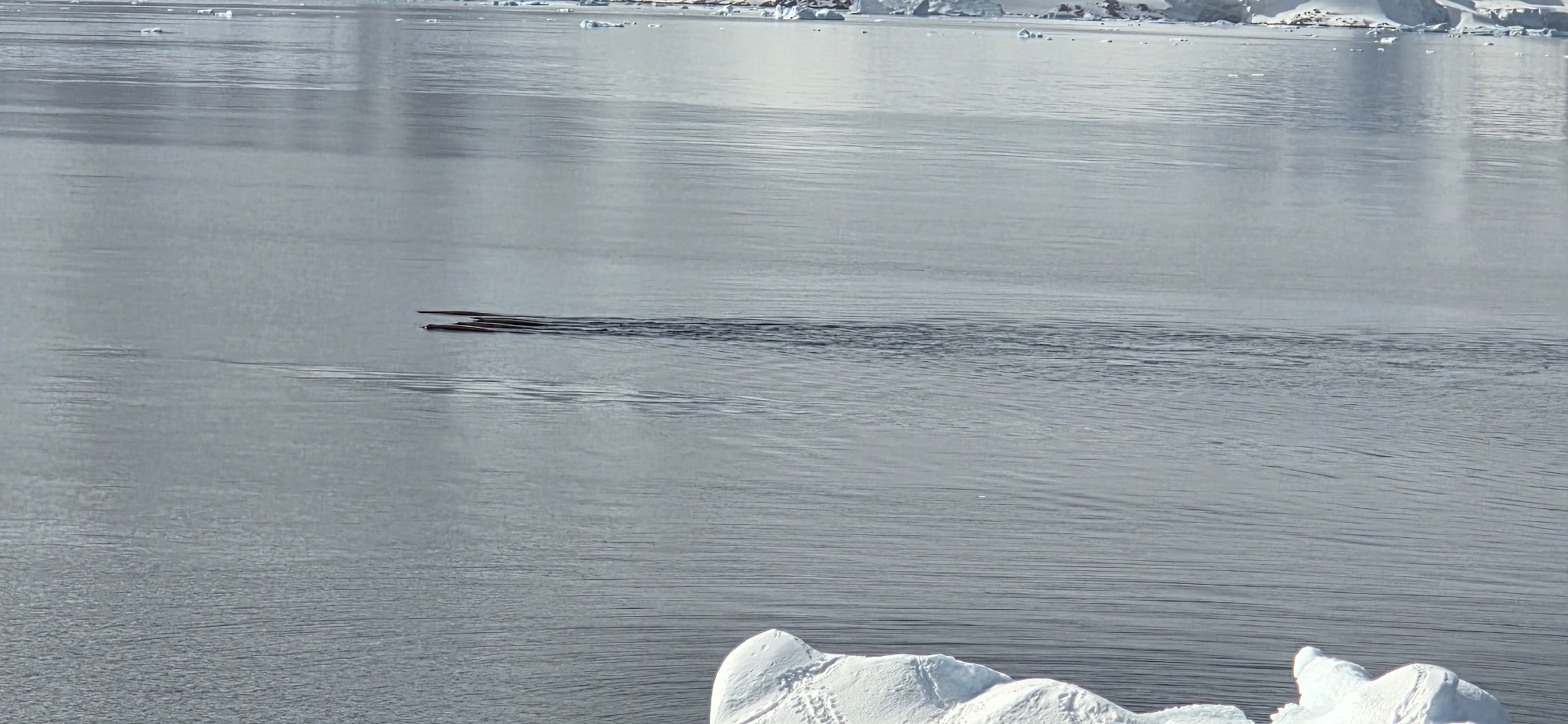
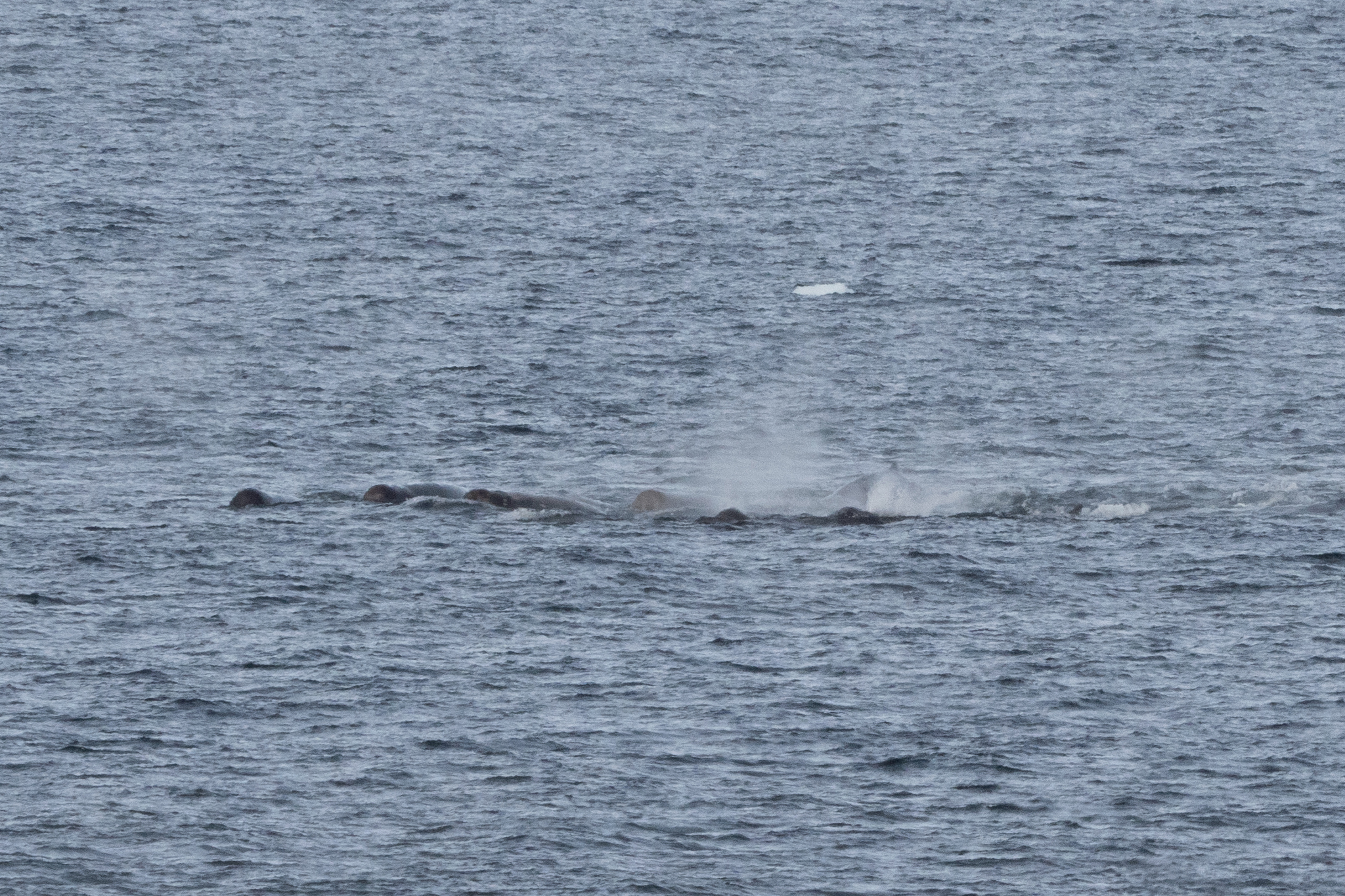
The species is distinctly gregarious. Groups most often number 6 to 10 individuals, for a mean of about eight animals across all the documented sightings, but gatherings of 47 individuals have been noted off Kemp Land and up to 80 animals in a single group, these aggregations then splitting into smaller units. The groups bring together adults of both sexes and young; they surface and dive synchronously. Breaching, spyhopping and lobtailing are regular, and the animals sometimes show themselves curious towards small boats.
Breeding remains very poorly documented and the essential of what is said about it is extrapolated from Baird’s beaked whale: sexual maturity at around 6 to 11 years in the male and 10 to 15 years in the female, physical maturity at around 20 years, a long gestation estimated at between 12 and 17 months, a single calf of about 4 m at birth. Mothers accompanied by their calf have been photographed as far in as the coastal polynyas of the Weddell Sea. The killer whale is the only known natural predator.
Arnoux’s beaked whale is classed as Least Concern (LC) on the global IUCN Red List, on the basis of a 2020 assessment published in an amended version in 2021. This classification does not express a demonstrated abundance: no population estimate exists for the species, and the population trend is not known. It reflects above all the absence of any established exploitation pressure and the considerable extent of the range. All the data converge, on the other hand, in indicating an uncommon species: in the course of twelve top-predator survey cruises carried out since 1988 aboard a research icebreaker, covering more than 42,000 km of transects south of 40°S, it was never detected from the ship.
Unlike Baird’s beaked whale, hunted in the North Pacific, Arnoux’s beaked whale has never been the object of large-scale commercial whaling, its remoteness and its ice-bound habitat having largely kept it out of the whalers’ reach. It has been listed on Appendix I of CITES since 1983 and comes under the Memorandum of Understanding for the Conservation of Cetaceans in the Pacific Islands Region, under the auspices of the Convention on Migratory Species.
The threats identified are indirect. Noise pollution comes first: beaked whales are among the cetaceans most sensitive to military sonar and to seismic surveys, and shipboard echo sounders can disturb them at more than 5 km. To these are added bycatch in fishing gear, chemical contamination, plastic ingestion and, more structurally, climate change: a species as closely tied to Antarctic fast ice as this one is directly exposed to the transformation of the southern ice regime. The lack of demographic data is in itself a weakness for its conservation.
Meeting an Arnoux’s beaked whale is a matter of luck. The best opportunities arise on polar cruises in the austral summer, along the Antarctic Peninsula, in the Weddell Sea and the Ross Sea, in particular on approaching polynyas, leads in the fast ice and the front of ice shelves, where the species rests between two dives. Further north, a few sectors concentrate sightings: the fjords of New Zealand and the continental shelf off New South Wales.
To the eye, look for a long straight back unrolling from the melon to a small, very far-set dorsal fin, a low and barely visible blow, and tight groups lying at the surface for several minutes. A pair of binoculars and patience are worth more than an approach: large noisy vessels drive the species away, which explains in part its apparent rarity.
Watching must remain passive. Echo sounders that are not indispensable are switched off, a constant distance and speed are held, a group recovering after a dive is never interrupted and never split. Dated and geolocated photographs have real scientific value: for a species whose knowledge rests on a little more than a hundred documented sightings, every image sent to a photo-identification database counts.
The two species are almost identical in appearance and were long suspected of forming only one. They are separated by geography: Arnoux’s beaked whale is exclusively southern, Baird’s beaked whale strictly North Pacific. The latter is also slightly larger, up to about 11 m against 9.7 to 9.75 m for the measured specimens of the former. Genetics has confirmed that these are indeed two distinct species.
Its dives commonly last 15 to 25 minutes, but one-hour submersions are documented and a maximum of 70 minutes has been observed at leads open in the Antarctic sea ice. Between two dives, the animals spend 5 to 15 minutes at the surface to recover.
Not in mainland France: the species is strictly southern and has never been reported in the Mediterranean, in the Bay of Biscay or in the English Channel. It is, on the other hand, present in the southern overseas waters, where the Red List of threatened species in France (chapter on the French Southern and Antarctic Lands) places it among the regular visiting species in the French Southern Territories (Crozet, Kerguelen, Saint-Paul and Amsterdam), and among the occasional species (category NAb) in Adélie Land.
They cut one another’s skin with the pair of triangular teeth of the lower jaw during social interactions and confrontations. In Berardius these teeth erupt in both sexes, so that males and females alike mark each other: the scars build up with age and give a rough indication of how old an individual is. The round white marks, for their part, are due to bites from the cookiecutter shark.
It has been classed as Least Concern (LC) by the IUCN since the 2020 assessment, amended in 2021. This status expresses above all the absence of hunting and a very large range, not a measured abundance: there is no population estimate and no trend. The main concerns are noise pollution, to which beaked whales are particularly vulnerable, bycatch and the changing state of the Antarctic sea ice on which the species closely depends.
It spends the essential of its time on deep dives, its blow is low and inconspicuous, it lives in ice-covered areas that are little visited, and it appears to avoid large noisy vessels. Sightings in fact come more often from small boats or helicopters than from the large research icebreakers, which can sail tens of thousands of kilometres without detecting a single one.
Species account compiled from authoritative scientific sources (IUCN, NOAA Fisheries, specialist literature) and reviewed for factual accuracy.
According to the open data of the GBIF, 31 georeferenced sightings of Berardius arnuxii are recorded in our photographic index.
| Country | Notes |
|---|---|
| Antarctica | 23 |
| New Zealand | 9 |
| Brazil | 1 |
| Chile | 1 |

Monthly distribution of 33 dated sightings (all years combined): the maximum is reached in February.
| Month | Notes |
|---|---|
| janvier | 3 |
| February | 13 |
| mars | 6 |
| avril | 1 |
| mai | 0 |
| juin | 0 |
| juillet | 1 |
| August | 0 |
| septembre | 1 |
| octobre | 0 |
| novembre | 5 |
| December | 3 |
These figures reflect survey effort (more boaters and more surveys in summer) as much as the actual presence of the species: to be interpreted with caution.


Photographs from GBIF under a Creative Commons licence. The author and the licence of each photograph are given; please respect them if you reuse them.
Automatic selection of the most cited works mentioning the species (source: Crossref).