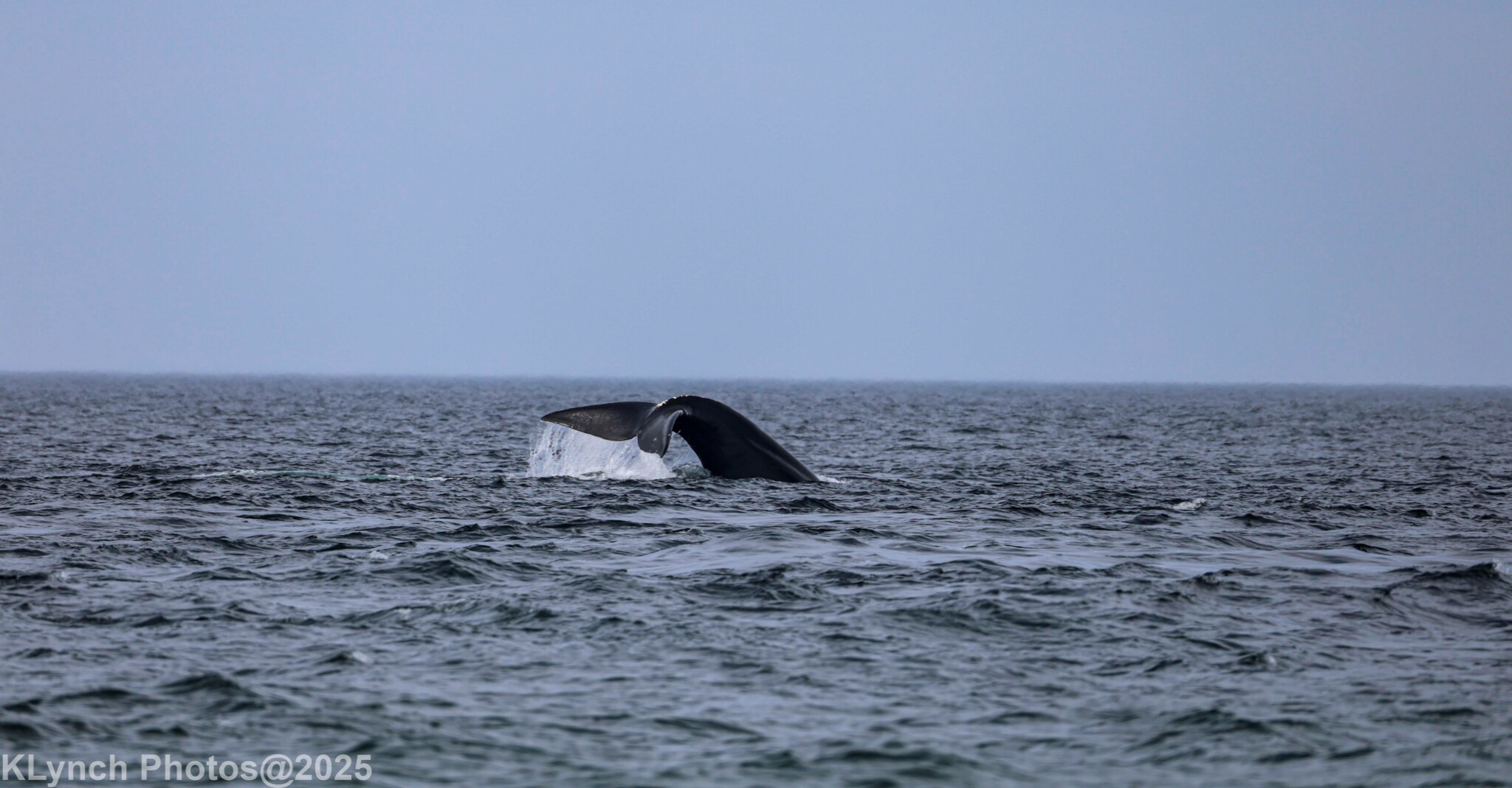
North Atlantic right whale (Eubalaena glacialis)

Key facts
Scientific name Eubalaena glacialis (Müller, 1776)
Other names Northern right whale, Basque whale, Biscay whale, black right whale, sarde (“sarde” among the Basque whalers); French: baleine noire de l’Atlantique Nord, baleine franche de l’Atlantique Nord.
Size 13 to 16 m on average, up to about 18 m (18.5 m for the largest specimens measured); newborn 4 to 4.6 m
Weight 40 to 70 tonnes commonly, up to 90 t in the largest females; individuals of more than 100 t have been reported. Newborn: about 1.4 t
Longevity Very high biological potential (more than a century in its close southern relative), but an observed median longevity of about 22 years in the North Atlantic; a few individuals exceed 70 years
Diet Zooplankton, mainly copepods of the genus Calanus (above all Calanus finmarchicus), and incidentally krill, pteropods and crustacean larvae; more than a tonne of prey a day (estimates of 1,000 to 2,500 kg)
IUCN status Critically Endangered (CR), assessment by J. G. Cooke published in 2020 (2020 errata version), still in force in the current edition of the Red List. The species is assessed as a whole, with no subpopulation treated separately: the eastern remnant (Europe, Iceland, Norway) is no longer regarded as a viable breeding subpopulation.

In brief

The North Atlantic right whale is a large, stocky mysticete, lacking a dorsal fin and recognisable by the whitish callosities on its head. Decimated by eight centuries of whaling (the Basques of the Bay of Biscay were the first to exploit it, from the 11th century onwards), it now numbers only a few hundred individuals, confined for the most part to the Atlantic seaboard of North America. Listed as Critically Endangered by the IUCN, it is among the most threatened of the great whales.

Identification

Massive and compact, the North Atlantic right whale is told at first glance by what it lacks: it has no dorsal fin and no ventral grooves, and its back forms a long, smooth, dark curve at the surface. The body, very dark grey to black, most often measures 13 to 16 m for 40 to 70 tonnes, females being on average larger than males. The head is enormous, with a strongly arched rostrum; the flippers are broad and spatulate, the tail fluke wide and deeply notched. A layer of blubber up to 30 cm thick insulates it from cold water.

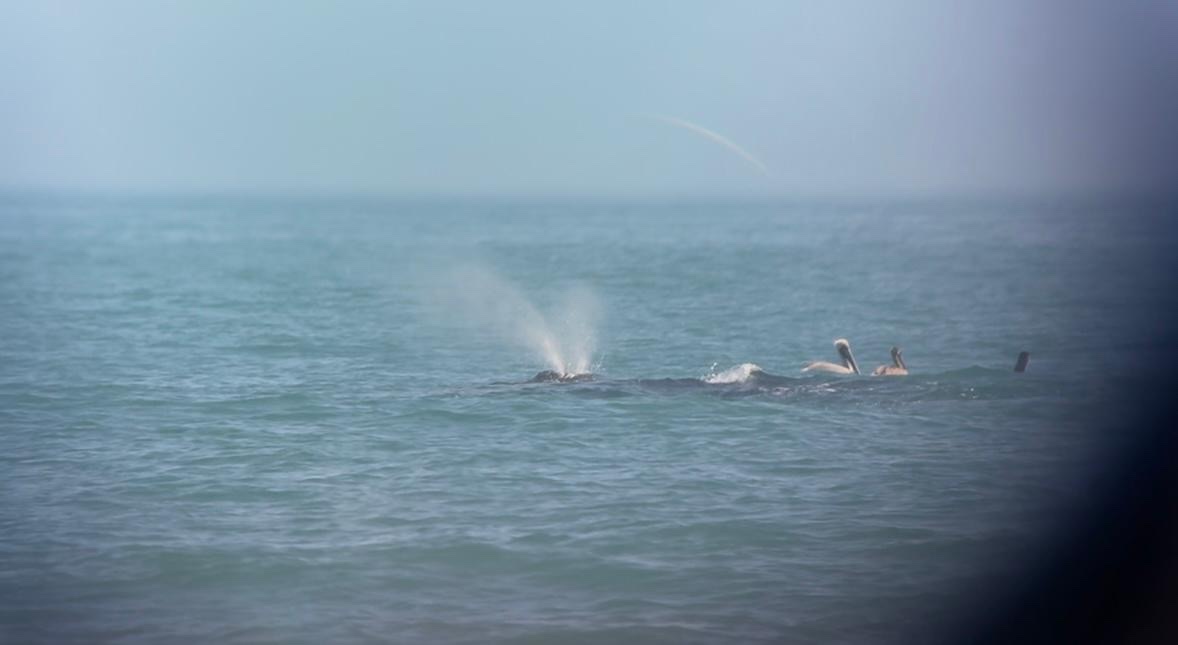
Its surest distinguishing feature remains the callosities: patches of thickened, keratinised skin set on the rostrum, above the eyes, on the lower jaw and around the blowholes. Colonised by whale lice (cyamids), they take on a white, yellowish, orange or pink tinge. Each individual has a unique pattern, which allows researchers to photo-identify it and to follow it throughout its life. The two blowholes, set well apart, produce a V-shaped blow that is clearly visible from a distance. In the mouth hang 200 to 270 baleen plates on each side, 2 to 3 m long and edged with a very fine silky fringe suited to catching tiny prey.

Confusion is unlikely but possible. The bowhead whale, or Greenland right whale (Balaena mysticetus), the only other balaenid of the North Atlantic, lives in Arctic waters, has no callosities and bears a characteristic white patch under the chin. The two other right whales, the southern right whale (Eubalaena australis) and the North Pacific right whale (Eubalaena japonica), closely resemble it but occupy other oceans. Against the rorquals the distinction is clear: the humpback whale (Megaptera novaeangliae) has a dorsal fin, very long white flippers and hair-bearing tubercles (not callosities) on the head. A final word of caution on vernacular names: in French, “baleine franche” refers to all three Eubalaena without distinction, and “baleine noire” is the commonest form in Quebec.

Taxonomy

The species belongs to the order Cetacea, suborder Mysticeti (baleen whales) and the family Balaenidae, which holds only two living genera: Balaena, with the bowhead whale alone, and Eubalaena, erected by John Edward Gray in 1864 and whose name means “true whale”. The taxon was described by Müller in 1776.

Right whales were long regarded as a single cosmopolitan species. Molecular genetic work published in 2000 established the existence of three distinct species, Eubalaena glacialis in the North Atlantic, Eubalaena japonica in the North Pacific and Eubalaena australis in the southern hemisphere, whose lineages are thought to have stopped interbreeding between 3 and 12 million years ago. No subspecies is recognised in E. glacialis.

The French name “baleine franche”, like the English right whale, comes from the whalers’ vocabulary: it was the right whale to harpoon, because it swims slowly, frequents the coast, floats once dead and yields abundant quantities of oil and baleen. Historians point out, however, that this etymology is not certain, since right may also mean “true” or “typical”.

Range and habitat

The species once occupied both shores of the temperate and subpolar North Atlantic. In the east, its range extended from north-west Africa and northern Spain to Norway, Iceland and Greenland, the Bay of Biscay forming a major sector. In the west, it frequented the coast from Florida to Newfoundland.

Today almost all the animals live in the north-west Atlantic. The annual cycle takes them from the winter calving grounds, off Georgia and northern Florida (November to April), to the spring and summer feeding areas: Cape Cod Bay, the Great South Channel, the Gulf of Maine, the Bay of Fundy. Since the 2010s, the warming of the Gulf of Maine has shifted their prey: from 2015, a substantial fraction of the population, of the order of 40%, has spent late spring and summer in the Gulf of St Lawrence, where the species had previously been recorded only occasionally (some thirty individuals photographed since 1995). The migrations cover more than 1,600 km.

The eastern remnant is reduced to fewer than twenty animals at best, and every modern photographed sighting has turned out to be an individual originating in the west: in all likelihood, then, there is no longer a European breeding population.

In France, the presence is historical far more than current. The Bay of Biscay was one of the world’s cradles of whaling and the species disappeared from it over the centuries. A single contemporary record is documented: on 21 June 2019, a male named Mogul (catalogue no. 3845, born in 2008) was seen feeding off Penmarc’h, in Finistère. Photographed in Cape Cod Bay in March of the same year, nearly 5,000 km earlier, and then off Iceland in July 2018, he has not been seen again since. In the Mediterranean the species is absent today, but analysis of bones from Roman salting works at the Strait of Gibraltar, published in 2018, showed that it frequented the western basin two thousand years ago, probably to calve there. No presence is documented in the French overseas territories, the species being strictly North Atlantic.

Biology and ecology

The North Atlantic right whale is a plankton specialist. It feeds by “skimming”: it swims slowly, mouth open, through dense layers of copepods, the water filtering between its baleen plates while the prey stay trapped in the inner fringe. Its main target is the copepod Calanus finmarchicus, a crustacean the size of a grain of rice; it also takes krill, pteropods and various larvae. A single whale can ingest more than a tonne of prey a day. It feeds from the surface down to the bottom of the water column; its dives generally last 6 to 8 minutes, exceptionally close to an hour, most often within the first hundred metres and down to about 200 m.

A very slow swimmer, rarely more than 5 knots, that is about 9 km/h, it is nonetheless remarkably demonstrative: breaches, tail slaps and flipper slaps are frequent. The animals are most often solitary or in small groups, but they form surface active groups in which several individuals gather to court and interact. Communication rests on low-frequency sounds: moans, grunts and pulses that serve to maintain contact.

Sexual maturity comes at about 9 to 10 years. Gestation lasts a little over twelve months and produces a single calf, 4 to 4.6 m long and weighing about 1.4 tonnes at birth. Lactation extends over about eight months to a year, weaning most often occurring at around twelve months, with documented extremes of eight to seventeen months. The interval between two calvings, historically three to four years in a healthy population, has lengthened to seven to ten years over the past two decades, a sign of the cumulative stress of entanglements, noise and the scarcity of prey. The 2026 calving season marked a brighter spell: 23 calves, the best figure since 2009, and 13 of the 20 already known mothers had calved in 2021 or 2022, an interval of four to five years, appreciably closer to normal.

Longevity is the subject of a striking revision. A study published in 2024 showed that balaenids are extraordinarily long-lived: in the southern right whale, median lifespan reaches 73 years and 10% of individuals exceed 132 years. In the North Atlantic right whale, the median falls to 22 years and only 10% pass 47 years, a gap attributed to human-caused mortality. A few individuals of more than 70 years are documented nonetheless.

Status and conservation

The North Atlantic right whale is listed as Critically Endangered (CR) on the IUCN Red List, a status arising from the 2020 assessment and still in force. It is one of the very small number of cetacean species placed in this category; by way of comparison, the North Pacific right whale is Endangered and the southern right whale is of Least Concern.

The most recent population figure, published in October 2025 by the North Atlantic Right Whale Consortium and the New England Aquarium, stands at 384 individuals (+10/−9) for the year 2024, a rise of 2.1% on 2023 (376 individuals after recalculation). There are only about 70 females of breeding age. Whaling had brought the population down to fewer than a hundred animals by around 1935, according to retrospective reconstructions.

Two threats dominate, both of them human. Entanglement in fixed fishing gear, lobster and crab pots linked by vertical lines, is the leading cause of death and serious injury: more than 85% of individuals bear the mark of at least one entanglement in the course of their lives. Ship strikes come next. An Unusual Mortality Event declared in June 2017 was still open in the summer of 2026: 43 deaths, 41 serious injuries and 92 cases of sub-lethal injury or poor health are recorded in it, that is 176 cases in a population of fewer than 400 animals. The authorities estimate that only one third of deaths are detected. To these are added the warming of the water, which shifts the concentrations of Calanus and draws the whales out of protected areas, and chronic underwater noise, associated with lasting physiological stress.

Hunted from the 11th century onwards, the species has had international protection since the 1930s; the last known catch dates from February 1967, off Madeira. It is listed on CITES Appendix I, listed as endangered under the US Endangered Species Act since 1970 and as “depleted” under the Marine Mammal Protection Act, and protected in Canada by the Species at Risk Act. Management measures combine a bycatch reduction plan led since 1996-1997 by the Atlantic Large Whale Take Reduction Team (gear modifications, seasonal closures, trials of ropeless pots) and, since 2008, a 10-knot limit for vessels over 65 feet (about 20 m) in regulated seasonal zones along the east coast of the United States. The proposal to extend this rule to vessels over 35 feet was formally withdrawn on 16 January 2025, a decision the scientific community regarded as worrying. Canada for its part applies dynamic fishery closures and speed limits in the Gulf of St Lawrence.

Observing this species

This species is not a whale-watching target: approaching it is prohibited, and legitimate observation is from a distance or from land. The best windows are in Cape Cod Bay, Massachusetts, from February to April, where the animals sometimes come close enough to shore to be seen with binoculars from the coast; in the Great South Channel in spring; in the Bay of Fundy and the Gulf of St Lawrence from July to October; and finally along the coasts of Georgia and Florida from November to April, where mother and calf pairs sometimes travel along the beaches.

The regulations are strict. In United States waters it is forbidden to approach or to remain within 500 yards, that is 1,500 feet, about 460 m, of a right whale, whether on board a vessel, a kayak, a paddleboard or an aircraft, drones included; for aircraft, this same distance of 500 yards applies in altitude. Any boat that finds itself inside this perimeter must move away immediately at reduced speed. In Canada a distance of 400 m applies to cetaceans listed as endangered or threatened, the North Atlantic right whale among them, with fines of up to 100,000 Canadian dollars.

In Europe, and all the more so in France, encountering this species is an exceptional event. Any presumed sighting should be reported, with photographs in support, to the national sighting and stranding networks, which pass them on to the photo-identification catalogues: the pattern of the callosities makes it possible to identify the animal with certainty and to reconstruct its movements. Reports of entangled, injured or stranded individuals are just as valuable, and often decisive in organising a disentanglement.

Frequently asked questions

How many North Atlantic right whales are left?

The most recent estimate, published in October 2025, covers the year 2024 and gives 384 individuals (+10/−9), up 2.1% on the 376 individuals recalculated for 2023. Only about 70 females are of breeding age, which makes the population extremely vulnerable.

Why is it called the “Basque whale”?

Because the Bay of Biscay was the first theatre of its commercial hunting. Basque whalers called it “sarde” and exploited it from the 11th century onwards; a measure concerning the whale meat market of Bayonne is attested in 1059. Hunted from October to March, the species became scarce from the end of the 17th century; the Basques had already moved on to Newfoundland from the 1520s. A single spectacular catch is documented in the 20th century: a 12 m whale killed off Orio in 1901.

Can it still be seen in France?

In practice, no. A single contemporary record is documented on the French coast: on 21 June 2019, off Penmarc’h in Finistère, a male named Mogul (catalogue no. 3845) was seen feeding. He had come from Cape Cod Bay, where he had been photographed three months earlier, nearly 5,000 km away.

What is the main cause of death?

Entanglement in the lines of fixed fishing gear, ahead of ship strikes. More than 85% of individuals bear the mark of at least one entanglement. The Unusual Mortality Event opened in June 2017 totalled, by the summer of 2026, forty-three deaths, forty-one serious injuries and ninety-two cases of sub-lethal injury or impaired health, bearing in mind that only about one third of deaths are detected.

How long does a North Atlantic right whale live?

Much less long than its biology would allow. A study published in 2024 puts the median lifespan of its southern cousin at 73 years, with 10% of individuals exceeding 132 years. In the North Atlantic the median is only 22 years and only 10% of the animals pass 47 years, the gap being attributed to human-caused mortality. A few individuals of more than 70 years are known nonetheless.

How long does the calf stay with its mother?

Lactation lasts about eight months to a year, weaning most often occurring at around twelve months, with documented extremes of eight to seventeen months. The female gives birth to a single calf, 4 to 4.6 m long and weighing about 1.4 tonnes. The interval between two calvings, historically three to four years, has lengthened to seven to ten years over the past twenty years, before a marked recovery in the 2026 season.

Is it the same species as the southern right whale?

No. Right whales were long regarded as a single species, but genetic analyses published in 2000 established three distinct species: Eubalaena glacialis in the North Atlantic, Eubalaena japonica in the North Pacific and Eubalaena australis in the southern hemisphere. Their lineages are thought to have been separate for between 3 and 12 million years. Their conservation statuses differ radically, moreover: the southern right whale is of Least Concern, while the North Atlantic right whale is Critically Endangered.

Sources

Factsheet compiled from authoritative scientific sources (IUCN, NOAA Fisheries, specialist literature) and checked for factual accuracy.

Observed distribution

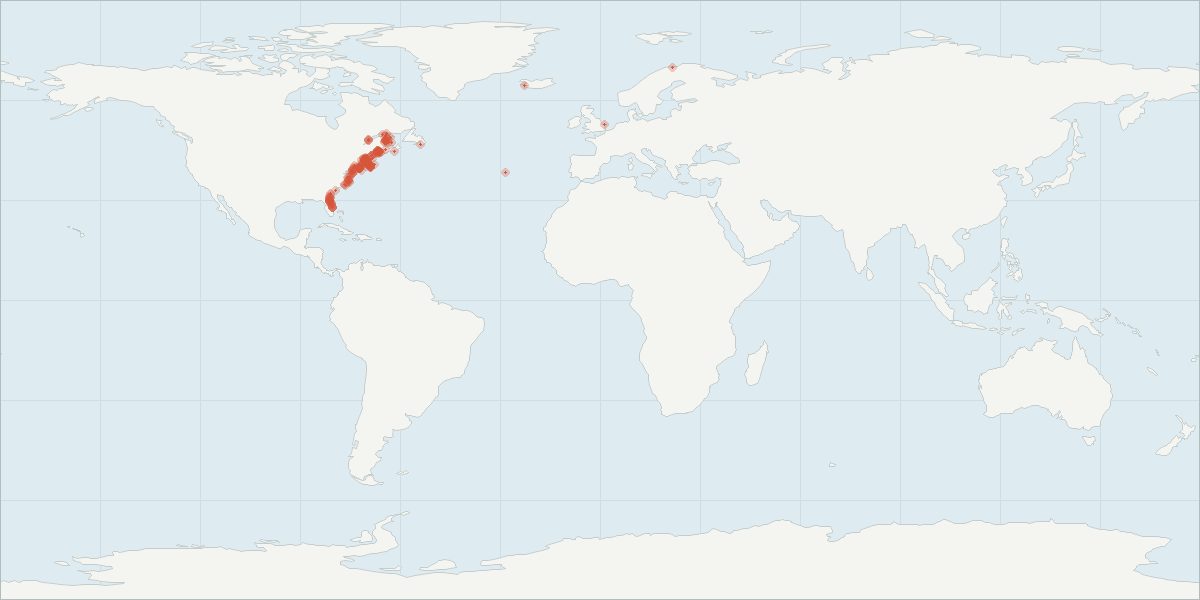
According to the open data of the GBIF, 338 georeferenced sightings of Eubalaena glacialis are recorded in our photographic index.

Main countries of observation
CountryNotes
United States of America334
Canada52
United Kingdom of Great Britain and Northern Ireland9
unknown or invalid5
Belgium1
Iceland1
Italy1
Madagascar1
Norway1
Portugal1

Distribution map: North Atlantic right whale (Eubalaena glacialis)

Distribution map: North Atlantic right whale (Eubalaena glacialis), 338 georeferenced sightings from GBIF
338 georeferenced sightings of Eubalaena glacialis. Base map Natural Earth, public domain. GBIF data.
🗺️ Open the interactive mapTo zoom and pan. It uses the OpenStreetMap/CARTO base maps and the GBIF occurrence densities: no data is sent to these services before you click.

Presence through the year

Monthly distribution of 365 dated sightings (all years combined): the maximum is reached in avril.

890janvier : 23janfévrier : 43febmars : 42maravril : 89avrmai : 23maijuin : 29juinjuillet : 12juilaoût : 46Augustseptembre : 18sepoctobre : 14octnovembre : 10novdécembre : 16dec
Sightings by month
MonthNotes
janvier23
February43
mars42
avril89
mai23
juin29
juillet12
August46
septembre18
octobre14
novembre10
December16

These figures reflect survey effort (more boaters and more surveys in summer) as much as the actual presence of the species: to be interpreted with caution.

En images

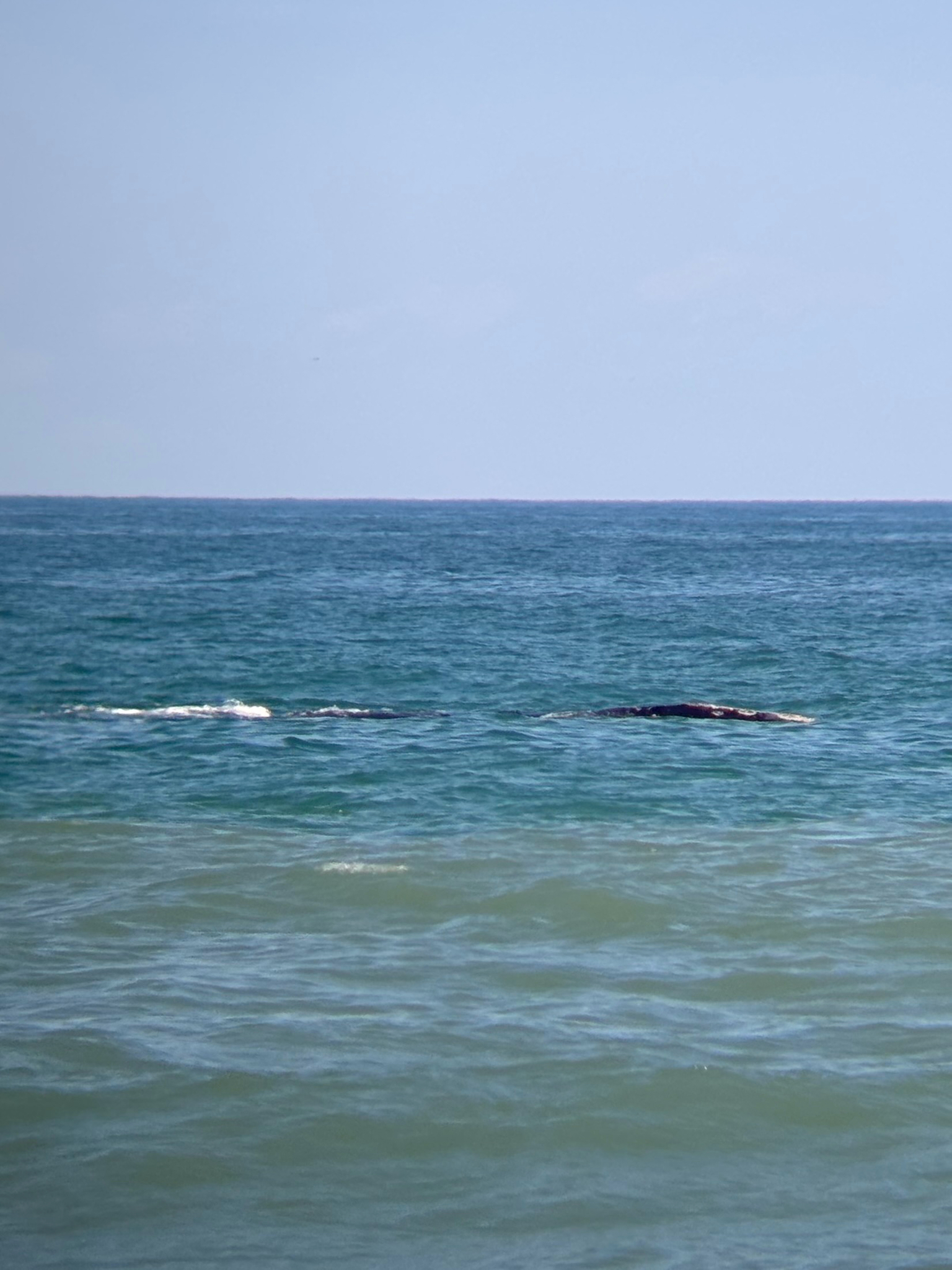
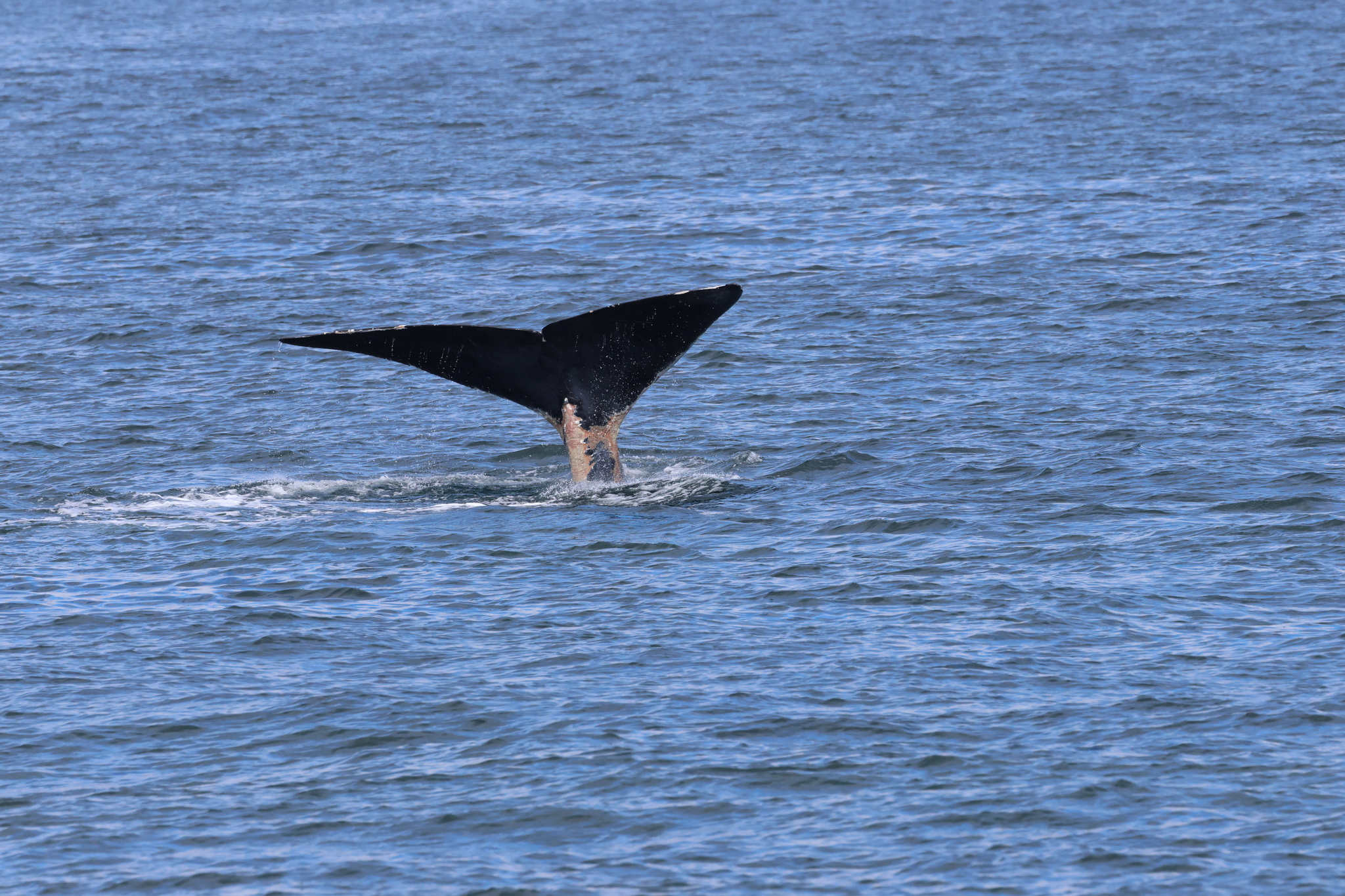
Eubalaena glacialis
© minardroad, CC BY-NC, 2026
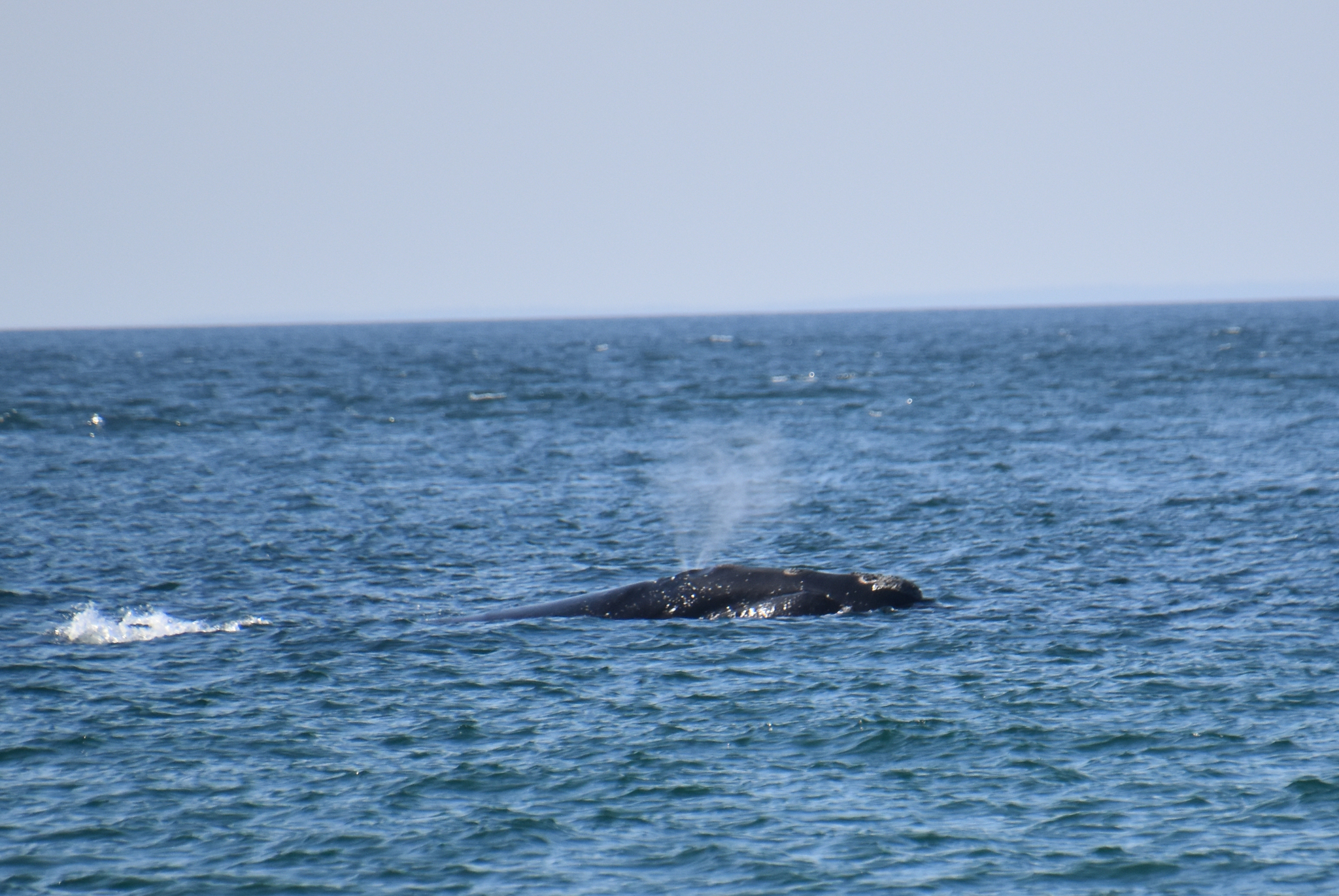
Eubalaena glacialis
© V Burdette, CC BY-NC, 2026
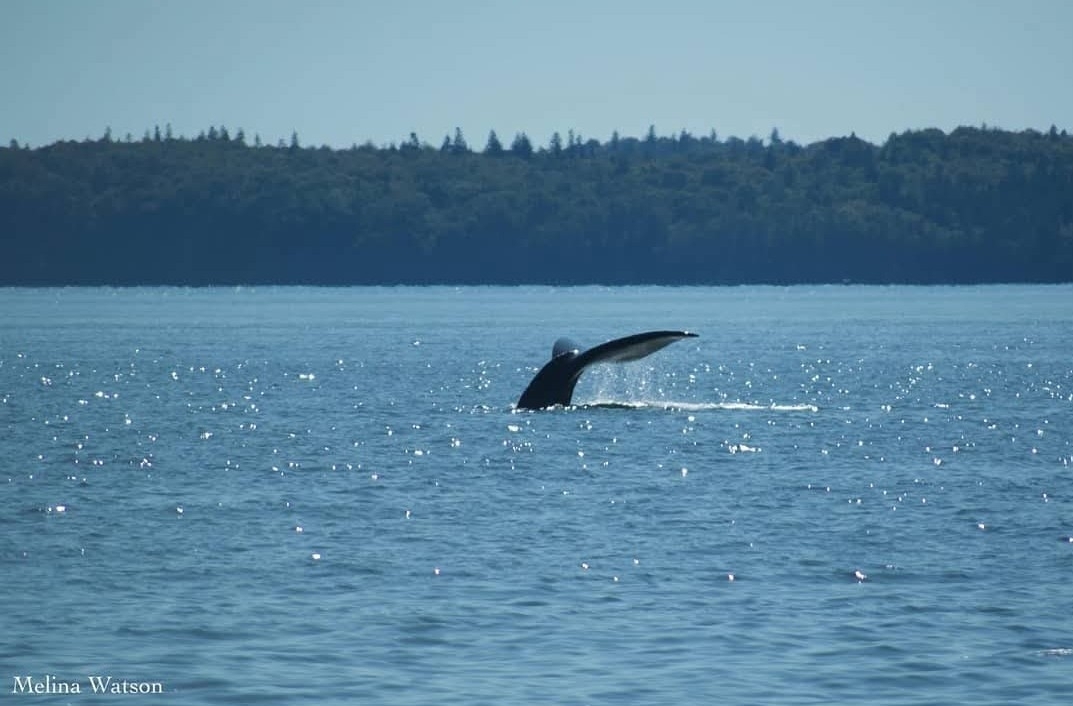
Eubalaena glacialis
© mel_watson, CC BY-NC, 2026
Eubalaena glacialis
© MFC, CC BY-NC, 2026
Eubalaena glacialis
© Kevin Lynch, CC BY, 2026
Eubalaena glacialis
© egseemar, CC BY-NC, 2026
Eubalaena glacialis
© tachycineta, CC BY-NC, 2026
Eubalaena glacialis
© tba3325, CC BY-NC, 2026
Eubalaena glacialis
© jimmyenfru, CC BY-NC, 2026
Eubalaena glacialis
© Peter Meisenheimer, CC BY-NC, 2025
Eubalaena glacialis
© Kevin Lynch, CC BY, 2025
Eubalaena glacialis
© Kevin Lynch, CC BY, 2025

Photographs from GBIF under a Creative Commons licence. The author and the licence of each photograph are given; please respect them if you reuse them.

Scientific references

  1. (2020) Eubalaena glacialis: Cooke, J.G., IUCN Red List of Threatened Species
  2. Gaskin D. (1991) An update on the status of the Right Whale, Eubalaena glacialis, in Canada, The Canadian field-naturalist
  3. Kraus S., Stone G. (1995) Coprophagy by Wilson's Storm-petrels, Oceanites oceanicus, on North Atlantic Right Whiale, Eubalaena glacialis, faeces, The Canadian field-naturalist
  4. McLeod B., White B. (2009) Tracking mtDNA Heteroplasmy through Multiple Generations in the North Atlantic Right Whale (Eubalaena glacialis), Journal of Heredity
  5. Gaskin D. (1997) Updated status of the Right Whale, Eubalaena glacialis, in Canada, The Canadian field-naturalist
  6. Browning C., Rolland R., Kraus S. (2009) Estimated calf and perinatal mortality in western North Atlantic right whales (Eubalaena glacialis), Marine Mammal Science
  7. Parks S. (2003) Acoustic communication in the North Atlantic right whale (Eubalaena glacialis)
  8. Wright A., Gabaldon J., Zhang D., Hamilton P. et al. (2024) Bimodal vertical distribution of right whales Eubalaena glacialis in the Gulf of St. Lawrence, Endangered Species Research

Automatic selection of the most cited works mentioning the species (source: Crossref).