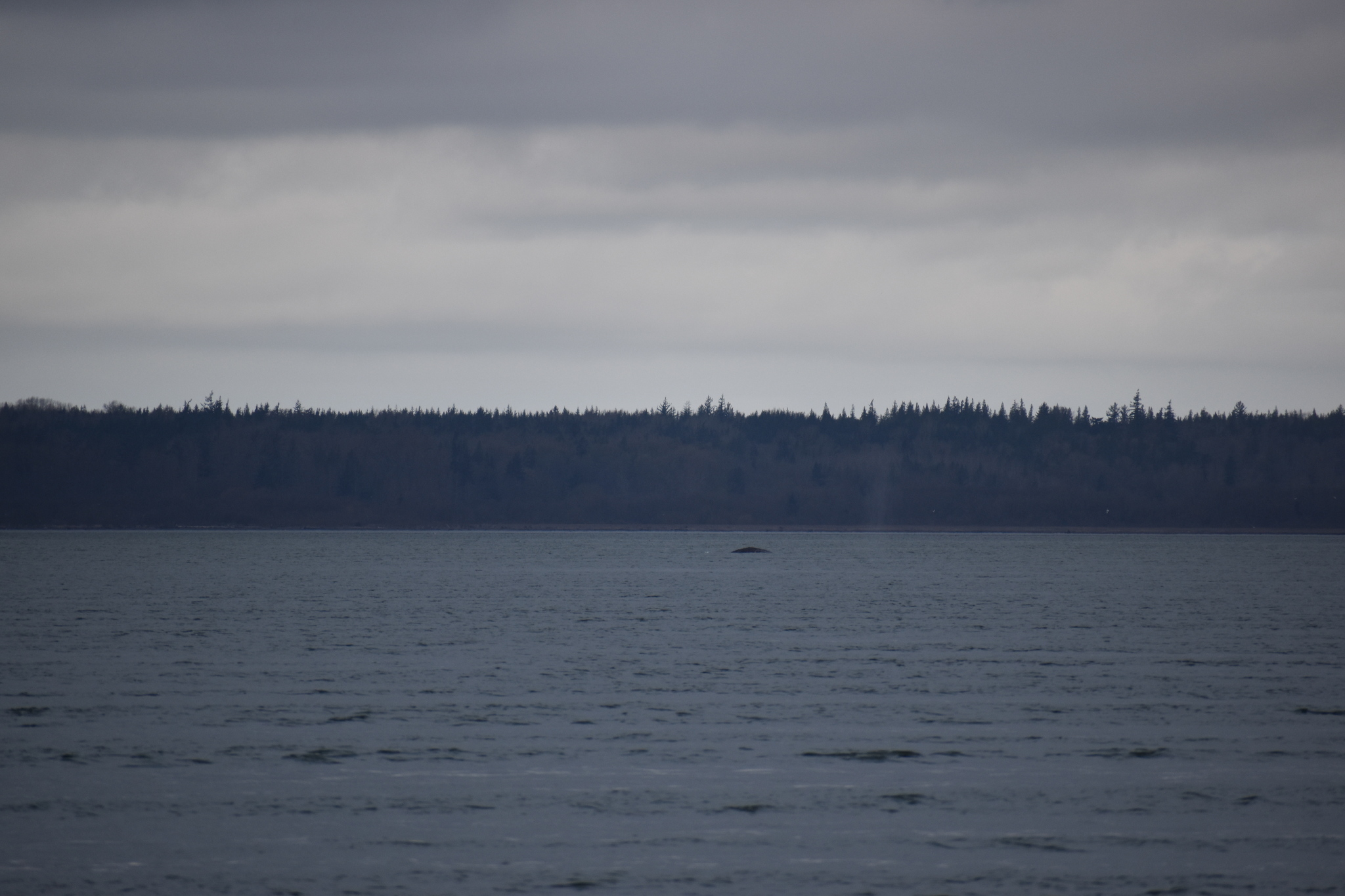
| Scientific name | Eschrichtius robustus (Lilljeborg, 1861) |
|---|---|
| Other names | Pacific grey whale, California grey whale; US spelling: gray whale; French: baleine grise; historical whalers’ nickname: “devil fish” |
| Size | Adult: 12 to 15 m (up to about 15.2 m), females slightly larger than males; newborn: 4.5 to 5 m |
| Weight | 15 to 35 t commonly, up to 40-45 t for the largest individuals; newborn: 500 to 900 kg |
| Longevity | About 50 to 70 years; one female estimated at 75-80 years post mortem. NOAA states that the average and maximum lifespan of the species remains unknown. |
| Diet | Benthic feeder: burrowing amphipods and benthic invertebrates taken from the sediment, filtered through 130 to 180 baleen plates on each side of the jaw; also mysids, larvae and, occasionally, krill and small fish |
| IUCN status | Least Concern (LC), 2017 assessment published in 2018, trend stable at that date. Western subpopulation (western North Pacific): Endangered (EN) since 2018, previously Critically Endangered (CR). North Atlantic population: extinct since the early eighteenth century. CITES Appendix I. |
The only living member of the family Eschrichtiidae, the grey whale is a large coastal mysticete now confined to the North Pacific. It is recognised by the absence of a dorsal fin, replaced by a hump followed by a row of knuckles, and by its grey skin studded with barnacles. A benthic feeder, it makes one of the longest migrations known in any mammal. Listed as “Least Concern” at global level, its western subpopulation remains “Endangered“.
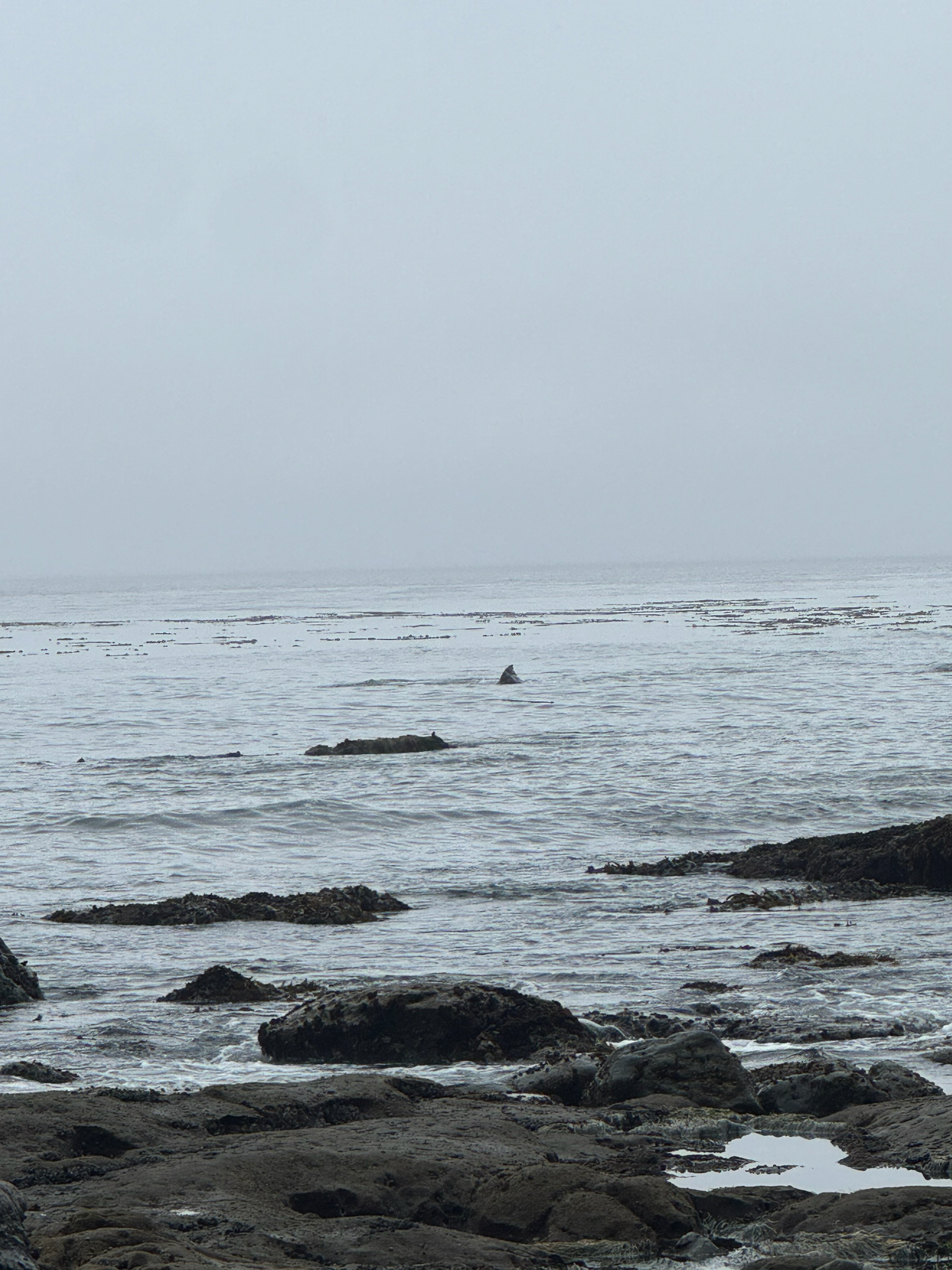
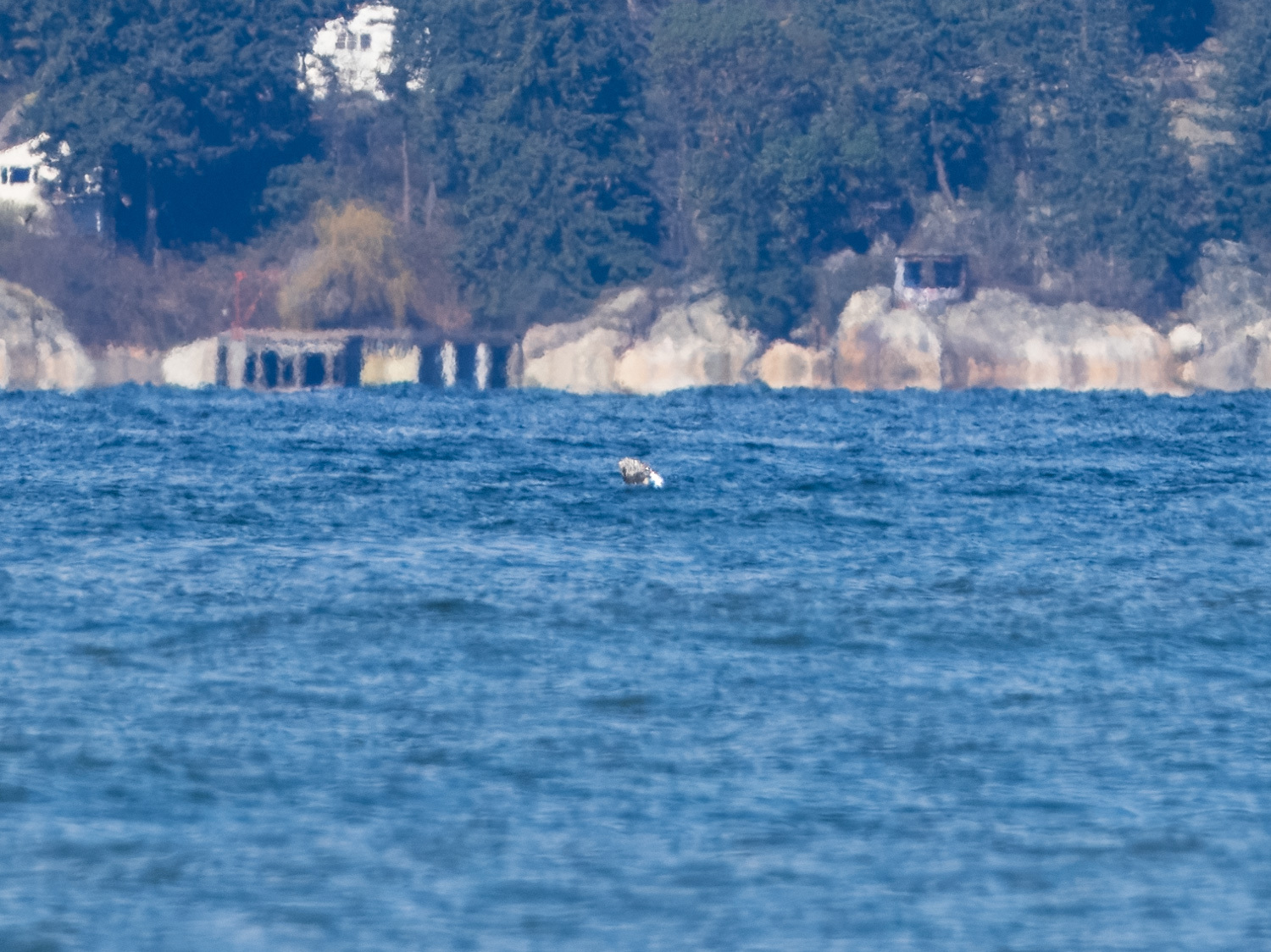
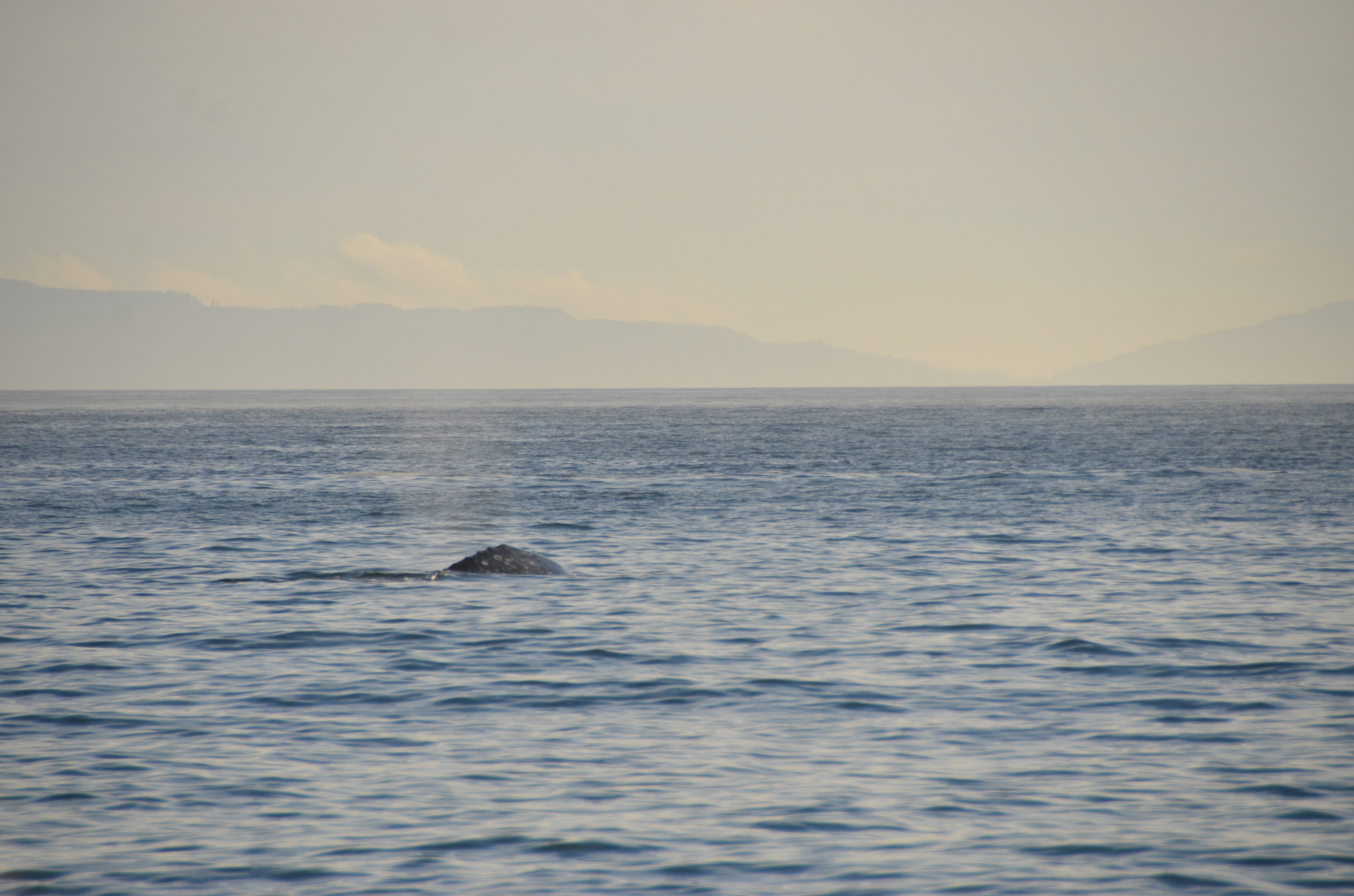
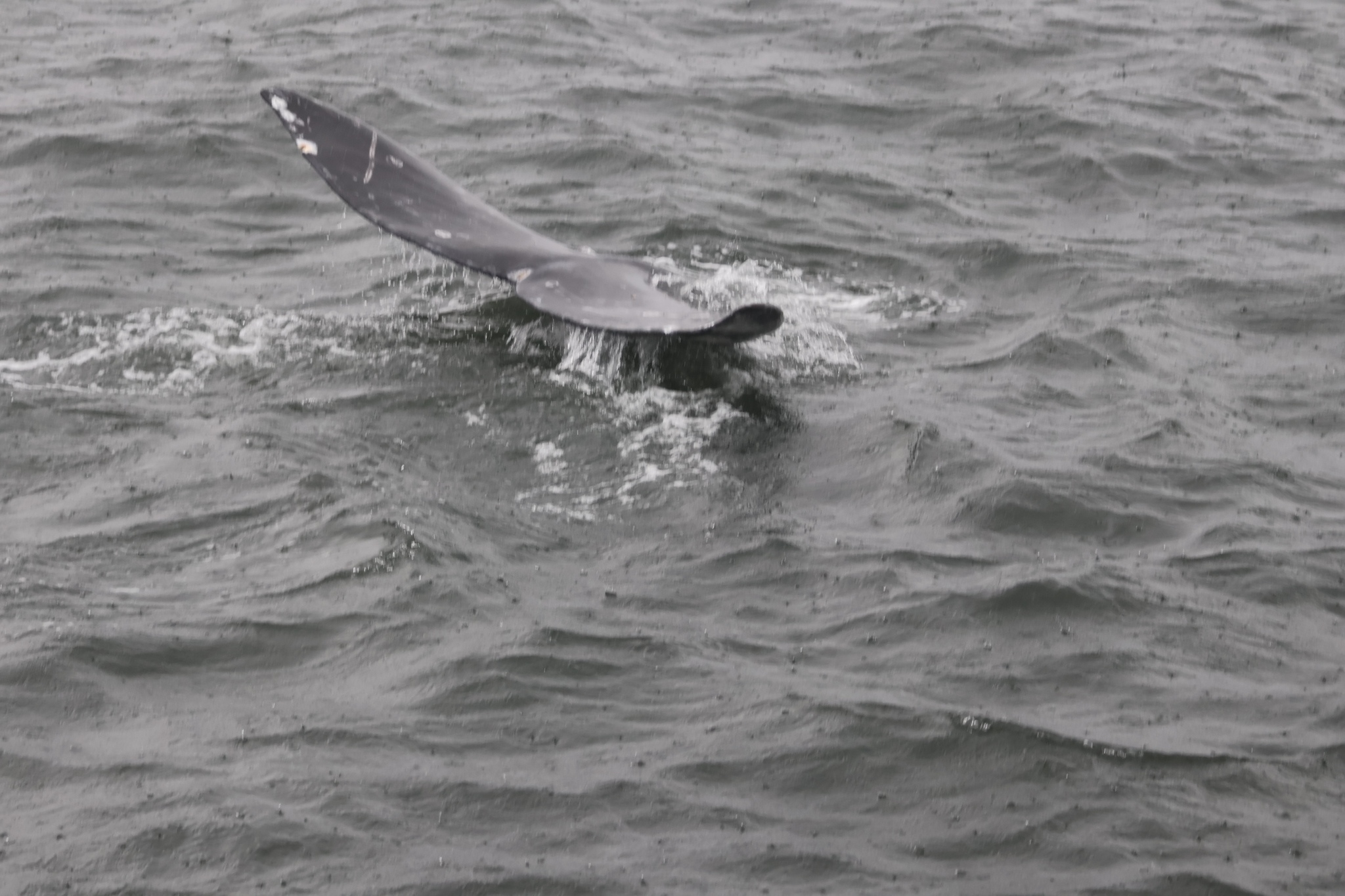
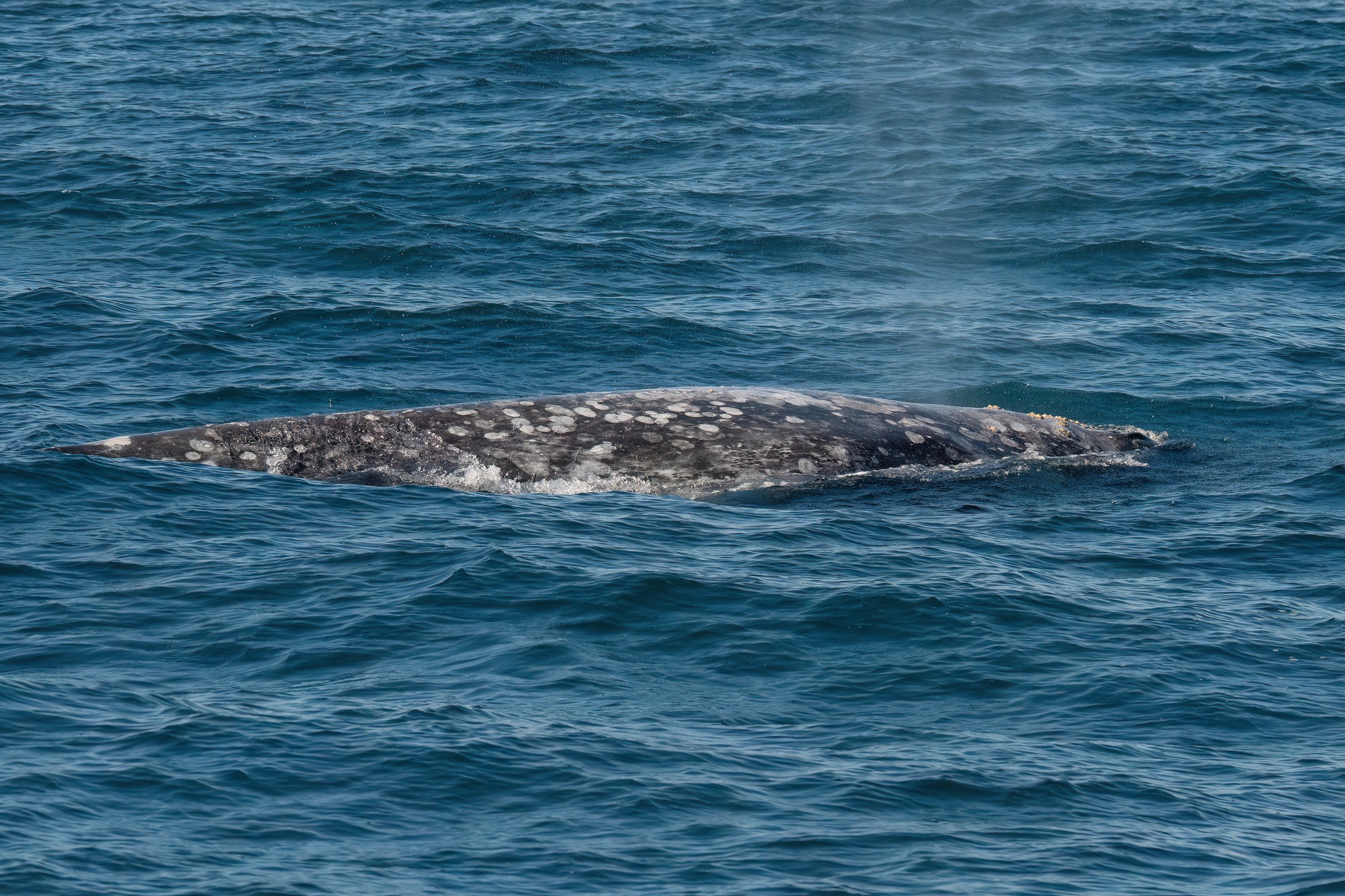
As an adult, the grey whale measures 12 to 15 m, the largest individuals measured approaching 15.2 m, for a mass of between 15 and 35 t, the highest sources citing 40 to 45 t. Females are slightly larger than males. The body is robust, the head narrow, arched in profile and proportionally small, with two paired blowholes described as arranged in a V or a heart shape. The most diagnostic feature is the complete absence of a dorsal fin: it is replaced, two-thirds of the way along the back, by a dorsal hump followed by 6 to 12 crenulations, the knuckles, which run to the tail stock. The flippers are short and paddle-shaped.
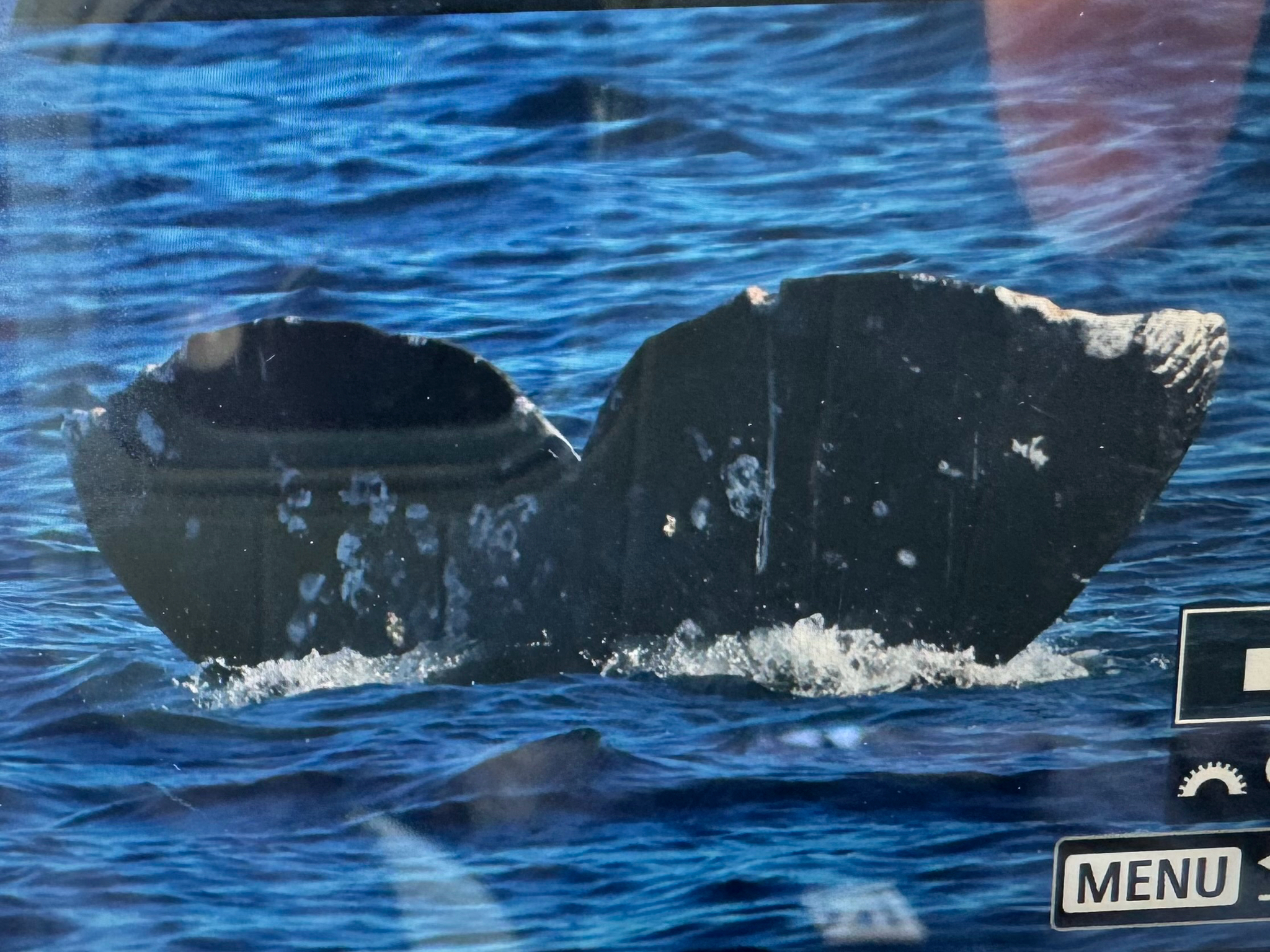
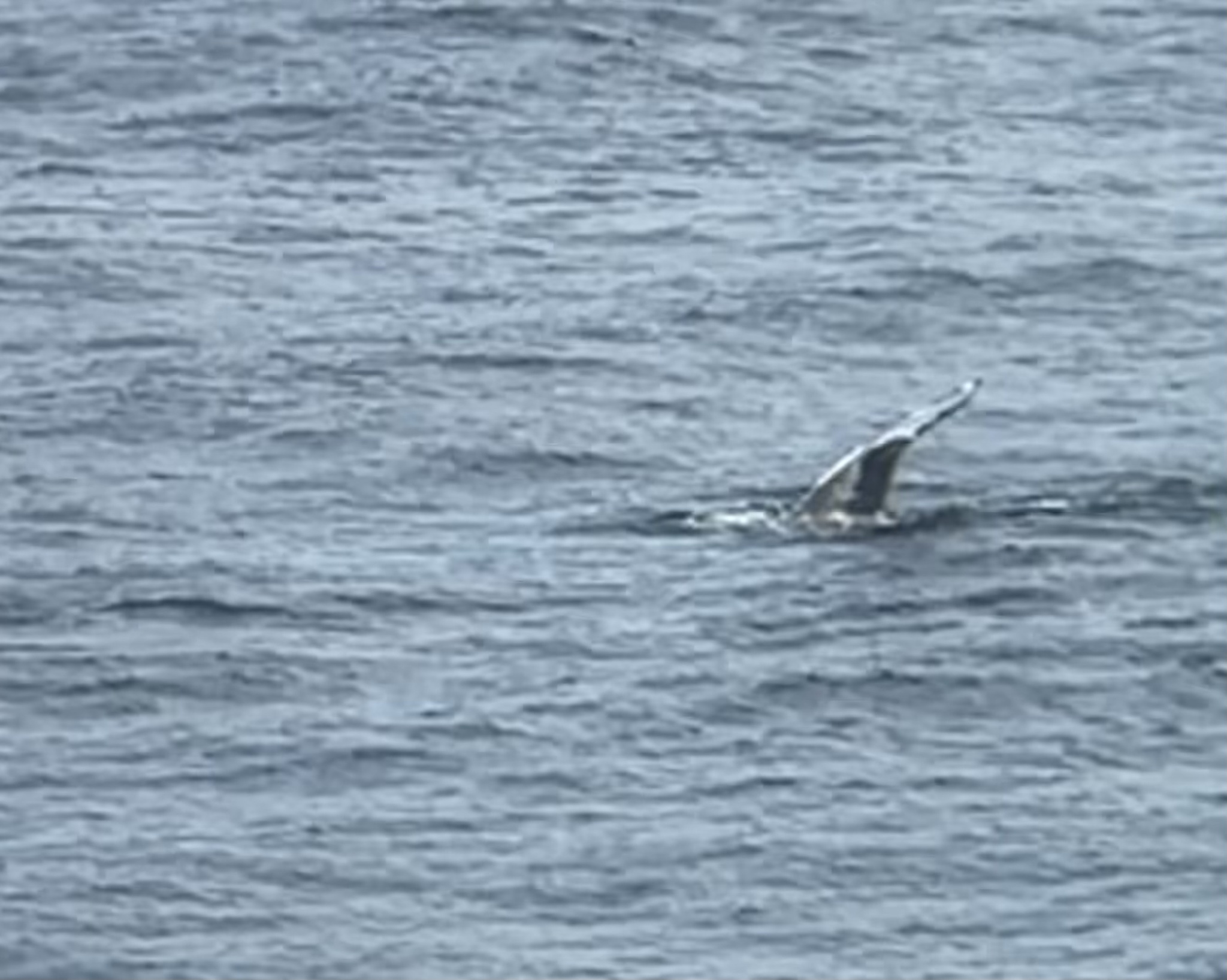
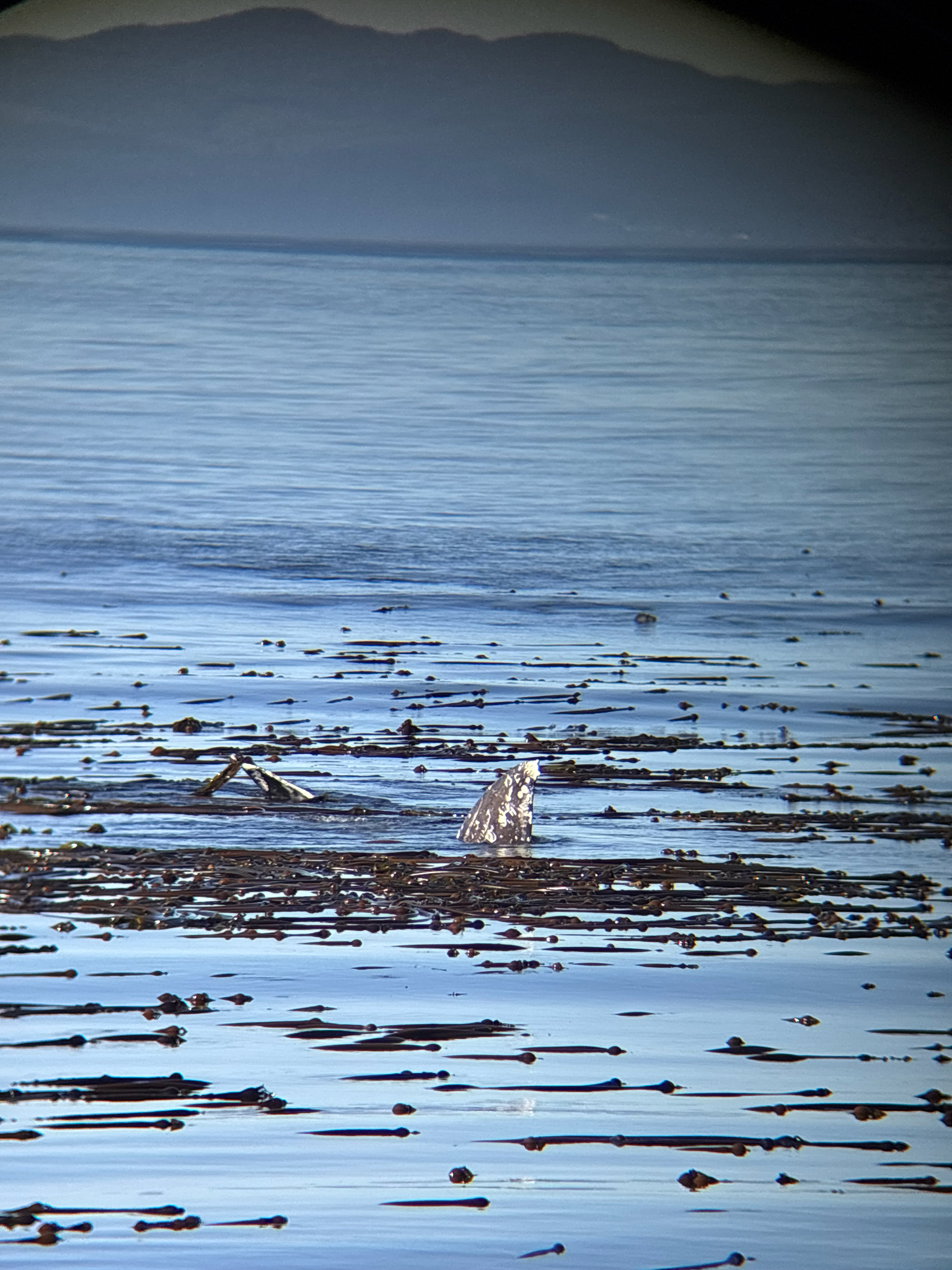
The coat, slate grey to light grey, is speckled with whitish mottling and covered in scars. It frequently carries patches of barnacles of the species Cryptolepas rhachianecti, almost exclusive to the grey whale, surrounded by orange clusters of whale lice (Cyamus scammoni, C. kessleri, C. ceti). These epibionts partly detach on the cold feeding grounds. The baleen is short, cream to blond, numbering 130 to 180 plates on each side of the jaw, 5 to 40 cm long, up to some sixty centimetres according to certain sources.
Possible confusions: the humpback whale has a dorsal fin and very long white flippers; right whales, also lacking a dorsal fin, are distinguished by their head callosities, their much bulkier body and the absence of knuckles; the fin whale shows a clear dorsal fin. In the Atlantic or the Mediterranean, any large cetacean without a dorsal fin, mottled and covered in barnacles, should be photographed and reported: this is an exceptional event.
The species was described by the Swedish zoologist Wilhelm Lilljeborg in 1861 from subfossil remains found in the Baltic Sea: it was therefore first known from its already vanished Atlantic populations, before it was understood that it survived in the Pacific. The genus Eschrichtius was erected by John Edward Gray in 1864, in honour of the Danish zoologist Daniel Frederik Eschricht. Eschrichtius robustus is today the only living species of the genus and of the family Eschrichtiidae, within the suborder of the mysticetes (baleen whales). Some molecular analyses suggest that the taxon could in fact be nested within the Balaenopteridae, which would call the validity of the family into question; the traditional classification nonetheless remains the one in use.
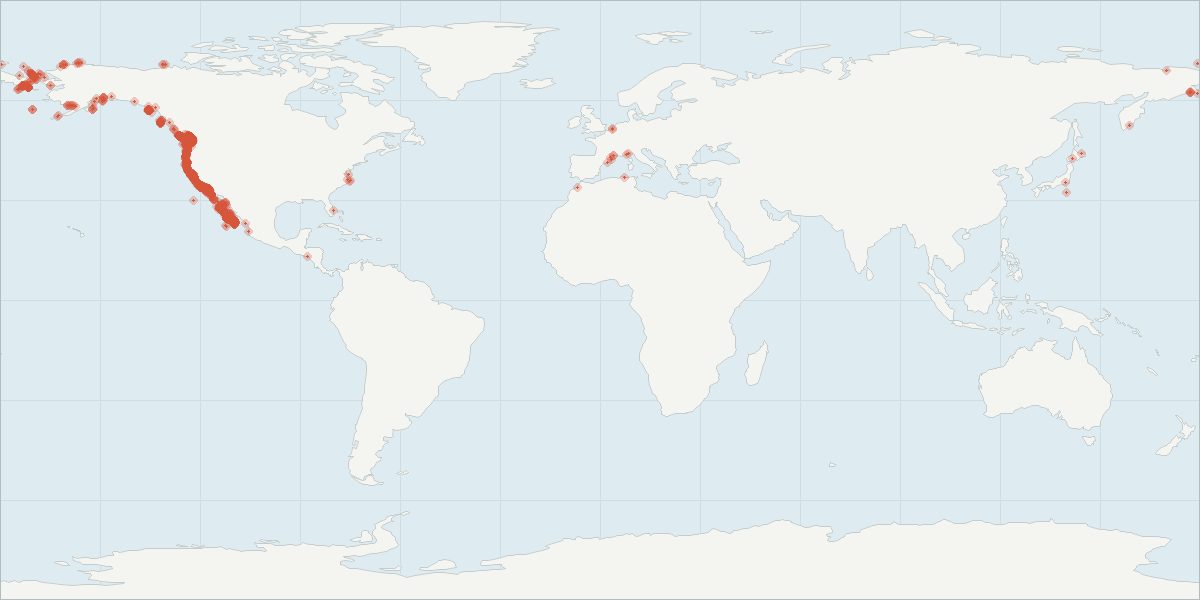
The grey whale is today strictly confined to the North Pacific, where two populations survive.
The eastern population (eastern North Pacific) summers in the Bering, Chukchi and Beaufort seas and winters along Mexican Baja California, where calving is concentrated in a few lagoons (Ojo de Liebre, San Ignacio, Magdalena), partly protected within the El Vizcaíno Biosphere Reserve. Its annual round-trip migration reaches 16,000 to 22,500 km, the longest migration documented in a mammal; some individuals are reported to exceed even these figures.
The western population (western North Pacific) summers off Sakhalin Island and Kamchatka, in Russia. It numbers only a few hundred individuals according to photo-identification: the 2018 IUCN assessment (Cooke) gives, for 2016, of the order of 270 to 310 animals aged one year or more, among them only 51 to 72 reproductive females, and it is this last figure, back above the threshold of 50, that prompted the move from “Critically Endangered” to “Endangered“. Its historical wintering grounds in the China Sea and off Korea are no longer used in any documented way: the last confirmed sighting in Korean waters dates from 1977.
The North Atlantic population, for its part, has been extinct since the early eighteenth century.
Occurrence in France: the species is absent from French waters and has no population there. A single episode is documented, that of the young individual nicknamed “Wally”, about fifteen months old (born in January 2020 in Baja California or a little further north, according to R. Brownell and J. Urbán) and measured at 7.70 m by aerial photogrammetry on 28 April 2021. First seen in early March 2021 off Rabat, on the Atlantic seaboard of Morocco, it then passed the Strait of Gibraltar: its first confirmed Mediterranean record dates from 14 April 2021 off the island of Ponza (Italy), the first report of the species in Italian waters. After following the Moroccan and then the Algerian coasts, working up Italy (Naples, Rome, Genoa) and the Côte d’Azur (Antibes), it was filmed on 30 April 2021 off the port of Bormes-les-Mimosas (Var), then seen on 6 May 2021 off Argelès-sur-Mer and Banyuls (Pyrénées-Orientales), escorted by a boat of the Parc naturel marin du golfe du Lion and by the nautical brigade of the maritime gendarmerie at Saint-Cyprien. Severely emaciated, it was seen again in the Balearic Islands around 22 May. No sighting is documented for the Bay of Biscay, the English Channel or the French overseas territories.
The grey whale is the only large cetacean that feeds essentially on the benthos. It rolls onto its side, swims slowly just above the soft bottom, sucks up the sediment and filters it through its baleen, leaving characteristic feeding pits on the seabed. Its prey are above all burrowing amphipods and other benthic and epibenthic invertebrates; it also takes mysids, larvae and, more occasionally, krill and small fish.
On migration, dives typically last 3 to 5 minutes, but the species can stay submerged for some fifteen minutes. Cruising speed is of the order of 5 to 9 km/h, with bursts of 16 to 17.5 km/h when fleeing.
There are no stable social groups: aggregations form on the feeding grounds and in the breeding lagoons. Spyhopping, raising the head vertically out of the water, is frequent, and some females in the Mexican lagoons approach boats of their own accord, the behaviour behind the celebrated “friendly whales”.
Sexual maturity is reached between 6 and 12 years, on average at around 8 to 9 years. Gestation lasts 12 to 13.5 months and gives birth to a single calf, from early January to mid-February, measuring 4.5 to 5 m for 500 to 900 kg. The interval between two calvings is 1 to 3 years.
Longevity is poorly established: the figures commonly cited range from 50 to 70 years, one female having been estimated at 75-80 years after its death; NOAA states that the average and maximum lifespan of the species remains unknown. The main natural predator is the killer whale, which attacks above all calves during the northward migration.
At global level, the grey whale is listed as “Least Concern” (LC) on the IUCN Red List, an assessment carried out in late 2017 and published in 2018, with a population trend described as stable at that date. The western North Pacific subpopulation is the subject of a separate assessment: it moved from “Critically Endangered” to “Endangered” (EN) in 2018, following an increase recorded off Sakhalin and the return of the number of reproductive females above the threshold of 50. The species is listed in Appendix I of CITES. In the United States, the western population segment is listed as endangered under the Endangered Species Act, while the eastern segment was delisted in 1994; all populations remain protected by the Marine Mammal Protection Act.
Historically, commercial whaling was devastating: about 8,000 grey whales are thought to have been killed by American and European whalers between 1846 and 1874, the species earning its nickname of “devil fish” from the fighting spirit of females defending their calf. Commercial whaling has been banned since the middle of the twentieth century; in practice, only an aboriginal subsistence hunt remains, in Chukotka (Russia), under an IWC quota shared with the United States of the order of 140 animals a year. NOAA also granted the Makah Tribe, in June 2024, a ten-year waiver of the Marine Mammal Protection Act authorising the take of a maximum of 25 grey whales (2 to 3 a year), but no Makah hunt had yet been conducted by the end of 2025.
Numbers in the eastern population peaked at around 25,000 to 30,000 individuals towards 2016 (26,960, 95% CI: 24,420-29,830, for the 2015/16 winters). An unusual mortality event (UME) ran from 2019 to 2023. The estimates that followed are low and fluctuating: about 13,300 to 16,000 animals in 2022/23, 11,700 to 14,200 in 2024/25, that is about 13,000, the lowest level since the 1970s, then 15,930 to 20,530 for 2025/26. Calf production has nonetheless remained very low since 2019, with only 85 young counted off central California in 2025, the lowest figure since counts began in 1994.
Current threats are the warming-related ecosystem changes in the subarctic and Arctic feeding grounds, collisions with ships and entanglement in fishing gear (about ten deaths a year in the eastern North Pacific), underwater noise and seismic surveys, in particular near Sakhalin, disturbance linked to whale-watching and the degradation of coastal habitats.
The grey whale cannot be watched in France: its presence in the Mediterranean is a biogeographical accident and not a seasonal phenomenon. The watching regions are the west coast of North America, from Baja California to Alaska. In winter, the Mexican lagoons of the El Vizcaíno reserve concentrate the births, from early January to mid-February, and only regulated operators are authorised there. In spring, the northward run follows California, Oregon, Washington State, British Columbia and Alaska; shore-based counts have been carried out in California since 1967. It is a strongly coastal species, often visible from dry land, which makes it one of the most accessible whales in the world.
On the ethical side, NOAA counts disturbance from whale-watching among the pressures bearing on the species: regulatory distances should be respected, an animal should never be pursued or cut across, in particular a mother and calf pair, and speed should be reduced. In Europe, faced with a stray individual, good practice is that applied in 2021 during the passage of “Wally”: do not approach, alert the maritime authorities and the sighting networks, and document the animal photographically so that it can be identified.
No. The species is absent from French waters and has no population there. A single individual, the young “Wally” (about fifteen months old, 7.70 m), was documented in the French Mediterranean in 2021: filmed off the port of Bormes-les-Mimosas on 30 April, then seen off Argelès-sur-Mer and Banyuls on 6 May, before heading back towards Spain. No sighting is documented in the Bay of Biscay, the English Channel or the overseas territories.
The species is listed as “Least Concern” (LC) at global level, on the basis of a late 2017 assessment published in 2018, with a trend judged stable at the time. This global listing masks wide disparities: the western North Pacific subpopulation has been listed as “Endangered” (EN) since 2018, after passing through the “Critically Endangered” category. This reclassification follows the return of the number of reproductive females above the threshold of 50 (51 to 72 estimated in 2016).
The hypothesis put forward by scientists is the retreat of the sea ice: the Northwest Passage, in the Canadian Arctic, is regularly free of ice in summer, opening a route between the Pacific and the Atlantic that had been inaccessible for centuries. Five Atlantic or Mediterranean sightings have been recorded in fifteen years, among them Florida in December 2023 and south of Nantucket on 1 March 2024, probably the same animal.
It is the only large cetacean that feeds essentially on the benthos. It rolls onto its side, sucks up the sediment of soft bottoms and filters it through its baleen to extract amphipods and other invertebrates, leaving feeding pits on the seabed. This diet makes it highly dependent on the productivity of Arctic and subarctic bottoms, hence its vulnerability to climate change.
The eastern population makes an annual round trip of 16,000 to 22,500 km between its Arctic feeding grounds (the Bering, Chukchi and Beaufort seas) and the calving lagoons of Baja California. It is the longest migration documented in a mammal, and some individuals are reported to cover greater distances still.
The eastern population fell after peaking at around 25,000 to 30,000 individuals towards 2016. An unusual mortality event ran from 2019 to 2023, and recent estimates fluctuate: about 13,000 animals in 2024/25, the lowest level since the 1970s, then 15,930 to 20,530 in 2025/26. Calf production remains very low, with only 85 young counted in 2025, a minimum since 1994.
Commercial whaling has been banned since the middle of the twentieth century. Only an aboriginal subsistence hunt remains, in Chukotka (Russia), under an IWC quota shared with the United States of the order of 140 animals a year. In June 2024 NOAA granted the Makah Tribe, in Washington State, a ten-year waiver authorising the take of a maximum of 25 grey whales (2 to 3 a year), but no Makah hunt had yet been conducted by the end of 2025.
Profile compiled from authoritative scientific sources (IUCN, NOAA Fisheries, specialist literature) and reviewed for factual accuracy.
According to the open data of the GBIF, 3,576 georeferenced sightings of Eschrichtius robustus are recorded in our photographic index.
| Country | Notes |
|---|---|
| United States of America | 2,506 |
| Mexico | 728 |
| Canada | 433 |
| Russian Federation | 84 |
| Japan | 5 |
| France | 4 |
| unknown or invalid | 3 |
| Netherlands | 2 |
| Italy | 2 |
| Korea, Republic of | 1 |

Monthly distribution of 3,752 dated sightings (all years combined): the maximum is reached in mars.
| Month | Notes |
|---|---|
| janvier | 529 |
| February | 606 |
| mars | 667 |
| avril | 425 |
| mai | 339 |
| juin | 225 |
| juillet | 317 |
| August | 286 |
| septembre | 142 |
| octobre | 58 |
| novembre | 35 |
| December | 123 |
These figures reflect survey effort (more boaters and more surveys in summer) as much as the actual presence of the species: to be interpreted with caution.


Photographs from GBIF under a Creative Commons licence. The author and the licence of each photograph are given; please respect them if you reuse them.
Automatic selection of the most cited works mentioning the species (source: Crossref).