| Scientific name | Eubalaena japonica (Lacépède, 1818) |
|---|---|
| Other names | Japan whale, North Pacific black whale; semi kujira / セミクジラ (Japanese); French: baleine du Japon, baleine noire du Pacifique Nord, baleine franche du Pacifique Nord |
| Size | Adults generally 15 to 18 m, exceptionally up to about 19 m (NOAA gives a range of 45 to 64 feet, or 13.7 to 19.5 m); the largest specimen officially measured reached 17.4 m. Newborn 4 to 4.6 m |
| Weight | 50 to 80 tonnes commonly, up to about 100 tonnes in the largest individuals; newborn up to about 900 kg |
| Longevity | At least 70 years |
| Diet | Zooplankton filtered by skim feeding: copepods (above all Calanus marshallae), euphausiids, barnacle larvae |
| IUCN status | Endangered (EN), 2018 IUCN assessment (Cooke & Clapham). The Northeast Pacific subpopulation is assessed separately: Critically Endangered (CR). |
The North Pacific right whale is the rarest of the large cetaceans: fewer than 500 individuals in all likelihood survive across the whole North Pacific, and the eastern population, confined to the Bering Sea and the Gulf of Alaska, is thought to number only about thirty. Decimated by commercial whaling in the 19th century, then finished off by the illegal Soviet catches of the 1960s, it is listed as Endangered by the IUCN, its Northeast Pacific subpopulation being Critically Endangered.
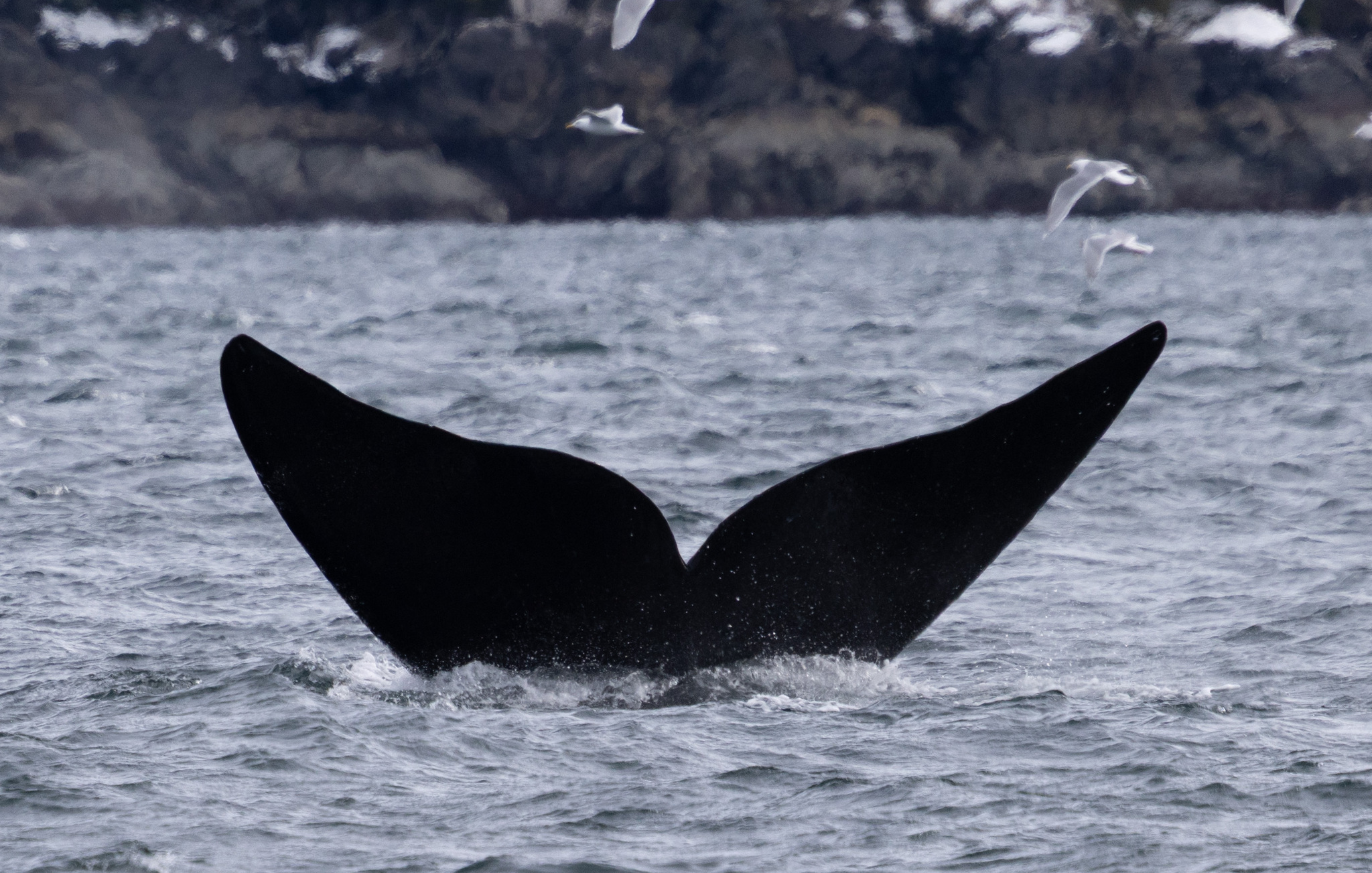
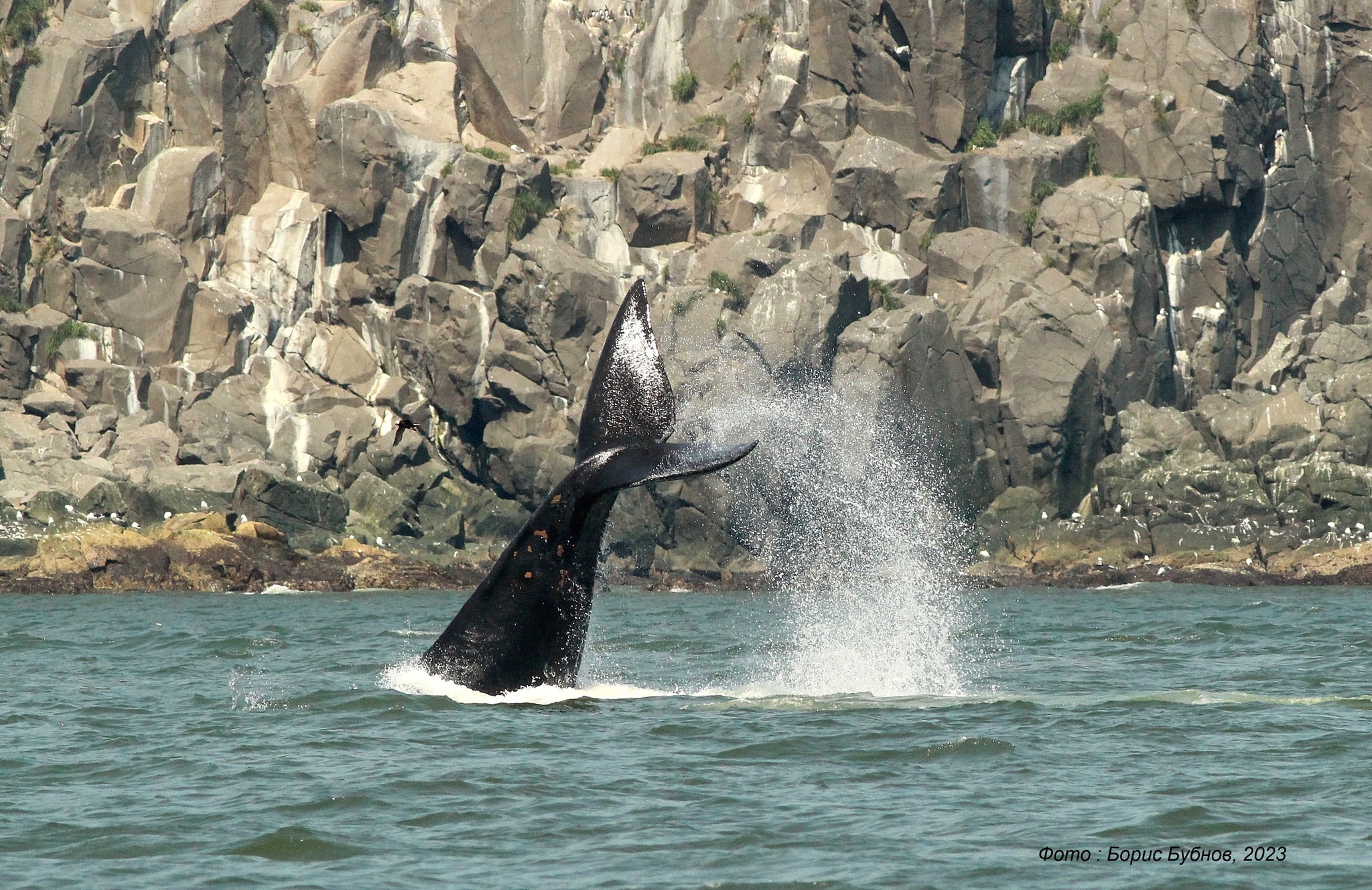
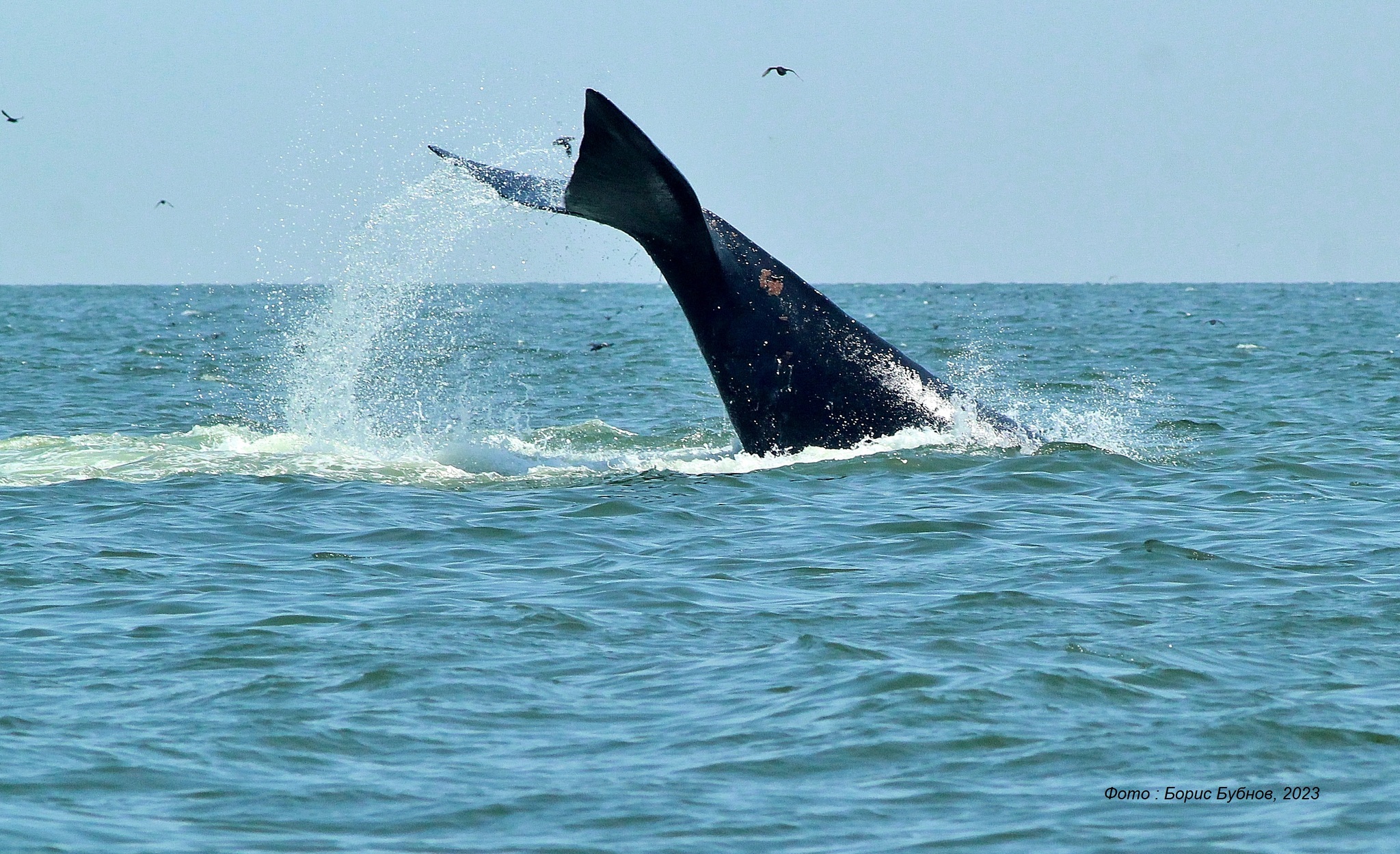
Massive and slow, the North Pacific right whale is told at first by what it lacks: no dorsal fin breaks the line of its back, which is broad and uniformly black. The body is stocky, often marked with irregular white patches on the belly. The head is enormous, making up about a quarter of the total length, and carries a strongly arched jaw. Adults generally measure 15 to 18 m, females slightly exceeding males, for 50 to 80 tonnes. Seen from behind, the whale betrays its presence by a V-shaped blow, produced by widely separated blowholes; the tail fluke is broad, deeply notched, entirely black and with a smooth trailing edge.
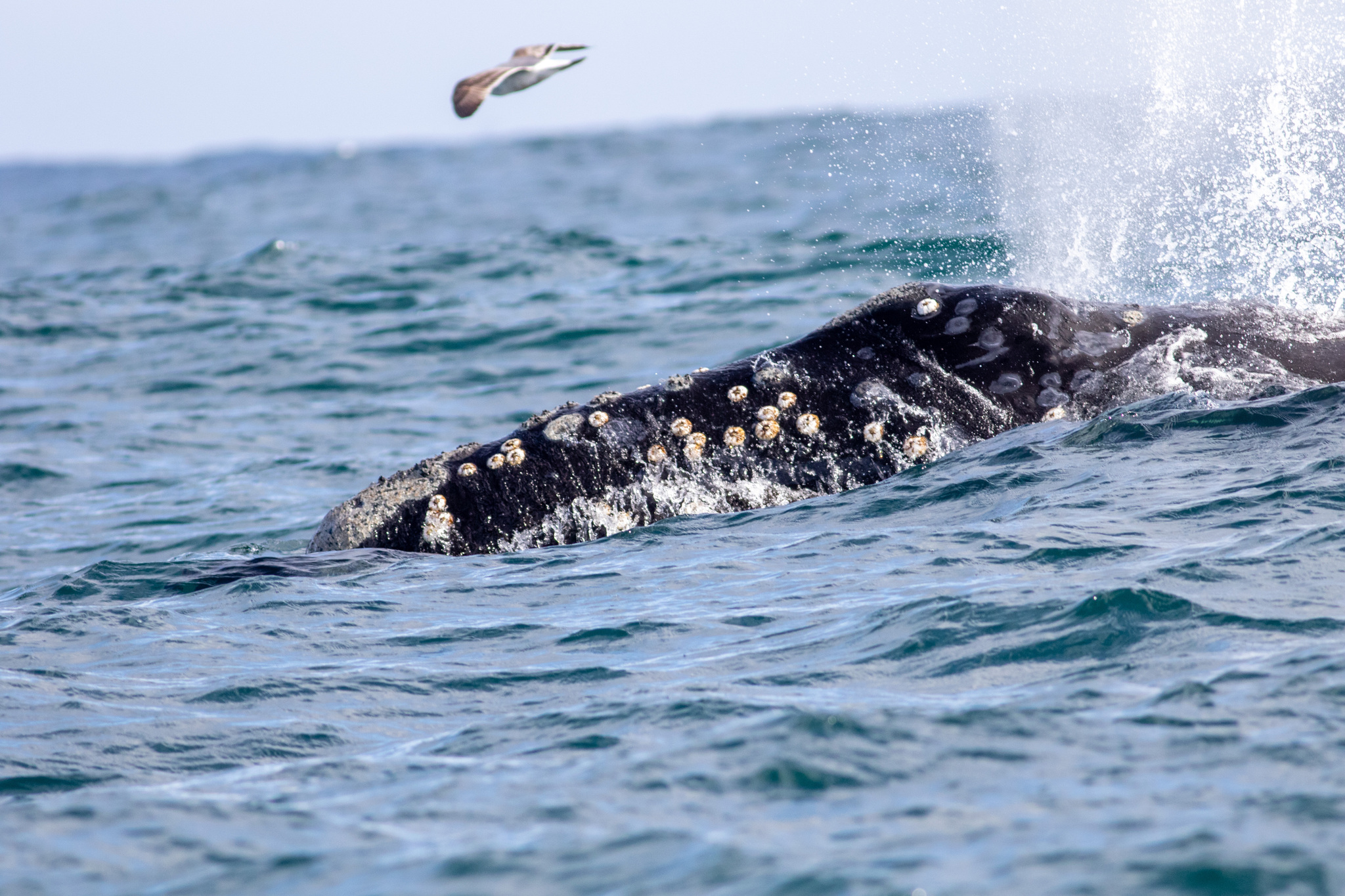
The second distinguishing feature lies in the callosities: patches of thickened, roughened skin set on the rostrum, above the eyes, behind the blowhole and around the mouth, at the places where a human face would bear hair. Colonised by cyamids (the “whale lice”), which give them a pale tinge, they form a pattern unique to each animal, a genuine fingerprint, on which the whole photo-identification catalogue of the species rests. Inside the mouth, 200 to 270 baleen plates on each side of the jaw, close to 3 metres long and fringed with very fine bristles, filter the water continuously.
Possible confusions are few but real. In the Bering Sea, the bowhead whale (Balaena mysticetus) shares the absence of a dorsal fin and the massive outline, but bears no callosities. The grey whale (Eschrichtius robustus) shows mottled grey skin and a ridge of dorsal knuckles; the humpback whale (Megaptera novaeangliae) has a dorsal fin and very long white flippers. As for the two other right whales, E. glacialis in the North Atlantic and E. australis in the southern hemisphere, they are almost impossible to tell apart with the naked eye, but their ranges do not overlap.
The species belongs to the family Balaenidae, which holds only two genera: Balaena, with the bowhead whale alone, and Eubalaena, with the three right whales. The taxon was described by Lacépède in 1818, but its status long remained unclear: until the 2000s, the right whales of the northern hemisphere were treated as a single species. The genetic analyses published in 2000 established that the Pacific and Atlantic lineages were distinct, and the United States administration officially split the two species on 6 March 2008. Within E. japonica itself, the most recent genetic work confirms the existence of two separate populations, eastern and western.
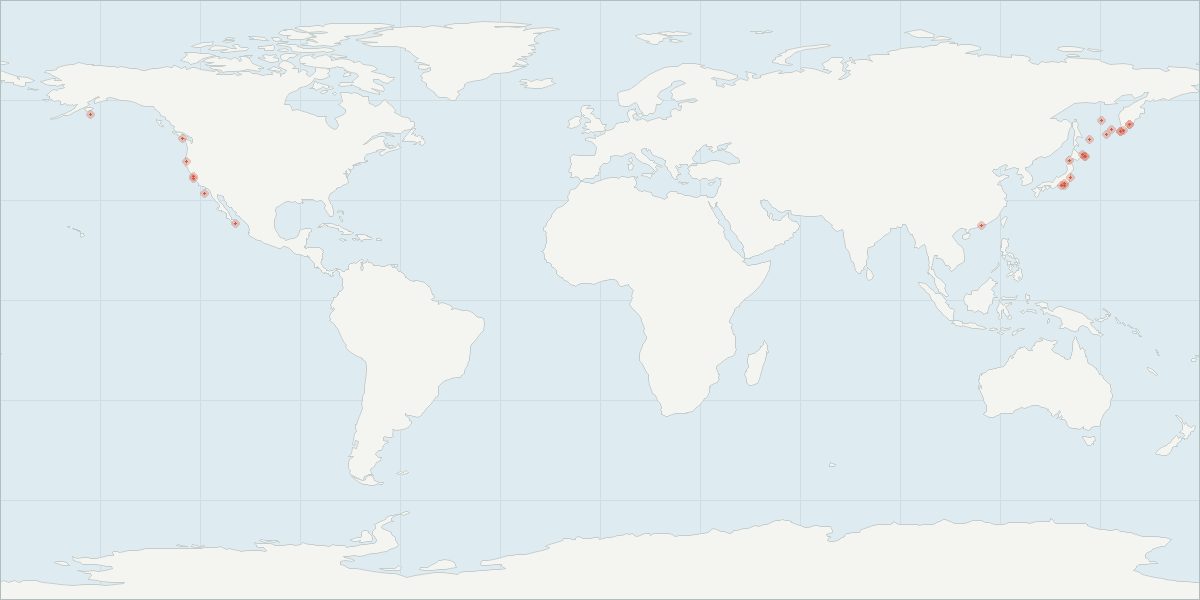
Before whaling, the species occupied the whole of the temperate and subarctic waters of the North Pacific, roughly between 20° and 60° north, from the Sea of Okhotsk and Japan to the coasts of British Columbia and California; most of the catches were concentrated north of 35°N. Only two residual nuclei remain.
The eastern population gathers in summer and autumn in the south-eastern Bering Sea, where acoustic recorders detect it from May to December, with a peak in September. A few animals frequent the Gulf of Alaska, in particular Barnabas Trough off Kodiak, as well as Umnak Pass and Unimak Pass in the Aleutians. Further south, sightings can be counted on the fingers of one hand: British Columbia in 2013, 2018, 2020 and 2021, California in 2017, 2022 and 2023. An individual photographed off Maui in April 1996 was re-identified 119 days later, 4,111 km further north, in the Bering Sea: this is to date the only established link between low and high latitudes.
The western population frequents the Sea of Okhotsk, the waters of Kamchatka, the Kurils and Japan. The only numerical estimate, from Japanese surveys of 1989-1992, gave about 900 animals (range 404-2,108), a figure now judged unreliable; the real number is thought to lie in the “low hundreds”. The winter calving grounds of both populations remain unknown, a situation unique among the right whales.
In France, the species is absent. Strictly confined to the North Pacific, it has never been recorded in the Mediterranean, in the Bay of Biscay, in the English Channel, or in the French overseas waters.
Feeding. The North Pacific right whale is a skim feeder: it swims with its mouth open through the layers of plankton, water entering at the front and passing out sideways through the baleen. Its preferred prey is the copepod Calanus marshallae, supplemented by euphausiids and barnacle larvae. This feeding mode only pays beyond very high concentrations, of the order of 3,000 copepods per cubic metre, which makes the species dependent on a few rare zones of plankton aggregation, exploited from spring to autumn.
Social life and acoustics. Behaviour remains very poorly known: fewer than fifty hours of visual observation have been accumulated in half a century. The animals are most often seen alone, sometimes in small groups. Passive acoustics has taken over: a rising “up-call” is distinguished, of 90 to 150 Hz and about 0.7 seconds, and above all “gunshot” sounds, sharp cracks that make up a song attributed to males, detected as early as 2010, confirmed in the field in 2017 and stable for more than ten years since. These cracks are about fifty times more frequent than the up-calls.
Breeding and longevity. Sexual maturity comes at about 8 years, the first calf on average at 9-10 years. Gestation lasts 12 to 13 months, the interval between two calvings is 3 to 5 years, and the calf, 4 to 4.6 m and close to 900 kg at birth, is weaned towards the end of its first year. Life expectancy is estimated at 70 years or more. Like the other right whales, the species has the largest testes of any mammal, an indication of intense sperm competition between males.
Status. The species is listed as Endangered (EN) on the global IUCN Red List, on the basis of the 2018 assessment. The Northeast Pacific subpopulation, assessed separately, is Critically Endangered (CR). For comparison, the North Atlantic right whale (E. glacialis) is Critically Endangered, while the southern right whale (E. australis) falls under Least Concern.
Numbers. Fewer than 500 individuals in all likelihood survive across the North Pacific as a whole. The eastern population is among the smallest in the world: the capture-mark-recapture analyses published in 2011 arrive at 31 animals (range 23-54) from the photo-identifications and 28 (24-42) from the genotypes, of which only 8 females to 20 males. The photographic catalogue held only 31 confirmed individuals in 2025, and only five calves have been recorded in it since 2002. The sex ratio, of two to three males to one female, further hampers renewal.
A collapse in two stages. Commercial whaling killed between 26,500 and 37,000 right whales in the North Pacific between 1839 and 1909, most of them during the single decade 1840-1849. Protected internationally from 1935, the species was beginning to recover around 1960 when the Soviet whaling fleet illegally decimated it: 771 catches estimated in all, of which 662 in the years 1962 to 1968 alone; of those 662 animals, 517 were killed in the Northeast Pacific (366 in the Gulf of Alaska, 116 in the Bering Sea, 31 in the Aleutians and 4 in unspecified pelagic waters).
Current threats. No human-caused mortality was recorded in the eastern population between 2017 and 2021, but the habitat is so remote that such an event would almost certainly go unnoticed. The risks identified are ship strikes, Unimak Pass being crossed by the transpacific shipping routes, entanglement in fishing gear (several cases documented on the western side: Kamchatka in 1989, South Korea in 2015, Hokkaido in 2016, the Sea of Okhotsk in 2018), underwater noise, oil exploration and climate change, which redistributes the copepods on which the species depends. The very small size of the population further exposes it to Allee effects and to demographic stochasticity.
Protection. Listed in Appendix I of CITES, the species has been protected in the United States since June 1970, first under the Endangered Species Conservation Act, forerunner of the ESA, then listed as “endangered” under the Endangered Species Act of 1973, and recognised as a distinct species on that listing since 6 March 2008. Two areas of critical habitat were designated in April 2008, in the south-eastern Bering Sea and south of Kodiak Island; a revision of that perimeter was found warranted in 2023. The recovery plan dates from 2013. The potential biological removal calculated by the United States administration is 0.05 animal per year, the equivalent of a single tolerable loss every twenty years.
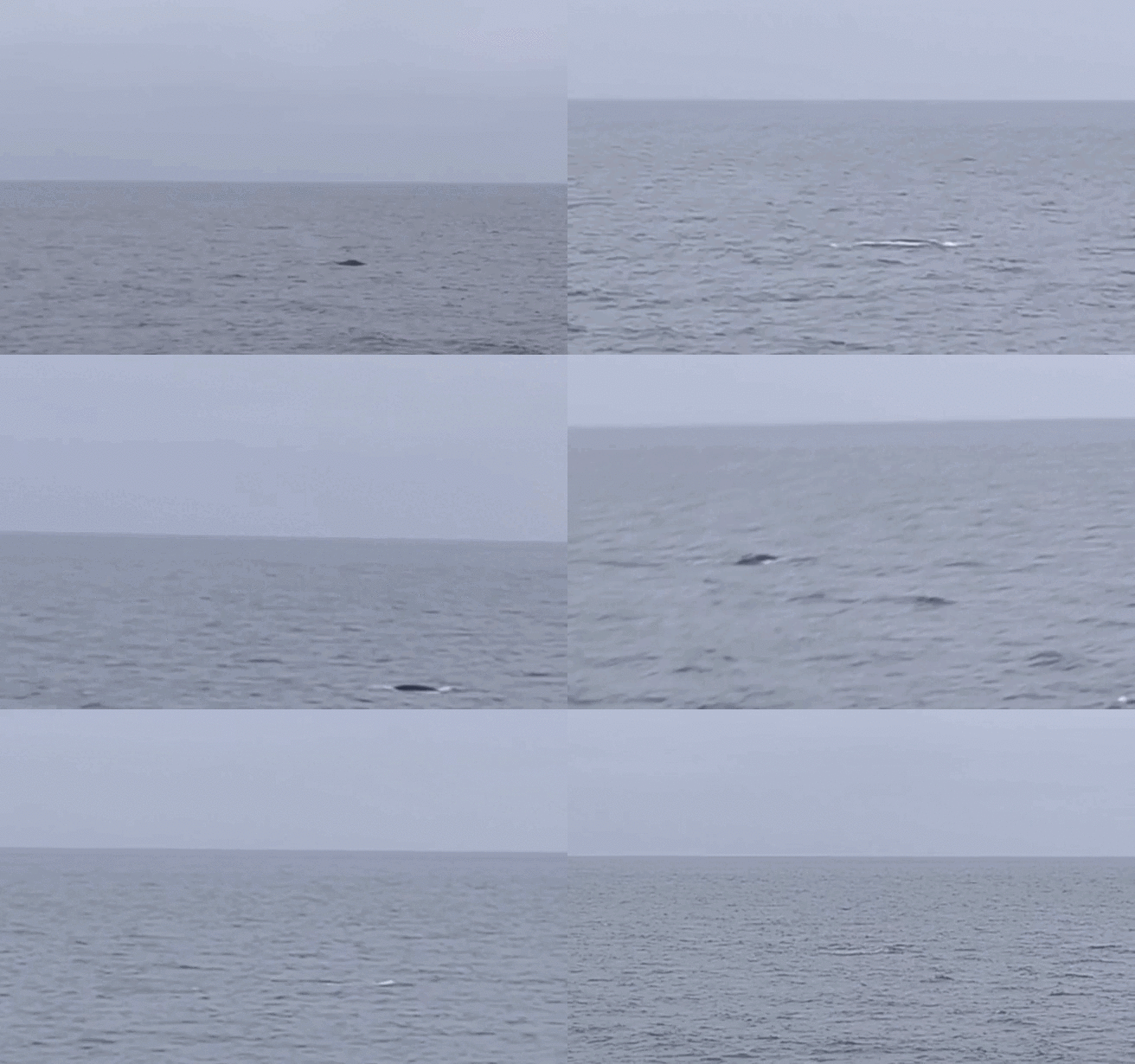
There is no tourist watching activity dedicated to this species, and with reason: with about thirty individuals in its eastern population and a summer habitat in the south-eastern Bering Sea, an encounter is exceptional. The only modern sightings come from scientific surveys, fishing vessels, expedition cruises in Alaska and opportunistic reports along the coasts of British Columbia and California, between spring and autumn. Two recent strandings have also been reported on the western side, in Hokkaido in 2023 and in Kamchatka in 2025.
Any encounter should be reported to the competent scientific authorities, with the date, the position and, if possible, photographs of the back and of the head: the callosities make it possible to identify the animal and to add to a catalogue that holds only about thirty entries. United States regulations require vessels to stay at least 100 yards (about 90 m) from large whales and recommend limiting watching to thirty minutes. No manoeuvre to approach, to pursue or to cut across the animal’s path is acceptable: in a population of this size, disturbing a single animal carries disproportionate weight.
Fewer than 500 individuals in all likelihood survive across the whole North Pacific. The eastern population, that of the Bering Sea and the Gulf of Alaska, is estimated at about thirty animals (31 from photo-identification, 28 from genotypes), of which only about 8 females. The western population, in the Sea of Okhotsk and around Japan, is thought to lie in the low hundreds.
Three factors combine. The eastern population was reduced to so small a number in the 1960s, the Soviet fleet illegally killing 517 animals in the Northeast Pacific alone, that the mechanisms specific to very small populations (Allee effects, demographic stochasticity) hold back its growth. The sex ratio is two to three males to one female, which mechanically limits the number of births possible. Finally, calf production is extremely low: only five observed since 2002 in the eastern population.
The two species are morphologically very close and were formally separated only following the genetic analyses published in 2000, the United States administration recording the split on 6 March 2008. They are distinguished above all by their range: E. japonica in the North Pacific, E. glacialis in the North Atlantic. The latter is listed as Critically Endangered by the IUCN, against Endangered for the North Pacific right whale.
No. The species is strictly confined to the North Pacific and has never been recorded in French waters, neither in the Mediterranean, nor in the Bay of Biscay, nor in the English Channel, nor overseas.
Adults generally measure 15 to 18 m, exceptionally up to about 19 m; NOAA gives a range of 45 to 64 feet, or 13.7 to 19.5 m. The largest specimen officially measured reached 17.4 m. The usual weight is 50 to 80 tonnes, up to about a hundred tonnes in the largest individuals. At birth, the calf measures 4 to 4.6 m and weighs close to 900 kg.
The term comes from the whalers’ vocabulary: it was the “right” whale to hunt, slow, coastal, rich in oil, and it floated after death instead of sinking, which made it ideal for the sailing whalers. The French name, baleine franche, carries the same idea. That same docility caused its collapse in the 19th century.
It is not known. Unlike the right whales of the North Atlantic and of the southern hemisphere, which calve in well identified coastal waters, no winter breeding ground has been located for this species. The waters of California, of Mexico and perhaps those off Hawaii have been put forward as possible historical calving grounds, without confirmation.
Profile compiled from authoritative scientific sources (IUCN, NOAA Fisheries, specialist literature) and reviewed for factual accuracy.
According to the open data of the GBIF, 26 georeferenced sightings of Eubalaena japonica are recorded in our photographic index.
| Country | Notes |
|---|---|
| United States of America | 15 |
| Russian Federation | 11 |
| Japan | 9 |
| Canada | 2 |
| Korea, Republic of | 1 |
| Mexico | 1 |
| Hong Kong | 1 |

Monthly distribution of 31 dated sightings (all years combined): the maximum is reached in juin.
| Month | Notes |
|---|---|
| janvier | 1 |
| February | 3 |
| mars | 4 |
| avril | 4 |
| mai | 0 |
| juin | 6 |
| juillet | 4 |
| August | 3 |
| septembre | 0 |
| octobre | 4 |
| novembre | 2 |
| December | 0 |
These figures reflect survey effort (more boaters and more surveys in summer) as much as the actual presence of the species: to be interpreted with caution.


Photographs from GBIF under a Creative Commons licence. The author and the licence of each photograph are given; please respect them if you reuse them.
Automatic selection of the most cited works mentioning the species (source: Crossref).