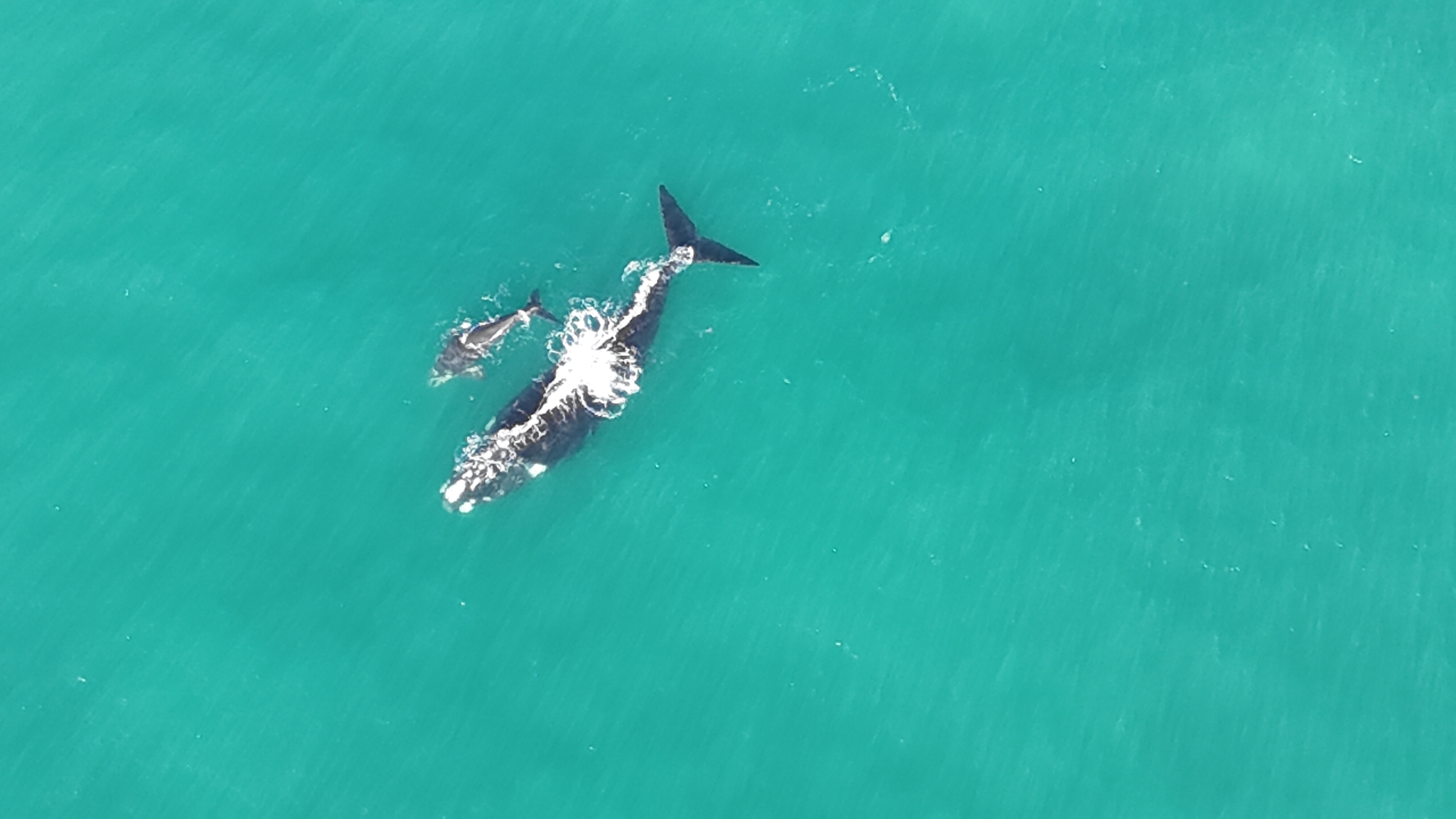
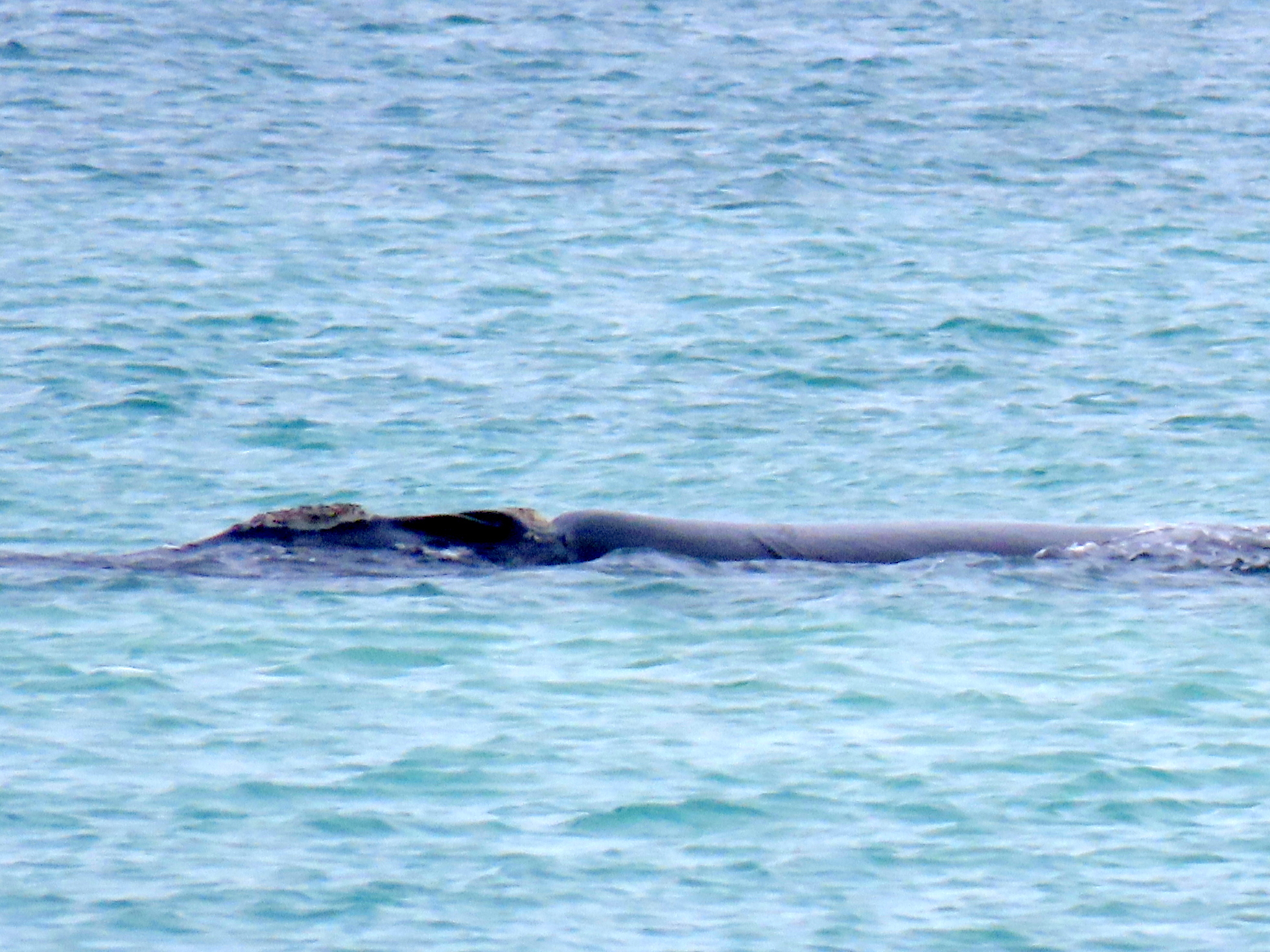
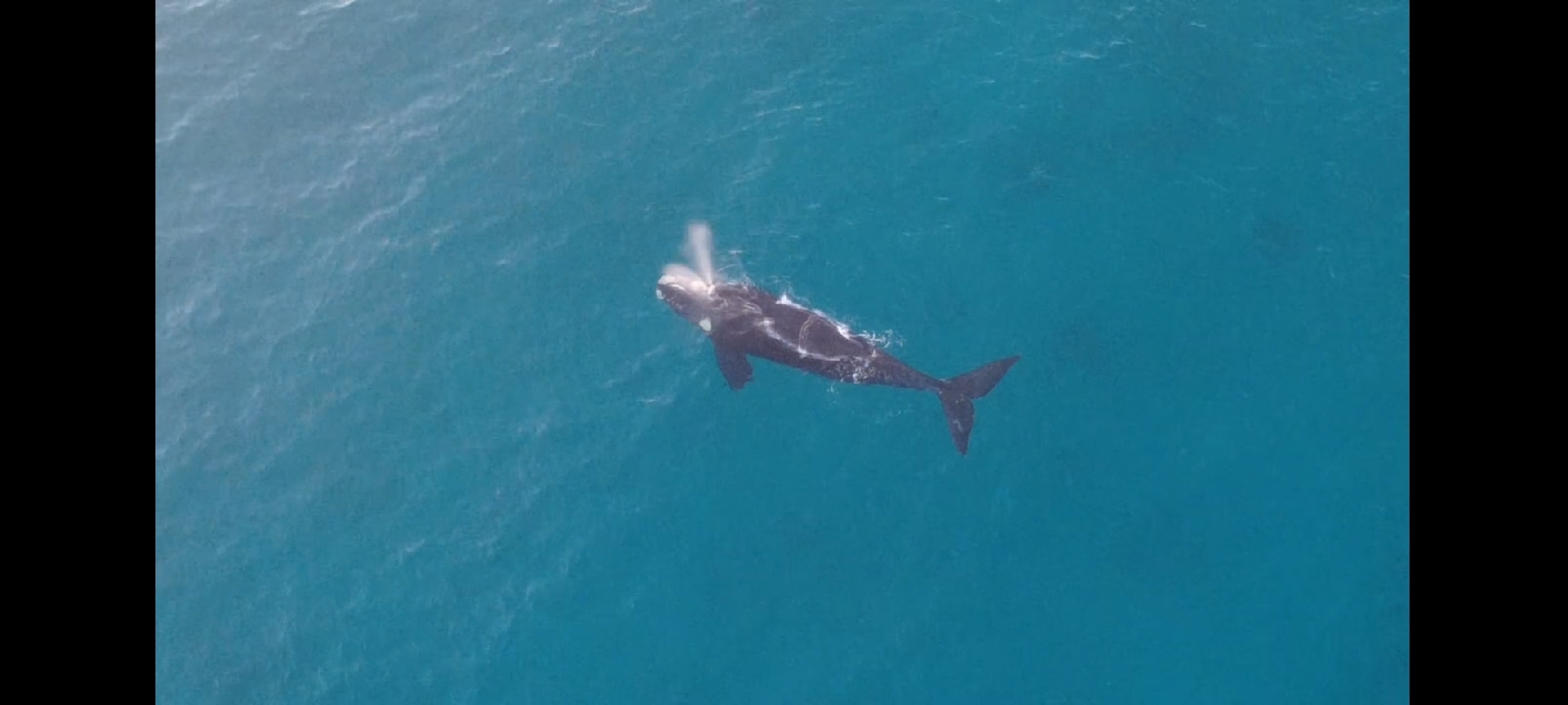
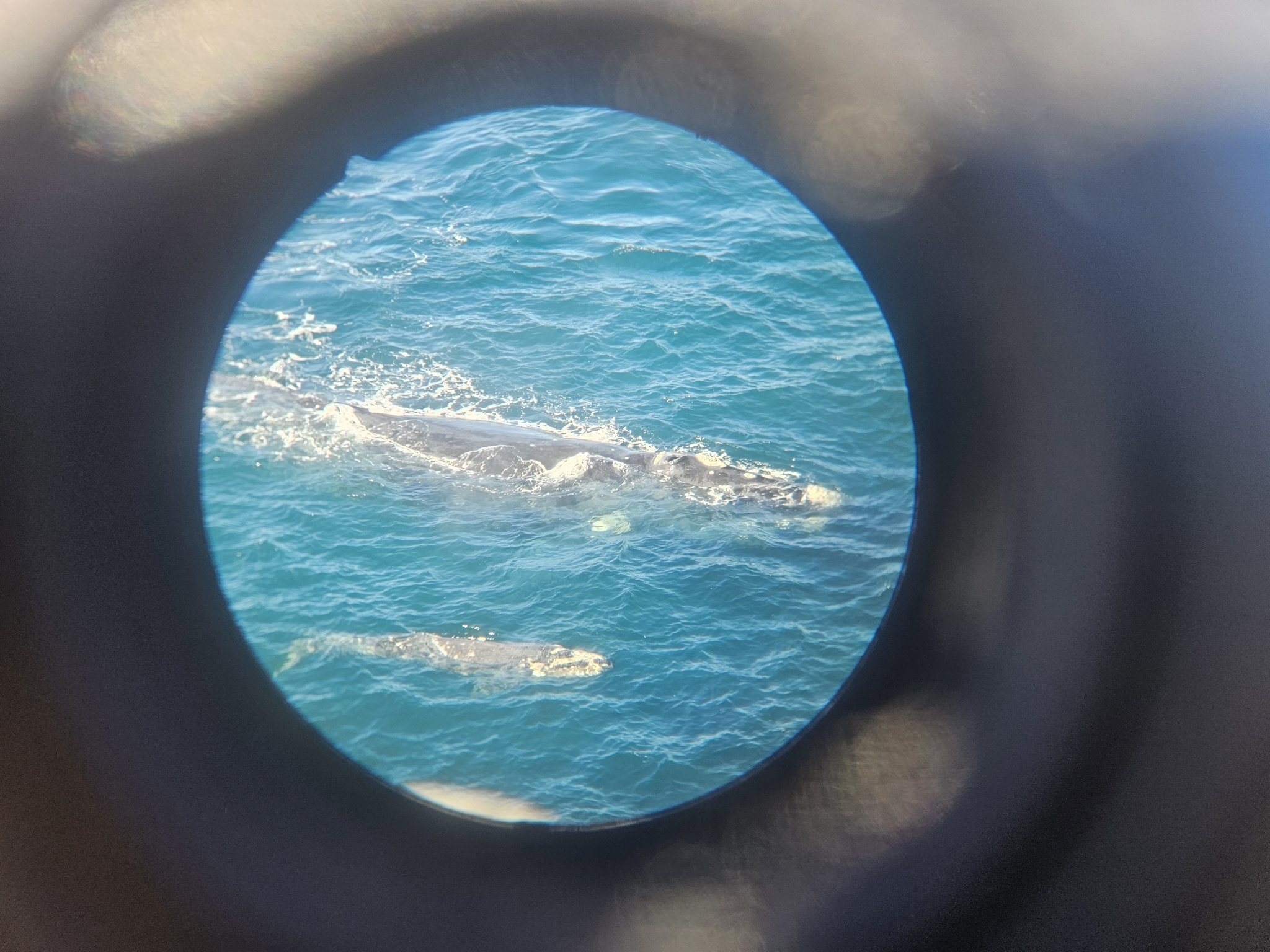
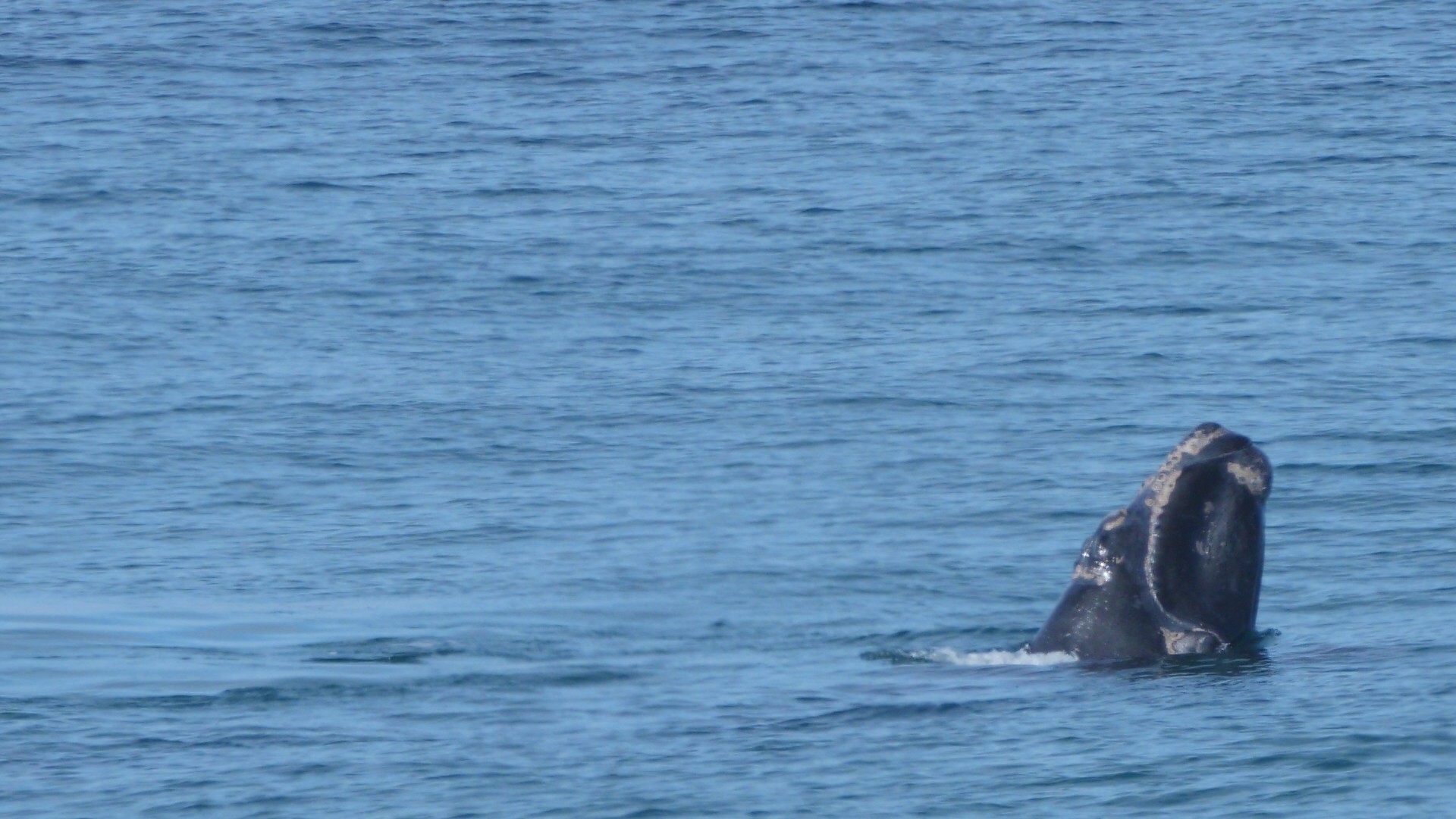
Southern right whale (Eubalaena australis)

Key facts
Scientific name Eubalaena australis (Desmoulins, 1822)
Other names Southern right whale; in French: baleine franche australe, baleine noire australe, baleine australe, baleine du Cap; in Spanish: ballena franca austral; in German: Südkaper
Size 13 to 18 m; adult females average around 15 m, the largest individuals reaching 17 to 18 m (females are slightly larger than males). Newborn: 4 to 6 m.
Weight Highly variable between sources: from 36 to 100 tonnes, with a mean of about 49 t (OFB); the IUCN and NOAA use a maximum of about 80 t (176,000 pounds). Newborn: 1,000 to 1,500 kg.
Longevity At least 50 to 70 years; NOAA uses “up to 70 years” (an estimate extrapolated from related species) and the OFB mentions a potential of up to 100 years. The true maximum longevity has not been established.
Diet Zooplankton: krill (euphausiids, in particular Euphausia superba on the high-latitude feeding grounds) and copepods, supplemented by crustacean larvae; the respective share of these prey varies by sector and by season. Filtering by skim feeding, mouth held ajar while swimming, mainly during the austral summer in the Southern Ocean.
IUCN status Least Concern (LC), assessment of 21 December 2017 published in 2018 (Cooke & Zerbini), criteria version 3.1. Population trend considered uncertain at the scale of the hemisphere. Chile-Peru subpopulation (South-East Pacific): Critically Endangered (CR, criterion D), assessed in 2018 by J. G. Cooke, with in all likelihood fewer than 50 mature individuals.

In brief

The southern right whale is a large, stocky mysticete of the Southern Hemisphere, without a dorsal fin and recognisable by the white callosities on its head. Decimated by more than three centuries of whaling, at least 150,000 individuals killed, it has recovered strongly since the 1970s and is today listed as Least Concern by the IUCN, with about 13,600 individuals estimated in 2009. Its Chile-Peru subpopulation nevertheless remains Critically Endangered, with fewer than 50 mature individuals.

Identification

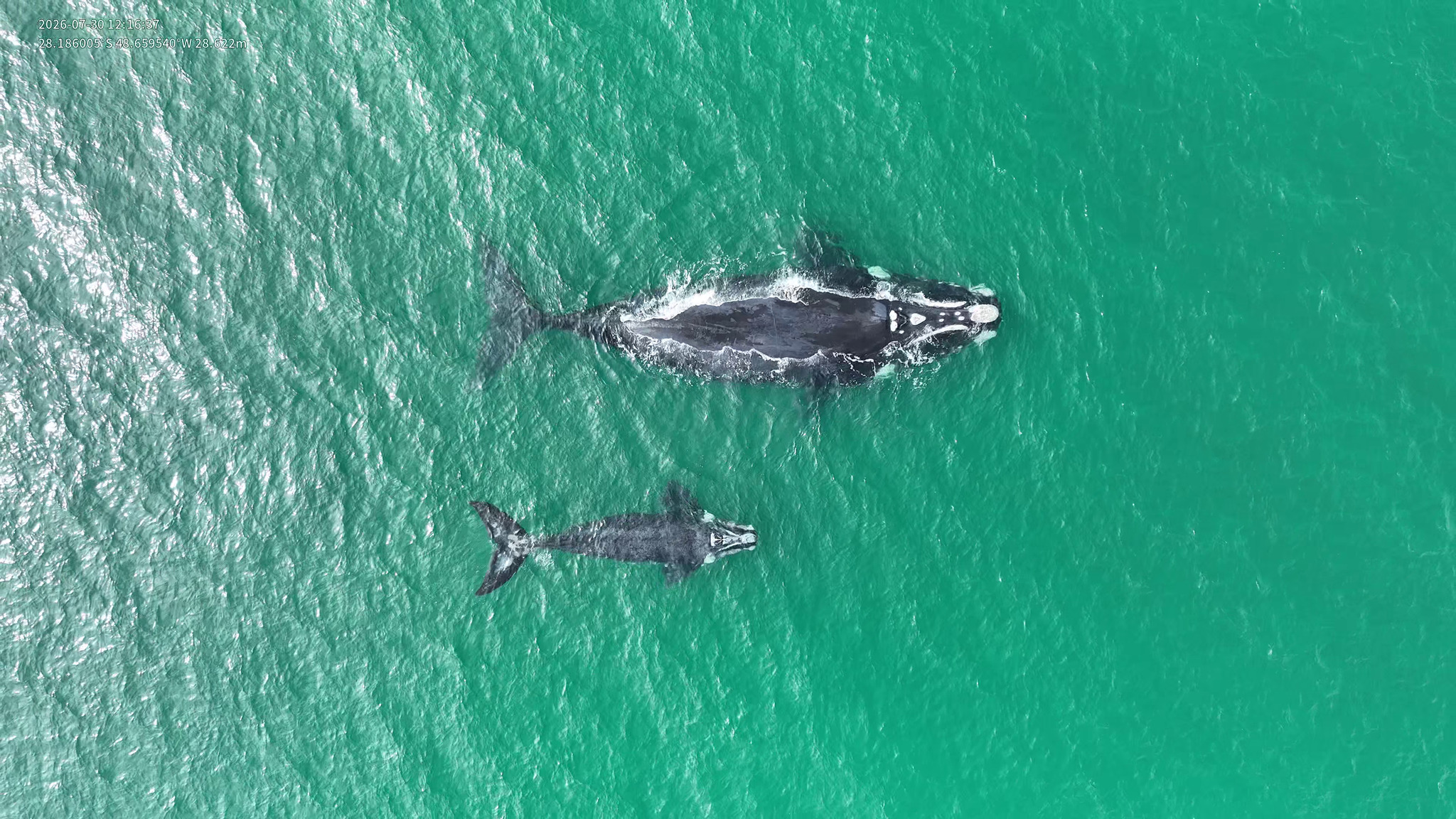
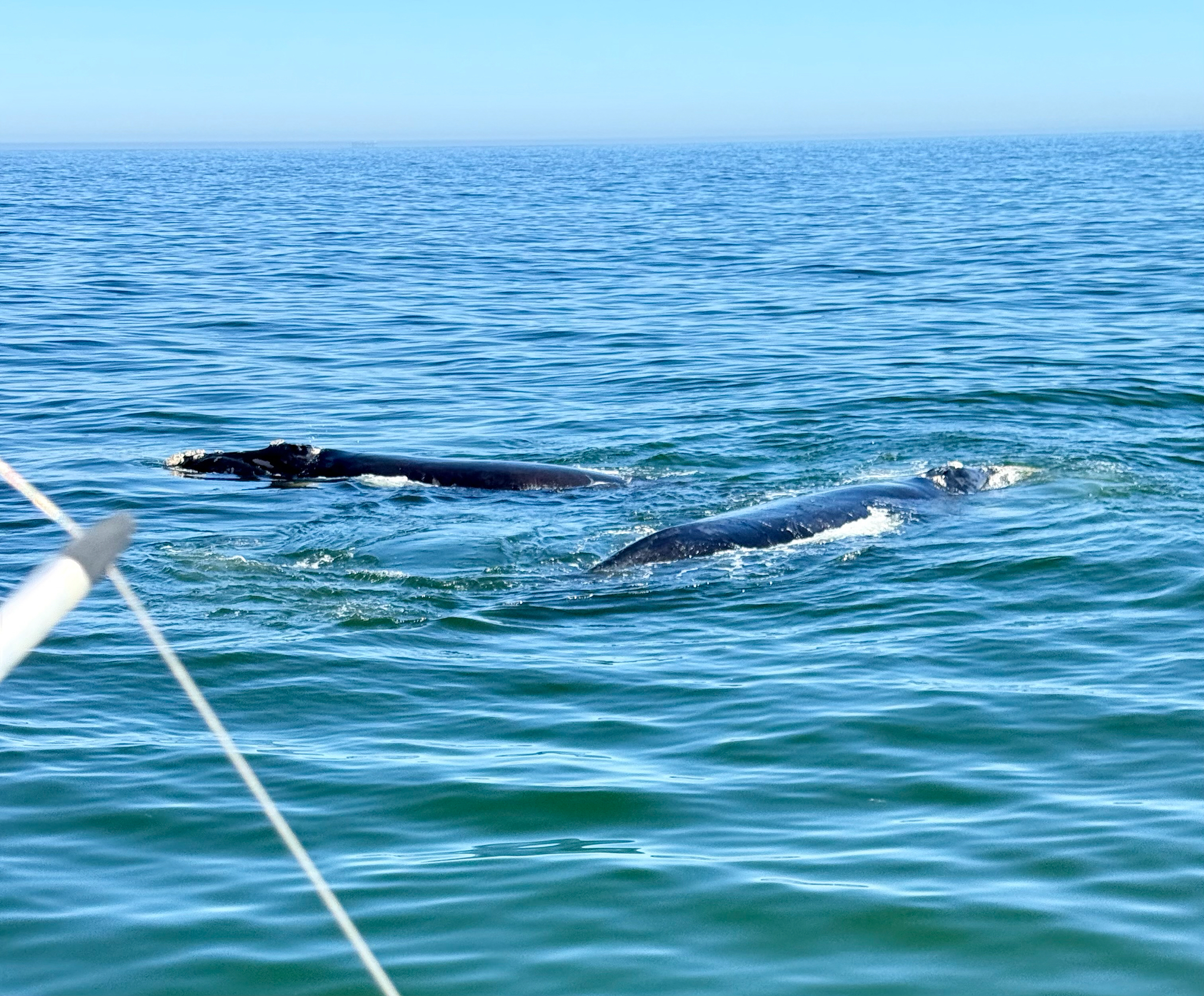
Massive and cylindrical, the southern right whale measures 13 to 18 m for a mass often between 36 and 100 tonnes depending on the source (mean around 49 t). Its profile is immediately recognisable: a broad, smooth back entirely without a dorsal fin, an enormous head making up nearly a quarter of the body length, a strongly arched mouthline, and broad, spatulate, almost rectangular flippers. The body is black, often marked with irregular white patches on the belly and the chin; a few individuals are born with partly white pigmentation.

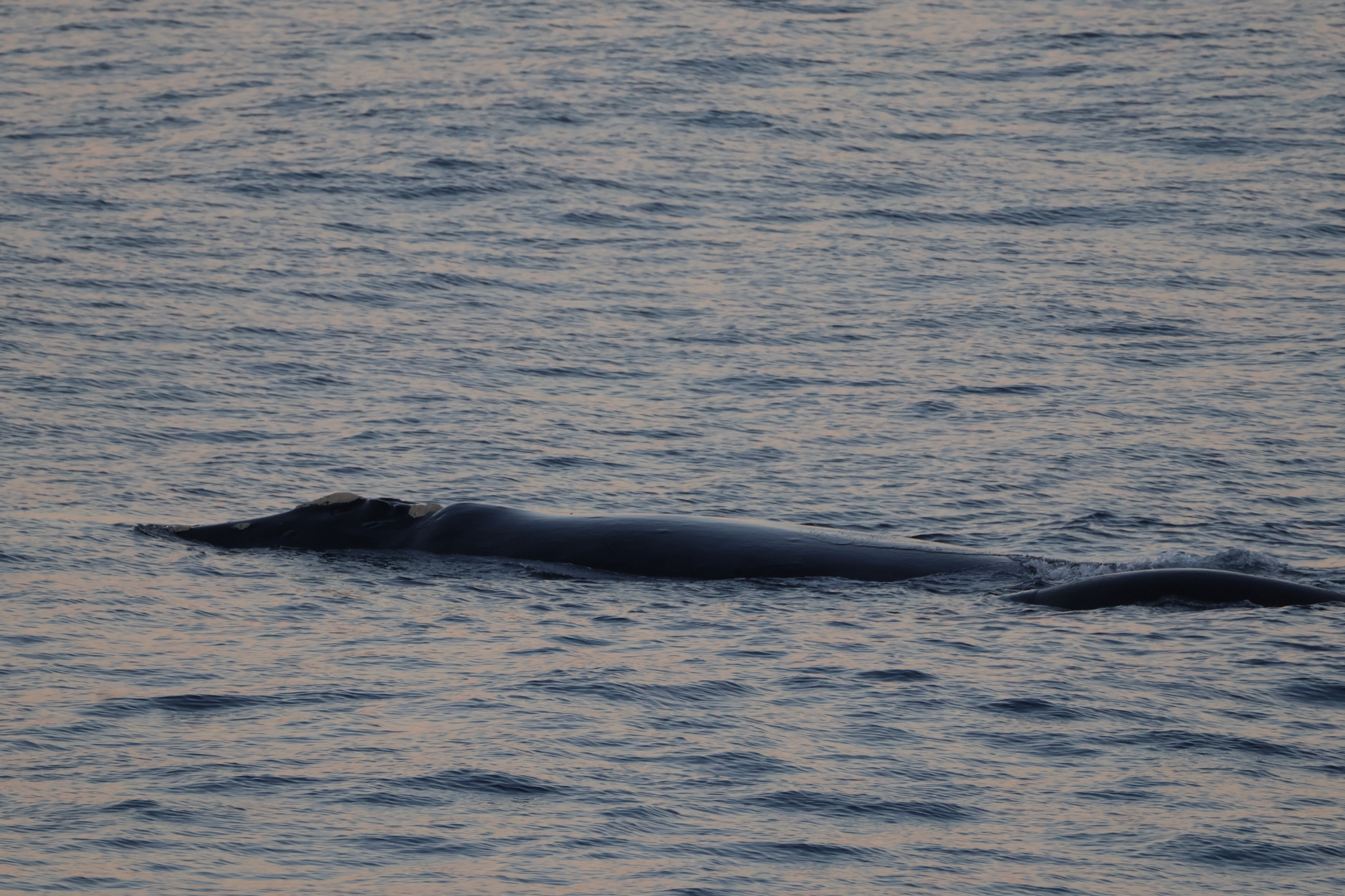
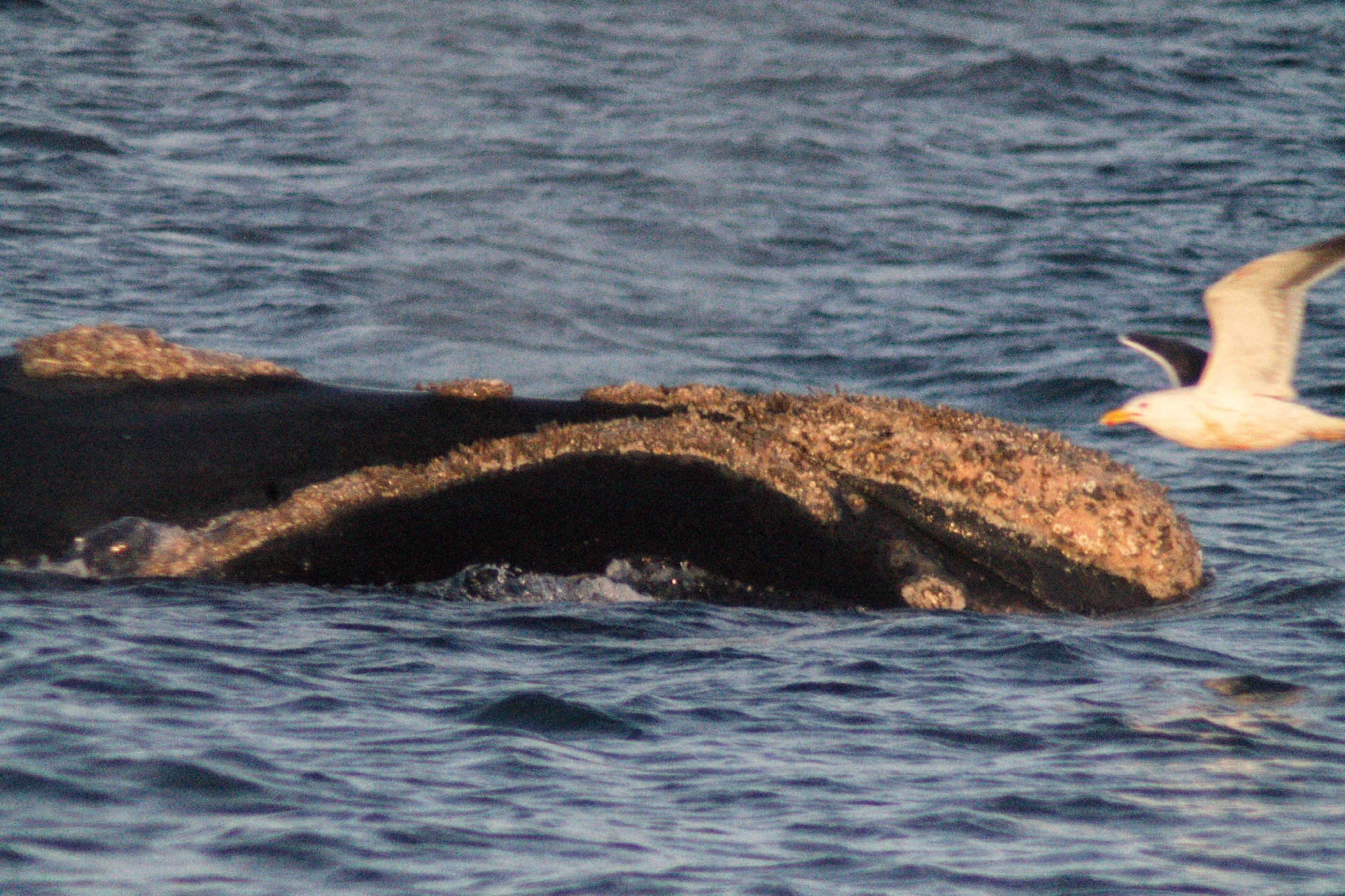
The most distinctive feature remains the callosities: keratinised thickenings of the skin set on the rostrum, above the eyes, on the chin and on the lower lip, colonised by cyamid amphipods (the “whale lice”) that give them their whitish tinge. The pattern of these callosities is specific to each animal and works like a fingerprint: it is the basis of the photo-identification catalogues maintained since the 1970s. Another signature: the V-shaped blow, clearly separated into two jets and visible up to 5 m high, produced by widely spaced blowholes. The baleen plates are black, 200 to 270 pairs in number, and measure up to about 2.8 to 3 m.

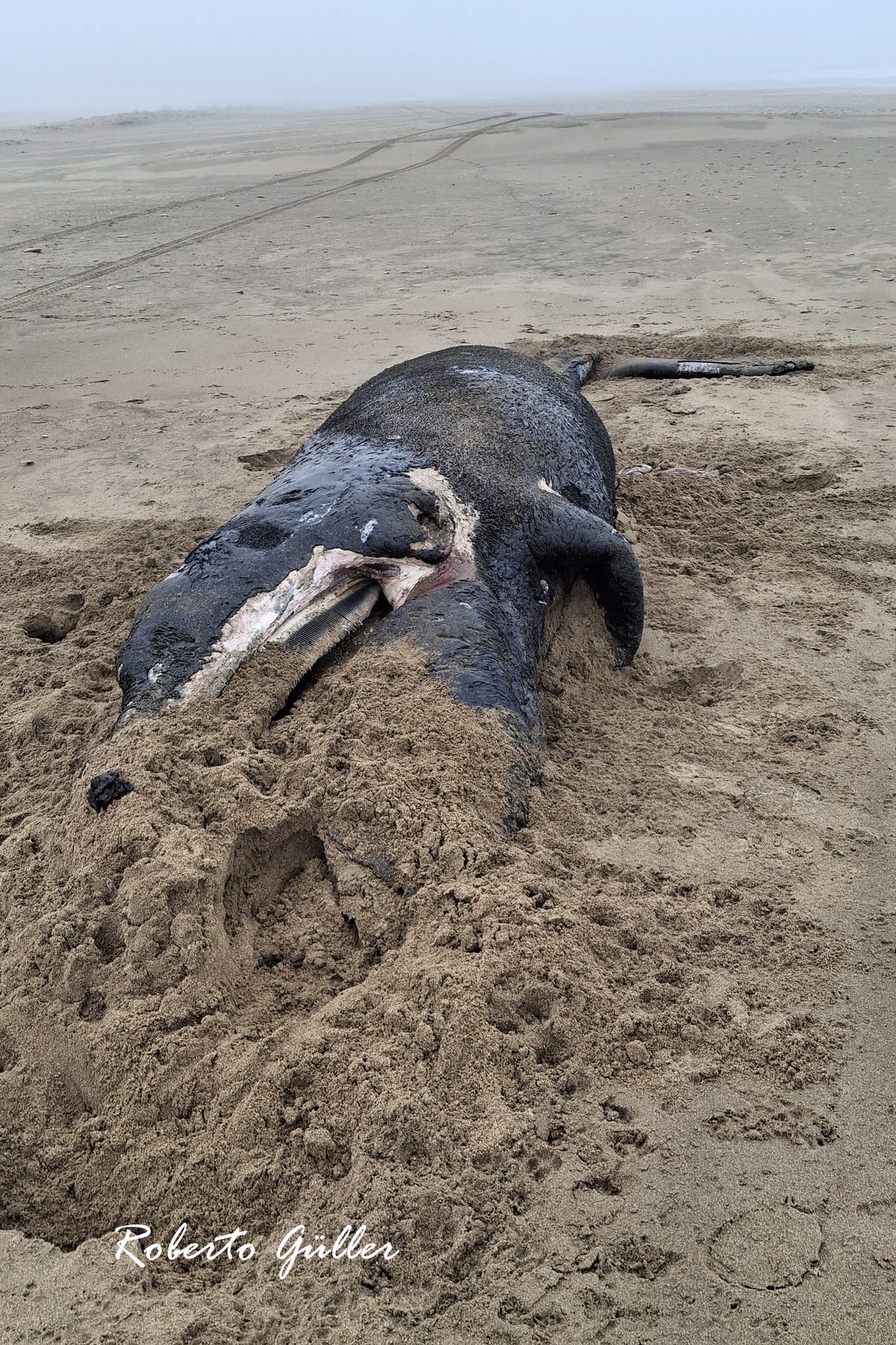
Possible confusions. Within its range, the most frequent confusion is with the humpback whale (Megaptera novaeangliae), which uses the same coastal waters in the austral winter: it has a small dorsal fin set on a hump, very long white flippers and a single bushy blow. The bowhead whale (Balaena mysticetus), morphologically close and likewise without a dorsal fin, has no callosities and shows a clear white chin patch, but it is strictly Arctic: no geographical overlap. Finally, the two other right whales, Eubalaena glacialis (North Atlantic) and Eubalaena japonica (North Pacific), are practically indistinguishable in the field but live in the other hemisphere, until the stranding of a southern calf on the beach at Tongorachi (Muisne, Esmeraldas, Ecuador, 0.6° N) on 28 August 2023, the first authenticated record of the species north of the equator.

Taxonomy

Eubalaena australis belongs to the family Balaenidae, which contains only four living species: the bowhead whale (Balaena mysticetus) and the three right whales of the genus Eubalaena. The species was described in 1822 by the French naturalist Antoine Desmoulins under the name Balaena australis (the protonym is sometimes cited as Balaena glacialis australis); the authority is therefore written in parentheses, (Desmoulins, 1822), since the genus has changed since. The genus Eubalaena was erected by John Edward Gray in 1864.

The specific status of the three right whales was long debated: they were regarded in turn as a single species with three populations, then as three distinct species. The genetic analyses published in 2000 settled the question in favour of three full species, by showing that the Northern Hemisphere and Southern Hemisphere lineages have not interbred for 3 to 12 million years, the equatorial thermal barrier keeping them apart. The name right whale designates the “right” whale to hunt: slow, coastal, rich in oil and baleen, and floating after death. The French vernacular name, baleine franche, renders that same idea.

Distribution and habitat

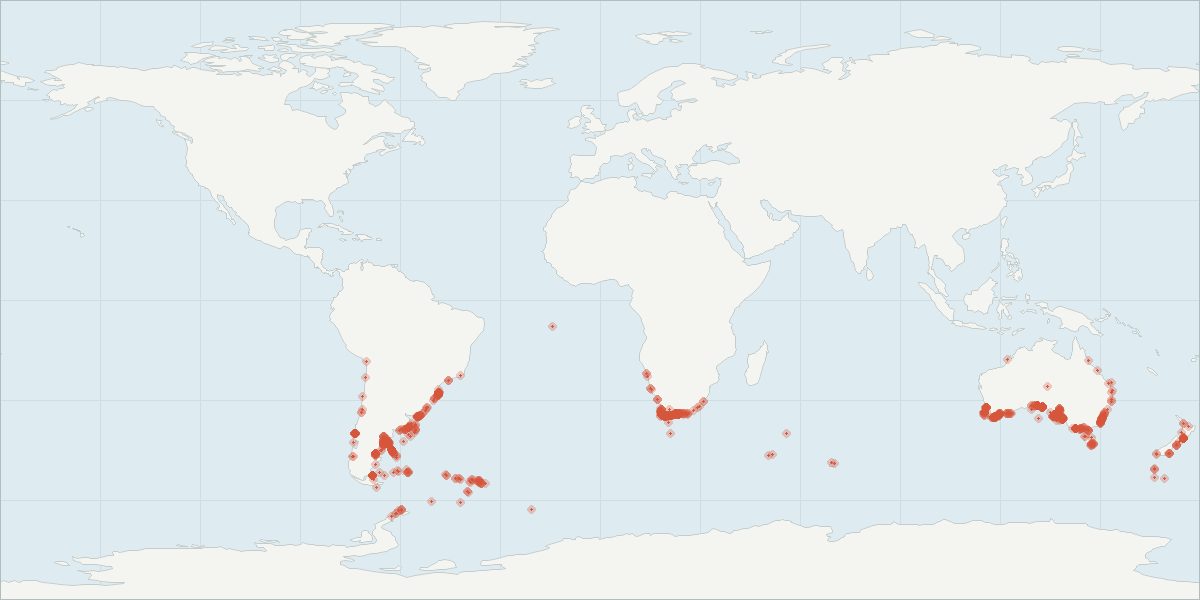
The species has a circumpolar distribution in the Southern Hemisphere, broadly between 20° S and 60° S, the southern limit reaching 65° S in summer. It makes a classic seasonal migration: feeding at high latitudes in the Southern Ocean during the austral summer, then moving north to sheltered temperate coastal waters in winter and spring for breeding and calving. The main known breeding grounds are Península Valdés and the Golfo San Matías in Argentina, the Santa Catarina coast in Brazil, the south coast of South Africa, southern Australia and New Zealand (in particular the Auckland Islands). A small, distinct subpopulation uses the coasts of Chile and Peru.

The northern limits of the range have been revised recently: a mother-calf pair was sighted off El Ñuro (Piura, northern Peru, 4°12′ S) on 8 August 2022, and three sightings were recorded in Ecuador between 2022 and 2023, including the stranding of a calf on the beach at Tongorachi (Muisne, Esmeraldas province), at 0.6° N, on 28 August 2023. The latter is the first authenticated record of the species north of the equator, an extension of about 1,500 km northward.

Occurrence in France. The species is strictly southern: it is absent from the Mediterranean, the Bay of Biscay and the English Channel, where it has never been reported. It is, on the other hand, present in French overseas waters. The Office français de la biodiversité states that it frequents the waters of the subantarctic islands of the French Southern and Antarctic Lands (Crozet, Kerguelen), with occasional sightings near Réunion and Mayotte. Historically, animals summered around Crozet and Kerguelen and migrated towards Saint-Paul and Amsterdam. Recent acoustic detections in the Southern Ocean have confirmed its presence through its characteristic gunshot calls.

Biology and ecology

Feeding. The southern right whale is a skim feeder: it swims with its mouth ajar, water entering at the front and passing out through its very long, fine baleen, which retains the zooplankton, krill and copepods in proportions that vary by sector, supplemented by crustacean larvae. It feeds mainly in the austral summer in the Southern Ocean and fasts largely through the months spent on the breeding grounds.

Social life and behaviour. It is most often encountered in groups of 2 or 3 individuals, but concentrations of close to a hundred animals can form on the feeding grounds. It is a curious species and very demonstrative at the surface: repeated breaches (up to ten or so in a row), flipper and tail slapping, and a singular sailing behaviour that consists of holding the tail fluke upright out of the water to be pushed along by the wind. Surface active groups, in which several males court the same female, are frequent in winter.

Diving. Dives typically last 10 to 20 minutes; a maximum duration of about 50 minutes at a depth of 184 m has been reported. The species remains broadly coastal and shallow during the breeding season.

Breeding. Sexual maturity is reached at about 8 to 10 years, females calving for the first time at around 9 or 10 years. Gestation lasts about 11 to 13 months. A single calf is born, 4 to 6 m long and 1,000 to 1,500 kg, weaned between 6 and 12 months. The interval between two calvings is generally 3 years, with reported values of 3 to 5 years and a much wider individual variability. The reproductive strategy rests on sperm competition: males have the largest testes in the animal kingdom, about one tonne for the pair, and females mate with several partners.

Status and conservation

Status. The IUCN has listed the species as Least Concern (LC) since the Cooke & Zerbini assessment, carried out on 21 December 2017 and published in 2018. The global population was estimated at about 13,600 individuals in 2009, a five- to tenfold increase since the 1970s. The assessment does not, however, describe a uniformly rising trend. Four breeding populations (South-West Atlantic, South-East Atlantic, Australia, South-West Pacific) have undergone strong recoveries with doubling times of 10 to 12 years, but a slowdown has been observed in the South-West Atlantic and a marked and unexplained decline off South Africa, so that the trend at the scale of the hemisphere is judged uncertain. The generation length used is 29 years. The Chile-Peru subpopulation, for its part, is Critically Endangered (CR, criterion D): about 9,000 animals are thought to have been killed there between 1789 and 1976 and probably fewer than 50 mature individuals remain; it is the subject of a conservation and management plan of the International Whaling Commission.

Historical whaling. A preferred target of commercial whaling from the 17th to the 20th century, the species paid a considerable toll: about 38,000 catches in the South Atlantic, 39,000 in the South Pacific and 1,300 in the Indian Ocean up to 1937, to which are added more than 3,300 illegal Soviet catches in the 1950s and 1960s. The total in all likelihood exceeds 150,000 animals. International protection has been in place since the 1930s.

Current threats. Entanglement in fishing gear, ship strikes, underwater noise, chemical pollution, degradation of coastal calving habitats, disease, predation by killer whales and sharks. Two pressures are particularly well documented at Península Valdés: attacks by kelp gulls (Larus dominicanus), which take skin and blubber from the backs of mothers and calves, a behaviour that appeared in the 1970s and has worsened continuously since, the proportion of animals carrying lesions rising from about 17% in the mid-1990s to 24% over the period 2005-2012, with calves having become the target of close to 70% of attacks, and a mass mortality of young. Annual mortality there rose from fewer than 6 individuals before 2005 to 65 a year on average between 2005 and 2014, 90% of them calves less than three months old; 482 deaths were recorded between 2003 and 2011. The work of Wilson and co-workers brought out a strong correlation between these deaths and blooms of the diatom Pseudo-nitzschia, which produces domoic acid, without the causal proof being conclusive. Climate change, through prey availability, is also identified as a factor in declining breeding success.

Legal protection. CITES Appendix I, Bonn Convention Appendix I, Annex IV of the Habitats Directive. In the United States: endangered under the Endangered Species Act since 1970 and “depleted” under the Marine Mammal Protection Act. In France the species is fully protected: intentional destruction, mutilation, capture or removal, as well as intentional disturbance (pursuit, harassment), are offences punishable by three years’ imprisonment and a fine of €150,000.

Watching this species

The southern right whale is one of the easiest great whales to watch, because it comes to calve in shallow bays very close to the shore. The season corresponds to the austral winter and spring, with calving spread from July to October. The main sites worldwide are Península Valdés in Argentina, the Western Cape coast in South Africa (Hermanus, De Hoop), southern Australia, New Zealand and Santa Catarina in Brazil. At several of these sites, watching from the coast, on foot or from a cliff, offers excellent conditions with no disturbance at all.

On the ethical side, right whales are among the species most sensitive to disturbance, and the International Whaling Commission whale watching handbook stresses that the activity can have documented negative effects. Argentina, South Africa and Australia have put specific approach guidelines in place: these should be followed, the path of an animal should never be cut across, speed and engine noise should be reduced, and a particularly wide margin should be left to mother-calf pairs, whose rest conditions the survival of the young. In French overseas waters, where the species is rare, intentional disturbance is a criminal offence: a chance sighting should be reported to local naturalist networks rather than actively sought.

Frequently asked questions

Why is it called a “right” whale?

The name designates the “right” whale to hunt. Slow, coastal, very rich in oil and baleen, it floated after death instead of sinking, which made it the ideal target for sailing whalers. That same set of characteristics explains the scale of the killing: more than 150,000 individuals taken, including about 38,000 in the South Atlantic and 39,000 in the South Pacific up to 1937.

What is the difference with the North Atlantic right whale?

The two species, Eubalaena australis and Eubalaena glacialis, are practically identical to the naked eye, but they live in different hemispheres and have not interbred for 3 to 12 million years. Their fates diverge sharply: the southern species is listed as Least Concern with about 13,600 individuals estimated in 2009, while the North Atlantic one numbers a few hundred animals and is among the most threatened large cetaceans in the world.

What are the callosities on the head for?

They are keratinised thickenings of the skin, present from birth, colonised by cyamid amphipods (the “whale lice”) that give them their pale colour. Their biological function has not been established with certainty: protection during contests between males, or a sensory role, have been suggested. For scientists their interest lies elsewhere: the pattern is unique to each individual and stable over time, which makes it a genuine fingerprint for photo-identification.

Can a southern right whale be seen in France?

Not in metropolitan France: the species is strictly southern and has never been reported in the Mediterranean, the Bay of Biscay or the English Channel. It is, however, present in French overseas waters, in particular around the subantarctic islands of the TAAF (Crozet, Kerguelen), with occasional sightings reported near Réunion and Mayotte. These records remain exceptional and the species is fully protected there.

Is the species really out of danger?

Not everywhere. The global listing as Least Concern reflects a real recovery since the 1970s, but it masks wide disparities. The Chile-Peru subpopulation is Critically Endangered with probably fewer than 50 mature individuals. The IUCN moreover considers the hemisphere-wide trend uncertain, because of a slowdown in growth in the South-West Atlantic and an unexplained decline off South Africa.

Why do so many calves die at Península Valdés?

Mortality there rose from fewer than 6 animals a year before 2005 to 65 a year on average between 2005 and 2014, 90% of them calves less than three months old. Two factors are documented: repeated attacks by kelp gulls, which take skin and blubber from mothers and young, a behaviour observed from the 1970s onwards that has never stopped intensifying, affecting about 24% of animals in 2005-2012 and aimed mainly at calves, and blooms of the toxic diatom Pseudo-nitzschia, which produces domoic acid, strongly correlated with the mortality peaks. The causal link with the algae remains presumptive, however, and unproven.

Sources

Profile compiled from authoritative scientific sources (IUCN, NOAA Fisheries, specialist literature) and reviewed for factual accuracy.

Observed distribution

According to the open data of the GBIF, 2,068 georeferenced sightings of Eubalaena australis are recorded in our photographic index.

Main countries of observation
CountryNotes
South Africa733
Argentina606
Australia477
Brazil89
New Zealand54
South Georgia and the South Sandwich Islands29
Uruguay28
Chile27
Antarctica12
Falkland Islands (Malvinas)11

Distribution map: Southern right whale (Eubalaena australis)

Distribution map: Southern right whale (Eubalaena australis), 2,068 georeferenced sightings from GBIF
2,068 georeferenced sightings of Eubalaena australis. Base map Natural Earth, public domain. GBIF data.
🗺️ Open the interactive mapTo zoom and pan. It uses the OpenStreetMap/CARTO base maps and the GBIF occurrence densities: no data is sent to these services before you click.

Presence through the year

Monthly distribution of 2,075 dated sightings (all years combined): the maximum is reached in August.

5640janvier : 29janfévrier : 22febmars : 35maravril : 35avrmai : 22maijuin : 104juinjuillet : 288juilaoût : 564Augustseptembre : 467sepoctobre : 298octnovembre : 161novdécembre : 50dec
Sightings by month
MonthNotes
janvier29
February22
mars35
avril35
mai22
juin104
juillet288
August564
septembre467
octobre298
novembre161
December50

These figures reflect survey effort (more boaters and more surveys in summer) as much as the actual presence of the species: to be interpreted with caution.

En images

Eubalaena australis
© Gabriela C Oms, CC BY-NC, 2026
Eubalaena australis
© Emma Sophie, CC BY, 2026
Eubalaena australis
© Elias, CC BY, 2026
Eubalaena australis
© richardlabu, CC BY-NC, 2026
Eubalaena australis
© Roberto Guller, CC BY-NC-ND, 2026
Eubalaena australis
© Nicolás García Del Castello, CC BY-NC, 2026
Eubalaena australis
© IanLJones, CC BY-NC, 2026
Eubalaena australis
© andyengland, CC BY-NC, 2026
Eubalaena australis
© Gigi Laidler, CC BY-NC, 2026
Eubalaena australis
© Andrew, CC BY-NC, 2026
Eubalaena australis
© Bronte-Maye, CC BY, 2026
Eubalaena australis
© Capturing Conservation, CC BY-NC, 2026

Photographs from GBIF under a Creative Commons licence. The author and the licence of each photograph are given; please respect them if you reuse them.

Scientific references

  1. Miller C., Reeb D., Best P., Knowlton A. et al. (2011) Blubber thickness in right whales Eubalaena glacialis and Eubalaena australis related with reproduction, life history status and prey abundance, Marine Ecology Progress Series
  2. Thomas P., Taber S. (1984) Mother-Infant Interaction and Behavioral Development in Southern Right Whales, Eubalaena Australis, Behaviour
  3. Clark C., Clark J. (1980) Sound Playback Experiments with Southern Right Whales ( Eubalaena australis ), Science
  4. Schaeff C. (1999) Dorsal skin color patterns among southern right whales (Eubalaena australis): genetic basis and evolutionary significance, Journal of Heredity
  5. Vermeulen E. (2012) Alteration of Southern Right Whale (Eubalaena australis) Behaviour by Human-Induced Disturbance in Bahía San Antonio, Patagonia, Argentina, Aquatic Mammals
  6. (2017) Eubalaena australis: Cooke, J.G. & Zerbini, A.N., IUCN Red List of Threatened Species
  7. Best P., McCully R. (1979) Zygomycosis (phycomycosis) in a right whale (Eubalaena australis), Journal of Comparative Pathology
  8. PILLERI G. (1964) Morphologie des Gehirnes des ”Southern Right Whale„,Eubalaena australisDesmoulins 1822(Cetacea, Mysticeti, Balaenidae), Acta Zoologica

Automatic selection of the most cited works mentioning the species (source: Crossref).