| Scientific name | Balaena mysticetus Linnaeus, 1758 |
|---|---|
| Other names | Bowhead whale, Greenland right whale; French: baleine boréale, baleine du Groenland, baleine franche du Groenland, baleine franche boréale (an ambiguous name, see the identification section); arviq (Inuktitut); Spanish: ballena de cabeza arqueada |
| Size | 14 to 18 m commonly (males 14-17 m, females 16-18 m), exceptionally around twenty metres; newborn 4 to 4.5 m |
| Weight | About 60 to 100 tonnes depending on the source; newborn about 1 tonne |
| Longevity | The longest-lived mammal documented: commonly more than 100 years, one male estimated at 211 years by aspartic acid racemisation; physical maturity reached between 50 and 60 years |
| Diet | Zooplankton filtered through 230 to 360 baleen plates: copepods, euphausiids (krill), mysids and amphipods; about 100 tonnes of prey per year per individual |
| IUCN status | Least Concern (LC) at global level, assessment published in 2018. Subpopulations assessed separately: Sea of Okhotsk Endangered (EN, 2018); East Greenland-Svalbard-Barents Sea Endangered (EN, 2018, downlisted from Critically Endangered). 2023 European regional assessment: Vulnerable (VU). Global trend increasing. |
The bowhead whale (Balaena mysticetus) is the only large baleen whale that completes its entire life cycle in Arctic and subarctic waters. Massive, lacking a dorsal fin, equipped with the largest mouth in the animal kingdom and the longest baleen known, it is also the longest-lived mammal documented, with one individual estimated at 211 years. Decimated by commercial whaling between the 17th century and the early 20th century, it is today listed as Least Concern at global level, but two of its subpopulations remain Endangered.
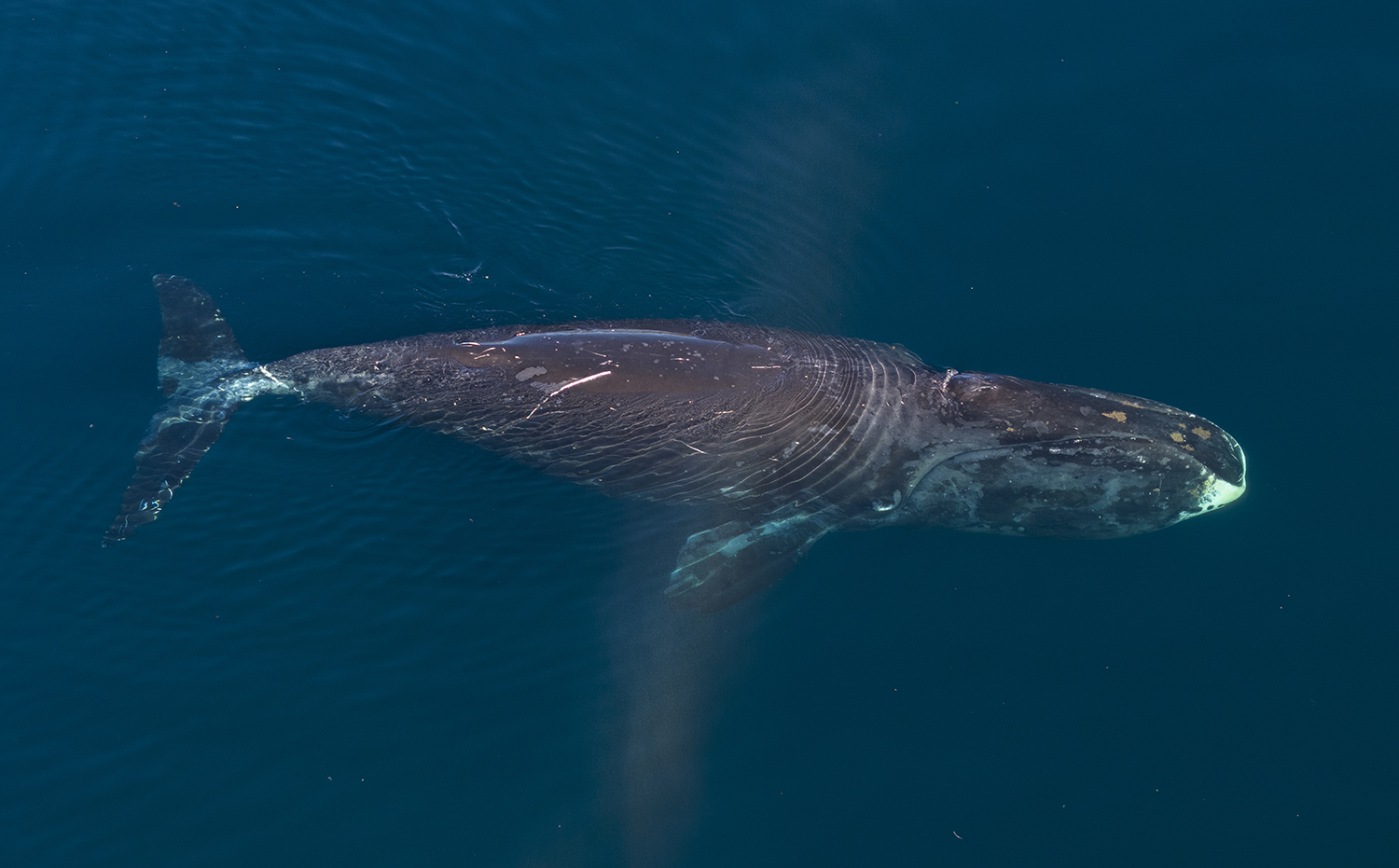
The body of the bowhead whale is stocky, cylindrical, almost barrel-shaped, and deep black. It has neither a dorsal fin nor a dorsal hump, and its flippers are short and spatulate. The most immediately recognisable feature is the broad white patch on the chin, often dotted with dark markings; pale areas also appear around the tail stock and the flukes, and spread with age. Adults commonly measure 14 to 18 m, males 14 to 17 m, females 16 to 18 m, exceptionally around twenty metres, for a mass of the order of 60 to 100 tonnes depending on the source and the stock.
The head is spectacular: bowed into an arch (hence the English name bowhead), triangular seen from above, it accounts for about a third to 40% of total length and the skull can exceed 5 m. The mouth, the largest in the animal kingdom, holds 230 to 360 horny plates reaching nearly 4 m, a record among living cetaceans (some sources report longer plates still, up to about 5 m). The blubber layer, the thickest of any cetacean, runs from 5 cm at the chin to 40-50 cm on the trunk. This massive architecture allows it to break through some twenty centimetres of ice from below, and Iñupiat hunters report animals breaking through up to 60 cm of sea ice in order to breathe.
The confusions are mainly ones of naming. The North Atlantic right whale (Eubalaena glacialis), another balaenid without a dorsal fin, is distinguished from it by the pale callosities colonised by whale lice that adorn its head, by its more modest size (13 to 16 m) and by a temperate to subpolar range. The sei whale (Balaenoptera borealis), rorqual boréal in French, shares only that adjective: streamlined outline, well-marked falcate dorsal fin, baleen no longer than 80 cm. One final point of vocabulary: in official French usage, in particular that of the Office français de la biodiversité, “baleine franche boréale” denotes Eubalaena glacialis. For Balaena mysticetus, the French terms to prefer are “baleine boréale” or “baleine du Groenland”.
Balaena mysticetus was described by Carl Linnaeus in 1758. It belongs to the suborder Mysticeti (baleen whales) and to the family Balaenidae, which also brings together the three right whales of the genus Eubalaena. The bowhead whale is the only living species of the genus Balaena: genetic work from the early 2000s confirmed that it constitutes a phylogenetic lineage distinct from that of the right whales. It is the only mysticete endemic to Arctic and subarctic waters, an adaptation legible throughout its anatomy: reinforced skull, hypertrophied blubber, absence of a dorsal fin easing its rise beneath the ice. The Inuit call it arviq, and the species holds a central place in circumpolar maritime cultures.
The range is circumpolar Arctic, essentially between 60° and 75° north, in seasonally ice-covered waters: the Bering, Chukchi and Beaufort seas, Hudson Bay and Foxe Basin, Baffin Bay and Davis Strait, the Sea of Okhotsk, and the sector running from East Greenland to eastern Siberia. The animals winter at the edge of the sea ice and move north in spring, as the leads of open water open up.
The International Whaling Commission recognises four management stocks (five populations are sometimes distinguished). The Western Arctic stock (Bering-Chukchi-Beaufort) is by far the largest: the two 2019 surveys give 14,025 individuals from ice-based counts and 17,175 from aerial transects, that is about 15,000 animals once weighted, with a rate of increase estimated at 3.7% a year. The Eastern Canada-West Greenland stock is estimated at between 6,446 individuals (2013 survey) and 7,660 by genetic mark-recapture (2008-2012), and increasing; the North Atlantic as a whole came to about 8,000 animals in 2016. The East Greenland-Svalbard-Barents Sea population, historically the most abundant, is today the smallest: about 340 individuals (343; 95% CI: 136-862) according to the 2015 surveys north of Svalbard and in the Northeast Water polynya, published in 2017, that is 0.5 to 1% of its pre-whaling size, estimated at 33,000-65,000 animals. The Sea of Okhotsk stock probably numbers no more than 400 animals.
The species has no population in France, neither in the Mediterranean, nor in the Bay of Biscay, nor in the overseas territories. Only a few exceptional incursions by immature individuals have been documented in temperate Europe (see the section on watching this species).
The bowhead whale is a strict filter feeder on zooplankton: copepods, euphausiids (krill), mysids and amphipods, taken by swimming with the mouth open at low speed, the water flowing out through the curtain of baleen. Annual consumption is estimated at close to 100 tonnes of prey per individual. The animals are generally solitary or in small groups of fewer than six individuals, but gather on productive feeding grounds. Routine dives last 9 to 18 minutes, and can reach an hour.
The species is remarkably vocal, with a repertoire of low-frequency sounds (below 1,000 Hz) used for communication. Its songs are unusually diverse for a mysticete: 184 distinct songs were recorded from about 300 animals in the Fram Strait between 2010 and 2014, the repertoire being renewed from one season to the next.
Breeding is very slow. Sexual maturity is reached late, generally cited at around 25 years (at about 13 m), with some estimates placing it as early as 15 years; physical maturity comes only between 50 and 60 years. The breeding season runs from March to August, with conception taking place mainly in March. Gestation lasts 13 to 14 months and births are concentrated from April to early June. The calf measures 4 to 4.5 m for about a tonne, it is suckled for close to a year and its mother gives birth to a single calf only every three to four years.
The longevity of the species has overturned the classic estimates, which placed it between 50 and 75 years. The discovery, in animals taken by hunters, of old harpoon points, among them a fragment of a bomb lance patented between 1879 and 1885, indicating an age of 115 to 130 years, and then dating by aspartic acid racemisation of the eye lens, which assigned 211 years to one male, make it the longest-lived mammal known. Genomic research associates this longevity with unusual DNA repair capabilities.
At global level, the bowhead whale has been listed as Least Concern (LC) on the IUCN Red List since the reassessment published in 2018. Two subpopulations are nonetheless the subject of separate assessments and are Endangered (EN): that of the Sea of Okhotsk and that of East Greenland-Svalbard-Barents Sea, the latter having been downlisted from Critically Endangered to Endangered in 2018. At European regional level, the 2023 assessment gives the status Vulnerable (VU). The national red lists converge: Endangered in Norway, Near Threatened (Eastern Canada-West Greenland stock) and Vulnerable (East Greenland-Svalbard-Barents stock) in Greenland. The species is listed in Appendix I of CITES and of the Convention on Migratory Species, appears on the OSPAR list of threatened or declining species, and has been listed as endangered under the United States Endangered Species Act since 1973.
The historical collapse is without equivalent: Basque and then European whaling began in the 16th century, industrial exploitation peaked between 1848 and 1914, and nearly 70,000 animals were taken in the Eastern Canada-West Greenland sector alone. The Western Arctic stock fell below 3,000 individuals in the 1920s. International protection came as early as the 1931 Geneva Convention for the Regulation of Whaling (in force from 1935), which banned the taking of right whales and bowhead whales, and was then confirmed by the 1946 International Convention for the Regulation of Whaling (in force since 1948); commercial whaling has ceased.
A subsistence hunt remains, regulated by the International Whaling Commission for Alaska-Chukotka and West Greenland. In Alaska the annual limit is 67 strikes, increased by at most 33 unused strikes carried over from previous quota blocks; between 1974 and 2021, 8 to 57 whales were landed each year, for a potential biological removal (PBR) set at 133 and a mean human-caused mortality estimated at 57 animals. West Greenland has 2 annual strikes set by the IWC. Canada having left the IWC in 1982, the takes of Nunavut (5 a year) and Nunavik (2 a year) are governed by Canadian co-management agreements with Inuit communities; the East Greenland-Svalbard-Barents population is fully protected.
Current threats are dominated by climate change: the loss of sea ice alters habitats and migration routes, with models projecting a reduction of 28 to 68% in summer habitat by 2100, and makes it easier for killer whales to move in, their predation increasing. To these are added entanglement in fishing gear, about 12% of Western Arctic animals carry the scars, ship strikes, underwater noise (shipping traffic, seismic surveying), hydrocarbons and contaminants.
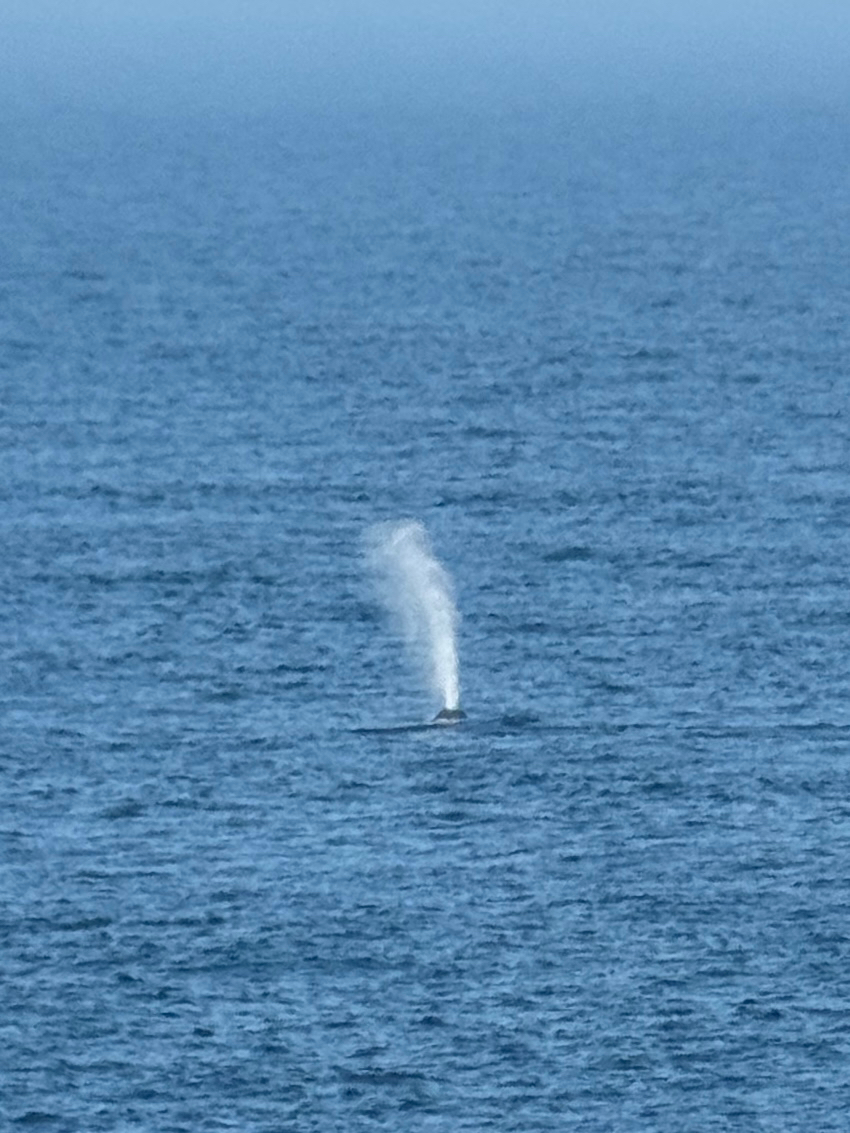
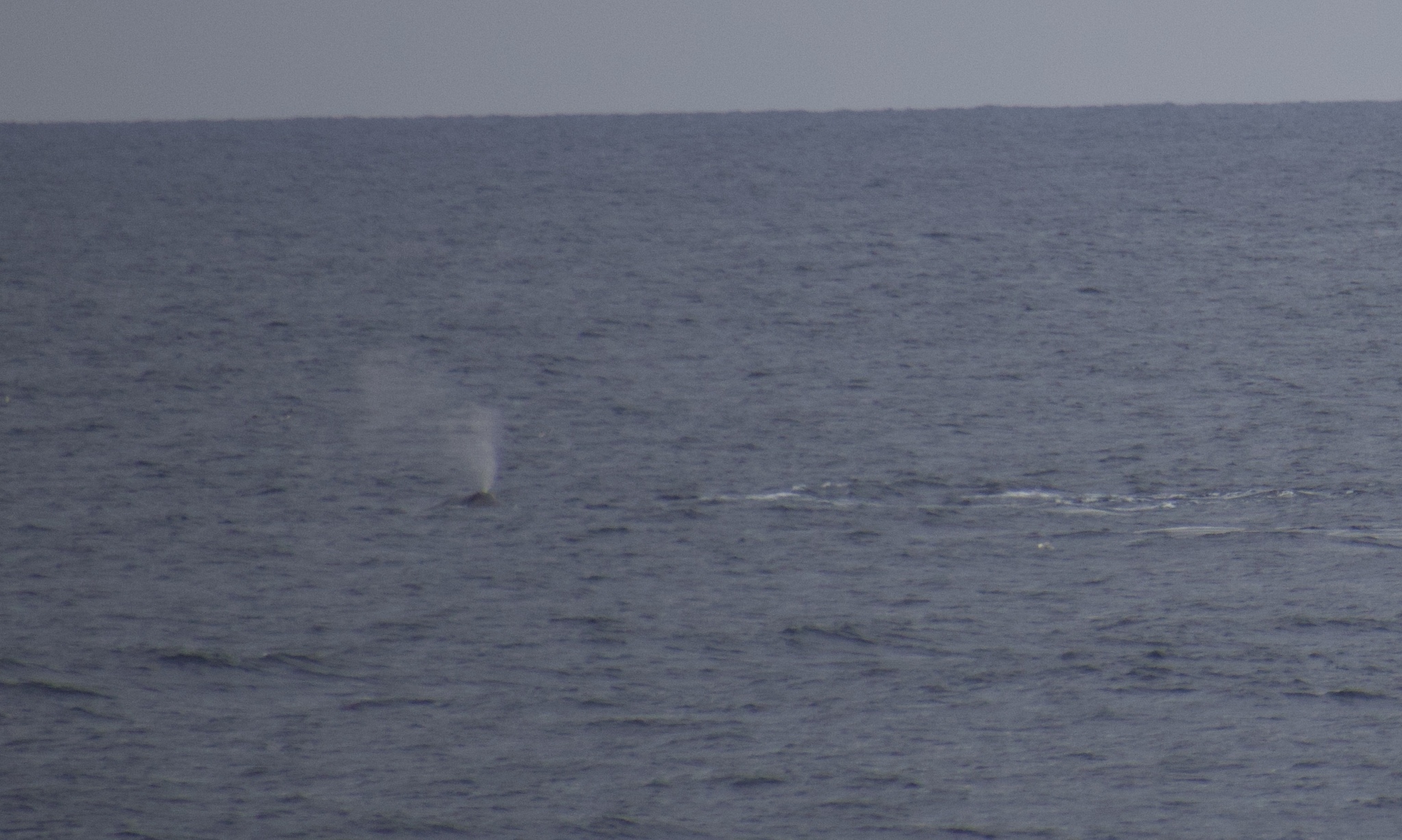
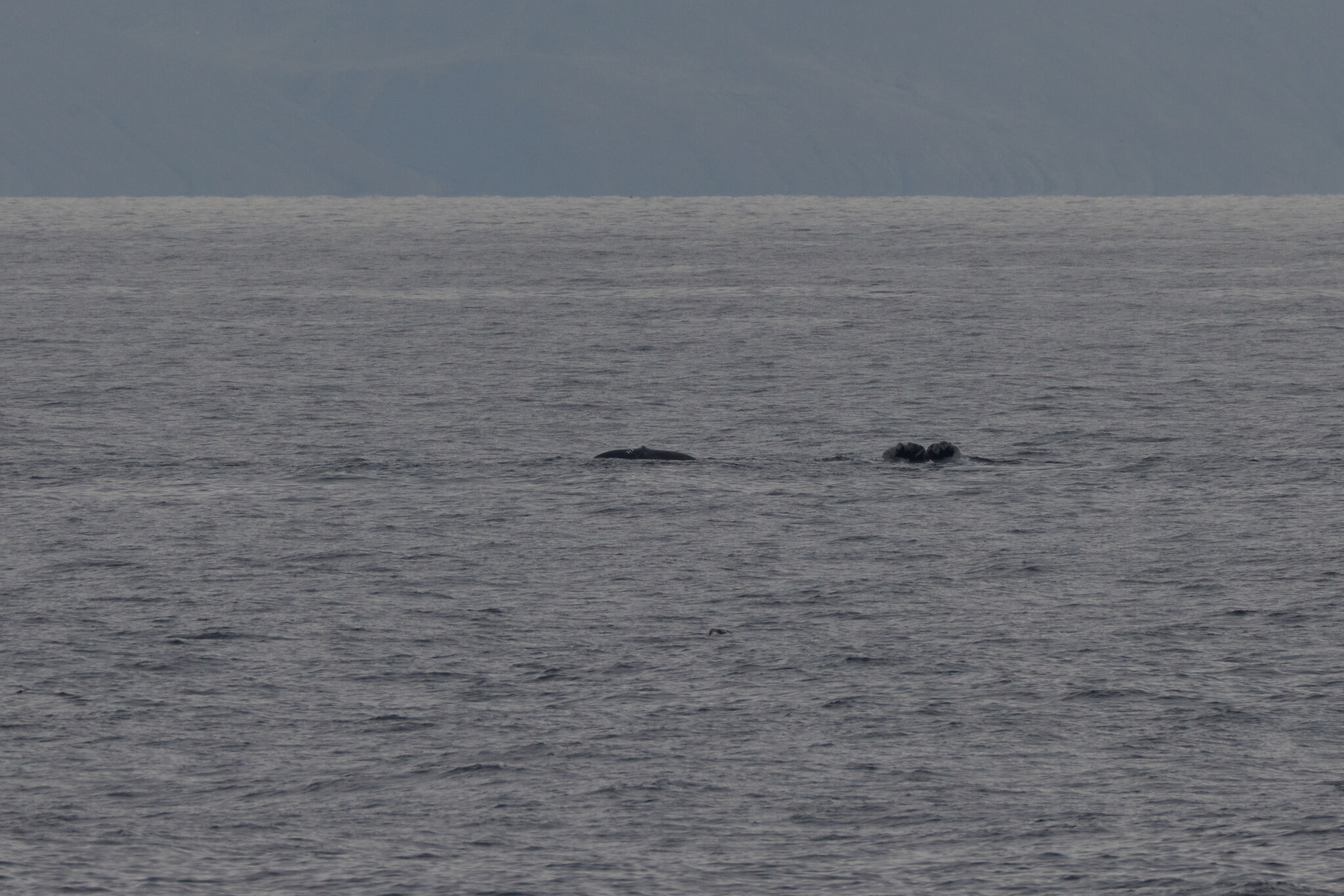
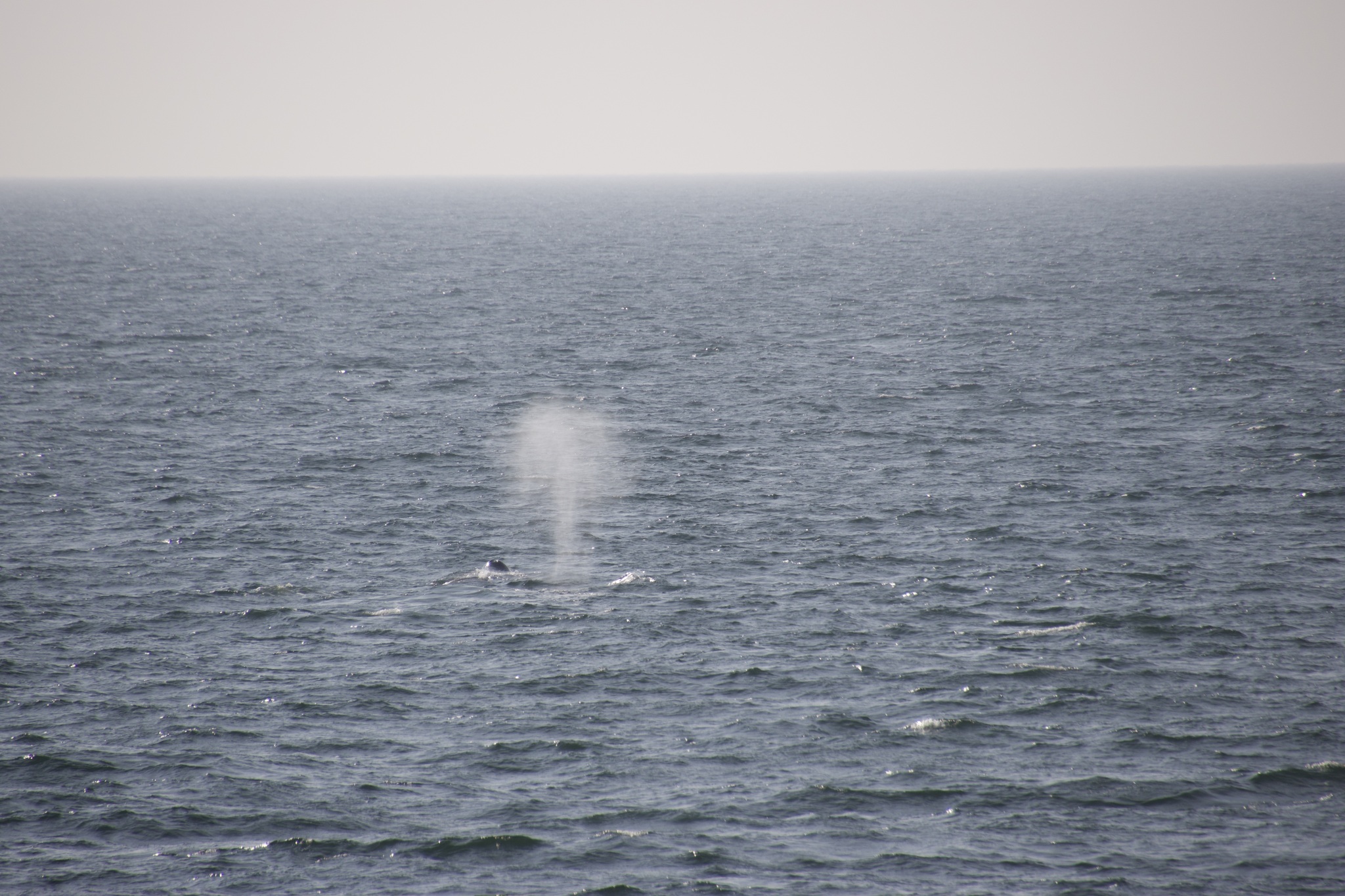
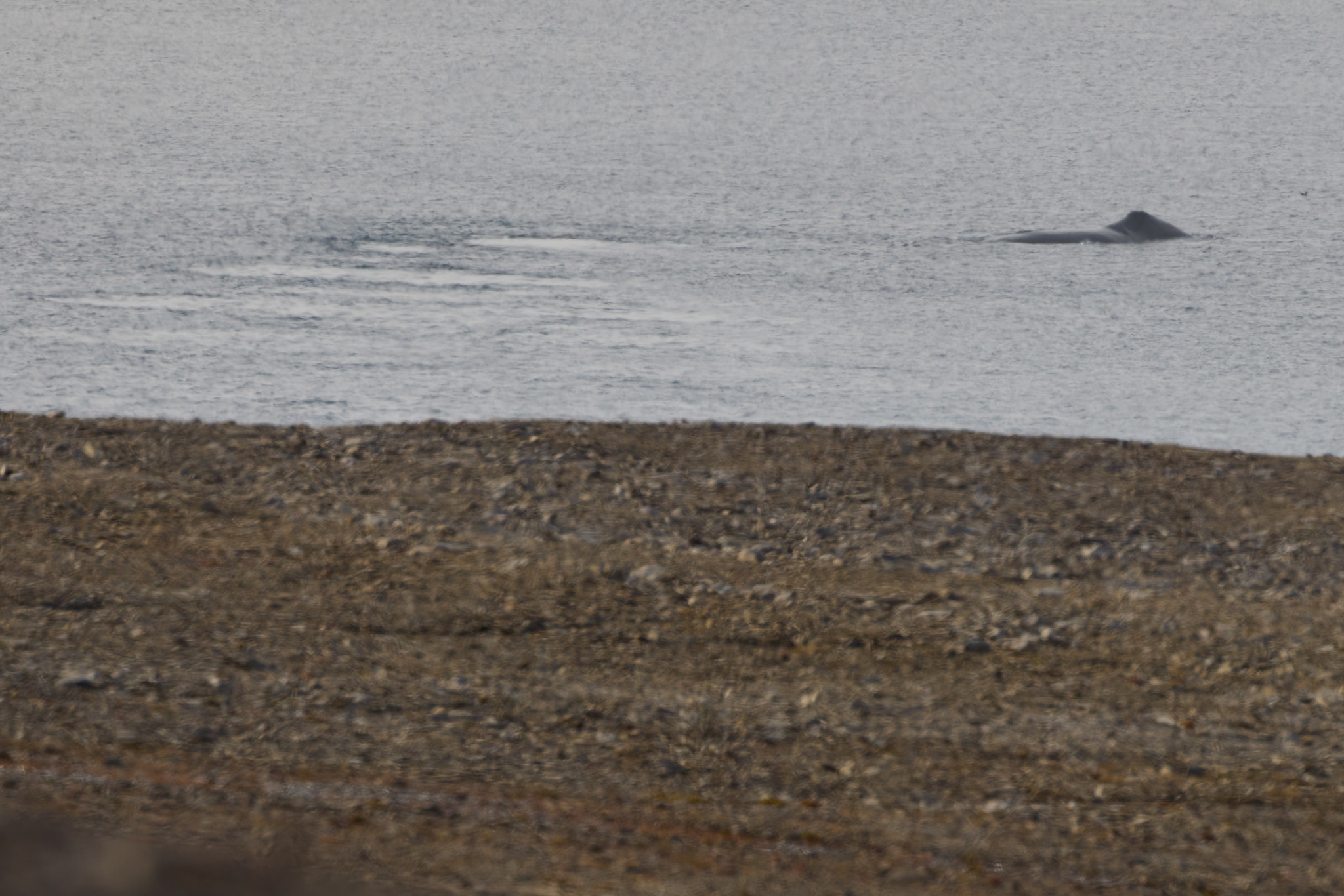
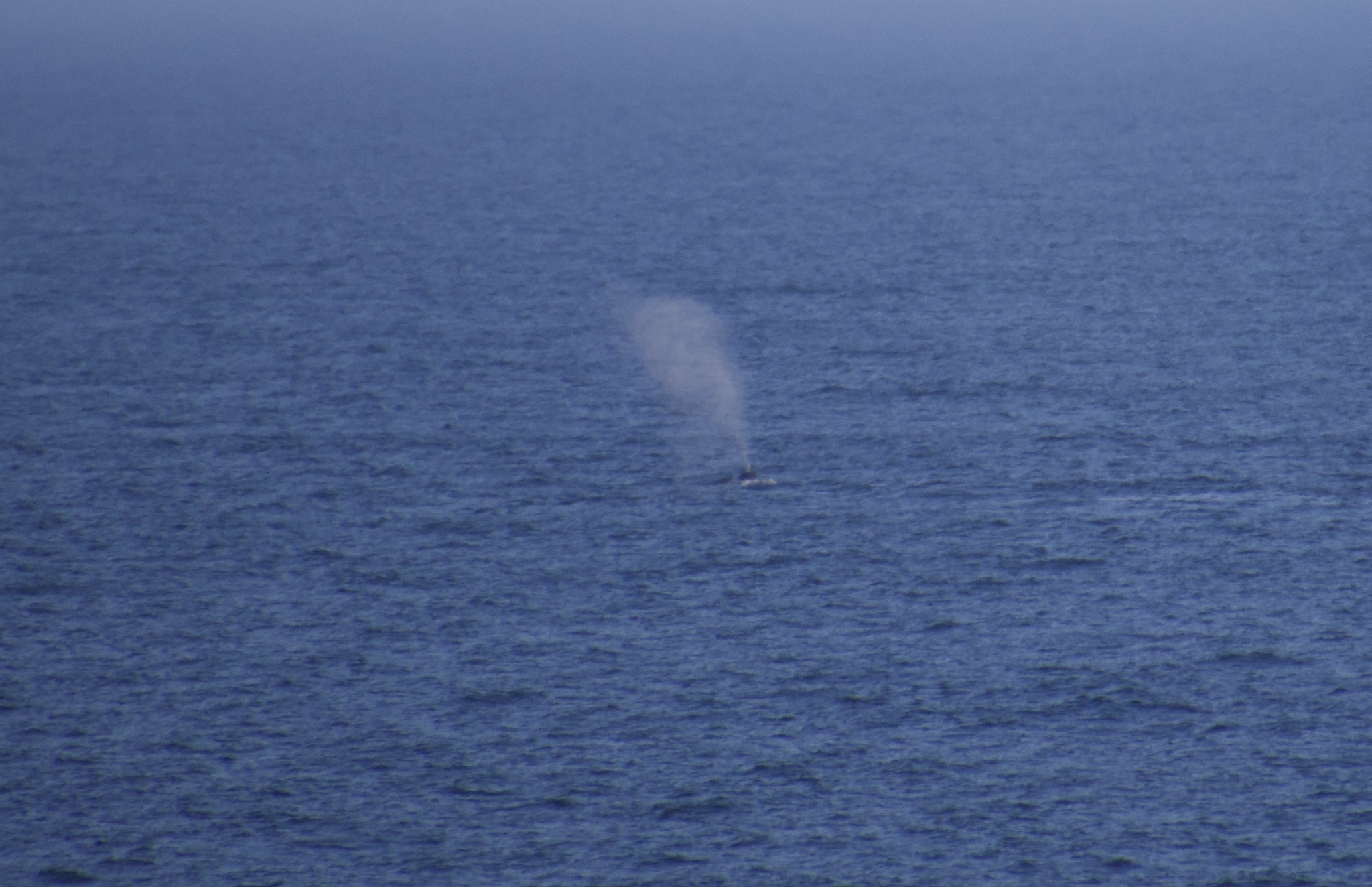
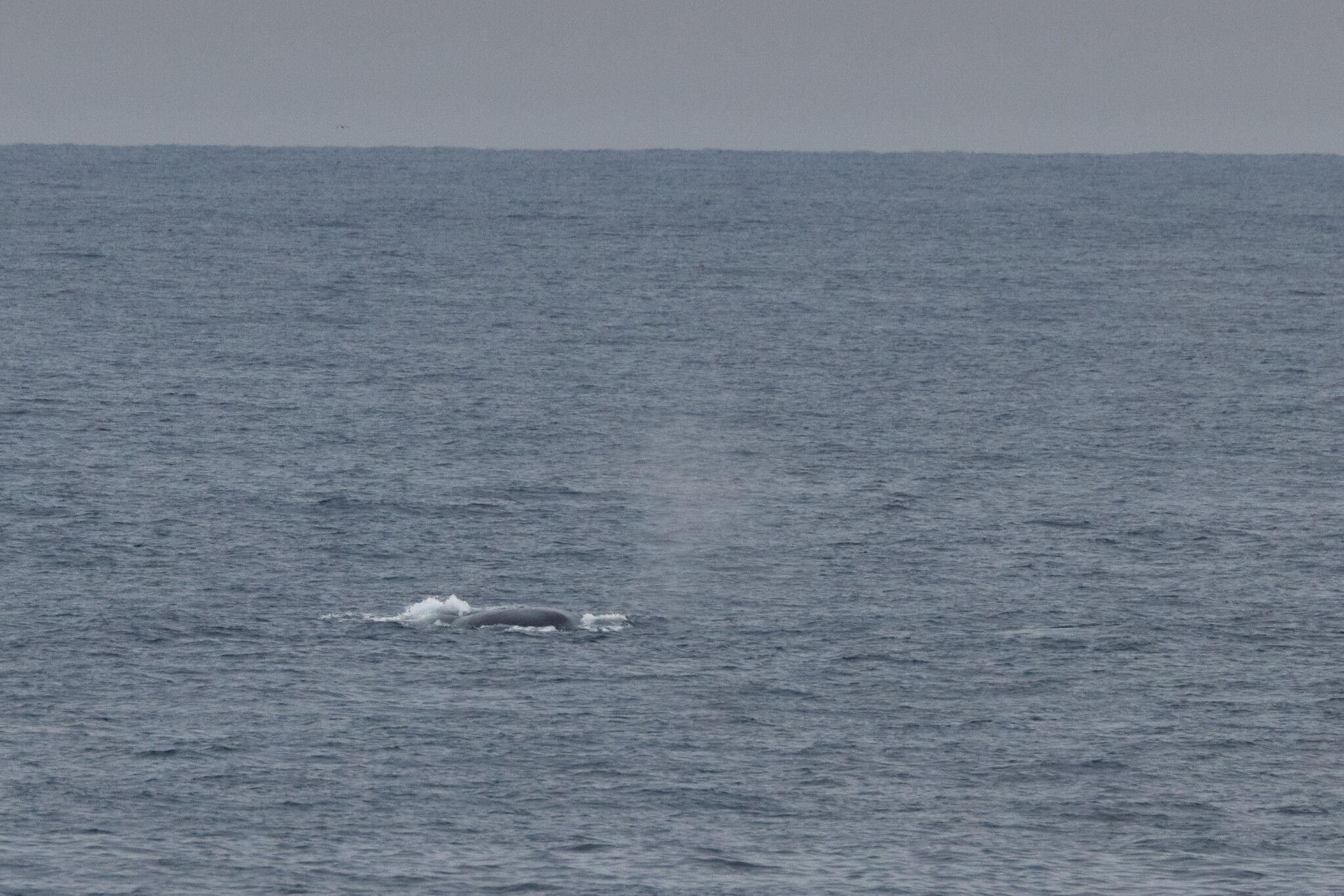
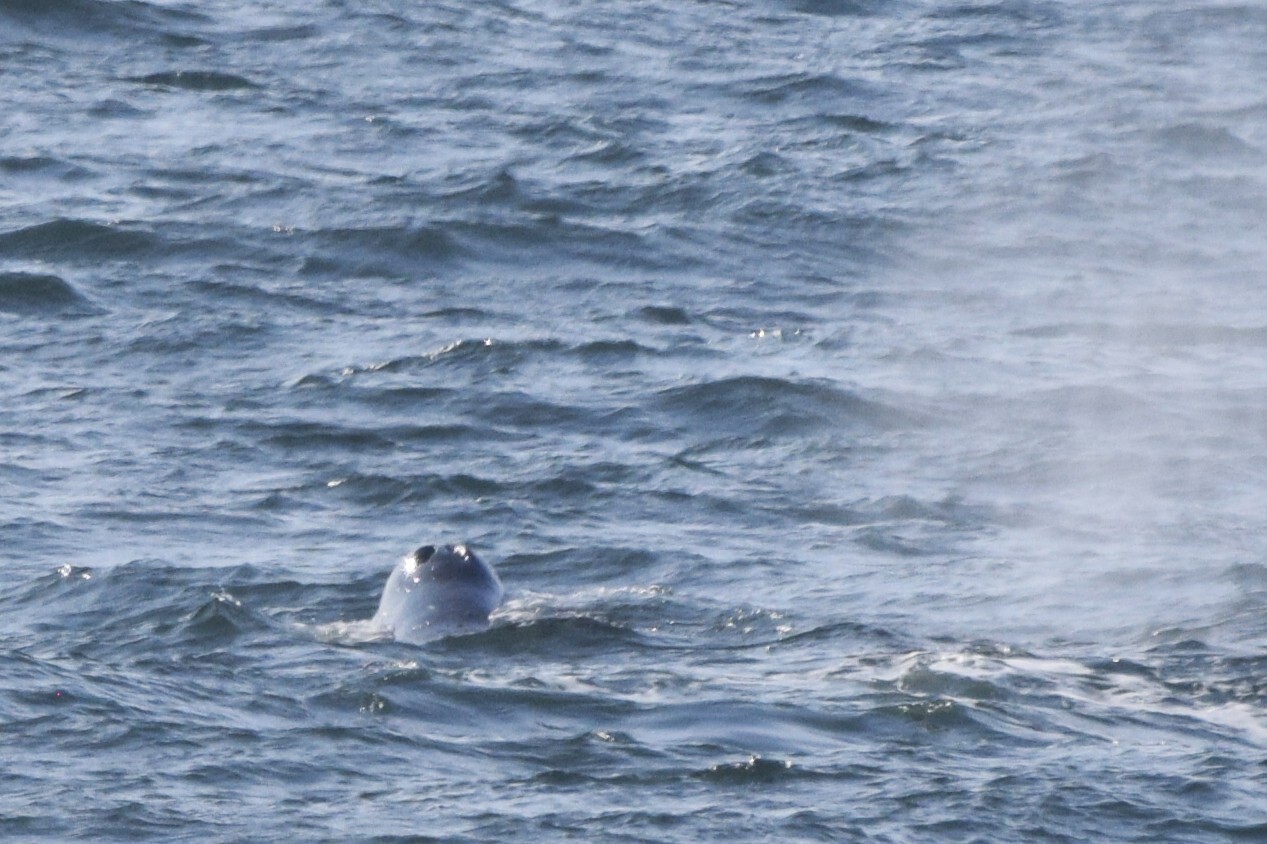
Watching the bowhead whale means travelling to the Arctic: the approaches to Svalbard, the west coast of Greenland, Nunavut (Foxe Basin, the Igloolik area) or northern Alaska. The best period is spring and early summer, when the animals follow the leads of open water. At sea, identification rests on the complete absence of a dorsal fin, the black, smooth and rounded back, the massive head emerging as the animal breathes and the white chin visible when it rolls.
In France the species is not on the programme: it does not regularly frequent the Mediterranean, the Bay of Biscay or the English Channel. Only exceptional incursions by immature animals have been documented in temperate Europe: a juvenile in the Isles of Scilly (Cornwall) in February 2015, a confirmed sighting off France on 10 May 2016, others in Cornwall and at Carlingford Lough (Ireland) the same month, then an individual off the Belgian coast (Ostend to Middelkerke) in late March and early April 2017, the first record for the North Sea. Scarring evidence suggests that one and the same young animal was involved in the 2016 series.
Any unusual sighting or stranding on the French coast should be reported to the national stranding network coordinated by the Observatoire Pelagis. The species being fully protected, one should never cut across an animal’s path, should keep a substantial distance, reduce speed and noise, and respect local regulations as well as the subsistence activities of Indigenous communities.
Yes, on present knowledge. Older estimates topped out at 50-75 years, but the discovery of 19th-century harpoon points in recently taken animals, and then dating by aspartic acid racemisation of the eye lens, revealed far greater ages: a fragment of a bomb lance patented between 1879 and 1885 implied an age of 115 to 130 years, and one male was estimated at 211 years. No other mammal reaches such documented values.
No, there is no French population and no regular presence in French waters. The species is strictly Arctic. A few exceptional incursions by young individuals have nonetheless been confirmed in temperate Europe since 2015, among them a sighting off France on 10 May 2016, in a series that also involved the Isles of Scilly, Cornwall, Ireland and then Belgium.
The sei whale (Balaenoptera borealis), rorqual boréal in French, shares only that adjective: streamlined body, clear falcate dorsal fin, baleen of 80 cm at most, presence in almost every ocean. The North Atlantic right whale (Eubalaena glacialis), also called baleine franche boréale or baleine des Basques in French, likewise lacks a dorsal fin, but it carries pale callosities on the head, measures 13 to 16 m and lives in temperate to subpolar waters.
Because the IUCN assesses both the species as a whole and certain subpopulations. The Western Arctic stock, which holds the bulk of the world total with about 15,000 individuals and is growing by about 3.7% a year, pulls the global status towards Least Concern. The residual nuclei of the Sea of Okhotsk and of East Greenland-Svalbard-Barents, which number a few hundred animals, remain listed as Endangered.
Commercial whaling has ceased, but an Indigenous subsistence hunt remains authorised and subject to quotas. For the Bering-Chukchi-Beaufort stock, the International Whaling Commission sets a limit of 67 strikes a year, increased by at most 33 unused strikes carried over from previous quota blocks; it also sets 2 annual strikes for West Greenland. Canada having left the IWC in 1982, the takes of Nunavut (5) and Nunavik (2) come under Canadian co-management agreements with Inuit communities. The IWC Schedule forbids striking, taking or killing a calf or any whale accompanied by a calf, there is no regulatory minimum size for this species, and the East Greenland-Svalbard-Barents population is subject to no take at all.
Its massive, arched and reinforced skull allows it to break through some twenty centimetres of ice from below in order to create breathing holes, with Iñupiat hunters even reporting animals breaking through up to 60 cm of sea ice. The absence of a dorsal fin avoids injury under the ice, and a blubber layer of 40 to 50 cm, the thickest of any cetacean, provides thermal insulation.
Profile compiled from authoritative scientific sources (IUCN, NOAA Fisheries, specialist literature) and reviewed for factual accuracy.
According to the open data of the GBIF, 228 georeferenced sightings of Balaena mysticetus are recorded in our photographic index.
| Country | Notes |
|---|---|
| Canada | 102 |
| Greenland | 66 |
| United States of America | 59 |
| Svalbard and Jan Mayen | 19 |
| Russian Federation | 18 |
| unknown or invalid | 12 |
| Sweden | 5 |
| Norway | 2 |
| Ireland | 1 |

Monthly distribution of 242 dated sightings (all years combined): the maximum is reached in August.
| Month | Notes |
|---|---|
| janvier | 3 |
| February | 1 |
| mars | 1 |
| avril | 1 |
| mai | 22 |
| juin | 51 |
| juillet | 22 |
| August | 114 |
| septembre | 23 |
| octobre | 4 |
| novembre | 0 |
| December | 0 |
These figures reflect survey effort (more boaters and more surveys in summer) as much as the actual presence of the species: to be interpreted with caution.


Photographs from GBIF under a Creative Commons licence. The author and the licence of each photograph are given; please respect them if you reuse them.
Automatic selection of the most cited works mentioning the species (source: Crossref).