| Scientific name | Balaenoptera musculus (Linnaeus, 1758) |
|---|---|
| Other names | Rorqual bleu; grande baleine bleue; rorqual de Sibbald; “grand rorqual” (an ambiguous name, also used for the fin whale), all in French; blue whale (English) |
| Size | 23 to 27 m on average in the Northern Hemisphere (24 to 28 m according to NAMMCO); mature Antarctic females commonly reach 25 to 27 m and the confirmed maximum is around 30 m, with a historical record of 33.6 m. Females are larger than males. |
| Weight | Most often 70 to 135 t. Wikipedia EN gives an adult average of 72 to 135 t (Northern Hemisphere males ≈ 100 t, females ≈ 112 t; Antarctic males ≈ 112 t, females ≈ 130 t); NAMMCO mentions 50 to 150 t in the Northern Hemisphere and up to 190 t for the largest Antarctic individuals. The heart alone weighs about 180 kg. |
| Longevity | Commonly 80 to 90 years; the oldest individual documented by counting the layers of the earplug reached 110 years. In the pygmy blue whale, the documented maximum is 73 years. The IUCN uses a generation length of 30.8 years. |
| Diet | Krill (euphausiids) almost exclusively, with different species depending on the region: Euphausia superba in the Antarctic, Meganyctiphanes norvegica and Thysanoessa spp. in the North Atlantic, Euphausia pacifica and Thysanoessa spp. in the North Pacific, Nyctiphanes australis off southern Australia. Estimates of daily intake differ: about 1.1 t/day (± 0.36 t) for an average individual, up to 3.6 t/day (≈ 40 million krill) according to NAMMCO, and up to about 5.4 t/day (6 short tons) according to NOAA. Fish and copepods are taken only incidentally. |
| IUCN status | Endangered (EN), criterion A1abd, version 3.1, assessment by Cooke, J.G., carried out on 16 March 2018, published in 2018 (errata version 2019), e.T2477A156923585. Global population trend: increasing. Population: 5,000 to 15,000 mature individuals (10,000 to 25,000 in total). Antarctic subspecies Balaenoptera musculus intermedia: Critically Endangered (CR A1abd), e.T41713A50226962, ≈ 3,000 mature individuals, trend increasing. 2023 European regional assessment: Near Threatened (NT), increasing. No Mediterranean subpopulation has been assessed: the species is absent from the Mediterranean. |
The blue whale is the largest animal known, living or fossil: up to about thirty metres and more than 130 tonnes in Antarctic females. Reduced by nearly 90 to 97% by the industrial whaling of the twentieth century, with about 350,000 individuals killed in the Antarctic sector alone, it is still listed as “Endangered” by the IUCN, but its global population is now increasing. Cosmopolitan yet extremely rare, it is absent from the Mediterranean and is reported in metropolitan French waters only about once every ten years, in the Bay of Biscay.
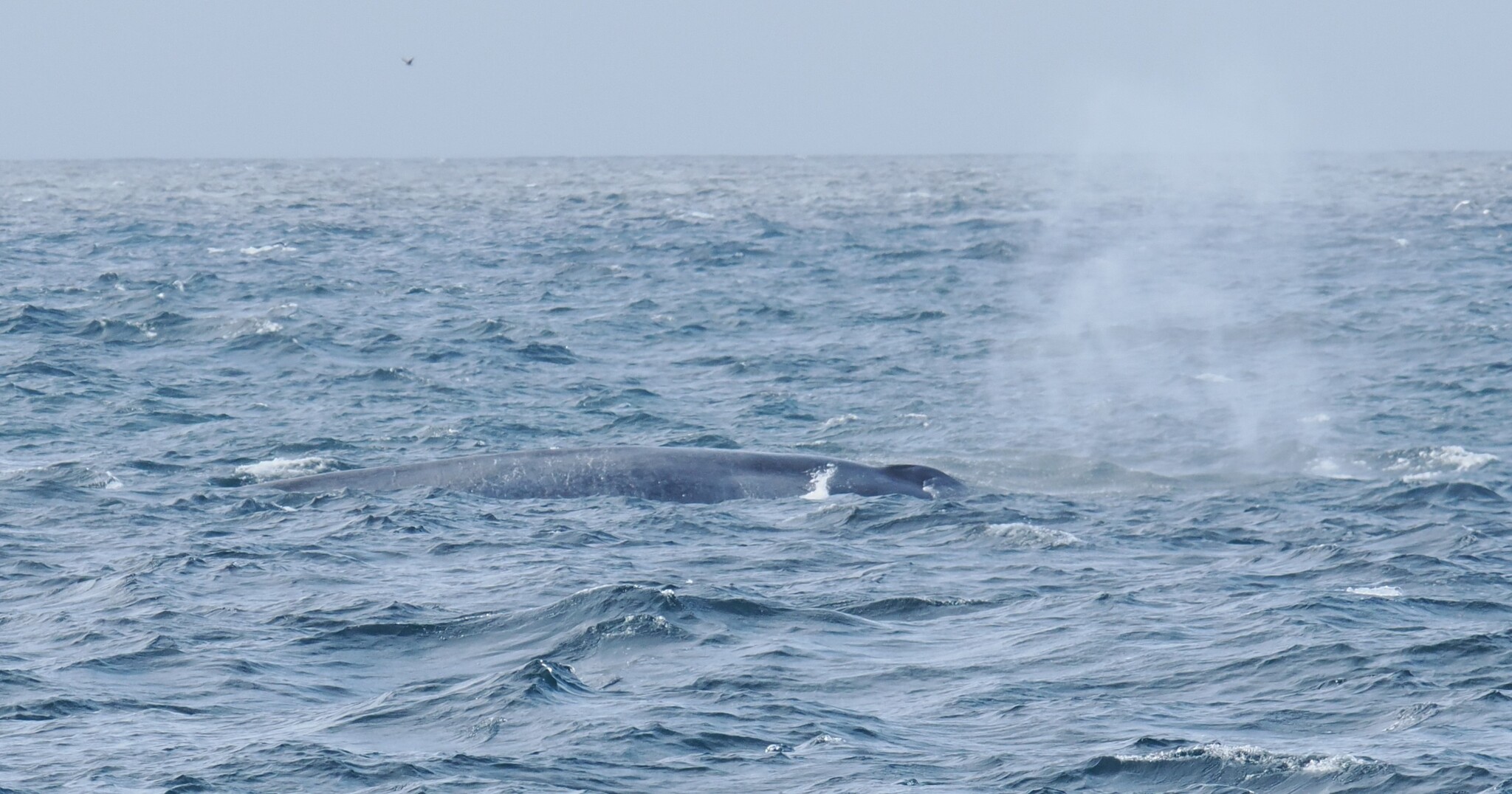
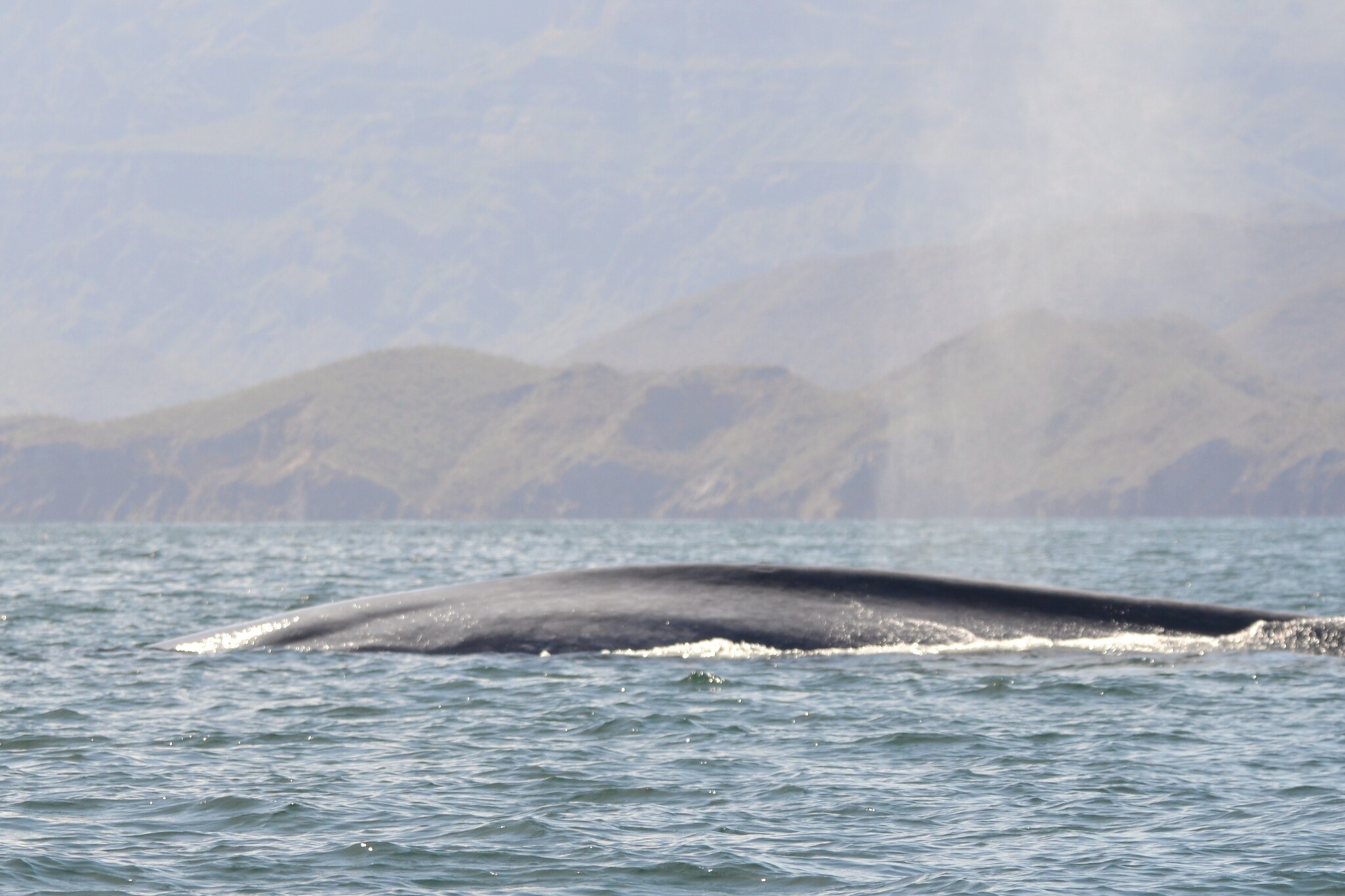
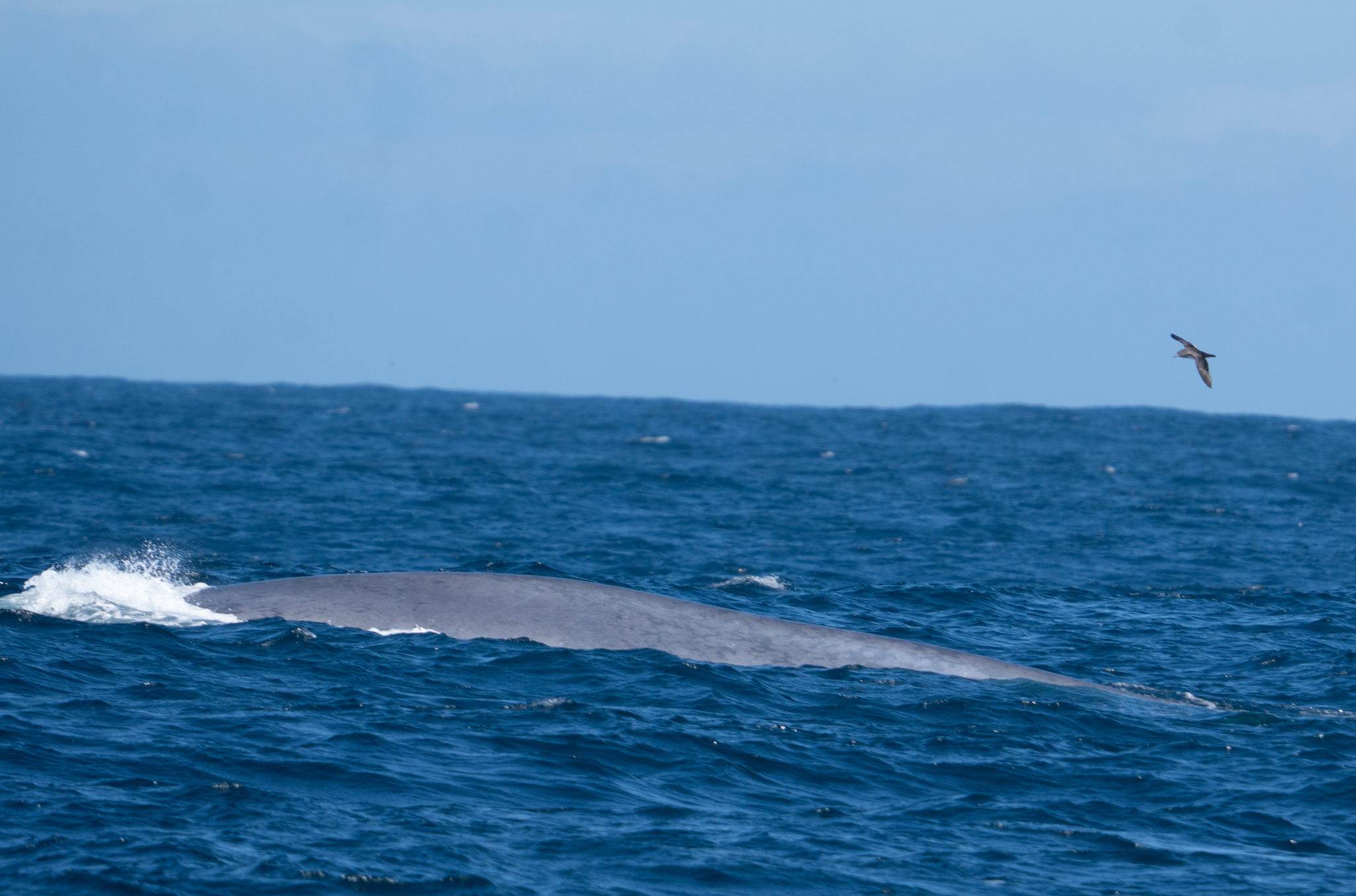
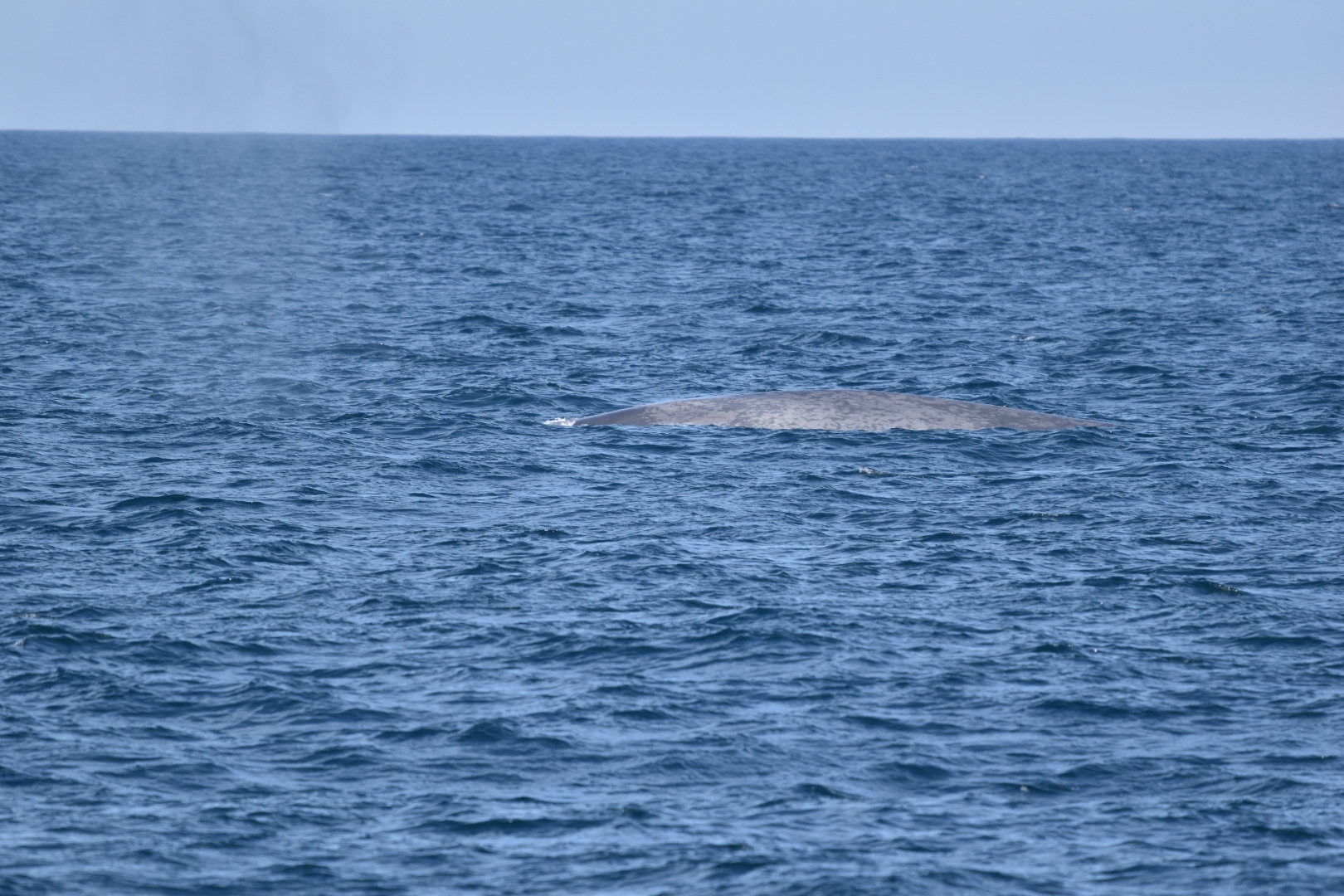
A very long, streamlined outline, a fairly uniform mottled blue-grey on the back and flanks, the belly sometimes taking on a yellowish tinge from the diatoms that settle on it. The head is massive, broad and flattened, shaped “like an ogive” or U-shaped seen from above, crossed by a single median longitudinal ridge that runs to the prominent blowhole with its two openings. The body bears 60 to 90 expandable ventral pleats, the flippers measure 3 to 4 m and the upper jaw holds several hundred black baleen plates (about 300 per side of the jaw), each less than a metre long. The pattern of light and dark mottling is unique to each individual, which makes photo-identification possible: the North Atlantic catalogues hold more than 500 individuals on each side of the ocean.
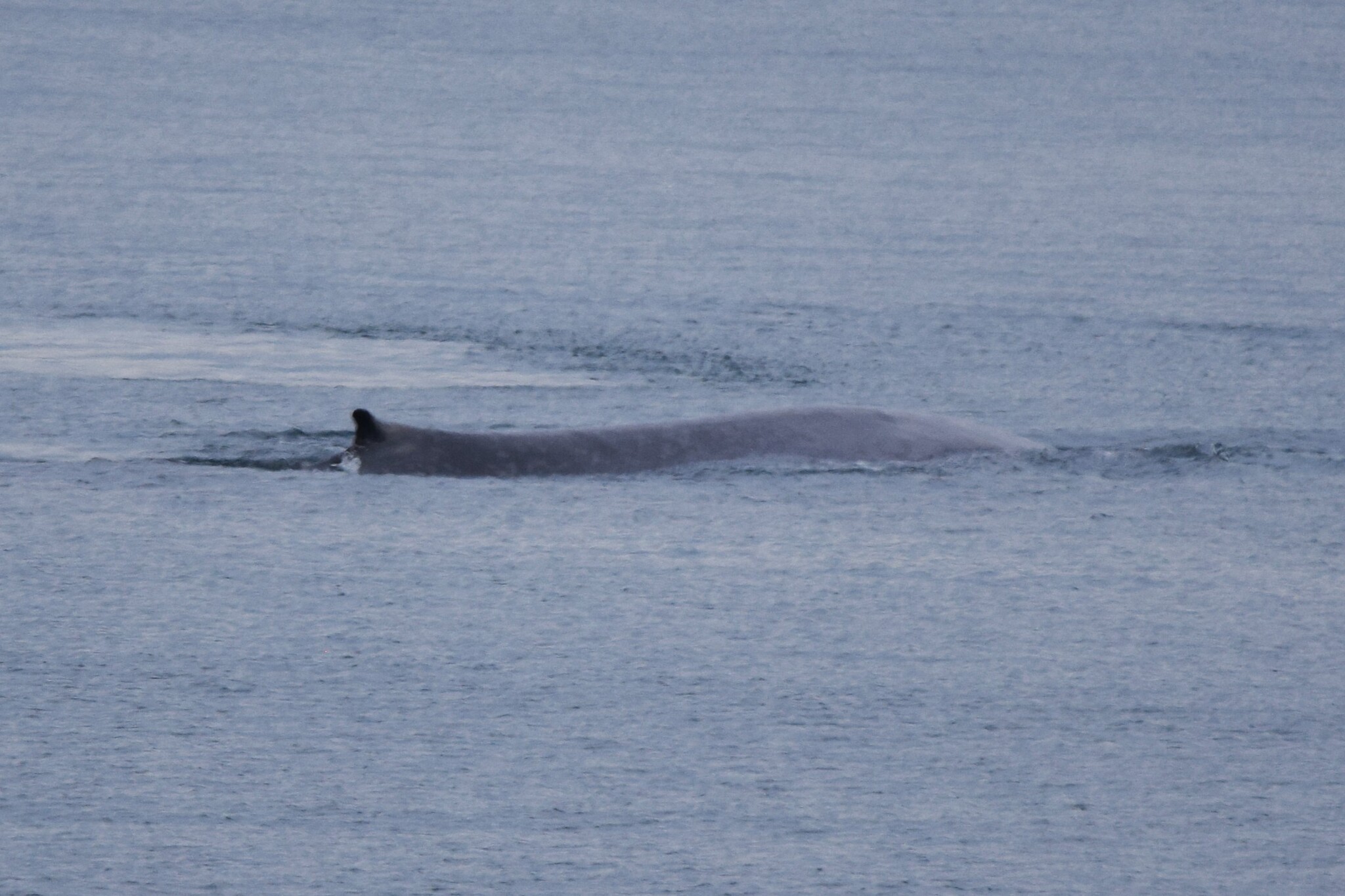
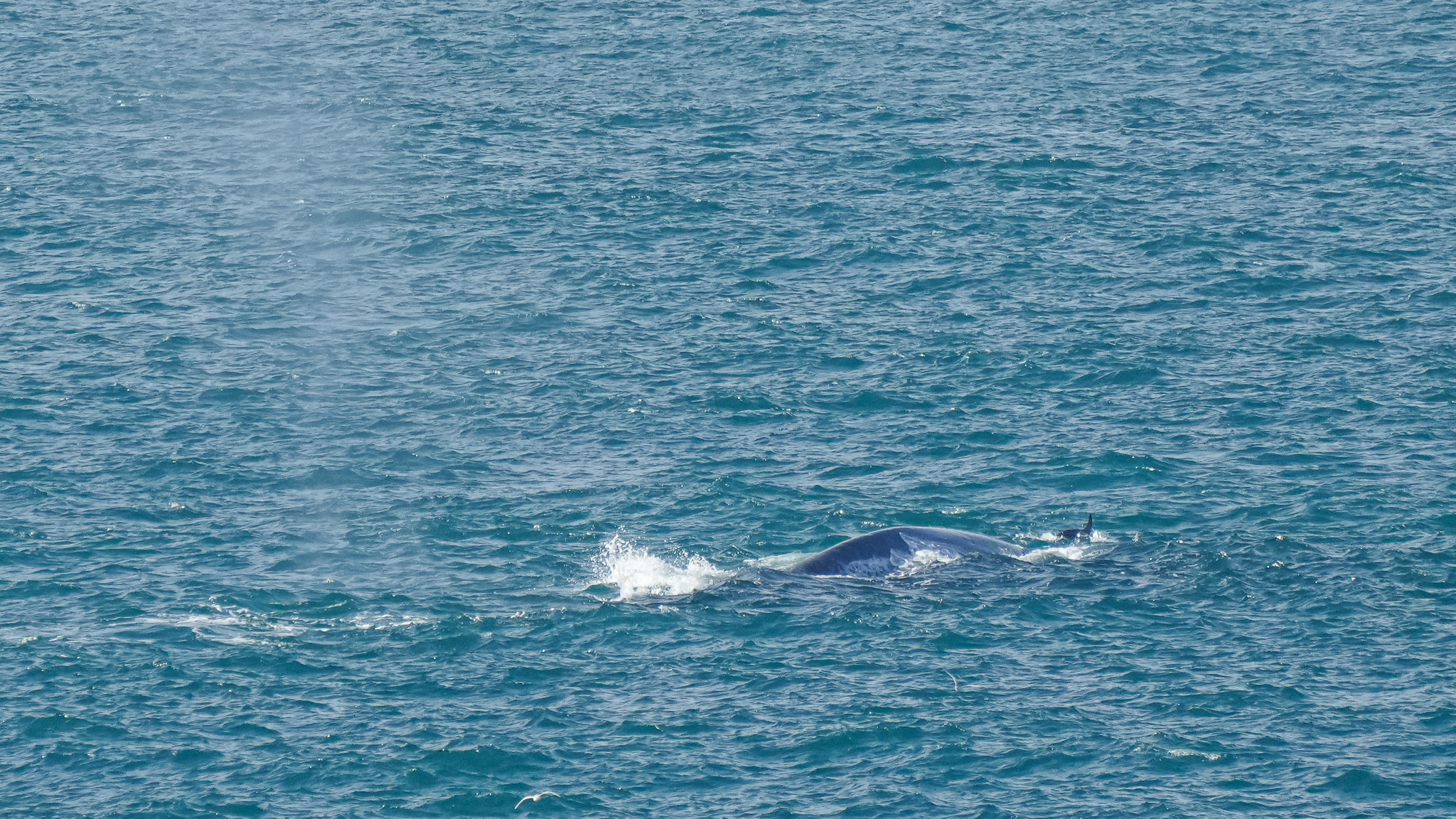
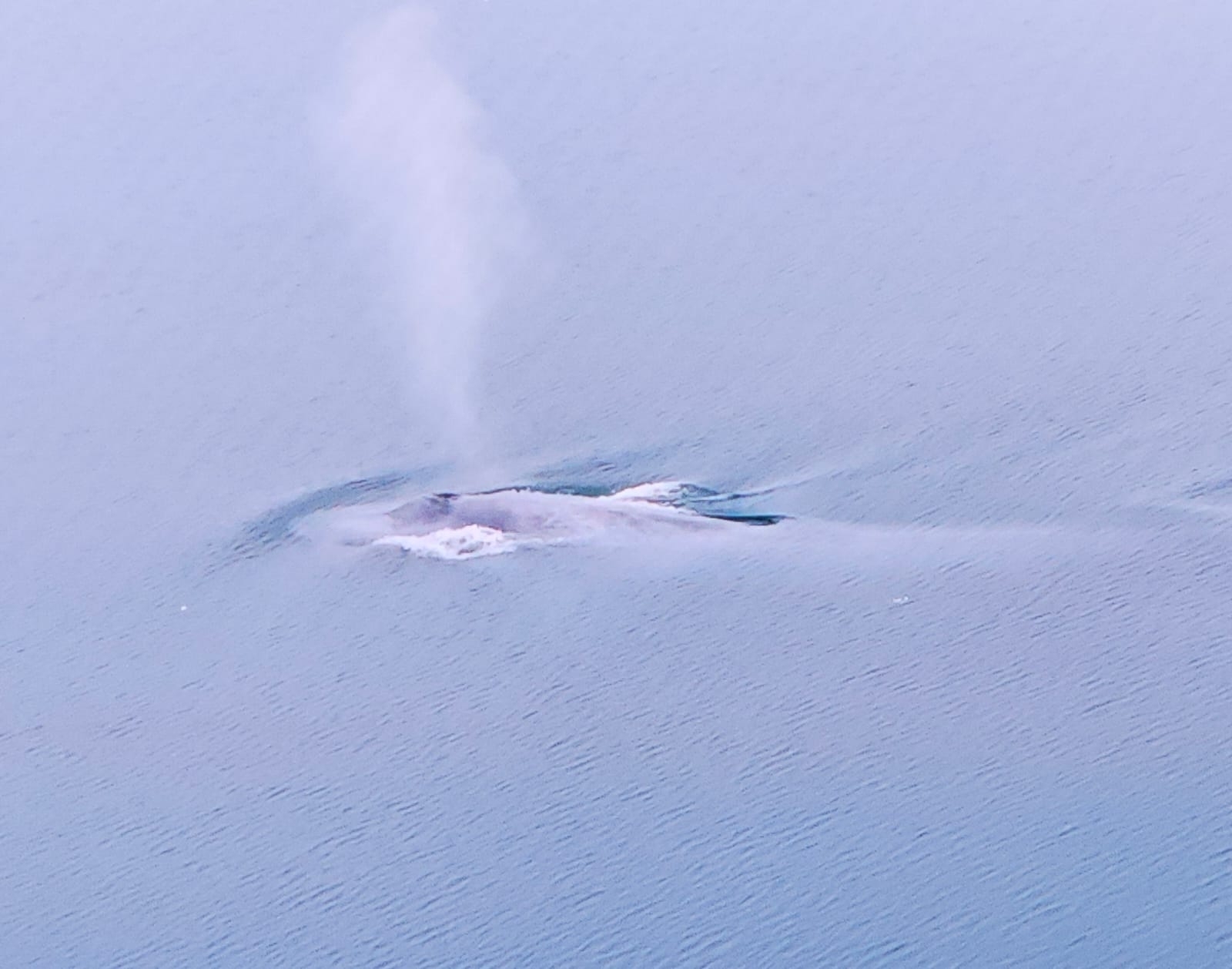
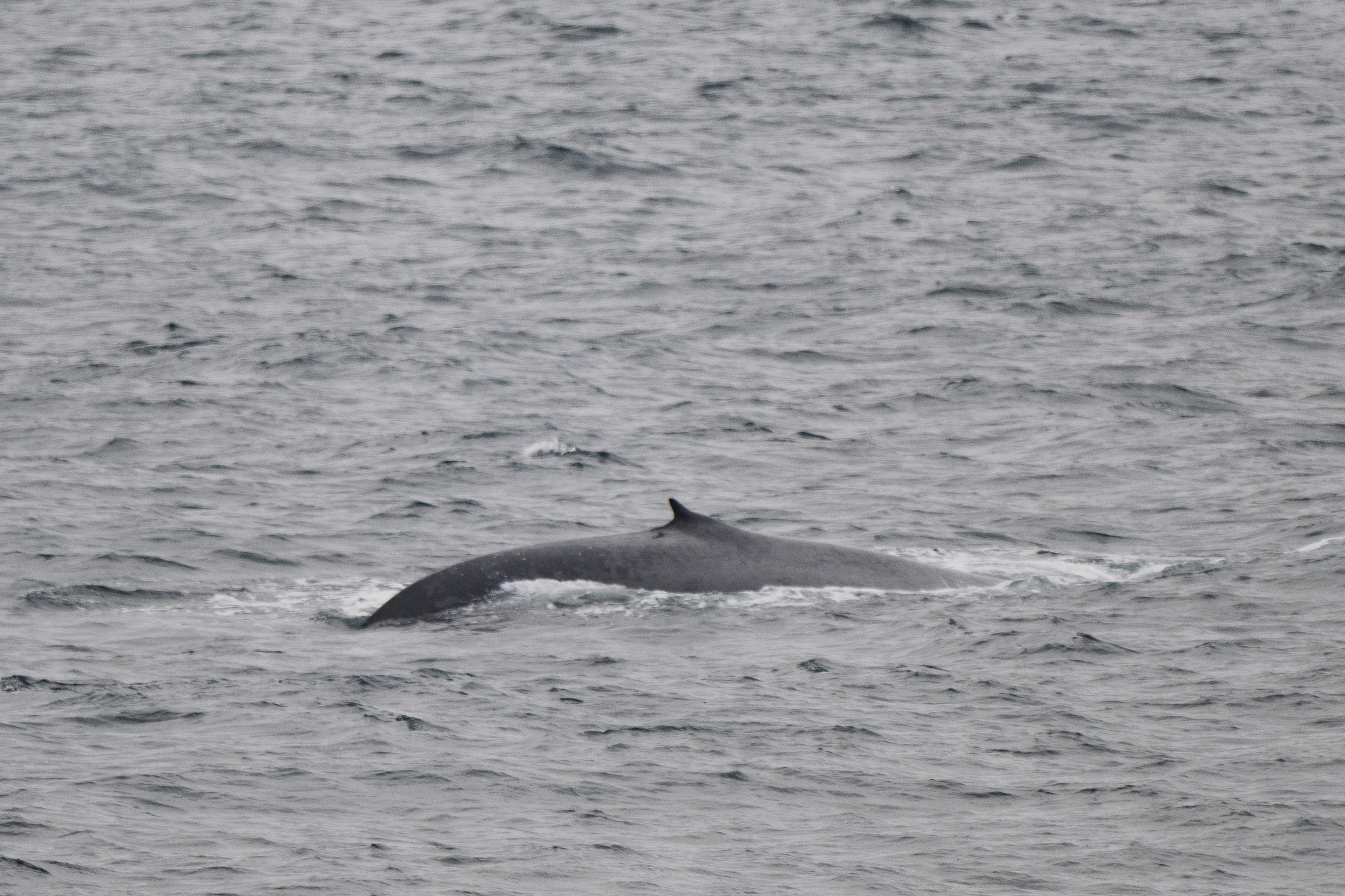
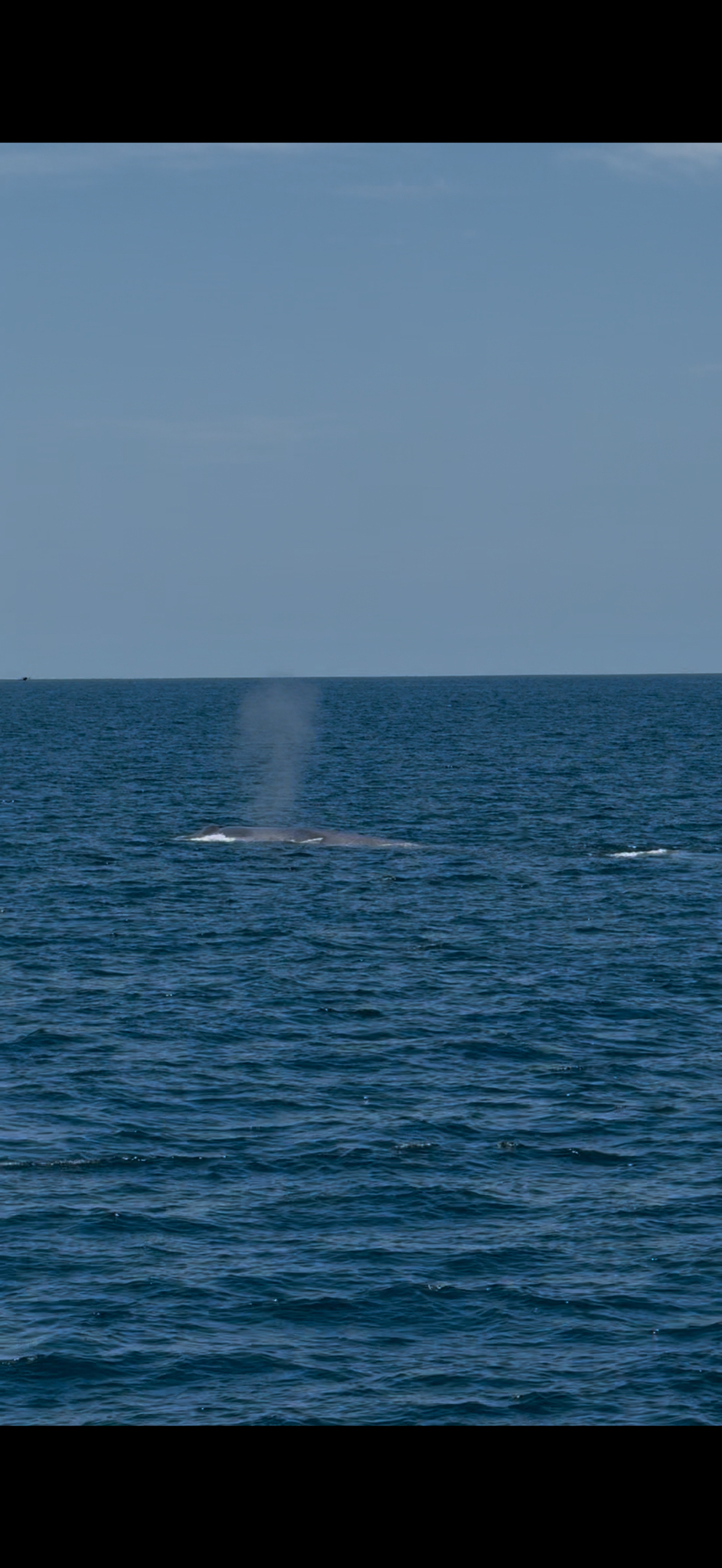
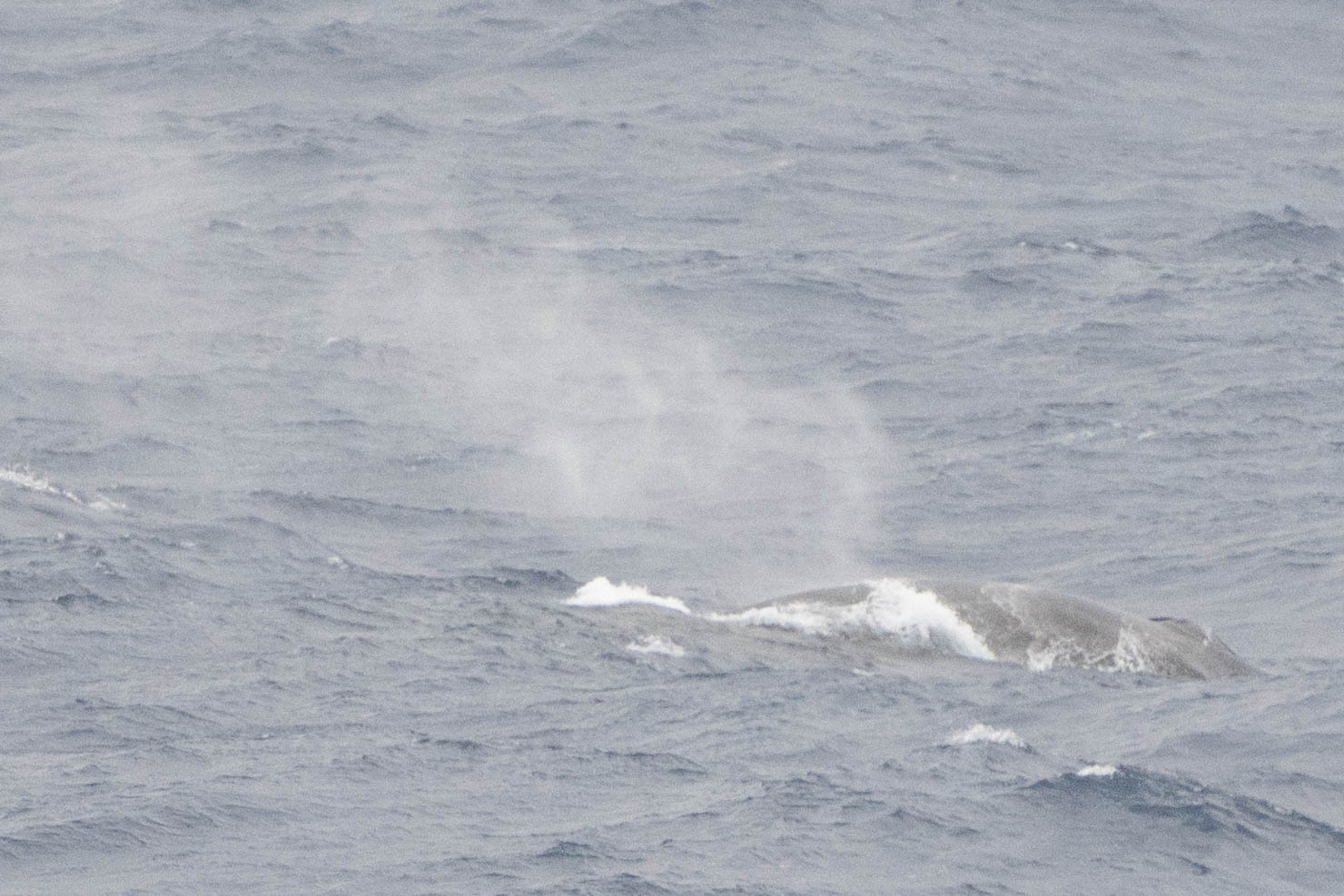
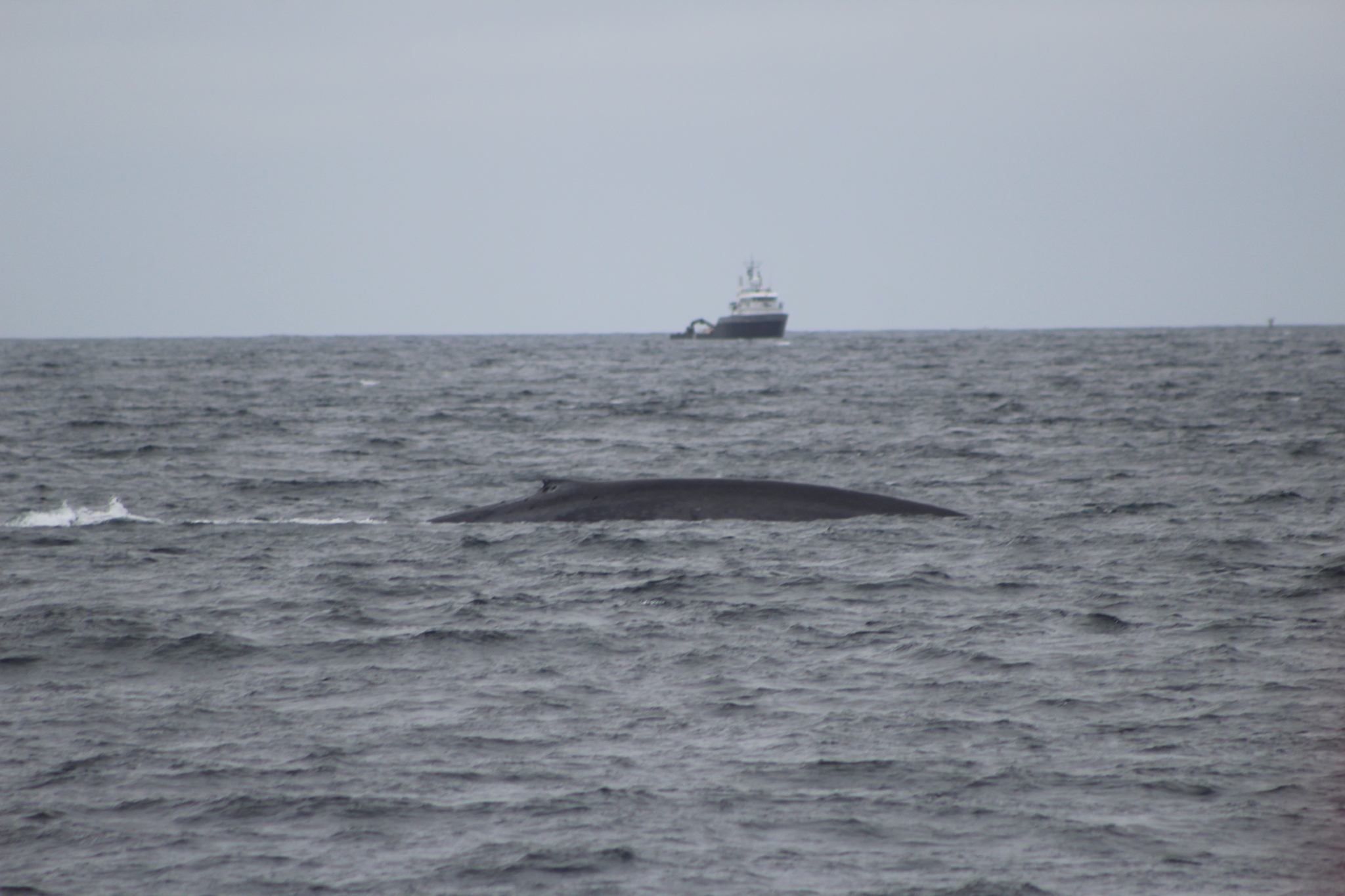
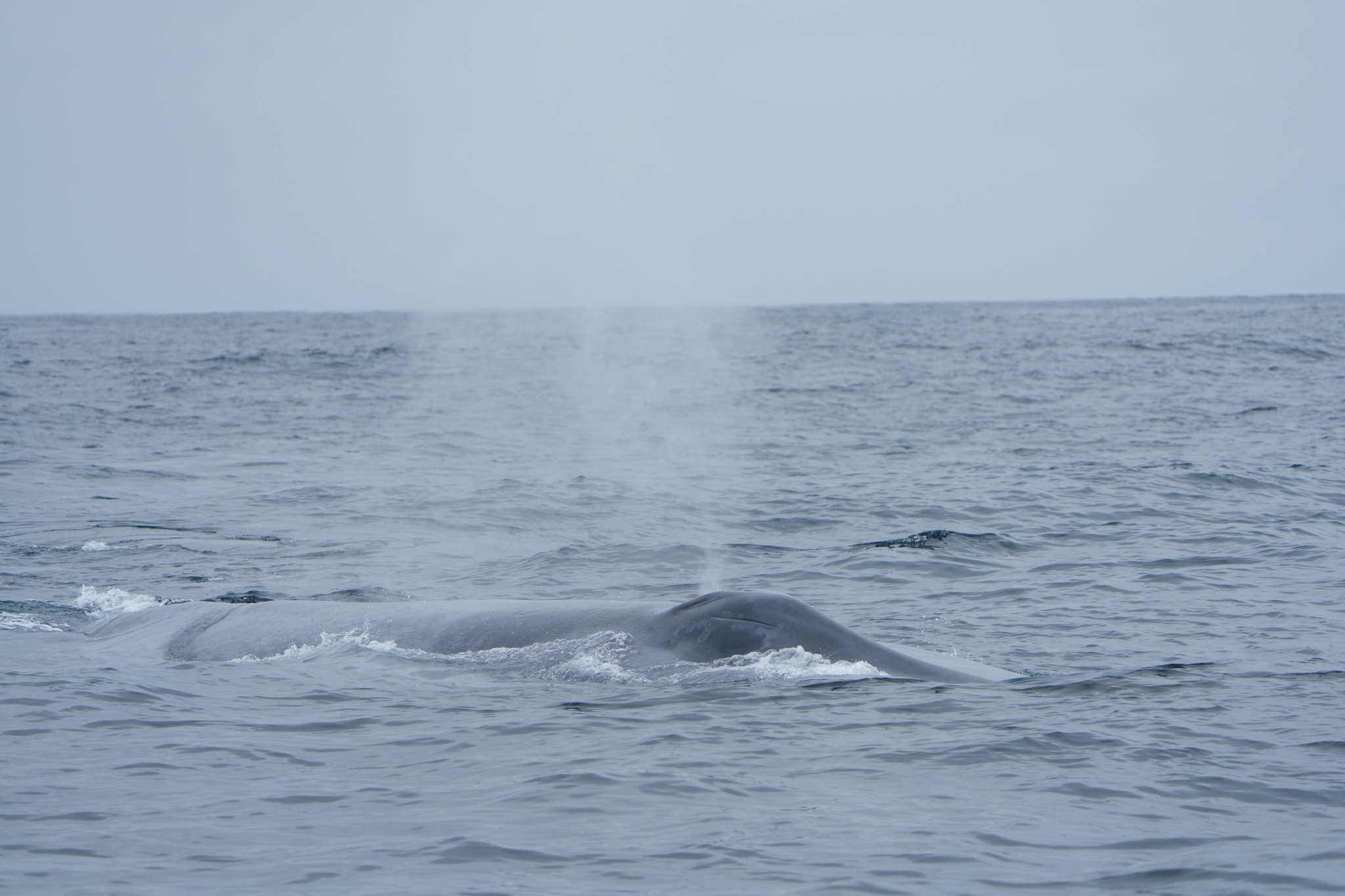
Two field criteria are decisive. First the blow: very tall and narrow, “poplar-shaped”, of 6 to 12 m according to observers. Then the dorsal fin, tiny and very variable in shape, set far back on the body: it appears only after a long roll of the back, several seconds after the blow. On diving, the animal arches its back strongly and fairly often raises its tail fluke, a behaviour the fin whale practically never shows.
The commonest confusion, and the most troublesome one for validating old French records, as the Observatoire Pelagis points out, is with the fin whale (Balaenoptera physalus). The latter is more slender, brownish grey, with a distinctly pointed V-shaped head, a much larger falcate dorsal fin set two thirds of the way along the body, and above all a very characteristic asymmetry of coloration (the right lower jaw white). The sei whale (B. borealis) is markedly smaller and its fin, large and curved, appears almost at the same moment as the blow. At sea, a gigantic mottled rorqual with a very small, late-appearing fin and a colossal blow is almost certainly a blue whale, but caution remains in order without a photograph.
Order Artiodactyla (infraorder Cetacea), suborder Mysticeti, family Balaenopteridae, genus Balaenoptera. Described by Linnaeus in 1758 under the name Balaena musculus, hence the parentheses around the authority. The genus name means “winged whale”; the epithet musculus refers to muscle, and could also be a pun by Linnaeus on “little mouse”.
The Committee on Taxonomy of the Society for Marine Mammalogy, followed by the IUCN, provisionally recognises five infraspecific taxa: B. m. musculus (Linnaeus, 1758), the northern blue whale, in the North Atlantic and the North Pacific; B. m. intermedia (Burmeister, 1871), the Antarctic blue whale, the largest; B. m. brevicauda (Ichihara, 1966), the pygmy blue whale, Indian Ocean and south-western Pacific; B. m. indica (Blyth, 1859), northern Indian Ocean, whose distinction from brevicauda is not established; and a subspecies not yet named, the “Chilean blue whale”, intermediate in size and genetically distinct, whose separation from North Pacific animals remains to be clarified. Only the Antarctic subspecies is the subject of a separate IUCN assessment.
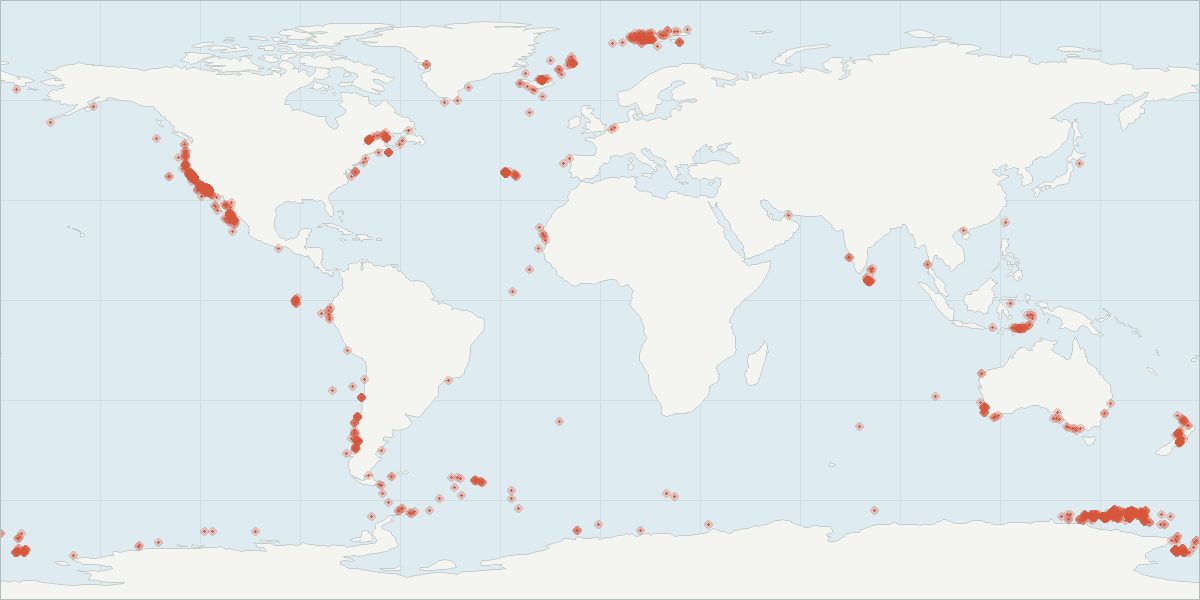
A cosmopolitan species, present in every ocean except the Arctic Ocean, and absent from certain regional seas: the Mediterranean, the Sea of Okhotsk and the Bering Sea. In the North Atlantic, photo-identification brings out two largely separate populations: a north-western population (the Gulf of St Lawrence, the Scotian Shelf, Newfoundland, West Greenland) and a north-eastern population (East Greenland, Iceland, Jan Mayen, Svalbard, west of Ireland in summer; the Azores in spring; off North-West Africa in winter). In the North Pacific it frequents waters north of 35-40°N in summer, and Baja California and California all year round. In the Southern Hemisphere, the Antarctic subspecies occupies the whole Antarctic perimeter in summer, as far as the sea ice, while pygmy blue whales keep north of 52°S, from Madagascar and Kenya to Australia, Tasmania, Indonesia and New Zealand. The Costa Rica Dome and the eastern equatorial Pacific serve as a shared wintering area.
In France the picture is sharply contrasted. The IUCN lists France, the French Southern and Antarctic Lands, New Caledonia and Réunion among the range states and territories; the Office français de la biodiversité reports a presence across all the French maritime seaboards, metropolitan and overseas. In metropolitan France, confirmed sightings concern only the Bay of Biscay, where the species is reported on average once every ten years. The SCANS III survey (summer 2016), which combined an aerial component and a shipboard component across all European Atlantic waters, from the Strait of Gibraltar to 62°N (excluding offshore Portugal and the waters south and west of Ireland), did not gather enough blue whale sightings to produce any abundance estimate at all, whereas it estimated the fin whale at about 18,100 individuals (CV 0.38) from close to a thousand sightings: the contrast between the two species is overwhelming, but no blue whale abundance estimate exists for this area. On 23 July 2022, during the SCANS IV survey, the Observatoire Pelagis photographed a blue whale about 300 km off the Vendée coast; the individual (EB377) was matched to the North Atlantic catalogue and had already been photographed south-west of Ireland in September 2013. The last confirmed French strandings go back to 1923 on the Île de Ré (mandibles kept at the Muséum d'histoire naturelle de La Rochelle) and to 1931 in the Landes. In the Mediterranean, including the Pelagos Sanctuary, the species is absent: the IUCN assessment is explicit on this point, and the GREC describes its presence as “exceptional”. No validated Mediterranean record is documented there.
The blue whale is an extreme krill specialist, taking its prey by “lunge feeding”: it charges mouth open, to as much as 80°, into a swarm, engulfs a volume of water that can reach 220 tonnes, then expels it through its baleen. The manoeuvre is so costly that it only pays above about 100 individuals of krill per m³; in return, a single mouthful can yield up to 240 times the energy spent. It feeds at the surface as well as at depth, down to about 300 m according to the IUCN. Dive cycles typically last 5 to 15 minutes (up to a 30-minute dive-and-surface cycle according to the GREC), with a maximum recorded depth of 315 m (506 m in the pygmy blue whale); the heart rate can fall to 2 beats per minute at depth and rise to 37 at the surface. Cruising speed is slow, 2 to 8 km/h, with bursts of around 27 to 30 km/h.
It is not a very gregarious species: it is met alone, in pairs or in groups of 1 to 3 individuals, gatherings being tied to the abundance of food. It produces some of the most powerful vocalisations in the animal world, infrasound of 8 to 40 Hz depending on the source, reaching 188 dB and potentially carrying over hundreds of kilometres. The structured songs (types A and B in the North-East Pacific) are produced by males only, which suggests a reproductive function; they differ from one population to another, to the point of serving as a marker for delimiting stocks.
Breeding is slow. Sexual maturity comes at around 10 years in females and 12 years in males (a range of 5 to 15 years according to NOAA), the youngest documented first calving being at 11 years. After a gestation of 10 to 12 months, the female gives birth in winter to a single calf of 6 to 7 m and 2 to 3 t. The milk, produced at a rate of about 220 kg a day, allows a mass gain of about 90 kg a day; weaning comes at around 6 to 8 months, at a length of about 16 m. The interval between two calvings is 2 to 3 years. The killer whale is the only documented natural predator, essentially on young animals.
The blue whale is listed as Endangered (EN) at global level on the IUCN Red List, under criterion A1abd, in an assessment by J.G. Cooke dated 16 March 2018 (errata version 2019). The reasoning is explicit: the cause of the decline, commercial whaling, is reversible, understood and has ceased, hence the use of criterion A1. Over the three-generation window (1926-2018, for a generation length of 30.8 years), the global number of mature individuals fell from about 140,000 to a range of 5,000 to 15,000, a reduction of the order of 89 to 97% that straddles the boundary between “Endangered” and “Critically Endangered”. The current trend is nevertheless increasing, which justified keeping the species at EN rather than moving it to CR.
The Antarctic subspecies (B. m. intermedia) is assessed separately as Critically Endangered (CR A1abd): about 3,000 mature individuals in 2018 against 125,000 in 1926, a decline of more than 97%, after a collapse to a few hundred individuals around 1970. The most recent circumpolar estimate validated by the IWC Scientific Committee is 2,280 individuals (CV 0.36) in 1998, with an annual rate of increase of 8.1% (95% CI: 1.6-14.9%). In the central and eastern North Atlantic, the NASS surveys give 222 individuals (95% CI: 115-400) in 1987, 531 (288-759) in 1989, 979 (137-2,542) in 1995 and 855 (358-1,419) in 2001 (uncorrected estimates, Pike et al. 2009), an increase of about 9% a year over 1987-2001; the 2015 NAMMCO estimate, corrected for perception bias, is about 2,490 animals (95% CI: 1,234-5,022). The North-East Pacific holds about 1,647 individuals (CV 0.07) and is thought to have returned close to its pre-whaling level. At European level, the 2023 regional assessment lists the species as Near Threatened (NT), increasing.
The scale of the historical take explains everything: about 350,000 Antarctic blue whales killed, with a peak of nearly 29,400 individuals in the 1930/31 season alone, 15,000 to 20,000 in the North Atlantic and about 9,000 recorded in the North Pacific. Protection by the International Whaling Commission has been in force since 1966 (1963/64, then 1965/66 in the Antarctic), but Soviet fleets continued illegally until 1972 (760 individuals in the North Pacific alone); the last recorded deliberate catches date from 1978, off Spain. The species is listed in Appendix I of CITES and Appendix I of the CMS, and it is fully protected in France, where capture, intentional disturbance and habitat destruction are prohibited and carry criminal penalties.
Current threats are dominated by ship strikes: off southern Sri Lanka, where a calving area coincides with one of the busiest shipping lanes in the world; on the North American west coast (nine deaths attributed to collisions between 2007 and 2013; 8 of the 21 carcasses found in California between 1988 and 2007); and in the Gulf of St Lawrence, where 16% of the individuals in the photo catalogue carry collision scars (up to 25% according to NAMMCO). Bycatch in fishing gear remains rare but is not limited to two cases: an entangled individual was reported in the Gulf of St Lawrence in 2002, and United States waters recorded their first confirmed case in 2015, followed by further cases in 2016 and 2017; about 12% of the blue whales observed in the North-West Atlantic carry marks attributable to fishing gear, although lethal entanglements remain poorly documented. To these are added noise pollution (shipping traffic, seismic surveys, active sonar), chemical contamination, with earplug analyses revealing pesticides, flame retardants, mercury and PCBs passed from mother to calf, and above all climate change: the IUCN explicitly lists “habitat shifting and alteration” among future threats, Antarctic krill being expected to decline under the effect of the warming and acidification of the oceans.
Encountering a blue whale remains an event, even at the best sites. The watching areas documented by the IUCN and by research bodies are the Gulf of St Lawrence (Quebec, summer and autumn), Icelandic waters and the Denmark Strait, the Azores in spring during the northward migration, California and Baja California as well as the Gulf of California in winter, the south coast of Sri Lanka, Chiloé Island and Chañaral in Chile in the austral summer, and south-western Australia. The signs to look for are the vertical blow of 6 to 12 m, visible from a great distance, then the long roll of the mottled back before the late appearance of the small fin.
In metropolitan French waters no targeted watching trip is possible: the species is reported only about once a decade in the Bay of Biscay, in waters far offshore, and encounters happen by chance during scientific surveys or ocean crossings. Any large whale seen near the French coast is, statistically, a fin whale. In the Mediterranean the species is absent: the large rorquals of the Pelagos Sanctuary are fin whales.
On the ethical and regulatory side, the species is protected in France: intentional disturbance is a criminal offence. Never cut across the animal's path or chase it, therefore; keep back and parallel to its course, cut or reduce the engines, limit the length of the encounter and do not approach a mother and calf. Any sighting or stranding in metropolitan France should be reported to the Observatoire Pelagis (La Rochelle), which coordinates the Réseau national échouages and runs a line open 7 days a week. Photographs, even taken “on the fly”, have real scientific value: that is how the animal seen in 2022 in the Bay of Biscay could be identified as an individual already catalogued in Ireland nine years earlier.
The blue whale, with no known rival, living or fossil. Mature Antarctic females commonly exceed 25 m, the confirmed maximum is around 30 m and the longest individual recorded measured 33.6 m. Documented masses range from about 72 t to 135 t on average, with mentions of up to 190 t for the largest Antarctic animals. For comparison, the heart alone weighs about 180 kg.
For its 2018 assessment the IUCN uses a range of 5,000 to 15,000 mature individuals, that is 10,000 to 25,000 animals in total: about 1,000-3,000 in the North Atlantic, 3,000-5,000 in the North Pacific, 1,000-3,000 in the South-East Pacific, 2,000-5,000 pygmy blue whales and 5,000-8,000 in the Antarctic. Before industrial whaling, the global number of mature individuals was at least 140,000. The current trend is upward.
Not in the Mediterranean: the species is absent from it, and the large rorquals of the Pelagos Sanctuary are fin whales. In the Bay of Biscay, the blue whale is reported on average once every ten years, far offshore. The 2016 SCANS III survey did not gather enough blue whale sightings to allow any abundance estimate at all for the Channel, Biscay and Iberian Atlantic area, whereas it estimated the fin whale there at about 18,100 individuals. The last confirmed French sighting dates from 23 July 2022, about 300 km off the Vendée coast, during the SCANS IV survey. The last confirmed strandings go back to 1923 (Île de Ré) and 1931 (Landes).
Almost exclusively krill, with different species depending on the ocean (Euphausia superba in the Antarctic, Meganyctiphanes norvegica in the North Atlantic…). Estimates of daily intake differ between sources: about 1.1 t/day for an average individual, up to 3.6 t/day (≈ 40 million krill) according to NAMMCO, and up to about 5.4 t/day according to NOAA. It feeds by “lunge feeding”, engulfing up to 220 tonnes of water at a time.
Because criterion A1 of the IUCN measures past reduction over three generations, here 1926-2018 (the generation being estimated at 30.8 years). The fall from 140,000 to 5,000-15,000 mature individuals represents a reduction of 89 to 97%, at the edge of the “Critically Endangered” threshold. The upward trend observed in the Antarctic and the North Atlantic justified keeping “Endangered” rather than “Critically Endangered”. At European level, the 2023 regional assessment already lists it as Near Threatened, increasing.
The Antarctic blue whale (Balaenoptera musculus intermedia), the only subspecies to be the subject of a separate IUCN assessment, listed as Critically Endangered (CR A1abd). About 350,000 individuals were killed in the Southern Ocean, with a peak of nearly 29,400 in the 1930/31 season alone. Numbers fell from about 125,000 mature individuals in 1926 to a few hundred around 1970, then stood at about 3,000 in 2018, a decline of more than 97%, but with an annual growth rate estimated at 8.1% since protection.
Three criteria. The blow: tall, narrow and columnar, 6 to 12 m in the blue whale. The dorsal fin: tiny and set far back, it appears only several seconds after the blow, whereas that of the fin whale is large, falcate and visible almost at once. The head and the body pattern: a broad U-shaped rostrum and mottled blue-grey body in the blue whale, a pointed V-shaped head and asymmetry of coloration (the right lower jaw white) in the fin whale. The blue whale also raises its tail fluke fairly often when diving.
Profile compiled from authoritative scientific sources (IUCN, NOAA Fisheries, specialist literature) and reviewed for factual accuracy.
According to the open data of the GBIF, 2,060 georeferenced sightings of Balaenoptera musculus are recorded in our photographic index.
| Country | Notes |
|---|---|
| United States of America | 751 |
| Antarctica | 503 |
| Mexico | 154 |
| Sri Lanka | 123 |
| Svalbard and Jan Mayen | 114 |
| Canada | 96 |
| Portugal | 63 |
| Chile | 54 |
| New Zealand | 50 |
| Iceland | 45 |

Monthly distribution of 2,189 dated sightings (all years combined): the maximum is reached in janvier.
| Month | Notes |
|---|---|
| janvier | 257 |
| February | 244 |
| mars | 120 |
| avril | 134 |
| mai | 199 |
| juin | 238 |
| juillet | 217 |
| August | 243 |
| septembre | 120 |
| octobre | 85 |
| novembre | 121 |
| December | 211 |
These figures reflect survey effort (more boaters and more surveys in summer) as much as the actual presence of the species: to be interpreted with caution.


Photographs from GBIF under a Creative Commons licence. The author and the licence of each photograph are given; please respect them if you reuse them.
Automatic selection of the most cited works mentioning the species (source: Crossref).