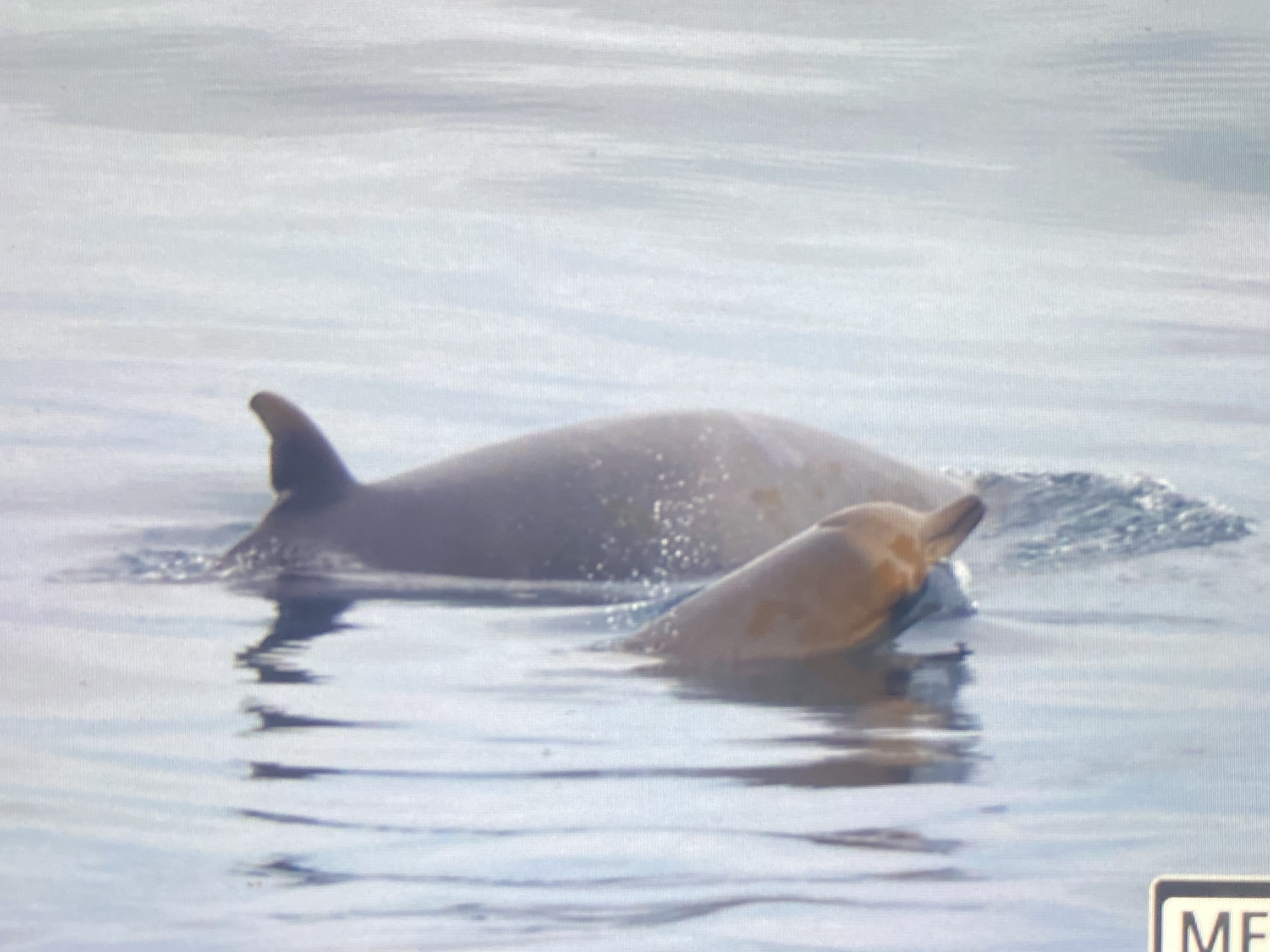
| Scientific name | Mesoplodon layardii (Gray, 1865) |
|---|---|
| Other names | Strap-toothed whale; strap-toothed beaked whale; Layard’s beaked whale. In French: baleine à bec de Layard, mésoplodon de Layard, baleine à bec à dents en sangle. |
| Size | 5 to 6.2 m in adults; females are slightly larger than males. Newborns about 2.2 to 2.8 m depending on the source. |
| Weight | About 1,000 to 1,300 kg in adults according to the most commonly cited values; some compilations give a wider range, of the order of 0.9 to 2.7 t. |
| Longevity | Unknown for the species; other mesoplodont beaked whales reach 27 to 48 years. |
| Diet | Specialist of deep-water oceanic squid, supplemented by a few mesopelagic fish. |
| IUCN status | Least Concern (LC), assessment of 2020, published in the December 2020 update of the Red List. The species was previously listed as “Data Deficient” (DD): the reclassification reflects a revision of the criteria governing use of the DD category rather than a demonstrated improvement in its situation. No subpopulation is assessed separately. |
The strap-toothed whale is the largest member of the genus Mesoplodon: close to 6 m for more than a tonne. It owes its name to the two strap-shaped teeth grown by the adult male, which curl over the rostrum and all but prevent it from opening its mouth. A discreet deep-diving cetacean of the cold waters of the southern hemisphere, it is known only from a small number of sightings at sea and from strandings, and its global population remains unknown.
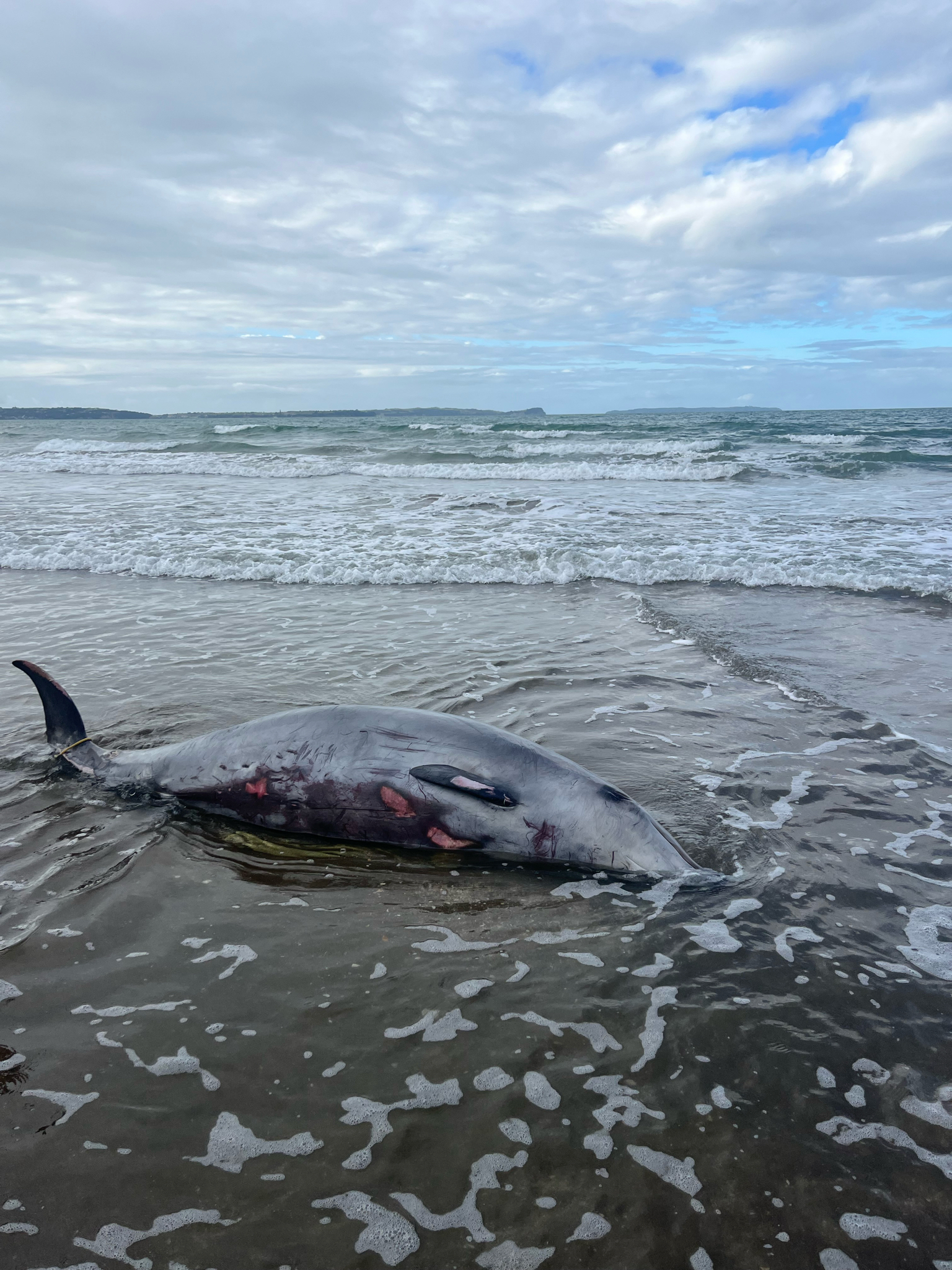
The strap-toothed whale has the streamlined outline characteristic of the ziphiids: a spindle-shaped body, short rounded flippers, a small falcate dorsal fin set well back, and a relatively small head continued by a long, fine rostrum, one of the most elongated in the family. The melon is rounded to slightly domed and joins the beak in a gentle slope. Adults measure 5 to 6.2 m, which makes the species the largest of the sixteen living species of the genus Mesoplodon, for a mass generally estimated at between 1,000 and 1,300 kg, some sources giving appreciably higher values. Females exceed males very slightly in length.
Coloration is the best criterion at a distance, because it is sharply contrasted in the adult. The body, slate grey to bluish black, carries a broad pale, almost white area covering the back from the region of the dorsal fin forward, while the shoulders, the flippers, the belly and the tail stock remain dark. The beak is white, contrasting with a black facial mask that takes in the eye and the forehead, and a pale collar separates the head from the rest of the body. The tip of the dorsal fin and the tips of the tail flukes are often pale, and a white patch surrounds the genital slit. Juveniles, for their part, are a uniform grey and far duller.
The most spectacular feature appears only in the adult male: a single pair of mandibular teeth, flattened into blades and set backwards at an angle of about 45°, grows to 30 to 34 cm and curls over the upper jaw, the tips sometimes crossing above the rostrum. The gape is thereby reduced to a few centimetres: two stranded males could open their jaws only 3.2 and 4 cm, against 6.5 cm in females and juveniles measured under the same conditions. Females and young animals, lacking visible teeth and sharply contrasted coloration, are by contrast very hard to tell apart at sea from the other southern mesoplodont beaked whales; only examination of a stranded animal then allows reliable identification. Beware too of neighbouring vernacular names: the strap-toothed whale should not be confused with Gray’s beaked whale (Mesoplodon grayi), another species of the southern hemisphere.
Mesoplodon layardii was described by the British naturalist John Edward Gray in 1865, from drawings of a skull sent to him by Edgar Leopold Layard, curator of the South African Museum in Cape Town: the species bears his name, both in its scientific epithet and in its vernacular names. It belongs to the order of cetaceans, suborder of odontocetes (toothed whales), and to the beaked whale family, today most often designated by the name Ziphiidae, the name Hyperoodontidae being used as an equivalent in some classifications. Within the genus Mesoplodon, by far the richest in species of all cetacean genera with sixteen living species recognised by the Committee on Taxonomy of the Society for Marine Mammalogy, the strap-toothed whale holds the position of largest species. In France, the Inventaire national du patrimoine naturel lists it under the names mésoplodon de Layard and baleine à bec de Layard.
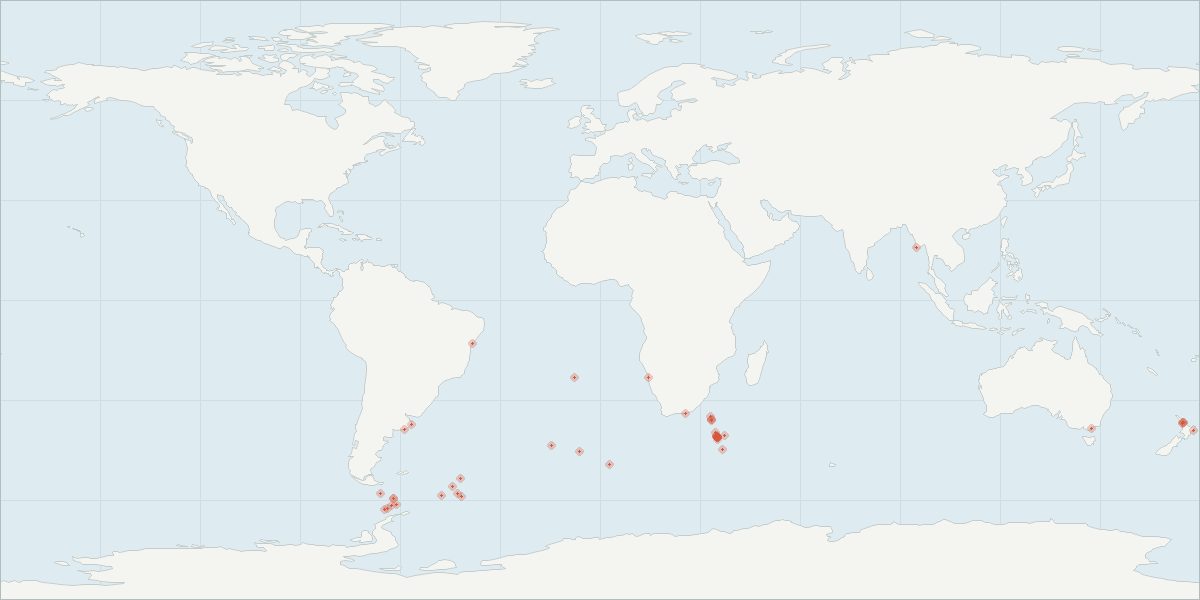
The species is tied to the cold temperate and subantarctic waters of the southern hemisphere, where its distribution is in all likelihood circumpolar, running roughly between 30° south and the Antarctic Convergence. The data come from all three oceans: New Zealand, southern Australia and Tasmania, where strandings are most numerous, but also South Africa, Namibia, the Falkland Islands, Tierra del Fuego, Argentina, Chile, Uruguay and southern Brazil. It is an offshore animal, frequenting deep oceanic waters and only rarely approaching the coast.
A few records fall well outside this range. The most frequent Brazilian strandings lie around 31-32° S, but an emaciated carcass was found at 13° S off north-eastern Brazil in 2002; above all, an adult male stranded alive in Myanmar in 2011, at 16° north, more than 5,000 km north of the range admitted until then. The marked seasonality of strandings, concentrated from December to March, suggests seasonal movements, perhaps a summer approach to coastal waters linked to calving.
In France, the strap-toothed whale occurs only in the French Southern and Antarctic Lands, which are among the territories within its range. Sightings at sea are recorded in the waters of the Kerguelen archipelago, in particular in 1996 and 1999, and museum specimens also come from there; subfossil skull remains brought up from the floor of the Kerguelen Plateau complete the picture. The species is, on the other hand, wholly absent from metropolitan French waters: neither the Mediterranean and the Pelagos Sanctuary, nor the Bay of Biscay, nor the English Channel holds a single record, which is consistent with a strictly austral distribution.
The strap-toothed whale is a highly specialised squid eater. Examination of the stomach contents of animals stranded in South Africa yielded twenty-four species of oceanic squid accounting for 94.8% of the prey counted, dominated by the genus Histioteuthis and by Taonius pavo, with also Vampyroteuthis infernalis, Chiroteuthis, Gonatus antarcticus, Teuthowenia pellucida and Mastigoteuthis; a few deep-water fish complete the diet. Prey are taken by suction rather than seized, which explains why males, despite mouths all but locked shut by their teeth, exploit the same prey and the same prey sizes as females and juveniles: the long teeth could even act as guide rails directing the sucked-in prey towards the throat.
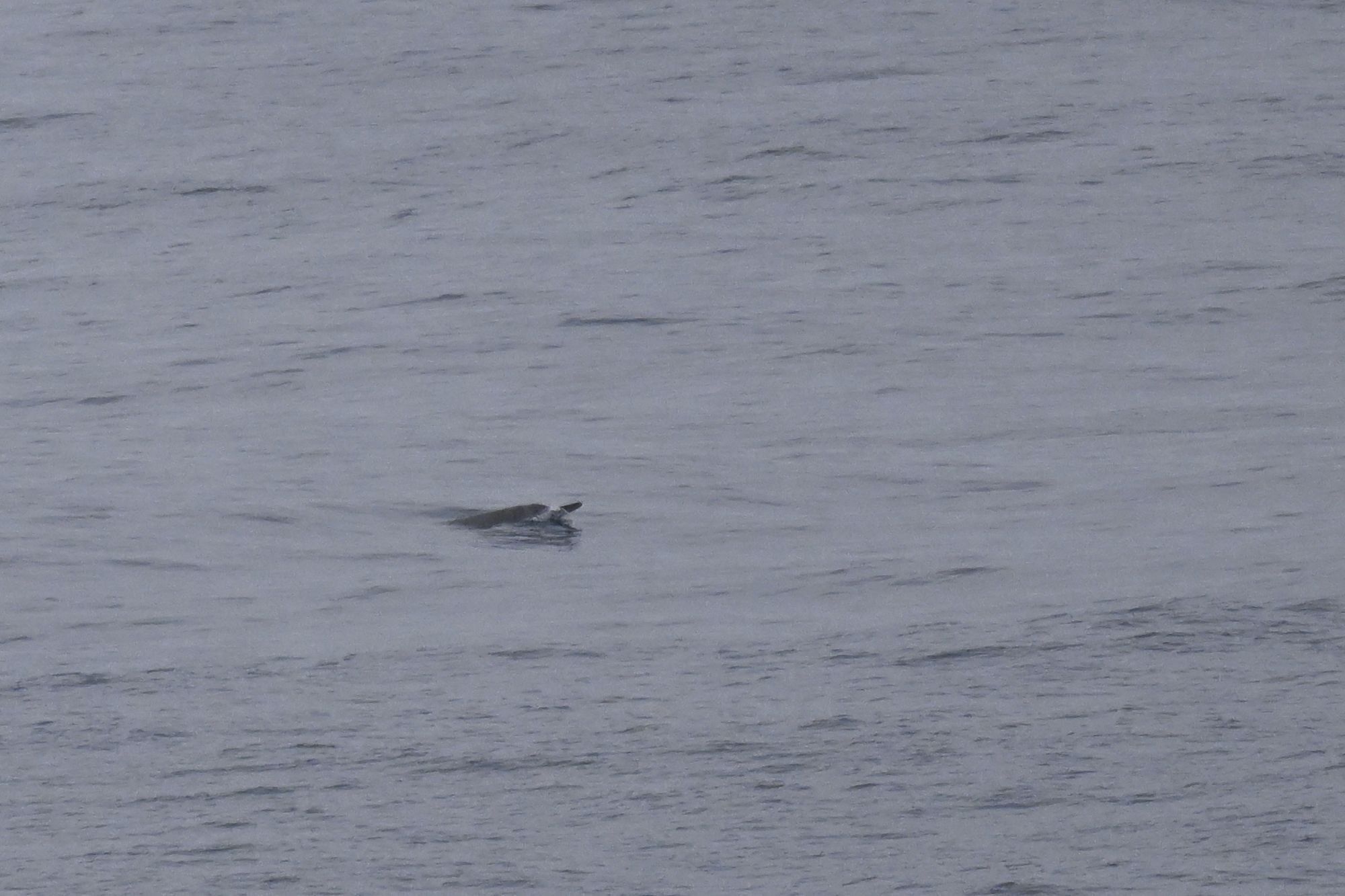
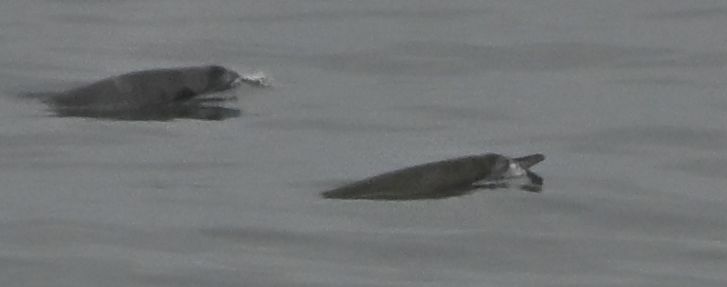
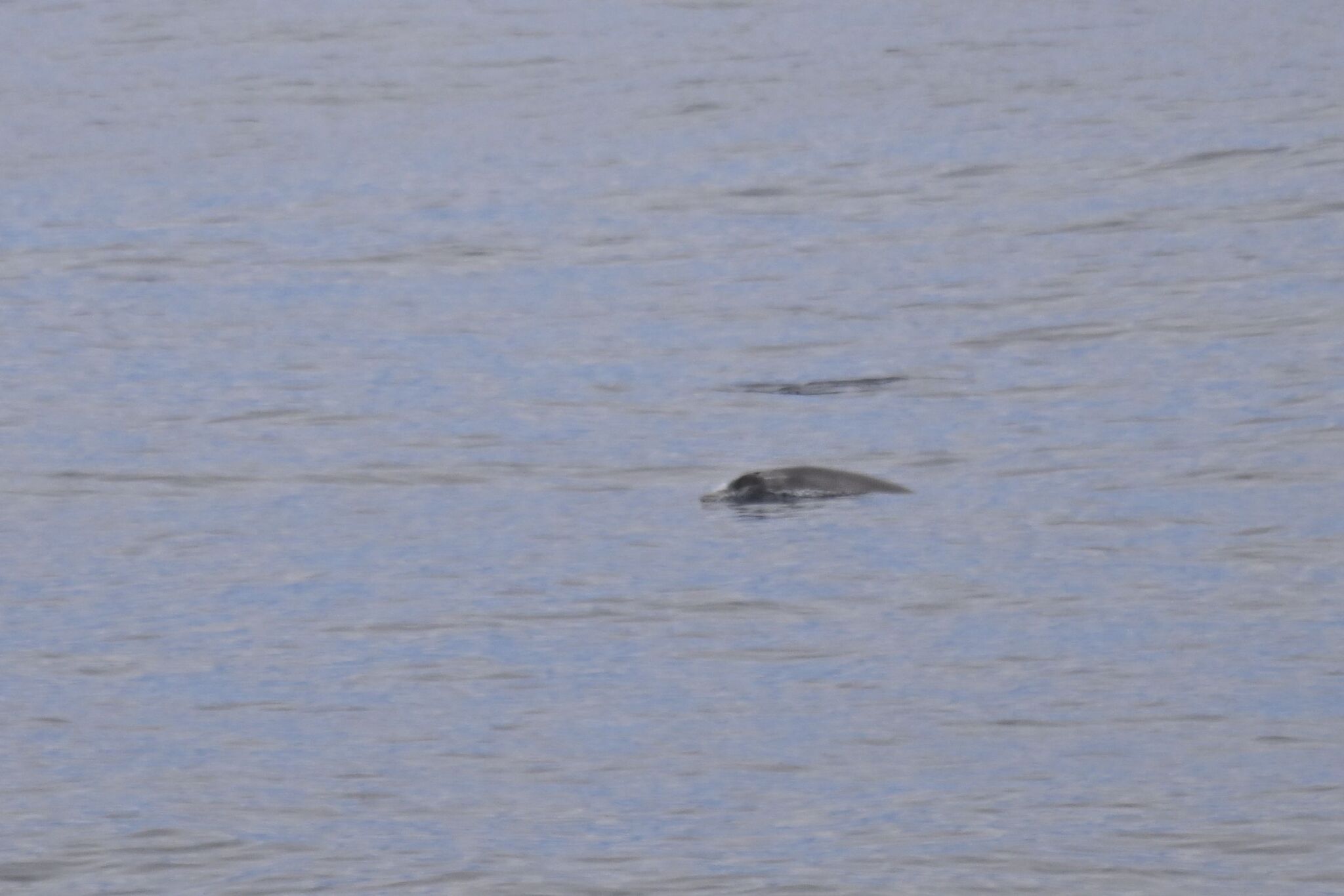
Like the other ziphiids, the species is a deep diver: foraging takes place for the most part below 500 m, and the species is associated with waters whose depth can reach 2,000 m. The dive sequences observed from the surface typically last 10 to 15 minutes, the animal reappearing 150 to 250 m further on. Surfacing is discreet, the beak emerging first at a pronounced angle, never showing the tail fluke, which makes the species hard to spot and harder still to follow.
Strap-toothed whales generally travel in small groups, of two to about ten individuals. Knowledge of reproduction remains fragmentary: mating appears to take place in the austral summer, with births spread from summer to autumn, after a gestation estimated at 9 to 12 months; the female gives birth to a single calf, about 2.2 to 2.8 m long depending on the source, immediately able to follow its mother. The long teeth of males probably serve as a visual signal and as a weapon in interactions between males. Longevity specific to the species is not documented; in other mesoplodont beaked whales it ranges from 27 to 48 years. The killer whale (Orcinus orca) is the only natural predator identified.
The strap-toothed whale has been classed as “Least Concern” (LC) on the IUCN Red List since the assessment of 2020, which moved it out of the “Data Deficient” category where it previously sat. This change affects most of the beaked whales reassessed on the same date and follows from a revision of the rules governing use of the DD category rather than from a demonstrated recovery in numbers. No global population estimate exists, but the species is regarded as one of the most frequently encountered and stranded beaked whales of the Southern Ocean, and nothing indicates a marked decline.
It has never been the target of commercial whaling. The pressures identified are those bearing on the ziphiids as a whole: plastic ingestion, considered the most worrying human threat to this species; underwater noise, in particular active military sonar and seismic surveys, to which beaked whales are reputed to be highly sensitive and which are associated with atypical strandings and with decompression-sickness-type lesions; bycatch in driftnets; and finally the effects of climate change, potentially significant for a species restricted to cold waters, but of which neither the form nor the scale is documented. The species is listed in Appendix II of CITES, which regulates international trade in its specimens.
Seeing a strap-toothed whale at sea is a matter of luck: the species lives offshore, in little-frequented areas of the Southern Ocean, dives for long periods and avoids boats, sinking out of sight rather than tolerating an approach. Most of what is known about it comes from stranded animals, chiefly in New Zealand, Tasmania, southern Australia and South Africa, with a clear peak of strandings from December to March. The rare encounters at sea are the work of research vessels, longliners or logistics ships operating in subantarctic waters, including around Kerguelen.
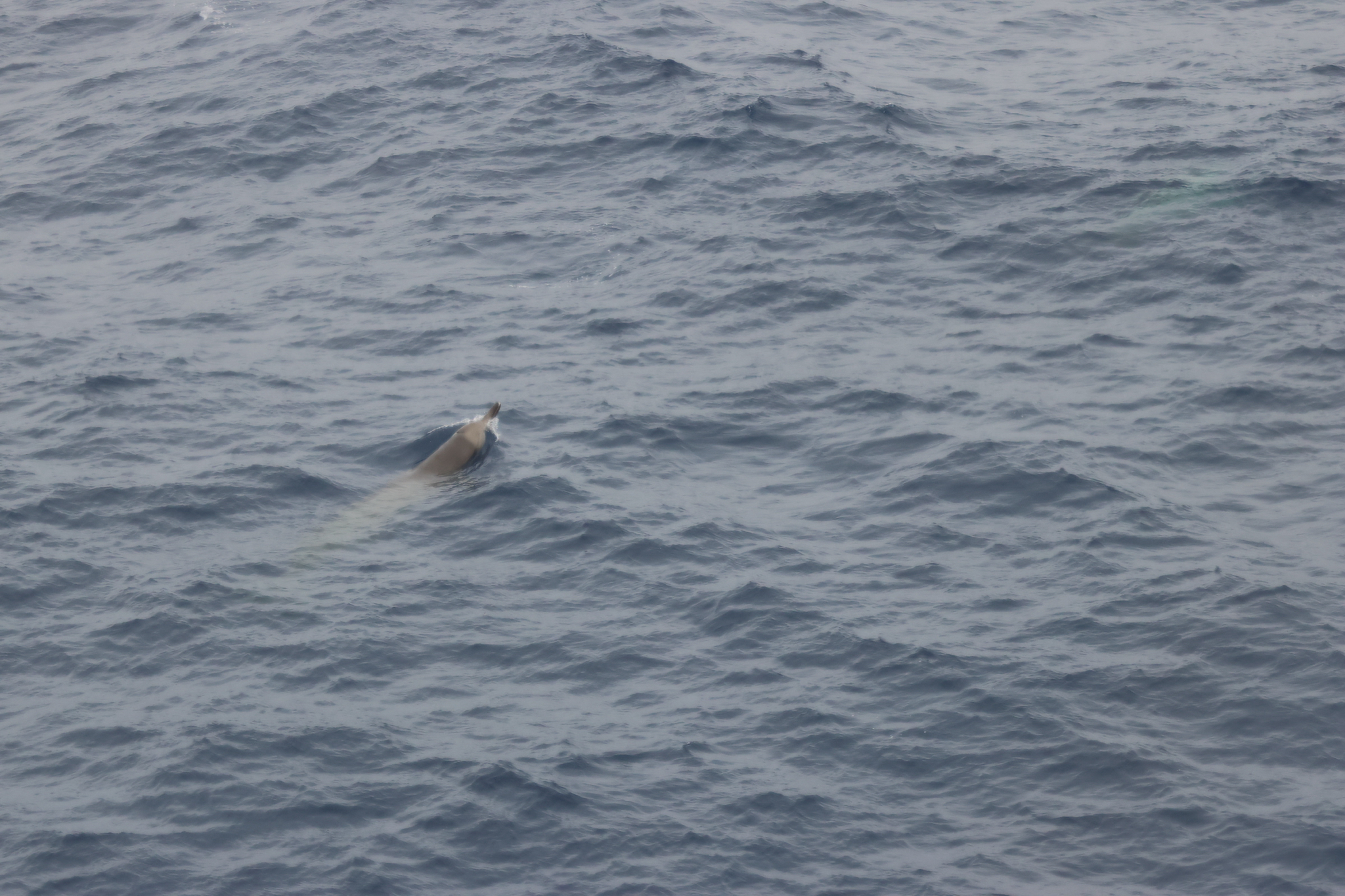
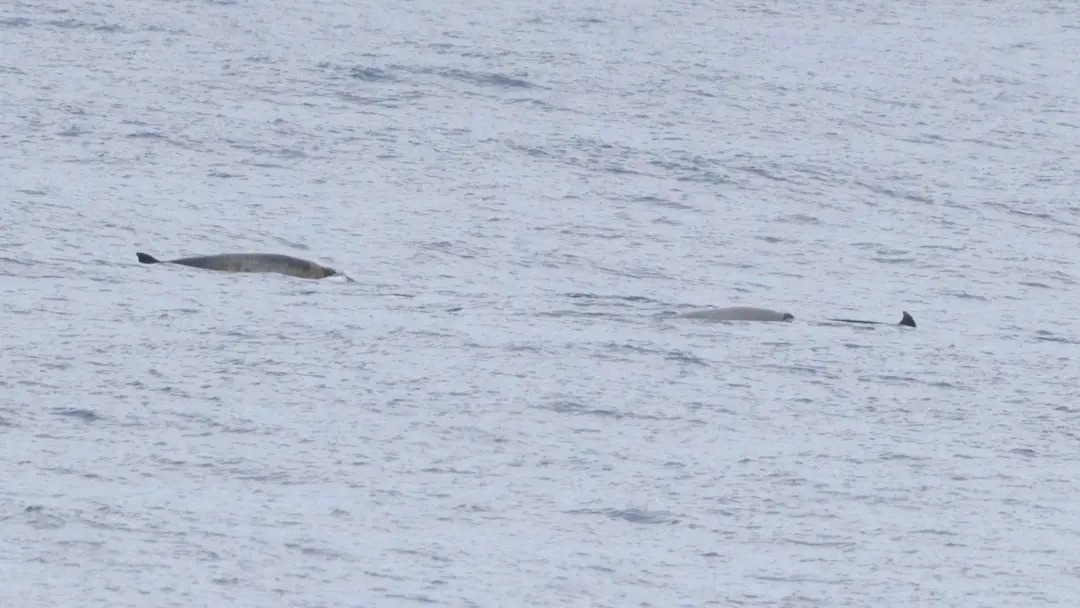
To maximise the chances, look offshore beyond the shelves, in a very calm sea without swell, and watch for a brief surfacing: a pale beak piercing the surface at a marked angle, followed by a dark back and a small dorsal fin, with no spectacular blow and no tail showing. The pale dorsal area and, in the male, the outline of the beak girdled by the teeth are the surest clues.
Approach ethics matter particularly here. Ziphiids interrupt their feeding and their deep dives in the presence of noise or of a vessel; one should never cut across the animal’s path, should hold a constant distance and speed, never pursue a group and limit watching time. Any photograph of the head and the flank has real scientific value given how scarce the data are. On finding a stranded animal, alive or dead, the local authorities and the competent stranding network should be alerted without delay, without handling the animal or taking any samples.
The adult male grows two flat teeth of 30 to 34 cm which rise backwards from the lower jaw, curl over the rostrum and can cross above it. The gape then falls to a few centimetres: 3.2 and 4 cm measured on two stranded males, against 6.5 cm in females and juveniles. This does not prevent it from feeding, because it sucks its prey in instead of seizing them, and takes the same squid, of the same sizes, as the females.
From 5 to 6.2 m in the adult, which makes it the largest of the sixteen living species of the genus Mesoplodon, females being very slightly larger than males. Mass is most often estimated at between 1,000 and 1,300 kg, some compilations putting forward higher values. Newborns measure about 2.2 to 2.8 m depending on the source.
It has been classed as “Least Concern” (LC) by the IUCN since the assessment of 2020, after long being listed as “Data Deficient”. This reclassification reflects above all a change of doctrine on the use of the DD category. No global population figure exists. The species is listed in Appendix II of CITES.
Yes, but only in the French Southern and Antarctic Lands, which form part of its range: sightings are recorded in the waters of the Kerguelen archipelago, in particular in 1996 and 1999, and subfossil remains come from the Kerguelen Plateau. The species is absent from the Mediterranean, the Bay of Biscay and the English Channel: its distribution is strictly austral.
It feeds almost exclusively on oceanic squid: twenty-four species accounted for 94.8% of the prey counted in the stomachs of animals stranded in South Africa, with a clear dominance of Histioteuthis and of Taonius pavo. Foraging takes place below 500 m depth, in waters that can reach 2,000 m, with dives of 10 to 15 minutes.
In the adult male, the strap-shaped teeth curled over the rostrum are a criterion without equivalent, completed by the white beak, the black facial mask and the extensive pale dorsal area. Females and juveniles, grey and without visible teeth, are by contrast very hard to tell apart at sea from the other southern mesoplodont beaked whales. Nor should it be confused with Gray’s beaked whale (Mesoplodon grayi), whose French name is close.
Profile compiled from authoritative scientific sources (IUCN, NOAA Fisheries, specialist literature) and reviewed for factual accuracy.
According to the open data of the GBIF, 48 georeferenced sightings of Mesoplodon layardii are recorded in our photographic index.
| Country | Notes |
|---|---|
| New Zealand | 9 |
| Argentina | 8 |
| Antarctica | 5 |
| South Africa | 2 |
| Australia | 2 |
| Brazil | 2 |
| Myanmar | 2 |
| South Georgia and the South Sandwich Islands | 1 |
| United Kingdom of Great Britain and Northern Ireland | 1 |
| Uruguay | 1 |

Monthly distribution of 56 dated sightings (all years combined): the maximum is reached in janvier.
| Month | Notes |
|---|---|
| janvier | 26 |
| February | 4 |
| mars | 4 |
| avril | 10 |
| mai | 1 |
| juin | 0 |
| juillet | 1 |
| August | 0 |
| septembre | 2 |
| octobre | 0 |
| novembre | 1 |
| December | 7 |
These figures reflect survey effort (more boaters and more surveys in summer) as much as the actual presence of the species: to be interpreted with caution.


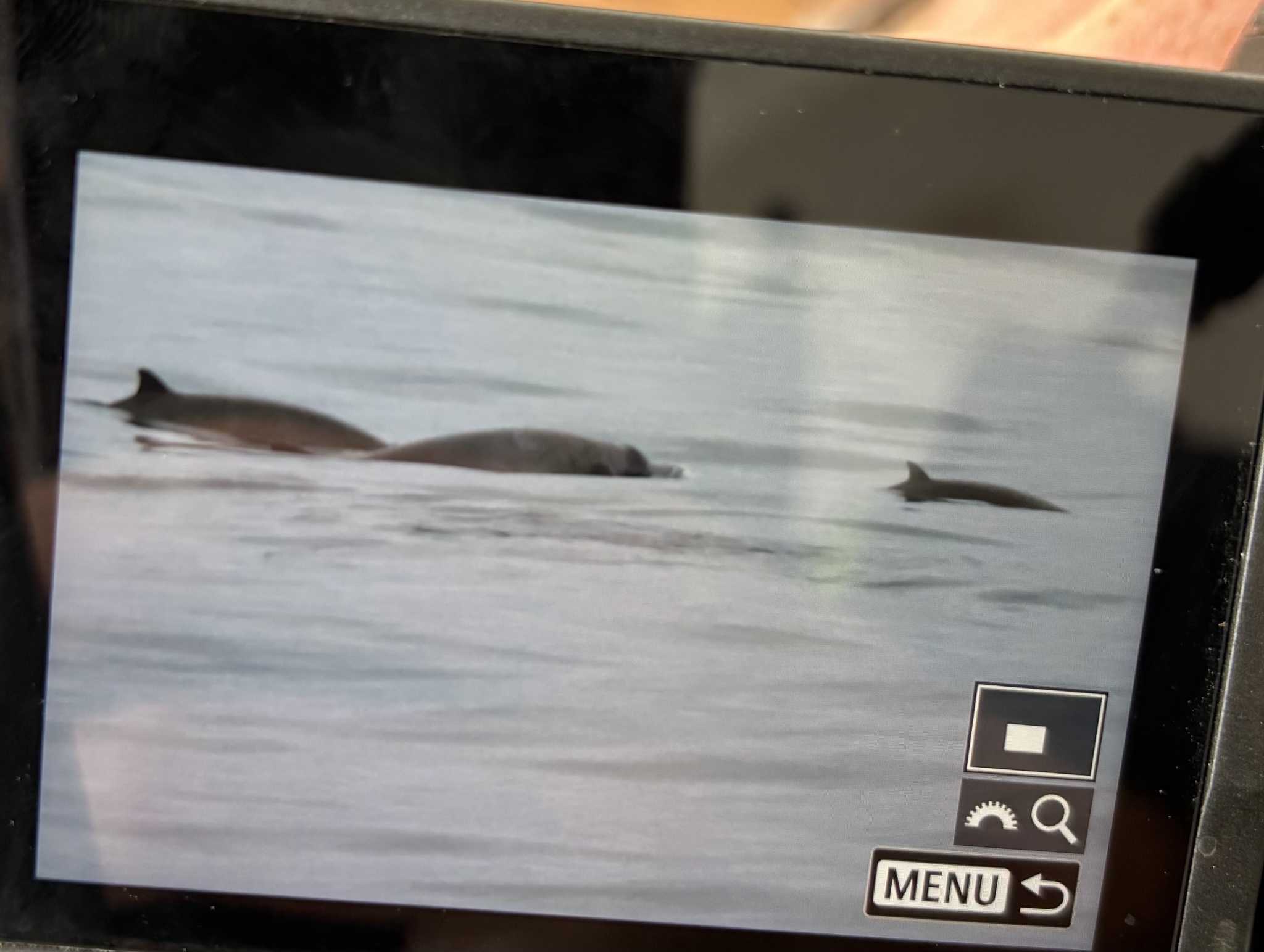
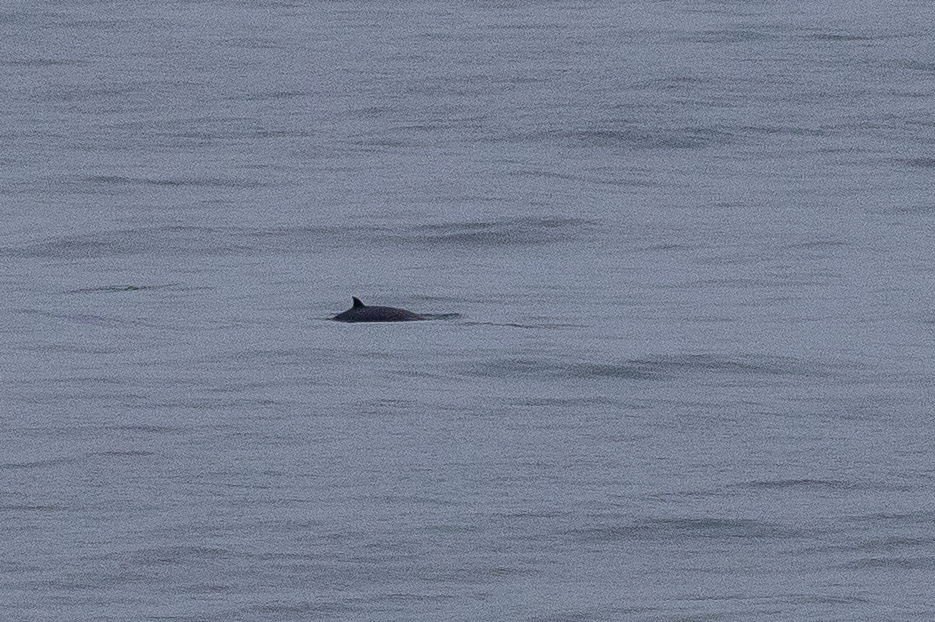
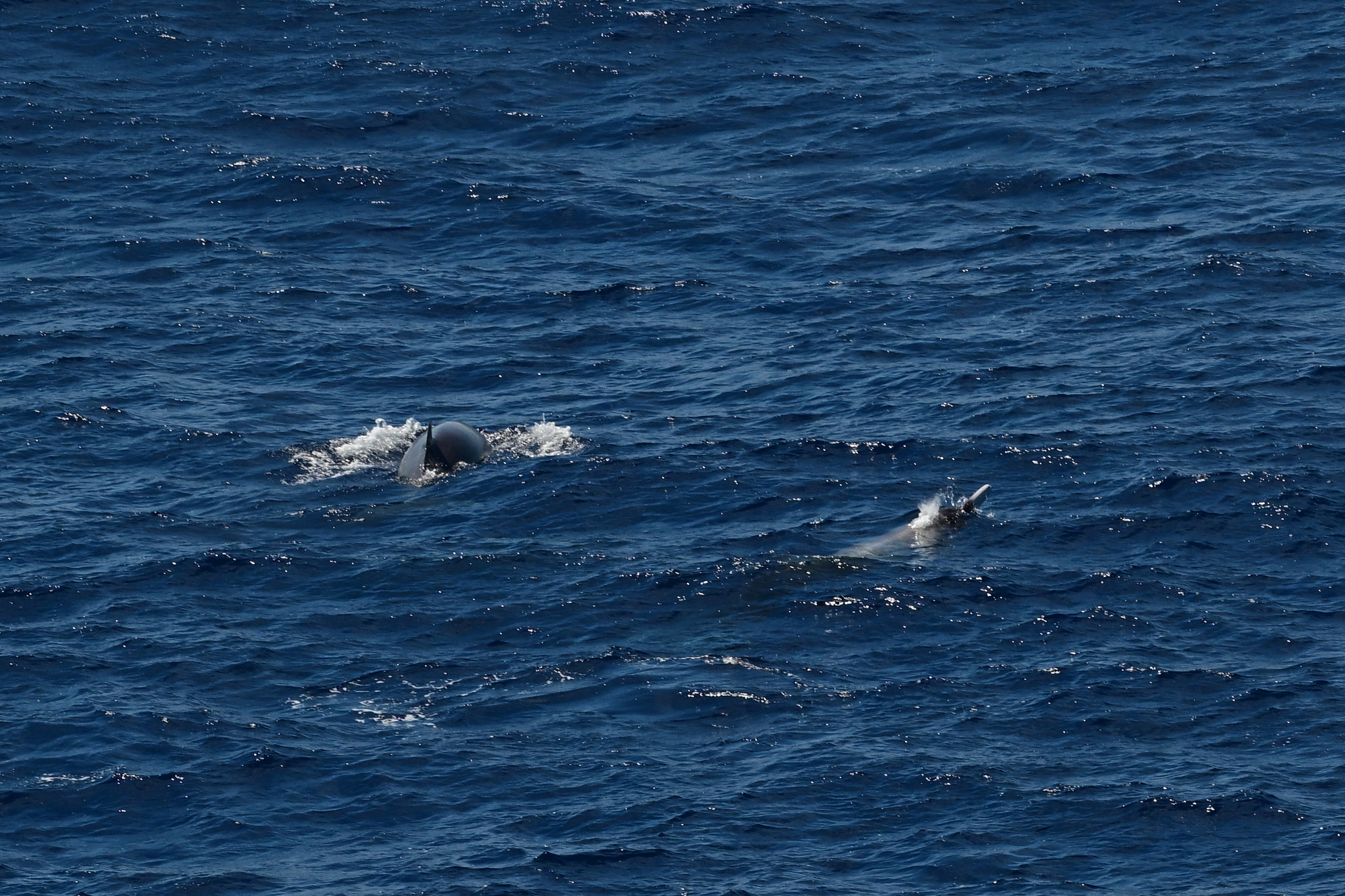
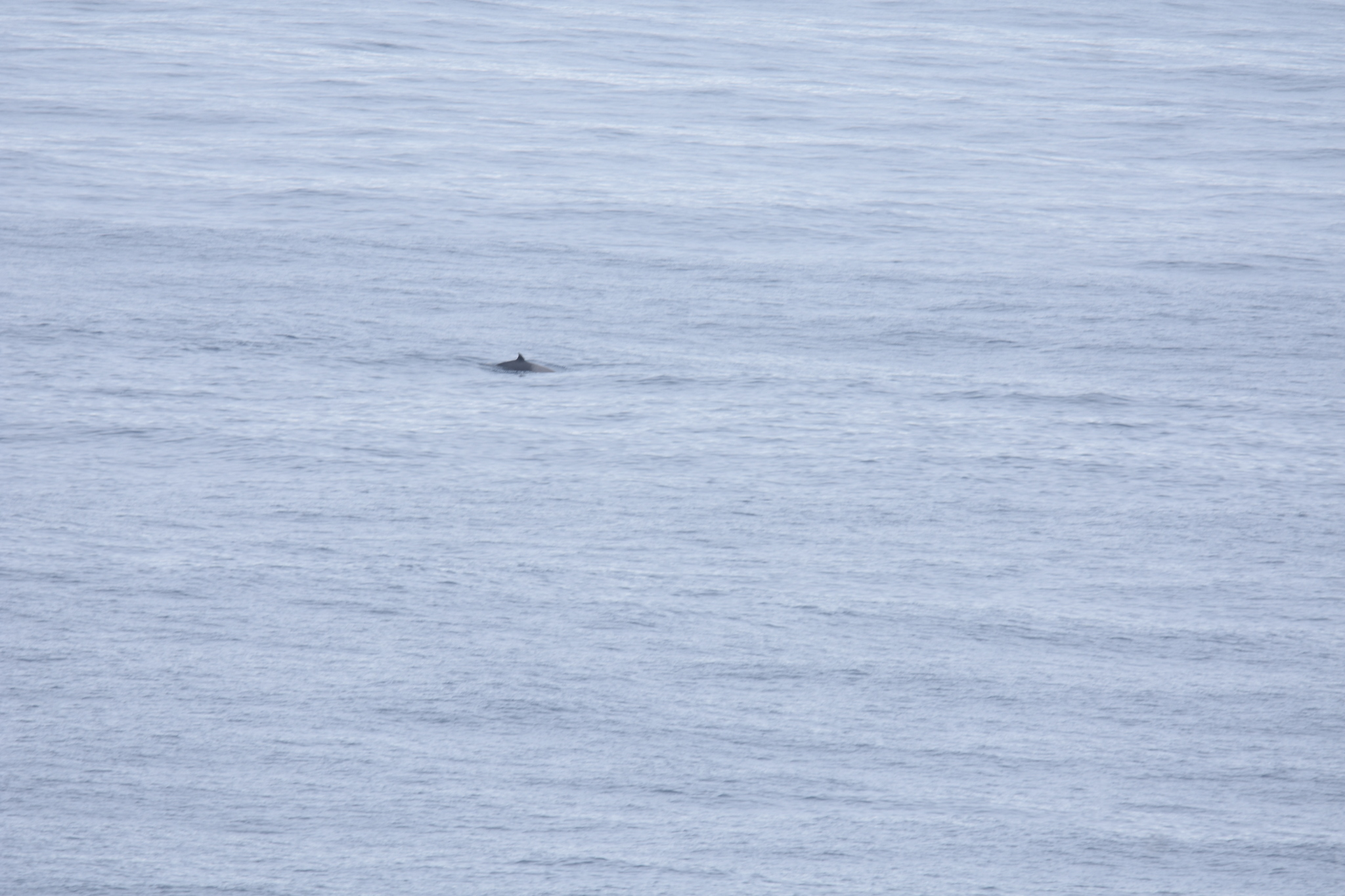
Photographs from GBIF under a Creative Commons licence. The author and the licence of each photograph are given; please respect them if you reuse them.
Automatic selection of the most cited works mentioning the species (source: Crossref).