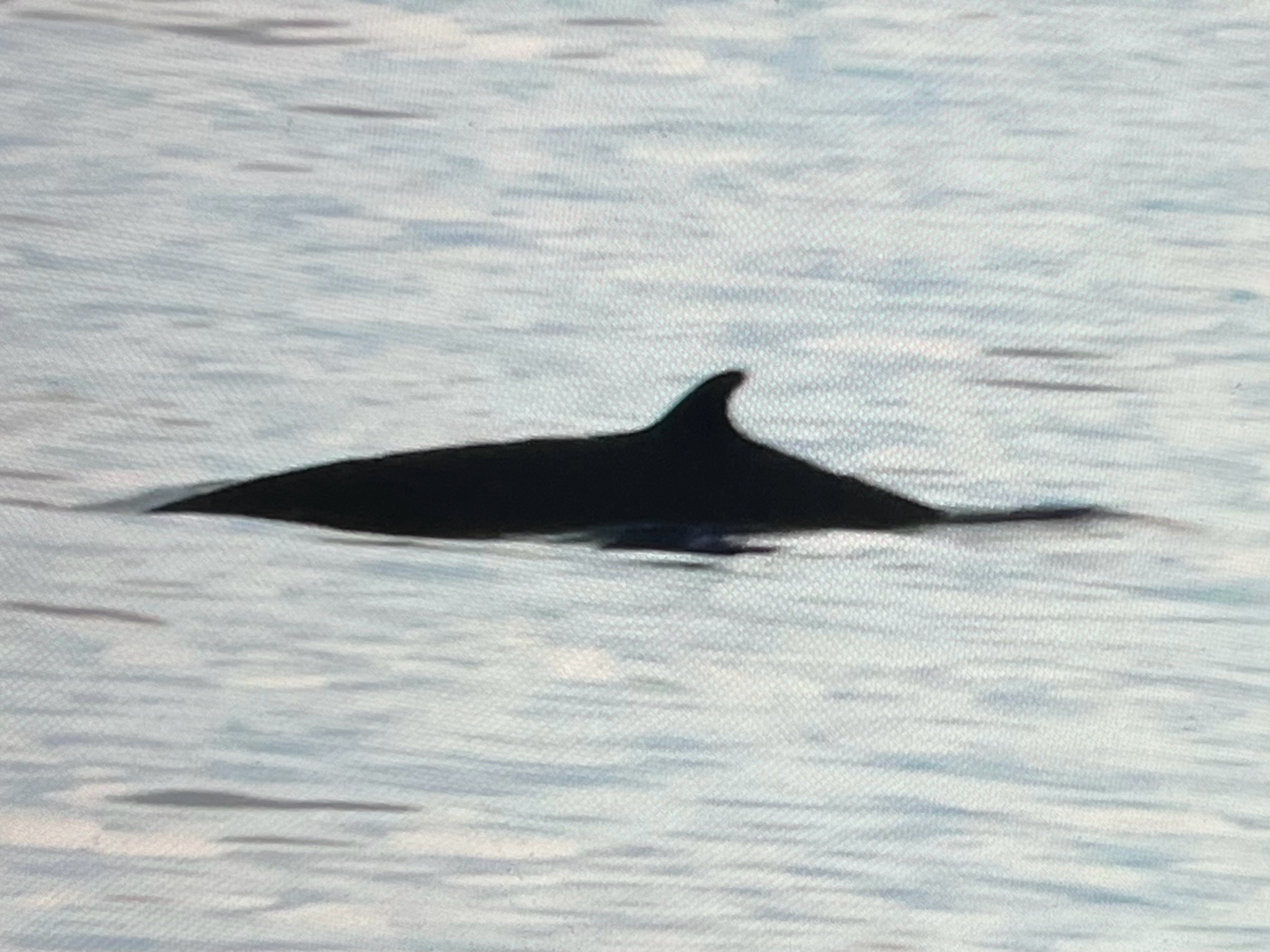
Deraniyagala's beaked whale (Mesoplodon hotaula)

Key facts
Scientific name Mesoplodon hotaula Deraniyagala, 1963
Other names Mésoplodon de Deraniyagala (French); Deraniyagala’s beaked whale (English); the species name “hotaula” comes from Sinhala and means “pointed beak”.
Size About 4 to 5 m; the holotype is a 4.5 m female and the maximum documented length is around 4.8 m. No sexual dimorphism in size has been demonstrated.
Weight Not documented: no mass has been recorded on the few known specimens.
Longevity Unknown: no individual has been the subject of a published age estimate.
Diet Never documented directly. Like other beaked whales, the species very probably feeds on squid and mesopelagic fish caught by suction on deep dives.
IUCN status Data Deficient (DD). Assessment by R. L. Pitman and R. L. Brownell Jr. published in December 2020 (Red List edition 2020-3), unchanged from the previous assessment. Population trend unknown; no subpopulation is distinguished. The species is listed in Appendix II of CITES.

In brief

Deraniyagala’s beaked whale is among the least known large mammals on the planet. Described in 1963 from a single animal stranded in Sri Lanka, it was struck off the lists two years later, before being reinstated in 2014 thanks to DNA. This tropical mesoplodont of 4 to 5 m occurs in the deep waters of the Indo-Pacific around oceanic islands; confident identification of living animals dates only from the 2020s, and the IUCN still classes it as “Data Deficient”.

Identification

Like all mesoplodonts, Deraniyagala’s beaked whale has a fusiform body, a small head extended by a well marked beak, a reduced and slightly falcate dorsal fin set about two thirds of the way back along the body, and short flippers that fold into lateral depressions during dives. Measured animals reach 4 to 5 m, the maximum documented length being around 4.8 m. The coloration is contrasted: dark brown to blue-black back, a distinctly paler underside, pale mottled cheeks, a whitish lower lip, a dark eye patch and a dark band at the base of the flippers. The throat bears a shallow V-shaped groove and the mouthline is arched. Young animals show dorsal stripes that fade with age.

The dentition sums up the social life of the group: a single pair of teeth, set in the lower jaw, erupts only in adult males, at the apex of the arch of the mouth; it remains unerupted in females and immature animals. Several stranded males carried chipped teeth, an indication of fighting between males. Individuals photographed at sea are also covered in the circular bites of cookiecutter sharks (Isistius spp.), very common in deep-diving cetaceans of warm waters, while juveniles do not yet show tooth rake marks.

The most serious confusion involves the ginkgo-toothed beaked whale (Mesoplodon ginkgodens), the sister species with which M. hotaula was placed in synonymy for nearly fifty years: coloration and scarring are so similar that reliable separation at sea was long judged impossible. A field criterion nevertheless emerges from recent observations, the upper jaw of M. hotaula being distinctly darker than the lower jaw. In the same waters, Blainville’s beaked whale (M. densirostris), observed even in a mixed group with it, is distinguished by its very strongly arched mouthline carrying the teeth on two bony humps.

Acoustics provides a third clue: the frequency-modulated pulses of M. hotaula peak at around 43 to 46 kHz (median 43.3 kHz), with an inter-pulse interval of 207 to 270 ms (median 244.6 ms); these signals match the pulse type already recorded around Palmyra Atoll and Kingman Reef, within the known range of the species. The neighbouring signal known as “BW43” does not belong to M. hotaula: long attributed by hypothesis to Perrin’s beaked whale (M. perrini) because it was detected only off southern California, it was formally assigned to the ginkgo-toothed beaked whale in 2026, on the occasion of the first genetic identifications of that species at sea, off Baja California. The type known as “Cross Seamount” (BWC), whose range also overlaps that of the ginkgo-toothed beaked whale, remains uncertain in its attribution. Purely acoustic identification therefore remains delicate: only a genetic biopsy settles the matter with certainty.

Taxonomy

Mesoplodon hotaula belongs to the genus Mesoplodon, the most species-rich of the family Ziphiidae (also designated Hyperoodontidae in some nomenclatures), within the toothed whales (odontocetes). The species was described by Paules Edward Pieris Deraniyagala, then director of the National Museum of Colombo, from a 4.5 m female stranded on 26 January 1963 at Ratmalana, near Colombo (Sri Lanka). The specific name combines the Sinhala words for the beak and for its pointed shape.

Two years later, in 1965, other authors assigned this specimen to the ginkgo-toothed beaked whale (M. ginkgodens), and the species disappeared from classifications. It was “resurrected” in 2014 by Merel Dalebout and her co-workers (Marine Mammal Science, vol. 30, n° 3, p. 1081-1108), on the basis of seven specimens and a body of genetic evidence: mitochondrial DNA (maternal transmission), autosomal markers and Y chromosome sequences, completed by cranial and dental characters. Cytochrome b divergence between M. hotaula and M. ginkgodens reaches 8.2% ± 1.79%, a value lying within the range of 5.5% to 16.6% that separates the other Mesoplodon species. The material being old and degraded, the researchers had to drill the bones of museum specimens to extract DNA fragments from them, using methods usually reserved for extinct species. This reinstatement then brought to fifteen the number of recognised species in the genus Mesoplodon.

Distribution and habitat

The species is confined to the deep tropical waters of the Indo-Pacific, generally in the vicinity of oceanic islands and atolls. The specimens used for the redescription come from Sri Lanka, the Maldives, the Seychelles (a male on Desroches Island in 2009), the Gilbert Islands in Kiribati and Palmyra Atoll, in the northern Line Islands. Further records have since been added, in particular a stranding in the Philippines in December 2012 (Davao Gulf, Mindanao), the eighth specimen known worldwide, and data for northern Sulawesi, in Indonesia.

The main recent contribution comes from the northern South China Sea, where six survey cruises carried out between 2019 and 2023 yielded twelve sightings of mesoplodont beaked whales, five of them attributed to M. hotaula, two confirmed by genetic biopsy (three skin samples, all males), the other three by their acoustic signals, as far north as about 17° N: these are the northernmost records known for the species, and they suggest a wider range than the equatorial belt alone that had been envisaged until then. The animals there occur in warm water (about 30 °C at the surface) over very deep seabeds, around 2,000 m on average; no dive depth has been measured in the species, however, for want of tagging, even though beaked whales generally exceed 1,000 m. The hypothesis of more or less isolated island populations is still put forward.

In France, no sighting and no confirmed stranding is documented. The species is absent from metropolitan waters, the Mediterranean, the Bay of Biscay and the English Channel, where the ziphiids encountered belong to other species. The French tropical exclusive economic zones of the Indian Ocean and the Pacific do, however, belong to the same biogeographical region, although no verified data have been published there to date.

Biology and ecology

The diet has never been established from natural stomach contents. By analogy with other beaked whales, the species is taken to catch squid and deep-water fish by suction: the animal creates a negative pressure in its mouth cavity to draw in the prey, then filters out the water. An indirect argument came from the examination of the Philippine specimen, which carried parasitic nematodes identified in 2021 as Anisakis ziphidarum, a parasite chain typical of predators of deep-water prey.

Hunting relies on echolocation, in three phases: regular search clicks, an approach phase focused on a target, then a terminal “buzz” at a very rapid rate at the moment of capture. Sightings at sea describe groups of two to five individuals, for a mean size of three, including females accompanied by a calf and immature males; a mixed group bringing together four M. hotaula and one Blainville’s beaked whale was noted. As in other mesoplodonts, adult males appear to fight one another for access to females, as the chipped teeth of stranded animals attest.

The diving behaviour recorded during the first sightings at sea comprised three short dives of 14 to 18 minutes, broken by spells at the surface of 1 to 5 minutes, then a fourth dive of nearly two hours before the animals reappeared. No dive depth has been measured in the species, however, for want of an individual fitted with a tag; it is known only that it is observed over seabeds deeper than 2,000 m, and that beaked whales in general descend beyond 1,000 m. Breeding, gestation length, calving interval, age at maturity, and longevity remain unknown.

Status and conservation

Deraniyagala’s beaked whale appears on the IUCN Red List in the “Data Deficient” (DD) category, following the assessment by Pitman and Brownell published in December 2020; its status did not change at that revision, while some ten other ziphiids moved from “Data Deficient” to “Least Concern”, Perrin’s beaked whale being classed as “Endangered”. There is no global population estimate, and the population trend is unknown. The species is listed in Appendix II of CITES. A whole-genome analysis published in 2024 showed high heterozygosity but the lowest effective population size among the seven ziphiids examined, which invites caution.

The identified threats are those facing beaked whales as a whole, with a few elements specific to the species. Subsistence hunting is reported in the Gilbert Islands (Kiribati). Ingestion of waste is established: the animal stranded in the Philippines in 2012, which died shortly after it was found, contained nothing in its stomach but a black rope and a piece of charcoal, the first published evidence of debris ingestion for the species. Unusual marks on the lips, attributed to marine debris or to a fishing line, were recorded on the animals observed in 2019. Finally, ziphiids are among the cetaceans most sensitive to anthropogenic noise, in particular to active military sonar and seismic surveys.

Watching this species

There is no tourist watching site for this species, and it would be illusory to look for one: until the 2020s, no Deraniyagala’s beaked whale had been formally identified alive at sea. The documented encounters are the product of dedicated scientific cruises, conducted offshore over deep water, with trained observers, hydrophones and skin biopsy sampling. Like all mesoplodonts, the animal is inconspicuous: a barely visible blow, a low profile, long breath-hold intervals and great sensitivity to engine noise, which causes avoidance.

The rules for approaching cetaceans therefore apply with particular stringency: never chase a group, keep a substantial distance, reduce engine speed or shift into neutral, limit the length of the observation and break it off at the slightest sign of disturbance, an abrupt dive, a change of course, dispersal.

For the public, the most useful contribution remains the reporting of strandings, which has provided the bulk of what is known about this species. In France, any stranded cetacean, alive or dead, should be reported to the national stranding network rather than handled: the measurements, photographs and samples taken by trained correspondents are often the only source of usable data on rare species.

Frequently asked questions

Why did this species disappear from classifications and then reappear?

Described in 1963 by P. E. P. Deraniyagala from an animal stranded in Sri Lanka, it was placed in synonymy as early as 1965 with the ginkgo-toothed beaked whale (Mesoplodon ginkgodens), judged identical. In 2014, a team led by Merel Dalebout reanalysed seven specimens: mitochondrial DNA, autosomal markers, the Y chromosome and morphological characters agreed on two distinct lineages, with 8.2% divergence on cytochrome b. The species was therefore reinstated.

How many individuals are known?

The 2014 redescription rested on only seven stranded animals, collected over some fifty years. To these was added a 4.6 m female stranded in the Philippines in December 2012, the eighth known specimen, then five sightings at sea attributed to the species in the northern South China Sea between 2019 and 2023, two of them confirmed by genetic biopsy and three by acoustics. No global population estimate exists: the species is either very rare, or extremely inconspicuous, or both.

Can it be told apart from the ginkgo-toothed beaked whale at sea?

Only with difficulty. The two species share very similar coloration and scarring patterns, to the point that the first observers judged the distinction impossible on photographs. Recent work proposes a useful clue, an upper jaw darker than the lower jaw in M. hotaula, together with acoustic criteria, the two species producing different pulse types. Certainty today, however, comes through a genetic biopsy.

How deep does it dive, and for how long?

No dive depth has been measured in this species, for want of an individual fitted with a tag: it is known only that it is observed over seabeds deeper than 2,000 m, and that beaked whales in general dive beyond 1,000 m. One documented sequence comprised three dives of 14 to 18 minutes, separated by spells at the surface of 1 to 5 minutes, then a fourth dive of nearly two hours before the animals were seen again.

What are the main threats?

Subsistence hunting is reported in the Gilbert Islands (Kiribati). Debris ingestion is proven: the animal stranded in the Philippines in 2012 had nothing in its stomach but a rope and a piece of charcoal. To these are added interactions with fishing gear, suspected from marks on the lips of animals observed in 2019, and underwater noise, active military sonar and seismic surveys, to which beaked whales are particularly sensitive.

Can it be encountered in French waters?

No confirmed data exist. The species is tropical and Indo-Pacific: it is absent from the Mediterranean, the Bay of Biscay and the English Channel. French tropical waters in the Indian Ocean and the Pacific belong to the same biogeographical region, but no stranding and no verified sighting has been published there to date.

Sources

Profile compiled from authoritative scientific sources (IUCN, NOAA Fisheries, specialist literature) and reviewed for factual accuracy.

Observed distribution

According to the open data of the GBIF, 5 georeferenced sightings of Mesoplodon hotaula are recorded in our photographic index.

Main countries of observation
CountryNotes
unknown or invalid3
Indonesia1
Philippines1
Sri Lanka1

Distribution map: Deraniyagala's beaked whale (Mesoplodon hotaula)

Distribution map: Deraniyagala's beaked whale (Mesoplodon hotaula), 5 georeferenced sightings from GBIF
5 georeferenced sightings of Mesoplodon hotaula. Base map Natural Earth, public domain. GBIF data.
🗺️ Open the interactive mapTo zoom and pan. It uses the OpenStreetMap/CARTO base maps and the GBIF occurrence densities: no data is sent to these services before you click.

Presence through the year

Monthly distribution of 5 dated sightings (all years combined): the maximum is reached in novembre.

20janvier : 1janfévrier : 0febmars : 0maravril : 0avrmai : 0maijuin : 0juinjuillet : 1juilaoût : 0Augustseptembre : 1sepoctobre : 0octnovembre : 2novdécembre : 0dec
Sightings by month
MonthNotes
janvier1
February0
mars0
avril0
mai0
juin0
juillet1
August0
septembre1
octobre0
novembre2
December0

These figures reflect survey effort (more boaters and more surveys in summer) as much as the actual presence of the species: to be interpreted with caution.

En images

Mesoplodon hotaula
© Craig Robson, CC BY-NC, 2025
Mesoplodon hotaula
© Mead, James G., licence spécifique, 2012
Mesoplodon hotaula
© Mead, James, licence spécifique, 2006
Mesoplodon hotaula
© Mead, James, licence spécifique, 2005
Mesoplodon hotaula
© Mead, James, licence spécifique, 2005
Mesoplodon hotaula
© Mead, James, licence spécifique, 1963

Photographs from GBIF under a Creative Commons licence. The author and the licence of each photograph are given; please respect them if you reuse them.

Scientific references

  1. Dalebout M., Scott Baker C., Steel D., Thompson K. et al. (2014) Resurrection of Mesoplodon hotaula Deraniyagala 1963: A new species of beaked whale in the tropical Indo‐Pacific, Marine Mammal Science
  2. ROSSO M., LIN M., CARUSO F., LIU M. et al. (2020) First live sighting of Deraniyagala's beaked whale (Mesoplodon hotaula) or ginkgo‐toothed beaked whale (Mesoplodon ginkgodens) in the western Pacific (South China Sea) with preliminary data on coloration, natural markings, and surfacing patterns, Integrative Zoology
  3. Pitman R. (2018) Mesoplodon Beaked Whales, Encyclopedia of Marine Mammals
  4. Lacsamana J., Ventolero M., Blatchley D., Santos M. et al. (2015) First record of a rare beaked whale Mesoplodon hotaula in the Philippines, Marine Biodiversity Records
  5. Dong L., Song Y., Lin W., Liu M. et al. (2024) Echolocation signals recorded in the presence of Deraniyagala's beaked whales (Mesoplodon hotaula) in the western Pacific (South China Sea) indicate species‐specificity and intraspecific variation, Marine Mammal Science
  6. Liu M., Lin W., Liu B., Chen S. et al. (2024) Observations on Deraniyagala's beaked whale (Mesoplodon hotaula) in the South China Sea based on the first confirmed live sightings, Marine Mammal Science
  7. Lin W., Kang H., Seim I., Liu B. et al. (2024) The first genetically confirmed live sighting of the Deraniyagala's beaked whale (Mesoplodon hotaula), with insights into the diversity, phylogeny, and past demographic history, Marine Mammal Science
  8. Turner W. (1909) XLI.—The Skeleton of a Sowerby's Whale (Mesoplodon bidens) stranded at St Andrews, and the Morphology of the Manus in Mesoplodon, Hyperoodon and the Delphinidæ, Proceedings of the Royal Society of Edinburgh

Automatic selection of the most cited works mentioning the species (source: Crossref).