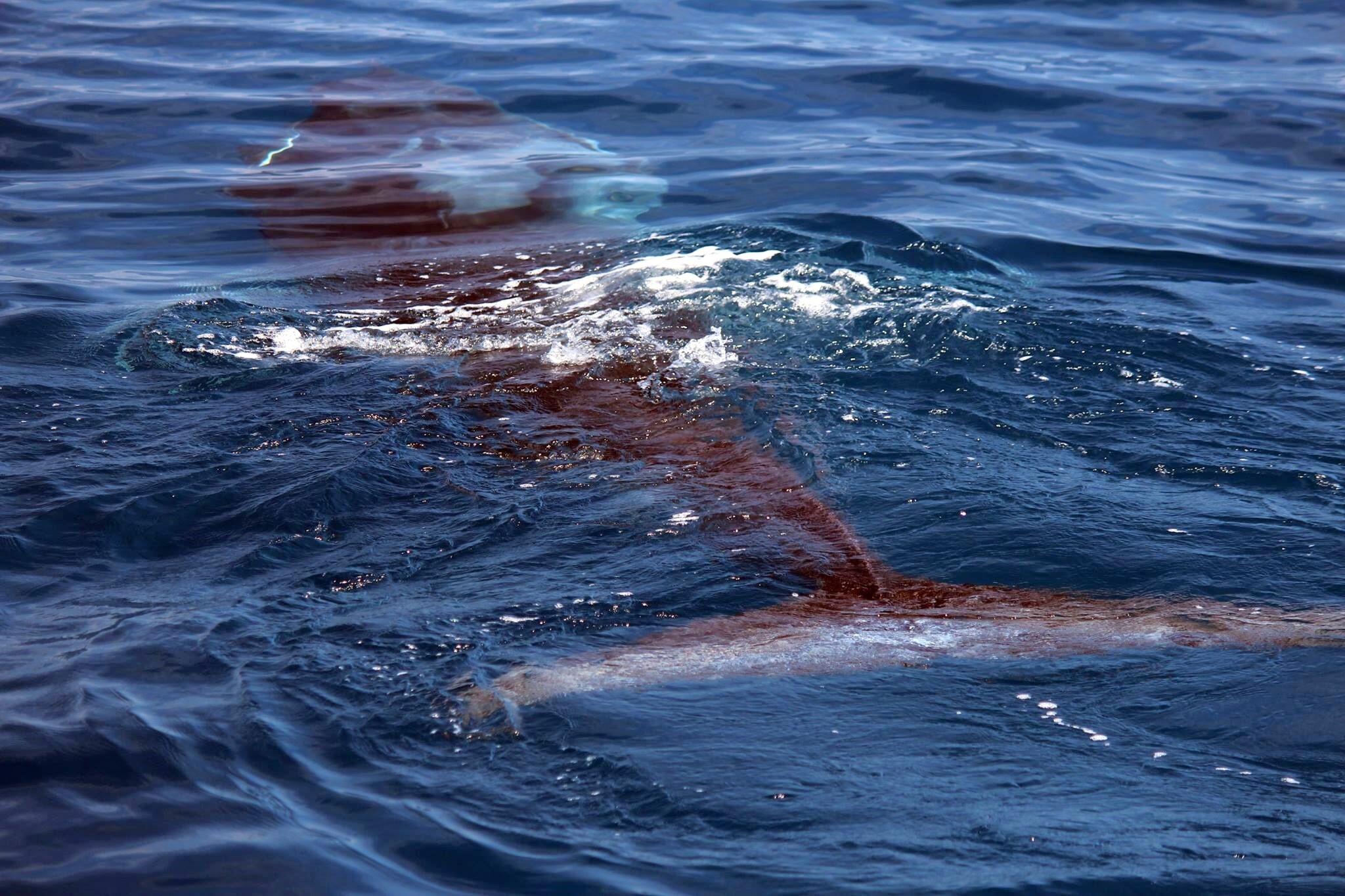
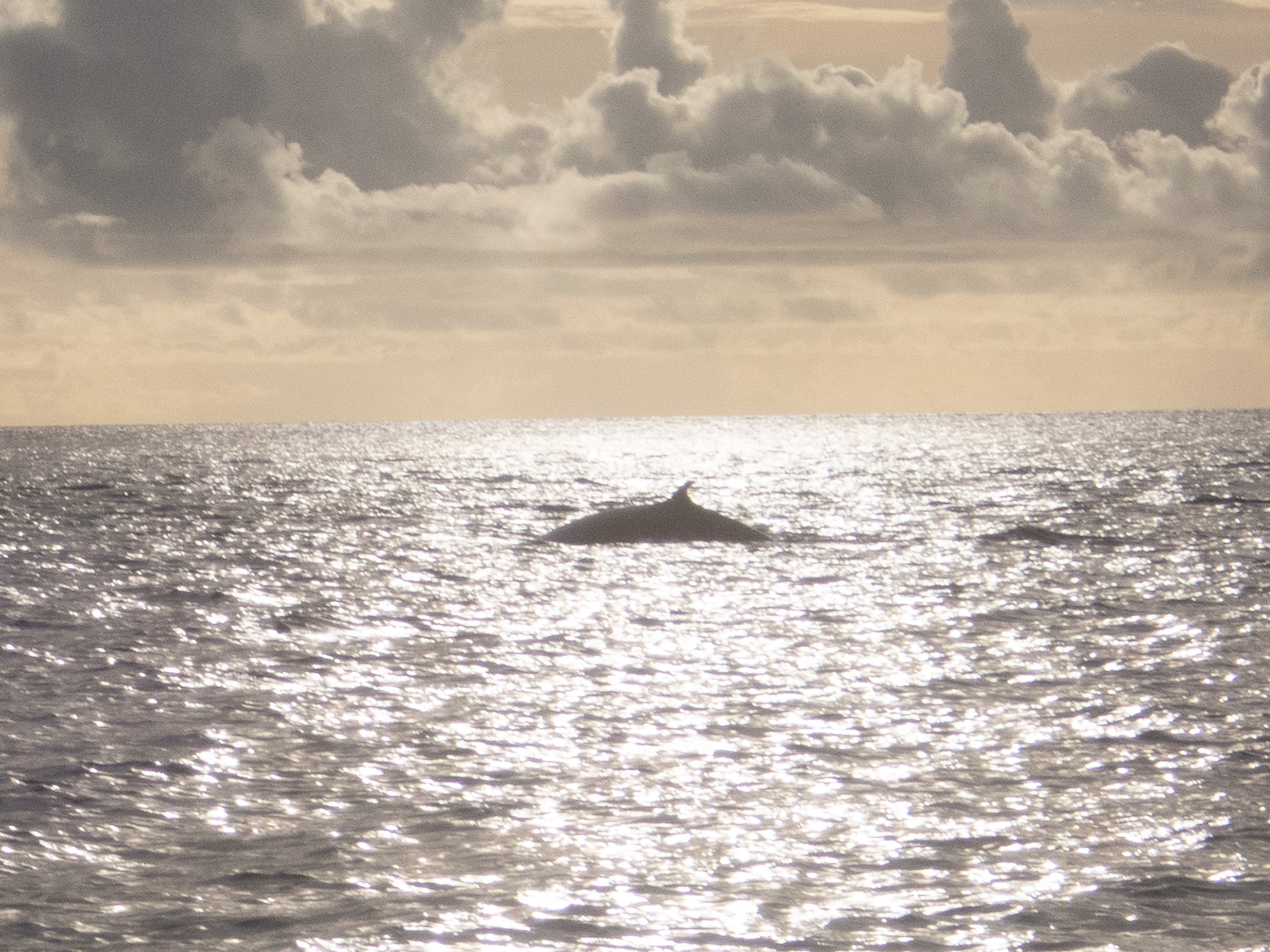
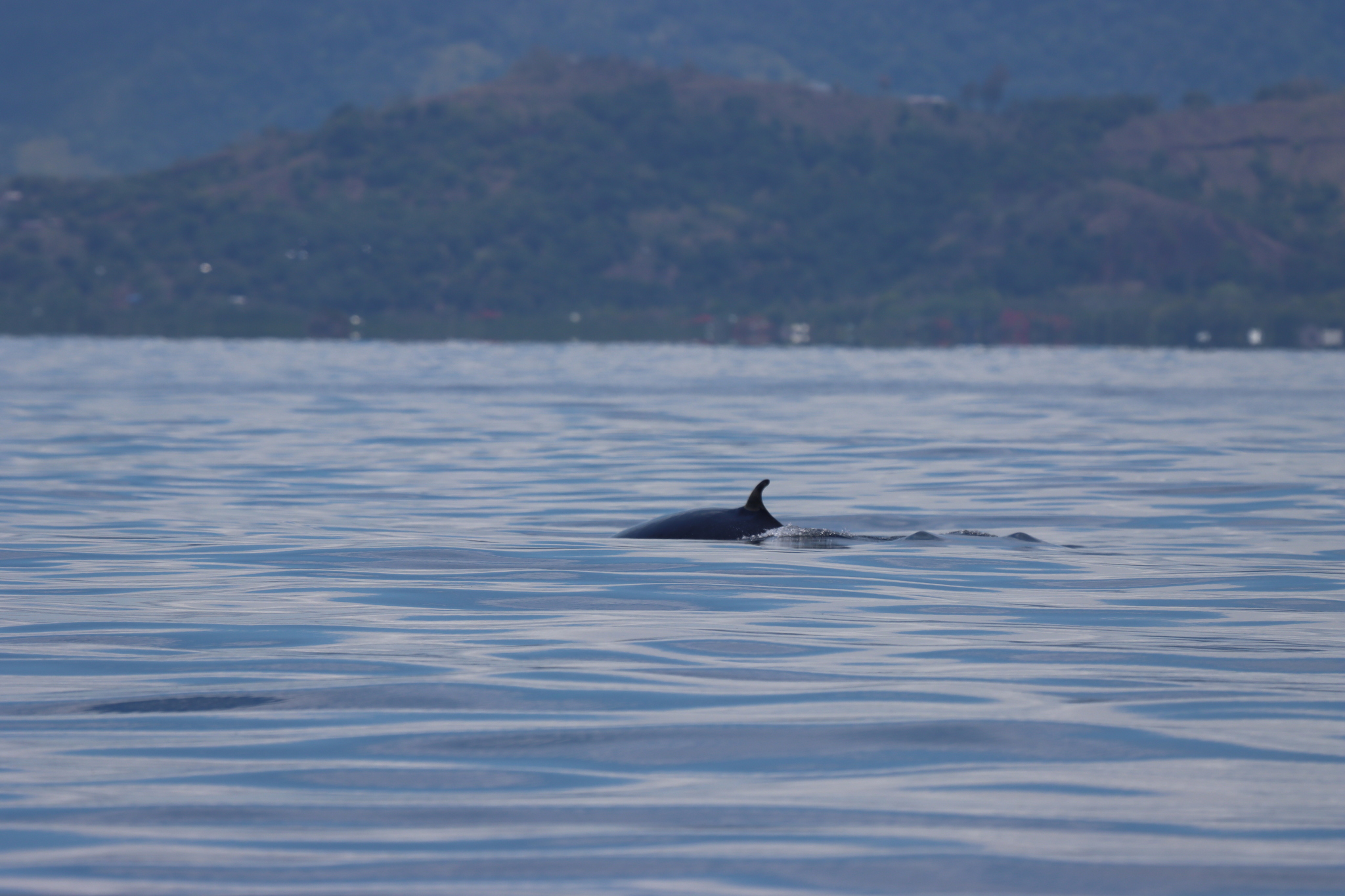
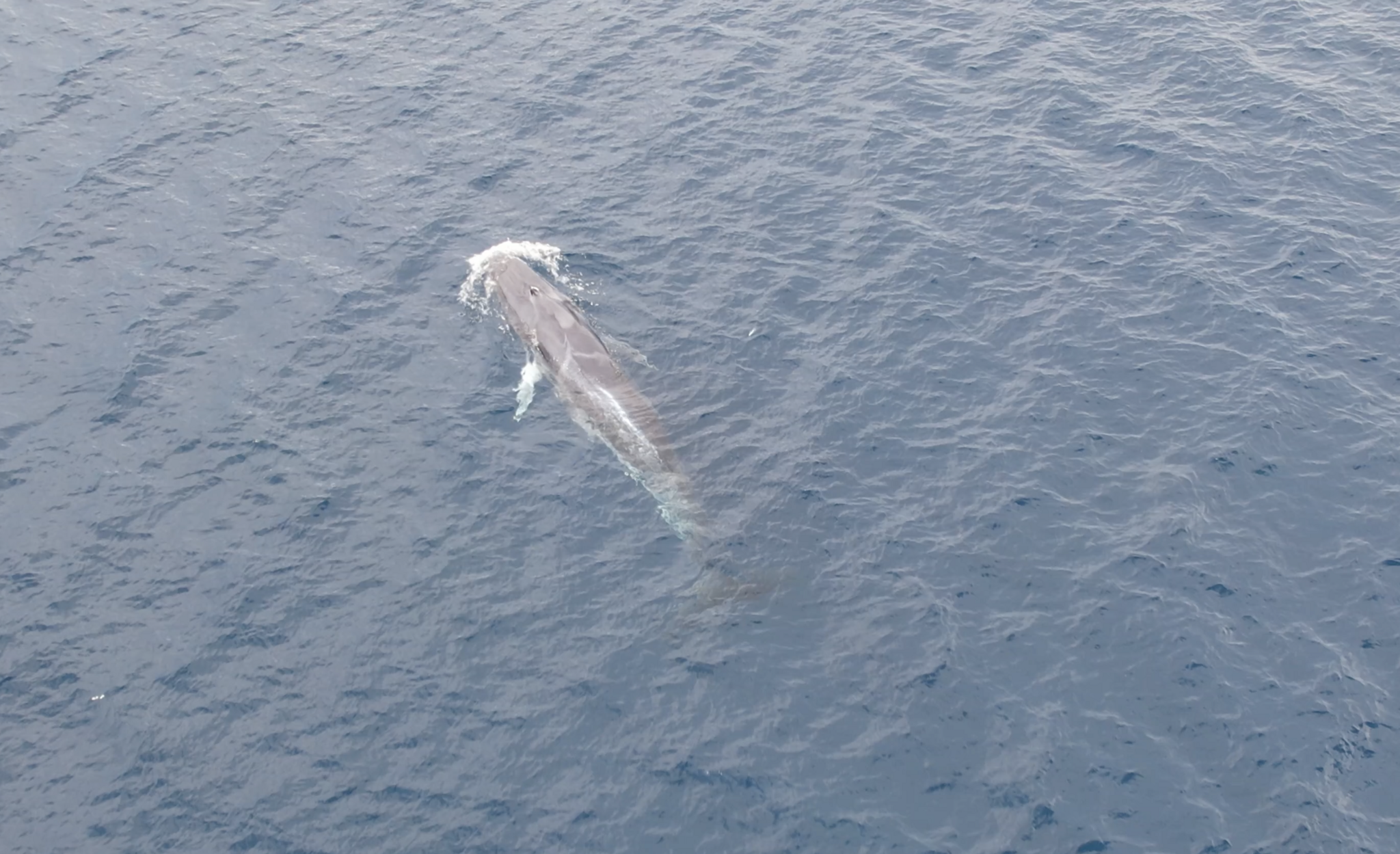
Omura's whale (Balaenoptera omurai)

Key facts
Scientific name Balaenoptera omurai Wada, Oishi & Yamada, 2003
Other names Omura’s whale; “pygmy Bryde’s whale” (an old and misleading name); rorqual d’Omura, baleine d’Omura (French); Balaenoptera omurai
Size 9.6-11.5 m (males 9.6-10 m; females 10.1-11.5 m); up to about 12 m according to some reviews. Newborns and young calves: 3-5 m
Weight Poorly documented, as no series of weighings has been published; the available estimates put forward up to about 20 tonnes for the largest individuals
Longevity At least some thirty years: a maximum age of about 38 years has been estimated by reading the growth layers of an earplug
Diet Predominantly zooplankton, in particular krill (Euphausia diomedeae, Pseudeuphausia latifrons), and incidentally small fish and other crustaceans; capture by lunge feeding in shallow water
IUCN status Data Deficient (DD). 2018 assessment by J. G. Cooke and R. L. Brownell Jr., amended version published in 2019 (e.T136623A144790120); this status remains that of the Red List version in force. No subpopulation is assessed separately, and the population trend is unknown.

In brief

Described only in 2003, Omura’s whale is one of the most recently named rorquals, only Rice’s whale (Balaenoptera ricei, described in 2021) came later, and one of the least known cetaceans in the world. This small, slender balaenopterid of 9.6 to 11.5 m, recognisable by its asymmetrical jaw and its single rostral ridge, occurs all year round in the warm coastal waters of the Indo-Pacific and, more rarely, of the tropical Atlantic, with no seasonal migration. The IUCN Red List places it in the “Data Deficient” category, for want of any abundance estimate or population trend.

Identification

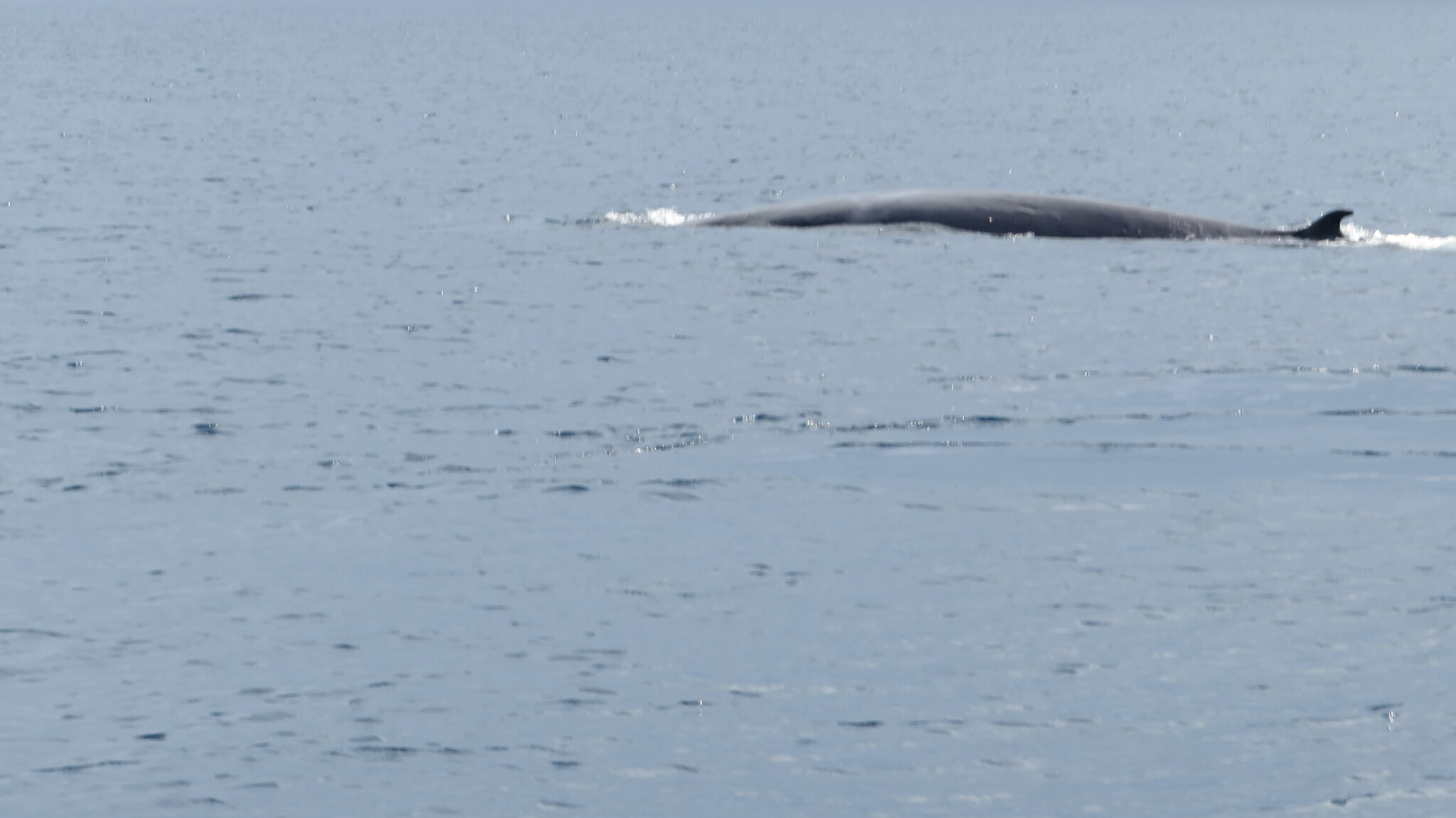
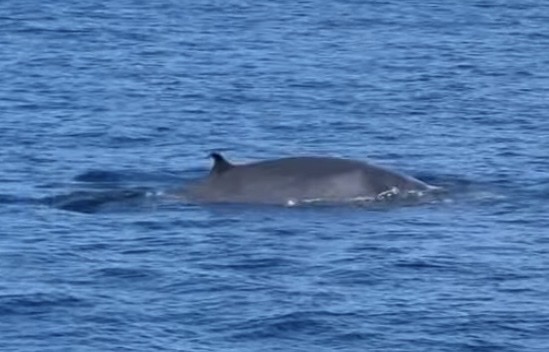
Omura’s whale is one of the smallest members of the family Balaenopteridae: only the minke whales (Balaenoptera acutorostrata and B. bonaerensis) are shorter. The specimens used for the description of the species measured 9.6 to 10 m for males and 10.1 to 11.5 m for females, some reviews giving a maximum length of around 12 m. Body mass remains poorly documented, as no series of weighings has been published; the figures put forward reach some twenty tonnes for the largest individuals. The body is very slender, almost serpentine, and the dorsal fin, markedly falcate, appears proportionally smaller than in related species and slopes gradually into the back.

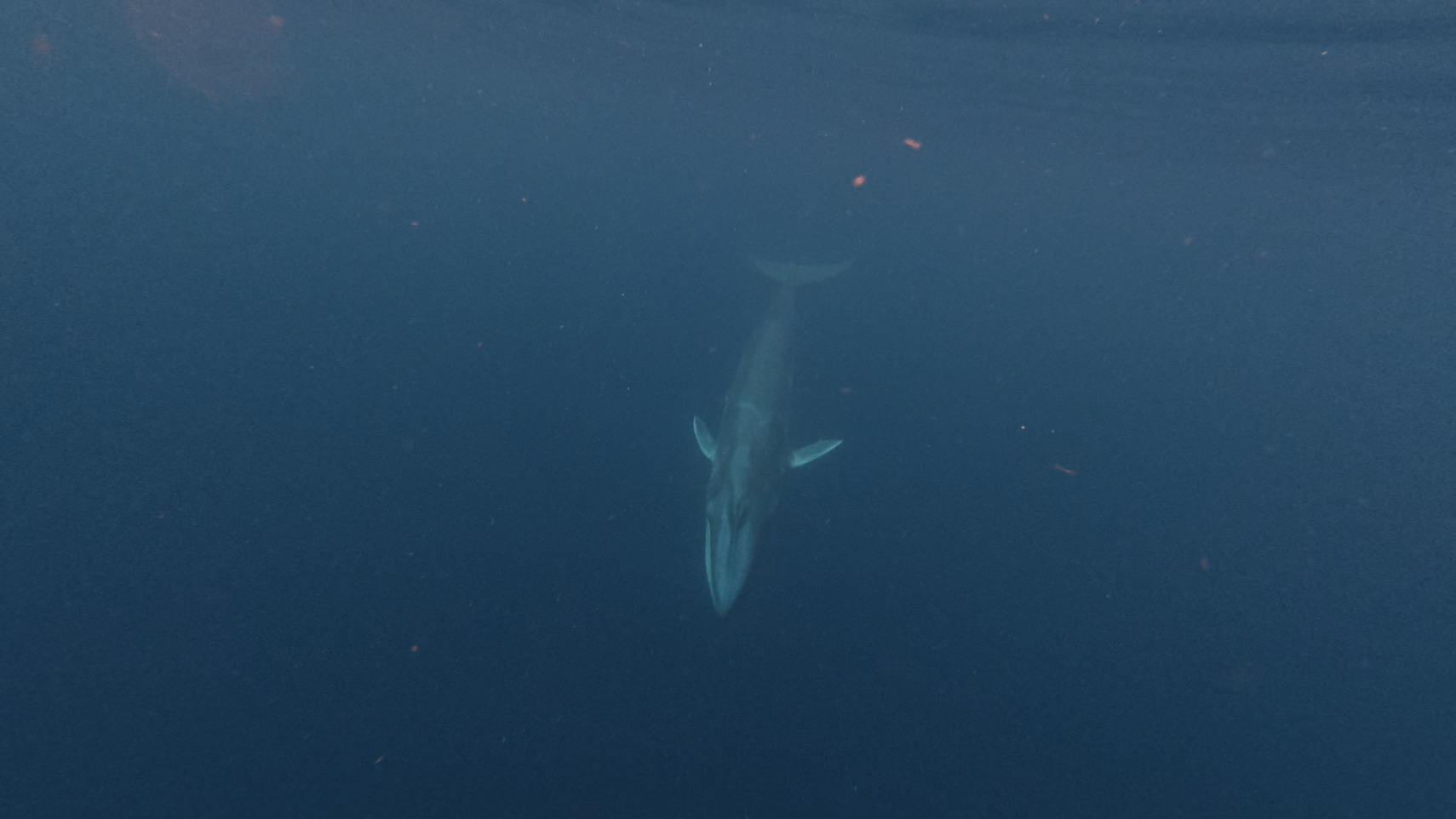
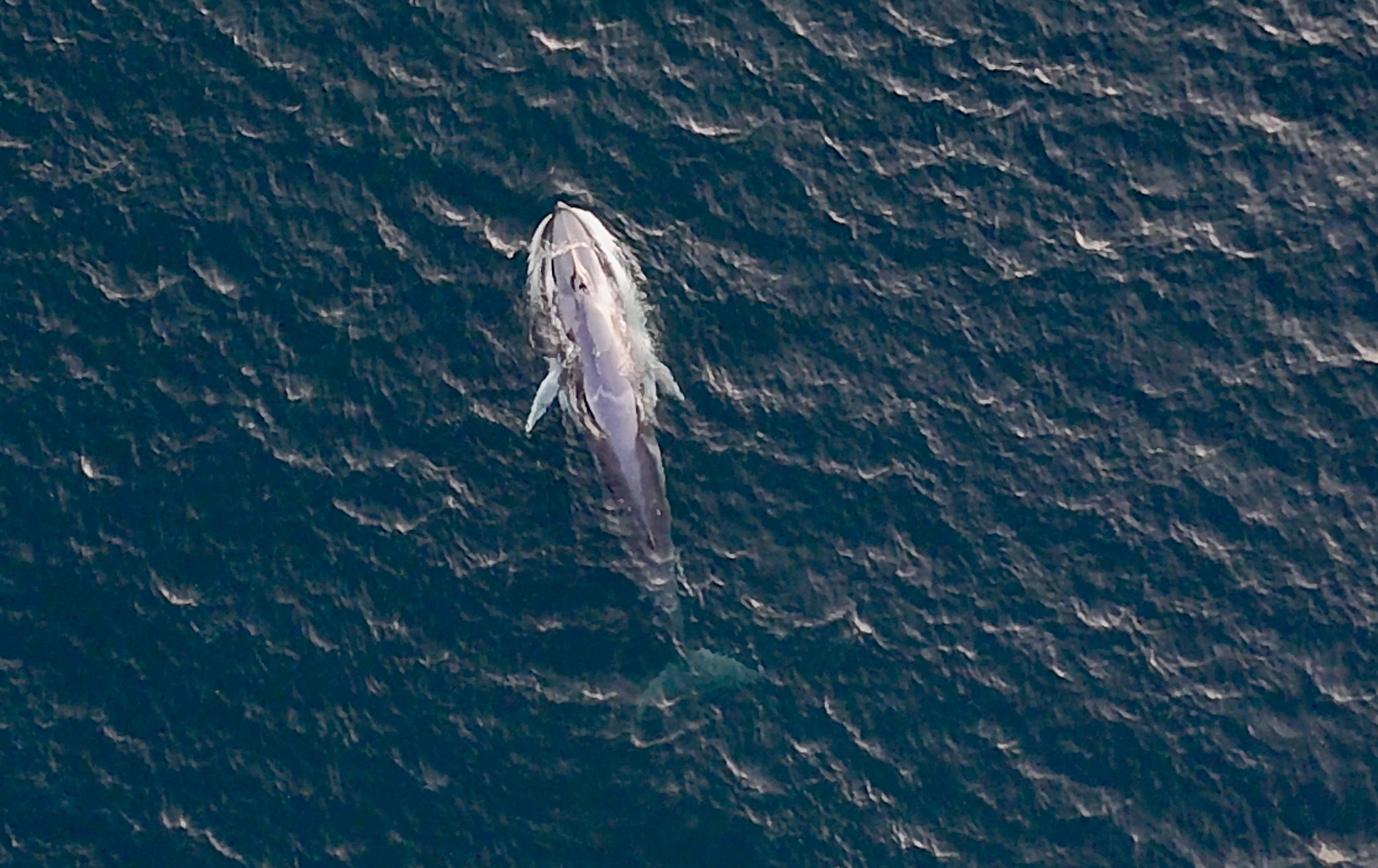
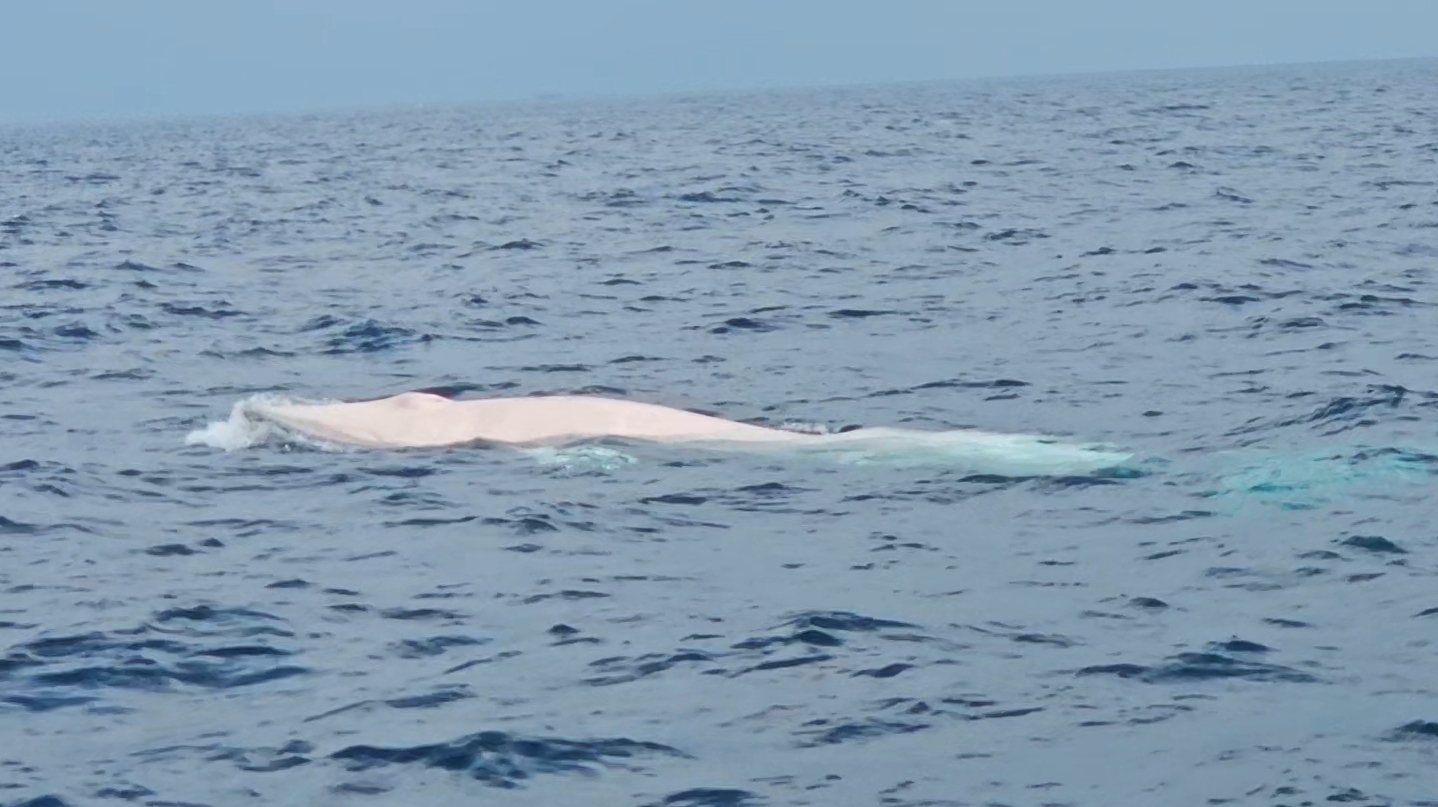
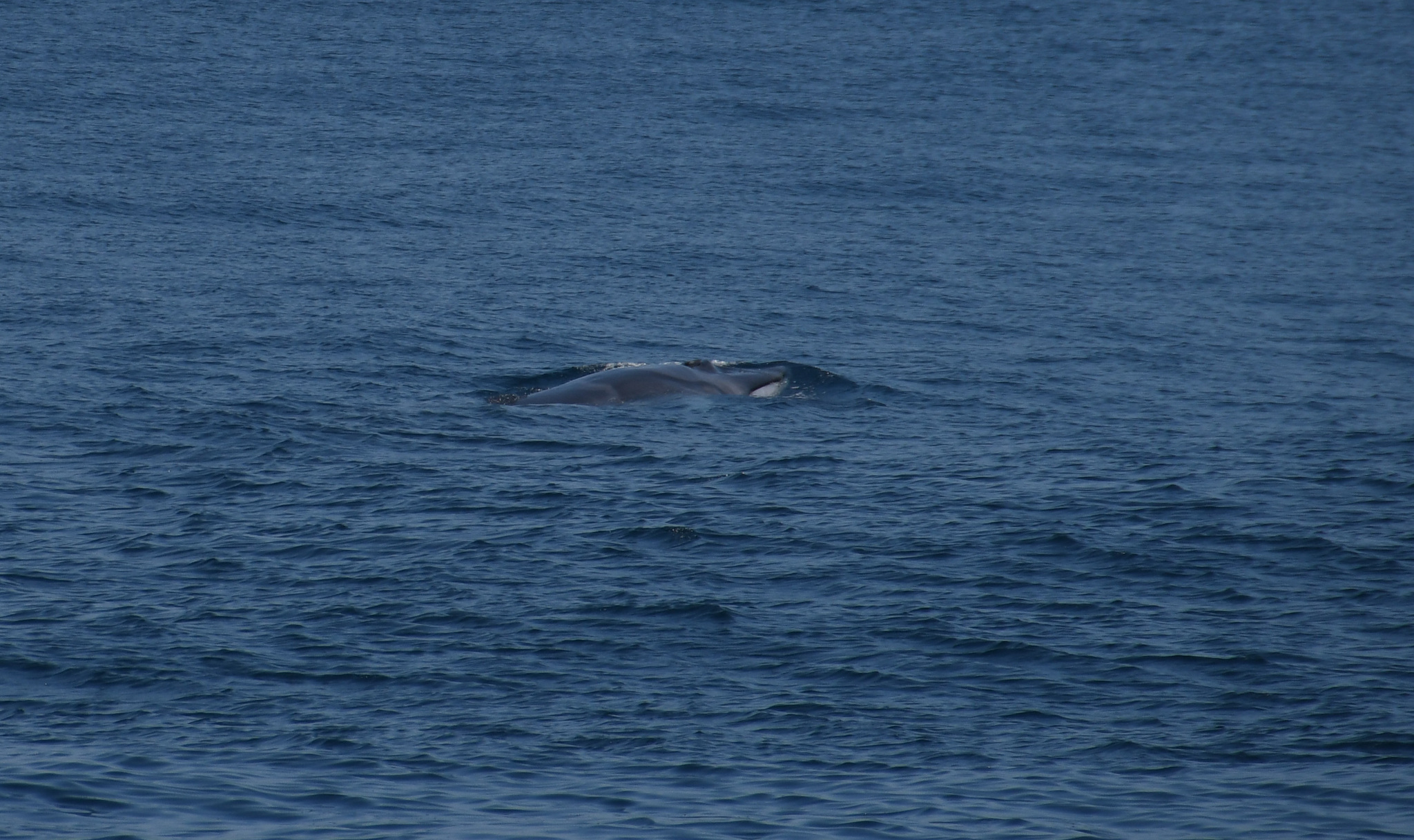
Coloration is the best identification criterion. As in the fin whale, the pigmentation of the head is asymmetrical: the right lower jaw bears a white patch while the left is dark grey, and the baleen itself is variously coloured depending on the side (yellowish white at the front right, bicoloured then blackish towards the rear). A pale chevron marks the back behind the head, and the leading edge of the flippers is picked out in white. The rostrum bears only a single well-marked median ridge, possibly accompanied by very faint lateral ridges in young animals. There are 45 to 95 ventral pleats, which extend beyond the navel, and 181 to 246 pairs of short, broad baleen plates (about 26 cm by 21 cm on average, with grey-white fringes): this is the lowest baleen plate count of all balaenopterids. The skeleton has 53 vertebrae.

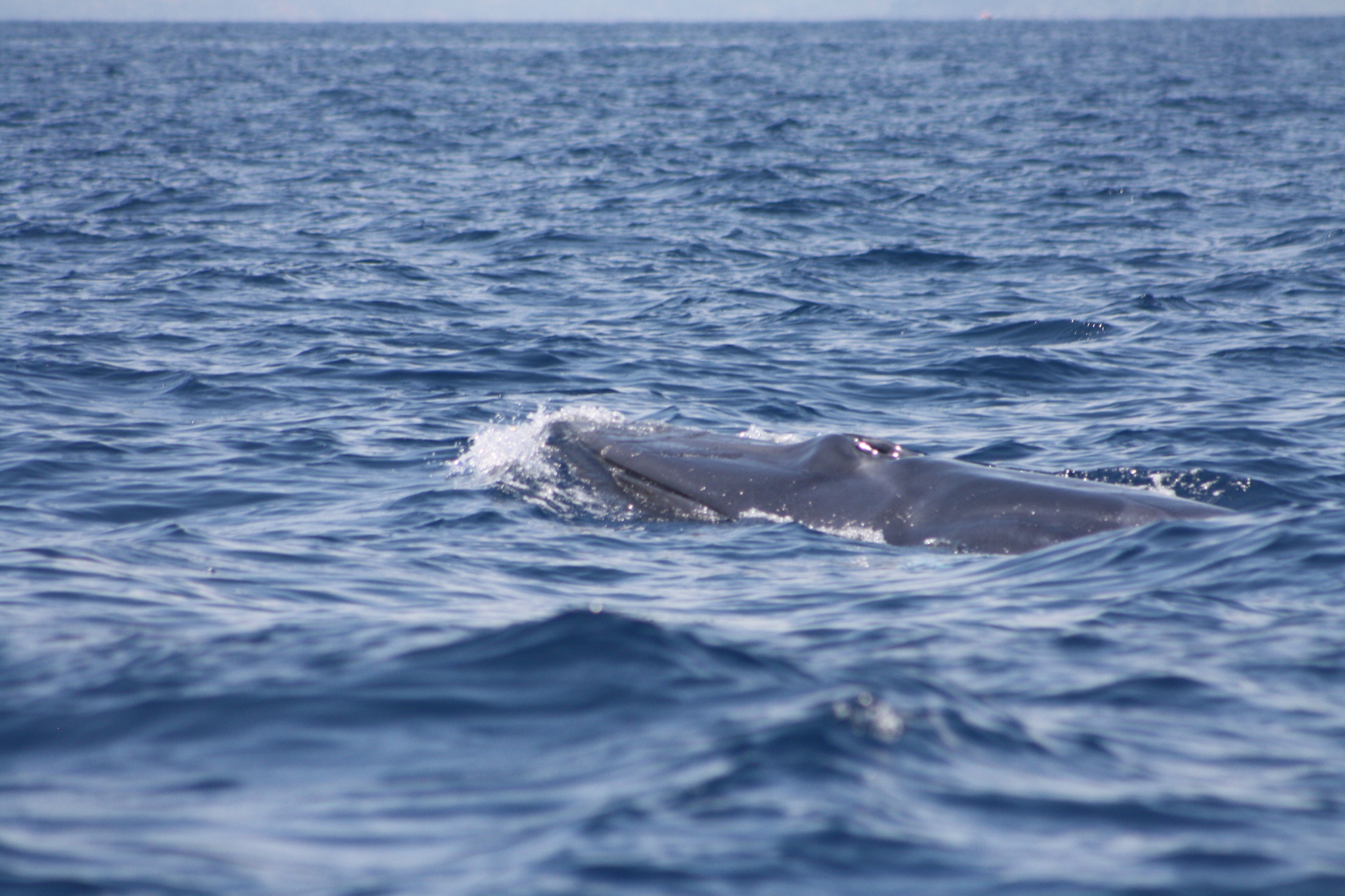
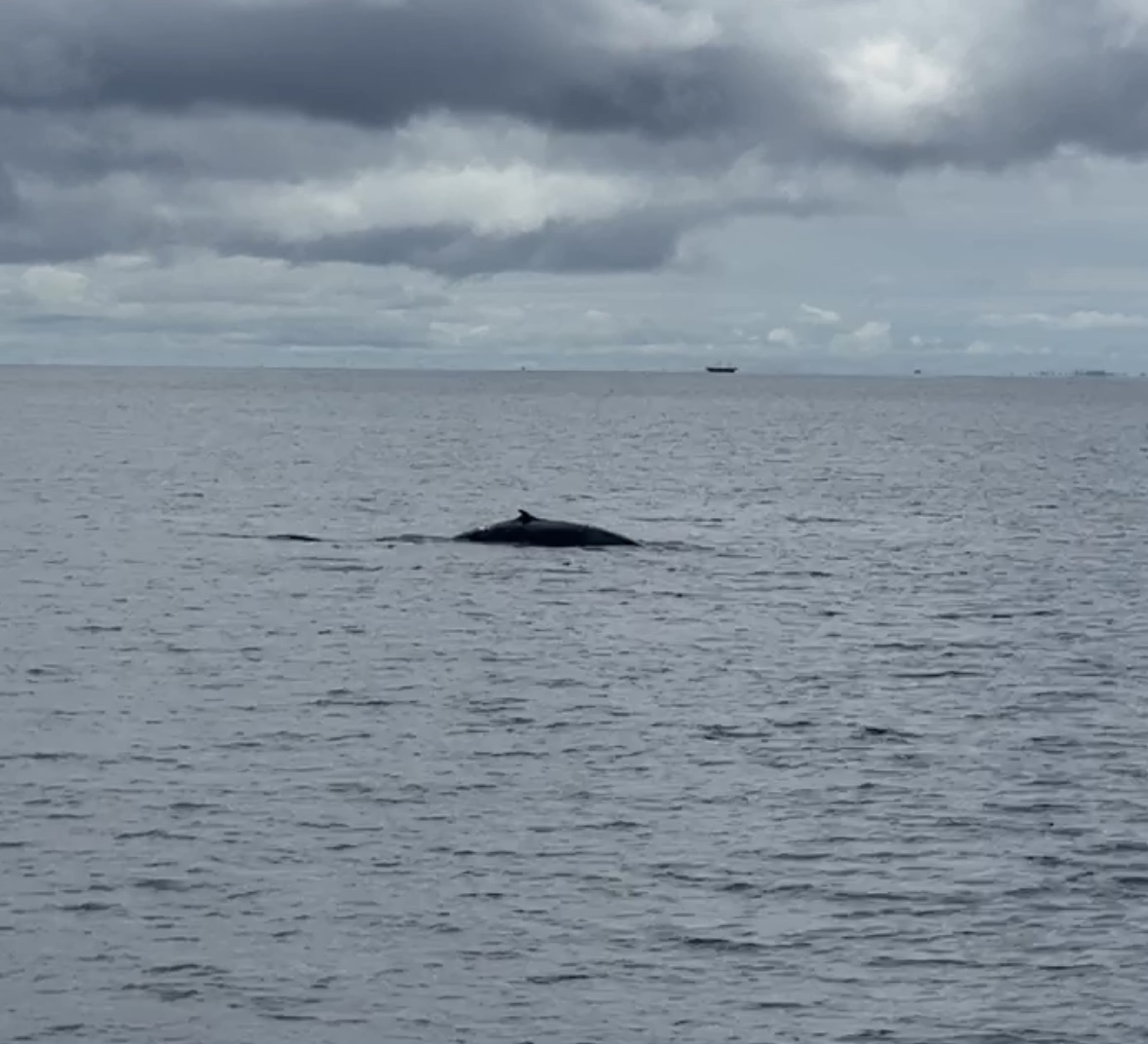
The risk of confusion is real. Bryde’s whale (Balaenoptera edeni) is the main look-alike, to the point that Omura’s whale was long taken for a dwarf form of it; Bryde’s whale is recognised by its three clearly visible rostral ridges and by a symmetrically pigmented head. The common minke whale is shorter and carries a characteristic white band on the flippers, with no mandibular asymmetry. The fin whale shares this head asymmetry but is much larger. At sea the animal is inconspicuous: the blow is low and diffuse, the dorsal fin generally appears only once the head has submerged, and the tail fluke is not raised out of the water at the start of a dive.

Taxonomy

Omura’s whale belongs to the genus Balaenoptera, family Balaenopteridae (rorquals). The species was formally described on 20 November 2003 in the journal Nature by Shiro Wada, Masayuki Oishi and Tadasu K. Yamada, and dedicated to the Japanese cetologist Hideo Omura. The description rests on eight specimens taken in the late 1970s by Japanese research vessels in the Indo-Pacific, long filed among small Bryde’s whales, and on a remarkable holotype: an adult female of about 11 m stranded at Tsunoshima (Japan) on 11 September 1998 after a collision with a fishing boat, whose complete skeleton allowed a detailed morphological analysis, supported by mitochondrial DNA. A particular broadening of the maxilla and the very low baleen plate count distinguish the species from its congeners. Above all, this work showed that, contrary to what its old name of “pygmy Bryde’s whale” suggested, Omura’s whale is not a close relative of Bryde’s whale. It remained the most recently described of the rorquals until the description, in 2021, of Rice’s whale (Balaenoptera ricei Rosel, Wilcox, Yamada & Mullin, 2021), another member of the genus Balaenoptera confined to the Gulf of Mexico. The first sightings of living animals formally identified at sea were not published until 2015, from a population studied off north-western Madagascar.

Distribution and habitat

A global review has brought together 161 records spread over 95 localities in 21 range states. The records run between 35°N and 35°S, 83.2% of them within the tropical belt (23.5°N-23.5°S). The species occurs in every ocean basin except the central and eastern Pacific, where the absence of records despite intensive survey effort suggests a genuine eastern range limit. It is reported from Japan, South Korea, China, Taiwan, the Philippines (Bohol Sea), Thailand, Vietnam, Malaysia, Indonesia (Java, Bali, Komodo, Raja Ampat, Kalimantan), the Cocos Islands, Australia (from the north-west as far as Queensland), the Solomon Islands, New Caledonia, Madagascar, Sri Lanka, the Andamans, the Chagos, the Persian Gulf (Iran), the Red Sea (Egypt), and from Mauritania and Brazil in the Atlantic.

Omura’s whale shows a clear preference for the coastal and neritic waters of the continental shelf. Off Madagascar, sightings take place in depths of 4 to 202 m (mean 31 m) and in water at 27.4 to 30.2 °C. Unlike most large rorquals, the species does not migrate to high latitudes: it occupies its tropical to subtropical areas all year round. Four individuals tracked by satellite tag in November 2016 off Madagascar covered on average 2,530 km (2,148 to 3,181 km) over a mean of 42 days (30 to 58 days), while remaining confined to a coastal strip of 230 to 405 km. In Australia, analysis of nearly 500,000 hours of acoustic recordings at 41 sites detected the species at 32 of them, with year-round presence in the Joseph Bonaparte Gulf, at Browse Island, Scott Reef and off the Kimberley, seasonal presence in the Pilbara (peak from February to April, absent from July to September) and a southern limit at North West Cape (21°45’S).

In France, Omura’s whale is attested only overseas, in New Caledonia: photographs collected in the south of the territory during surveys devoted to humpback whales between 1997 and 2014, one further sighting in that same southern sector in May 2012 and three records gathered during aerial surveys of marine megafauna off the east coast in November 2014 document what appears to be a resident population accessible to study. The French national database on wild mammals lists 22 sightings between 2007 and 2014. The species is, by contrast, absent from mainland French waters, the Mediterranean, the Bay of Biscay and the English Channel being incompatible with its tropical thermal requirements. French research has nonetheless played a key part in the discovery of the Atlantic population: it was a team led by Jean-Luc Jung, of the Université de Bretagne occidentale in Brest, that confirmed genetically, from a fragment weighing less than a gram, the identity of a calf of nearly 4 m stranded on the Mauritanian coast in November 2013.

Biology and ecology

Feeding is by engulfment: off Madagascar, lunge feeding sequences were observed in more than half of the encounters, at median depths of only 13.5 m. No small fish were detected there despite good visibility, and the yellowish particles in suspension point towards a zooplankton diet; elsewhere, two krill species (Euphausia diomedeae and Pseudeuphausia latifrons) have been identified, and a 7 m female contained both crustaceans and fish. Associations with whale sharks on the same prey concentrations have been reported.

The species is surprisingly little gregarious for a large rorqual. Off Madagascar, the mean group size is 1.2 individuals, 36 of 44 encounters involving a solitary animal; over a larger sample of 272 individuals spread across 247 groups, the mean falls to 1.1. The animals do nonetheless form loose aggregations spread over several hundred metres, up to six individuals close together, and as many as a dozen in all.

Omura’s whale produces a stereotyped, amplitude-modulated low-frequency song between 15 and 50 Hz, with a peak frequency of 36.1 Hz and a mean duration of 9.2 seconds, repeated every two to three minutes and sometimes for thirteen hours at a stretch. Overlapping choruses of several individuals suggest a reproductive function comparable to the song of humpback whales. In Australia, these emissions come in doublets rather than as isolated calls, a possible sign of distinct regional acoustic populations.

Breeding remains poorly known. A single calf is born at a time, after a calving season spread over several months rather than concentrated: thirteen mother-calf pairs were recorded off Madagascar between 2011 and 2016, and a newborn female of 3.2 m still bearing its foetal folds stranded in August 2005 in Miyazaki Prefecture, Japan. Sexual maturity is reached at a surprisingly modest size: two females of only 7.9 and 8.5 m already bore corpora albicantia, and the mature males of the type series measured 9.6 to 10 m, that is, maturity far earlier than in Bryde’s whale. A female photographed in 2012 was seen again in 2013 accompanied by a calf, which is evidence of site fidelity, and possibly of permanent residence. The eighteen Malagasy adults sequenced share a single mitochondrial control region haplotype, differing by only 1 to 3 bases from the other known sequences of the species: a very low diversity that suggests a small effective population size or a recent founding event. Finally, individuals from New Caledonia, the Solomons, Sumatra and Kalimantan carry numerous cookiecutter shark scars, absent in the Malagasy animals, which indicates that some populations also frequent deep water.

Status and conservation

Omura’s whale is listed as “Data Deficient” (DD) on the IUCN Red List, a status from the 2018 assessment amended in 2019 and still in force. No global abundance estimate and no population trend exist: the category reflects a shortfall in knowledge, not an absence of threat. The species appears on Appendix I of CITES and Appendix II of the Convention on Migratory Species, as well as on the Pacific Cetaceans Memorandum of Understanding; Australia brought it within its protection measures in September 2024.

The pressures identified follow directly from its shallow coastal habitat, which largely overlaps human activities. Bycatch in fishing gear is documented in Japan (2003-2012), South Korea (2004 and 2006), Thailand (a young male of 4.4 m taken in a purse seine in May 2011) and Sri Lanka (an individual of 7.5 m in August 1985). Ship strikes have caused at least two confirmed deaths, including that of the holotype in 1998, another animal having been carried on a ship’s bow as far as Manila Bay. An artisanal hunt long targeted the species in the Bohol Sea, in the Philippines, where the whalers of Pamilacan took 10 to 20 animals a year in a fishery active since the end of the nineteenth century, and in the Sulu Sea as well; eight individuals were also taken in 1976-1978 by Japanese so-called scientific whaling. To these are added coastal development and mining projects in Madagascar, and above all seismic surveys for oil exploration, which overlap the range of the species off Australia and off Madagascar: the masking of songs lying between 15 and 50 Hz, in all likelihood linked to breeding, is a major concern. Specialists recommend as a priority locating the local populations, assessing their genetic isolation and mapping the overlap between suitable habitat and human activities.

Watching this species

North-western Madagascar, around Nosy Be, remains the most reliable and the best studied watching site in the world, with animals present all year round and peaks of acoustic activity from late October to late January and then from late May to late June. Other areas offer regular encounters: Komodo and eastern Indonesia, New Caledonia, Sri Lanka and north-western Australia, where detections peak from February to April in the Pilbara. Since the species is absent from mainland French waters, no sighting is possible there.

Spotting an Omura’s whale takes attention, because it does not announce itself from afar: the blow is low and diffuse, the small falcate dorsal fin breaks the surface only after the head has gone, and the animal never raises its tail fluke. Encounters most often involve a lone individual, in very shallow water over the shelf; it is during the feeding lunges, when the animal rolls onto its side, that the white right lower jaw is revealed, the decisive criterion. In case of doubt with a Bryde’s whale, it is enough to count the ridges on the rostrum: one in Omura’s whale, three in its look-alike.

The approach should remain cautious and respectful. Keep a constant speed on a parallel course, never cut across the animals’ path or come between a female and her calf, limit the length of the observation and cut the engines at a distance. These whales frequent coastal waters heavily used by fishing and shipping traffic, where ship strikes and entanglements are a real risk: vigilance at the helm is part of the ethics of watching. Every encounter deserves to be documented with photographs of both sides of the head and passed on to local research programmes; for a species whose global range still rests on a few dozen localities, a well-documented record has real scientific value.

Frequently asked questions

Why was Omura’s whale described only in 2003?

Because it was confused with small Bryde’s whales. Eight specimens taken in the late 1970s by Japanese research vessels were held in collections without being recognised as distinct. It was the stranding of an adult female at Tsunoshima, Japan, on 11 September 1998 that provided a complete skeleton: its morphological analysis, combined with mitochondrial DNA, allowed Wada, Oishi and Yamada to publish the description of the species in Nature on 20 November 2003. The first sightings of living animals formally identified at sea were not published until 2015. Omura’s whale remained the most recently described of the rorquals until the description of Rice’s whale (Balaenoptera ricei) in 2021.

How can Omura’s whale be told from Bryde’s whale?

Two criteria are generally enough. The rostrum of Omura’s whale bears only a single median ridge, whereas Bryde’s whale shows three clearly visible ones. And the head of Omura’s whale is asymmetrical: right lower jaw white, left lower jaw dark grey, as in the fin whale, whereas that of Bryde’s whale is symmetrical. Omura’s whale is also smaller, more slender, and its dorsal fin is more strongly falcate. Despite its old nickname of “pygmy Bryde’s whale”, it is not a close relative of the latter.

Can Omura’s whale be seen in France?

Only overseas, and only in New Caledonia, where photographs taken between 1997 and 2014 in the south of the territory, one sighting in May 2012 in that same southern sector and three aerial records off the east coast in November 2014 document what appears to be a resident population. The species is not present in the Mediterranean, in the Bay of Biscay or in the English Channel: it is strictly tied to tropical and subtropical waters, between 35°N and 35°S.

Does Omura’s whale migrate like other whales?

No. Unlike the large rorquals that shuttle between polar feeding grounds and tropical breeding grounds, it occupies its warm waters all year round. Satellite tags placed on four individuals off Madagascar in November 2016 showed movements of 2,148 to 3,181 km over one to two months, but confined to a coastal strip of only 230 to 405 km. Several populations appear to be resident and faithful to their site.

What does it eat, and how?

It feeds mainly on zooplankton, in particular krill (Euphausia diomedeae, Pseudeuphausia latifrons), with small fish and other crustaceans as a secondary component. It uses lunge feeding: it drives open-mouthed into a patch of prey, distends its 45 to 95 ventral pleats, then filters the water through its baleen. Remarkably, these lunges take place in very shallow water, a median depth of 13.5 m off Madagascar, sometimes less than 5 m.

At what size does it become adult?

Earlier than most rorquals of comparable size. Two females of only 7.9 and 8.5 m already showed corpora albicantia, a sign that sexual maturity had been reached, and the mature males of the type series measured 9.6 to 10 m. This early maturity, well below that of Bryde’s whale, goes together with the small adult size of the species, of the order of 10 to 11.5 m.

What is its conservation status?

It is listed as “Data Deficient” (DD) on the IUCN Red List, a status from the 2018 assessment amended in 2019. This does not mean that it is out of danger, but that no abundance estimate and no trend can be established. It is listed on Appendix I of CITES and Appendix II of the Convention on Migratory Species. Its shallow coastal habitats expose it to bycatch, to ship strikes, to coastal development and to the noise of seismic surveys, which may mask its very low frequency songs.

Sources

Profile compiled from authoritative scientific sources (IUCN, NOAA Fisheries, specialist literature) and reviewed for factual accuracy.

Observed distribution

According to the open data of the GBIF, 27 georeferenced sightings of Balaenoptera omurai are recorded in our photographic index.

Main countries of observation
CountryNotes
Indonesia12
Madagascar5
Australia4
Thailand2
Japan1
Mauritania1
Seychelles1
Timor-Leste1
Brazil1

Distribution map: Omura's whale (Balaenoptera omurai)

Distribution map: Omura's whale (Balaenoptera omurai), 27 georeferenced sightings from GBIF
27 georeferenced sightings of Balaenoptera omurai. Base map Natural Earth, public domain. GBIF data.
🗺️ Open the interactive mapTo zoom and pan. It uses the OpenStreetMap/CARTO base maps and the GBIF occurrence densities: no data is sent to these services before you click.

Presence through the year

Monthly distribution of 27 dated sightings (all years combined): the maximum is reached in janvier.

40janvier : 4janfévrier : 4febmars : 2maravril : 2avrmai : 2maijuin : 2juinjuillet : 0juilaoût : 1Augustseptembre : 2sepoctobre : 3octnovembre : 1novdécembre : 4dec
Sightings by month
MonthNotes
janvier4
February4
mars2
avril2
mai2
juin2
juillet0
August1
septembre2
octobre3
novembre1
December4

These figures reflect survey effort (more boaters and more surveys in summer) as much as the actual presence of the species: to be interpreted with caution.

En images

Balaenoptera omurai
© Светлана Царахова, CC0, 2026
Balaenoptera omurai
© Heather, CC BY-NC, 2026
Balaenoptera omurai
© Rafi Nugraha, CC BY-NC, 2026
Balaenoptera omurai
© Sabine Templeton, CC BY-NC, 2025
Balaenoptera omurai
© CORDENOS Thierry, CC BY-NC, 2025
Balaenoptera omurai
© Justin Philbois, CC0, 2025
Balaenoptera omurai
© bnchapple, CC BY-NC, 2025
Balaenoptera omurai
© Sabine Templeton, CC BY-NC, 2025
Balaenoptera omurai
© James Lefebvre, CC BY-NC, 2025
Balaenoptera omurai
© esmulders, CC BY-NC, 2025
Balaenoptera omurai
© jomablair, CC BY-NC, 2024
Balaenoptera omurai
© Pepo, CC BY-NC, 2024

Photographs from GBIF under a Creative Commons licence. The author and the licence of each photograph are given; please respect them if you reuse them.

Scientific references

  1. Sasaki T., Nikaido M., Wada S., Yamada T. et al. (2006) Balaenoptera omurai is a newly discovered baleen whale that represents an ancient evolutionary lineage, Molecular Phylogenetics and Evolution
  2. Cerchio S., Andrianantenaina B., Lindsay A., Rekdahl M. et al. (2015) Omura’s whales (Balaenoptera omurai) off northwest Madagascar: ecology, behaviour and conservation needs, Royal Society Open Science
  3. Cerchio S., Yamada T., Brownell R. (2019) Global Distribution of Omura’s Whales (Balaenoptera omurai) and Assessment of Range-Wide Threats, Frontiers in Marine Science
  4. Madhusudhana S., Murray A., Erbe C. (2020) Automatic detectors for low-frequency vocalizations of Omura's whales, Balaenoptera omurai: A performance comparison, The Journal of the Acoustical Society of America
  5. Browne C., Erbe C., McCauley R. (2024) Distribution and Seasonality of the Omura’s Whale (Balaenoptera omurai) in Australia Based on Passive Acoustic Recordings, Animals
  6. de Vos A. (2017) First record of Omura’s whale, Balaenoptera omurai, in Sri Lankan waters, Marine Biodiversity Records
  7. Ottewell K., Coughran D., Gall M., Irvine L. et al. (2016) A Recent Stranding of Omura’s Whale (Balaenoptera omurai) in Western Australia, Aquatic Mammals
  8. Xu M., Wang X., Miao X., Wu F. et al. (2017) A Stranding Record of Omura’s Whale (Balaenoptera omurai Yamada, 2003) in the Taiwan Strait, China, Aquatic Mammals

Automatic selection of the most cited works mentioning the species (source: Crossref).