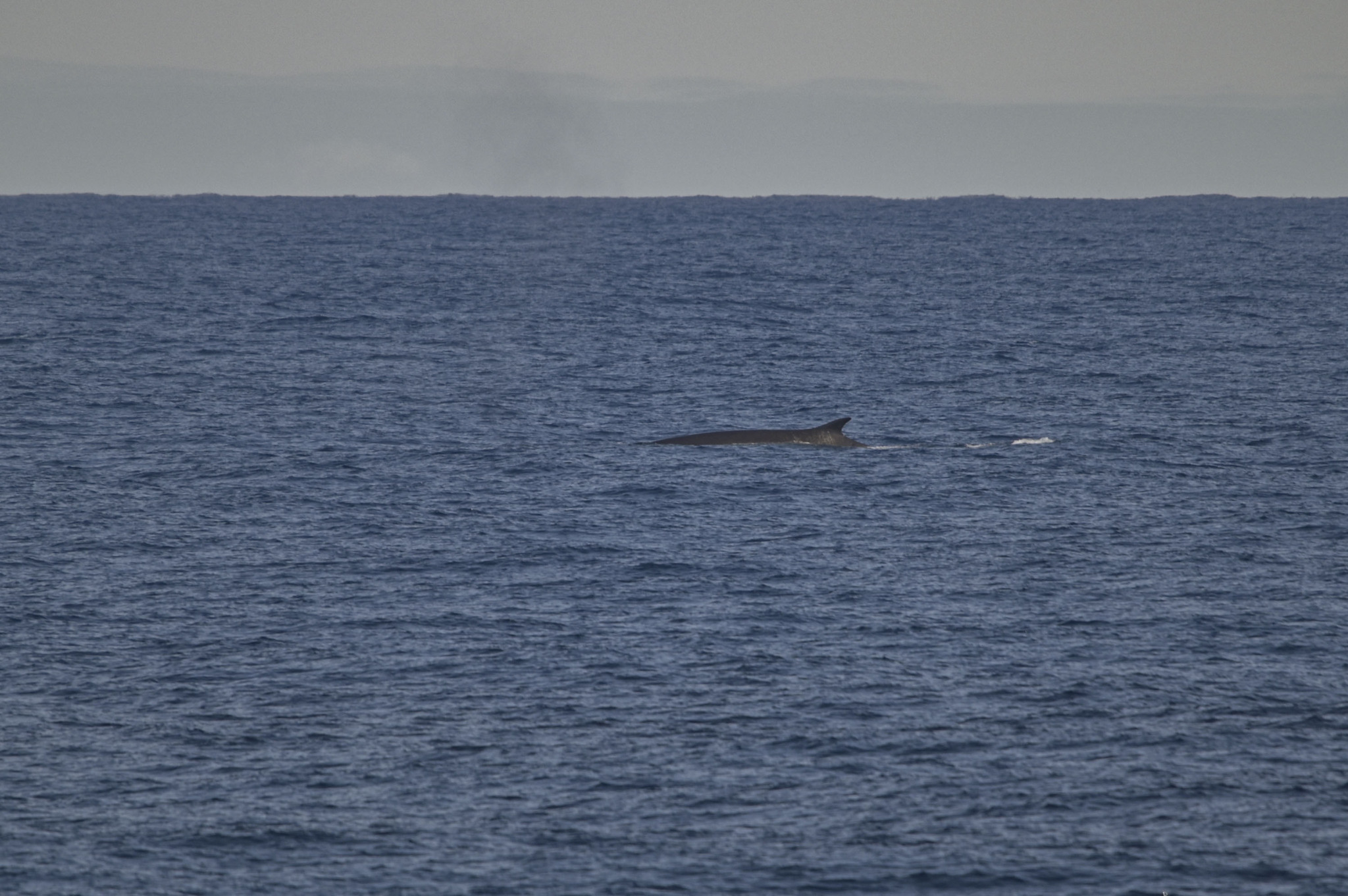
| Scientific name | Balaenoptera physalus (Linnaeus, 1758) |
|---|---|
| Other names | Fin whale; in French baleine à nageoires, baleinoptère commune, “vraie baleine”, “baleine américaine” (older names); nicknamed “the greyhound of the sea”. |
| Size | Northern Hemisphere: 19 m on average for males, 20.5 m for females, with maxima of the order of 21.5 to 22.5 m. Southern Hemisphere: up to 26 to 27 m. The global range used here runs from 18 to 27 m. Newborn: 6 to 6.5 m. |
| Weight | Typically 40,000 to 80,000 kg (40 to 80 t); NAMMCO and the OFB use 45,000 to 75,000 kg. Exceptional weights of 100 to 120 t have been reported for very large southern females. Newborn: about 1,800 to 4,000 kg. |
| Longevity | Commonly 80 to 90 years. Individuals aged at 94 years are documented, and exceptional estimates exceed 100 years. Three animals caught off Iceland (2013, 2015) were 65, 80 and 82 years old. |
| Diet | Krill and euphausiids (Meganyctiphanes norvegica in the north-eastern Atlantic and the Mediterranean, Euphausia superba in the Antarctic), copepods, small schooling fish (herring, capelin, sand eel, anchovy, sardine, blue whiting) and cephalopods. Up to 1.8 to 2 t (or even 2 to 3 t according to NAMMCO) per day during the feeding season. |
| IUCN status | Vulnerable (VU) globally, 2018 assessment (Cooke, 2018; e.T2478A50349982), population trend increasing, about 100,000 mature individuals. Status confirmed in the Red List table of the IUCN Cetacean Specialist Group (2025-2 edition). Mediterranean subpopulation: Endangered (EN, criterion C2a(ii)), 2021 assessment (Panigada et al.), fewer than 1,800 mature individuals. Red List of mammals of mainland France (UICN France / MNHN / SFEPM / ONCFS, 2017): Near Threatened (NT). |
The second largest animal on the planet after the blue whale, the fin whale is a slender and very fast mysticete, able to sustain 37 to 41 km/h. Recognisable by the unique asymmetry of its head coloration (right lower jaw white, left dark), it frequents the deep waters of every ocean. Listed Vulnerable globally by the IUCN since 2018 after half a century of recovery, it remains Endangered in the Mediterranean, where it occurs in French waters.
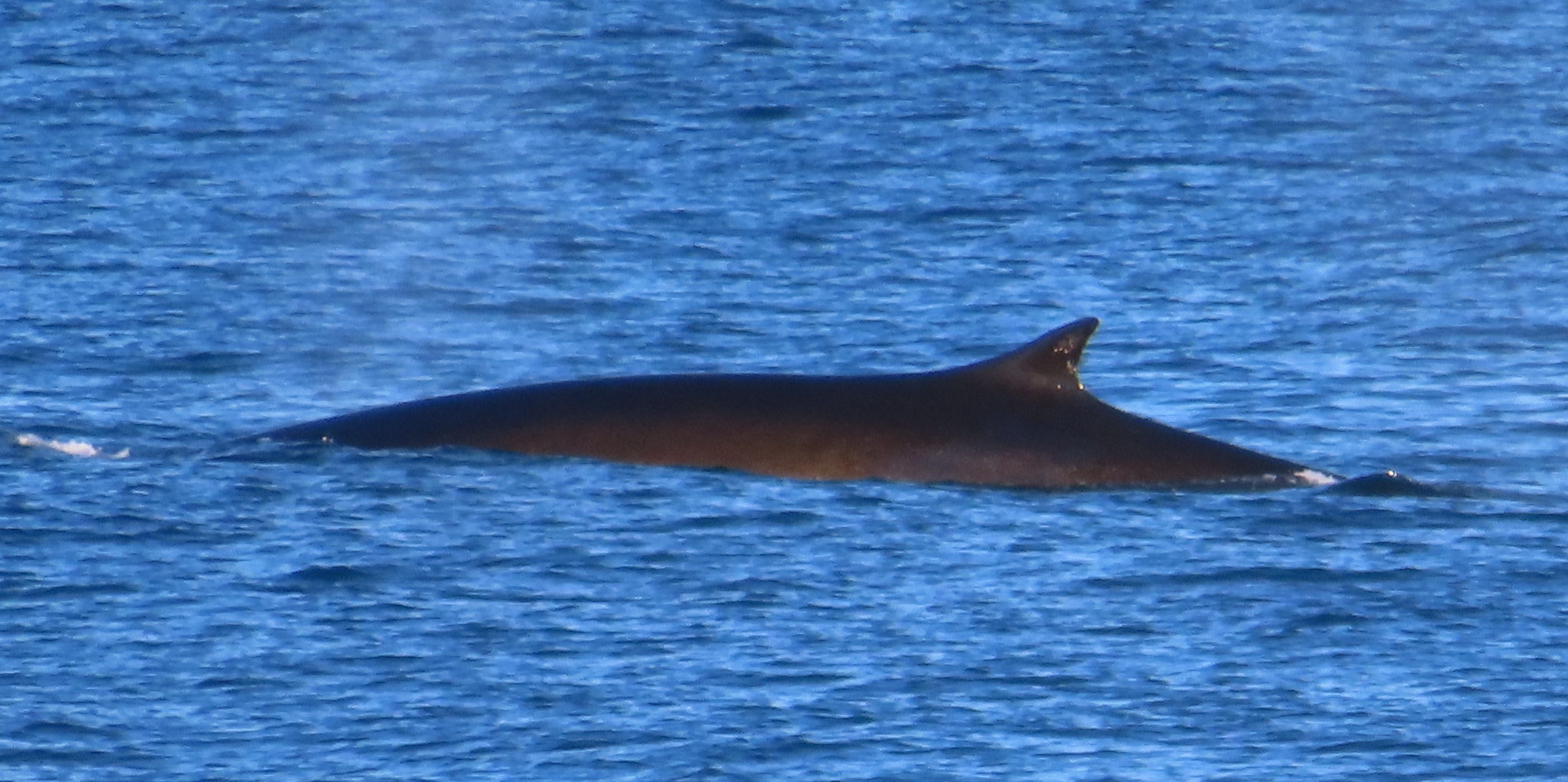
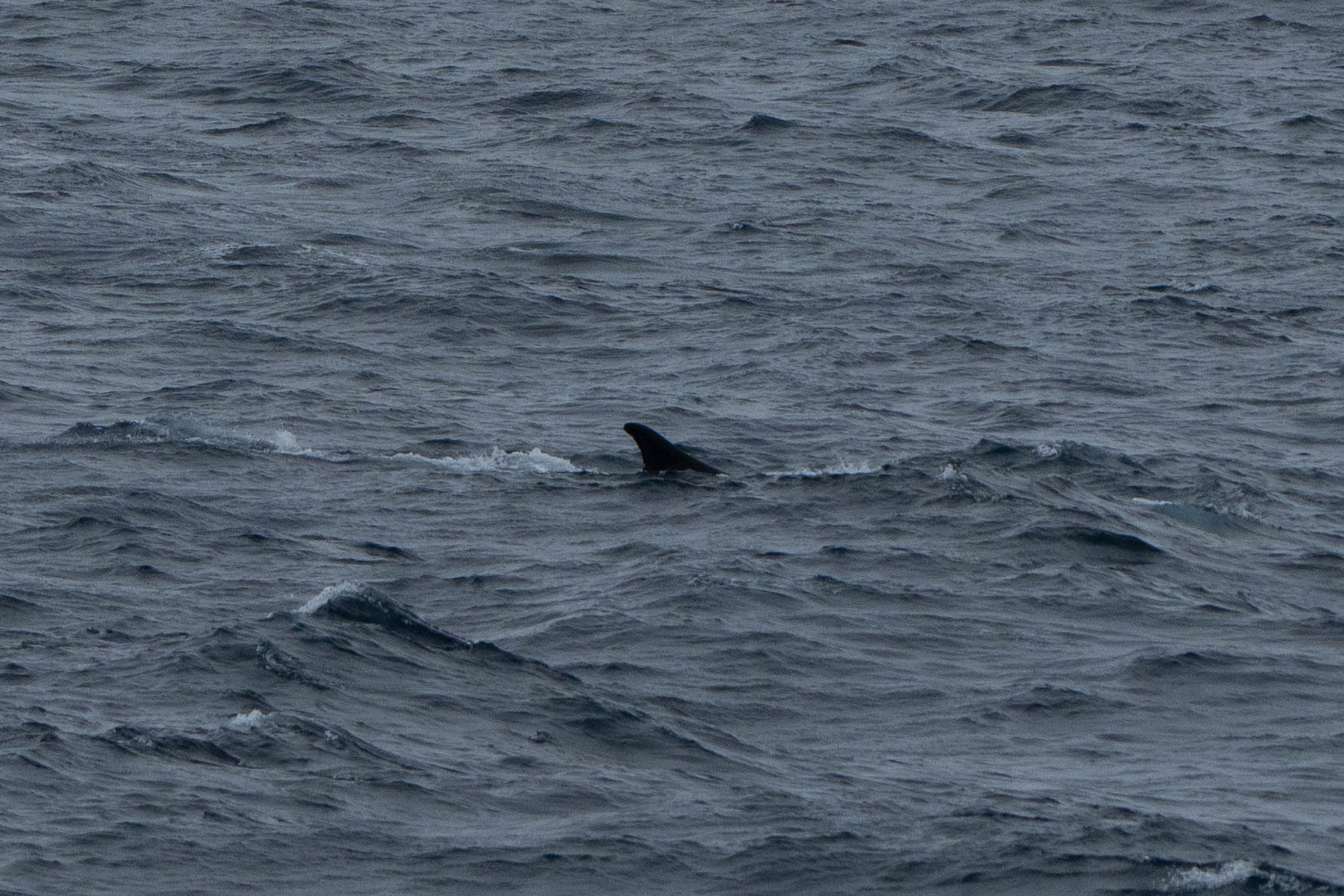
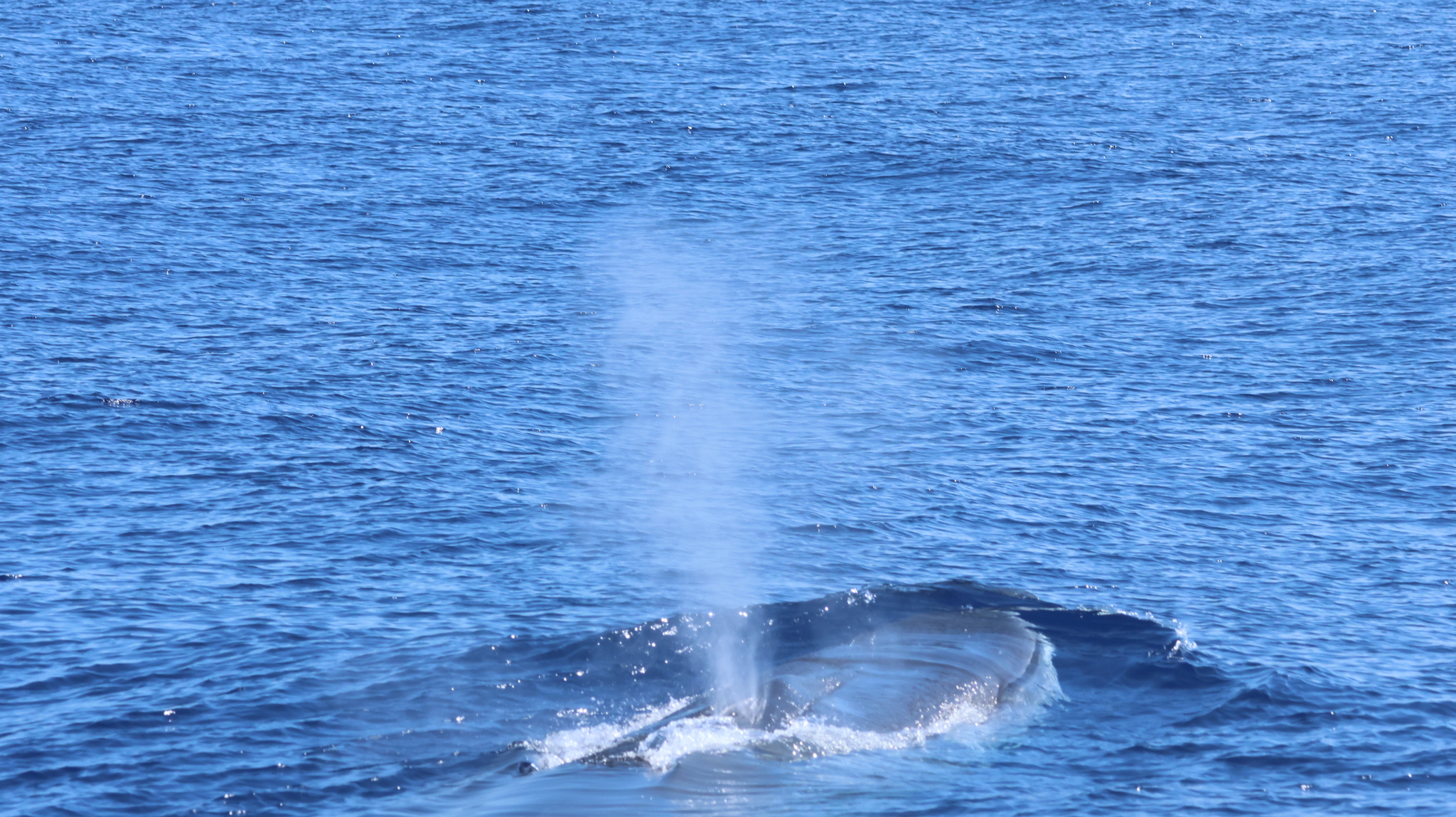
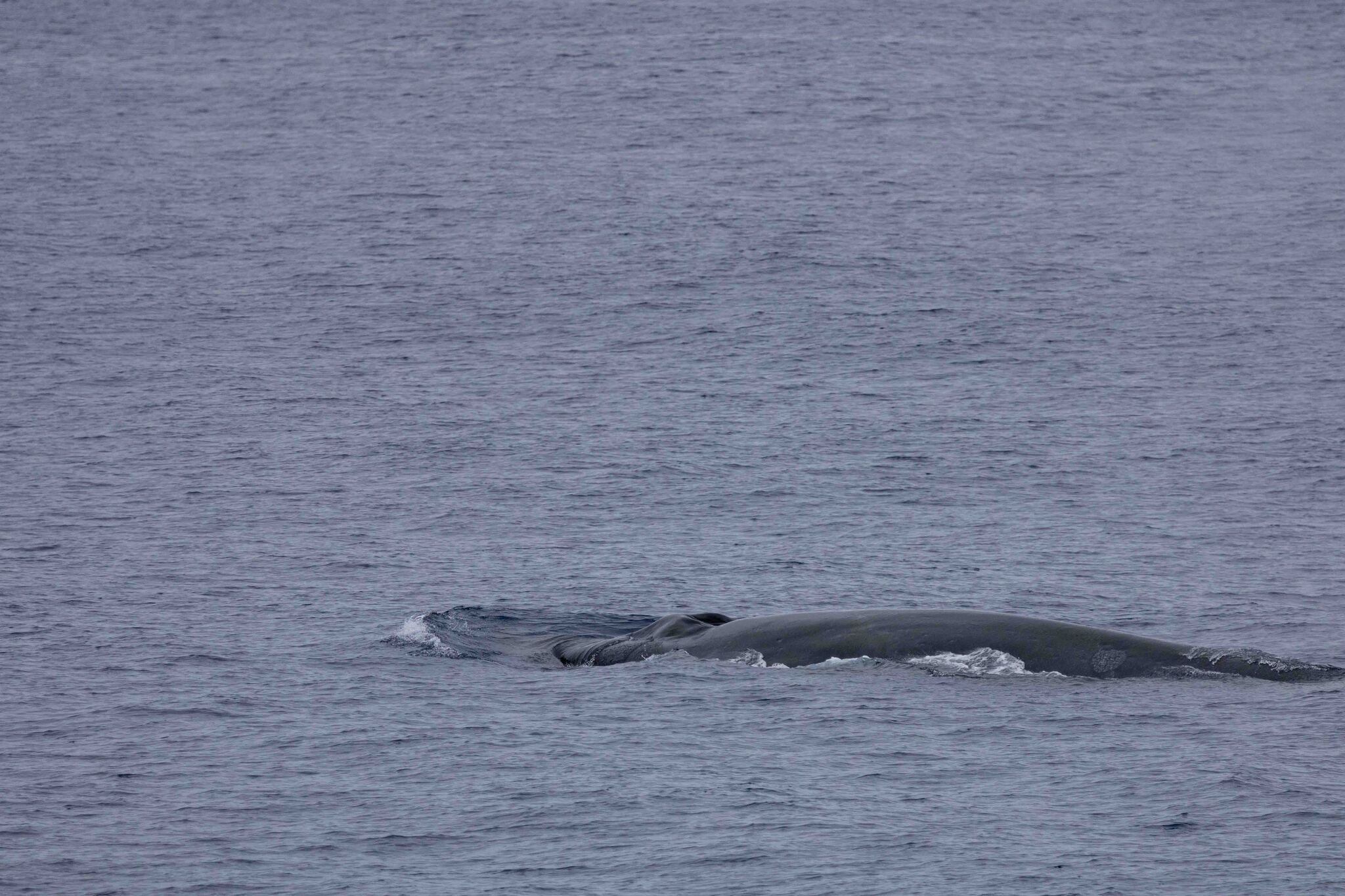
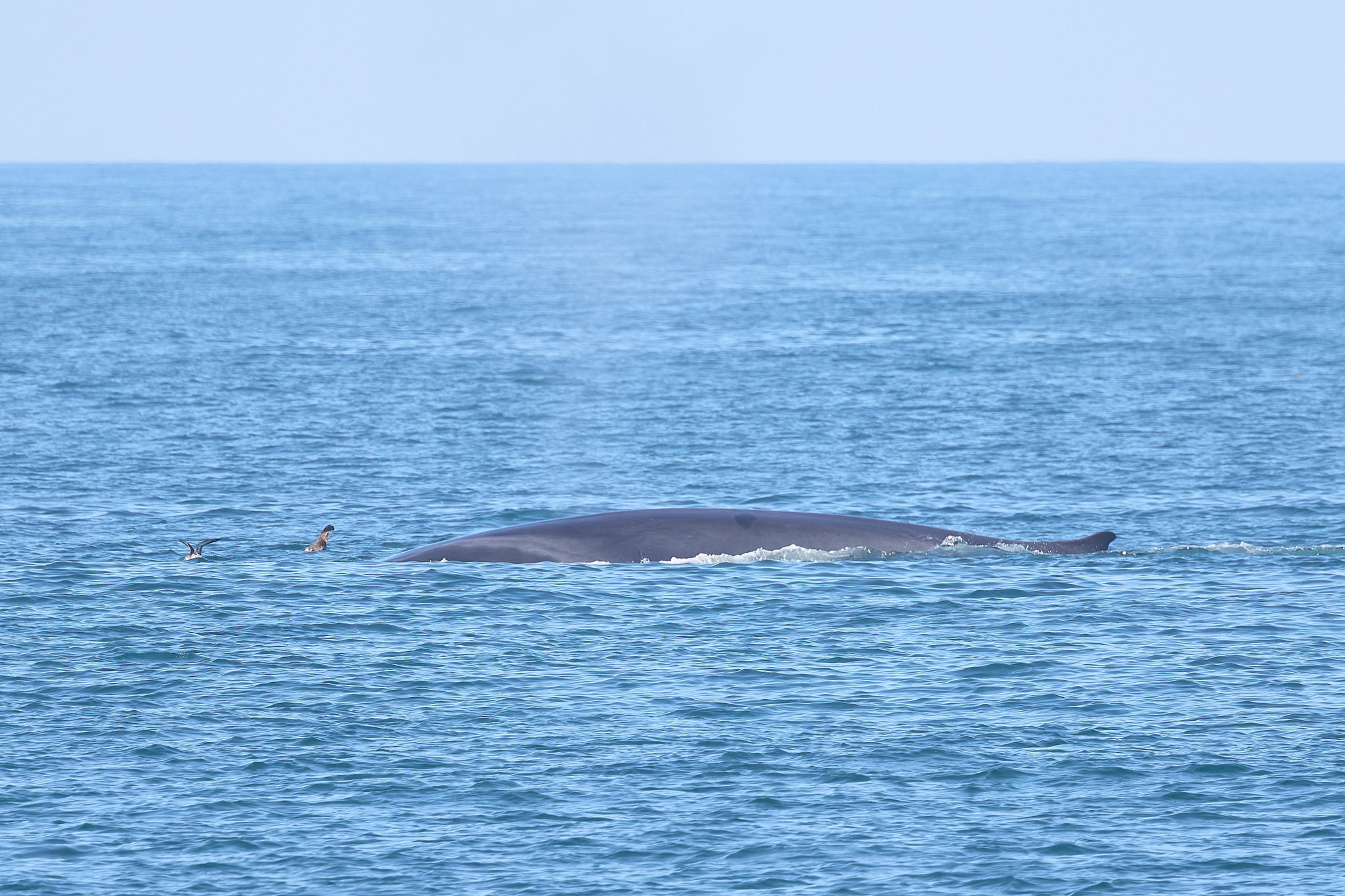
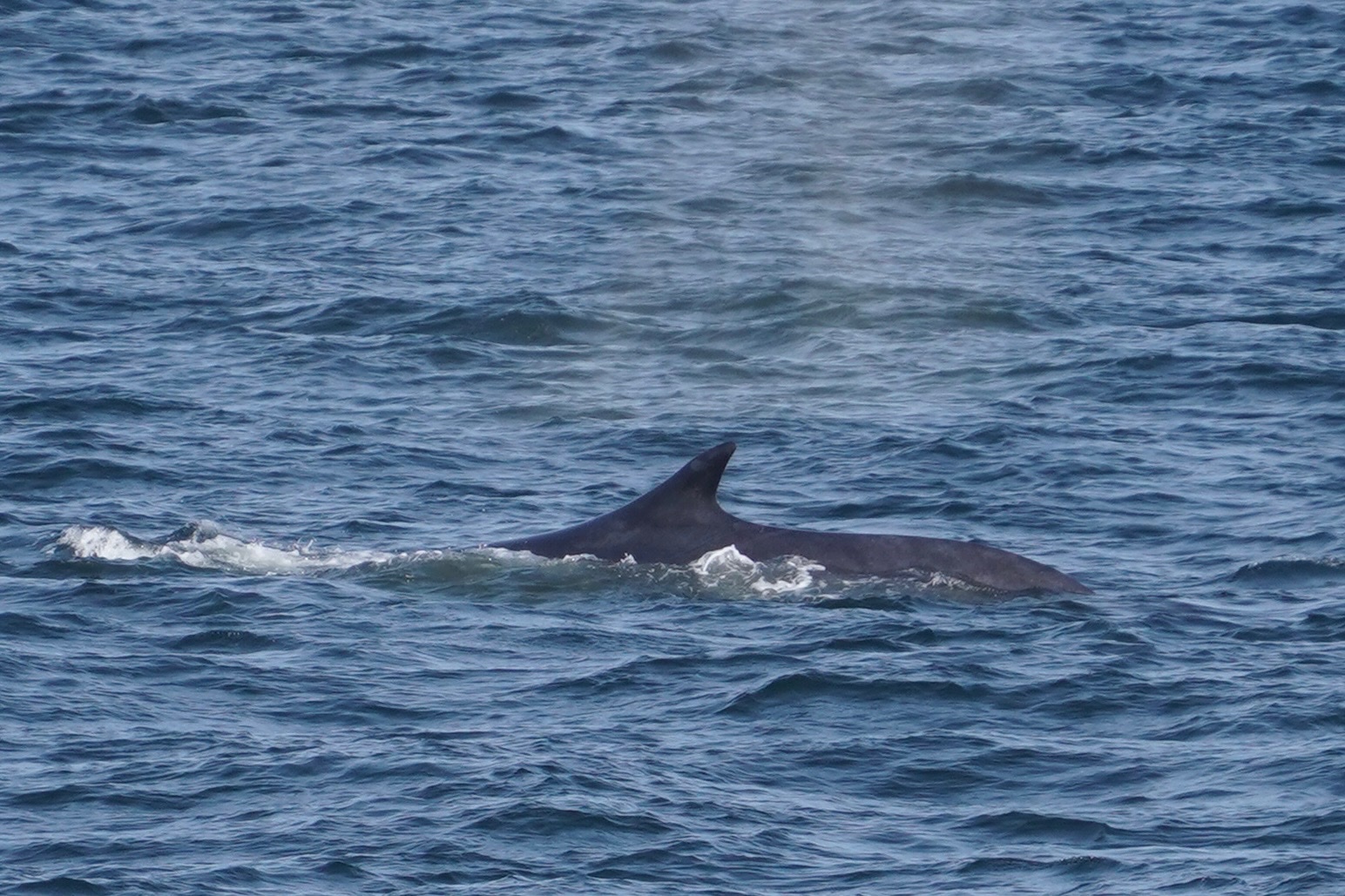
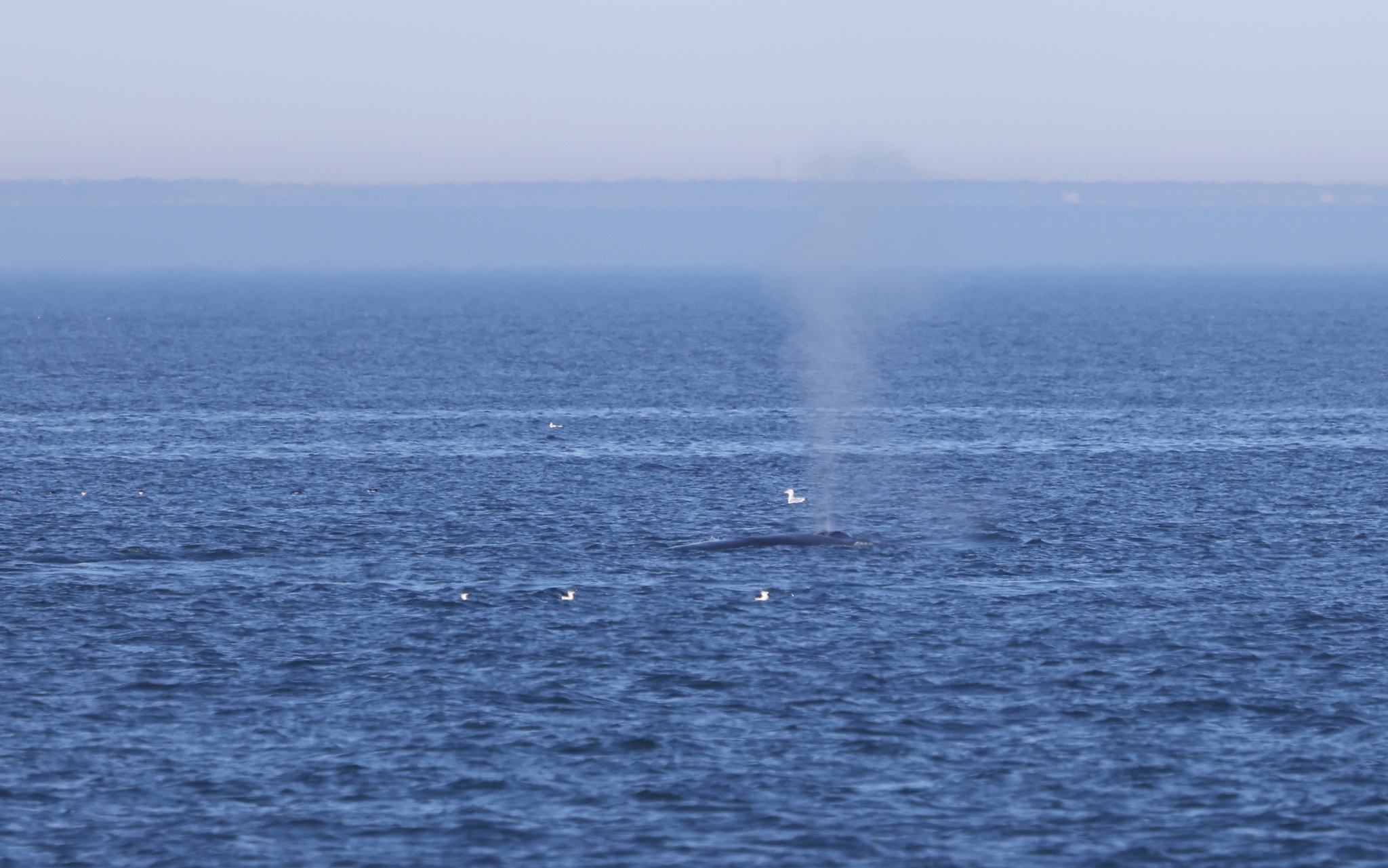
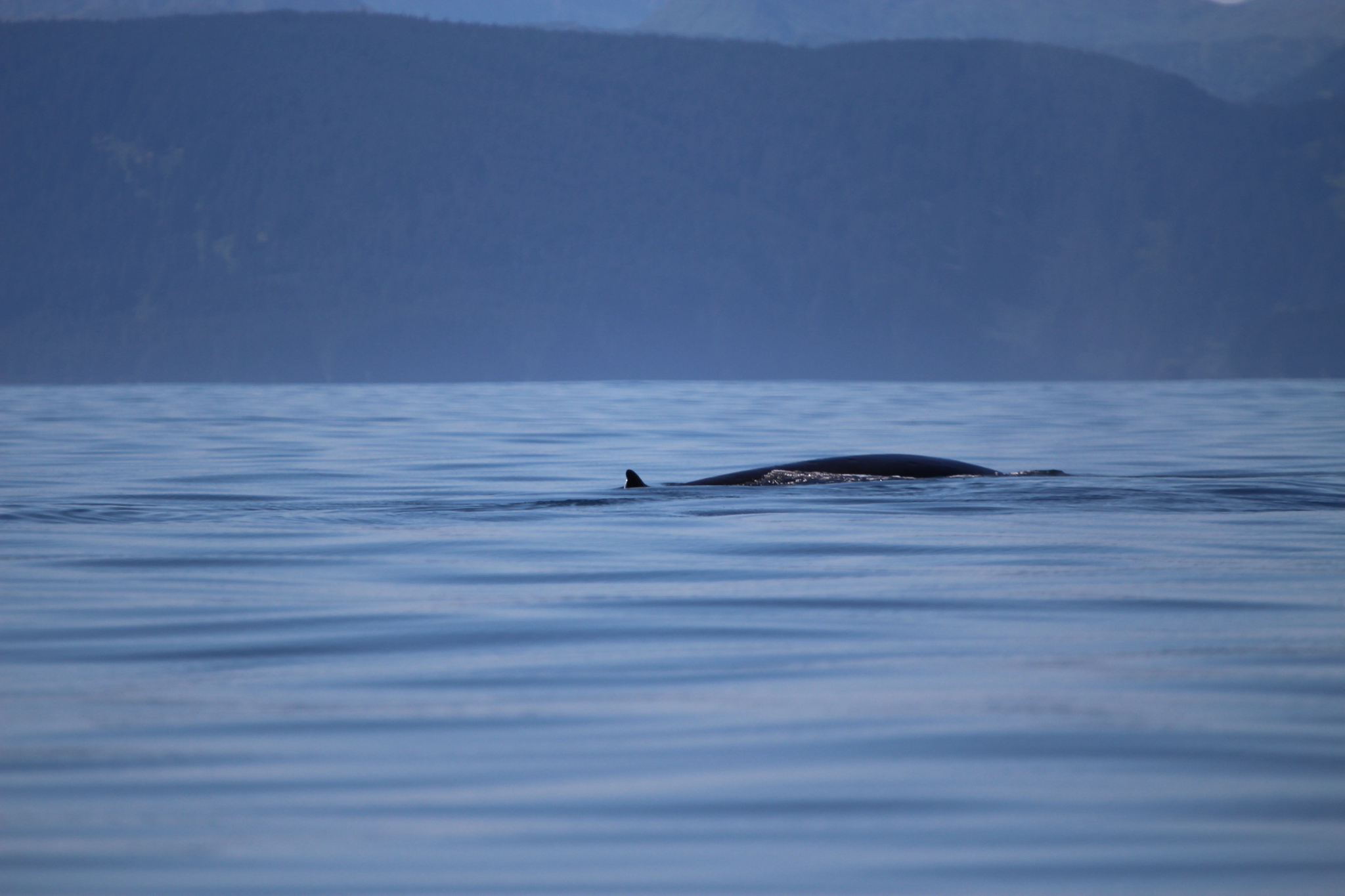
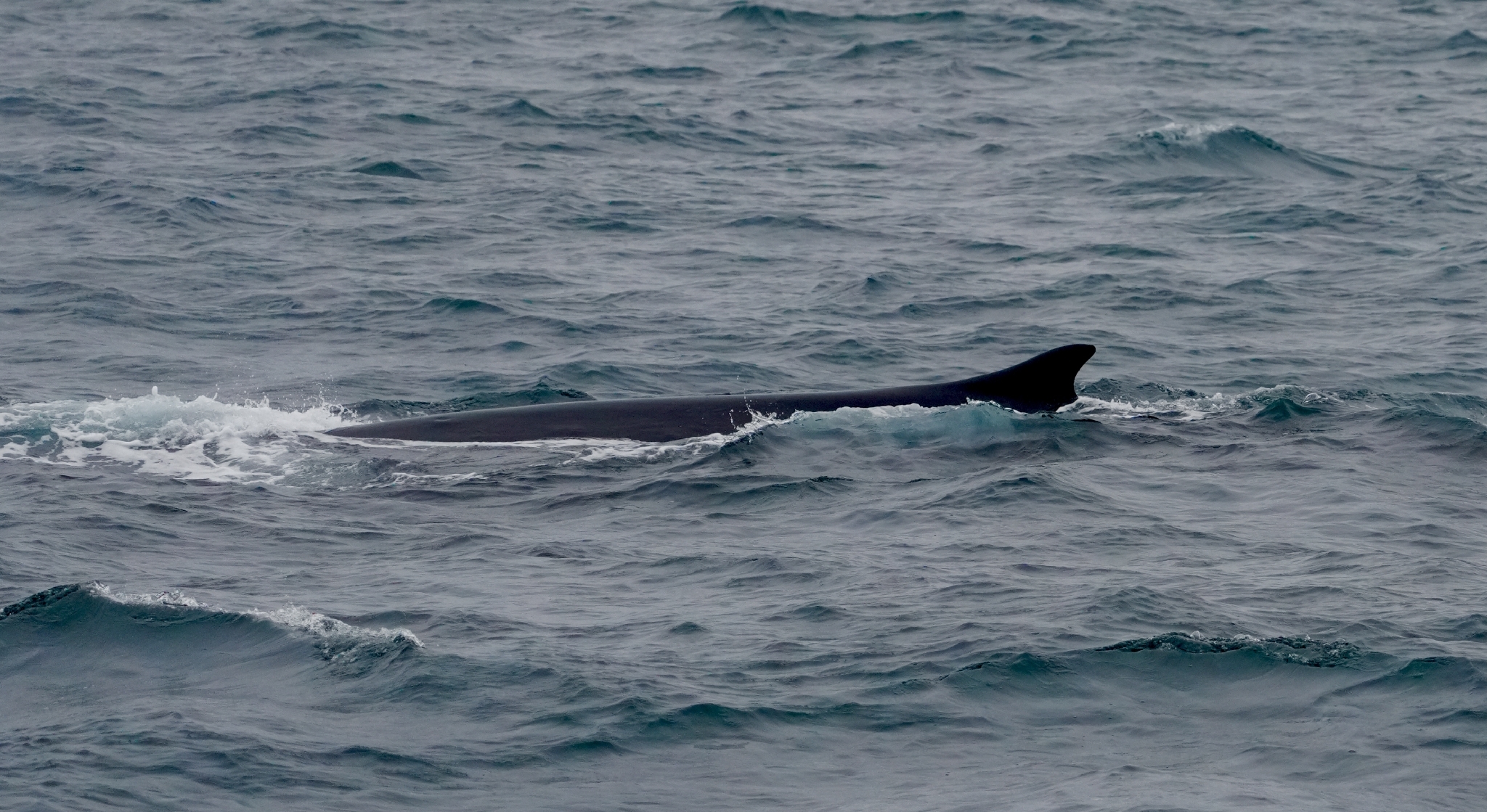
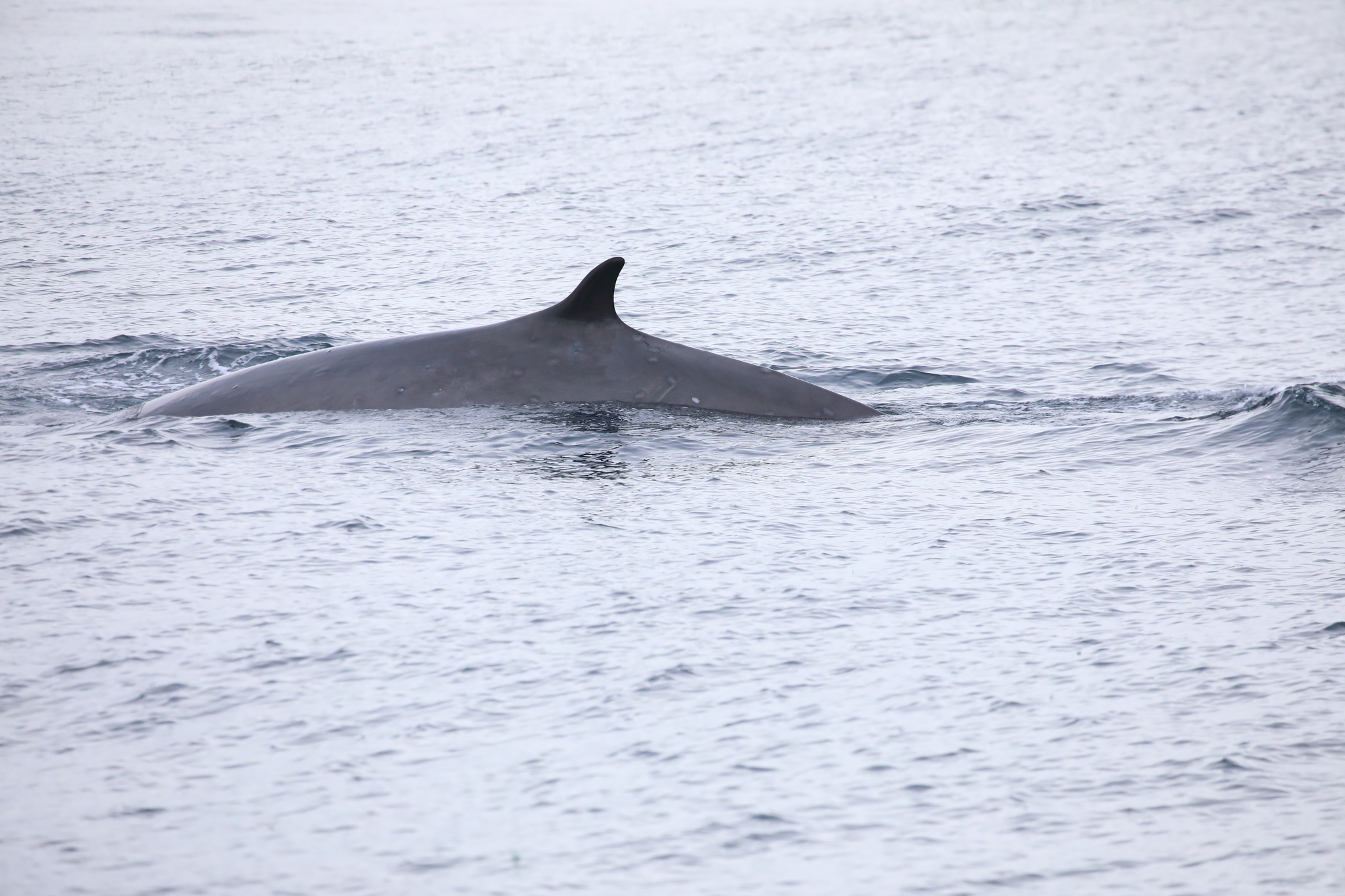
The fin whale is the second largest living animal, immediately after the blue whale. Its outline is distinctly more streamlined than that of the other large cetaceans: a long, tapering body, slate grey-brown on the back, white on the belly and beneath the flippers. Seen from above, the head forms a pointed V crossed by a single median ridge running from the blowholes to the tip of the rostrum. The dorsal fin, falcate and about 60 cm high, is set far back, on the last third or last quarter of the back; it appears at the surface only a long moment after the blow, which gives the profile of a diving animal its characteristic impression of an “endless back”. The blow is a narrow, powerful vertical column, 4 to 6 m high, often the first sign of presence at a distance.
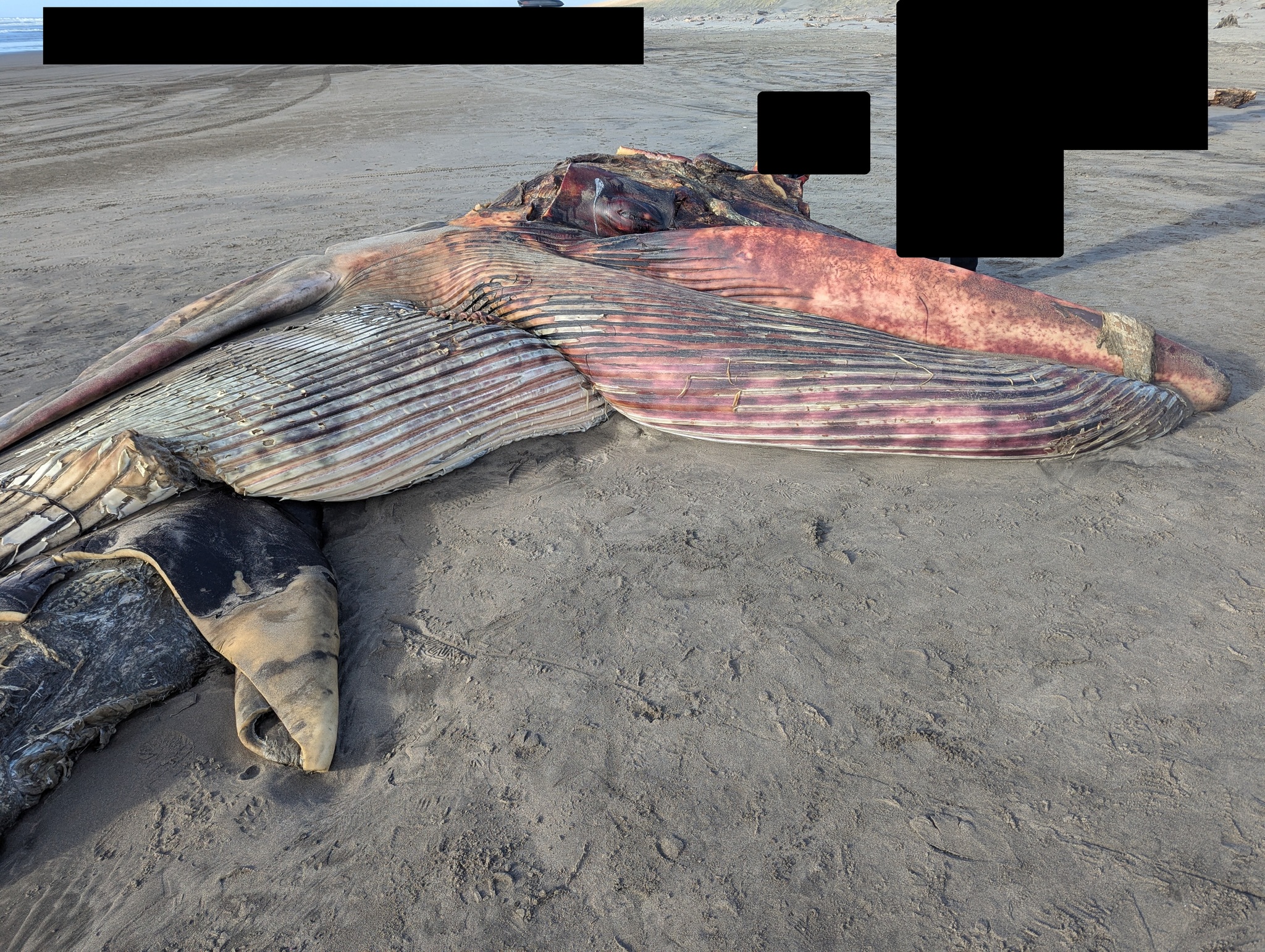
The most diagnostic feature is the asymmetry of head coloration, unique among mammals: the lower jaw is dark on the left and white or very pale grey on the right, this asymmetry continuing onto the right front baleen plates, which are cream white. Behind the head a pale “chevron” opens rearwards in a V, and dark oval pigmented areas known as “flipper shadows” appear beneath the flippers. These markings, combined with the dorsal fin profile and with scars, allow individual photo-identification: in the Pelagos Sanctuary, one animal was re-identified seven times over 17 years. The fin whale carries 260 to 480 baleen plates per side (300 to 400 according to other estimates), up to 76 cm long, and 50 to 100 throat pleats running from the chin to the navel.
Confusion is possible with several balaenopterids. The blue whale is larger (24 to 27 m), its head is broad and rounded in a U, its skin mottled blue-grey, its dorsal fin tiny and set even further back, and it shows no head asymmetry. The sei whale (Balaenoptera borealis) is smaller, with a narrower rostrum, a proportionally taller and more forward dorsal fin, and no asymmetry. Bryde’s whale is recognised by its three parallel rostral ridges. The common minke whale (6 to 10 m) is much shorter and carries a clear white band on the flippers. Finally, the fin whale does not generally raise its tail fluke when sounding, unlike the humpback whale or the sperm whale.
The fin whale belongs to the order Cetartiodactyla, suborder Mysticeti (baleen whales), family Balaenopteridae (rorquals) and genus Balaenoptera. It was described by Linnaeus in 1758. The genus name combines the Latin balaena (whale) with the Greek pteron (wing, fin), while physalus derives from the Greek physa, “blow”, in reference to the power of the animal’s blow.
The genetic revision by Archer and colleagues (Journal of Mammalogy, 2019) distinguishes three subspecies on molecular grounds: B. p. physalus (Linnaeus, 1758), now restricted to the North Atlantic; B. p. velifera (Cope in Scammon, 1869), an old name, the oldest available, revived by Archer and colleagues in 2019, specific to the North Pacific (from the Gulf of California to the Bering Sea, the Sea of Okhotsk and Japan); and B. p. quoyi (Fischer, 1829) in the Southern Hemisphere. The name velifera, from the Latin velifer (“sail-bearing”), refers to the large falcate dorsal fin. A fourth taxon, B. p. patachonica (Burmeister, 1865), the “pygmy fin whale” proposed by Clarke (2004) on very limited material, remains formally named: Archer et al. cite it among the accepted subspecies and NOAA still retains it. Its validity has never been tested genetically, however, and remains debated. Older French-language sources, including the French Wikipedia, still mention only two subspecies.
The genetic distance separating the fin whale from the blue whale was compared, in the earliest mitochondrial analyses (Arnason & Gullberg, 1993), to the distance separating humans from chimpanzees. The date of this divergence remains uncertain: of the order of 3.5 million years according to that early work, appreciably older according to recent genomic analyses. Hybrids between the two species are nonetheless documented with some regularity in the North Atlantic as in the North Pacific.
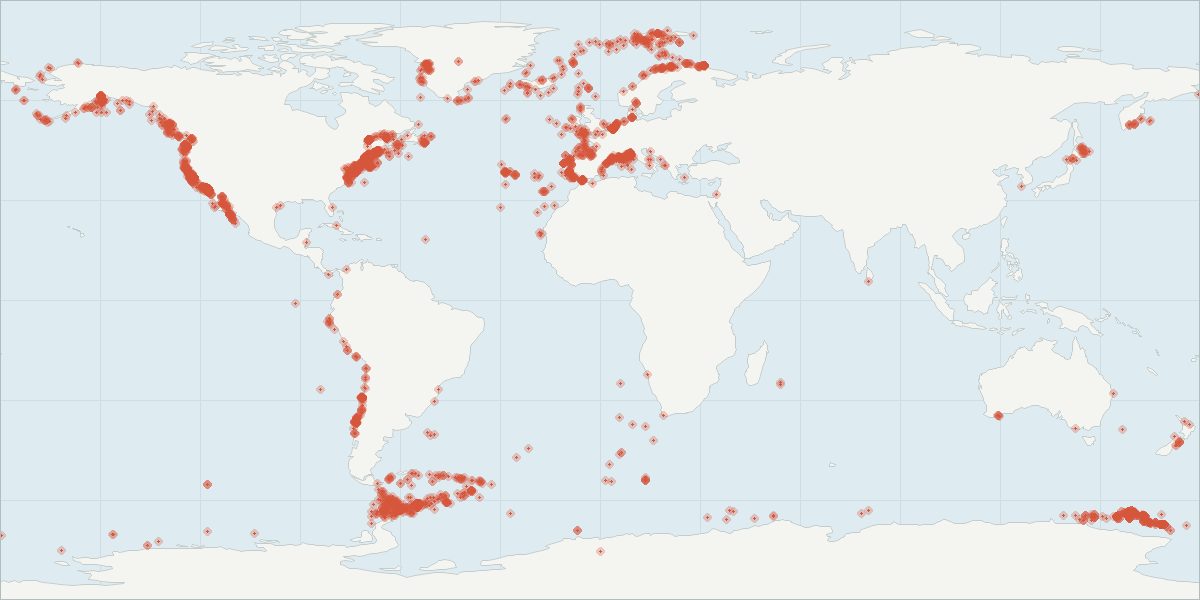
The species is cosmopolitan: it occupies all the major oceans, from polar waters to tropical zones, with a clear preference for deep offshore waters, generally beyond the edge of the continental shelf and the 200 m depth contour. It is absent from the sea ice, the Red Sea and the Persian Gulf, but penetrates as far as the Baltic. It is more abundant north of the 30th parallel in the North Atlantic and becomes scarce in the tropics. The classic migratory pattern, summer feeding at high latitudes and winter breeding at low latitudes, is in fact complex and variable from one region to another; probably resident groups occur in the Gulf of California, in the East China Sea and in the Mediterranean.
Abundance estimates are uneven. The North Atlantic is the best documented region, with more than 70,000 individuals in the combined surveys of 2015-2016 (about 50,000 in 2007), a level that NAMMCO judges close to or above the level preceding the industrial whaling of the 1880s. The North Pacific is thought to hold 14,000 to 18,000 individuals of the subspecies velifera according to Archer et al., with other compilations putting forward higher figures; NOAA explicitly notes that no reliable recent estimate exists for most of the North Pacific, nor for the Southern Ocean.
In France, the species occurs along all the deep-water seaboards of the mainland. In the north-western Mediterranean it forms a subpopulation genetically distinct from that of the Atlantic: the synoptic ACCOBAMS Survey Initiative of summer 2018 produced an uncorrected abundance of 1,749 animals, that is 3,282 individuals (CV = 0.31) after correction for availability and perception bias. The Pelagos Sanctuary, between Provence, Corsica, Liguria and Tuscany, is a major summer feeding site: photo-identification monitoring by the GREC between 1990 and 2007 recorded about 900 to 1,000 fin whales there, close to a third of the Mediterranean subpopulation. In the Bay of Biscay the species is regular in the deep waters of the slope and the abyssal plain, particularly in summer, with several thousand individuals in an area north-west of Spain where the krill Meganyctiphanes norvegica is abundant; the SAMM surveys of the Observatoire Pelagis (SAMM II Méditerranée in 2019, SAMM II Atlantique-Manche in 2021) provide the monitoring. In the English Channel, an essentially oceanic species, it is very rare, even though strandings occur every year on the Brittany coast and in the Iroise Sea. Overseas, the OFB reports only occasional presence at Mayotte and Réunion.
The fin whale feeds by lunge feeding: moving at about 11 km/h, it opens its mouth wide and takes in up to 70 m³ of water in a single gulp, before expelling the water through its baleen. Each gulp delivers about ten kilogrammes of prey, and the animal makes on average four lunges per deep dive (beyond 200 m). About three hours of feeding a day are enough to take in up to 1.8 to 2 t of food. Feeding dives reach 316 m and last 6 minutes on average, with a recorded maximum of nearly 17 minutes; at rest the animal stays at around 100 m. The breathing rhythm alternates between 5 to 7 closely spaced blows after a deep dive and one blow every 1 to 2 minutes while travelling.
It is one of the fastest cetaceans, and by far the swiftest of the large rorquals, hence its nickname of “greyhound of the sea”: it sustains 37 to 41 km/h, and bursts of 40 to 46 km/h have been reported. Despite its smaller size, it reaches cruising and top speeds comparable to those of the blue whale. Social life is unobtrusive: groups most often number 1 to 7 individuals, but far larger aggregations, up to 250 animals according to the OFB, form on rich feeding grounds.
Males produce some of the lowest-pitched sounds in the animal kingdom: frequency-modulated pulses between 16 and 40 Hz, well below the threshold of human hearing, lasting 1 to 2 seconds and organised in regular sequences of 7 to 15 minutes, repeated over several days. Source levels reach 160 to 186 dB re 1 µPa at 1 m, which allows them to carry over hundreds of kilometres. These songs are seasonal, associated with the breeding period and interpreted as sexual displays.
Breeding takes place in winter, in temperate waters at low latitude. Gestation lasts 11 to 12 months and produces a single calf of 6 to 6.5 m, weaned at around 6 to 8 months when it reaches 11 to 12 m, and remaining with its mother for about a year. The interval between two births is 2 to 3 years. Sexual maturity is reached at around 6 to 10 years in males and 7 to 12 years in females; full physical maturity is attained only between 22 and 30 years. As in the other rorquals, females are on average longer and heavier than males.
Industrial whaling decimated the species in the twentieth century: about 874,000 fin whales were killed, of which nearly 726,000 in the Southern Hemisphere (about 704,000 for the Antarctic operations alone, from 1904 to 1975), 75,000 in the North Pacific and 72,000 in the North Atlantic. Annual catches peaked at around 30,000 individuals in the worst seasons (the late 1930s, then the early 1960s), the mean over the period 1935-1965 lying rather between 20,000 and 25,000 animals a year. The International Whaling Commission protected the species in the Southern Hemisphere and the North Pacific from 1976, then adopted in 1982 the moratorium on commercial whaling, in force from 1986.
These measures bore fruit: the world population has approximately doubled since the 1970s, which led the IUCN to downlist the species from Endangered to Vulnerable in November 2018, with an increasing trend and about 100,000 mature individuals. Some takes nevertheless remain: Iceland, which lodged a reservation, has set national quotas (161 animals for the East Greenland / West Iceland area, 48 for East Iceland / Faroe Islands, for the period 2018-2025); Greenland has an aboriginal subsistence quota of 19 animals a year; and Japan, which left the IWC in 2019, resumed commercial catches of fin whales in the North Pacific in 2024 (30 individuals).
Current threats are above all indirect. Ship strikes are the leading cause of human-induced mortality, particularly from large fast vessels over the continental slopes; in the Mediterranean they are thought to account for more than 20% of deaths. Next come underwater noise (shipping traffic, military sonars, seismic prospecting), which could hamper the breeding communication of males and slow the recovery of populations, chemical pollution (organochlorines of the PCB and DDT type, transmitted through the placenta and through lactation, to which are added flame retardants, phthalates and microplastics), bycatch in fishing gear, rare but documented, and climate change, which redistributes krill and shifts the timing of migrations.
The fin whale is listed in Appendix I of CITES, in Appendices I and II of the Bonn Convention (CMS) and falls under ACCOBAMS in the Mediterranean, the Black Sea and the adjacent Atlantic area; it is listed as endangered under the United States Endangered Species Act. In France it is fully protected by the order of 1 July 2011, amended on 3 September 2020, which prohibits in particular approaching closer than 100 m within marine protected areas. Finally, on a joint proposal from France, Italy, Spain and Monaco, the International Maritime Organization designated the north-western Mediterranean on 7 July 2023 (resolution MEPC.380(80)) as a Particularly Sensitive Sea Area (PSSA), in order to reduce collisions with fin whales and sperm whales in an area crossed by some 220,000 vessel movements a year; the associated measures, speed reduction, safety distance, reporting of cetaceans sighted and of collisions, nevertheless remain advisory.
In mainland France, two sectors lend themselves to observation. In the north-western Mediterranean, the Pelagos Sanctuary offers the best chances from June to September, off Toulon, Saint-Raphaël, Nice, Bandol or Cap Corse, generally beyond the continental slope, in the oceanic domain where upwelling along the Liguro-Provençal front concentrates krill; the Parc naturel marin du Cap Corse et de l’Agriate has recorded 68 sightings, that is about 100 individuals, since 2018. In the Bay of Biscay the species is encountered in summer over the slope and the abyssal plain, in particular from the cross-Channel and Cantabrian ferries.
The first sign remains the blow: a vertical column 4 to 6 m high, visible from far off in a calm sea, followed by the long grey back and by the late appearance of the small falcate dorsal fin. The animal does not show its tail fluke when sounding. The white coloration of the right lower jaw, visible during a lunge at the surface, removes any doubt about the identification.
On the ethical side, French regulations prohibit the intentional disturbance of cetaceans and approaching closer than 100 m within marine protected areas. The good practices recommended by ACCOBAMS and the Pelagos Sanctuary consist in never cutting across the animal’s path or approaching it head-on, not pursuing it, limiting the duration of observation, maintaining a constant and slow speed, and not entering the water. Recreational boaters and professional vessels are encouraged to report their sightings, in particular through the REPCET system for sharing the positions of large cetaceans, designed to prevent collisions.
In the Northern Hemisphere, males average 19 m and females 20.5 m, with maxima of around 21.5 to 22.5 m. Southern Hemisphere individuals are larger and can reach 26 to 27 m. Weight typically lies between 40 and 80 tonnes, with exceptional animals estimated at more than 100 tonnes. It is the second largest animal on the planet, just behind the blue whale.
Yes, but its status is improving globally. The IUCN reclassified it from Endangered to Vulnerable in 2018, the world population having roughly doubled since the 1970s to reach some 100,000 mature individuals, with an increasing trend. The situation nevertheless remains a concern in the Mediterranean, where the subpopulation, genetically distinct, was classified Endangered in 2021 with fewer than 1,800 mature individuals and an inferred continuing decline.
Yes. It is the large cetacean most frequently observed in the French Mediterranean, in particular in the Pelagos Sanctuary between June and September. It is also regular in the deep waters of the Bay of Biscay, especially in summer. It is on the other hand very rare in the English Channel, since it frequents mainly depths greater than 200 m. Overseas, the Office français de la biodiversité reports only occasional presence at Mayotte and Réunion.
The blue whale is larger (24 to 27 m), its skin is mottled blue-grey, its head broad and rounded in a U, and its dorsal fin is tiny and set even further back. The fin whale has a more slender slate grey-brown body, a pointed V-shaped head with a single median ridge, a falcate dorsal fin about 60 cm high, and above all an asymmetry in the coloration of the lower jaw, white on the right, dark on the left, which the blue whale does not show. Speed, on the other hand, is not a good criterion: despite its smaller size, the fin whale swims as fast as the blue whale.
The asymmetry is well documented: the right lower jaw and the right front baleen plates are pale, while the left side stays dark. It is a feature unique among mammals. No functional explanation commands consensus today, even if this asymmetry is generally related to lunge-feeding behaviour, the animal tending to roll onto its right side when feeding near the surface. What is known with certainty is that these markings, together with the pale chevron behind the head and the dorsal fin profile, are used by researchers for individual photo-identification.
Ship strikes. They are the leading cause of human-induced mortality, in particular over the continental slopes frequented by large fast vessels. In the Mediterranean they are thought to be behind more than 20% of deaths. It was precisely to address this that the International Maritime Organization designated the north-western Mediterranean as a Particularly Sensitive Sea Area in July 2023, with recommendations on speed reduction and reporting. Next come underwater noise, chemical and plastic pollution, and climate change.
Species account compiled from authoritative scientific sources (IUCN, NOAA Fisheries, specialist literature) and reviewed for factual accuracy.
According to the open data of the GBIF, 3,455 georeferenced sightings of Balaenoptera physalus are recorded in our photographic index.
| Country | Notes |
|---|---|
| United States of America | 1,345 |
| Antarctica | 554 |
| Canada | 431 |
| Chile | 155 |
| Svalbard and Jan Mayen | 127 |
| Spain | 110 |
| France | 107 |
| Norway | 103 |
| Netherlands | 99 |
| Portugal | 92 |

Monthly distribution of 3,715 dated sightings (all years combined): the maximum is reached in August.
| Month | Notes |
|---|---|
| janvier | 355 |
| February | 364 |
| mars | 232 |
| avril | 235 |
| mai | 255 |
| juin | 315 |
| juillet | 446 |
| August | 647 |
| septembre | 292 |
| octobre | 169 |
| novembre | 177 |
| December | 228 |
These figures reflect survey effort (more boaters and more surveys in summer) as much as the actual presence of the species: to be interpreted with caution.


Photographs from GBIF under a Creative Commons licence. The author and the licence of each photograph are given; please respect them if you reuse them.
Automatic selection of the most cited works mentioning the species (source: Crossref).