Sei whale (Balaenoptera borealis)

Key facts
Scientific name Balaenoptera borealis Lesson, 1828
Other names Rudolphi’s rorqual, Rudolphi’s whale; rorqual boréal, rorqual de Rudolphi (French), seihval (Norwegian)
Size 12 to 16 m commonly; up to 18-19.5 m for the largest females, males remaining smaller
Weight 15 to 30 t for an ordinary adult; up to about 45 t for the largest individuals
Longevity 50 to 70 years commonly; one individual of 74 years has been documented
Diet Copepods (Calanus finmarchicus), krill (Euphausia superba), small schooling fish and cephalopods; about 900 kg of food per day
IUCN status Endangered (EN, criterion A1ad) on the global Red List, 2018 assessment, still the one in force in recent editions. Least Concern (LC) on the 2023 European regional Red List; Data Deficient (DD) in metropolitan France. No Mediterranean subpopulation is assessed separately, the species being only an exceptional visitor there.

In brief

The third largest rorqual after the blue whale and the fin whale, the sei whale is a streamlined giant of the open sea, one of the fastest swimmers in the ocean. Decimated by industrial whaling in the 20th century, it is still classified as “Endangered” on the IUCN global Red List, even though its population now appears to be recovering. In France it is no more than an occasional visitor to the Bay of Biscay and an exceptional guest in the Mediterranean.

Identification

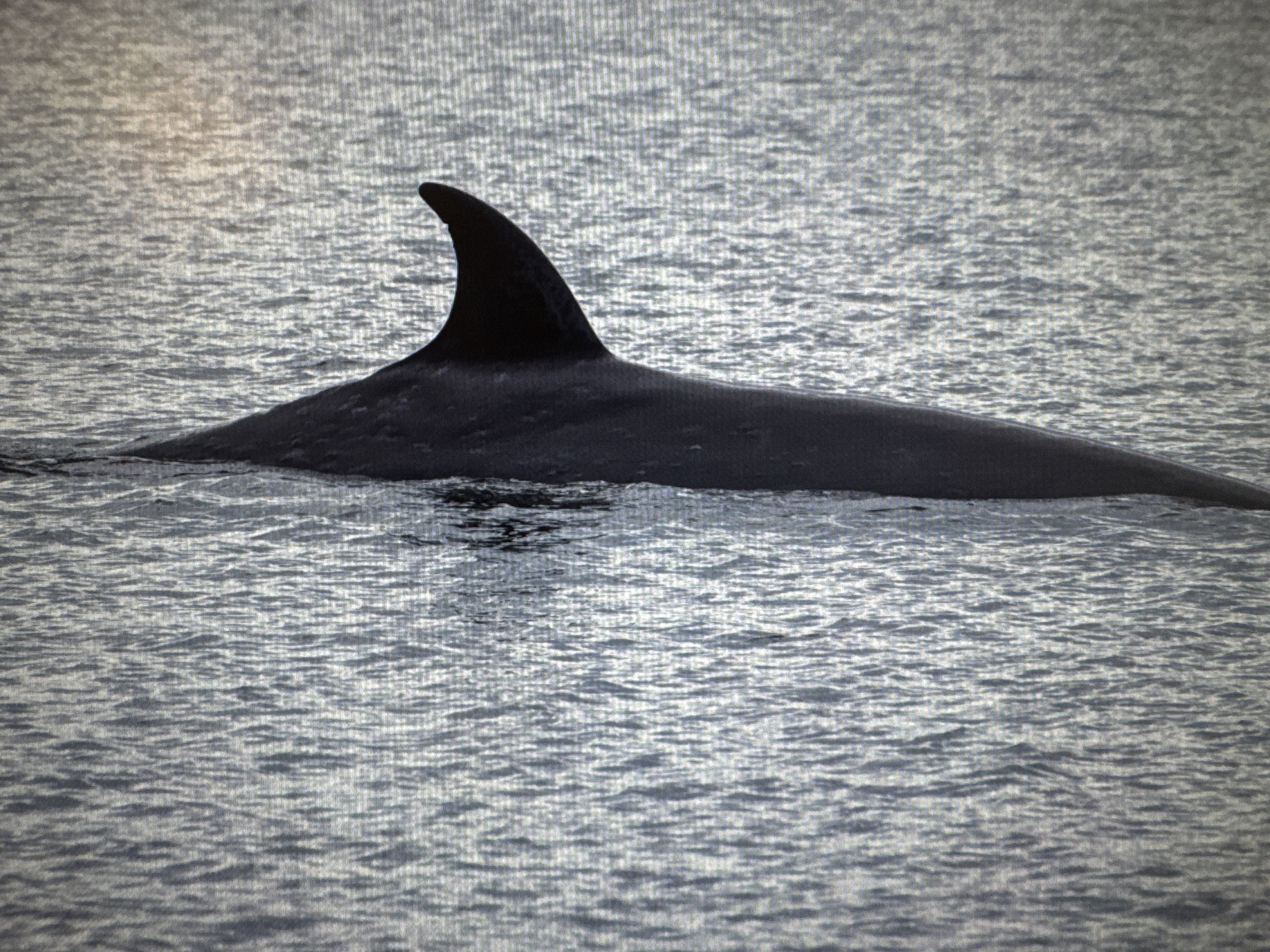
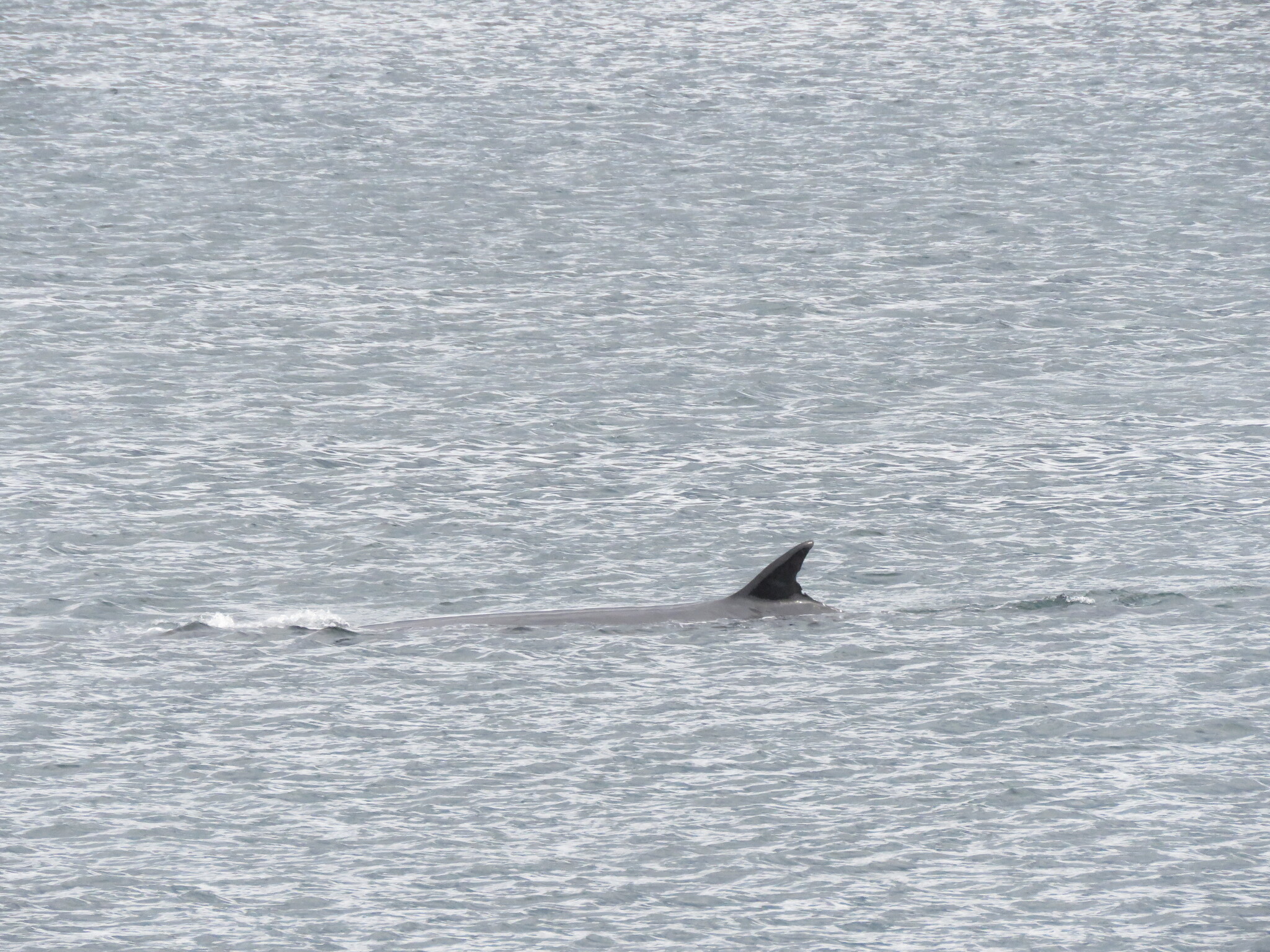
The sei whale has the most slender body of the large rorquals: long, low in the water, slate grey to an almost black metallic grey on the back, paler on the belly, with irregular pale mottling and scars on the flanks. The rostrum is pointed, slightly arched in profile, and carries a single median longitudinal ridge between its tip and the blowholes. The dorsal fin, tall and markedly falcate, is set two thirds of the way back along the body, while the flippers are short. The throat pleats, few in number (30 to 65 depending on the counts), stop well short of the navel. Each row holds 300 to 380 baleen plates, published counts ranging from 219 to 410, blackish and fringed with extremely fine inner bristles, of the order of 0.1 mm: this is the most reliable character on a stranded animal.

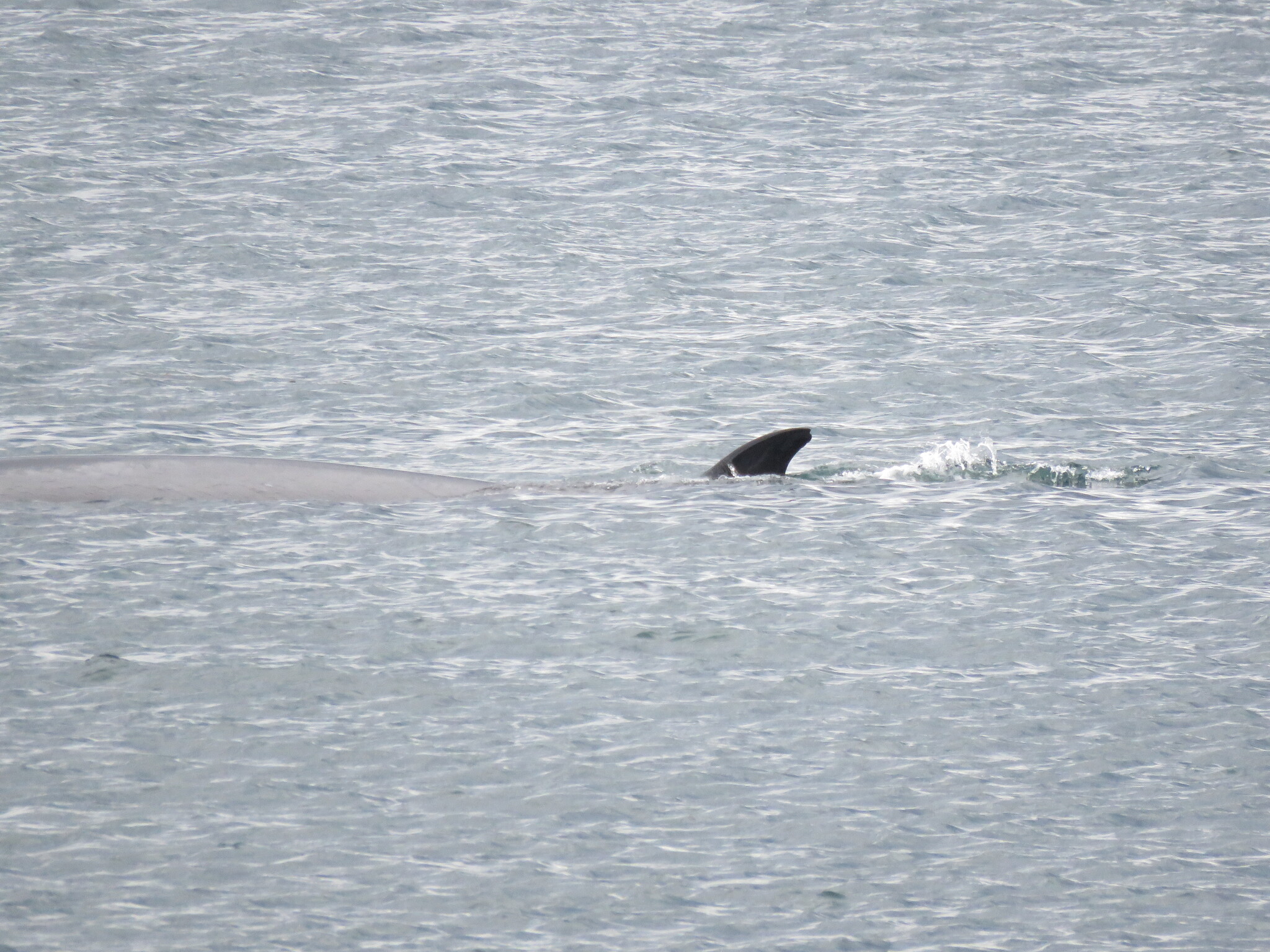
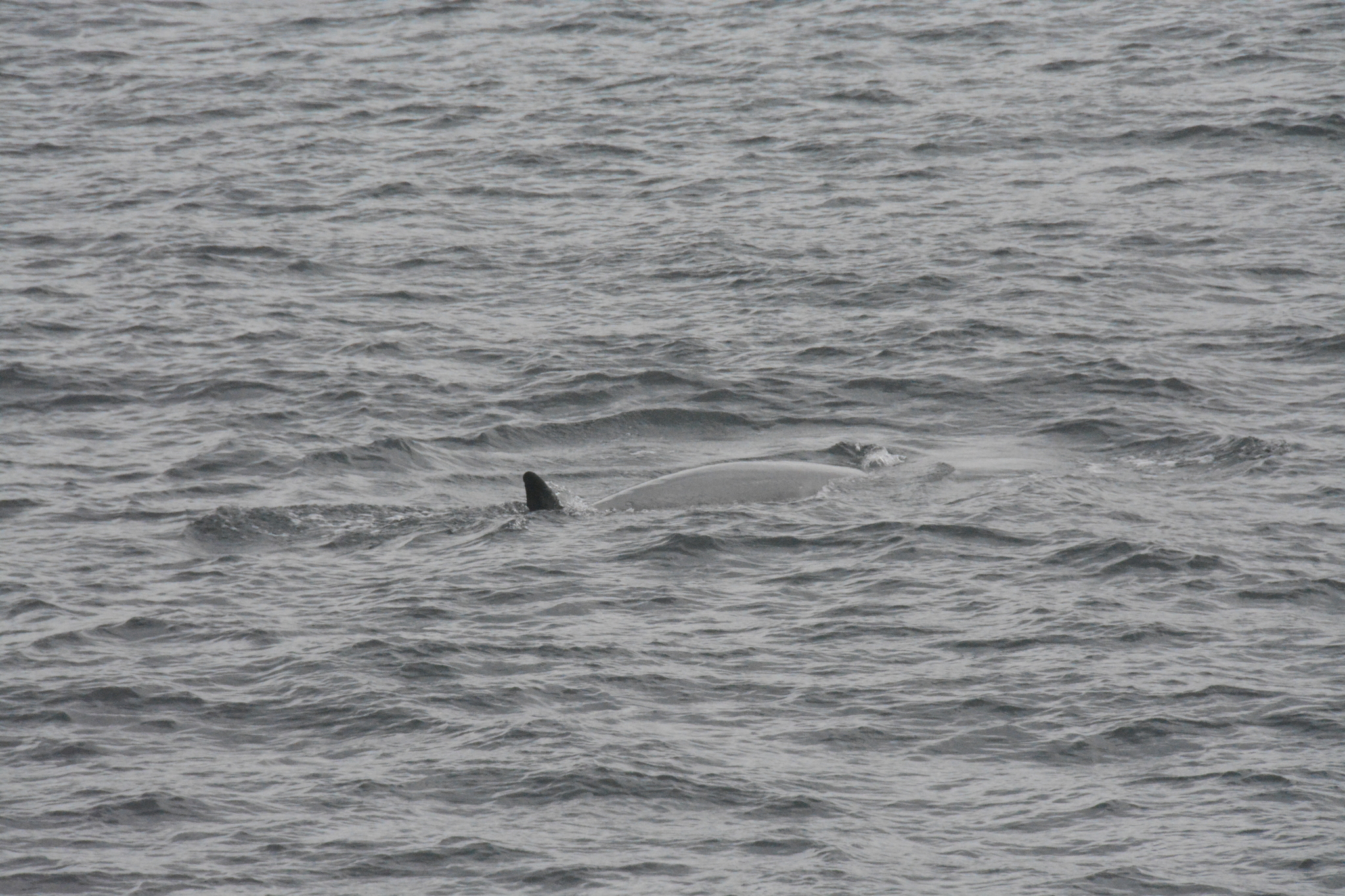
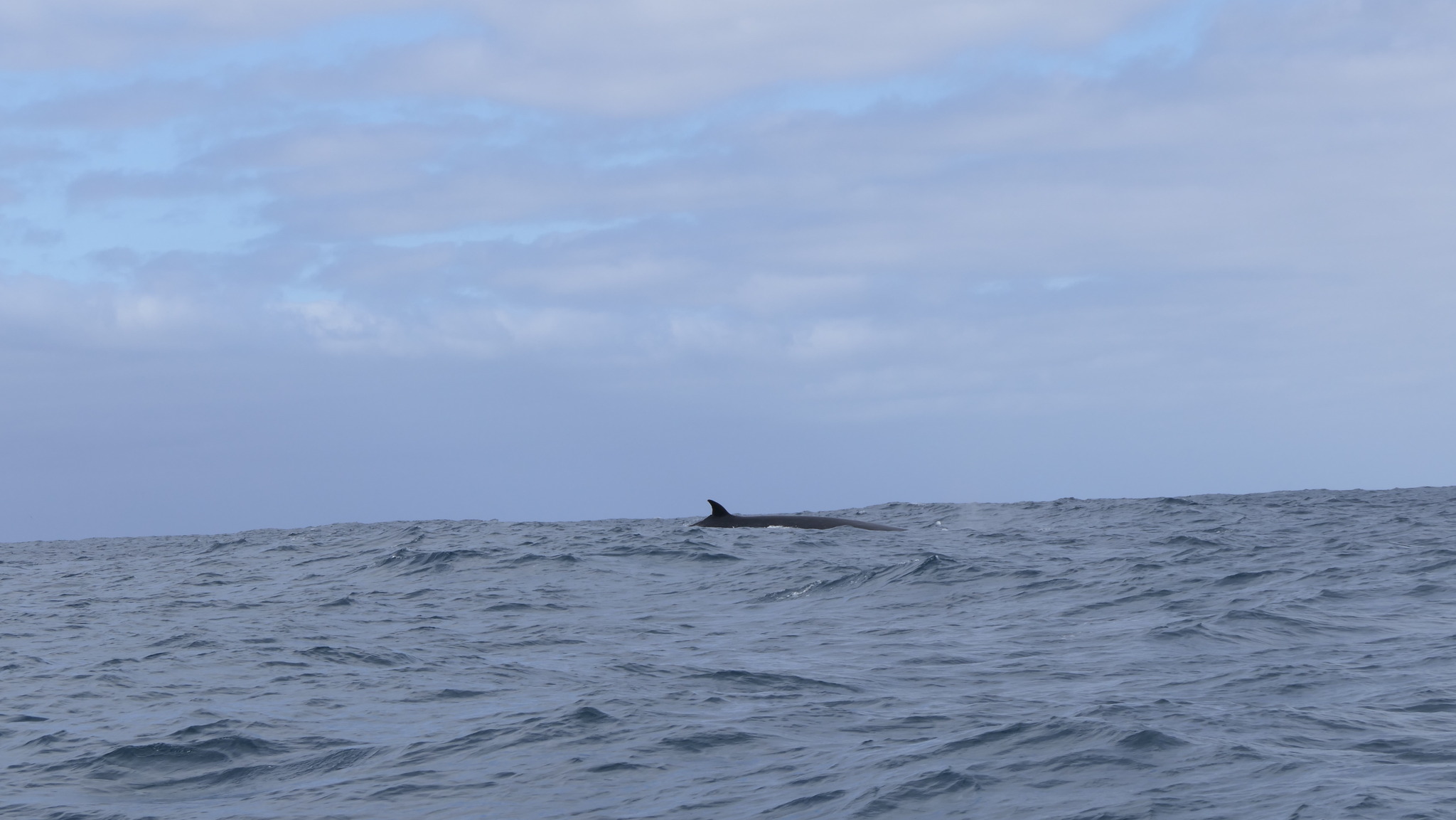
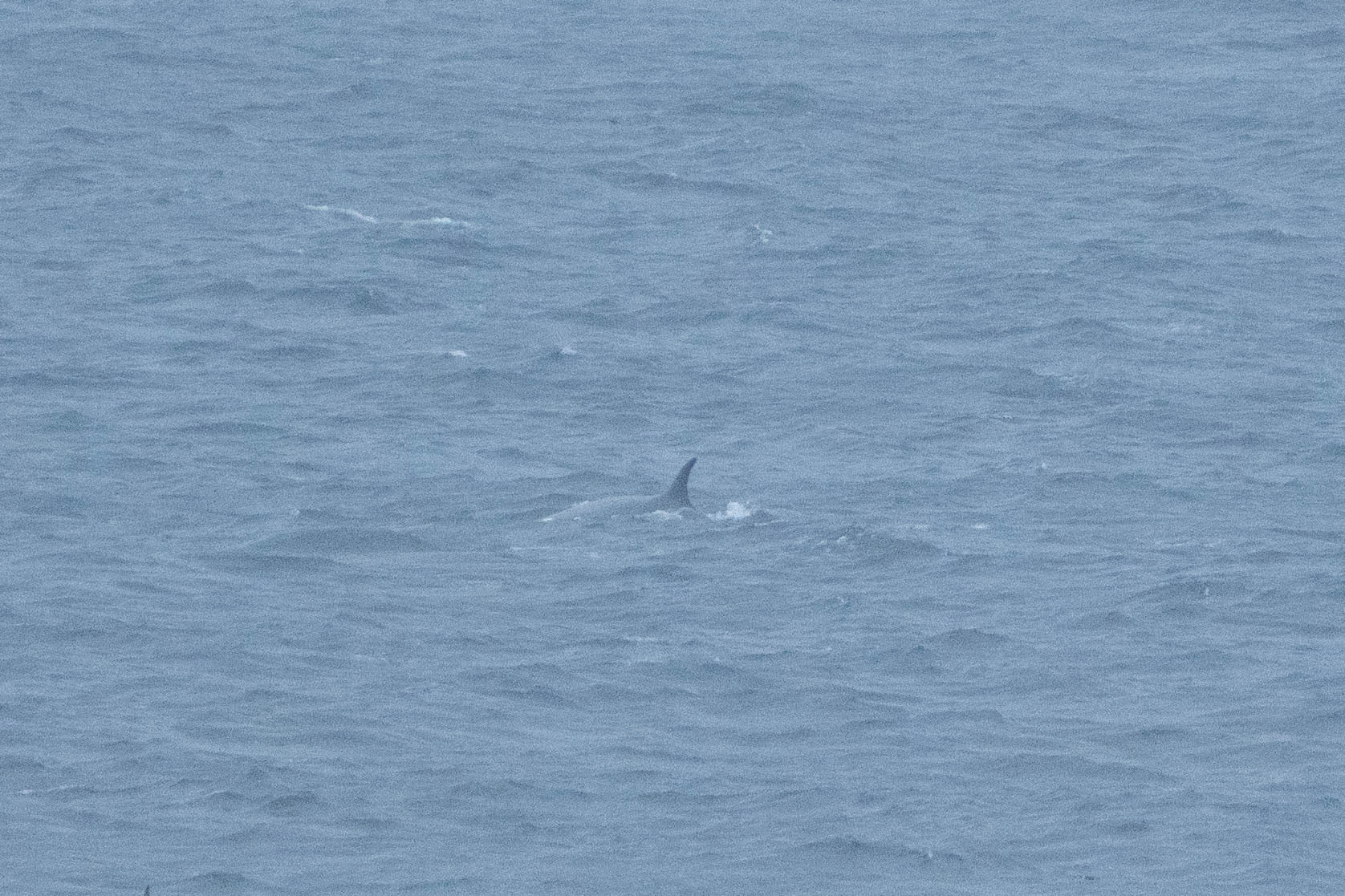
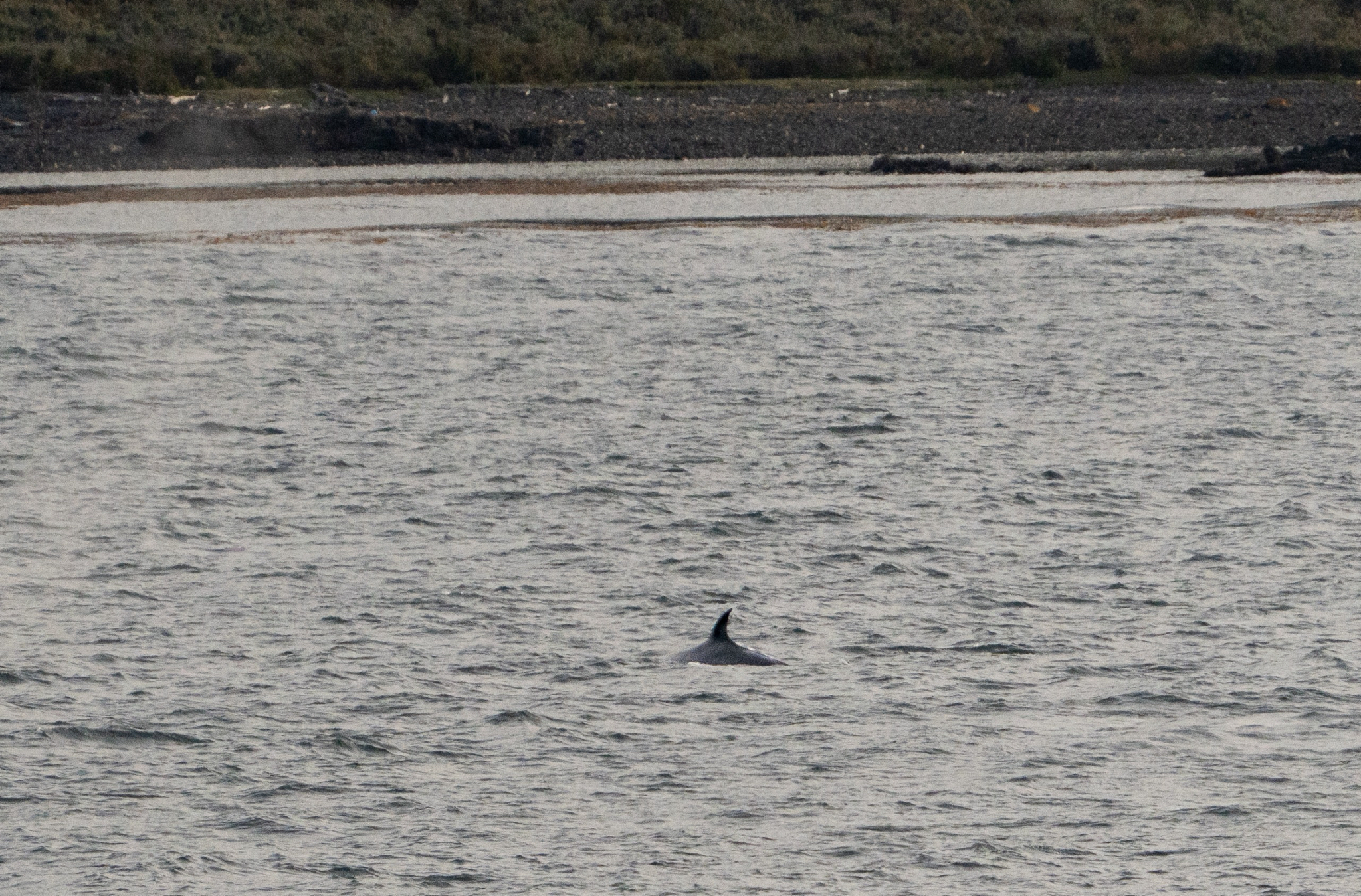
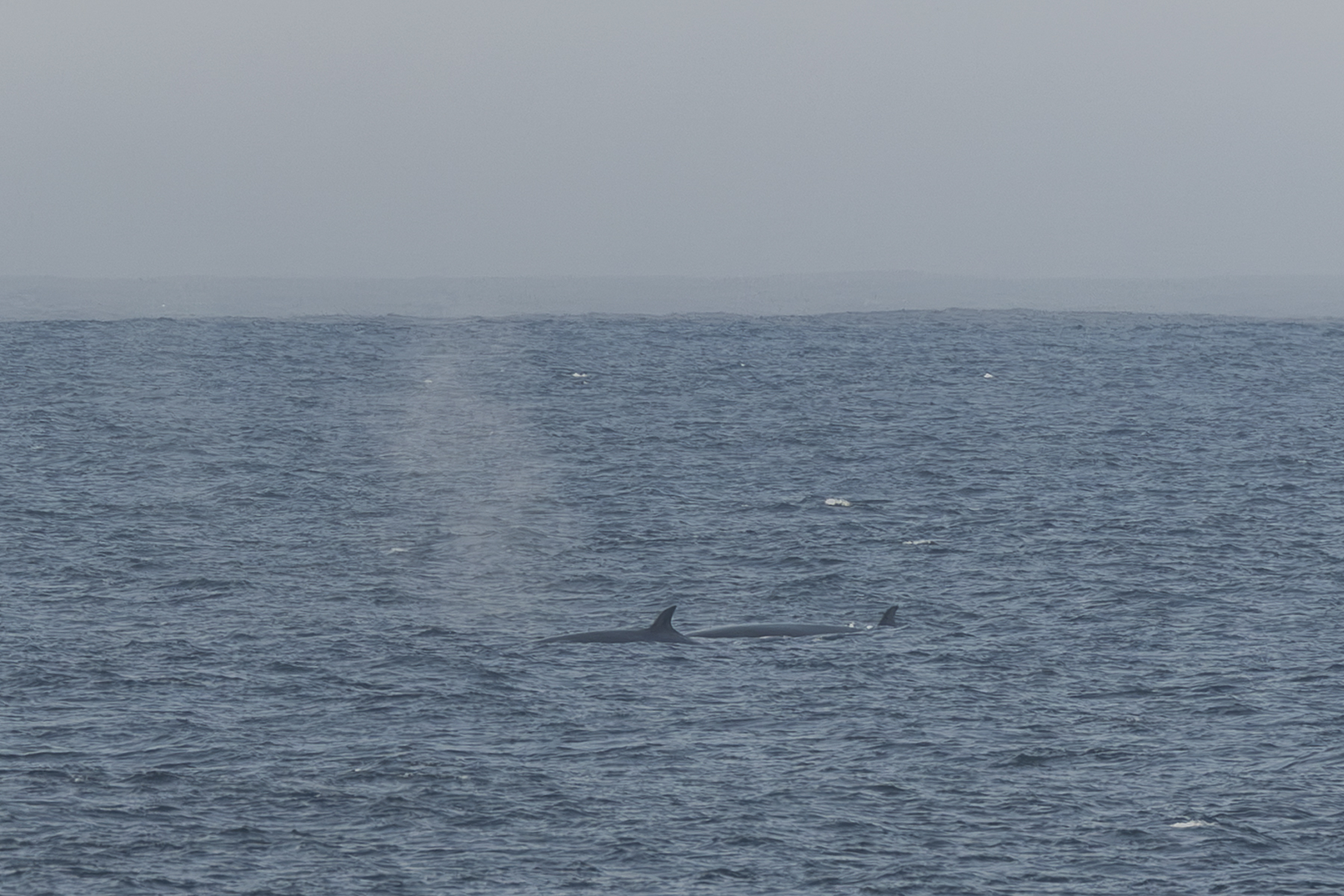
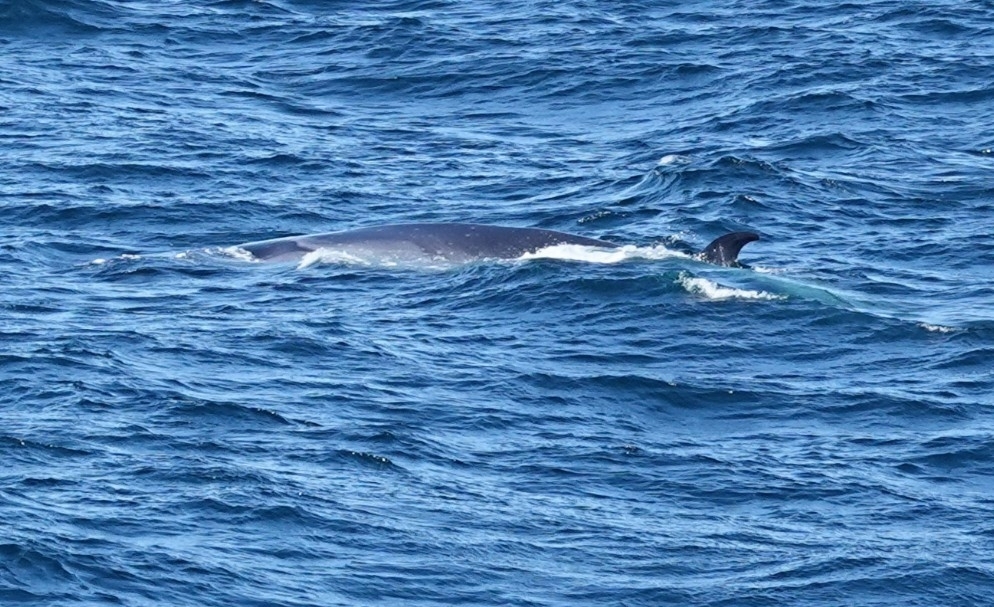
At sea, the way the animal breathes tells more than its measurements. It surfaces very flat: the blow and the dorsal fin appear almost simultaneously, whereas in the fin whale the dorsal fin emerges distinctly later. It never raises its tail fluke when diving and leaves broad smooth footprints at the surface.

Confusions are frequent. The fin whale is larger, its dorsal fin set further back and less upright, and its right lower jaw is white, an asymmetry absent in the sei whale. Bryde’s whale, more tropical, carries three longitudinal ridges on the rostrum against a single one here: that is the decisive criterion. The common minke whale rarely exceeds 10 m and shows a clear white band on the flippers.

Taxonomy

Balaenoptera borealis Lesson, 1828 belongs to the family Balaenopteridae, the rorquals, within the baleen whales (Mysticeti). The naturalist Karl Rudolphi examined an individual stranded on the Baltic in 1819, hence the name “rorqual de Rudolphi”, but it was René Lesson who formally described the species in 1828, directly in the genus Balaenoptera, which is why the authority is written without parentheses. The international name “sei whale” comes from the Norwegian seihval, “pollock whale”: the animal appeared off Norway at the same time as that fish, drawn by the same concentrations of plankton. Two subspecies are recognised: B. b. borealis in the northern hemisphere and B. b. schlegelii in the southern hemisphere, which is larger.

Range and habitat

Cosmopolitan but strictly pelagic, the sei whale frequents the temperate and subpolar waters of both hemispheres, over deep water and the continental slope, with a preference for temperatures of 8 to 18 °C. It avoids polar waters, warm tropical waters and enclosed or semi-enclosed seas. It moves to high latitudes in spring and summer to feed, then returns to temperate and subtropical waters in winter to breed. In the North Atlantic its range extends from the Iberian Peninsula to Norway in the east and from Florida to Greenland in the west, with an important sector between Iceland and the Denmark Strait; in the North Pacific it winters around 20-23° N and summers between 35 and 50° N.

In France the species is an occasional visitor to the Bay of Biscay, far rarer than the fin whale, and is reported only sporadically in the English Channel and the North Sea. In the Mediterranean its presence is exceptional: a few isolated incursions by individuals coming from the Atlantic, essentially in the western basin. In the French overseas territories it is recorded at Saint Pierre and Miquelon and in Guadeloupe, more occasionally at Réunion and in New Caledonia. Strandings remain rare: in late May 2026 an adult female of 14.23 m and 15.5 t, seen alive off La Flotte, stranded at Rivedoux-Plage on the Île de Ré, where she already showed no sign of life; this is only the third rorqual stranding recorded on the island, after Le Bois-Plage in 1920 and Ars-en-Ré in 2017.

Biology and ecology

Adults commonly measure 12 to 16 m, the largest females reaching 18 to 19.5 m; males remain smaller. Published masses vary between sources: 15 to 30 t for an ordinary adult, up to about 45 t for the largest individuals.

It is the most “skim-feeding” of the large rorquals. Rather than engulfing large volumes of water, it often swims on its side, mouth half open, through layers of plankton, which lets it exploit prey concentrations too dilute for other species. Its opportunistic diet combines copepods (Calanus finmarchicus in the North Atlantic), krill (Euphausia superba in the Southern Ocean), small schooling fish and cephalopods, for about 900 kg of food per day, with a feeding peak at dawn.

Solitary or in groups of two to five animals, it gathers in larger numbers over areas of abundance. Its dives, which are shallow, last 5 to 20 minutes, and it reaches 50 to 55 km/h over short distances, which makes it one of the fastest cetaceans.

Mating takes place in winter. After a gestation of 11 to 12 months, the female gives birth to a single calf of about 4.5 m weighing 650 to 700 kg, suckled for 6 to 9 months. Births are spaced two to three years apart and sexual maturity is reached between 6 and 12 years depending on the population. Longevity commonly reaches 50 to 70 years, with one individual of 74 years documented. Apart from the killer whale, the species has no known natural predator.

Status and conservation

The IUCN global Red List classifies the sei whale as “Endangered” (EN, criterion A1ad); the 2018 assessment remains the one in force in recent editions. This classification reflects the scale of the past decline more than a current fall: the global population is estimated at about 50,000 mature individuals, with an increasing trend, and is thought to have regained close to 30% of its 1948 level. The species is close to the “Vulnerable” threshold and could be downlisted if the recovery is confirmed. The 2023 European regional Red List classifies it as “Least Concern”; in metropolitan France, knowledge is judged insufficient to reach a determination. The North Atlantic is thought to hold more than 10,000 individuals, against about 20,000 before exploitation.

The species was exploited on a large scale only after the collapse of the blue whale, fin whale and humpback whale stocks, chiefly between the late 1950s and the mid-1970s: about 14,300 catches in the North Atlantic from 1885 to 1984, 72,200 in the North Pacific from 1910 to 1975 and 152,200 in the southern hemisphere from 1910 to 1979, of which more than 20,000 in the 1964-1965 season alone. The International Whaling Commission gave it full protection in the North Pacific in 1976 and in the southern hemisphere in 1979; in the North Atlantic only quotas were introduced from 1977 and catches continued until 1984, before the global moratorium came into force in 1986. Japan, having left the IWC, now includes it in its commercial whaling within its exclusive economic zone.

Current threats lie in ship strikes, bycatch in fishing gear, underwater noise, chemical and plastic pollution and the redistribution of prey linked to climate change. A mass stranding of 337 individuals in Chilean Patagonia in June 2015 has been linked to a toxic algal bloom. The species is listed in Appendix I of CITES, covered by the Bonn Convention, the ACCOBAMS agreement and the Barcelona Protocol, and fully protected under French law.

Observing this species

Decidedly offshore and discreet, the sei whale is among the large cetaceans hardest to observe: it does not show its tail fluke and its passage at the surface is brief. The best chances come in summer, on trips offshore, over the continental slope and the submarine canyons. In French waters the Bay of Biscay offers the rare opportunities, from ferry crossings or shipboard survey campaigns. To identify it, rely on the very horizontal surfacing, on the tall falcate dorsal fin appearing almost at the same time as the blow, and on the absence of a fluke.

Approaches must remain respectful: intentional disturbance of cetaceans is prohibited under French law. Never cut across an animal’s path, keep a steady speed, stay at a good distance and limit the duration of observation. Any unusual encounter or any stranding can be reported to Observatoire Pelagis, which coordinates the national stranding network.

Frequently asked questions

How can the sei whale be told apart from the fin whale?

The fin whale is distinctly larger, its dorsal fin set further back and less upright, and its right lower jaw is white, an asymmetry absent in the sei whale. At sea, the sei whale surfaces very flat: blow and dorsal fin appear almost simultaneously, whereas in the fin whale the dorsal fin emerges well after the blow.

Is the sei whale the third largest cetacean?

No: it is the third largest rorqual (family Balaenopteridae), after the blue whale and the fin whale. Other large cetaceans, such as the bowhead whale, the right whales or the sperm whale, match or exceed it in length and above all in mass.

Is it really one of the fastest cetaceans?

Yes: over short distances it reaches 50 to 55 km/h. That speed long kept it out of reach of whalers, until the arrival of the fast factory ships of the 20th century.

Can a sei whale be seen in France?

Rarely. It is an occasional visitor to the Bay of Biscay; it appears only sporadically in the English Channel and the North Sea, and its presence in the Mediterranean remains exceptional. It is also reported at Saint Pierre and Miquelon, in Guadeloupe and, more occasionally, at Réunion and in New Caledonia.

How many sei whales are left?

About 50,000 mature individuals worldwide, close to 30% of the 1948 level. The overall trend is increasing, but the recovery is uneven between basins: surveys carried out in the north-east Atlantic show little sign of progress.

Where does the name sei whale come from?

The term comes from the Norwegian seihval, “pollock whale”. The species appeared off Norway at the same time as that fish, both being drawn by the same concentrations of plankton.

When did sei whaling stop?

In stages. The International Whaling Commission gave the species full protection in the North Pacific in 1976, then in the southern hemisphere in 1979. In the North Atlantic it first confined itself to quotas from 1977 and catches continued there until 1984, before the global commercial moratorium came into force in 1986.

Is it still hunted today?

The International Whaling Commission’s commercial moratorium has applied since 1986. Takes have nonetheless continued under what are described as scientific programmes, and Japan, which has left the IWC, includes the sei whale in its commercial whaling within its exclusive economic zone.

Sources

Fact sheet compiled from authoritative scientific sources (IUCN, NOAA Fisheries, specialist literature) and checked for factual accuracy.

Observed distribution

According to the open data of the GBIF, 525 georeferenced sightings of Balaenoptera borealis are recorded in our photographic index.

Main countries of observation
CountryNotes
Argentina137
Chile122
Portugal94
Falkland Islands (Malvinas)55
United States of America54
Antarctica12
Australia11
Spain8
New Zealand7
Norway7

Distribution map: Sei whale (Balaenoptera borealis)

Distribution map: Sei whale (Balaenoptera borealis), 525 georeferenced sightings from GBIF
525 georeferenced sightings of Balaenoptera borealis. Base map Natural Earth, public domain. GBIF data.
🗺️ Open the interactive mapTo zoom and pan. It uses the OpenStreetMap/CARTO base maps and the GBIF occurrence densities: no data is sent to these services before you click.

Presence through the year

Monthly distribution of 583 dated sightings (all years combined): the maximum is reached in February.

830janvier : 73janfévrier : 83febmars : 73maravril : 38avrmai : 35maijuin : 25juinjuillet : 40juilaoût : 43Augustseptembre : 40sepoctobre : 25octnovembre : 40novdécembre : 68dec
Sightings by month
MonthNotes
janvier73
February83
mars73
avril38
mai35
juin25
juillet40
August43
septembre40
octobre25
novembre40
December68

These figures reflect survey effort (more boaters and more surveys in summer) as much as the actual presence of the species: to be interpreted with caution.

En images

Balaenoptera borealis
© Federico Muñoz, CC0, 2026
Balaenoptera borealis
© tstarr3, CC BY-NC, 2026
Balaenoptera borealis
© jakeh2022, CC BY-NC, 2026
Balaenoptera borealis
© Andres de Miguel, CC BY-NC, 2026
Balaenoptera borealis
© kristinvg, CC BY-NC, 2026
Balaenoptera borealis
© jakeh2022, CC BY-NC, 2026
Balaenoptera borealis
© marjoleinlouisa, CC BY-NC, 2026
Balaenoptera borealis
© Natalia Fernanda, CC BY-NC, 2026
Balaenoptera borealis
© pinamatt, CC BY-NC, 2026
Balaenoptera borealis
© Federico Muñoz, CC0, 2026
Balaenoptera borealis
© liambren, CC BY-NC, 2026
Balaenoptera borealis
© Allan S Milne, CC BY-NC, 2026

Photographs from GBIF under a Creative Commons licence. The author and the licence of each photograph are given; please respect them if you reuse them.

Scientific references

  1. Watkins W., Schevill W. (1979) Aerial Observation of Feeding Behavior in Four Baleen Whales: Eubalaena glacialis, Balaenoptera borealis, Megaptera novaeangliae, and Balaenoptera physalus, Journal of Mammalogy
  2. RANKIN S., BARLOW J. (2007) VOCALIZATIONS OF THE SEI WHALEBALAENOPTERA BOREALISOFF THE HAWAIIAN ISLANDS, Bioacoustics
  3. Árnason Ú. (2009) Karyotypes of a male sperm whale (Physeter catodon L.) and a female sei whale (Balaenoptera borealis Less.), Hereditas
  4. Bottino N. (1978) Lipids of the Antarctic sei whale,Balaenoptera borealis, Lipids
  5. Kanda N., Goto M., Pastene L. (2006) Genetic Characteristics of Western North Pacific Sei Whales, Balaenoptera borealis, as Revealed by Microsatellites, Marine Biotechnology
  6. (2018) Balaenoptera borealis: Cooke, J.G., IUCN Red List of Threatened Species
  7. KAWAMURA A. (1969) Siamese Twins in the Sei Whale Balaenoptera borealis Lesson, Nature
  8. Schulte H. (1916) Anatomy of a foetus of Balaenoptera borealis

Automatic selection of the most cited works mentioning the species (source: Crossref).