| Scientific name | Peponocephala electra (J. E. Gray, 1846) |
|---|---|
| Other names | In French: péponocéphale, dauphin d’Électre (equivalent French name); in English: melon-headed whale, more rarely electra dolphin, little killer whale or many-toothed blackfish; in Spanish: calderón pequeño, tonina negra. The name “orque naine” (dwarf killer whale), sometimes heard in the French overseas territories, is incorrect and keeps alive the confusion with the pygmy killer whale (Feresa attenuata). |
| Size | Adults 2.4 to 2.6 m on average, up to 2.75 m; males slightly larger than females; about 1 m at birth. |
| Weight | About 200 to 225 kg in adults, with values of up to nearly 275 kg reported; 10 to 15 kg at birth. |
| Longevity | Physical maturity at around 13 to 15 years; individuals commonly aged 22 to 30 years, and up to about 45 years. |
| Diet | Squid and small mesopelagic fish (myctophids in particular), more occasionally shrimp; hunts at night, dives of about 220 to 250 m on average and up to 471.5 m recorded off Hawaii. |
| IUCN status | Least Concern (LC), global IUCN Red List, assessment published in 2019 (entry e.T16564A50369125); population trend unknown; no subpopulation assessed separately. |
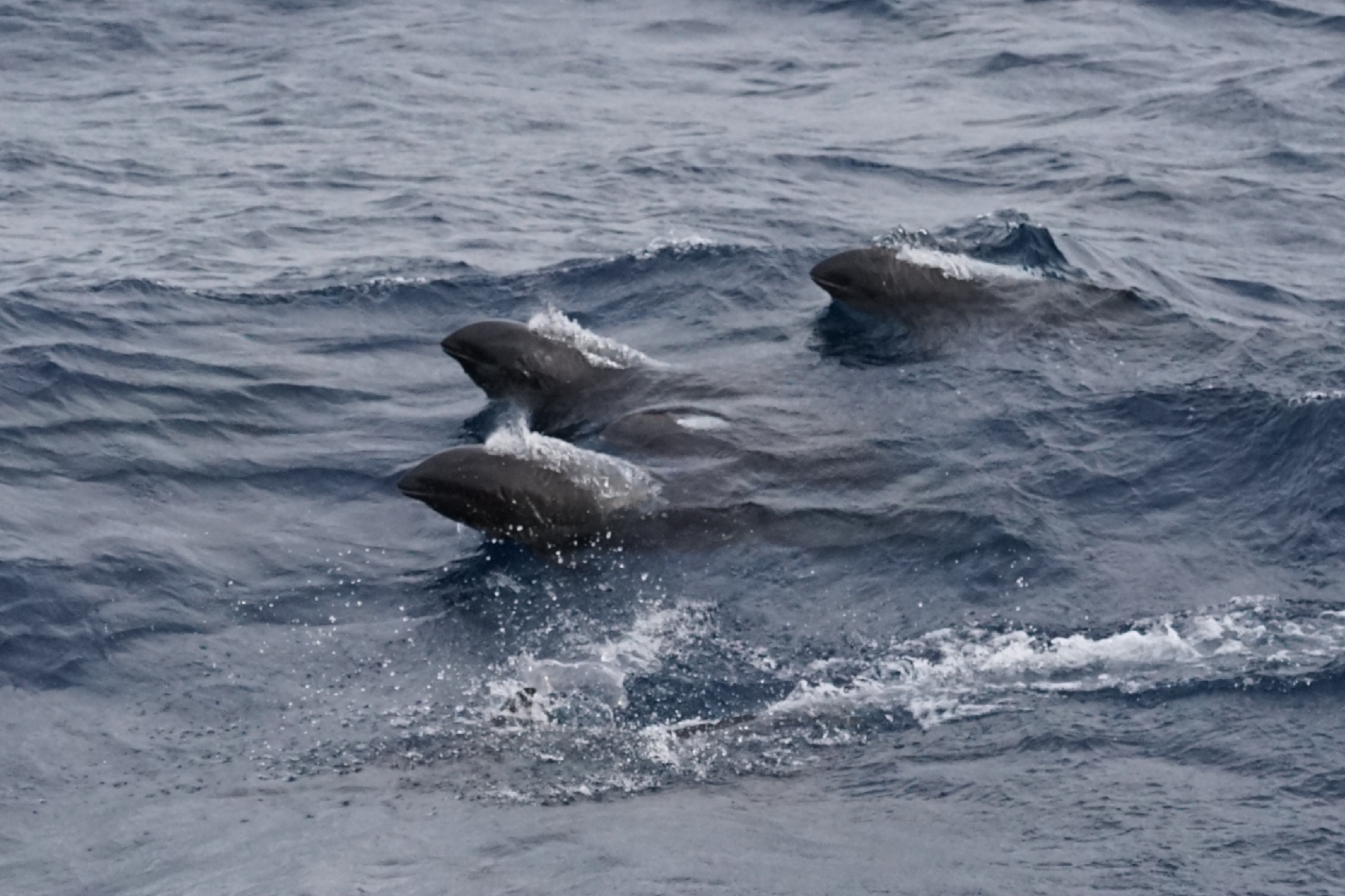
The melon-headed whale (Peponocephala electra), or dauphin d’Électre in French, is a stocky delphinid of the deep tropical waters of all three oceans. Conical head with no beak, very dark slate-grey coat, white lips: inconspicuous at sea, it is most striking for its groups of several hundred animals. A nocturnal hunter of squid and mesopelagic fish, it is listed as “Least Concern” by the IUCN and occurs in most of the French tropical overseas waters.
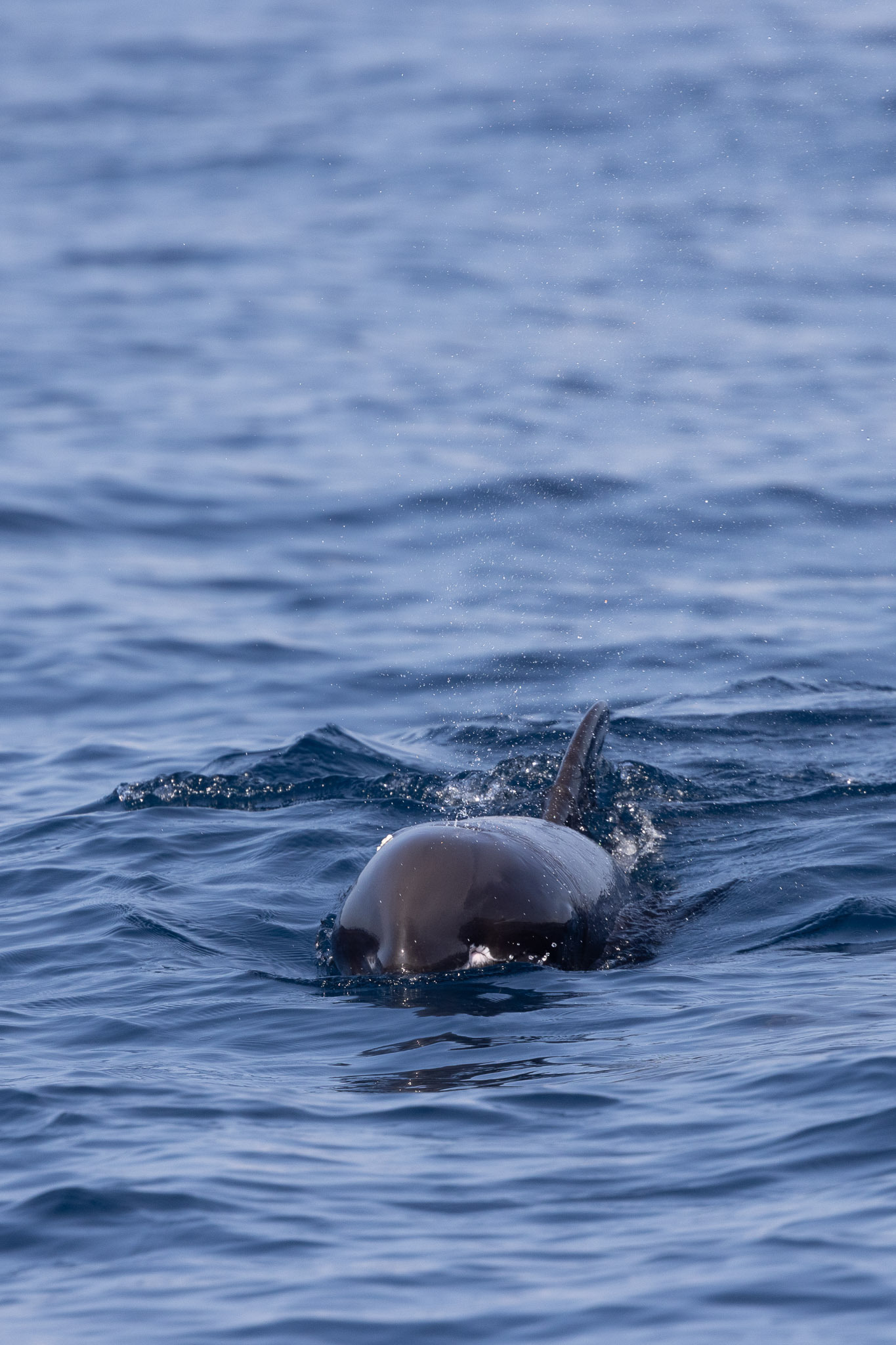
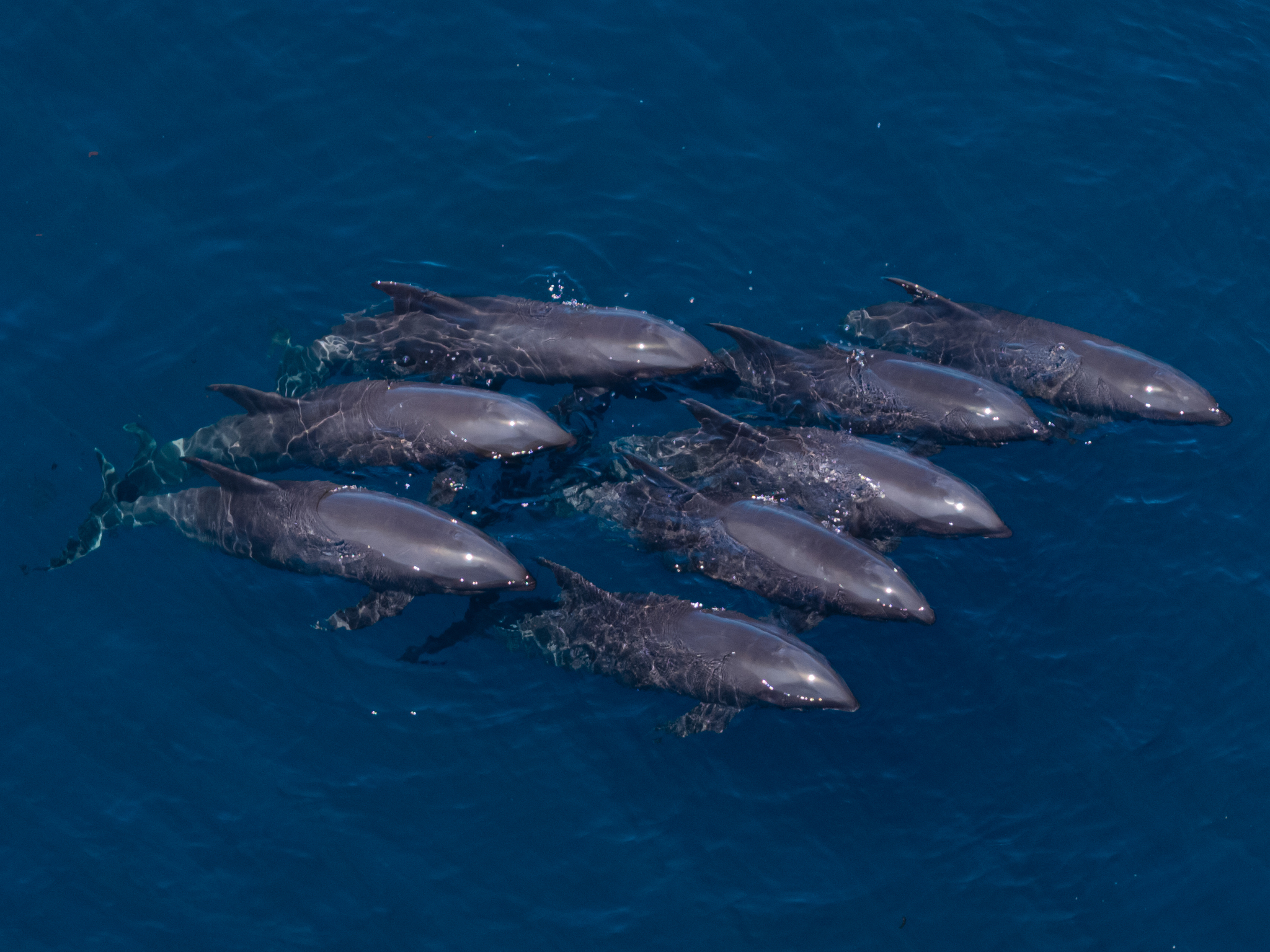
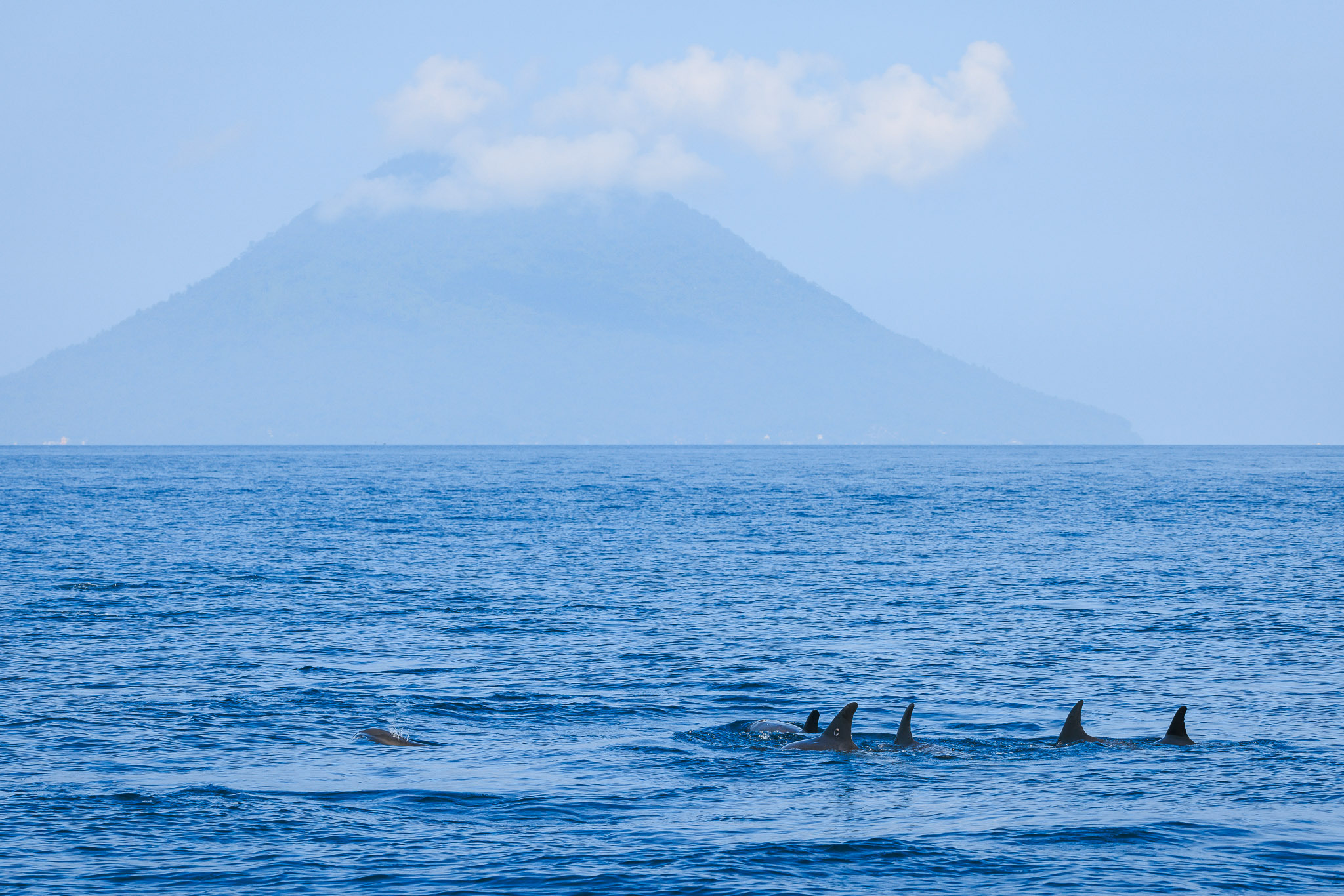
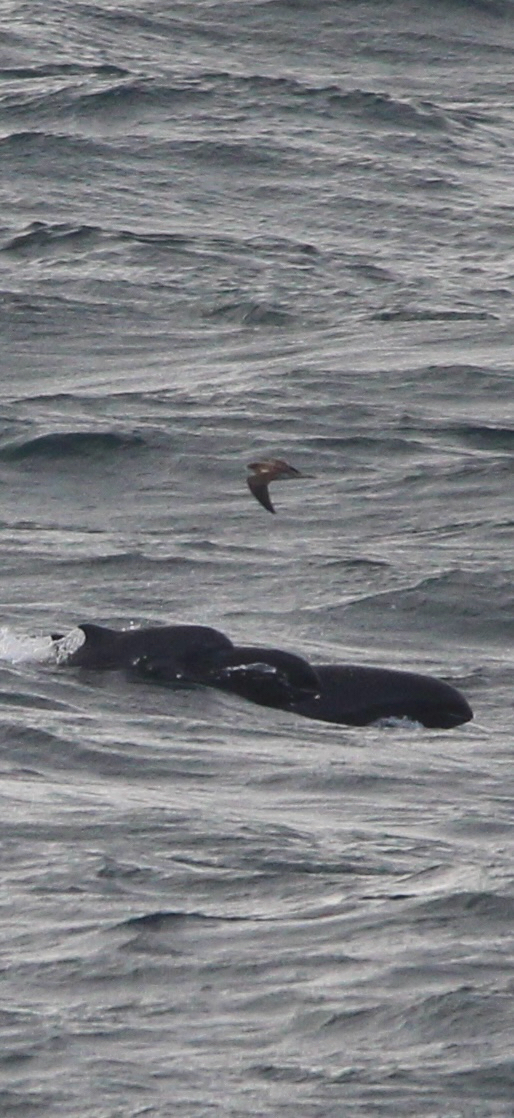
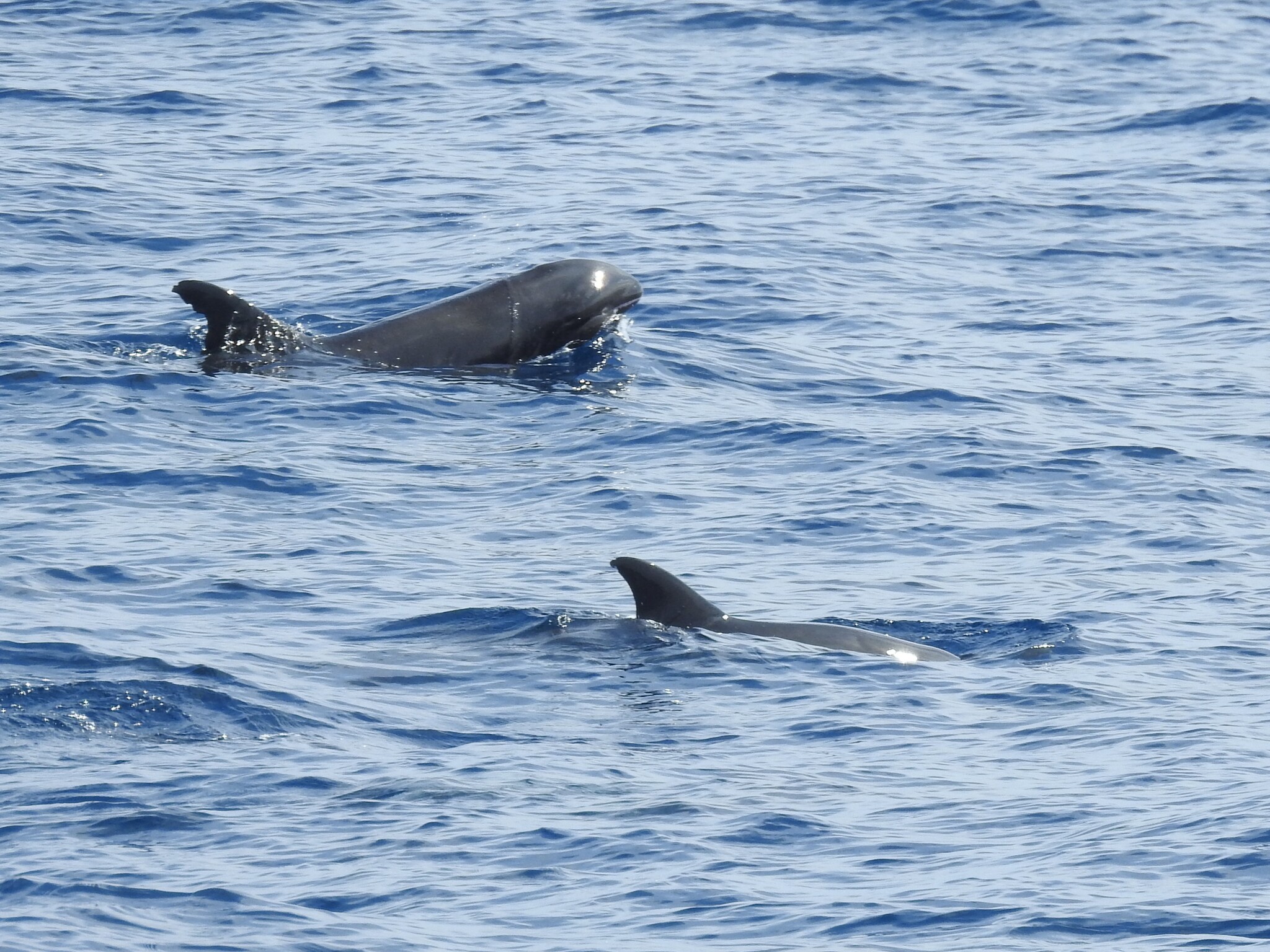
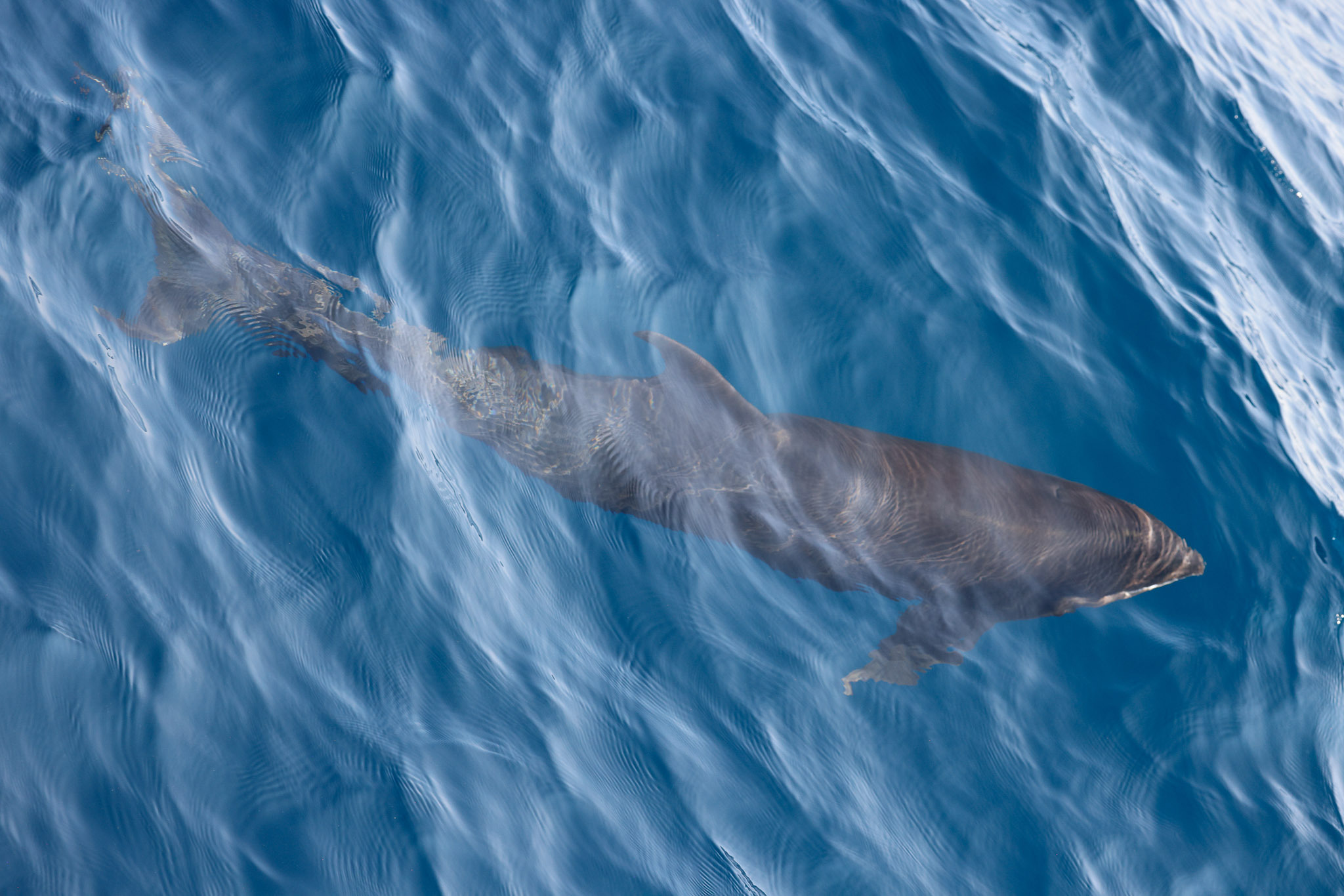
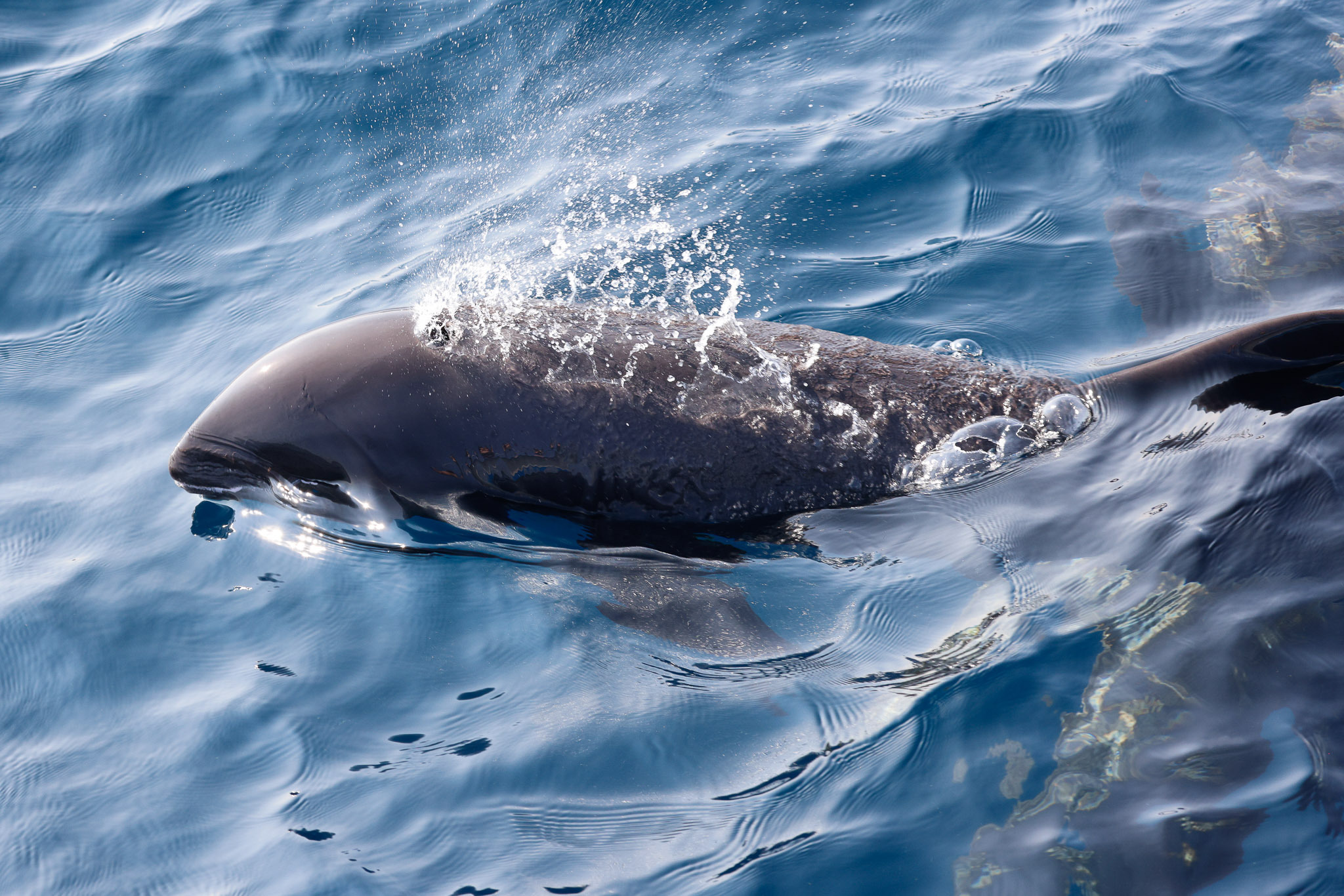
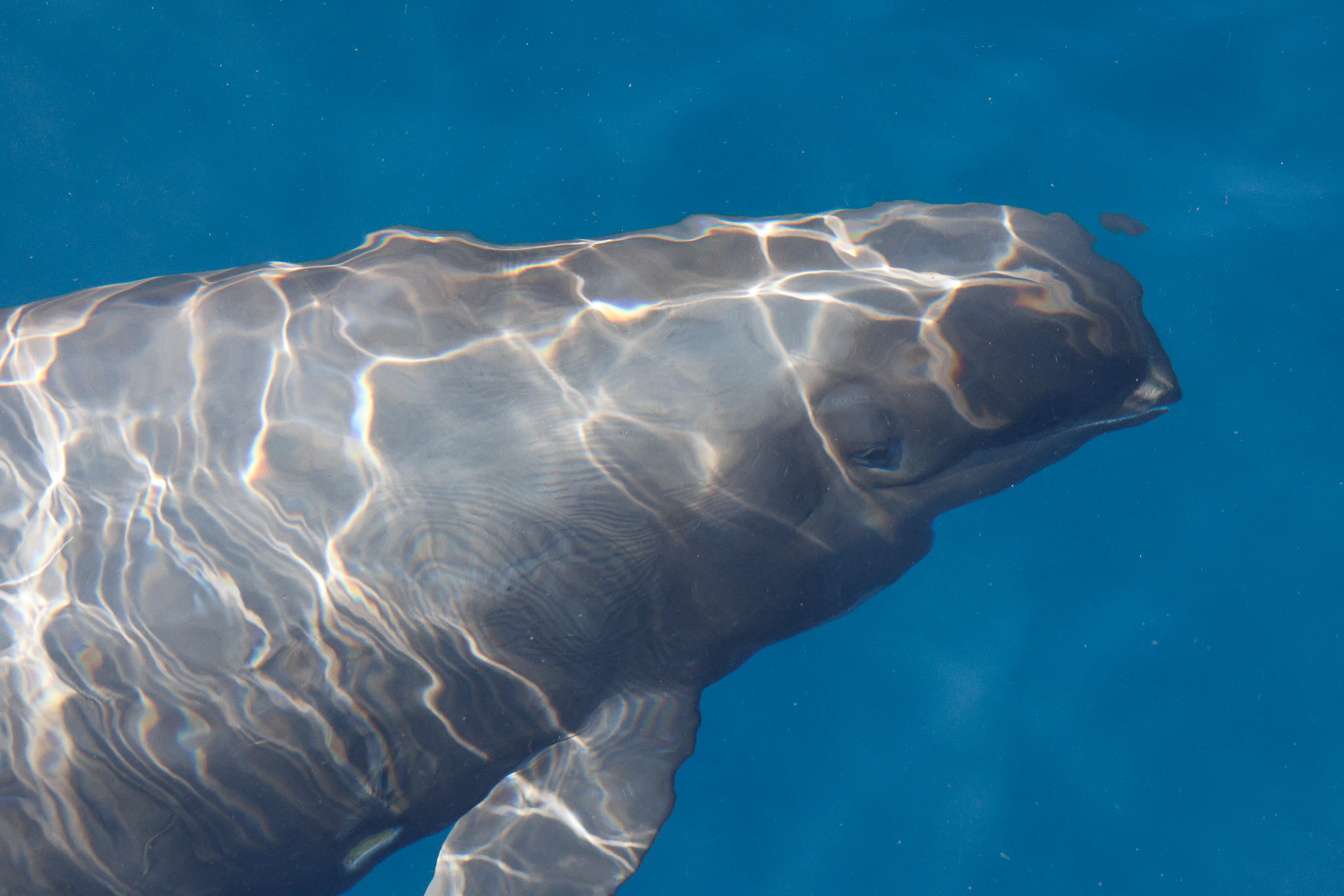
The melon-headed whale has a fusiform, robust body, a conical head with no distinct beak, triangular seen from above, a falcate dorsal fin, fairly tall, set at the middle of the back, and long flippers ending in a point. The coat is dark grey to almost black; a darker dorsal cape dips clearly below the dorsal fin and a dark facial “mask” extends from the eye towards the front of the melon, two contrasts that can only be read in good light. The inside of the mouth is white and often spills over onto the lips. Males have a more rounded head and a taller dorsal fin than females.
The commonest confusion concerns the pygmy killer whale (Feresa attenuata), very close in size, colour and habitat. In the melon-headed whale the tip of the flippers is pointed (rounded in the pygmy killer whale), the head more triangular than round, and the dorsal cape, with diffuse edges, runs lower below the dorsal fin. Group size helps too: beyond about fifty animals, they are very probably melon-headed whales, the pygmy killer whale forming much smaller groups. On a stranded animal the dentition settles it: 20 to 25 pairs of slender teeth in each jaw, against 8 to 13 pairs of massive teeth in the pygmy killer whale. At a distance the false killer whale (Pseudorca crassidens) can mislead as well, but it reaches 5 to 6 m.
Described by John Edward Gray in 1846 under the name Lagenorhynchus electra, from a specimen collected in Hawaii in 1841, the animal proved too distinct from the other Lagenorhynchus: Nishiwaki and Norris created the genus Peponocephala for it in 1966, today monotypic. Placed in the subfamily Globicephalinae, it belongs to the “blackfish” group, together with the pilot whales, the pygmy killer whale, the false killer whale and the killer whale. The genus name evokes the “melon head”, the species name the sea nymph Electra.
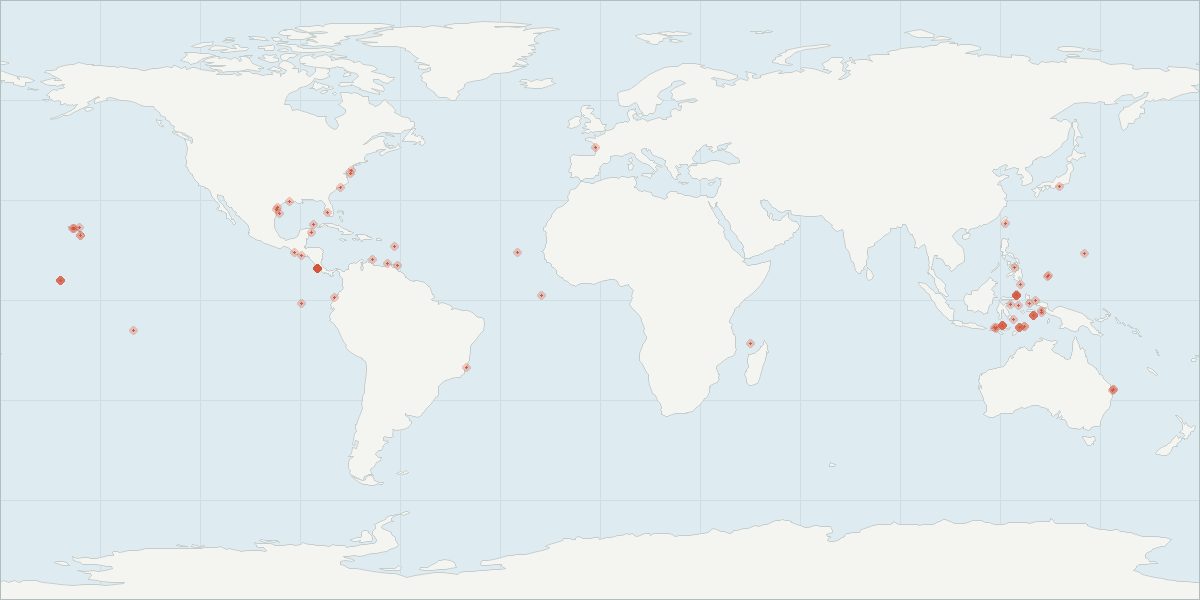
The species occupies the deep tropical and subtropical oceanic waters of the Atlantic, Indian and Pacific oceans, roughly between 40° N and 35° S. Essentially pelagic, it comes closer to the coast where a steep slope drops away to great depths, typically around volcanic archipelagos: Hawaii, the Marquesas and the Philippines hold island groups that are more or less resident. The world population is unknown; the eastern tropical Pacific population is estimated at about 45,000 animals and that of the northern Gulf of Mexico at 2,235. Off Hawaii a resident population of about 450 animals coexists with another of about 8,000 animals.
In France, the species occurs in most of the tropical overseas waters: the French Antilles, within the Agoa sanctuary; Mayotte, as far as the outer slope of the barrier reef; Réunion, beyond 5 nautical miles and often in the company of Fraser’s dolphin; New Caledonia and French Polynesia, where it is regular in the Marquesas, the Society Islands and the Tuamotus. In mainland France its presence is exceptional: on 27 August 2003, two melon-headed whales stranded alive on the Île d’Oléron, the first French record of the species; one of them, returned to the water, was found dead two days later, an adult male of 2.43 m for 123 kg. The only earlier European record was a skull found in southern England in 1949. This episode coincided with the exceptionally hot summer of 2003, the surface temperature reaching 23 to 24 °C offshore in the Bay of Biscay.
The melon-headed whale feeds mainly on squid and small mesopelagic fish, lanternfish in particular, and more occasionally on shrimp. Since its prey make daily vertical migrations, it hunts at night, when they rise into the first 400 metres: off Hawaii, animals tracked by tag made nocturnal dives of 219.5 to 247.5 m on average, with a maximum recorded at 471.5 m. Around the islands the day follows a regular rhythm, resting at the surface in the morning in small units of five to ten animals, then noisy socialising in the afternoon.
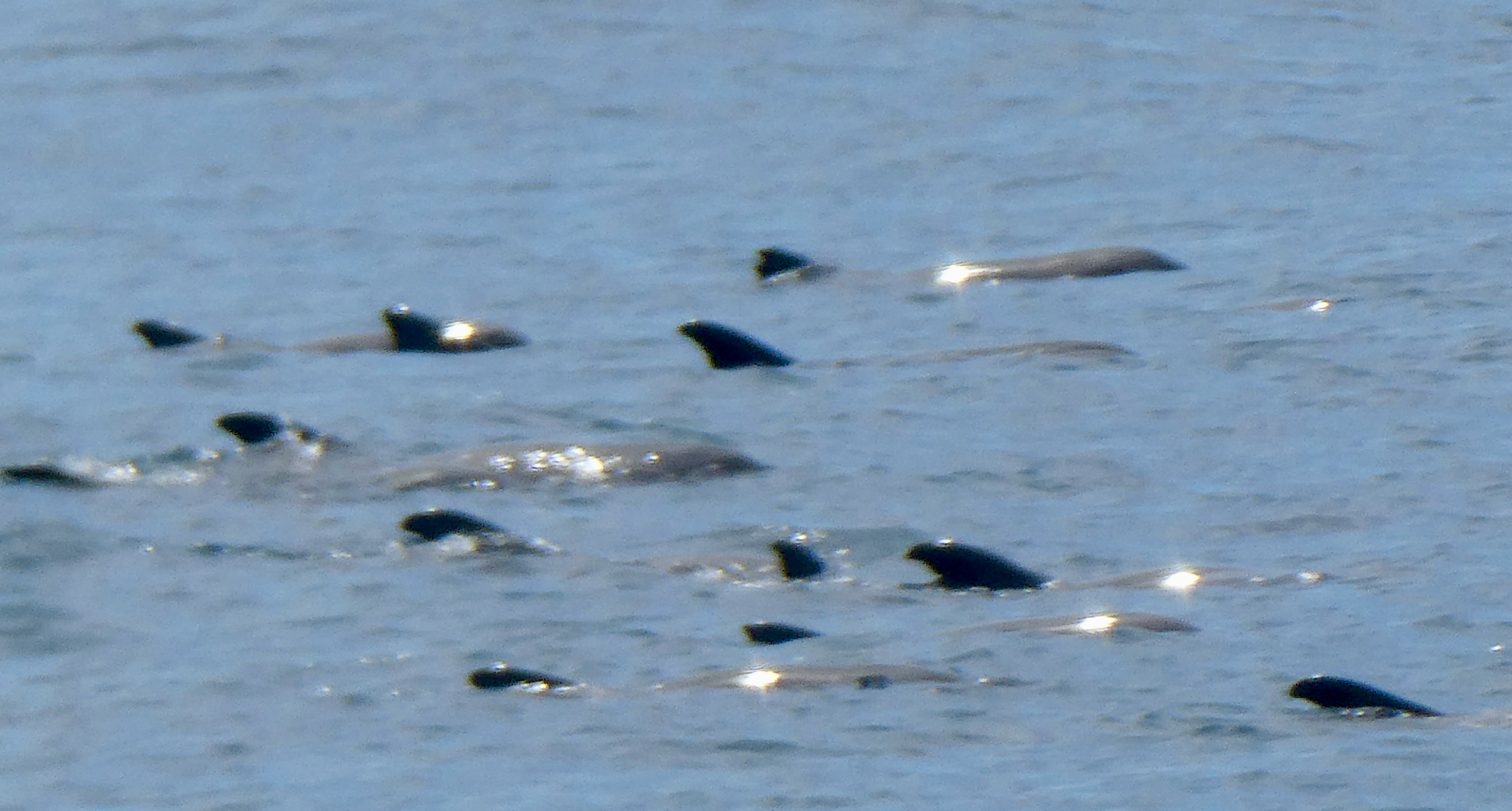
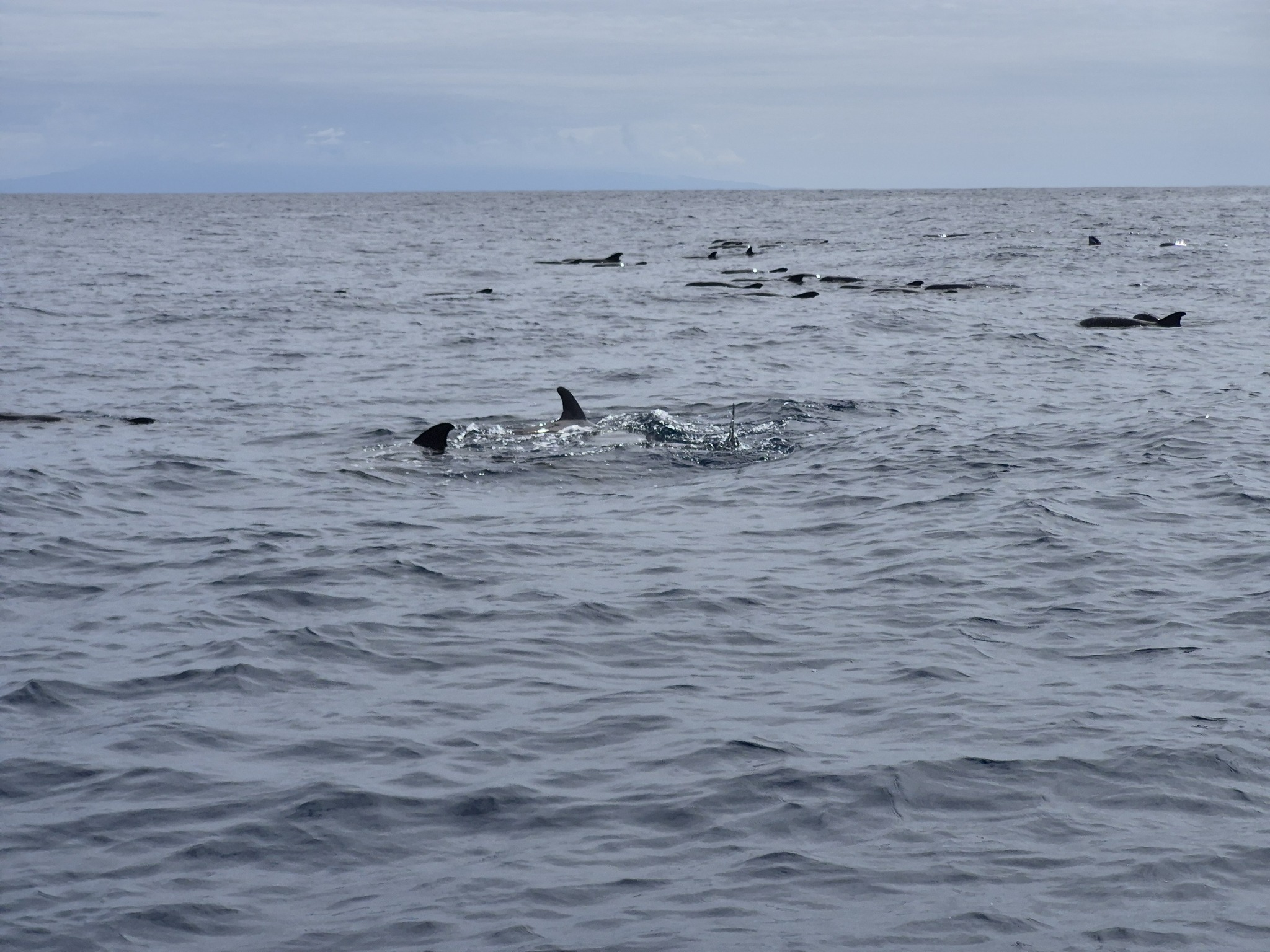
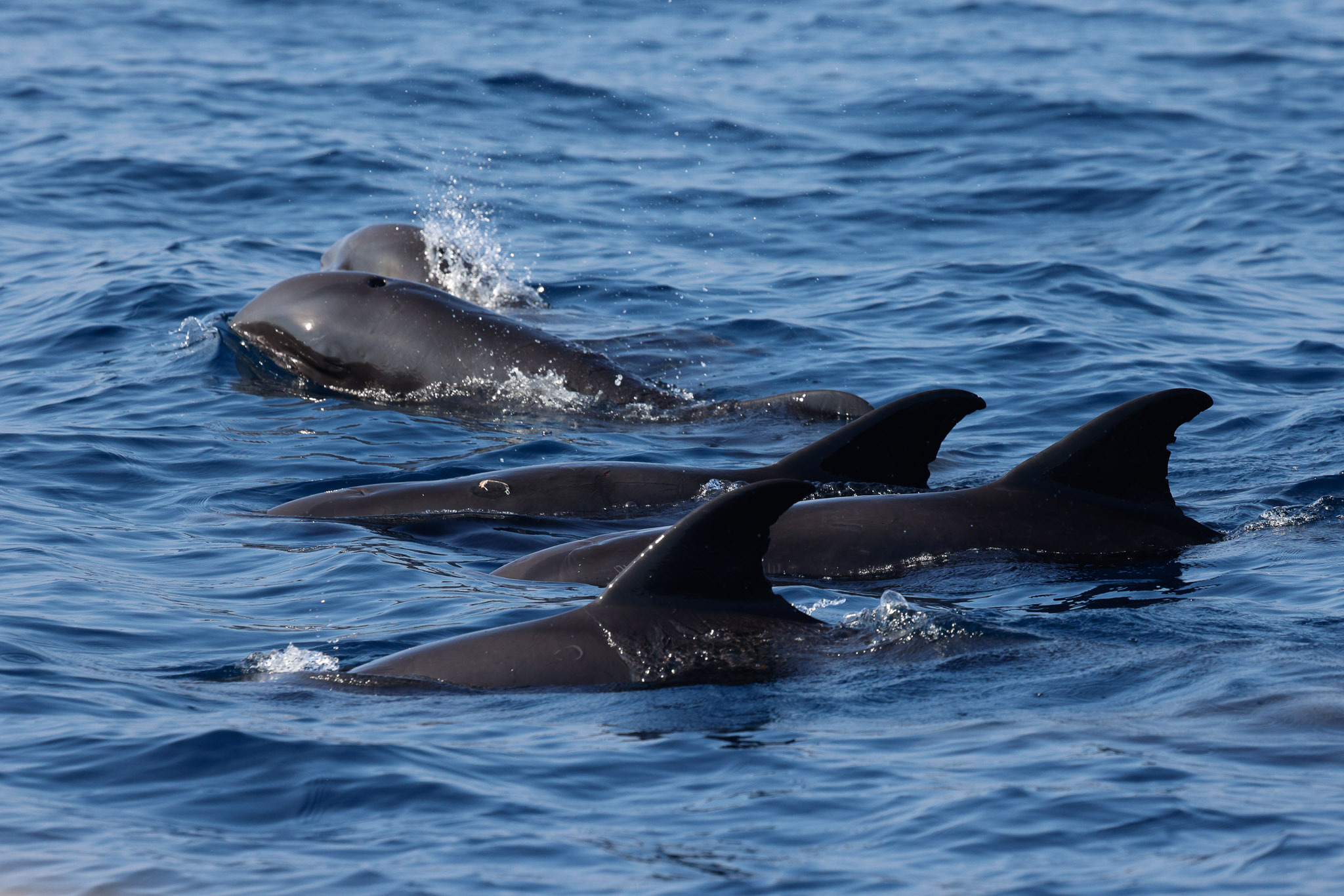
Groups usually number 100 to 500 animals, exceptionally 1,000 to 2,000, and are made up of subgroups that aggregate and split apart. The Japanese mass strandings suggest a matrilineal structure, with an imbalance in favour of females; that bias points to mature males changing group and to fidelity to the natal group being weaker than in the other “blackfish”. Genetic analyses carried out in the Hawaiian archipelago show, by contrast, that island groups can form demographically independent populations. The species very often associates with Fraser’s dolphin (Lagenodelphis hosei).
Gestation lasts about twelve months and the newborn measures close to one metre for 10 to 15 kg; females give birth to a single calf every three to four years. Births are spread out: from April to October in Japan, all year round in Hawaii with a peak from March to June, from August to December in the southern hemisphere. The published ages at sexual maturity differ, from 7 to 11-12 years in females and around 16-17 years in males, physical maturity coming at around 13 to 15 years. Sharks and killer whales are among the potential predators, and scars from cookiecutter sharks (Isistius brasiliensis) are frequent.
The melon-headed whale is listed as “Least Concern” (LC) on the global IUCN Red List, in an assessment published in 2019; the trend of the world population is noted there as unknown and no subpopulation is assessed separately. This status follows from the extent of the pantropical range and from numbers that are high overall.
Threats exist nonetheless. Bycatch is reported in the driftnets and gillnets of the Philippines, Sri Lanka, India and Ghana. Off Mayotte, a few individuals carrying injuries attributed to the pelagic tuna longline have been observed, without it being possible to say whether interactions there are genuinely rare or whether they are most often lethal. Direct takes occur by harpoon or in subsistence fishing in Sri Lanka, the Philippines, Indonesia and locally in the Caribbean; in Japan, the Taiji drive hunt took between 67 and 230 animals a year in the early 2020s according to the Fisheries Agency. The species is also sensitive to noise: two mass strandings have been linked to anthropogenic sound sources, at Hanalei Bay (Kauai, Hawaii) on 3 and 4 July 2004, where more than 150 animals confined in shallow water could be led back offshore, and at Antsohihy (Madagascar) in 2008, associated with a multibeam echosounder used in oil prospecting. Concentrations of PCBs above toxicity thresholds have also been measured in the blubber of animals stranded in Japan and Hawaii.
The species is listed in Appendix II of CITES and covered by two CMS memoranda of understanding. It is protected in the United States by the Marine Mammal Protection Act and, in France, by the full protection of marine mammals, which prohibits capture, destruction and intentional disturbance.
Encountering a melon-headed whale is often a matter of luck: the species lives offshore and is sometimes wary of vessels, even though it does come to the bow in certain regions. The most reliable areas are Hawaii, the Maldives, the Philippines and the Lesser Antilles, around Dominica in particular; in French waters, trips offshore of Réunion, Mayotte, the Antilles and Polynesia offer the best chances, beyond the drop-off. A group can be picked out from a distance by its sheets of spray and by its tightly packed animals porpoising. In the morning, resting groups, motionless at the surface, are very vulnerable: approach slowly, stay back, never cut across their course or split them up, keep the watch short. A photograph of the head, of the tip of the flippers and of the cape makes any report far more useful.
Yes: these are the two French names of Peponocephala electra. The term “orque naine”, on the other hand, is incorrect and invites confusion with the pygmy killer whale, a different species.
Pointed flippers (rounded in the pygmy killer whale), a triangular head seen from above, a dorsal cape dipping low below the dorsal fin, and above all very large groups, often of more than a hundred animals.
Yes in the overseas territories: the Antilles (Agoa sanctuary), Mayotte, Réunion, New Caledonia and French Polynesia. In mainland France, the only known record is the stranding of two animals on the Île d’Oléron, on 27 August 2003.
The social cohesion of the groups leads to collective strandings that can involve hundreds of animals. Two events have been linked to sound sources: Hanalei (Hawaii) in July 2004 and Antsohihy (Madagascar) in 2008.
The sex imbalance recorded in the Japanese mass strandings suggests that mature males change group. Conversely, the genetic analyses carried out in the Hawaiian archipelago show that island groups can make up demographically independent populations.
It is listed as Least Concern by the IUCN, but the trend of its population is unknown. Bycatch in nets, local hunts, underwater noise and organic pollutants remain real pressures.
Sheet compiled from authoritative scientific sources (IUCN, NOAA Fisheries, specialist literature) and reviewed for factual accuracy.
According to the open data of the GBIF, 97 georeferenced sightings of Peponocephala electra are recorded in our photographic index.
| Country | Notes |
|---|---|
| Indonesia | 31 |
| United States of America | 19 |
| Costa Rica | 16 |
| Australia | 6 |
| Timor-Leste | 5 |
| United States Minor Outlying Islands | 5 |
| Japan | 4 |
| unknown or invalid | 3 |
| Seychelles | 3 |
| Ecuador | 2 |

Monthly distribution of 110 dated sightings (all years combined): the maximum is reached in octobre.
| Month | Notes |
|---|---|
| janvier | 1 |
| February | 6 |
| mars | 9 |
| avril | 19 |
| mai | 6 |
| juin | 3 |
| juillet | 8 |
| August | 10 |
| septembre | 5 |
| octobre | 26 |
| novembre | 11 |
| December | 6 |
These figures reflect survey effort (more boaters and more surveys in summer) as much as the actual presence of the species: to be interpreted with caution.


Photographs from GBIF under a Creative Commons licence. The author and the licence of each photograph are given; please respect them if you reuse them.
Automatic selection of the most cited works mentioning the species (source: Crossref).