Australian snubfin dolphin (Orcaella heinsohni)

Key facts
Scientific name Orcaella heinsohni Beasley, Robertson & Arnold, 2005
Other names Heinsohn’s dolphin, snubfin dolphin; in French: orcelle d’Australie, dauphin à aileron retroussé d’Australie, dauphin de Heinsohn
Size Males up to 2.70 m; females up to 2.30 m; newborn about 0.96 to 1 m
Weight Up to about 133 kg (maximum recorded mass); about 12 kg at birth
Longevity About 28 to 30 years
Diet Coastal and estuarine fish (anchovies, clupeids, cardinalfishes, sillagos, ponyfishes, grunters, flatheads, barracudas), cephalopods (cuttlefish, squid) and prawns
IUCN status Vulnerable (VU), criteria A2cd+3cd+4cd; C2a(i), assessment published in 2017 (amended version 2018), status maintained in edition 2025-2 of the Red List; population trend decreasing

In brief

The Australian snubfin dolphin is a small coastal dolphin of the tropical waters of northern Australia, immediately recognisable by its rounded, beakless head and its tiny upturned dorsal fin. Recognised as a species in its own right only since 2005, it occurs in small groups in turbid waters less than 20 m deep, close to river mouths and mangrove creeks. Listed as Vulnerable on the IUCN Red List and numbering in all likelihood fewer than 10,000 mature individuals, it was added in March 2025 to the threatened species list of the Australian environmental legislation.

Identification

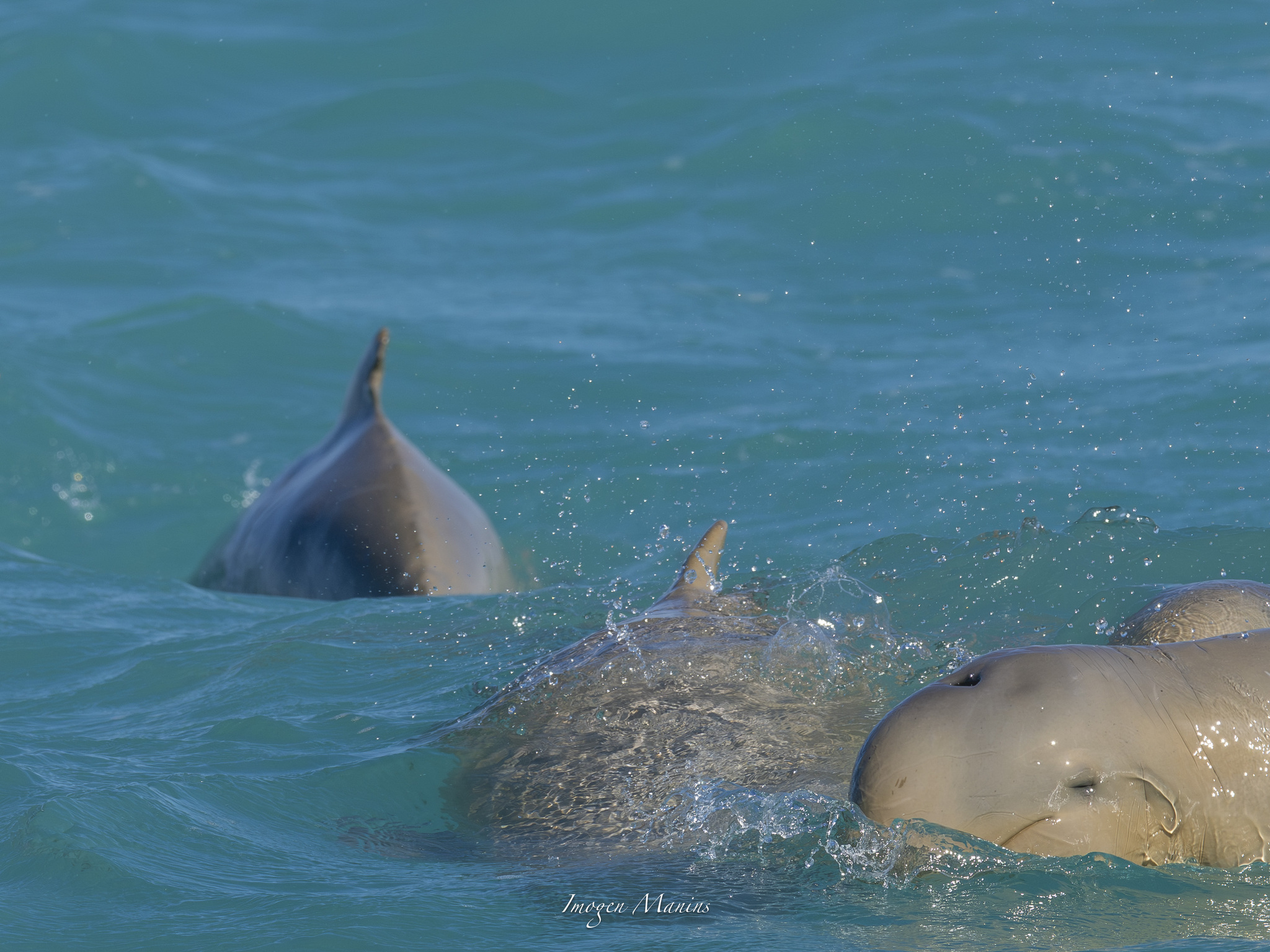
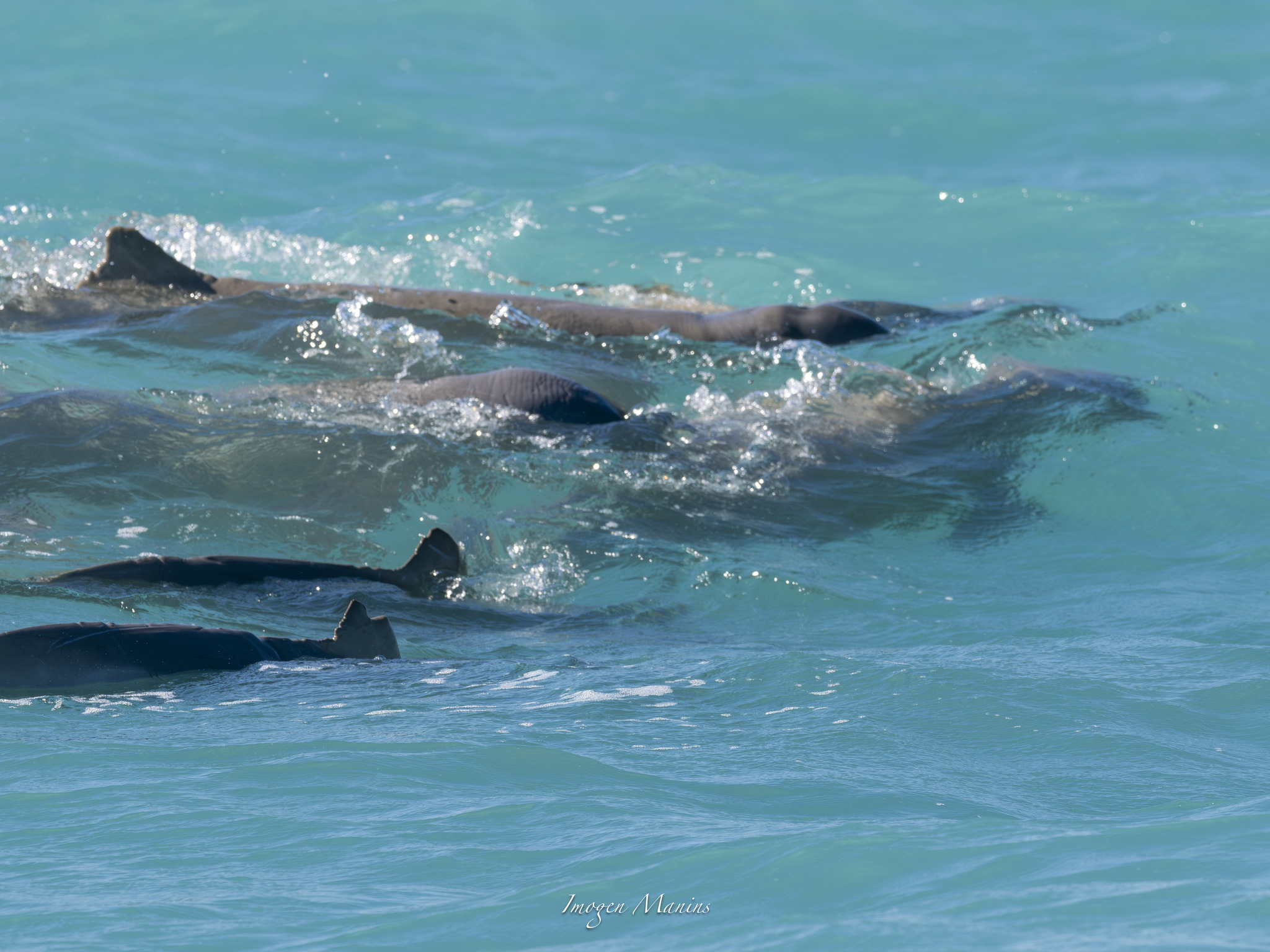
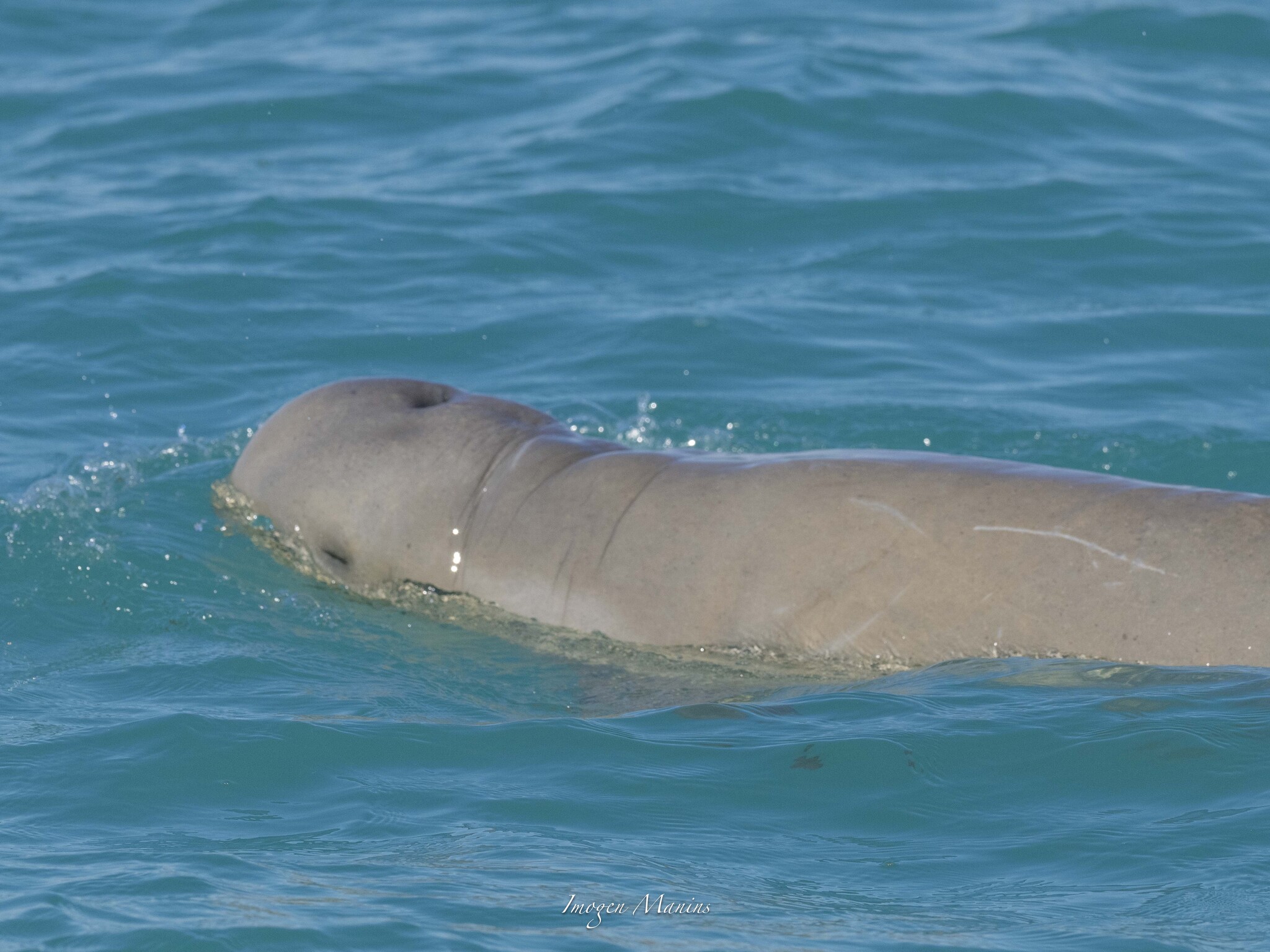
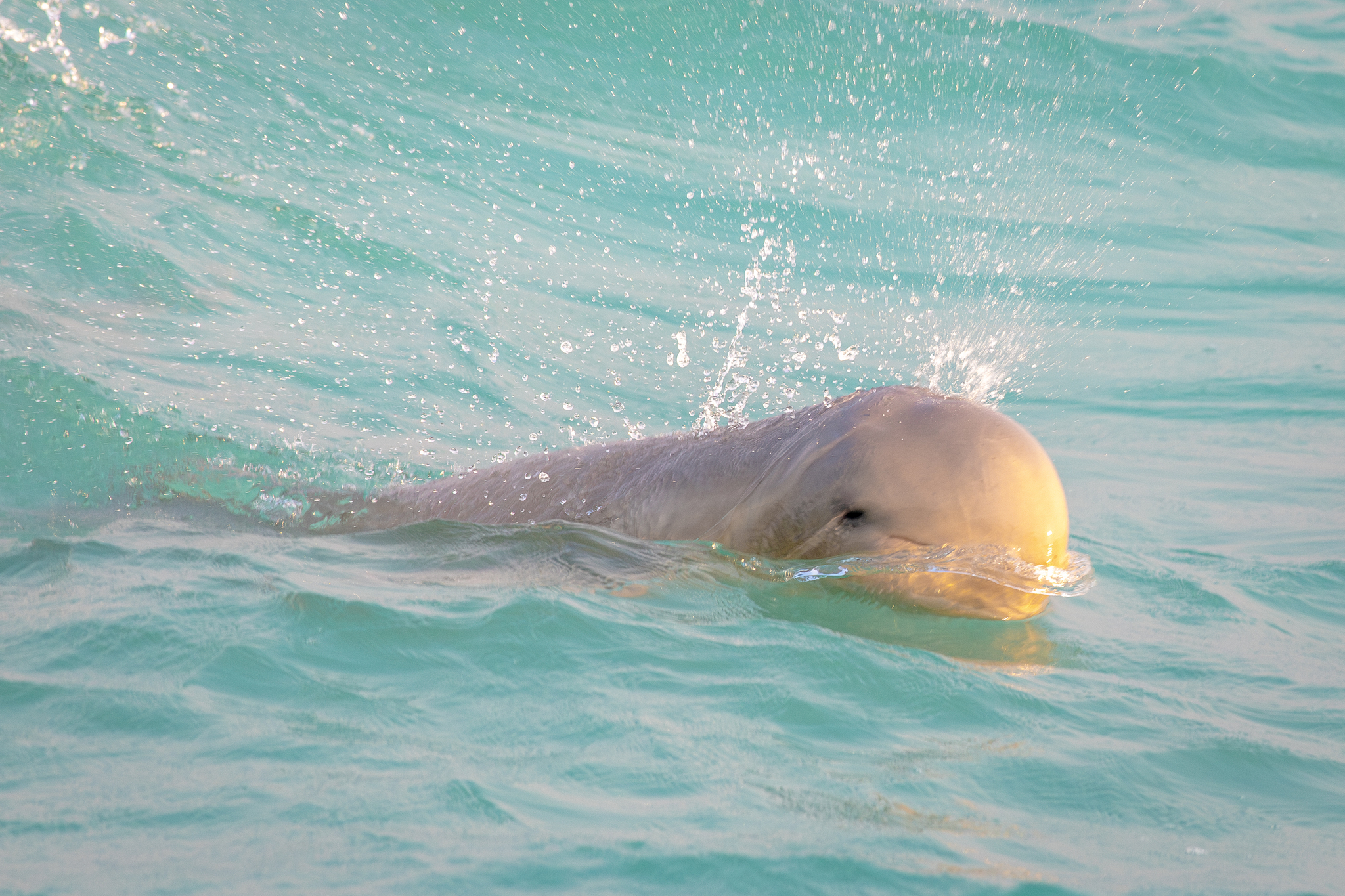
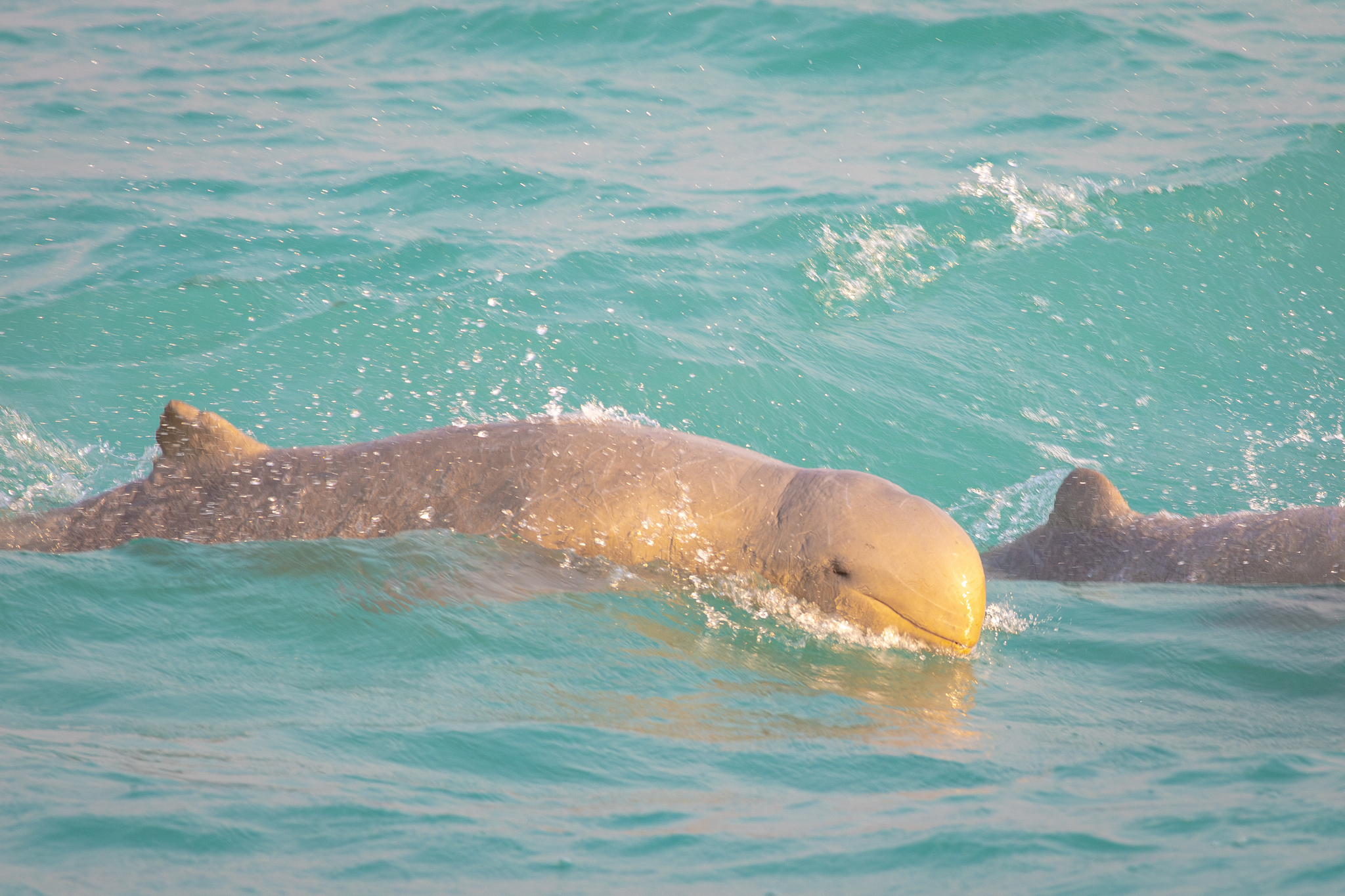
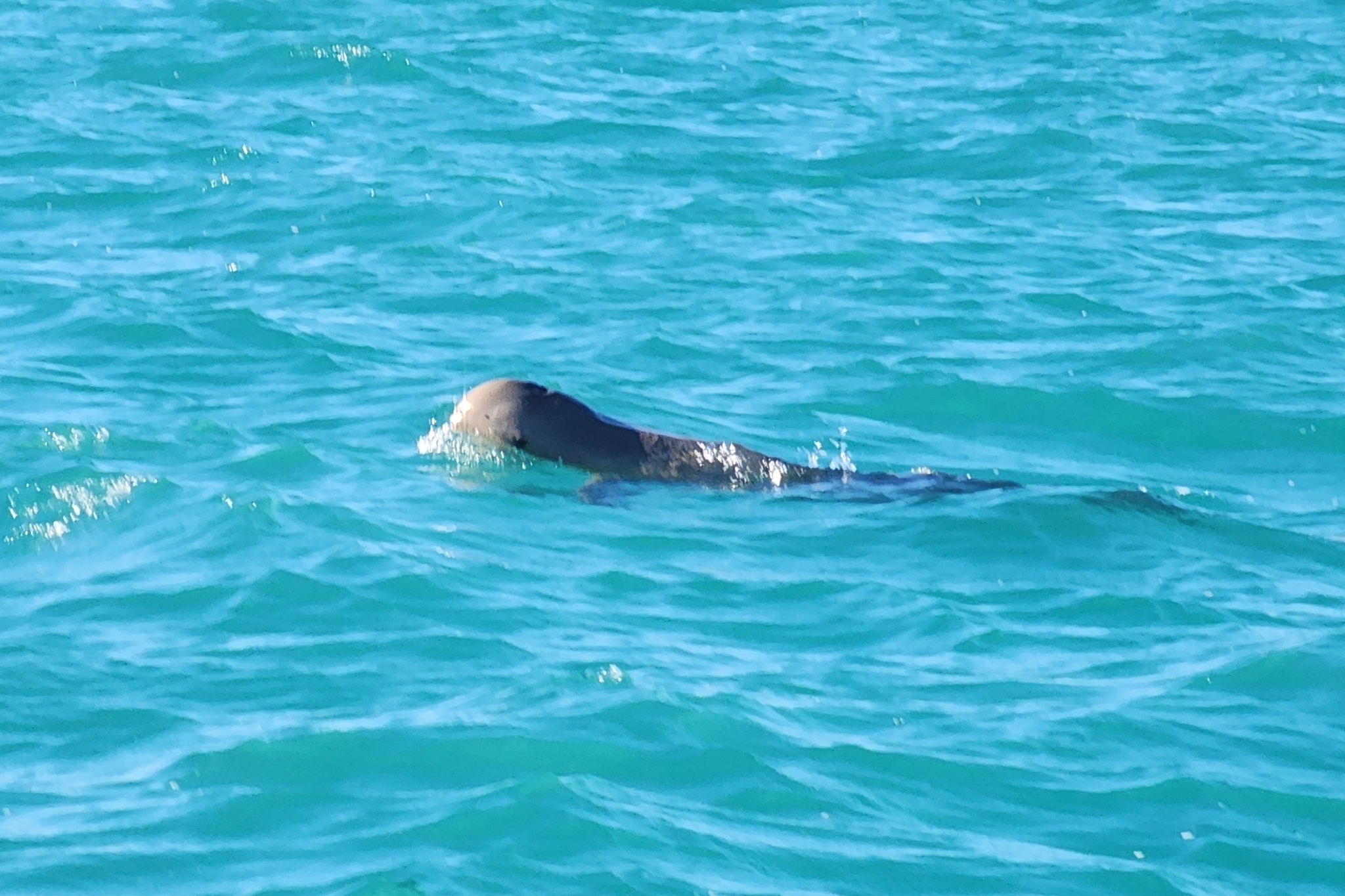
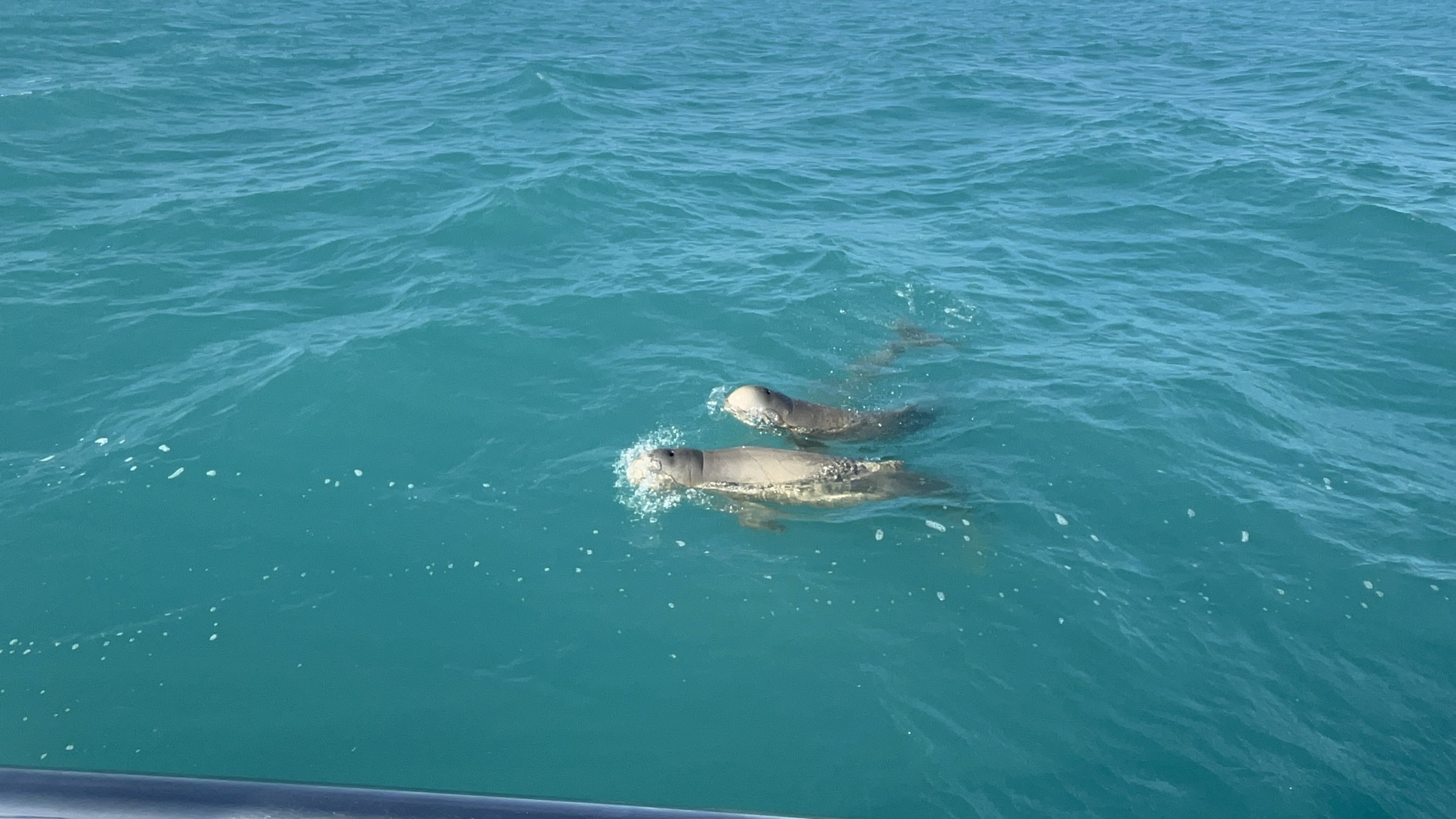
The Australian snubfin dolphin is a delphinid of modest size and stocky build. Males, slightly larger than females, reach at most 2.70 m against 2.30 m for females, for a maximum recorded mass of about 133 kg. The newborn measures close to a metre for about a dozen kilos. The head is rounded and beakless, with a highly mobile melon that the animal can visibly deform; a well marked neck crease separates the head from the body, which gives the species an appearance unusual among dolphins. The mouthline is straight and the teeth, peg-shaped, are few in number, of the order of eleven to twenty-two per half-jaw.

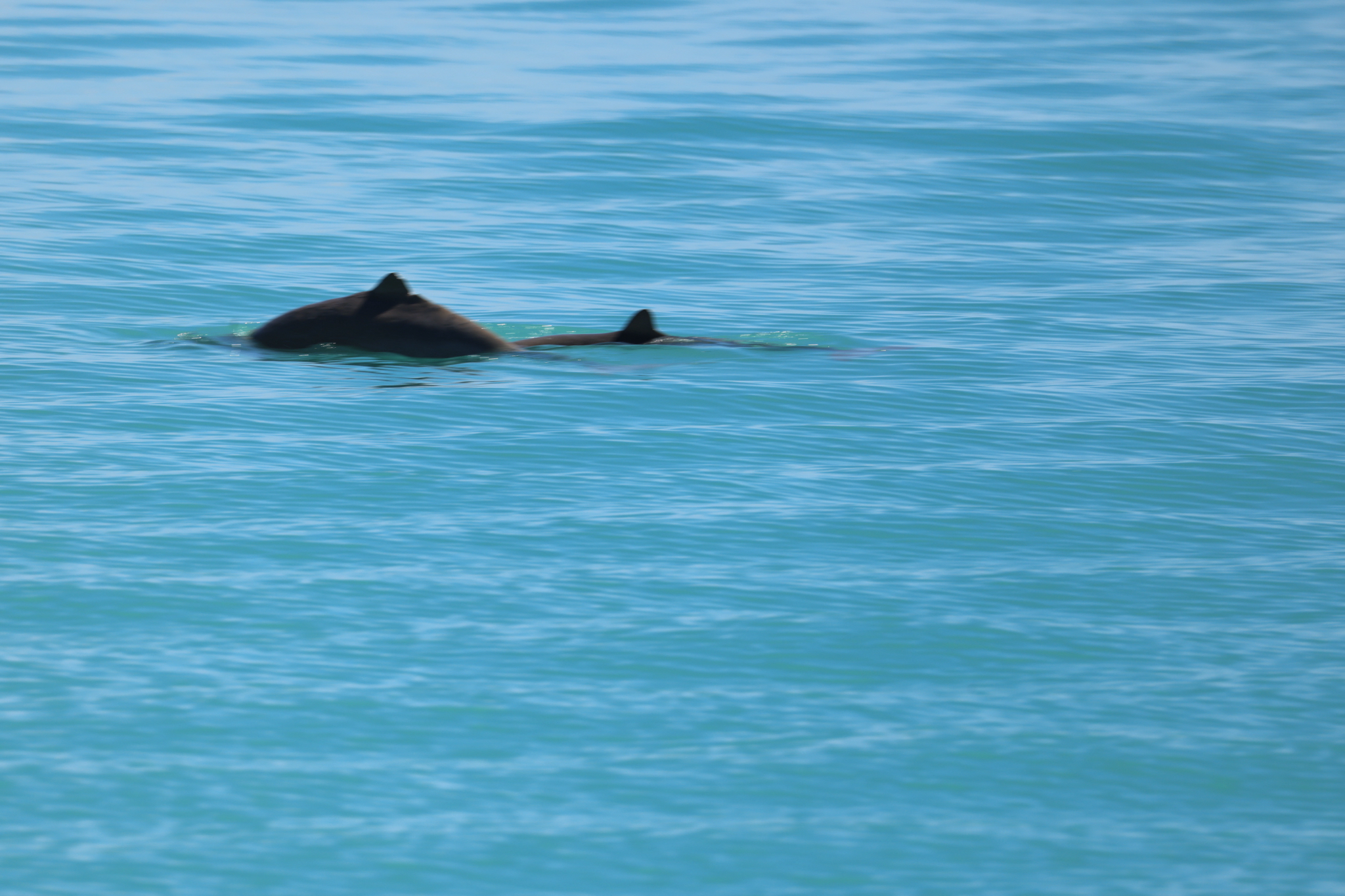
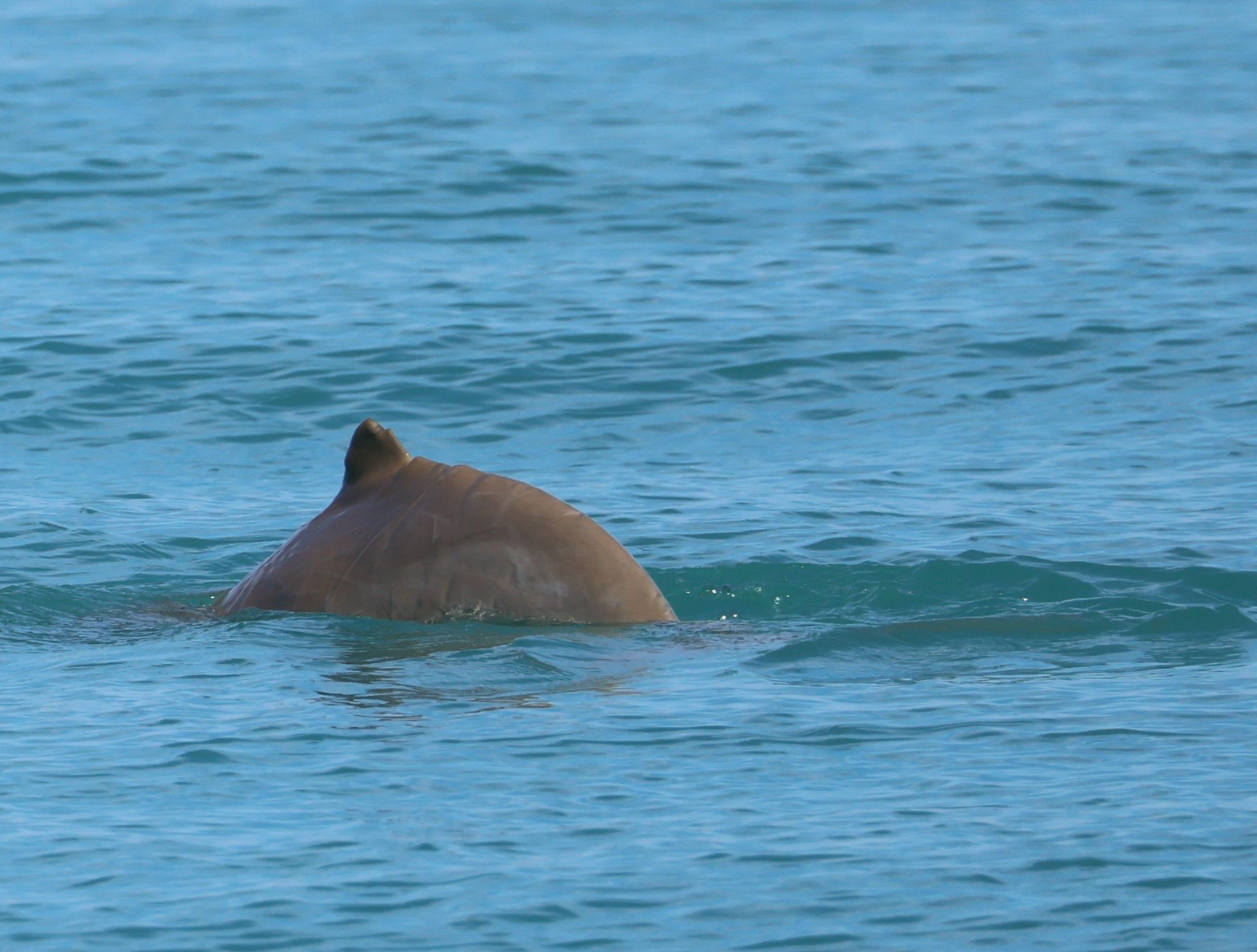
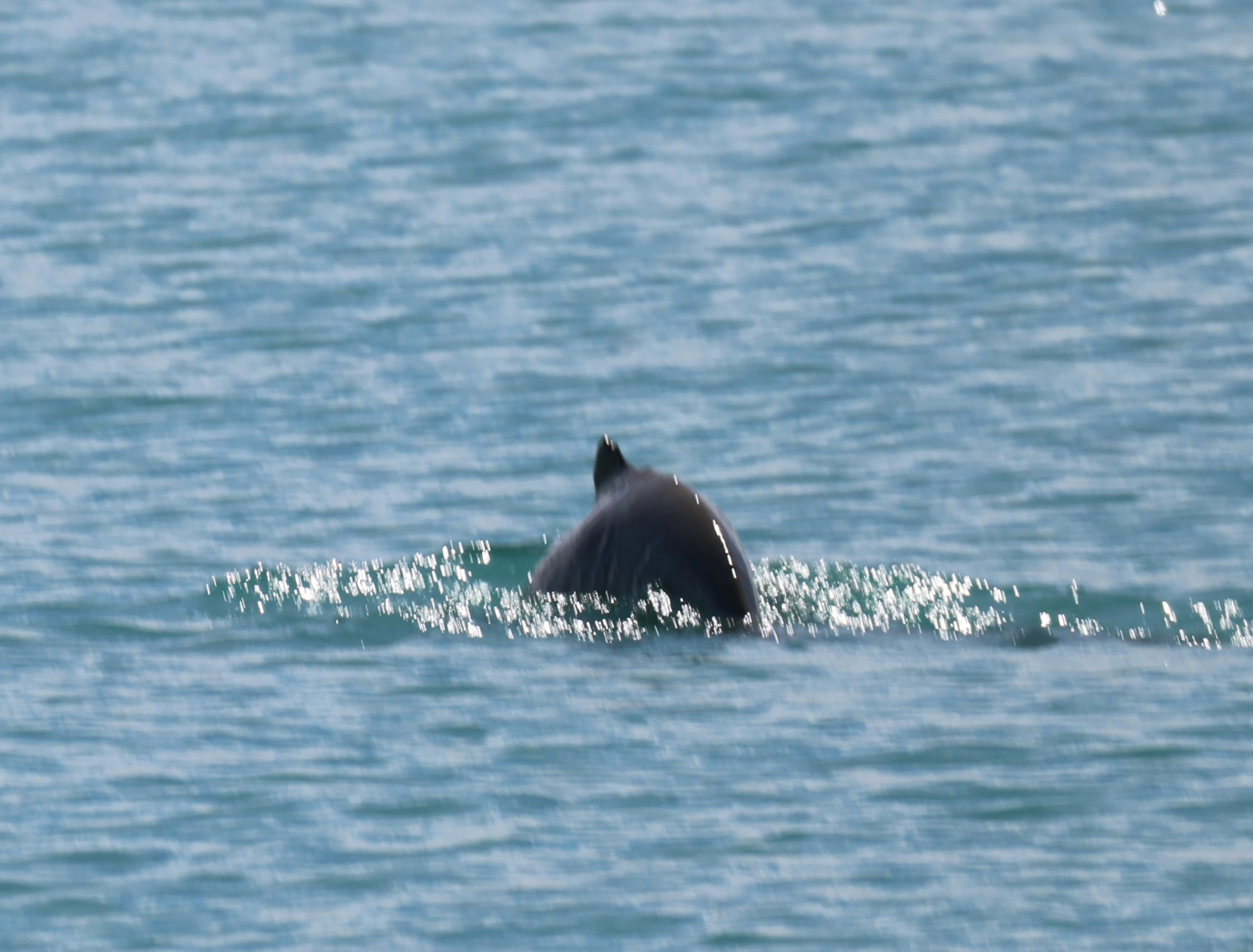
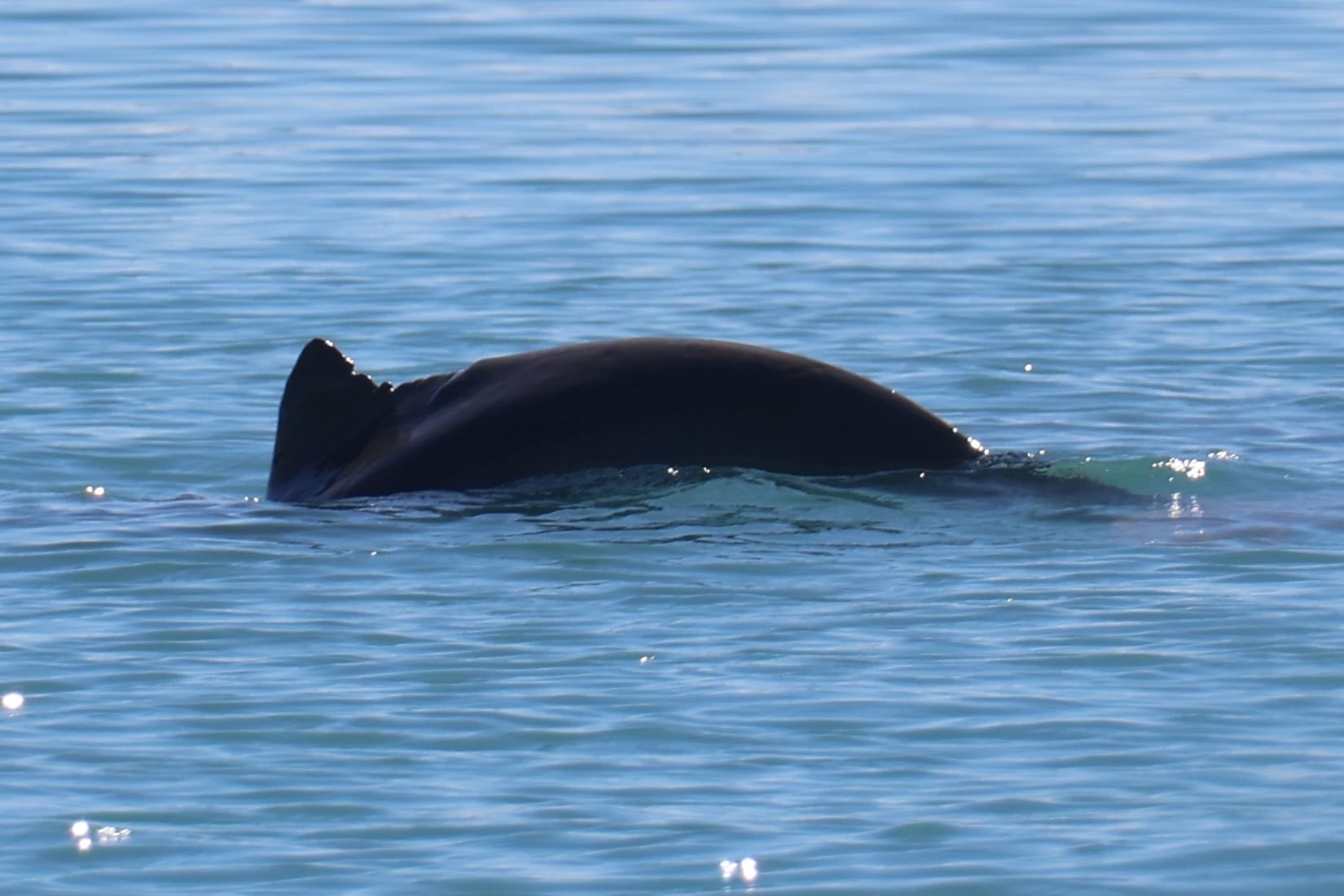
The most distinctive feature remains the dorsal fin: very small, triangular to bluntly falcate, set behind the midpoint of the back, hence the vernacular name “snubfin dolphin”. The flippers are broad, rounded and highly mobile, paddle-shaped, and the trailing edge of the tail fluke is slightly notched, which allows researchers to recognise individuals from photographs. The coloration is subtly three-toned: dark dorsal cape, light grey to greyish brown flanks, whitish belly, an important diagnostic character. The back lacks the longitudinal groove that characterises the Irrawaddy dolphin, one of the external characters used by Beasley and colleagues to separate the two species of the genus.

The most common confusion is precisely with the Irrawaddy dolphin, morphologically very close but separated from the Australian snubfin dolphin by great ocean depths: the latter has only two tones of coloration, a proportionally larger dorsal fin and flippers, 62 to 63 vertebrae against 58 to 61 in the Australian snubfin dolphin, and a fully fused sternum in the adult. In Australian waters the snubfin dolphin shares its habitat with the Australian humpback dolphin (Sousa sahulensis), the two species mix regularly, interspecific displays have been observed and a hybrid confirmed by DNA analysis has been documented, but the complete absence of a beak and the rounded head profile of the snubfin dolphin remain reliable criteria in the field.

Taxonomy

The Australian snubfin dolphin belongs to the family Delphinidae and to the genus Orcaella, which holds only two species: the Irrawaddy dolphin (Orcaella brevirostris), widespread in South and South-East Asia, and the Australian snubfin dolphin. Until 2005, all populations of the genus were assigned to a single species. It was the work of Beasley, Robertson and Arnold, published that year, that formally separated the Australian and New Guinean populations from the rest of the genus, on the basis of differences in coloration, cranial morphology, vertebral count and genetic data, the genetic divergence between the two lineages reaching about 5.9%.

The species name honours George Heinsohn, a researcher at James Cook University (Queensland), whose work on cetacean carcasses from north-eastern Australia in the 1960s and 1970s was the first to bring out the distinctiveness of these animals.

The exact position of the genus within the Delphinidae remains debated: Orcaella was long isolated in a subfamily of its own, the Orcaellinae, and some older molecular analyses placed it close to the killer whale (Orcinus); more recent work assigns it rather to the Globicephalinae, the pilot whale group. The binomial Orcaella heinsohni Beasley, Robertson & Arnold, 2005 is recognised as valid by the international marine taxonomic registers.

Range and habitat

The range of the Australian snubfin dolphin is one of the most restricted of all delphinids. The species is endemic to the Sahul Shelf, that is, northern Australia and southern New Guinea. In Australia it has been reported from Exmouth Gulf, in Western Australia, to the Brisbane River, in southern Queensland, by way of the Kimberley, the Northern Territory and the Gulf of Carpentaria. Its regular presence, however, extends from Roebuck Bay (Broome) in the west to Keppel Bay in the east, sightings further south at either end being rare and treated as extralimital. Outside Australia, the only known reports come from southern Papua New Guinea: the species is established there in the Kikori delta, from Morigio Island to Baimuru, where 57 bycatch mortalities in fishing gear have been recorded. Movements of individuals between Papua New Guinea and northern Queensland (Cape York) are suspected; it is not known whether the species occurs along the north coast of New Guinea.

The habitat is strictly coastal and estuarine. Snubfin dolphins concentrate in sheltered, often turbid waters less than 20 m deep, in the immediate vicinity of the shore, of river mouths and of mangrove creeks, and often near seagrass beds. Analyses carried out in the Kimberley show a marked preference for depths of less than 21 m lying within 15 km of a freshwater input. The animals readily move up into estuaries and watercourses: groups have been followed feeding up to about 5 km upstream of the mouth of the Wenlock River, at Cape York, and the species has been observed 30 to 50 km upstream in the large tidal rivers of the Northern Territory. This dependence on a narrow coastal fringe explains why the area actually occupied is very small in relation to the length of coast concerned, in the Kimberley, the median area of occupancy has been estimated at about 700 km² for a range of about 38,300 km².

The Australian snubfin dolphin is present neither in metropolitan France, the Mediterranean, the Bay of Biscay or the English Channel, nor in French overseas waters: it does not leave the tropical waters of Australia and New Guinea.

Biology and ecology

An opportunistic predator, the Australian snubfin dolphin exploits the whole water column as well as the bottom. Its diet combines many families of coastal, estuarine and reef fish, anchovies, clupeids, ponyfishes (Leiognathidae), cardinalfishes (Apogonidae), grunters, sillagos (Sillaginidae), flatheads, barracudas, eels and halfbeaks, with cephalopods (cuttlefish of the genus Sepia, squid) and prawns. It hunts in mangrove channels as readily as over the sandy bottoms of estuaries or along reef edges. The species is known for a spectacular hunting behaviour: it projects genuine jets of water at the surface, which startle fish schools and prompt them to leap towards the dolphin, making them easier to catch.

Social life is organised in very small groups: most often two to six individuals, with a mean of about five animals and rarer gatherings reaching some fifteen individuals. Local communities are themselves small, generally fewer than 150 animals, that of Cleveland Bay, near Townsville, numbering fewer than a hundred individuals. Associations between males there are particularly stable, which suggests the existence of alliances linked to breeding. The acoustic repertoire combines click trains, burst pulses and whistles; echolocation clicks are brief and of high peak frequency, suited to navigation and to the search for prey in turbid water.

Breeding data remain fragmentary. Gestation is estimated at between eleven and fourteen months, by extrapolation from the Irrawaddy dolphin; unlike the latter, whose births are concentrated in August and September, very young calves are observed all year round in Australian waters. The interval between two births is of the order of two to five years and weaning occurs at about two years; sexual maturity is estimated at around eight to ten years (that is, a length close to 2 m), for a generation length of about 20 years. Known longevity is close to 28 to 30 years. This very slow demographic strategy, late maturity, low fecundity, long dependence of the young, makes populations extremely sensitive to any additional mortality. Documented natural predators include the tiger shark, the bull shark and the saltwater crocodile.

Status and conservation

The Australian snubfin dolphin is listed as Vulnerable (VU) on the IUCN Red List, under criteria A2cd+3cd+4cd; C2a(i). The reference assessment, carried out by G. Parra, D. Cagnazzi and I. Beasley, was published in 2017 (amended version 2018) and this status is maintained in edition 2025-2 of the Red List. The population trend is judged to be decreasing. The listing rests on a total population probably below 10,000 mature individuals, on the fragmentation of the population nuclei and on the cumulative exposure to human activities; no subpopulation studied to date holds more than 150 mature individuals, the largest known, at Port Essington in the Northern Territory, is estimated at 222 individuals of which about 106 are mature, a figure well below the threshold of 1,000 mature individuals per subpopulation used by criterion C2a(i), which leaves each local group vulnerable to genetic impoverishment and to chance events. Regional estimates remain scarce and partial: an aerial survey of the western Gulf of Carpentaria had put forward an order of magnitude of a thousand animals, a figure contested because of the difficulty of identification in turbid water, while the Queensland population is assessed at a few thousand individuals rather than a few tens of thousands.

In Australia, the species was added on 5 March 2025 to the threatened species list of the Environment Protection and Biodiversity Conservation Act, in the Vulnerable category; it also holds migratory species status there. It is included in Appendix I of CITES and in Appendix II of the Bonn Convention (CMS).

The threats are well identified. Bycatch comes first: coastal and estuarine gillnets targeting barramundi and threadfins. The shark nets and baited drumlines of the Queensland bather protection programme were long a notable source of mortality, about 1.8 individuals per year between 1997 and 2011, that is 11 animals in all, but no capture has been recorded there since 2011 and only two nets, on a beach near Mackay, still overlap the range of the species. Next comes the degradation of coastal habitat, dredging, land reclamation, port extensions, gas terminals, mining and agricultural activity, which affects precisely the shallow fringe on which the species depends. Chemical contamination is a concern: PCB concentrations well above the toxicity thresholds accepted for small cetaceans have been measured on the Great Barrier Reef, to which are added heavy metals, pesticides and organochlorines brought down by floods. Shipping traffic, underwater noise that overlaps the frequency band of the whistles, epizootic risk and the effects of climate change on habitats and prey complete the picture. The Australian authorities consider that, for these small populations, the loss of a single individual every 2.7 years through human activity is enough to compromise their viability.

Observing this species

Observing the Australian snubfin dolphin takes patience: the species is unobtrusive, generally wary of boats, and its surfacings are brief and undemonstrative, a rounded back and a tiny fin that barely break the surface. The most regularly frequented areas are, in the west, the Kimberley region (Roebuck Bay near Broome, Beagle Bay and Pender Bay, the tidal creeks of Yampi Sound) and, in the east, Cleveland Bay near Townsville, Port Musgrave and the Wenlock estuary at Cape York, along with several bays of central Queensland. Encounters almost always take place a short distance from the coast, in a few metres of water, often near river mouths. Breaches, spyhopping, tail slaps and, more rarely, the celebrated jets of water projected at the surface during hunting are sometimes seen.

Given the small size of the groups and the fragility of the local populations, the ethics of approach must be strict: keep a substantial distance, never cut across the path of a group or pursue it, reduce engine speed and then shift to neutral on approach, avoid the river mouth areas where the animals rest and feed, and limit the length of the observation. Photographs of dorsal fins and tail flukes, accompanied by the date and the position, have real scientific value: they can be passed on to the Australian photo-identification programmes, which monitor these populations individual by individual. In France no observation of the species is possible, as it is strictly confined to the tropical waters of northern Australia and southern New Guinea.

Frequently asked questions

What is the difference between the Australian snubfin dolphin and the Irrawaddy dolphin?

These two species of the genus Orcaella look very much alike but never meet: the Irrawaddy dolphin lives in South and South-East Asia, the Australian snubfin dolphin on the Sahul Shelf, the two ranges being separated by great ocean depths. The Australian snubfin dolphin shows a three-toned coloration (dark cape, pale flanks, white belly) where the Irrawaddy dolphin has only two; its dorsal fin and flippers are proportionally smaller, its back lacks the longitudinal groove of the Irrawaddy dolphin, and it has 58 to 61 vertebrae against 62 to 63. The separation into two distinct species dates from 2005 and also rests on a genetic divergence of about 5.9%.

How many Australian snubfin dolphins are left?

There is no reliable global estimate at the scale of the range. The available data indicate a total population probably below 10,000 mature individuals, spread across small local populations, none of those studied to date exceeding 150 mature individuals. The largest known subpopulation, at Port Essington in the Northern Territory, is estimated at 222 individuals (about 106 mature); the communities monitored over the long term most often number fewer than 150 animals, like that of Cleveland Bay, near Townsville.

Why does the Australian snubfin dolphin spit water?

This is a hunting technique. The animal projects jets of water at the surface, which startles fish schools and drives them to leap out of the water towards the dolphin, which catches them more easily. This behaviour, rarely observed in delphinids, is one of the behavioural signatures of the species.

Can this species be seen in France?

No. The Australian snubfin dolphin is endemic to the tropical coastal waters of northern Australia and southern New Guinea. It is present neither in the Mediterranean, nor in the Bay of Biscay, nor in the English Channel, nor in French overseas waters.

Since when has it been recognised as a species in its own right?

Since 2005, the date of its formal description by Beasley, Robertson and Arnold. Its scientific name honours George Heinsohn, a researcher at James Cook University, whose work on cetacean carcasses from north-eastern Australia in the 1960s and 1970s had already pointed to the distinctiveness of these animals.

What is its main threat?

Bycatch in fishing gear, in particular coastal and estuarine gillnets. The shark nets of the Queensland bather protection programme killed about 1.8 snubfin dolphins per year between 1997 and 2011, but no further capture has been recorded there since 2011 and the installation now overlaps only a small part of the range of the species. Given the very slow reproduction of the species, the loss of a single individual every 2.7 years may be enough to put a small population at risk.

Sources

Profile compiled from authoritative scientific sources (IUCN, NOAA Fisheries, specialist literature) and reviewed for factual accuracy.

Observed distribution

According to the open data of the GBIF, 43 georeferenced sightings of Orcaella heinsohni are recorded in our photographic index.

Main countries of observation
CountryNotes
Australia42
Papua New Guinea1

Distribution map: Australian snubfin dolphin (Orcaella heinsohni)

Distribution map: Australian snubfin dolphin (Orcaella heinsohni), 43 georeferenced sightings from GBIF
43 georeferenced sightings of Orcaella heinsohni. Base map Natural Earth, public domain. GBIF data.
🗺️ Open the interactive mapTo zoom and pan. It uses the OpenStreetMap/CARTO base maps and the GBIF occurrence densities: no data is sent to these services before you click.

Presence through the year

Monthly distribution of 43 dated sightings (all years combined): the maximum is reached in septembre.

160janvier : 0janfévrier : 2febmars : 0maravril : 2avrmai : 0maijuin : 5juinjuillet : 4juilaoût : 7Augustseptembre : 16sepoctobre : 2octnovembre : 4novdécembre : 1dec
Sightings by month
MonthNotes
janvier0
February2
mars0
avril2
mai0
juin5
juillet4
August7
septembre16
octobre2
novembre4
December1

These figures reflect survey effort (more boaters and more surveys in summer) as much as the actual presence of the species: to be interpreted with caution.

En images

Orcaella heinsohni
© Lando K, CC BY-NC, 2026
Orcaella heinsohni
© Lando K, CC BY-NC, 2026
Orcaella heinsohni
© imogenisunderwater, CC BY-NC, 2026
Orcaella heinsohni
© Lando K, CC BY-NC, 2026
Orcaella heinsohni
© imogenisunderwater, CC BY-NC, 2026
Orcaella heinsohni
© Lando K, CC BY-NC, 2026
Orcaella heinsohni
© imogenisunderwater, CC BY-NC, 2026
Orcaella heinsohni
© Lee J, CC BY-NC, 2025
Orcaella heinsohni
© Lee J, CC BY-NC, 2025
Orcaella heinsohni
© Lynda Wilson, CC BY-NC, 2025
Orcaella heinsohni
© sairt, CC BY-NC, 2025
Orcaella heinsohni
© jamie, CC BY-NC, 2025

Photographs from GBIF under a Creative Commons licence. The author and the licence of each photograph are given; please respect them if you reuse them.

Scientific references

  1. Beasley I., Robertson K., Arnold P. (2005) DESCRIPTION OF A NEW DOLPHIN, THE AUSTRALIAN SNUBFIN DOLPHIN ORCAELLA HEINSOHNI SP. N. (CETACEA, DELPHINIDAE), Marine Mammal Science
  2. Brown A., Kopps A., Allen S., Bejder L. et al. (2014) Population Differentiation and Hybridisation of Australian Snubfin (Orcaella heinsohni) and Indo-Pacific Humpback (Sousa chinensis) Dolphins in North-Western Australia, PLoS ONE
  3. Parra G., Jedensjö M. (2013) Stomach contents of Australian snubfin (Orcaella heinsohni) and Indo‐Pacific humpback dolphins (Sousa chinensis), Marine Mammal Science
  4. Stacey P., Arnold P. (1999) Orcaella brevirostris, Mammalian Species
  5. Christie A., Colefax A., Cagnazzi D. (2021) Feasibility of Using Small UAVs to Derive Morphometric Measurements of Australian Snubfin (Orcaella heinsohni) and Humpback (Sousa sahulensis) Dolphins, Remote Sensing
  6. Ponnampalam L. (2013) Short Note: Behavioral Observations of Coastal Irrawaddy Dolphins (Orcaella brevirostris) in Trat Province, Eastern Gulf of Thailand, Aquatic Mammals
  7. Bouchet P., Thiele D., Marley S., Waples K. et al. (2021) Regional Assessment of the Conservation Status of Snubfin Dolphins (Orcaella heinsohni) in the Kimberley Region, Western Australia, Frontiers in Marine Science
  8. Nicholls C., Peters K., Cagnazzi D., Hanf D. et al. (2023) Incidence of shark‐inflicted bite injuries on Australian snubfin (Orcaella heinsohni) and Australian humpback (Sousa sahulensis) dolphins in coastal waters off east Queensland, Australia, Ecology and Evolution

Automatic selection of the most cited works mentioning the species (source: Crossref).