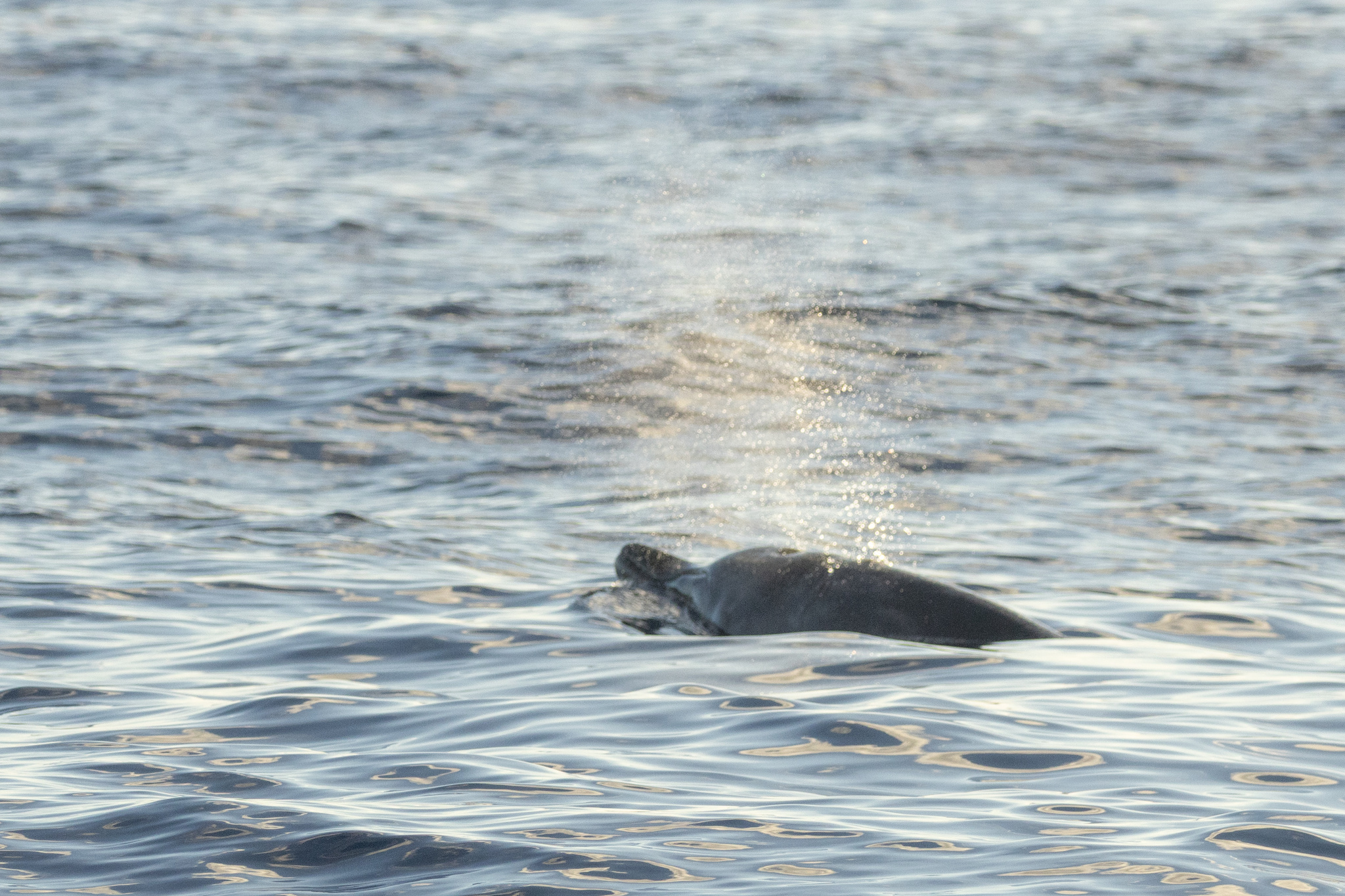
Blainville's beaked whale (Mesoplodon densirostris)

Key facts
Scientific name Mesoplodon densirostris (de Blainville, 1817)
Other names Blainville’s beaked whale; dense-beaked whale; tropical beaked whale; in French baleine à bec de Blainville, mésoplodon de Blainville
Size 3.7 to 5.8 m depending on the source; most adults between 4.5 and 5 m. Newborn: 1.9 to 2.6 m
Weight 700 to 1,030 kg in adults; about 60 kg at birth
Longevity Unknown: no reliable age data have been published for the species (NOAA and the IUCN both give longevity as undetermined). Sexual maturity perhaps reached at around 9 years.
Diet Deep-water carnivore: cephalopods (mainly squid) and mesopelagic fish, taken by suction
IUCN status Least Concern (LC), global assessment of 2020 (the species was previously listed as “Data Deficient”, DD); European Red List: Least Concern (LC). No subpopulation is assessed separately; no trend analysis could be carried out

In brief

Blainville’s beaked whale is the only truly cosmopolitan beaked whale in the genus Mesoplodon: it is found in the tropical and warm temperate waters of every ocean. An extreme diver, able to reach more than 1,400 m of depth, it is recognised by the two enormous teeth that males carry at the apex of a strongly arched lower jaw. Listed as Least Concern by the IUCN, it remains highly vulnerable to noise pollution.

Identification

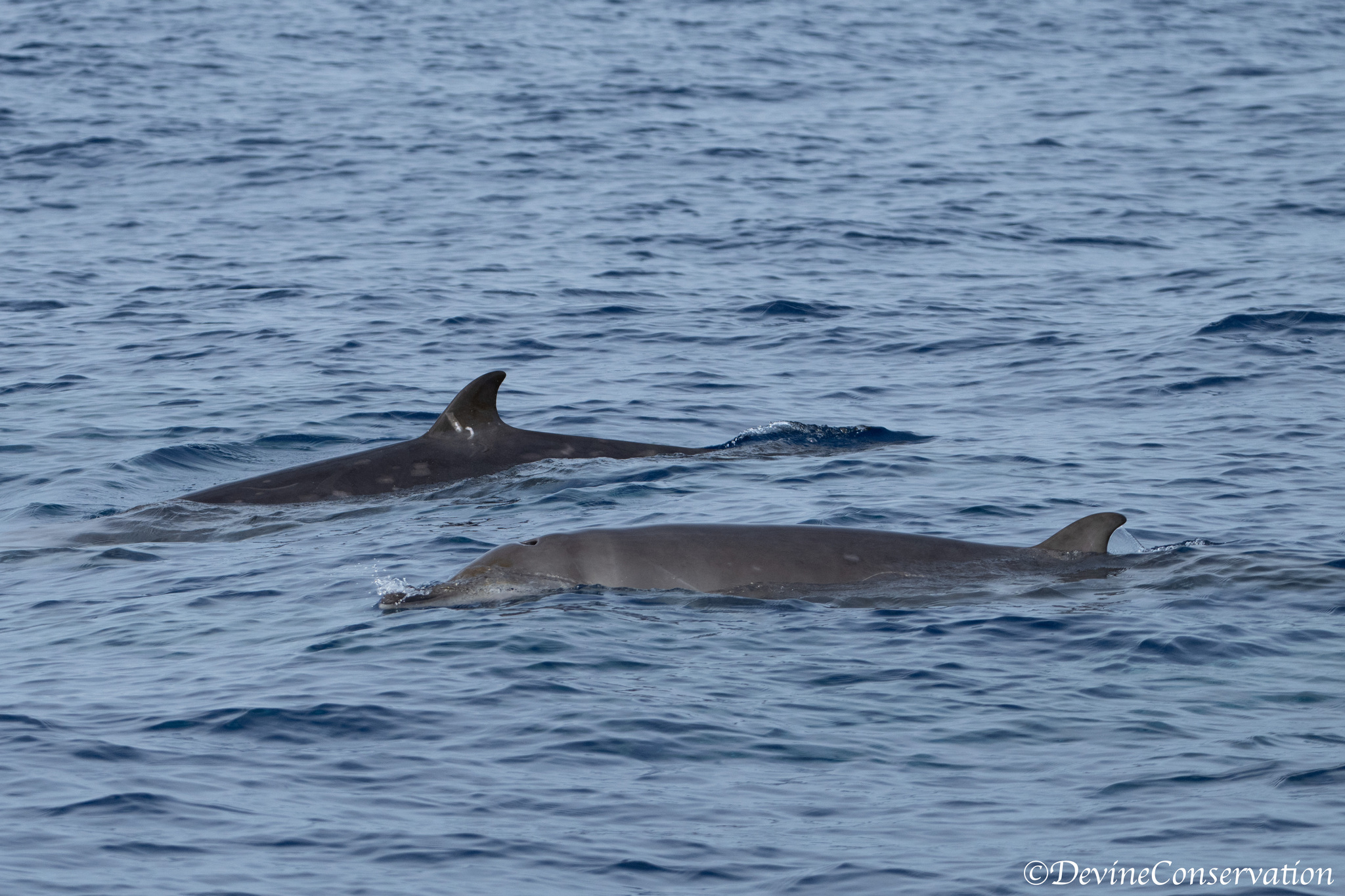
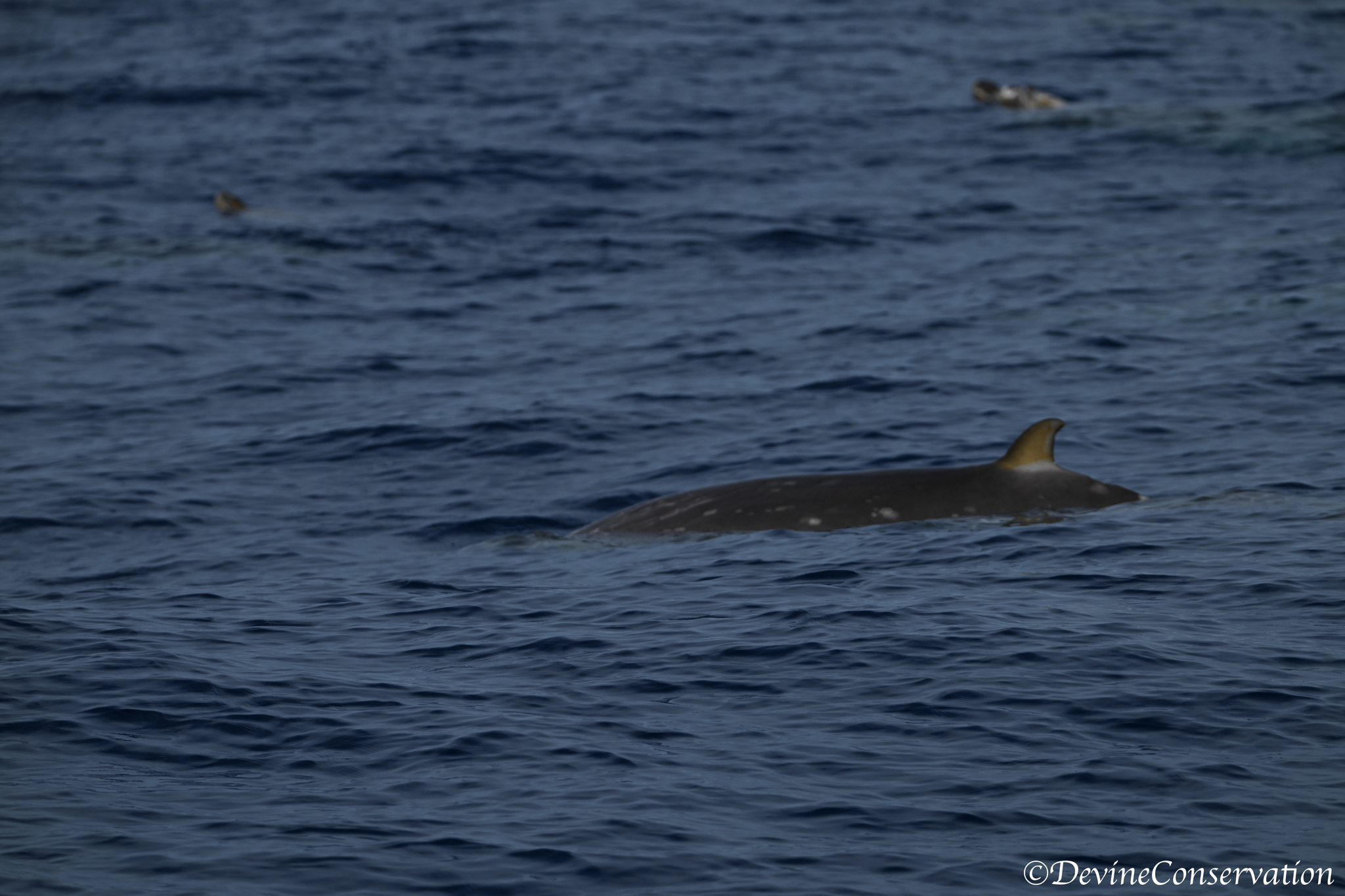
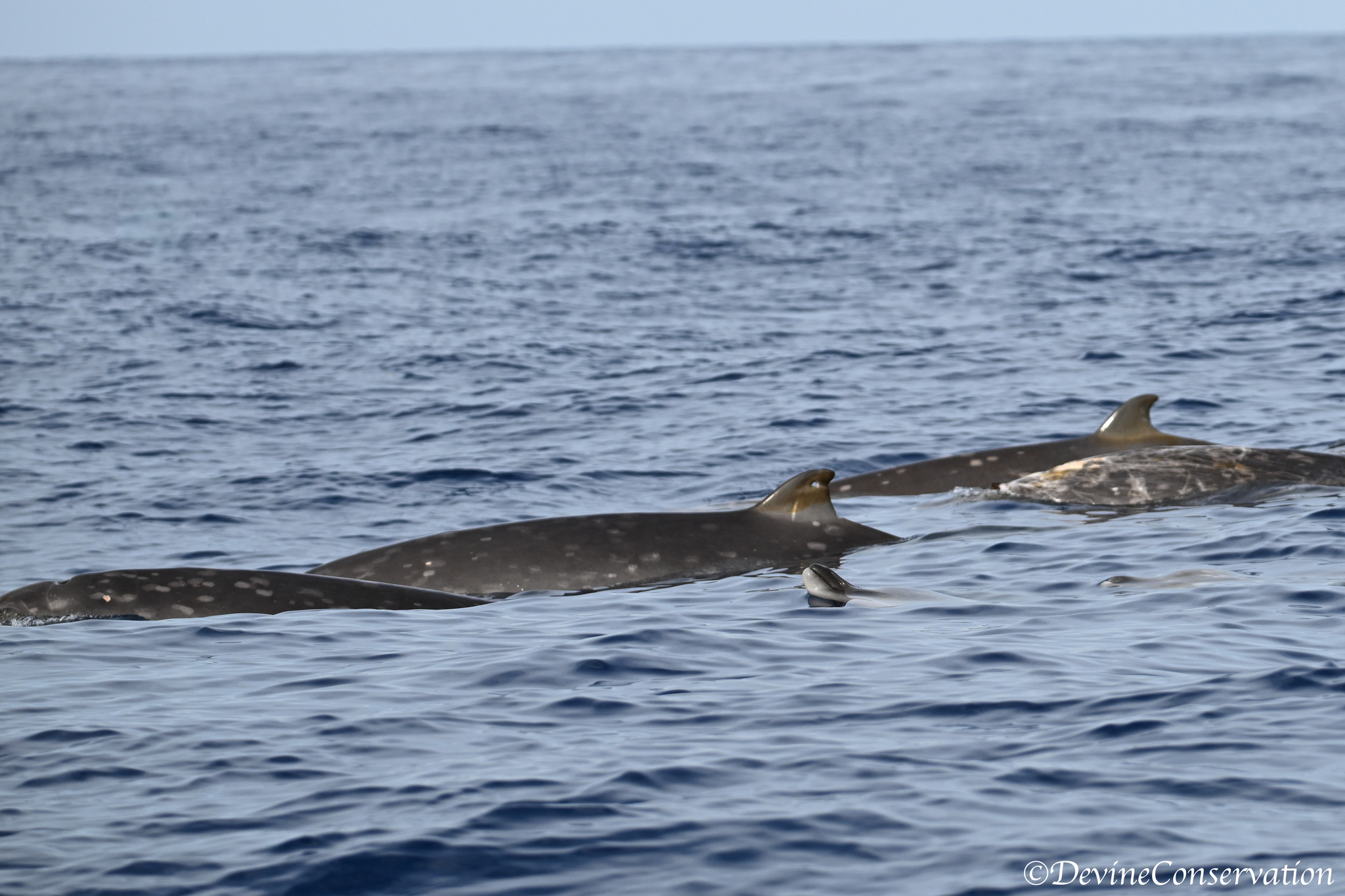
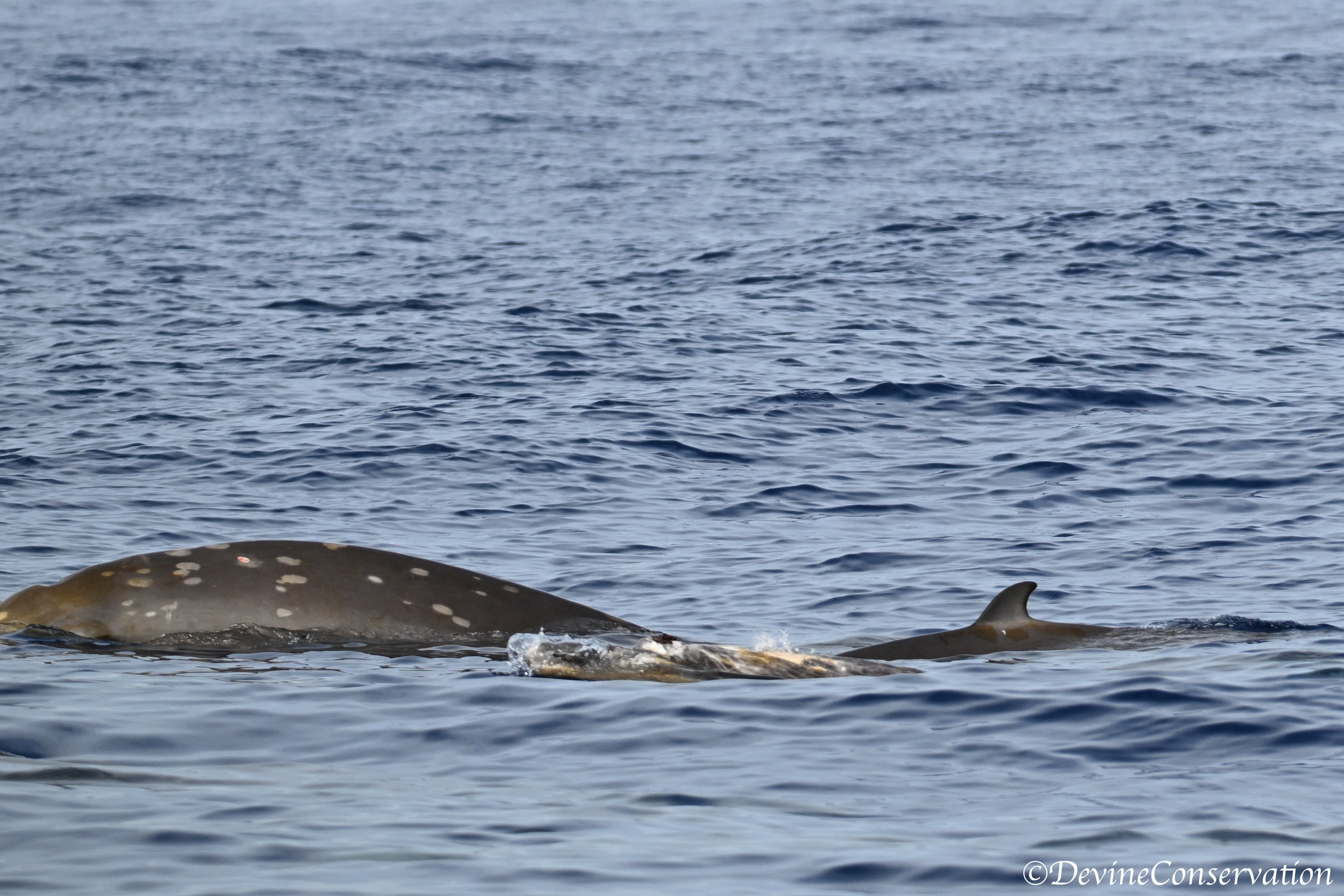
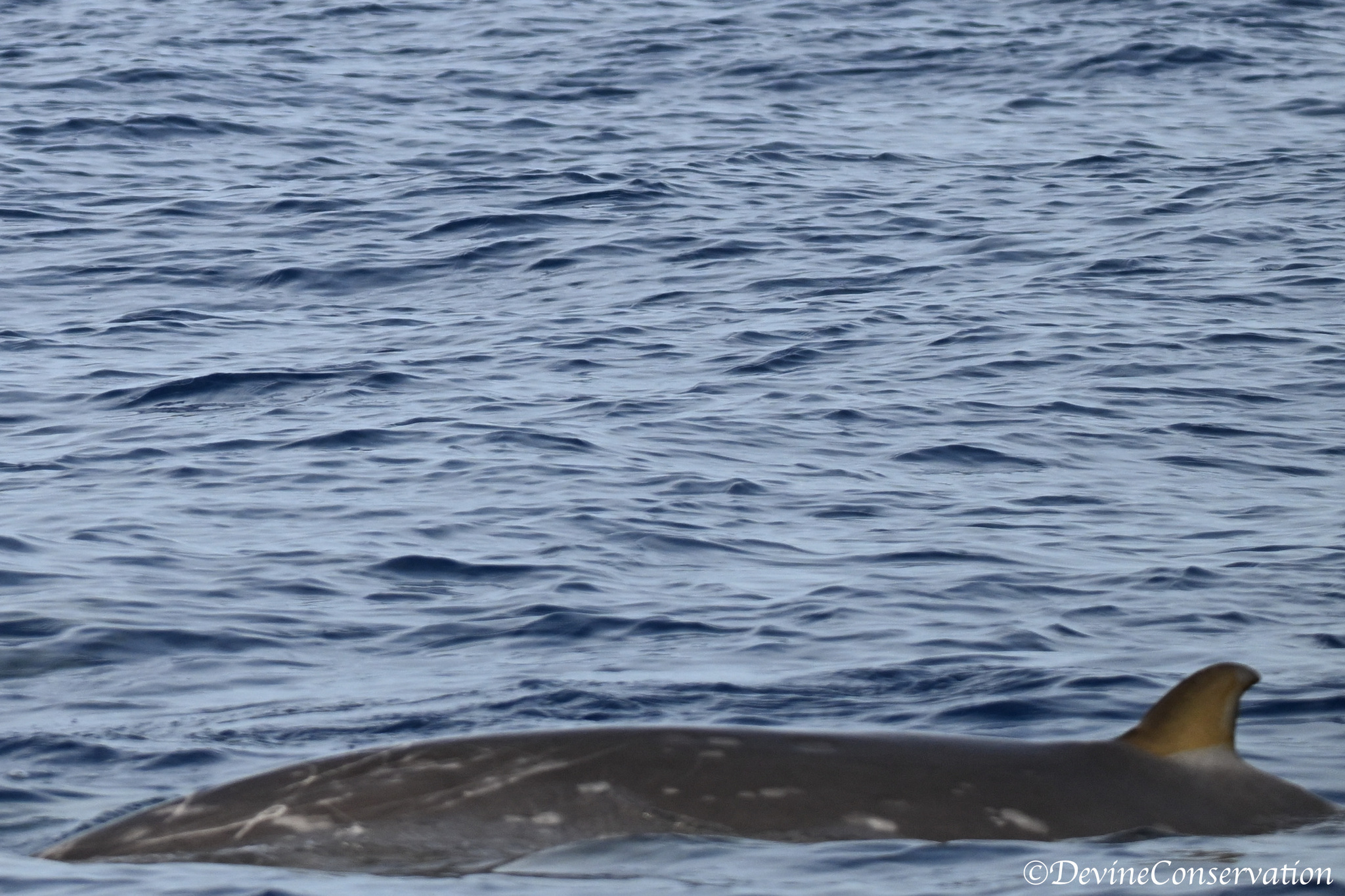
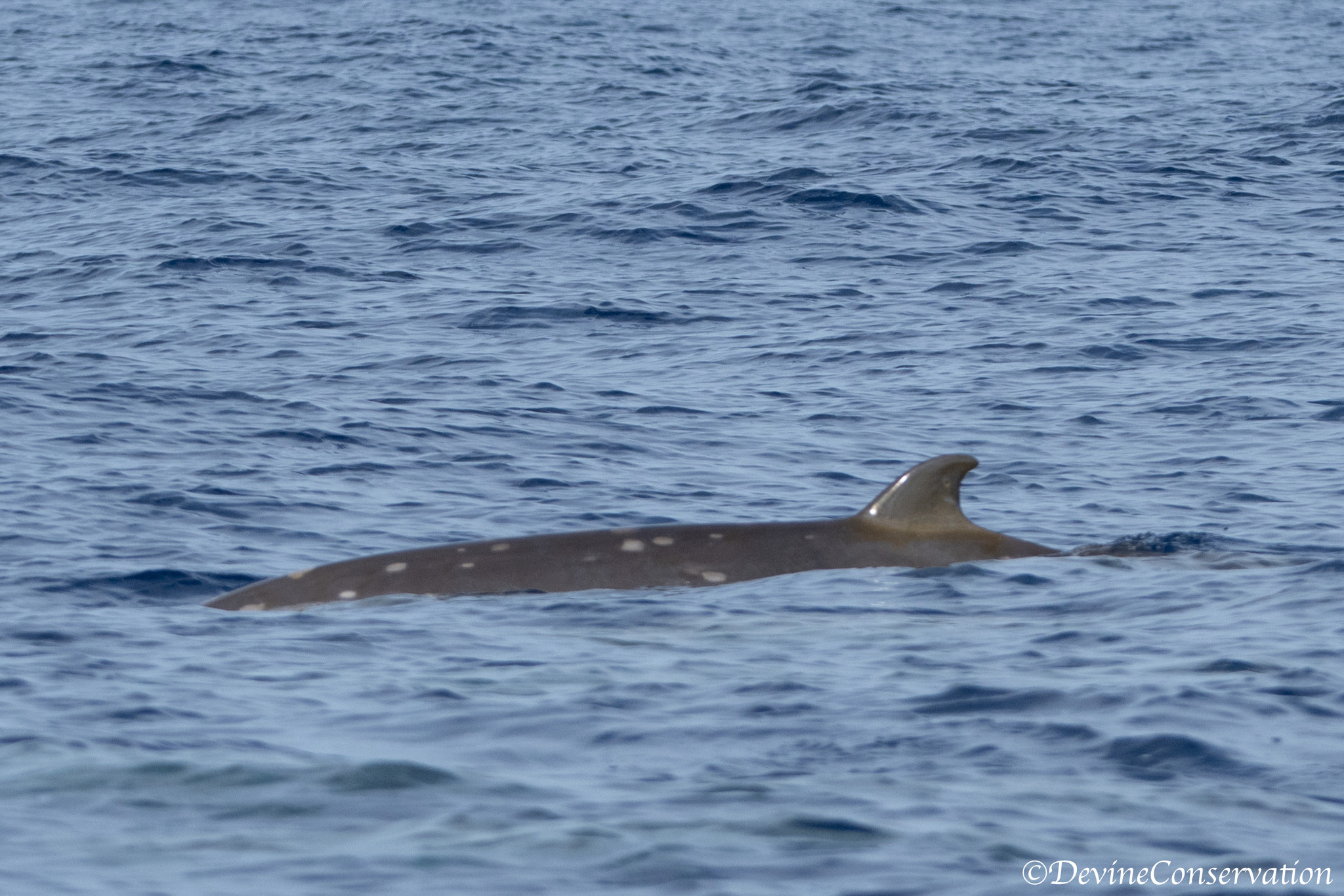
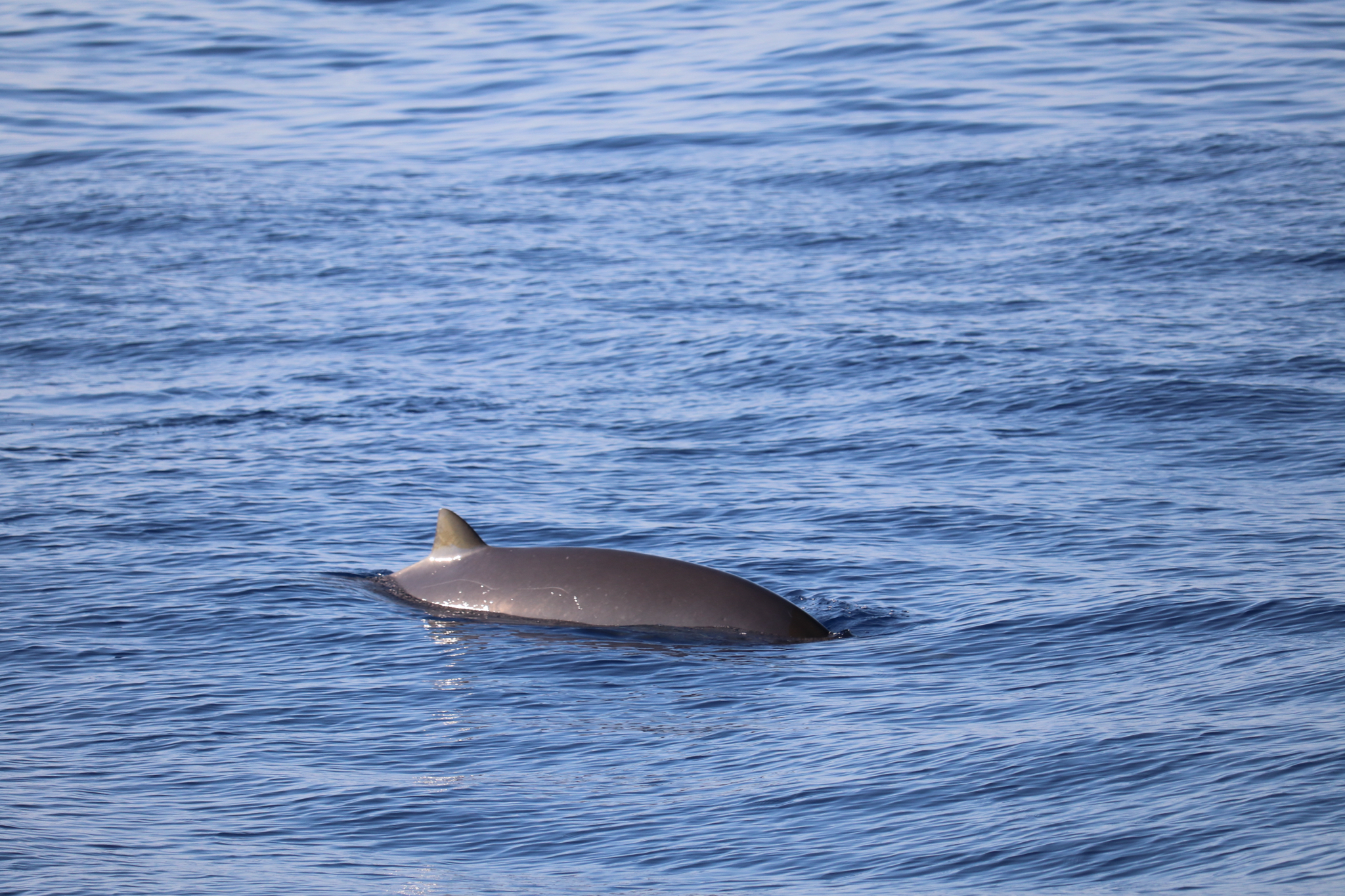
Medium-sized for a beaked whale, Blainville’s beaked whale measures between 3.7 and 5.8 m depending on the source, with most adults around 4.5 to 5 m, for 700 to 1,030 kg. The body is long and stocky, slightly compressed laterally compared with the other mesoplodont beaked whales. The dorsal fin, small and barely falcate, is set two thirds of the way back along the back. The back and flanks range from bluish grey to dark brown, the belly is paler, and with age the body becomes covered with pale blotches and scars.

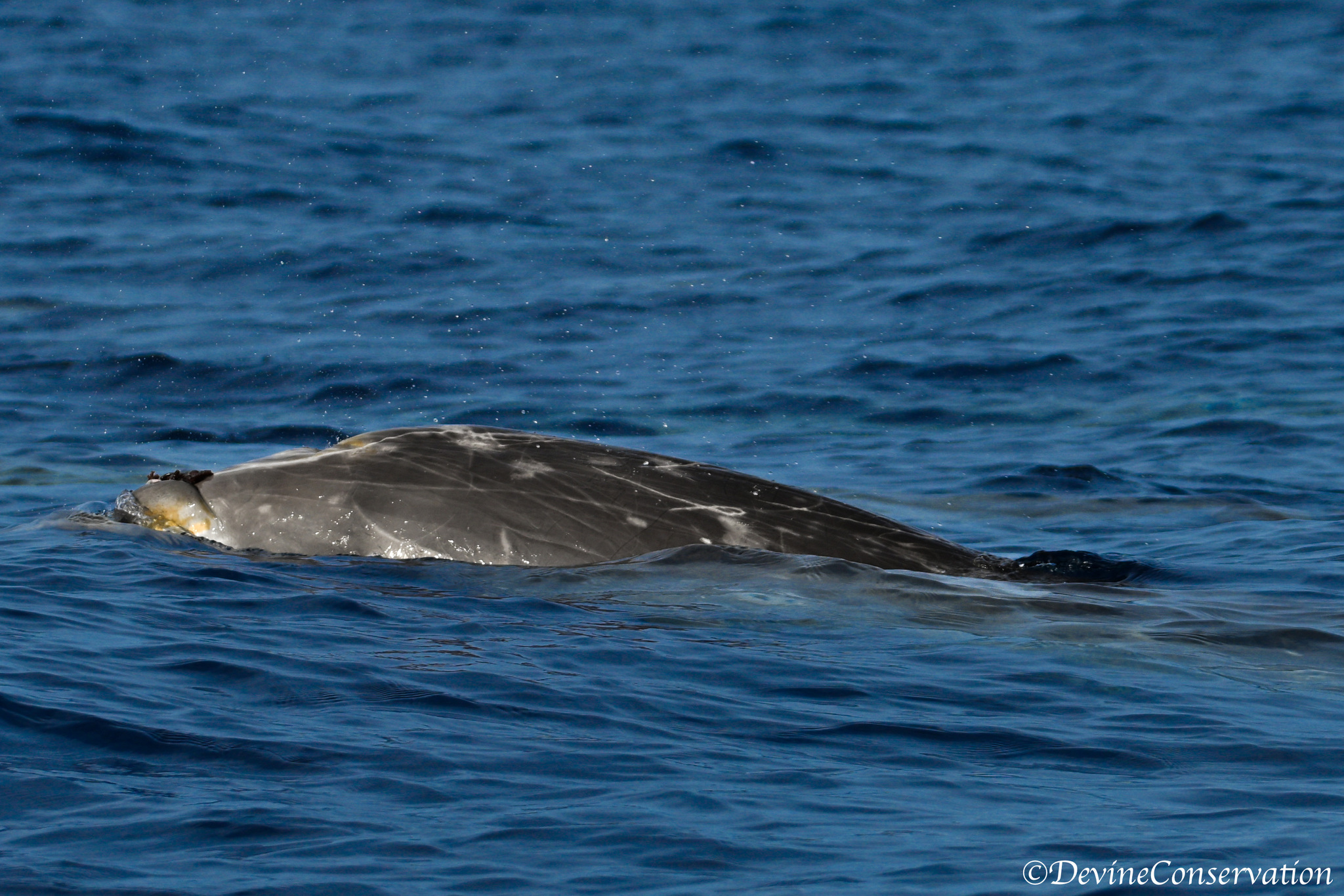
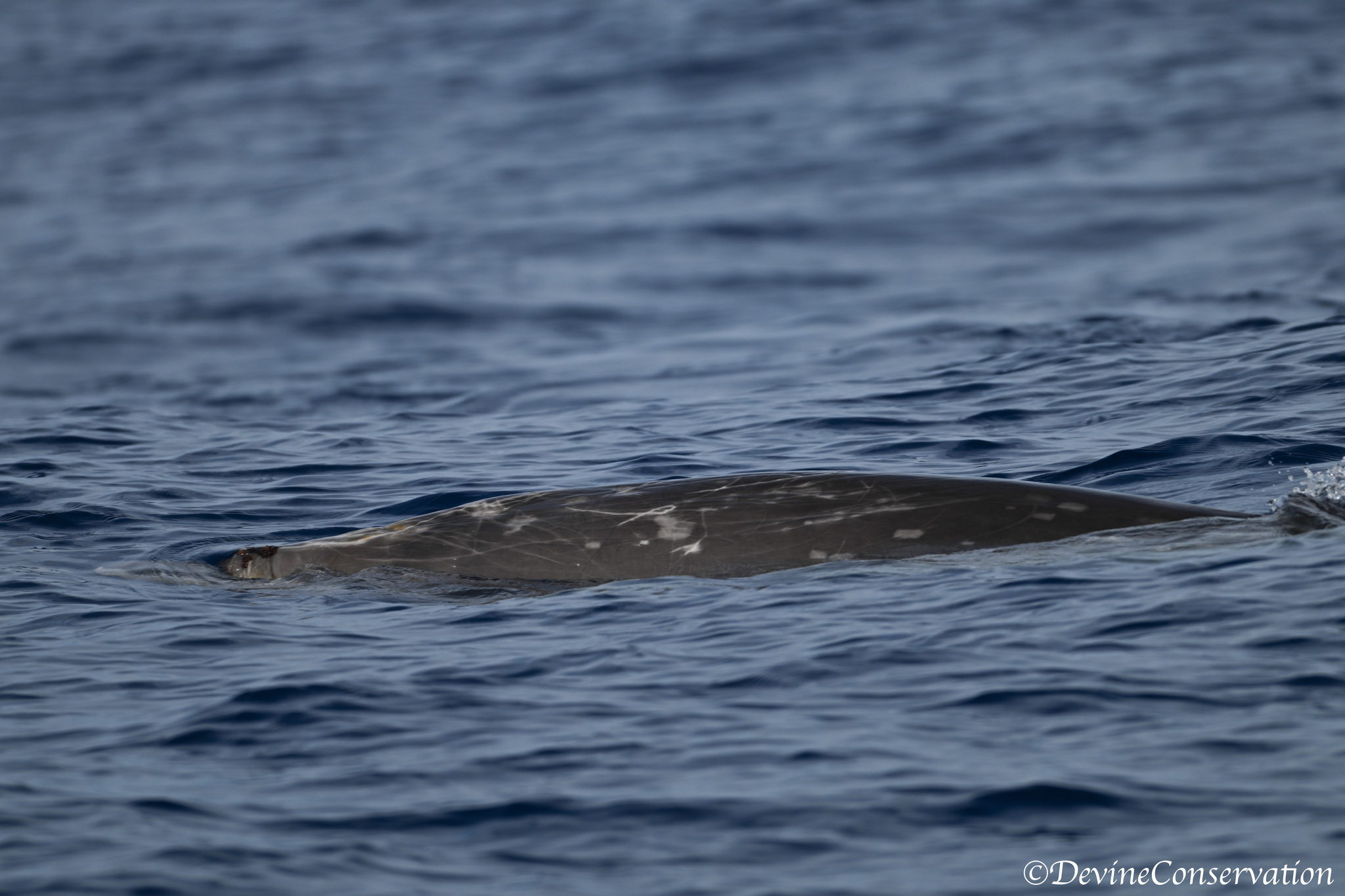
The head carries the diagnostic features. The melon is flattened, almost absent, and runs into a long, robust rostrum. It is in the adult male that the species becomes unambiguously identifiable: the rear of the lower jaw rises into a strongly arched crest that overtops the line of the rostrum, and at the apex of that arch emerges a pair of massive, flattened teeth, often colonised by barnacles. Females and juveniles keep these teeth buried beneath the gum and have a far less arched jaw. Males also bear long, straight whitish stripes, the legacy of fights between rivals, to which are added the oval scars left by cookiecutter sharks.

The species owes its scientific name to an anatomical peculiarity: the bones of the rostrum are among the densest and most rigid ever measured in a vertebrate, a feature whose function remains debated. Confusion is easy with the other mesoplodont beaked whales, in particular Gervais’s and Sowerby’s, whose teeth are not set at the same point along the jaw; Cuvier’s beaked whale, for its part, is more massive, with a short rostrum and a head that is often very pale in old males. A sighting limited to the back almost never settles the question.

Taxonomy

The species was described in 1817 by the French zoologist Henri Marie Ducrotay de Blainville, from a single fragment of rostrum, the upper jaw, some twenty centimetres long (nine inches), of unknown origin and held at the Muséum in Paris, whose bone struck him as exceptionally dense: hence the epithet densirostris, from the Latin densus (dense) and rostrum (beak). First named Delphinus densirostris, it was later placed in the genus Mesoplodon, the richest of all cetacean genera. It belongs to the beaked whale family, which the Society for Marine Mammalogy and the IUCN Red List call Ziphiidae: Hyperoodontidae Gray, 1846 is an older synonym and therefore has priority in the strict sense of nomenclature, but usage has settled on Ziphiidae. The family today comprises twenty-four species in six genera.

Distribution and habitat

This is by far the most widely distributed mesoplodont beaked whale: the tropical and warm temperate waters of the Atlantic, the Pacific and the Indian Ocean, generally offshore, over depths of 200 to 1,000 m, with a marked preference for steep submarine relief, continental slopes, canyons, seamounts and bank edges. The species occurs in waters of 10 to 32 °C and does not appear to migrate seasonally. Some populations, on the other hand, show remarkable site fidelity: off the island of Hawaii, photo-identification carried out since 1986 has allowed the same individuals to be resighted over more than seventeen years, between the 250 and 2,500 m isobaths, some twenty kilometres from the coast. The Bahamas, the Canaries and the Azores also host regular groups.

In France, Blainville’s beaked whale is reported from the metropolitan maritime areas outside the Mediterranean: it is rare there, the Bay of Biscay remaining the metropolitan region most favourable to ziphiids in general. In the Mediterranean its occurrence is considered exceptional, and even uncertain. It is in the overseas territories that the species is genuinely present, sometimes common: the Antilles, the Indo-tropical islands, New Caledonia and French Polynesia, where groups of two to six individuals frequent the slope of the Society Islands.

Biology and ecology

Blainville’s beaked whale is a hunter of the deep. Its diet combines cephalopods, squid for the most part, and mesopelagic fish; lacking functional teeth, it takes its prey by suction, abruptly retracting the tongue and expanding the throat by means of the gular grooves. Foraging dives commonly last 20 to 45 minutes at depths of 500 to 1,000 m, but immersions exceeding 50 minutes and 1,400 m have been recorded, followed by long series of breaths at the surface. When sounding, the animal arches its back without ever lifting its tail fluke clear of the water.

Social life is organised in small groups of three to seven individuals, exceptionally up to twelve. Females form the most stable aggregations, often accompanied by one or two adult males; in productive areas such as the Bahamas, true harems are observed. The many linear scars borne by males attest to intense competition for access to females. The species is acoustically very discreet: it stays silent much of the time, in particular above 170 m of depth, behaviour interpreted as a strategy for avoiding killer whales.

Breeding remains poorly known. Sexual maturity is thought to be reached at around nine years; the newborn measures 1.9 to 2.6 m and weighs some sixty kilograms. Gestation length, the interval between births and longevity are not established: no reliable age data are available for the species.

Status and conservation

The IUCN global Red List has listed Mesoplodon densirostris as Least Concern (LC) since the 2020 reassessment, which moved most beaked whales out of the “Data Deficient” category. That reclassification mainly reflects a change in the assessment guidelines, not a demonstrated improvement in the situation: no trend analysis could be carried out for want of sufficient data. The European Red List likewise retains Least Concern. Abundance estimates remain local; for the Northwest Atlantic stock, the 2021 United States survey produced an estimate of 2,936 individuals.

The main threat is noise of human origin. Mid-frequency military sonar causes atypical, sometimes mass strandings of ziphiids, the Bahamas episode of 2000 and the Canaries episode of 2002 being the best documented, and shipping traffic is enough on its own to alter the animals’ behaviour several kilometres away. In France, a series of strandings in the winter of 2008, including two Blainville’s beaked whales stranded alive, was described as suspicious. To this are added bycatch in fishing gear and the ingestion of plastic debris, an established cause of mortality. The species has never been the object of a directed hunt.

Under French law it is fully protected by the order of 1 July 2011. It is listed in Annex IV of the Habitats Directive and Appendix II of CITES, and falls under the ACCOBAMS and ASCOBANS agreements; in the Pelagos and Agoa sanctuaries, certain vessels must be fitted with an anti-collision device.

Watching this species

Watching a Blainville’s beaked whale is a matter of patience and luck. The animal spends most of its time diving, often resurfaces several kilometres from where it went down and blows inconspicuously: a glassy sea is essential. Tropical island waters offer the best odds, French Polynesia and the Antilles, but also the Azores, the Canaries, Hawaii and the Bahamas, always close to the slope. To confirm the species, the head of an adult male has to be photographed: without the arched lower jaw and its two teeth, the sighting will stay labelled “Mesoplodon spp.”. Discretion is the rule: a slow, parallel approach, steady engine revolutions, never an interception course and never putting swimmers in the water, these animals being among the most sensitive to noise. Any sighting or stranding is worth passing on to the naturalist networks and to the Réseau national échouages.

Frequently asked questions

Why is it called the “dense-beaked whale”?

Because the bones of its rostrum are among the densest and most rigid ever measured in a vertebrate. It was this observation, made by Henri de Blainville in 1817 on a fragment of rostrum, the upper jaw, some twenty centimetres long and held at the Muséum in Paris, that gave the epithet densirostris (from the Latin densus, dense, and rostrum, beak).

How can a male be told from a female?

In the adult male, the rear of the lower jaw forms a strongly arched crest that overtops the line of the rostrum, topped by two massive teeth often covered with barnacles. Females and juveniles have a far straighter jaw and their teeth stay hidden beneath the gum. Males also bear numerous linear scars from fighting.

How deep and how long does it dive?

Its foraging dives commonly last 20 to 45 minutes at between 500 and 1,000 m of depth. Immersions exceeding 50 minutes and reaching about 1,400 m have been recorded, which makes it one of the most accomplished divers among cetaceans.

Can it be seen in French waters?

Yes, but rarely in metropolitan France: the species is reported from the metropolitan maritime areas outside the Mediterranean, where it remains rare, and its occurrence in the Mediterranean is considered exceptional. In the overseas territories, by contrast, it is present and even common: the Antilles, the Indo-tropical islands, New Caledonia and French Polynesia.

Why is military sonar dangerous for this species?

Beaked whales depend entirely on sound to hunt, communicate and orientate themselves. Mid-frequency sonar disturbs their diving behaviour and is associated with atypical strandings, as in the Bahamas in 2000 and the Canaries in 2002. Shipping traffic on its own is enough to alter their behaviour several kilometres away.

Is it a threatened species?

The IUCN has listed it as Least Concern (LC) since 2020, after long treating it as “Data Deficient”. That listing mainly reflects a change in assessment method: no population trend could be established, and the species remains fully protected in France and in the European Union.

What is its longevity?

It is not known. No reliable age data have been published for this species: both NOAA and the IUCN give longevity as undetermined. The only estimate is that sexual maturity is thought to be reached at around nine years.

Sources

Profile compiled from authoritative scientific sources (IUCN, NOAA Fisheries, specialist literature) and reviewed for factual accuracy.

Observed distribution

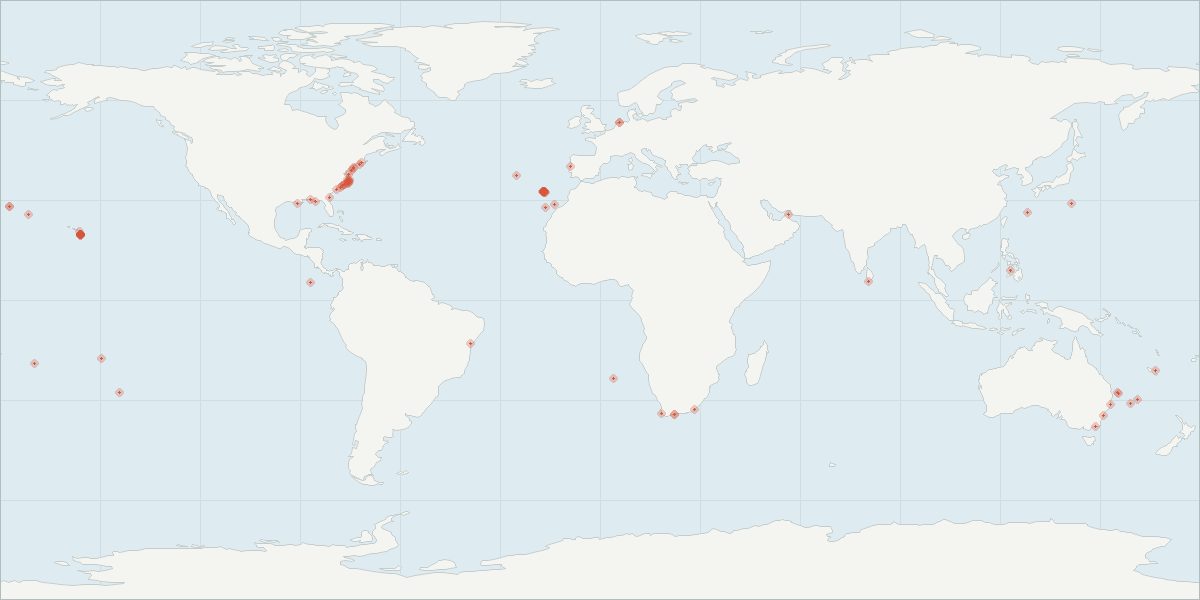
According to the open data of the GBIF, 95 georeferenced sightings of Mesoplodon densirostris are recorded in our photographic index.

Main countries of observation
CountryNotes
United States of America57
Portugal21
Philippines18
Australia9
South Africa7
Spain6
Bahamas5
Netherlands4
Japan3
United States Minor Outlying Islands3

Distribution map: Blainville's beaked whale (Mesoplodon densirostris)

Distribution map: Blainville's beaked whale (Mesoplodon densirostris), 95 georeferenced sightings from GBIF
95 georeferenced sightings of Mesoplodon densirostris. Base map Natural Earth, public domain. GBIF data.
🗺️ Open the interactive mapTo zoom and pan. It uses the OpenStreetMap/CARTO base maps and the GBIF occurrence densities: no data is sent to these services before you click.

Presence through the year

Monthly distribution of 132 dated sightings (all years combined): the maximum is reached in February.

300janvier : 9janfévrier : 30febmars : 14maravril : 13avrmai : 6maijuin : 12juinjuillet : 13juilaoût : 9Augustseptembre : 7sepoctobre : 7octnovembre : 6novdécembre : 6dec
Sightings by month
MonthNotes
janvier9
February30
mars14
avril13
mai6
juin12
juillet13
August9
septembre7
octobre7
novembre6
December6

These figures reflect survey effort (more boaters and more surveys in summer) as much as the actual presence of the species: to be interpreted with caution.

En images

Mesoplodon densirostris
© Pijke Torenvlied, CC BY-NC, 2026
Mesoplodon densirostris
© Alec Boyd-Devine, CC BY-NC, 2026
Mesoplodon densirostris
© Alec Boyd-Devine, CC BY-NC, 2026
Mesoplodon densirostris
© Alec Boyd-Devine, CC BY-NC, 2026
Mesoplodon densirostris
© Alec Boyd-Devine, CC BY-NC, 2026
Mesoplodon densirostris
© Alec Boyd-Devine, CC BY-NC, 2026
Mesoplodon densirostris
© Alec Boyd-Devine, CC BY-NC, 2026
Mesoplodon densirostris
© Alec Boyd-Devine, CC BY-NC, 2026
Mesoplodon densirostris
© Alec Boyd-Devine, CC BY-NC, 2026
Mesoplodon densirostris
© Alec Boyd-Devine, CC BY-NC, 2026
Mesoplodon densirostris
© maltesse03, CC BY-NC, 2026
Mesoplodon densirostris
© Jacob Crisp, CC BY-NC, 2026

Photographs from GBIF under a Creative Commons licence. The author and the licence of each photograph are given; please respect them if you reuse them.

Scientific references

  1. Baird R. (2011) Short Note: Open-Ocean Movements of a Satellite-Tagged Blainville’s Beaked Whale (Mesoplodon densirostris): Evidence for an Offshore Population in Hawai‘i?, Aquatic Mammals
  2. Keating J., Barlow J., Rankin S. (2016) Shifts in frequency-modulated pulses recorded during an encounter with Blainville's beaked whales (Mesoplodon densirostris), The Journal of the Acoustical Society of America
  3. FLOM J., BROWNE R., JONES E., SCHONEWALD J. et al. (1980) VAGINAL FIBROMAS IN A BEAKED WHALE, Mesoplodon densirostris, Journal of Wildlife Diseases
  4. Moretti D., DiMarzio N., Morrissey R., Ward J. et al. (2006) Estimating the density of Blainville's beaked whale (Mesoplodon densirostris) in the Tongue of the Ocean (TOTO) using passive acoustics, OCEANS 2006
  5. Castello H., Pinedo M. (1980) Mesoplodon densirostris (Cetacea, Ziphiidae), primeiro registro para o Atlântico Sul Ocidental, Boletim do Instituto Oceanográfico
  6. Claridge D., Dunn C. (2014) The Effects of Behavioral Changes in Response to Acoustic Disturbance on the Health of the Population of Blainville's Beaked Whales (Mesoplodon densirostris) in the Tongue of the Ocean
  7. Quiazon K., Santos M., Blatchley D., Aguila R. et al. (2021) Molecular and Morphological Identifications of Anisakis Dujardin, 1845 (Nematoda: Anisakidae) from a Rare Deraniyagala’s Beaked Whale (Mesoplodon hotaula Deraniyagala, 1963) and Blainville’s Beaked Whale (Mesoplodon densirostris Blainville, 1817) Stranded Off Southern Philippines, Philippine Journal of Science
  8. (2020) Mesoplodon densirostris: Pitman, R.L. & Brownell Jr., R.L., IUCN Red List of Threatened Species

Automatic selection of the most cited works mentioning the species (source: Crossref).