| Scientific name | Balaenoptera ricei Rosel, Wilcox, Yamada & Mullin, 2021 |
|---|---|
| Other names | Gulf of Mexico whale. In French: baleine de Rice, rorqual de Rice. |
| Size | Up to 12.65 m for the largest female measured and 11.26 m for the largest male; some adults do not exceed 7 m. A stranded calf measured 4.7 m, and size at birth is estimated at around 3.4 to 4 m. |
| Weight | About 14 to 27 tonnes (13.87 t estimated for a 12.65 m female using Ohsumi's length-mass relationship; 27.2 t taken as the maximum by NOAA). |
| Longevity | Unknown. Sexual maturity is thought to be reached at around 9 years. |
| Diet | Schooling fish of high energy density, overwhelmingly Ariomma bondi (silver-rag driftfish), a demersal fish that accounts for 66.8% of relative dietary contribution. |
| IUCN status | Critically Endangered (CR), assessment published in 2022 by Rosel, Corkeron & Soldevilla, under criterion D (fewer than 50 mature individuals). Population trend: declining. No subpopulation is distinguished: the whole species forms a single population in the Gulf of Mexico. Before 2022, this same population was assessed as a “CR” subpopulation of Bryde's whale (a species listed as LC). |
Described only in 2021, Rice's whale is the most recently recognised of the large rorquals, and already one of the most threatened marine mammals in the world. Endemic to the Gulf of Mexico, where it lives all year round along the continental slope, it is thought to number only about fifty individuals, of which barely more than twenty are breeding adults. The IUCN has listed it as Critically Endangered since 2022.
Rice's whale is a medium-sized rorqual with a streamlined body, larger than Omura's whale and smaller than Bryde's whale in the strict sense. The largest female measured reached 12.65 m and the largest male 11.26 m, for a mass of between about 14 and 27 tonnes; adults of only 7 m have also been reported. The back is a uniform charcoal grey, the belly pale to slightly pink, and the flippers are dark over their whole surface. The head accounts for about a quarter of total length. The dorsal fin, falcate and markedly hooked, 24 to 38 cm high in adults, is set two thirds of the way back along the body. The underside carries 44 to 54 expandable throat pleats, characteristic of the balaenopterids, running from the throat to the level of the navel, some extending beyond it.
The most visible feature at sea is the presence of three longitudinal ridges on the rostrum, forward of the blowholes, a trait that Rice's whale shares only with the members of the Bryde's whale complex (Bryde's whale Balaenoptera brydei and Eden's whale B. edeni), most other rorquals having only one. The truly diagnostic characters are skeletal: the posterior end of the nasal bones curves laterally and has smooth margins, while the frontal bones intrude forward between the nasals, leaving a wide gap between them along their whole length. The skull of the holotype measures 284.4 cm long and 142.6 cm wide. The vertebral column has only 53 vertebrae, fewer than in related species, and each half of the jaw carries 230 to 290 baleen plates, cream at the front and darkening towards the rear.
The risk of confusion is real. At sea, Rice's whale is all but impossible to tell apart from a Bryde's whale (Balaenoptera brydei) or an Eden's whale (Balaenoptera edeni): only genetic analysis, examination of the skull or the acoustic signature allows a certain identification. Care is needed with the vernacular names as well: Rice's whale, in French “baleine de Rice” or “rorqual de Rice”, does indeed denote Balaenoptera ricei, and is not to be conflated with Bryde's whale, the sei whale (Balaenoptera borealis) or Omura's whale (Balaenoptera omurai), all morphologically close.
Balaenoptera ricei belongs to the family Balaenopteridae (rorquals) and to the genus Balaenoptera. The species was formally described in January 2021 in the journal Marine Mammal Science by Patricia E. Rosel, Lynsey A. Wilcox, Tadasu K. Yamada and Keith D. Mullin. The specific epithet honours the American cetologist Dale W. Rice (1930-2017), the first scientist to report the existence of these whales in the Gulf of Mexico, in 1965, when he regarded them as a population of Bryde's whales.
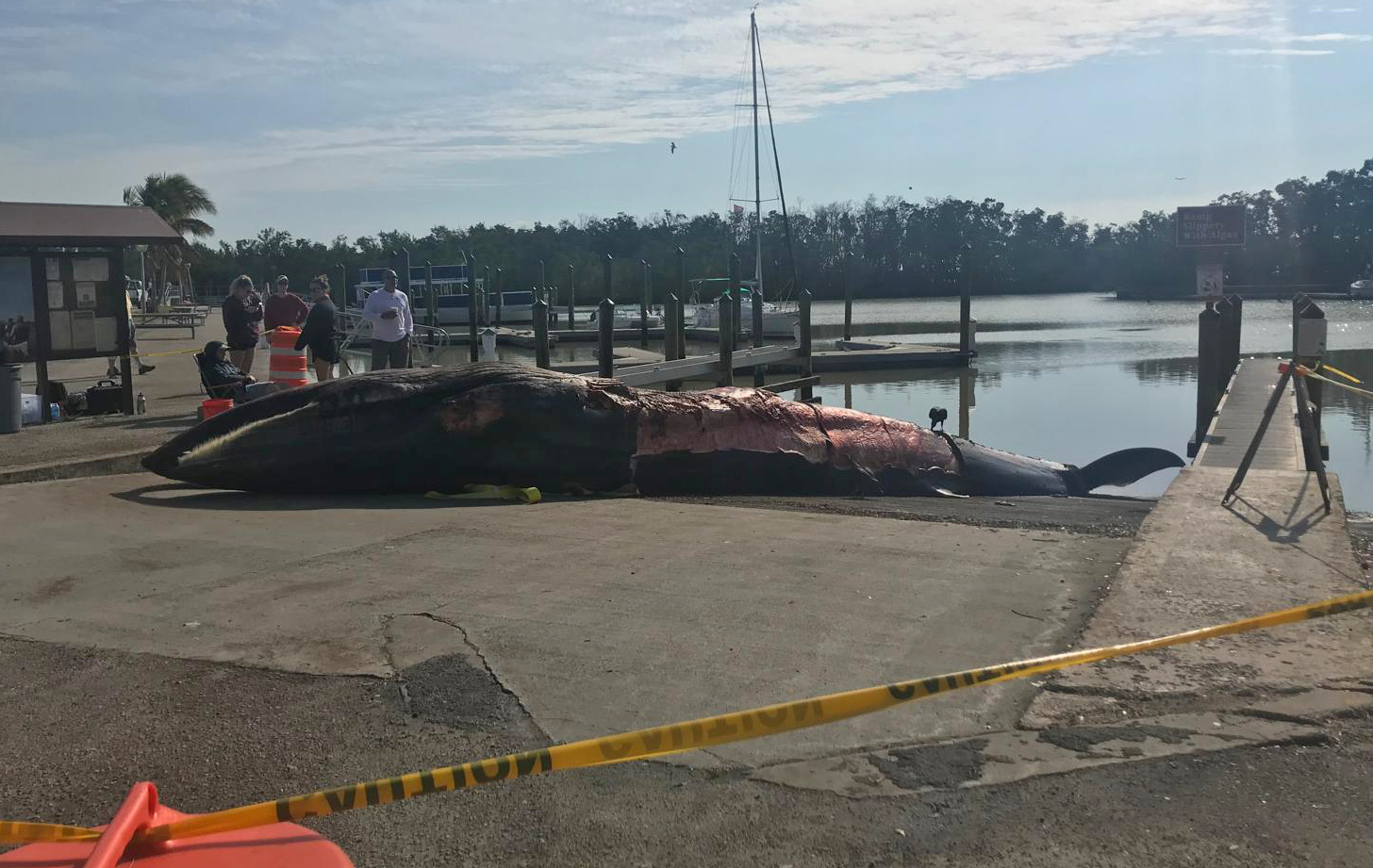
For more than half a century, these animals were therefore assigned to the “Bryde's whale complex”, which brings together Bryde's whale (Balaenoptera brydei) and Eden's whale (Balaenoptera edeni). A genetic study carried out in 2014 by Rosel and Wilcox revealed a genetically distinct lineage, without that being enough to support a formal description: a complete type specimen was lacking. It arrived in January 2019, with the stranding of an individual near Everglades National Park, in Florida; the skeleton, held under the number USNM 594665, became the holotype of the species. Combined analysis of the skull and of the mitochondrial genome made it possible to separate B. ricei unambiguously from all other balaenopterids.
In the United States, the administration followed suit: in 2021, NOAA changed the official designation of the protected entity, from the “Gulf of Mexico Bryde's whale”, treated as a subspecies, to the full species “Rice's whale”. Some specialists argue for the name “Gulf of Mexico whale”, which is more explicit geographically.
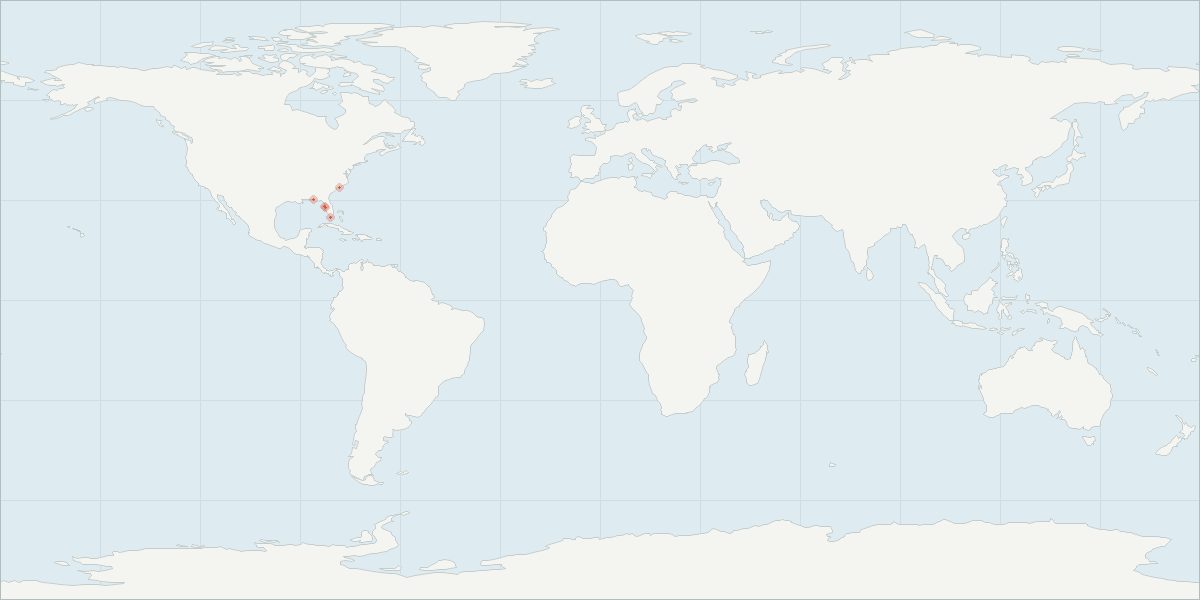
Rice's whale is the only large baleen whale known to live year round in the Gulf of Mexico, and it occurs nowhere else: it is a strictly endemic, non-migratory species. Its present range is remarkably narrow for a large rorqual. The core of the population frequents the continental slope of the north-eastern Gulf, in roughly 100 to 400 m of water, with sightings concentrated rather between 150 and 410 m, around the De Soto Canyon, off the west coast of Florida, off Alabama and off eastern Louisiana. Rarer sightings have been reported in the western part of the Gulf, off Louisiana, off Texas and in Mexican waters.
Habitat models identify depth, surface chlorophyll a concentration, and bottom temperature and salinity as the main parameters defining this habitat, whose productivity depends on upwelling areas that sustain the fish shoals the species feeds on.
This restricted distribution is probably recent. Whaling logbooks of the eighteenth and nineteenth centuries, the first documented encounter dating back to 1790, by the American whaler Keziah, followed by at least 49 others, indicate a far wider occupation, across the whole Gulf. The causes of this contraction remain debated, the industrialisation of the Gulf being invoked more often than whaling itself.
In France, the species occurs neither in the Mediterranean, nor in the Bay of Biscay, nor in the English Channel, nor in overseas waters: the French Antilles and the Agoa sanctuary lie outside its known range. No sighting in French waters is documented.
The diet of Rice's whale was long a matter of supposition before being established by a stable isotope study published in 2023. That study shows a diet dominated by a schooling demersal fish, Ariomma bondi (silver-rag driftfish), which accounts for 66.8% of dietary contribution while making up only 1.21% of the local fish community: the species therefore actively selects prey of high energy density. It is this demersal habit, too, that explains why it feeds close to the bottom.
The dive rhythm follows a day-night cycle. By day, the animals descend close to the bottom, generally between 150 and 250 m, where they practise lunge feeding; on average only one lunge is recorded per daytime dive, a low rate for a rorqual, consistent with a fish diet and a limited prey density. At night, they come back up and spend most of their time within 15 m of the surface. One individual tracked by tag in 2010 moved at a sustained mean speed of 1.2 km/h in local movement, and 3.6 to 4.0 km/h on longer journeys.
Socially, Rice's whale is seen alone or in pairs, more rarely in loose groups associated with feeding. It produces highly stereotyped, low-frequency vocalisations: five signal types have been described, among them long moans of 20 to 27 seconds emitted between 43 and 208 Hz, tonal sequences of about 3.6 seconds on average and various downsweeps. An individual is thought to produce on the order of 22 calls a day. These signatures, distinct from those of Bryde's whale, allow passive acoustic monitoring of the population.
Breeding remains poorly known and is largely extrapolated from neighbouring species: sexual maturity at around 9 years, gestation of 10 to 12 months, lactation that may last up to 12 months and an interval between two births of 2 to 3 years. Both sexes remain and breed in the Gulf all year round. Examination of 32 individuals gave a sex ratio close to parity, with 18 females to 14 males. Longevity is not documented.
Rice's whale is listed as Critically Endangered (CR) on the IUCN Red List, in an assessment published in 2022 by Rosel, Corkeron and Soldevilla, under criterion D, the one that applies to populations numbering fewer than 50 mature individuals. The trend is one of decline. The reference abundance estimate, from the 2017-2018 surveys, is 51 individuals (CV = 0.50), of which about 26 are mature adults; the status review conducted in 2016 already concluded that there were fewer than 100 individuals in the Gulf as a whole. Before the species was recognised, this same population figured as a “CR” subpopulation within Bryde's whale, a species otherwise listed as Least Concern.
In the United States, the species has been listed as “endangered” under the Endangered Species Act since 2019 (as the Gulf of Mexico Bryde's whale, reclassified in 2021), is considered “depleted” under the Marine Mammal Protection Act, and appears in Appendix I of CITES.
The threats are many and they accumulate over a tiny area. The Deepwater Horizon oil spill, in 2010, affected 48% of the core habitat of the species and is thought to have cost it up to 22% of its numbers. Ship strikes are a major risk: night-time surface behaviour places the animals in the most dangerous part of the water column, and one death from a collision was documented in 2009. To these are added underwater noise, in particular that of seismic surveys, entanglement in the deep-water fishing gear that operates between 100 and 300 m, and plastic ingestion, the holotype itself having died of a laceration of the stomach caused by a sharp fragment of plastic. Climate change, by altering prey availability, is an underlying threat. Finally, with about 26 mature adults, the population sits well below the usual genetic thresholds and is exposed to inbreeding depression, which makes any recovery extremely slow.
The designation of critical habitat, impossible at the time of listing for want of data, was the subject of a proposal in July 2023 covering the waters of the Gulf lying between the 100 m and 400 m isobaths, with a public consultation that closed on 6 October 2023. The American regulatory framework has since seen unfavourable developments: on 31 March 2026, the federal committee responsible for exemptions to the Endangered Species Act voted an exemption in favour of oil and gas activities in the Gulf, and a review of the status of the species was begun in early May 2026. On the research side, an environmental DNA test validated in 2025 now complements acoustic monitoring and aerial surveys.
There is no whale-watching activity dedicated to this species, and there could not be: with some fifty individuals spread along a ribbon of continental slope several tens of nautical miles offshore, encounters are almost exclusively a matter for the scientific surveys of NOAA and its partners. The historically most productive area remains the De Soto Canyon, about a hundred kilometres offshore from Pensacola, Florida. Modern detections rely above all on indirect methods: underwater acoustic recorders picking up the characteristic low-frequency signals, environmental DNA sampling and aerial surveys.
For mariners and professionals operating in the Gulf, responsible conduct means reducing speed in the 100-400 m depth band, keeping a careful watch at night, when the animals are at the surface, and reporting any sighting to the American stranding and sighting networks, since every record weighs heavily for so small a population. No close approach, and no entry into the water, is justified.
From France, the species cannot be observed: it frequents no French waters, in mainland France or overseas.
Because it was confused with Bryde's whale from the first reports by Dale Rice, in 1965. A genetic study in 2014 had revealed a distinct lineage, but formal description required a complete type specimen. It took the stranding of an individual near the Everglades, in Florida, in January 2019: examination of its skull, combined with analysis of the mitochondrial genome, allowed the species to be published in January 2021 in Marine Mammal Science.
The reference estimate, from the 2017-2018 surveys, is about 51 individuals (with a coefficient of variation of 0.50), of which roughly 26 are mature adults. The 2016 status review already concluded that there were fewer than 100 individuals. It is this figure of fewer than 50 mature individuals that earns the species its Critically Endangered listing under criterion D of the IUCN.
At sea, hardly at all: the two species share the same outline and the three characteristic rostral ridges common to the whole Bryde's whale complex. The distinction rests on three things: genetics, the osteology of the skull (the nasal bones of Rice's whale curve laterally at their posterior end and the frontal bones intrude between them, creating a wide gap), and acoustics, the five described vocalisation types differing from those of Bryde's whale. Location also helps: only Rice's whale lives year round in the Gulf of Mexico.
A stable isotope study published in 2023 showed a diet dominated, to the extent of 66.8%, by a schooling demersal fish, Ariomma bondi (silver-rag driftfish), while that fish makes up only 1.21% of the local fish community: selection is therefore active, in favour of highly energy-rich prey. Feeding takes place by day, generally between 150 and 250 m deep, at or near the bottom, with on average a single lunge per dive. At night, the animals come back up to within 15 m of the surface.
The Deepwater Horizon oil spill, in 2010, affected 48% of its core habitat and is thought to have cost it up to 22% of its numbers. To these are added ship strikes, night-time surface behaviour being particularly risky, with one death documented in 2009, the noise of seismic surveys, entanglement in deep-water fishing gear, plastic ingestion (the holotype itself died of it) and climate change. The very small size of the population also exposes it to inbreeding depression.
No. The species is strictly endemic to the Gulf of Mexico and non-migratory. It occurs neither in the Mediterranean, nor in the Bay of Biscay, nor in the English Channel, and French overseas waters, including the Agoa sanctuary in the Antilles, lie outside its known range.
Profile compiled from authoritative scientific sources (IUCN, NOAA Fisheries, the specialist literature) and reviewed for factual accuracy.
According to the open data of the GBIF, 5 georeferenced sightings of Balaenoptera ricei are recorded in our photographic index.
| Country | Notes |
|---|---|
| United States of America | 7 |

Monthly distribution of 7 dated sightings (all years combined): the maximum is reached in janvier.
| Month | Notes |
|---|---|
| janvier | 2 |
| February | 0 |
| mars | 2 |
| avril | 0 |
| mai | 1 |
| juin | 0 |
| juillet | 0 |
| August | 0 |
| septembre | 0 |
| octobre | 1 |
| novembre | 1 |
| December | 0 |
These figures reflect survey effort (more boaters and more surveys in summer) as much as the actual presence of the species: to be interpreted with caution.

Photographs from GBIF under a Creative Commons licence. The author and the licence of each photograph are given; please respect them if you reuse them.
Automatic selection of the most cited works mentioning the species (source: Crossref).